



Abstract
Active Pharmaceutical Ingredients (APIs) are the ingredients in pharmaceutical, personal care products, and agriculture that are biologically active, causing detrimental effects to humans and the environment. The detection of pharmaceutical contaminants in Malaysian rivers suggests a high risk for the contaminants to reach tap water since the river is the primary source of water intake points for all drinking water treatment plants and the inability of these plants to treat emerging pollutants like the APIs. In response to the issue, this study aims to evaluate selected documents on the characteristics and properties of pharmaceutical contaminants that are harmful and examine how the Malaysian legislative framework could prevent the contaminants in tap water. A systematic search was carried out on selected pharmaceutical-related documents, and content analysis was conducted to discover patterns and ideas within the selected documents. The finding of this study demonstrates that Malaysian legislative framework has the capacity and capability to carry out a risk mitigation on APIs as well as the insertion of selected types of pharmaceutical contaminants as new parameters. This study’s findings provide insights for the improvement of the Malaysian legislative framework against the potential risks of APIs contamination of our tap water.
Introduction
The existence of pharmaceutical contaminants in the environment has received continuous attention from environmental and health agencies and has become emerging research area since there were reports showing pharmaceuticals pollutant could have potential pharmacological and toxic impact on environment as well as on human.1,2, 1,2 Further, APIs, particularly the biologically active drugs could cause different reaction and different result depending on their dosage and not totally absorb by the body. The remaining were discharged into the environment and may cause chronic toxicity, disrupt endocrine systems in humans and aquatic wildlife. 3 These contaminants if unmanaged, will indirectly affect the human health through the consumption of drinking water.4,5, 4,5
Pharmaceutical contaminants have been found in Malaysian source water for example Langat river, 6 Klang river, 7 Lui, Gombak, and Selangor rivers 8 and also found in Putrajaya drinking water system, 9 yet, there is no explicit regulation governs the issue since pharmaceutical waste is considered as a non-priority pollutant.4,6,10, 4,6,10 Malaysian environmental legislation only deal with the issue of pharmaceutical contaminants in general, and specific attentions are confined to hazardous wastes from medical institutions or services. 11 So far, no parameter value has been set up for pharmaceutical contaminants in Malaysian tap water which would risks human health. As to date, European Union (“EU”) policy framework through its Directives 12 and Regulations, United States Environmental Protection Agency (“USEPA”), 13 and World Health Organization (“WHO”)2,14, 2,14 have listed several pharmaceutical contaminants as “watch list and priority action contaminant” and put limit of pharmaceutical contaminant into their environmental quality standard value because they viewed these contaminants would endanger human health.8,9,15,16, 8,9,15,16 Although the concentration might be low, exposure to repeated doses of a mixture of sub-therapeutic amounts and other chemicals could give potential bad impact on human health due to their pharmacologically and physiologically active.1,10,17, 1,10,17
The objectives of this paper are (i) to review characteristic of harmful APIs, (ii) to investigate health impact of APIs on human, and (iii) to discuss some suggestions to be considered in Malaysian legislative framework. In order to propose maximum protection, this study only focuses on tap water protection from APIs in Malaysia by evaluating selected documents as evidence from published data on the characteristics and properties from pharmaceutical contaminants.
The information in this article will contribute to new research and development on the issue of determining categories of pharmaceutical contaminants that might harm to environment and human. It also assists to enhance the efficiency of current Malaysian legislative framework with the hope that it could achieve the quality of clean water that meets health-based targets.
Materials and Methods
Secondary data was systematically selected, consisting of Malaysian legal documents, other international pharmaceutical regulations, and peer-reviewed publications related to the problems of pharmaceutical contaminants. International pharmaceutical regulations included, but not limited to, WHO guidelines, Canadian Ministry of Environment, USEPA, and EU Directives and Regulations, were selected because they have established principles related to pharmaceutical contaminants in the environment. All English language publications and legislation relating to pharmaceutical contaminants were identified through Internet search engine such as Scopus database including Science Direct, Mendeley, Google Scholar, and respective countries agencies website. Figure 1 shows flow of methodology conducted for this study.
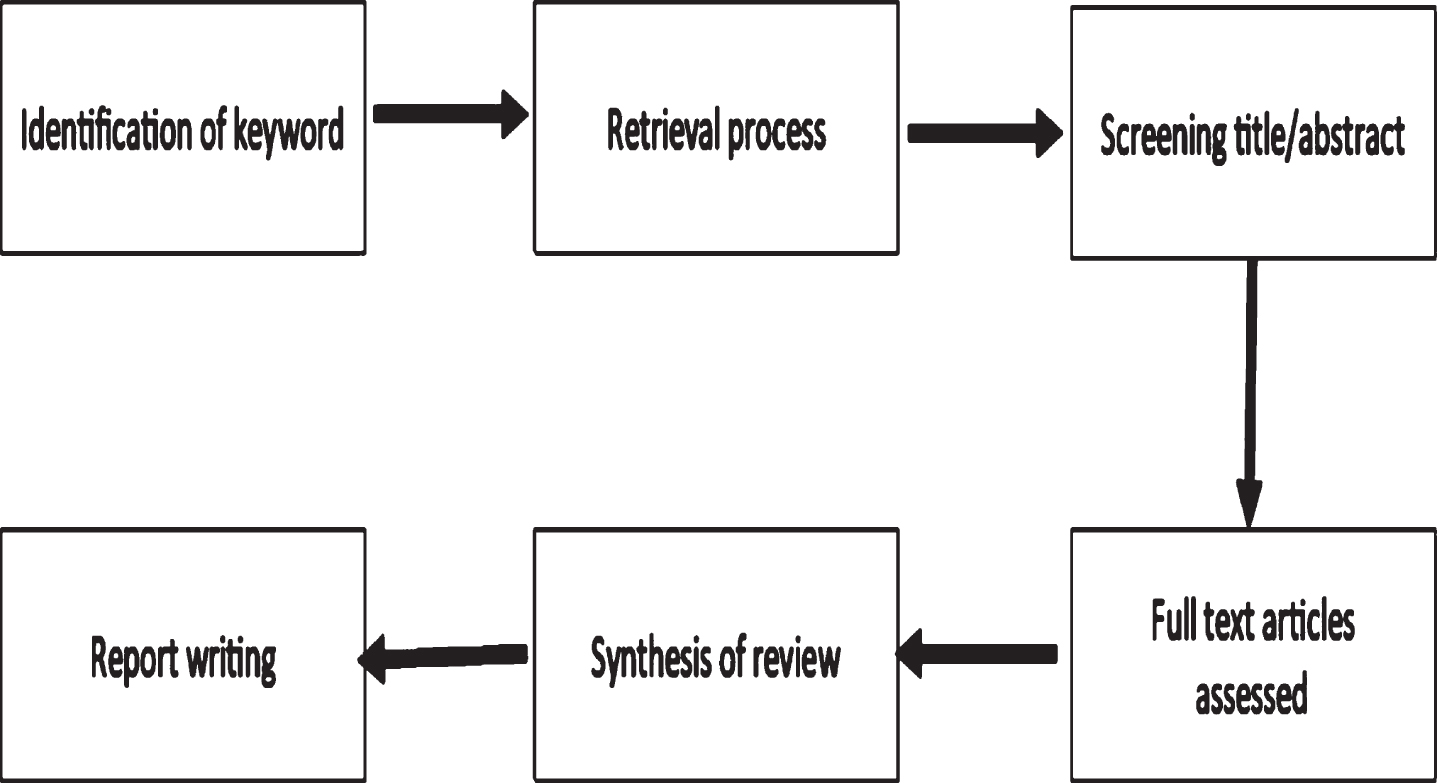
Flowchart of systematic review.
As per Fig. 1, first step was to identify the specific keyword such as “active pharmaceutical ingredients”, “pharmaceutical residue”, “medical waste”, “clinical waste”, “pharmaceutical law in Malaysia”, “pharmaceutical legislation”, and multi-barrier approach in order to gain the relevant documents. Overall, the search produced more than 1000 documents by using the keywords. Estimated 150 documents from the retrieved data were downloaded based on suitability and estimated only 64 documents went for screening process through titles and abstract in order to exclude and isolate those did not focus on the regulatory implementation and characteristic of APIs. The remainder of the articles were subject to full text assessment and were excluded if not met the criteria. Later, not more than 35 full text assessment of the articles was conducted on the selected articles that went through screening phase to ensure the relevancy of the articles. Final phase was synthesis of review that determines the inclusion of the selected articles as data to be utilized in this study. Data collected have been analyzed by using “content analysis” approach by coding and breaking down the data into manageable code categories for analysis in order to identify the patterns and ideas of the data.
Pharmaceutical Characteristics and Properties that Might Harmful
According to World Health Organization (WHO), pharmaceuticals can be found in the prescription medicine, therapeutic drugs, and veterinary drugs. The contents consist of active ingredients which have pharmacological effects and give advantages to society. 2 However, this Active Pharmaceutical Ingredients (APIs), particularly the biologically active drugs could also cause different reaction and different result depending on their dosage.
Studies revealed that there are more than 3000 different elements have been utilized as medications around the world. These medications are consumed, and a large portion or their metabolites are expelled from the body through urine or faeces system or combination of both and enter the environment. On top of that, the occurrence of pharmaceutical residue in the environment caused by the product consuming, production residue, improper disposal of expired and unused medication, and accidental spills during manufacturing and distributing. Major contribution to this pharmaceuticals pollution was reported came from the raw and treated sewage effluent discharged from domestic, industrial, and hospitals, which are later brought to the environment and largely into the rivers.4,10,18,19, 4,10,18,19
There are six characteristics which pharmaceutical contaminants should be assessed on in order to consider whether the contaminants should be listed as parameter. There are (i) severity and regularity of detected or suspected adverse health effects; (ii) amount of manufactured and usage; (iii) ubiquity and productiveness of the contaminant in water; (iv) persistence in water; (v) exposure from drinking water relative to other sources including food; and (vi) population exposed through a variety sources and pathways as well as the frequency and duration of exposure.20,21, 20,21 For example, New Zealand has adapted these characteristics in their “Methodology for Deriving Standards for Contaminants in Soil to Protect Human Health” document. 20 Figure 2 shows priorities in setting standards involving occurrence of the contaminants in the environment and health risk. The higher frequency and level of occurrence of the contaminant in the environment, the higher impact on human health.

Priorities in setting standards. Source: World Health Organization. 21
Pharmaceutical contaminants that harmful to human and aquatic organism are only active pharmaceutical ingredients. This APIs having certain characteristics and properties to harm human and environment including the “degradability performance” of such pharmaceutical contaminants, their life span, and their persistent in environment. Previous studies investigated that many pharmaceutical classes are known to be environmentally persistent, have high polarity, and low volatility and establish chronic toxicity to aquatic organism due to continuous exposure although in small doses.22,23,24, 22,23,24 As some pharmaceutical contaminants are resistant to degradation and are more persistent in the environment, therefore, degradation or alteration of a pharmaceutical compound does not always associate with decontamination. A number of pharmaceutical alteration products that are produced in the environment by physical, chemical or biological processes have been identified to be more toxic than the parent compound. 25 For example, iopamidol, a pharmaceutical used in medical imaging, which can respond with chlorine to form the most genotoxic disinfection by-products (DBPs) identified recently, iodoacetic, as well as the fungicide, tolylfluanide, which stoichiometrically reacts with ozone to form N-nitrosodimethylamine (NDMA), a recognized carcinogen. 23
Literatures proved that APIs have been detected in surface water, sewage treatment plants (STP), and in the landfill. APIs may persist in the environment for a long time. Half-life of these contaminants in nature depending on their properties of the molecule as well as the biology; and depending on the environment that they lived in such as air, water, soil, and sludge. 26 Normally, it is more than one year for several compounds. Some pharmaceuticals are degraded to various forms but others leave in active forms.
One of the fascinating qualities of many of the chemicals including pharmaceuticals are they do not necessarily to be persistent in the environment to bring about negative impacts. Their high revolution and removal rates can be counterbalanced by consistent appearance into the environment; regularly through sewage treatment works. 10 Although this contaminant is said could be removed during sewage treatment, some literatures reported that it was not completely removed during the process and appeared to be persistently discharged into the rivers by STP. Usually, pharmaceuticals which are neither volatile nor biodegradable escaping sedimentation and biological treatment in STP leading this compound and their metabolites to enter the water bodies and would risk human and environment.4,18,27, 4,18,27
Therefore, risk assessment on the APIs in Malaysia including exposure model, pharmaceutical contaminants characteristic, fate, and transport data, as well as human health target 20 are proposed to be conducted in future study. As far as Malaysian case is concerned, previous studies reported the fate and occurrence of selected pharmaceutical contaminants in Malaysian water as mentioned in the previous section. There were also some methods suggested to determine in which priority the selected pharmaceutical contaminants fall under as based on Fig. 2. The methods used to determine the potential health risk of human exposure to the selected pharmaceutical contaminants are risk quotient (RQ),7,15,28,29, 7,15,28,29 and hazard quotient (HQ).9,20, 9,20 A hazard quotient is the ratio of the potential exposure to a substance and the level at which no adverse effects are expected. While a risk quotient is the ratio of a point estimate of exposure and point estimate of effects. As a rule, the higher the RQ and HQ values, the greater human health risk towards the pharmaceutical contaminants.
As far as Malaysian case is concerned, there were more than 200 pharmaceutical manufactures; more than 30 therapeutic groups consisting of more than 50 types of drugs have been utilized. 30 Most common pharmaceutical contaminants found in Malaysian source water consist of beta-blocker, atenolol, metoprolol, mefenamic, anti-diabetic pharmaceuticals such as metformin, nifedipine, amlodipine, chlorphenamine, simvastatin, acetaminophen, synthetic hormones, and many more.4,10, 4,10 Further studies found the occurrence of amoxicillin, caffeine, chloramphenicol, ciprofloxacin, dexamethasone, diclofenac, nitrofurazone, sulfamethoxazole, and triclosan in Lui, Gombak, and Selangor rivers 8 as well as in Putrajaya drinking water system, 9 and also amoxicillin, diclofenac, primidone, dexamethasone, testosterone, sulfamethoxazole, and progesterone in Klang and Langat rivers.7,29, 7,29 Selected steroid hormones also found in wastewater treatment plants in Klang Valley. 15
These pharmaceuticals were no doubt could cause harmful effect on health based on the studies conducted recently. Table 1 shows the health effects of selected pharmaceutical contaminants.
APIs and health effects
APIs and health effects
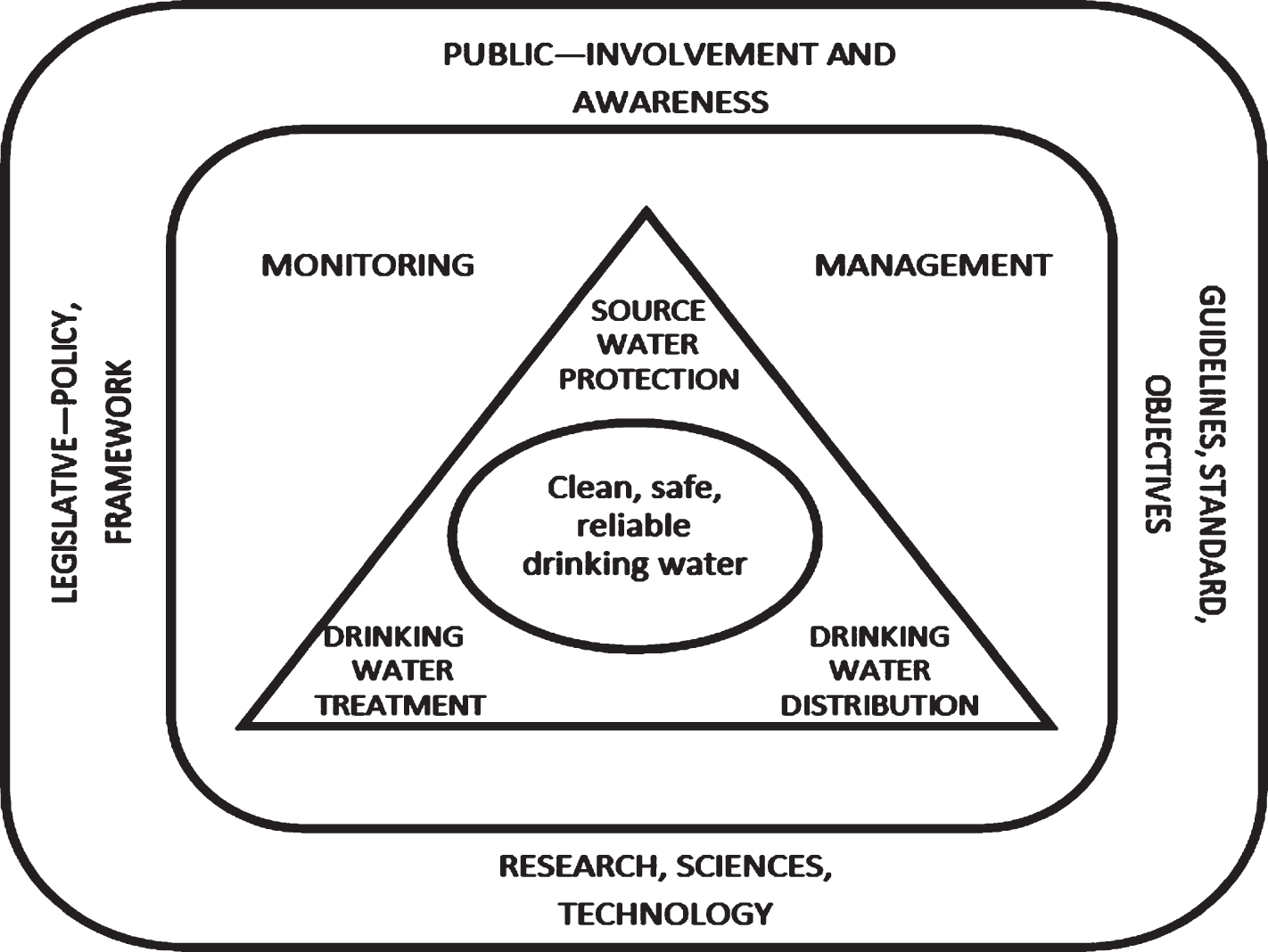
Since pharmaceutical pollutants are coming from variety of sources and pathways, while incorporating standard parameter of pharmaceutical contaminants, the holistic approach should to be taken by existing Malaysian legislative framework. The harmful characteristic of pharmaceutical contaminants could be reduced if multi-barrier approach is taken. Figure 3 shows the concept and element in holistic approach modeled by Canada for their drinking water. The holistic method should involve multiple protections starting from source-to-tap by integrating system of procedures, processes and tools that collectively prevent or reduce the contamination of drinking water from source to tap in order to reduce risks to public health. 31 The determination of types of pharmaceutical contaminants to be included as a parameter (for examples, caffeine, bisphenol A, diclofenac, and ciprofloxacin) and an environmental quality standard value (for example, maximum of 0.4 ng/L) should consider the six characteristics mentioned in the previous section. Since pharmaceutical contaminants are “emerging pollutants”, the multiple barrier in holistic approach could assist the legislation to prevent the contamination of pharmaceuticals to the maximum protection.
In Malaysia, the protection from APIs is not assured since no standard parameter has been set up for pharmaceutical contaminants in drinking water. For instances, EU Directive 2000/60/EC stated that environmental quality standard (“EQS”) value for steroid estrogens (17β-estradiol (E2) and 17α-ethynylestradiol (EE2)) must not exceed 0.4 ng/L and 0.035 ng/L respectively, 12 while WHO proposed precautionary benchmark value of 1 ng/L of E2 for drinking water and 0.4 ng/L of E2 for EQS value. 15 Therefore, this study proposes that selected pharmaceutical contaminants to be inserted as parameter in which Malaysian legislation would prevent from entering environment. As discussed in previous section, some pharmaceutical contaminants might not be dangerous because of low concentration in water, but, if continuous exposure, it might harm to human health. Thus, further scientific research should be conducted to determine which indicators in the pharmaceutical contaminants have fulfilled the harmful characteristic. For example, based on previous studies in Malaysian with regard to fate, occurrence, and health risk of pharmaceutical contaminants, there were selected pharmaceutical contaminants were reported having high concentration in water and might harmful to health such as caffeine, bisphenol A, diclofenac, and ciprofloxacin.
In order to provide maximum protection, the prevention should be prepared multi layered started from source water protection, water treatment, and finalized at water distribution. As it involves the multiple levels protection, the failure in one of the level may be compensated by effective operation of the remaining levels in order to prevent the pharmaceutical contaminants pass through the entire system and cause harm to consumer.
As far as the methods for standards derivation for pharmaceutical contaminants, further study is suggested by evaluating selected guidelines which proven to be reliable to be referred to such as guidelines from World Health Organization, United States Environment Protection Agency, New Zealand Ministry for Environment, Australia, Canada, and United Kingdom. 20 However, political, socio-cultural, geographical, and regulatory differences should be taken into consideration in referencing other countries guidelines.
Evidence from previous literatures have proved the occurrence of certain types of pharmaceutical contaminants in Malaysian rivers and tap water. Therefore, this study proposes that these types of pharmaceutical contaminants to be taken as follows: their harmful properties and characteristics should be confirmed with technical studies; health risk assessment should be conducted in future and further steps on legislation should be taken based on the results; revisions on rules and regulations should be promptly taken to incorporate the data for pharmaceutical products, which are found in high concentrations in Malaysian rivers and tap water. Their high occurrences proved that these types of contaminants were poorly administered which need the legislation approaches to assist; the improvement of technologies at STP so that selected pharmaceutical contaminants could be treated effectively. Yet, the improvement of technologies is useless if selected pharmaceutical contaminants were not included in the legislation as standard and parameter. selected pharmaceutical contaminants are included in the legislation as standard and parameter.
The loopholes in existing Malaysian legislation with regard to APIs in tap water could be completed by doing more research on the issue. For that reason, hopefully, the finding of this study could give better information on the relevant methods, which Malaysian legislation should take into consideration. The improvement of targeted legislation and regulations should be aggressively taken since public health is likely to be detrimental if this issue remains unattended. Multiple protection – from source to tap – seems to be the holistic approach which Malaysian legislative framework should give a serious attention.
Footnotes
Acknowledgments
This work was supported by the Ministry of Higher Education, Malaysia (KPT) under Trans-Disciplinary Research Grant Scheme (TRGS) [TRGS/2016/5535712]. The authors wish to thank all our colleagues who have provided professional support and constructive criticism in order to complete this paper.
Alshakka, M., Ibrahim, mohamed izham mohamed, Hassali, mohamed azmi, Palaian, S., & Aljadhey, H. (2016). Hazards of pharmaceuticals in water as new area in Eco-Pharmacovigilance Research. Journal of Pharmacy Practice and Comunity Medicine, 2(1), 3–8.
Swedish International Development Cooperation Agency. (2015). UNESCO Project Emerging Pollutants in Wastewater Reuse in Developing Countries UNESCO-IHP International Initiative on Water Quality (IIWQ). file:///C:/Users/user/Documents/Aguas.pdf
Praveena, S. M., Shaifuddin, S. N., Sukiman, S., Nasir, F. A. M., Hanafi, Z., Kamarudin, N., Ismail, T. H. T., & Aris, A. Z. (2018). Pharmaceuticals residues in selected tropical surface water bodies from Selangor (Malaysia): Occurrence and potential risk assessments. Science of the Total Environment, 642, 230–240. 
Drinking Water Contaminant Candidate List 4-Final, 81 81099 (2016).
Guidelines for drinking-water quality: Fourth edition incorporating the first addendum, (2017).
Kookana, R. S., Williams, M., Boxall, A. B. A., Larsson, D. G. J., Gaw, S., Choi, K., Yamamoto, H., Thatikonda, S., Zhu, Y.-G., & Carriquiriborde, P. (2014). Potential ecological footprints of active pharmaceutical ingredients: an examination of risk factors in low-, middle- and high-income countries. Philosophical Transactions of the Royal Society of London. Series B, Biological Sciences, 369(1656), 20130586.
World Health Organization. (2000). WHO seminar pack for drinking-water quality: Establishing national drinking-water standards.
Kirstie Murdoch. (2015). Pharmaceutical Pollution in the Environment: Issues for Australia, New Zealand and Pacific Island countries (Issue May).
Canadian Council of Ministers of the Environment. (2002). From source to tap: the multi-barrier approach to safe drinking water.
Canadian Council of Ministers of the Environment. (2004). From source to tap: guidance on the multi-barrier approach to safe drinking water.
Patneedi, C. B., & Prasadu, K. D. (2015). Impact of pharmaceutical wastes on human life and environment. Rasayan J.Chem, 8(1), 67–70.