



Abstract
AIM:
Assessment of the neutralizing activity of human monoclonal antibodies against HCV and also study their safety in experimental small animals (Swiss mice).
MATERIALS AND METHODS:
Assessment of neutralizing activity of human monoclonal antibodies against HCV envelope regions (E1, E2) by two methods: by HCV cc infectious system 1) and by using positive HCV positive serum as source of HCV particles genotype 4a (neutralizing assay 2). Dot ELISA was used to study the activity of the generated antibodies. Safety and toxicity of the generated human antibodies were tested by assessing the changes in the biochemistry of liver function and kidney function tests, Complete blood counts (CBC) and studying the pathological changes with different concentrations of purified human antibodies were carried out..
RESULTS:
Human Abs # 5 & 11 showed neutralizing activity by (neutralizing assay 2) but were not neutralizing by HCV cc assay. Human Abs # 12 & 15 showed neutralizing activity by the two methods i.e our generated human antibodies Abs# 5 &11 & 12 & 15 were neutralizing for HCV genotype 4a and Abs # 12 & 15 were neutralizing for HCV genotypes 4a and 2a. Liver and kidney functions and CBC results indicated that doses of 10
CONCLUSION:
The generated human monoclonal antibodies can be used to develop potent immunotherapy agents that can be administrated for the post-transplantation patients to prevent the recurrence of HCV infection. Also, the monoclonal antibodies can be used to develop a candidate vaccine against HCV.
Introduction
Hepatitis C virus represents a big health problem worldwide with about 3 million infections every year and a total number of 170 million case in the world. HCV infection leads to chronic infection in 50% to 80% of infected cases, this chronic infection leads to damage of the liver that may cause cirrhosis or liver cancer (hepatocellular carcinoma (HCC)). The HCV genome comprises of a single stranded positive-sense RNA of roughly 9.6 kb, which contains 3000 base pairs flanked by untranslated regions (UTRs) at both closures [1, 2]. Pegylated IFN (PEG-IFN) in combination with ribavirin (RBV) or Non-pegylated interferon (IFN) has been the basic components for HCV treatment. 70% to 90% of individuals infected with HCV genotype 2 and 3 were able to achieve the sustained virological response (SVR), while only 30% to 40% of infected patients with genotype 1 reached the SVR [3, 4, 5, 6, 7, 8]. The HCV treatment has been improved during the last years. Many molecules with an antiviral activity have been synthesized such as HCV synthetic peptides, antisense oligodeoxynucleotides, monoclonal antibodies, and the direct-acting antivirals [9, 10, 11]. In December 2013, the Food and Drug Administration (FDA) approved the Sofosbuvir (SOF) as a new drug against HCV. SOF is one of the second-generation direct acting antivirals DAAs which are characterized by increased SVR rates, comfortable ways of administration and good safety profiles [12]. The DAAs can be taken with or without ribavirin according to the patient case. Liver transplant occurs when HCV patients reach the end stage of liver disease. Unfortunately, HCV reinfection occurs for nearly half of liver transplanted patients in addition to the high risk of death one year after liver transplantation. Monoclonal antibodies (mAb) are monospecific antibodies that can attach to the same epitope [13]. Synthesis of monoclonal antibodies is made through homogenous hybrid cells (B cells). Hybrid cells are cell lines formed from the fusion between a myeloma cell (B cancer cell) and an antibody producing B cell. In 1975, the first mAb produced from a cell line was established [14], Human monoclonal antibodies can be produced through several ways such as transgenic mice, phage display, immortalization with Epstein Barr Virus (EBV), and humanized mouse monoclonal antibodies. The best way for production of fully human monoclonal antibodies is the immortalization of B lymphocyte cells [15]. In vitro, Epstein Barr Virus has the ability to immortalize all human B lymphocyte cells which enable the secretion of specific human monoclonal antibodies from the isolated monoclonal cell lines [16]. EBV immortalization leads to the production of human monoclonal antibodies of different types such as IgG, IgM, IgE, and IgA. Steinitz mentioned that human monoclonal antibodies are promising products of passive immunization for several problems like bacterial infections, viral diseases, and cancer [16]. In the present study, we established Human cell line producing human monoclonal antibodies, explored their viral neutralization, and studied their safety in small experimental animals (Swiss mice). In the hope to establish a potent immunotherapy from monoclonal antibodies targeting HCV. Immunotherapy may represent an important tool for HCV patients especially who undergo liver transplantation surgeries to prevent recurrence of HCV infection. Also these antibodies can be used to study candidate vaccine development.
Materials and methods
Isolation of B-cells (CD22+) from peripheral blood lymphocytes (PBMCs)
10 ml peripheral blood was collected from HCV positive patient (Informed consent was obtained). The blood specimen was layered on Ficoll-Hypaque solutions (Amersham Pharmacia, Milan, Italy). After centrifugation at 3000 rpm for 20 min, mononuclear cells were collected from the interface. Magnetic selection (Miltenyi Biotec, Bologna, Italy) was used to select and purify the CD22+ Lymphocytes.
Epstein-barr virus (EBV) production
B95.8 cell line (kindly obtained from Dr. James robinson, Tulan University, USA.) was used to produce free EBV particles. B95.8 was cultured in complete Dulbecco’s Modified Eagle’s Medium (DMEM) and was incubated in a CO2 incubator at 37C and 5% CO2. After culturing the cells, they were exposed to freezing and thawing. After that, centrifugation was occurred to obtain the media that contain the EBV particles.
Isolation of B-cells (CD22+) from human PBMCs positive for HCV antibodies negative for HCV RNA
Immortalization of B lymphocyte cells (CD22+) was occurred with some modifications. In brief, Mini-Macs cell separator (MACS) was used to isolate CD22 B cells, then 50 B cells/well were cultured in 96 well plate (Costar, Corning, USA) and immortalized using 30% v/v EBV in addition to B cell stimulators, 1
Dot blot ELISA analysis for antibody production
Culture supernatant (5
Viral neutralization
Hepatoma Huh7.5 cells were cultured and transfected with HCVcc (J6/JFH-1) infectious system as described [17]. The J6/JFH-1 infectious system was a gift from Charles Rice (The Rockefeller University, USA, MTA# 642 to Dr. Mostafa K. El-Awady 2007). This experiment was done as mentioned early by [9, 18] with some modifications. In brief, Huh7.5 cells were cultured in in complete DMEM media and were incubated in CO2 incubator at 37
Study the safety/toxicity of the human monoclonal antibodies in small experimental animals (Swiss mice)
To explore the dose range for future pharmacological studies, three doses namely 10
Results
Isolation of B-cells (CD22+) from human PBMCs positive for HCV antibodies negative for HCV RNA
Immortalization and propagation of separated CD22+ cells by EBV (30%), CPG2006 and IL2 were followed up and checked microscopically using inverted microscope and the growth of cell clones started to appear after 3 days. Figure 1 showed the immortalization of isolated CD22+ positive cells by EBV (30%) as procedures described in materials and methods.
Immortalization of isolated CD22+ positive cells by EBV (30%) in addition of CPG2006 and IL2. (A) Control cells; (B) Immortalized cells with EBV after 1 week; (C) Immortalized cells with EBV after 2 weeks; (D) Immortalized cells with EBV after 3 weeks.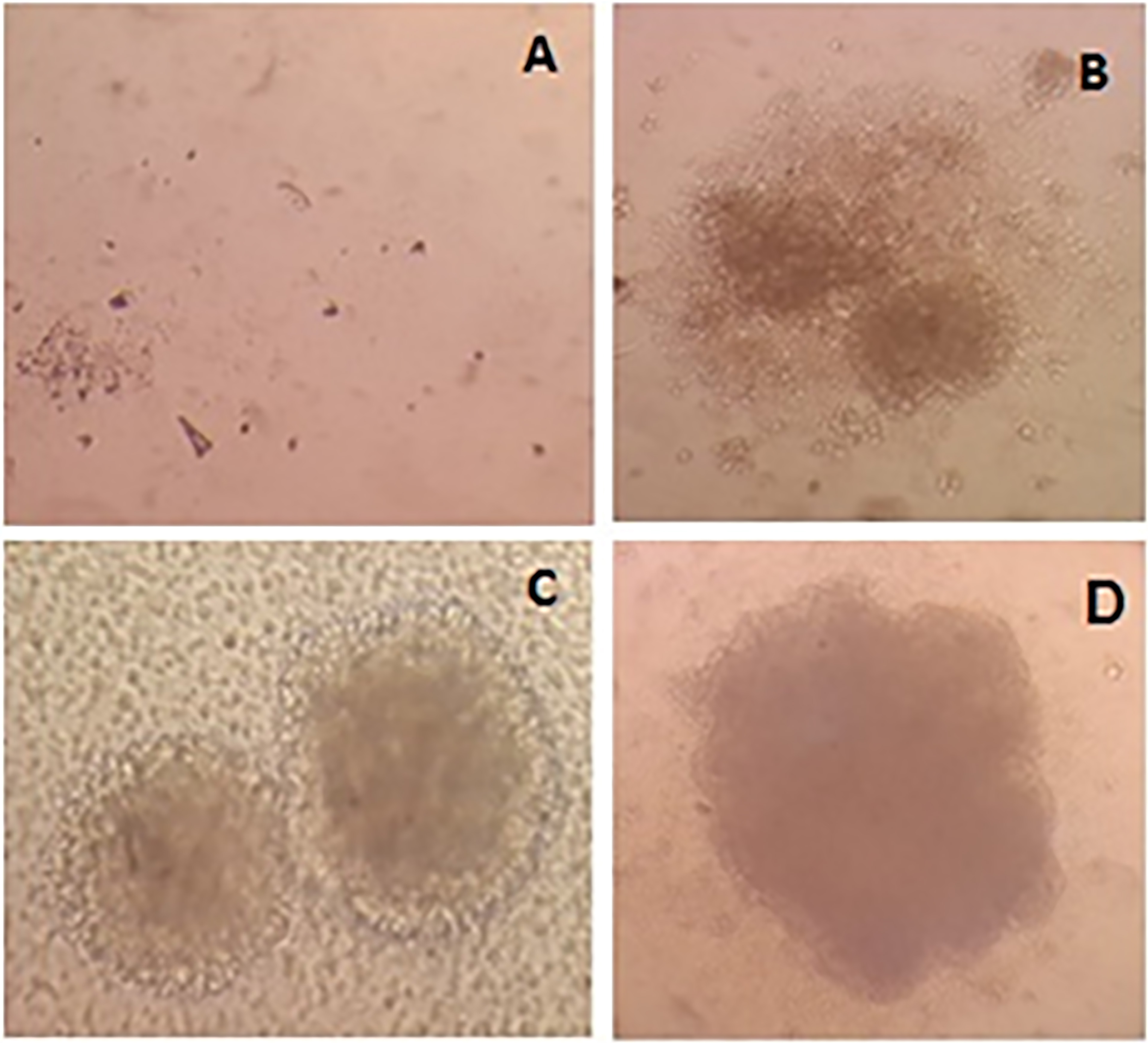
Using dot ELISA, as shown in Fig. 2, Positive human sera showed dark brown spot as positive control while culture medium or media supernatant of negative control cells showed no spot. Supernatant from different wells of immortalized cells showed good dark brown spot indicated that immortalized cells secreted human antibodies.
Dot blot analysis for antibody production after two weeks of cell immortalization by EBV.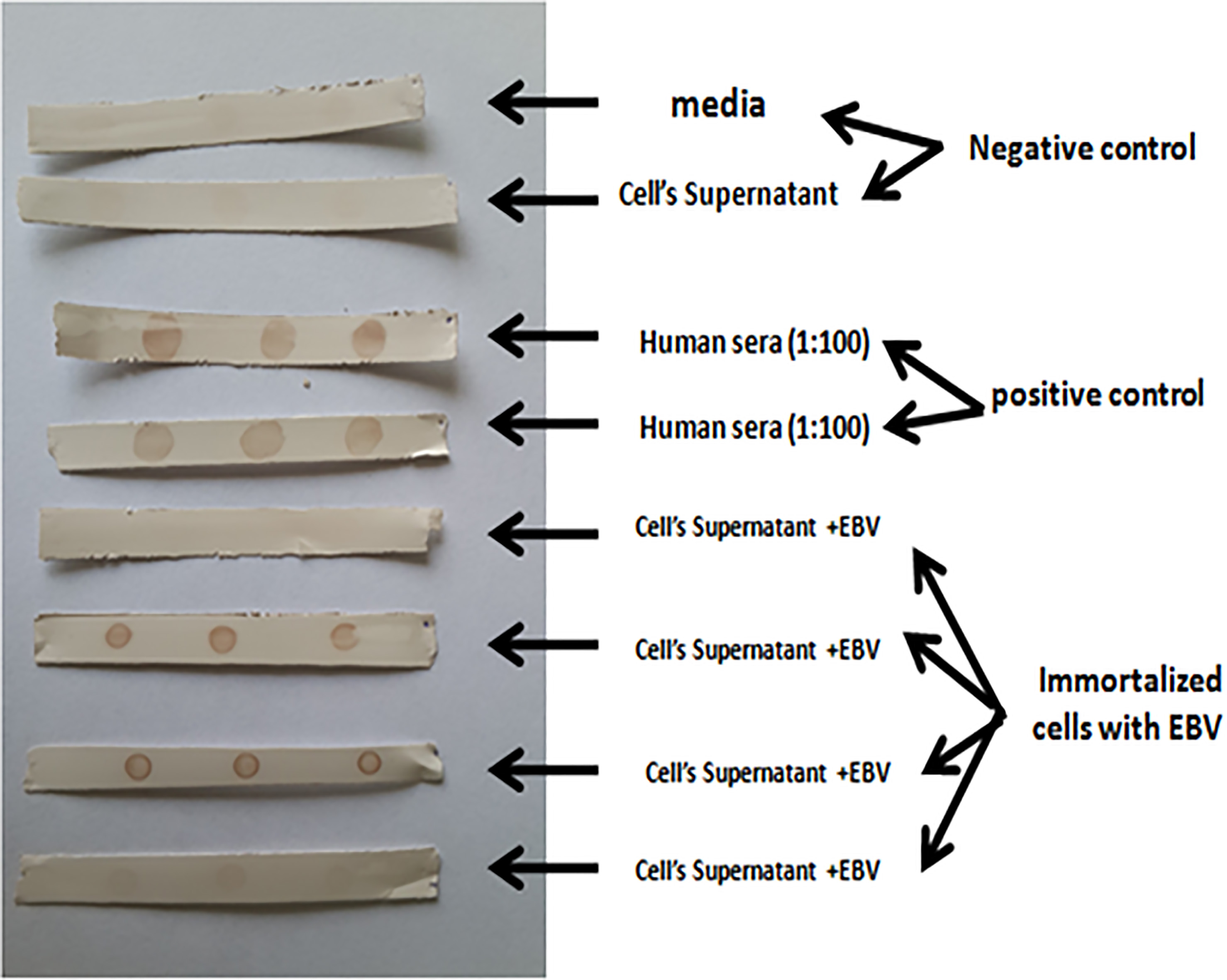
We assessed the neutralizing activity of the generated human monoclonal antibodies using HCV cc and patient’s HCV positive serum ample as a source of HCV as shown in Fig. 3. The neutralizing activity of the generated human antibodies were tested, one based on HCV cc system, and the other protocol based on using serum sample positive for HCV RNA as a source of the viral particle. Human antibody # 12, 15 showed neutralizing activity based on HCV cc and serum as a source of HCV viral particles. Ab # 11 and 5 showed neutralization activity only for serum samples but no neutralization using HCV cc system. i.e all tested human antibodies # 12, 15, 11, 5 showed neutralization based on serum sample as a source of viral particles (no band 174 bp) and only antibodies # 12, 15 have capability to neutralizing HCV serum and HCV cc systems. I.e our generated human antibodies Abs Abs # 5 & 11 & 12 & 15 were neutralizing for HCV genotype 4a and Abs # 12 & 15 were neutralizing for HCV genotypes 4a and 2a.
Study the safety/toxicity of the human monoclonal antibodies in small experimental animals (Swiss mice)
Hematology
RBCs count, total leucocytes and platelets counts were measured in all groups of mice immunized with 10
Biochemical changes in liver and kidney function tests
Biochemical parameters of immunized Swiss mice with different doses of human monoclonal antibodies were assessed. The data presented in Fig. 5 show that the dose 10
Histopathological changes
The data shown in Table 1 indicated that the doses of 10
Histopathological changes of the human monoclonal antibodies in small Experimental animals (Swiss mice)
Histopathological changes of the human monoclonal antibodies in small Experimental animals (Swiss mice)
(A, B, C, D, E, F) neutralizing activity of generated human antibodies # 5, 11, 12, 15. Tested generated human monoclonal antibodies # 12, 15, 11, 5 showed neutralization based on serum sample as a source of viral particles (no band at 174 bp) and only antibodies # 12, 15 have capability to neutralizing HCV serum and HCV cc systems.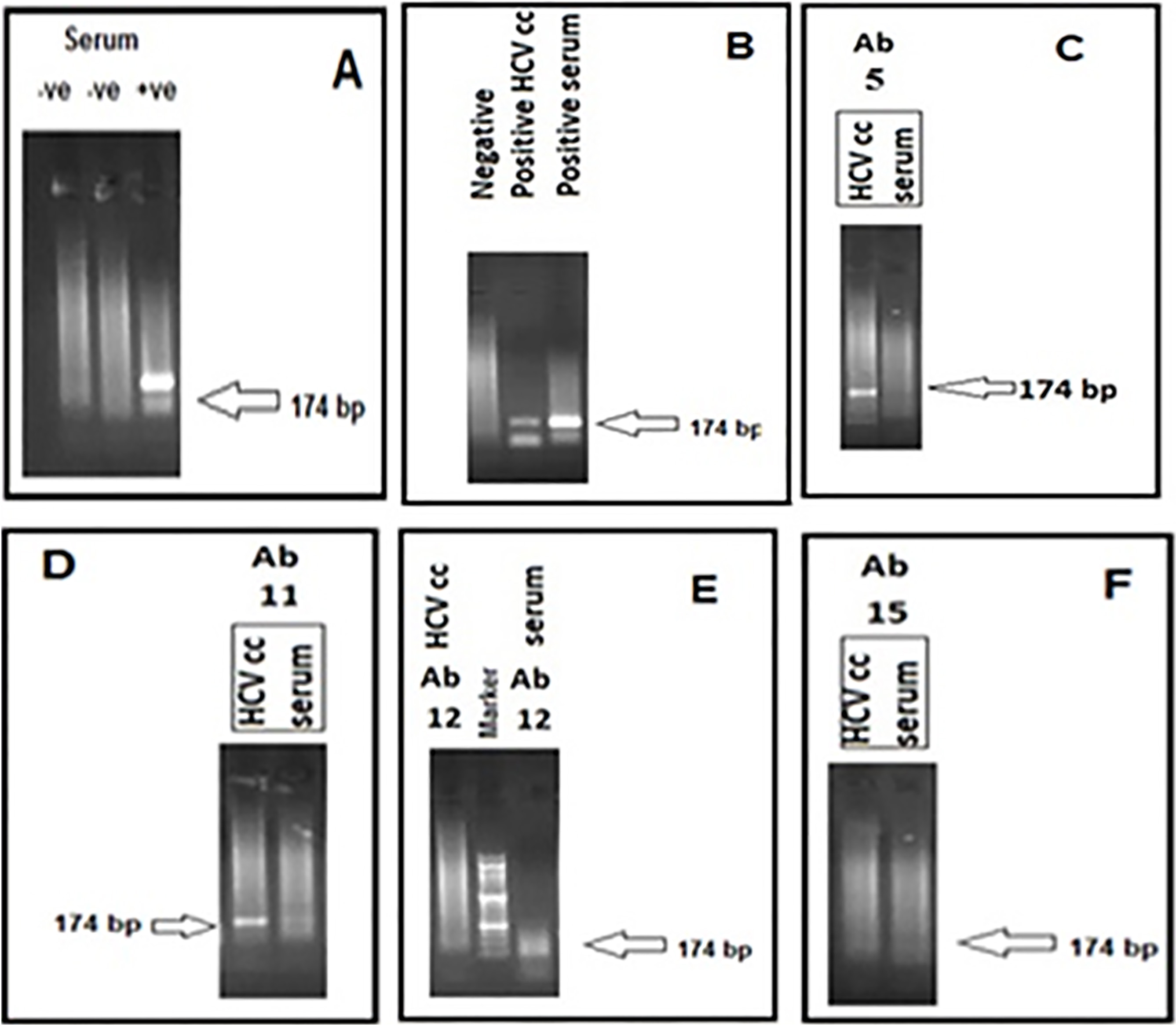
Changes in counts of red blood cells in blood of mice immunized with different concentrations (10 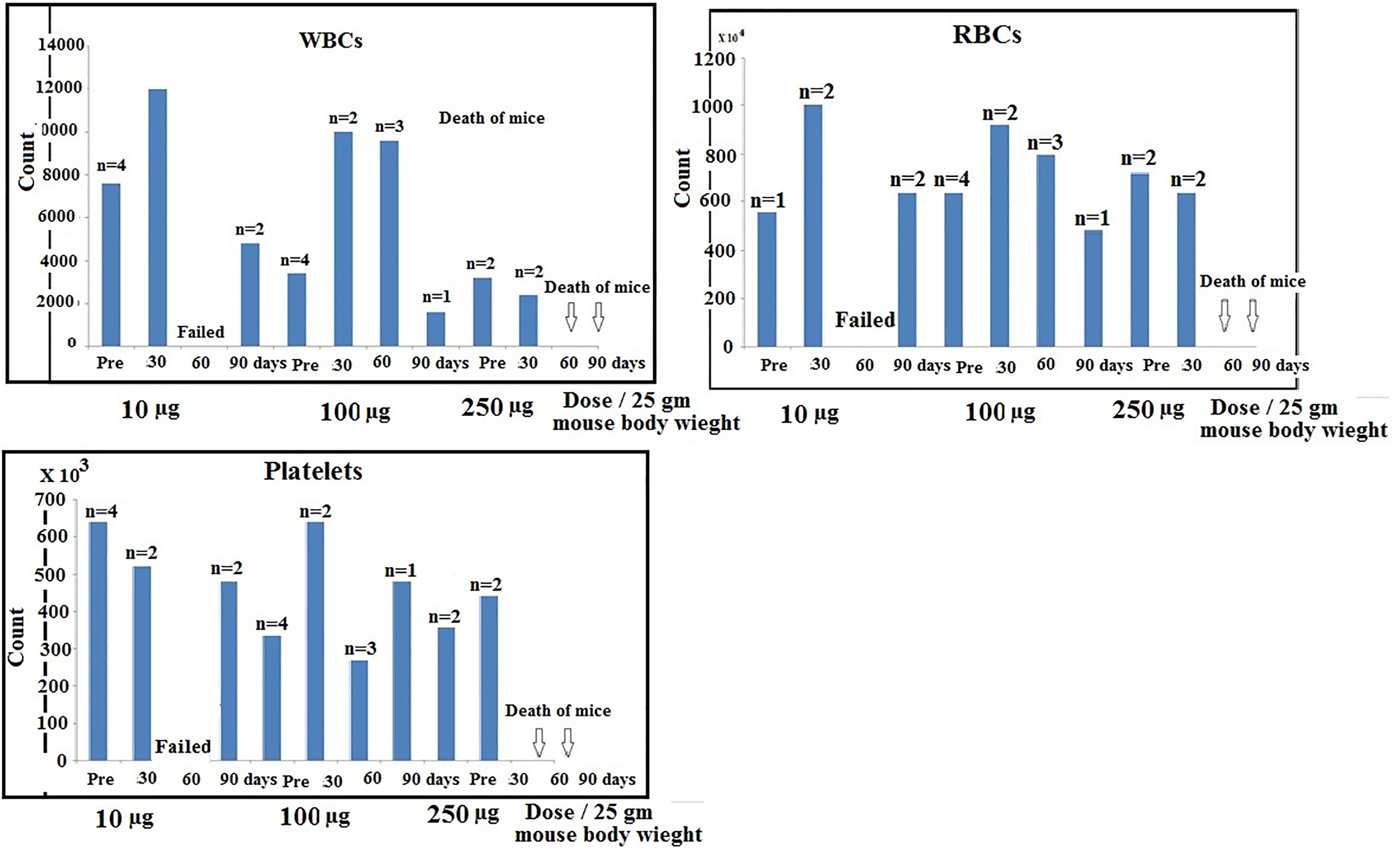
Changes in liver function ALT, AST, Albumin and kidney function (creatinin) in serum of mice immunized with different concentrations (10 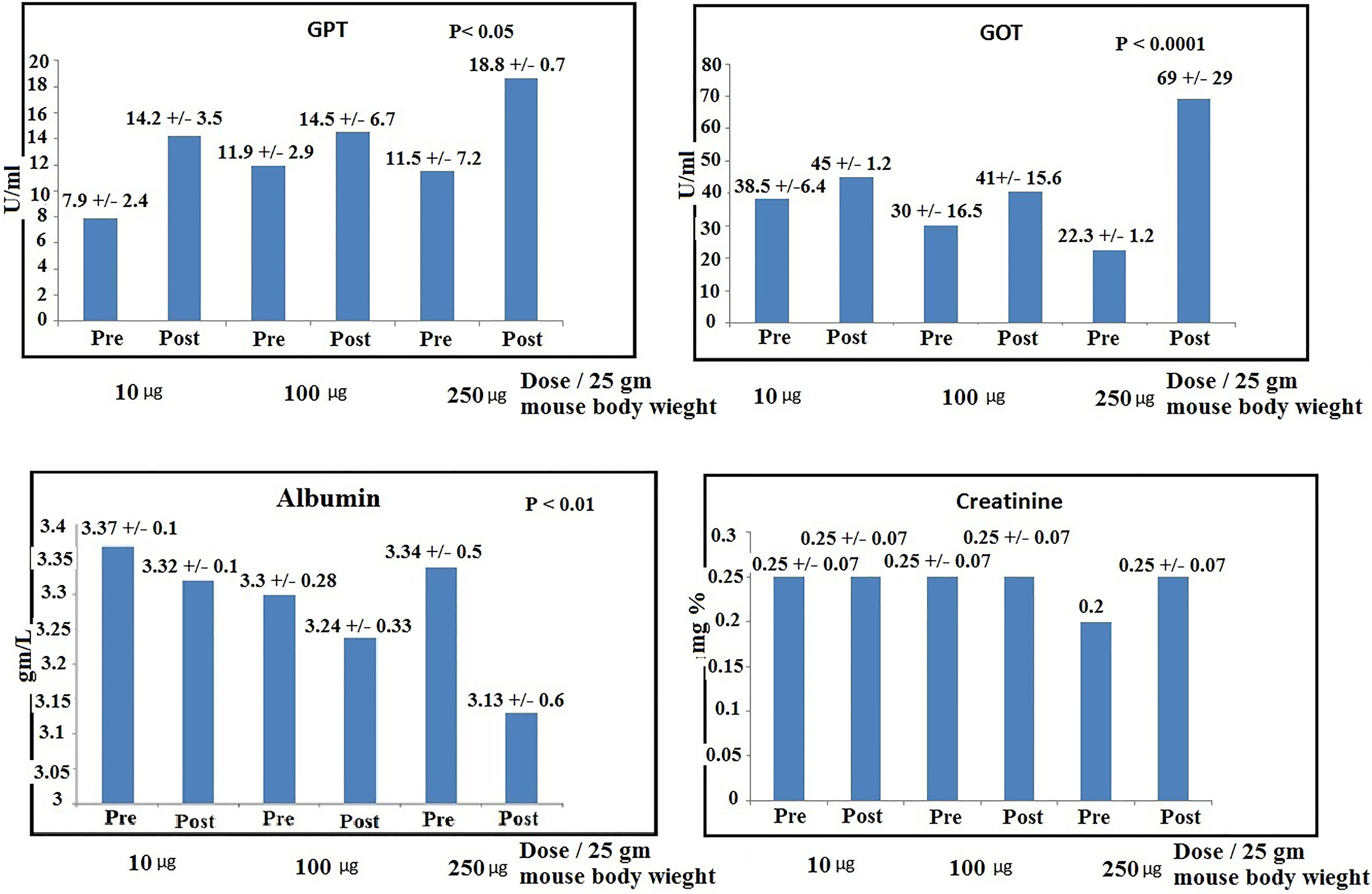
Human monoclonal antibodies can be produced through several ways such as transgenic mice, phage display, immortalization with Epstein Barr Virus (EBV), and humanized mouse monoclonal antibodies.
There are several studies aimed to produce monoclonal antibodies through immortalization of B lymphocyte cells [10, 21, 22, 23, 24]. In the present study, we aimed to establish a cell line that produce human monoclonal antibodies targeting HCV, these human monoclonal antibodies may be an important tool for HCV patients especially who are undergoing liver transplantation surgeries to prevent recurrence of HCV infection. First of all, we isolated B cells from peripheral blood mononuclear cells via microbeads conjugated with monoclonal antibodies target human CD22+. After that, the separated B cells (CD 22+) were immortalized using CPG2006, IL2, and 30% EBV, this method was reported by [21, 22], this method of immortalization gave higher reactive antibodies. Dot ELISA confirmed that the generated antibodies were human antibodies as we used conjugate antihuman peroxidase (Fig. 2). So, we optimized a reproducible immortalization method for B cell from patients negative for HCV RNA and positive for HCV antibodies for rapid human monoclonal IgG antibodies production from CD22
Neutralizing antibodies have an important function to control the HCV infection. Neutralizing antibodies are highly secreted in the early stage of HCV infection by patients who have the ability to resolve the infection [25, 26]. The HCV envelope proteins E1 and E2 are the main targets for the host immune defense (humoral immunity). So, neutralizing monoclonal antibodies targeting these HCV envelope proteins are promising tools to develop good therapeutic and prophylactic approaches in addition to accurate studying of the host-virus interactions.
The results of the neutralization assay using the HCV cc infectious system and HCV infected serum showed that two antibodies have neutralizing activity (Fig. 3). Sabo et al. reported that neutralizing antibodies are basic for inhibition of viral entry and post binding entry of the virus to the target cells [27]. Our generated human antibodies Abs# 5 & 11 & 12 & 15 were neutralizing for HCV genotype 4a and Abs # 12 & 15 were neutralizing for HCV genotypes 4a and 2a. This means that epitopes for these neutralizing human monoclonal antibodies can be used to design new HCV candidate vaccines for patients with HCV genotypes 4a and 2a. Also in this study we tested the safety and toxicity of the generated human antibodies by assessment of the changes in biochemistry of liver function tests (ALT, AST, Albumin) and changes in kidney function test (serum creatinin) with different concentration of purified human antibodies (10
Footnotes
Acknowledgments
This study was supported in part by projects STDF 894 and STDF5041 to Dr. Ashraf Tabll.