



Abstract
OBJECTIVE:
The present study was aimed to assess the effect of Resveratrol supplementation, endurance exercise and acute exercise training on oxidative stress and tissue damage markers.
METHODS:
Sixty-four male Wistar rats were categorized into four groups including resveratrol group, exercise group, exercise
RESULTS:
The endurance and acute exercise training led to an increase in the levels of CPK and LDH, However, following the endurance and acute exercise training, a reduction in the level of carbonyl and 8-OHdG was observed. RES supplementation did not have any effect on the levels of CPK and LDH; nevertheless, reduced significantly carbonyl, and 8-OHdG levels. Based on this evidence, RES may have protective effects against exercise-induced oxidative stress.
CONCLUSION
: This study provides further evidence of the antioxidant effects of RES after exercise. However, several factors such as type and duration of exercise, the type of model, the amount of RES supplementation and the time-course consideration can affect the quality of the results. For this reason, further studies in this field are required.
Introduction
Physical inactivity is likely to result in the complications of diseases such as atherosclerosis, diabetes, obesity, and metabolic syndrome. On the other hand, sports activities can reduce and prevent cardiovascular disease [1, 2, 3]. Extensive production of reactive oxygen species (ROS) is associated with increasing age and pathological complications of a number of diseases, such as atherosclerosis, cancer, diabetes, chronic inflammation and muscle atrophy. The uncontrolled production of excess organic radicals ultimately leads to oxidative stress. One of the most sensitive targets for peroxidants can be unsaturated fatty acids in biological membranes, which are involved in the pathogenesis of many diseases. Moreover, toxicotoxic metabolites derived from lipid peroxides play a significant role in the oxidation of proteins present in LDL, where this trend is of particular importance in the pathogenesis of atherosclerosis [3].
Physical activity was reported in 1978 to result in a 1.8-fold increase in lipid peroxidation following a 60-minute of cycling exercise at 25–75% of VO
It has been indicated that 2 to 5% of oxygen applied in the mitochondria forms free radicals. As oxidative phosphorylation enhances in response to exercise, a concomitant increase can be observed in free radicals. Moreover, the catecholamines released during exercise can also increase the production of radicals. The metabolism of prostanoid, xanthine oxidase, NADPH oxidase, and several other secondary sources, including macrophages present in the inflammatory site of damaged tissues, also acts in the same way [5, 6]. The antioxidants used by athletes as a means to neutralize exercise-induced oxidative stress [6, 7]. Overall, it can be argued that some studies have shown increased oxidative stress in response to some types of exercise. Many investigations are looking to clarify whether antioxidant supplements are beneficial to those who have regular exercise y. Many preliminary studies have revealed no effect of antioxidant supplements on exercise implementation, but little theoretical basis suggests that they can be effective. It is worth noting that many factors are involved in human performance, therefore, it is not easy to recognize the effects of complementary intervention [6, 8].
Several markers were applied to evaluate oxidative stress in muscle and blood [malondialdehyde (MDA)], lipid peroxidation, expired pentane, conjugated dienes, F2-isoprostanes, 8-hydroxy-2
Trans-resveratrol is known as a phytochemicals synthesized in different plant species [9, 10, 11], which has been used in traditional Chinese and Japanese medicine for the treatment of fungal, lipid, inflammatory, hypertensive, allergic disease [12, 13]. Trans-resveratrol has been considered in many investigations as an antioxidant [14, 15].
The use of resveratrol (RES) in the management and treatment of cardiovascular disease has initially shown interesting findings in terms of inhibition of atherosclerosis progression [16]. It has been shown that RES supplementation could improve cardiovascular function in hypertension-induced failure in laboratory rats [17]. Accordingly, the implementation of this research can provide valuable scientific data about power of antioxidant supplement against oxidative stress caused by exercise.
Previous studies have reported the positive effects of RES on inhibiting oxidative and inflammatory stress from free radicals [18, 19, 20]. There is a question whether this supplement also affect exercise, response to oxidative and inflammatory in muscle injury during exercises? Therefore, the current study was aimed to evaluate the effect of RES supplementation and the endurance exercise training and acute exercise training on oxidative stress and tissue damage markers.
Material and methods
RES preparation
RES powder (3 gr) was purchased from Enzo Life (Switzerland). The amount of 10 mg RES per kg body weight of the rat was suspended in ethanol 2% and was orally administered at the same time during exercise.
Animals
Male Wistar rats (
They were housed in cages (
Male Wistar rats were quarantined for 1 wk and the familiarization step was performed on a calibrated motor driven rodent treadmill for 10 minutes at a speed of 5 to 10 m/min and handled 3 days per week. The control groups were acclimated to treadmill running 3 times a week at a slow speed for 10 to 15 minutes.
Exercise training
Wistar rats were acclimated to a calibrated motor driven rodent treadmill for endurance exercise and acute exercise performance in rats. The exercise protocol began at 8 weeks of age whereby rats performed treadmill running five days a week at a speed of 10 m/min
Rats anesthesia was performed by intraperitoneal injection of ketamine (30–50 mg/kg) and xylosin (3–5 mg/kg) after acute exercise. Blood samples were directly collected in heparin-treated 10-ml syringe using cardiac puncture. Furthermore, plasma samples were separated by centrifugation at 3000
Changes in oxidative stress and tissue damage markers were biochemically determined using commercial ELISA kits according to the manufacturer’s instructions. These markers were included 8-hydroxy-2
Statistics
SPPS for Windows 21.0 version was applied to evaluate the data. Comparisons between all groups were performed using one-way analysis of variance (ANOVA). A probability value of
Results
Effect of RES supplementation and endurance training protocol on the Creatine Phosphokinase (CPK) Levels
CPK is an enzyme that its plasma levels increase with muscle damage. After the implementation of the protocol, CPK plasma level significantly increased in the training group compared to the control group (
After acute protocol implementation, plasma PK levels increased significantly in the exercise group compared to the control group (
Based on the results, there was a significant difference in the level of CPK in the RES group after the implementation of both protocol (
The Effect of RES supplementation and endurance exercise training on the protein carbonyl
Protein carbonyl is an indicator of lipid peroxidation, so that oxidative damage to plasma proteins results in the production of protein carbonyl and increased plasma levels.
Based on the information presented in Table 1, after the implementation of the protocol, the plasma protein level of carbonyl in all three groups of exercise, the RIS group and the RIS group, decreased compared to the control group (
Changes in plasma levels of Pro-Carbo and LDH after acute and endurance exercise
Changes in plasma levels of Pro-Carbo and LDH after acute and endurance exercise
As shown in Table 1, after performing the acute protocol, the plasma protein level of protein carbonyl exhibited increased rate in all three groups including exercise, the RES group and the exercise
The ratio of protein carbonyl among studied groups after performing acute exercise training and endurance exercise training
The level of protein carbonyl depicted a significant difference in all three groups of exercises, the RES group and the exercise
Figure 1: The level of protein carbonyl among different studied groups after performing acute exercise training and endurance exercise training.
Comparison of Pro-Carbo in Acute exercise and endurance exercise groups
Comparison of Pro-Carbo in Acute exercise and endurance exercise groups
8-OHdG is an important indicator of oxidative stress and a DNA oxidation product with a high mutational potential.
The results of this study showed that plasma levels of 8-OHdG did not change significantly after endurance exercise protocol (
The effects of co-administration of RES supplementation and acute exercise on the 8-OHdG levels
As indicated in Fig. 1, the plasma level of 8-OHdG did not reveal significant changes between the exercise group and the RES group after acute protocol implementation (
Comparison of 8-OHdG level between the acute exercise training and endurance exercise training
There was no statistically significant difference between the OHDG plasma levels in the RES group after performing the endurance protocol and the acute protocol (
Comparison of Pro-Carbo in acute exercise and endurance exercise groups.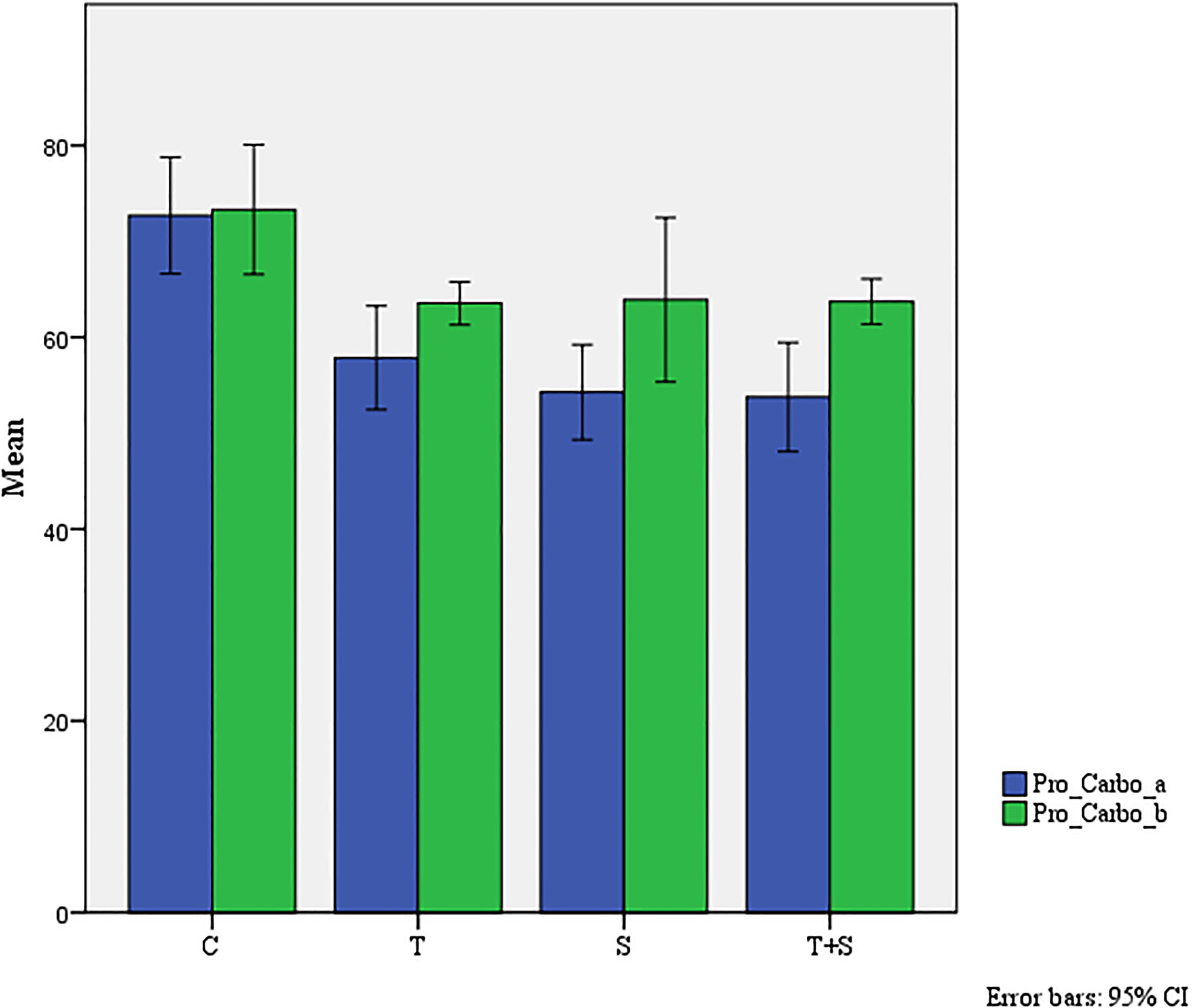
As we know, the LDH enzyme is a suitable biomar-ker for tissue damage. Table 1 indicates that the plasma level of LDH increased in the exercise group as compared to the control group after performing endurance protocol (
The effect of simultaneous performance of RES supplementation and acute exercise on LDH plasma levels
After completing the endurance training protocol, there was a significant increase in the level of plasma LDH in the exercise group and the exercise
LDH plasma levels after performing acute exercise training and endurance exercise training
As shown in Fig. 2, the plasma level of LDH in the acute protocol was significantly increased in all groups except for the control group (
Comparison of LDH in Acute exercise and endurance exercise groups
Comparison of LDH in Acute exercise and endurance exercise groups
Comparison of LDH in Acute exercise and endurance exercise groups.
Research has shown that under various physiological and pathological conditions such as extreme sports, exercise in height, immobility, and many diseases, the antioxidant system in the body is not able to control damage from free radicals. Under these conditions, antioxidants in foods such as vitamin E, vitamin C, beta-carotene, etc. play a key role in oxidative stress. Physical activity (endurance and acute exercise) causes oxidative stress, but the intensity of exercise further leads to an increase in oxidative stress.
Extreme exercise training reduces the total antioxidant capacity that represents the total amount of antioxidants in the body. In general, severe physical training can weaken an antioxidant defense system.
The protective effect of RES against oxidative stress has been shown by many studies [19, 21, 22, 23]. For example, in a study by Ryan et al., RES increased the effect of endurance exercise on reducing H
Accordingly, in the present study, the effect of endurance and acute exercise training on oxidative stress markers and tissue damage markers such as CPK, carbonyl protein, OHdG-8 molecule and LDH enzyme, as well as potential effects of RES supplementation were evaluated. The CPK enzyme has involved in primary energy production (ATP) for muscle in anaerobic conditions. Increasing this enzyme in the blood under anaerobic activity indicates tissue damage and inflammatory conditions. By increasing the intensity of exercise, the level of peroxide and CPK can increases, while with regular exercise, the serum levels of free radicals and creatine phosphokinase have revealed to be decreased [24, 25]. In the present study, both groups of endurance and acute exercises demonstrated a significant increase in the level of CPK. The effect of endurance training on the CPK levels has been shown in previous studies. A study on Balb/c mice showed that short and long term endurance training (for 5 weeks; 12 months) increased CPK levels in young Balb / c mice (6 months) and middle-aged mice (15 months) that such change was not observed in elderly mice. As a matter of fact, the process of producing CPK with aging tends to decrease [26]. These findings are consistent with our observations in the present study. Furthermore, our findings suggested that RES supplementation after endurance exercise caused a significant decrease in CPK levels.
In consistent with our findings, grapevine extract has been shown to significantly reduce CPK levels and prevent cell damage in professional athletes following endurance exercise [18]. Therefore, based on the present study, RES in heavy exercise seems to have a decreasing effect on the level of CPK and prevent oxidative stress-associated harmful effects of CPK.
Recently, Ahmadian et al. depicted that aerobic exercise in both groups of young and old rats reduced the level of carbonyl [27]. Moreover, Santin et al. demonstrated that moderate exercise in rats prevented oxidative stress damage on the hippocampus by reducing the level of carbonyl and nitric oxide proteins [28]. In this study, the level of carbonyl protein in all acutance and acute exercise training groups was decreased in comparison with the control group. These observations are consistent with the study of Ahmadian et al. [27], and Santin et al. [28]. However, contrary to our study, Alessio et al. revealed that, the level of carbonyl protein immediately increases in both exhaustive aerobic and nonaerobic isometric exercise [29]. It has also been shown that protein carbonyl concentration was increased by cycling exercise implemented at 70% Vo
OHdG has been studied as a marker of oxidative damage of high-mutagenic DNA [30, 31]. Studies have shown that 8-OHdG levels increase significantly after exercise, which results in oxidative damage to DNA [32, 33, 34]. Morillas-Ruiz et al. indicated that moderate-intensity exercise with an exercise intensity of 70%VO
These findings are incompatible with the results of Morillas-Ruiz et al. [33] and Okudan and Belviranli [35]. In fact, the increase in exercise intensity has led to a decrease in the level of 8-OHdG. Previous studies have depicted that the use of RES reduced the level of 8-OHdG and other oxidative stress markers [36, 37].
For instance, RES supplementation has been indicated to be significantly associated with decreased levels of 8-OHdG after performing strenuous exercise in rats [38]. In addition, the use of RES supplementation in diabetic rats was linked to a decrease in OH-8 levels [36], where RES supplementation had improved oxidative stress and protects against diabetic nephropathy.
Recently, Coban et al. demonstrated that the implementation of the intense swimming exercise in rat led to an increase in the level of 8-OHdG, while the level of 8-OHdG was moderated and determined to be similar to the control group in the RES-supplemented swimming group [39].
In the present study, level 8-OHdG exhibited a significant decrease in the RIS group when comparing to the control group. This finding is consistent with the results of Kitada et al. [36] and Xiao study [38]; as matter of fact, these observations provide further evidence of the antioxidant effects of RES, suggesting that RES may have a protective effect against oxidative stress-induced DNA damage in athletes.
The LDH enzyme is a suitable biomarker for tissue damage. Studies have demonstrated that LDH levels increased following exercise [40, 41, 42]. Machado et al. showed that LDH levels have increased significantly 24–72 hours after resistance exercise sessions that may interfere with muscle damage [42]. In the present study, both acute and endurance exercise protocols significantly elevated LDH levels and LDH levels exhibited a direct correlation with exercise intensity. The increase of LDH level in the acute exercise group was significantly more than the endurance exercise group.
Protective effects of RES supplementation against strenuous exercise-induced oxidative damage has been previously revealed in rats by reducing LDH level and other oxidative stress and tissue damage markers [33, 38]. Moreover, it has been reported that the physical fitness test in military firefighters has led to an initial increase in LDH levels when compared with pre-exercise before RES supplementation, while no significant changes has been determined after 90 days of RES supplementation [43].
In agreement with the findings of previous studies, our findings revealed that, LDH levels in the exercise
In fact, the RES supplementation modulated increased level of LDH level.
In the present study, the adaptive and acute protocol led to an increase in levels of CPK and LDH enzymes and also reduced the level of carbonyl and 8-OHdG proteins. Furthermore, RES has no effect on the levels of CPK and LDH enzymes, while modulating the levels of carbonyl, and 8-OhdG proteins. Accordingly, RES seems to have protective effects against exercise-induced oxidative stress.
Footnotes
Conflict of interest
None to report.