



Abstract
BACKGROUND:
Chronic Hepatitis C virus (HCV) infection is associated with progressive liver inflammation which in turn leads to cirrhosis and finally causes hepatocellular carcinoma (HCC). By different escape mechanisms, the virus succeeds to evade the innate and acquired immune responses to establish chronic infection.
AIM:
This study aimed to evaluate the level of chemokine CXCL9 and its correlation with some biochemical parameters in different subjects of HCV patients.
MATERIALS AND METHODS:
A total of 83 persons participated in this study including healthy subjects without both HCV antibodies and HCV RNA (22.9%), HCV treated responders accomplished SVR post treatment, with HCV antibodies and absence of HCV RNA (24.1%), spontaneous or natural clearance patients, with positive HCV antibodies and negative HCV RNA without treatment (26.5%) and chronic HCV-patients, with both positive HCV antibodies and HCV RNA with no treatment (26.5%). HCV RNA was quantitated by real time PCR and serum CXCL9 level was measured by ELISA commercial kit pre-coated with human MIG/CXCL9 antibody. Assessment of biochemical and hematological parameters was carried out.
RESULTS:
Data showed that, the level of CXCL9 was significantly increased in chronic individuals (627.1 pg/ml) (
CONCLUSION:
Serum Chemokine CXCL9 level is associated with spontaneous clearance of HCV and response to HCV treatment, which may be identified as a predictive marker among HCV patients.
Introduction
Hepatitis C virus (HCV) is a predominant pathogen with high mortality rates all over the world [1]. HCV infection affects about 170 million individuals worldwide [2]. Although HCV infection rate is diminishing in the developing countries, however, it has been reported that over the next 20 years the mortality from liver diseases secondary to HCV will keep on rising [3]. Among individuals who are exposed to HCV, 50 to 80% developed chronic infection that may progress to cirrhosis and/or hepatocellular carcinoma (HCC) [4]. Chronic infection is established when HCV successfully evades the host immune responses [5].
Studying the immune response in individuals who spontaneously cleared HCV infection is crucial to the development of a possible prophylactic vaccine. The mechanisms leading to viral eradication are not fully understood [3]. It has been reported that, levels of interferon
Cytokines are provided as protective or immune-pathological responses after HCV infection. CXCL9 is a small cytokine that belongs to the chemokine family of CXC. It is also known as MIG, Monokine induced by (IFN-
Patients and methods
This study has been conducted on healthy subjects (22.9%), responders (24.1%), spontaneous clearance (26.5%) and HCV chronic individuals (26.5%) (Fig. 1). Nineteen healthy individual (9 females and 10 males), with an average age 23–51 years served as healthy volunteers, with negative HCV antibodies and twenty individuals (7 females and 13 males), with an average age 33–60 years were identified as a responder for HCV treatment, responders’ patients had positive HCV antibodies before treatment and negative HCV RNA PCR post treatment. Twenty-two subjects (10 males and 12 females) were identified as spontaneous clearance group of patients (age 33–64), Spontaneous clearance patients had positive HCV antibodies and negative HCV RNA PCR without any treatment. Twenty-two subjects (8 males and 14 females) were identified as chronic HCV-infections (age 35–65), Chronic infection, patients had positive HCV antibodies and positive HCV RNA PCR. Samples from healthy, responders and spontaneous clearance individuals were selected from the village of Ameriyah and Al-Mahalla Al-Kubra, Gharbia. Samples of chronic HCV patients were obtained from the National Liver Institute in Shebin El-Kom. This study did not include non-responders’ cases after treatment (i.e. have both HCV antibodies and RNA) due to high successful percentages of success of treatment of Direct Acting Antivirals (DAAs) in Egypt [21].
Distribution of the enrolled patients in the present study.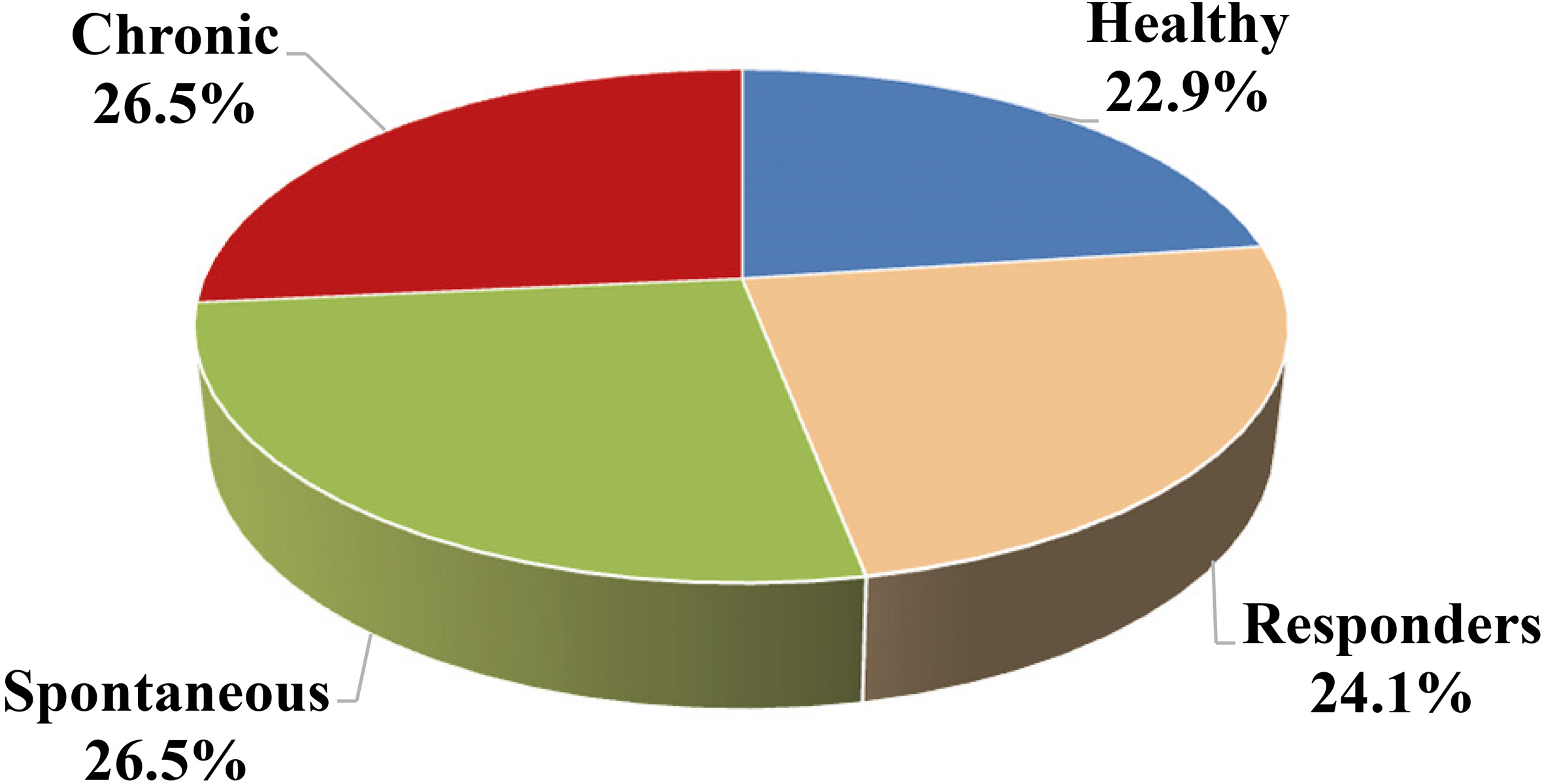
In the responders’ individuals, they were treated with interferon only, which was injected weekly for a period of 48 weeks and most of them got a relapse and then took DAAs in the form of the triad treatment consisting of Sovaldi (Sofosbuvir), ribavirin and interferon. Only one patient got a relapse then took Harvoni (Ledipasvir
Blood sampling
The blood samples were collected from all individuals enrolled in this study and were divided into two parts; the first part was left to clot for 30 min to obtain the sera. The second part was kept with anti-coagulant agent (EDTA) for measuring the hematological parameters and collection of plasma samples. Plasma and sera were aspirated carefully and let to freeze at
Biochemical and hematological analysis
Liver transaminases, aspartate aminotransferase (AST/GOT) and alanine aminotransferase (ALT/GPT) and albumin were measured by commercial kits supplied by SPINREACT, S.A.U. Ctra. Santa Coloma, Girona Spain. Serum total and direct Bilirubin were measured by spectrophotometer using kits (Diammond, Cairo, Egypt). HCV Ab was tested by rapid test device (ABON Biopharm, Hangzhou, Co., Ltd) and it is confirmed by HCV Ab Elisa (abia
HCV-RNA quantification
HCV RNA was assessed by the Roche COBAS
CXCL9 quantification
Serum CXCL9 level was measured in all cohorts by the commercially enzyme-linked immunosorbent assay according to manual procedures based on pre-coated plates with human MIG/CXCL9 antibody and using the Biotin double antibody sandwich technology to assay the Human monokine induced by interferon-gamma (MIG/CXCL9) BT Bioassay technology laboratory (Shanghai Korain Biotech Co., LTD, Cat.No E0049Hu). The minimum detectable level is 10.01 ng/L. The total count of red blood cells (RBCs), total count of white blood cells (WBCs), total count of platelets, hemoglobin and differential leucocytes were assessed by Hematological analyzer (Mindray CBC cell counter, India).
Statistical analysis
Data were analyzed using Graph Pad Instat software (San Diego, CA, USA). The data were expressed as mean
The hematological parameters profile among cohort study
The hematological parameters profile among cohort study
All parametric values are expressed as means
The hematological profile among studied cohorts
Hematological analysis in the healthy, responder, spontaneous and chronic HCV subjects was assessed by determining red blood cells (RBCs), white blood cells (WBCs), hemoglobin (Hb), platelets and differential count of leucocytes. Results showed that there was a significant decrease in the hemoglobin level in the spontaneous clearance individuals as compared to healthy persons (
Serum level of CXCL9 in healthy individuals, spontaneous, responders and chronic HCV patients as measured by ELISA.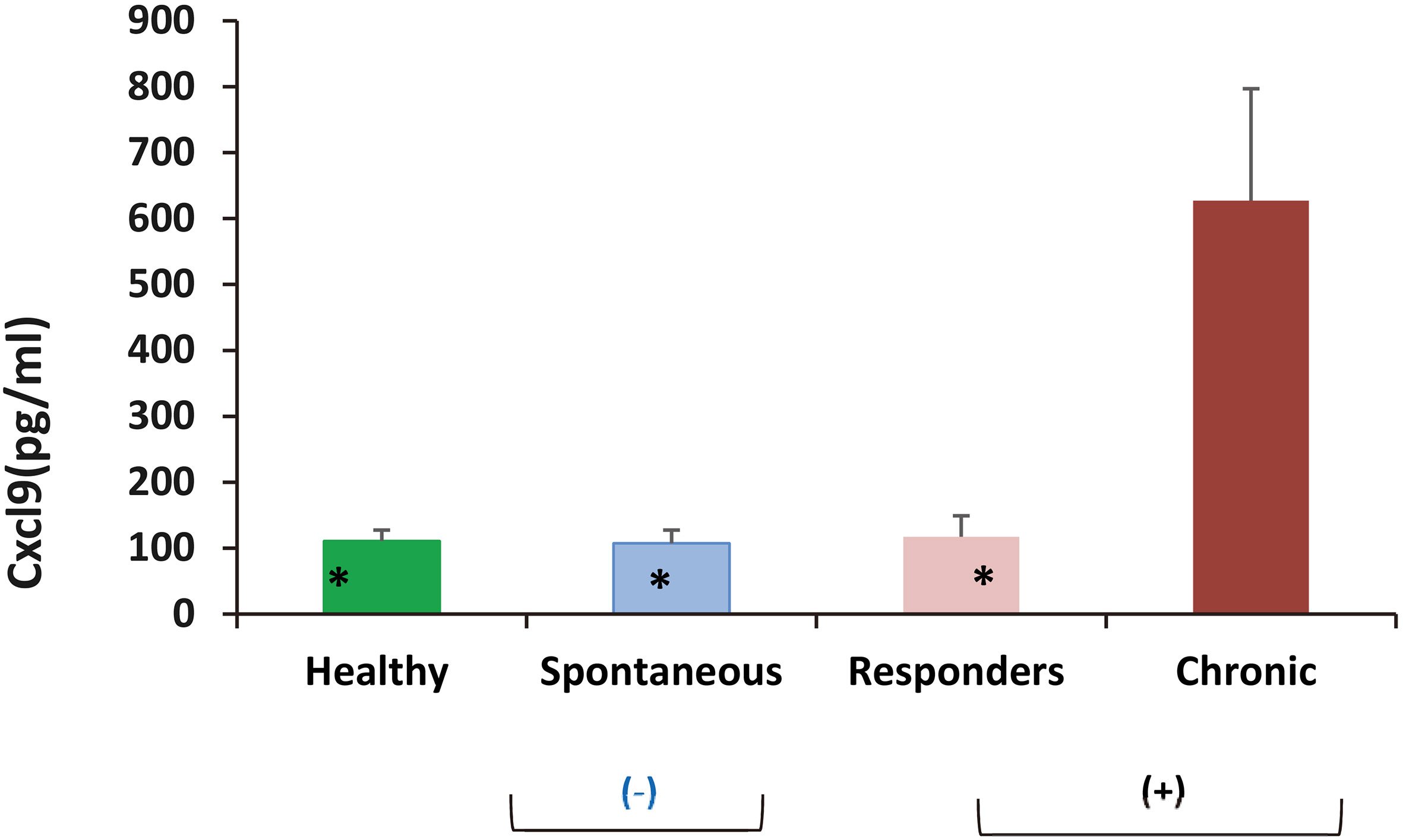
The correlation between CXCL9 serum level and HCV viral load. There is no correlation between serum level of CXCL9 and HCV viral load (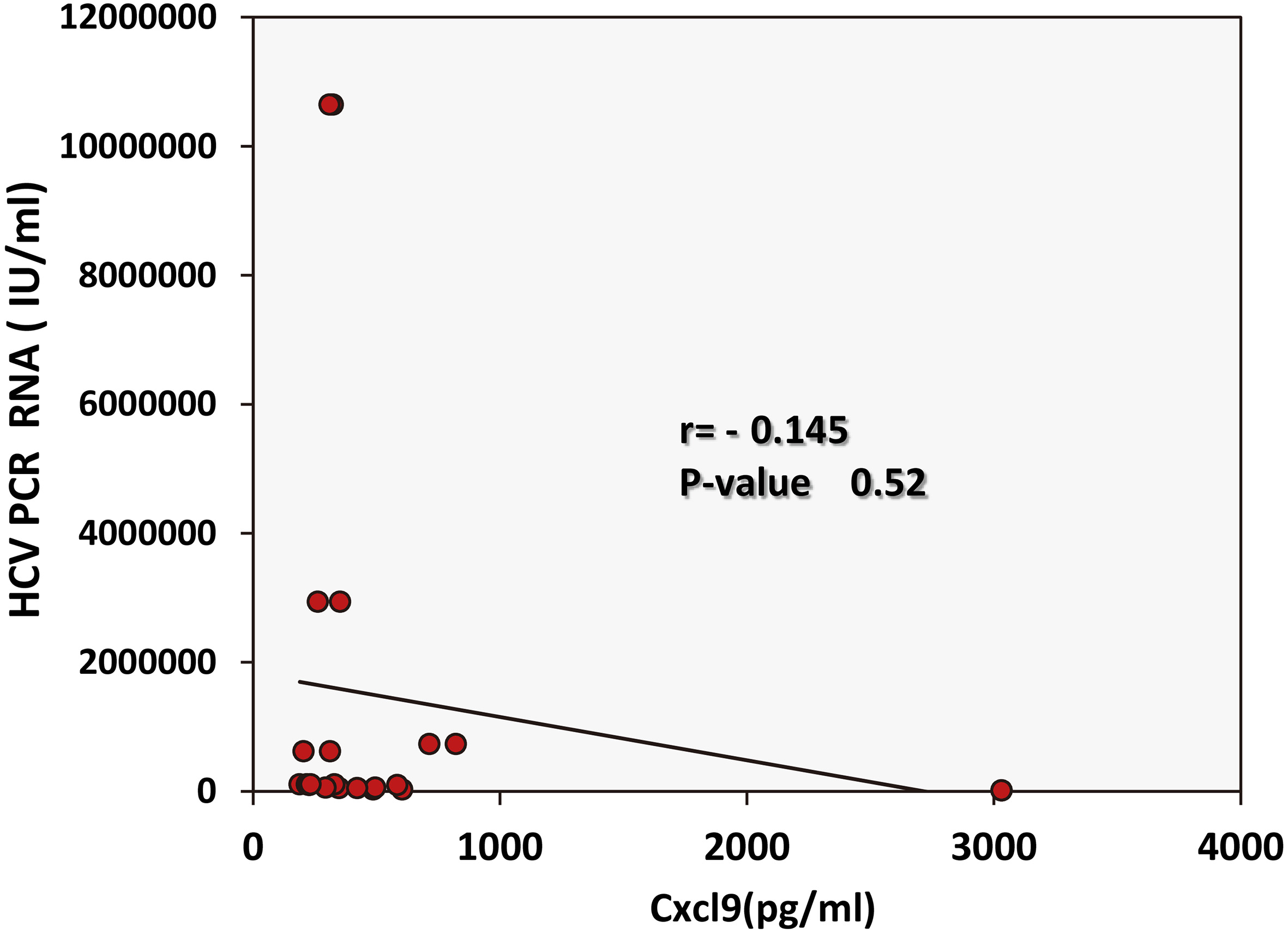
The biochemical parameters profile among cohort study
All parametric values are expressed as means
Correlation among CXCL9 level and liver function parameters. CXCL9 positively correlated with albumin, liver function GPT and GOT and negatively correlated with bilirubin (direct and total).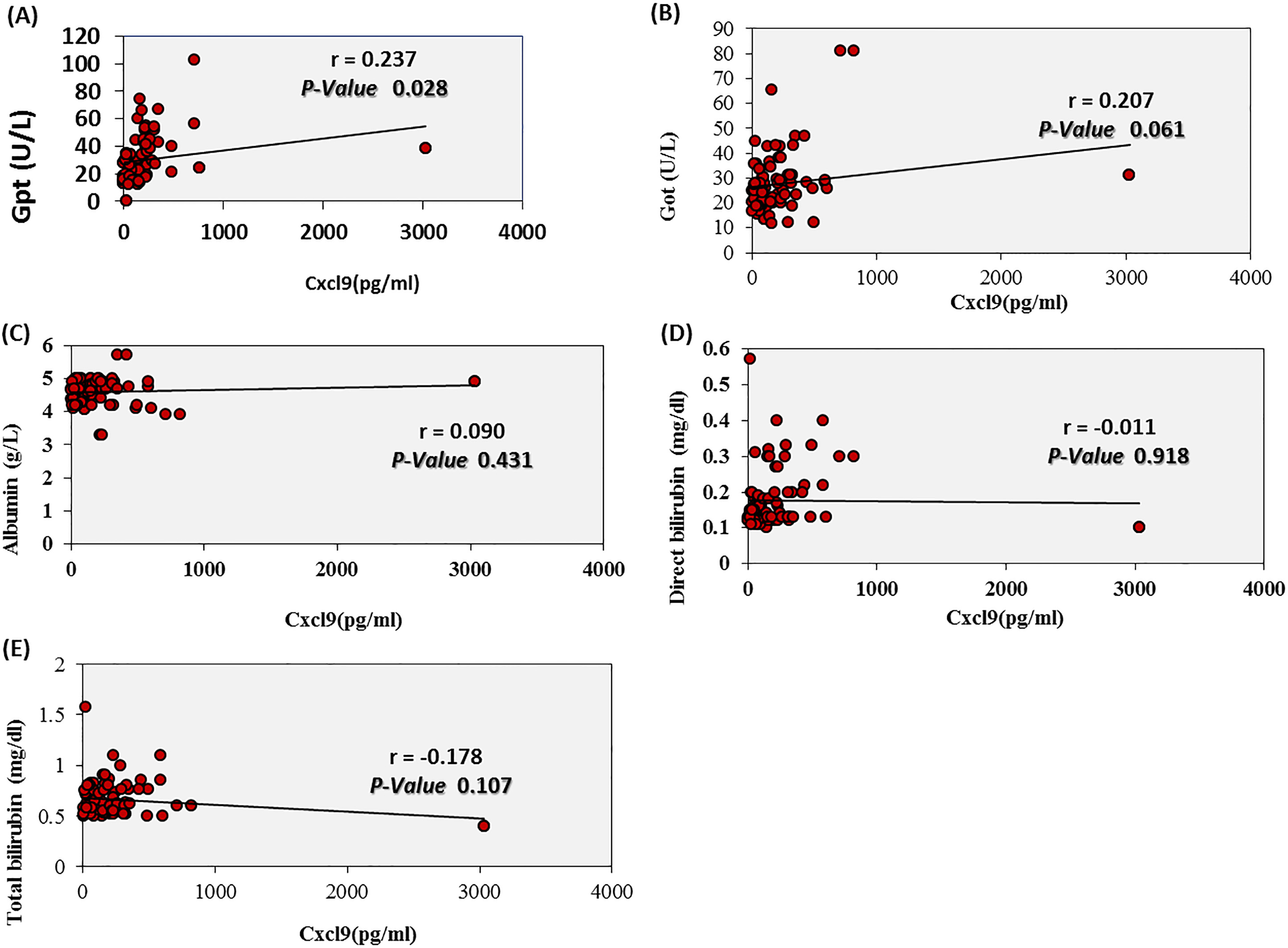
The correlation among CXCL9 level and hematological parameters. CXCL9 negatively correlated with total number of RBCs, hemoglobin, total leukocytic count, neutrophils and monocytes and positively correlated with platelets and lymphocytes.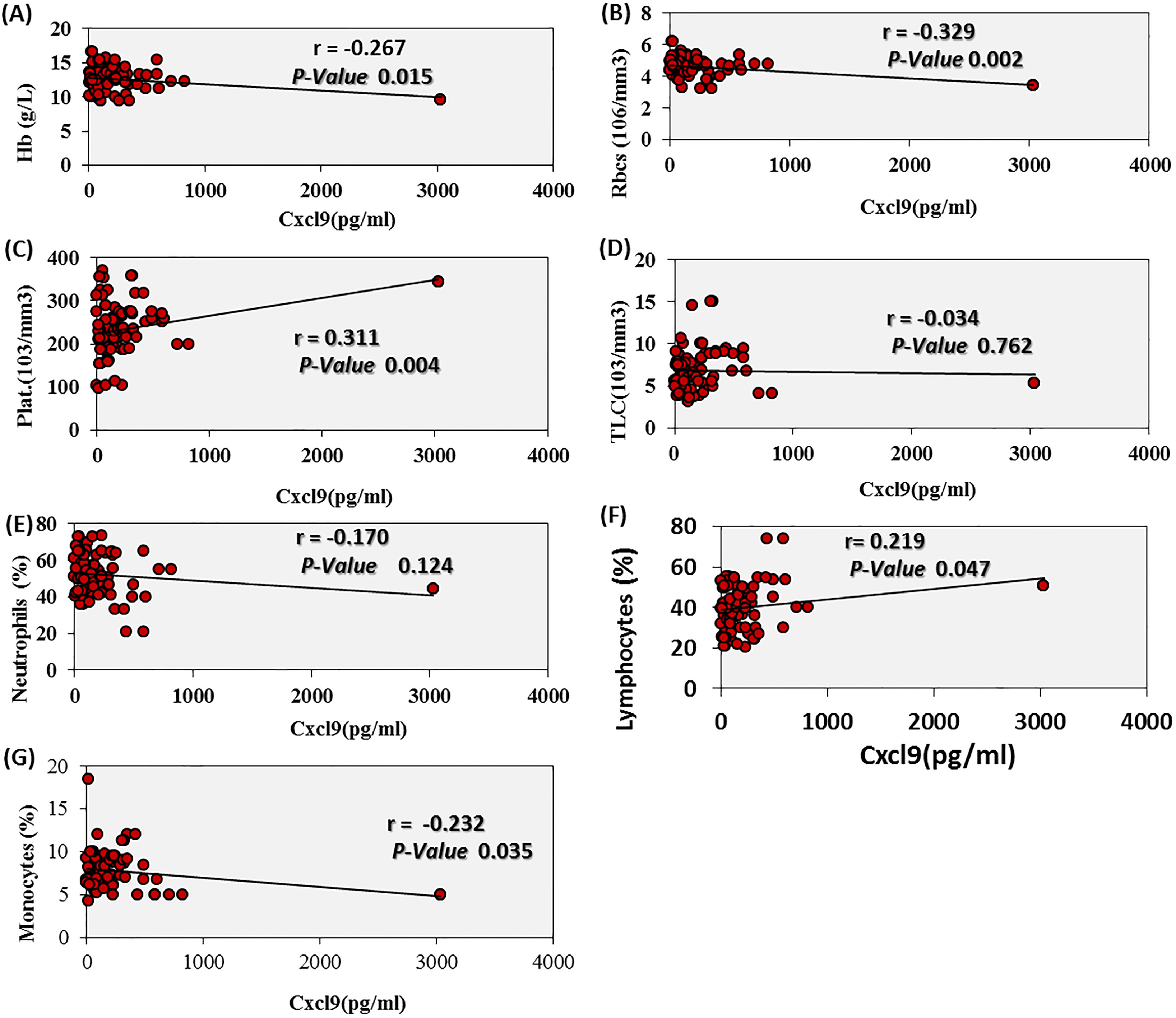
The activity of GPT and GOT were determined in all subjects under the study. Results showed that serum GOT activity had no significant difference in the serum of all subjects, while GPT activity was significantly increased in the serum of chronic HCV patients when compared with healthy patients (
Levels of CXCL9 in the different groups under the study
The serum mean levels of CXCL9 were significantly higher (
The correlation between CXCL9 and some biochemical parameters
Data showed that CXCL9 level in serum was positively correlated with albumin, liver function GPT and GOT and negatively correlated with bilirubin (direct and total) (Fig. 4).
Statistical analysis showed that there was negative correlation between the level of CXCL9 and the total number of RBCs, hemoglobin, total leukocytic count, neutrophils and monocytes and positive correlation between platelets and lymphocytes with CXCL9 (Fig. 5).
Discussion
The present study aimed to assess the association between CXCL9 level in different patients groups; namely acute, chronic HCV patients, DAAs- responders and infection clearance, as well as assessment of correlation CXCL9 level with some hematological and biochemical features. In general, a significant decrease in the hemoglobin level in the spontaneous clearance group was observed compared to healthy persons according to complete blood picture findings. Also, DAAs-responder patients group showed a significant decrease in the total number of platelets count when compared to chronic HCV persons in agreement with previous studies that reported a significant decrease in pretreatment platelet count in the sustained virological response (SVR) [22, 23].
A significant increment in CXCL9 level in chronic patients (627.1 pg/ml) compared with spontaneous clearance (107.76 pg/ml) and responders groups (117.28 pg/ml), which complies with the findings of Zeremski et al. [24], while no significant difference between CXCL9 level in healthy (110.67 pg/ml) and responder groups (117.28 pg/ml) after DAAs has been observed. These findings agree with [25] who reported that levels of CXCL9 declined during therapy in both responders and non-responders and among sustained responders, levels of CXCL9 remained low after completion of therapy while in non-responders, the drop in CXCL9 was transient. Also it was stated that CXCL9 levels were not significantly different in sustained responders after treatment when compared with healthy control subjects. Also, Butera et al. [25] has studied the relationship between serum levels of CXCR3-associated chemokines and response to antiviral therapy; and revealed that CXCL9 and CXCL10 were decreased in those for whom treatment had been successful. It is worth mention that there is no relapses/recurrence during DAAs treatment throughout the follow up period for the HCV infection patients using combination therapy of SOF/DCV that proved to be safe and effective in the treatment of chronic HCV genotype-4 infection the predominant type in Egypt [21]. A pervious study conducted by our team work on Egyptian patients also showed that CXCL10 plasma level was elevated in chronic patients and low CXCL10 level was associated with therapeutic response [26]. No correlation has been found between CXCL9 level and viral load, which could be attributed to the possibility that it does not directly contribute to antigen-specific T cells recruitment for viral replication control rather than a neutral or detrimental inflammatory reaction, and comes in agreement with Butera et al. [25] and Johansson et al. [27] findings. On the other hand, while levels of CXCL9, CXCL10, and CXCL11 chemokines have been observed to be significantly elevated in chronic HCV patients; levels of CXCL9 and CXCL10 were declined after successful antiviral therapy, and similarly levels of CXCL11 did not decline significantly during or in the first 6 months after therapy.
Upon monitoring the biochemical parameters in our cohorts, it has been observed that serum GPT was significantly increased in chronic HCV patients’ sera comparing to healthy persons, while albumin levels were significantly decreased among responders, spontaneous clearance and chronic patients’ groups when compared to the healthy subjects. This comes in line with previous studies that reported elevated serum GPT levels correlated with viral loads in chronic HCV patients, which may have clinical relevance [28, 29]. Moreover, our findings revealed that the degree of albumin synthesis capacity was lower in DAAs-responders and chronic HCV patients groups than spontaneous patients group, which complies with the findings of both [30, 31] who indicated that the hepatic capacity of albumin synthesis was affected by the degree of liver fibrosis. Total and direct bilirubin in the different subjects showed that there was a significant elevation in direct bilirubin levels in all groups under study comparing to healthy individuals in line with previous studies that reported an elevation of serum bilirubin levels during chronic HCV infection [32]. Finally, our results revealed a positive correlation between GPT and both CXCL9 (
Conclusion
In line with the notion of CXCL9 as a key determinant of HCV outcome, our findings confirmed that baseline CXCL9 level significantly correlates not only with SVR, but also with on-treatment viral suppression, which renders it an important prognostic biomarker for viral clearance which may be used to apply patients according to the expectable treatment outcome in HCV genotype 4 patients.
Footnotes
Acknowledgments
Special thanks for Dr. Heba Shawky, Department of therapeutic chemistry, Pharmaceutical Industries and Drug Research Division, and Dr. Reem El shenawy Microbial Biotechnology Department, Genetic Engineering and Biotechnology Research Division National Research Centre, for their help in interpreting the obtained results and in presenting the manuscript in its current form.