



Abstract
Non-coding RNA elongated (lncRNAs) have recently attracted as molecules that regulate gene expression of the pluripotent properties (pluripotency) of stem cells. Recently our colleagues examined the role of one of these RNAs called SOX2OT in esophageal squamous cell carcinoma, and found a concomitant increase in its expression with some regulatory genes of cell proliferation. In the present study, using the design of suitable primers from SOX2OT gene, we investigated the effect of siRNA on expression of SOX2OT.
Introduction
Different studies suggest that most parts of the human genome are expressed and transcribed, creating a complex network of large and small RNA molecules, only 1–2% of them are mRNA molecules. They are ORF and translate into a polypeptide, and therefore no more than 98% of the transcriptome set will be translated into human cells [1].
This segment accounts for 98% of the transcriptome, a type of molecule called ncRNA that lacks ORF and includes long molecules, such as LncRNA, and short molecules, SncRNA [2].
In fact, the Human Genome Project specify that there are only 20,000 to 30,000 protein encoding genes in the human genome, and that more than 70% of the human genome is filled with non-encrypted sections inclusive transposon and LncRNA molecules [3].
LncRNAs are molecules with a length of more than 200 nucleotides that are very similar in structure to mRNA molecules. A project called FANTOM, which studies cDNA in the human genome, found that 35,000 LncRNA molecules were created from 10,000 genomic sites in human cells.
Little is known about the role of LncRNA in human cells, but despite it, a number of studies have been shown that irregular expression of lncRNA genes are effective in a number of diseases and abnormalities in humans.
LncRNs play a key role in regulating many important processes such as cell division, tissue formation, cell differentiation, and even cancer [4].
In addition, a number of studies have shown that the treatment of some diseases was possible in invivo and invitro conditions by targeting LncRNA, which indicates the important role of LncRNA in cellular and human processes [4]. The SOX2 gene was named Sry-related HMG box because it creates an HMG box that binds to a gene called SRY, which is found on the Y chromosome in humans that is involved in determining sex in the male and mammalian males.
The production factor of the SOX2 gene plays a role in the sustainability and maintenance of self-regeneration and the ability to reproduce undifferentiated embryonic stem cells. This factor, along with the factors produced by the oct4, c-myc, and klf4 genes, play a key role in the formation of the iPSC (induced pluripotent stem cell) of adult human stem cells and mice [5].
The SOX2OT gene, also known as NCRNA00043, is located on chromosome 3 and is located at 3q26-3q29,which includes the nucleotide number 181056680 to 181742228, which contains the main gene that regulates cell proliferation, SOX2 gene [6]. In fact, the SOX2OT gene is located on chromosome 3, occupying an area of more than 700 kilobases, and is located in a very well-preserved part of the human and other vertebrate genomes.
Studies show that the duplication of this area on chromosome 3 (3q26-3q29) is associated with a variety of cancers. In fact, genetic multiplication in this area is associated with Squamous cell carcinoma (SCC) in various tissues [7]. Based on bioinformatics studies as well as reports based on sequencing in gene banks, the SOX2OT gene has six TSS (Transcription Start Site) genes, fifteen intranet classes (GT-AG), and thirteen varieties of genetics derived from Alternative Splicing [8].
It should be noted that the SOX2OT gene, along with the SOX2 and OCT4 genes, regulate high expression in cancers. Studies show that SOX2OT, SOX2 and OCT4 genes expression are high in cancer cells compared to non-cancerous tissues, and in both stem cells and embryonic developmental cells compared to other cells. Studies also show that suppression of the SOX2OT gene disrupts the cell cycle so that the production of cell cycle proteins such as B1 and CDK2 is reduced, and on the other hand, the cell does not enter the S phase and the cell as a whole leaves the division cycle [9] in general, it can be stated that the SOX2OT gene plays a role in the capacity to divide cells, especially with the positive effect on SOX2 expression. Therefore, the SOX2OT gene can be a good candidate for cancer treatment or cancer prevention.
Given the importance of this gene, as mentioned above, therefore, modifying its expression is looking for prevent or treat diseases such as cancer.
Studies on SOX2OT are being Extensive. For example, SOX2 is set by SOX2OT. It was also observed that during the process of neural differentiation of stem cells, SOX2OT expression decreases significantly [10].
SOX2OT has a cap and poly A, which is transcribed by RNA Pol II.
A study conducted in China showed that an increase in SOX2OT in hepatocellular carcinoma promotes metastasis and is associated with poor disease progression [11]. Zhang also showed that increase in SOX2OT is biomarker of poor improvement in gastric cancer [12]. Saghaian also stated the oncogenic role of SOX2OT in lung cancer [13].
Materials and methods
Cell culture and transfection
In this study, DMEM medium was used for culture of NT2 cells. FBS was placed at 56
SOX2OT siRNA Transfection was did according to the Lipofectamine 2000 reagent protocol. The transfected cells incubate for 48 h before harvesting for further analysis. siRNA for the human SOX2OT (si-SOX2OT: 5’-GGAGAUUGUGACCUGGCUU-3).
Quantitative real-time PCR (qRTPCR)
Total RNA was extracted from tissues or cultured cells using tripure reagent. For qRT-PCR, RNA was reverse transcribed to cDNA by using a cDNA synthesis Kit (Thermo). Real-time PCR analyses were performed on mic device. Results were normalized to the expression of B-actin. The PCR primers for lncRNA SOX2OT were as follows in table. The relative expression of lncRNA SOX2OT was calculated and normalized using the 2-
Primer for SOX2OT gene
Primer for SOX2OT gene
Nt2 cell culture
In this study, NT2 cell line was used (Fig. 1).
NT2 cells.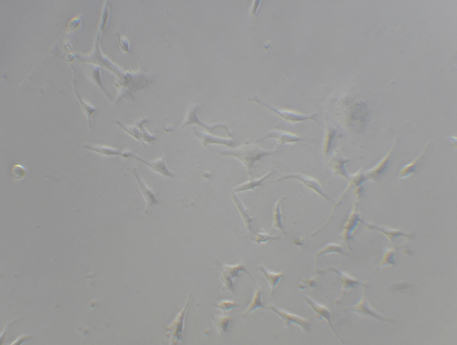
RNA are extracted by tripure protocol (Fig. 2).
Extracted RNA from NT2 cells on gel agarose 1%.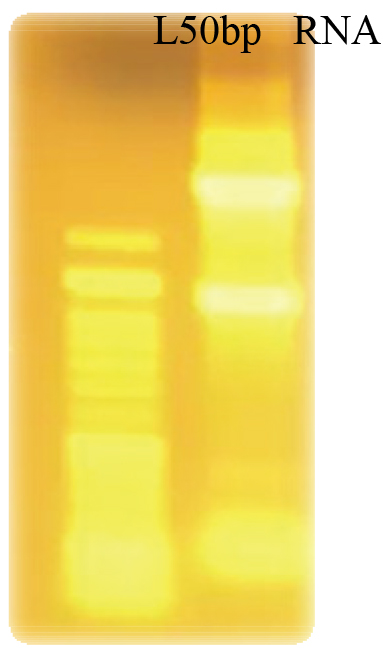
The thermo kit was used to synthesize cDNA. This kit performs cDNA synthesis from RNA in two stages. After cDNA synthesis, the accuracy of cDNA synthesis was ensured by proliferation of the housekeeping gene, B-actin.
PCR conditions: Initially primers designed for SOX2OT gene (Table 1).
PCR product of SOX2OT gene (248 bp) (sample 1–6) and PCR product of B-actin gene (about 150 bp) (sample 7–8), ladder 50 bp.
Cells before transfection left, after transfection right.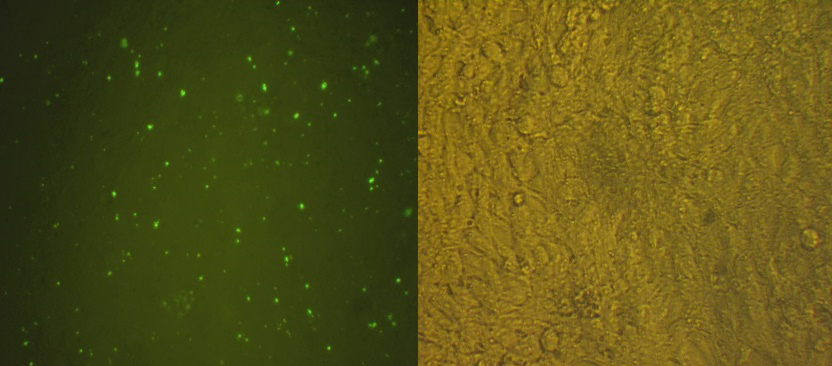
Real time PCR diagram of SOX2OT and B-Actin genes (reference home gene).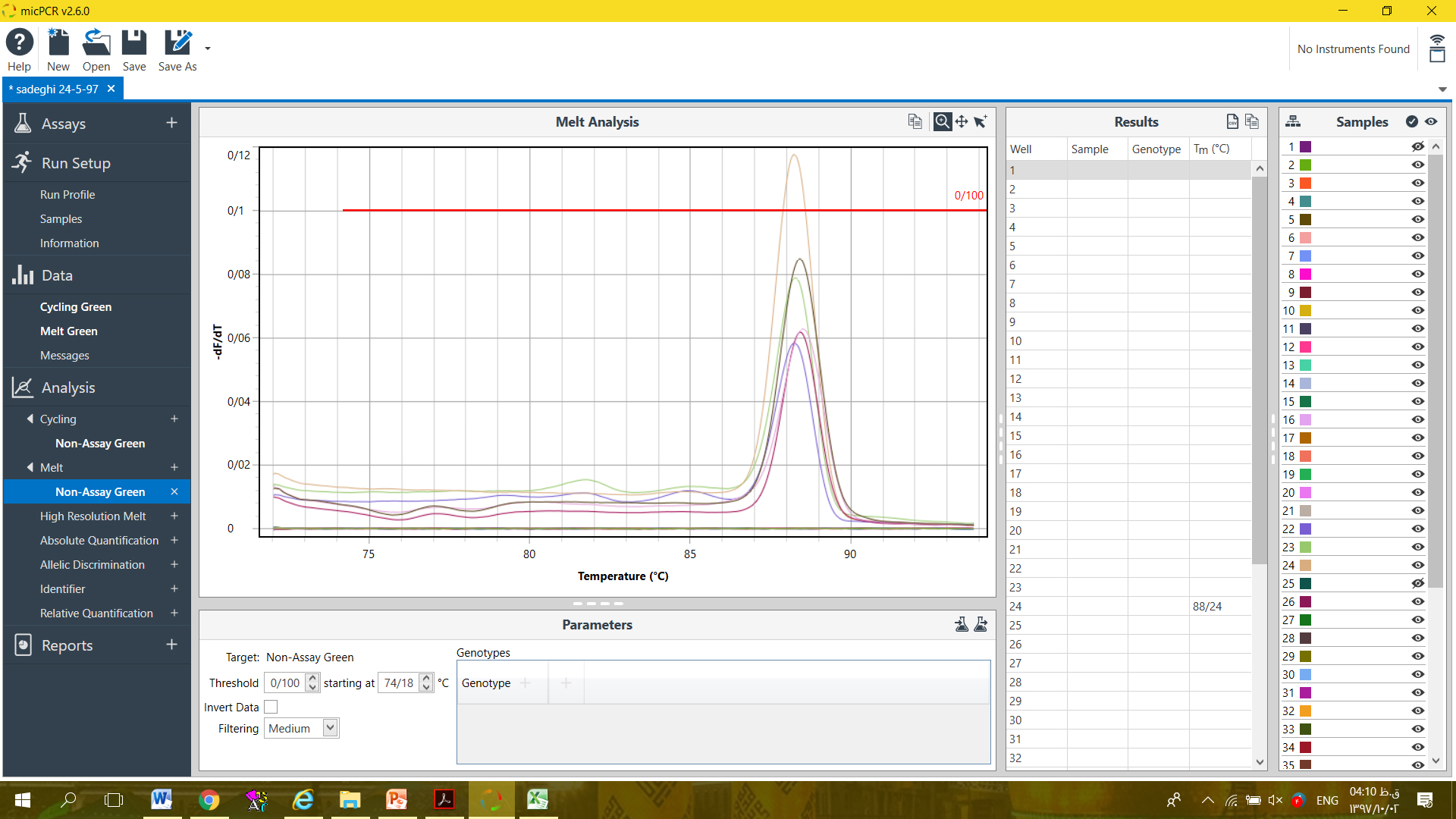
After designing the primers, the quality of a number of primers was checked in the annealing temperature gradient. Finally set1m primer was choose for gene multiplication. Length of product was 248 base pairs (Fig. 3). Under the same conditions, the beta-actin gene was multiplied by about 150 base pairs. Temperature condition for set1m is: 95
After regulating gene proliferation conditions, the cells were transfected with lipofectamine and various amounts of siRNA (25 and 50 nanomolar) to reduce the expression of the SOX2OT gene (Fig. 4). The RNA extraction and SOX2OT expression was performed 48 hours later.
After cell transfection, expression was performed in this condition: 95
In the 48-hour treatment with siRNA in 25 and 50 nanomolar showed a decrease of SOX2OT expression to 46.86% and 18.94% of the control sample expression, respectively.
Discussion and conclusion
The goal of gene therapy is to transfer a gene into a cell or body to produce a protein needed to treat a disease or to change the expression of a gene in order to regulate a metabolism or a process. Using genomic manipulations, correct genetic defects and take a major step towards medical intervention in the treatment of hereditary diseases [14] long noncoding RNAs (LncRNAs) molecules make up a large part of the transcriptome in the human genome and have a length of about 200 nucleotides and play a role in various activities for example they are involved in the processes of epigenetic changes in DNA molecules. It is pointed out that as regulatory factors, they play a role in the regulatory processes of expression of other genes and in the process of cell proliferation and cell differentiation changes in these genes, such as mutations in them or changes in their expression, can cause diseases such as cancer, so that it is sometimes thought that LncRNAs are new factors from Tumor suppress or oncogenes. There are other research reports that show that these molecules could be a target for the treatment of some genetic diseases, including angelman syndrome.
Stem cell viability is involved in the proliferation of cancer cells. If these stem cells occur in cancerous tissue, they are called cancer stem cells, which are related to the activity of certain cells that give them renewable properties. These properties are from SOX2 and OCT4 genes, and increase in the expression of these two genes in esophageal tumor cells (SCC).
The SOX2 gene is located in a larger gene that produces a larger RNA called SOX2OT. SOX2OT transcript don’t translated.
Studies show that the sequence of the SOX2OT segment is very well preserved and has not undergone changes during evolution because different vertebrates and even non-vertebrates in this segment have the same sequences, which indicates the importance of this gene. On the other hand, chromosomal changes in this part of chromosome 3, especially the doubling of part of the sequence of this part, can be seen in some cancers, which indicates the importance of the SOX2OT sequence. Therefore, due to the obvious importance of the SOX2OT gene, this gene is intended for the study of appropriate primers in the design and study of reducing the expression of this gene by the target siRNA.
Footnotes
Acknowledgments
This work was supported by the Presidency of Islamic Republic of Iran for Science and Technology, Iran National Science Foundation (grant number 98002563).