



Abstract
BACKGROUND:
There is the paucity of HTLV-1/-2 studies on Nigerian pregnant women despite the medical and public health significance of maternal-to-child transmission of HTLV-1/-2.
OBJECTIVE:
This study aims to determine the seroprevalence and risk factors of HTLV-1/-2 infections among pregnant women attending the University of Abuja Teaching Hospital (UATH), Abuja, Nigeria.
MATERIALS AND METHODS:
Blood samples were collected from consented pregnant women and analysed for ant-HTLV-1/-2 total antibodies using a commercial Enzyme-Linked Immunosorbent Assay (ELISA) kit. Pretested structured questionnaires were used to collate participants’ socio-demographic variables and risk factors of HTLV infection.
RESULTS:
Out of the 156 pregnant women tested for HTLV-1/-2 antibodies, 16 (10.3%) were seropositive. There was no significant association between the socio-demographic variables collated and seroprevalence of HTLV-1/-2 infection among pregnant women (
CONCLUSION:
Considering the 3% pooled national prevalence of HTLV-1/-2 infection in Nigeria, the seroprevalence reported in this study is relatively high. Thus, there is a need for more large cohort studies and routine screening of population at increased risk of infection.
Introduction
Just like other human retroviruses, human T cell Lymphotropic virus-1 (HTLV-1) causes a lifelong infection of T-lymphocytes, in particular, CD4
Recent researches suggest that the incidence of HTLV-1/2 linked diseases might be even higher than the literature traditionally reports due to the influence of local factors in their pathogenesis [1].
Epidemiologically, there are three main routes of HTLV-1/2 transmission; sexual intercourse, infected blood or blood products, and mother-to-child (vertical transmission – VT). In endemic areas, VT remains the most important mode of transmission, since it occurs in up to 25% of the children who are breastfed by seropositive women. Greater efficacy of VT is associated with the length of breastfeeding, high antibody titers and high proviral load in maternal blood [2].
Mother-to-child transmission (MTCT) is the predominant route in endemic areas. HTLV-1 seroprevalence increase with age, especially among women [3].
The MTCT of HTLV-1 could cause lifelong or persistent infection. At least 5–10 million individuals worldwide are currently living with HTLV-1. Studies of regional variation are required to understand the roles of MTCT to the global burden of HTLV-1/2 infection. Although most infected individuals remain asymptomatic,
Adequate prevention of MTCT significantly contributes to disproportionately reduction in both the incidence of HTLV-1 and burden of HTLV-1 associated diseases. To successfully avoid MTCT of HTLV, it is essential to understand all the variables that predispose MTCT HTLV infection. Questions remain regarding the frequency and risk factors for in-utero peripartum transmission whilst little is known about the efficacy of prelabor cesarean section to reduce these infections [3]. Understanding the contribution of peripartum infection to the burden of the disease will be essential to gauge the risk-benefit of interventions in this area. Whilst breastfeeding is strongly associated with transmission and avoidance of breastfeeding a proven intervention, little is known about the mechanism of transmission from the breast milk to the infants [3].
Nigeria is as an endemic nation for HTLV-1 infection with seroprevalence that varies considerably between sex, age and region [4, 5]. Given its national dimensions, Nigeria is top 10% countries with the highest number of HTLV-1/2 prevalence in the world [6].
An estimated 3% pooled national prevalence of HTLV-1 in Nigeria was reported from a recent meta-analysis and systematic [6]. However, individual studies have reported as from 0% to 11.5% [7, 8]. Furthermore, even in Africa, the seroprevalence for HTLV-1/2 in pregnant women can vary widely from 0.2% in South Africa, with places of intermediate prevalence such as the Republic of Congo (0.7%) [8, 9]. Such discrepancy in prevalence is a result of both the epidemiological characteristic of the infection, which has endemic clusters alongside low prevalence areas, and the gap in HTLV knowledge since vast areas of the country remain unstudied. Additionally, most of the studies are on potentially biased populations such as low-risk voluntary blood donors or high-risk IV drug users and sex clinic attendees [2, 9].
Intermediate seroprevalence rates have been found in pregnant women [2, 9]. Although not devoid of bias, this group has been proposed to represent a more reliable portrait of the general population since their prevalence data are generally able to characterise geographic areas likely to be endemic [10, 11]. Unfortunately, there is no nationwide data on the seroprevalence of HTLV-1/2 in Nigeria pregnant women since the Ministry of Health does not recommend screening as part of the routine antenatal care.
Intrauterine HTLV1 transmission during childbirth causes less than 5% of vertical transmission, and if breastfeeding was done, the transmission increases up to 25% [10]. Vertical transmission of HTLV1 infection occurs mainly via mother’s milk, and in breastfeeding longer than 6 months, transmission risk is to be 3-fold or more [12].
Since there is currently no cure, effective treatment or immunisation for HTLV-1/2 infection and its complications, more accurate knowledge about its prevalence is helpful in the elaboration of public policies on educational and prophylactic measures to increase awareness and reduce the rates of viral transmission and the incidence of infection-related diseases.
Pregnant women have been demonstrated to undergo immunosuppression due to several factors. An increasing body of evidence suggests that HTLVs may cause some degree of immunosuppression [4], leading to a higher risk of HTLV transmission and expansion. An increased prevalence of the virus infection, as well as higher mortality among pregnant women, is described by a previous study [9]. The relative importance of MTC mode of transmission is still mostly unknown, and most likely, it varies with the population involved. In endemic areas such as Japan, MTC transmission has been described as the primary source of transmission (mainly through breastfeeding) [13]. Only 2.5–5.0% of children are seroconverted in the absence of breastfeeding. In comparison, up to 25% are infected if breastfed for over 12 months [14]. In fact, a Brazilian study found a vertical transmission rate of 50% in children who were breastfed for over 24 months [14]. This study aims to determine the seroprevalence and risk factors of HTLV-1&-2 infection among pregnant women attending the University of Abuja Teaching Hospital, Abuja, Nigeria.
Materials and methods
Study area
This study was conducted at the University of Abuja Teaching Hospital (UATH), Gwagwalada, Federal Capital Territory (FCT) Abuja, Nigeria. Gwagwalada is about 45 km away from the FCT. It is one of the six area council headquarters of the FCT. The town lies in the downstream of River Usuma and is located between latitude 8
The centrality of this town in relation to other area councils’ headquarters makes it influential and important in various socio-economic activities. The climate condition of this town is not far-fetched from that of the tropics having several climatic elements in common; most especially the wet and dry season characteristic. The temperature of the area ranges from 30
About 60% of this rain falls between May to August. The area council is an industrial zone of FCT that stands out as the second most cosmopolitan city of the FCT, after the capital city with 10 political wards and consist of over 26 Federal organisations which include the University of Abuja, University of Abuja Teaching Hospital etc. These have brought about the inflow of people into the council.
Study population
This study comprised of pregnant women
Study design
This was a hospital based cross-sectional study.
Data collection
Data for this study were collected through a structured questionnaire to assess participants’ biodata, socio-demographic, as well as the participants’ medical history.
Sample size calculation
The sample size was determined using the Fischer’s formula for cross sectional studies:
Thus, the minimum sample size of participants for this study was calculated as 17. However, this number was increased to a total of 156 pregnant women.
Participants sampling technique
Participants for the study were randomly enrolled.
Sample collection, preparation and storage
About 5mls of whole blood were collected aseptically from each participant using standard venipuncture. Samples were dispensed into appropriately labelled screw-capped containers and were left at room temperature for about an hour, after which it was spun at 3,000 rpm for 10 minutes to separate serum from blood clot. Serum was dispensed into corresponding labelled plain containers and stored at
Laboratory analytical procedures
The analytical method for the detection of anti-HTLV1/2
ELISA was carried out according to the method described by the kit manufacturer (Dia.Pro HTLV-I/II Ab Ultra, San Giovanni, Italy) The HTLV ELISA test was a three-incubation process whereby the first incubation involved the coating of the wells with HTLV antigen. During this step, any antibodies that are reactive with the HTLV antigens, bound to the wells. Next, the wells were washed to remove the test sample. At this point Enzyme Conjugate was added. During this second incubation, the Enzyme Conjugate bound to all antibodies present (IgA, IgG or IgM). Before the third incubation step, 3 cycles of washings were done. Then a chromogen (tetramethylbenzidine) was added. With the presence of Enzyme Conjugate and the peroxidase, causing the consumption of peroxide, the chromogen changed to a blue colour. The blue colour turned to a bright yellow colour after the addition of the stop solution, which ends the reaction. ELISA reader was used to the optical density of the final coloured product. Subsequently, the results were calculated. Test effectiveness: the average value of positive control
Statistical analysis
Data obtained were analysed using the Statistical Package for Social Sciences (SPSS) software version 26 (IBM Corporation, Armonk, NY, USA). Continuous variables were presented as mean
Seroprevalence of HTLV-1/-2 antibodies among pregnant women under study.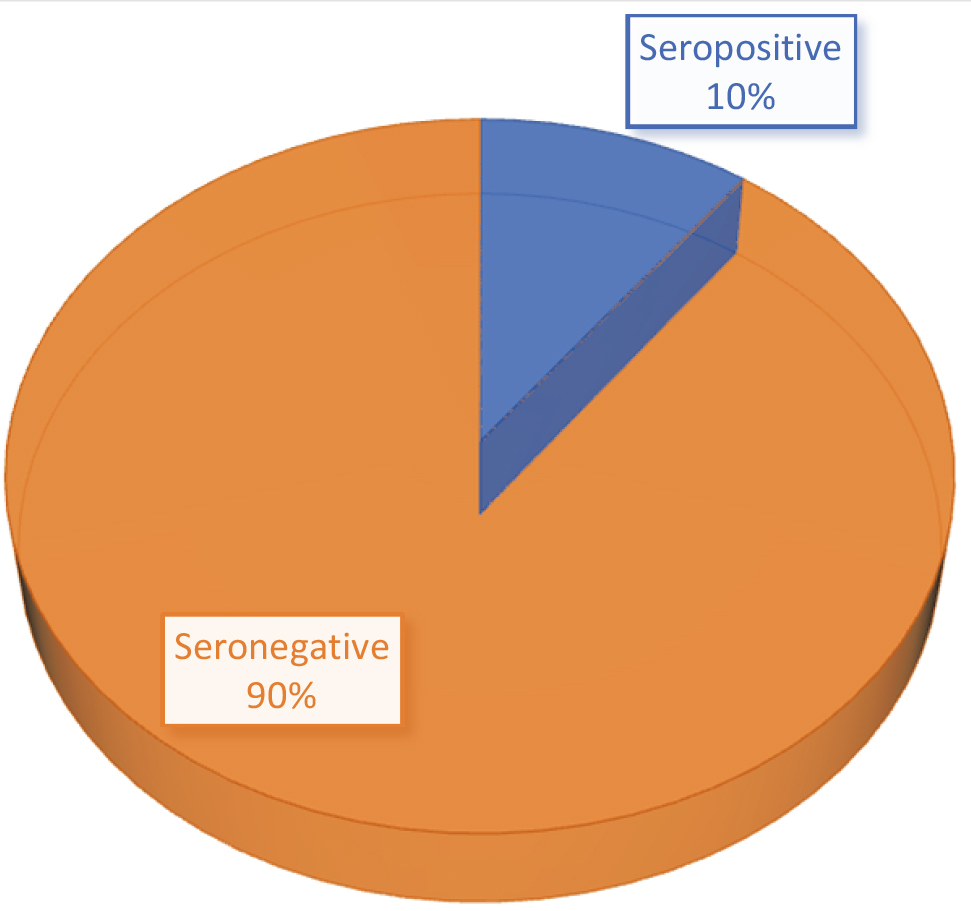
Sero-prevalence of HTLV-1/2 by socio-demographic variables of pregnant women (
Risk factors analysis of HTLV-1/2 among pregnant women (
This cross-sectional study involved women between the age range of 19–43 years and mean
Pregnant women with HIV infection had a lower prevalence of HLTV-1/-2 infection that those without HIV infections (7.5% versus 11.7%) (Table 2). As regards the risk factor analysis, after bivariate logistic regression pregnant women who multiple sexual partners had a higher risk of HTLV-1/-2 infection than those who had single (OR
Discussion
Based on available reports, Human T-Cell Lymphotropic Virus -1/-2 (HTLV-1/-2) infections appear to have varied epidemiological pattern among different study populations. However, there is a paucity of studies on pregnant women. In cognisance of the medical and public health significance of maternal-to-child transmission of HTLV-1/-2. Pregnant women are significant sources of transmission of HTLV-1/-2 infection, either to their spouses or fetuses [15]. The seroprevalence of HTLV-1/-2 infection among pregnant women in this study was 10.3%. This value is higher than the previous Nigerian reports from most cross-sectional studies. For instance, 0.5% was reported by Olusola et al. [16], 0% by Iyalla et al. [17], 0.5% Okoye et al. [18] and 3.2% by Hananiya et al. [19]. However, it was lower than the 24.2% reported by Opaleye et al. [20], 14.3% by Abu et al. [21] and 16.7% by Forbi and Odetunde [22].
These variations could be due to changes in the endemicity of HTLV with the time of previous studies, differences in the test performances and accuracies of the commercial kits employed. Most of these studies, including the present study, used enzyme immunoassays. Of which, some detect only a class of the immunoglobulin (either IgM or IgG). However, our detected the total Ig in samples tested. This observation could explain the relatively higher seroprevalence we recorded in our study. For now, there is no ample justification for routine screening of pregnant women for HTLV-1/-2 during antenatal care, as further studies on the cost/benefit will be needful in Nigeria through largescale and comprehensive studies. Even though most HTLV infections are latent and subclinical, there might be cases of underdiagnosis by healthcare professionals.
Several studies have been able to identify socio-demographic variables such as age, sex, education, household socio-economic condition as critical determinants of contracting of HTLV [4, 18]. Findings from the present showed that the seroprevalence of HTLV-1/-2 declined with the age of participants. Of which the highest seroprevalence was in women between 18–28 years. However, it was not statistically associated with the prevalence of HTLV-1/-2 antibodies. This finding is consistent with that of Hananiya et al. [19] who reported higher seroprevalence among pregnant women aged 15–25 years.
In relation to marital status, a higher seroprevalence was observed among pregnant women who were single than the married ones. This status may give room for multiple sexual partners. This was further buttressed by the higher prevalence of HTLV-1/-2 in women with dual sexual partners than those with single. Similar findings have been reported by Zehender et al. [23] and Fox et al. [24]. This highlights the role of sexual intercourse in the transmission of HTLV infection in pregnant women.
In this study, history of blood transfusion was a significant risk factor of HTLV-1/-2 infection. Similar findings were reported by Iyalla et al. [17]. The time interval between blood transfusion and development of HTLV-1-associated myelopathy is also short in immunocompromised individuals [25, 26]. This represents another area of further research on transfusion transmissible HTLV infection in immunocompromised person due to physiological process such as pregnancy. Although, Nigeria’s policy on blood transfusion is still restricted to only hepatitis-B, -C viruses, HIV and treponema pallidum, there need to consider the inclusion of other life-threatening pathogens such as HTLV to ensure blood transfusion safety.
From this study, the prevalence of HIV and HTLV-1/ -2 coinfection was 7.5%. However, the seroprevalence of HTLV-1/-2 was higher in HIV seronegative women. This is lower than the 32.6% and 25.7% anti-HTLV-IgG and -IgM the reported by Adeoye et al. [27], but higher than the 4.1% reported by Nasir et al. [4]. Furthermore, we reported more HTLV-1/-2 seroprevalence among HIV patients than HIV seronegative women. First, the variations in seroprevalence of HIV/HTLV-1/-2 in these studies could be due to the antiretroviral statuses of the subjects. Secondly, the lesser HTLV-1/-2 seroprevalence in HIV seropositive women in our study could be the influence of ART on both pathogens. It has been demonstrated that the current highly active antiretroviral therapy (HAART) regimen could contain the replication of HIV and other retroviruses such as HTLV [28].
Conclusion
Considering the 3% pooled national prevalence of HTLV-1/-2 infection in Nigeria, the seroprevalence reported in this study is quite high. Thus, there is a need for larger cohort studies and routine screening of population at high risk of infection with the view to monitor its endemicity.
Availability of data and material
The data that support the findings of this study are available from the corresponding author on reasonable request.
Ethics declaration and consent to participate
Before the commencement of this study, ethical approval was obtained from the human research ethical committee of the University of Abuja Teaching Hospital, Gwagwalada, Abuja, Nigeria. All the study procedures were done in accordance with the Helsinki Declaration of Human experimental research as revised in 2003. Written and signed informed consent was provided by all participants.
Consent for publication
All subjects gave approval for publication of data.
Competing interests
Authors declare that they have no competing interests.
Authors contributions
AD, INA (Overall Study implementation coordinator). AM, INA, OMAB and AUE conceived the study. INA and AD oversaw implementation of the study. INA, AUE, AUA, JMA, PEG, and OSA performed the analysis. INA, AUE, AUA, JMA, OMAB, PEG, and OSA wrote the first and final draft. All authors read and approved the final manuscript.
Funding
None received.
Footnotes
Acknowledgments
Authors appreciate the technical support provided by the University of Abuja Teaching Hospital and staff of Labcrest laboratory, Abuja.