



Abstract
BACKGROUND:
Free radicals are small extremely reactive species that have unpaired electrons. Free radicals include subgroups of reactive species, which are all a product of regular cellular metabolism. Oxidative stress happens when the free radicals production exceeds the capacity of the antioxidant system in the body’s cells.
OBJECTIVE:
The current review clarifies the prospective role of antioxidants in the inhibition and healing of diseases.
METHODS:
Information on oxidative stress, free radicals, reactive oxidant species, and natural and synthetic antioxidants was obtained by searching electronic databases like PubMed, Web of Science, and Science Direct, with articles published between 1987 and 2023 being included in this review.
RESULTS:
Free radicals exhibit a dual role in living systems. They are toxic byproducts of aerobic metabolism that lead to oxidative injury and tissue disorders and act as signals to activate appropriate stress responses. Endogenous and exogenous sources of reactive oxygen species are discussed in this review. Oxidative stress is a component of numerous diseases, including diabetes mellitus, atherosclerosis, cardiovascular disease, Alzheimer’s disease, Parkinson’s disease, and cancer. Although various small molecules assessed as antioxidants have shown therapeutic prospects in preclinical studies, clinical trial outcomes have been inadequate. Understanding the mechanisms through which antioxidants act, where, and when they are active may reveal a rational approach that leads to more tremendous pharmacological success. This review studies the associations between oxidative stress, redox signaling, and disease, the mechanisms through which oxidative stress can donate to pathology, the antioxidant defenses, the limits of their effectiveness, and antioxidant defenses that can be increased through physiological signaling, dietary constituents, and probable pharmaceutical interference. Prospective clinical applications of enzyme mimics and current progress in metal- and non-metal-based materials with enzyme-like activities and protection against chronic diseases have been discussed.
CONCLUSION:
This review discussed oxidative stress as one of the main causes of illnesses, as well as antioxidant systems and their defense mechanisms that can be useful in inhibiting these diseases. Thus, the positive and deleterious effects of antioxidant molecules used to lessen oxidative stress in numerous human diseases are discussed. The optimal level of vitamins and minerals is the amount that achieves the best feed benefit, best growth rate, and health, including immune efficiency, and provides sufficient amounts to the body.
Keywords
Introduction
Free radicals are vastly unstable and reactive (atoms, molecules, molecular fragments, or ions), that have one or more unpaired valence electrons in outer orbits and live for only a fraction of a second, but during that time they can damage DNA and sometimes cause mutations. They are created in the body as a result of metabolism, or by exposure to toxins, also they can lead to numerous illnesses including heart disease (HD) and cancer [1]. Free radicals have a vital importance in many biological processes due to their dominant role in numerous physiological situations, in addition to their association with numerous diseases [2].
Reactive-oxygen and nitrogen species created during metabolism [4]
Reactive-oxygen and nitrogen species created during metabolism [4]
S: seconds; min: minutes.
Since oxygen (O2) has a great affinity for electrons, it releases free energy when it is reduced to form water. Hence, cellular respiration, in which O2 is converted to water, has higher energy than can be derived from anaerobic metabolism. This is due to its high oxidation potential which makes it an excellent oxidizing agent that enables electrons from reduced substances. This opposite influence of O2 requires the development of an antioxidant system to protect against oxidants and reactive species [3]. These species are; oxygen and nitrogen (ROS and RNS) cooperatively form free radicals and other non-radical reactive species. ROS/RNS play a dual role as valuable and toxic compounds to the living system. The involvement of these reactive species in physiological signaling or pathological modifications depends on the intensity, frequency, and duration of their availability. Certainly, fluctuations in ROS/RNS levels are usually a product of improved synthesis or exposure to exogenous oxidants combined with reduced antioxidant defense. Also, ROS comprises species, i.e., hydroxyl radical (∙OH), which have high reactivity, so they interact closely with the same and other species, i.e., hydrogen peroxide (H2H2) and superoxide (O2 .-), which are less reactive. Also, RNS comprises nitric oxide (NO∙), peroxynitrite (ONOO - ), and other species (Table 1) [4].
However, ROS has been considered one of the significant factors in tissue damage. When infection occurs in living organisms, the equilibrium between ROS formation and antioxidant defense favors ROS, which is denoted by oxidative stress (OS). It is interrelated with the progress of several pathological illnesses such as diabetes mellitus (DM), cardiovascular disease (CVD), rheumatoid arthritis (RA), cancer, neurodegenerative diseases, and the use of exogenous antioxidants has been recommended [5].
This review aims to provide a critical analysis of the formation, and role of reactive radical species in mitochondria, and the antioxidants role in protection from the disease.
Mechanisms of OS, including particular damages that affect mitochondria, the injury induced by free radicals, and the protective influence of antioxidants have both been extensively discussed in reviews and meta-analyses with details of databases including Scopus, and Science Direct from which the articles were studied and the tenure of the published articles covered in this review from 1987 to 2023.
Sources of free radicals generation [6].
A free radical is an atom or molecule that consists of one or more electrons in its outer shell and is stable enough to exist independently. Their covalent bonds (C-C, C-H, or C-O) might be rigid to destroy, while the O–O bond in H2O2 can be destroyed using UV light, producing ∙OH (Fig. 1) [6].
Endogenous sources include free radicals formed during normal metabolism in peroxisomes, mitochondria, endoplasmic reticulum, fatty acid (FA) metabolism, and phagocytic cells. Production of ROS within cells in physiological situations is dependent on nicotinamide adenine dinucleotide phosphate (NADPH) oxidase (NOX), uncoupled nitric oxide synthase (NOS), lipoxygenase, and xanthine oxidoreductase (XOR). Effective XO inhibitors, such as allopurinol and its active metabolite oxypurinol, are utilized in the clinical treatment of hyperuricemia-related disorders such as gout. Furthermore, the neuroprotective effects of allopurinol are supported by the inhibition of ROS production, which is the cause of apoptosis. Elevation in ROS levels and its products through cellular components with defective antioxidant systems can initiate the progress of several chronic degenerative diseases, leading to severe injury for macromolecules [7].
Radiation, chemicals, high temperatures, toxins in the environment, microbial diseases, medications, and their metabolites are examples of exogenous sources. Secondary radicals are created when water molecules are broken down by ionizing radiation. Radiation damage to mitochondria is very likely to occur, which leads to an increase in ROS production. It has been demonstrated that radiation increases the production of NO and calcium (Ca + 2) while suppressing the activity of antioxidant enzymes, such as superoxide dismutase (SOD) and catalase (CAT), using both in vivo and in vitro trials. Among the ROS that can be produced by UV light are 1O2, OH, H2O2, and other ROS. The generated ROS interact with the cellular constituents of the skin and have the potential to harm antioxidant enzymes, particularly CAT, and mitochondrial DNA [8]. Additionally, it has been observed that UV radiation increases 8-hydroxyguanine (8-OHG), a sensitive marker of oxidative damage, most likely by a process involving 1O2. The reduction of protein kinase C (PKC) expression and increase in NOS production are lead to an increase in ROS formation; PKC regulates numerous cellular roles, i.e., cell proliferation, gene transcription and translation, cell shape alterations, migration, cell-cell contact regulation, secretion, apoptosis, and regulation of ion channels and receptors, which is complicated in numerous diseases, i.e., DM, CVD, RA, neurodegenerative diseases, autoimmune diseases, and cancer. Furthermore, ROS triggers PKC by formation of lipid cofactors and regulation of Ca + 2 levels. Also, modification of cysteine residues in PKCs and phosphorylation of tyrosine in PCK
Non-steroidal anti-inflammatory medications, anti-cancer therapeutic factors, analgesics, and antiviral medicines are identified to have harmful effects and yield ROS. These medications interact via electron transfer reactions, and this lead to numerous illnesses, i.e., cardiotoxicity, liver toxicity, and nephrotoxicity. The exact mechanism is not known. It may be due to direct scavenging of the peroxyl radicals or by donating reducing equivalents to the peroxyl radicals. In oral administration of aspirin, it is converted to salicylic acid, which can lessening OS and pro-inflammatory and possibly neoplastic prostaglandins associated with rise in glutathione peroxidase (GPx) activity. Salicylic acid may have anti-cancer effect for aspirin against colon cancer [11].
Many of these metals, including; cobalt (Co), cadmium (Cd), iron (Fe + 2), copper (Cu + 2), nickel (Ni), arsenic (As), and lead (Pb) and other redox or non-redox metals, can produce redox-active metals directly by Fenton or Haber-Weiss reaction or indirectly under certain circumstances by lipid peroxidation (LP), which can lead to the creation of toxic molecules like hydroxynonenal or malondialdehyde (MDA). Additionally, some of these metals, i.e., Cd, can block several cellular membrane channels and transporters that are complicated in LP, glutathione (GSH) depletion, and changes in the blood-brain barrier’s (BBB) permeability. Antioxidant enzyme activity loss or suppression is a common denominator of metal poisoning. Free radicals mechanisms can be initiated by converting ∙OH, O2 ∙- and organic radicals into H2O2 and hydroperoxides (LOOH) [12].
It has been proposed that ∙OH causes biomolecule injuries through catalyzing specific reactions, comprising H abstraction, addition reactions, and oxidation reactions in numerous diseases.
Moreover, Pb activates LP and GPx levels in the brain. Arsenic prompts the formation of H2O2, O2 .-, NO and constrains antioxidant enzymes, i.e., glutathione S-transferase (GST), GPx, and glutathione-reductase (GR) via binding to the -SH group. These created radicals can disturb DNA and some of the DNA bases [13].
The electron transfer chain (ETC) in mitochondria is deliberated to be the main endogenous source of ROS but others also exist. When the O2 level rises, the rate of mitochondrial O2- ∙ yields rises linearly. Nevertheless, the release of H2O2 from mitochondria is increasing at a faster rate exceeding 60% O2. In addition to microsomes and peroxisomes as the main source of H2O2, also macrophages and neutrophils can produce ROS. Moreover, unregulated ROS signaling may donate to a host of illnesses. All these forms of ROS have destructive roles to cells, they can oxidize and then inactivate numerous roles of cell constituents. All these processes may lead to apoptosis and irreversible necrosis [14].
Reactive oxygen species generated by endogenous and exogenous sources[16].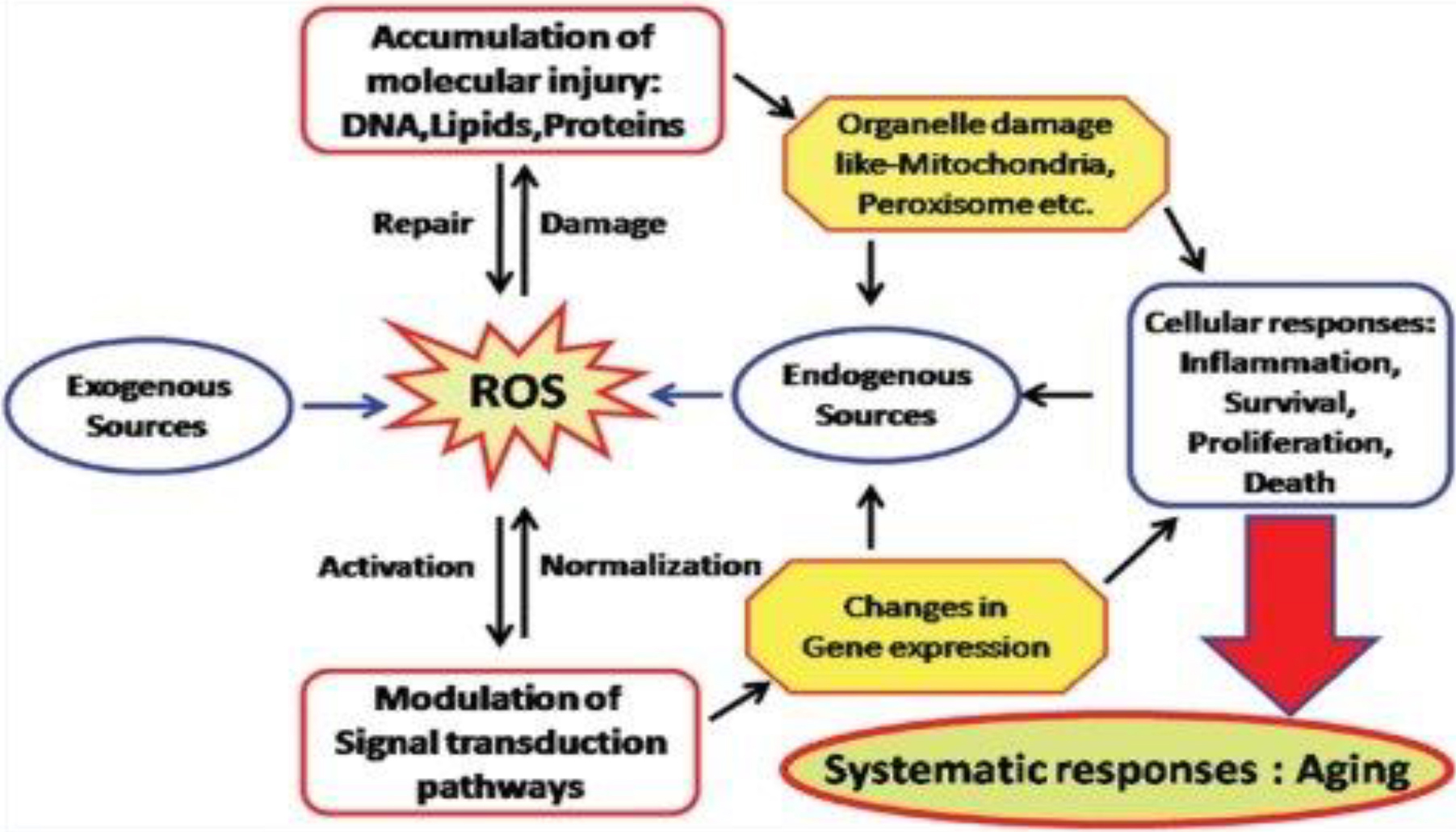
Higher ROS production can be clarified by the mechanism known as ROS-induced ROS release (RIRR). It is generated by circuits requiring mitochondrial membrane channels, comprising nonspecific mitochondrial channels termed the mitochondrial permeability transition (MPT) pores and the inner membrane anion channel (IMAC) [15]. In OS resulting from higher levels of ROS leads to RIRR, which reaches a threshold level that causes the MPT pore opening. Also, mitochondrial Ca + 2 overload occurs, which reduces mitochondrial function and initiates numerous processes, comprising MPT pore opening. This leads to the collapse of mitochondrial membrane potential and a temporary rise in ROS generation. Additionally, the ROS release into the cytosol, which appears to happen via IMAC can lead to activation of RIRR in the neighboring mitochondria. Also, ROS trafficking between mitochondria might initiate a positive feedback mechanism to enhance ROS formation, which could lead to major mitochondrial and cellular damage. The generation of ROS is explained in Fig. 2. Metabolic processes increase different types of ROS capable, if present in insufficient levels, of oxidizing DNA and causing various damages, which are often found in human tumors [16]. Moreover, it is created in hypoxic states in the ETC reaction and ROS may cause the production of numerous species, i.e., acrolein, 4-hydroxy-2-nonenal, prostates, hydroxy octadecanoic acid, and MDA [17].
In physiological situations, most of the mitochondrial influences of NO are utilized on the ETC. First, NO∙ competes with O2 for the binding site of cytochrome c oxidase (complex IV), resulting in an inhibition of this enzyme activity. Second, NO∙ interacts with respiratory complex III, prevents electron transfer, and increases O2 creation. Also, NO∙ leads to protein nitrosation, reacts with the thiol protein residues, and inhibition of complex I [18].
Reactive nitrogen species, particularly ONOO - , can lead to DNA damage. It is resulting from the reaction of NO∙ with O2 ∙- [19]. Fast protonation of ONOO in vivo gives peroxynitrous acid (ONOOH), which is an electrophilic nitrating agent for tyrosine and tryptophan side chains in proteins. When ONOOH is fragmented can produce ∙OH, which can then impair DNA. Subsequently, NO∙ can also react with ∙OH to yield HNO2 which leads to diazotization of the primary amino groups of nucleic acid bases. Also, ONOOH can react with deoxyribose in DNA causing single- and double-strand breaks. Accumulated hypoxanthine is a prospective producer of ROS via endogenous enzymatic reactions, i.e., the formation of xanthine and uric acid from hypoxanthine by XO [20].
The harmful possessions of ROS on cellular molecu- les, i.e., lipids, proteins, carbohydrates, and DNA cause changes in these components. Reports showed that OS is complicated by the progress of metabolic or chronic illnesses, and is capable of disturbing signaling pathways [21].
Oxidative stress is a disturbance in oxidant and antioxidant systems that may injure biological systems. Nevertheless, in extracellular (EC) fluids where enzymatic antioxidants are lacking, O2 ∙- and H2O2 (but not ∙OH) can be purified using SOD and CAT. The ∙OH is an unusually strong oxidizing agent that rapidly oxidizes any molecule.
Where LH is a lipid with an allyl hydrogen from polyunsaturated FAs (PUFAs) comprising arachidonic acid.
Three isoforms for SOD were found as follows: SOD1 (Cu/Zn SOD) is the main form of SOD scavenger and is found in the cytoplasm, nucleus, and mitochondrial intermembrane space; SOD2 (Mn SOD) and SOD3 (Cu/Zn SOD) are found in the mitochondria. Cytosolic SOD1 and mitochondrial matrix SOD2 are examples of intracellular defenses that eliminate O2
- , whereas CAT in peroxisomes and cardiac mitochondria, GPxs, and peroxiredoxins (PRDXs) eliminate H2O2. A few GPxs and PRDXs are also capable of lowering LP; PRDX6 and GPx4, can even lower phospholipid peroxidation. The rate at which endogenous SODs remove O2
∙- from cells is far higher than that of most other reactions involving the gas (
Additionally, ROS leads to oxidative damage at amino acid residues, i.e., arginine, threonine, lysine, and proline, creating carbonyl (C
It has been hypothesized that an elevation in protein carbonylation levels is associated with age, greater than 180 proteins that are carbonylated through age-related illnesses, which is related to insufficiencies in the mitochondrial DNA repair system and does not involve histones, hence is less threatened against OS than the nuclear DNA. Consequently, it displays a 10-20-fold rise in 8-hydroxylamine, resulting from guanine oxidation [25].
The sex-related variances in lifespan, with females typically living longer than males, also interrelate with variances in antioxidant defenses. This variation seems to be related to the production of estrogens, as it is not detected in ovariectomized models. These mechanisms are related to raised mitochondrial GSH levels and GPx activity [26].
Roles of oxidative stress in disease
The role of OS can be demonstrated in various diseases by two mechanisms
The ROS and RNS production in OS – in particular, ∙OH, ONOO - , and hypochlorous acid (HOCl) – that causes abnormal cell function and death. HOCl belongs to the reactive species group of small molecules that can be synthesized by neutrophils and macrophage cells. It functions as both a bactericidal agent against infection and a damaging agent for the host’s molecular structures and cells. It is a dominant antimicrobial oxidant, capable of altering lipids lipoproteins, and DNA, and reacts with the sulfur atom existent in thioethersand thiols compounds. The development of various diseases, such as atherosclerosis, chronic inflammation, and some cancers, is believed to be influenced by the excessive production of HOCl, which can cause tissue damage. Myeloperoxidase (MPO) is the most dominant protein in neutrophils and is the only peroxidase enzyme that catalyzes the conversion of H2O2 and chloride (Cl - ) to HOCl.
The development of atherosclerotic plaques and coronary artery disease is linked to the importance of MPO in inflammation and tissue damage. Higher MPO levels have been suggested as a sensitive prognostic marker for myocardial infarction (MI) [27]. A typical OS signal. The ROS, especially H2O2 produced in cells during the physiological state, can act as second messengers. The two mechanisms may occur in the same disease, as in DM, where both the accumulation of advanced glycation end products and irregular triggering of signaling pathways lead to DM complications. Hence, it can be categorized according to its involvement in the etiology of different diseases as the following:
The main reason for pathology such as radia-tion-induced toxicity and atherosclerosis. A minor trigger for disease progression i.e., chronic obstructive pulmonary disease, Alzhei-mer’s disease, and coronavirus disease-19 (COVID-19) [28].
Oxidative stress and disease [29].
Under a variety of investigational situations clearly showed a main role for free radicals in numerous illnesses. These highly oxidized lipids are related to a diversity of chronic health complications (Fig. 3). An increase in the formation of reactive species as endogenous or exogenous origin leads to OS and this can increase cell inflammation, necrosis, damage to DNA, lipid membrane and collagen structure, mitochondrial dysfunction, and apoptosis. Oxidative stress is known to play a role in numerous diseases including cancers [29].
Inflammation is a result of H2O2 interacting with lipids, proteins, nucleic acids, and other cellular constituents, resulting in significant molecular damage and apoptosis, which has an important role in host antimicrobial defense. Inflammation, predominantly induced by stimulated macrophages and microglia, it is a vital factor in numerous diseases. In pathological circumstances, ROS in cells may transmit redox signals via the reversible oxidation of signaling molecules, causing permanent modifications in inflammatory gene expression. It has been revealed that ROS disturb numerous inflammatory signaling pathways, comprising the nod like receptor pyrin domain-containing 3 (NLRP3) inflammasome signaling pathway, mitogen-activated protein kinase (MAPK) signaling pathway, and NF-
The possible mechanism as follows: (a) H2O2 is produced in response to a proinflammatory association, for example, by NADPH oxidase and (b) H2O2 diffuses across cell membranes to adjacent target cells. Both H2O2 and tumor necrosis factor alpha (TNF-
Moreover, creation of ROS, LP and MDA yields is increased in type 2 DM (T2DM), insulin resistance, and obese subjects. Chronic inflammation, hyperglycemia, and hyperlipidemia improved OS in obesity. It has been found that there is greater mitochondrial ROS activity in smooth muscle and lower antioxidant levels in asthma [32]. In HTN, MI, ischemia, and atherosclerosis, there is an imbalance between ROS secretion and endogenous antioxidant levels. The link between many metabolic and chronic disorders is OS and redox imbalance resulting from persistent chronic inflammation. Certain doses of H2O2 and O2 .- stimulate cell proliferation in a diversity of cancer cell types, especially in breast cancer (BC) cells, where H2O2 is increased through estrogen transport to mitochondria. An increase in mitochondrial OS triggers the release of cytochrome C, which is an irreversible step, leading to caspase activation and apoptosis. All human cancer cell types, except human kidney cancer, showed low levels of CAT and GPx. In general, the concentration of CAT is low in cancer cells, but its activity appears to vary significantly between diverse cancer cell lines [33]. The typical biological roles of hematopoietic cells may be seriously disrupted if antioxidant defense systems are defective, leading to an increase in intracellular OS accumulation, this can progress of leukemia. Insufficient of redox signaling in normal and cancer steam cells limits the effectiveness of all managements. Oxidizing drugs can cause drug resistance and side effects, which are still an urgent and challenging problem in treating leukemia [34].
The normal value of H2O2 in the blood is 1–5
Antioxidants
Antioxidants break the chain of radical reactions and prevent damage from OS. They are classified as enzymatic and non-enzymatic, but from a nutritional insight, a more useful classification can be completed between them. Consequently, all enzymatic antioxidants are endogenous, and the non-enzymatic antioxidants such as thiol antioxidants and coenzyme Q10. As conflicting, exogenous antioxidants must be taken up from the diet. Additionally, antioxidants can be categorized according to their solubility to water- and fat-soluble [41].
Enzymatic antioxidants and their actions
Many enzymatic systems that catalyze antioxidant reactions such as CAT, SOD, and GPx, all of which have important roles in maintaining cellular homeostasis. Deficiency or absence of these enzymes leads to OS and may cause cell damage. Protection by antioxidants can achieved through the following mechanisms:
i) Blocking the creation of free radicals. ii) Oxidative scavenging. iii) Preventing the creation of inflammation mediators. iv) Preventing the chain of proliferation of minor oxidants. v) Repairing damaged molecules, initiation, and strengthening the intrinsic antioxidant defense system.
The SOD converts O2 ∙- radicals to H2O2, while GPx reduces H2O2, lipid LOOH, and other organic derivatives. The GST also represents a main group in the defense of tissues from oxidation. In addition, these enzymes detoxify organisms from drugs or toxins in humans and animals and catalyze the reduction of hydrolyzed organic oxides to alcohol analogs. Cancer, CV, and neurodegenerative disorders are some of the chronic diseases that have been linked to changes in SOD expression and/or activity [42].
Catalase (EC 1.11.1.6) consists of 4 polypeptide chains, each one consisting of more than 500 amino acids, and containing 4 heme (iron) porphyrin groups that allow the enzyme to interact with H2O2. The turnover rate of CAT is the maximum among other enzymatic antioxidant systems. Most of CAT is found in the oxidoreduction in the mammalian cells excluding red blood cells. Since H2O2 is a substrate for a particular reaction that increases in ∙OH,
Patients with CAT deficiency, expect an improved tendency to develop progressive tissue damage from H2O2 produced by bacteria such as pneumococcus and streptococcus, in addition to phagocytic cells [44].
The main endogenous enzymatic systems of aerobic cells [45].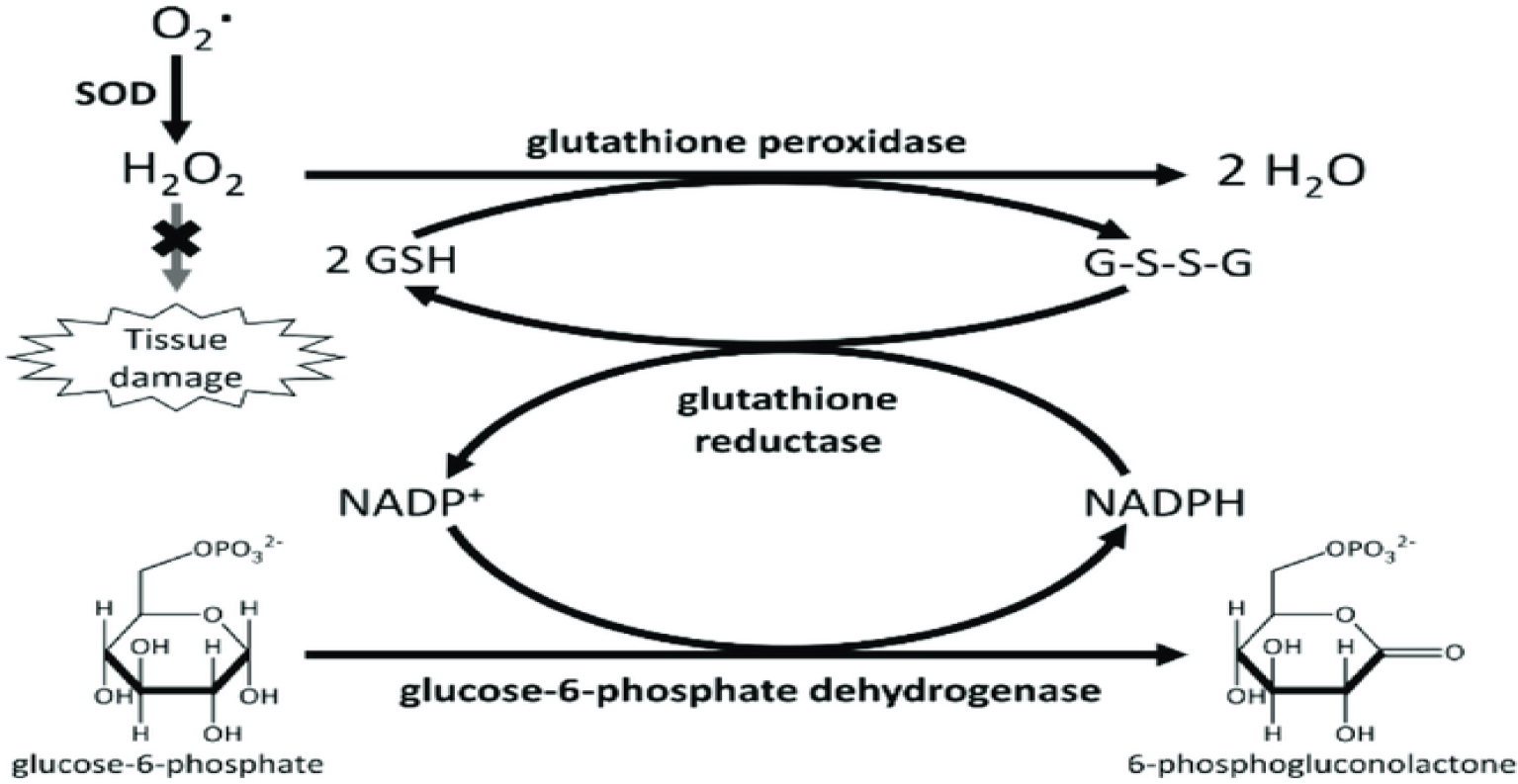
The GR catalysis is the conversion of the oxidized form (GSSG) to GSH. This enzyme maintains sufficient GSH levels in the cell. Its kinetic mechanism is identified to be a consecutively arranged pattern. The GR is a flavoprotein containing two molecules as a prosthetic group, that can be reduced by NADPH as in Fig. 4 [45].
Although cytochrome P450 (CYP450) activation helps with xenobiotic detoxification, it can also be thought of as an adaptive reaction that increases the organism’s chances of survival. CYP450 first converts unreactive substances into hazardous chemically reactive intermediates. Since CYP450 induction is larger than that of the conjugating form, there is likely an imbalance between the rate of reactive intermediate formation and the rate of their inactivation and elimination. Proteins, membrane components, or nucleic acids may be attacked by unconjugated reactive metabolites and ROS produced by P450, which can result in cytotoxicity, mutagenicity, and cancer [46]. Stressful conditions demand greater energy generation and expenditure of the cell. This is fulfilled by increased catabolism which generates H2O2. CAT removes the H2O2 in an energy efficient way.
Potential therapeutic applications of antioxidants
Raising SOD levels can aid in redox balance restoration, which is one possible therapeutic strategy for addressing illnesses brought on by OS. However, there are a number of important problems with administering SOD externally. These comprise insufficient bioavailability, low pharmacokinetics, and enhance renal clearance. Improving the pharmacokinetics of SOD can be effectively achieved by applying metal-based SOD. However, the antioxidant activity of enzyme mimicking is mainly limited to the extracellular area since antioxidant enzyme abundance is restricted to this location. The most stable and effective mineral complexes that can break down H2O2 include mineral salines, mineral porphyrins, and mineral complexes. Many of these metalomimetics react well with a wide range of substances and have a poor specificity for H2O2. Typical physiological quantities for these kinds of chemicals are nanomolar (
Protein- and non-protein-bound thiols act as cellular reducing agents and defensive elements against most inorganic contaminants, through the -SH group. Thus, thiols are the first line of protection against oxidants. The concentrations of thiols can be elevated in OS as an adaptation mechanism. Nevertheless, severe oxidative damage may reduce the concentrations of thiols due to the defeat of the adaptive mechanisms. Low-molecular weight ROS scavengers can activate antioxidant enzymes or terminate oxidative chain reactions. Vitamin D, for example, counteracts the activity of NOX and increases the activity of antioxidant enzymes to accelerate ROS elimination Some of natural biomaterials, i.e., apocynin, can inhibit ROS production by inhibiting NOX activity or NOX-mediated ROS production, hence achieving anti-inflammatory possessions and inhibits ROS production by inhibiting NOX-2 As it is nontoxic and can lessen the OS markers, the compound is commonly used in animal models of inflammasome diseases, comprising collagen-induced arthritis, and it has significant defensive possessions. Also, apocynin has a major role as inflammatory inhibition among ulcerative colitis and asthma models [49].
Vitamin C has been an important antioxidant against oxidative damage by scavenging ROS and RNS and binding to fatty radicals, that are formed in cell metabolism. Vitamin C ionizes mainly in the form of a monovalent anion, called ascorbate, whose enodiol structure permits the donation of electrons that, after losing 2 electrons, yields the last oxidized product, dehydroascorbic acid. The water-soluble antioxidant ascorbate has the ability to scavenge radicals. It enters cells through two vitamin C transporters that are dependent on sodium, SVCT1 and SVCT2, which are responsible for the regulation of vitamin C absorption from plasma in tissues; SVCT1 is mainly confined to the surface of epithelial cells and participates in the transport of vitamin C in the intestine, kidney, liver, lung, and other tissues. It regulates gastrointestinal absorption and renal reabsorption and maintaining a plasma vitamin C levels
The recommended amount of ascorbate for adults is 75 mg/day for women and 90 mg/day for men. Studies have shown that excessively high amounts of ascorbate can have prooxidant impact. It has been proposed ascorbate as a common chemotherapy mediator. The cytotoxic impacts of ascorbate, a commonly used chemotherapeutic agent, are clarified by several mechanisms. One underlying mechanism includes the exact association between administered ascorbate, extracellular H2O2, and traces of redox minerals, especially iron. H2O2 is a cell-permeable molecule that acts inside and outside the cell and can be hydrolyzed by traces of iron into harmful ∙OH (Fenton reaction). The PRDX-2 is a redox protein that neutralizes H2O2. The deleterious effect of H2O2 on cancer cell death is clarified by the oxidation of PRDX-2 by ascorbate. Oxidized PRDX-2 has a considerably lessen ability to neutralize H2O2, which is hydrolyzed by the effects of redox-active Fe + 2 to ∙OH [51]. Moreover, CAT, which converts H2O2, is usually upregulated in cancer cells. Eight diverse types of vitamin E (
Structures of 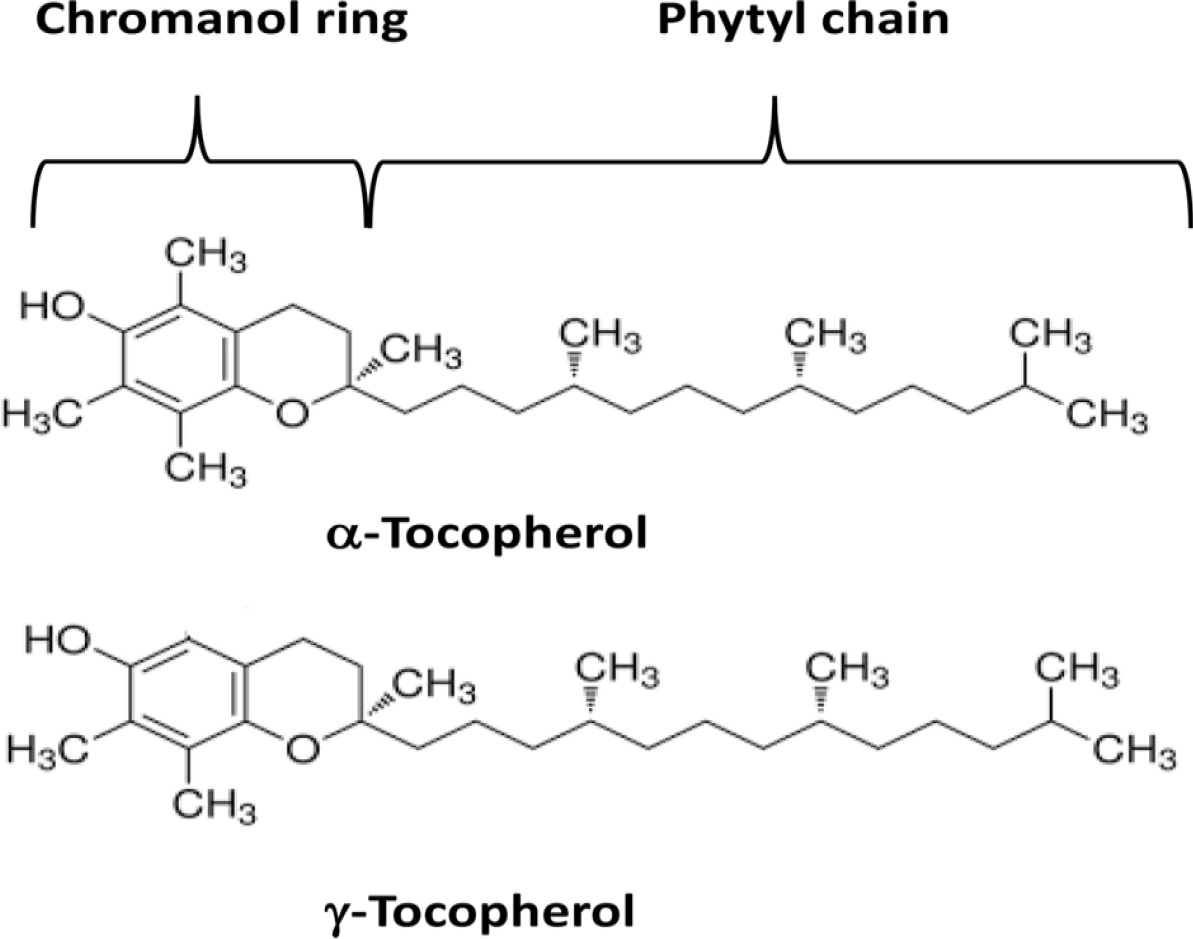
An
Vitamin E has excellent antioxidant and anti-inflam- matory possessions that definitely control the immune system. It has been demonstrated that vitamin E could inhibit the secretion of inflammation-mediating molecules such as eicosanoids and cyclooxygenase-2 (COX-2). The COX has two isoforms, COX1 and COX2. The COX2 is regulated by cytokines, growth factor, tumor promoters, glucocorticoids, and lipopolysaccharides. The COX is responsible for the conversion of arachidonic to prostaglandin E2. High levels of COX2 are associated with the inhibition of cell death and overexpression of COX2 are implicated in pathogenesis of numerous tumors, i.e., colo-rectal cancer. Hence, alterations in arachidonic acid metabolism stimulate cell profilation via PKC that is considered as a primry signaling pathway, which tumor is initiated. It has been reported both
A schematic interaction between ROO, CAR, a reduced form of vitamin C (AscH-) and vitamin E (
Individuals with fat malabsorption are at a higher risk of severe vitamin E deficiency, which is relatively rare, which leads to a diversity of neurological symptoms, i.e., imbalance, retinopathy, and myopathy. As vitamin E is an effective antioxidant in scavenging ROS, it is assumed that it could prevent chronic diseases. While, higher doses of this vitamin lead to toicit and cause adverse effects. This has been explained by the interfering of vitamin E with CYP450 and CYP4F2 metabolism, which have significant roles in cellular metabolism and drug detoxification. Vitamin E has the ability to modulate CYP450’s activities, which could lead to improved degradation of drugs used for treating cancer, HD, metabolic diseases, and other chronic illnesses [57]. Vitamin E supplementation with 400 IU/day for 1 month improved the level of vitamin E in sera of patients with Alzheimer disease by approximately 150%. Clinical outcomes propose that supplementation with vitamin E is essential against LP in the CSF. Damage of DNA caused by ROS may lead to mutations, which may contribute to cancer. Moreover, studies have failed to find an association between vitamin E intake and the occurrence of lung disease or BC. Moreover, it has been found that people who were taking vitamin E, the CV complications were enhanced among them. Vitamin E has been shown to reduce the level of oxidative damage associated with DM in animal studies. Male smokers who took 50 mg/day of synthetic vitamin E were studied in an tocopherol/carotene trial, but it was found to have no impact on deaths or macrovascular complications among T2DM patients. Vitamin E metabolism appears to interfere with vitamin K metabolism. Daily adult supplementation of 670 mg of vitamin E supplementation for 3 months has been shown to inhibit a “vitamin K-dependent factor,” which is essential in the coagulation cascade. Therefore, vitamin supplements should not be taken by patients who are regularly taking anticoagulants because of the risk of bleeding [58].
Carotenoids (CAR) are a widely form of tetraterpenes, dispersed in plants and separated into deoxygenated.
In lungs as highly oxygenated tissues, carbon-centered radicals can react with molecular O2 to yield ROO-CAR-OO∙
CAR have redox mechanisms that raise ROS levels in the reaction system through oxygen-mediated reactions. Additional mechanism by which CAR can react with radicals is through an electron transfer mechanism, which leads to the formation of a cation (CAR + ), anion (CAR - ), or an alkyl radical (CAR∙).
These oxidation yields increase the catabolism of retinoic acid by stimulating CYP450 enzyme activity. Low retinoic acid levels lead to increased phosphorylation of MAPKs while decreasing the expression of the anti-inflammatory MAPK-1, which triggers lung cancer. The clinical data showed a contrary correlation between total CAR levels,
Organic compounds containing sulfur have also been proposed as effective antioxidants, i.e., metabolites found in garlic. Their antioxidant activity comprises scavenging ROS and preventing LP. Additionally, microbiotas can inhibit cell proliferation and differentiation of intestinal epithelium by providing an energy source, i.e., butyrate and short-chain FA to the epithelium. The intestinal microbiota also has a role in the conversion of steroids and FA in addition to the fermentation of dietary fiber and ions. Furthermore, the intestinal microorganisms synthesize vitamins B and K [61].
Melatonin is an influential antioxidant that can simply cross cell membranes and the BBB. In contrast to other antioxidants, melatonin does not have redox recycling. So, once oxidized cannot be reduced because it forms numerous stable end products when it reacts with free radicals [62]. Also, uric acid is assumed to have substituted ascorbate in evolution. It is capable to production of free radical species [63].
The protecting possessions of natural antioxidants have initiated further interest in toxins caused by free radicals. Flavonoids have a substantial role in defending against oxidative injury and are widely found in vegetables, fruit, cocoa, and tea. Flavonoids are found in drinks and foods that have a varied series of biological activities. Natural antioxidants support the intrinsic antioxidant resistances of ROS and return optimum stability by counteracting reactive species. The antioxidant actions of phenols are associated with several various mechanisms. The nephroprotective influence could be due to its role in the inhibition of LP in tissues and the improvement of antioxidant action. Consequently, it has been proposed that this antioxidant may be beneficial for people exposed to nephrotoxic agents and patients with kidney disease. Protective possessions might be due to the existence of glycosides, alkaloids, benzoquinones, catechols, terpenoids, CAR, terpenes derivatives, flavonoids, saponins, and polyphenols [64].
Results and discussion
This review approves the indication from numerous meta-analyses covering the physiological influence of antioxidants on common chronic illnesses. The leading importance was that the data were not extracted from distinct studies, and this can be deliberated as a benefit because meta-analysis has the highest grade of indication.
Free radicals and antioxidants have favorable influences on the body. Degradation of major cellular components leads to an extreme level of free radicals. This degradation is responsible for excessive free radicals generations, which may lead to pollution, ionizing radiation, excessive consumption of PUFAs, infections, and subsequently OS, which causes numerous diseases [65]. On the other hand, antioxidants are considered to balance these effects. It denotes a chemical possession of a material to give electrons. Some materials have antioxidants and pro-oxidant effects, reliant on the chemical conformation of the environment in which they are. The antioxidant level, i.e., polyphenols is sometimes so little in the blood that no considerable outcome is detected. Vegetables and fruits have bioactive constituents that in numerous situations do not act as antioxidants outside of the body. But when they are in the body, they act as antioxidants, because they activate their antioxidant mechanisms [66].
Antioxidant supplements, also have diverse health effects. Some materials probably have helpful possessions on health by the synergistic influence of numerous materials. Also, the chemical structure of antioxidants in food is frequently unlike that recognized in supplements. Antioxidants can help definite patients in whom there is recognized inequity, but it may not lead to extra benefits for persons who have an adequate quantity of nutrients from their diet [67].
Recent approaches that utilize new technology and combined data with traditional conservative health applications can be used shortly for the enhancement of health status, particularly among people who cannot obtain expensive therapeutic medications.
There are several possible reasons for the ineffectiveness of antioxidants in clinical trials including (i) The integrated BBB is a main obstacle to the delivery of desired substances, i.e., antioxidants, to the nervous system, resulting in insufficient levels of antioxidants in the target organ; (ii) The specificity of antioxidants in protecting certain target structures from specific forms of ROS may be another reason for this problem (i.e., vitamin E is a dominant chain-breaking antioxidant and resides principally in biologic membranes, keeping membrane phospholipids from peroxidation); (iii) the significance of initiating antioxidant administration; the preventive or therapeutic influence of a particular antioxidant; and (iv) dose size, when higher levels of antioxidants, i.e., ascorbate are recognized as a powerful antioxidant, particularly in certain tissues, (i.e., lungs or the existence of redox metals, such as Cu or Fe). Higher vitamin C levels reveal prooxidative action considered as a common chemotherapeutic factor that donates to the damage of cancer cells. The cytotoxicity of vitamin C can be illuminated by increased levels of H2O2 in vitamin C and the yield of OH via Fe- Fenton reaction. Additionally, the helpful health influence for regular intake of flavonoids-rich foods has been recognized in several clinical outcomes. Minor oxidants effects of flavonoids enhance the antioxidant system, supported by the stimulated synthesis of enzymes and low molecular weight endogenous antioxidants, such as GSH [68].
Effective healing application of antioxidants with low molecular weight needs a complex method. There are numerous influences associated with specific OS biomarkers for different illness, the nature, the levels of radicals formation, the location of their creation, the appropriate choice of the antioxidant and their levels, also the age and disease state of the individual whom treated must be taken into account. To determine the type of radical predeterminants for the effectiveness of antioxidant treatment, it is necessary to determine the origin of ROS involved in each specific disease. Also, there are variances in pathogens and their distinct biomarkers, i.e., cancer and Parkinson’s disease have diverse causes, but they have the similar type of oxidative damage to DNA that typically affects guanine. Both Parkinson’s and Alzheimer’s are neurodegenerative diseases, but the types of oxidative damage that they cause are distinct.
Conclusions
Oxidative stress occurs in case the free radicals levels exceed the ability of the antioxidant system in the body’s cells. The stress that generates free radical can be categorized as nutritional, environmental, and endogenous. Antioxidant nutrients have significant roles in animal health by disrupting destructive free radicals caused by normal cellular activity and numerous stress factors. These composites have an interest in the area of biomedical investigation as they have shown an enhanced degree of effectiveness in the treatment and inhibition of numerous illnesses. Synthetic antioxidants are injurious to the organism’s health. So, it has been increased the search for a natural and non-toxic compound with higher antioxidant activity for clinical applications and managements. Regarding this review, it can be concluded that OS might be used as a treatment tool to comprehend this phenomenon in vivo Understanding small molecules’ mechanisms of action, their specific dose and action sites needed to achieve the health outcome, and the optimal time to initiate antioxidant rehabilitation for therapeutic consequences might supply a rational strategy that may produce more significant pharmacological and management effects by using low-molecular-weight compounds in antioxidant therapy.
Author contributions
Conception: Huda A. Hassan, Hind Sh. Ahmed, Dheefaf F. Hassan.
Methodology: Huda A. Hassan, Hind Sh. Ahmed.
Data collection: Huda A. Hassan, Dheefaf F. Hassan.
Interpretation or analysis of data: Huda A. Hassan, Hind Sh. Ahmed, Dheefaf F. Hassan.
Preparation of the manuscript: Huda A. Hassan, Hind Sh. Ahmed, Dheefaf F. Hassan.
Revisions: Huda A. Hassan, Hind Sh. Ahmed, Dheefaf F. Hassan.
Ethical approval
Required approval was achieved by the institute according to the Helsinki Declaration.
Datasets/data availability statement
The data supporting the findings of this study are available within the article and/or its supplementary material.
Funding
There were no financial support.
Footnotes
Acknowledgments
Authors express their gratitude to the College of Education for Pure Science (Ibn Al-Haitham)/ University of Baghdad, Baghdad, Iraq for consent of this study.
Conflict of interest
None.