



Abstract
Abstract
This paper proposes a Cloud based multiple criteria decision support system (DSS) for Selecting Urban Housing Sustainable Development Projects in order to help the decision makers to choose the best urban project with conflicting criteria. The DSS is deployed on a platform Cloud (CloudBees) and managed by the OpenStack infrastructure. The Cloud based multiple criteria DSS we designed and implemented has significant advantages. It reduces the deployment and processing time, ameliorates the communication and the cooperation between the decision makers, facilitates the accessibility, and decrease the cost. The DSS is built on the Cloud Computing architecture with three layers and includes the multiple criteria decision making (MCDM) method PROMETHEE II as well as the procedure of negotiation Hare in order to help the decision makers to select the best urban project.
Keywords

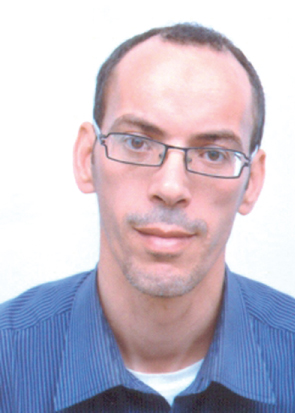
Ridda' research interests include information systems, software engineering, decision making, cloud computing and web technologies. He has led numerous groundbreaking research projects in the areas of transportation, risk management, environmental modelling and monitoring and territory planning.
Ridda is the author of a several publications and conferences proceedings.His most recent book, Business Intelligence and Mobile Technology Research:AnInformation Systems Engineering Perspective (2013), was co-edited with Sean Eom.

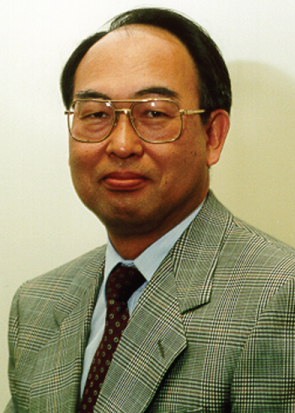
His research areas include business intelligence and e-learning systems. He is the author/editor of nine books including Student Satisfaction and Learning Outcomes in E-Learning: An Introduction to Empirical Research, The Development of Decision Support Systems Research: A Bibliometrical Approach, Author Cocitation Analysis: Quantitative Methods for Mapping the Intellectual Structure of an Academic Discipline, and Inter-Organizational Information Systems in the Internet Age. He published more than 60 refereed journal articles and 100 articles in encyclopedias, book chapters, and conference proceedings.
Introduction
From its humble origins approximately 45 years ago [1], the area of decision support systems (DSS) has made significant progress toward becoming a coherent and substantive academic discipline in terms of three main needs of information systems research (clarifying reference disciplines, establishing a cumulative research tradition, and defining dependent variables of DSS) defined by Keen [2]. Over the past more than four decades, several subfields of DSS research have been identified. They are foundations, design, implementation and evaluation, user interfaces, group support systems, model management, and multiple criteria DSS. During the development of these DSS research subspecialties, DSS researchers picked up theories, concepts, and frameworks developed by contributing disciplines in systems science, organization science, cognitive science, computer science, management science, psychology, communication science, etc. [3].
Other than developing DSS theories, developing a specific DSS has been another important DSS research activities. Over the past 45 years, about 600 specific functional DSS applications developed and published in English language journals excluding conference proceedings and dissertations [3]. The majority of these applications were in the corporate functional management area such as production and operations management, marketing, transportation, and logistics, management information systems, multifunctional systems, finance, strategic management, and human resources. Non-corporate areas of DSS applications include government, education, natural resources, hospital and healthcare, military, urban/community planning and administration, and agriculture.
Urban and community planning has been one of under-nourished areas of DSS application development. As reviewed in the next section, no DSS have been presented to aid urban planners to choose the best urban project that satisfice multiple conflicting goals of a group of urban decision makers. All existing were developed to manage urban transportation and mass transit, public library budgeting, and air pollution.
This paper proposes a Cloud based multiple criteria decision support system (DSS) for urban planning in order to help the decision makers to choose the best urban project with conflicting criteria. The DSS we proposed is deployed on a platform Cloud (CloudBees) and managed by the OpenStack infrastructure. The Cloud based multiple criteria DSS we designed and implemented has significant advantages. It reduces the deployment and processing time, ameliorates the communication and the cooperation between the decision makers, facilitates the accessibility and decrease the cost, we propose a DSS built on the Cloud Computing architecture which can improve effectiveness of urban project evaluation decisions in sustainable local development context.
This paper is structured as follows: a brief introduction is presented in Section 1. Section 2 is devoted to the presentation of related works. Section 3. Discuss the problematics and the description of our contribution. The suggested approach is described in Section 4 and Section 5 is devoted to the implementation of our Cloud based multiple criteria DSS. Finally the article ends in with a conclusion.
Related works
Comprehensive prior studies [3] and additional research showed that a wide variety of DSS have been developed for the urban planning using a wide range of DSS tools such as artificial intelligence, multi-agent systems, multiple criteria decision making (MCDM) techniques, geographical information systems (GIS), etc. Here are a list of DSS for Urban and community monitoring, planning, controlling, and other managerial activities.
All DSS were developed to manage urban transportation and mass transit, public library budgeting, and air pollution. The proposed DSS is built on the three technologies: multiple criteria decision support systems (MCDSS), negotiation support systems (NSS), and cloud computing.
Sustainable local development context and ICT evolution
The cities and urban areas have a primary role to play in terms of sustainable development in so far as these territories are subjected to evolutions that may seriously compromise economic, ecological and social equilibrium. To enable sustainable development of the city (urban territory), we must understand the complexity of existing relationships between the local and the global, thereby promoting a local approach to sustainable development of the city. So, the ICT (Information and Communications Technologies), strongly connoted the global comprehensiveness may be one of the tools allowing this evolution of city.
Cloud computing
Cloud computing has been defined by National Institute of Standards and Technology (NIST) as “a model for enabling convenient, on-demand network access to a shared pool of configurable computing resources (e.g., networks, servers, storage, applications, and services) that can be rapidly provisioned and released with minimal management effort or cloud provider interaction” [19]. The increasing trend of virtualization and cloud computing create a new trend that business intelligence (BI) applications are moving from company-internal information systems to the cloud. Cloud computing providers offer a new service BI as a service (BIasS), in addition to three service models: infrastructure as-a-service (Iaas), platform-as-a-service (PaaS), and Software-as-a-service (SaaS). Hosted BI platforms for small- and medium-size companies is the target of huge investments and the focus of large research efforts by industry and academia [20]. The advancement of cloud computing technologies makes it feasible for urban planners to monitor all details of the metropolitan planning processes and involve them in the design and the decision making process with a cloud-based DSS [21].
MCDM, negotiation support, and integrated DSS
A multiple criteria decision support system (MCDSS) can be defined as an multiple criteria decision making model (MCDM) model embedded DSS to solve various semi-structured and unstructured decisions involving multiple attributes or multiple objectives or both, with an objective of aiding decision makers in analyzing, exploring, and comparing a set of incompatible alternatives. Zeleny [22, p.17] defines the term MCDM as “the general class of problems that involve multiple attributes, objectives, and goals.” He strongly believes that MCDM is a misnomer [23]. Rather, all decision making (DM) problems are MCDM.
All human DM takes place under multiple criteria only. All the rest is analysis, measurement and search. … … … … … … … … .
Clearly, there can be no DM without multiple criteria. DM is that which must be performed after we have measured and searched. Problem with a single objective function, no matter how complex, important or aggregate [the function], are not problem of DM or optimization, but only problem of measurement and search. … … … … … … … .. It appears that we have no need for prefix “MC” in front of DM: all DM is with multiple criteria [23,p.78].
MCDSS intend to support decision makers to help decision makers solve ill-structured problems through direct interaction with analytical models. The various features of MCDM include (1) the multiple-objective goal structure, designed to handle quantitative and qualitative information crucial for ill-structured problems), (2) the interactive solution search procedure, designed to analyze continuous trade-offs among various alternatives until the best available solution is attained, and (3) the emphasis on the decision maker’s judgment or bounded rationality, which better reflects his/her actual cognitive behaviors.
Integration of MCDM into DSS has long been advocated by the researchers in both areas. Founding fathers of DSS such as Keen and Scott Morton [24, p.48] believe that the multiple criteria decision problem is at the core of decision support and “a marriage between MCDM and DSS promises to be practically and intellectually fruitful.” The emergence of MCDM model-based DSS was predicted in the early 1980s [22]. A series of studies [25–27] reached the compelling conclusion that the MCDM model-embedded DSS have positioned themselves at the core of DSS. An important reason for the emergence of the MCDM model-embedded DSS is that MCDM complements DSS and vice versa due to the differences in underlying philosophies, objectives, support mechanisms, and relative support roles [28].
Jarke [29] proposed four dimensions to classify multi-person DSS: spatial distance, temporal distance, commonality of goals, and type of control over the decision process. Most group DSS help solve a common problem cooperatively, while negotiation support systems (NSS) support potentially hostile parties. An early NSS, MEDIATOR, was introduced by [30]. MEDIATOR supports the negotiation process. The essence of any negotiation is compromise, which is a settlement of differences by mutual adjustment or modification of opposing claims and demands, etc. MEDIATOR is a set of networked DSSs for each player and one mediator. MEDIATOR helps the users (players and a mediator) by providing separate private data and tools for each player and data and tools for the mediator as well as shared data and tools.
Lim and Benbasat [31] presented a traditional view of negotiation support systems. This view is based on the desktop computer based DSSs with communication links between negotiators. A NSS is a system of the individual DSSs assigned to individual bargainers and electronic communication systems that permit both computer-mediated and non-computer-mediated communication between bargainers. NSS should support the decision making process in any negotiation situation of interdependence, perceived conflict, opportunistic interaction, and possibility of agreement. A proposed theoretical model seeks to improve negotiation outcomes in terms of the following five dependent variables - time to settlement, satisfaction, distance from efficient frontiers, distance from Nash solution (fairer solution), and confidence with solution. Using traditional architecture, a specific NSS is developed to deal with a hostage crisis situation [32]. Espinasse and others [33] developed a prototype negotiation support system, NegocIAD, based on a multi-criteria conceptual framework of the negotiation based on a multi-agent architecture from distributed artificial intelligence.
Later Kersten and Noronha [34] presented a Web-based asynchronous NSS generator/shell, INSPIRE-INterneg Support Program for Intercultural Research. The traditional NSS architecture of Lim and Benbasat has been expanded by WWW based negotiation support systems architecture. The Web-based architecture is based on the net-centric computing paradigm and object-oriented design. The client/server model architecture allows the user with only a Web browser and an Internet connection to be part of NSS. Programs such as electronic bargaining facilities, analytical tools, quantitative, and qualitative tools reside at their developers’ home site. When the user needs a part of functionality, it will be downloaded. The NSS system shell supports most negotiation activities such as preference assessment, analysis of alternative offers, counter-offer evaluation, etc.
Since MCDM inherently necessitates a simultaneous comparison of the large number of decision criteria and alternatives, which demand a complex array of information, an integration of MCDM with DSS is inevitable. Zeleny even goes further by saying that DM support should be integrated from MCDSS to include all other forms of information technologies such as expert systems, artificial intelligence tools and techniques (intelligent agents, fuzzy algorithm, genetic algorithm, support vector machines, etc.), management support systems, knowledge management systems, data mining, wisdom systems, and others to create an integrated decision support system. The integrated DSS, the DIKWE coordination system, should be able to manager all five dimensions of informatiom needs of oragnizations:
Cloud computing for a multi-criteria DSS support
Urban planning and housing development are subject to the various conflicting resource constraints such as land resources, land stability, accessibility, cost of construction, land protection [36]. Furthermore, the urban housing projects must also take citizens’ social and physical well-being into considerations in collaboration with a plurality of actors, both from government and society including community members [37].
Our approach combines a DSS and cloud computing in order to benefit from its advantages such as: reducing costs, facilitating communications, increasing accessibility without temporal or geographical constraints, and reducing deployment and processing time.
The proposed approach is composed of three phases, the first consists in performing a multi-criteria analysis to elaborate the rankings of the urban projects using the PROMETHEE II method, the second phase executes the Hare method of negotiation process in order to determinate the final choice (urban projects) to decision makers and the third phase allows to integrate our DSS which is composed of the PROMETHEE II and Hare method in a private Cloud with threelayers.
Phase 1: Multi-criteria analysis
Multi-criteria decision aid is employed in various domains in order to help the decision maker to choose the optimal solution among a set of solutions. Thus according to Vincke [38] the multi-criteria decision aid aims, as its name indicates it, to provide to a decision maker the tools enabling him to progress in the resolution of the problem of decision where several points of view of, often contradictory, must be considered. Many real problems can be formulated by defining a set of criteria which evaluate action performances. When modeling a real world decision problem using multiple criteria decision aid, different problematics can be considered [39]. This distinction differs in the way alternatives are considered and in the type of result expected from the analysis. Roy determines four problematics [40]: choice problematic consists in working out a procedure of selection, sorting problematic allows to carry out a procedure for assigning, ranking problematic consists in arranging the various actions while going from the best action to the least good and description problematic allows describing the actions and their consequences.
To select the urban housing development projects, there are various methods such as: PROMETHEE (Preference Ranking Organization METHod for Enrichment of Evaluations) I, PROMETHEE II, ELECTRE (ELimination Et Choix Traduisant la REalité) II, ELECTRE III and ELECTRE IV. The PROMETHEE II is selected as a method for ranking various urban housing development projects from the best to the worst. PROMETHEE II is a prominent method for multi-criteria decision aid that builds a complete ranking on a set of potential actions by assigning each of them a so-called net flow score. However, to calculate these scores, each pair of actions has to be compared [41].
For urban project, multiple decision makers can employ multiple criteria to evaluate actions (projects). In such circumstances, a preference of participant given through the actions can be different for each established criterion. The components for this kind of problems of decision-making aid are following:
{Di, i = 1, 2,…, n} is a set of decision makers,
{aj, j = 1, 2,…, m} is a set of possible actions by decision makers,
{cik, k = 1, 2,…, li} is a set of criteria for the decision maker i, i = 1, 2,…, n,
{eikj, j = 1, 2,…, m} is a set of evaluations for the decision maker i, i = 1, 2,…, n
and criterion k, k = 1, 2,…, li, relatively to the set of actions, Aj, j = 1, 2,…, m.
The general structure of MCDM problem is exposed in Table 1.
These characteristics represent the basic attributes of an urban development housing project. The decision making process by the PROMETHEE II method is composed of four steps that are presented hereafter [42]:
The negative outranking flow of a project is computed by the following formula:
In our context there are several decision makers where each decision maker express his personal point of view by specifying the subjective parameters (i.e. fix the weight of the criteria for each urban project), for that we use PROMETHEE II for each decision maker; therefore we will obtain several rankings where each ranking corresponds to a decision maker as shown in Fig. 1; in this case there will be a problem of conflict between the decision makers to choose the best project among a set of rankings. To solve this problem we propose to use a negotiation process.
The essence of any negotiation is compromise, which is a settlement of differences by mutual adjustment or modification of opposing claims and demands, etc. Some researchers used the negotiation to solve problems of the urban planning: Longfei and Hong [43] proposed an approach for resolving the problem of parking in the city using negotiation process based on calculation of routes utility. Takahashi, Kanamori and Ito [44] described a route providing method to acquire efficient traffic flow based on anticipatory stigmergy for estimating vehicle position and negotiation system for changing route assignment. Di Lecce and Amato [45] proposed a solution for the problem of hazardous goods by creating a new planning route based on multi agent cooperative negotiation paradigm.
One way of coming to an agreement is voting. In order to resolve the problem of conflict between decision makers, we use the voting system to elect an urban housing development project among a set of rankings of urban projects carried out by the multi-criteria analysis. There are different methods of vote such as: Condorcet method, Borda method, and Hare method. For our DSS we employed the Hare method. This is also known as “ranked choice voting”, or “preferential voting”. This method is an electoral system used to elect a single winner from two or more candidates, by ranking the candidates in order of preference rather than voting for a single candidate. This method eliminates the least desired alternatives (urban projects) successively in order to elect the best urban project. We choose to use the Hare method because this one does not present any disadvantage and we are sure to find the social choice whereas the Borda method makes it possible to find the best alternative but has the disadvantage of encouraging the tactical or reasoned votes and the Condorcet method has the disadvantage of not always finding a winner [46].
Figure 2 illustrates the functioning of our proposed DSS which is composed of two steps: the Multi-criteria analysis and the negotiation process in order To give the final choice (the best urban project) to the decision-makers.
Phase 3: Cloud deployment of MCDSS
In this section we will present the architecture of the private Cloud that we have suggested to deploy our Multi-Criteria DSS for evaluation of urban projects, as illustrated by Fig. 3. We chose to integrate our DSS in a private Cloud because the proposed Multi-Criteria DSS (MCDSS) is not intended for the general public; it is used by a group of decision makers. By deploying our Multi-Criteria DSS in private Cloud, data will be more protected and secure.
Our cloud computing application is composed of three essential layers: an infrastructure layer, a platform layer and a user layer. This section discusses the implementation of our proposed architecture to integrate our suggested MCDSS in private Cloud. The scenario of implementation is illustrated in Fig. 4.
Layer 1: Infrastructure layer
The infrastructure layer enables to place at the disposal of the virtual resources by using standard equipment namely: units equipped with a great power of calculation, processing and storage. At this level we use IaaS (Infrastructure as a service) Cloud for providing a virtualized, distributed and automated infrastructure base. The basic function of IaaS Cloud is the creation of virtual machines. In the context of our study, the city contains several domains such as transport, housing development, commerce; networks … etc. In each domain, the city offers many urban projects that must be evaluated by different decision makers; for this we use the IaaS Cloud to create a virtual server for each field of the city.
In our study we chose the OpenStack Cloud [47] because it showed its proofs beside professionals of the domain, it represents a robust system allowing the creation of private Cloud and offers a development platform (i.e. it allows to deploy a PaaS Cloud to develop applications). OpenStack makes it possible to implement a virtual system of waiter and storage. Using its components (Nova, Swift, Glance) we can create virtual machines where each one of them corresponds to a domain of the city (transport, habitat, trade …).
Layer 2: Platform layer
The development of platform layer rests on the infrastructure layer. It is the central layer of the architecture; it uses the resources provided by the IaaS layer and it offers all the elements and tools necessary to support the deployment and the life cycle of the applications. At this level we deploy a PaaS (Platform as a service) Cloud in each virtual server created by the IaaS Clould. We employ this PaaS Cloud to benefit from its offered tools in order to create a virtual machine in which we deploy our DSS.
For our architecture we chose CloudBees because it represents a platform which can be deployed on OpenStack and makes it possible to integrate java applications unlike other PaaS provider that are focused on Ruby, PHP and Phyton. This open source solution allows to manufacture a custom PaaS and to carry out a set of tasks relating to the deployment and management of an application on Cloud. Within each virtual machine creates by OpenStack we deploy CloudBees, this last will create a virtual machine in which it deploys our Multi-Criteria DSS with three subsystems (user interface via Tomcat, model base, and database). For each connection of a decision maker, CloudBees will allocate to him an instance of each service of the application. User Interface via Tomcat service: It allows the interaction between the decision makers and the MCDSS. Database: The database collects and stores data s to store all the data associated with the proposed urban projects, including social characteristics of the project (the number of buildings, apartment, size of apartment surface, etc.) and economic and ecologic data. Model-base: the model base PROMETHEE II and Hare method tools. The model base interacts with the database to collect all information concerning the urban projects in order to carry out a multi-criteria analysis which makes it possible to rank the proposed urban projects. Thereafter a negotiation process will be launched to determine the final choice via the Tomcat user-interface.
Layer 3: User layer
User layer allow the end-users (decision makers) access to our Multi-Criteria DSS through a web browser in order to participate in the evaluation and choice process of choosing the best urban project. In doing so, each decision maker can access the application to participate in the decision-making process via any device (computer, Smartphone, tablet…) equipped with a web browser and an internet connection.
A case study
Based on the developed methodology describes a case study which we carried out in Annaba city (Algeria), following a local development project, to eliminate precarious housing and to support ecological and durable housing. The data used were collected at various times of the project (Table 2).
To validate our approach, we chose the PROMETHEE II method. The startup of this method requires a preliminary work which is common to all the multicriterion methods. This work is to define successively all potential actions, here the Art and Technique Research Department (GART), then the criteria, and the corresponding scales and weights. These two stages allow us to establish a matrix of judgments from which PROMETHEE II can be used.
In our case, each criterion is seen differently by each decision maker thus the decision maker specifies the weight of the criterion according to his/her preference, interests, knowledge and objectives. Table 2 shows multiple projects with different attributes. This data is collected with the help of the Art & Technique research department (GART) in Annaba (city of Algeria) which enables us to be aware of the proposed housing development projects for eliminating precarious housing projects.
While inspiring by the concept of sustainable development, we classified the characteristics of the projects into three categories characteristics (social, economical and ecological) in order to help decision-makers to specify the weight of the criteria. Social characteristics: Block number: is the number of buildings associated to a project. Number of apartments: is the total number of houses to be built by project. Apartments surface (m2): is the area of the houses. Economical characteristics: Time of work (month): is the time of completion of the project. Amount (Algerian dinar): is the overall cost of the project. Ecological characteristics: Ecological effect (takes the values 1, 2, 3): if the project is low ecological, it takes the value 1. if the project moderately ecological it takes the value 2. if the project is highly ecological it takes the value 3.
We chose a common preference scale. The choice retaining a common preferably scale facilitates enormously the assignment of the weights to the criteria.
The computation results of positive and negative outranking flow for each project are represented by Table 3.
At this stage, we rank the projects in descending order by using Phi scores. The ranking and the computation results of net outranking flow for each project are represented by Figs. 5 and 6.
We suppose that there are five decision makers, each decision maker specifies the weight of the criteria according to his preference (Fig. 7).
Once all the decision makers seized and validated the weight of the characteristics, the procedure of determination of best project will be triggered; first the PROMETHEE II method will be applied to give the various rankings of the decision makers as shown in the Fig. 8.
Negotiation process
We suppose that we have five decision makers, the results of application of multi-criteria analysis for each decision maker are represented below in Table 4:
Hare method uses the results of projects ranking according to each decision-maker to determinate the best housing development project. The negotiation process by Hare method is illustrated in Fig. 9. The best housing development project given by Hare method is project 1.
Cloud deployment process
We note that if the number of decision makers is large, the time of development and execution of the application (MCDSS) will be increased, the memory space will be insufficient, and the speed of accessibility and communication will be slow. At this stage we decide to deploy our Multi-Criteria DSS (MCDSS) on PaaS Cloud, we take CloudBees as a platform of development for the deployment of our MCDSS. As represented in Fig. 10, we can easily deploy our MCDSS and benefit from the options offered by CloudBees according to our needs. We use CloudBees for affecting an instance to each decision-maker where each instance is composed of material and software resources necessary to the operation of our MCDSS. The use of instances facilitates the accessibility of the decision makers by connecting with any device (PC, laptop, tablet, Smartphone … ), ameliorates the communication and the cooperation between decision-makers and reduces the deployment and the processing time.
Discussion and conclusions
In this work MCDM and Cloud Computing paradigms are presented as opportunities in researching and transfer technology into urban territory development. Also, we present a cloud-based MCDSS to help the urban housing development decision makers to choose the best project. Although significant cost reductions due to economies of scale and scalability have been cited as major advantages of cloud computing, the primary advantage comes with the MCDSS deployed on a private cloud is access convenience, allowing multiple number of decision makers access such applications via an internet connection with any types of the access device such as PCs, laptops, tablets, smartphones and other forms of mobile computing. Due to the consideration of the data security of a cloud in the public, the DSS we presented are implemented in a private cloud at our own premise, so that we can exercise a full control over data and other security relatedconcern.
Our approach is composed of three steps. The first step, using the PROMETHEE II method, allows multiple decision makers to rank the urban housing projects. The DSS we deployed on a private cloud l allows to specify the subjective parameters of the urban projects for each decision maker, performs a multi-criteria analysis for each decision maker by using the PROMETHEE II method [48] which makes it possible to rank candidate urban projects from the best to the worst one. The second step, employing the Hare method, enables the decision makers to elect the best urban project based on the outcomes provided by the PROMETHEE II method. It executes a negotiation process by employing the Hare procedure [49] which allows to elect between multiple rankings by the multi-criteria analysis and provides the final decision. In the third step, we integrate our DSS in a private cloud with three layers.