



Abstract
Sustainability draws increased supply-chain management (SCM) attention. This article analyzes critical barriers to the assessment, evaluation and attainment of sustainable supply-chain management (SSCM), assessed through critical-barrier identification and qualitative data analysis. Namely a literature review of 188 articles, published between the years 2010 and 2016, helps identify the most influential barriers. The qualitative data analysis pertains to fifteen such barriers, identified in the literature review and through our collaboration with other academic researchers and industrial specialists. Notably, the study’s qualitative data analysis, interpretive structural modeling (ISM), unconceals the mutual impact among the most prominent SSCM barriers. The inadequacy of information-technology implementation is recognized as the most significant barrier, which could prevent business enterprises and other organizations from implementing a SSCM framework, with intentionality the sustainability in their business. The article concludes with suggestions for future research directions.


Introduction
Nowadays, with people’s higher and higher consideration about environmental protection, many companies have shifted their focus to SCM to achieve a sustainable competitive gain [1, 2]. Supply managing in a sustainable behavior becomes an increasing awareness for organizations in different sizes and wide scope of industries [3].
There are a number of serious, social, economic and environmental issues that are highly interconnected which need higher attention from industrial executive [4, 5]. Besides, human population is also rising exponentially and it seems that there may be an increase in the natural resources consumptions by nearly 170% of the earth’s capacity by 2020 [6]. Also from the perspective of a developing and emerging nation, one of the major problems is the high level of carbon emissions (CO2). It is an interesting fact that more than 20% of global greenhouse gases emissions are made by about 2500 largest global companies, and their supply chains take the main responsibility for emissions resulting from corporate operations [7]. Moreover, developing nations generally lack the implementation of technologies that promote lower pollution as well as measures to cut down emission resulting from industrial activities [8]. Concerning social and environmental impacts, along with all stages, it makes more reaction approach of responsibility to external pressure from non-governmental organizations, consumers and governments [9].
However, one of the most critical issues for industries of different types in recent global market is the increasing requirement for integrating eco-friendly practices into sustainable supply chain [10, 11]. But the main point is to familiarize the concept of knowledge on the management point of view and make participations in the industries’ sustainable supply chain network more cost effective, environmentally friendly and socially practical [12]. For this order, it calls for the need to identify different types of barriers to implement SSCM and to extend a hierarchy of ISM to apply SSCM to sustainable practices. Furthermore, this also illustrates the use of the Cross Impact Matrix Multiplication Applied to Classification (MICMAC) analysis, to test frameworks that incorporate SSCM barriers and their relations.
This study has some purposes, shown as below: To undertake a systematic literature review to distinguish key critical barriers to SSCM practices to implement SSCM towards sustainable practices from industrial point of view. To identify the mutual relations between identified barriers to SSCM practices by ISM and MICMAC analysis. To confer the research managerial implications.
The rest of the research is arranged as follows. In the second chapter we outline our systematic literature review. In the third part we show the theoretical framework for the solution method of this research. Section 4 presents the outline of our SSCM theoretical framework as the outcome of the MICMAC analysis. Then we relate this to literature in the Discussion, Section 5, and in Section 6, we conclude our research and provide suggestions for further research directions.
Literature review
Defining the appropriate literature review terms
Sustainability is a concept to achieve long-term economic benefits through the integration of environmental, social, and economic criteria [21]. Also, research propositions have been developed based on the resource dependence theory, transaction cost economics, and population ecology, all based upon a view of the industries. Many researchers have determined that SSCM becomes an integrated approach for reducing environmental pollution Sustainability is motivated by legislation, public interest, or competitive opportunity.
The systematic review is organized for the purposes of this survey following the tenets of literature review explained by [13, 26]. In the first step of our systematic literature review, we present the organization with high contribution to SSCM and then identify 15 most critical barriers to the achievement of SSCM. For defining our literature review, we use the following key words with “Boolean operators” method:
“Sustainable” OR “Sustainability environmental” OR “Sustainability environmentally” OR “Environmental management” OR “Environmental performance” OR “Sustainable environmentally” OR “Sustainable supply chain managements” OR “SSCM” AND “Supply Chain”
AND
“Green” OR “Green supply chain management” OR “GSCM” OR “Greening Performance” OR “Ecological sustainable” OR “Ecologically sustainable” OR “Ecological economics “ OR “Biological systems “ OR “Gas Emission” OR “Carbon footprint” OR “Pollution” AND “Supply Chain”
AND
“Social” OR “Economic sustainability” OR “Ethical” OR “Social sustainability” OR “Environmental sustainability” OR “Environmental Economic” OR “Environmental resources management” OR “Sustainable Development” AND “Supply Chain”
The authors believe that employing these keywords will completely cover the main interest oriented to barriers of SSCM.
The initial research
For defining our research terms, we used “Abstract, Title and Keywords” in advance research of electronic bibliographical sources in Web of Science. In this survey we refine our search based on “journal” and all the articles saved, but “Conference article, Book and Chapter of book” is not included. Based on this refining, our initial research has collected 459 articles raised from different scientific journals, which included articles from 2010 to Nov of 2016. Web of Science Database web site could save essential information in different formats like RIS and Plaintext. With the export of the related file from Web site, we access all the information such as, affiliation and author’s names, Citations and abstracts.
Now, we could easily export the data to Bib Excel software for future process. After this stage the analyzed data conduct to GPS (Global Positioning System) visualizer web site for building multiple geocodes. For this purpose we used the “gpsvisualizer.com” web site. It is a free GPS visualizer online to make maps from geographic data. There is some limitation to draw a map for multiple geocodes but with asking keyword mapping from “Google Map“or”Bing Map” website we could create our geographical map with large numbers of cities. Figure 1 shows the map which is created by “GPSvisualizer” [14] (GPS 2003–2016 Visualizer) online website. It shows the institutions’ location which works on different branches of sustainable supply chain network. The large numbers of literatures are located in some western countries in Europe and then west states in USA. Also the number of publication in western Asia is impressive. On Fig. 1 the diameter of each circle expresses the relative degree of each institution to the contribution. In general view, in the map, the geographical distribution of these institutions expresses that sustainable supply chain network has attracted many researchers around the world.

Circles show the geographical location of contributing organizations, while the map legend on the lower-left corner provides their number.
Our map on the national collaborations statistics shows that the United States holds the highest national collaboration rate. There are 229 affiliations belonging to USA, followed by 70 affiliations with UK. This could be most likely encouraged by the many top authors and organizations within United States.
Our first survey shows that all the 459 articles were published in 176 journals. The 25 top journals which published at least 3 articles during previous 6 years are appeared in Table 1. We found that 188 identified articles were published in these 25 journals, which is about 40% of all the articles published. Two journals “Journal of Cleaner Production” and”Sustainability“which dominated the table have the most self-citation impacts. On the other hand, the data on citation impacts among journals express that both journals are also highly cited by other scientific journals.
The numbers publication in different journal
The numbers publication in different journal
The above process yielded and we focused on 92 articles which are more related to our topic. From these literatures we classified the key barriers to SSCM. Fifteen themes arose, as explained in the following sub-sections.
The environmental impact of packaging is very important, due to the notable level of variouse pollution appring from the employment of hazardous material [50]. The implementation of environmental resource management theory can help control the impact from the hazardous packaging of production [15]. Still, this part of the applying of sustainable supply chain management is not an easy job for most industries.
Internal pressures and poor CEO commitment
The pressures and demand from employees of an organization can be explained as the internal pressures. Some researchers have mentioned the role of employee involvement and loyalty for the success of sustainable initiatives [16, 18]. To maintain high employee morale and loyalty, labor sustainability is to be considered by ensuring suitable working situations and the healthiness and well-being of employees.
Green product design investments and return investment
The companies do not put investment in cost-effectiveness for green design. As economic critical barriers can be introduced as the parts of the gap, behavioral aspects cause further undervaluation. It could be partly due to systematic deviations of making decision agents [19]. To show one model’s abilities, [20] applied it to a case study for electric motors manufacturers, which account for 43–46% of global power electricity consumption. The research estimated that cost-effective investments would increase their efficiency near to 20–30%. To explain this phenomenon, the model simulates these investment decisions on various levels of decision-making layers. The results are compared to observed decisions that have been taken by firms after energy audits.
Lack of moral social ethics and values
Over the recent years, high attention has been paid to the role of social ethics and values in sustainable development. This topic has received high attention and become a critical topic of debate among scholars [21, 25]. Strong business ethics is an essential factor for the success of sustainability initiatives in an organization. Some subthemes are important in this section; rights, ethics, poverty and increasing sustainable development to consider major contributions and promise fields to further the area [22, 24]. In the [23] examined briefly, the conceptualizations of SSM and of social responsibility, to show the understanding of topics.
Suppliers’ human skills
In the 1970s, the supply system was a star-shaped organization characterized by direct relations between customer and suppliers [25]. In sustainable supply chain network, suppliers should provide the customer with new specialization supplying; and contracting out of design, methods, development and manufacturing [27, 28].
Companies lack of effective metrics to account for external environmental costs
It is clear that without a specific method to estimate the price of outside costs, such as the risk of climate change to community, companies can’t consider these type expenses into their regular making decision agenda. Companies could find they are not fully familiar with the real risks and costs and connected to their investments over time.
Economic instability
Instability in economic refers to a company or community experiencing financial pressure due to inflation, consumers’ confidence, continuously rising prices, and unemployment rates issue. This topic affects businesses’ ability to bloom, the physical and living cost, psychological and financial prosperity of customer and families [29, 30]. In this situation, the value of national money will decrease and prices will increase, which empowers hesitation between customers and investors. The weak economic performance could lead to government collapse and diplomatic unrest [31].
Company human skills
The concepts of human skills and human capital are very common in the organizations in term of philosophy of company. The term of human skill is known as a key to improving the assets of an company, since it is a sustainable competitive advantage and increases the employees efficiency to reach SSCM [32]. The growth of gross domestic product has been raised. Employees’ training level has directly increased their working life. Most social benefits, derived from the accumulation of human skills, such as good health, more urban employment, reduction of crime, and increase in social correlation, will affect the economic growth in the long term.
Lack of appropriate sustainability model and proper regulations
Companies face the challenge to be sure adaptation with their organizational sustainability impact standards in their supply chain network, for example, inner, by their suppliers, and also upstream by sub-suppliers. Supply chain management strategy should ensure that compliance with corporate sustainability standard levels in the supply chain usually concentrates on suppliers [33]. Supplying must pay high attention to supply chain sustainability issues, while the stakeholders may hold them responsible for unsustainable supply chain behaviors. Mostly, unsustainability obstacle happens upstream at the different sub-supplier stages [34].
Inadequacy of information technology implementation
Recently, sustainable and eco-friendly technologies are fast approaching parity in terms of conventional solutions [35, 36]. Sustainable technologies are cleaner technologies and reconfigurable, even recyclable do not harm the nature but it needs high investment [37, 38]; Also waste treatment is another important area that needs attention in the sustainable development strategy. Thus, we argue that enabling advanced technologies and information should be taken into consideration as an enabler in the strategic framework formulation of sustainable supply chain.
Lack of facility for adoptions of logistic practices
Optimization in logistics is totally important in sustainable supply chain management; in the detail we can accounting such as; loading; reverse logistics; speed, route; logistics collaboration and use the alternative fuels instead of fossil fuels; etc [39]. But among the above items, the task of developing reverse logistics in both developed and developing industries is accepted as a vital need in the societies. The growing interest in reverse logistic issues could be clearly seen in the large number of publications, especially the researchers that consider empirical studies in different industries [40]. Figure 2 shows the movement between different parts with reverse logistic.
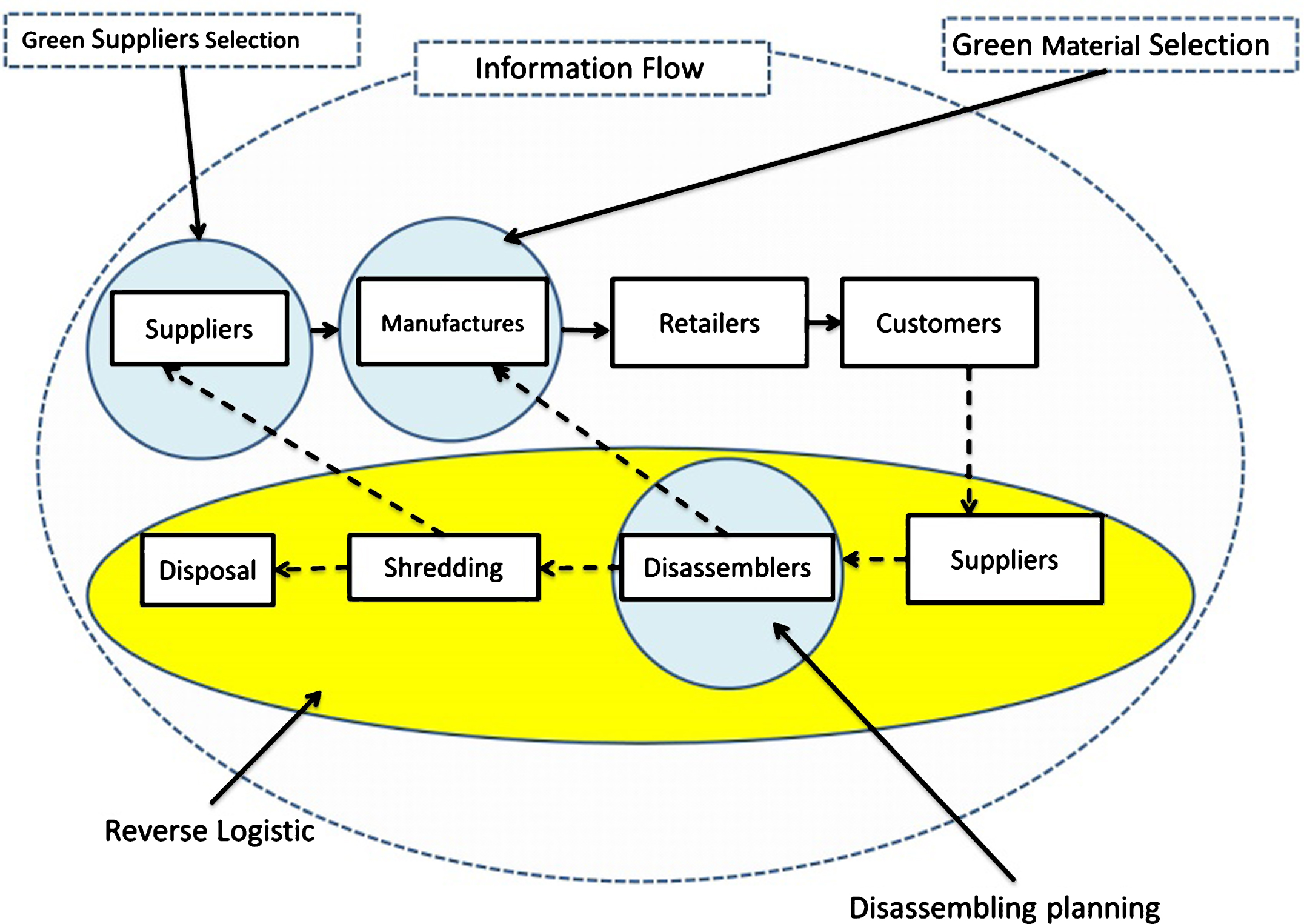
Basic supply chain network included reverse logistic.
Contribution of information regarding green attributes, saving energy, saving material and emission reducing, based on green certification, plays an important role in influencing consumer perceptions [41]. Sustainable development approach reflects on the role of information as a strategic resource in supply chain [42]. In the further emphasized the need to develop reverse logistics networks, to increase the utilization of resources and for the reuse and recycling of the product [43].
Economic performance in environmental issues – Financial costs
During the last decade, development of economic has created many serious environmental difficulties which our community now faces, including change of climate, ozone depletion, effects of nuclear radiation exposure, water pollutions, toxic chemicals industry and widespread air pollution [44]. In the large scale, environmental pollution caused by factory production processes in the other side costs of production conducts to be lower than related community costs [45]. Due to high attention to the environmental protection and sustainable development, such as pressures from NGOs and stakeholder groups, organizations are being pushed to effectively incorporate sustainability issues into their supply chain network managing program [46].
Lack of sustainable practices in the organization’s vision and mission
Practices in sustainabiliy may be termed as sustainable practice because this keyword is used sometimes interchangebly with green performance. Innovative insustainabiliy performances are interconnected with the explicitness of green practice related to comprehension, quality of human resources and organizations [47]. It means sustainability practice or enviromantal protection is one of the gain that exist in organization. The good summary of the main purpose to sustainability is keeps focusing the organizations on track during adverse times and leads to fighting the inner battle among commercialization and esteemed values.
Complex plan to design to reduce consumption and energy
The renovation project in design or pre-design selection is a complex decision problem to reduce consumption and energy. There is a large number, even infinity, of possible renovation solutions depending on how these solutions are defined. There are many possible criteria for the selection of a solution. Many uncertainties and constraints, the preferences of the owner can widely vary [49]. The growing recognition of the contribution of local areas to energy and environmental policies has led to important initiatives for the reallocation of planning actions [48].
Research gap
Based on our systematic literature, it is found that in this field many researchers worked on performance and enablers for the adopting of SSCM in different branches [53], and that only a handful of researchers address the analysis among the critical barriers to implementation of SSCM in organization [54, 55]. Following our review, there isn’t any study which attempts to recognize the most important barriers to implementation of SSCM in Iranian electrical power supply industries manufacturing. The main purpose of this article is to distinguish the barriers to understand relations and to identify the high impact of critical barriers to SSCM practices implementation. This research tries to find the gap to identify the high impact of critical barriers for adopting the SSCM practices with two separated sections. This study continues as: Section 1 introduced a systematic survey review to select the critical barriers to the SSCM in electrical power supply industries, and in section 2 we will present the mutual relation among the barriers by ISM approach.
Solution methodology
Interpretive structural modeling
The ISM is a qualitative data analysis which was proposed by [56]. Firstly it was used as a solving method to basically understand and identify the inter- relations of the components in sophisticated systems or condition [57]. Also ISM is based on group decision-making, social sciences, discrete mathematics, graph theory, and computer assistance [58]. The ISM methodology is started by separately or group mental types in order to calculate binary matrices, to explain the individual/mutual relations of the elements. In some references this matrix is nominated as relation matrix too.
The relation matrix may be shaped by considering this question “In the feature will ei effect ej”. Following the reply, if it is “No” then πij = 0, otherwise πij = 1. The relation matrix, in general form is shown as below:
Here “e
i
“is the same as “i
th
” variable in the framework. “π
ij
also reveals the connection among “i
th
” and “j
th
“variables. D is the relation matrix.
In Equation (2), ”I” is nominated as the unit matrix, and in Equation (3) “K” express the powers. Also in Equation (3) M* presented the reachability matrix. Attention that, this matrix runs under the “Boolean operation“(For example: 1×0 = 0 and 0 + 0 = 0 see as below).
Now, we are ready to calculate the reachability matrix and priority matrix as below Equations (5) and (6), respectively:
The “m ij ” explains the value of the “i th ” and “j th ” in row and column respectively.
Now, based on Equation (7), the inter- relations among the elements could be discovered and the arrangement of the relation of elements could be explained by the graph.
Now, for better understanding, we show a simple example to explain different steps of ISM as below:
Suppose that in one production line in factory, cash flow (C), product (P), hand tools (H) and labor (L) and the inter- relations are explained as relation matrix and graph based on Fig. 3.
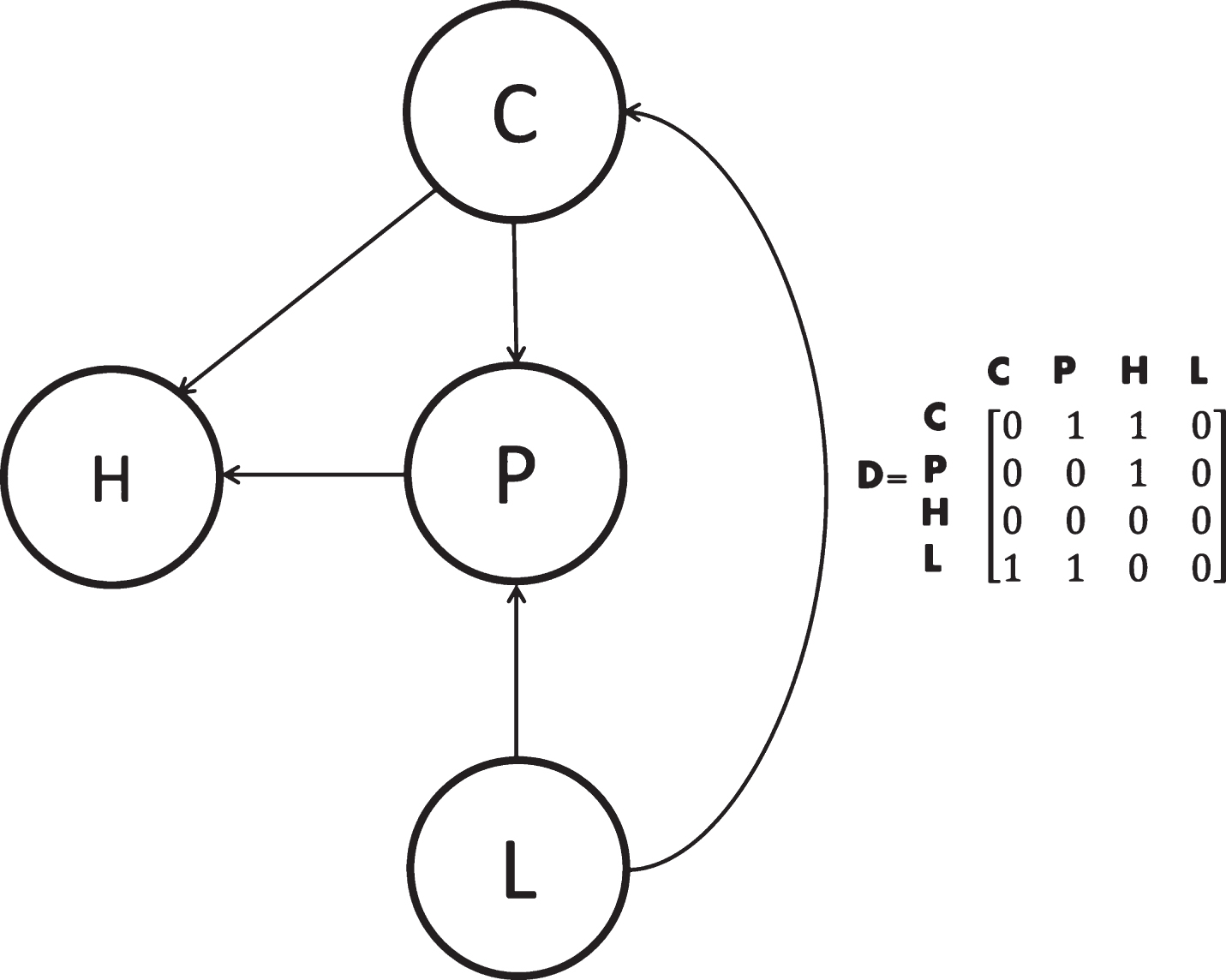
The relations of the elements of example.
Also, M matrix is defined as follows:
Where the star (*) in Equation (9) means the derivative relation element does not shift in the primary inter-relation matrix. So, to find the impacts of hierarchical structure among different elements, in priority matrix and also in reachability matrix, we show Equation (4) and Equation (5) respectively.
In last stage, the ranking can be recognized based on Equation (7). The high ranking in this example is labor. Also with these procedures we can explain the remaining. Attention that interconnection among the labor and hand tools is produced by the reachability matrix. Based on above data, for this sample, labor located in first ranking and hand-tools in forth rank position.
In this section we introduce the ISM steps based on [18, 51] which is indicated on Fig. 4. Systematic literature review for barriers under investigation and variables identification; Explaining the guidelines and approaching experts to make interaction matrix; Filling the matrix with O,V,X and A letters as the expert idea to express the inter relations among variables; Converting structural self-interaction matrix first to the binary matrix then considering transitivity specifications. It converts to the final reachability matrix; Identifying the impact of variables driving power and dependence power to reach reachability matrix; Making the graph as the reachability matrix; Converting the graph into structural model; Contextual relations between the variables, which are obtained from brain storming technique.
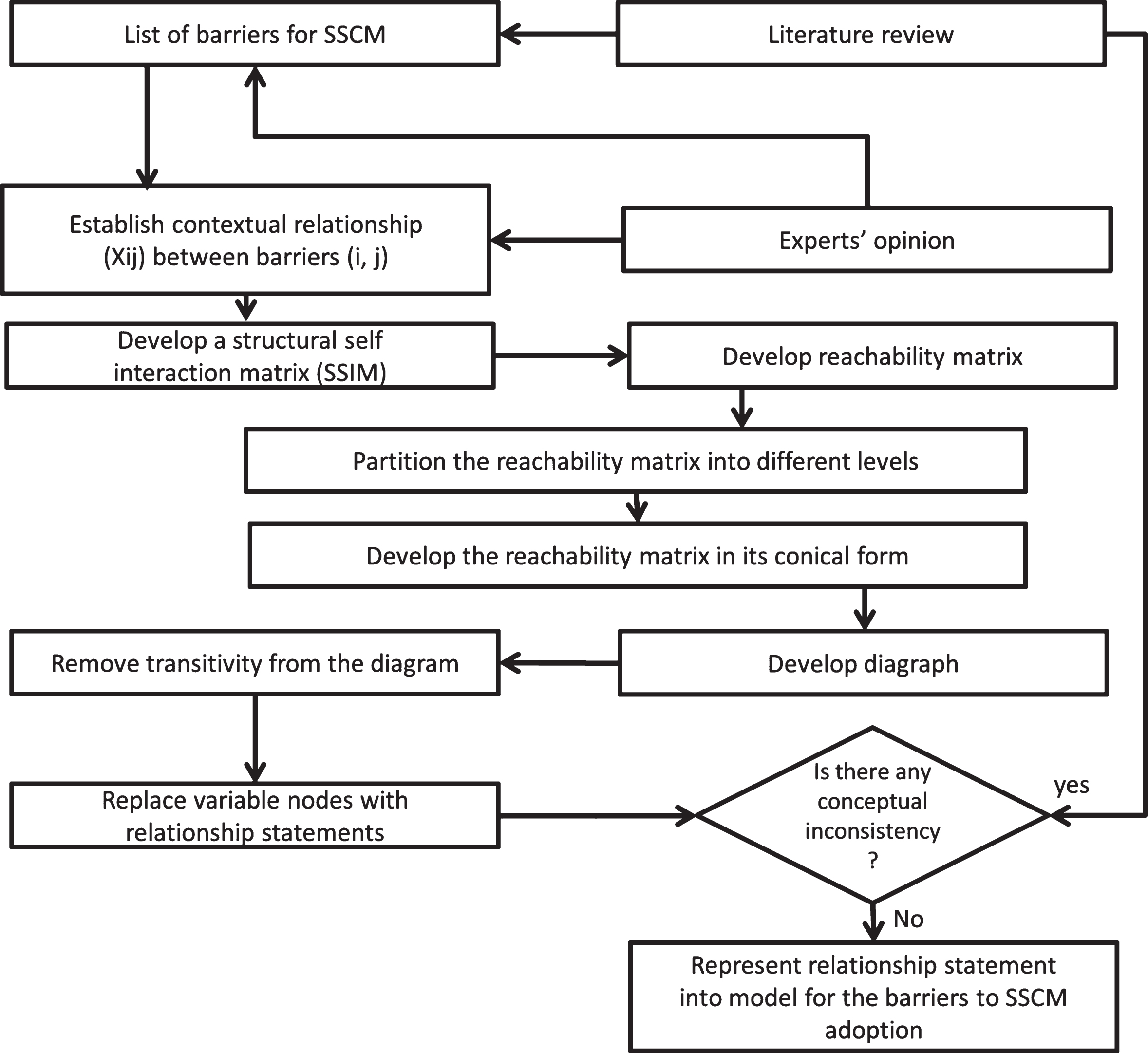
ISM modified diagram.
In the first step to develop the theoretical framework, we use ISM to recognize the mentioned fifteen barriers to SSM based on our systematic literature review in the previous sections. Next, we created an interpretive skills base to capture the opinions of the experts. To find experts we identified practitioners who have implemented sustainability initiatives within their supply chains. They have suitable experience and are working at tactical operation in different levels of supply chain. The experts were consulted to verify the drivers that were stemmed from the literature review in the context of Indian manufacturing. The wording of the variables was verified but we did not drop or add new variables.
Sampling design and data collection
In our research, we selected 11 manufacturing companies from different sections such as, production line, after sales service, research and development and procurement. In this study our target for experts is having more than fifteen years experiences and working in operation or tactical level supply chain. Also twelve academics with a good reputation in various sectors in supply chain and management companies were advised for the research of the barriers to SSCM. The use of professional networking sites made our efforts much easier. The questionnaire was emailed to 37 specialists. Out of 25 exploitable responses were selected for this research. Figure 5 has shown the research work diagram.
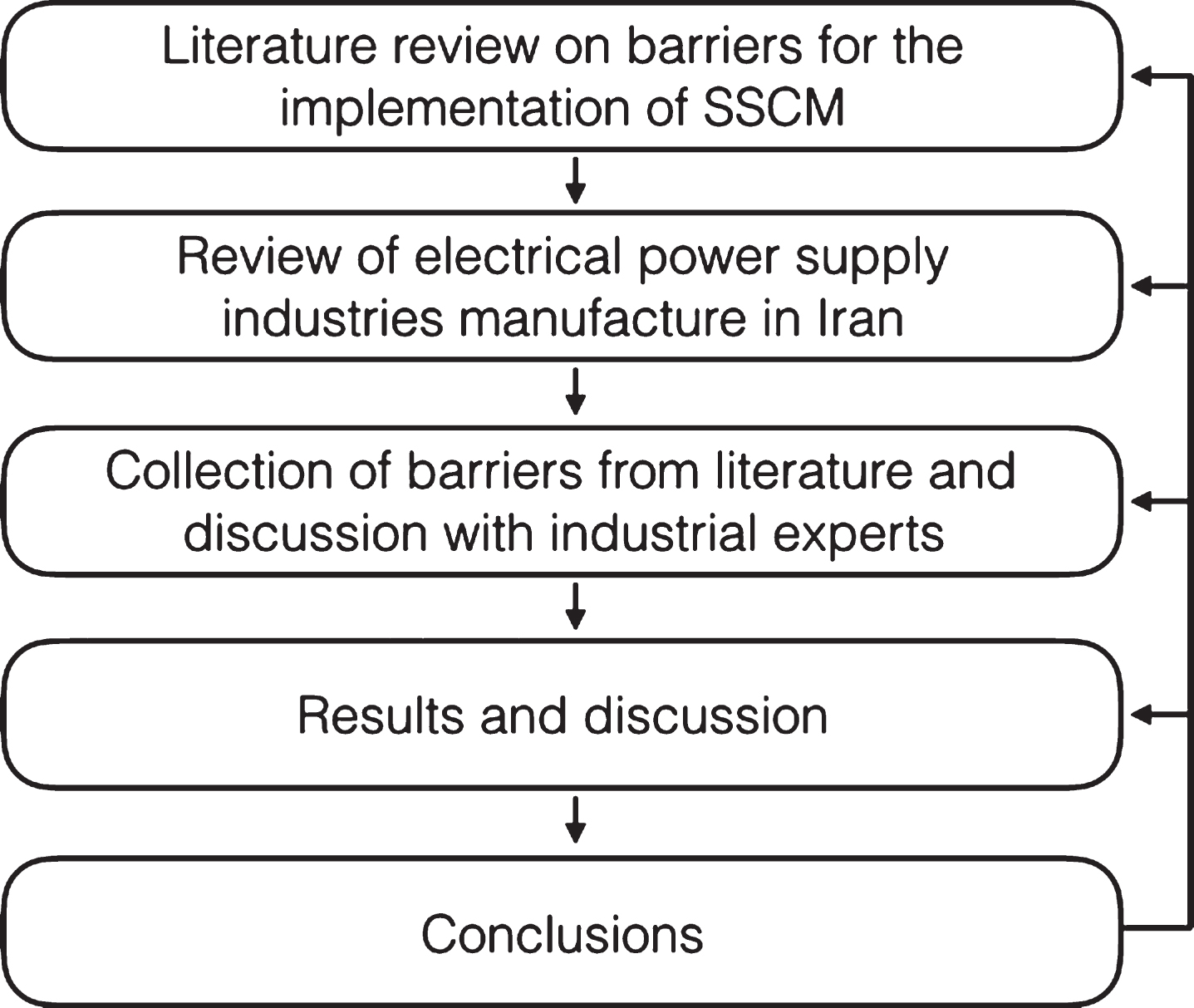
Flow chart of the research work.
As ISM technique based [54] we used the survey to establish the contextual inter- relations among the barriers identified. Discussions with specialist from the industries could help us to identify the inter- relations between the high impact barriers from the selected barriers. It should be notice, the contextual inter- relation of every variable among any barriers (i and j) and the connected direction of them, is questioned. We used four letters to explain the direction of inter- relations among the different barriers. See as below:
O: Barrier i and barrier j are isolated.
A: Barrier i could not help to reach barrier j but i lead to j;
V: Barrier i could help to reach barrier j but j doesn’t lead to i;
X: Barrier i and barrier j could help to reach each other’s;
As Table 2, structural self-interaction matrix is shown.
Structural self-interaction matrix (SSIM)
Structural self-interaction matrix (SSIM)
Now, in this section, the SSIM matrix is converting to the binary matrix. It is donated as initial reachability matrix. With transforming of the data of each cell, the SSIM converts to an initial reachability matrix.
SSIM becomes binary format. For example 0 or 1, the instruction for substitution is mentioned as below based on [59]: In SSIM, if the cell (i, j) is V, after that cell (i, j) will become 1 and the cell (j, i) will become 0. In SSIM, if the cell (i, j) is A, after that cell (i, j) will become 0 and the cell (j, i) will become 1. In SSIM, if the cell (i, j) is X, after that cell (i, j) and (j, i) will become 1. In SSIM, if the cell (i, j) is O, after that cell (i, j) and (j, i) will become 0.
As the above rules, the initial reachability matrix is shown in Table 3.
Initial reachability matrix
Initial reachability matrix
The main purpose of the structural final reachability matrix is to obtain the interconnections of different barriers. This step is an initial assumption to build ISM. It considers that barrier “i” is linked to”j” and barrier “j” is linked to “k”, so “i” undoubtedly is linked to “k”[54]. In Table 4 the final reachability matrix is shown.
Final reachability matrix
Final reachability matrix
*Entries are included to incorporate transitivity.
This section is involved with the extract of a hierarchical arrangement from the reachability matrix with level partitioning, the reachability and antecedent set [60] for every barrier is achieved from the finalized reachability matrix. The main reason for this part is to make simplified construction of the digraph from the reachability matrix. Based on the final reachability matrix, the antecedent and reachability sets for every barrier are found [17]. The level partition related to this research is shown in Table 5.
Level partition
Level partition
Based on final reachability matrix, the structural model is introduced as follow:
If there is any inter- relations among the barriers j and i, an arrow is used to show this relations. The output result is named as “Digraph”. With the replacing of nodes, the “Digraph” will convert to an ISM model. On Fig. 7, we illustrated ISM model structure. As this ISM model, the 15 barriers are categorized in six levels. In the top level, two barriers appear, which are, “High cost of packaging (B1)” and “Economic Performance (B13)” and also “Inadequacy of information (B10)” in minimum level is found.
MICMAC analysis
Based on dependence power and driving power matrix (Table 6), it is desirable to seek a method by which we can draw up the hierarchical relations among them and also establish which of the myriad indicators are ‘stand-alone’ ones in their impacts, which ones do not hold true, and which ones generate secondary and higher order impacts. Cross Impact Matrix multiplication applied to classification (MICMAC) can be used as the best tool to meet the purpose. Based on this research; all barriers are categorized into four modules: independent autonomous, linkage, and dependent. Also it is divided in two main parts: dependence power and driver power, which are given below Fig. 6:
Dependence power and driving power
Dependence power and driving power
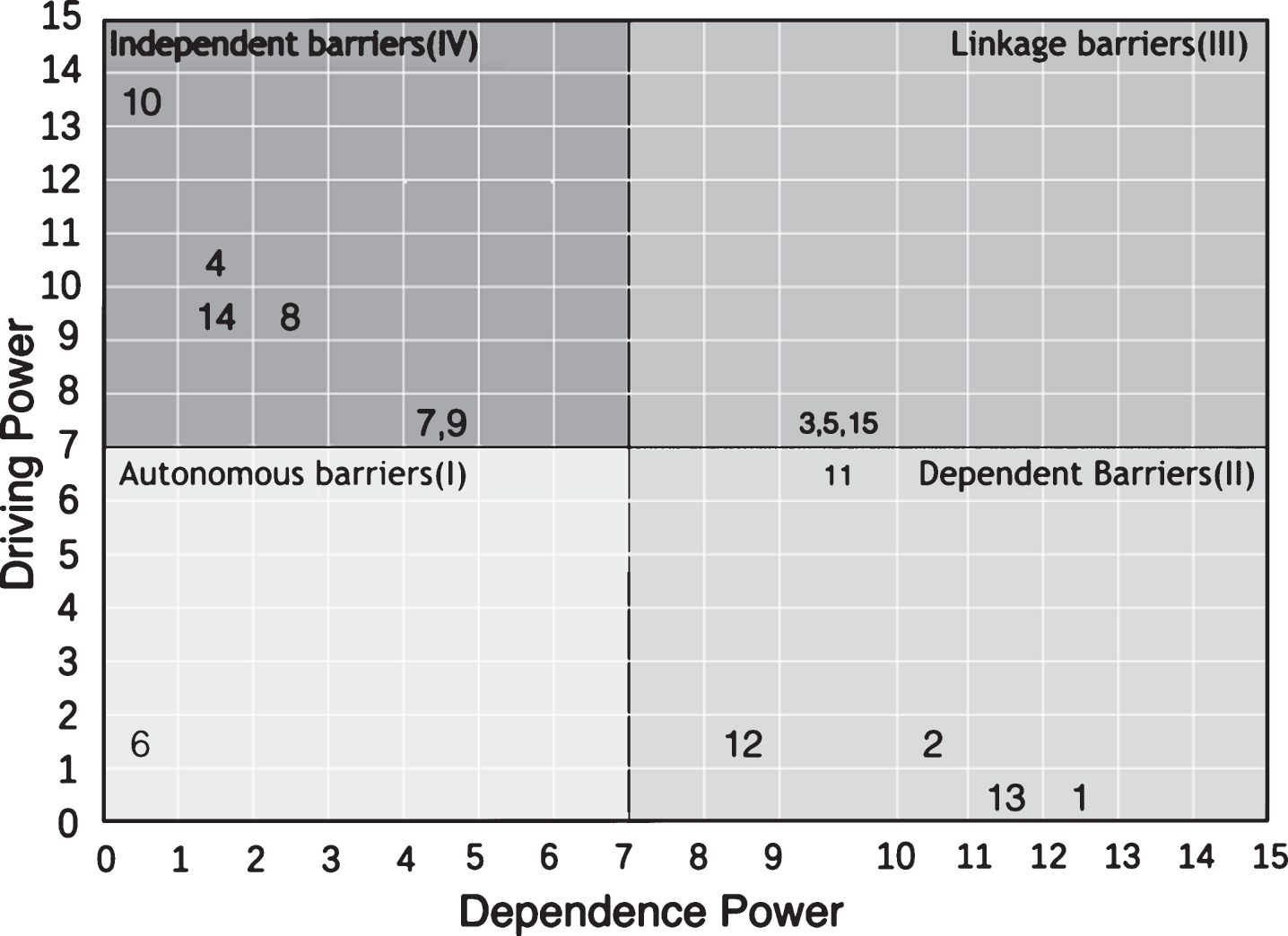
MICMAC analysis of towards implement SSM a case industry under study.
Barriers in autonomous quadrant: In this section, barriers don’t have strong driving power and also weak dependence. Usually they keep disconnected from the system life cycle, but in some parts they have a few connections, which could be strong. These types of barriers are appointed in quadrant I. Barriers in dependents quadrant: This quadrant includes the barriers which have weak driving power but in the other side, have strong dependence power and represented in section II. Barriers in linkage quadrant: In this section, the barriers at the same time have strong driving power and strong dependence. They are represented in section III. These barriers are unstable and any reaction on them will make an impression on the other barriers. Barriers in independent quadrant: In this section, the barriers have enough strong driving power but very weak dependence power. These are placed in section IV.
Mostly, researchers and practitioners pay more attention to sustainable development. Output of this study will enable the stakeholders to develop practices to make a sustainable society. Environmental effective management suggested conservation of natural sources, control of hazards and protection of habitats. During the production, customer service, consumption, post disposal disposition and entire supply chain, the local optimization of environmental factors will be considered [61].
Although industrial development in Iran is acceptable, the consequences of this growth towards ecology should also be considered. Environmental issues are vital for industries, and for both managers and executive engineers, implementation of SSCM is challenging. However, the establishment of SSCM is not a simple job and it needs accurate analysis. The output of this research demonstrates that Iranian industrial top level managers have begun to arrange sustainability concerns in sustainable development and environmental science. But the point is not only that they are in the initial phase but also that they have to get rid of the barriers step by step.
The dependence and driving power demonstrates the 15 barriers’ positions in 4 sections (Fig. 6). The outcome of this research of barriers analysis with the ISM approach is presented as the following clarification: In autonomous barriers (I), just one barrier (B6) appears in this section. Generally, autonomous barriers are not strong drivers and also weak dependents and these barriers do not have much effect on the approach. This graph shows that nearly all barriers play a significant role in the match on the SSCM in electrical power supply industries. In dependent barriers (II) area, there are 5 barriers (B12), B(11), B(2), B(13) and B(1). This section is mentioned as dependent quadrant, and the barriers in this section don’t have strong driving power and also high dependence power. Considering the lack of governmental rules, industries will not focus on social responsibilities programs and this is the reason for weak drive power for these barriers [58] and also high dependence power is indicated as the absence of corporative social obligation as a significant barrier to the implementation of SSCM approach. These points out that industry are giving minimum attention to social issue and governmental regulation. So, in our research case, we need the government to build proper framework to draw special attention to social responsibility for Iranian industries. Following these points, the Iranian industries are not special motivated to social responsibility participation without outside pressure [63]. Three B(3), B(5), B(11) barriers fall in the section III. These barriers are organized in to one group. Suppliers, Product Design and Logistic are main issue in this quadrant. The barriers which are placed in this section have both strong driving and at the same time strong dependence power and they are unstable too. Any reaction on these barriers will have an action on the other barriers and will also provide feedback. Also they might agitate all system specifications [62]. It is interesting to see that based on our research, “Suppliers’ human skills “, “Green product design” and “Complex plan to design to reduce consumption and energy”, are in same level and same driver power [59]. B(10), B(4), B(14), B(8), B(7) and B(9) are given in dependent barriers in section IV. These barriers have a strong driving power but weak dependence power and this may be known as ‘key barriers’. Among these barriers (B7) “Economic instability” and (B9)“Lack of appropriate sustainability model” are in same level. The suppliers always are fighting to avoid recession in their workplace and practice to implement the appropriate sustainability model, because they are faced with high investment and low profit. Supply chain management contributes to the overall accomplishment of a supply chain, and one poor supplier activity affects very quickly the performance of the whole chain [63]. B(14) and B(8),“Company human skills” and “Lack of sustainable practices in the organization” are also in same layers. Growing human skill in a company will supply target attainment, employee-oriented and quality in productivity [60].
Conclusion and future scope of the study
This research has taken a wide look at sustainable supply chain management and the important topic emerging in this field. It has a two-fold contribution to the SSCM literature.
At first, based on systematic review (Section 2) we focused on some high prestige scientific journals to investigate dominant barriers to SSCM practices. In second stage, we applied ISM and MICMAC analysis to understand the relations of 15 barriers to the implementation of sustainable supply chain management. It is impossible to get rid of all kinds of barriers; therefore, companies need to know the most dominant barriers. This research summarizes the data analysis of barriers and categorizes various dominant barriers with ISM and MICMAC support.
On the Fig. 6, ISM diagram indicates the connection between the barriers. There are seven levels in this diagram. Two barriers drop in the first level, which are: “costly for environmentally friendly packaging” (B1) and “economic performance in environmental issues” (B13). These barriers are less influential for the implementation of sustainable supply chain management in electrical power supply industries. In the middle levels, the five barriers appeared. When compared to the first level barriers, they create many obstacles on implementation. In the end, (B10) that occurs in the lower level, acts as an influential role in adopting sustainable supply chain management. Industries need to give more attention to this barrier. The ISM outcome identifies the most significant barriers to electrical power supply industries which can easily help to process for the implementation of sustainable supply chain management.
Based on MICMAC analysis (Fig. 7), one barrier (B6) has been reported as autonomous. “Lack of effective metrics to account for external environmental costs”, this barrier has little link to the system, with low diver power and minimum dependency. It mentions that, key variables are nominated as the barriers with a very strong driving power. They are independent or linkage criteria. (B10) “Inadequate of information technology implementation”, we can call it as high impact key barrier, which also is dominated by (B4), (B14) and (B8) respectively.
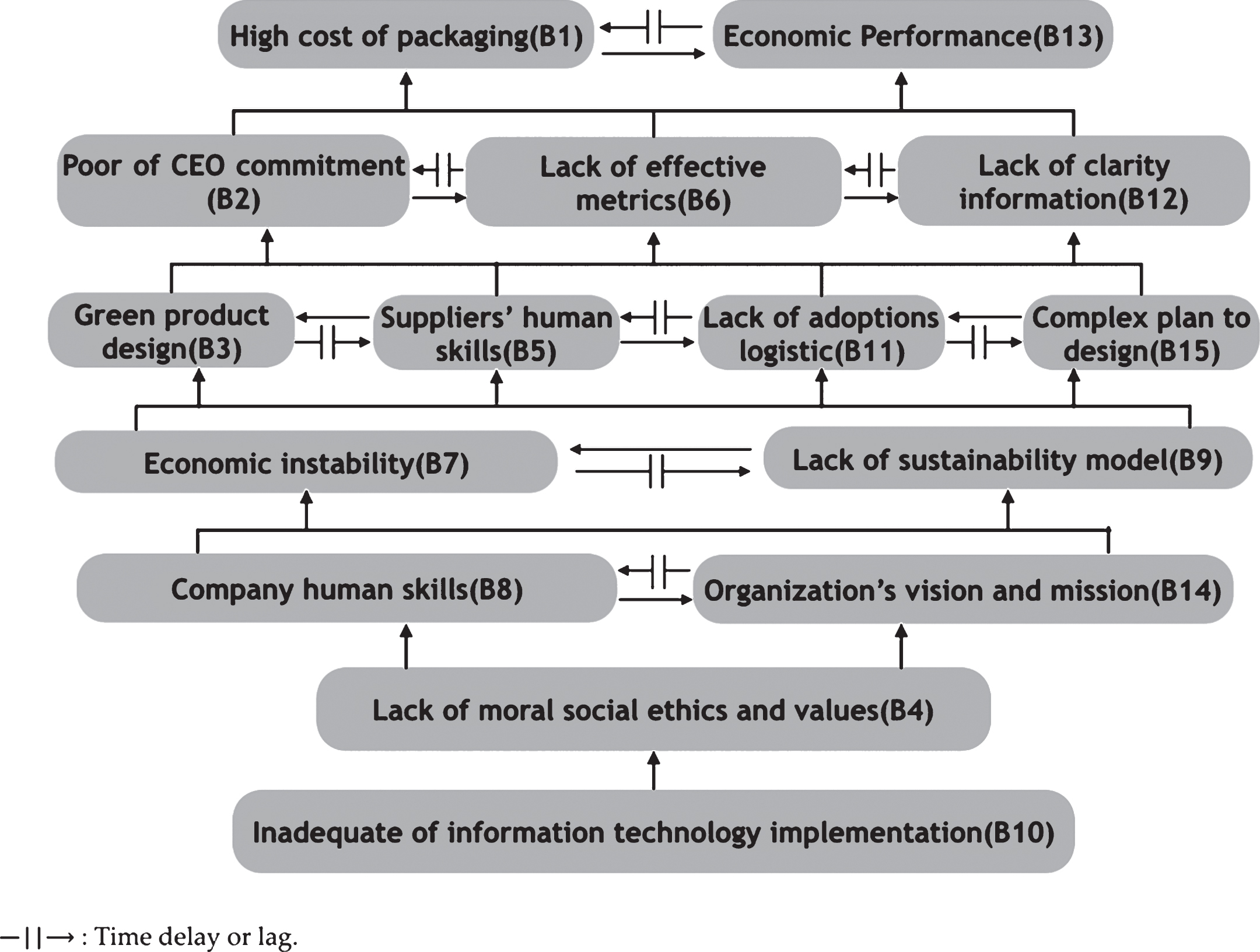
ISM based model for barriers.
In this research, we investigated a solid framework for analyzing the influential barriers to sustainable supply chain management implementation in the electrical power supply companies, which the barriers have enough ability to recognize easily in industries. Also more variables can be used for identical investigation. We considered only 15 barriers in the study; however in real world further barriers exist. Also the proposed model may be applied in other researches to other countries such as China and India with adjusting some variables. In addition, Fuzzy ISM (FISM), [52, 65] which could be a progress over normal ISM, has been advised to expand ISM in fuzzy environment. It could specify the several network structures in the principles and practices.
Footnotes
Acknowledgments
Kindly special thanks to Prof. Jianqiu Zeng for precious editorial contributions to improving the presentation of this article.