



Abstract
BACKGROUND:
The development of sustainable HRM contributed to the increasing interest in practices encompassing the sustainable management of human resources (sustainable HRM, SHRM) and results of these practices. The paper introduces a new perspective upon the contribution of SHRM to creating value.
OBJECTIVE:
The objective of the present paper is to develop a conceptual framework linking the idea of SHRM with organizational value, and to determine the strength of an HRM system.
METHODS:
Methods applied in the study include the analysis and synthesis of scientific literature and a critical discussion considering provided references. The issue is discussed on the basis of a considerable number of theories, including the knowledge-based theory, stakeholder theory, and AMO framework.
RESULTS:
The results of the present study indicate that sustainable human resource management plays a significant and positive role in achieving organizational outcomes. It was shown that SHRM practices influence three levels of outcomes: (1) the organization (e.g. quality, efficiency, flexibility, innovation, profits), (2) society (e.g. stakeholder satisfaction, employment growth, social inclusion) and (3) the individual (e.g. good work-life balance, engagement, employability). Moreover, via the strength of the HRM system, it exerts an additional impact upon employees and external stakeholders.
CONCLUSIONS:
The managerial implications are for the corporate leaders to recognize the critical role of SHRM practices in implementing sustainable development and achieving economic, social and environmental benefits. For the academics, this paper is a wake-up call to extend research to investigate unexplored relationships between SHRM and performance/value.

Introduction
Based upon the literature of the subject, it is becoming increasingly clear that an HRM system constitutes an important component which can help an organization become more effective and achieve a competitive advantage [5]. Moreover, the HRM system may highlight value creation which targets individual employees, employee groups or teams and organizations [61]. The examination of HRM vs. organizational value relationship has become increasingly popular since the mid-1990 s [3, 47]. The above studies are based upon two perspectives. One is based upon a systems approach. Research in this area has moved from a focus upon separate HRM practices and employee performance to a more macro focus upon the overall set of HRM practices and firm value. Instead of examining the effects of individual HRM practices upon firm value, aggregated HRM practices constitute the object of the study. The second approach is the strategic perspective upon HRM, which assumes diverse meanings in the literature. In the strategic-based approach, researchers examine the particular “fit” between various HRM practices and the organization’s competitive strategy. Value emerges from individual solutions/ practices. Researchers embrace a contingency perspective with the assumption that the effectiveness of the HRM system depends upon contextual features such as industry, company size, or manufacturing policies. A related approach within the strategic perspective upon HRM is the resource-based view [4] i.e. the notion that, collectively, human resources of an organization exert an impact upon firm value and provide a unique source of competitive advantage which is difficult to replicate. Taken together, these two outlooks upon HRM vs. firm value relationship—the systems and strategic perspectives—help to determine how HRM practices and their influence upon organizations can lead to a desired value. These empirical studies pertaining to HRM vs. value relations fit into two distinct groups of results. In the first case, there is no link between HRM and value, or if the link exists, it is dubious. The second group of outcomes is highly enthusiastic in assuming a positive and significant HRM vs. value linkage. In relation to the two approaches, the review of literature allows to maintain that “some progress” [71] has been made in the research on HRM and value, however the complexity of the link, nevertheless, remains.
The development of sustainable human resource management (SHRM) opens new research areas [85]. One of them is seen in the impact of SHRM upon organizational outcomes, especially the impact upon individuals or groups within the organization (human outcomes) and one upon groups of people and relationships between people (social outcomes). An alternative approach also includes authors [27] who explicitly acknowledge the impact of HRM upon ecological/environmental outcomes. Jabbar and Abid [48] wskazują, że HR practices wpływające na job satisfaction and employee motivation enhances environmental performance. Assuming SHRM does influence performance, the most fundamental issue is the linkage between the constructs of SHRM and value. This stems not only from the significance of the outcomes themselves, but also value generated for the organization by the HRM system as well. Due to fact that “there is a gap in explaining how sustainable human resource management contributes to the creation of a sustained competitive advantage” [60], one of the main challenges for researchers is to explicate and assess the impact of SHRM practices upon organizational performance and upon exploring the pathways leading from SHRM practices to organizational value.
The objective of the present paper is to develop a conceptual framework linking the idea of SHRM with the concept of organizational value, and to determine the role strength plays in this relationship. The issue will be discussed on the basis of a considerable number of theories, including the knowledge-based theory, stakeholder theory, and AMO framework. Moreover, particular approaches and theories determine not only the nature of the relationship, but also the need for micro-level research and even the reverse causality in linking SHRM and value. Methods applied in the study include the analysis and synthesis of scientific literature and a critical discussion considering provided references. The analysis of literature enabled the concept of sustainable HRM and value creation to be described and the relationship between these to be determined. The chosen method allows to stress the relevance of sustainable HRM for organizational value from the point of view of researchers. The method capacitates to pinpoint the rationalities of sustainable HRM.
The current paper is divided into several sections. First of all, the premises of sustainable human resource management and research focus are described. Next, the relationship between sustainable HRM and organizational performance is detailed. Further sections present the issue of value, dimensions of value creation by SHRM practices, and the characteristics of a strong HRM system. Furthermore, the relationship between SHRM practices, strength of the system, and added value will be detailed. Finally, the specific implications of the findings are proposed, along with suggestions for possible directions of further research.
Development of the idea of sustainable human resource management
The concept of sustainable human resource management is derived from the idea of sustainable development (SD) and HRM. A number of terms have been used to link sustainability and HRM activities. These include sustainable work systems (SWSs; [25]), HR sustainability [86], sustainable management of HRs [31], sustainable leadership (Avery & Bergsteiner, 2010) and sustainable HRM [17, 32]. Sustainable HRM (SHRM) has only recently become a field of research. However, there exist at least two arguments highlighting why sustainability is important for HRM [82]. First of all, HRM helps direct employees’ mindsets and actions towards achieving sustainability-related objectives (HRM is considered as a means). Secondly, sustainability-related principles can be embodied in HRM systems, which fosters the long-term physical, social and economic well-being of employees (HRM is considered as an end). The present study makes a premise that the HRM system constitutes a means for achieving organizational SD objectives and contributes to obtaining the long-term physical, social and economic well-being of organizations’ workforce. This approach is convergent with the one presented by Buller and McEvoy [13], and Egri and Hornal [28].
Several definitions of sustainable HRM currently exist. One of the most cited is the definition by Ehnert [30] stating: “Sustainable HRM is the pattern of planned or emerging human resource strategies and practices intended to enable the achievement of an organizational objective while simultaneously reproducing the human resource base over a long-lasting calendar time and controlling for self-induced side and feedback effect on the HR systems, on the HR base, and thus on the company itself”. Recently, Kramar [57] expanded this definition by adding the idea of minimizing the negative impact upon natural environment and people and communities, and by acknowledging the critical enabling role of CEOs, middle and line managers, HRM professionals and employees.
The interpretation of sustainable development by Ehnert [30] provides a useful way of understanding the relationship between sustainability and HRM. These interpretations constitute a responsibility-, efficiency- and innovation-oriented, and a substance-oriented understanding of the relationship between sustainability and HRM. The responsibility-oriented approach is based upon an open-systems model which applies Brundtland’s definition of sustainable development. Becoming responsible not only for a single stakeholder group, e.g. owners, but caring for their larger number, employees in this case, constitutes the central notion of this approach. The implication of that understanding requires employees to be approached in a social manner, to foster employees’ well-being and to reduce the impact of work. The efficiency- and innovation-oriented approach adopts a view which is more consistent with Friedman’s perception of sustainability. It focuses upon economic results and inter-relations with other outcomes. A very different approach is embraced in the substance-oriented meaning of sustainability. This approach seeks to retain HRs of an organization. As a consequence, it revolves around enabling the organization to reproduce its resources in order to ensure its survival in the future. From that viewpoint, the two aspects are of utmost importance: the knowledge-based view has to be preserved by investing in resources’ reproduction. In addition, a balance between the consumption and the supply of resources has to be established [67]. Due to the fact that the paper reviews relations regarding sustainable human resource management and organizational values, the discussion pertains to the efficiency-oriented view. The main emphasis will be placed upon the impact of the HRM system upon organizational outcomes, inter-relations between various types of results, and generation of value.
The literature pertaining to relationships between sustainable HRM and organizational outcomes can be categorized into three groups. A common feature of all of these is an understanding that sustainability refers to long-term and durable outcomes. However, the writers in these various categories understand sustainability and its relationship with HRM in different ways. The groups are categorized in terms of their outcomes. One group emphasizes economic outcomes and the creation of ‘sustainable competitive advantage. Humans are seen as an objective, rational ‘resources’, whose beliefs and actions can and should be studied (and managed) with regard to how they ought to be directed in order to achieve organizational objectives [40]. The idea of sustainable human resource management itself constitutes an expansion of the traditional HRM. The main objectives of sustainable HRM in this view are (1) to balance the ambiguities and duality of efficiency and sustainability over a long-lasting calendar year; (2) to sustain, develop and reproduce an organization’s human and social resource base, e.g. help the mutual exchange of relationships; and (3) to evaluate and assess the negative impact of HR activities upon the HR base and upon the sources for HR’ [29].
Another group, labeled ‘Promoting Social and Environmental Health’, emphasizes external outcomes, including ecological/ environmental and/or social and human outcomes [18]. To a large extent, this approach reflects the idea of triple bottom line (economic, social and environmental outcomes). The term sustainable management of HR has been used to refer to HRM practices which contribute to both positive ecological/environmental and human/social outcomes, with the intended purpose of achieving economic results. This represents a concern with achieving internal and external outcomes. It was established that companies which display good social/human and ecological/environmental practices exert a positive impact upon the business’ financial performance [69]. Authors indicate that organizations focus upon economic results. However, extra-organizational social and environmental benefits emerging from the application of sustainable development are recognized by them as well.
The third group, labelled ‘Connections’, examines interrelationships between management practices, including HRM and organizational outcomes, which include environmental and social aspects of these. The outcomes are examined from the organizational perspective. It has been argued that environmental and human/social outcomes are interrelated and contribute to organizational sustainability. HR practices address the development of flexible organizational structures, trust among employees, openness, ease of communication, innovation, and a suitable organizational culture. At the same time, pro-ecological initiatives and ecology-related innovation are promoted [76].
The above discussion indicates that some of the current literature under the umbrella of sustainable HRM does provide a viable alternative way of conceptualizing HRM and the processes and outcomes of managing people. Sustainable HRM represents a new approach to managing people, by identifying broader purposes for HRM through its recognition of the complexities of workplace dynamics and the explicit recognition of the need to avoid negative impacts of HRM practices [57]. Incorporating gender equity and diversity practices within processes such as compensation or career management, or implementing HR planning systems that seek to avoid making employees redundant through the use of internal mobility, constitute only some examples of sustainability principles being incorporated into pure HR processes. The discussion outlined in the present section offers a canvas for a better understanding of the relationship between sustainable human resources and organizational outcomes, and enabled the theoretical foundations pertaining to SHRM, which become a starting point for further discussions, to be presented.
The search for a supporting theory
For the theoretical grounding of the present considerations, a search for innovative and critical literature, one which provides a base for further discussion, was conducted. Focus was placed upon aspects of knowledge-based theory and stakeholder theory.
Knowledge-based theory
Knowledge-based resources include all the intellectual abilities and knowledge possessed by employees, as well as their capacity to learn and acquire more knowledge. Thus, knowledge-based resources include what employees have mastered as well as their potential for adapting and acquiring new information [21]. The knowledge base depends on people’s capabilities to acquire and integrate knowledge [81]. Hence human resources constitute a pro-active input into organizational processes, placing “the key” to increasing knowledge resources. Knowledge-based theory shows that the organisation exists to create, transfer and transform knowledge (via knowledge-based capabilities) into competitive advantage [19, 56]. Knowledge is seen as a resource that supports capabilities, activities, and products, and that in turn arises from experience [45]. Knowledge assets as ‘stocks’, cannot per se be the source of competitive advantage or abnormal profitability [1], but they can shape organizational capabilities [37] and support the firm’s activities and products [45]. Many scholars emphasize the interconnectivity of knowledge assets and the role of organizational learning in enhancing value over time [54]. However, the relationship between organisational knowledge resources and the firm’s competitive advantage is influenced by its capacity to integrate and apply knowledge [64]. The influence of the company’s ability to create value will depend on the orientation towards human resource management and the modeling of HRM practices in the direction of stimulating knowledge-based capabilities. In accordance with the knowledge-based theory, further discussion will consider employees as a source of value per se, but also as a carrier of values for organizations and local communities.
Stakeholder theory
Stakeholder theory represents a significant part of the debate in business ethics, and it displays many obvious connections to HRM [39]. In accordance with the theory, organizations and societies maintain a mutual relationship employees form a part of. At the same time, each organization constitutes a social formation reflecting trends and social changes. Organizational practices reflect organizations’ responses to external requirements. Both the shape of HR practices and the significance of issues such as population ageing and diversity management, reflect societal embeddedness of HRM practices. Organizations’ adapting to these trends occurs in the course of isomorphism. DiMaggio and Powell [24] distinguished three different types of institutional isomorphism: coercive, mimetic and normative. As far as the HR system is concerned, the coercive isomorphism may refer to a connection between prevailing social norms and values and other processes (e.g. the labor market participation of mothers). Mimetic mechanisms refer to imitations of HRM strategies and practices. Normative isomorphism leads to increasing homogeneity in skills and knowledge. Stakeholder theory allows the organizational performance of HRM to be conceptualized beyond the financial bottom line. It allows the pool of stakeholders who will be influenced by SHRM practices to be broadened.
The above-mentioned theories allow for recipients of value to be determined. The broadly considered group of stakeholders encompassing employees and local communities constitutes a reference point. Value creation will be examined from their perspective, but also from the point of view of organizations. The possession of a sustainable HRM system and practices of sustainable HRM will constitute the source of value.
Analysis of sustainable HRM vs. organizational outcomes relationship
The analysis of the outcomes from the point of view of employees concentrates upon their productivity, effectiveness and motivation. The objective of the HRM system in such a view is seen in stimulating employees and offering them suitable conditions so that they are able to achieve individual objectives connected with effectiveness. David, George and Bill [20] indicate that sustainable HRM can influence employee morale and goodwill, productivity and efficiency, the quality of work, innovation and creativity, and the attitude of employees at the workplace. According to Cohen, Taylor and Muller-Camen [17], the “tangible outcomes of a strong sustainable HRM performance include not only support for the achievement of broad sustainability business objectives, but also measurable contributions to HRM performance, including lower employee turnover, lower absenteeism, improved employee well-being, and an overall increase in employee engagement, motivation and productivity”. De Prins, Van Beirendonck, De Vos and Segers [22] do not explicitly include outcomes of sustainable HRM in the model., However, stress outcomes form the individual perspective, such as lifetime employability. Gollan and Xu [35] explicitly identify certain outcomes of sustainable HRM – productivity and profit; employee satisfaction and commitment; employee development, equity and well-being. The outcomes mentioned earlier are primarily of individual character.
The second group encompasses general organizational outcomes. A premise is made in this case that HR outcomes serve as a crucial mediator between the employee and key outcomes [50]. The type of mediation depends upon the embraced approach. On the one hand, the behavioral perspective highlights that organizations do not perform the mediation themselves, but instead, use HR practices to encourage productive behaviors from employees and, thus achieve desirable operational and financial objectives [5]. On the other hand, organizational outcomes emerge from human capital. In this case, human capital is considered as a central driver of organizational performance [73]. The knowledge-based view expands this approach and indicates that human capital, especially high-quality and/or organization-specific human capital, has the potential to serve as a source of competitive advantage. Zaugg [88] acknowledges that, from an organization’s perspective, sustainable HRM contributes to the emergence of economic added value, organizational flexibility and viability. Wirtenberg, Harmon, Russell and Fairfield [86] recognize the impact of sustainable human resources management in the following areas: leadership development, training and development, diversity/ multiculturalism, and ethics and governance. An abundant volume of literature deals with the positive relationship between employee motivation, work practices, social responsibility and financial performance (a relationship that has been found to be significantly positive by [63]).
The third group includes external factors as well. The discussion of this area is linked with acting as a good corporate citizen, attuned to the evolving social concerns of stakeholders, and mitigating existing and anticipated adverse effects emerging from HRM practices. It is here the opportunities for shared value emerge [74]. While HR managers are aware of the social impact of HRM practices, the influence may be extended to encompass environmental issues as well. The phenomenon is highlighted by e.g. Kramar [57].
To conclude, the literature on the link between HRM and performance highlights there exists a general agreement that HRM can exert a positive impact upon performance. However, several papers indicate the existence of potentially negative outcomes. The analysis of individual, organizational and social outcomes of sustainable HRM practices offered by the above-mentioned sources inspired the question on the opportunities for generating added value.
The concept of value
The concept of value goes at least as far back as the works of ancient Greek philosophers like Aristotle and Xenophon, and assumed renewed interest in the works of classical economists such as Adam Smith, David Ricardo and Karl Marx, and those of the ‘marginalist’ revolution such as Jevons, Menger and Walras. The concept refers most frequently to value’ as ‘perceived worthiness’ to a final or target user of a product or service. The present paper focuses upon the perceived worthiness, which is a consequence of the non-material character of the HRM system. Such an approach is connected with rarity, and aesthetic appeal. In this sense ‘value added’ equals ‘value creation’ and is the additional perceived worthiness effected through reduced prices or increased differentiation [72]. Two economic conditions must emerge in order for value creation to occur. First, the monetary amount exchanged must exceed the producer’s costs (money, time, effort, joy, and the like) of creating the value. Second, the monetary amount that a user will exchange is a function of the perceived difference of performance between the new value which is created (from the new focal task, product, or service) and the target user’s closest alternative. Without these conditions being met, neither the creator nor the user of the value are willing to become involved in the process again.
Pitelis [72] indicates 4 sources of value: unit cost economies/ increasing returns, firm infrastructure & strategy, human (and other) resources, technology & innovativeness. The common focus upon the value capture/profiting from advantages aspect of strategy, underplays the idea that strategy is of essence in increasing efficiency and productivity too, by reducing transaction and production costs and by increasing perceived value by effecting product differentiation. Factors creating value include material and non-material resources. While both physical and financial capital can contribute to value creation, their contribution is arguably through other variables, notably technology and unit cost economies [44]. From the HRM quality and relationships point of view (for example harmonious or conflictual), human resources is of essence in determining the ability of an organization to create value through productivity and differentiation, even in influencing the objective of firms.
Value creation depends upon a user’s subjective perception of novelty and appropriateness of the task, product etc. The higher these features are assessed, the higher the potential value. The subjectivism and context-specific nature of the value creation process is noteworthy. Individuals may perceive the value of specific solutions in a different way. In addition, solutions will also display diverse value in different organizational conditions. There are at least two possible ways to conceptualize the process of value creation: (1) a single universal conceptualization and (2) a contingency perspective that explicates how value is created from the vantage point or perspective of a particular source [58]. The present paper embraces the contingency approach where the organization is the source of value creation, and specifically practices applied in the course of sustainable human resource management. In our perspective, the sustainable HRM creates value by the development of human and social capital within the organization. Some authors expand this intra-organizational approach [27, 62] and acknowledge that there is a growing concern regarding the impact of HRM practices upon externalities, such as the environment and social and human aspects of society. Due to the above, the present paper makes a premise that value created by SHRM applies to employees, organizations and societies (Fig. 1). The relevance of the above-mentioned categorization is based upon two assumptions. First, HRM practices exert a most immediate impact upon employee behaviors and their immediate outcomes. Second, the impact of HRM practices upon more distant outcomes is exerted through more proximal outcomes. The analysis of individual dimensions of value creation is outlined in the further sections of the paper.
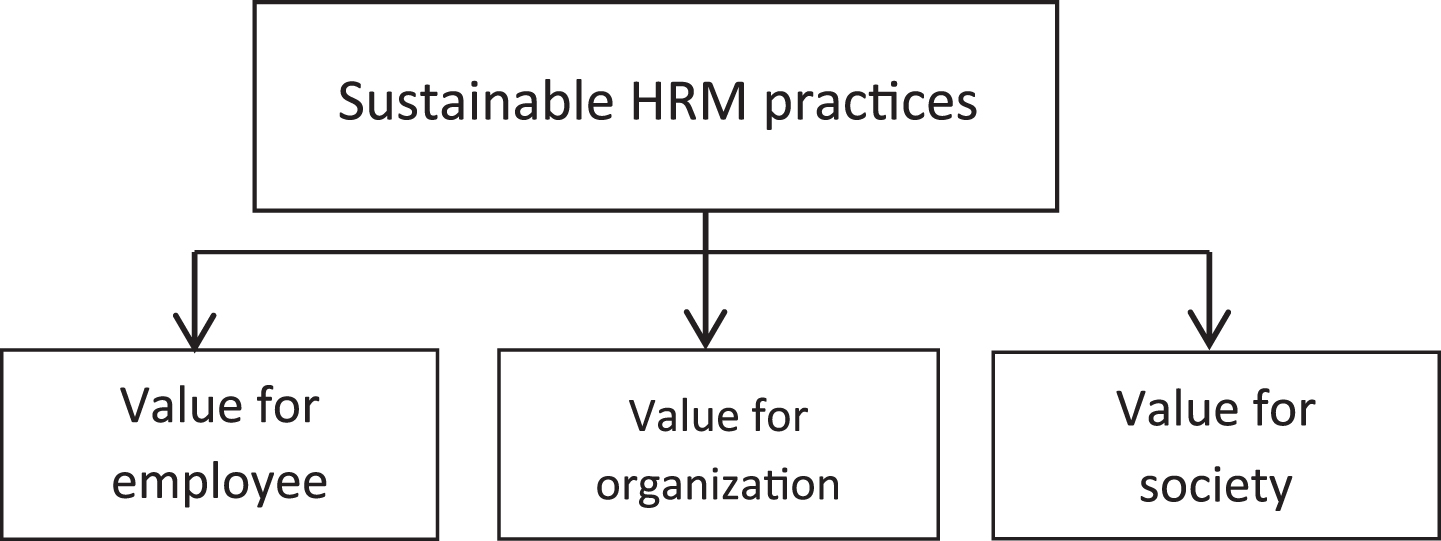
Fields sustainable HRM creates value in.
According to the AMO theory (ability- motivation – opportunity), HR systems can be viewed as a composition of three dimensions intended to enhance employee skills, motivation, and opportunity to contribute, respectively [12]. HRM practices address the development of employees’ abilities, motivation and opportunities to participate. It ought to be noted that employees perform well, when [9]: they can do the job because they possess the necessary knowledge and skills - they are able to do so (abilities); they do the job because they want to and are adequately incentivized - they have the motivation to do so (motivation); their work environment provides the necessary support and avenues for expression (opportunity to participate).
The above conditions indicate three fundamental groups of HR practices: skill-enhancing, motivation- enhancing, opportunity- enhancing. Skill-enhancing HR practices are designed to ensure appropriately skilled employees; they include comprehensive recruitment, rigorous selection, and extensive training [50]. In relation to sustainable human resource management, a strong relationship exists between SD assumptions and training functions as a strategic issue. SD assumes constant development of employees, life-long learning, enhancement of human capital via its development. At the same time, employees are more likely to participate if training programs incorporate policies, procedures, and when the system introduced in the workplace meets SD objectives (Benjamin et al. 2011). Motivation-enhancing HR practices are implemented to enhance employee motivation. Typical ones include developmental performance management, competitive compensation, incentives and rewards, extensive benefits, promotion and career development, and job security. The implementation of the SD concept enables motivation tools to be applied by the introduction of extra-financial motivation, and development incentives. Opportunity-enhancing HR practices are designed to empower employees to use their skills and motivation to achieve organizational objectives. HRM practices such as flexible job design, work teams, childcare when at work, are well within the sustainable development. The three groups of HRM practices combined (skill-enhancing, motivation–enhancing, opportunity-enhancing) exert a direct impact upon employee skills, employee motivation and job design and structures, which consequently influence employees’ creativity, productivity and discretionary behavior. These variables, in turn, translate into operational performance, which relates to profitability and growth, ultimately determining organizational value.
According to the resource-based view of the firm [4] resources may serve as isolating mechanisms and limit competition in cases where they are rare, inimitable, non-substitutable, and valuable. This condition is met by human resources, thus, they constitute the source of value creation. Value for employees emerges from the growth of economic prosperity, ecological integrity, and social equity. The long-term oriented conceptual approaches and activities aim at a socially responsible and economically appropriate recruitment and selection, development, deployment, and release of employees, to produce sustainable HRM outcomes such as employee satisfaction, employee motivation, employee retention, and employee presence. The above mentioned sustainable human resource management outcomes will produce organizational performance. This finding concurs with that of Gollan & Xu [35] who argue that sustainable HRM can influence productivity and profit; employee satisfaction and commitment; employee development, equity and well-being.
According to human capital theory and the resource-based view, human capital is the primary determinant of productivity [23]. If it is difficult to be imitated and is unique, it may be the source of value. However, it ought to be noted that the value of employees’ human capital cannot be realized unless they are willing to use their capabilities. In order to stimulate such behaviors, appropriate HR practices ought to be introduced. Employees who recognize the organization’s actions as beneficial for themselves may feel obligated to be motivated to display more effort at work. In such an approach, HR practices mediate between employees and organizational economic outcomes, and value creation constitutes the result of enhancing performance outcomes through motivational systems.
On an individual level, value creation is associated with generating new knowledge and creating innovative solutions. Solutions perceived as novel and more appropriate than the current ones, create value for employers/ users. Several studies indicate that human resource practices are positively related to knowledge management capacity which, in turn, has a positive effect upon innovation performance (Chen & Huang, 2009). Sustainable HRM offers conditions for innovation, HR flexibility, enhancement of psychological capital, learning and development of human resources.
At this point, significant remarks pertaining to value creation on an individual level ought to be outlined. First, if individual outcomes, e.g. motivation, are measured at the individual level, it is unclear how this aggregates at the company’s level. Secondly, the costs of achieving higher individual outcomes were not taken into consideration. For example, Cappelli and Neumark [14] established that “high-performance” practices, which delegate responsibility to employees, increase labor costs. In addition, the introduction of skill-enhancing may result in the growth of economic costs, but also in the risk of highly qualified workforce leaving the organization.
However, sustainability, as a concept linked with HRM, highlights that for the organization’s viability in the long term it is not sufficient to merely seek financial results; ecological and social objectives must be taken into account as well. Therefore, value added may emerge from pro-ecological behavior as well. In such a case, due to a decreased negative environmental impact, the so-called environmental value emerges. In the course of their pro-environmental behavior, enhanced via appropriate HR practices (e.g. rewards), employees improve the condition of the environment. HR practices which encourage SD, in addition to giving employees the freedom to engage in such activities, stimulate them to make suggestions for actions which improve the environment, [2]. HR policies and strategies which form the framework for SD values help to create awareness among employees. Examples of HR practices which carry value include: recruitment of environmentally aware employees, employee involvement and engagement in environmental management, encouraging employees to make suggestions for environmental management (EM) improvements, supportive managerial and supervisory engagement in EM.
On the other hand, social value stems from the improvement of the quality of life, sense of identity, life-long learning, work-life balance, and well-being. These benefits are directly associated with employees, but possess added social value as well, for employees’ families, and social relations in particular. Such practices motivate employees to remain in the organization, and by doing so, create the basis of affective commitment.
Creating value for the organization via sustainable HRM
At the organizational level, economic value emerges primarily from the growth of innovation and productivity. The first dimension of creating value via HRM practices consists of any activities that provide a greater level of novel and appropriate benefits than target users currently possess and are willing to pay for. Porter (1985) contends that new value is created when firms develop/invent new ways of doing things using new methods, new technologies, and/or new forms of raw material. Kang, Morris and Snell [51] suggest that firms’ success rests upon the firm’s ability to offer new and superior customer value, which, in turn, depends upon its ability to explore and exploit employee knowledge that can become the basis of important innovations creating value for targeted customers. They recognize, however, that firms’ ability to leverage employee knowledge requires that they design HR systems encouraging entrepreneurial activity among employees. Sustainable human resource management meets this condition by fostering an organizational culture open to diversity, introducing the ability to experiment, applying incentives for employees’ innovation. Sustainable HRM has a character that mediates between the individual creativity of employees and the organization’s innovation.
The second level of value creation is focused upon good relations with employees and on working conditions. The use of sustainable HRM systems that include practices developing employee skills (training, development), enhance the motivation to work (pay and reward system, employee involvement). As a consequence, the improvement of productivity emerges as a result of a greater employee engagement. This generates added value for the organization. As a consequence, business-unit-level employee satisfaction and engagement have positive correlations with business-unit outcomes of productivity and profit.
Added value also results from positive environmental outcomes. Dunphy, Griffiths & Benn [27] propose that, in order for organizations to provide positive ecological/environmental outcomes, they also need to manage their staff in particular ways. They propose a six-stage model which represents various stages of human and ecological/environmental sustainability. Individual HR practices, i.e. selection, training and development, performance management, pay and reward systems, include the achievement of environmental objectives. This claim is supported by Renwick, Redman & Maguire [76] who observe that HR practices support skills and culture necessary to achieve positive environmental outcomes. Therefore, environmental value emerging from SHRM practices stems from the introduction of environmentally friendly practices/ solutions supported by the HR system.
On the organizational level, value creation may also result from the role the SHRM system plays in the organization. Urlich [83] distinguishes four major areas in which HRM can deliver value for the organization. The first area pertains to the management of strategic human resources. It involves the integration of sustainable development of HRM’s mission and functions, suggesting SD scopes from HRM point of view. HR managers can potentially contribute to defining the SD vision, and integrating SD within HRM’s mission. Jamali, Ali, El Dirani & Harwood [49] draw attention to the fact that, as an extension of this role, HRM can also give close and systematic consideration on how to potentially align people’s management practice in such a way as to benefit both HRM and SD strategies in amplifying value added. The second area encompasses change management. In this case, the value added by SHRM practices emerges from increasing employees’ sensitivity and readiness to interact with the change to incorporate SD, introducing initiatives that promote SD objectives and overcome resistance to change. On the other hand, employee management conducted in the course of HR practices helps increase employee contribution to SD, facilitates the increase of employee engagement and motivation for SD, sharing and communicating the value of SD to employees, and gathering/sharing information with employees in relation to SD. Individual SD processes may support SD, e.g. within the recruitment and selection domain, HRM can add value through attending to workforce diversity, incentives systems may include social and environmental outcomes, particular competences may be developed in the course of enhancement. SHRM practices are controlled by the management and constitute an input into job satisfaction; indeed, job satisfaction is a potential channel through which these practices can improve firm performance. The final area the SHRM system may create value in is the management of the administration of the organization. HRM can use its knowledge and capabilities and contribute to SD and add value through formulating criteria based upon both economic and social performance objectives. In this case, value emerges from setting SD performance indicators and monitoring results of performance objectives within the HRM performance management system, measuring and reporting SD performance and bottom line pay off through HRM devices and assessment tools. The role of HR, as an admin expert, revolves around the provision of HRM infrastructure with regard to the implementation of SD strategy. The infrastructure ought to encompass the opportunity to plan and support SD objectives with the required HRM functions and roles.
In order for SHRM practices to be able to create value for organizations, they must meet particular conditions. In accordance with the resource-based view [4], these practices ought to encompass rarity, learning, robustness, and tacitness. The most valuable practices are unique and company-specific. Therefore, if a company does not develop the same strategy-enabling mechanisms, HR processes may create a unique value. SHRM processes meet this condition because they are often firm-specific and reflect the organization’s particular circumstances. They are difficult to transplant directly to other organizations. In addition, they possess no ready-made substitutes. The need for tacitness corresponds with that. SHRM processes are partly based upon tacit knowledge and experience, thus are difficult to articulate and remain with the organization in which they were developed [55]. The requirement of learning emerges from the need for evolution. Owing to learning, HR processes become more valuable because they facilitate the implementation of SD strategies more effectively (in a more targeted manner). A swifter adjustment of SHRM processes to the strategy facilitates the emergence of value. As far as robustness in concerned, a premise is made that despite flexibility and changes of the surrounding environment, HR processes are stable. This is convergent with the SD concept which assumes a long-term perspective. The introduced changes do not disrupt the whole HR system but improve it.
Learning, robustness, rarity and tacitness of SHRM processes make them open to being considered as valuable to organizations. These features offer potential for value creation in a sense that they enhance organizations’ economic outcomes by reducing costs/ growth of profits.
Creating value for societies via sustainable HRM
At the societal level, value creation is a somewhat different process than at the individual or organizational level. Value emerges from the impact of HRM practices upon externalities, particularly social and human externalities, especially family and community well-being, employee health, government policy and expenditure. In most cases, these constitute prosocial activities. SHRM practices contribute to the improvement of the quality of life through the creation of social value via solutions such as work-life balance, additional insurance, healthcare programs, equitable wages, humane working conditions, rights for marginalized communities. These facilitate the emergence of opportunities for renewal–solutions where employees pause briefly to reinvigorate themselves, and at the same time, create value for employees’ families and local communities.
Social outcomes entail the growth of company value as a result of a positive PR. The achievement of social legitimation and growth of trust emerging from pro-social or environment friendly actions constitute added value of these initiatives. Sustainable HRM offers a possible solution for organizations that hope to promote themselves as highly responsible among potential and existing employees, in their efforts to attract and retain high-quality workers. Wilcox observes that developing the proper nexus or link between SD and HR can enhance the society’s development and provide benefits for the organization: “In drawing a link between socially responsible practices and organizational performance, HRD professionals can facilitate the legitimation of socially responsible strategies within an organization” [84]. The community-related aspect of charity makes a company stronger and better able to engage or recruit and retain competent employees who easily identify with SD initiatives.
Sustainable human resource management will encourage community relations by implementing charitable contributions, fund raising activities, and encouraging community involvement and practices. SHRM practices allow organizations to differentiate themselves from competitors on the labor market and enhance their attractiveness as employers.
Sustainable human resource management will stimulate the emergence of community relations by implementing charity-related contributions, fund raising activities, and encouraging community involvement and practices. SHRM practices allow organizations to distinguish themselves from competitors on the labor market and enhance their attractiveness as employers.
At a societal level, the process of value creation (in economic terms) can be perceived in terms of innovation as well. Innovations created by organizations contribute to meeting new social needs, but also affect the region’s innovation. They constitute factors which distinguish the economy of a particular region.
SHRM as a source of value creation and capture
SHRM as a source of value creation and capture
The next dimension of value creation is good environmental outcomes. The society gains additional benefits resulting from high quality components of their natural environment. This claim is supported by e.g. Kramar [57].
HRM system’s strength has received considerable attention as a key component of the process approach to HRM [68, 79]. The concept emerged from social influence theory and suggests that HRM practices can be viewed as a message-based persuasion process running from employers to employees aimed at influencing employee attitudes and behaviors. Mischels [65, 66] indicates that the system which possesses distinctiveness, consistency, and consensus, will create a strong situation. These features are adopted from Kelley‘s attribution theory which explains the process for making attributions to persons as well as situational factors [53]. On the basis of these characteristics, Bowen and Ostroff [10] distinguished 9 features of a strong HRM system. The features are outlined below.
Distinctiveness
Distinctiveness is a super-feature which allows the system to be distinct from others. It depends upon the following: visibility, understandability, legitimacy, relevance. Distinctiveness is high if the HRM system’s cause-effect relationship is highly observable and well understood by employees.
Visibility
Visibility of HRM practices refers to the degree to which these practices are salient and readily observable. The feature indicated whether HR practices were communicated to employees and whether they understand them. The growth of the complexity of practices ought to entail the growth of visibility. The feature is significant insofar as shared meanings cannot be developed unless most or all employees are subjected to and can perceive the same practices.
Understandability
Understandability of HRM content refers to a lack of ambiguity and ease of comprehension of HRM practice content. Employees ought to be able to explicitly interpret and understand HR practices.
Legitimacy of authority
Legitimate authority of the HRM system and its agents leads individuals to consider yielding to performance expectations as formally sanctioned behaviors. Due to high trust and high status, the HR system is most likely to be perceived as an authority situation.
Relevance
Relevance of the HRM system refers to whether the situation is defined in such a way that individuals see the situation as relevant to an important objective. A situation is considered to be relevant if employees regard it as promoting the achievement of individual and organizational objectives. Alignment or congruence between individuals’ and organizational objectives has been shown to have important consequences for both individual attitudes and behaviors, as well as for effective organizational functioning.
Consistency
The next super-feature- consistency- refers to establishing an effect over time and modalities whereby the effect occurs each time the entity is present, regardless of the form of interactions. Consistency is high if the cause-effect relationship is the same across differing individuals. The intensity of the feature depends upon instrumentality, validity and consistent messages.
Instrumentality
It pertains to straightforwardness in the perception of cause-effect relationships associated with HRM. It denotes that HRM practices are linked with the required outcomes (behaviors). The degree of a particular feature’s impact depends upon the way employees perceive consequences of specific behaviors. If behaviors and outcomes become related over time, then the HRM system is perceived as more instrumental.
Validity
Validity, as a characteristic of a strong HRM system encompasses the consistency between what is said, will be done, and what is really done. It reinforces the system by communicating employees what knowledge and abilities are valued in a particular setting and by adding more employees with specified skills to the workforce.
Consistent HRM messages
The feature is associated with stability and complementarity of HRM practices. Messages relayed from the HR department ought to be explicit, which will enable the cognitive congruence to be maintained. Three types of consistency are required. Each of these entails the need to avoid sending double-bond communications to employees and to allow for HRM content to be perceived consistently. One is between what senior managers say the organization’s objectives and values are, and what employees actually conclude those goals and values are based upon their perceptions of HRM practices. The second requirement is internal consistency among HRM practices themselves. The third dimension of consistency is stability over time. It revolves around stability of the organization’s reactions to particular behaviors. These dimensions ensure the consistency of signals originating from the HR department: continuity, invariability, and consistency.
Consensus
The final super-feature- consensus- emerges when there exists uniformity of beliefs associated with cause-effect relationships. The consensus is high if there is a strong agreement among individuals’ views of the cause-effect relationship. Several factors can help foster consensus among employees and can influence whether individuals perceive the same effect with respect to the entity or situation in question. These include the agreement among message senders, which can foster consensus [33], and the fairness of the HRM system.
Agreement among principal HRM decision makers
Such a consensus emerges when a considerable agreement among the decision-making management occurs. This is due to the fact that when multiple decision makers agree on the message, distinctiveness can be enhanced because a larger number of individuals can send similar communications. On the one hand, it helps promote relevance and enhances legitimacy of HR specialists. On the other hand, it contributes to a swift implementation of HRM practices in the organization. The consensus results in a higher consistency of HRM practices, which in turn, translates into a “joint” perception of HR practices by employees.
Fairness
It pertains to whether employees perceive HRM practices as adhering to the principles of delivering three dimensions of justice: distributive, procedural, and interactional (e.g. [11]). The perception of justice impacts the way the HR system is perceived as able to influence employees and the way the organization is viewed as being ethical and fair. Distributive justice is based upon whether rewards can be distributed based upon an “equality” rule. Procedural and interactional justice increase the transparency of these distributive rules. HR practices perceived as fair boost employee engagement and acceptance for HRM content.
While Ostroff and Bowen [70] argue that the HRM system’s strength should be conceptualized and measured at the individual or organization level as a contextual property, many scholars within the HRM system strength research have conceptualized the strength as employee perceptions and understanding of the features of an HRM system [6]. The premise is made that the HRM system’s strength depends upon features determining the strength. The focus is upon the system’s strength as a variable mediating the relationship between SHRM practices and outcomes (Fig. 3). The strength of the HRM system is likely to enhance behavioral patterns such as work motivation, organizational commitment and skill development (and will thus have a positive impact upon organizational performance) and contributes to the organization being perceived positively by external stakeholders, thus creates added value for the organization.

Sustainable HRM practices as a source of value for the organization.

The conceptual framework.
Sustainable human resource management creates value not only directly, but also (and maybe primarily) indirectly. Becker and Huselid [5] argued that the HRM and performance link is not as direct as suggested by the prior strategic HRM literature. If a firm’s HRM system is to be a source of sustained competitive advantage, it must be difficult to imitate [87]. This suggests that SHRM is highly idiosyncratic and must be tailored carefully to each firm’s individual situation to achieve optimum impact. From the internal point of view, a strong HRM system generates a situation where employees perceive the cause-effect relationship in the same way, and requirements regarding employee behavior are formed clearly. The strong system offers identical cognitive maps where individuals perceive information originating from HR departments in an identical manner and understand the appropriate ways of behaving. Therefore, in order to obtain a greater strength, the sustainable HRM system should enhance clarity of interpretation of HR practices among employees. It can be argued that if employees perceive and understand the content of HR practices (distinctiveness); if they feel that the organization is supportive of them and they know what is expected of them, in return, they will display the desired attitudes and behavior. Furthermore, it can be argued that if employees perceive a consistent HRM message regarding organizational objectives and congruent individual behavior and rewards, it is more likely that they will manifest the desired attitudes and behaviors [10]. It is also argued that if there is consensus among HRM decision makers; if their behavior is integrated, this will foster consensus among employees, which helps to create shared meanings about which behavior is expected and rewarded. In turn, in such a case, employees are more likely to exhibit this behavior. As a consequence, if organizational members perceive that the organization invests in them and receive a clear, consistent and unambiguous HRM message, they will reward the organization with a stronger attachment to it [52]. Therefore, a premise can be made that:
Proposition 1: (a) distinct, (b) consistent, or (c) consensual sustainable HRM system contributes to the improvement of employee outcomes.
The above considerations indicate that HRM practices could potentially contribute to building positive employee behaviors and attitudes. It concerns employee-centered HR practices–such as those relating to work–life balance, diversity, health, safety and ergonomics–as well as practices consistent with the concept that the HR management is a means, and practices enabling sustainability-driven change, such as training, job design and motivating management initiatives which support personal and team commitment to the change. The above practices might affect organizationally relevant outcomes such as employee commitment, job performance, turnover, absenteeism, job effort, and work performance. Several scholars proved that individual employee outcomes exert a direct impact upon organizational outcomes [43, 50]. Cohen [16] states that organizations whose members have higher levels of commitment display higher performance and productivity and lower levels of absenteeism and tardiness, which in turn improves the organizational performance. At the same time, previous studies identify a positive relationship between SHRM practices and organizational performance, particularly concerned with fostering economic outcomes and organizational sustainability in the long-term through HRM practices which contribute to positive human/social outcomes [26, 85]. Thus, we propose the following hypothesis:
Proposition 2: Through employee outcomes, sustainable HRM practices exert a positive impact upon the organizational performance.
SHRM practices exert influence upon the organization’s surrounding as well. The impact pertains to family and community well-being, employee health, positive behavior in consumers, government policy and expenditure. Sustainable HRM also offers a possible solution for organizations that hope to promote themselves as highly responsible [88]. In such a case, in accordance with the signaling theory, sustainable HRM might be a promising approach to position the organization in the market (especially as a responsible organization and good employer) and enhance its attractiveness. Stakeholder value results from being inclusive of all stakeholders, not just a single stakeholder perspective. In the case of sustainability, multiple stakeholders support common objectives to protect the environment, and stakeholders maintain multiple, simultaneous relationships with companies such as that of prospective employees as well as prospective investors [7]. Support for the prediction that sustainable HRM positively influences external stakeholders also appears in corporate social performance (CSP) and corporate social responsibility (CSR) literature [30, 38]. Accordingly, the following is offered:
Proposition 3: Sustainable HRM positively affects external stakeholders.
Porter and Kramer [74] suggest that SD creates a competitive advantage for businesses, with Nguyen and Slater (2010) reporting that two out of three companies on Fortune’s “Global 100 Most Sustainable Corporations” list outperformed their less sustainable competitors. Post, Preston and Sachs [75] stated that “the capacity of a firm to generate sustainable wealth over time, and hence its long-term value, is determined by its relationship with critical stakeholders”. Stakeholder theory provides extensive research to address how stakeholders contribute to organizational value creation in issue-based stakeholder networks (e.g. [34, 77]). Issue-based stakeholder networks are a source of relevant resources and capabilities for organizational value creation. Therefore, the following premise was made:
Proposition 4: External stakeholders exert significant direct and indirect impact upon organizational value.
The impact of SD on firm value is both statistically and economically significant indicating that SD intensity plays an important role in increasing the company’s value [46]. Due to the above, managers begin to recognize their company’s contribution to sustainable development because they see it as a means to benefit from the positive relationship between social and environmental efforts and the economic targets of the organization. Among the various managerial systems involved in sustainability-driven change, the literature recognized the central role played by the HR management system in facilitating and supporting such a change [41]. It is a consequence of the very nature of the HR management system, which can have a major impact upon the design and implementation of practices that enhance the organization’s sustainability, as well as upon the ongoing evolution of HR management systems, which must meet the needs of a growing number of stakeholders. As a consequence, SHRM practices exert a direct and indirect impact upon internal and external stakeholders of the organization. The final objective of the HR management system is to contribute to the balance between economic, social and environmental performance in order to meet the stakeholders’ expectations, resulting in better individual and organizational performance, as has been set out in theory (e.g. [36]) and empirically proven (e.g. [80]).
Taking the strength of the HRM system into consideration, recent research has demonstrated that a strong HR management system exerts a positive impact upon employee absenteeism [52], on employee satisfaction, vigor and intention of resigning [59], upon affective [78] and individual commitment, individual satisfaction, organizational citizenship behavior and customer satisfaction [68]. Having a strong HRM system in place conveys clear messages to employees about their expected behavior and what they will receive in return. Specifically, a ‘strong’ HR management system will send coherent messages to employees on the specific objectives and contribution of HR management to the sustainability-driven change within the organization. The ‘strong’ HR management system contributes to the development of a positive image of the company among its stakeholders. Consequently (as Fig. 3 illustrates) it contributes to the emergence of organizational value.
Proposition 5: The strength of the sustainable HRM system mediates between sustainable HRM practices and organizational results.
Conclusion
HR departments have the potential to play a significant role in developing SD activities in the organization. While SD is expanding the role of HRM, it also supports the benefits of workplace practices, which contribute to organizational performance. Therefore, both may be perceived as a component and a potential facilitator of SD. HR professionals have an opportunity to get comprehensive SD programs rolling which will engage and benefit the entire organization and its stakeholders.
Assuming SHRM practices influence performance, it is important to consider the intervening steps in HRM and performance link, to explain these processes by which sustainable human resource management may influence organizational outcomes and generate added value. It was proven that SHRM practices influence three levels of outcomes: (1) the organization (e.g. quality, efficiency, flexibility, innovation, profits), (2) society (e.g. stakeholder satisfaction, employment growth, social inclusion) and (3) the individual (e.g. good work–life balance, engagement, employability). Apart from the direct impact upon outcomes, the sustainable HRM system, via SHRM practices and the system’s strength, generates added value. Because sustainable HRM as a source of value creation remains relatively unknown, the present paper contributes to this emerging area of research in several ways. First of all, it contributes to the ongoing debate regarding links between sustainable human resource management and outcomes by analyzing how sustainable HRM impacts individual and organizational outcomes, which in turn, can enable a sustained competitive advantage. Secondly, this study shows which solutions allow the SHRM system to acquire “strength” features. In addition, it was indicated how the strength of the sustainable HRM system influences internal and external stakeholders. Finally, we indicated potential means SHRM practices create added value in.
There are obvious managerial and academic implications arising from this exploratory analysis of the nexus between sustainable human resource management and value. It is clear from the analysis that business leaders must recognize the strategic role of human resources in delivering value to the organization. The managerial implications are for the corporate leaders to recognize the critical role of SHRM practices in implementing sustainable development and achieving economic, social and environmental benefits. The development of SHRM will contribute to the increase of added value and forecasts bigger profits in the future.
For the academics, this discussion is a wake-up call to extend research to investigate unexplored relationships between SHRM and performance/ value. There is an urgent need for academics to undertake more rigorous empirical and theoretical studies in the area, to improve our understanding or broaden knowledge regarding added value created by the SHRM system. At the same time, by exploring the HRM system’s strength in the context of SHRM theory, a number of contributions to the theory encompassing HRM were made. First of all, we address previous calls for a contingency approach to HRM, and theorize how employee perceptions and understanding of HRM may be influenced by practices linked with sustainable development [8]. Secondly, by exploring the relationship between the perceived HRM system strength and added value, we are able to continue the attempt to conceptualize the HRM system’s strength for future research [70]. Overall, in developing a conceptual framework, we demonstrate how the fundamentals of sustainable human resource management relate to the relevance of the HRM system strength in organizations from the value perspective. We present this as an integrative theoretical review.
Alongside the contributions to theory developed here, there are also significant implications for practitioners, especially for HR professionals. In particular, we have highlighted the importance of developing shared SD values in order to understand the application on SHRM practices better, specifically the relevance of a sustainable HRM system to employees. From a managerial perspective, it is significant to develop a strong HRM system via clear communication of expected behavior and associated rewards/ penalties to employees. The HRM system ought to be suitably instrumentalized and HR practices understandable and visible to employees. The achievement of a consensus among HR managers regarding the contribution the HR management system can make to sustainability-driven change is significant as well.
Perhaps particularly pertinent to practice, future research is now required in order to explore the propositions developed here. This will ultimately confirm whether or not the SHRM system’s strength matters. Studies may encompass companies possessing an SHRM system which has already been implemented, i.e. those which follow the SD philosophy in their HRM practices. Further studies may also analyze relationships between the HRM system strength and HRM target achievement and the impact of HRM system content upon the relationship. In conclusion, our study highlights the importance of the HRM system strength for added value creation, but future research may attempt to extend, refine, or test our conceptual model. We can say something about the surplus value of sustainable human resource management in general terms. But we do not yet know whether some practices have stronger effects than others, how each of the individual practices affects performance, whether complementarities or synergistic interdependent relationships among SHRM practices can further enhance value creation.