



Abstract
BACKGROUND:
Mindfulness is a multi-millenary concept that is fundamental to meditative traditions. Nowadays it is a well-documented psychological construct and a proven therapeutic technique, particularly in stress reduction and depressive relapse prevention. However, mindfulness and its effects on management practices are still relatively unexplored in the literature.
OBJECTIVES:
This paper aims to address this shortage and demonstrate the claims that mindfulness is a psychological construct that is doubly beneficial to business executives by supporting a more balanced relationship to work while promoting the adoption of more positive and effective leadership behaviors (transformational leadership and authentic).
METHOD:
A model using positive forms of leadership as mediators of mindfulness / performance relationship is proposed for this assessment. A quantitate analysis is performed on a sample of 319 African managers, 95% of which are South Africans.
RESULTS:
The data supports the idea that mindfulness is a resource that can be mobilized for inducing transformational and authentic leadership development and positive organizational behaviors.
CONCLUSION:
Mindfulness seems to be a very interesting predictor of transformational and authentic leadership styles, which prove to be the most powerful generators of performance
Keywords
Introduction
The effects of leadership styles are widely documented in the literature. However, the antecedents that explain why an individual adopts a particular leadership style are a subject of limited knowledge until now [1]. In particular, there is not yet a clear answer to the question that why some leaders engage in a particular leadership behavior while others do not [2]. The existing studies focus on the links between personality traits and leadership behaviors through the Big Five model [3]. Trait Theorists claim that personal traits are the main factors influencing psychological and behavioral tendencies [4]. In fact, the personality traits explain why some people aspire for leadership positions and why they act as they do when they occupy these positions [5]. However, these studies provide little information about the reasons that favors the adoption of a particular leadership style by individuals.
Nowadays, a growing number of leaders believe that the practice of mindfulness can fundamentally transform management and leadership approaches in organizations. Iconic leaders like Steve Jobs claimed that meditation practices have changed the way they work. Many prestigious international companies (such as Aetna, Intel, General Mills or Target) as well as a number of organizations (such as the Vaud University Hospital Center, the ICRC, the State of Geneva in Switzerland or SODEXO in France) train volunteer leaders or collaborators to practice mindfulness. In the last decades, the construct of mindfulness, an open, non-judging awareness of the present experience [6], is being more and more studied in psychological research [7–9]. While most of research on mindfulness has been done in the field of medicine, less attention has been paid to the work environment.
Some scholars have recently started to ponder over the idea that whether, how, and to what extent individuals can benefit from mindfulness in a workplace [8]. For instance, the study conducted by Good et al focused mostly on the positive intrapersonal effects (i.e., effects within individuals) of mindfulness. Other similar studies have been conducted on the subject of employee wellbeing [10–13], emotion regulation [14], psychological detachment from work [15], while studies on mindfulness as a potential trait affecting leadership behavior and ultimately inducing performance at work are just beginning to emerge. This can be seen in the recent work by Good et al. [8], which states, “research in neuropsychology, cognitive psychology, medicine, and related disciplines has laid the groundwork for developing and testing theory about how mindfulness might affect relational processes, such as teamwork and leadership, but management scholars have not yet seriously undertaken that challenge” (p. 127).
Within organizations, it has been shown that mindfulness is positively related to a range of performance categories [16–18], interpersonal relationships [18–21] and employee well-being [22, 23]. Surprisingly, only a few studies have focused on the relationship between mindfulness and leadership or leader effectiveness. In this regard, Good et al. comment that “despite its importance to management, leadership has not been extensively studied by mindfulness researchers” and “that the focus has not been directly on the relationship between leaders and followers but rather on the beneficial role of individual mindfulness for leaders and followers.” Similarly, Pinck and Sonnentag point out that a very little research has addressed how leader mindfulness impacts employee well-being, while Reb et al explicitly call for research that sheds light on the relationship between leader mindfulness and existing leadership constructs. Therefore, the present research claims to address this call by exploring the role of mindfulness in leadership development and focus on the positive forms of leadership (the transformational and authentic leadership styles). Theoretically, transformational leadership is generally assumed to reduce stress, given its focus on individual needs, provision of meaning and a higher purpose [25]. This assumption is strengthened by studies consistently relating transformational leadership to employee well-being [26]. On the other hand, authentic leadership is a pattern of leadership which is characterized by positive psychological abilities and positive moral awareness [27].
Thus, mindfulness is suggested to affect leader effectiveness through its impact on leader characteristics and behaviors that enable trust-based leader-follower relationships [28]. Some theoretical works have addressed the potential role of mindfulness in the leadership process [29–31]. However, empirical evidence is scant. Reb et al brought first evidence for a positive effect of leader mindfulness on employee satisfaction and job performance. Also, Reb et al found a positive relationship between leader mindfulness and followers’ reports of leader-member (LMX) quality. These studies, however, did not investigate thoroughly, where the trait of mindfulness is measured as a potential antecedent for leadership development and performance induction, which is viewed to be a key variable in organizational context [33, 34].
Literature on positive organizational behavior and psychological capital has mainly focused on optimism, hope, resiliency and self-efficacy as malleable human capacities associated with resiliency and self-management [35, 36]. It has also been suggested that there may be more psychological resources needed to be discovered [37]. It has been claimed here that mindfulness may be one of these resources since it enables individuals to be more aware of their present experiences and hence they are more capable to regulate their behavior in line with their intrinsic needs [38]. Therefore, the main objective of this research is to develop a better understanding of how mindfulness is related to positive leadership styles (transformational and authentic styles), which leads to the ultimate organizational performance.
This study builds on “the theory U” [39], which posits that the individual who is fully present and authentic has access to insights, observations, and interpretations to which many people are closed. Scharmer states, “The most important tool in that new Theory U leadership technology is your capacity to access your authentic self.” In order to develop their leadership skills, individuals should benefit from tapping into all their resources. In this context, the theory U approach allows having access to different aspects of one’s intelligence, which ought to favor greater development [40]. The present paper analyzes the links that exist between mindfulness as a trait, leadership styles and performance by focusing on two forms of leadership: transformational leadership, which is widely studied; and authentic leadership, which is based on the idea that if leaders express themselves openly and honestly, it will lead to positive consequences for performance and ethics [41].
Overall, by exploring mindfulness as an antecedent for leadership development and organizational performance, this study offers the following contributions: 1) It contributes to the emerging literature on mindfulness at work, especially by considering empirically its impacts on the transformational and authentic leadership styles; 2) it contributes to the literature on leadership by exploring the assumption that mindfulness may serve as a resource for leadership development, which in turn would enhance the overall performance of the organization.
Literature on the link between leadership styles, mindfulness and performance
Transformational leadership, authentic leadership, and performance
In order to analyze the effects of mindfulness on leadership styles, the study focuses on transformational leadership, a well-established style and one of the most dominant leadership theories with an abundant literature. While the transformational style has proved to be effective, it does not explicitly address the issue of ethics and coherence of the leader’s actions with his values, the values of his collaborators and those of the organization. The authentic leadership style has therefore been used to overcome these shortcomings. The authentic leadership style emphasizes the coherence between the values advocated by the leader values and the actions actually implemented. Authentic leadership is a basic style that can incorporate other leadership styles. Therefore, a transformational leader can also be an authentic leader [42–45].
A theoretical approach to these two styles of leadership shows that they are likely to be influenced by mindfulness. Stedham and Skaar proposed theoretical reflections on the relationship between mindfulness and leadership and claimed that mindfulness facilitates a person’s ability to engage in behaviors that create trusting relationships and thus enhance leader effectiveness.
Transformational leadership
The development of leadership theory can be divided into four periods: the trait theory period; the style theory period; the contingency theory period; and the new leadership theory period [46]. As of today, the new leadership theory is more complete and is able to explain the effectiveness of leadership behavior [47, 48]. Transformational leadership is a type of new leadership style. It is one of the major topics of leadership behavior research today[49].
Transformational leadership refers to an approach by which leaders motivate followers
to identify with the help of organizational goals and interests for better performance
[50]. The transformational leader is
proactive. He makes employees aware of the collective objectives to be pursued, develops
their sense of general interest and helps them to pursue extraordinary goals [51]. He inspires collaborators, leads them to
transcend their self-interest for broader goals, and he has a lasting and profound
influence on them [52]. Unlike the
transactional leader, who seeks stability and control of risk, the transformational
leader looks for the opportunities offered by risk taking and change. He encourages
employees towards creativity and innovation. Transformational leadership is generally
theorized in 4 dimensions: The idealized influence: the leader is considered as a model to follow (he has
exceptional characteristics adopting exemplary behavior). The inspiration (inspirational motivation): The leaders construct a vision of the
future and the challenges to be met. The intellectual stimulation: the leader encourages employees to think about
problems with a new perspective and to question established models. The individualized consideration: the leader seeks to understand the needs, the
expectations and the development potential of each employee in order to meet
them.
Authentic leadership
The psychological leadership literature has brought many definitions of authenticity
and authentic leadership in the past years (for an overview, see, e.g., [53]. The authentic leadership has emerged in
response to the questionings about the ethical dimensions of transformational
leadership. The transformational leader has the ability to change practices, but wisdom
is one of the major factors in this his decisions [54]. So, the authentic leadership is based on shared values and the pursuit of
what is just. The authentic leader is described as someone who is aware of who he is and
who acts in accordance with his values, beliefs and feelings [55]. In this perspective, the authentic leadership is theorized in
four dimensions by Walumbwa et al. [55]: Self-awareness implies an individual’s clear understanding of not only his values
and beliefs but also his strengths and weaknesses and all the facets of his
personality. Relational Transparency is a matter of sincerely presenting one’s own image and
sharing with others what one really thinks in a balanced way. Balanced processing of information is the fact of searching for objectivity and
sharing with collaborators in order to express their own values. The internalized moral perspective is to be aware of one’s own value system, to
take action on the basis of a value system and to be able to free oneself from
social pressure.
Indeed, the positive impact of authentic leadership in organizations is widely documented. Recent studies [41, 57] show that authentic leadership has positive impacts on subordinates’ psychological health and well-being, as well as their work-related behaviors (e.g., work engagement, commitment, job satisfaction, and interpersonal justice perceptions) and behaviors (e.g., task performance, creativity, and organizational citizenship behavior (OCB)). Given these benefits, it seems important to find methods for enhancing authentic leadership. Though authentic leadership has been presented to inform a host of positive outcomes at work, the literature has paid little attention to identifying its antecedents and effective means to develop it. In the present paper, mindfulness id proposed as an important predictor and holistic means of improving authentic leadership. Some scholars challenge the relevance of authentic leadership, where it is stated that this model overlaps with other theories of leadership, such as servant leadership, transformational leadership, charismatic leadership, spiritual leadership [58]. The recent meta-analysis by Banks et al. shows that transformational leadership and authentic leadership, if they are theoretically distinct, they are very close in their effects.
Leadership and performance
Several factors influence leadership and performance [59]. Some scholars believe that the positive forms of leadership are the main sources of performance [60, 61]. In this context, many studies have analyzed the link between leadership styles and performance. Transformational leadership is highly related to issues such as cohesion, organizational effectiveness, personnel satisfaction with supervisors, and and the perceived group performance [62]. Particularly, Suliman et al. claimed that CEO Transformational leadership is positively related to top management team performance. However, these scholars still have difficulties to define the concept of performance and demonstrate it empirically.
In fact, performance is a complex concept with multiple and sometimes divergent
definitions. For Bourguignon [64], performance
is “the achievement of organizational objectives. This achievement is understood in
terms of result, outcome or the process that leads to this result (action)”. Therefore,
performance should not be viewed only in terms of short-term financial outcome. The
measurement of the notion becomes complex when a sustainable or overall performance is
considered. In the studies on leadership, the criteria proposed by Bass and Avolio is
frequently used. The following criteria is integrated into the complete model of
leadership.: The perceived effectiveness of the leadership style (effectiveness); The ability to produce additional effort (extra-effort); Employee satisfaction with the leadership style (satisfaction).
This operationalization is obviously debated, but it has the merit of facilitating comparisons between studies.
It is believed that the transformational leadership style contributes greatly to performance. Transformational leaders spark the intrinsic motivation of employees, thereby stimulating their extra-role performance [66]. Several studies support the idea that its contribution to performance is greater than that of the transactional leadership style [67]. Lowe, Kroeck and Sivasubramanian and Lowe and Gardner show a strong and positive correlation of all the dimensions of transformational leadership with both objective and subjective measures of performance.
Although the authentic leadership style is less studied, literature shows that it has many positive effects. Most studies on this style of leadership indicate that it has a positive correlation with employee work performance and the overall organizational performance [41, 71]. Up till now, there is no research that has proven the superiority of one of these two styles over the other in terms of performance. The meta-analysis of Banks et al. shows that both have similar effects. However, the studies show that transformational leadership leads to individual effects (follower satisfaction, leader effectiveness), while authentic leadership leads to collective effects (group performance and citizen behaviors).
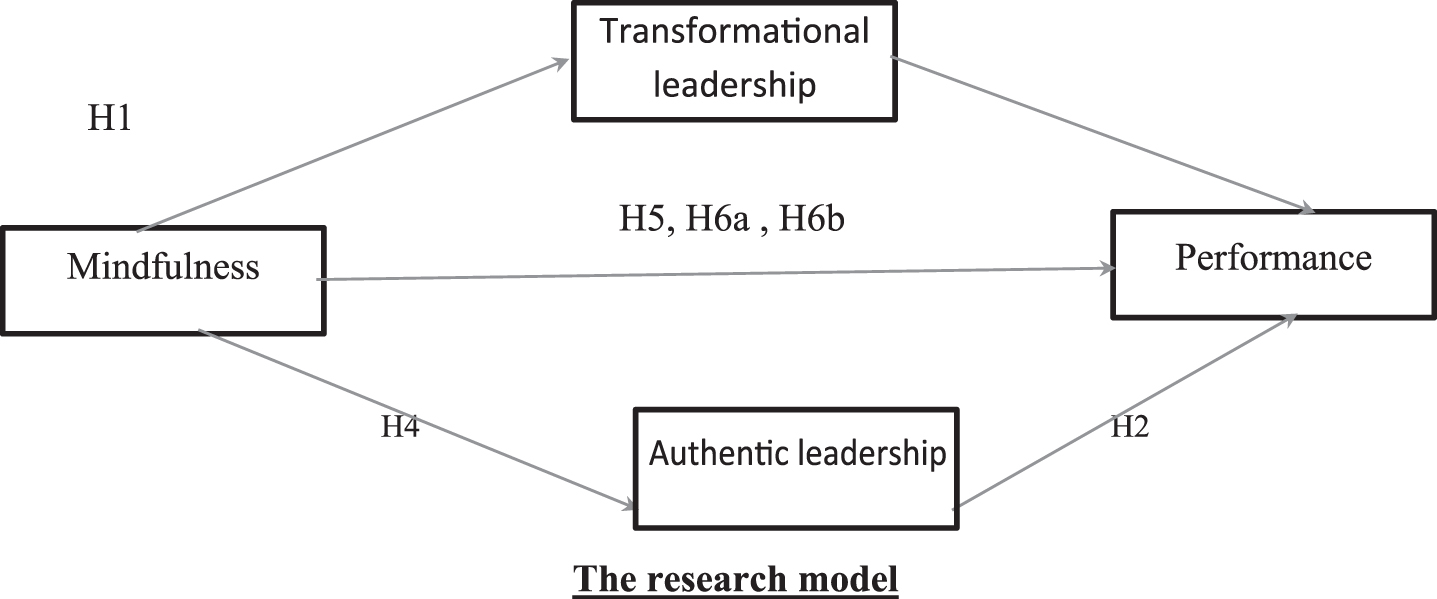
H1: The transformational leadership style is positively related to performance
H2: The authentic leadership style is positively related to performance.
Mindfulness and leadership styles
Mindfulness
The popularity of mindfulness has surged in the last 10 years [72], potentially due to the frenetic pace and associated stresses of the twenty-first century and the associated desires for a cure. Up till now, it has been a subject of important debates as far as its definition and measurement tools are concerned. The most commonly accepted definition of mindfulness among the multiple approaches is: “intentionally focusing one’s attention on the experience occurring in the present in a non-judgmental or accepting way” [73].
The term mindfulness refers to several aspects. While it is considered as a trait of
personality, is also a specific state (resulting from a meditative practice). Similarly,
it is also considered as a practice to which individuals can be trained for [74]. Existing research on mindfulness in the
workplace focuses on mindfulness as a trait. Our approach analyzes the link between
mindfulness as a trait and leadership styles. We also analyze it with regard to the
practice of meditation. Mindfulness as a trait is measured using self-assessment
questionnaires. There are a number of tools that measure mindfulness as a trait. Amongst
them, the Five Facet Mindfulness Questionnaire (FFMQ) by Baer et al. is the most
commonly used. It integrates the various measurement tools that were designed at the
time of its creation. The dimensions of the model are behavioral in nature: Observation, measures the ability to be present to past experiences (inside and
outside); Description, measures the ability to verbalize past experiences; Acting with Awareness; measures the ability to be aware of the activity as
opposed to an automatic mode of operation; Non-judgmental, measures the ability not to seek to evaluate and make judgments
of thoughts and emotions; Non-Reactivity to Inner Experience, measures the ability of the individual to let
the thoughts and emotions come without being dragged or directed by them.
Mindfulness and leadership styles
So far, the link between mindfulness and leadership has been poorly addressed. The concept of mindful leadership has been popularized by Manfred Ketz de Vries and nowadays it is fully integrated in management science. Good et al note that early work on mindfulness at workplace has shown that it has an impact on interpersonal relationships, dyadic relationships and work groups. It also promotes a better relationship with subordinates [18].
More specifically, leadership has not been studied comprehensively by scholars of mindfulness with the exception of the previous study. This study shows that mindfulness (trait) of the leader is positively associated with the work-life balance of employees, whereas their satisfaction at work and their performance (job performance) are negatively associated with burnout and employee deviance. A recent review of the outcomes of mindfulness and meditation interventions for managers and leaders provides the initial evidence that mindfulness trainings may improve aspects of leaders’ well-being and their leadership capability. However, the review also highlighted a number of shortcomings in the extant intervention studies, including poor research designs that lack internal validity and the omission of follower outcomes.
Although several meta-analyzes have shown that certain personality traits are valid predictors of leadership style [77–79], this paper explores mindfulness as good antecedent leadership styles such as transformational and the authentic styles and a predictor of performance at the workplace.
Mindfulness and transformational leadership
Transformational leadership is based on strong interpersonal dynamics. Mindfulness by improving the attention of individuals and by focusing on a non-judgmental attitude, contributes to improving the quality of relationships [19]. A positive effect of mindfulness was found not only on interpersonal relationships, but also on empathy [80]. Also, mindfulness permits a better self-regulation of undesirable responses to negative situations, which may nurture the individual consideration dimension of transformational leadership. The emotional dynamic which is more present among transformational leaders is also a mechanism of explanation [81], because mindfulness develops both the positive effects [82], and the emotional regulation capacity [84]. Kohan et al claim that transformational leaders significantly influence organizational climate by expressing positive emotions [62].
The ability to share a strong and motivating vision by using his influence or charisma is one of the characteristics of the transformational leader. Cayer and Baron evoke the development of a post-conventional consciousness among managers through mindfulness. This form of personal development and “self-realization” could foster the charismatic vision. The phenomenon of clarification of the values through mindfulness probably plays a crucial role in this dynamic of development. This clarification of values and goals also leads to openness to experience and acceptance of change. These dimensions are at the heart of transformational leadership. Carleton et al., investigated whether and how leaders’ trait mindfulness is associated with transformational leadership and they concluded that leaders’ trait mindfulness is associated indirectly with transformational leadership and that leaders’ positive affect and leadership self-efficacy beliefs mediate this relationship [87].
Pinck and Sonnentag investigated the indirect effect of leader mindfulness on subordinates’ well-being via transformational leadership and they found that leader mindfulness was positively related to transformational leadership that, in turn, was positively related to subordinates’ positive affect and job satisfaction. They demonstrated that, leader mindfulness was indirectly related to these well-being indicators via transformational leadership.
Mindfulness and authentic leadership
Cooper, Scandura and Schriesheim underline that it is difficult to develop authenticity and therefore, to train leaders in this style of leadership and yet, the dimensions of authentic leadership seem to be fueled by mindfulness. Indeed, Carson and Langer establish a link between mindfulness, self-acceptance and development of authenticity. Leroy et al found a positive relationship between mindfulness and genuine work functioning.
Authentic leadership is based on ethics and values. Mindfulness is a phenomenon of clarification of values and a better capacity for self-regulation [86]. Gardner et al. cite among the main antecedents of authentic leadership, the concepts of self-awareness and clarity, which lay at the heart of the dimensions of mindfulness. The main characteristic of authentic leaders is that they are fully aware and embrace their true self: their intrinsic values, needs, strengths, and weaknesses. This awareness creates meaningful and authentic relationships with others and mindfulness may be an important means of promoting it. By highlighting the close conceptual link between mindfulness and authentic leadership, Reb et al. claimed that mindfulness, be it a skill, trait, or a cultivated practice, may favor authentic leadership and mindfulness practice can be considered as an avenue to develop authentic leader behavior (p. 273).
Mindfulness and performance
Early studies on mindfulness in organizations have shown its effect on a range of dimensions of performance: prosocial behavior [91]; perceived performance by supervisors [92]; patient satisfaction [20]. However, there is little work on how mindfulness affects performance [8].
According to Good et al. [8], it is mainly through an effect on the control of emotions; the opening of attention; the improvement of cognitive capacities and the improvement of the control of behaviors that mindfulness seems to improve the performance of managers in particular.
The strengthening of attention improves performance in uncertain and complex environments [93]. However, it can also allow improvement in more stable contexts. Emotional stability and better behavioral regulation also explain that mindfulness is likely to improve behaviors in threatening environments with intense emotional or disturbing interruptions. Mindfulness has been associated with better performance of soldiers in intense context [94], or in medical settings to cope with frequent interruptions [95]. Therefore, the literature has provided a positive link between mindfulness and performance.
Methods
Samples
Our study was conducted on a sample of South Africans managers via a questionnaire survey
circulated via the Internet. In order to make the sample as diverse as possible, we used
different collection channels: Databases of former students of a South African University; the base of contacts of a Research Chair of a South African University; a qualified contact base established via the Viadeo professional network
First of all, respondents completed a profiling form. If a respondent held a managerial position, he was invited to answer our survey. The data collection took place between mid-April 2019 and mid-June 2019 in successive waves. A total of 480 responses were collected, of which 319 respondents completed the study. 71% of the respondents are women. Respondents live in South Africa at 95% and in Lesotho at 3%. The average age of respondents is 45 years, with a standard deviation of 10 years. 30% of respondents say they hold a position of CEO; 21% belong to senior management; 21% of middle management; 17% are first line managers. The remaining 11% are in cross-functional management positions (project manager and similar). The leadership experience of respondents is 12 years on average, ranging from beginner (1 year of management experience) to a management career. The supervised team has an average of 10 employees reporting directly and 37 people directly or indirectly under the responsibility of the respondent. Finally, 31% of respondents state that they practice a form of meditation whose nature is 93% non-denominational. The frequency of practice varies greatly: only 23% of them declare a daily practice and 50% indicate a weekly or less frequent practice.
Mean, standard deviation, correlation and reliability of the scales
Mean, standard deviation, correlation and reliability of the scales
*Significant at p <0.05; ** significant at p <0.01; On the diagonal is the α of each construct.
All the measurements in our study are commonly used and their robustness has been validated by the literature. All the questionnaires were used in their self-declarative version (the manager evaluates himself). A 5-degree Likert scale in its original version was used.
Mindfulness
Mindfulness was measured by using the Five Facet Mindfulness Questionnaire [75]. We used the 39 items of the tool in order to capture the five dimensions of mindfulness that we presented. Sample items are: “In difficult situations, I am able to pause without reacting immediately”; “When I do something my mind goes astray and I am easily distracted”. After deleting 4 items, the factor structure in 5 dimensions is clear and consistent with the theoretical model and the results of other studies. The inter-correlations between items of the same dimension are positive and significant, even though they are marginally weak. The Cronbach alpha of each dimension indicates a good level of reliability (.77 to.88). The overall score of the FFMQ (mindfulness) makes sense. The inter-correlations between dimensions are significant, with the exception of the one between observation and non-judgment which is very weak (.08). The overall alpha is very good (α=0.89).
Transformational leadership
Transformational leadership was measured using the corresponding dimensions of the Multifactor Leadership Questionnaire (MLQ version 5x), developed by Bass and Avolio [65], and stabilized in its current 9-factor version in 2003 [51]. We used the 20 items to measure the dimensions of transformational leadership. Sample items are: “I talk about my most important values and beliefs” or “I’m optimistic about the future”). The exploratory factor analysis indicates a 4-factor solution. The items of the 4 factors do not correspond to the theoretical structure that we postulated. A confirmatory factor analysis under AMOS gives just acceptable results that support the postulated theoretical structure (RMSEA = .078, GFI = .89, CFI = .86, χ2 / dd1 = 2.8). The overall alpha is very good (α=0.87).
Authentic leadership
Authentic leadership was measured using the 16 items of the Authentic Leadership Questionnaire4 (ALQ) by Walumbwa et al. (e.g. “I say exactly what I think” or “I make decisions based on my core values.”). After deleting 2 items, the 4-factor structure is found according to the theory. The inter-correlations between items of the same dimension are positive and significant. The Cronbach’s alpha of each dimension indicates a good level of reliability (.68 to.77), except for the balanced behavior dimension which is a (.65). The overall score of the ALQ makes sense with inter-correlations between positive and significant dimensions. The overall alpha is very good (α=0.83).
Performance
The performance was measured via the 9 items of the MLQ-5X, which permits to capture the satisfaction, efficiency and ability to do an extra effort dimension. These items are commonly used to measure the perceived performance of leadership behaviors. Sample items: “I respond efficiently to the professional needs of others “ or “I get more from others than what they were willing to do”. After deleting an item, the exploratory factor analysis indicates a 2-factor solution for a cumulative variance of 57.6%. On the one hand, the structure groups the satisfaction and efficiency items (α=0.80) and the items concerning the exceptional effort on the other hand (α=0.83). So, the data set does not reproduce the theoretical structure postulated, but confirms the specificity of the measurement of the exceptional effort in relation to the factor of efficiency and satisfaction of the leadership. The two-factor structure makes sense with an overall alpha of.88.
Results
We performed Herman’s single factor test for common method bias by loading all items on one factor. The maximum variance explained by single factor was 38.33%, which is less than 50% and therefore eliminates the risk of common method bias. After that, we tested our hypotheses to present the results of the study. Table 1 summarizes the correlations between the constructs and the reliability of the scales we used.
Correlations between Mindfulness, the positive forms of leadership and
Performance
Correlations between Mindfulness, the positive forms of leadership and Performance
*Significant at p <0.05; ** significant at p <0.01.
Our study confirmed that mindfulness has positive and very significant impact on the positive styles of leadership. The correlation with transformational leadership is indeed strong and very significant (r = .505, p < .001). For authentic leadership (r = .368, p < .001), the link remains very significant, but of lesser magnitude. For the transformational leadership style, we notice that the 5 dimensions of mindfulness correlate significantly and positively (r = .17 to.49, p < .001). However,, for the authentic leadership style, the dimensions of non-judgment and conscious action are not significantly correlated, but the other dimensions (observation, non-reactivity and description) show very significant and positive correlations (r from.33 to.43, p < .001). These results support the H3 and H4 hypotheses according to which there is a positive correlation between mindfulness and transformational leadership on the one hand and authentic leadership on the other.
The impact of mindfulness and leadership styles on performance
As shown in Table 2, transformational leadership presents a strong and very significant correlation with performance (r = .712, p < .001) both on the ability to produce efficiency and satisfaction (r = .68, p < .001) and on the capacity to generate extra efforts (r = .64, p < .001). Authentic leadership is also strongly correlated with performance (r = .64, p < .001) on both dimensions of performance. These results support the hypotheses of positive correlations between the positive forms of leadership and performance on the one hand, between mindfulness and performance on the other. The results also highlight that the positive styles of leadership and mindfulness are related to producing outstanding performance at workplaces.
Analysis of the mediating effect of transformational leadership
Analysis of the mediating effect of transformational leadership
The mediating effect of authentic leadership.
The mediating effect of transformational leadership
The first two steps indicate a strong and significant relationship between mindfulness and transformational leadership on the one hand, mindfulness and performance on the other. The third step indicates a very significant effect of transformational leadership on performance, with a disappearance of the significance of the link between mindfulness and performance. The Sobel test is positive (z = 8.65, p < .001). We can therefore, confirm the hypothesis of a mediation effect. Transformational leadership mediates the link between mindfulness and performance, which validates Hypothesis H6a. (See Table 3).
The first two steps indicate a strong and significant relationship between mindfulness and authentic leadership on the one hand, and mindfulness and performance on the other. The third step indicates a very significant effect of authentic leadership on performance, with a diminished link between mindfulness and performance. The Sobel test is positive (z = 6.14, p < .001). The hypothesis of a mediation effect is therefore confirmed. Authentic leadership is therefore, a mediator of the relation between mindfulness and performance, which validates the hypothesis H6b. (See Table 4).
Analysis of the mediating effect of authentic leadership
Analysis of the mediating effect of authentic leadership
First, we will discuss the effect of mindfulness on leadership styles, then on performance. Finally,, we will put our model into perspective before concluding on mindfulness as a lever for leadership development.
Mindfulness and leadership styles
Transformational leadership
The transformational style is most strongly correlated to mindfulness. The set of dimensions of mindfulness has a significant and positive effect on this style of leadership. Mindfulness therefore, seems to have a positive effect that supports this style of leadership. This overall effect is consistent with our hypotheses. The transformational leader’s particularity is to “promote the development of high-quality relationships and a sense of common destiny with his employees, while being supported and encouraged by them in a process of social exchange” [97]. Mindfulness could therefore, be seen as a key factor in this dynamic that fosters the emergence of a transformational leader. A perspective from the point of view of the LMX (leader-member exchange) relationship would clarify this interactive dynamic.
Authentic leadership
All the dimensions of authentic leadership are related to mindfulness. The overall result sheds light on Baron’s study, which shows the effectiveness of an authentic leadership training program incorporating mindfulness exercises. The result is also consistent with the link established by Leroy et al. between mindfulness and the authentic functioning and that between mindfulness and development of authenticity. The lack of effect of the conscious action dimension could be explained by the very nature of authentic leadership described as a basic style that can incorporate other leadership styles [42–45]. The conscious action is defined as opposed to automatic modes of operation [75]. The results may indicate that the authentic leader has profoundly internalized a mode of functioning, which corresponds to the vision he has of himself [99]. So, the authentic leader would express his deep self even in an automatic mode of operation.
The lack of effect of the non-judgmental dimension remains more difficult to explain. The fact of not judging one’s feelings, emotions and thoughts in order to accept totally what is presented should indeed contribute positively to the balanced performance dimension of the model of Walumbwa et al. and the unbiased processing component of authenticity [100, 101]. Thus, mindfulness seems to better predict leadership style than the Big-Five model [3, 102]. Our results shed new light on the question of the psychological antecedents of leadership [103].
Mindfulness, an indirect factor of performance
After discussing the impacts of mindfulness on leadership styles, we will now address the question of performance.
Leadership style and performance
Transformational and authentic leadership styles present a strong and positive correlation with the measure of exceptional effort. This result is consistent with the augmentation hypothesis by bass and with the usual results of the literature. Authentic leadership has a smaller effect on performance than transformational leadership. This goes against Walumbwa et al. but is concordant with the meta-analysis of Banks et al. (2016). The link between positive styles of leadership and performance is, unsurprisingly, confirmed by our results.
The mediating effect of leadership styles between mindfulness and performance
In our data, the positive forms of leadership mediate the entire connection between mindfulness and performance. These results are consistent with our hypotheses and shed light on the questioning of Good et al. highlighting the lack of explanation of the relationship between mindfulness and performance. The hypotheses we have developed are not invalidated by this work. However, the observed links between mindfulness and leadership on the one hand and the effect on performance on the other hand, could be analyzed by integrating other constructs such as emotional intelligence, self-efficacy, or the positive psychological capital in order to better understand the effects of mindfulness.
Although the construct is controversial [104, 105], emotional intelligence is indeed also a potential predictor of leadership styles, especially in their positive forms, as well as a key factor in leadership performance [106]. It has been linked to transformational leadership and has also been associated with mindfulness [107]. Thus, the development of emotional intelligence through mindfulness could be studied to explain its effect on the positive styles of leadership. Similarly, self-efficacy can be seen as either a mediator between personality and leadership or as a performance factor of the leader [110]. The link between mindfulness and self-efficacy appears in several works [111–115]. Thus, self-efficacy could shed new light on the links between mindfulness, leadership and performance.
Finally, Roche, Haar, and Luthans have shown the mediating effect of positive psychological capital between mindfulness, leadership performance and the ability of leaders to create a positive environment for their employees. Toor and Ofori show the link between positive psychological capital and transformational or authentic leadership. Several studies put mindfulness directly in touch with the positive psychological capital. This factor is therefore, probably also an interesting key to analysis. The analysis of the links between mindfulness and positive styles of leadership therefore, supposes complementary developments in order to better understand how these variables interact.
Mindfulness a lever for leadership development?
“Train” on positive leadership forms
The links between mindfulness (as a trait but also as a practice) and transformational and authentic leaderships seem to advocate for the realization of trainings, including a practice of mindfulness. Kets de Vries and Korotov highlight the challenge of developing “transforming” leadership programs that allow managers to evolve towards positive role models. They echo Bass, who emphasizes the importance of the personal development of leaders.
Baron’s experiments show the positive effect of mindfulness in an executive leadership development program. The author insists on experiential learning. As for Schneider, Zollo and Manocha [118], they showed how mindfulness can induce behavioral changes in employees who follow a training in corporate social responsibility, compared to a group that follows a classical training course. According to these authors, mindfulness would “incorporate” learning. However, it is impossible to tell the difference in their results between the effect of mindfulness alone and the effect of interaction between mindfulness and other training components. Given our results, a mindfulness development program should positively influence the leadership styles of managers and foster the emergence of positive forms of leadership. Our results support the need to continue experimenting with traditional mindfulness training programs. In particular, it would be interesting to compare our quantitative results with experimentation on ground in order to study their predictive validity.
Mindful leadership
This term is becoming more popular and making people believe that there exists a specific and new leadership style. Ehrlich [119], Kets de Vries or Sethi use it directly; Ashford and DeRue speak of the power of mindful commitment. Nevertheless, none of these authors clearly defines its construct and distinguishes it from other positive forms of leadership.
Our results do not permit to go in this direction. Aside from the fact that mindfulness generally promotes positive leadership styles, our data does not show any specific patterns. It does not indicate a particular leadership style that is specific to mindfulness according to our analytical framework. The most mindful leaders are those who are the most transformational and authentic, that is to say, those who truly move towards transformational leadership.
Theoretical implications and recommendations for future research
The main objective of this work was to present mindfulness as an antecedent of the transformational and the authentic leadership styles and to establish a relationship between mindfulness and leader’s performance at workplace. Specifically, we suggest that mindfulness impacts performance at workplace through leader characteristics and behaviors. Extensive arguments and the associated relevant literature in support of the proposed linkages were presented and discussed in detail. Theoretical support for the proposed linkages was also provided.
Future research might focus on exploring the linkages between mindfulness mechanisms and other leadership styles, especially on exploring whether mindfulness impacts the transactional and the laissez faire leadership styles.
This research contributes to the increasing interest in mindfulness in the workplace by offering ideas on how mindfulness improves leadership development and by that the performance of today’s organizations. Bringing mindfulness and leadership together holds significant promise for the success of future leaders.
Practical implications
The findings of our study may provide organizations with valuable insights for both manager selection and their leadership development. Our study underlines the benefits of training leaders and makes them have high levels of trait mindfulness, as those leaders will be more likely to exert authentic and transformational leadership styles, which will ultimately enhance performance at work.
In fact, the results show that mindfulness training may be an important tool for improving leaders’ authentic and transformational leadership behaviors, which have, in turn, been said to augment their followers’ well-being and performance [41, 57]. Actually, mindfulness training has been associated with the training of a muscle. So, in order to have sustainable changes in mindfulness, one needs to do a regular and long-term meditation practice. Consequently, we suggest that leaders must go through 4-week mindfulness training as a starting point and then integrate mindfulness meditation into their daily practices.
Mindfulness could be adopted as an interesting tool for leadership development programs inside organizations. Also, it might even be included in trainee programs in order to build leader mindfulness and authentic or transformational leadership in a sustainable way. In addition to offering adequate training, organizations should not neglect their responsibility to craft a working environment, e.g., via job design and organizational practices—that allows for and facilitates mindfulness and authentic leadership among their employees [8].
Conclusion
Mindfulness seems to be a very interesting predictor of transformational and authentic leadership styles, which prove to be the most powerful generators of performance. However, the causes of these interactions are not precisely known. Mindfulness probably interacts with many other variables in order to create a dynamic that is conducive to the emergence of positive forms of leadership and sustainable performance. In addition, the results obtained pose only the contours of a black box, which remains largely open to further exploration. The links that we highlight are indeed both structuring and at the same time very limited to explain leadership dynamics, which are as complex as the positive forms that interest us. On the other hand, the interactions between mindfulness as a trait and mindfulness as a practice and their effects on leadership forms, need to be analyzed more deeply in order to achieve reliable managerial recommendations.