




Abstract
BACKGROUND:
Achieving a satisfactory level of engagement was a prerequisite for the implementation of a new strategy in organizations, which entailed a complex and costly investment program.
OBJECTIVE:
This paper presents an approach to managing employee engagement in a natural gas company.
METHODS:
The study involved in particular direct observation due to the fact that one of the authors of the article, during the implementation of the project, was a member of the company’s management board and the project team. The evaluation of the effectiveness of the implemented changes was verified with a survey by an external consulting company which was conducted annually over a period of 8 years on a group of about 1000 employees.
RESULTS:
By virtue of the conducted survey and practical consideration given to its results, it has become possible to radically increase employee engagement rates and, consequently, to implement a breakthrough strategy in the company.
CONCLUSIONS:
The analysis of research results leads to a clear conclusion that the execution of innovative projects - in the presented case, the company’s strategy - would not have been possible without a significant increase in employee engagement in the organization.

Introduction
Characteristic features of many contemporary enterprises include their complexity, cooperation of many entities and people with unique, expert knowledge, and the growing role of intellectual capital. These elements determine the efficiency and effectiveness of the operations, competitive advantage, and, consequently, the organization’s value from the perspective of its shareholders. Their utilization undoubtedly depends on the organization’s ability to build a climate of a high level of employee engagement. It should be stressed that this is about the employee’s attitude and one’s identification with their work, as well as the degree to which a given person is absorbed in performing his/her role [1]. Of particular importance in this process is building a high level of trust in the organization, which, on the one hand, maybe a challenge for managers, but on the other - shall be perceived as an opportunity to form an agile and flexible organization, highly adaptable to the rapidly changing business environment. The project of building employee engagement requires a real commitment of all process participants and building the right culture and climate of the organization; it is not a one-off action, but a long-term project of change implementation in the company [2].
This paper describes the process of building long-term employee engagement in a natural gas company. The new management board of the company had faced a great challenge of implementing the company’s strategy, the main component of which was an investment program worth approximately EUR 2 billion. Accomplishing these tasks would not be possible without increasing employee engagement and improving the level of employees’ identification with the company’s affairs. The effectiveness of the engagement building program pursued by the organization was analyzed over a period of eight years. The analysis was conducted in the form of participatory observation, supported by an annual, multi-faceted survey in which about 1000 employees of the company participated. The main objective of the research was a long-term assessment of the processes taking place in the organization and the impact of particular factors of the program on employee behavior.
Literature review
The weakness of many enterprises, including modern and global companies, is their rigid structure, unnecessary bureaucracy and very often also superfluous regulations and procedures [3, 4]. Such companies are not flexible enough and poorly and slowly adapting to the changing business environment. Building organizations of the future, which are agile, quickly responding to changes in market realities, and creating their competitive advantage based on a high level of intellectual capital, will require the implementation of management concepts that enhance substantial employee involvement [2]. It is widely believed that committed employees deliver more than they are expected to, and, as a result, are more productive for the organization. This means that finding a way to increase employee engagement is an important lever to increase the efficiency of the company and improve the effectiveness of the projects it pursues [5, 6]. The question of how to manage the process of improving engagement, not to mention how to measure it, is still very relevant. In the extant literature on the subject, there are a plethora of definitions of and perspectives on employee engagement. Kahn [7] defined personal engagement as the harnessing of organization members’ selves to their work roles; in engagement, people employ and express themselves physically, cognitively, and emotionally during role performances. Leiter & Maslach [8] defined engagement as an energetic state of involvement with personally fulfilling activities that enhance one’s sense of professional efficacy. At the same time, Rothbard [9] noted engagement in a role refers to one’s psychological presence in or focus on role activities and maybe an essential ingredient for effective role performance. Schaufeli et al. [10] describes engagement as a positive, self-fulfilling, work-related state of mind that is characterized by vigor, dedication, and absorption. In another paper, Christian, Garza, & Slaughter [11] presented it as a multidimensional motivational concept of investing individual’s physical, cognitive, and emotional energy in the proactive performance of work or as a relatively enduring state of mind referring to investing individual’s energy in experiencing or performing their professional duties. Regardless of the definitions, engagement from an employee’s perspective should be construed as a sense of purpose, energy concentration, personal initiative, effort, and perseverance in pursuing the objectives of the organization. It is an emotional and intellectual state which means readiness for additional effort. Employees with a high level of engagement speak positively about the organization to colleagues, potential employees and customers, they want to be a member of the organization, and put extra effort into their work to ensure its success [12, 13].
Engagement, especially in knowledge-based organizations, is closely related to the issue of trust [14]. Trust affects particularly such elements of human attitude as goodwill, reliability, predictability, honesty, responsibility, and many others [2, 16]. Hence, it can be assumed that “trust” is an emotional inclination towards accepting other people’s intentions, attitudes, and actions, resulting from the expectation that the actions of others are intended to be positive [17–20]. What is particularly important here is that these actions must indeed be positive, regardless of whether the whole process is monitored and controlled or not. Unfortunately, the concept of trust also entails some threats (such as corruption or abuse of power, to name just a few) [21, 22]. However, regardless of many risks and threats related to the implementation of trust in business dealings, the advantages, opportunities, and benefits, it outnumbers its potential shortcomings [23, 24].
Creating a corporate culture based on a high level of employee engagement is undoubtedly an arduous, long-term process. It requires building messages, communication patterns, a system of expectations, and rewards. It is a process that necessitates from the leader a lot of conviction, determination, and appropriate communication within the organization [12]. Nevertheless, these ideas and concepts communicated regularly to the personnel bring measurable results. It is a concept of management of the future, fundamental in organizations that strive to gain competitive advantage and build the company value, the undertaking of which should be regarded as a complex change management project.
A high level of employee engagement in the organization contributes to unlocking corporate potential, facilitates risk and change management, reduces structural and procedural obstacles to development and expedites the decision-making process to bring the expected results. In a company with a high level of engagement, it is easier to release energy to act and take on new challenges, and thus build the intellectual power of the organization. The increase in engagement results in shortening the decision-making time, higher quality of implemented processes, and reduction in operating costs of the company, while the decrease in engagement results in exactly the opposite effects [2, 26].
Employee engagement also underlies the formation and the use of intellectual capital by the organization [27, 28]. Much attention has been devoted to the issues of intellectual capital and knowledge management in the literature on the subject, due to their strategic importance for the development of the company [29, 30]. Countless definitions of intellectual capital have been created in the course of numerous, often independent, studies on that matter. However, in the simplest terms, it can be defined as a set of non-monetary and intangible resources under total or partial control of a company that directly influences the growth of the value of the organization [31, 32]. The best known and commonly accepted classification of intellectual capital assumes its division into three basic elements: human capital, structural capital and relational capital [33, 34]. As the fourth element of intellectual capital resources, organizational culture is often addressed and usually defined as a system of values, norms, and symbols typical of a given organization, and developed at a given moment in time [35]. On this basis, the required patterns of employee behavior and an appropriate hierarchy of company values are created. In the traditional approach to the subject, certain aspects of organizational culture could be found within the framework of structural capital. Elements of organizational culture may also be identified in the company’s relational capital and human capital. A concept often addressed alongside organizational culture is the “climate of the organization”. It is a behavioral reflection of corporate culture manifested e.g. in the perception of the organization among employees, including the understanding of one’s own role, a sense of acceptance and support, as well as a propensity to act independently [36]. The organizational climate is formed through organizational culture and in modern knowledge-based companies, and, thus, it is a vital element affecting the organization’s results positively or negatively. The climate and culture of an organization are strongly interrelated. Organizational climate can be perceived through organizational culture, as elements of organizational culture shape it. The character of the organizational climate can be subjectively experienced as an ambiance prevailing in the company. For example, it may be perceived as a friendly or hostile atmosphere, warm or cold, the feeling of openness or mistrust, support or lack of support, innovation or stagnation, commitment or passivity, tenacity or concessions. On the one hand, the climate of the organization shapes the motivation of employees and their work efficiency, and on the other - it reflects employees’ satisfaction with their successes and benefits at work [37, 38]. Without going into the details of this issue widely described in the literature on the subject, it can be concluded that the development of all the elements of intellectual capital and the desired organizational culture is strongly associated with a high level of employee engagement in company matters.
Strategy and engagement - the genesis of the issue in the examined company
As previously mentioned, the research focused on the infrastructure company operating in Poland and dealing with natural gas transmission. After some changes introduced to the managing bodies, the newly appointed management board faced a difficult task of implementing a new strategy for the years 2010 - 2015. The strategy principally involved the implementation of a sophisticated and costly investment program worth approximately EUR 2 billion. It included primarily projects leading to the diversification of directions and sources of natural gas supplies. The economic and political gravity of this task was many times greater. The complexity of the investment projects in question required effective coordination of a sophisticated project portfolio, including but not limited to the construction of a liquefied gas receiving terminal, assembly of over 1,000 km of gas pipeline infrastructure and a number of accompanying projects. All these challenges demanded high efficiency in managing numerous projects of diverse organizational complexity, technical scope, and budget. The implementation of the investment projects mentioned above was the most important, although only one of the many strategic objectives of the analyzed company. At the same time, the Company faced significant challenges in terms of improving management efficiency in relation to its operating activities, so that the growth of the financial result would enable financing of the planned investment projects. This required many efficiencies and integration tasks to be defined in the company’s strategy. The company decided to implement the project management methodology in the organization; however, the Management Board was aware of the fact that even the best, correctly implemented methodology does not guarantee success in the implementation of the strategy. The prerequisite for success was to achieve a high level of employee engagement.
Before starting the work on the strategy, the management board was provided with the results of a survey of employee engagement in the company’s affairs (survey for 2008). The conclusions from the survey, in which about 50% of all employees took part (of the total of 2,100 people), pointed to a very low level of employee engagement. The synthetic measure of the engagement ratio calculated following the methodology by AON HEWITT consulting companies amounted to 28%. This meant that in every 100 people employed in the organization, only 28 identified themselves with the company and its problems, and were involved in its development and creating the value of the company. This level of engagement implied that the tasks and projects described above were unlikely to succeed.
According to the AON HEWITT methodology (www.aon.com), the synthetic engagement rate of 28% placed the company in the so-called “value destruction” zone and was significantly lower than in most other companies operating on the market (Fig. 1). According to the research method applied, that zone includes companies with the lowest shareholding levels of up to 30%. For the sake of clarity, it should be added that the 31% –45% range is defined as a zone of uncertainty and lack of trust, the 46% –65% range is defined as a neutral zone, and above 65% engagement range is recognized as a zone of the best organizations with the highest employee engagement. Detailed analysis of the responses left no doubt that the organization faced an enormous challenge to improve this indicator. After deeper analysis, it turned out that the company needed a more comprehensive approach. This was related to the necessity to implement tools in order to build a high level of intellectual capital, with an organizational culture based on a climate of trust. It was considered that these changes are a critical prerequisite for the preparation and implementation of the new strategy designed for the purpose of the large investment program realized by the Company. The scope of the necessary changes was defined based on the conclusions from a detailed report provided by the company that carried out the survey.
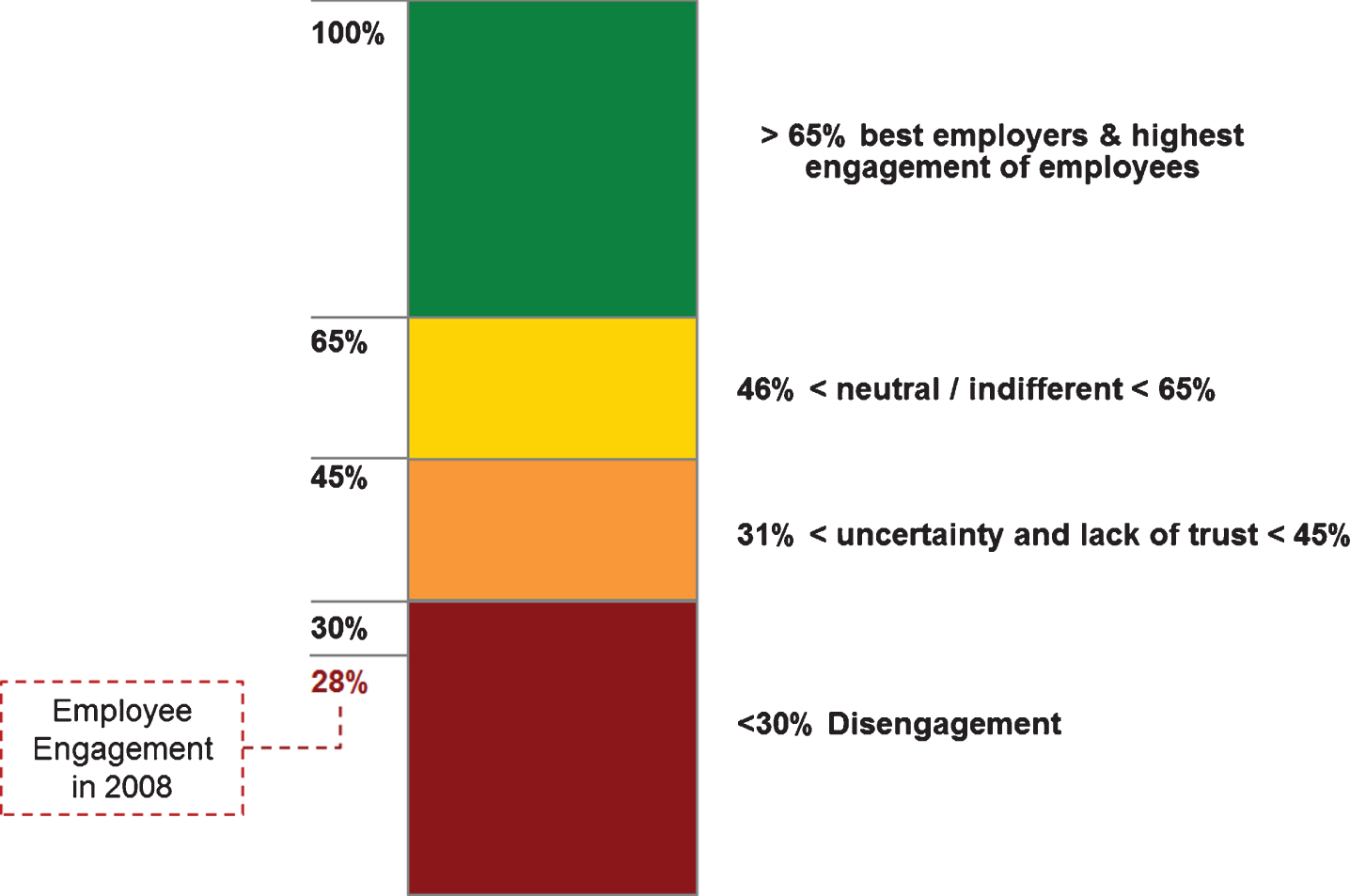
Structure of employee engagement in the organization (authors’ own study based on the AON HEWITT methodology).
The expectation of high effectiveness of project implementation determined the need for excellent cooperation between employees within the organization, as well as between the Company and its stakeholders. The Company’s Management Board was aware that the new tasks were also an impulse as well as an opportunity to introduce significant changes across the organization. They intended to change the organization’s attitude towards proactive behaviors, enable the use of the hidden potential of employees, introduce new standards and behaviors. The new organizational culture was to lead to the integration of employees from different functional areas of the Company. An essential element in this respect was building trust within the organization as a decisive factor in achieving high efficiency and effectiveness of the company.
Tight deadlines for the implementation of individual projects required a professional but, at the same time, a less formalized approach and high level of commitment and cooperation both among employees, between individual units of the entire organization, as well as between the Company and its business partners. The change of approach was also supposed to allow for efficient implementation of many new solutions in the area of procurement, cost management, IT, and others. High efficiency in the implementation of investment projects and the improvement of the company’s profitability was defined as the primary business objectives. Since the tactical goal was to radically improve the employees’ engagement in the company’s affairs, this element, as well as the factors influencing the level of engagement, were the subject of annual research and analysis by the Company’s management. As a consequence, the surveys based on the same methodology were carried out in the Company for the following years.
The changes implemented in the analyzed case assumed a radical increase in employee engagement in the organization’s affairs. The changes were to serve as a basis for achieving the company’s main objective - i.e., effective implementation of the new strategy together with an investment plan being the main component of this strategy. AON HEWITT, a personnel consulting company delivered to the new Management Board a survey report for the previous years with indicated a very low employee engagement rate. The report also contained a detailed analysis of 19 factors influencing the level of employee engagement, collected in six thematic groups (Fig. 2):
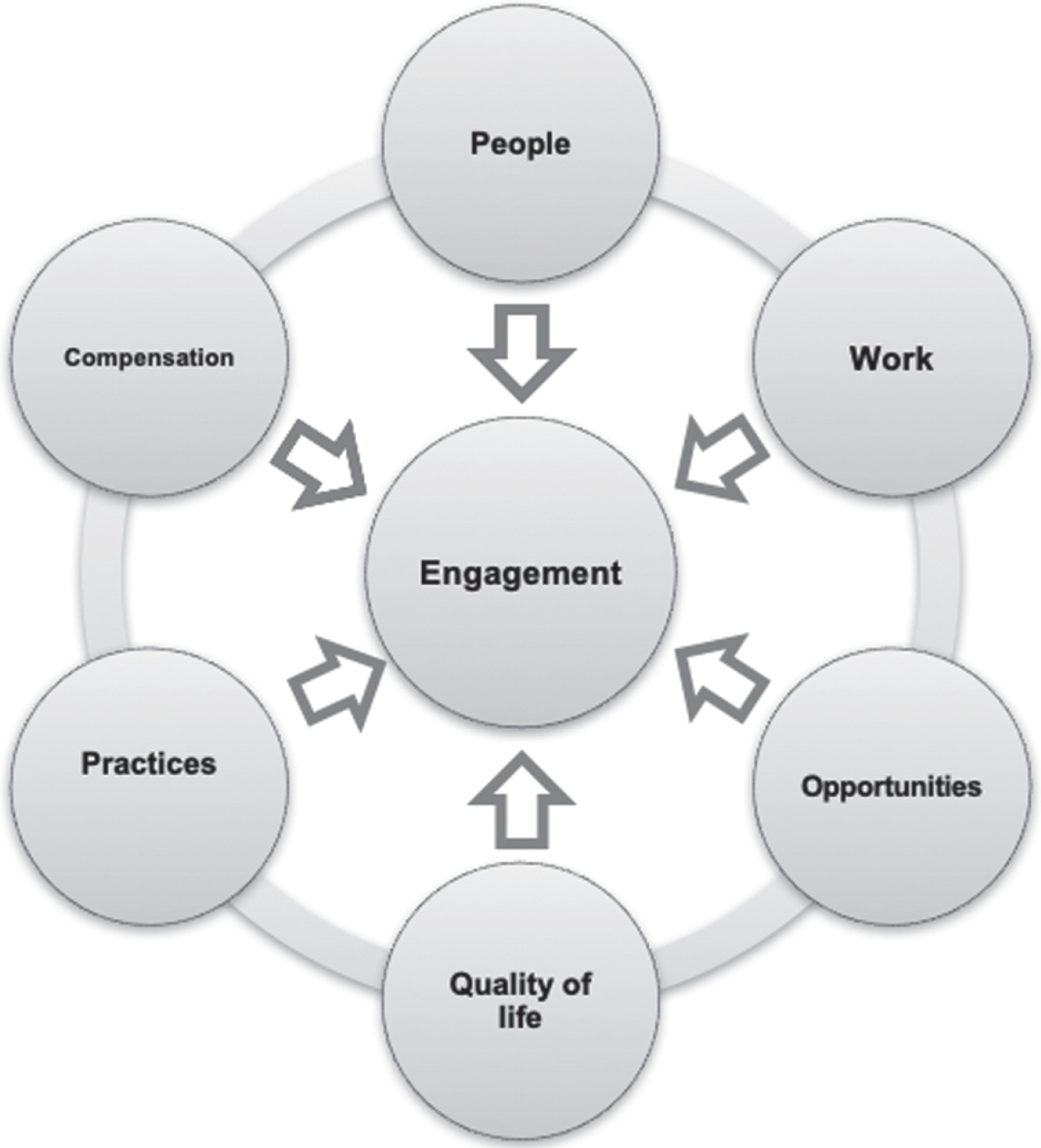
Factors of employee engagement in the organization.
People: Board of Directors, Management, Co-workers, People-oriented Salary: Work Adequacy, Benefits, Recognition Work: Tasks, Self-fulfilment, Autonomy, Resources, Processes Practices: feedback, the reputation of the organization, brand coherence Opportunities: Career, Employee Development Quality of life: Work-Life Balance, Working conditions
The Management Board conducted a detailed analysis of all engagement factors, with particular focus on those identified as critical from the perspective of employee engagement levels. In the course of further project management activities, the change dynamics reported in these factors were particularly important. Most of the engagement factors for the previous years were at a very low level. Particularly noteworthy is the value of the engagement factor “Management Board” in the “People” group, whose value in the first year of the survey was only 14%, practically the lowest-rated in the survey. The values of “Recognition of people” in the same group and “Pay” in the “Remuneration” group were even lower, at 10% and 12% respectively. It should be noted that the value of 17 out of 19 examined factors did not exceed 50%. Only the “Work-Life Balance” and “Working conditions” factors in the “Quality of life” group were rated at slightly above 50%.
The Management Board decided to undertake profound systemic and long-term actions. In the first place, they incorporated confidence-building elements within the organization, such as respect irrespective of the function performed, fair assessment and recognition of achievements, predictability of actions and decisions taken, and keeping commitments. Other vital incentives include building consistently own competencies and providing manager’s support for employees, both professional and private. This approach was to prompt a systemic change in the organizational culture and initiate permanent changes in the attitudes of employees leading to their higher engagement in the company’s affairs. Communication strategy played a particularly important role. It focused on three main objectives: integrating employees, strengthening the commitment already obtained, and developing business awareness. Integration consisted of encouraging cooperation and stimulating the team spirit in employees is enabling them to collaborate in larger groups towards set goals. The objective was to help employees to consolidate and strengthen their commitment by means of honest talks about the company’s goals and directions for development. Developing business awareness among employees was an essential backbone of corporate communications. Therefore it focused on nurturing a strong feeling among employees that they are implementing unique projects and tasks which can become a source of their satisfaction, accomplishment, and professional development. It was the direct form of communication on the part of the top management that determined the credibility of the declarations and actions. More importantly, the efficient and effective corporate communications by the company’s top management in the form of direct meetings and updates preceded any informal exchange of information. During the period of change implementation, managers were aware that committed employees would speak positively about the company to their colleagues, customers, suppliers and other stakeholders, have a strong need and desire to be a part of the organization and put extra effort into their work to make the company succeed.
The survey of both the level of engagement and the value of engagement factors was carried out annually in the years 2009 - 2015. Repeated observations allowed for verification of the effectiveness of the implemented change management project in the company and provided a reference for necessary corrective actions. The periodic assessment demonstrated the effectiveness and adequacy of the tools and methods applied in the process and was the basis for the adjustment of the Management Board’s activities throughout the project.
The request to complete the questionnaire was addressed to all employees of the Company, but participation in the survey was voluntary. The average response rate was about 50% of all employees of the Company, which meant that about 1000 respondents participated in the survey each year. The surveyed sample included all employees up to the middle management level (the senior management was excluded, considering that it is this group that is to build, implement and support the new managerial approach among subordinates).
The survey was based on a structured set of about 80 questions designed and implemented by AON HEWITT and conducted using a fully anonymous electronic questionnaire. All questions were based on the following six-point Likert-scale where one (1) was “I definitely disagree”, while six (6) was ”I definitely disagree”. Two extreme positive answers (I agree, I strongly agree) were classified as positive responses and determined the overall assessment of the level of employee engagement in the company.
The engagement outcome (Fig. 3) was observed in three dimensions: say - employee speaks positively about the company, working in an effective, motivating and well-organized company is a source of professional fulfillment - so he willingly speaks positively about it and recommends it as a good Employer, stay - the employee wants to tie his or her career to the organization and to further develop his or her professional career, strive - the employee notes his or her contribution to the organization, positively evaluates the support and motivation provided by the organization and adequate conditions and incentives, thus delivers increasingly better and more efficient work.

Model for building and surveying employee engagement in the organization (authors’ own study based on the AON HEWITT methodology).
Analyses also included different variables to better understand the dynamics of changes in the organization, e.g., groups, age groups, location of the workplace, position, seniority, etc.
The main research objective was to answer the question of how the implemented change in the approach to company management will translate into employee engagement in company dealings. The analysis of the results of the conducted survey left no doubt that the Management Board correctly implemented the conclusions from the annual engagement survey (Table 1).
Results of engagement in the surveyed organization (authors’ own study based on the AON HEWITT reports)
Results of engagement in the surveyed organization (authors’ own study based on the AON HEWITT reports)
The synthetic engagement rate has already significantly improved after the first year of the program implementation. Its value increased from 28% which placed in the company in the zone of value destruction to 67% designating the group of the best employers and the zone of the highest employee engagement. Subsequent years of change implementation in the organization’s management increased engagement up to 85% in the fifth year of the program’s operation. The company became the best employer in the country in the group of large and very large enterprises. After a year’s break, the company’s management resumed research into employee engagement and its driving factors. The index fell by 2%, although it remained at a very high level of 85%.
The assessment of the reasons for changes in the engagement rate was possible owing to the analysis of changes in the value of individual drivers. Aggregate values of these drivers, in six groups, are presented in Table 2.
Results of engagement drivers in the surveyed organization (authors’ own study based on the AON HEWITT reports)
The results of surveys repeated over several years have shown the effectiveness of the actions implemented by the Management Board in the project of a gradual increase in employee engagement in the company. In the course of several years of simultaneous project’s performance and the survey, the following important changes in the entire organization were identified: Consistency in building a climate of trust translated into a systematic increase in the synthetic engagement rate in subsequent years. It increased by 39% in 2009 compared to 2008, by 6% in 2010 compared to 2009 and by 7% in 2011 compared to 2010. The upward trend continued over the following years, indicating a radical departure from the uncertainty zone. In the years 2012-2015, the level of engagement was extremely high at 85% –87%, The level of employee engagement decreased in the last year of the survey by 2%. A more detailed analysis showed that the main reason for this trend was a change in the composition of the company’s management board, perceived by the respondents as a potential threat to the company’s current policy. It should be noted, however, that the overall engagement index remained very high (85%), The number of employees demonstrating a lack of engagement in the company has decreased, The level of work satisfaction has substantially increased and the employee turnover rate was very low (fewer than 10 resignations a year), Employees have become more open to changes and risk-taking, exchanging knowledge, independent in solving problems, managing projects and demonstrated many other positive behaviors, The company’s financial performance has substantially improved (EBITDA, Net profit, Cash Flow), The Company has completed a very challenging development program worth approx. EUR 2 billion.
It should be added that the survey conducted in the same organization in 2015 by Lewicka & Rakowska [39] with the use of a different research method lead to similar conclusions regarding employee engagement. The respondents highly valued the support received from the organization, fairness, opportunities for development, and financial conditions.
In this case, the stimulus to introduce changes in the management of the organization was the new strategy of the company and the necessity to implement a complex investment program. The company needed radical changes in management, in particular, changes in the culture and climate of the organization. The new approach to building commitment, including responding to new challenges, combined with increased feeling part of a good, effective organization ensuring development and stability, was very positively evaluated by the employees. The managers of the surveyed company convinced almost all employees of the reasons for implemented changes. It is also worth adding that the positive changes in employee engagement translated into excellent financial results and, consequently, opportunities for further development. In future projects, the importance of diversity of employees, primarily in terms of age and gender, should be taken into account in order to identify adequate HR practices suited to the needs of various employees and consequently further increase the level of their engagement [40].
The program of increasing employee engagement was based on consistent implementation of conclusions from the analysis of changes in engagement drivers. The Management Board attached great importance to such elements as knowledge management in the organization, support for employees in change management especially in crisis situations, and delegation of tasks and powers. The entire project was supported by a system of incentives designed to build long-term employee engagement.
It has been noticed that the sharp increase in employee engagement occurred in the following circumstances: The program of management change in the Company was launched with the appointment of new corporate managing bodies (2009). As a rule, such an event adds to the uncertainty. In this case, however, the new management board and the proposed concept of managing the company were widely accepted, New challenges, including launching the development program which comprised a portfolio of strategic investment projects on a scale unprecedented in the history of the company, while clearly communicating the objectives and the way they are to be achieved, contributed to the increase of employee engagement, The Management Board correctly and consistently implemented the employee engagement program using the multi-faceted analytical material derived from surveys conducted in the company.
The results of the surveys and program implemented in the company corroborate the conclusions from other research stipulating that the change in the organization’s culture, the climate of the organization and building trust within the company and in its environment, and consequently the employee engagement are long-term processes that require consistency and determination. The expected effects are never immediate, and at the same time, they shall not be taken for granted. In the analyzed case, the systematic increase in the level of employee engagement was also driven over a long period of time, but as a consequence, it brought very promising results, especially in the final years of the project. This allows the conclusion that effective and successful implementation of the company strategy hinges primarily upon a high level of employee engagement.
Author contributions
CONCEPTION: Jan Chadam
INTERPRETATION AND ANALYSIS OF DATA: Jan Chadam, Ali Turkyilmaz
PREPARATION OF THE MANUSCRIPT: Jan Chadam, Ali Turkyilmaz.
REVISION FOR IMPORTANT INTELLECTUAL CONTENT: Jan Chadam, Ali Turkyilmaz.
SUPERVISION: Jan Chadam, Ali Turkyilmaz.