



Abstract
Background
The wheelchair is a medical device that provides mobility and postural support, for those who have walking difficulties. At present, there are many types of wheelchairs, which aim to improve the quality of life for people who have lost some motor functions. Each model is designed according to the severity of the trauma and the mobility available to the patient; in other words, in addition to standard type seats, each model is customized according to user needs and the environment to be used in.
Objective
This article aims at making an important contribution in the development of assistive equipment wheelchair type for disabled people, with the achievement of an adaptable central axis, enabling the change of angle between the wheels and the ground. By help of this change, people who need such devices can use a single seat for both everyday activities and sports activities. The most important problem in the production of medical devices (prostheses, orthotics, assistive equipment), is the need to personalize these devices depending on the exact dimensions of the human subject requiring assistance.
Methods
The qualitative research regarding the opinion of disabled persons took place at the Sports Club VeraFlor Brasov, over a period of 8 months, and at the gym room of Transylvania University, the subjects of the research being athletes in wheelchairs, from the department of handball.
Results
The players of the ACSH VeraFlor club participated in the European wheelchair championship in wheelchair in November 2019, where they got sixth place. Based on the results of the questionnaire made at the beginning of the research we found that most wheelchair users who wish to participate in various sports have to purchase several types of such equipment.
Conclusions
Therefore, this paper aims to eliminate the economic barrier, making it possible to use a wheelchair in certain environments - both the everyday and sports facilities. In doing so we have adjusted the central axis, to make it easy to handle even by the user.
Introduction
According to the World Health Organization, over one billion people in the world live with some form of disability, of which about 200 million are facing serious operational difficulties. In the coming years, disability will pose a much greater concern because its prevalence is increasing. This is due to an aging population and higher risk of disability among the elderly and global growth of health conditions such as diabetes, heart disease, cancer, musculoskeletal disorders etc. [1]. We can identify several definitions of disability, but according to the World Health Organization, “Disability is any restriction or lack of ability to perform an activity in the manner or to the level considered normal for a human being” [2].
This paper comes from identifying certain needs among people suffering from certain disabilities, especially those involving the use of a wheelchair. Optimization in terms of construction of the wheelchair from this paper is designed for people with physical disabilities, but despite some obstacles still lead an active life.
A change made to one component of the wheelchair affects usually other elements, so special attention should be given to this operation. After each adjustment it is recommended to test the seat on the ramp, different surfaces, and side slopes to see if it is working properly and meets the needs of the desired mobility [3]. Sophisticated sports wheelchairs can sometimes help disabled athletes to “run” faster than athletes without mobility problems [4]. The main components of a seat sports are the back, the rear axle, rear wheel bars for manual control, seat, frame, cross, front footrest, front wheels, anti-tipping wheels, the brakes, handles pushing, arm supports [5].
Unlike other types of seats, manual seats are lighter and become increasingly easier thanks to modern alloys and composite materials. Lightweight wheelchairs require less power to propel them in comparison with their predecessors [6].
Literature review
As science has evolved dramatically in many areas, but especially in the field of medical engineering and physical education and sports, we can see improvements in all directions: devices, technology and working techniques. At present, there are many types of wheelchairs, which are aimed at improving the quality of life of people who have lost some motor functions. Each model is designed according to the gravity of the trauma and the available mobility of the patient; in other words, in addition to standard type seats-used exclusively for the transport of patients in specialized institutions, each model is customized according to user needs and to the environment where the seat is to be used. Many international studies, involving interdisciplinary teams accomplished the design of various medical devices readjusted for other facilities, with a lower cost, proving the possibility of producing frequently used assistive devices in more efficient ways, and make them more suitable for the specific context of low resource settings [1].
This work arose from a desire to facilitate access to disabled persons in various types of sports by creating a system that allows transforming a day-by-day wheelchair in a sport wheelchair. Thus, users do not need to purchase multiple devices of this type, having a chair that can be configured depending on the area where they wish to manipulate it. The initial medical device – the simple wheelchair was transformed by improving the mobility of the central shaft in a new model, suitable for performing sports activities by disabled persons. The solution highlights the difference between the simple everyday model and the one designed by the team.
The condition of being tied to a wheelchair has not stopped some people to embrace their love for sport and the “Cross Trainer” wheelchair designed by Andrew Lowe facilitates joining these activities much easier. This wheelchair is adjustable and adaptable to provide greater accessibility to sports and rehabilitation. Specifically targeting young people, “Cross Trainer” offers not only changes in the angle and position of the wheels to increase functionality but has also different attachments that helps participating in various activities such as basketball, tennis or racing [7]. Another example in this vast area is the “Carbon Black” wheelchair made of ultra-light carbon fibre and is a perfect combination of form and function. Outside the building, however, there is not much about this wheelchair that could be considered high-tech; it is manual wheelchair and is designed for active individuals who do not want medical equipment to interfere with their lives [8]. LayerLAB is a research division founded in 2016 to investigate new applications for technologies and developing materials with the potential to significantly improve quality of life. GO is the inaugural project and is a wheelchair made from a 3D printer, which was designed to suit the individual needs of a wide range of disabilities and lifestyles [9]. GO software processes more data to create a single seat and is customized according to the exact shape of the body, depending on the weight and type of disability [10].
The most important problem in the production of medical devices (prostheses, orthotics, assistive equipment), is the need to personalize these devices depending on the exact dimensions of the human subject that requires it. Minimum anthropometric measures that are being taken into consideration when purchasing a wheelchair are shown in Figure 1.

Anthropometric dimensions of adult wheelchair user.
The research objectives
People who are in different situations of disability want, despite their problems, to live a normal life, with a greater degree of independence, but there still are many problems, both in society and in terms of assistive equipment designed for their situations. So, based on this hypothesis, this paper aims to achieve the following objectives: To identify the latest models of wheelchairs come onto the market, focusing on the design of devices; To illustrate through a questionnaire problem faced by wheelchair users and achieve graphical interpretation of results; To make, according to the results, an adaptive tool for the wheelchairs, according to the needs of the users, in three-dimensional format; To achieve for real the new system, according to the architectural ergonomic design.
Materials and methods
The qualitative research took place at the Sports Club Veraflor Brasov, over a period of 8 months (October 2017 - May 2018) and at the gym room of Transylvania University, the subjects of the research being athletes in wheelchairs, from the department of handball. As part of the research we used several types of informative and evaluative materials such as: handball specific objects, quizzes, videos, etc. In order to provide real help for the wheelchair users, it became obvious that customer knowledge innovation would be beneficial, so the potential customers input was required [11].
At the beginning of the research, a statistical study was carried out to identify the problems faced by people with disabilities, wheelchair users. As research instrument we used a questionnaire in an online form through Google Forms platform provided by the Google Network, with 9 questions, some open (the respondents should formulate their own answers), some closed (the respondents are provided with a certain number of answers to choose from). It is a reliable and efficient method used to gather information from different people. Based on feedback from 28 respondents, we can say that although such equipment industry has developed a lot in recent years, it has not met yet the needs of users at maximum performance. These problems can be analysed by help of Figure 2.
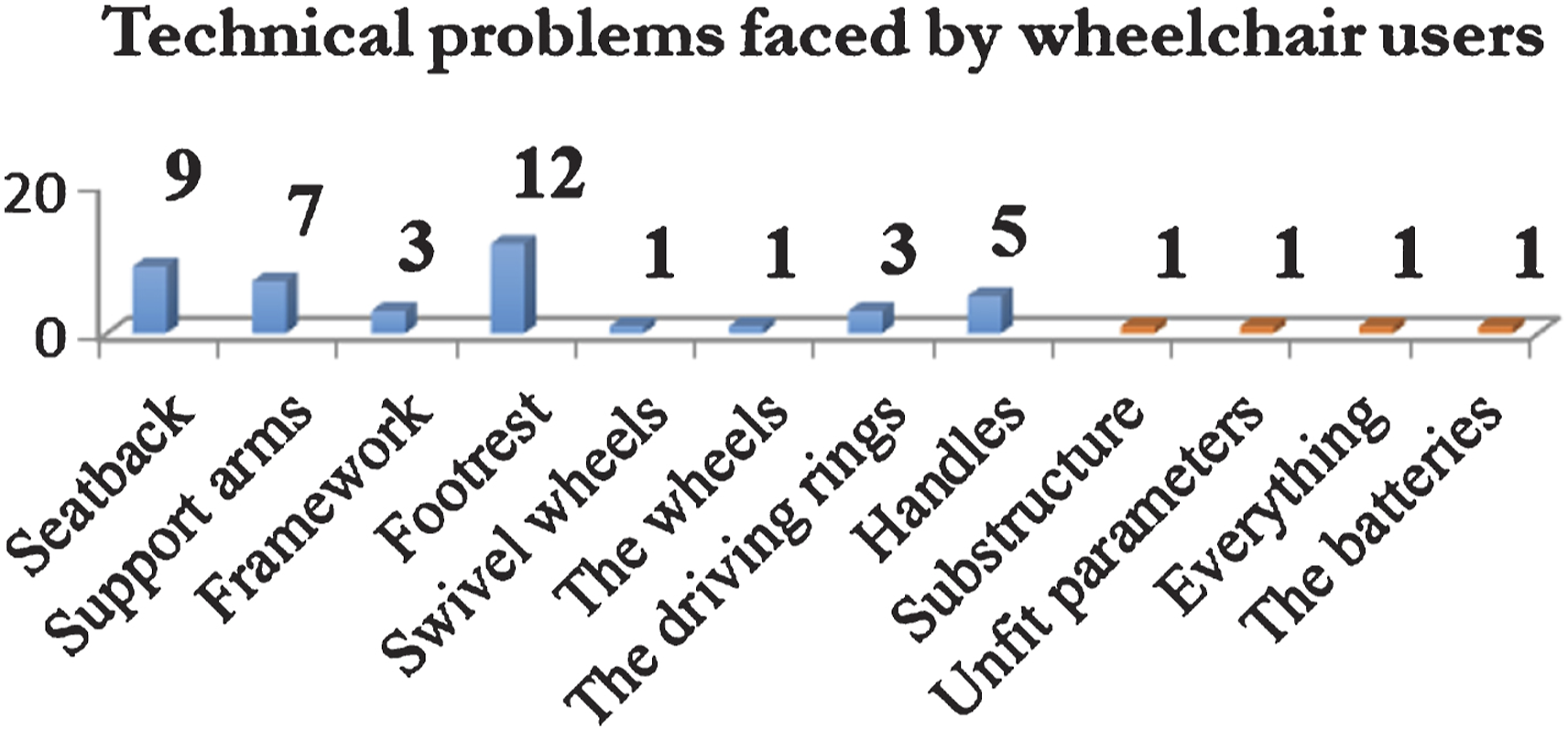
Answers provided by wheelchair users.
According to a study made by the Institute of Measurement and Health Assessment in our country back pain and neck and tumbles occupy a leading position regarding most problems that cause disabilities [12]. Other studies determine that upper limbs and shoulders especially are the most affected parts of the body for the people involved in athletic activities [13]. As a result, some solutions based on using the rowing gesture were proposed for certain types of sports activities [14, 15].
Of the 28 persons that were questioned, 67.9% consider themselves active users, meaning they participate in various sports activities in their free time while 32.1% consider they are not active. To identify the sports activities in which the disabled persons are participating, we analysed the diagram obtained in Figure 3 based upon their answers.
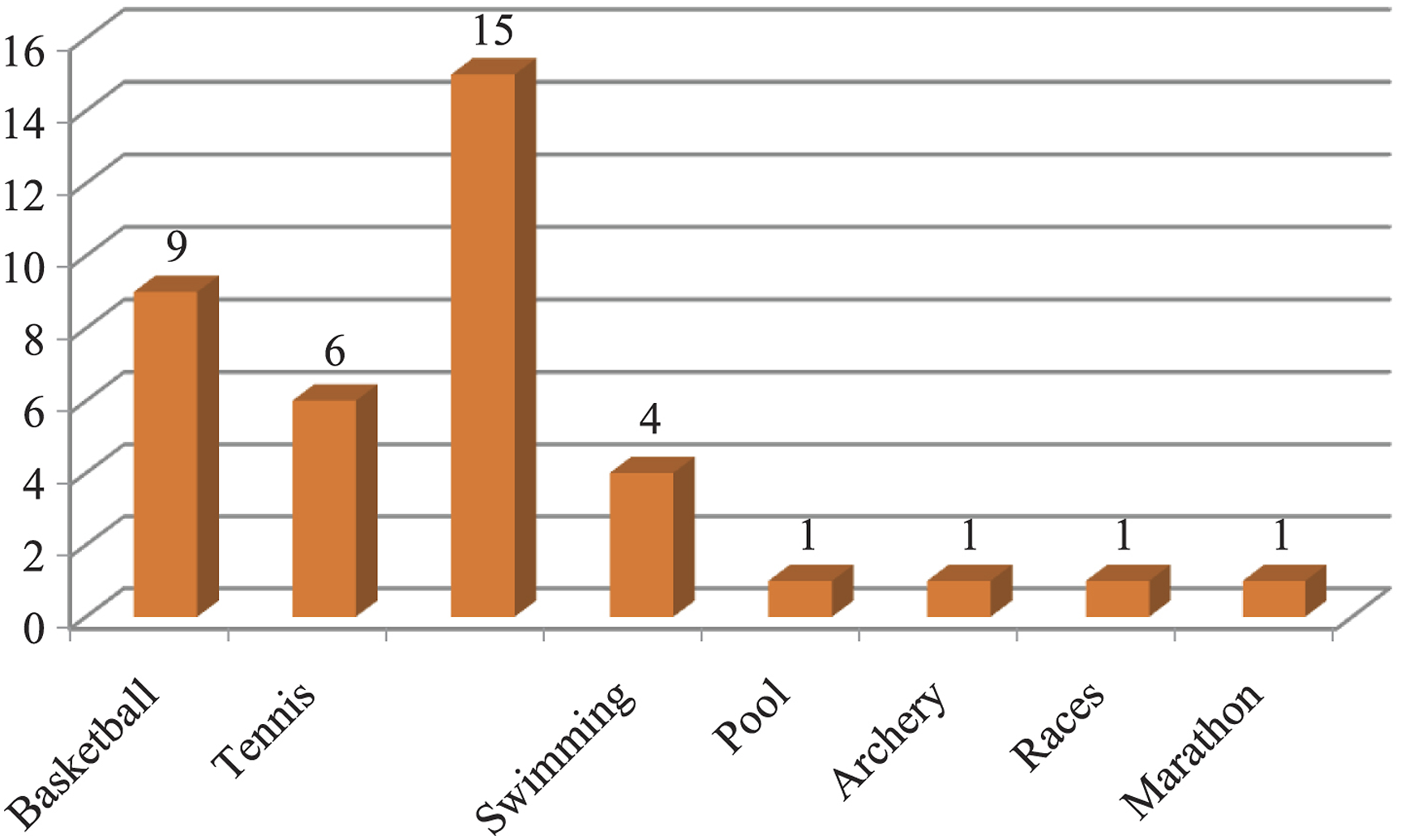
Statistics of sports activities of disabled users.
The disabled persons have the same rights as any other independent person, and they are entitled to a full participation in a social life. In this respect, all kinds of adjustments have been made so that they may lead a normal life starting with ramps located in the vicinity of institutions to facilitate access to wheelchairs, until the modification of cars. However, there are many persons facing some adversities, as shown in the diagram in Figure 4.

Statistics of activities prohibited for the disabled persons.
The locomotion disability is usually associated with the inability of performing a sportive activity, but in fact there is a wide variety of sports that can be performed by disabled persons. According to the nature of their disability these persons can enjoy specific sports created for them or adapted such as: darts, basketball, spear throwing, tennis, dumbbells lifting or even regular sports that have not been changed: archery, bowling, swimming, table tennis etc. However, participating in these activities requires suitable devices – an active wheelchair (used in everyday activities) is not efficient in basketball playing which requires a sport wheelchair.
Based on the results of the questionnaire described above, we found that most wheelchair users who wish to participate in various sports must purchase several types of such equipment, as shown in Figure 5.
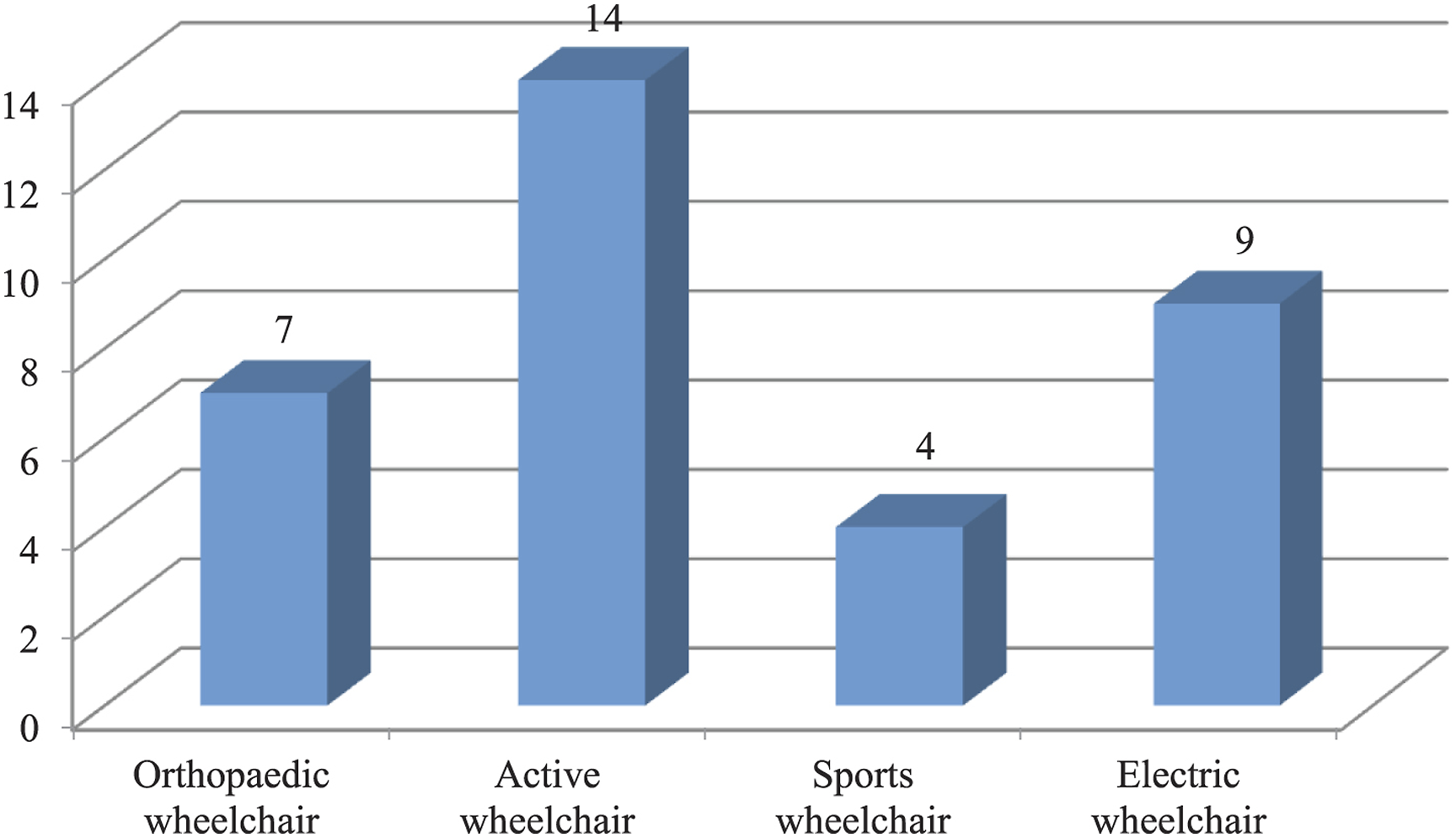
Statistics of wheelchairs types owned by the users.
Therefore, this paper aims to eliminate the economic barrier, making it possible to use a unique wheelchair in certain environments - both the everyday and sports facilities. In doing so we have adjusted the central axis, to make it easy to handle even by the user. The ergonomic changes brought to the device may enhance people’s desire to perform sports activities regardless of their physical disability [16].
The design of the new adaptive wheelchair shaft was developed with the support of CATIA V5 software program due to the facilities offered and the technical drawings were developed using AutoCAD software.
Designing the experimental model
To manufacture the new product, we used as a model a central axis existing on a sport wheelchair. Based on this model five pieces were designed, which after assembling reach about the same size as the original axis:
A central shaft, which serves as a support for other elements, Figure 6.
Two adjustable segments, Figure 7, that fit into the central shaft by means of a set screw consisting of a screw and a wing nut. This piece serves as support for the following parts.
Two moving segments, Figure 8, which are attached to the adjustable axel ends and represent the point of fitting the drive wheels to the shaft.
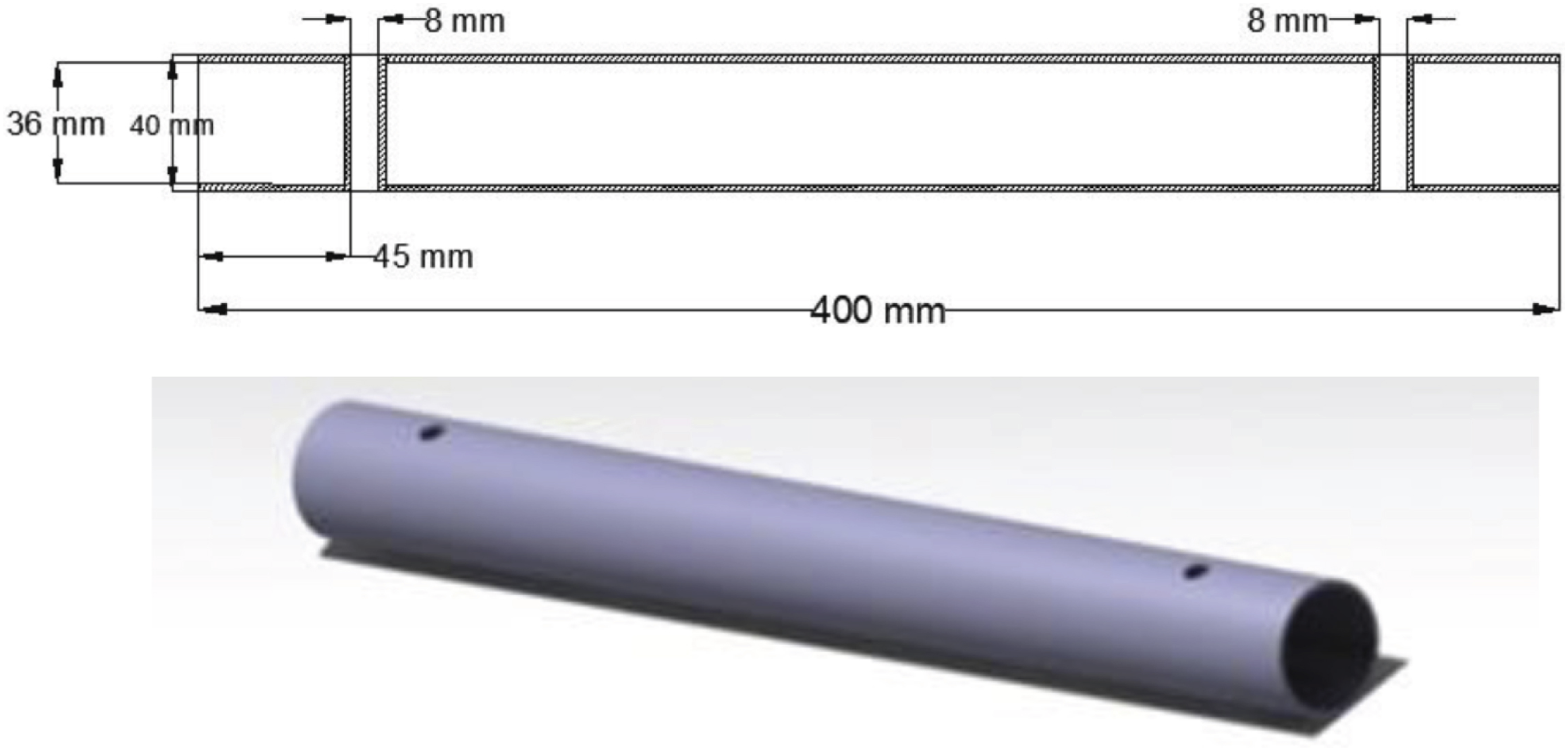
Central shaft-3D drawing.

Adjustable segment.
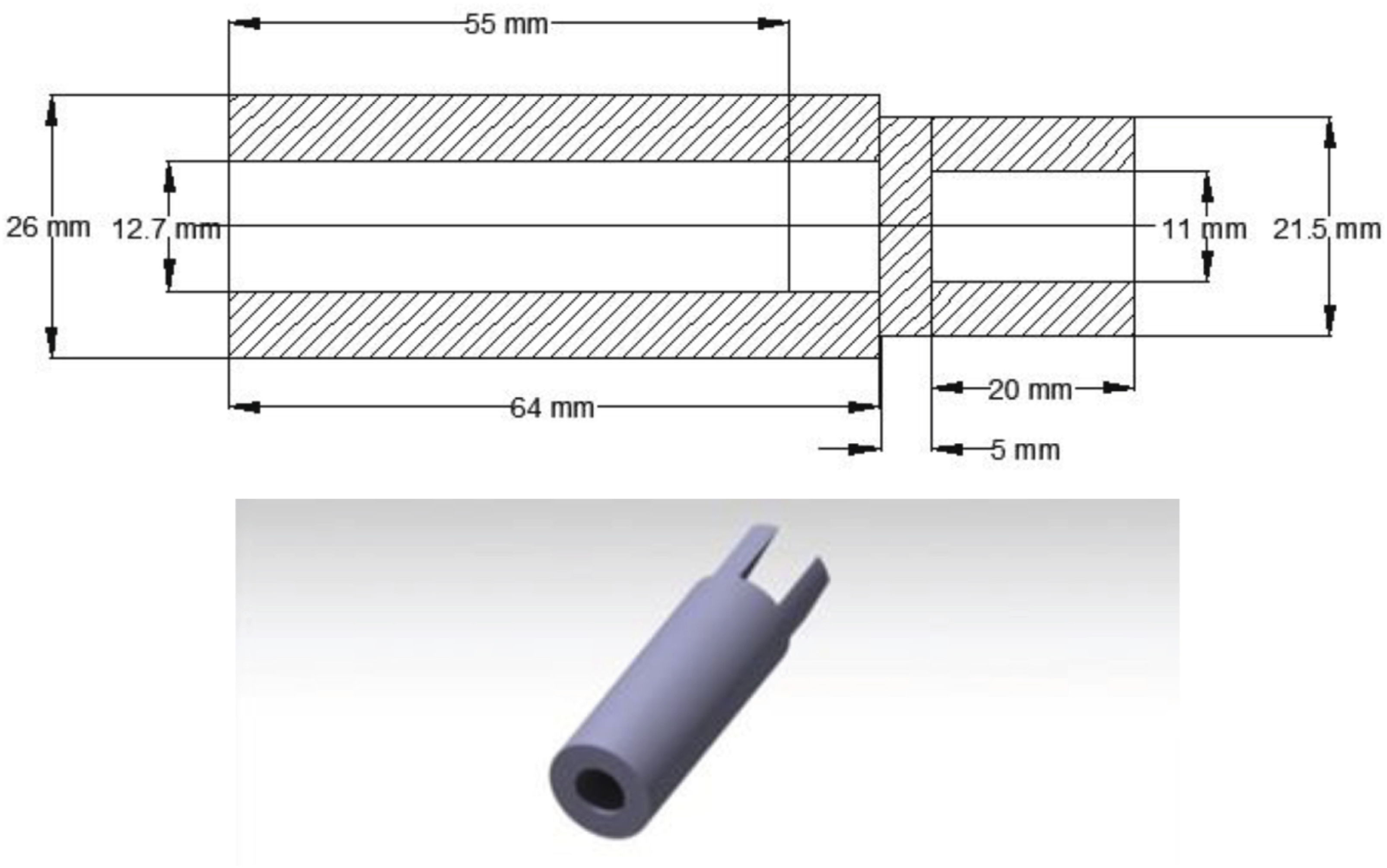
Moving segment.
The final assembly can be seen in Figure 9.
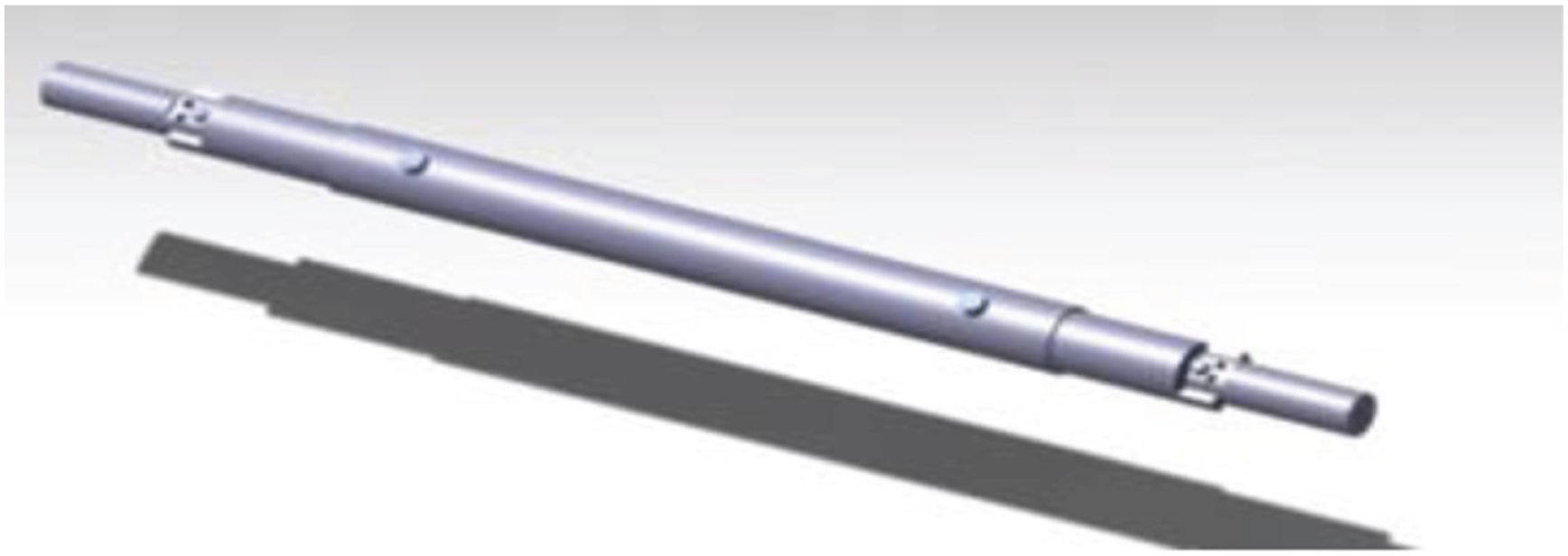
Segments overall.
Using as a reference the three-dimensional models and dimensions of the parts described above, the finished part was made of steel, through various processing operations. Mobility is a feature that makes this shaft to turn the wheelchair in an everyday chair or in a sport one and vice versa. One of the gears where the mobile end can be positioned is 30° relative to the central axis of the assembly (Figure 10).

First step of the shaft – 300.
Thus, the user can choose a rolling seat for sports activities. The second step where the end can be positioned is at 0° relative to the central axis of the assembly (Figure 11).

Second step of the shaft – 00.
With this option, the wheels become perpendicular to the ground and thus the user can benefit from a rolling chair for everyday activities.
Discussion
Like any newly built device, the axle done in this paper allows substantial improvement. Therefore, aspects that can be optimized in the future are: The material of construction - in the practical realization, the shaft was made of steel; as wheelchairs must be made from materials as light so people can operate naturally the seat, composite materials would be ideal in this case or titanium alloys; Joint mobility - for a more aesthetic and easier handling by the user, the catching mobile end could be inside the centre piece; The Design - is an issue to consider not only the design of the device but also when it comes to its acquisition; The ability to adjust the moving end to different wheel tilt angle values according to the sport activity that is desired.
Conclusions
Analysing the aspects of the work described in thus article, there are several things that make this a shaft and that stands out from the other models already on the market as follows: Reduced costs - by using recyclable materials from a factory and their adaptation to the needs encountered throughout the project. The use of carbon fibres is up 20 times more expensive than using scrap steel for example, while Al alloys would be 5 to 10 times more expensive than recyclables; The uniqueness - recyclable materials were used avoiding wastes and environment strain; Accessibility - using such a shaft, wheelchair users no longer need to purchase multiple devices of this kind. Therefore, new shaft and thus reduce the price that people with disabilities should pay, considering that the cheapest wheelchair for sports activities reaches over 400$, while an expensive one may be over 2500$; Adaptability - Adjustable tracks from that end of the central figure axis can be adapted to many types of wheelchairs, active and sports seats so without affecting other parts of the machine.
Author contributions
CONCEPTION: Luminita Vlaicu, Veronica Mindrescu, Angela Repanovici and Diana Cotoros
METHODOLOGY: Luminita Vlaicu, Veronica Mindrescu, Angela Repanovici and Diana Cotoros
DATA COLLECTION: Luminita Vlaicu, Veronica Mindrescu, Angela Repanovici and Diana Cotoros
PREPARATION OF THE MANUSCRIPT: Luminita Vlaicu, Veronica Mindrescu, Angela Repanovici and Diana Cotoros
REVISION FOR IMPORTANT INTELLECTUAL CONTENT: Luminita Vlaicu, Veronica Mindrescu, Angela Repanovici and Diana Cotoros
SUPERVISION: Luminita Vlaicu, Veronica Mindrescu, Angela Repanovici and Diana Cotoros
Footnotes
Author Biographies