



Abstract
PURPOSE:
The literature of the field suggests a strong relationship between organizational justice and turnover intentions of employees; however, the applicability of this claim has never been tested across different career stages, therefore, this study attempted to examine if there were any differences in this relationship across different career stages.
METHODS:
The data was collected from 71 different service sector organizations from both the public and private sectors. Initially, the lists of all the employees were obtained from their respective HR departments. From the main list, three subsidiary lists were generated relating to (1) early-career level employees, (2) mid-career level employees, and (3) the top-career level employees.
RESULTS:
It is found that the justice-turnover intentions relationship varied across different career stages. Only distributive justice affected the turnover intentions of early-career employees. At the middle career stage, all three components of justice affected turnover intentions. None of the components of organizational justice influenced turnover intentions at the later career stage.
RESEARCH LIMITATIONS/IMPLICATIONS:
The current study was only focused on looking for differences in the proposed relationship across different career stages. Future researchers can consider looking for the underlying causes that make up such differences.
ORIGINALITY:
This study offers a better understanding of employee turnover behavior as a result of their perception of organizational justice at different career levels across diverse organizations, it attempts to contribute to exploring the interaction of different organizational stages concerning Career stage theory (CST). This study further adds new insights into the theories of organizational justice, and turnover intentions.
Keywords




Introduction
The effect of organizational justice on the turnover intentions is one of the most highlight areas in the literature of the field [1–8]. Koopman, Lin [9], nevertheless, claim that literature on organizational justice has generally overlooked differences in the organizational position and behaviors of employees. In this very context, we find that literature spanning organizational justice and turnover intention has never considered how differences in career stages could influence this proposed relationship.
Does organizational justice affect turnover intentions across different career stages in the same way? Career stage theory (CST) suggests that employees at different stages of their career can vary in their overall attitudes, job commitment, and resource-driven views [10–13]. In their study concerning turnover intentions (TIs), Flaherty and Pappas [10] have found that employees’ intentions varied across different career stages. Literature, Therefore, supports the idea that it would be unwise to generalize a particular workplace attitude across all career stages [10–16].
Nevertheless, it is not uncommon to find that attitudinal studies often paint employees across all career stages with the same label [9] and the same is true for the relationship between organizational justice and employee turnover intentions [17]. Notwithstanding, organizational justice itself can further be split into three components: procedural, distributive, and interpersonal (also known as interactional) justice. Each component can affect turnover intentions differently [18–20]. This gives rise to both theoretical and practical implications regarding our understanding of the relationship. Theoretically, the current understanding of this relationship is at its best insufficient and at worst flawed. Practically, decisions based on generalized assumptions about employees’ behavior are faulty and can cost heavily [19]. This calls for urgent research that can explore the differences in attitudes across different career stages. Keeping this in view, the current study attempts to explore the effects of organizational justice through its three components on turnover intention across three levels of career stages: early, middle and top.
The significance of this study is multifaceted. Firstly, even though CST was proposed long ago, much is still needed to be learned about the interaction of different organizational sages concerning CST. Literature relating to the theory itself is far-flung across time and relatively little research is done on it recently. Flaherty and Pappas [10] and Rafiq & Chin [13] suggest that any study that encompasses the tenets of CST to organizational problems has both theoretical and practical values. Additionally, this study adds new insights into the theories of organizational justice, and turnover intentions, it also confirms the applicability of CST in organizational behavior and opens doors for future extension of knowledge. Owing to the significance of the relationship, the differences across career stages must be studied not only to extend the theory but also to augment organizational planning and effective employee retention. An appreciation of this could make the management of employees at different career stages more effective.
Literature review
Career stage theory
Career stage theory (CST) was initially proposed by Super [15] and later developed by Levinson (1978) and others. The theory suggests that employees exhibit different psychological attitudes at work at different stages of their careers [10, 21–23]. Across these stages the needs, wants and intentions of employees may differ substantially [15, 23]. The behaviors of employees are built over time through both professional and personal experiences as well as through their desires for achievement and resources [21–23]. As a result, the view employees form about the distribution of resources [21]; work outcomes [13, 21] and commitment and intentions [13] may vary significantly across different career stages.
The proponents of CST claim that there are differences across CSs in the way employees behave and react to conditions and circumstances prevailing in their organizations [12, 23]. In previous studies, Super [15], Griffin et al. (2014) and Rafiq and Chin (2019) have argued that when an employee moves from one stage to another, certain adjustments take place in the attitudinal and psychological focus of employees. They exhibit different levels of professional and psychological preferences related to work, ethics, attitudes and organizational commitment [10, 12]. Here, we would discuss these differences under three career stages (1) early, (3) mid and (3) top in the coming sections.
Despite the theoretical appreciation of CST, there is no consistency in the way career stages (CSs) are defined and measured [10, 24]. As a result, different markers have been used to earmark diverse career stages in academic research. For example, in their study on the influence of CSs on the extrinsic and intrinsic rewards, Mehta, Anderson [25] used the number of years in dividing CSs into three levels: early (1–7 years); Middle (8–15 years) and late/top (more than 15 years). Similar categorization has been done in other studies too where job tenure is used to delineate career stages [26]. Besides, several other ways to measure CSs have also been used including the official age [27] and the rank of employees [28] as well as organizational position [29, 30]. As a common thread between all these demarcations of CSs, most of the studies have considered a linear progression of career over the professional life [13]. On the contrary, Rafiq & Chin [13] Hess and Jepsen [12] suggest that concerns associated with the career are better differentiators of CSs. In the current study, nonetheless, we have adapted the conceptualization of CS as proposed by Mehta, Anderson [25].
The CS model proposed by Mehta, Anderson [25] gives an easy way to collect data as it allows classification of employees based on the number of years in the job to be considered as early, middle, or top-level employees. Therefore, the approach is highly simplistic and has no major shortcomings [25]. Not only this, this and other similar formats are some of the most famous approaches in the existing literature to collect career-stage related data [17, 20].
Early career stage
Early CS (ECS) is characterized as a nest for the development of skills, knowledge and life-long success [14]. At the ECS, employees are assessing themselves and exploring their niches and abilities to adjust to the challenging work expectations [13]. ECS is earmarked by an attitude towards personal growth and development [10, 31]. Employees in this stage are focused on finding out if they belong to their organization and are weighing the prospects for their success. If they show commitment towards their organizations, they often do this due to personal involvement rather than due to organizational elements [12, 13]. They also tend to perform well not because of their commitment to organizations rather due to their prospects in the alternative employments [14]. As such, Rafiq and Chin [13] have observed that during this stage, a lot of organizational shifts are quite frequent.
Rafiq and Chin [13] suggest that ECS employees are more interested in the use of organizational resources for their personal development. They tend to maximize resource gain and minimize their losses [20, 32]. Employees in ECS are less inclined towards organizational loyalty with low expectations of long-term employment [13] neither do they worry much about job security and embeddedness in the organization [33]. Also, ECS employees show greater interest in taking initiatives and higher risk [13].
Middle career stage
According to Flaherty and Pappas [10], employees in their middle CS (MCS) show greater inclination in job embeddedness and tend to maintain their performance at least at their current levels. They try very hard to maintain their current position and status [10, 26]. Nonetheless, unlike the ECS employees, they show little effort in taking risks or new initiatives. Nevertheless, in an earlier study, Slocum Jr and Cron [26] suggested that employees in MCS show involvement in their current work and gain success faster than all other CSs.
As such, they are more interested in job security [12, 34]. They are often in a position where they have achieved much in their careers and thus tend to stick to what they do in the best possible manner to maintain their image of being competent and be promoted [13, 14]. This stage, thus, is mainly characterized by an emphasis on rewards, achievement, independence, and promotion [13]. As far as the use of resources, at this stage employees show great concern for lower resource loss [13].
Later/top career stage
The later or top career stage (LCS) is characterized by a phase of low performance and psychological disengagement with the organization where employees tend to separate themselves from work and performance [10, 13]. At this stage, employees are well-settled in the organization [14] and show greater interest in income and involvement in organizational affairs [12, 13]. They also tend to focus on work-life balance and have a keen eye on their retirement scenarios [15, 27].
Turnover intentions
In the simplest understanding, turnover is an intentional, conscious and rational willingness of an employee to quit the job [35]. It is an extremely important organizational concern, and practitioners and academicians alike have a never-ending interest in the study of turnover intention (TI) across disciplines [4, 36]. Previous studies have tried to associate turnover intention with a large list of organizational problems including job satisfaction, motivation, commitment, work engagements, and other organizational issues [37–40]. Among these, perceptions and psychology are two of the most studied options in research on turnover intention [41]. This is primarily because the cost of turnover is so high that its effects are extremely devastating for any organization [37, 42].
The concept of turnover is a complex mix of behaviors, [43], perceptions and judgments [44], interests [45] as well as the plans of action [46]. Turnover intention, often differentiated from actual turnover, can be defined in several ways; but generally, it is a psychological or mental state or an attitude that results in quitting a job or turnover [45] due to its lower desirability [47]. This type of turnover is called volunteer because it is initiated by the employee [48] when he decides to quit a job in favor of another. Voluntary turnover often has detrimental effects on the organization [49]. Involuntary turnover, on the other hand, takes place when an organization removes an employee from the job [50]. This study, however, is mainly restricted to the voluntary turnover intention as involuntary removal from the job has little, if any, connection with the level of employees being affected by the organizational injustice.
As involuntary turnover is not embedded in organizational factors and is entirely a top-up decision [51], the employee has little to do in case of involuntary removal. As such, there is no role of the employee in making an independent decision [52]. Hence, this study does not consider involuntary removal as an intentional variable and argues that it would be misleading to trace involuntary removal as an effect of organizational injustice. There is sufficient discussion on these in the studies of Lim and Parker [53], Shaw, Delery [52], and [51]. Therefore, the effect of organizational justice on voluntary turnover intentions is more relevant to this study.
Several reasons could account for why an employee would make a voluntary decision to quit a job. Among those, the most important factor, as highlighted in the existing literature, is low satisfaction with the job, employer, growth opportunities, or comparatively improved prospects elsewhere [38, 49]. Often, it is the decision of an employee that takes place due to dissatisfaction with the current job. Nevertheless, turnover results in a series of decisions made by an employee under different circumstances taking place in the current job compared to what is on offer in another one [54]. As such, three phases have been highlighted that result in the final turnover, (1) before leaving a job, (2) the intention of how to search for a different job, and (3) the intention to leave the job [45].
Organizational justice
The academic literature suggests that organizational justice is an over-arching factor and an important facet of an organizational culture that influences myriads of work outcomes [4, 55–58]. In its gist, the concept of organizational justice implies the fairness of employers’ general actions and the treatment of employees [24, 59–61]. Niehoff and Moorman [62] define organizational justice as to how employees feel their importance in the organizations, which, in turn, develops a sense of ownership among them [62–64]. If the employees perceive organizational justice prevailing in their organization, they develop greater job satisfaction [24, 65–67]. Theoretically, organizational justice has been classified into three different dimensions including (1) distributive justice, (2) procedural justice, and (3) interpersonal justice [24, 69]. Lambert and Hogan [70] have found that the three dimensions distinctively and differently affect employees’ interaction in the organization. We will give a brief description of these three concepts in the coming sections.
Distributive justice (DJ) is related to the provision and distribution of organizational resources to employees [71]. This dimension of organizational justice can be associated with the equity in the ratio of inputs provided to the employees to perform their work [68]. Therefore, Lambert and Hogan [70] and Vermunt and Törnblom [71] have related distributive justice to the principle of equity exchange. The authors also suggest that this dimension of organizational justice has little relevance to the characteristics of individuals and has a direct relationship with the task outcomes as the distribution of inputs directly affects the outputs.
Procedural justice (PJ), on the other hand, can be defined as the perception of fairness or equality of rules, regulations and procedure while making decisions related to rewards, distribution of resources and promotions [71]. This form of organizational justice is rooted in the organizational rules and the clarity of expectations from the employees [70]. The sense-making about the justness of procedures is associated with organizational commitment and turnover intention [36]. To avoid a negative feeling about PJ, employees should always be involved in the organizational decision-making process. In practical terms, pay systems are strong factors in determining the feelings of employees which can be instrumental for personal positive results, satisfaction and commitment at work [56].
Interpersonal justice (IJ), on the other hand, is defined by Bies and Moag [72] as the quality of interactions that an employee receives from others during the completion of routine organizational tasks. Initially, this dimension was supposed to be considered as a separate area of organizational justice; however, Cronpanzano and Greenberg [66] later on highlighted this as a dimension of organizational justice. Bies and Moag [72] have emphasized the importance of IJ and have related its quality with the decisions of authorities. They suggest that the decisions need to be grounded in respect and dignity. In other studies, IJ is found to be associated with work engagement and task performance [72, 73]. On the other hand, Woznyj, Shanock [73] suggest that interpersonal justice can also relate to the dissemination of information, organizational culture, and behaviors at work.
Association between organizational justice and turnover intentions
A wide stream of the literature shows that organizational justice is a significant predictor of employee attitudes and behaviors. Empirically, justice in organizations has been found to influence job satisfaction, turnover intentions, and organizational citizenship behavior [5, 61]. Generally, justice perceptions are linked with emotional exhaustion, psychological withdrawal, physical withdrawal, and performance [8, 75]. Justice has also been associated with trust in the organization [76, 77]. This suggests that organizational justice has the potential to influence a range of employee outcomes both in individualistic dimensions and in aggregate organizational aspects.
As discussed earlier, turnover intentions are related to employee dissatisfaction with work-related factors [54, 78]. In the relevant literature, several dissatisfying aspects in an organization have been highlighted to cause turnover intentions including job involvement, job tension, low organizational support [33], low organizational learning [79], and overall belongingness to the job [64]. Lack of organizational justice is also one of the most important aspects that affect employee turnover intentions [2, 81].
There is a very intricate balance between and employee retention and his relationship with the organization [36, 83]. Owing to the interest of researchers in organizational justice with regards to employee-related outcomes, there exists great motivation to know as to which dimensions of justice are more linked with various outcomes. In general, organizational justice is a very important determinant of employee turnover intentions [2, 81]. Based on the above support in the literature, we suggest that organizational justice and turnover intentions are correlated concepts such that justice affects turnover intentions.
Notwithstanding, as a multidimensional construct, it is quite probable that some dimensions of justice affect turnover intentions more strongly than others. Literature supports this idea in that if employees feel a lack of distributive justice, their affective commitment levels decline increasing their turnover intentions [84]. Evidence suggests that distributive justice is also linked to job satisfaction [4, 85] implying that distributive justice is also an important predictor of turnover intention. Previous research also suggests that procedural justice is linked with job satisfaction and organizational commitment [86] and it is a predictor of affective organizational commitment, job performance, and extra-role behavior [87].
In a study in Iran, Rastgar [88] found that the three dimensions of organizational justice affect job turnover differently. The authors suggested that there was a strong positive significant relationship between turnover intentions and organizational justice, but Interpersonal justice was found to have a stronger association with organization justice than the other two dimensions. These arguments provide strong support in our study in that organizational justice affects the turnover intentions of employees and each of the different dimensions of organizational justice might do this differently. Further, as we have already discussed that employees across different career stages have somewhat different attitudes and behaviors to work-related aspects, we can suggest that the relationship between organizational justice and turnover intentions varies across different career stages and different dimensions of organizational justice. Therefore, we put forth our hypothesis:
Hypothesis (H0): The relationship between organizational justice and turnover intentions differs across different career stages and different dimensions of organizational justice.
We would also propose that each component of organizational justice will affect the turnover intentions at different career levels distinctively. We have already discussed in the previous sections that the employees at different career stages have quite distinctive aspirations, demands and reasons to work in their organizations as well as positional attributes that may alter the effects of the individual components of organizational justice on turnover intentions. For example, at the early career stage employees are more concerned about learning and acquiring experience, whereas, at the middle career stage employees focus on promotions and control. So, the effects of individual components of organizational justice may be perceived distinctively by employees at different career stages. We, thus, also hypothesize:
Hypothesis (H01): The relationship between procedural justice and turnover intentions differs across different career stages and different dimensions of organizational justice.
Hypothesis (H01): The relationship between interpersonal justice and turnover intentions differs across different career stages and different dimensions of organizational justice.
Hypothesis (H01): The relationship between distributive justice and turnover intentions differs across different career stages and different dimensions of organizational justice.
Control variables
Recent literature shows that gender is an important variable in affecting employee turnover intentions [89–91]. Similarly, Hur and Bae [92], Ju and Li [31] and Mitchel [93] have reported a significant relationship between employee’s education and turnover intentions. Literature also suggests a strong relationship between employee’s work experience and turnover intentions [92, 94–97]. We include these three as control variables in this study. So, we have developed two frameworks, model 01 without the control variables and model 02 with control variables (Fig. 4).
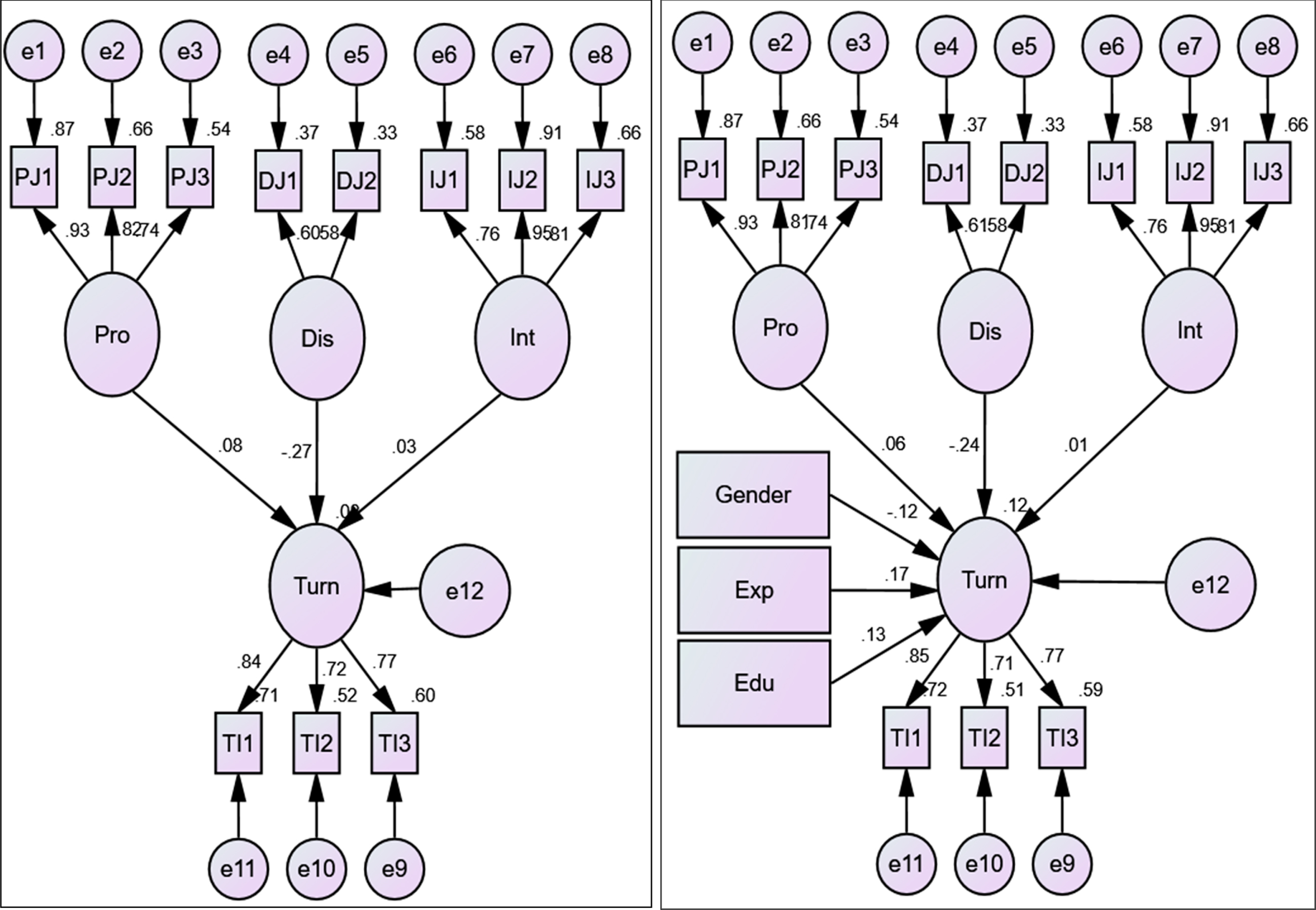
Model 01 with Main Effects (left). Model 02 with Control Variables (Right).
Participants
We collected data from 71 different service sector organizations from both the public and private sectors. Initially, the lists of all the employees were obtained from their respective HR departments. From the main list, three subsidiary lists were generated relating to (1) early-career level employees, (2) mid-career level employees, and (3) the top-career level employees. We used simple random sampling to collect data from our respondents. To do so, we generated random numbers in MS Excel and using the list marked our respondents. Firstly, all the respondents were given the questionnaire, in case if any respondent failed to respond even after several attempts, respondents were replaced using the same random numbers list.
As we have used multigroup modeling in the analysis, there is much debate on the appropriate sample size for the technique [98]. Hair Jr, Babin [99], however, have suggested that a sample size of 100 is sufficient. In our choice for the appropriate sample size for this study, we also used G*Power software (see Fig. 1) besides considering the sample size suggestion by Bou and Satorra [98]. The software gave a minimum sample size of 119 for medium effect size and 0.95 estimate power for each group [100]. We provided for a margin above the minimum threshold. To control the effect of sample sizes in the three proposed groups, we chose an equal number of respondents from each list using simple random sampling using random number generator. Consequently, after the initial data screening and cleaning, we ended up with a total sample size of 503 (early = 167, middle = 169 and later = 167).
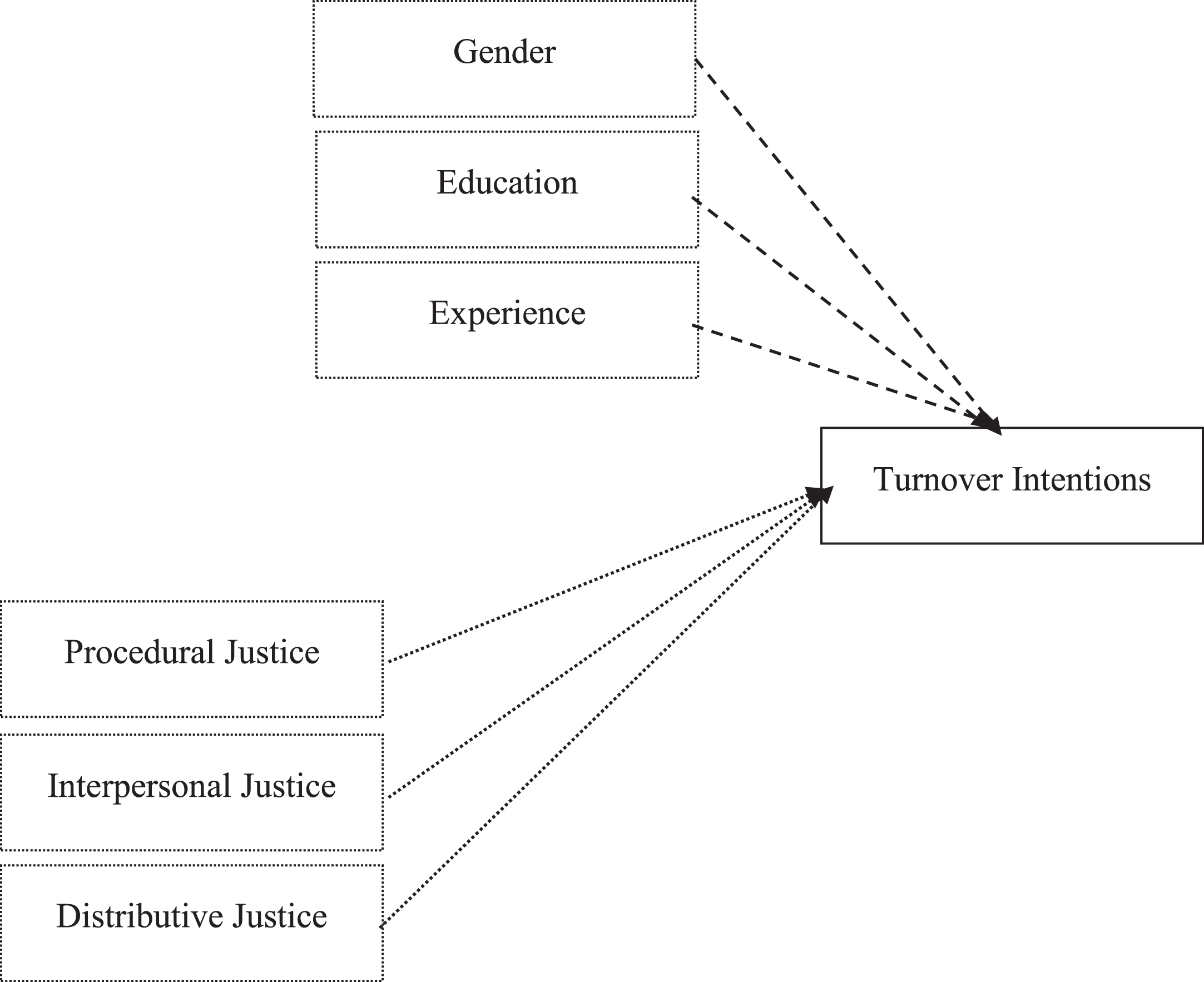
Conceptual Framework.
To divide employees into different career stages, we adapted the criteria used by Mehta, Anderson [25] since this division reflected the literature; which suggested that ECS meant little job experience, skills, and training needing supervision to work correctly ([12–14] employees with less than 7 years of job experience were selected [25]. The mid-career entailed somewhat good education and experience in a middle-level job [13, 34]: employees working in the mid-management level with 8–15 years of job experience were chosen [25]. On the other hand, the top-career level involved a higher level of education and experience and organizational positions [11, 14]: employee having more than 15 years of experience, therefore, selected for this stage [25].
We used a three-part self-administered questionnaire. The first part related to the demographic information and the question on the career levels of our respondents including gender, education, and their total job experience. The second part of the instrument collected data about organizational justice using an 8-item, 5-point - I totally disagree (1) to I agree (5)- Likert scale questionnaire adapted from Elovainio, Heponiemi [101]. Items 1–3 were related to procedural justice and a sample item from this section is ‘Have you been able to express your views and feelings during those procedures?’ The next three items asked about interpersonal justice. A sample item in this section is, ‘Has your supervisor treated you with dignity?’ the remaining two items, 7 and 8, collected data for distributive justice having a sample item, ‘Does your (outcome) reflect the effort you have put into your work?’ In the last section of the questionnaire, turnover intentions were measured using a 3-item, 7-point turnover scale (extremely disagree to extremely agree) was adapted from Cammann, Fichman [102].
Procedure
The data was initially checked for missing answers and unengaged responses. Any questionnaire with more than 40%of empty items was excluded. For the remaining missing values, Little’s test of Missing Completely at Random (MCAR) was run. Missing values in the data set were found to be randomly distributed as the significance of the Little’s Test was greater than 0.05. Consequently, data with the missing values were replaced with the expectation-maximization method in SPSS 26. All the variables with missing data treatment were separately created as new variables and were tested with their corresponding pair using paired sample t-test to look for any significant changes in the data after the treatment of missing values. No significant differences were found in any of the pairs. Thus, we successfully established that there was no drastic change in the original data after the treatment of the missing values. The unengaged responses were sorted out by standard deviation of the total answered and cases with SD lower than 0.5 were removed. We used Mahalanobis distance d2 to sort out and remove any cases with multivariate outliers in AMOS 24.
Subsequently, we ran a confirmatory factor analysis to test if the scales we had adopted were both reliable and valid, which was essential to carry out the path analysis in the later phase of data analysis. We used the estimates of composite reliability (CR) for testing the overall reliability of the constructs and average variance extracted (AVE) and maximum shared variance (MSV) to establish the convergent and discriminant validity of the data [103]. Finally, we used the second-order multigroup structural equation modeling analysis in AMOS version 24. We built two models to test the proposed hypothesis. In the first model, only the main constructs; procedural, distributive and interpersonal justice; were tested for their impact on turnover intentions at three multigroup levels, early, middle and later career stage (see Fig. 2). In the second model, control variables including education, experience and gender were added to model 01 (see Fig. 2).
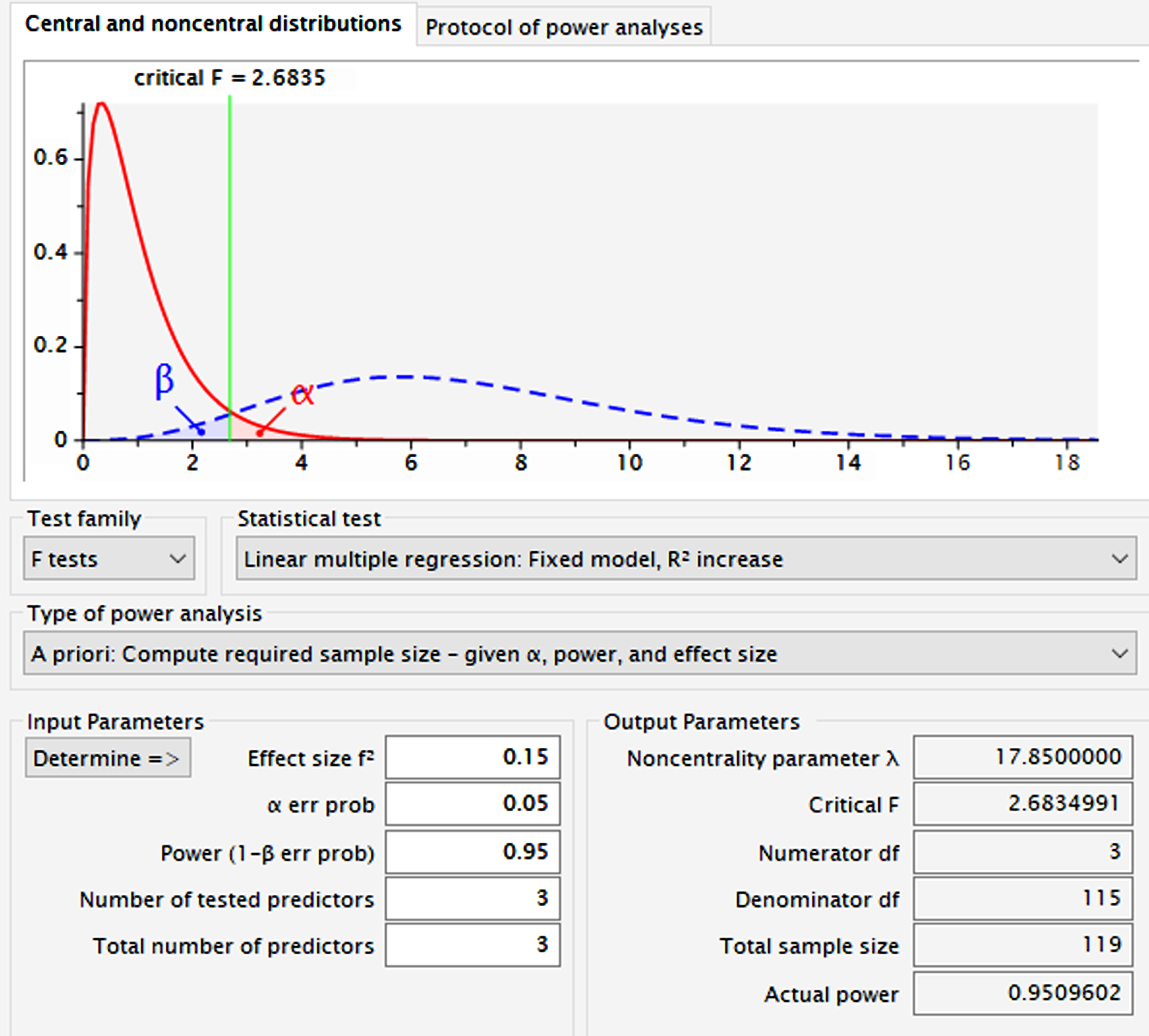
G*Power calculation for optimum sample size.
Descriptive statistics
In the ECS, most of the respondents in our data were under 30 years of age (18–30 years = 45.4%and 31–40 = 54.6%). In the MCS, the age of the respondents was within the range of 31–40 years (31–40 =88.3%and 41–50 = 11.7%). In the later stage, on the other hand, most of the respondents belonged to the age of 51-above 55 (51–55 = 63.6%and 55 and above = 36.4%). Table 1 shows other descriptive results. The normality statistics showed no concerns for data normality as all the values of skewness and kurtosis were below 3- all the values of skewness and kurtosis fell in the range of –1.96 and +1.96 [104, 105].
Model Validity Estimates
Model Validity Estimates
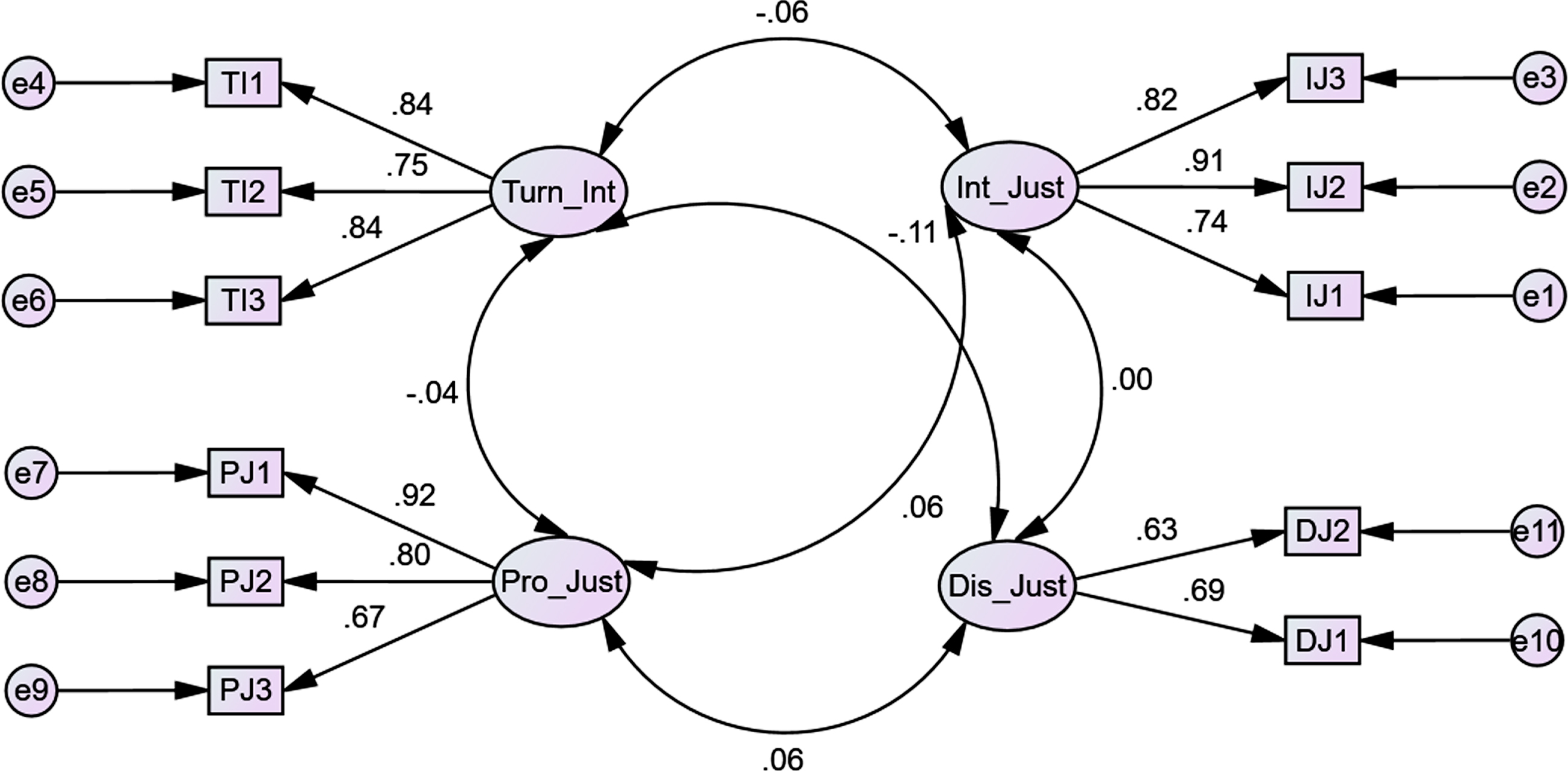
CFA Path Coefficients.
Table 3 gives the reliability and validity estimates for the confirmatory factor analysis (see Fig. 2 for the standardized path coefficients). As all the values of CR were above 0.7, there was no issue of reliability of the scales used in this study [103, 106]. Also, we found no concerns with the convergent validity of data as the AVE estimates for all the factors were above 0.5 [106] neither any no issues with the discriminant validity were found since MSV values for all the factors were below AVEs [103, 106]. The presence of discriminant validity was further confirmed using the heterotrait-monotrait (HTMT) estimates (see Table 2)- all the HTMT values were below 0.85 [107, 108]. Lastly, the goodness of fit indexes showed that the CFA model had an excellent fit (CMIN/DF =2.333; Comparative Fit Index (CFI) = 0.976; Tucker Lewis Index (TLI) = 0.967; Normed Fit Index (NFI) = 0.960, and RMSEA = 0.057; PCLOSE = 0.407) [103, 109].
Descriptive Statistics, Normality Measures and Correlations
Descriptive Statistics, Normality Measures and Correlations
HTMT Table
Table 4 provides the results of the multigroup analysis across three career stages for the two models proposed earlier. The model fit indexes were
Path Coefficients: Model 01 and Model 02
Path Coefficients: Model 01 and Model 02
In the results of model 02, there were no changes compared to model 01. In the ECS only the lack of distributive injustice significantly affected the turnover intentions (DJECS > TIECS = –0.241; CR = –2.086; p = 0.037). On the other hand, the lack of all three types of organizational justice significantly affected the turnover intentions of employees at the MCS (PJMCS > TIMCS = –0.246; CR = –2.899; p = 0.004; DJMCS > TIMCS = –0.326; CR = –3.690; p = 0.000; IJMCS > TIMCS = –0.22; CR = –2.307; p = 0.021). like in model 01, organizational justice did not affect the turnover intention of LCS employees. However, in model 02, work experience significantly increased the turnover intentions of the employees at the ECS (ExpECS > TIECS = 0.169; CR = 2.05; p = 0.040). The results of the analyses for model 01 and model 02 are also summarized in Fig. 4.
The current study had proposed that employees at different career stages respond differently to their perception of organizational phenomena. In this study, we hypothesized that organizational justice affected the turnover intentions of employees differently across three career stages: early, middle, and later and our results supported the hypothesis. We found that at the ECS distributive justice was the most important determinant of employee turnover intentions. At the MCS, on the other hand, all three components of organizational justice affected turnover intentions. At the later stage, however, there was no effect of organizational justice on turnover intentions.
We found statistically significant support for all our hypotheses that organizational justice affects the turnover intentions of employees differently. Though turnover is a difficult decision, employees have different preferences and expectations at different career stages and the lack of organizational justice is perceived differently. Turnover intentions, as the literature supports, should affect employees differently at the corresponding career stages [110, 111]. Flaherty and Pappas [10] have found that the career stage is a better predictor of turnover intentions than many other personal characteristics of employees. We, consequently, found strong support for our results.
We also found that different dimensions of organizational justice affected employees differently at their career levels. at the ECS, only the lack of distributive justice affected employees’ turnover intentions. In the case of MCS, all three dimensions of organizational justice affected turnover intentions. Employees at LCS showed no effect of organizational justice on their turnover intentions. Looking at these generalizations in another way, the lack of distributive justice affected the turnover intentions at the ECS and MCS. On the other hand, the lack of interpersonal distributive justice affects employees at the MCS only while at LCS the lack of organizational justice did not affect their turnover intentions. In the upcoming parts, we will reason these results through the support of the existing literature.
Starting with ECS, the early literature suggests that the employees are rather interested in developing skills and knowledge as well as gain work experience in the current organizations and may not consider the current organization as a permanent workplace. Also, CST suggests that ECS employees are most interested in the use of organizational resources to facilitate their development [13, 33]. We can argue that employees at an ECS might be better off if they change an organization where they have little prospects of learning and development. We find support for this argument in the relevant literature [112–115] as well as from the results of work experience affecting turnover intentions at the ECS in the current study. Our results confirm that as employees at the ECS gain more experience, their turnover intentions tend to rise. Nevertheless, despite the higher tendency of turnover, early career stage employees still should be looking for a better trade-off in forming their turnover intentions.
Considering that a workplace is a nest for learning and career development, the most important aspect that can affect employees at the ECS is the use of resources [13, 55]. Therefore, the lack of distributive justice affects them most: if the organizational resources are not distributed justly, ECS employees do not find the opportunity for career growth, the main reason for them to work for an organization, which leads to turnover intentions. Contrary to that, procedural justice which relates to rewards and promotions [71], and interpersonal justice that encompasses quality of interpersonal relationships, managerial decision-making, and organizational culture [72, 73] are not the elements employees at the ECS are anticipating or worrying about. Therefore, neither of these two types of organizational justice has any bearing on the turnover intentions at the ECS.
On the other hand, MCS comprises individuals who are fairly embedded in an organization and are expecting greater returns from their efforts [116]. This is the stage earmarked by a high level of work efforts and commitment [117] and hence the high utilization of organizational resources, a and demand for appreciation and respect for their work as well as rewards both in monetary and non-monetary forms [11, 13]. At this stage, the employees have reached a point where it is not easy to take unnecessary risks with their career progression [116]. Overall, this stage is dominated by the highest expectations about growth and personal achievement [118] and as such, it is the stage most sensitive to organizational elements [117].
The turnover intentions at the MCS should, therefore, be affected by elements that hinder the progress and achievement at work. In this context, we argue that organizational injustice is one of the most direct elements that can affect employees at the MCS. The lack of procedural justice relates to promotions and achievements [10, 34]. Any perception of procedural injustice can easily lead to dissatisfaction and burnout [117]. Besides, the lack of distributive justice can hinder their progress indirectly as the lack of distributive justice would hamper their work and performance [66, 119]. Likewise, interpersonal injustice in the form of the quality of top-level decisions could also have detrimental effects on their prospects of growth [72]. Thus, at this stage, employees are affected by all forms of injustice more than at the other stages.
By contrast, LCS is less inclined towards turnover as they have the control over several organizational elements and can use their power to their advantage [112] as this career stage is characterized by lifetime accumulated investment, fewer career opportunities and a good organizational position [120–123]. As a result, turnover decisions are the costliest for them. Nevertheless, they have reached a point in their career where they have control of overall organizational resources [124] and are very much involved in the decision-making process of their organization [14, 124]. Also, Zhongjun, Liyao [124] and Duarte and Lopes [125] argue that LCS employees have developed an art of proactive skills and have command over interaction with people. As such, they are least affected by organizational elements [124] and therefore, we find that organizational justice does not affect their turnover intentions.
Conclusion
The current study attempted to explore a highly overlooked yet demanding area of research in organizational behavior research. Even though there is a huge amount of literature on the relationship between organizational justice and turnover intentions across diverse organizations, there was no study that had tried to explore if there existed differences in this relationship across different career stages. The theory of career stages supports the presence of differences in behaviors of employees across different career stages. Some studies have shown that turnover intentions vary across different career stages. This study, nevertheless, found that the relationship between different dimensions of organizational justice and turnover intentions varied across separate career stages.
In the absence of a study that attempted to explore the relationship between organizational justice and turnover intentions across different career levels, the academic literature tends to paint all employees at different stages in their careers. Complimenting this, the literature on turnover intentions suggests that there exist differences in individual actions that vary according to the career stage. Considering these, we argued that our generalized understanding of the relationship between organizational justice and turnover intentions may be flawed and required examination. This study empirically established that there do exist such differences and employees at different career stages react differently to their perception of organizational justice. Fundamentally, the demand for their career stage determined their turnover intentions as a response to different dimensions of organizational justice.
The existing literature has been focused mainly on the relationship between organizational injustice and turnover intentions. No study has ever questioned if this relationship may be affected by the differences in employees’ careers. We were able to find that differences across careers have implications on the relationship between organizational justice and turnover intentions. We, hence, provided a new and more specified understanding of the literature and extended the knowledge of not only the field of organizational justice but also career stage theory.
In practice, the current study offers a better understanding of employee turnover intentions as a result of their perception of organizational justice at different career levels. The most important lesson for the managers through this study is that they can now look for different plans of actions to retain their employees by improving their distribution of resources, interpersonal interactions, and procedural aspects in a differentiated manner suitable to the requirements at all career stages. For example, at the early career stages, employees are more inclined to learning and want access to organizational resources. Providing them the resources and the learning they want would improve their retention level in the organization. Similarly, at the middle stage employees are very much affected by organizational justice, top management might consider their requirements differently and improve the chances of retaining them. Our study claims that a single employee retention policy across all career stages would not be very effective. Understanding employees’ reactions to organizational justice aspects, would improve employee retention in the organizations [126]. This would also improve efficiency in the utilization of resources and the performance of the workforce at different stages. As a limitation, the current study was only focused on looking for differences in the proposed relationship across different career stages. Future researchers can consider looking for the underlying causes that make up such difference.
Footnotes
Acknowledgments
The authors of this paper have not received any funding or grants for the study from any public, commercial or non-profit agencies.
Author contributions
CONCEPION: Nadeem Uz Zaman, Muhammad Asad and Zeeshan Khalid
INTERPRETATION OR ANALYSIS OF DATA: Nadeem Uz Zaman and Tariq Ahmed
REVISION FOR IMPRTANT INTELLECTUAL CONTENT: Nadeem Uz Zaman
SUPERVISION: Thurasamy Ramayah