



Abstract
BACKGROUND:
The 2020 pandemic yielded significant changes to work – most notable was the shift from centralized to remote work. As employers called for the return to traditional office settings, workers resumed daily commutes to/from the workplace, resurrecting stressors like work overload, time constraints, and commuting strain.
OBJECTIVE:
We investigate (1) how commute strain affects employees’ work frustration, burnout, and satisfaction, and (2) how supportive supervisors and work climates may attenuate its negative implications.
METHODS:
Using a snowball sample of 403 workplace commuters obtained through various social media, we examined worker perceptions of commute strain, frustration, burnout, and dissatisfaction. We tested mediation and moderation hypotheses using OLS path modeling via the SPSS PROCESS macro.
RESULTS:
Results indicate that commute strain adversely affects work frustration, burnout, and job satisfaction. The negative frustration/satisfaction and burnout/satisfaction relationships were moderated by supervisor support and work climate, respectively.
CONCLUSIONS:
As more workers resume the daily commute, employers must be sensitive to the added strain associated with commuting and working while commuting as well as the serious downstream consequences of these strains. Fortunately, employers can moderate the severity of these consequences through supportive supervisors and work climates.





Introduction
The 2020 global pandemic resulted in significant changes for virtually all workplaces – most notable among these was the widespread shift from the centralized workplace to remote work. As the worldwide pandemic eased, employers began to call for a return to the office, again reconstructing the nature of the workplace – from remote to onsite. This transition necessarily involved the resumption of the daily workplace commute. Not only has the average commute historically been deemed one of the least enjoyable aspects of work [1], but there are also reports that estimate the average daily commute ranges from 60 minutes (in the European Union) to 90 minutes (in the US) [2].
Despite the strain associated with the daily commute, psychologists have suggested that the workplace commute provides the opportunity for a psychological “reset” period where individuals transition from home life obligations to the functions and responsibilities of their workplace roles [2]. When used as a role transition period (e.g., by listening to music or news, meditating, introspection), the daily commute can have positive benefits such as enhanced mood and decreased stress [2]. However, many workers report feeling compelled to complete work- related tasks during their daily commutes to meet perceived pressures or to minimize the creep of their overloaded work responsibilities into their non-work lives [3]. When commuting time is spent performing work or when the commute is particularly stressful, the individual does not have the opportunity for that beneficial “reset”, resulting in stress and other negative health- related outcomes [3].
Exacerbating potential problems, pressures to perform work-related tasks while commuting may have increased compared to pre-pandemic levels thereby adding to the prevalence and severity of commuting strain. Evidence is mounting that job role “creep” occurred during the pandemic wherein many workers’ job responsibilities increased, and job descriptions became broader and less well-defined [4]. Moreover, clients, customers, and supervisors grew accustomed to after-hours communications and the completion of work tasks outside of the traditional 9-to-5 workday. Indeed, such work norms are more common for remote than on-site workers [5]. When confined during the pandemic, workers could use the travel time they would have spent commuting (and recovering from the stress associated with the commute) to perform additional tasks. However, the in-person return to work along with the daily commute has resulted in less time available to complete work tasks— compelling workers to attend to these tasks during their daily commutes. The commute-as-worktime phenomenon raises questions as to the potential consequences of commuter well-being due to foregoing the opportunity to use the commute to “reset” or “recharge”. Even before the pandemic, commuters had regularly complained that the time they spent commuting took valuable time devoted to other roles and that the commute was far more stressful than peaceful [6, 7].
Beyond implications for workers’ general well-being, questions arise as to the potential negative downstream effects of commute strain on employees’ perceived work frustration, burnout, and job satisfaction. In this study, we use a survey methodology with a snowball sample design using various social media channels to assess the implications of commute strain for work frustration, burnout, and job satisfaction. Moderated mediation analyses explored whether supervisor support and work climate could attenuate these negative outcomes. Our results suggest that working while commuting has negative implications for work-related attitudes like work frustration, burnout, and job satisfaction, but that organizational factors like supportive supervisors and less demanding work climates mitigate these negative effects. We discuss the implications of these results for research and practice.
Next, we review the extant literature related to commute strain and negative job attitudes (work frustration, burnout, satisfaction), as well as the effects of supervisor support and work climate.
Literature review
Work and family life are two of life’s most salient roles [8]. Given the nature of today’s work (particularly with the availability of sophisticated communication technologies that make workers easily accessible 24/7), finding a balance between these domains is a significant challenge faced by most workers. Importantly, the successful balance and differentiation between work and non-work domains are crucial to well-being and performance within each domain. Historically, the daily commute to/from work offered a time in which the worker could disengage from one domain to prepare for the other. This disengagement/engagement time allowed the worker to “put down” the behaviors, emotions, and skills needed to be successful in one domain in order to “pick up” those required for the other [9]. Moreover, psychologists report that when workers use their commute time to “reset” or “recharge” (e.g., by engaging in leisure activities like listening to music, reading a book, or doing a crossword) their mood and emotional well-being were significantly improved [9].
Reports suggest the 2020 pandemic resulted in broader job descriptions and an increased pressure to work outside typical work hours [4], likely resulting in a renewed or increased tendency to work during the daily commute in the years that followed. Indeed, the commute-as-work phenomenon has become so prevalent that some European countries have legislated that commute time spent working be counted as paid time [6]. Since it is often reported that commute time tends to be stressful, serious questions emerge as to the proximal (i.e., work frustration and burnout) and distal (i.e., decreased job satisfaction) consequences for both the employee and their employer, and what, if anything, the employer can do to help.
Commuting strain and working while commuting
Commute strain refers to significant time investment and a salient routine that infringes on individuals’ time within the non-work domain and increases stress within both work and non- work domains [10, 11]. Research suggests commuting strain results in increased frustration and burnout for workers [3]. Not only is the daily workplace commute often reputed to be more stressful than the job itself, but employees are also reporting that they experience pressure to complete work outside normal working hours, including during their daily commute. Regardless of how they are commuting to work (e.g., driving, public transit), adding work tasks (e.g., making/accepting phone calls, answering email, completing reports) brings another dimension of stress to the mix.
Moreover, when workers are filling their commute time with work-related tasks, they are not using that time for the essential psychological “reset” known to be critical to maintaining work/life balance and emotional well-being [12–14]. Even though completing work during one’s commute can be productive and satisfying in the short run, the downstream effects are not so positive. It is not surprising that over time, the loss of this crucial “buffer” between work and life leads to declines in mental and emotional health as well as a lingering resentment toward work [15]. Deterioration of satisfaction and performance in both roles is another likely outcome. For example, interdomain transfer effects [16, 17] or role spillover [18–20] may occur wherein the behaviors and reactions originating from, and appropriate to, one role negatively affect performance in another role. Unfavorable outcomes that result from a spillover of negative moods across domains contribute to elevated physiological arousal, lowered frustration tolerance, impaired performance [15], and physical illnesses like elevated blood pressure, diabetes, obesity, and migraines [16, 17, 21].
Commuting strain contributes to work frustration, burnout, and diminished job satisfaction
Responses to commuting strain may result in negative cognitive attributions [22] and negative emotions [17] toward work. Such outcomes tend to be magnified as commute times lengthen [16]. Over time, this stress contributes to physiological disorders, unhealthy behaviors, and negative psychological effects that have serious implications for the workplace (e.g., depression, job dissatisfaction, burnout, and turnover) [23–25]. Research suggests that commuting strain is associated with elevated physiological arousal, lowered frustration tolerance, cognitive-performance impairments, and overall job dissatisfaction [26]. As frustration tolerance decreases, frustration with work increases, leading to other emotional states like anger and resentment [27, 28]. Organizational factors including job insecurity, role conflict, role ambiguity, and feelings of isolation and powerlessness further drive work frustration and contribute to job dissatisfaction and employee burnout [29]. Employees experiencing work frustration are more likely to complain, make derogatory comments to their colleagues or supervisors, and deliberately decrease their work efforts.
Beyond the strain regarding the commute itself, the act of performing work while commuting is likely to negatively impact task performance. Working while commuting is a form of multitasking requiring motor responses to be split among two or more activities and concurrent/simultaneous task processing. Because the human brain is not built to effectively multitask, performance costs result and tend to persist even after multitasking ends [30]. Such decrements in performance ultimately decrease pride in work and job satisfaction [31–34]. Indeed, multitasking has been shown to diminish individuals’ subjective well-being [35] and contribute to overall levels of frustration [36] and burnout [37].
Employees who opt to work while commuting experience higher levels of commuting strain and increase their potential for emotional exhaustion within both work and non-work domains [16, 17, 38]. The added tension from attempting to complete work-related tasks while commuting may facilitate negative emotional reactions to one’s job that depletes emotional well- being and elevates burnout [39–41]. Burnout is associated with loss of motivation, increased emotional exhaustion, cynicism, and fatigue [23, 42]. According to the World Health Organization, burnout results when the balance of deadlines, demands, working hours, and other stressors outstrips rewards, recognition, and relaxation [43, 44], and diminishes employee ambitions and self-worth [45, 46].
Stress alone does not cause burnout, but stress combined with inadequate resources to cope exacerbates the cycle [29]. According to Rothmann (2008), the higher the level of an employee’s burnout, the lower the level of job satisfaction [47]. Problems associated with burnout are estimated to cost more than a billion annually in the US alone [48]. The more the employee perceives strain, the greater effort they will put forth to regulate or strive for balance across work/non-work domains [49]. Increased efforts met with decreased results will increase the potential for burnout [23, 50].
H1: Work frustration will mediate the negative relationship between commute strain and job satisfaction.
H2: Burnout will mediate the negative relationship between commute strain and job satisfaction.
Supportive supervisors and work climates lessen the negative effects of commute strain
Two work-related constructs show promise in lessening the negative effects of commute strain— supervisors and work climates. One of the most profound relationships in an organization’s culture is the employee-supervisor dyad [51]. Multiple studies have demonstrated that the availability of supervisor support is associated with higher job satisfaction [52] as well as employee commitment, creativity, and productivity [53]. Supportive supervisors offer guidance, assistance, and emotional or informational support to stressed employees, helping the employee to persevere and recover. Employees of supportive supervisors tend to be more willing to devote additional time to work activities and may perceive working while commuting differently than those employees whose supervisors are less supportive [54]. Relatedly, employees who perceive their supervisors to be less supportive are more prone to decreased morale and increased tension.
Supportive work climates are characterized by shared perceptions among employees that they are supported and fairly rewarded [55] and are negatively associated with worker frustration, burnout, turnover, absenteeism, and other forms of counterproductive work behaviors [56]. Indeed, prolonged stress stemming from high work demands is costly for both the employee and the employer. Organizational variables such as work climate interact with stressors that influence burnout by either modifying or mitigating the effects of burnout [46].
Employees with supportive supervisors or those who work in less demanding work climates are more likely to perceive the availability of stress-management and work/life balance resources and are more likely to use these resources, thus reducing perceived strain and its negative consequences [57].
H3a: Supervisor support will moderate the relationship between work frustration and job satisfaction such that supervisor support will weaken this relationship.
H3b: Work climate will moderate the relationship between work frustration and job satisfaction such that work climate will strengthen this relationship.
H4a: Supervisor support will moderate the relationship between burnout and job satisfaction such that supervisor support will weaken this relationship.
H4b: Work climate will moderate the relationship between burnout and job satisfaction such that work climate will strengthen this relationship.
Methods
Data collection and sample
The research project was reviewed by the Institutional Review Board of the authors’ university and fully approved prior to data collection in 2019. Full-time working employees within the United States and Europe (primarily, Germany) were recruited through social media (e.g., Facebook, LinkedIn, WhatsApp). The reason these two geographic locations were selected was due to the greater number of professional contacts available within the respective authors’ social networks as well as the demographic similarities between the two countries. Consistent with the snowball sampling technique, we cast a wide net to locate commuters by requesting that participants also invite other people to participate by having them reshare our post on their own social media platforms.
All participants were given an online survey assessing perceptions of (1) commute strain (2) work frustration, (3) burnout, (4) job satisfaction, (5) supervisor support, and (6) work climate. Due to the nationalities of the researchers and use of snowball sampling via our social networks, the survey was first written in English and then a bilingual member of the research team translated the English version to German using the conventional back-translation method [58].
Although platforms such as Facebook, LinkedIn, and WhatsApp offer inexpensive access to a relatively large population, snowball sampling through social media can raise concerns of coverage error and generalizability since only those individuals with social media accounts can participate. Fortunately, there exists greater than 4.2 billion social media users worldwide [59] with over 223 million of them located in the US (82% of the country’s population) and about 66 million in Germany (79% of the country’s population). Given the topic of our study and knowing that over 80% of commuters have smartphones [60], we believe the benefits of a snowball sample outweigh its limitations.
To participate in the survey, individuals had to be at least 18 years of age, work a minimum of 35 hours a week, and commute between home and work at least three times a week. This final requirement provided the opportunity to standardize working contexts as much as possible across the diverse sample. In total, 403 individuals accessed the survey. Of these, 246 individuals met participation qualifications and consequently completed the survey in its entirety, thereby resulting in a 60.9% effective response rate.
Among the sample of 246 respondents, 88 were male, 148 were female, and 10 did not provide an answer. The average age of respondents was 36.7 years with a range of 20 to 72 years of age. Across the two versions of the survey, 189 of the sample completed the English version, and 57 completed the German version. We examined data collected from each version to ensure the participants were comparable. There was no significant difference between American and European participants in terms of age (F = 0.11, p = nonsignificant), work functions (χ2 = 12.69, p = nonsignificant), or tendencies to perform work during their commutes (χ2 = 0.71, p = nonsignificant). Similarly, both samples were comprised of more females than males. Given the comparable demographics across the two samples, we combined the data and controlled for age, sex, and nationality demographics when testing the hypotheses.
Measures
All scales used a 7-point response where 1 = strongly disagree to 7 = strongly agree (unless specified otherwise) where higher values signified greater agreement with the scales’ respective items. The full set of scale items is included in Appendix A. Commute strain was assessed using three items from a scale developed by Kluger (1998) wherein respondents were asked about their experience commuting to and from work (α= 0.84) [61]. Work frustration was assessed utilizing a scale developed by Peters, O’Connor, and Rudolf (1980) where respondents were asked about their feelings of frustration with their job (α= 0.78) [62]. Burnout was measured with the burnout section of the Copenhagen Burnout Inventory (α= 0.91) [63]. Job satisfaction was assessed with Cammann, Fichmann, Jenkins, and Klesh’s (1983) job satisfaction scale with respondents being asked to consider their current position (α= 0.92) [64]. Supervisor support was assessed using four items from a scale developed by Greenhaus, Parasuraman, and Wormley (1990) wherein respondents were asked about their perception of their immediate supervisor (α= 0.91) [65]. Using a 5-point Likert-type scale where 1 = strongly disagree to 5 = strongly agree, Work climate was measured with the “pressure to produce” section of the Organizational Climate Questionnaire (OCQ) by Litwin and Stringer (1968) (α= 0.73) [66]. Prior to testing our hypotheses, PLS-CCA [67, 68] was used to establish the reliability and validity of our multi-item measures. Factorial loadings are reported in Appendix B and the reliability and validity of these scales are included in Appendix C.
Results
Means, standard deviations, and intercorrelations among the variables are shown in Table 1. Each hypothesis was examined using the procedures developed by Hayes (2009) and Preacher and Hayes (2004) using SPSS with the PROCESS macro [69, 70]. PROCESS is a complementary add-on tool for SPSS or SAS that uses an ordinary least squares (OLS) regression or logistic regression- based path analysis statistical framework. Users can either select from preprogrammed models (see Hayes, 2018) or write modified syntax for custom models [71]. Among its various benefits, PROCESS was designed to simplify investigations of direct and indirect effects in mediation, conditional effects in moderation, and the integrated conditional indirect effects in moderated mediation (i.e., conditional process analysis). Current thinking on mediation analysis does not require evidence of a total effect prior to examining direct and indirect effects [69, 71–73] and the techniques used by the PROCESS macro include the use of bootstrap confidence intervals that account for “the irregularity of the sampling distribution of the indirect effect” [71, p. 521].
Means, standard deviations and intercorrelations among study variables
Means, standard deviations and intercorrelations among study variables
Notes: N = 236; Cronbach’s alpha along the diagonal; aCategorical variable. *p < 0.05, **p < 0.01.
Hypothesis 1 proposed that work frustration would mediate the negative relationship between commute strain and job satisfaction. As shown in Table 2, Model 1, commute strain is positively related to work frustration (B = 0.140, p < 0.01), and in Model 2, work frustration is negatively related to job satisfaction (B = – 0.406, p < 0.01). Thus, our results provide preliminary support that work frustration acts as a mediating mechanism through which commute strain influences job satisfaction.
Mediating effect of work frustration on the relationship between commute strain and job satisfaction
Notes: N = 236; aTest of indirect effects and confidence intervals [C.I. 95%] based on 5,000 bootstrap samples. *p < 0.05; **p < 0.01.
To further evaluate the presence of mediation by work frustration, we applied the bootstrapping method by Preacher et al. [74], which provides the confidence interval for indirect effects [74]. As shown at the bottom of Table 2, the indirect effect was significant (B = – 0.070, 95% CI = – 0.132, – 0.012). In contrast, the direct effect was not significant (B = – 0.052, CI = – 0.146, 0.043), thereby indicating full mediation as well as support for Hypothesis 1.
Hypothesis 3 proposed that supervisor support (H3a) and work climate (H3b) would each moderate the negative relationship between the mediator, work frustration, and job satisfaction. As shown in Table 3, Model 2, and in support of these hypotheses, each interaction term was significantly related to job satisfaction (H3a; B = 0.073, p < 0.05) and (H3b; B = – 0.174, p < 0.01). Visually, these relationships are depicted in Figs. 2 and 3, respectively. As indicated by the figures, the negative relationship between work frustration and job satisfaction is weakened by higher levels of supervisor support (H3a) and strengthened by higher levels of work climate (H3b).
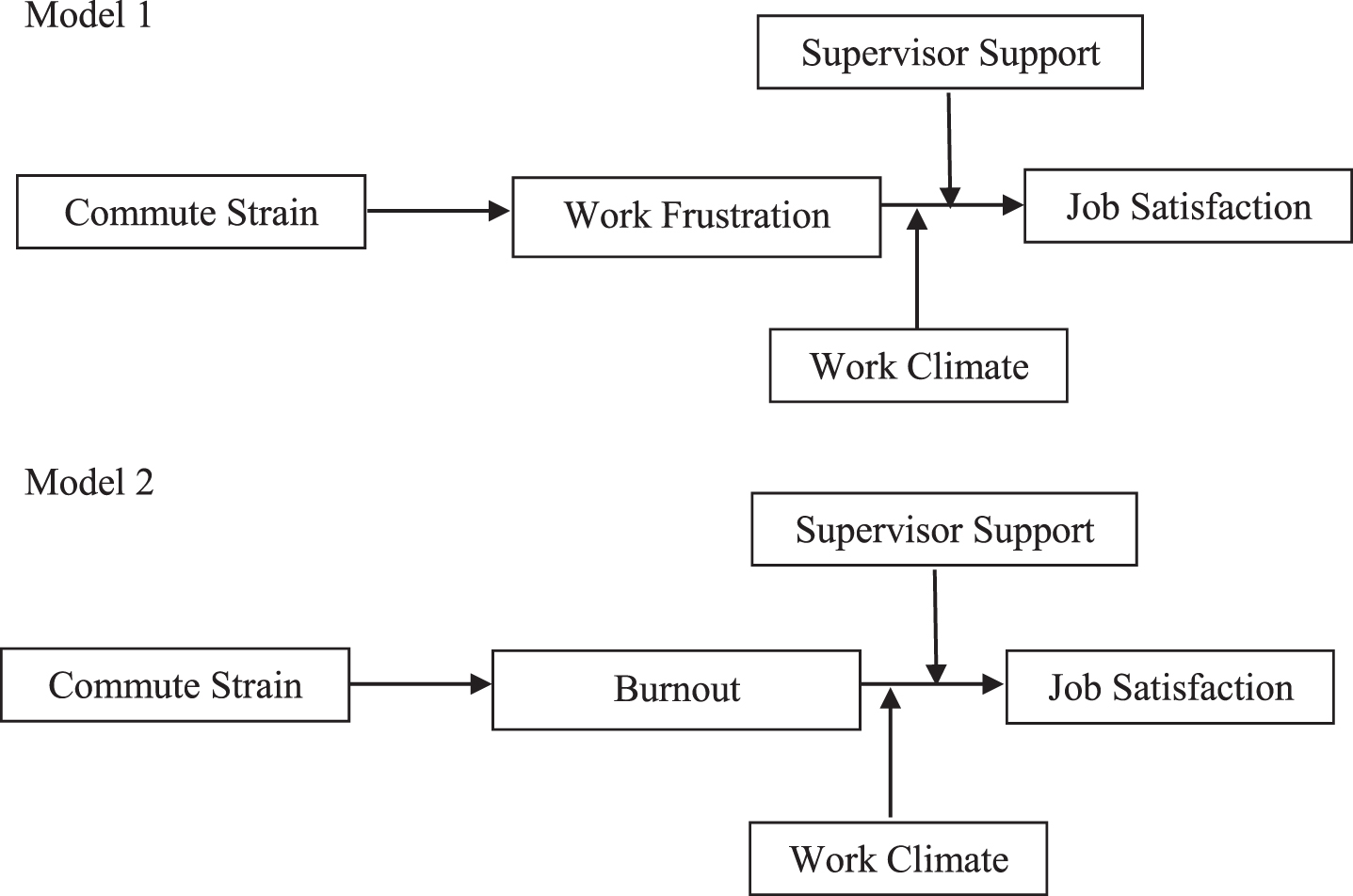
Conceptual models of the effects of commute strain on worker perceptions.
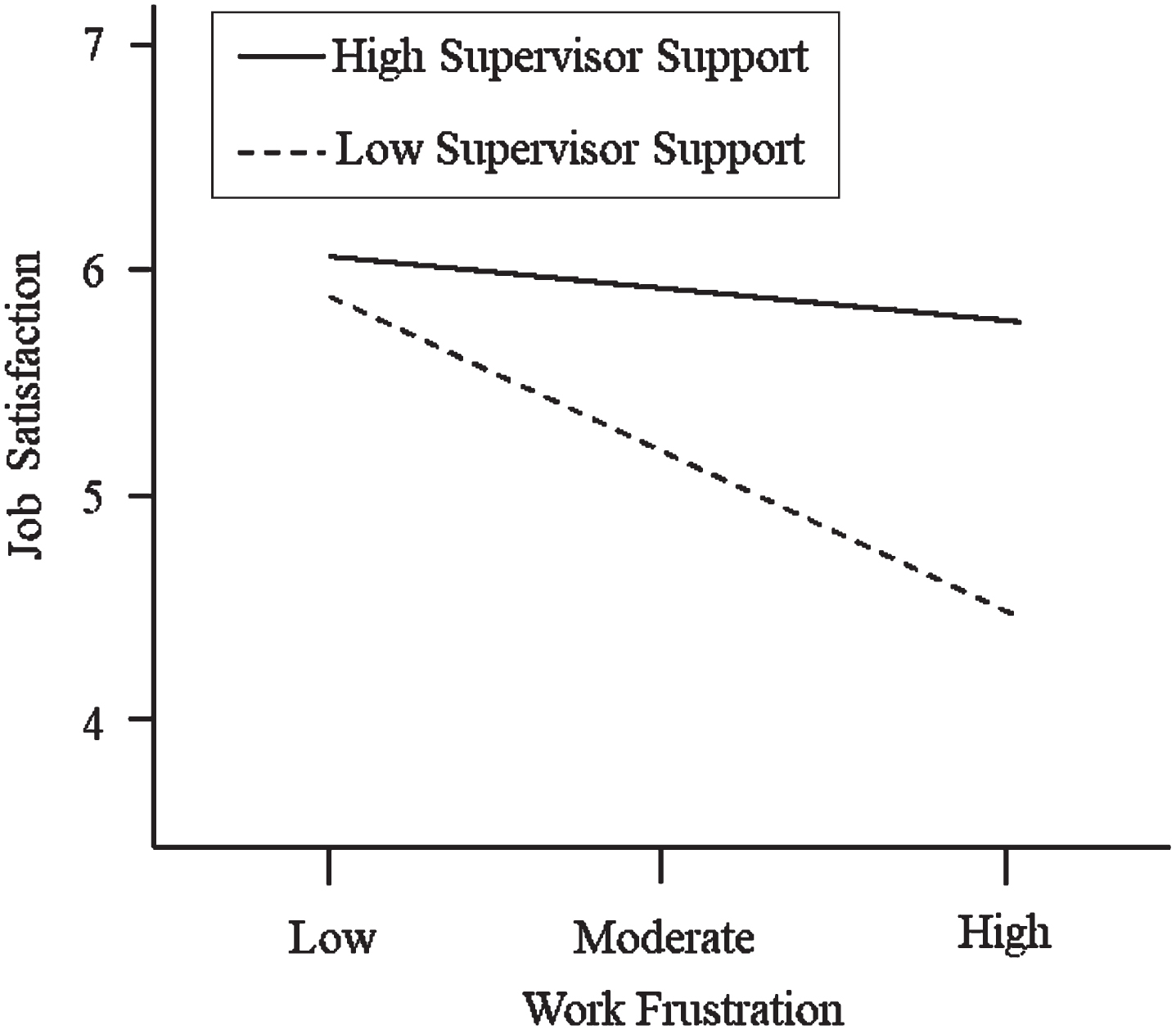
Interactive effects of supervisor support on the relationship between work frustration and job satisfaction.
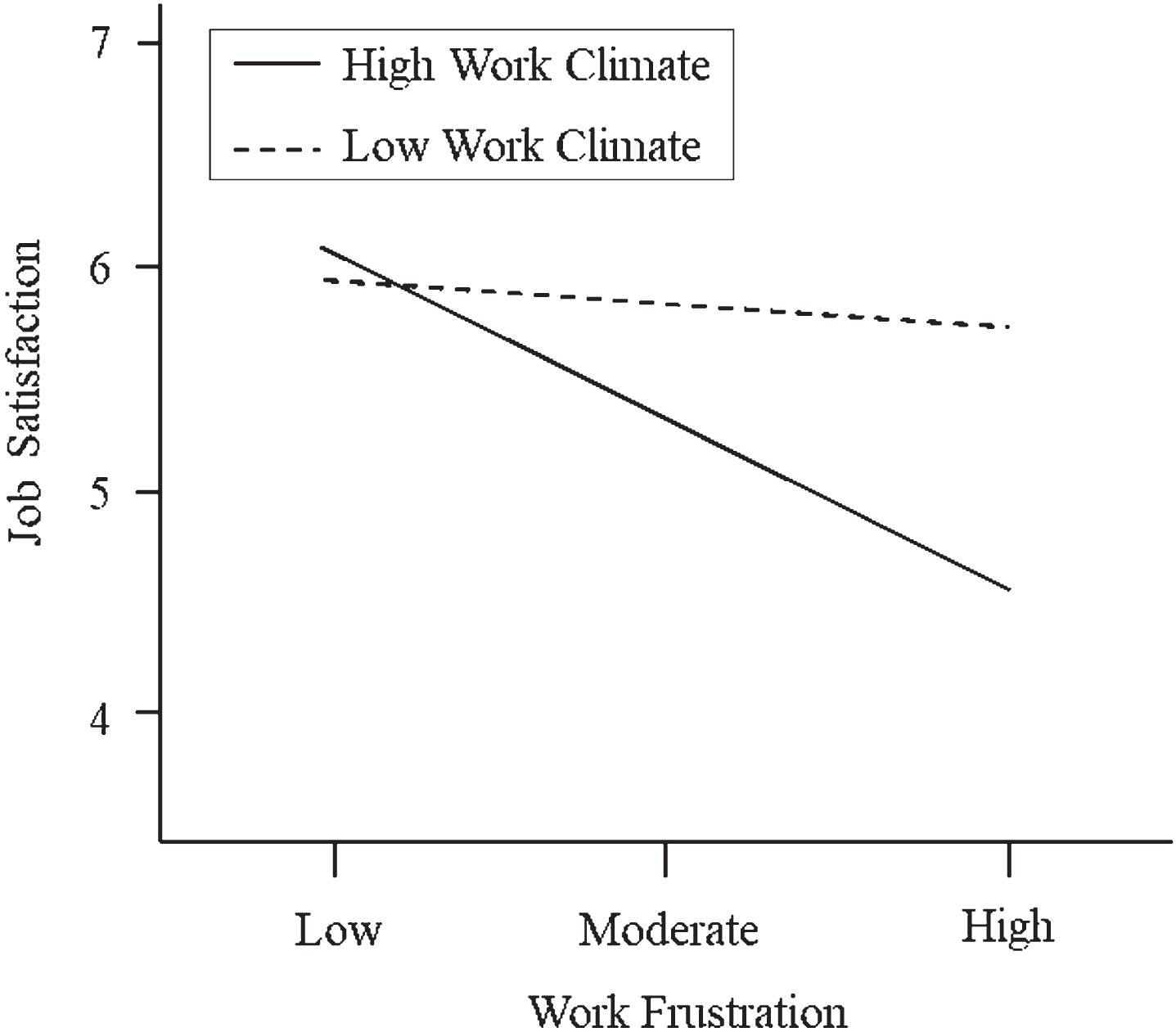
Interactive effects of work climate on the relationship between work frustration and job satisfaction.
Interactive effects of supervisor support and work climate on the relationship between work frustration and job satisfaction
Notes: N = 236. *p < 0.05; **p < 0.01.
One benefit of conditional process analysis is that it also elegantly tests moderated mediation [71]. Moderated mediation is determined by examining whether the indirect effect of the independent variable on the dependent variable, through the mediator, differs at various levels of the moderator. Similar to the bootstrapping procedure to test for mediation, the program generates confidence intervals [75]. As seen at the bottom of Table 3, the index of moderated mediation with supervisor support was significant (B = 0.010, 95% CI = 0.000, 0.024) as was work climate (B = – 0.024, 95% CI = – 0.056, – 0.003).
Hypothesis 2 proposed that burnout would mediate the negative relationship between commute strain and job satisfaction. As shown in Table 4, Model 1, commute strain is positively related to burnout (B = 0.156, p < 0.01) and in Model 2, burnout is negatively related to job satisfaction (B = – 0.430, p < 0.01). Moreover, results from bootstrapping show the indirect effect was significant (B = – 0.083, 95% CI = – 0.149, – 0.020). In contrast, the direct effect was not significant (B = – 0.041, 95% CI = – 0.132, 0.049) thereby indicating full mediation as well as providing additional support for Hypothesis 2.
Mediating effect of burnout on the relationship between commute strain and job satisfaction
Notes: N = 236; aTest of indirect effects and confidence intervals [C.I. 95%] based on 5,000 bootstrap samples. *p < 0.05; **p < 0.01.
Hypothesis 4 proposed that supervisor support (H4a) and work climate (H4b) would each moderate the negative relationship between burnout, and job satisfaction. As shown in Table 5, Model 2, the interaction term containing supervisor support was not significant (B = 0.012, p = nonsignificant). Thus, hypothesis 4a was unsupported. In contrast, the interaction between burnout and work climate was significantly related to job satisfaction (B = – 0.174, p < 0.01) and provides support for hypothesis 4b. This relationship is visually depicted in Fig. 4. As indicated, the negative relationship between burnout and job satisfaction is stronger at higher levels of work climate.
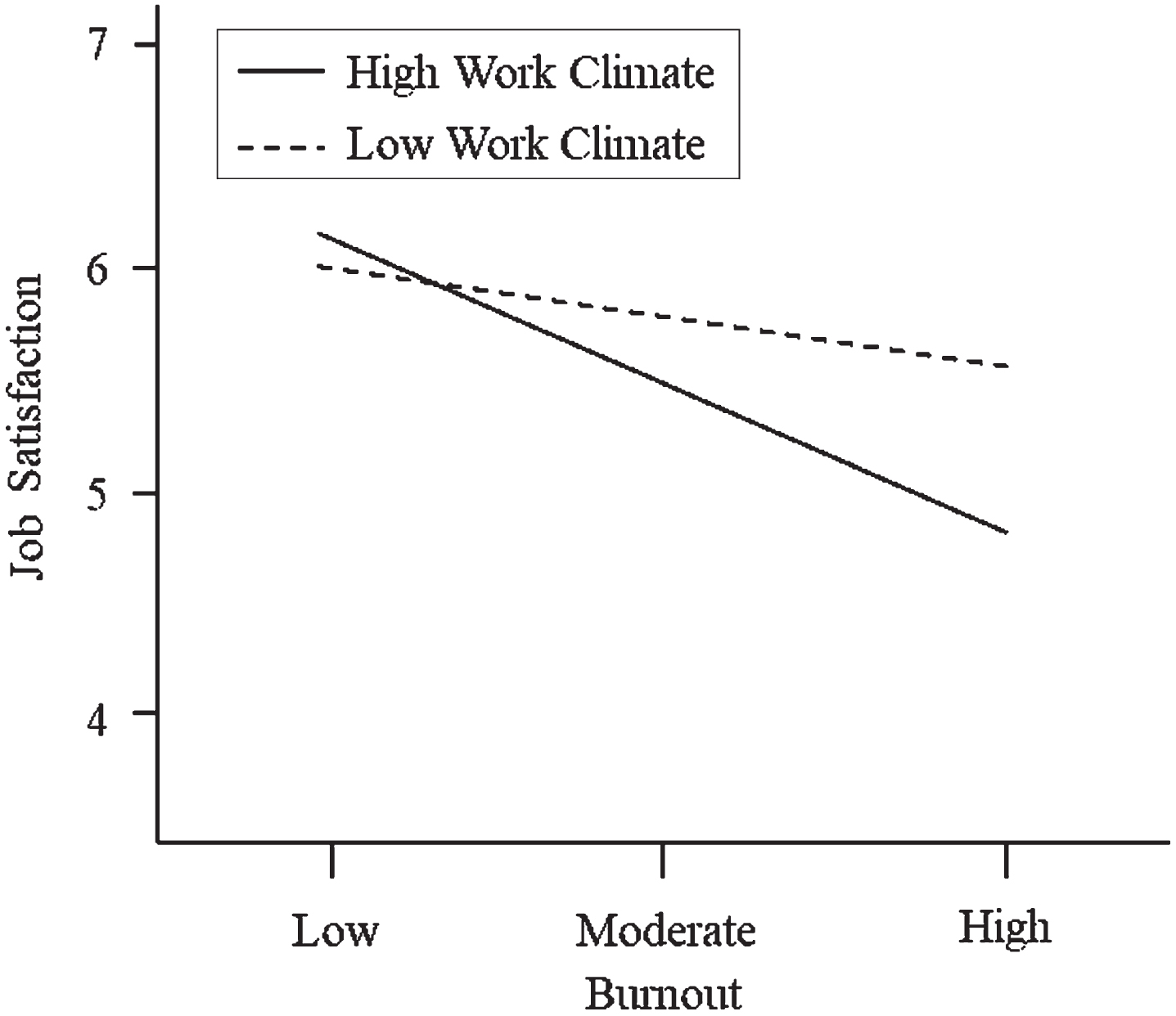
Interactive effects of work climate on the relationship between burnout and job satisfaction.
Interactive effect of supervisor support and work climate on the relationship between burnout and job satisfaction
Notes: N = 236. *p < 0.05; **p < 0.01.
As seen at the bottom of Table 5, the index of moderated mediation with supervisor support was not significant (B = 0.002, 95% CI = – 0.011, 0.016). In contrast, the index of moderated mediation with work climate was significant (B = – 0.027, 95% CI = – 0.062, – 0.002). Thus, our results suggest only partial support for hypothesis 4. Although work climate did moderate the relationship between burnout and job satisfaction, supervisor support did not. A full table of the hypotheses, coefficient estimates, and standard errors is included in Appendix D.
A half-century ago, social scientists predicted that by the year 2030, technology would allow employees to enjoy a 15-hour workweek with full pay [76]. Unfortunately, this employment utopia has yet to materialize, and commuting workers are scrambling to complete more work tasks with less available time. These employees report they are using their daily commutes as an opportunity to complete work, contributing to soaring perceptions of commuting strain. Consistent with the findings presented here, psychologists have found that the use of commute time for leisure activities rather than work can help the employee recharge, reset, and transition between domains, so using this time instead for work contributes to increased stress and negative spillover across domains [3]. Our results provide evidence that working during travel time to and from work is associated with feelings of work frustration, burnout, and lower job satisfaction compared to employees who use the time to reflect on their role transition and prepare themselves to face workplace demands.
The goal of this study was to examine the effects of commuting strain on work frustration, burnout, and job satisfaction and to identify ways organizations can minimize these negative consequences. We explored the extent to which work frustration and burnout mediate the relationship between commute strain and job satisfaction as well as the extent to which supportive supervisors and less demanding work climates moderate these relationships. As hypothesized, our results support the link between commute strain and frustration and employee burnout, and diminished job satisfaction. Of practical significance, our results support the moderating influence of supervisor support and work climate on these relationships.
As employees are called back into the office— often with an expanded set of job duties gained during the pandemic and with no additional hours in the workday to accomplish them— organizations must remain sensitive to the commitments and efforts employees undertake to be present in the office and to successfully accomplish their jobs [4]. Even pre-pandemic, the daily commute to/from work was known to often be more stressful than the job itself [77]. However, post-pandemic employees have more to do than before and fewer work hours now that they are commuting to and from work rather than being able to use that time to work from their home office [4]. These employees report an increased perception that they need to work outside traditional work hours to complete their responsibilities, and many are turning to their commute as an opportunity to accomplish work-related tasks [3, 4].
As working while commuting represents a form of multitasking, this work is both less efficient and more stressful [78]. Moreover, researchers suggest that the commute should be used as a time to “reset” and “recharge” in order to be effective in the next domain [79]. When employees fail to capitalize on these limited downtimes and workday transition periods by engaging in work-related activities, stress is compounded and the employee begins to suffer mentally and physically [16, 21, 23–25]. Our research suggests commuting strain has downstream consequences including worker frustration, burnout, and ultimately diminished job satisfaction. These outcomes are costly to the employer in the form of increased absenteeism, turnover, work withdrawal, and decreased performance and productivity [77]. Given this, organizations must consider ways they can proactively mitigate the negative effects of commuting strain. Our results suggest supportive supervisors and work climates may be the key.
Moderating effect of supervisor support
Researchers have argued that overinvestment in work and persistent long hours harm employees’ health and well-being [14, 23, 43, 44]. Although supervisor support did not moderate the burnout-satisfaction relationship as expected, we did find a direct positive main effect of supervisor support on employees’ job satisfaction (B = 0.181 p < 0.01). As an employee’s direct leader, the supervisor can have a significant effect on an employee’s day by providing the socio- emotional support and resources necessary to maintain wellbeing while accomplishing work tasks. Employees of supportive supervisors are more likely to recognize sources of support and utilize this support to reduce stress.
Supervisors who recognize that the return to work may be stressful for employees are more equipped to know when and how to offer support. Being mindful of the importance of balance between work and non-work domains, supervisors can reduce employees’ perception of the need to complicate their daily commute with work responsibilities. Supervisors further support their employees and contribute to the creation of supportive work climates when they model work/life balance and encourage employees to disconnect from work obligations outside work hours. Supervisors and managers may also benefit from forms of emotional intelligence training wherein they learn to recognize the signs of employee burnout and work frustration.
Supervisors with high levels of emotional intelligence can navigate workplace relationships and their environment more effectively. As organizations struggle to bridge the gap between organizational strategy and execution, supervisors share similar struggles in managing workloads, keeping employees engaged, implementing change management initiatives, completing budgets, rewarding employee performance, and mentoring others.
The importance of supportive work climates
The pandemic and consequent remote work blurred the lines between work and home life for a significant portion of the working population. As organizations continue to require a return to the office, they must set clear guidelines, boundaries, and expectations for employees that demonstrate the organization’s investment in work/life balance and employee well-being. We found that employee perceptions of work climate moderated relationships between work frustration, burnout, and job satisfaction. Organizations need to consider the harmful effects that promoting the mentality among workers that responding to work matters can and should occur at all hours may result in serious long-term costs for the organization in terms of absenteeism, turnover, poor performance, and other counter-productive work behaviors. The organization can adjust climate perceptions among its workforce to limit the extent to which these negative perceptions lead to lower levels of job satisfaction among its employees.
Cultural and legal issues
In the US, commute times to and from work are not generally considered compensable work time and so these hours are treated as off-the-clock. In other areas of the world, however, governments have adopted measures in recognition of the personal time commitment involving travel to and from the workplace. For example, some employees in Norway are compensated for time worked during their commute. Moreover, France’s 2017 labor reform law (“the right to disconnect”) intends to ensure employees’ non-work hours, personal, and family life is respected [80]. Recently, France’s highest court ruled in favor of an employee whose employer continually required the employee to be available to clients and direct reports regardless of the time of day [81]. An important question for future research to explore is whether this “right to disconnect” translates into substantially increased job satisfaction, socio-emotional well-being, and lower levels of burnout.
Limitations and directions for future research
As with any research effort, there are limitations inherent to our study. First, our sample size was constrained by using a snowball convenience sample where participants completed the commute survey voluntarily and without compensation. As such, our results should be interpreted with caution as they represent only a portion of workers who engaged in workplace commutes within their respective countries. Our participants’ willingness to complete the study’s survey may also be related to their perceptions regarding the variables under investigation.
Future research may benefit from another sampling methodology such as cluster or stratified sampling. Likewise, while the number of respondents was of adequate size and power to test our hypotheses [82], smaller effects might be detected had our sample size been larger; something that might be possible using an expanded or different data collection effort.
In addition, our sample was intentionally restricted to only those workers who commuted to work at least three days a week. As pointed out by an anonymous reviewer, higher levels of supervisor support and a less demanding work climate might afford some employees the opportunity to occasionally or completely avoid the workplace commute through alternative work arrangements. If true, this suggests that our sample may suffer from range restriction in that those individuals with higher supervisor support (ceiling effect) and low work climate (floor effect) would not have been included in the sample (did not commute to work at least three days a week). Future research should consider using a commute measure with greater fidelity (any work-related commute during the week) to investigate this possibility.
Although it is a beneficial statistical method for evaluating complex contingent relationships such as those introduced in the current study, it is important to acknowledge that PROCESS is not without limitations. This OLS-based tool requires latent variables to be reduced to observed variable proxies [83] and thus, is not designed to manage the effects of random measurement error. Consequently, there is the real possibility that results contain some positive or negative bias across measures.
From the perspective of causality, another limitation is that the study design was cross- sectional and so causality cannot be firmly established. Future research would benefit from the use of an experience sampling methodology or other longitudinal design to better establish the causal connections among the variables. Furthermore, it would be worthwhile to incorporate different sources of information such as from spouses or roommates, the C-suite, or supervisors, as well as implicit measures of employee perceptions.
Additionally, though the focus of the current research was on burnout, work frustration, and job satisfaction, there may be other consequences of interest to scholars and practitioners. For example, recent research examined the extent to which varying levels of work conditions or hybridization— different from our study’s requirement of commuting at least 3 days a week— influence worker satisfaction [84]. Other research has focused on subjective employee performance and voluntarily engaging in organizational citizenship behaviors [85].
Similarly, there may be additional moderators in the form of workplace factors or even individual differences that influence relationships between commute strain and distal outcomes. Workplace factors may include coworker support, or the use of employee assistance programs (EAPs) intended to address employee concerns including work stress and overall mental health. Individual differences with the potential to influence these relationships may include workaholism [86], self-control [87], and anxiety [88]. There may even be aspects of the commute itself such as distance, time required, and whether individuals exert any influence or personal control due to transportation type (e.g., private vehicle versus a subway or tram system) that would be important moderating factors.
Conclusion
As employees feel pressure to complete more tasks and assignments than can be accomplished in a single workday, there will be some incentive for employees to work while commuting. Although an employee’s intermittent work while commuting likely would not immediately translate into negative workplace effects, our results indicate that persistent pressure leads to greater burnout, work frustration, and lower job satisfaction. Results of this research contribute to the stress literature [39] by identifying commute strain as a work stressor that contributes to work frustration and reduced job satisfaction. These findings also contribute to the literature on supervisor support [52] and work climates [55] as both can lessen the negative effects of burnout and work frustration on job satisfaction. Executives, managers, and supervisors alike are in a prime position to lead change. As change agents, they can acknowledge there is a problem and find solutions such as setting clear guidelines and expectations around work and nonwork hours. Change will not occur immediately, but organizations that recognize and invest effort towards reducing or eliminating these pressures to perform during nonwork time may reap the benefits of lower levels of employee stress and frustration in addition to improvement in overall job satisfaction. As competition for talent increases and retaining talent becomes an even more vital source of competitive advantage, organizations can ensure greater employee commitment by understanding that employees have other commitments outside of work. By ensuring that organizational expectations emphasize a healthy work-life balance, organizations are better positioned to maintain and make the most effective use of their current workforce. In sum, while morning and evening commutes may seem like an innocuous opportunity to get a head start on or tie up loose ends from work, our results indicate that there may be long-term hidden costs for employees and by extension, the organization as a whole.
Footnotes
Acknowledgments
None.

Author contributions
Conception: Jessica Mesmer-Magnus And Enrika Robertson.
Methodology: Rebecca Guidice, Jessica Mesmer-Magnus And Enrika Robertson.
Data Collection: Enrika Robertson.
Interpretation Or Analysis Of Data: Rebecca Guidice, Jessica Mesmer-Magnus And Martha Andrews.
Preparation Of The Manuscript: Rebecca Guidice, Jessica Mesmer-Magnus, Martha Andrews And Andrew Woolum.
Revision For Important Intellectual Content: Rebecca Guidice, Jessica Mesmer-Magnus, Martha Andrews And Andrew Woolum.
Supervision: Jessica Mesmer-Magnus And Rebecca Guidice.
Preparation Of The Manuscript: Rebecca Guidice, Jessica Mesmer-Magnus, Martha Andrews And Andrew Woolum.