



Abstract
Background
The concept of spirituality is gaining popularity in the business world. However, its definition remains a topic of debate within the scientific community due to variations in scope and dimensions depending on the approach used.
Objective
This paper aims to identify the fundamental properties necessary for comprehending Organizational Spirituality (OS). The primary objective is to propose a consensual definition of OS.
Methods
We conducted a systematic literature review to identify prior approaches that have touched upon the concept of OS. Subsequently, we performed a combinatorial analysis to identify varied levels of comprehension of spirituality in the workplace, and to provide an additional interpretation to the definition of OS by corroborating it with the perspectives of managers.
Results
We have identified two levels of spirituality in organizational contexts: the individual level and the organizational level. We thereafter suggested a consensual definition of OS which was confirmed by professionals’ testimonies.
Conclusions
Research on the subject of OS is constrained by the insufficient conceptual development and divergent interpretations in current literature. Objective facts indicate that organizations cannot attain transcendence; however, their spirituality manifests in their vision, goals, and values.
Keywords
1. Introduction
In a globalized socio-cultural context, organizations encounter tensions that challenge the responsibility of managers [1]. The difference between rhetoric, the need for control, and unpredictable attitudes produce feelings of insecurity in individuals, encouraging a reclaiming of the self. The outcome of this VICA (Volatile, Uncertain, Complex, and Ambiguous) environment has generated concern for well-being and an increased interest in spirituality in organizations as a fresh approach to management [2]. A literature review indicates that the traditional association between spirituality and religion [3] stems from the inseparability of spiritual experiences from their religious, cultural, social, or political contexts [4].
This article aims to conduct an extensive literature review on OS, which is still in its nascent stages of development [5]. As previously noted, there is currently no agreed-upon definition of the concept [6, 7], making it hard to apply to professional contexts [8].
Given the confusion caused by unclear definitions, inconsistent applications, and discrepancies found in the scientific literature [9], it is imperative to establish a coherent and operational definition of OS. For this reason, we conducted a systematic review utilizing the primary scientific databases, Scopus and Web of Science. As of October 09, 2023, we identified 288 documents (articles, reviews, conference papers, books, book chapters). After applying our search criteria, we selected 56 articles to undergo bibliometric analysis using VOSviewer software.
This study is structured into three sections. Initially, a systematic review of scientific literature is conducted to evaluate prior approaches to the concept of OS. In the second section, a combinatorial analysis is performed to establish a novel interpretation of OS and differentiate it from other forms of spirituality. Finally, the views of numerous managers are collected and analyzed in order to validate the proposed definition.
1.1. A systematic review of the literature on organizational spirituality
1.1.1. Theoretical foundations of organizational spirituality
In the early 21st century, spirituality has gained popularity in organizations, especially due to its potential to add value and improve well-being [9, 10]. In fact, spirituality’s widespread adoption is evident in society, for both mitigating social discomfort and providing meaningful work [11]. Spirituality can be analyzed from a micro (person) or macro (organization) perspective [12], as well as a private or public domain when it comes to perceptions and actions [13]. One possible definition of OS is a set of values and spiritual qualities possessed by the organization [14].
Based on empirical literature reviews, studies have created and validated tools to assess OS across five dimensions, as proposed by [15–17]. These dimensions are widely acknowledged for their direct influence on organizations. It is important to note that OS is a multifaceted concept [18], and the number of dimensions varies depending on each author’s treatment of the subject. Studies with three dimensions [15, 16, 19], four dimensions [20], five dimensions [17], and eleven dimensions [21] can be observed in Table 1.
Dimensions of organizational spirituality.

Source: Authors.
1.1.2. Methodology for systematic literature review
This section presents a comprehensive account of our structured literature analysis methodology. We analyzed each article according to equity, accessibility, availability, clarity, relevance standards [22], and replicability standards [23]. We utilized both inclusion and exclusion criteria [6, 23] to ensure the relevance of the articles. We exclude scientific conferences, chapters in books, and editorials and only include scientific papers published in the Scopus and Web of Science databases due to their increased credibility as sources for transdisciplinary and widely covered Social Science [6, 24]. We only include articles published in English as this language is predominant in the diffusion of scientific knowledge [25] and is the language of choice for VOSviewer software [26]. There are no time restrictions for inclusion [27]. The targeted articles were located by searching for the keywords “Workplace spirituality”, “Spirituality at Work”, “Spirit at Work”, “Spirituality in the Workplace”, “Organizational Spirituality”, and “Individual Spirituality”. A thorough search was conducted on October 9, 2023, resulting in 267 articles from Web of Science and 21 articles from Scopus. The search was then refined using the inclusion and exclusion criteria. After removing duplicates, 56 articles remained for analysis.
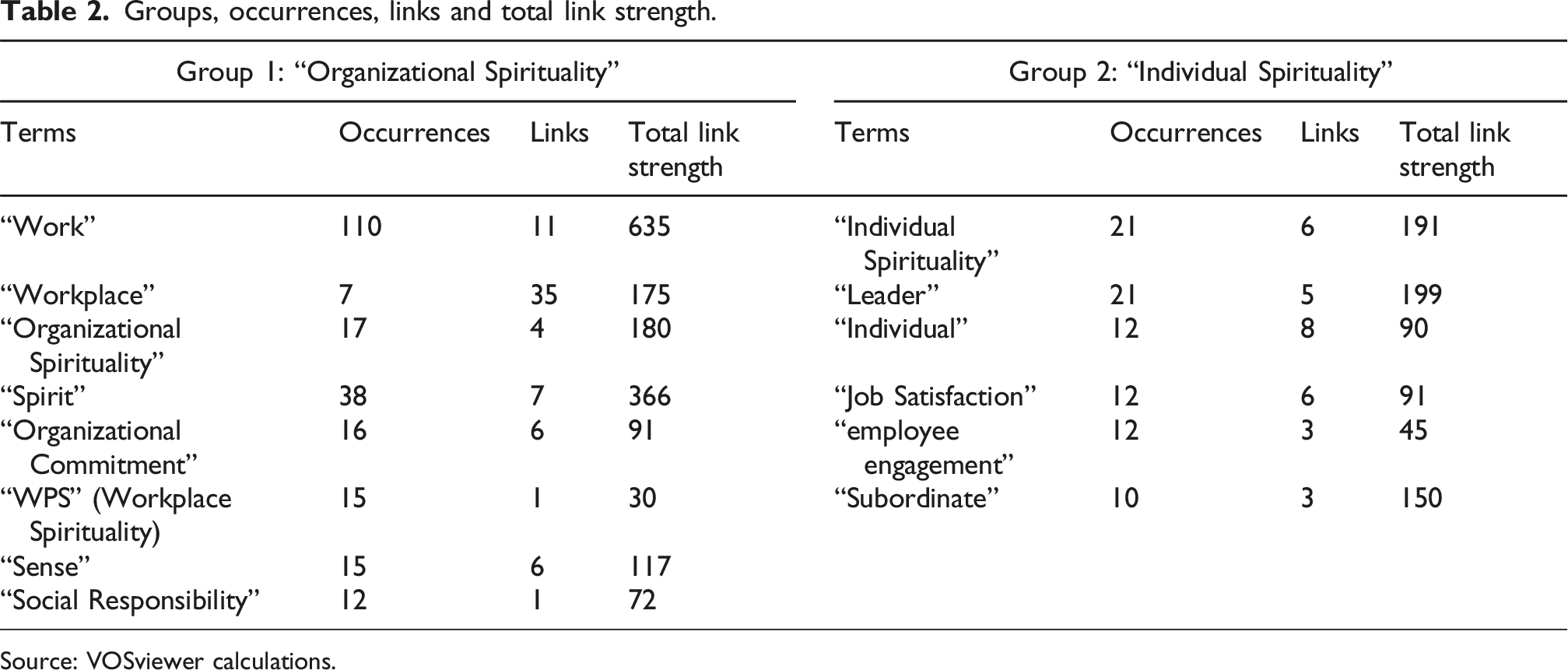
Groups, occurrences, links and total link strength.
Source: VOSviewer calculations.
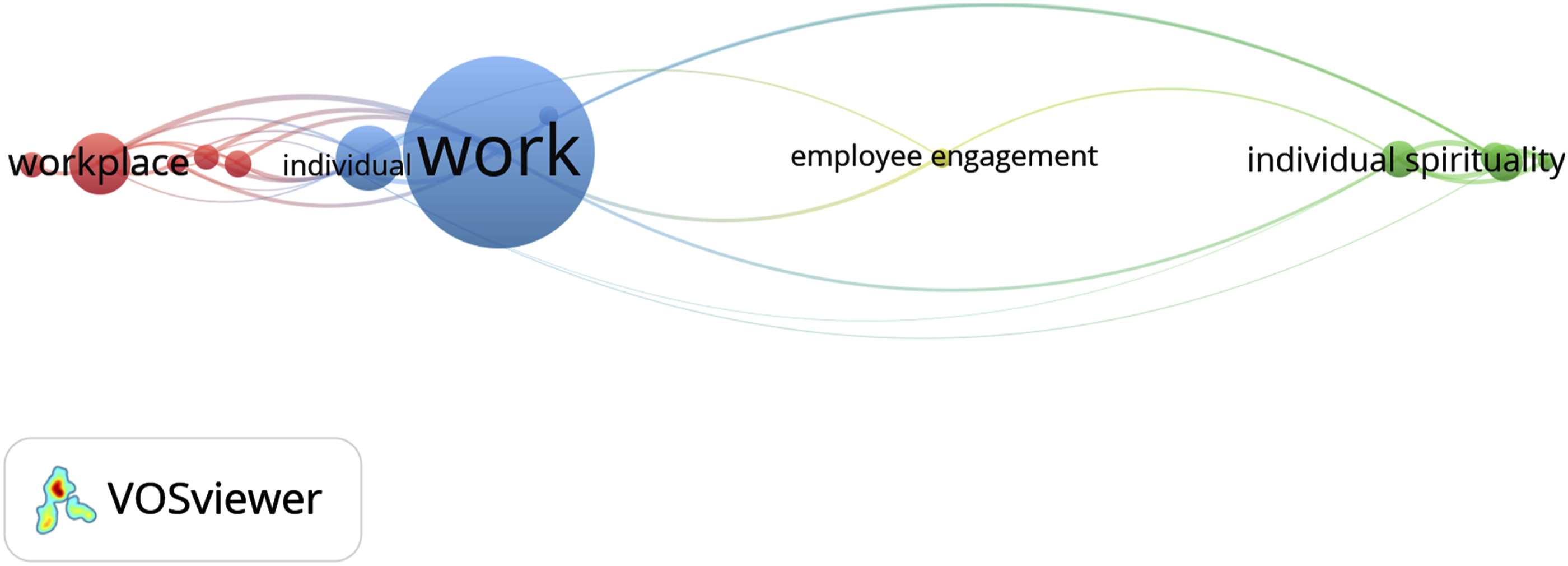
Network visualization. Source: VOSviewer.
1.1.3. Analysis of systematic literature review results
The articles selected for analysis were processed using VOSviewer software to generate a network-based bibliometric map [26, 28]. An examination of associated words, titles, keywords, and abstracts was conducted to eliminate analysis bias in the full article [6]. The units for analysis were repeated words [28], and generic terms such as “Article”, “Study”, and “Research” were excluded from the analysis. The analysis of co-occurring words suggests that whenever certain words appear together, they are closely linked in meaning. Results can be identified by examining the dynamics within a conceptual framework, the components of the concept, the themes involved in the research area, and the development of the concept [28]. We selected the full counting mode [26], wherein VOSviewer recognized 1240 word occurrences in all analyzed articles. Representation was conducted in accordance with the default parameters [26], which featured 10 appearances with 38 words, covering 60% of the relevant terms. VOSviewer’s network of links contains 14 items, giving a total of 37 links and a total link strength of 1216. Two key indicators were used in the analysis: link (representing the co-occurrence linking two keywords) and total link strength (expressing the number of publications containing two keywords that appear together) [26]. We identified four clusters that can merge into two significant groups. The two clusters are labeled according to the terms that comprise them: “Organizational Spirituality” (Group 1) and “Individual Spirituality” (Group 2). The terms in Group 1 refer to “Organizational Spirituality”. The total link strength of the term “Organizational Spirituality”, which is associated with the following words: “Work”, “Spirit”, “Workplace”, “Organizational Spirituality”, “Workplace Spirituality”, “Sense”, “Organizational Commitment”, and “Social Responsibility” (Table 2; Fig. 1). The highest number of occurrences was for the terms “Work” and “Workplace”, which were also present separately in the articles. The second group corresponds to “Individual Spirituality”, which displays a strong association with the words “Individual Spirituality”, “Leader”, “Individual”, “Job Satisfaction”, “Employee Engagement”, and “Subordinate” (Table 2; Fig. 1). This type of spirituality places a central emphasis on the individual’s reflection, as workplace spirituality arises from individual interactions in the workplace [10, 14, 15, 29]. The word “Spirituality” appears in both groups. This was expected since OS encompasses both individual and OS [14, 29–42]. The groups, their component terms, links, and total link strength are presented in Table 2. It is evident that all words are interconnected, with identical bond values. Figure 1 depicts the network illustrating how groups are interrelated, and demonstrates expressions that reflect the force and bond between visualized surfaces. The distance between terms and size of each word indicate the force of the link [26].
Figure 2 shows the density visualization, which provides a comprehensive view of how elements are grouped and connected, as well as the importance attached to specific terms [26, 28]. As Fig. 2 shows, the terms “Work”, “Workplace”, “Spirit”, and “Individual Spirituality” are denser than other terms such as “WPS: Workplace Spirituality”, which is the furthest and least dense in the distribution network.
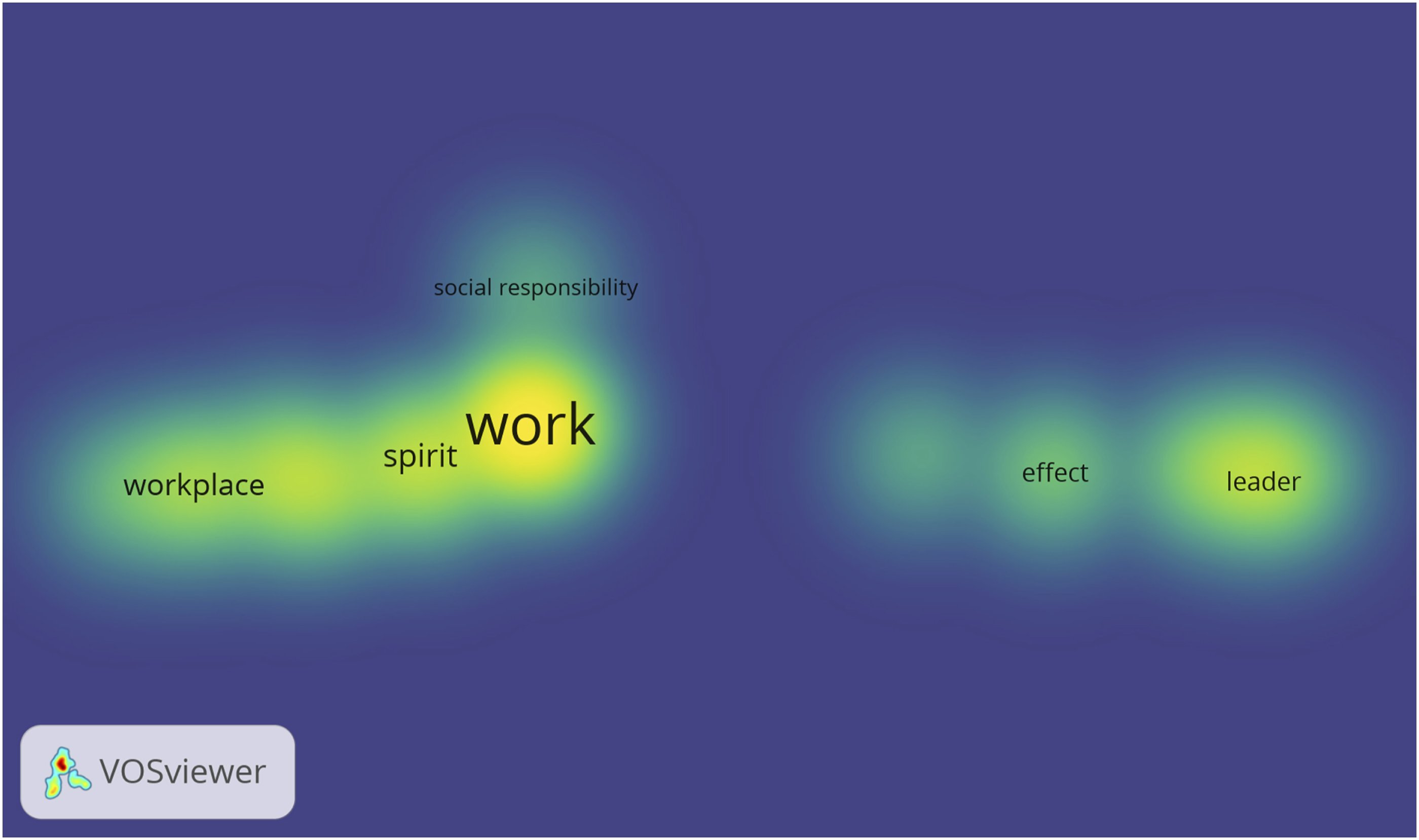
Density visualization. Source: VOSviewer.
Figure 3 shows that 33% of the articles are theoretical in nature, reflecting the state of scholarly production and theoretical development in OS. Following the analysis of the findings, we present the levels of understanding of spirituality in organizations in the discussion section, and then propose a definition of OS to be empirically refined and validated by managers (third section).
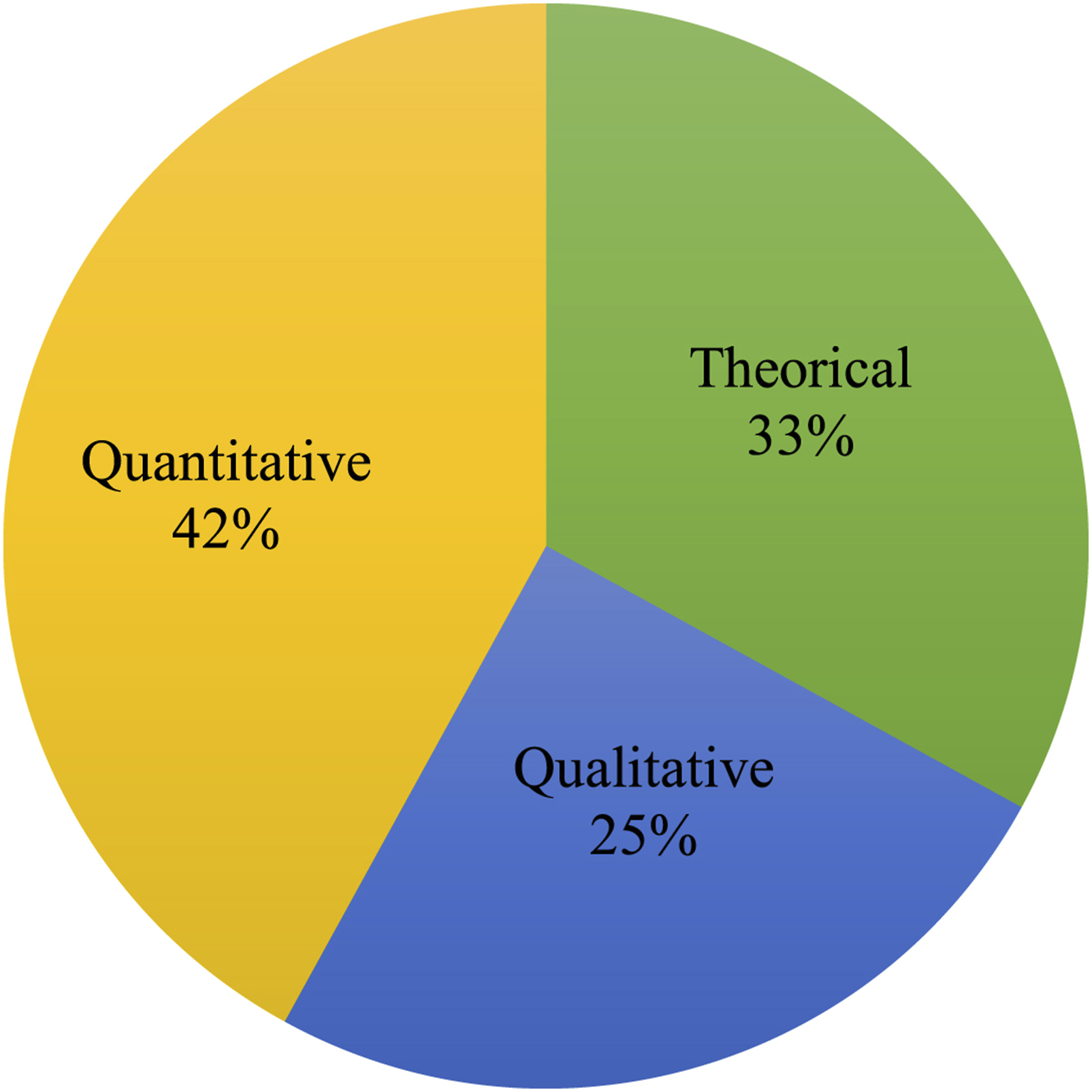
Categorization of articles by method. Source: Authors’ calculations.
1.1.4. Discussion of the systematic review results
Spirituality in organizations can be divided into two levels, individual and organizational (Table 3). The individual level corresponds to a person’s search for inner meaning, purpose, self-transcendence, and divinity [14]. A person’s values and patterns of self-development represent their own spirituality, its fulfillment and effects, such as peace of mind, self-fulfillment, connectedness, and a sense of belonging [10, 14]. The organizational level refers to the organizational values that support employees’ transcendental experience [43]. This last level focuses on the organization as a whole, including processes specifically designed to support individual spiritual development and organizational goals [44, 45].
Levels of understanding spirituality in organizations.
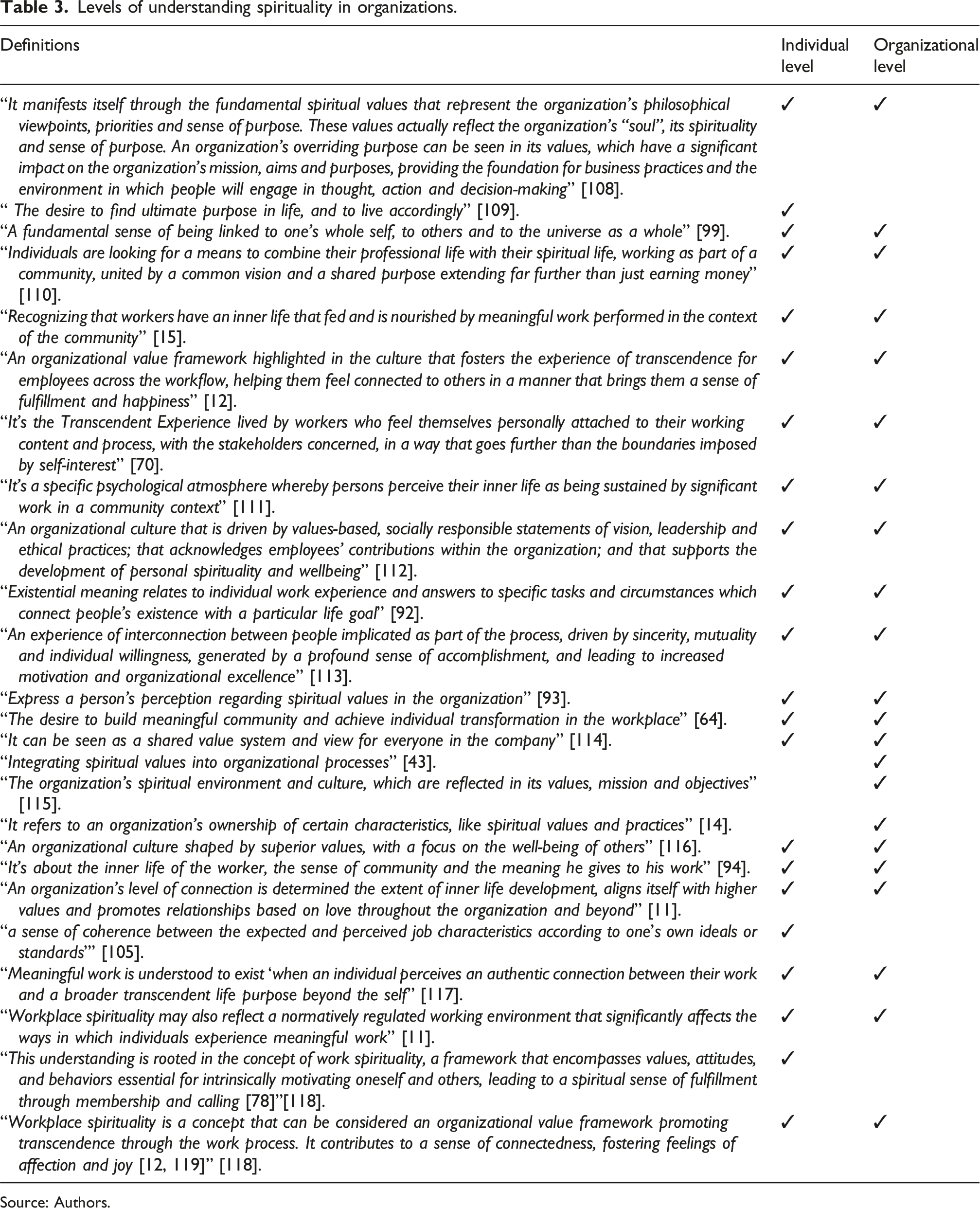
Source: Authors.
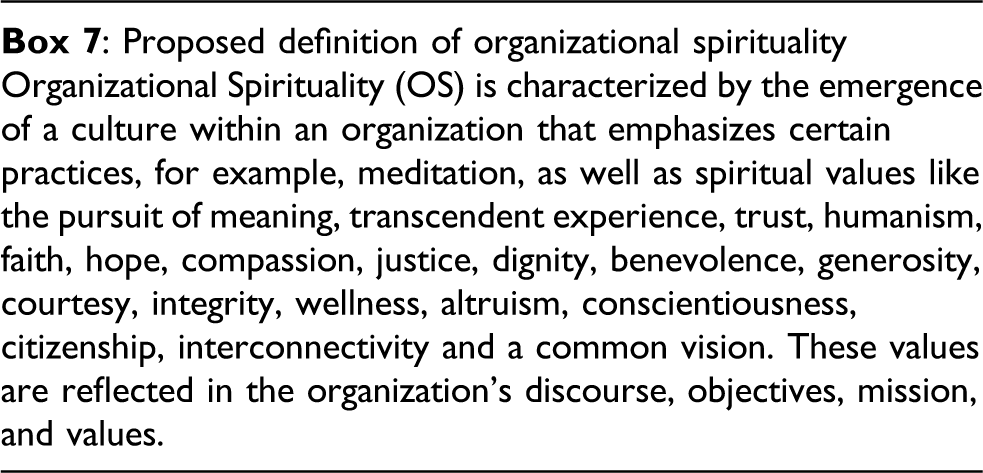
The literature review results provide an initial definition of OS as a collection of spiritual practices encompassing meditation and spiritual values such as trust, compassion, sense of meaning, transcendence, humanism, faith, hope, compassion, justice, dignity, benevolence, generosity, courtesy, integrity, wellness, altruism, conscientiousness, citizenship, interconnectedness, and shared vision. These practices and values are reflected in the organization’s mission, goals, discourse, and values. This definition is still in draft form and needs to be refined and validated through a qualitative study, which is the objective of Section 2.
1.2. A qualitative study to validate the definition of organizational spirituality
1.2.1. Data collection
To comprehend individuals’ representations of spiritual experience and facilitate the expression of the interviewed professionals’ opinions, beliefs, values, and expectations, we conducted in-depth interviews with 12 male and female participants between the ages of 30 and 60. Since spiritual experience is an individualized search for self, we chose in-depth interviews over group interviews to gain deeper insights.
1.2.2. Data coding
Coding involves categorizing text data into units such as words, sentences, and paragraphs. Given the small size of the corpus, we did not utilize qualitative data analysis software and instead coded the data intuitively. The analysis of textual data allowed us to discern two significant themes from the interviews: the definition of OS and its manifestations in the organization. The study gathered participants’ testimonies, which were then categorized into two themes. Technical term abbreviations were defined upon initial use. The coding process involved identifying important words, extracts, and messages from professionals’ discourse, grouping and comparing them with our research goals. The interpretation of qualitative research entails the analysis of data through researcher-participant discourse interaction to extract the most precise understanding of the concept under study.
1.2.3. Results and discussion of the qualitative study
1.2.3.1. Demographic profile of respondents
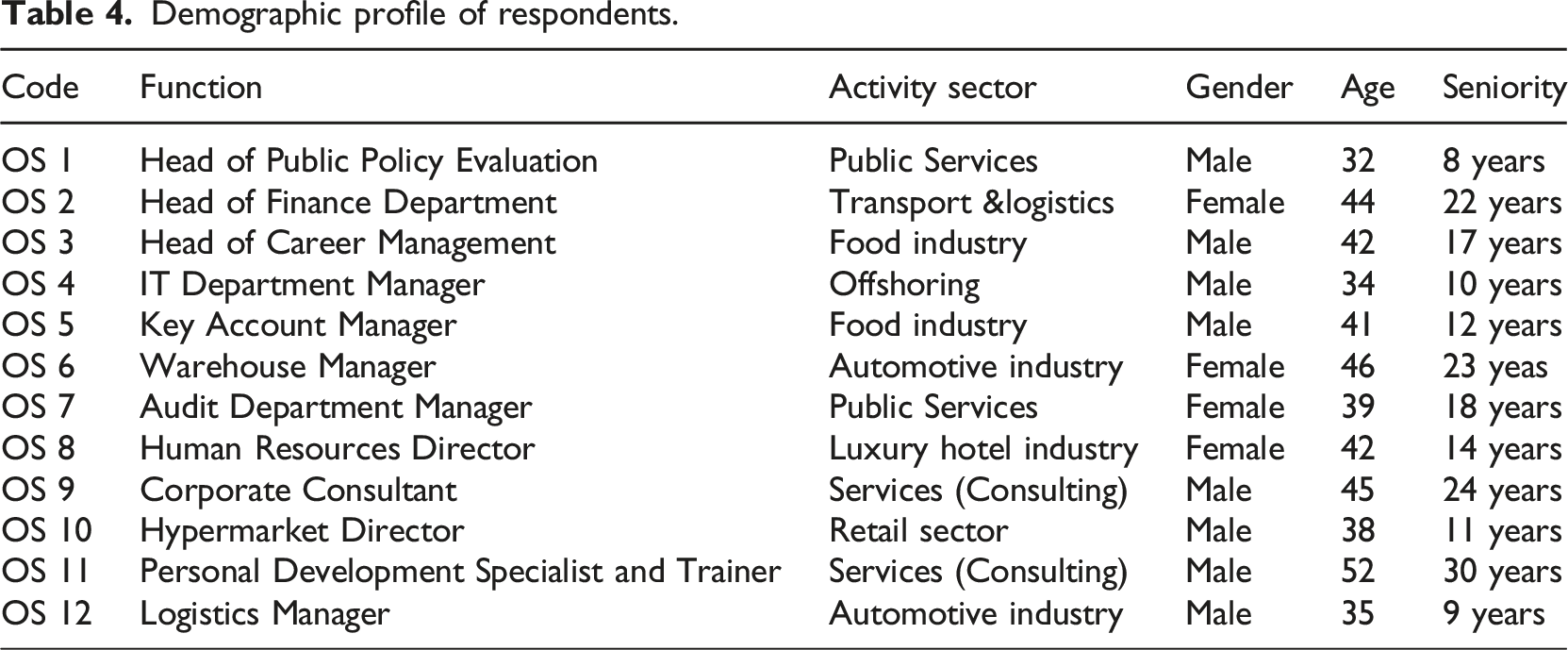
The demographic profile of the 12 respondents is shown in Table 4. The table shows that 8 were males and 4 were females. The mean age of the participants was 41 years and the mean seniority was 16.5 years. Each interview lasted an average of 20 minutes, for a total of 240 minutes. Information from the interviews was used to validate the OS definition. The results overwhelmingly confirmed that OS corresponds to spiritual values and practices held or practiced by the individual. These values manifest in an organization through a sense of community, altruistic love, religion, and a positive work climate.
Demographic profile of respondents.
1.2.3.2. Spiritual values
Eight out of twelve interviewees view OS as a set of spiritual values. These values guide our inner journey and our legitimate search for meaning. According to the existentialist perspective of Carl Gustav Jung, individuals must give meaning to their existence in order to truly live. He argues that the lack of meaning in contemporary life is a source of anguish for many people. The lack of spiritual values results in a psychological emptiness and thus contributes to the current malaise of civilization [46]. In fact, spirituality’s need is innate, and the experience of interiority is universal and sacred, forming the foundation of all religions. The sacred is within us like a universal imprint, whether we are aware of it or not. This concept corresponds to “Fitrah” in Islam, which is our innate ability to contain an original faith that is inherent in our humanity [47]. It is a type of purified transcendence, as God (Allâh) says in the noble Qur’an: “So set you (O Muhammad) your face towards the religion (of pure Isl âmic Monotheism) Hanîf (worship none but Allâh Alone). Allâh’s Fitrah (i.e. Allâh’s Islâmic Monotheism) with which He has created mankind. No change let there be Khalq-illâh (i.e. the religion of Allâh-Islâmic monotheism): that is the straight religion, but most of men know not” (Qur’an, V. 30 : 30). So, this verse unites two fundamental concepts as universal spiritual values of coexistence and the original union of all spiritual paths. These two concepts are “Fitrah” and “Hanîf”. “Fitrah” refers to the universal imprint of the sacred on human beings, while “Hanîf” means to be loyal and sincere. This verse encapsulates this universal, innate, and faithful spirituality [47]. Applying spiritual values to the organization has shown to be crucial in enhancing employee morale, behavior, spiritual wellness, and job satisfaction. As a result, their connection with the organization is strengthened [48, 49]. [50] asserted that leaders should enable a broader dissemination of spiritual values within the organizational culture. This would result in strong employee affinity and engagement towards their organization, whereas reducing its impact would lead to weaker emotional association. Managers who possess strong spiritual values exhibit greater intrinsic motivation and ethical development. They demonstrate attentiveness towards the advancement of their organization’s future, which consequently heightens their level of commitment and attachment to the organization [48, 51]. Integrating spiritual values into organizational culture enhances employee communication, character, and interpersonal relationships by prioritizing values of affection, altruistic love, and attentiveness within the organization. The literature analysis also highlights the most predominant spiritual values related to leadership, specifically integrity, honesty, and humility [52]. Spiritual values play an important role in a company’s decision-making process, allowing for necessary reflection and improvement in the quality of decisions made [53]. Box 1 presents some of the most remarkable verbatims illustrating the link between OS and spiritual values.

1.2.3.3. Spiritual practices
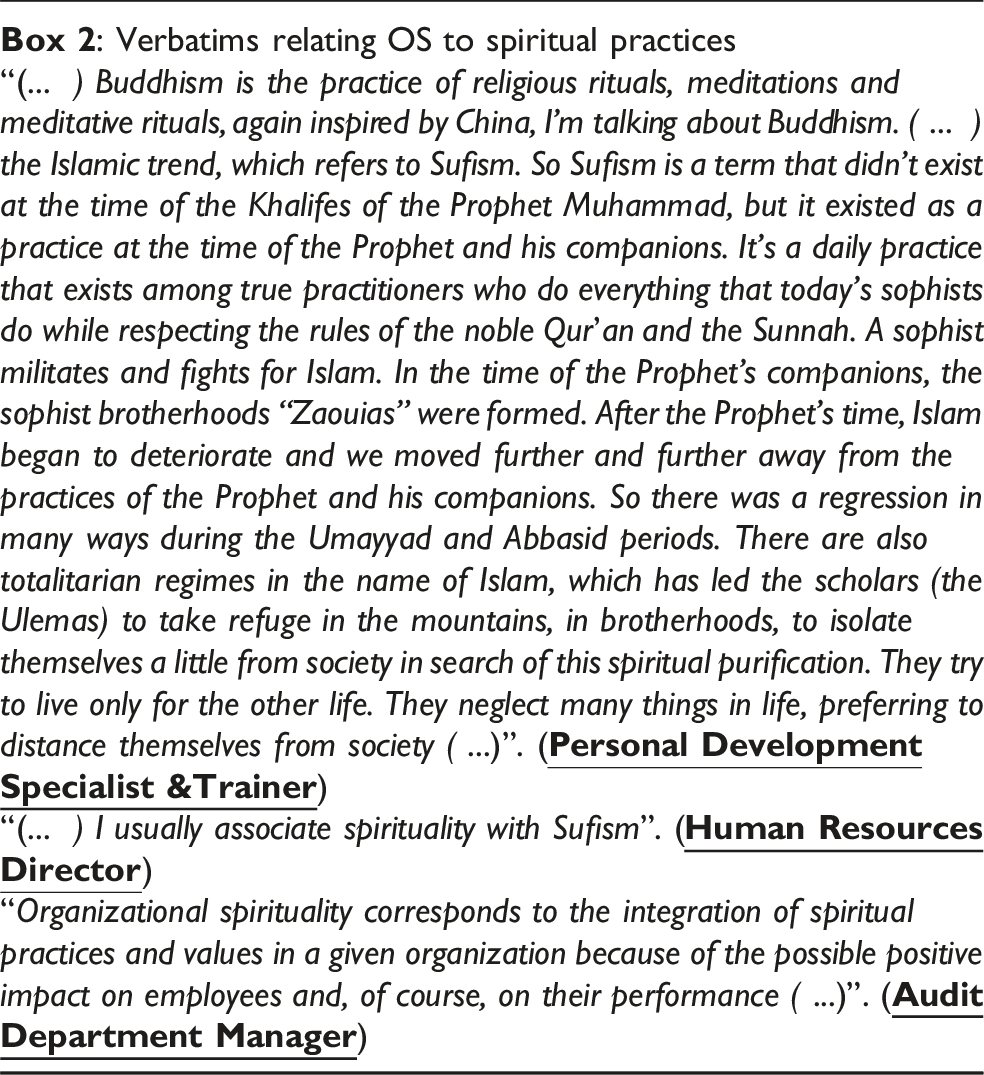
Some participants associate OS with spiritual practices. As explained by [54], spiritual practices refer to a collection of actions that are attributed with meaning by both social forces and individuals within a particular social field. During times of turmoil, spiritual leaders serve as guardians for their communities and mediators of significance when uncertainty is prevalent. Thus, spiritual practices function as a societal tool used by leaders to guide and nurture their communities [55]. Spiritual practices encompass a variety of Buddhist [56] and Muslim [57] practices. [58] present an empirically validated list of 12 spiritual practices, both religious and non-religious, that are likely to enhance spiritual well-being. These practices include prayer, meditation, relaxation, music, evocation of positive memories, and yoga, among others. Sufism, a spiritual practice, has been mentioned by some interviewees. It is a religious field that is dedicated to divine love. Since its genesis, followers of brotherhoods “Zaouias” have adhered to a specific itinerary, such as “La Tariqa Qadiriya Boutchichiya”. In Morocco, numerous followers of brotherhoods subscribe to the same principle. In this mystical realm, the commands of the Sheikh, the spiritual leader of the brotherhood, must be strictly followed. These aspects were identified in the interviewees’ discourse (see Box 2).
1.2.3.4. Religion
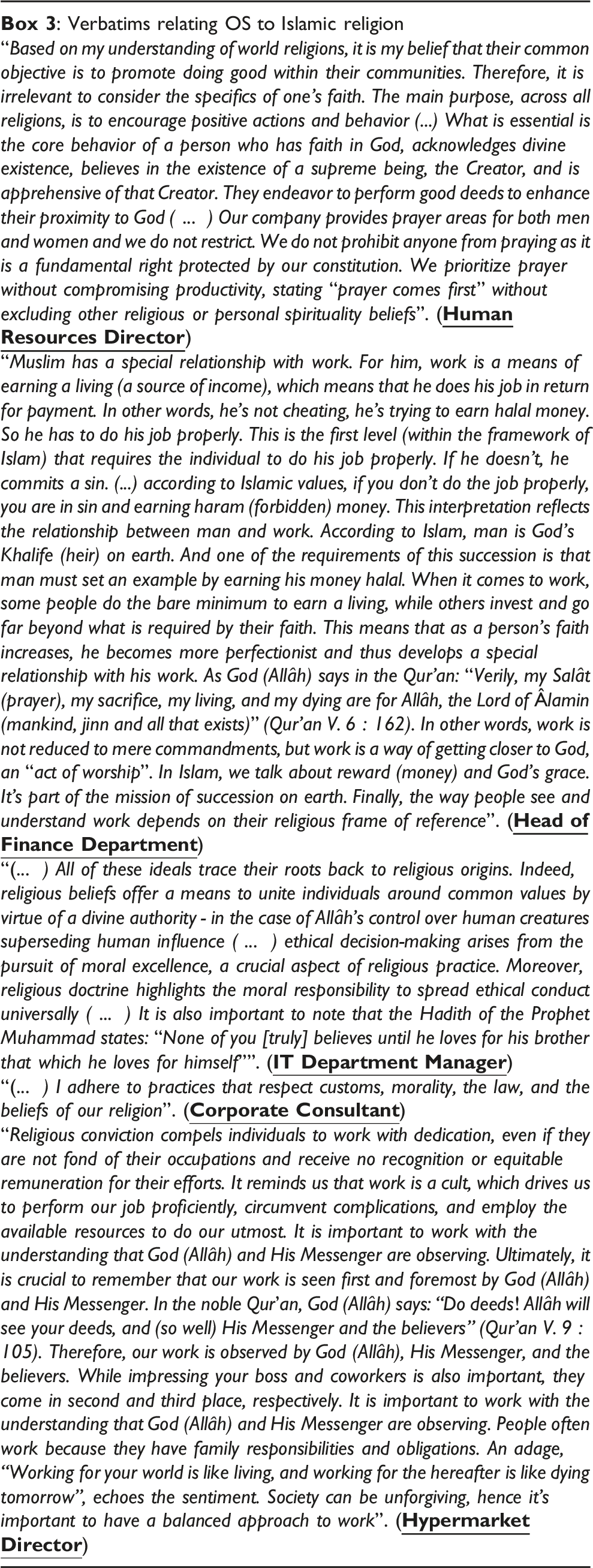
Religion is often defined as a set of beliefs and practices related to the sacred, with a cohesive structure [59]. As noted by [60], religion acts as a means for individuals to express spirituality and respond to spiritual needs [61], providing a framework for behavior within faith communities. Several researchers have suggested that OS can be studied by associating it with religion [37, 62–69]. The majority of interviewees linked OS with the Muslim religion (see Box 3). The interviewees established this connection by referring to some of the five pillars of Islam: declaration of faith, prayer, giving alms “Zakat”, fasting during Ramadan, and the pilgrimage to Mecca known as “Hajj”.
1.2.3.5. Sense of community
A sense of community pertains to belonging, interconnectedness, and a community’s well-being. This sense of connection is a prerequisite for a spiritually welcoming workplace [70]. [15] highlights an individual’s personal responsibility to others, experience of unity with others and the larger context, as well as the inner experience (thought, emotion, and sensation) of the event. The concept of community was defined by [71] as mutual support and connections among colleagues. The authors observed that a community feeling arises in employees when there is a shared goal. This sense of community involves cooperative teamwork and a connection with all living beings, nature, and a potential sacred or higher power. The transcendental aspect, identified as a distinctive component of workplace spirituality by previous research [20], is encompassed within this interconnectedness. Both OS and workplace spirituality are shaped by this aspect [72]. Companies encourage such practices to promote a sense of community among their employees and cultivate shared values, ethics, and morals [73]. The results for participants who associated OS with a sense of community are presented in Box 4.

1.2.3.6. Altruism (altruistic love)
Altruism entails providing whatever you possess without regard to your own needs, corresponding to the ultimate level of generosity. Those who possess this quality are the ones who achieve success, as God (Allâh) says in the Qur’an: “And those who, before them, had homes and had adopted the faith, love those who emigrate to them and have no jealousy in their breasts for that which they have been given, and give them preference over themselves even though they are in need of that. And whoever is saved from his own covetousness, such are they who will be the successful” (Qur’an, V. 59 : 9). Also, the Prophet Muhammad (peace and blessings of God be upon him) said: “None of you [truly] believes until he loves for his brother that which he loves for himself” (Sahih Bukhari, 1 : 15; Shih Muslim, 77 : 45a). This reveals that altruism is a prerequisite for having true faith in God.
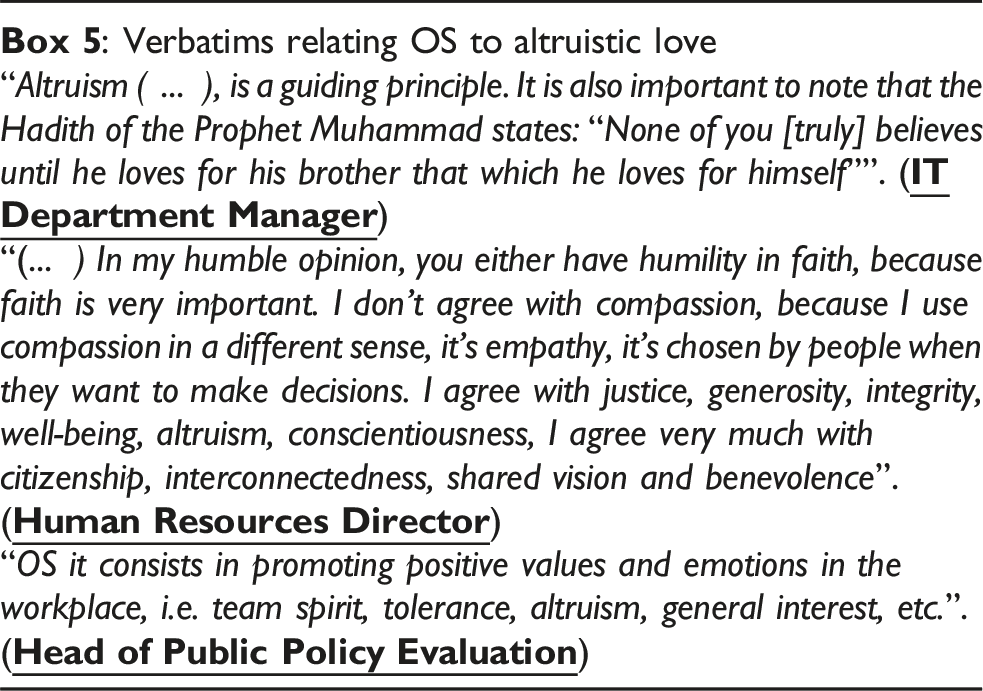
In the Social Sciences, this term was introduced by Auguste Comte during the 1830 s as an overall expression of empathy for others [74]. Altruism entails voluntarily forgoing one’s own concerns for the betterment of someone else, abstaining from causing injury even if allowed by law, and proffering assistance without obligation [75]. Altruism is self-sacrifice, self-mastery and service to others [76]. Altruistic behavior stems from an understanding that we are all interconnected and that our actions can have a positive or negative impact on others. We define altruism as the dedication of one’s attention or devotion to the well-being of others with whom we have a relationship and whose mutual value we express – including ourselves – based on love [77]. Altruism is a facet of workplace spirituality [78] that arises from shifts in consciousness and the ego, allowing us to recognize that we are all interconnected as part of humanity [77]. This aligns with particular empirical perspectives [77, 79, 80], which contend that psychology has limited relevance for matters of spiritual growth beyond the scope of consciousness. According to [78, 82], spirituality and religion are connected through altruistic love, which entails admiration and dedication to the well-being of others without seeking personal gain. These conclusions were corroborated by the responses of the interviewees (see Box 5).
1.2.3.7. Workplace environment
In an environment, which connectedness and sense of completeness are encouraged, employees will function on a higher level that is due to the previously mentioned fact that most people spend more time in their workplaces rather than in their communities [12, 83]. Employees should be encouraged to cooperate, and workplaces should become a family environment where all employees support each other. The presence of spiritual values in the work environment makes employees feel safe and increases personal happiness, organizational commitment, and solidarity of individuals as it reinforces the climate of trust [84]. An organizational framework that prioritizes humanistic practices is crucial for optimizing employee productivity, creativity, and satisfaction. Implementing such a framework benefits both the organization and its employees [85]. Furthermore, disregarding the human spirit in the workplace may entail neglecting a fundamental aspect of human nature [70]. As [86] points out, spirituality can have a significant impact on work environment. Spirituality has been shown to have an impact on work performance, as supported by a significant increase in the number of articles, books, and other academic publications on the topic [87]. The concept of spirituality should be considered beyond religious traditions and applied to professional and organizational environments [88] in diverse cultures and organizations. These characteristics embody the essence of spirituality in organizations [89]. Box 6 contains the main statements made by interviewees who associate OS with the workplace environment.

3. Conclusion
The reviewed articles in this systematic literature analysis referred to the term OS. However, research on this topic remains limited due to the concept’s incomplete development. The Management Sciences literature employs particular terms, including “Individual Spirituality” and “Spirituality at Work” [14], “Spirituality in the Organization” and “Organizational Spirituality” [90], “Spirituality-based Organization” [26], and “Spiritual Organization” [91].
This study contributes in two ways. Firstly, it analyzes various levels of comprehension of spirituality within organizations. Secondly, it proposes a refined and empirically validated definition of OS (see Box 7). The primary research results reveal that OS correlates with various spiritual ideals and practices, supported by multiple scientific studies. Although organizations cannot access transcendence, their spirituality is demonstrated through their vision, objectives, and discourse. Nevertheless, possessing a spiritual experience is unique to individual members of the organization. Indeed, according to a literature analysis, the primary factor driving spirituality within organizations is individual spirituality [12, 92–95]. This type of spirituality is linked specifically to the pursuit of meaning and significance, self-improvement, and connections with others and with a higher power [6]. This understanding of spirituality suggests that interactions take place in the workplace when individuals are seeking purpose.
Viewed through a systemic perspective, OS can be seen as an “emergence” [96], where it surpasses the collective individual spiritualties of its members. This corresponds to the fundamental rule of systemic theory postulating that: “the whole is more than the sum of its parts” [97]. Edgar Morin described the emergence as a novel quality instigated by the entirety, which is also apparent in OS. As Blaise Pascal once stated: “I consider it impossible to fully comprehend the individual components without a comprehensive understanding of the entirety, and likewise impossible to fully grasp the entirety without knowledge of the individual components” [98]. However, Edgar Morin notes that in some organizations, the system may hinder the inherent qualities of its elements, resulting in the whole being less than the sum of its parts. Accordingly, an individual with a spiritual inclination could have to suppress their beliefs in an organizational context where they appear unappreciated or even unwanted. Adopting Edgar Morin’s interpretation of complex thinking, it would be intriguing to investigate how an organizational context affects individual spirituality, either by fostering or hindering it. Furthermore, examining the emergence of spirituality at an organizational level in a conducive context can shed light on its impact on individual spirituality.
Footnotes
Acknowledgments
The authors have no acknowledgments.

Author Biographies