



Abstract
BACKGROUND:
Digital transformation has become one of the most important topics in business, as companies try to use technology to improve their processes and gain a competitive edge. However, the success of digital transformation projects can be affected by organizational culture, which can make it easier or harder for digital transformation projects to be successfully implemented.
OBJECTIVE:
This study seeks to investigate the impact of organizational culture on the success of digital transformation. The study measures dimensions of organizational culture and how they impact the success of digital transformation projects.
METHODS:
264 employees from various firms provided information via a questionnaire, and the study used Structural Equation Modelling (SEM) with AMOS software to evaluate the information and develop the proposed conceptual framework.
RESULTS:
The results demonstrate that employee empowerment has a positive and significant impact on digital transformation, while new organizational practice, support of change, and teamwork do not.
CONCLUSIONS:
These findings are crucial for advancing the current understanding of the role of organizational culture in the success of digital transformation projects. By shedding light on this relationship, this study contributes to the literature on digital transformation and provides organizations with insights that can inform their digital transformation strategies.
Keywords


Introduction
Digital transformation refers to the process of integrating digital technology into all aspects of a business, leading to fundamental changes in how the business operates and delivers value to customers. Digital transformation enables organizations to create consistent, personalized customer experiences, which drives customer loyalty and retention (Chung et al., 2022). Moreover, digital technologies such as automation have the potential to streamline operations, reduce the amount of time spent on manual tasks, and eliminate the possibility of human error. Digital transformation also enables companies to capture and analyze large amounts of data in real-time, providing insights that can be used to improve strategic decision-making and company results [1]. As a result of the proliferation of digital technologies, businesses can leverage new opportunities to innovate and create new products, services, and business processes, allowing them to stay ahead of the curve and compete in a rapidly changing environment [2].
In recent years, Saudi Arabia has witnessed re-markable advancements in its digital transformation journey. With a commendable internet penetration rate of 78%, the nation registers 27.1 million active online users from its 34.8 million population [3]. The ambitious Vision 2030 blueprint, conceived by the government, seeks to pivot from an oil-dependent economy to diversifying into sectors like technology, media, and telecommunications. In alignment with this vision, initiatives such as the National Digital Transformation Program (NDTP) and the Saudi Cloud Computing Program (SCCP) have been instituted to bolster the integration of digital solutions across various industries and to endorse cloud assimilation within the public sector [4]. Projections suggest the Saudi ICT domain will burgeon to a value of $39.5 billion by 2023, showcasing a 6.8% CAGR from 2018–2023. Concurrently, there’s a surge in e-commerce activities, with forecasts anticipating the market to escalate to $13.9 billion by 2022 [5].
The relationship between organizational culture and digital transformation manifests in multifaceted ways, encompassing both synergistic and opposing dynamics. Digital tools serve as potent conduits for safeguarding organizational culture. Additionally, digital evolution aids in addressing environmental challenges, championing sustainable paradigms like renewable energy utilization, waste minimization, and optimal resource usage [6, 7]. In essence, digital tools are pivotal in ecosystem and natural resource preservation. Furthermore, the digital infusion into ecotourism accentuates the significance of biodiversity conservation, fostering sustainable tourism practices [6, 7].
In this spirit, this study aims to study the relationship between organizational culture and the success of digital transformation. It surveys organizations in Saudi Arabia that all went through a digital transformation process. The study develops hypotheses that examine and try to answer the main questions of the study which is how organizational culture factors such as teamwork, employee empowerment, support for change, and new organizational practices affect the success of digital transformation projects.
The paper is structured as follows. Next, we review the literature on digital transformation and organizational culture. Then, we present the study’s research framework and its hypothesis. The data collection and analysis procedures are then discussed followed by a presentation of the study’s results. The paper is concluded with discussion and conclusion sections that flesh out its contribution and discuss its limitations and future research directions.
Literature review
Digital transformation
Digital transformation is the process of using digital technologies to change how a company works and gives value to its customers in a fundamental way. This can mean using new technologies like cloud computing, artificial intelligence, and big data analytics. It can also mean changing the way business is done and making new goods and services. Digital transformation is often seen as a strategic imperative for companies that want to stay competitive in a world that is becoming more and more digital. Now, both companies and governments are moving away from old ways of running things that don’t work well. In the last few years, “born digital” pioneers like Google, Meta, Amazon, and others have already captured and controlled markets and grown into companies that dominate their industries. At the same time, companies that had been considered industry leaders for a long time are now facing a huge threat to their traditional value propositions [8]. Kodak, which once had more than 140,000 workers and nearly $30 billion in sales, is a well-known example of a company that went out of business because it didn’t keep up with digital transformation. Other companies have taken advantage of the digital age and made new business models, like Uber and Airbnb [9]. Digital transformation also, found to be promoting entrepreneurship, innovation, adaptive learning and knowledge sharing among organizations and individual alike as it helps with new business’ models [10–13].
While some studies argue that digital transformation is all about business strategies [14–19], other studies stress that digital transformation is about processes and paradigm shifts in business models [20–26]. In this study we adopt the latter definition as we view digital transformation as a process of incorporating technology by social actors for the purpose of enhancing organizational performance.
Efforts to implement digital transformation cannot succeed without understanding the role of organizational culture, which could foster or impede its success. Organizational culture refers to the shared values, beliefs, and behaviors that shape the way people work within an organization. Culture can have a profound impact on an organization’s ability to adapt to change, as it influences how people perceive and respond to new ideas and ways of working. A strong culture can help organizations navigate change and achieve their goals, while a weak culture can impede progress and lead to resistance [27]. It is a disruptive phenomenon that enables organizations to overcome technological, social, and organizational challenges, leading to superior performance. As a result, organizations are compelled to react and adapt by creating new business models [17, 29]. This results in significant and rapid changes to fundamental aspects of businesses and industries, such as healthcare, finance, logistics, education, manufacturing, transportation, telecommunications, e-government, energy, and utilities [30]. The driving force behind this transformation is technological advancement, encompassing a range of technologies that fall under the umbrella term Digital Transformation, including mobile devices, the Internet of Things (IoT), cloud computing, and data analytics [31].
Digital transformation has become a significant trend in information systems and technology research, as well as other related fields [14, 32]. Hess, Matt [17] assert that digital transformation stems from the changes that digital innovations can trigger in a company’s business model, resulting in transformed organizations. However, digital transformation has many facets, and there are several definitions of it in the literature. For instance, Kane, Palmer [33] argued that the benefits of digital technologies do not reside in the technologies themselves but in how businesses use them to transform their operations. Thus, while digital transformation can be seen as an IT-enabled change, deploying IT systems alone is not enough to guarantee transformation [27–29, 34].
Various studies have aimed to define digital transformation and elucidate its functioning, and researchers have obtained their definitions from these studies. Nevertheless, it is evident that digital transformation is a complex and multifaceted phenomenon that has significant implications for organizations and industries.
Li, Nucciarelli [35] for example defined digital transformation as “the integration of digital technologies into business processes.” Fitzgerald et al. [36] defined it as “the application of digital technologies to enable significant business improvements.” Similarly, [37] asserted that it is “the use of technology to radically improve enterprise performance.” According to [14], it is “an organizational strategy formulated and executed by leveraging digital resources to create differential value.” Schuchmann and Seufert [38] adopt a more marketing-oriented definition as they defined digital transformation as a “realignment of technology and new business models to more effectively engage digital customers at every touchpoint in the customer experience life cycle”. Further, additional notable definitions in the literature include Lucas Jr, Agarwal [39]’s “fundamentally altering traditional ways of doing business by redefining business capabilities, processes, and relationships.” Furthermore, Mithas, Tafti [16] define “the extent to which an organization engages in any IT activity”.
These definitions indicate the significance of attending to the people or social aspects of digital transformation not only the technical. For example, according to [40], more than 70% of organizations struggle to reach their goals and fail owing to a misunderstanding of what digital transformation is all about. Thus, technology is simply one piece of a complicated jigsaw that must be solved for enterprises to remain successful in the digital age [32].
In order for businesses to effectively undergo digital transformation, they must first assess their level of IT/IS maturity. This involves understanding the various stages of digital transformation and developing appropriate strategies accordingly [17]. The three stages of digital transformation are Digitization, Digitalization, and Digital Transformation [15, 41]. Digitization is the initial stage of digital transformation and involves the conversion of analog information into digital information that can be stored, processed, and communicated [23]. It is the process of transforming physical documents or processes into a digital format [42]. According to [35], digitization also includes the integration of current tasks with IT, and more broadly, the development and utilization of ICT-based resources.
The second stage of digital transformation is digitalization, which is defined by Li, Nucciarelli [35] as an approach for using digital technology to transform existing business processes. Information Technology is the fundamental enabler of Digitalization, assisting in the capture of innovative business capabilities by transforming conventional organizational business processes, such as customer relationship management [43], logistics [44], or communication [45]. According to Pagani and Pardo [46], digitalization enables firms to utilize digital technology for the improvement of current company operations by enabling more effective process coordination and/or by providing better customer value through enhanced user experiences. The third phase, digital transformation, is an organizational-wide change that leads to the development of innovative business models that may be novel to companies or industries [46].
According to Amit and Zott [47], digital transformation affects the entire organization and its way of doing business, and it goes beyond digitalization, which is merely changing basic organizational activities. Organizations can apply an innovative business model by developing and implementing new business processes with the goal of producing value [46, 49]. Moreover, Singh and Hess [50] contended that digital transformation enables firms to employ digital technology to facilitate relationships with consumers, suppliers, and competitors.
What can be surmised from all these definitions is that digital transformation is not solely an IT-driven process but rather a more holistic process that hinges on social and organizational aspects as much as technical aspects. Therefore, focusing on social aspects such as culture, values, customs, institutions, power and leadership is very important to gain a deeper and richer understanding of the process of digital transformation.
In this spirit, many businesses will eventually need to adjust their culture in order to adapt to the shift and promote collaboration [33]. People will undoubtedly be affected by these developments, as they are the primary target audience. To maximize the odds of success of digital transformation projects, it is very important to study and analyze how culture, specifically, an organizational culture might influence how digital transformation is perceived and enacted. This study comes to further this aim.
Organizational culture in information system field
Organizational culture is a widely researched topic in the academic literature, and various definitions of this term can be found. Ortega-Parra and Ángel Sastre-Castillo [51] defined organizational culture as a set of beliefs, values, and behavior patterns that differentiate one organization from another. King [52] described it as a system of values that subconsciously guides individuals’ decision-making processes within the organization. The terms corporate culture and organizational culture are often used interchangeably by business managers, as argued by [53], as they represent a similar underlying concept. Schneider, Ehrhart [54] posited that organizational culture is comprised of the norms that shape employees’ work settings and influence their behavior, thereby impacting their ability to achieve the organization’s goals. Additionally, Simoneaux and Stroud [55] suggested that it encompasses the interaction style among members of an organization and with other stakeholders. According to Tarba and Weber [56], organizational culture is also used by managers to differentiate their organization from others. Moreover, Yirdaw (2014) emphasized that organizational culture is crucial for developing teamwork and achieving high performance by unifying human and non-human resources. Numerous studies have demonstrated the importance of organizational culture for business success [57].
Schmiedel, Vom Brocke [58] conducted a Delphi study to identify the core values crucial for the success of business process management (BPM). The study found that four central values or the CERT values were supportive of BPM, including customer orientation, excellence, responsibility, and teamwork. Customer orientation represents a responsive and proactive attitude towards the needs of both internal and external customers. Excellence signifies an orientation towards innovation and continuous improvement to achieve advanced process performance. Responsibility signifies accountability for process decisions and commitment to process objectives, while teamwork represents a positive attitude towards cross-functional collaboration [58].
Schmiedel, Brocke [59] further elaborated on the sub-dimensions of the CERT values, as shown in Table 1. The first BPM value, customer orientation, is differentiated into two cultural dimensions, namely internal customer orientation and external customer orientation. External customers represent those who passively consume a service or are co-producers of the service, while internal customers are a critical component of BPM. Processes in an organization often go through various organizational units before they reach the final customer. The internal customer dimension is evaluated to highlight the multi-unit process chain, quality of cooperation, and information exchange [60].
CERT values and competing values framework [58]
CERT values and competing values framework [58]
Hierarchies and silos in different departments of an organization can weaken its customer orientation, which in turn affects its capability to innovate [61]. To achieve excellence in Business Process Management (BPM), it is crucial to have a culture that combines innovation and continuous improvement, called organizational ambidexterity [62]. Continuous improvement aims to eliminate waste and enhance all organizational systems and processes [63]. This involves revising existing conditions and processes to identify and remove potential shortcomings. Regular assessments of operations can help organizations achieve continuous improvement.
Innovation involves making creative changes that fundamentally renew business processes and outcomes [58]. Innovation can lead to breakthrough improvements, create new opportunities, and help organizations stay ahead of their competition. Emerging technologies, such as automation and artificial intelligence, can be used to improve processes and deliver better value to customers.
The third cultural value of Business Process Management (BPM) is responsibility, which combines the dimensions of accountability and commitment. Affective commitment, which is the level of an employee’s emotional attachment and identification with the organization, is particularly relevant in the context of BPM values [64]. Accountability, on the other hand, is directed towards stakeholders such as process managers, managers, and the managing board, to be accountable for the performance of the processes [60].
Teamwork is another important BPM cultural value that comprises formal and informal structures. Both formal and informal structures are crucial for the functioning of an organization. In terms of BPM culture, it is crucial that different organizational units collaborate with each other to ensure optimal management of processes that cut across multiple organizational units [60].
Formal structures include establishing cross-functional goals and conducting meetings to discuss task coordination, shared topics, and knowledge sharing [65]. On the other hand, informal structure aspects include collaboration among coworkers from different organizational units and institutions, as well as the employee’s identification with them [65]. Thus, responsibility and teamwork are two key cultural values of BPM that promote accountability, commitment, and collaboration within the organization. By implementing both formal and informal structures, an organization can optimize its processes and achieve its goals more effectively.
Table 1 illustrates that the four CERT values may appear contradictory at first glance, but their coexistence is necessary for the formation of BPM culture. Ramaswamy and Ozcan [45] emphasize that successful BPM adoption requires the practice of all four CERT values simultaneously. The comparison of the four core BPM values and the two dimensions of the CVF shows that customer orientation is externally focused and pertains to an organization’s perspective, whereas teamwork is internally focused and concerns collaboration within an organization across functional boundaries. In contrast, excellence as a cultural value that comprises innovation and continuous improvement highlights the importance of flexibility, where constant change in an organization is perceived as an impetus for progress. Lastly, responsibility, a combination of accountability and commitment, is related to structural control mechanisms that provide stability to the organization [45].
Indeje and Zheng [66] conducted a study on the influence of organizational culture on the development and implementation of financial information systems. According to their findings, the understanding of the underlying meanings, norms, and power dynamics within an organization is critical when developing and implementing information systems. The study highlights the importance of considering organizational culture in the design and implementation of financial information systems to ensure successful adoption and implementation.
Similarly, Hill, Loch [67] conducted a study on technology transfer in five Arab countries and found that certain cultural values such as religion, gender relations, the concept of time, family allegiance, and preference for face-to-face interaction facilitated or impeded the transfer. Loch, Straub [68] also found in their study on internet diffusion that the level of IT adoption is influenced by the degree of similarity in values between the adopting and host country with regards to technology. They discovered that in Arab countries, the level of acceptability of computers was positively related to the level of internet usage. In another study by [69] at the organizational level, it was found that successful assimilation of technology depends on the technology fitting the organizational culture or the culture being changed to fit the technology’s behavioral requirements. Thus, organizations need to recognize that values are embedded in technology and information associated with IT, and that the success of technology transfer and assimilation is influenced by cultural values.
Hoffman and Klepper [70] conducted a study that found that organizations with high solidarity and low sociability cultures had better outcomes with technology assimilation compared to those with low solidarity and high sociability cultures. In contrast, [71] found that organizations with an open or flexible culture and a long-term orientation were more likely to adopt advanced manufacturing technology. Ruppel and Harrington [72] discovered that organizations with development-type cultures that emphasized values such as innovation and flexibility were more likely to succeed in intranet adoption. Finally, Huang, Newell [73] found in their study on organizational subculture inconsistencies and the adoption of component-based software development methods that conflicting values among organizational subcultures negatively impacted collaboration and information sharing. Such studies uncover the impact of organizational culture on technology assimilation and the need to align the values of the organization with the technology being adopted.
Organizational culture in digital transformation context
Fitzgerald, Kruschwitz [36] emphasized the importance of cultural and organizational transformation, including a digital mindset and cultural change, to effectively harness the benefits of implementing new information technology (IT) in an organization. Hence, it is critical to examine the organizational cultures that promote the successful adoption of digital transformation. Organizations need to develop a digital mindset that values innovation, agility, and continuous learning to adapt to the rapidly changing digital landscape. This mindset should be reflected in the organization’s culture, leadership, processes, and systems. A change in culture involves aligning the values, norms, beliefs, and behaviors of the organization to support digital transformation. It requires a shift towards a more open and collaborative culture that fosters experimentation, risk-taking, and knowledge-sharing. Organizations that successfully implement digital transformation must prioritize culture and engage in ongoing efforts to transform and adapt to the digital age [36, 74].
Hartl and Hess [75] conducted a Delphi study to identify the cultural values that are vital for the successful implementation of digital transformation in an organization (see Fig. 1). According to Piccinini, Hanelt [26], the primary managerial challenges while implementing digital transformation are agility and flexibility. These values are also regarded as mandatory organizational values to successfully navigate digital transformation, as it requires continuous adaptation to changing circumstances. Furthermore, an organization that values openness towards change is more likely to accept, implement, encourage and develop a change-oriented mindset, which is essential for successful implementation of digital transformation [33]. Thus, it is essential to recognize and prioritize the cultural values that support digital transformation to ensure successful implementation in an organization.
According to Quinn [76], a culture of adhocracy, which promotes constant improvement and innovation, is crucial for successful digital transformation. This is because digital transformation requires the development of new products and processes, which demands an innovative mindset and a passion for improvement. This aligns with the view of [33] that an organization that values openness towards change and promotes a change-oriented mindset is better equipped to successfully implement digital transformation.
According to Hartl and Hess [75], a clan culture, which emphasizes trust and learning, can be advantageous for organizations implementing digital transformation. The study highlights the importance of mutual trust between employees and the organization in a digitalized working context characterized by flexible working hours and work from home. In addition, Kane, Palmer [33] and Piccinini, Hanelt [26] suggested that organizations with clan culture tend to develop an environment that is tolerant towards failure, which is a critical factor for innovation. When combined with adhocracy values, which encourage members to take risks, this environment promotes innovation, exploration, and ultimately the success of digital transformation. By fostering an innovative mindset and promoting growth and improvement, the adhocracy culture is considered essential for successful digital transformation [33, 76].
Conceptual model & hypotheses development
Conceptual model
A conceptual framework is an essential visual representation of the main ideas and factors in a study that aids in directing the design and analysis of the research. The structure for this study was created based on the topic at hand, the research objectives, and the literature review. In their analysis of organizational culture, the researchers found a number of elements that, in their view, were essential for digital transformation. These characteristics were designated as independent variables, which implies they are the elements that may have an impact on the study’s conclusion. New Organizational Practice, Support of Change, Employee Empowerment, and teamwork were among the organizational culture dimensions that were discovered. Figure 1 depicts the study model.
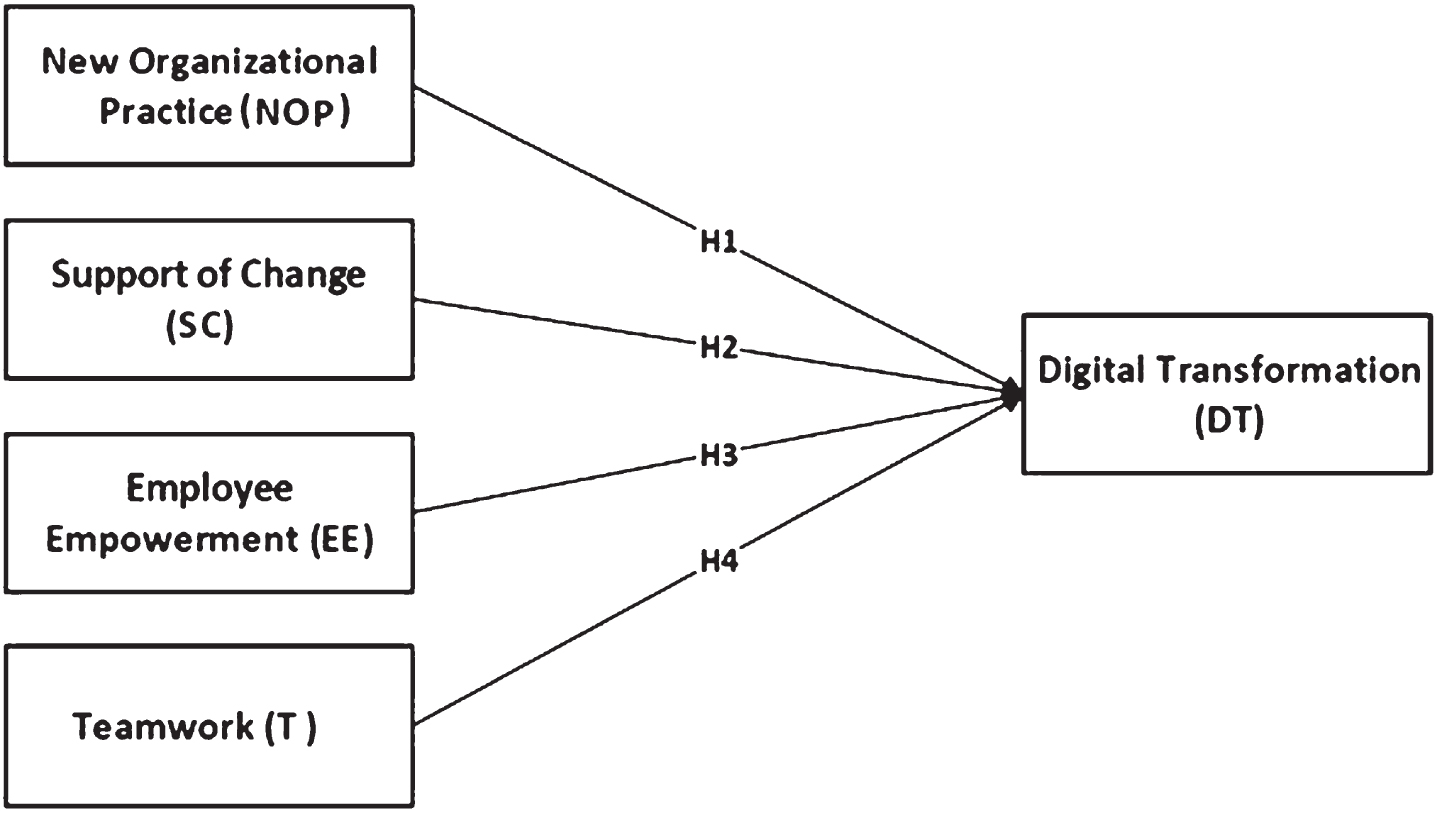
The study model.
New organizational practice and digital transformation
By ‘new organizational practices’, we refer to the level of innovativeness in organizations as measured by their tendency to innovate, experiment with and adopt new practices, procedures and processes. Karimi-Alaghehband and Rivard [77] reported that digital technologies allow businesses to rapidly adjust to the shifting landscape of digital transformation. This is due to the fact that the use of digital technology has resulted in an increase in the speed with which businesses may identify promising new market opportunities and put together the resources and expertise they need to capitalize on such chances [77–79]. Supporting the findings of Baiyere, Salmela [80], who argue that digital transformation can be used to enhance preexisting business processes, while cutting down wasteful resources in an organization. This digital transformation can also be used to boost customer proximity or gain insight into undiscovered market opportunities [81, 82]. Based on the analysis of data produced by sensors built into its products, a company, for instance, can provide innovative maintenance services [83]. The literature also discusses how firms might attain ambidexterity through the application of digital technologies by successfully combining the investigation of digital innovation with the utilization of existing resources.
In recent years, Saudi Arabia has undergone a significant transformation towards digitalization in various sectors, including businesses and organizations. This digital transformation has resulted in new organizational practices that are enabling companies to operate more efficiently, productively, and cost-effectively.
New organizational practices resulting from digital transformation are enabling organizations in Saudi Arabia to operate more efficiently, increase their productivity, and improve their bottom line. By adopting cloud-based technologies, leveraging big data analytics, embracing e-commerce platforms, and using AI and automation, organizations can stay competitive and meet the ever-changing demands of their customers. In light of this, the following hypothesis is suggested:
H1: New organizational practice has a significant positive effect on Digital Transformation.
Support of change and digital transformation
Digital technologies support the creation of new changes in organizations by utilizing value propositions that are increasingly dependent on the delivery of services [84]. In order to adapt to the needs of their clients, businesses are increasingly relying on digital technology to either replace the sale of physical things with the sale of services or augment the sale of physical products with the sale of services [85, 86]. A significant example of changes that facilitated organizational innovation is the use of digital technologies. Companies like Dell Computer, IKEA, and Byte Dance [87], whose business models were previously predicated on the physical storage of items in an online store, have switched from this value offer to pioneer the online platform market at large. This shift has allowed these companies to become industry leaders. In general, Ding, Liu [87] study highlights the potential for digital technologies to provide disruptive breakthroughs that have the ability to radically transform the value propositions of already existing organizations.
Saudi Arabia has been committed to supporting change and digital transformation across various sectors of its economy. The country has taken several steps to facilitate the adoption of digital technologies and modern organizational practices.
Saudi Arabia has demonstrated a strong commitment to supporting change and digital transformation in its economy. The country has taken several proactive measures to promote the adoption of digital technologies and modern organizational practices, including investment in digital infrastructure, regulatory frameworks, and support programs for businesses and startups. These efforts are expected to contribute to the country’s economic growth and development in the coming years. In light of this, the following hypothesis is suggested:
H2: Support of change has a significant positive effect on Digital Transformation.
Employee empowerment and digital transformation
The digital transformation process can lead to employees performing duties that were not part of their original job descriptions. In particular, Trushkina, Abazov [88] and Arthur [89] place a strong emphasis on the idea that digital transformation promotes scenarios in which employees perform other functions other than other projects that are heavily dependent on technology. New methods of organizational automation and decision-making have been made available by the development of digital technologies. Thus, this has led to the emergence of vital concerns around the need to enhance the abilities of existing employees in an organization, with a particular emphasis on the skills that will be needed for employees who will comprise the digital workforce of the future [90].
As a result of the digital transformation, employees are required to rely more heavily on their analytical skills in order to successfully tackle challenges that are becoming increasingly complicated in the business world. This means that employee empowerment with new, advanced digital technology brings forth significant challenges that extend far beyond the sphere of human resources.
Employee empowerment and digital transformation are two important concepts that are gaining increasing attention in Saudi Arabia. The country has made significant progress in recent years in both areas, with the aim of driving economic growth and promoting social development. By empowering employees to take ownership of digital initiatives, organizations can tap into the creativity and innovation of their workforce, while also building a culture of continuous improvement and adaptability. This can help organizations stay ahead of the curve in a rapidly changing digital landscape, and drive long-term success in the Saudi Arabian economy. In light of this, the following hypothesis is suggested:
H3: Employee empowerment has a significant positive effect on Digital Transformation.
Teamwork and digital transformation
According to Horlacher and Hess [91], cross-functional collaboration is an essential component of digital transformation. This idea is closely related to the notion that agility and ambidexterity are essential attributes to possess in order to compete effectively in a digital environment [92, 93]. Despite the fact that Kowalski [94] and Majchrzak and Wang [95] state that promoting close collaboration across business divisions and disintegrating organizational barriers is not a new concept in IS research. Further, in many instances, a substantial gap still needs to be bridged before these strategy organizations can develop and before organizational and IS strategies can be integrated.
Establishing a distinct unit within an organization that functions separately from the rest of the company is one strategy that can be utilized to foster productive collaboration among workers. Because of the support provided by this framework, each unit will have some room for creative expression while still having access to the complete spectrum of existing resources. For example, Aseeri and Kang [96]; Alharbi [97] and Hassounah, Raheel [98], investigated how a Saudi Arabian organization improved its analytical capabilities over the course of a number of years. They found that numerous organizations employed analytics as an IT-driven effort for the benefit of business units. This was made possible by the creation of varied skill networks among employees, which went beyond Saudi Arabia’s traditional organizational structure.
Teamwork and digital transformation are two important concepts that are closely intertwined in Saudi Arabia. The country has been rapidly adopting digital technologies, and this has had a significant impact on how organizations approach teamwork and collaboration.
Overall, the adoption of digital technologies in Saudi Arabia has created new opportunities for teamwork and collaboration, and organizations that embrace this trend are likely to be better positioned to succeed in a rapidly changing digital landscape. In light of this, the following hypothesis is suggested:
H4: Teamwork has a significant positive effect on Digital Transformation.
Methodology
Research design
The purpose of this study is to look into how organizational culture affects digital transformation. The researchers have created a conceptual framework that is in line with the research aims and hypotheses to make data collecting and analysis easier. The study uses a quantitative methodology and relies on validated measurement tools to guarantee the accuracy and validity of the findings. Statistical software such as SPSS and Amos are then used for Structural Equation Modeling (SEM) analysis to assess and validate the study model. The researchers can accurately examine massive amounts of data using statistical analysis, and they can also find important trends and patterns. The methodology of the study guarantees that the research results are solid, trustworthy, and valid, increasing the study’s total credibility. This study sheds important light on the factors that affect digital transformation techniques in businesses by examining the effect of organizational culture on digital transformation.
Instrument design and measures
The survey questions were written in English at first and afterwards translated into Arabic by professionals. Business specialists reviewed and confirmed the translated version to make sure it maintained the intended context, meaning, and clarity, which is consistent with the construct’s conceptual value. All study participants received questionnaire after it had been validated. The conceptual model pieces were analyzed using a survey using a five-point Likert-type scale, which was found appropriate for this research.
There are three key sections to the research tool. In-depth details regarding the demographic profile of the respondents sampled in the study area are provided in the first part. The second section focuses primarily on organizational culture’s dimensions, while the third section asks questions about digital transformation.
Sampling and data collection
An online survey using a Google form was utilized to collect the data for this study since it is a popular and practical way to acquire a lot of information quickly. The survey link was distributed at random to employees in various companies in Saudi Arabia in order to guarantee that the sample was diverse and representative of the research community. 264 respondents’ response to the survey.
Data analysis procedures
When the questionnaires were gathered, they were coded and subjected to statistical analysis using methods like Cronbach’s alpha and descriptive analysis to assess their internal consistency and reliability. To begin the investigation, a conceptual model was developed, identifying the relevant constructs and the expected relationships between them. Researchers used Amos software, a cutting-edge technology that makes it easier to analyze complicated inter-relationships with improved efficiency, accuracy, and efficacy, to test the hypothesis. Notably, Amos is among the latest software programs used for structural equation modeling, a statistical method that estimates the relationships between variables in a model [99].
Reliability
To validate and ensure the reliability of the preliminary research results, this study conducted a thorough analysis of reliability. The reliability assessment employed Cronbach’s alpha, a statistical tool that evaluates the consistency among components of the same construct. A Cronbach’s alpha value of 0.7 or higher indicates high precision and reliability, as recommended by [100, 101]. Table 2 shown the result of reliability test.
Reliability test
Reliability test
Demographic profile
The demographic breakdown of the survey is shown in Table 3, which reveals that 15.2% of respondents were female and 84.8% of respondents were male. Additionally, it was discovered that 94 employees (35.6%) are between the ages of 26 and 35, 111 employees (42.0%) are between the ages of 36 and 45. This indicates that in Saudi Arabian organizations, young people make up the majority of the workforce. Table 3 further demonstrates that Saudi nationals make up the majority of the workforce, with a ratio of 90.2%. The Table 3 also demonstrates that the majority of the employees holds a bachelor’s degree, with 118 employees, or 44.7%, followed by 78 employees, or 29.5%, who hold master’s degrees. This indicates that the study respondent’s majority has a solid academic background. The table also demonstrates that most respondents to the survey have good experience with the digital transformation, with most of the employees having more than four years of experience. This indicates that the majority of the study sample has solid knowledge about digital transformation.
Demographic profile
Demographic profile
The use of Structural Equation Modeling (SEM) involves the Confirmatory Factor Analysis (CFA) technique to analyze and adjust both measurement and structural models. During CFA, it is essential to identify and remove items with low factor loading that do not fit the measurement model [102, 103].
CFA plays a crucial role in identifying and removing any items that do not fit the measurement model due to low factor loading. If the number of items to be deleted exceeds 20% of the total items in the model, the construct is considered invalid because it failed the confirmatory test. To analyze pooled measurement models, it is recommended to either carefully evaluate and independently perform the measurement model for each construct or run all measurement models concurrently using the Pooled-CFA method. Figure 2 depicts the final measurement model.
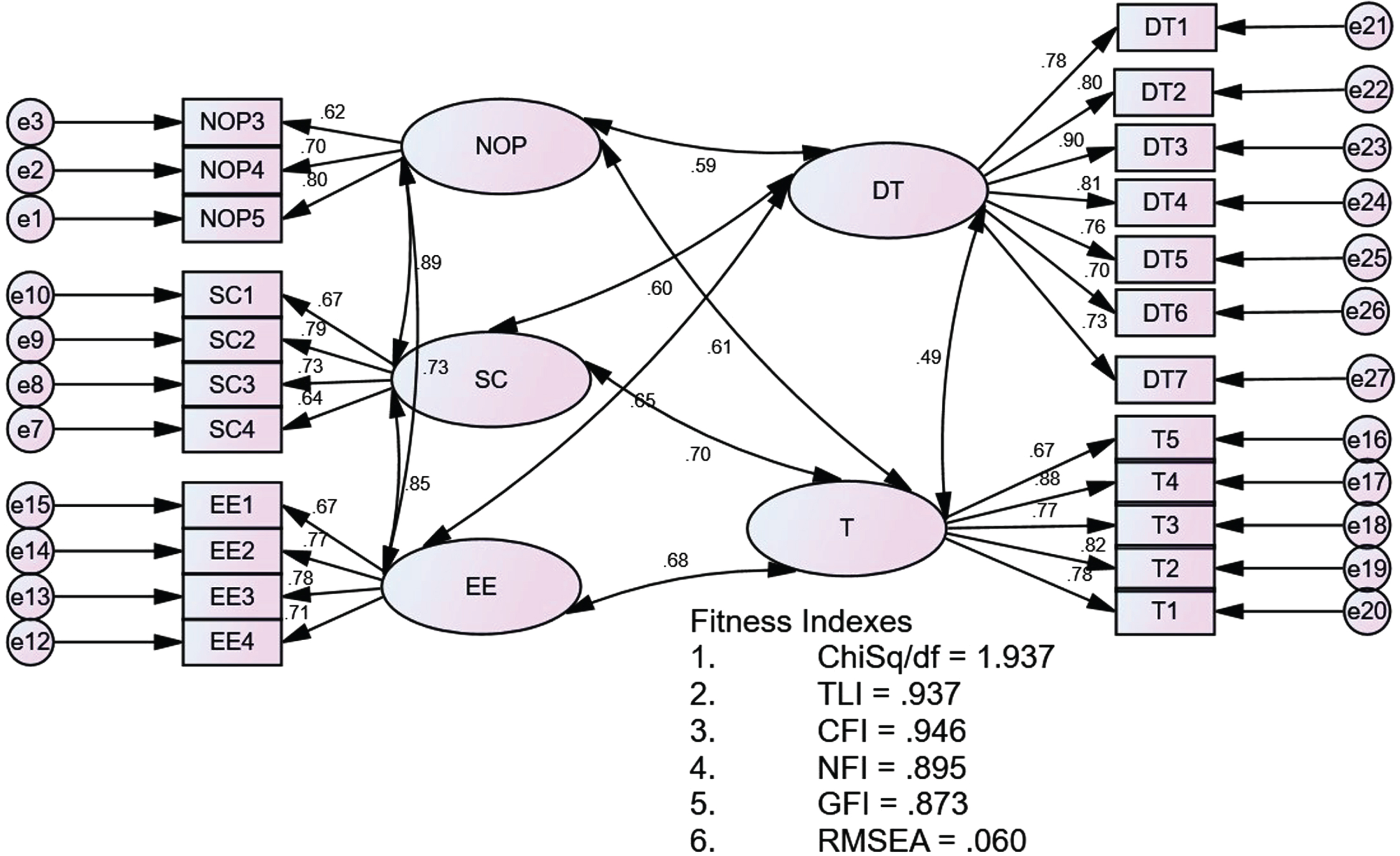
Measurement model.
Convergent validity is a concept in research methodology that refers to the degree to which two different measures of the same construct are related. In other words, it assesses whether different methods of measuring the same thing yield similar results. A measure with high convergent validity should be highly correlated with other measures that are intended to measure the same construct [104].
The CFA report’s analysis summary is presented in Table 4. To ensure internal consistency and convergent validity, it is recommended that the Average Variance Extracted (AVE) for each construct is at least 0.50, as suggested by [105].
Summary of the CFA report
Summary of the CFA report
Many constructs or variables in a complex system can be analyzed with the use of structural equation modeling (SEM). Each construct must first be evaluated for unidimensionality, validity, and reliability before being added to a SEM. Exogenous factors, mediating constructs, and endogenous constructs are all included in the SEM model in order to show how the variables in the study might be related [106, 107].
The model’s fit to the data and the effectiveness of the proposed relationships are assessed using goodness-of-fit indices. A well-fitting model shows that the data support the model’s hypothesized relationships between its various variables.
The findings of the hypothesis testing, which are crucial in SEM, are shown in Table 5. Specific hypotheses about the connections between model variables are examined through hypothesis testing, and the outcomes help to confirm or disprove the study’s research questions or hypotheses.
Result of hypothesis testing
Result of hypothesis testing
Overall, constructing and analyzing an SEM requires statistical expertise and familiarity with the research area. The SEM is a robust tool for analyzing complex relationships between multiple variables and provides valuable insights for research and practice.
The proposed conceptual model was deemed to be a suitable depiction of the linkages between the organizational cultural dimensions and digital transformation based on the GOF indices in Fig. 3. The outcomes of the testing of the hypotheses are then shown in Table 5.
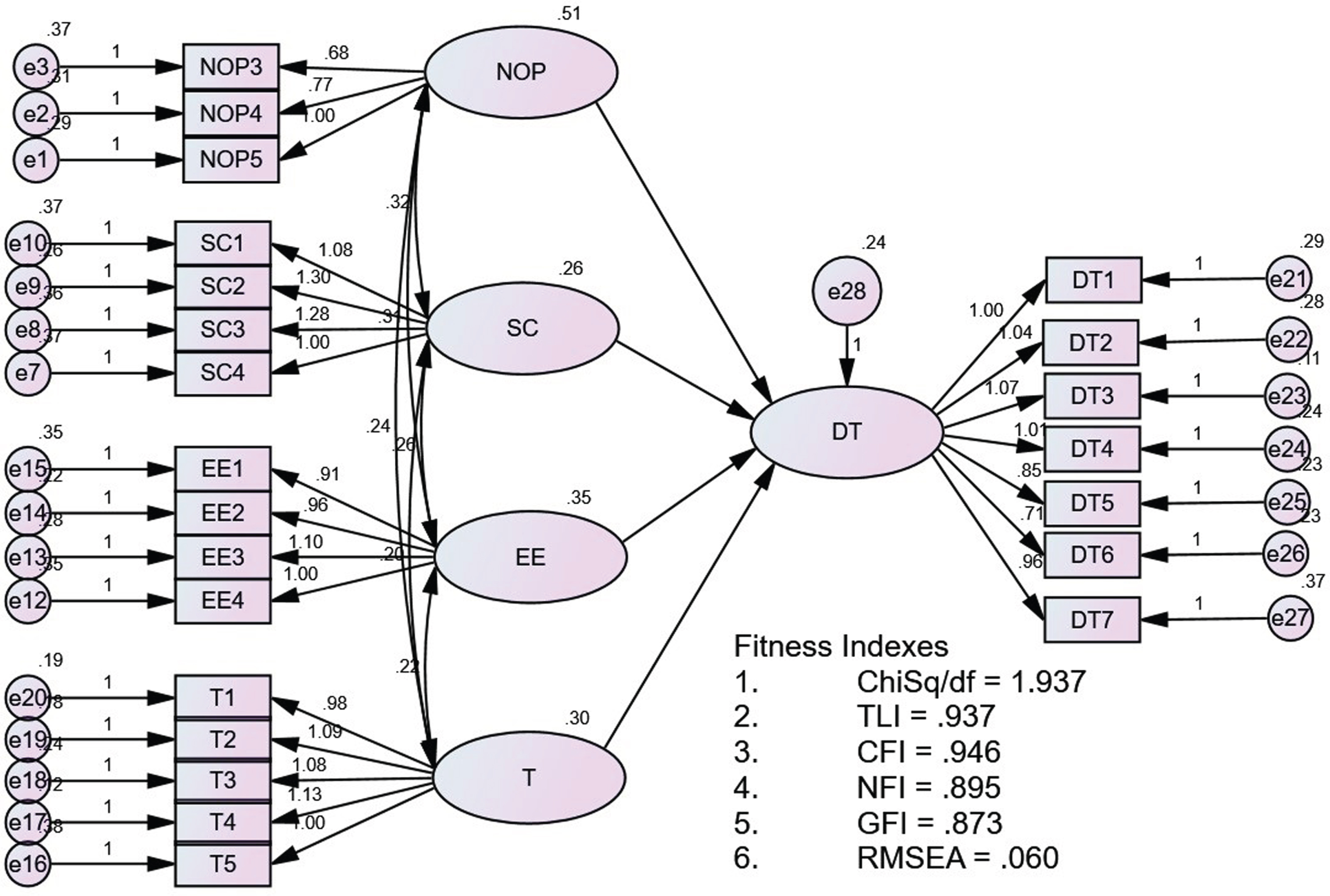
Structural model.
New organizational practice is found to be insignificant to the process of digital transformation, according to the research findings. Hence, hypothesis 1 is rejected. This result is inconsistent with Lokuge & Duan [108].
Organizational processes, structures, and cultures must change for the adoption of new organizational practices to be successful. If new organizational practices have been successfully adopted in Saudi Arabia, they may be the driving force behind projects for digital transformation and produce fruitful outcomes.
Support of change is found to be insignificant to the process of digital transformation, according to the research findings. Hence, hypothesis 2 is rejected. This result is inconsistent with Ziadlou [109] & Gupta [110].
Due to a number of circumstances, support change alone might not have a big impact on Saudi Arabia’s digital transformation. The first requirement for digital transformation is extensive strategic planning, investments in technology infrastructure, a qualified workforce, and legal frameworks. These requirements go beyond just having positive attitudes and being open to change. Simply supporting change without having the necessary infrastructure, resources, and rules in place could lead to projects for digital transformation being implemented slowly or insufficiently. As a result, even though support for change is crucial, it might not be enough to propel digital transformation in Saudi Arabia without also taking into account the country’s larger ecosystem of technological, legislative, cultural, and organizational factors.
The overall outcomes of this research present strong evidence for Hypothesis 3, clearly demonstrating that employee empowerment, the better it is for the digital transformation of Saudi Arabian organizations. This result is consistent with Blanka [111].
Employee empowerment and digital transformation are becoming more and more crucial for businesses and organizations in Saudi Arabia to remain competitive and satisfy their consumers’ changing expectations. Giving employees the knowledge, power, and freedom to make choices and conduct actions consistent with the mission and goals of the firm is known as employee empowerment. On the other side, digital transformation entails using technology to improve customer experiences, process efficiency, and overall corporate performance. Companies in Saudi Arabia may develop a culture of innovation, agility, and adaptability that enables them to survive in a fast-changing business environment by fusing employee empowerment with digital transformation. Additionally, this strategy can help firms thrive over the long run, increase productivity, and draw in and keep top people.
Teamwork is found to be insignificant to the process of digital transformation, according to the research findings. Hence, hypothesis 4 is rejected. This result is inconsistent with Gupta [110].
Although teamwork is an essential component of driving digital transformation, its impact in Saudi Arabia may be constrained by a number of circumstances. Organizational hierarchies may be prevalent, making it difficult to foster a culture of cooperation and effective teamwork. in addition, teams may struggle to successfully implement digital transformation projects due to a lack of the requisite knowledge and abilities in digital technology. Moreover, the dynamics of teamwork may also be impacted by cultural norms and gender segregation in the workplace, thereby limiting the diversity of viewpoints and ideas. Overall, even if collaboration is essential for digital transformation, these local circumstances may limit its efficacy in Saudi Arabia.
In summary, according to the result of this study, organizational culture can have important practical implications for digital transformation in Saudi Arabia. Digital transformation calls for empowered staff members who can take initiative, work well with others, and make judgments. An organization can become more inventive and nimbler by fostering a culture that emphasizes employee empowerment. Organizations that focus employee development and offer chances for progression are more likely to draw in and keep skilled people in Saudi Arabia who can lead the country’s digital revolution. Organizational culture is crucial to Saudi Arabia’s digital development overall. In their efforts to alter their operations and compete in the digital age, organizations are more likely to succeed if they place a high priority on innovation, and employee empowerment.
Limitation and direction for future research
There are numerous limitations to this study, as with all studies. To begin with, the only relevant nation is Saudi Arabia because the data that was collected only relates to that nation. As a result, it’s possible that Saudi Arabia could benefit from the findings. The proposed model must be used in other Arab nations in order to confirm the study model in various circumstances and to generalize our findings. Second, a quantitative research methodology was used in the study. The analysis of how various facets of organizational cultures contributed to the overall outcomes of digital transformation was the study’s main objective. In the future, it will be able to rely on organizational culture aspects derived from different ideas. Additionally, neither mediating nor moderating factors were included in this study. The researchers recommended that in a subsequent study, mediating or moderating variables be thoroughly examined.
Conclusion
In this study, the digital transformation impact is identified as the effects that organizations might face or experience because of enduring the digital transformation process. Although, the literature has investigated the potential impact in various areas, it did not categorize these impacts. This study argues that in order for organizations to exploit the full potential of digital transformation they have to seek and focus on value creation. In addition, it is important for organizations to understand that digital transformation is a continuous journey that does not happen at once.
In context of Saudi Arabia, organizational culture has a big impact on digital transformation. The success of digital transformation efforts in businesses operating in the nation has been found to be positively impacted by employee empowerment. Through a combination of cultural awareness and strategic planning, organizations can leverage their cultural strengths to enable successful digital transformation efforts, which in turn can lead to increased competitiveness, productivity, and growth. As Saudi Arabia continues to invest in its digital infrastructure and capabilities, the role of organizational culture in facilitating this transformation will become even more critical, underscoring the importance of ongoing research and exploration in this area.
Like any study, this study has limitations, including the data collected from Saudi Arabia, so in order to generalize the results of the study, the proposed model must be applied in other countries to confirm the study model in different contexts. In addition, the study used the quantitative research method; a similar study can be conducted using the qualitative approach. In the future, it will be possible to draw on other dimensions of organizational culture based on other theories. Moreover, mediating or moderating variables were not tested in this research. As a result, the researchers suggested that mediating or moderating variables should be thoroughly tested in a future research study.
Footnotes
Acknowledgments
The authors have no acknowledgments.
Author contributions
CONCEPTION: Khalid H. Alshammari
METHODOLOGY: Yaser Hasan Al-Mamary
DATA COLLECTION: Khalid H. Alshammari, Mohammad Alshallaqi, Yaser Hasan Al-Mamary
INTERPRETATION OR ANALYSIS OF DATA: Yaser Hasan Al-Mamary
PREPARATION OF THE MANUSCRIPT: Khalid H. Alshammari, Mohammad Alshallaqi, and Yaser Hasan Al-Mamary
REVISION FOR IMPORTANT INTELLECTUAL CONTENT: Khalid H. Alshammari, Mohammad Alshallaqi
SUPERVISION: Khalid H. Alshammari