



Abstract
BACKGROUND
This study delves into the academic literature regarding the significance of e-leadership transformation within corporate environments.
OBJECTIVE
The primary objective is to analyze and synthesize existing research on e-leadership transformation, identifying key trends, contributors, and thematic clusters. The study aims to provide a comprehensive understanding of the processes and impacts associated with e-leadership, as well as highlight areas for future research.
METHODS
We used a dual-method approach incorporating bibliometric analysis as a part of the Systematic Literature Review (SLR) to examine 269 journal articles published between 2010 and 2024, with a focus on the period from 2019 onwards.
RESULTS
The analysis identifies significant trends, influential articles, top journals, authors, and leading countries in the field. We identify thematic clusters such as digital leadership and strategic transformation, organisational communication and performance frameworks, behavioural dynamics, and transformational leadership strategies.
IMPLICATIONS
Insights from this study offer a deeper understanding of e-leadership transformation’s relevance in corporate settings, highlighting future research prospects and avenues for further exploration in this dynamic and evolving field.
Keywords




1. Introduction
The digital leadership revolution is changing how leaders use technology to succeed in the workplace. E-leadership, a fundamental component of digital leadership, guides organizations using digital technologies to improve communication, collaboration, and performance. Today’s fast-paced, technology-driven environment requires agility and creativity from digital leadership to be competitive [1]. Modern leaders need digital skills to adapt quickly to market changes and new possibilities [2, 3]. LEGO’s strategic efforts demonstrate a digital leadership transition. LEGO established digital leadership by connecting its digital capabilities with its strategic objectives, encouraging innovation and commercial development [4]. Organisations, particularly Small and Medium-sized Enterprises [SMEs], need strategic alignment to ensure that digital activities serve business goals. According to Li et al. [5], digital-age e-leadership via strategic alignment improves organizational effectiveness. Digital leadership qualities and innovation performance underline platform digitization’s importance in digital transformation [6]. Experts emphasize the importance of good e-leadership in leading online communities and promoting cooperation for a digital competitive advantage [7, 8].
On the other hand, Corporate environment refers to the internal and external context in which a business operates, including its organizational structure, management practices, and strategic processes. It encompasses the dynamics of the workplace, including the interaction between employees, the integration of technology, and the alignment of digital strategies with business goals [7]. Market trends, technological advancements, and organizational culture influence the corporate environment, shaping the implementation of digital leadership and its impact on organizational performance and innovation [8].
Digital platforms and technologies are crucial to digital leadership transformation. A solid digital interaction infrastructure allows these platforms to facilitate information sharing, collaboration, and innovation. Lanzolla et al. [9] describe how digital platforms recombine information, enabling organizational innovation. Digital leadership uses these platforms to foster continuous learning and progress [6]. The COVID-19 epidemic highlighted the need for digital leadership as organizations quickly adopted remote work and online collaboration [10, 11]. Leadership had to swiftly learn digital competencies and lead their teams through extraordinary obstacles, illustrating the importance of digital leadership in organizational resilience and adaptation. Doherty et al. [12] have highlighted the importance of digital leadership in achieving system development project advantages. Digitally successful organizations require a shift in their leadership approach. Organizations can innovate, improve performance, and develop sustainably by utilizing digital platforms, e-leadership concepts, and strategic alignment. The rich research and practical examples from numerous studies give a complete grasp of digital leadership’s important components, helping leaders navigate digital change. Digital leadership will become increasingly important as firms adapt to new technologies [13–15].
Likewise, Digital technologies are quickly altering companies, offering leadership challenges and opportunities. Competitiveness and innovation require a shift in digital leadership. Avolio et al. [1] recommend incorporating digital communication and cooperation into leadership. LEGO’s journey [4] highlights how strategy alignment and organizational competences are essential to digital leadership. Li et al. [5] emphasize e-leadership in SMEs for strategic alignment and organizational goals. To coordinate and perform in virtual teams, one needs excellent e-leadership [14]. Digital transformation influences innovation, creating complicated opportunities and difficulties for executives [9]. Leadership in the digital age has changed, as shown by online community leadership [7] and collaboration [8]. To maximize digital transformation [6], companies must have digital leadership capabilities that boost innovation and performance. Leadership and organizational culture impact responsiveness and performance during digital transformation [2]. As digital platforms and ecosystems develop, leaders must adapt to new collaboration and competition [16]. One must understand and practice e-leadership to manage digital transition and maintain organizational performance [17].
1.1. Theoretical foundation
The theoretical foundation of this study is based on the Digital Leadership Theory, which emphasizes the role of technology in transforming leadership practices. This theory posits that effective leadership in the digital age requires integrating digital communication, collaboration tools, and strategic alignment to enhance organizational performance and innovation. The research contributes to existing theory by providing empirical evidence on how digital leadership practices influence organizational outcomes, particularly in the context of e-leadership transformation. This study deepens our understanding of how to leverage digital capabilities for organizational success by examining the strategic alignment required for effective e-leadership.
Consequently, E-leadership transformation in the corporate environment is the central focus of this paper, exploring how to facilitate such transformations. To gain a comprehensive understanding of this domain and identify potential research gaps, the study employs a mixed-methods approach, combining qualitative and quantitative methodologies. This approach integrates bibliometric analysis tools and principles for a comprehensive examination of existing literature [18, 19]. Previous reviews, like those by Tigre et al. [85], Espina-Romero et al. [86], and Eberl & Drews [87], have given us useful information about digital leadership. But they don’t always fill in certain gaps in the research, like how different types of digital leadership affect the performance of an organization and how these impacts are changing over time.Tigre et al. [85] conducted a bibliometric analysis of digital leadership, but they did not thoroughly explore the strategic alignment required for effective e-leadership. Similarly, Espina-Romero et al. [86] highlighted trends and challenges in digital leadership but lacked a detailed examination of the key themes and contributors. Eberl & Drews [87] offered a review of digital leadership but did not adequately address emerging research directions or the integration of quantitative data. This study seeks to address these gaps by offering a more detailed and systematic review of e-leadership transformation, integrating both qualitative insights and quantitative data. Academics support this method, emphasizing its efficacy in providing thorough reviews of scientific fields, fostering a deeper understanding of ongoing debates, and pinpointing areas in need of further research [20, 21]. Following the guidelines set out by Afeltra et al. [19] and Aladayleh et al. [22] for a thorough review of the existing literature, the study came up with a detailed plan that included clear research questions, the choice of relevant databases and search terms, and strict screening criteria to find and read appropriate academic papers. The final dataset comprised 269 peer-reviewed journal articles published between 2010 and 2024, retrieved from the finance and economics section of the Web of Science [WoS] core collection database.
For data analysis, the study utilized VOSviewer, developed by Van Eck and Waltman [23], and the Bibliometrix R package [24]. These tools are renowned for their robust capabilities in conducting bibliometric analyses [25, 26]. VOSviewer made it easier to identify key authors, articles, journals, and countries within the study domain. Aria and Cuccurullo [24], Lamboglia et al. [25], and Bellucci et al. [27] say that Bibliometrix made it possible to make scientific maps using tools like trend topic analyses and phrase co-occurrence analyses. These maps show the relevant research on e-leadership transformation in the corporate environment and suggest possible new research avenues. We specifically designed the study to address the following researchquestions:
What are the most common themes in relevant research on the transformation of e-leadership in the corporate environment, and how are theydefined?
What are the emerging directions for future research on e-leadership transformation in corporate environments?
This paper contributes to the growing body of knowledge on digital leadership transformation in the corporate environment by examining the processes and impacts of transitioning to e-leadership. The aim of this study is to explore the key themes, challenges, and opportunities associated with digital leadership using a mixed-methods approach that combines qualitative insights with quantitative data. By integrating bibliometric analysis tools bibliometric analysis as a part of the Systematic Literature Review (SLR) principles, the study provides a comprehensive overview of the field, highlighting prominent themes and identifying future research directions [1, 5]. The research also delves into the strategic alignment necessary for effective e-leadership in the digital age [9, 14] and examines how digital leadership competencies can influence innovation and organizational performance [6–8]. The findings aim to help corporate leaders understand the nuances of digital transformation and develop the skills required to lead effectively in a digitalized business landscape [2, 13].
In addition, the aim of this article is to analyze and synthesize existing research on e-leadership transformation, focusing on identifying key trends, prominent contributors, and thematic clusters. By systematically reviewing and integrating the literature on e-leadership, this study seeks to offer a comprehensive understanding of how leadership practices are evolving in the digital age. It will highlight significant patterns and shifts in e-leadership research, elucidate the contributions of key scholars in the field, and delineate major thematic areas that are shaping contemporary discussions and advancements in e-leadership. This analysis aims to provide a foundational framework for future research and practical applications of e-leadership in various organizational contexts. The paper is structured as follows: Section 2 provides a comprehensive explanation of the research methodology; Section 3 shows the findings of the bibliometric analysis; Section 4 analyzes the thematic clusters that were detected during the analysis; Section 5 identifies potential areas for further study; and Section 6 closes the work with closingreflections.
2. Methods
This study combines a comprehensive literature review with bibliometric analysis to gain a deeper understanding of “value relevance” in e-leadership transformation. This approach integrates frameworks from Janssens et al. [28], Caputo et al. [29], and Momani et al. [30], integrating both quantitative and qualitative components, thereby expanding upon Pritchard’s [31] foundation. By combining these methods, the study aims to reduce bias and enhance scientific credibility [32]. The research commenced with a meticulous literature review, following established protocols by Moher et al. [33], Caputo et al. [21], Qudah et al. [34], and Al Qudah et al. [35]. This ensured a robust and repeatable research process, aligned with the principles outlined by Petticrew and Roberts [36]. A detailed plan guided the review process, providing clearly defined research questions, methodological explanations, and strategies for identifying, evaluating, and synthesizing relevant studies.
Following recognized literature review methods by Petticrew and Roberts [36], Trindade et al. [37], Bellucci et al. [27], and Momani et al. [30], the initial phase involved several key steps:
Defining the Research Area and Formulating Research Questions: To direct the review process, we established a clear focus on e-leadership transformation and developed guiding research questions.
Choosing Databases and Keywords: We selected the Web of Science [WoS] database for its comprehensive coverage of relevant literature. Keywords included those related to digital leadership, e-leadership, tech leadership, and digital transformation leadership. The search query used was:
All = [“Digital Leadership” or “E-Leadership” or “Tech Leadership” or “Digital Transformation Leadership” or “IT Leadership” or “Digital Strategy Leadership” or “Online Leadership”]
Refining Search Results: We applied specific criteria to refine search results, ensuring that the papers were relevant to the topic of e-leadership transformation.
We conducted a rigorous screening process, evaluating papers for inclusion according to predefined criteria.
Relevance: We included only papers directly related to e-leadership transformation.
Publication Type: Only peer-reviewed journal articles were considered.
Publication Date: We focused on articles published from 2010 to 2024 to ensure the research was up-to-date.
We assessed the papers for methodological rigor and scientific quality.
Furthermore, the study then utilized bibliometric analysis to delve deeper into the research field [38]. This approach leverages its ability to handle large datasets objectively using descriptive statistics and similarity measures [30, 39]. Bibliometric analysis identifies influential publications, journals, and scholars, providing insights into the field’s intellectual landscape [40]. It facilitates creating “science maps” to visualize research evolution and structure, enhancing scientific integrity and replicability [38, 39].
Moreover, bibliometric analyses adhered to established protocols [21, 40–42], focusing on quantitative aspects relevant to the research: Metrics: We employed metrics such as publication counts, citations, and authorship structures. Keywords and Relationships: To identify core themes and patterns, evaluate keywords and relationships. Emerging Research Areas: We have identified new directions for future studies.
2.1. Comprehensive examination of existing literature
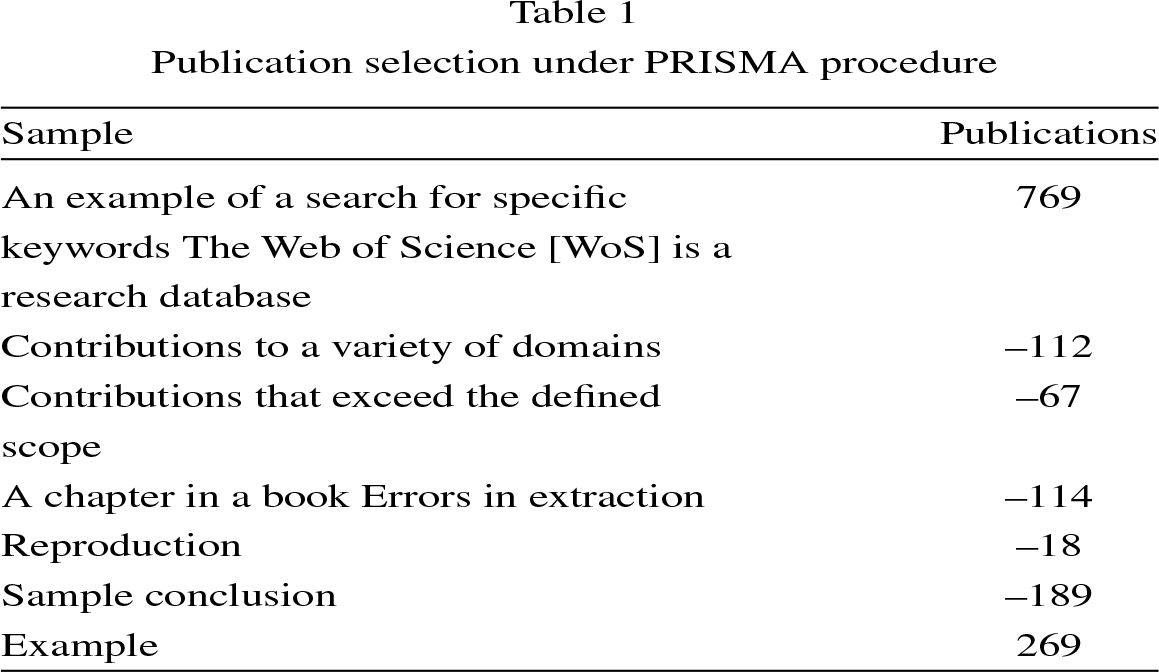
The study began with specific research questions to identify the main topics and features in corporate e-leadership research and to pinpoint new research directions. We initially gathered a total of 769 publications from WoS using the specified keywords. The screening process involved several stages: Exclusion of Non-Relevant Publications: We excluded 112 publications because they did not fit within the parameters of our study. Boundary Issues: We removed 67 publications for exceeding defined boundaries. Extraction Errors: We excluded 114 publications because of extraction errors. Reproduction Issues: Reproduction issues led to the exclusion of 18 publications. Specific sample conclusion criteria led to the exclusion of 189 publications.
The final dataset comprised 269 publications that met our relevance and accuracy criteria, providing a comprehensive basis for analysis.
Meanwhile, this study strictly adheres to the Preferred Reporting Items for Systematic Reviews and Meta-Analyses [PRISMA] standards, ensuring transparency and reproducibility throughout the research journey. According to Thakur et al. [43], the PRISMA guidelines were very helpful in keeping careful track of the flow of information through the different stages of the review, such as identification, screening, eligibility, and inclusion, which was also emphasized by Helbach et al. [44] and Cala et al. [45]. Adhering to PRISMA aimed to mitigate bias and enhance the reliability of our findings, ensuring a thorough and unbiased analysis of academic literature concerning the transformation of e-leadership in corporate contexts. Table 1 outlines the data formation process for this study, detailing the sample size and various categories.
Publication selection under PRISMA procedure
2.2. Bibliometric literature
The study begins its bibliometric analysis by emphasising the critical initial phase known as performance analysis, which is essential for subsequent analyses. This phase, as highlighted by Donthu et al. [46], Abbas et al. [47], Caputo et al. [21], Saxena, & Kumar [20], aims to evaluate the performance of the research field across various components such as authors, countries, and journals. Performance analysis uses various indicators to do descriptive statistics using bibliographical citations, which give useful information about the amount of research and its impact [40–42, 48]. The study used citation analysis and citations per year [CPY] analyses to examine the distribution of articles over time and their influence [49]. We conducted this study to uncover valuable insights into the potential impact of e-leadership in business environments.
Citation analysis, a commonly used bibliometric technique, involves compiling lists of the most cited papers or authors, offering insights into research prominence and productivity [50]. The study identified influential journals, authors, and corresponding countries using the VOSviewer software, renowned for its utility in bibliometric analysis [23, 51–56]. VOSviewer has made it easier to visualise important publications, authors, journals, research groups, and countries in the field. Science mapping, an important part of the bibliometric analysis, looked at the structure and organisation of research on the challenges of e-leadership transformation in business settings [49, 57].
Keyword co-occurrence analysis, a form of content analysis, examines keywords within articles to delineate the field’s conceptual landscape and identify key thematic clusters. To identify new research directions, trend topic analysis examined authors’ keyword usage over time. The R package Bibliometrix made these analyses easier by sorting different parts into groups and using clustering algorithms to make network graphs that show how bibliographic metadata appears together [24, 58]. To ensure data accuracy, we carefully normalised raw keywords using a thesaurus, and we complemented the automated assignment of articles to thematic clusters with manual content analysis to ensure reliability. Panel meetings and discussions addressed disagreements, guaranteeing accurate cluster attribution [23, 51–56]. The study concluded with a critical review of relevant contributions within each cluster to discuss key insights and suggest future research directions.
3. Results
3.1. Descriptive analysis
This approach serves to condense and analyse data, revealing patterns, trends, and significant insights. This method offers multiple benefits in research on e-leadership transformation in corporate environments. Firstly, it highlights the growing academic interest in this domain. Secondly, it facilitates the identification of pivotal themes and influential works that are shaping the field. Lastly, it sheds light on the contributions from diverse authors and journals, presenting a comprehensive view of the research terrain. Additionally, this approach delves into publication frequencies, citation metrics, and the geographical dispersion of research outputs to achieve theseobjectives.
3.2. Publications
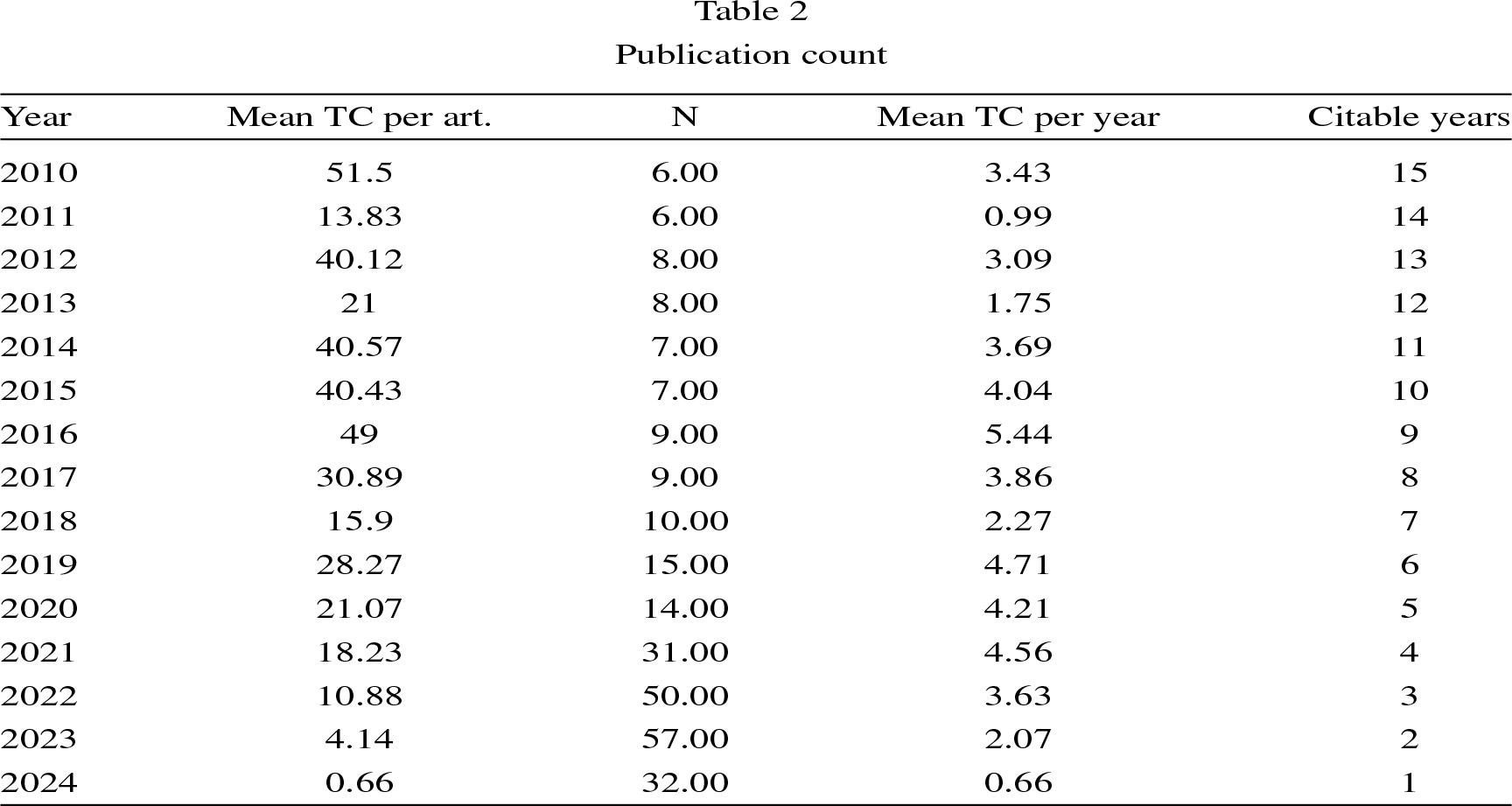
Table 2 shows the publication count and related metrics for research on the evolution of e-leadership in the corporate environment over time. It includes measures such as MeanTCperArt [mean total citations per article], N [number of publications], MeanTCperYear [mean total citations per year], and CitableYears [number of years considered citations]. The analysis shows fluctuations in publication counts and citation rates over time. Notably, there was a gradual increase in mean citations per article until 2016, followed by a decline in subsequent years. This pattern suggests a period of heightened interest and impact in the early years, possibly indicating foundational work and increased attention to the topic. The citations and publications span a range of influential studies, including those by Avolio et al. [1], El Sawy et al. [4], Li et al. [5], Dulebohn and Hoch [14], and Lanzolla et al. [9], among others, showcasing the diverse contributions shaping this research area.
Publication count
Nevertheless, the top 10 cited publications on corporate e-leadership transition include a variety of study topics. Avolio et al. [1] study leadership source and transmission transformations, as well as leadership paradigm alterations (see Table 3). El Sawy et al. [4] explain how LEGO built digital leadership skills, illuminating digital transformation tactics. Li et al. [5] discuss strategic alignment in e-leadership for digital-age SMEs. Dulebohn and Hoch [14] examine the dynamics and cooperation of organisational virtual teams. Lanzolla et al. [9] provide an integrated paradigm for the digital transformation of search and recombination in innovation functions. These studies, along with Johnson et al. [7], Faraj et al. [8], Asree et al. [2], Benitez et al. [6], Chen et al. [13], and Van Wart et al. [17], influence digital leadership discourse and its effects on organisational performance and innovation.
Top ten cited publications

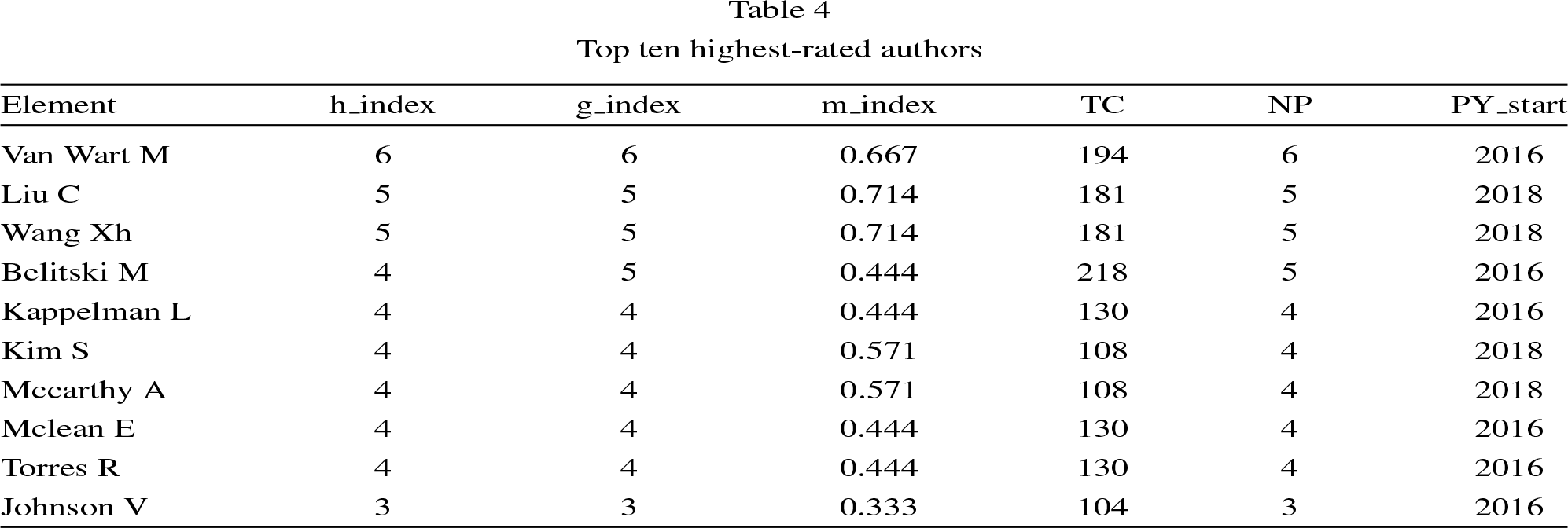
Top ten highest-rated authors
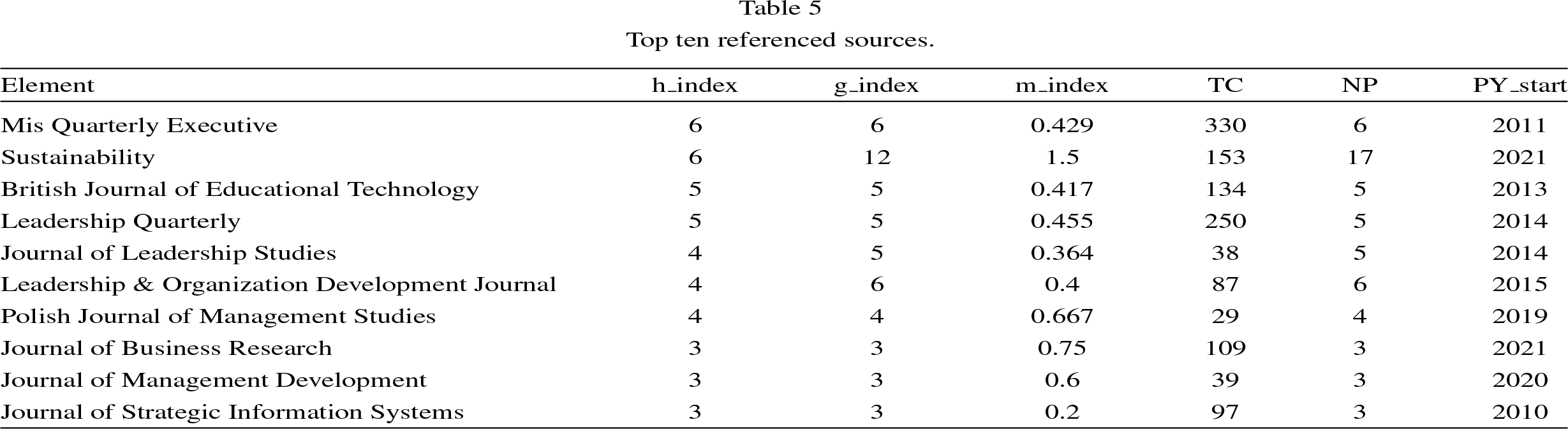
Top ten referenced sources.
3.3. Authors and sources
The transformation of e-leadership in the corporate environment has garnered significant attention, as evidenced by the works of top-rated authors (see Table 4). Van Wart et al. [17] operationalize the definition of e-leadership, identifying its essential elements. Liu et al. [59] empirically study organisational leaders’ adoption of virtual communication, shedding light on practical aspects. El Sawy et al. [4] provide insights into building enterprise capabilities for digital leadership, drawing from the experience of LEGO. Li et al. [5] focus on strategic alignment in small and medium-sized enterprises, highlighting the importance of e-leadership in the digital age. These studies, along with others, contribute to a nuanced understanding of how e-leadership drives innovation, organisational performance, and sustainable transformations in today’s digital landscape.
Furthermore, the transformation of e-leadership in the corporate environment is a rich area of study, drawing from a diverse range of sources (see Table 5). Key publications such as the Leadership Quarterly [1], Sustainability [9], and the British Journal of Educational Technology [60] contribute significantly to understanding e-leadership’s evolution. Journals like the MIS Quarterly [8] and the Journal of Business Research [6] delve into specific aspects such as online community leadership and digital leadership’s impact on innovation performance. Research in digital leadership [59, 61] and its intersections with sustainability [62] and organisational performance [63] further enriches this field, highlighting its relevance in contemporary business landscapes.
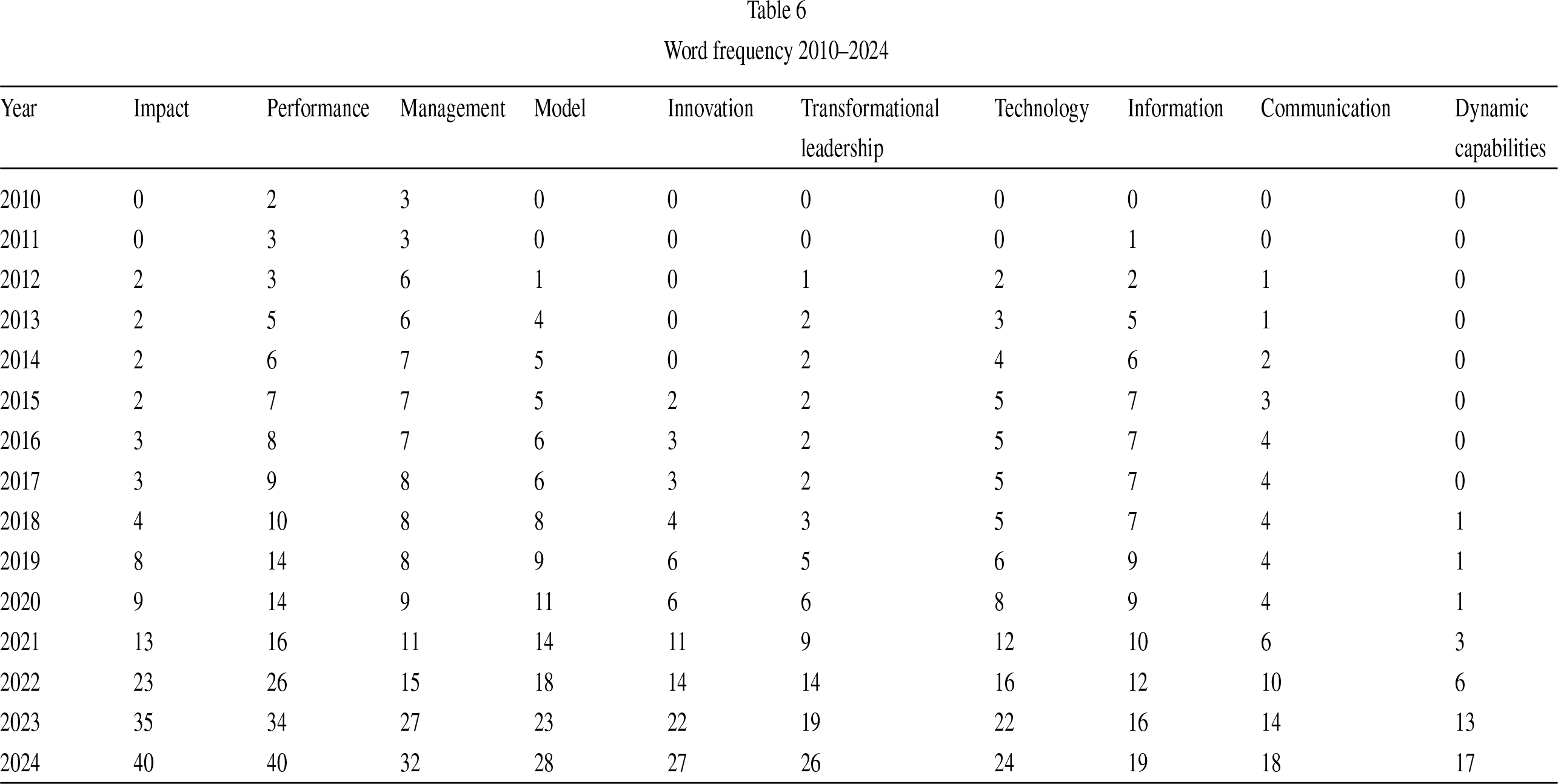
Word frequency 2010–2024
3.4. Countries
In the transformation of e-leadership in the corporate environment, Fig. 1 illustrates the top-cited authors’ countries, showcasing a diverse global landscape. We obtained the data for this figure from a comprehensive bibliometric analysis of peer-reviewed journal articles on e-leadership, focusing on citation counts to identify leading contributors in the field. We sourced the citation data from the Web of Science [WoS] core collection database, which covers publications from 2010 to 2024. The USA leads with 134 citations, reflecting its pioneering role in digital leadership, as discussed by Avolio et al. [1] and Kane et al. [3]. China follows with 56 citations, highlighting its rapid advancements in digital innovation and leadership capabilities, as evidenced by Liu et al. [64]. The UK and Germany, with 53 and 37 citations, respectively, also make significant contributions to e-leadership research, as shown in studies by El Sawy et al. [4] and Schiuma et al. [65]. Additional contributions come from Indonesia, India, Malaysia, Turkey, France, and Pakistan, each offering valuable insights into e-leadership practices and strategies [2, 61]. The global distribution of research, as depicted in Fig. 1, underscores the widespread interest and importance of e-leadership in driving digital transformation and organizational success across various cultural contexts.

Top cited authors’ countries.
3.5. Keyword co-occurrence analysis
Figure 2 depicts a network map summarising the findings of a keyword co-occurrence analysis, as detailed by Lamboglia et al. [25]. This visual representation employs circles to represent keywords, connected by lines that indicate how frequently these keywords appear together in the analysed research. The size of each circle corresponds to the importance of the keyword, with larger circles indicating more frequent occurrences, following the methodology outlined by Aria & Cuccurullo [24]. The thickness of the lines indicates the strength of the relationship between keywords based on their co-occurrence frequency. Moreover, the placement of the circles reflects their thematic similarity; closer circles suggest a higher degree of relatedness, as described by Aria & Cuccurullo [24] and Lamboglia et al. [25]. Additionally, nodes of the same colour represent thematic clusters, highlighting interconnected areas of significant research in the field.

Keyword analysis co-occurrence network map.
We utilised the co-occurrence network mapping technique inspired by Lamboglia et al. [25] to visualise the connections among frequently appearing keywords in our research. To enhance clarity, we removed isolated nodes [keywords with no links to other nodes], resulting in a network map comprising 38 keywords grouped into four thematicclusters.
Therefore, each cluster focused on corporate e-leadership transformation has carefully chosen names based on its keywords. With keywords like “digital leadership,” “digital transformation,” “innovation,” and “strategy,” the Red Cluster focuses on how digital leadership orchestrates strategic transformations within organisations, using digital capabilities for innovative strategic manoeuvres. The Green Cluster, “Organisational Communication and Performance Frameworks,” emphasises the importance of effective communication strategies and performance frameworks in improving organisational effectiveness and achieving goals. “Behavioural Dynamics and Transformational Leadership Strategies” is in the blue cluster. It has a lot of keywords related to “behaviour,” “knowledge,” “transformational leadership,” and “trust.” This means that it goes into a lot of detail about how organisational change and trust affect behavioural dynamics, knowledge management, and transformational leadership strategies. Finally, keywords such as “e-leadership,” “covid-19,” “perceptions,” and “work” justify the Yellow Cluster, “E-leadership Perceptions in Evolving Work Environments,” suggesting an investigation into the perception and implementation of e-leadership in evolving work environments, including the impact of external disruptions like the COVID-19 pandemic on leadership paradigms and organisational dynamics.
3.6. Words frequency over time
The word frequency over time data presented in Fig. 3 highlights the evolving landscape ofe-leadership within the corporate environment. From 2010, when key terms were barely mentioned, the words “impact,” “performance,” “management,” “model,” “innovation,” “transformational leadership,” “technology,” “information,” “communication,” and “dynamic capabilities” slowly became more common. This shows that scholars are paying more attention to these topics [1, 14]. From 2020 onward, there has been a marked surge in the frequency of all keywords, signifying a heightened scholarly interest in the transformation of e-leadership [2, 12]. This upward trend correlates with the global rise in digitalization and transformation initiatives, with both scholars and practitioners exploring the nuances of digital leadership, innovation, and strategic capabilities in corporate settings [3, 65].
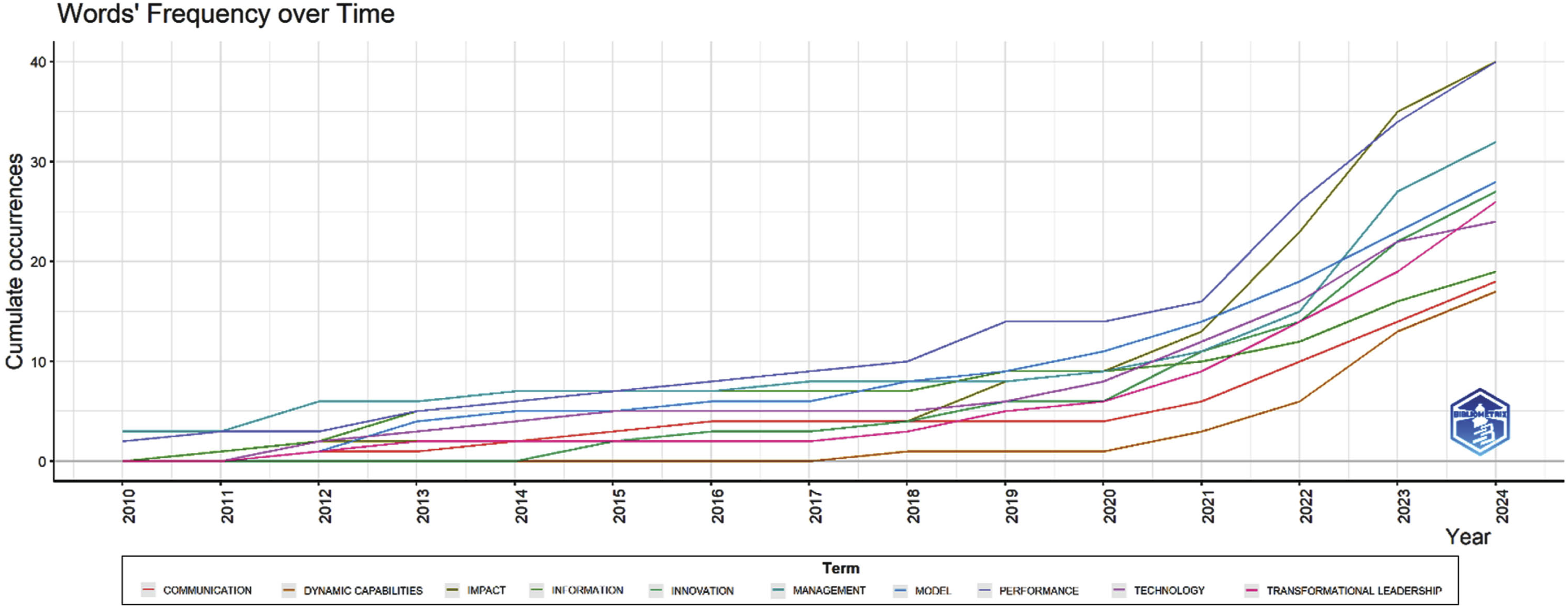
Word frequency over time bibliographic data.
4. Discussion
Our study utilised a co-occurrence network map (Fig. 2) to illustrate the connections among frequently appearing keywords. This technique led to the identification of four distinct thematic clusters, each representing a significant area of research interest.
4.1. Red cluster: “Digital leadership and strategic transformation”
This cluster focuses on the increasing significance of digital leadership and its impact on strategic transformation. The studies highlight the challenges in integrating diverse perspectives into effective frameworks for complex digital projects. They explore how digital leadership roles and capabilities are evolving to meet the demands of digital transformation, the importance of aligning digital initiatives with strategic objectives, and the need for further research into how digital leadership influences innovation and long-term sustainability.
To start, Avolio et al. [1], El Sawy et al. [4], and Li et al. [5] demonstrate Cluster 1 has increased significantly. However, it still struggles to integrate multiple perspectives into frameworks that function effectively for complex strategic digital project leadership. Avolio et al. [1] reconsider leadership revolutions in the digital era, emphasizing the importance of understanding how leadership sources and transmissions change. El Sawy et al. [4] illuminate enterprise capabilities for effective digital leadership, demonstrating the core elements leaders need to manage digital transformation. Li et al. [5] emphasise the importance of strategic alignment for digital performance in small and medium-sized organisations, as well as aligning digital activities with strategic objectives. Benitez et al. [6], Cozzolino et al. [16], and Khaw et al. [66] suggest studying how digital leadership affects innovation performance. Benitez et al. [6] examine how digital leadership and platform digitalization drive innovation results. Cozzolino et al. [16] examine digital platform-based ecosystems to understand how cooperation and competition affect digital leadership tactics. A systematic literature analysis by Khaw et al. [66] on digital leadership and sustainable performance highlights the need for further research that links digital leadership with long-term sustainability objectives.
Thus, Future research goals in this ever-changing field, such as studying e-leadership practices during crises [10, 11], and how innovation skills, digital leadership, and sustainability performance interact [68], are exciting. Karakose et al. [10] examine how digital leadership roles and technical capabilities change during crises, shedding light on adaptive leadership. Wiradendi Wolor et al. [11] examine how e-training, e-leadership, and work-life balance affect employee performance during crises, emphasising the necessity of digital leadership in difficult situations. Sarfraz et al. [68] examine the relationship between innovation capabilities, green processes, product innovations, and digital leadership, showing that digital leaders may improve manufacturing company performance.
4.2. Green cluster: “Organizational communication and performance frameworks”
This cluster examines how digital leadership affects organizational communication and performance. It underscores the need for revised communication strategies in the digital age and explores the role of effective communication structures in enhancing organizational efficiency. The studies suggest a growing interest in understanding how digital leadership interacts with organizational communication and performance frameworks, particularly in the context of digital transformation.
In fact, Avolio et al. [1], Dulebohn and Hoch [14], and Lanzolla et al. [9] reveal an increasing interest in how communication dynamics affect organisational efficiency and performance in Cluster 2. According to Avolio et al. [1], e-leadership reforms necessitate restructuring leadership paradigms in the digital age and rethinking organisational communication tactics. Dulebohn and Hoch [14] examine virtual teams’ dynamics in organisations, highlighting communication obstacles and potential in distributed work contexts. Lanzolla et al. [9] provide an integrated paradigm for analysing digital transformation’s influence on innovation functions, emphasising the need for good communication structures. Future studies may examine how digital leadership affects organisational communication and performance. Schiuma, Chatterjee, and Khaw et al. [66] demonstrate this. The transformational leadership compass by Schiuma et al. [65] incorporates communication skills for digital transformation entrepreneurship. Chatterjee et al. [63] examine how digital leadership aptitude moderates digital workplace performance, emphasising the relevance of communication skills to organisational results. Khaw et al. [66] conducted a thorough literature review on digital leadership and sustainable performance, which suggests linking digital leadership with communication frameworks and sustainability objectives for future research.
Hence, future research may examine how digital leadership improves organisational communication during crises [10, 11] and how innovation capabilities, communication strategies, and organisational performance interact [68]. In crisis situations, Karakose et al. [10] examine digital leadership positions and technological capabilities, revealing adaptive communication behaviours. Wiradendi Wolor et al. [11] examine how e-training, e-leadership, and work-life balance affect organisational communication and performance during crises, emphasising the significance of digital leadership in building resilient communication systems. Sarfraz et al. [68] examine innovative skills, green processes, product innovations, and digital leadership, emphasising communication strategies’ importance in sustainable organisational performance.
4.3. Blue cluster: “Behavioral dynamics and transformational leadership strategies”
This cluster highlights gaps in understanding the behavioral dynamics of digital leadership, particularly in virtual teams and transformative leadership contexts. It emphasizes the need to explore how digitalization affects leadership behaviors and the role of transformational leadership in navigating digital changes. Future research should focus on specific contexts, such as education and crises, to understand behavioral adaptations in digital leadership roles.
Cluster 3 has identified certain gaps that continue to exist, thereby providing avenues for further exploration. Avolio et al. [1] delve into e-leadership transformations, emphasising the need to re-examine leadership paradigms in the digital age and highlighting a gap in understanding how digitalization affects leadership behaviours and dynamics. Similarly, Dulebohn and Hoch [14] explore virtual teams’ dynamics, shedding light on communication challenges and opportunities, but gaps remain in understanding the nuanced behavioural aspects impacting virtual team performance. Looking towards future orientations, scholars like Schiuma et al. [65] and Chatterjee et al. [63] offer insights into transformative leadership competencies and digital leadership capabilities. Schiuma et al. [65] propose a transformative leadership compass, outlining competencies crucial for navigating digital transformation entrepreneurship and emphasising behavioural dynamics within leadership roles. Chatterjee et al. [63] delve into the moderating role of digital leadership capability on organisational performance, indicating a direction for studying behavioural aspects’ impact on organisational outcomes.
Consequently, future research can target understanding the behavioural nuances of transformational leadership in specific contexts, such as the education sector [60, 69] or during crises like the COVID-19 pandemic [10, 67]. Jameson [60] highlights the evolving landscape of e-leadership in higher education, pointing towards a need to explore behavioural dynamics in educational technology research. Chua and Chua [69] focus their study on enhancing e-leadership practices in implementing virtual learning environments, highlighting the importance of behavioral adaptations in digital leadership roles. Likewise, research by Karakose et al. [10] and AlAjmi [67] shows how important changing behaviours are in digital leadership during crises. This opens the door for more specific studies on how leaders can adapt their actions [70–73].
4.4. Yellow cluster: “E-leadership perceptions in evolving work environments”
This cluster addresses the evolving perceptions of e-leadership in various work environments. It points out the need for research on how leadership transformations are adapting to digital contexts and the behavioral aspects influencing virtual team performance. The studies suggest a focus on transformative competencies and the moderating role of digital leadership capabilities on organizational outcomes in changing work settings.
Cluster 4 has several gaps that require further investigation. Avolio et al. [1] highlight the need to re-examine leadership transformations in the digital era, pointing to a research gap concerning the evolving sources and transmission of leadership in digital contexts. Similarly, Dulebohn and Hoch [14] shed light on virtual teams’ dynamics, revealing gaps in understanding the behavioural aspects influencing virtual team performance in evolving work environments. Future e-leadership research orientations will focus on transformative competencies and capabilities that are critical for navigating digital transformations. Schiuma et al. [65] propose a transformative leadership compass, emphasising competencies essential for digital transformation entrepreneurship and signalling a future direction for studying behavioural dynamics within digital leadership roles. Furthermore, Chatterjee et al. [63] highlight the moderating role of digital leadership capability on organisational performance, indicating a need to explore behavioural adaptations for effective digital leadership in evolving work environments [74–78].
Hence, targeted research areas can include understanding the behavioural nuances of e-leadership in specific contexts, such as educational settings [60, 69] or during crises like the COVID-19 pandemic [10, 67]. Jameson [60] underscores the evolving landscape of e-leadership in higher education, suggesting a need to explore behavioural dynamics in educational technology research. Similarly, Chua and Chua [69] focused their study on enhancing e-leadership practices in virtual learning environments, emphasising the importance of behavioural adaptations in digital leadership roles [79–84]. Moreover, studies by Karakose et al. [10] and AlAjmi [67] emphasise the significance of behavioural dynamics in digital leadership during crisis situations, providing avenues for targeted research on adaptive leadership behaviours [70–78].
4.5. Emerging research directions
This section highlights key insights derived from analyzing common keywords and trending topics, focusing on significant findings from influential papers in each thematic cluster identified through keyword analysis (see Fig. 2). We established the thematic clusters by linking frequently occurring keywords. By combining evidence from trend topic analysis with a thorough review of the most pertinent contributions within each cluster, we reveal emerging research trends and identify potential areas for future investigation. This integrated approach not only provides clarity on the current research landscape within each thematic domain but also points to promising avenues for further exploration.
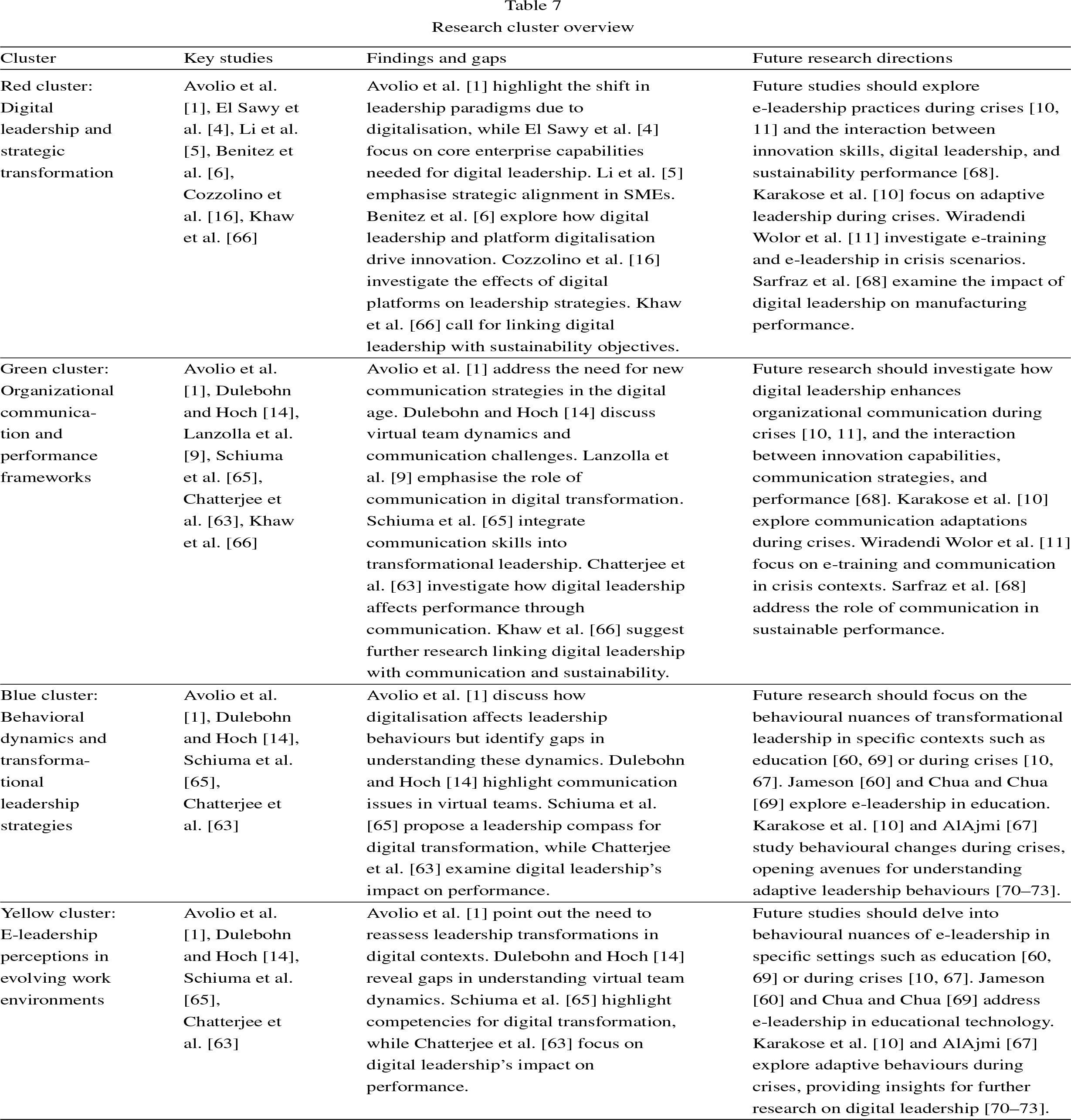
As a result, Table 7 summarizes essential keywords, relevant articles, and potential research questions emerging from the evolving research trajectories within each cluster.
Research cluster overview
5. Conclusions
This study introduces a novel approach to e-leadership transformation in corporate environments by employing two robust research methodologies. Firstly, we used bibliometric analysis, which leverages statistical methods to examine extensive academic publication datasets. This was complemented by a qualitative technique that systematically reviews and analyzes relevant literature. Unlike previous assessments that employed narrative techniques or focused narrowly on specific niches of e-leadership transformation, our study provides an impartial and comprehensive summary across all research streams. This approach is unique and will assist new scholars in contributing fresh perspectives to the subject. By mapping the field’s performance and knowledge structure with VosViewer and Bibliometrix software and conducting a manual content analysis of significant papers, we have highlighted major discoveries and identified knowledge gaps.
The descriptive analysis indicates a growing academic interest in e-leadership transformation, with notable contributions from various countries and institutions. Top-cited studies, such as those by Avolio et al. [1] and El Sawy et al. [4], cover a range of topics, including strategic alignment, virtual teams, and digital transformation strategies. Leading institutions like Harvard and Stanford, as well as countries such as the United States, the United Kingdom, and China, play a critical role in advancing this research area. This underscores the global relevance and evolving nature of e-leadership, driven by technological advancements and organizational needs.
5.1. Suggestions
Practically, organizations should focus on developing leaders with competencies in digital literacy, strategic alignment, and innovation management. Training programs and workshops should emphasize adaptive communication strategies, particularly for managing crises and remote work contexts. Theoretically, further research should explore how digital leadership integrates with sustainability frameworks and assess the impact of digital strategies on long-term organizational performance. Additionally, studies should investigate the behavioral dynamics of virtual teams to identify key traits that enhance team effectiveness. Combining these approaches will offer a robust framework for understanding and applying digital leadership across various organizational settings.
5.2. Future research directions for the study
Future research should include longitudinal studies to assess the long-term impact of digital leadership on organizational performance and sustainability. Investigating the role of digital leadership in diverse cultural contexts will provide a more comprehensive understanding of its global aplicability. Additionally, exploring the intersection of digital leadership with emerging technologies, such as artificial intelligence and machine learning, could offer insights into enhancing leadership effectiveness. Collaborative research involving both academia and industry practitioners can bridge the gap between theory and practice, ensuring findings are both relevant and actionable. Engaging in interdisciplinary research will also provide a holistic view of digital leadership’s impact.
Similarly, corporations should invest in continuous digital leadership training and development programs to enhance adaptive and strategic skills. Emphasizing the integration of sustainability goals within digital strategies will align with long-term organizational objectives. Implementing robust communication frameworks and fostering a culture of innovation will improve overall performance. Leveraging emerging technologies to support leadership functions can create a more resilient and forward-thinking organization.
5.3. Limitations
It is important to recognize that this study has certain limitations. One notable constraint is the exclusive use of the Web of Science database for analysis, which may have limited the breadth of reviewed publications. To address this limitation, future reviews could benefit from including additional databases such as Elsevier-Scopus, PubMed, and Cochrane, thereby broadening the scope and diversity of sources analyzed.
Footnotes
Acknowledgments
The authors would like to express their gratitude to the Department of Business Administration at Amman University College, Al-Balqa Applied University for their support throughout this study. Special thanks to the library staff and research assistants who facilitated access to various databases and resources.
Funding
This research received no specific grant from any funding agency in the public, commercial, or not-for-profit sectors.
Author contributions
Hasan Khaled Alawamleh: Conceptualization, methodology, data curation, writing - original draft, supervision, resources, project administration. Hasan led the overall design and execution of the study and managed the project administration.
Ibrahim Yousef Alkayed: Formal analysis, investigation, writing - review & editing, visualization, software, validation. Ibrahim contributed to the formal analysis of data, validated results, and assisted in the review and editing of the manuscript.
Ahmad Wasfi Mohammad Albdour: Assisted in revising the draft based on reviewer comments, contributed to data analysis, and supported thematic insights. Ahmad’s contributions were crucial in addressing feedback and enhancing the manuscript.
Hisham Ali Shatnawi: Contributed to the revision of the manuscript by integrating reviewer comments, provided insights into the literature review, and supported the analysis of emerging research directions. Hisham played a key role in refining the manuscript based on the feedback received.
Conflict of interest
The authors declare that there are no competing interests or conflicts of interest regarding the publication of this paper.