




Abstract
The uncertainty that characterizes the external mechanical loads to which any connection plate in steel structures is subjected determines the non-uniqueness of the isochoric deformation distributions. Since the eddy currents induced on the plates produce magnetic field maps with a high fuzziness content, similar to those of the isochoric deformations, their use can be exploited to evaluate the extent of the external load that determines a specific induced current map. Starting from an approach known in the literature, according to which the map-external load association is operated through fuzzy similarity computations, in this paper, we generalize this method by reformulating it in terms of intuitionistic fuzzy logic by proposing a classification based on divergence computations. Our approach, acting adaptively on the fuzzification of the maps, results in a better classification percentage, besides significantly reducing the presence of doubtful cases due to the uncertainty of each applied load. Furthermore, a FEM software tool was developed, which turned out to be, to a certain extent, a substitute for the experimental procedure, notoriously more expensive. Even if the procedure was applied on plates subjected to bi-axial loads, it could be used for other types of loads since the classification operator processes the eddy current maps exclusively, regardless of their cause.
Keywords
Introduction
The recent devastating earthquakes (Turkey and Morocco) have reopened the debate on using reinforced concrete structures for multi-storey buildings in areas with high seismic risk [1, 2, 3]. Since seismic action acts on a building through horizontal forces, the total mass is a highly critical element [4, 5]. Steel structures are a valid alternative, thinner than those in reinforced concrete, with good mechanical resistance even to high seismic actions [6]. However, the weak point of these structures is almost always the connection plates, which, subjected to bi-axial tensile loads, require periodic tests based on eddy currents, ECs, to evaluate their state of health [7]. Even if the modern steel industry is highly specialized [8], the heat treatment cycles used could cause local inhomogeneities, reducing or even invalidating the mechanical and electromagnetic properties of the steel [9, 10, 11, 12]. Although there are many works devoted to the optimization of the design of steel structures in plastic conditions using dynamic neural framework [13, 14, 15, 16, 17, 18, 19], in the framework of the finite elasticity, it is possible to obtain an implicit link between isochoric deformations and bi-axial loads oriented along two orthogonal axes to which the plates are subjected during the life cycle of the entire structure as accurately described by Chen’s tensor model [20].
Physically, the mechanical resistance of plates subjected to any load is closely related to the distribution of deformations, which, through constitutive laws, provide the distribution of mechanical stresses [21, 22]. However, this is not feasible because, on the one hand, modern technologies do not provide “in-situ” measurement tools for deformations, and, on the other hand, they have prohibitive CPU time [23, 24].
However, the knowledge of the external bi-axial load defines the deformational scenario (modifying both the electrical conductivity and the magnetic permeability of the material), with a distribution of mechanical stresses equivalent to the distribution of ECs applied accordingly to protocols that exploit specific sensors, like FLUXSET®, which sample the electrical voltage proportional to the extent of the deformation [20, 25, 26]. In particular cases, expert technicians evaluate the health status of the plates through the visual (subjective) analysis of ECs maps, detecting significant changes (transversal bands) (for details, see the following Sections). Furthermore, by applying the load, the distribution of deformations could be affected by ambiguities (minor uncertainties in the load, anomalies during the measurement campaign) requiring fuzzy analysis tools. Furthermore, the visual analysis of the ECs maps requires high experience of the technicians, so it is preferable to determine the amount of the load that determines that particular distribution of deformations (the evaluation of the state of health of the structural element becomes a problem of classification). However, obtaining ECs maps through a measurement campaign is equivalent to having portable instrumentation with a substantial cost increase. Therefore, it is desirable to propose an effective and efficient software tool for producing numerical ECs maps superimposable on experimental ECs maps under the same load conditions [20, 27].
Image classification is one of the leading research topics in Artificial Intelligence (AI), and fuzzy techniques address the problem by minimizing the computational effort [28, 29, 30]. Compared to the performances offered by sophisticated techniques consolidated in the literature [32, 33, 34], the results obtained highlighted very high levels of classification of the ECs maps, laying the foundations for efficient assessments of the health status of the plates. Recently, supervised and unsupervised approaches have been proposed to automatically classify images by discriminating different morphologies. The Adaptive Neuro-Fuzzy Inference System (ANFIS), a robust image classifier combining ANN architectures with fuzzy logic, has been widely used with good performance [28]. However, their complexity and “black box” structure are poorly combined for any real-time applications [20]. It is observable that each ECs map highlights highly blurred transition zones, which require operating through a fuzzy image classifier to quantify to what extent it, obtained by stressing a steel plate with an indeterminate load, deviates from the ECs maps representative of each class. In the past, numerous works have been published on applying fuzzy logic to steel structures [35, 36, 37, 38].
In the recent past, some tools have been proposed for classifying ECs maps [39] on steel plates subjected to external bi-axial loads, also ensuring the correspondence of numerical ECs maps (automatically achieved by COMSOL Multiphysics® commercial software) with the corresponding real ECs maps. These approaches considered that each bi-axial load can fluctuate, in a fuzzy sense, in terms of amplitude, resulting in ECs maps that are also fuzzily close to each other. Therefore, each load was collected in a unique class from which to extract a ECs map characteristic of the class. A ECs map with an unknown bi-axial load was associated with a given load class using a procedure based on fuzzy similarity computations [20, 40, 41]. The same approach has been successfully tested in classification problems of ECs maps obtained from CFRP plates [27].
However, the procedures proposed in [20, 40, 41, 27] suffer because some ECs maps were not correctly classified, making it necessary to create another class that collects all the doubtful cases mentioned above. Mainly, this is due to the abovementioned procedures using techniques based on fuzzy sets, which quantify only the membership values, neglecting any non-membership and any hesitation, thus excluding the possibility that the membership values may have a certain degree of uncertainty [42, 43, 44].
In this work, we will use the same ECs map classifier structure as in [20, 40, 41, 27]. However, the fuzzification will be carried out via a particular intuitionistic S-shaped fuzzy membership function to provide excellent transition among gray levels (membership values) and related non-membership levels with the automatic extraction of hesitation ones. The fuzzification of the maps is made adaptive, with the procedure proposed in [30], but setting one of the shape parameters will be realized by maximizing the intuitionistic fuzzy entropy of the map to be fuzzified. As in [20], if
Finally, it is worth it because only the most important steel companies are equipped with equipment and qualified personnel for carrying out non-destructive tests based on ECs. Then, as in [20, 27], we will also present the artificial reconstruction of the classes of ECs maps using a numerical technique based on the Galerkin-FEM approach implemented in COMSOL Myltiphysics® according to the technique tested in [49] verifying the correspondence with the real ECs maps which, here, will be performed via intuitionistic fuzzy divergence.
The rest of this paper is organized as follows. A brief description of the proposed intuitionistic fuzzy approach is presented and discussed in Section 2. Mainly, starting from some basic definitions (Subsection 2.1), the main details of the adaptive intuitionistic fuzzification of ECs maps are provided in Subsection 2.2. Moreover, a suitable formulation of intuitionistic fuzzy divergence is presented in Subsection 2.3 to describe the construction of the classes (Subsection 2.4) as well as to detail the approach exploited to define the approach used to define the ECs maps representative of each class (Subsection 2.5). Starting from the geometric characterization of a typical connection plate for steel structures and defining the electromechanical properties of the steel it is made of, Section 3 describes the hypothesized bi-axial loads considering that, in the finite elasticity framework, significant variations in isochoric deformations are appreciated when the finite load increments are around 5 kN. Two types of databases have been created (Section 3): the first (Subsection 3.1) simulates maps obtained by implementing the acquisition system, together with the plate, in COMSOL Multiphysics®, and solving the equations governing the ECs via a Galerkin-FEM approach for all bi-axial loads considered; the second one collects the ECs maps through a campaign of experimental measurements for the same load conditions (Subsection 3.2). Furthermore, each database (numeric and experimental) was divided into two sub-databases: the first for the training phase and the second for testing. Section 4 summarizes and discusses the main results. Remarkably, once the high fuzziness content of each ECs map has been highlighted (Subsection 4.1), the correspondence between numerical and experimental ECs is made evident in Subsection 4.2 to then compare the performances and processing times (the proposed procedure does not require large matrix inversions and fuzzy divergence computations are less complex than similarity evaluations ), in terms of classification percentage, with the two selected AI techniques (see Subsection 4.3) also underlining that the proposed procedure is helpful for the real monitoring of steel structures (Section 5). Finally, Section 6 provides conclusions and future work.
The proposed soft computing approach
As illustrated in Fig. 1, since bi-axial loads suffer from a certain degree of uncertainty, the isochoric deformation map obtained is not unique by applying each load. However, it will produce a set of corresponding isochoric deformation maps very close to each other (in a fuzzy sense) corresponding (in a fuzzy sense) to as many ECs maps, considered equivalent and gather in a single class associated with that specific bi-axial load. We obtain so many classes of ECs maps for as many bi-axial loads from which to extract a single ECs map for each class using an approach based on intuitionistic fuzzy logic. The ECs map obtained from a plate subjected to an unknown bi-axial load will be associated with a particular class of loads if the intuitionistic fuzzy divergence value obtained is the minimum among all (see Fig. 2).
The schematic illustration of the proposed procedure.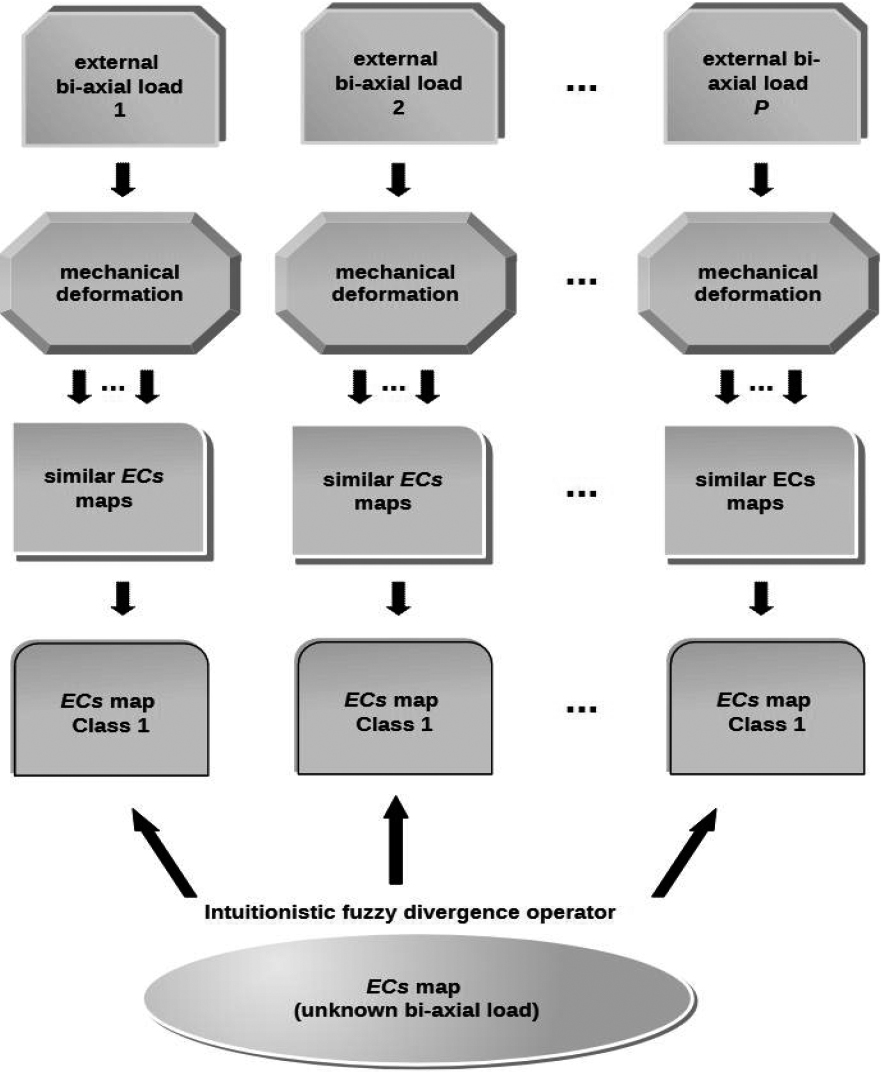
How to associate a ECs map obtained from an unknown load with a particular class of bi-axial loads.
To each pixel,
such that if
and the intuitionistic fuzzy index or hesitation degree
As in [20, 40, 41, 27], we fuzzify the normalized ECs maps using an S-shaped FMF whose shape parameters are adaptively set by satisfying two fundamental principles. The first principle requires maximizing the contrast to highlight better the local variations of the measured electrical voltage. The second principle requires that around the fuzzy membership value equal to 0.5, the dispersion of the information content is maximum.
Unlike what was proposed in [20, 40, 41, 27], we here define a smooth adaptive intuitionistic three parameters S-shaped FMF, in order that the three shape parameters,
and
where
It is worth observing that the choice of Eq. (4) was essentially motivated by the fact that it presents high levels of smoothing but with a mathematical formulation that does not require large computational effort. Figures 3–5 depict typical trends of
Trends of 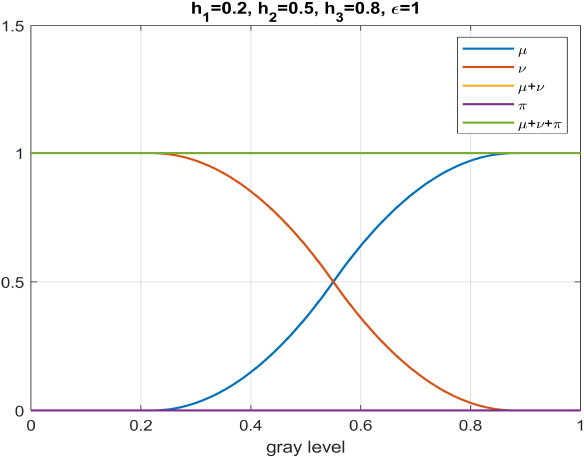
Trends of 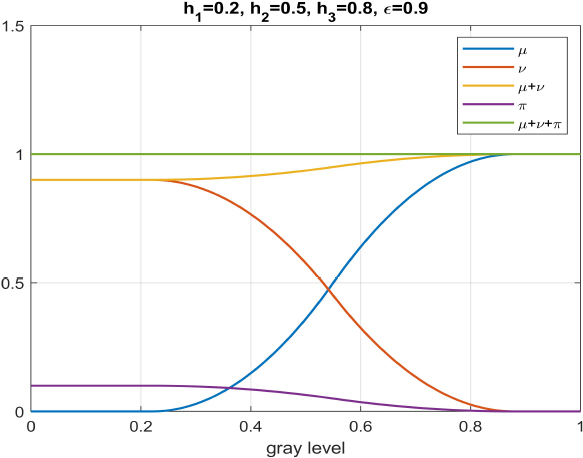
Trends of 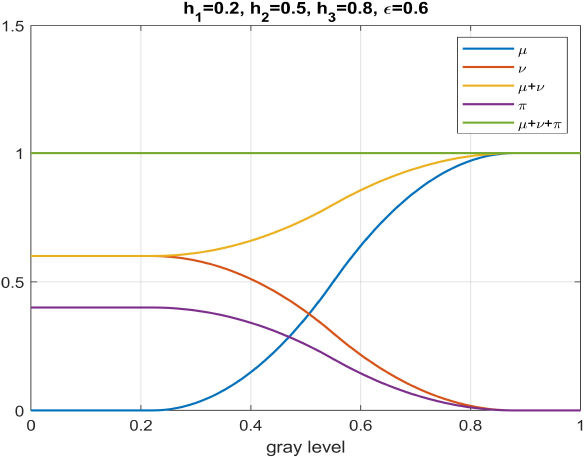
Finally,
To limit the loss of the information content of each image while also reducing noise, in this paper, we consider the peaks of the histogram (since they contain essential information) and cover the range between the two edges. In other words, to determine
More specifically, the distribution of the peaks in the histogram of a generic
and
it appears legitimate, on the fuzzified and normalized images, to identify two particular gray levels,
In other words, once
and
In this paper, we set
Both Eqs (2.2.1) and (2.2.1) highlight the adaptivity of the setting of the shape parameters
In this paper,
in order that, if
otherwise,
Figure 6 summarizes the steps of the adaptive fuzzification procedure of each ECs map.
Schematic illustration of the adaptive fuzzification procedure of ECs maps using contrast enhancement and intuitionistic fuzzy entropy.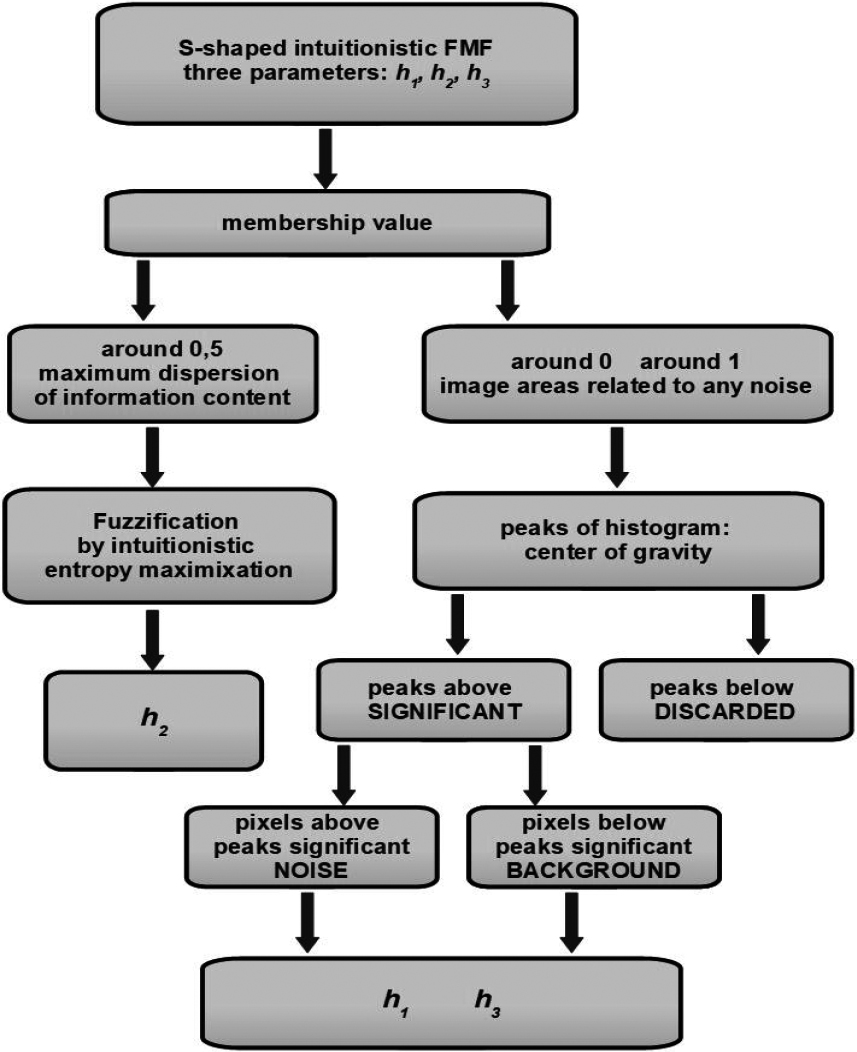
In the exponential intuitionistic fuzzy content framework, for two images,
is due to both
is due to both
which can be assessed as the sum of the following two contributions:
and
We highlight that it was straightforward to prove that Eq. (18), exploiting both Eqs (2.3) and (2.3), represents a non-negative symmetric measure of the distance, in a fuzzy sense, between images.1
We do not report the proof as it is long and extremely tedious.
Operational steps necessary for the definition of the intuitionistic fuzzy divergence operator.
As shown in Fig. 2, let
How to build ECs maps representing each class?
To obtain from each load class a single ECs map representative of the same class, we use an approach based on non-subsampled contourlet transform to avoid the pseudo-Gibbs phenomenon that arises when lack of displacement invariance occurs [45]. Specifically, the procedure decomposes the images belonging to the same class into a one low-frequency sub-band and a series of high-frequency sub-bands (of the same size as the images belonging to the class) depending on both the decomposition level and direction, respectively. In the end, the high-frequency coefficients are reconstructed using the approach proposed in [48] in which the intuitionistic fuzzy entropy has been formulated as in Subsection 2.2.2 allowing to obtain good quality results but with a lower computational load compared to [48].
The numerical and experimental eddy currents databases
Numerical ECs database
Steel plate used for the measurement campaign.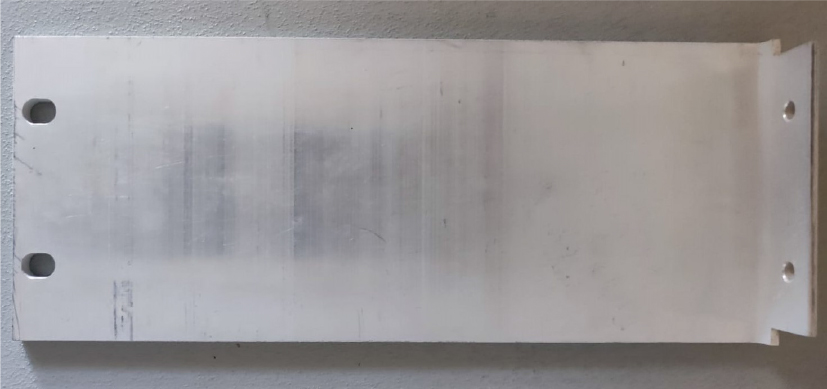
Maps of the recovered amplitude of the magnetic field obtained with COMSOL Multiphysics® when a bi-axial load of (a) 180 kN, (b) 200 kN and (c) 210 kN are applied.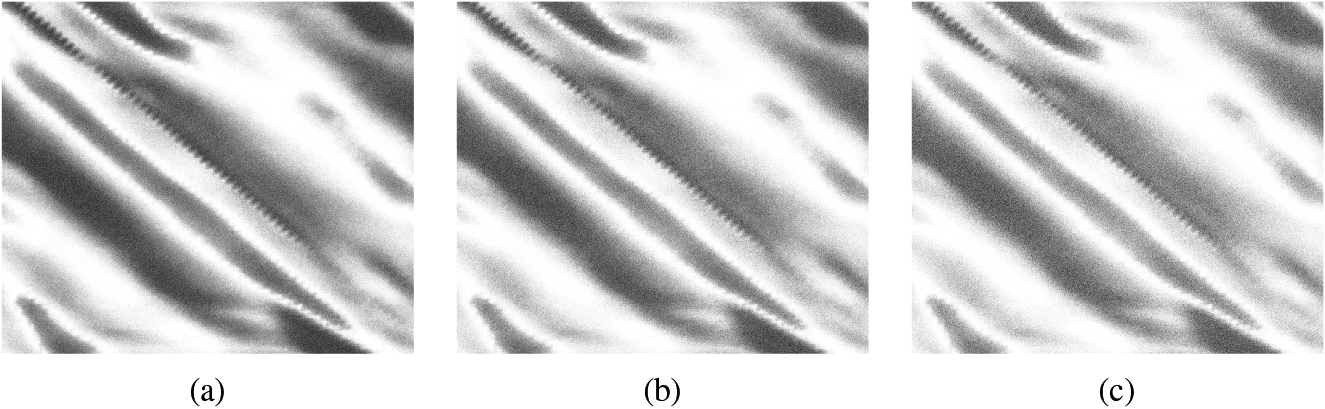
The steel plate, 800 mm
Specific weight, Young’s module, and shear modulus of elasticity.
In the framework of finite elasticity, to highlight significant changes in isochoric deformations, finite increments of the bi-axial load of 5 kN are sufficient.
If this limit was reached, the plate would no longer be usable.
Width of the coil holder, coil holder lift-off, outer/inner diameter of the coil, number of the coils of the exciting coil, diameter of the exciting coil wire, frequency of
The analysis was performed exploiting the Galerkin-FEM approach addressed by suitable scalar and vector potentials [49, 50]. The partial differential equations involved, together with the boundary and initial conditions (chosen to respect the usual protocols for performing non-destructive tests based on ECs), were rewritten and appropriately weighted by “ad-hoc” functions to obtain an equivalent system of integral equations solvable using a Crank-Nicholson approach achieving a corresponding algebraic system. The advantages are twofold: 1) obtaining reliable solutions over the whole frequency spectrum, and 2) allowing a simple analysis of the discontinuity surfaces. Given the high geometric regularity of the plates, it was deemed sufficient to consider tetrahedral finite elements so that the flow lines were as parallel as possible to the edges of the plate. Finally, to discriminate the edge effect from defects, we carried out simulations by keeping the coil at a certain distance from the edge of the plate under load, moving the plate towards the edges, verifying that as 1.4 mm from the edge, the probe can still make the required distinction. To significantly reduce the execution times of each simulation, the meshes were optimized so that the values of three quality indices (Jacobian ratio, maximum corner angle, and asymmetry) were within the allowed limits.
For each simulated bi-axial load (which identifies a bi-axial load class), selecting a specific excitation current (
As an example, the Fig. 9a–c represent typical ECs (magnetic field amplitude) maps belonging to the bi-axial load classes of 180 kN, 200 kN and 210 kN where the transverse bands due to the changes of ECs on the plates are highlighted. Furthermore, it can be observed that an increase in the bi-axial load increases the extension of the most stressed areas. Finally, the same number of maps were numerically constructed in the absence of bi-axial load, highlighting the total absence of transversal bands, as already highlighted in [39] where the same ECs methodology was used to treat a problem similar to the one studied in this paper.
Experimental ECs map (amplitude of the magnetic field) when a bi-axial load of (a) 180 kN, (b) 200 kN and (c) 210 kN are applied.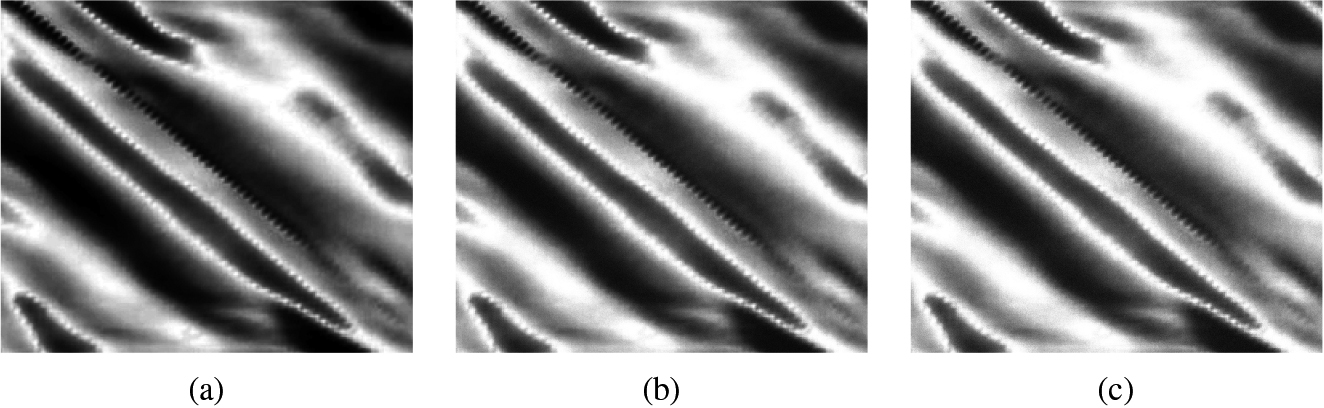
(a) Electronic equipment acting as a system for acquiring and analyzing data from the measurement system based on (b) FLUXSET probe.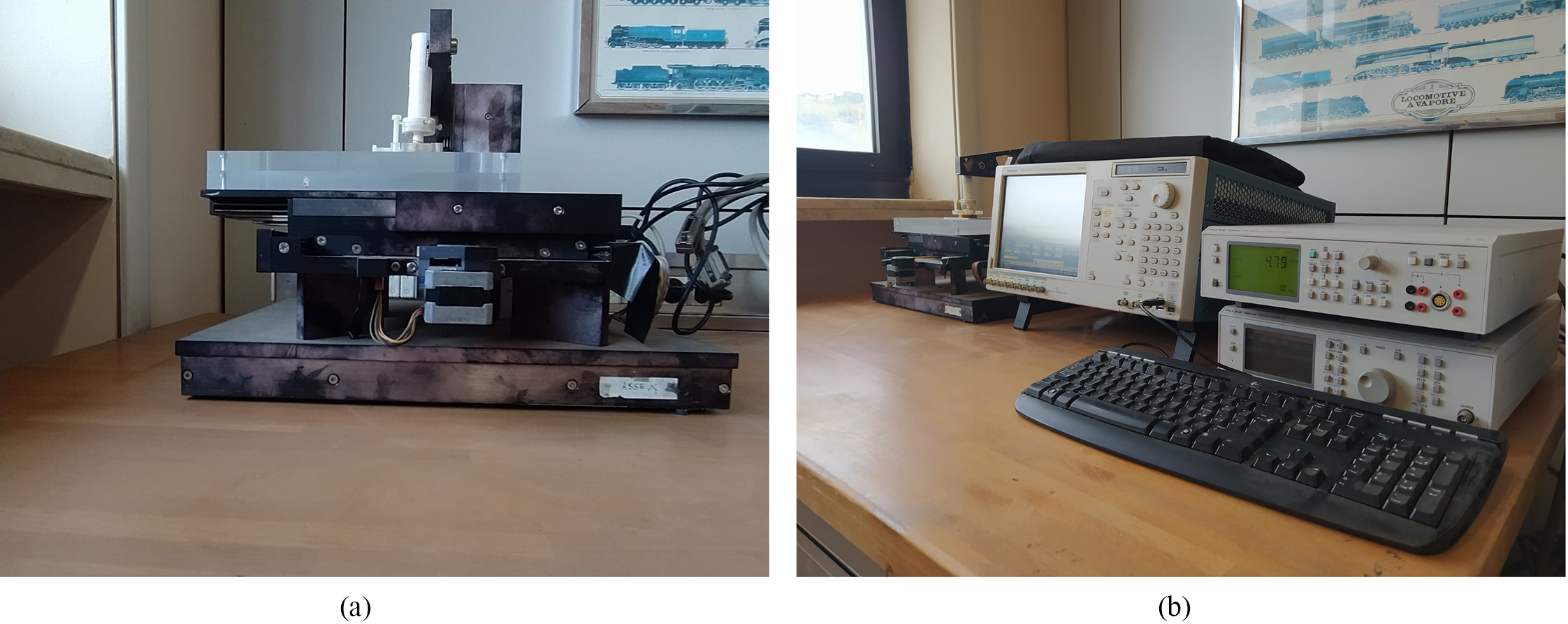
From the ECs maps relating to a single bi-axial load subclass, a single ECs map representing the entire subclass was produced using the methodology proposed in this paper. Then, the intuitionistic fuzzy divergence proposed in this paper, in a fuzzy sense, fuzzily quantifies the dissimilarity between ECs maps. Since this intuitionistic divergence is also a distance, it quantifies how far one map is from all the others. Once the training phase was completed (destined for the construction of the ECs maps representing each subclass), a respective testing database was produced, with the same operating methods as the training database containing, for each load class, 100 ECs maps requiring four subclasses containing as many maps.
At the Electrotechnics and Non-Destructive Testing Laboratory of the “Mediterranea” University of Reggio Calabria – Italy, the steel plate shown in Fig. 8, produced by a steel company specialized in steel structures for civil buildings, and of the same dimensions and electromechanical characteristics described in Subsection 3.1, was subjected, via a cruciform test machine, to increasing bi-axial loads with the same operating mode described in 3.1. Once a specific bi-axial load was applied, the plate was analyzed using the FLUXSET sensor created as per the project in Subsection 3.1 mounted on the automatic scanning system shown in Fig. 11a capable of scanning the plate with the same operating mode described in Subsection 3.1. Once the ECs signal has been sampled, the electronic equipment displayed in Fig. 11b produces the four ECs maps associated with that load. The procedure was then repeated by slightly varying the applied load to simulate slight uncertainty in it. The load was then increased, sporadically, by 5 kN to obtain a database of ECs experimental maps obtained in the same conditions and in the same number as those described in Subsection 3.1 also producing the following-classes relating to the plate in the absence of bi-axial load. At the same time, for each applied load, the database of experimental ECs used in the testing phase was produced following what is described in Subsection 3.1.
It can be observed experimentally that, all things being equal, the experimental ECs maps are completely similar to those obtained numerically. By way of example, Fig. 9a–c display the numerical ECs maps obtained under the same conditions as the maps Fig. 10a–b from which a certain qualitative correspondence can be deduced. From the analysis of the aforementioned maps, no particular differences are highlighted as the external bi-axial load applied increases. However, it is worth observing that if the differences between the maps were evident to the naked eye, even a small increase of 5 kN in the applied bi-axial load would determine, locally, an increase in deformation such as to obtain incompatible internal stress distributions with structural safety. It follows that, in these cases, it would not be necessary to elaborate the maps to establish the bi-axial load that caused that particular state of stress: the increase in deformation is such as to require the immediate replacement of the structural element. So, it seems sensible to have an effective and efficient tool available, capable of operating above all on maps that are very similar, in a fuzzy sense, to each other.
Results
In this section, we evaluate the performance of the proposed approach by comparing the performance with that obtained from AI classification methods, nowadays considered the “gold standard” for this type of problem. All the steps of the proposed approach, as detailed in Section 2 (fuzzification, intuitionistic fuzzy divergence, creation of subclasses and construction of maps that can be associated with each subclass), were implemented using MatLab® R2023b ToolBox running on a 2.9 GHz Intel Core 2 CPU to construct, both numerically and experimentally, all subclasses for each applied load (including subclasses of images obtained under no load).
Ranges of fuzziness indices computed for numerically obtained ECs maps (amplitude of the magnetic field).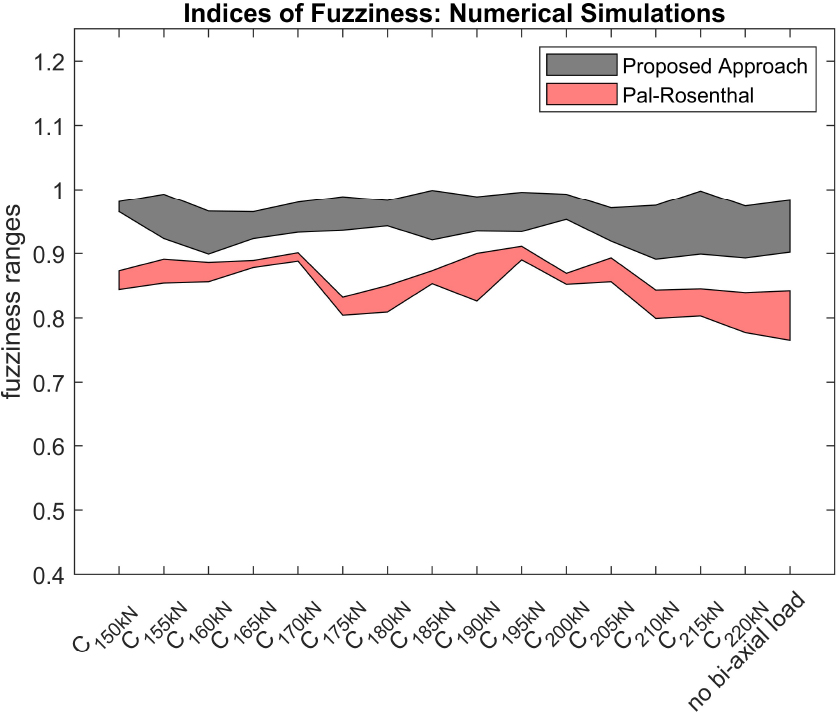
Ranges of fuzziness indices computed for experimentally obtained ECs maps (amplitude of the magnetic field).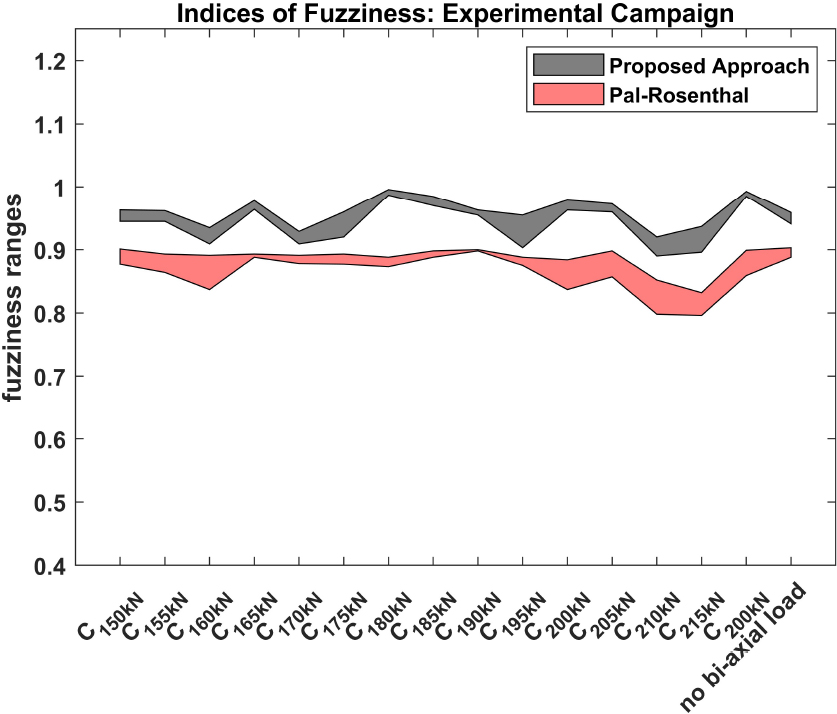
Correspondence between numerical ECs maps of magnetic field amplitude representative of each class with the experimental ones.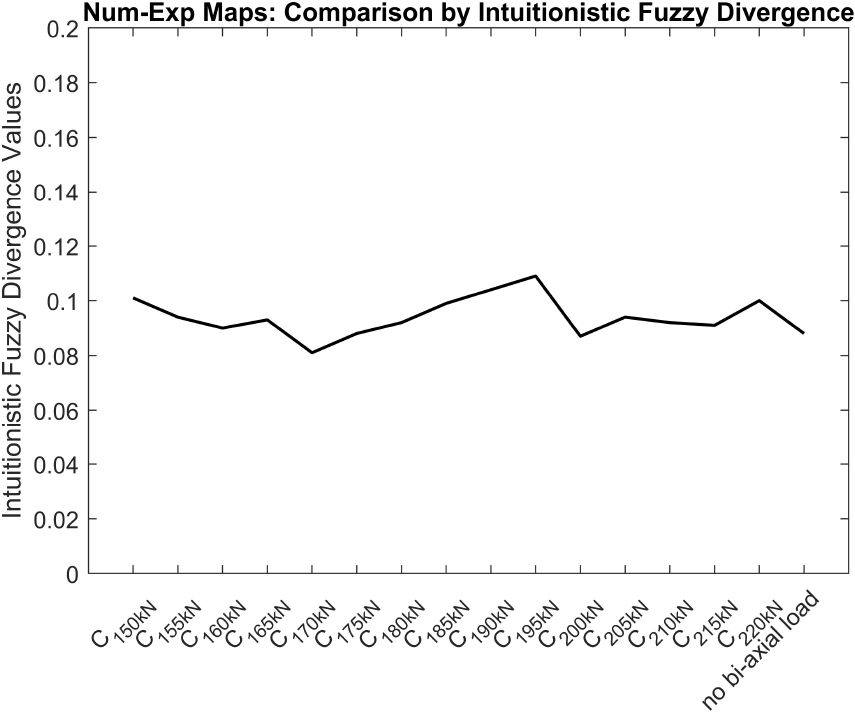
Classification of the numerical ECs Fig. 9a–c and on ECs map achieved without bi-axial load: The proposed procedure correctly classifies them.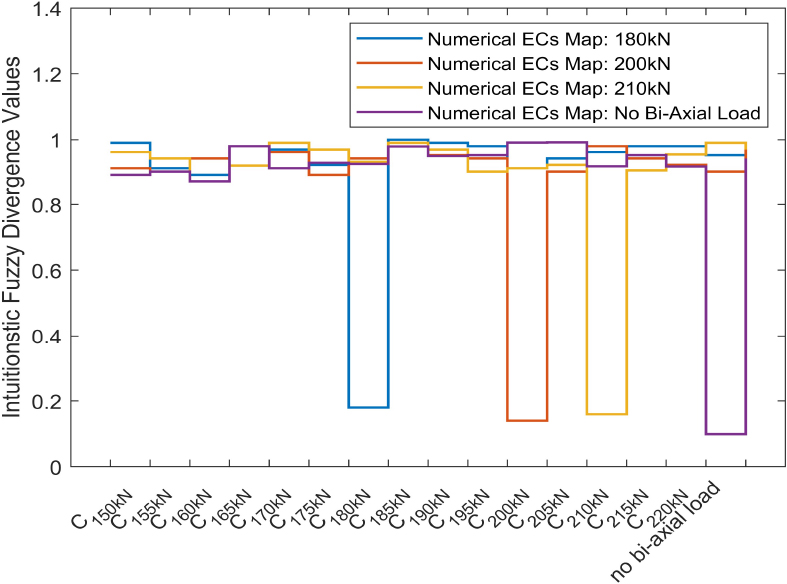
Interestingly, the proposed adaptive fuzzification procedure certainly acts on the gray levels of the image pixels, but the intuitionistic approach allows considering any uncertainties and/or hesitations in the membership values. Then, with these premises, it makes sense to preliminarily quantify the fuzziness content present in each treated image so that the exploitation of the proposed procedure makes sense. In this regard, the scientific literature suggests evaluating this content by numerical synthetic indexes based on the distance between a fuzzified image and its nearest ordinary image [51]. In this paper, given that the intuitionistic fuzzy divergence Eq. (18) can be assimilated as a measure of the distance between images, it seems sensible to use it as a distance between a fuzzified image and its nearest ordinary image. We will also use the Pal-Rosenthal non-fuzziness index [51] for comparison. Therefore, in MatLab® R2023b ToolBox, both indices were implemented and, for each of the four subclasses associated with each load (including the class of maps obtained in the absence of load), the respective ranges of possible values were calculated. The Figs 12 and 13 highlight, respectively, the range of values of the fuzziness content both for the maps ECs of magnetic field amplitude obtained numerically and experimentally: the high values achieved of the fuzziness index and, correspondingly, low values of the Pal-Rosenthal index, show an equally high fuzziness in each ECs map analyzed, even if the increase in the biaxial load does not correspond to an increase in the fuzziness content of the ECs maps (both obtained numerically and experimentally). Furthermore, the numerical simulations highlighted wider fuzziness ranges than those obtained from experimental maps. This is essentially because the numerical approach used solves an algebraic system equivalent to the starting differential system, obtaining approximate solutions which usually deviate from the real solutions, amplifying the range of possible values with consequent variation of the values of Eq. (18) which determines the fuzziness content of each map.
On the correspondence between numerical and experimental ECs maps
Once the fuzziness content of each ECs map justifies using the proposed classification approach, the correspondence between the numerically obtained ECs maps with the experimental ECs maps has been verified. For each pair of the maps above, the proposed intuitionistic fuzzy divergence was computed, obtaining minimal values. This allows us to state that the software tool presented in this paper can be a good starting point for obtaining a more sophisticated device capable of replacing the experimental apparatus. The example shown in Fig. 14 highlights the excellent correspondence between the numerical ECs maps of magnetic field amplitude representative of each class with the experimental ones: the values obtained, which are around the value 0.1, confirm that, numerically, these maps fuzzily correspond to those obtained experimentally (similarly it was found for the module, the real part and the imagination of the magnetic field).
Classification of the experimental ECs Fig. 10a–c, and on ECs map achieved without bi-axial load: the proposed procedure correctly classifies them.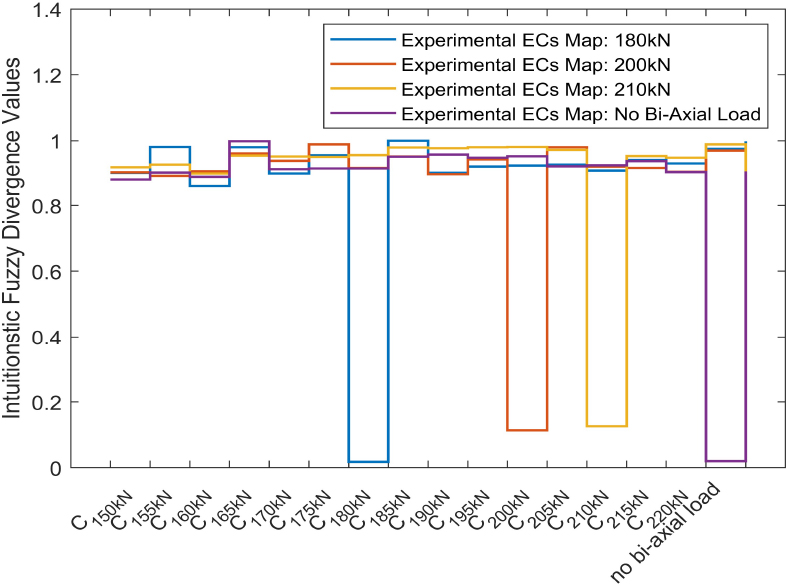
Classification percentages of the magnetic field amplitude in the numerical maps for each class of applied load (including the class of maps obtained numerically in the absence of load).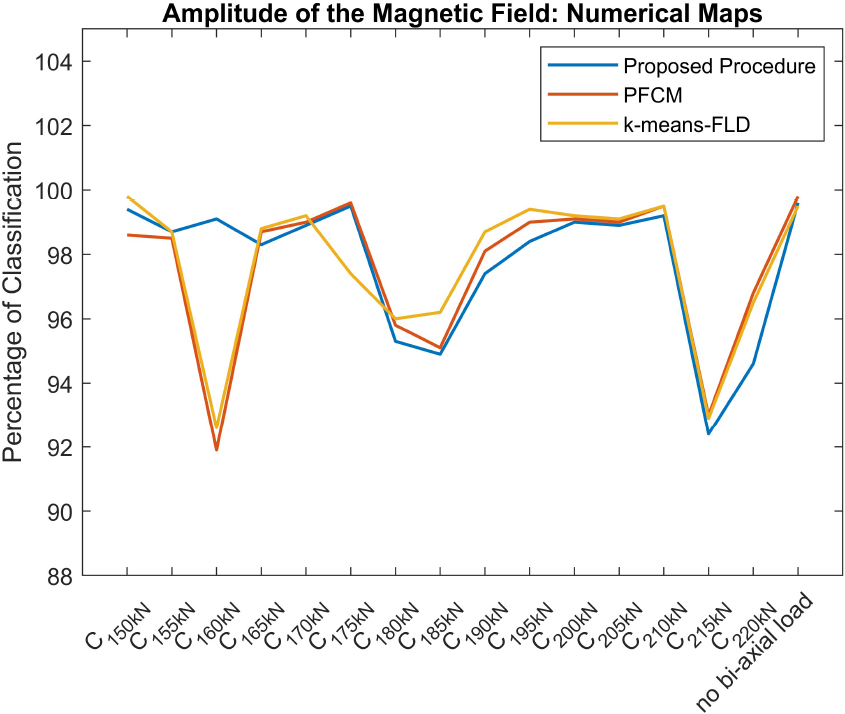
Classification percentages of the magnetic field amplitude in the experimental maps for each class of applied load (including the class of maps obtained numerically in the absence of load).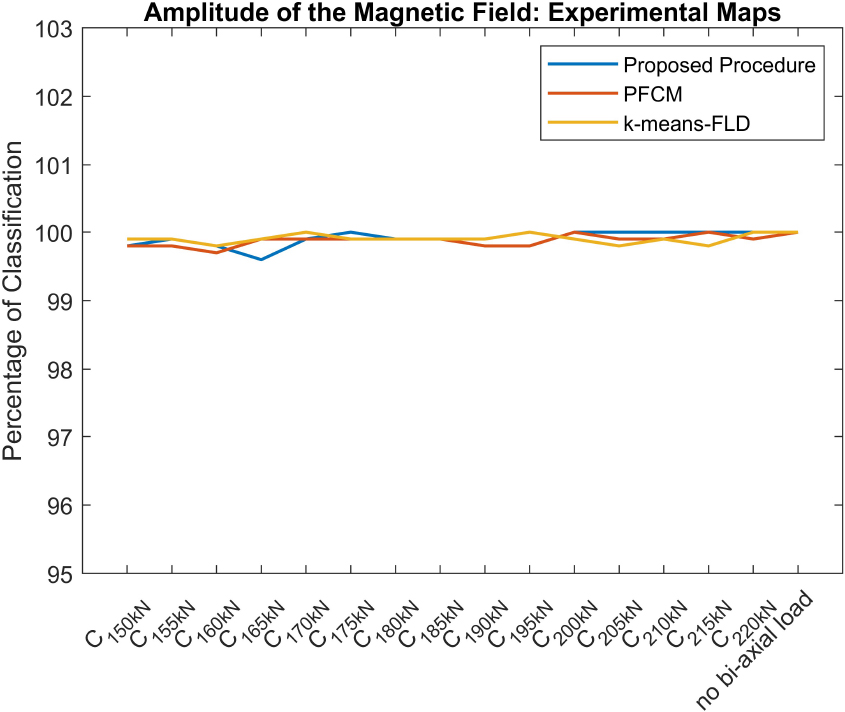
Comparison of CPU-time for processing ECs maps (magnetic field amplitude). 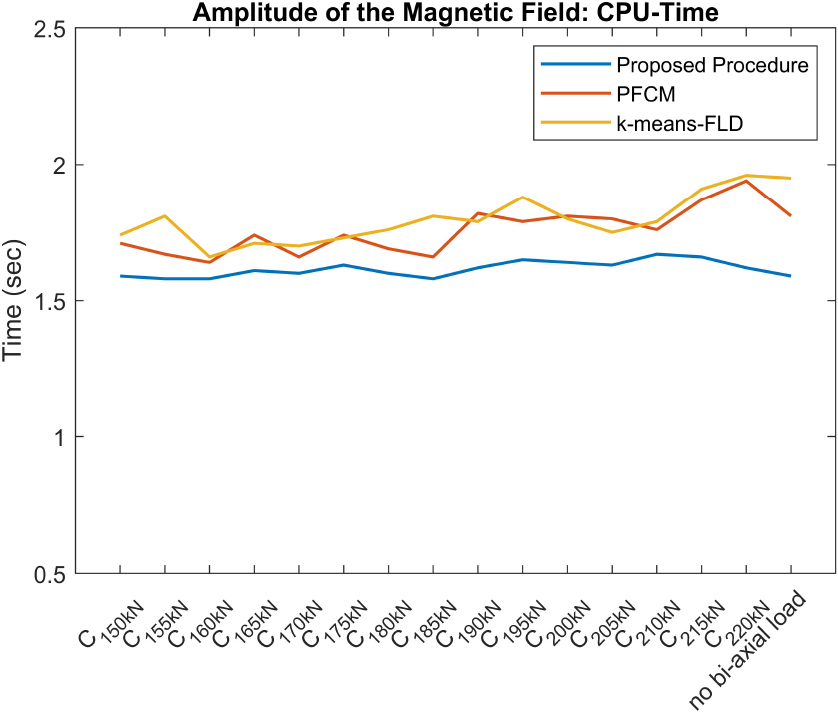
Percentages of classification of the phase of the magnetic field in numerical ECs maps.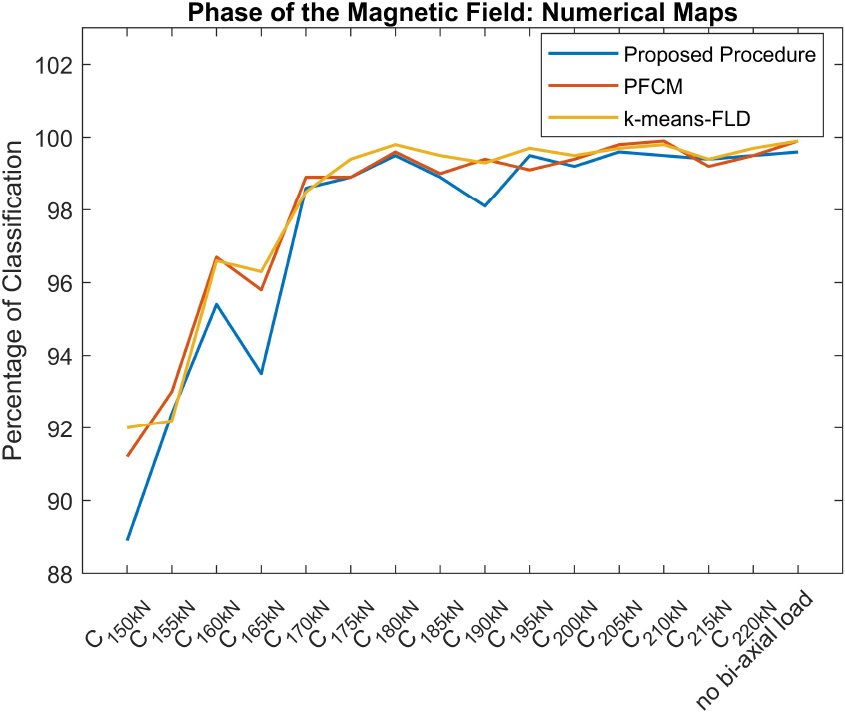
Percentages of classification of the phase of the magnetic field in experimental ECs maps.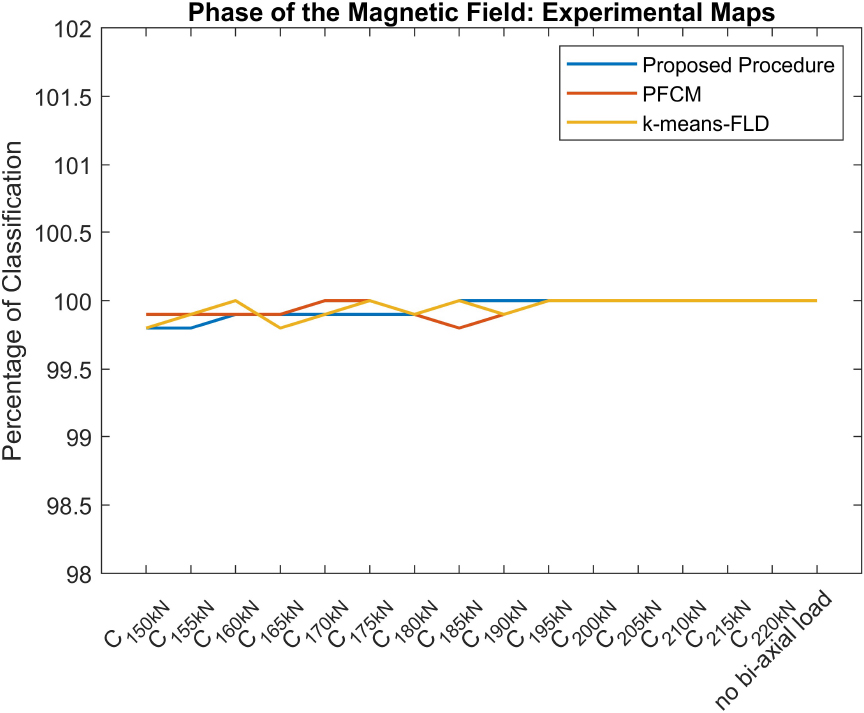
CPU-time for processing ECs maps (phase of the magnetic field) with the procedures used.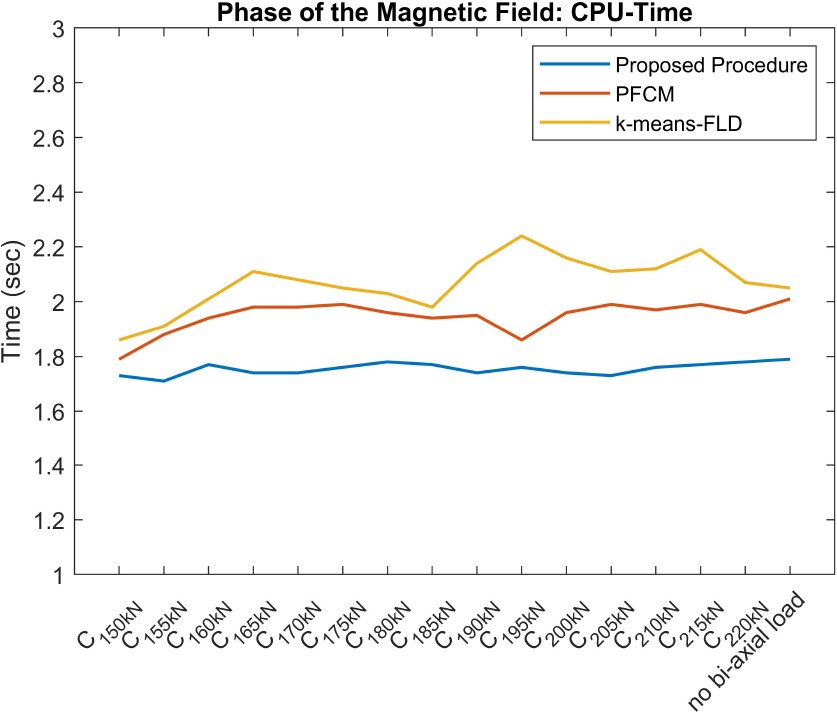
Percentages of classification of the real part of the magnetic field in numerical ECs maps.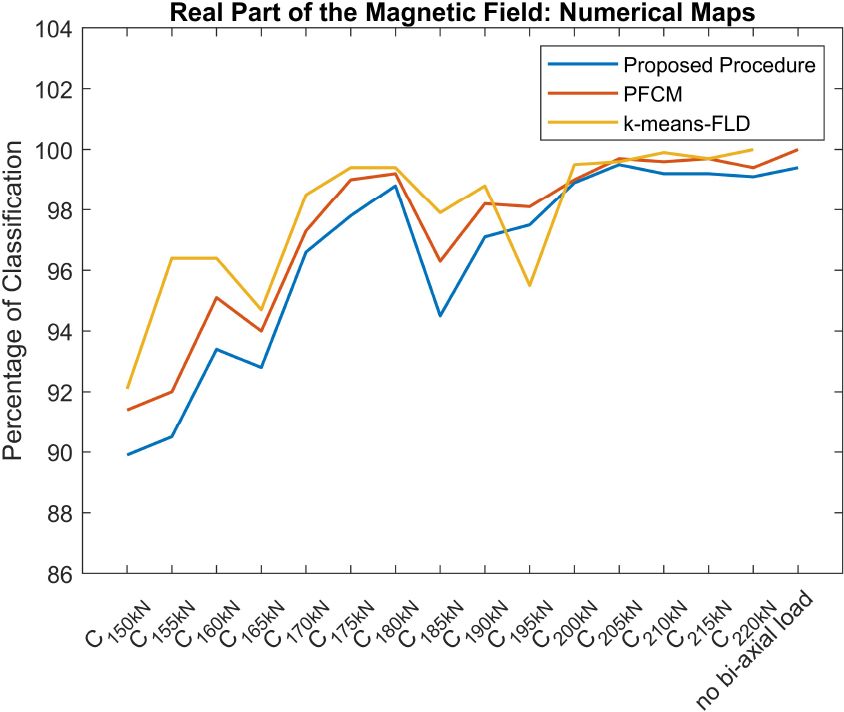
Percentages of classification of the real part of the magnetic field in experimental ECs maps.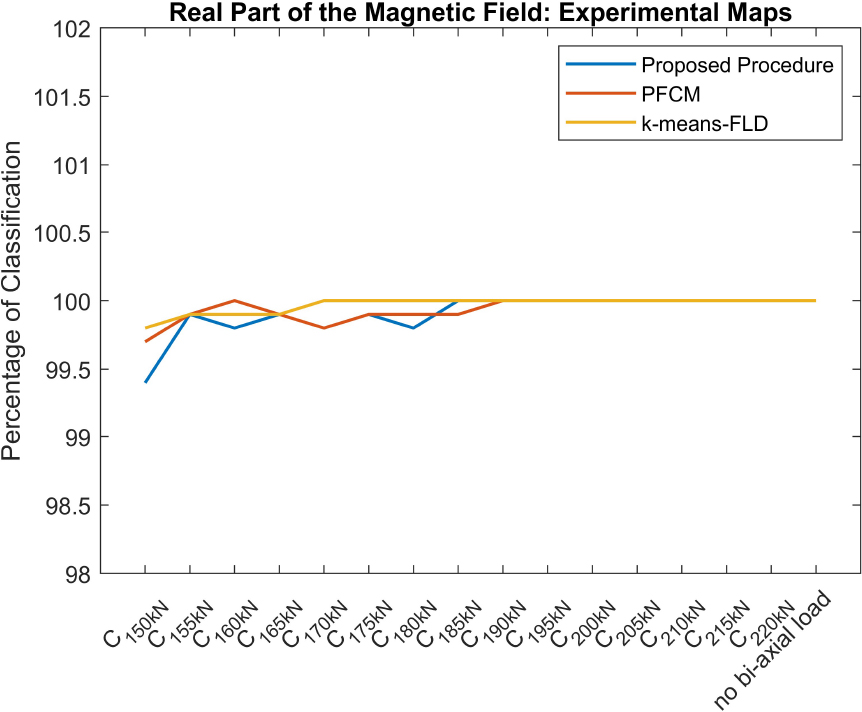
CPU-time for processing ECs maps (real part of the magnetic field) with the procedures used.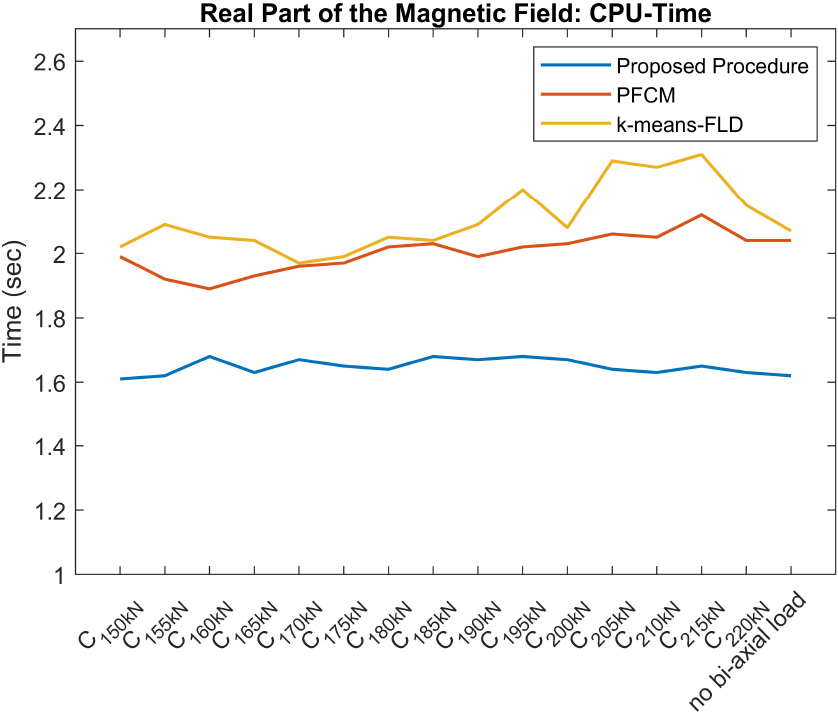
Percentages of classification of the imaginary part of the magnetic field in numerical ECs maps.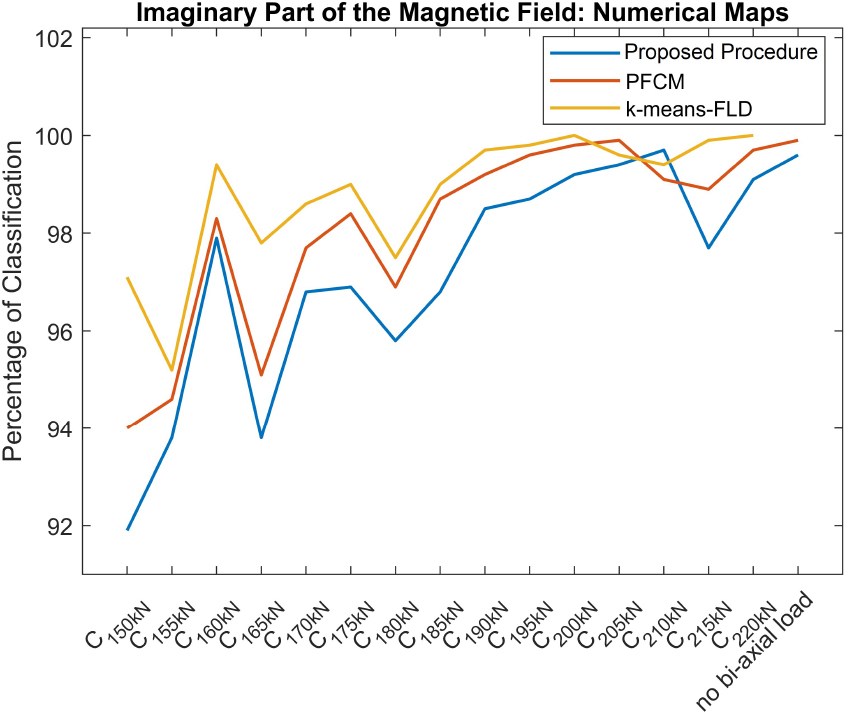
Percentages of classification of the imaginary part of the magnetic field in experimental ECs maps.
CPU-time for processing ECs maps (imaginary part of the magnetic field) with the procedures used.
By way of example, Figs 15 and 16 display the classifications of the images, highlighting that the proposed procedure classifies them correctly with a high degree of confidence. Obviously, the numerical ECs maps, due to the inevitable rounding and truncations that the numerical algorithm involves, classifies the maps correctly, but the level of confidence is lower (divergence values slightly higher than in the previous case).
The classification performance of the proposed fuzzy approach was compared using two latest generation fuzzy image classification approaches. The first classifier, used as a term of comparison, is based on a type-2 fuzzy clustering technique over double distances in which the expansion factor is directly involved in the adaptivity (
From the analysis of these trends, it can be seen that the classification percentage obtained with the proposed procedure is entirely comparable with the percentages obtained with
Similarly, Figs 20 and 21 display the phase of the magnetic field classification performance for both numerical and experimental ECs maps, while Fig. 22 shows the corresponding CPU time. Furthermore, in this case, the classification of the numerical plates suffers from rounding errors but certainly with limited amplitudes with highly competitive CPU times. Moreover, again, Figs 23 and 24 depict the classification performances of the real part of the magnetic field for numerical and experimental ECs maps, respectively, while Fig. 25 shows the corresponding competitive CPU-time regarding the other techniques considered. Finally, Figs 26 and 27 depict the classification performances of the imaginary part of the magnetic field for numerical and experimental ECs maps, respectively, while Fig. 28 shows the corresponding CPU-time.
They show that the classification performance of the proposed fuzzy procedure (concerning the amplitude, phase, the real and imaginary part of
Proposed procedure and “knowledge levels” of existing steel structures
As for existing masonry and reinforced concrete structures, the Technical Regulations also define three levels of knowledge of the state of health of the plates for existing steel structures. As the level of knowledge increases, the information available relating to the properties of the materials and the construction details will increase. Since the third level highlights whether the resistance of the materials has not undergone reductions, a portable device capable of carrying out this evaluation in-situ is needed. The procedure proposed in this paper highlights a reduced computational load, as evidenced by the reported CPU times. Furthermore, the necessary mathematical formulations require little effort in hardware translation to have an effective and efficient portable device available to analyze in-situ the ECs maps according to the protocols defined by current legislation (UNI EN ISO).
Conclusions and perspectives
In this work, we have proposed, implemented, and tested an innovative fuzzy classification approach of ECs maps, generalizing an existing approach in the literature through fuzzy intuitionistic divergence formulations. The proposed fuzzy classification has been performed on ECs maps obtained numerically through a FEM-Galerkin approach and experimentally through measurements carried out by a FLUXSET probe, highlighting the approach’s reliability and the robustness of the implemented numerical design procedure. Once the fuzziness content of each ECs map has been verified using an “ad-hoc” formulated intuitionistic fuzzy index, which allows the proposed intuitionistic fuzzy approach to be used, each of the classes that collected ECs maps obtained from similar loads has been associated with a ECs map representative of the class, obtained adaptively. Even if the proposed procedure was used to evaluate the state of health of steel plates subjected to bi-axial loading, the flexibility of the proposed approach also allows it to be used for loads of different nature since the approach is based on analysis of ECs maps regardless of the type of external load applied that determined them. The quality of the performances obtained encourages further developments of the ongoing research, given that the classification percentages are comparable with those obtained through more sophisticated but more expensive approaches in terms of processing time testing the procedure on plates of different sizes and/or metallic materials. Finally, we point out that, in the future, our attention will essentially devote to implementing a dynamic fuzzy intuitionistic approach to handle the inevitable increase in the fuzziness of each ECs map derived from the use of a more accurate numerical model for the Ecs maps, which would consider the substantial variations of electrical conductivity and magnetic permeability deriving from it.
Footnotes
Acknowledgments
This work has been supported by both the NdT&E Lab, DICEAM Department “Mediterranea” University, Reggio Calabria, Italy; the Italian National Group of Mathematical Physics (GNFM-INdAM) and the University of Messina through FFABR-UNIME 2021.