



Abstract
In this paper, we tackle the challenging task of reconstructing Received Signal Strength (RSS) maps by harnessing location-dependent radio measurements and augmenting them with supplementary data related to the local environment. This side information includes city plans, terrain elevations, and the locations of gateways. The quantity of available supplementary data varies, necessitating the utilization of Neural Architecture Search (NAS) to tailor the neural network architecture to the specific characteristics of each setting.
Our approach takes advantage of NAS’s adaptability, allowing it to automatically explore and pinpoint the optimal neural network architecture for each unique scenario. This adaptability ensures that the model is finely tuned to extract the most relevant features from the input data, thereby maximizing its ability to accurately reconstruct RSS maps. We demonstrate the effectiveness of our approach using three distinct datasets, each corresponding to a major city. Notably, we observe significant enhancements in areas near the gateways, where fluctuations in the mean received signal power are typically more pronounced. This underscores the importance of NAS-driven architectures in capturing subtle spatial variations. We also illustrate how NAS efficiently identifies the architecture of a Neural Network using both labeled and unlabeled data for Radio Map reconstruction. Our findings emphasize the potential of NAS as a potent tool for improving the precision and applicability of RSS map reconstruction techniques in urban environments.
Keywords
Introduction
Retrieving the exact position of the connected objects has become an important feature of the Internet of Things (IoT). Such connected objects have indeed been widespread over the last few years thanks to the low cost of the radio integrated chips and sensors and their possibility of being embedded in plurality of the devices.
By this they can help in fast development of large-scale physical monitoring and crowdsensing systems (like smart cities, factories, transportation, etc.). For the location-dependent application and services these abilities to associate accurate location with physical data gives huge opportunities [1]. For example, the fine-grain and dynamic update of air pollution and/or weather maps could benefit from geo-referenced mobile sensing1
As an alternative, one can opportunistically measure location-dependent radio metrics, like Received Signal Strength (Indicator) (RSSI), Time (Difference) of Arrival, Angle of Arrival, etc., because these sensor nodes communicate with one/several gateways at the same time (e.g. while sending a packet to the infrastructure to store this data in the cloud/server). Based on these metrics, there exist several methods to determine the node position: trilateration, triangulation, proximity detection, or fingerprinting [2, 3, 4]. We will focus on the last approach – fingerprinting [5] – which requires (ideally) full map of mentioned above radio metrics, covering the zone of interest. However, collecting metrics in each point of the zone of interest is impractical and time costly in real-world scenarios, therefore most approaches rely on sparse and non-uniformly distributed measurements.
In this sense, classical map interpolation techniques such as RBF[6, 7, 8] or kriging [9, 10] are used. Although these methods are relatively fast, they are quite weak in retrieving and predicting the complex and heterogeneous spatial patterns that are usually observed in real life signals (e.g., sudden and/or highly localized transient variations in the received radio metric due to specific environmental, local or topological effects). Another approach consists on deterministic simulation such as Ray-Tracing tools [11, 12, 13, 14]. Given some real field measurements and then calibrated over them, these models predict the radio propagation while simulating electromagnetic interactions with the environment. These technologies, however, need a complete description of the environment (properties of the materials of the obstacles, buildings, shape,etc.). Moreover, they are computationally complex, and in case of minor changes in the local area, these simulations should be re-run again. Recently, studies have employed machine learning for this task by considering radio maps as images and adapting neural network models that have been proposed for image completion. These models are based on the fully generated dataset by Ray-Tracing tools for predicting the signal propagation given the buildings mask and position of the transmitter [15]; or predicting the received power value for the Long Term Evolution (LTE) of the signal with use of additional information and neural networks [16, 17] with handcrafted structures.
In this work we will focus on the received signal strength map reconstruction, where only small amount of ground truth GPS-tagged measurements are available preventing to use existing NN models with handcrafted architectures and for which Ray-Tracing models could not be applied due to the lack of information about physical properties of the environment or due to high computational complexity. Our approach is based on Neural Architecture Search (NAS) [18] which aims to find an optimized NN model for this task. We show that by employing the latter technique, it is feasible to learn model parameters while simultaneously exploring the architecture. In addition, we employ unlabeled data in conjunction with ground-truth measurements in the training phase, as well as side information that accounts for the existence of buildings, to obtain knowledge and improve the model’s performance. We assess our technique using three RSSI Map reconstruction collections, including one we produced for the city of Grenoble in France. In the case of the latter, we thoroughly examine its properties. In particular, we show that unlabeled data can effectively be used to find an efficient optimized NN model and that the side information provides valuable knowledge for learning. The obtained model is shown to have generalization ability on base stations that were not used in the training phase. The contribution of this paper is twofold:
We propose a unified framework with the use of side information, for which we study the generalization ability of a neural network model which architecture is optimized over labeled and unlabeled data using side-information. This is an extension of the work of [19, 20]. Furthermore, we provide empirical evaluation over three large-scale RSSI collections showing that the proposed approach is highly competitive compared to the state-of-the-art models in terms of quality metrics.
Classical techniques such as radial basis functions (RBF) or kriging [5] are simple and fast, but they are poor at predicting the complex and heterogeneous spatial patterns commonly observed in real-world radio signals (e.g., sudden and/or highly localized transient variations in the received signal due to specific environmental or topological effects, such as specific building shapes, presence of public furniture, ultra-navigation, etc.). Furthermore, data augmentation approaches for artificially increasing the number of measurements in radio map reconstruction issues have been developed.
The goal is to use the synthetic data created as extra data to train complex map interpolation models. However, these techniques need a highly thorough description of the physical environment and are unable to predict dynamic changes in the environment over time. A key bottleneck is their high computational complexity.
In the following, we go through some more relevant work on RSSI map reconstruction, including interpolation and data-augmentation techniques, as well as machine learning approaches.
Interpolation and data-augmentation techniques
Kriging or Gaussian process regression [21] is a prominent technique for radio map reconstruction in the wireless setting that takes into consideration the distance information between supplied measured locations while attempting to uncover their underlying 2D dependency.
Radial basis functions (RBF) [5, 8, 6] are another approach that simply considers the dependent on the distance between observed locations. As a result, this method is more adaptive and has been found to be more tolerant to some uncertainty [22]. Furthermore, in order to compare the performance of the RBF with different kernel functions for the map reconstruction of signal strength of Long Range (LoRa) radio waves, [5] divided all of the points in a database of outdoor RSSI measurements into training and testing subsets, with the linear kernel showing the best accuracy in both standard deviation and considered metric. The two approaches stated above (which depend on kernel techniques and underlying spatial relationships of the input measurements) need a lot of input data to provide reliable interpolation results, making them sensitive to sparse training sets. These methods have consequently been considered in pair with crowdsensing, where, for example in [10], to improve the performance of basic kriging, one calls for measuring the radio metric in new points/cells where the predicted value is still presumably imprecise. A quite similar crowdsensing method has also been applied in [23] after considering the problem as a matrix completion problem using singular value thresholding, where it is possible to ask for additional measurements in some specific cells where the algorithm has a low confidence in the predicted result. In our case though, we assume that we can just rely on a RSSI map with few ground-truth initial RSSI measurements.
Another approach considered in the context of indoor wireless localization (with map reconstruction firstly) relies on both measured field data and an a priori path loss model that accounts for the effect of walls presence and attenuation between the transmitter and the receiver [24] by using the wall matrix, which counts the number of walls along the path from the access point to the mobile location and penalize value according to that number. In some outdoor settings, training points are divided into a number of clusters of measured neighbors having specific RSSI distributions, and local route loss models are applied in an effort to capture localized wireless topology effects in each cluster [25]. However as parametric path loss models are usually quite imprecise, these techniques have a limited generalization capabilities and require additional impractical in-site (self-)calibration. A quite similar approach, except the use of additional side information, is followed in [26], where they propose an algorithm called SateLoc. Based on satellite images, it is then suggested to perform a segmentation of the areas “crossed” by a given radio link, depending on their type (e.g., terrain, water, forest, etc.). Then, proportionally to the size of the crossed region(s), power path loss contributions are computed according to a prior model parameters (i.e., associated with each environment type) and summed up to determine the end-to-end path loss value.
One more way to build or complete radio databases stipulated in the context of fingerprinting based positioning consists in relying on deterministic simulation approach, namely Ray-Tracing tools (e.g., [13, 27, 28, 14, 12]). This technique aim at predicting in-site radio propagation (i.e., simulating electromagnetic interactions of transmitted radio waves within an environment). Once calibrated with a few real field measurements, such simulation data can relax initial metrology and deployment efforts (i.e., the number of required field measurements) to build an exploitable radio map, or even mitigate practical effects that may be harmful to positioning, such as the cross-device dispersion of radio characteristics (typically, between devices used for offline radio map calibration and that used for online positioning). Nevertheless, these tools require a very detailed description of the physical environment (e.g., shape, constituting materials and dielectric properties of obstacles, walls…). Moreover, they are notorious for requiring high and likely prohibitive computational complexity in real applications. Finally, simulations must be re-run again, likely from scratch, each time minor changes are introduced in the environment, e.g. the impact of human activity (like changing crowd density, temporary radio link obstructions).
NN based models trained after data augmentation
There is an increasing interest in applying machine and deep learning methods to the problem of RSSI map reconstruction. These approaches have shown an ability to capture unseen spatial patterns of local effects and unseen correlations. Until now, to the best of our knowledge, these algorithms were primarily trained over simulated datasets generated by data-augmentation approaches (that were mentioned above).
In [15], given a urban environment, city geography, transmitter (Tx) location, and optionally pathloss measurements and car positions the authors introduce a UNet-based neural network called RadioUNet in the supervised learning setting, which outputs radio path loss estimates trained on a large set of generated using the Dominant Path Model data [29].
The authors of [30] propose a two-phase transfer learning with Generative Adversarial Networks (GAN) , which comprises two stages, to estimate the power spectrum maps in the underlay cognitive radio networks. The domain projecting (DP) framework is used to first project the source domain onto a neighboring domain. The target domain’s entire map is then rebuilt or reconstructed using the domain completing framework and the recovered features from the surrounding domain.
For training of the DP, fully known signal distribution maps have been used. In another contribution, to improve the kriging predictions the authors have used the feedforward neural network for path loss modelling [31], as conventional parametric path loss models has a small number of parameters and do not necessarily consider shadowing besides mean power attenuation.
Apart from wireless applications, similar problems of map reconstruction also exist in other domains. In [32] for instance, the goal is to create the full topographic maps of mountains area given sparse measurements of the altitudes values. For this purpose, they use a GAN architecture, where in the discriminator they compare pairs of the input data and the so-called “received” map, either generated by the generator or based on the given full true map. In other work [33] the authors estimate the sea surface temperature with use of GAN architecture in the unsupervised settings but having a sequence of corrupted observations (with different cloud coverage) and known mask distribution. Another close more general problem making extensive use of neural networks is the image inpainting problem, where one needs to recover missing pixels in a single partial image. By analogy, this kind of framework could be applied in our context too, by considering the radio map as an image, where each pixel corresponds to the RSSI level for a given node location. It has been shown in [19] the interpretation of collected measurements on a map as an image with some pixels gives overall better result. But the problem is in consumed time as it does not give the generalized model and do not use the additional information about the local environment. Usually, such image inpainting problems can be solved by minimizing a loss between true and estimated pixels, where the former are artificially and uniformly removed from the initial full image. This is, however, not possible and not realistic in our case, as only a few ground-truth field measurements collected on the map can be used to reconstruct the entire image.
In contrast to the previous approaches, in our study we consider practical situations where data-augmentation techniques cannot be used, mainly because of unknown environment characteristics and computational limitations, and where only a small amount of collected ground-truth measurements is available.
Finally, a few contributions aim at predicting the received power value based on neural networks and additional information. For instance, in [16, 17, 34], RSS values are predicted in exact points, given meta information such as the radio characteristics (e.g., transmission specifications or relationship between the receiver (Rx) and the transmitter (Tx), like horizontal/vertical angle, mechanical/electrical tilt angle, 2D/3D distance, base station antenna orientation, etc.) and/or prior information about the buildings (e.g., height and presence). In case the latter information is missing, predictions can be made also by means of satellite images (e.g., paper [34]). In these papers though, the map reconstruction cannot be performed directly. As the prediction is realized for each point separately, it is thus time consuming. Moreover, the authors do not take into account the local signal values, but only the physical parameters and physical surroundings (similarly to standard path loss models).
Semi-supervised learning
The constitution of coherent and consistent labeled collections are often done manually. This necessitates tremendous effort, which is generally time consuming and, in some situations, unrealistic. The learning community has been looking at the concept of semi-supervised learning for discrimination and modeling tasks since the end of the 1990s, based on the observation that labeled data is expensive while unlabeled data is plentiful and contains information on the problem we are trying to solve.
The three main families of Semi-supervised Learning (SSL) approaches are Generative, Graph-based and Discriminant methods [35].
Generative methods: Semi-supervised learning with generative models involves estimating the conditional density using a maximum likelihood technique to estimate the parameters of the model. In this case, the hidden variables associated with the labeled examples are known in advance and correspond to the class of these examples. The basic hypothesis of these models is that if two examples are in the same group, then they are likely to belong to the same class [36]. We can thus interpret semi-supervised learning with generative models
Graph-based methods: Graph-based methods employ an empirical graph built on the labeled and unlabeled examples to express their geometry [40]. They are based on the hypothesis that if two examples are in the same group, then they are likely to belong to the same class. The nodes of this graph represent the training examples and the edges translate the similarities between the examples. These similarities are usually given by a positive symmetric matrix, where the weight between two nodes is non-zero if and only if the corresponding examples are connected.
Methods for Semi-Supervised Learning leverage generative and graph-based approaches to harness the underlying data geometry through density estimation techniques or distance-based similarity matrix construction. However, these methods have their limitations when the underlying distributional assumptions become invalid or the distance used to estimate the similarity matrix fails to accurately represent the true data topology. In such cases, their performance tends to degrade in comparison to scenarios where only labeled examples are used for model training [41].
Discriminant methods: To address these shortcomings, researchers have been motivated to devise strategies for mitigating these issues. One such approach involves using predictions from a discriminant model on unlabeled data to assign pseudo-labels. These pseudo-labeled examples are then integrated into the training process in a technique known as self-training [42, 43]. This iterative self-training process involves the repeated steps of pseudo-labeling and training a new model until there are no more unlabeled examples left. Some approaches have tackled the problem of modelling noise in the pseudo-labeling phase [44]. furthermore, in the case where class pseudo-labels are assigned to unlabeled examples, by thresholding the outputs of the classifier corresponding to these examples, it can be shown that the self-learning algorithm works according to the clustering assumption [45].
Neural architecture search
The creation and selection of features in many tasks are done manually in general; this critical phase for some conventional machine learning algorithms might be time-consuming and costly. Neural Networks address this challenge by learning feature extractors in an end-to-end manner. These feature extractors, on the other hand, rely on architectures that are still manually constructed, and with the rapid development of deep learning, designing an appropriate NN model has become onerous in many cases.
This problem has recently been addressed by a new field of research called (NAS) [18, 46, 47, 48]. In a variety of applications, such as image segmentation and classification, Neural Networks with automatically found architectures have already outperformed “conventional” NN models with hand-crafted structures.
Different types of existing methods of search are described below. In the last few years the research on the topic of NAS has been shown a huge interest in the different fields. Among various studies, there are different techniques that are based on divers methods like Reinforcement Learning [49], Evolutionary Algorithm [50] or Bayesian Optimization [51]. Recently gradient-based methods became more popular. For example, one of the first methods based on this technique was presented in [52] and is called Differentiable Architecture Search (DARTS), which is using relaxation to, at the same time, optimize the structure of a cell, and the weight of the operations relative to each cell. After finding the best combinations, blocks are stacked manually to produce a neural network. Based on DARTS, more complex methods have appeared such as AutoDeepLab [53] in which a network is optimized at 3 levels :
In the context of signal strength map reconstruction with neural networks, the choice between using a Generic Algorithm and Dynamic Routing to automatically find the architecture of the neural network depends on the specific problem, dataset, and constraints. Genetic Algorithms are well-suited for exploring a large and complex search space of neural network architectures [55]. They work by evolving a population of potential solutions over multiple generation, allowing them to efficiently search for a wide range of architectures [56]. This is important in signal strength map reconstruction where the optimal architecture may not be known in advance and can vary based on the nature of the signals, the environment, and other factors. Genetic Algorithms maintain diversity within the population of neural network architectures, ensuring that a wide range of designs is considered. This can be beneficial in finding novel and effective solutions that might be missed by more deterministic methods like Dynamic Routing as it has been shown in [19].
In our study, we look at how well neural networks can extract complex features and their relationships to signal strength in the local area or under similar conditions, as well as their ability to take into account additional environmental information without having access to more complex physical details. This is performed through a search for a model with an optimized architecture adapted to the task with partially labeled data. From this perspective and following [19], we consider the genetic algorithm for NAS.
Application to the stated RSS map reconstruction problem
Additional information could be represented in different manners, and they could be included into the algorithm in a variety of ways, such as independent channels, parallel channels inputs, directly in the learning goal, or in the ranking metric during model selection. We adapted the proposed algorithm presented in [20] for multi-channel input by combining additional context information with the data in the model’s input; and we assessed the model’s performance on unseen base stations that were not utilized in the learning process.
Here, we suppose to have a small set of
In practice, we have access only to some ground truth measurements
with
An example of constituting the training sets for one base station. 
We further decompose the measurements set
where
In our experiments the number of base stations
where the sets
UNet[57] is one of the mostly used primary Neural Network models that can handle multiple channels and hence consider side-information as well as the RSSI map on their input. As additional context (or side) information, we have considered in our experiments:
information about the presence of buildings, which was taken from the open-source OpenStreetMap dataset [58] – matrix of binary 0–1 values, denoted as “buildings map” further (Fig. 1 left); amount of crossed buildings by signal from base station to each point of the map. By analogy to the data representation in the indoor localization and map reconstruction, with the amount of crossed walls by signal – matrix of non-negative integer values, denoted as “buildings count map” further; information about distance from the base station. By the log-normal path loss model and corresponding RSSI ([59]: the signal strength is proportional to information about the relief represented by DSM (digital surface model): terrain elevation summed with artificial features of the environment (buildings, vegetation..), see Fig. 2. This information was taken from the open-source dataset2
Elevation maps for two different cities.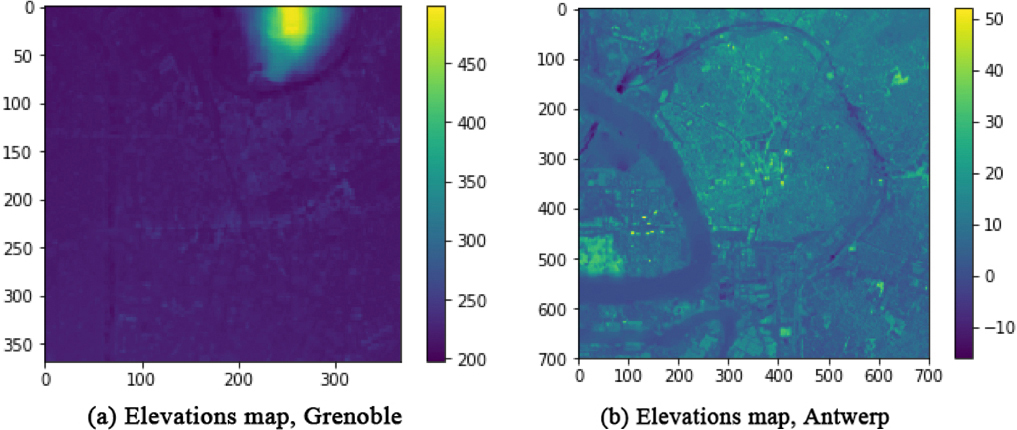
Our objective is to find the optimal architecture for UNet using these side-information and study the generalization ability of obtained models for RSSI map reconstruction.
As stated in Section 2.4, from the sets
Candidate architectures are built from randomly selected operations and the corresponding NN models are trained over the set
The entire learning process is outlined in Algorithm 1. We begin with a labeled training dataset and utilize the RBF interpolation method to estimate measurements for unlabeled training data. The true measurements from the labeled training set and the RBF-estimated measurements are subsequently partitioned into smaller matrices, which are used as inputs to the NAS module. Once the NAS module identifies the neural network model with optimized architecture,
These two scenarios relate to obtaining model parameters on labeled and pseudo-labeled measurements using just RBF interpolated data (scenario 1) or predictions from a first model learnt on these data (scenario 2).
We have considered three case studies from Paris, Antwerp (The Netherlands) and Grenoble. In the area of data-based research and in the field of machine learning singularly, it is usually hard to find large open-source datasets made of real data. In some works, however alternatively (or as a complement) to using real data, synthetic data can be generated, for instance through deterministic simulations.
In our study, we make use of three distinct databases of outdoor RSS measurements with respect to multiple base stations. The first one was generated through a Ray-Tracing tool in the city of Paris, France. The second database, which is publicly available (See [60]), consist of real GPS-tagged Long Range Wide Area Network (LoRaWAN) measurements that were collected in the city of Antwerp (The Netherlands). Finally, a third database, which is also made of real GPS-tagged LoRaWAN measurements, was specifically generated in the city of Grenoble (France), in the context of this study.
Paris dataset
This first dataset is made of synthetic outdoor RSS measurements, which were simulated in a urban Long Term Evolution (LTE) cellular context with a ray-tracing propagation tool named VOLCANO (commercialized by SIRADEL). Those simulations were calibrated by means of side field measurements [11]. This kind of deterministic tool makes use of both the deployment information (typically, the relative positions of mobile nodes and base stations) and the description of the physical environment (i.e., a city layout with a faceted description of the buildings, along with their constituting materials) to predict explicitly the electromagnetic interactions of the multipath radio signal between a transmitter and a receiver. Beyond the main limitations already mentioned in Section 2.1 regarding mostly computational complexity and prior information, we acknowledge a certain number of discrepancies or mismatches in comparison with the two other datasets based on real measurements. For example, in the simulated scenario, the dynamic range of observed RSS is continuous in the interval [
Buildings map and corresponding Base Stations positions (in red) for Paris dataset. The x and y axes are in meters.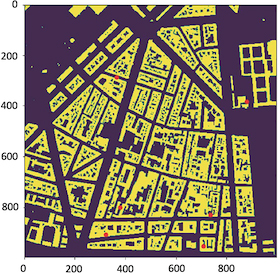
Example of signal strength distribution (in dBm) generated through Ray-Tracing in the Paris dataset, with respect to one particular base station roughly located in (300 m, 300 m). The x and y axes are in meters.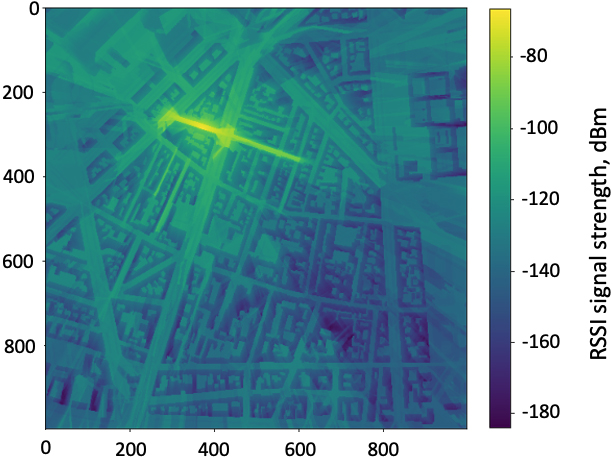
For each pixel, the RSS value was simulated with respect to 6 different Base Stations. An example is given for one of these base stations in Fig. 4. Further details regarding the considered simulation settings can be found in [11].
Measurement campaign and experimental settings: The LoRaWAN dataset was collected in the urban are at the city centre of Antwerp from 17 November 2017 until 5 February 2018 [60, 61]. The dataset consists of 123,529 LoRaWAN messages with GPS coordinates on the map with RSSI measurements for that location. It was collected over a network driven by Proximus (which is a nation-wide network) by twenty postal service cars equipped with The City of Things hardware. The latitude, longitude and Horizontal Dilution of Precision information were obtained by the Firefly X1 GPS receiver and then sent in a LoRaWAN message by the IM880B-L radio module in the 868 MHz band. The interval between adjacent messages was from 30 s to 5 min depending on the Spreading Factor used.
The information was collected for 68 detected base stations in the initial database. We have filtered out some stations which have overall less than 10000 messages and/or which were located far from the collection zone having a flat signal. Finally we considered 9 base station – from Base-Station
The initial dataset with information about each Base-Station (BS) or gateway (GW), Receiving time of the message (RX time), Spreading Factor, Horizontal Dilution of Precision, Latitude, Longitude looks as following.
Dataset preprocessing and analysis: As an example, in this part we will explain the way the dataset was processed for the future application. We aggregated the received power into cells of the size 10 meters
To compute the measurements density after data aggregation into cells of size 10 m
Amount of measurements for each base station located in the center of 368
368 image size after 10 m
10 m aggregation, Antwerp dataset. Base stations with the highest amount of measurement points around the base station location were selected
Amount of measurements for each base station located in the center of 368
Buildings map and corresponding considered 9 Base Stations positions (in red) for Antwerp dataset. The 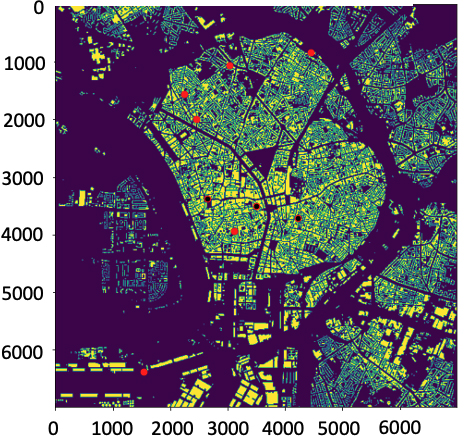
We consider the zone of full city of the size 7000 m
In the initial dataset if in the visited point on the map there was no captured signal, this point for corresponding base station was marked as
RSSI values distribution, base station Antwerp, 10 m 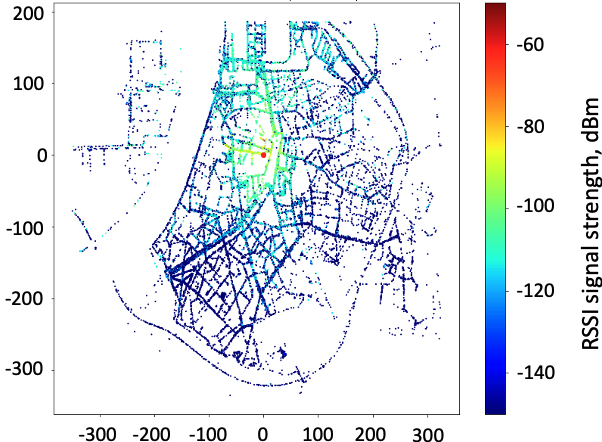
We have carried out an experimental campaign, and which is currently ongoing, aimed at gathering LoRA measurements within the actual urban setting of Grenoble city. This dataset holds significant value for future applications, primarily due to the scarcity of available data for research purposes in this domain. Furthermore, efforts are underway to expand this dataset further, which includes the installation of additional base stations and the collection of a larger volume of measurements, among other enhancements.
Just like for the Antwerp dataset, after removing outliers/artefacts, we then aggregated the signal in the cells. We converted the RSS into milliWatts (as dBm
To compare the measurements
The amount of measurements for two base stations in the Grenoble-1 dataset for 10 m
Amount of measurements for 2 base stations in the Grenoble-1 dataset (first version). Only the Base stations with the highest amount of points were selected
Amount of measurements for 2 base stations in the Grenoble-1 dataset (first version). Only the Base stations with the highest amount of points were selected
Part of the Grenoble map, with a selection of the deployed base station positions (red circles) and two canonical streets in LoS (red rectangles. The 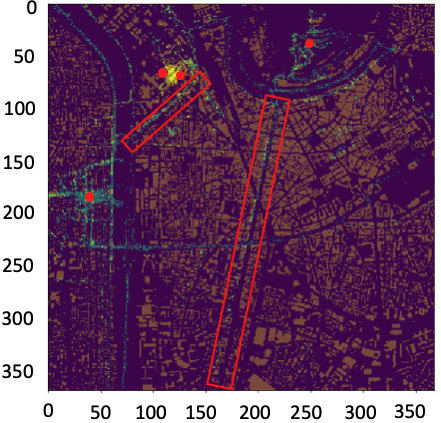
RSSI values distribution, base station 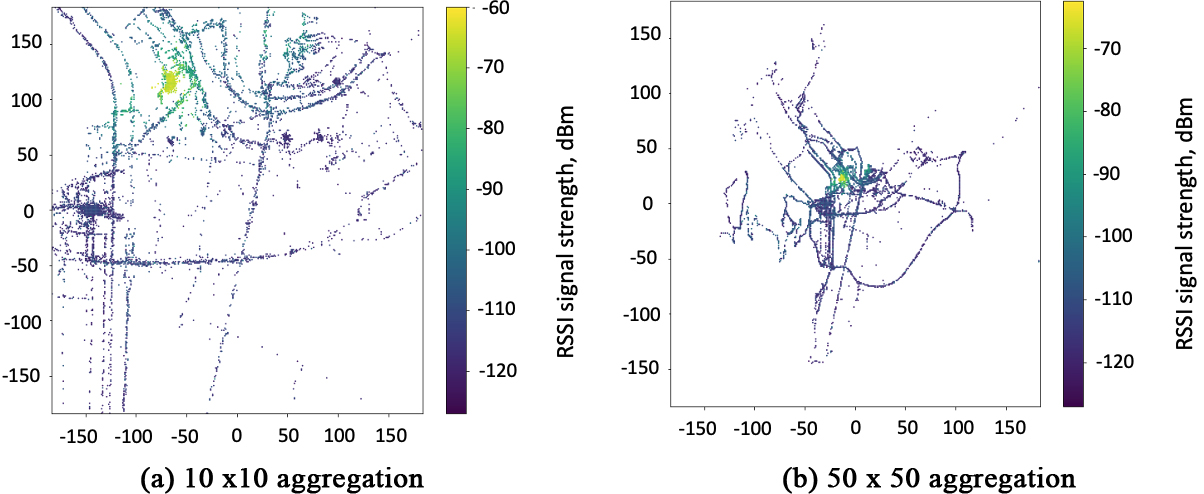
Finally, the size of maps are 500
In our settings, our available base station data is limited in scale, falling short by several orders of magnitude when compared to the datasets mentioned earlier. To address this inherent limitation, we devised a solution by artificially generating smaller submatrices from the original images by cutting them into smaller ones (we tested over 96 by 96 pixels size because of memory issues during learning of the neural network for the storing of the model weights). We also added the flipped and mirrored images and we also did a shift in 20 pixels meaning that in our dataset there were overlapping between the images. Moreover, if the amount of pixels with measurements in the initial cutted image was high enough (more than 3% of the presented pixels) then we masked out the randomly sampled rectangle of presented measurements similar to the cutout regularization ([62]). By doing this we force the algorithm to do the reconstructions in the zones without measurements (not only locally) and be more robust to the amount of input data.
Matrices of the side information were used in the models as additional channels concatenated with measurements map. Before feeding the data into the algorithm, all the values have been normalized between 0 and 1 in each channel separately before cutting them into smaller sizes to feed into the models.
Evaluation of the results over held out base stations: To evaluate the result we left one base station out of the initial set of each city to compare further the models performances with baselines, namely test Antwerp and test Grenoble. To do this, all the points were divided into two parts, namely train and test points for 90% and 10% respectively.
Illustration of (a) Test points across various circular zones and (b) Training points within the corresponding region of the Antwerp dataset. The location of the base station is denoted by a black point. Coordinates are in meters.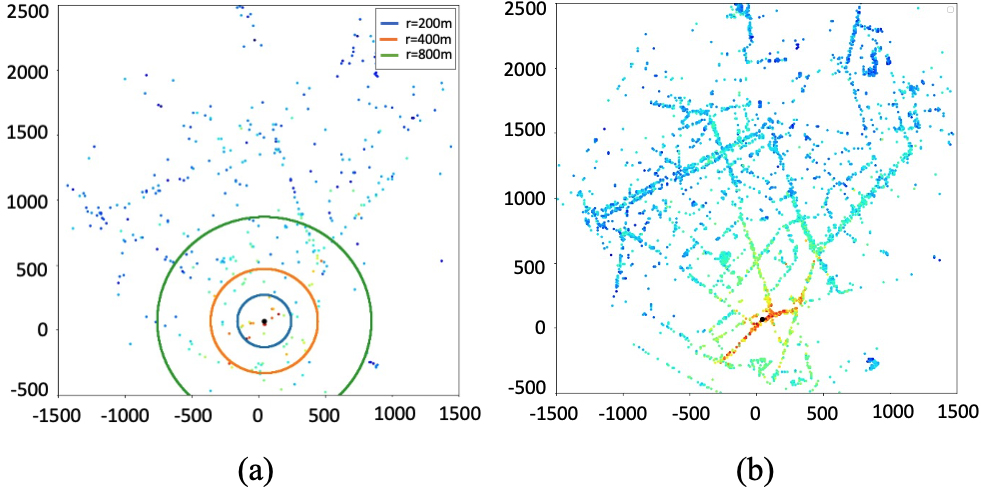
This will be used throughout all the following sections. Moreover, to highlight the importance of the zones close to base station (as it was mentioned in the Introduction) we compare the performance of the algorithms over different considered circles around the base station location, namely 200 meters, 400 meters and 800 meters radii (see Fig. 9).
Information about base stations for each city, amount of all points, points, that were used in the validation/test process, and training set are given in Table 4.
We considered state-of-the-art interpolation approaches which are: Total Variation (TV) in-painting by solving the optimization problem, Radial basis functions (RBF) [63] with linear kernel that was found the most efficient, and the
In our experiments, we are primarily interested in addressing the following two questions:
Regarding the first point, we consider the following learning settings:
given only the measurements (no side information), given both measurements and distance maps, given measurements, distances and elevation maps, given measurements, distances maps and map of amount of buildings on the way from base station to corresponding point in the map (or, in other words, buildings count).
From the standpoint of application, accurate interpolation in all regions where the signal varies the most is critical. We will compare the cumulative mistakes across held-out pixels for each of the zones that are close enough to the test base station for the LoRa signal (by considering the fixed radius of 1 km).
In the following, we will present our findings using the UNet model utilizing side information as a multi-channel input.
We conducted an architectural optimization search for UNet using a Genetic Algorithm similar to one presented in [19] with the implementation of [64]. To configure the genetic algorithm, we defined a mutation rate of 5% to encourage diversity within the population and promote convergence. Moreover, we permitted the encoder-decoder networks to have asymmetric structures. The population size was determined to be 20 individuals, and the number of generations for the algorithm to iterate through was set at 30. The architecture is characterized by its “U” shape, where the encoder down-samples the input image to capture features, and the decoder upsamples to generate the final output. The number of layers in each component of the obtained U-Net architecture varied depending on the dataset used. More specifically:
The encoder consists of multiple 2D-convolutional layers with Relu activation functions and having an increasing feature channels. The number of layers is determined based on experimentation and performance on the validation set. In our experiments, The convolutional layers found were 3 to 5 followed by a pooling or striding operation to reduce spatial dimensions. These configurations are fine-tuned after that the search of the architecture is completed. The bridge found, was a stack of 5 to 7 2D-convolutional layers with a smaller receptive field. It is usually thinner in terms of feature channels compared to the encoder and decoder which prevents overfitting. The decoder of the models contained also 3 to 5 layers, with transposed convolutions or up-sampling layers to increase spatial dimensions. Skip connections were added between corresponding layers in the encoder and the decoder. There were as many skip connections as there were layers in the encoder and decoder. Finally, the output layer which is responsible for generating the output RSSI sub-metric is a single convolutional layer with a sigmoid activation function. We have found that the fine-tuning part at the end produces meaningful predictions specific to the dataset.
It is to be noted that the number of layers is determined based on experimentation and performance on the validation set. Furthermore, to mitigate overfitting; dropout and batch normalization regularization techniques are incorporated during the optimization process. These methods introduce randomness during training, preventing the model from relying too heavily on specific features of the training set. As an example, Table 3 outlines the neural network architecture layers discovered during the architecture search phase for the RSSI Map of the city of Grenoble.
Description of the Neural network architecture structure by layers found by the architecture search phase for the RSSI Map of the city of Grenoble used in our experiments
We first study the learnability of the UNet model for RSSI map reconstruction without the use of unlabeled data. In order to see if there is an effect of using side information we have just considered distance maps as additional context information and considered the model with a hand-crafted classical architecture used for in-painting [57]. The input was either only the measurements array or the measurements array stacked with the distances matrix.
The goal of this early experiment is to validate the usage of UNet for this task and investigate what effects the side information and labeled measurements have. For this we consider the simplest Paris data case where we keep only the points on the roads (as the points could be collected over the street by the vehicle drivers or pedestrians). The difference with Grenoble and Antwerp datasets is in the sampling procedure, as in reality it is very hard to obtain the collected data sampled uniformly in all the regions while in Paris dataset this is the case. All the RSSI measurements also exist in Paris dataset, this allows to see the importance of labeled information in the predictions by varying the percentage of labeled measurements in the training set.
Summary over the settings for different cities: total amount of available measurements, points used as an input to the models, validation (test) points that were used also in the computation of the loss (during the evaluation)
Figure 10 depicts the evolution of MAE in measurements with respect to the distance to the test base station getting lower in comparison with the RBF interpolation, as well as the overall error becomes smaller (
MAE for the distance from the base station for the RBF and fixed UNet outputs over Paris dataset with validation set compliment to the train one, measurements and distances or only measurements input.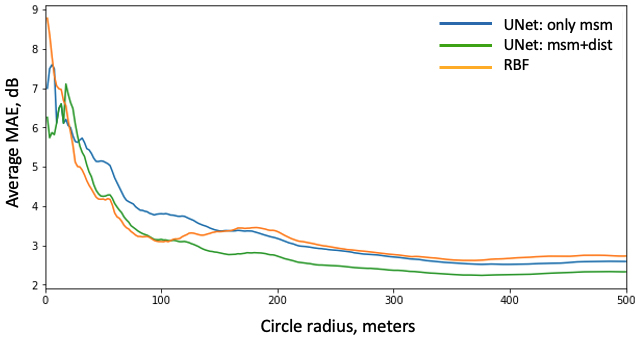
With the inclusion of side-information, we see that UNet performs around 1 point better in MAE than RBF. This situation is illustrated on the map reconstruction ability of both models around the test base station
Map reconstruction of RBF (left) and UNet (right) over the test base station 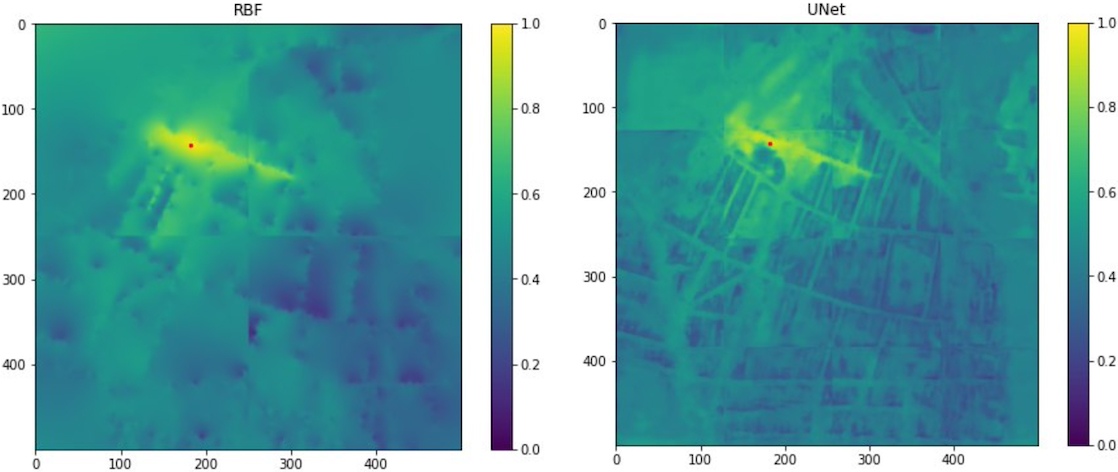
As a result, these findings show that the UNet model can effectively account for side-information. We examined the RBF and UNet models for the influence of labeled measurements on the predictions by altering the percentage of labeled data utilized by RBF for discovering the interpolation and by the UNet model for learning the parameters. With regard to this proportion, Fig. 12 displays the average MAE 200 meters (left) and 400 meters (right) away from the test base station. The test error of the RBF model on unseen test data remains constant as the quantity of labeled training data increases, but the test error of the UNet model decreases as this number increases.
MAE with respect to different percentage of labeled data in the training set 200 meters (left) and 400 meters (right) away from the test base station.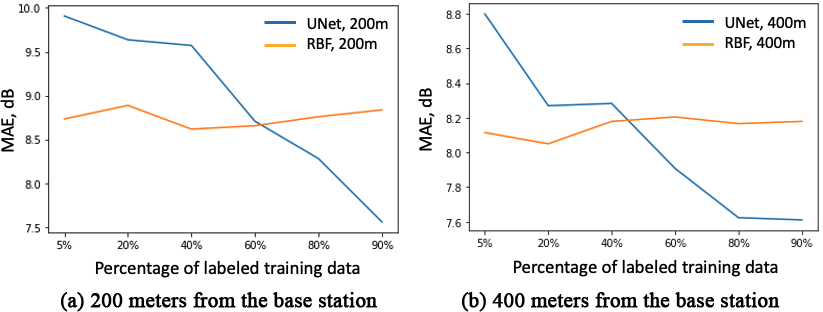
We now expand our research to real-world data sets from Grenoble and Antwerp, taking into account more side-information and investigating the impact of neural architecture search on the creation of a better NN model. As in this case, the labeled training measurements are scarce we examine the usage of unlabeled data in addition to the labeled measurements as described in the previous section.
Comparisons between baselines in terms of MAE with respect to the two distances to Antwerp’ test base station
(left), and Grenoble test base station
(right). Best results are shown in bold
Comparisons between baselines in terms of MAE with respect to the two distances to Antwerp’ test base station
We begin by envisaging scenario 1 of Algorithm 1 (Section 4) and investigating the impact of side information on the performance of the optimized NN model discovered by NAS.
Cumulative MAE distribution of 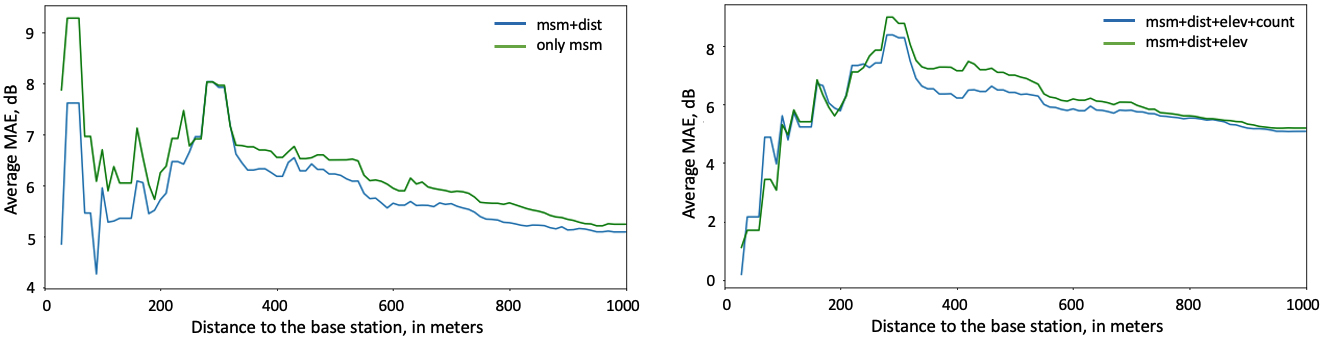
Average MAE in dB of all models with respect to the distance to the test base Station 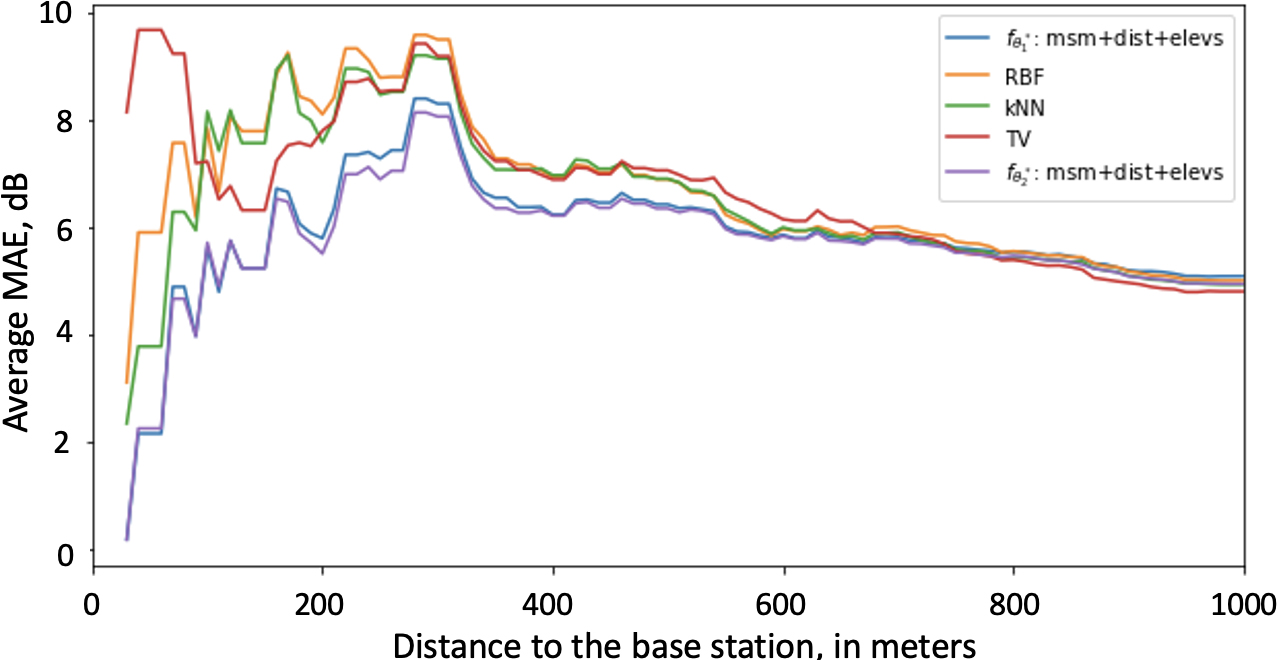
Figure 13 illustrates the evolution of MAE within a variable-radius circular zone for
As a best model obtained by Algorithm 1, scenario 1 we consider the case with three input channels: measurements, distances and elevations and present comparative results with other baselines in Table 5. The lowest errors are shown in boldface. The symbol ↓ denotes that the error is significantly greater than the best result using the Wilcoxon rank sum test with a p-value threshold of 0.01. According to these findings,
Figure 14 depicts the average MAE in dB of all models as well as the NN model
Figure 15 presents the average MAE in dB of all models with respect to the distance to the test base Station
Average MAE in dB of all models with respect to the distance to the test base Station 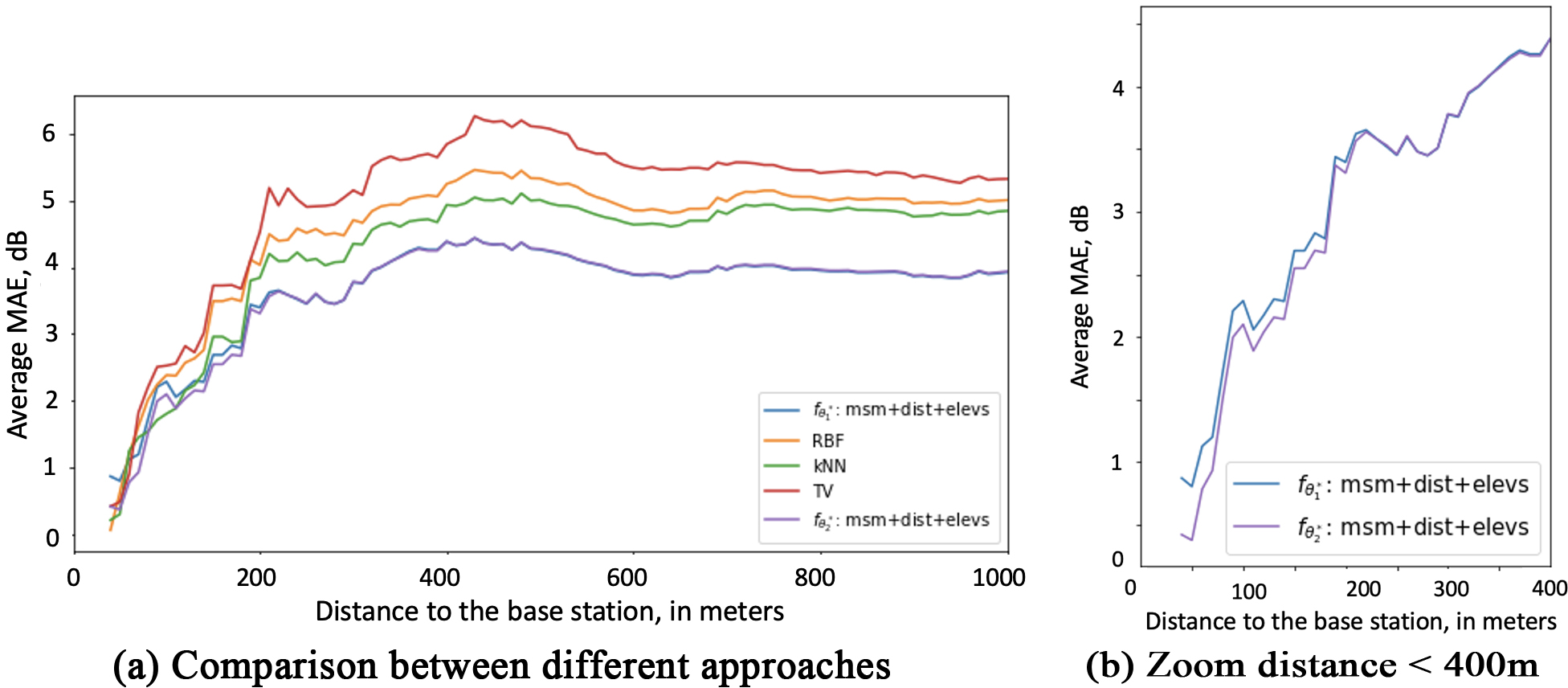
The general conclusion that we can draw is that knowing about local patterns (even if from different locations/distributions/base stations) allows us to use this information in signal strength map reconstruction for application to unseen measurements from different base stations, demonstrating the ability to generalize output in the same area. In order to get a finer granularity look at the estimations of the suggested technique,
Heatmap of the errors between true and predicted values of, 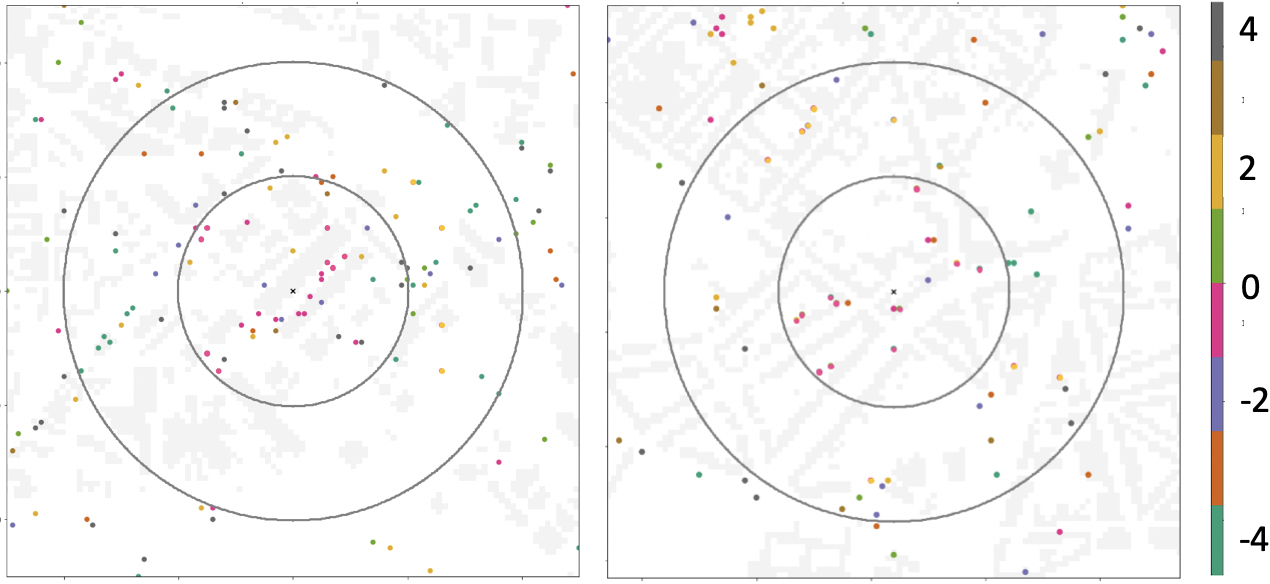
Empirical cumulative distribution function of different techniques in a 200-meter zone around the test base stations in Grenoble (left) and Antwerp (right).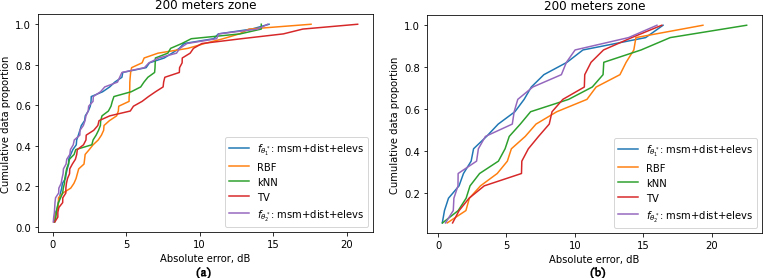
MAE over the distance to the base station evaluated over unseen base stations for Grenoble (left) and Antwerp (right), 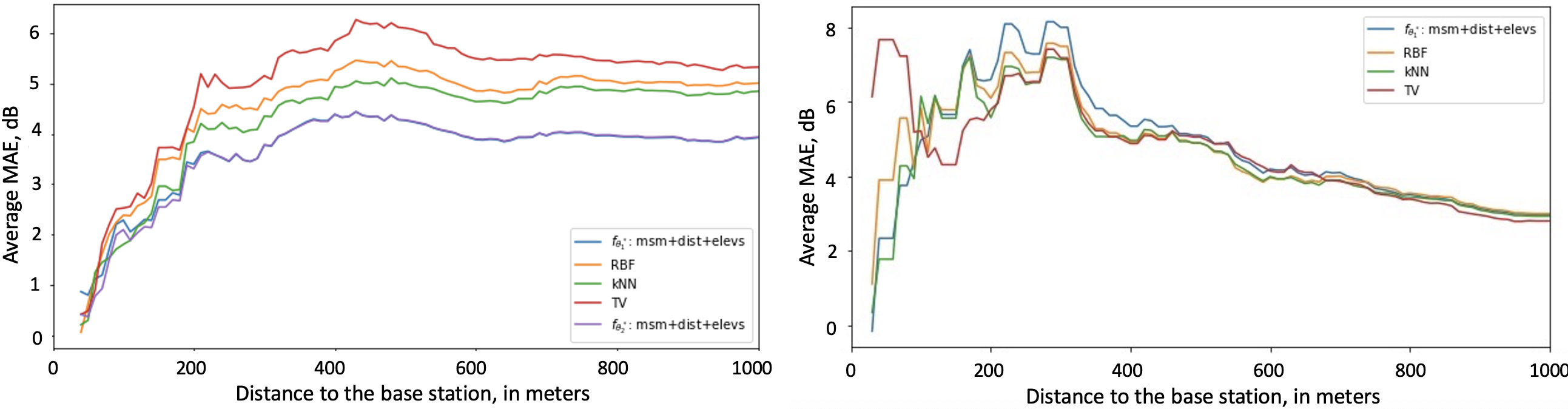
Each point reflects the difference between the real and predicted signal values. For both cities, we notice that there is
an overestimation of the signal (higher predicted values than the true ones) within the zone of radius less than 200 meters where the values of the true signal are high. In absolute value, the average MAE in dB are respectively 3.6 for Grenoble and 6.3 for Antwerp. an underestimation of the signal (lower predicted values than the true ones) within the zones of radius between 200 and 400 meters where the values of the true signal are low. In absolute value, the average MAE in dB are respectively 4.9 for Grenoble and 6.2 for Antwerp.
To better understand the aforementioned results, we provide the empirical cumulative distribution function of different techniques in a 200-meter zone around the test base stations in Grenoble (Fig. 17, left) and Antwerp (Fig. 17 right). From these results, it comes that the probabilities of having less absolute dB error is higher for both
The primary takeaway from these findings is that searching a Neural Network model with generalization capabilities might be useful for RSSI map reconstruction. To further investigate in this direction, we considered Scenario 1 of Algorithm 1 in which the training points of both cities are combined, with the goal of evaluating the model’s ability to produce predictions for one of the cities. The average MAE in db with respect to the distance to the base stations for different approaches are shown in Fig. 18.
Discussion: According to these findings, the inclusion of signal data from another city and the resulting disruption in the search for an efficient NN model for Received Signal Strength Indicator (RSSI) measurements highlight an important consideration in the field of machine learning for signal strength mapping. This disruption is primarily due to the fact that the characteristics of radio signal propagation can vary significantly from one location to another. The environmental conditions, infrastructure, and geographical layout all influence the behavior of radio waves.
Indeed, different locations have unique characteristics that affect radio signal propagation. For example, urban environments with tall buildings may exhibit different signal behaviors compared to rural areas with open landscapes. The presence of obstacles, building materials, and even weather conditions can impact signal strength. As a result, NN models trained on data from one location may not generalize well to another. When building NN models for RSSI measurements, it is essential to focus on their ability to generalize to new, unseen data. The disruption caused by incorporating data from a different city suggests that models need to adapt to the specific characteristics of the location they are deployed in. This is often referred to as “model adaptation”. It would be interesting to study over alignment strategies, such as those proposed for domain adaptation [66], in order to narrow the gap between these distributions in future work.
To address the challenges of location-specific characteristics, another approach is to develop an ensemble of models. Each model is trained on data from a specific location or under specific environmental conditions. The choice of which model to deploy can then be based on information about the incoming radio maps. For example, by using techniques like geolocation tagging to determine the source of the incoming data and selecting the corresponding model.
In this paper, we conducted an extensive investigation into the importance of incorporating additional side information for optimizing NN architectures in the context of map reconstruction across three diverse datasets. Our research underscores the pivotal role that auxiliary data, such as building distance and elevation, can play in substantially enhancing the performance of NN models with tailored architectures. Specifically, we found that by augmenting our training data with these contextual features, we achieved a significant reduction in the mean absolute error in dB, affirming the efficacy of our optimized architecture.
Our proposed approach demonstrates a notable advantage over agnostic techniques, particularly in proximity to the test base stations. The model’s ability to accurately reconstruct signal strength maps, especially in the near vicinity of base stations, holds promising implications for practical applications such as urban planning and wireless network optimization. Importantly, our analysis reveals that our NN-based approach exhibits strong generalization capabilities, bolstering its utility in varying real-world scenarios.
However, it is essential to acknowledge that in situations where a distribution shift between two maps exists, the predictive confidence provided by the trained model may exhibit biases that render it less reliable. Substantial dissimilarities between two different Received Signal Strength Indicator (RSSI) maps can lead to a substantial degradation in the model’s performance due to inaccuracies in pseudo-labels. While techniques like noise modelling may mitigate some of these issues in practice [67], it is vital to note that there remains a theoretical gap in our understanding. Specifically, exploring semi-supervised learning techniques under distribution shifts represents an important avenue for future research.
To address this challenge effectively, future work could focus on the development of Neural Dynamic Classification algorithms that adapt dynamically to distribution shifts [68]. These algorithms would enable the model to update its pseudo-labeling strategy based on evolving data distributions, enhancing its robustness in the face of changing environments.
Furthermore, the incorporation of Dynamic Ensemble Learning Algorithms could be explored to combine predictions from multiple models, each specialized for different distribution scenarios [69]. This ensemble approach may help mitigate the impact of distribution shifts by selecting the most appropriate model for the given context, further improving the reliability and accuracy of map reconstructions.
Additionally, self-supervised learning techniques offer a promising direction for enhancing the model’s performance under distribution shifts [70]. By leveraging self-supervised learning, the model can learn useful representations from unlabeled data and adapt to new distribution patterns more effectively.
In summary, our findings underscore the potential of tailored NN architectures and the significance of auxiliary data in map reconstruction. However, addressing the challenges posed by distribution shifts remains an important direction for future research, with the potential for Neural Dynamic Classification algorithms, Dynamic Ensemble Learning Algorithms, and self-supervised learning to play a pivotal role in enhancing model reliability and accuracy in diverse and evolving scenarios.