



Abstract
Business intelligence is becoming more essential for supply chain administrators to make good decisions. The globalization of supply chains makes their management and control more challenging. Blockchain is a distributed digital ledger technology that guarantees traceability, transparency, and security and promises to ease global supply chain management issues. This paper proposes the Blockchain-assisted Secure Data Management Framework (BSDMF) for financial data handling for supply chain integrated business intelligence models. Analyzing, collecting, and demonstrating data could be important to a business, its supply chain performance, and sustainability. The blockchain can interrupt supply chain processes for improved finance handling, distributed management, and process automation.
The study’s experimental result will help organizations deploy blockchain applications with intelligent business strategies to support supply chain management effectively. The simulation outcome has been implemented, and the recommended method achieves a computation time of fewer than 2 hours, an efficiency ratio of 97.4%, an error ratio of 94.1%, data authentication of 92.1%, and a data management ratio of 98.7%.
Introduction
In the supply chain, business intelligence (BI) increases internal productivity and transparency while improving efficiency and reducing costs through metric-led decision-making and transformation management [1]. Real-time data analyses are improved by predictive analytics through providing them with access. Self-service BI goes one step even more by enabling consumers to conduct their individual searches and produce their personal findings when they have no prior experience with data methods. It helps businesses predict market results by providing organizational knowledge to major decision-makers [2]. BI has come a long way from its origins in management reporting [3]. The supply chain forecasting, manufacturing, and logistics solutions incorporate analytic decision support [4]. Currently, the accounts receivable funding is primarily funded by the discount bill, and the supply chain financials do not have obvious characteristics [5]. Supply chain financing, sometimes referred to as provider financing or reversal factorization, is a group of products that helps businesses maximise their working capital by extending the sufficient profit they give to their vendors whilst giving their major or SME customers the opportunity to be compensated earlier. In the modern economy, the supply chain’s finances play an important part in funding small and medium-sized businesses [6]. The continued development of the industry replica for supply chain financing and the ongoing improvement of the infrastructure raise researchers’ exposure to the function of sequence skill in the supply chain financing [7]. The process of supply chain funding has come with information technology and intelligence [8]. The problem of information asymmetry is alleviated between the supply chain’s affiliates, and the costs of the formation process are minimized by establishing a business information system [9]. Consequently, the supply chain’s web financial system can provide a convenient and easy way to finance or deliver other services supply chain companies’ banking services [10].
The world economy is adjusting downward; defaults and fraudulent credits are increasing and gradually arise from the commodities’ credit shortage [11]. The funding partners’ shared faith is significantly hindered by risk incidents, such as recurring commitments and vacuum promises arising from asymmetric details, making it impossible for management and warehouse oversight to be assured [12]. Depraved debt on lending credit has undermined the financial order [13]. Banks tended to minimize credit and accelerate credit processing [14]. Simultaneously there are problems in circulating bulk commodities, closed capital chains for merchants, more difficulties securing loans, and company growth [15]. The knowledge asymmetry issue in transportation, logistics, and control can be overcome with Blockchain technology [16]. The supply chain benefits from the use of blockchain as it improves the transparency, traceability, firm performance, and business model [17]. A business model should concentrate on the product offering, customer satisfaction, and profit potential. Whom potential clients are and what you’ll provide are described in the proposal. The deliverable explains how you will set up the company to fulfil the promise. Blockchain technology has been used in various fields, such as transactions documenting and monitoring real assets (house, cash) or intangible assets (copyright, intellectual property) [18].
Blockchain is a Peer-to-Peer (P2P) distributed and decentralized public ledger over the network [19]. Blockchain technology has the features of decentralization and non-temporality, which are the basic technological basis of digital currencies [20]. The nodes in a blockchain scheme are agreed that they cannot trust the remainder of the nodes entirely and that the distributed storage and transaction confirmation are done together [21]. A typical trading mechanism’s transaction confirmation and documentation rely solely on a trusted institution [22]. This unified structure has many problems addressing processing costs, performance, and stability [23]. The blockchain nodes have equivalent standing; even without a third party, consensus can be achieved [24]. The customer incorporates financing functions of the blockchain and the supply chain and, for these two cases, picks assured deposit receipts and receivables [25]. Users use the blockchain revolution to address the challenges mentioned above in the financial supply chain in their conventional business processes [26]. The supply chain and blockchain technology’s security issues are highly relevant in the modern banking sector [27]. The earliest concept for blockchain is a data system to preserve historical transaction data [28]. With network size widening and market cap continuing to rise, there is a rising emphasis on blockchain technology [29]. The business platform became the first representative trial and implementation in blockchain technology’s financial industry [30]. Blockchain focuses on conventional distributed databases, cryptography, and communications networks as an infrastructure of various technologies [31]. A central role and a testing hot spot is the consensus algorithm [31]. In distributed systems, consensus efficiency is poor, and system reliability is strong [33]. In centralized systems, consensus efficiency is high; the system’s protection and stability are diminished [34]. Blockchain technology as a hierarchical system would understand how to achieve consensus effectively in a distributed system [32]. Blockchain technology in the early stages is limited to the public chain’s architecture, and researchers concentrated on addressing the problem [35, 36, 37, 38].
This paper proposes the BSDMF model for financial data handling for supply chain integrated business intelligence models. The agreement node is listed in a blockchain consortium of the participants. Participants in a blockchain collaboration still have no assurance. In compliance with consensus rules, each group selects its consensus nodes. Most consensus nodes have to verify transactions in a blockchain consortium. In a consortium blockchain, transparency and decentralization are lower than in a public blockchain, and transaction processing speed and wait time are less. Best in a blockchain consortium than in a blockchain public. Consortium blockchains are used in semiclosed networks, including the networks generated by various firms. Conflicts of interest between entities may occur in such a network, and nodes can mishandle data.
A recent research analysis on secured finance handling for supply chain integrated Business Intelligence using Blockchain application is described in this paper in Section 2. The proposed entire structure is described in Section 3, and case analysis supports our proposed system in Section 4. Section 5 presents conclusions and future work.
Related works
Chunguang et al. [39] recommended a blockchain technology supply chain Transparency and Sustainability Technology (TST) evaluation model for Blockchain was a system designed to facilitate the supply chain’s integrity successfully. Technique for Transparency and Sustainability (TST) is the application of technologies to advance visibility & sustainable across a variety of fields and businesses. In order to improve transparency, predictability, and durability in company processes, distribution networks, and other sectors, creative technological resources must be applied. A significant initial management task was assessing and picking the most effective Blockchain technologies for organizations in supply chains. Accessibility as well as transparency of data have several advantages. We can improve our choices regarding how to decrease the pollution if we can monitor it. However, this assessment has become more complicated due to the uncertainty and reliance on sustainable accountability. This approach illustrates the psychological features of decision-makers as well as shifts in views of decision-makers. Illustrative implementation and responsive analyses were added for supply chain administrators and analysts to understand the blockchain technology selection judgment. The decision tool and implementation shall have analytical and administrative ramifications. This study provides the basis for further research in evaluating blockchain technology in the supply chain environment.
Sajjad et al. [40] planned integrated innovative product design and Supply Chain Tactical Planning (SCTP) for Companies increasingly seeking to harness public contribution opportunities to developing, assembling, and marketing systems in a globalized supply and production environment. Supplier chain strategic control entails determining flow of materials and stockpiles across a system of industrial facilities and warehousing in order to meet every requirement of the customers. Optimizing algorithms are used to ensure that the optimal choices are taken for the foreseeable future. This study introduces a tactical supply chain planning model that integrates design into transparent innovation in the supply chain processes. A home appliance case study analyses the built model’s applicability. The tactical issues are establishing worker and vendor timetables, identifying different suppliers or improving interactions with current ones, examining warehouses, compiling the necessary funds, both human & physical, and so on. The findings revealed that the organization would achieve favourable designs by investing around 1% of overall supply chain costs. In comparison, the Registration Process will help eliminate more than 41% of the expense of using non-original prototypes.
Tanzeela et al. [41] suggested data sharing system integrating access control mechanism using Blockchain-based Smart Contracts for IoT (BSC-IoT) devices for connectivity between Internet of Things (IoT) users, a blockchain-based data sharing and access control system is suggested. Smart contracts are blockchain-based algorithms that execute when certain criteria are met. These are frequently employed to automated the implementation of a contract so that every one of the parties are able to verify the conclusion right away, with no requirement for an intermediate or additional delay. The framework suggested was intended to resolve trust and security questions in IoT networks for access control. IoT ensures connectivity between devices, where each device provides information and data [42]. Therefore, the framework aims to ensure that the data exchange on IoT networks can be trusted, approved and authenticated. Finally, the scheme’s output was evaluated by measuring smart contracts’ cost utilization and functions. The present and proposed schemes were compared. The findings indicate that the method proposed was cost-effective.
Prince et al. [43] planned IoT-blockchain allows optimized attribution scheme for groceries industry 4.0 using Advanced Deep Learning (ADL) for social and economic stability, livestock has a vital role. For many people, food security and transparency are major concerns in the food supply chain. Because of their success in diverse applications, the Internet of Things (IoT) and blockchain have become increasingly important [44]. They produce a great deal of data that can be optimized and used using specialized ADL techniques. In various development in extended visibility, origin, digitalization, disintermediation, and smart contracts, such innovations in supply chain management are significant. The supplier measured the device’s performance for a different set of people. This article seeks to encourage supply chain professionals to benefit from state-of-the-art equipment and enable the industry to enforce policies that fulfil ADL predictions.
Cole et al. [45] suggested blockchain technology implications for operations and supply chain management (OSCM) to encourage the study of blockchain technologies from an OSCM perspective, define possible implementation areas, and set a potential research agenda. Design/method/approach Blockchain technology was clarified and analyzed to determine the OSCM region’s implications. Findings the chances given by digital recording technology are high. However, managers must analyze the property of their goods, services, and supply chains to decide whether blockchain is necessary or sufficiently advantageous. Companies must create human capital know-how to optimize their benefits by designing, integrating, and utilizing this technology. Originality/value the latest report on omitting blockchain distributed supply chains was one of the top publications in a major international OSCM magazine. The supply chain management has been proven as a manufacturing innovation which can improve the current competition among companies [46].
Tan et al. [47] by creating a diffusion innovation prototype of logistic service integrators as well as operational network operators underneath the strategic plan of knowledge exchange and data nonsharing, this research utilized blockchain technology to enhance the financial handling impact of distribution network incorporated business analytics. Findings demonstrate the effectiveness of safe money treatment processes.
The use of blockchain technology in this research is examined in relation to support business adaptability, openness, and supplier confidence. Data was gathered from the first 1000 exporting businesses that the Turkey Exporters Association had listed, and 84 businesses participated in component and logistic studies. The findings imply that businesses should spend money on blockchain technologies to improve the security, flexibility, and transparency of their supply chain. The research also takes into account the advantages and possibilities of cryptocurrency in terms of working together and integrating [48].
Secured finance handling for supply chain integrated business intelligence (BI) using Blockchain application has been used to overcome the existing model issues. The extensive trading financing lifetime may be digitalized using blockchain, which increases safety and effectiveness. It can facilitate faster production time, lower investment needs, or a reduction in fraud, operator mistakes, and total underlying asset hazards. It can also allow greater accessible management. In this study, BSDMF has been suggested to increase computation time, efficiency ratio, error ratio, data authentication, and data management ratio. A growing amount in information management is to employ blockchain technologies, and BSDMF is a potential technique that may offer important advantages in regards to data safety, confidentiality, openness, and decentralisation. The following section discusses the proposed model briefly.
Blockchain-assisted Secure Data Management Framework (BSDMF)
Blockchain is an in-depth, valid transaction tracking the chronological sequence of block numbers. A relation, which forms a chain, associates blocks with the last node. The realization makes Blockchain common and can promote stable and safe enterprise through an insecure network without relying on any centralized third party. The key building blocks of the blockchain will be added. Business intelligence (BI) is long overdue to its roots in management reporting. The supply chain, manufacteristics, and logistics strategies provide analytical decision support. Users gain insights based on real-time results. They will handle, by exception, automatically propose and determine trade-offs before joining contracts, regardless of whether they transfer stock, issue job orders, or schedule shipments.
Due to the usage of digital currency and its prevalence, popularity, and growing costs, this blockchain technology gained disrepute. Introducing a new coin has become popular; cryptocurrencies, initial currency bidding, and banks are often usual. Blockchain is the technology that provides the basis for the growth, robust, effective, and protected exchange of money in the field of blockchain technology and other cryptocurrencies. In a cryptographic chain, every incoming block has a connection to all the units that came preceding it in a manner which renders tampering with it extremely difficult. A distributed consensus verifies and accepts every activity contained inside the chains, guaranteeing that every operation is accurate and true. Cryptography, which requires a particular algorithm, allowed parties to secure the privacy of data between two parties that involved transmission data between each other, increase data security and preventing it from being accessed by unauthorized parties [49]. Data structures created by blockchain technology include built-in safeguards. It is founded on cryptographic, decentralised, and consensual concepts that guarantee the integrity of operations. The widespread use of digital currency in blockchain has contributed to its success and future implementations. There is proof that blockchain can revolutionize many sectors, such as banking. The merits of blockchain technologies and logistics have long been researched. This study proposes the BSDMF model for financial data handling for supply chain integrated business intelligence models.
Proposed BSDMF.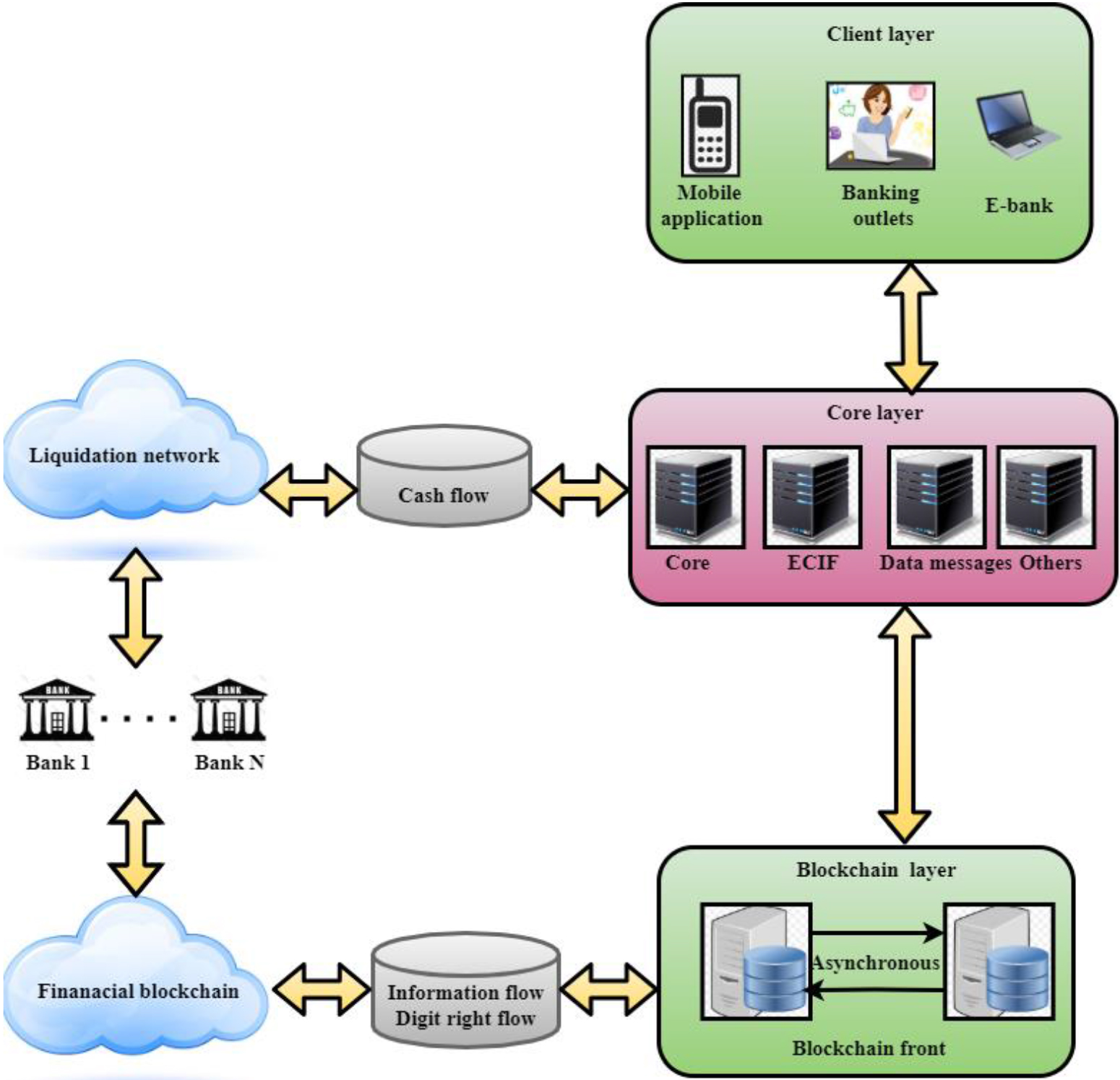
Figure 1 shows the proposed BSDMF model. Banks must discuss blockchain-based data flows and the interbank network of liquidation while accessing the pre-test financial chain evaluation. Thus the banks on their banking network must take advantage to turn material capital into digital rights using a cash liquidation network. They can provide the customer data to and from the chain through batch sharing methods between banks in real-time or batch sharing. The financial blockchain has a government, third-party services providers, and regulatory bodies. So customers did not want an approved blockchain’s dynamic and resource-intensive consensual process. To save the bank’s client details, the customer’s information of the chain, and satisfy the everyday business, the Enterprise Information Facilities System (ECIF). Enterprise information technologies give businesses a solid technological base on which to connect and manage their business functions. To automated commercial activities, an EIS is typically utilised in combination with client relationship administration or supplier chain planning. A corporation will have additional money available in its resources to expand client service operations or engage in other resources that can improve client satisfaction because software applications eventually lower operating costs. The bank’s requirements. On-chain details from ECIF and central bank networks are organized.
Suppose a blockchain network references a conditional result
Every record keeper, upon touch,
As above mentioned equation where the validation notes are weighed,
Customers believe that any risk-neutral record keeper in our reduced-form model. An instance of a calculation of a credit risk as well as a forecast of a zero-bond fund prioro failure are shown using a reduced-form framework. The first coefficient
As shown in Eq. (1) where
The advantage of misreporting is
As inferred from the Eqs (3) and (4) where
Blockchain technology provides banks rewards and challenges, particularly in the data processing. In several different implementation contexts, a constantly expanding collection of documents stored by a network of peers is generally used, and it is universally accepted that blockchain technologies will enhance the security of financial data confidentiality. However, curing difficulties in addressing the needs of financial data security entirely persists with existing blockchain technologies. Funding and business are going toward “Financial Services,” which will enhance client gains by exchanging data and improving collaboration between financial institutions. By raising the capital base, mobilising and aggregating funds, generating knowledge about investments, enabling or promoting the influx of international asset, or optimising investment strategies, it fosters productivity expansion via accumulating capital and technical advancement. Since the popular key financial information is linked to the numerous stakeholders’ needs, blockchain technology faces multiple problems and challenges. Since consumers tre on a shared blockchain, blockchain can boost finance industry openness by allowing consumers to record their activities. By exposing theft as well as other bottlenecks, this transparency can help banking institutions solve issues that lower risk. Privacy concern forbids data owners from exchanging and distributing data externally because they fear fraud and abuse. Customers of financial services are segregated into customers and businesses. Banks receive from these customers for marketing reasons, purchase reviews, and fraud reporting while conducting the financial business. The financial data, most generally known as information on the financial customers (reflecting the customer’s financial attributes), includes the customers’ capital and portrait documents, such as the customer’s bank information entity. Priority must be provided to the security of financial data, including the recognition of specific information (e.g., identity, ID number, etc.), network data (e.g., location, IP address, cookie, and RFID), identification documents (e.g., fingerprints, iris) and ethnic information. Data security management must extend access rights to the data subject to clarify the banking establishments used, when, and how it is handled.
The warehouse financial model focused on the blockchain.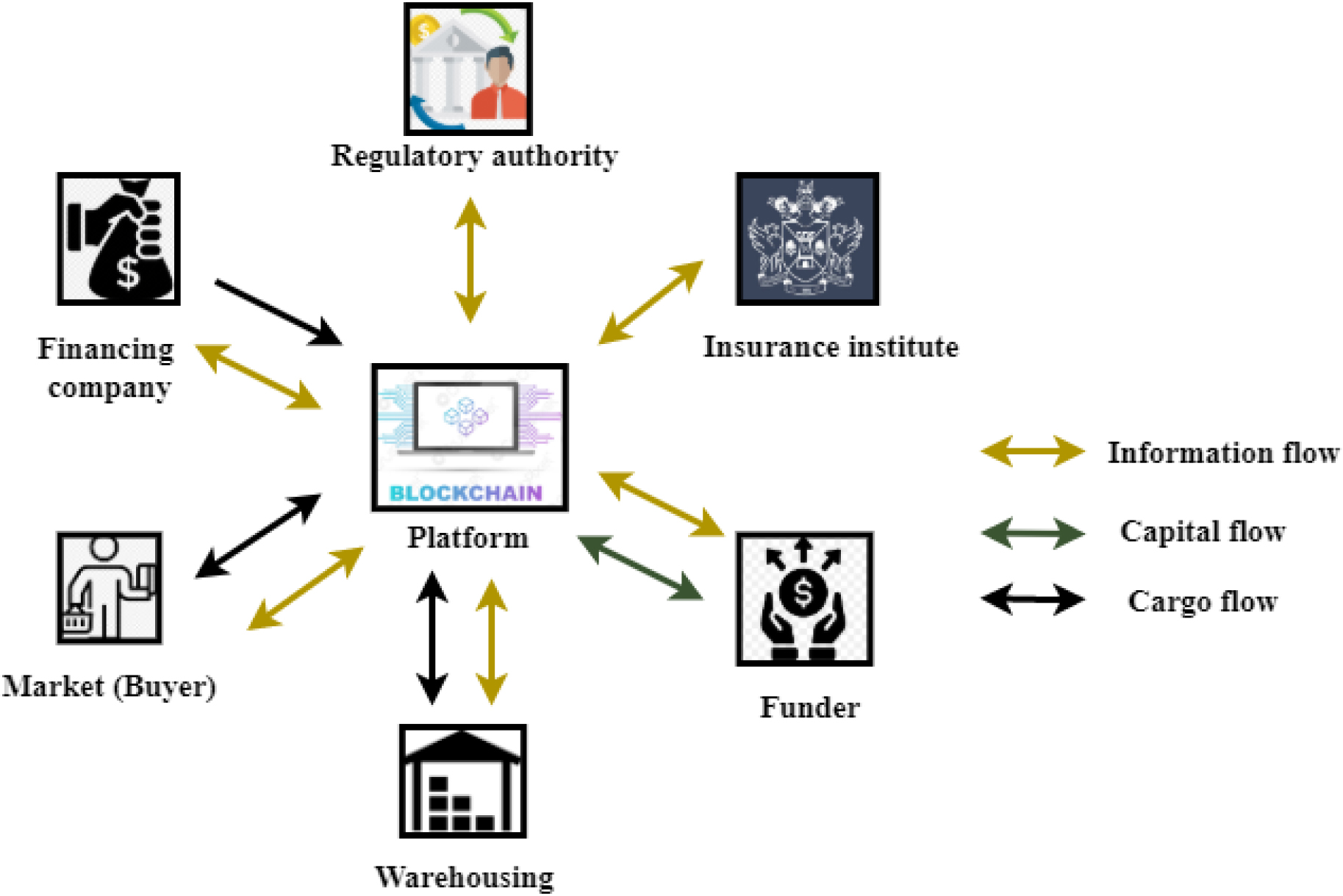
Figure 2 shows the warehouse financial model focused on the blockchain. Supply chain financing is a principle in microfinance. Microfinance is the procedure for supplying small-scale banking institutions, like mortgages and term deposits, to those with low or no incomes. As from period a microloan is granted and the duration it is returned, numerous phases or recapping. Supply chain management requires distribution network financing (SCF). In order to decrease risks, increase operating cash effectiveness, and decrease interest expense, it links consumers and vendors with a finance organization. The supply chain funding depends on different manufacturing lines in the supply chain against conventional bank loans or risk resources. The different manufacturing lines are lowering risk within the supply chain, improving supplier base, obtaining an edge in discussions, enabling corporate investment, etc. The stakeholders must supply detailed financial services based on the underlying supply chain output elements. Supply chain financing may use financial instruments to help develop the supply chains and create good supply chain scenarios to produce financial added value. The cooperative link between the financial institutions and the supply chain firms. Supply chain finance begins initially; business papers and market funding firms have grown steadily due to the accounts receivable’s fast growth. Supply chain financing management generally includes supply chain key industries, logistics agencies, small to medium-sized corporations, banks, and other organizations. The supply chain partners cannot guarantee business information’s completeness with their beneficial business cooperation information. The quality of capital flow and logistics can only be ensured by thoroughly sharing accurate financial partnership data in the supply chain. A variety of common issues in current supply-chain financing is the collateral risk in supply-chain finance. Trusted records are difficult to access in the new financial supply chain environment, and risks are hard to manage. A network for data sharing must be created. Consumers can construct a logistics finance system by working with their banking collaborators and vendors to develop a relationship that makes distribution network lending better profitable and effective. Blockchain technologies build a financial infrastructure for supply chains to efficiently resolve insufficient data sharing problems. The blockchain technological aspects include simplicity for the auditing and tracking supply chain funding enterprise and benefit from the risk management. Customers create a supply chain finance network using a blockchain. The transaction system is complex, and it is impossible to organize transaction staff. Users then use blockchain as the data bus to reinvent the organizational networks and replay the transfer of knowledge, freight, and capital flow from the firm obtained by a commitments funding company on the supply chain financial services network.
Account receivables based on the blockchain.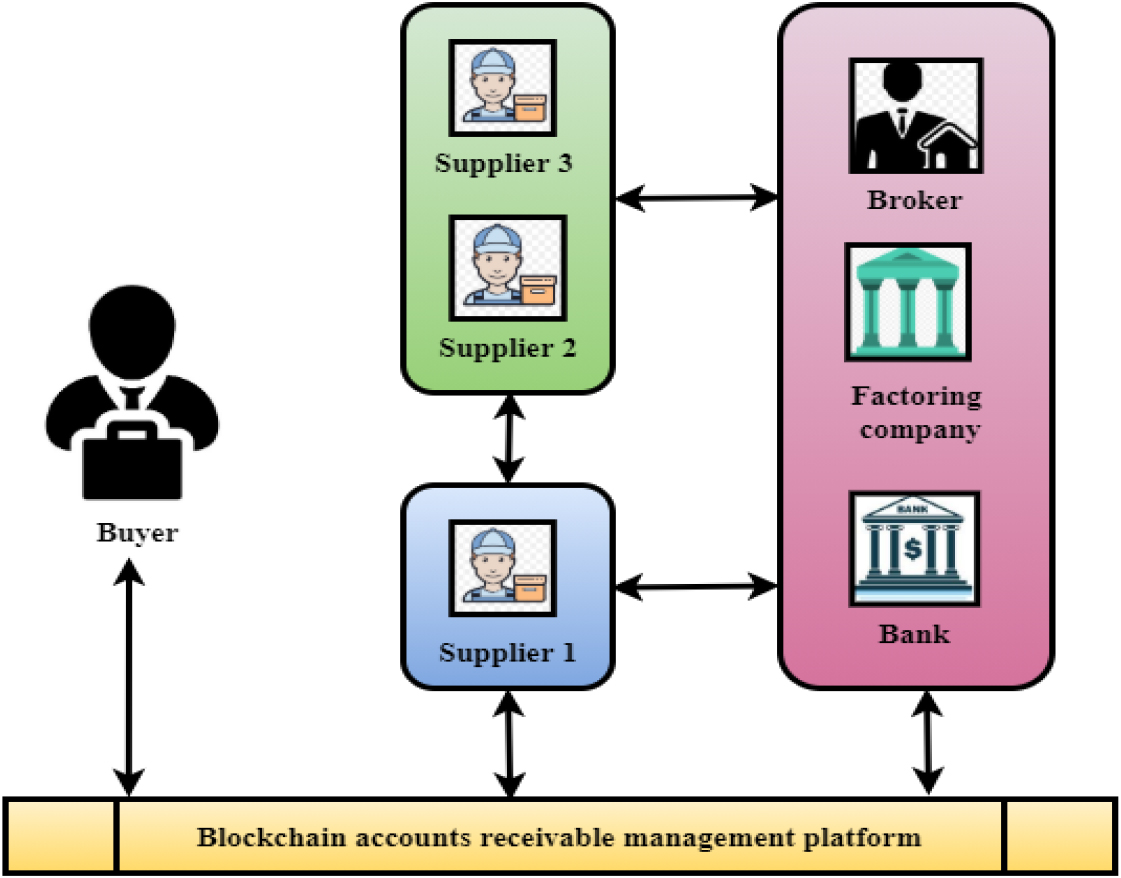
Figure 3 shows the account receivables based on the blockchain. Each business produces accounts payable in manufacturing and operations, and the management of accounts payable has to do with the company’s liquidity and performance. Business accounting’s meaning is that its clients occupy the company’s liquidation; the company itself must bear this portion of the liquidity. The factoring of receivables is a way to use and a very active paradigm for handling receivables in current financial markets. The finance company has delegated to the borrowers, under some circumstances, the accounts receivable generated by loan transactions and collected the financial amount required by the accounting debtors. Since accounts, receivable factoring is relatively short and no strong loan trading facility, there is a relatively high probability that accounts receivable would consider the three main roles of its business model, i.e., the financial institution (vendor), the consumer, and the factoring business. Typically a bank and the industrial unit firm is a bank lending company. With the help of trade receivables financing, businesses can get paid early for their overdue bills. When using trade receivables finance, a business agrees to prepay part or every one of its unpaid dues in exchange for a fee from the lender. The business that maintains the debt receivables is relevant, particularly in the organization of the small and medium-sized financial records receivable. An individual whose duty it is to maintain financial documents for a company is an accounting. The forwarding of debt receivables requires contact with the core company, and a decentralized validation factoring model of Blockchain needs many confirmations. By gradually changing one parameter, hackers attempt to decode the transaction in order to reach a network-wide goal. Right responses cannot be faked; hence this is known as proof of work. Possible alternatives should demonstrate that the necessary amount of computer resources was expended in order to solve. Automatic cycle control through smart, blockchain-based contracts minimizes the interaction and boosts system efficiency in mutual accounts.
Conceptual framework.
Figure 4 shows the conceptual framework. Traditional monitoring processes are strongly dependent on manual operations to synchronize information between participants in the supply chain. Companies with extra capital spent producing a central framework for solving-knowledge synchronization problems, like an EDI or ERP method. By automated B2B interactions, firms can do away with equipment failure by implementing EDI. Organizations can save cost by using the cashless EDI procedure, which requires no human involvement, instead of acquiring, producing, and shipping paper-based documentation. Enterprise resource planning (ERP) is a system used by companies to organize and oversee the key elements of their operations. Numerous ERP software programmes are essential to businesses since they enable capacity planning through combining all the operations required to manage their operations into an unified system. Information management, automating, standardisation, economy, and assimilation are just a few of the commonalities between EDI and ERP. They are useful instruments for strengthening competition and operating models because of their commonalities. These programs that increase performance cannot reduce the costs of the ICT involved. The key element needed for renovating a decentralized network is a mutual directory and verifying transactions containing the ledger material. Blockchain technology will use its ability as a distributed ledger technology to synchronize information monitoring. A central database for tracking asset transfers called distributed ledger technology (DLT) allows for the simultaneous capture of transactions as well as their associated information in numerous locations. Public blockchains don’t have a centralized data storage or management features, in contrast to conventional systems. This modern thinking and smart contracts offer ways to minimize company efforts and money. The method status must be checked, which speeds up the execution of the next procedure. Blockchain technology enables process integration and intermediation from the standpoint of process re-engineering through smart contracts. Intelligent transactions include computer codes on the blockchain forum for enforcing contract terms and conditions. smart contracts and state machines can easily monitor changes in the process status from vendors, producers, logistics, dealers, and consumers. Furthermore, these contracts can be scheduled to start future payment transfers. Supply chain monitoring focuses on a macroscopic perspective. Blockchain-based financial data management reduces computation time and reduces the error rate. The blockchain is an organized, decentralized system of computers that serves as a trusted payment accounting information accessible by all participants. Each operation that takes place in the networks is recorded and stored, therefore doing away of the requirement for certified intermediates. In addition to additional hardware, a number of characteristics can be used to decrease calculation time and confidence interval, including parallelization, algorithmic improvement, information pre-processing, extraction of features, collection procedure, model identification, and regularisation methods.
Participants use smart contracts to link and collaborate. They have the latest information on process status with distribution alerts. A certain contract aims to link other smart contracts with a centralized event-based model as an administrator. A key approach to expressing our understanding of a discrete-event system is event-based modelling, whereby an incident network is used to depict the program’s behavior. It investigates original approaches to discrete-event modelling and replication that make use of the notion of occurrences. Smart contracts such as status changes for the retailer or logistics organizations are specified in a basic contract. Each contract specifies numerous methods of modifying state variables and maintains machine-level control over the state variables. Any method will then update the status and trigger events according to specified state transition events. In a business to the business case, the customer implements unique control points. Information gathering, data processing, targeted marketing, control point selection, program design, tracking, and assessment are a few of the elements that go into establishing distinct checkpoints for consumers in a strategic plan. Contract data structure to monitor the processing of the supply chain status and total performance reporting. Command from the request end upon placing the order, identity (ID) and order time are registered.
The shipment mechanism is then triggered, and the distribution time is recorded when the concerned vendors and distribution departments plan to accept the order. The inspection sub-process will start delivery after the inspection is passed or not, and the time to search is registered. The customer eventually pays the vendors, and the procurement service and payment status logistics agencies’ payment period is recorded. There are big issues in terms of supply, clarification of shipment, and distribution because of setting checkpoints for updating buyers correctly concerning status updates and sub-process. Information on the revised orders’ status must be collected from the registered chain attributes appropriate for this, such as the order recognition, purchaser, and contact address. To facilitate contractual communication, the contract address and API must be issued. The buyer contract shall identify the supplier’s and the distributor’s contractual positions to upgrade the delivery status and validate the buyer’s central administrative position by case updates. The seller contract checks the current status and the related suppliers’ and logistics agencies’ payment history upon delivery and completes payment.
The settlement arrangement is specifically for payment purposes. Incomplete payment evasion method. In the core case pattern, payments for suppliers and logistics contracts shall be subject to the customer’s arrangement. However, full payment without losing objects in the payment process must be rendered because payments have characteristics. Therefore suggest a payment contract to carry out the payment operation to increase confidentiality and ensure the completeness of payments. Take as an essential payment unit vendors and logistics contracts using the holistic payment system. Perform a one-time payment arrangement to prevent the incompleteness of the payment. The proposed method achieves less than 2 hours of computation time, efficiency ratio, error ratio, data authentication, and data management ratio.
The proposed BSDMF model’s experimental results have been executed. This paper analyzed the computation time, efficiency ratio, error ratio, data authentication, and data management ratio. This study used the dataset
Computation time.
Figure 5 shows computation time. Blockchain technology makes for more transparent, inclusive, and stable enterprise networks, common modelling, more effective transfers, cost-cutting, new banking and finance products, and services. Bitcoin and other cryptocurrencies are both instances of electronic commodities. Although all cryptocurrencies run on blockchain technology, virtual assets do have features in common with bitcoin and other cryptocurrencies. Debt instruments, share capital, investors looking, as well as convertible securities mix of loan or stock are the four primary categories of securities. It allows for issuing digital securities with larger customization over a shorter period at a lower expense. This allows for adapting digital financial instruments to investor needs, growth of the investor market, decreased issuer costs and reduced transaction costs. It will have more open regulation, lower delivery costs, less money and lower cost of theft, errors of individuals and risk to financial institutions. Blockchain networks employ a consensus system in its initial and computationally expensive evidence of work, more than 95 per cent of the overall market capitalization of digital currencies.
Efficiency ratio.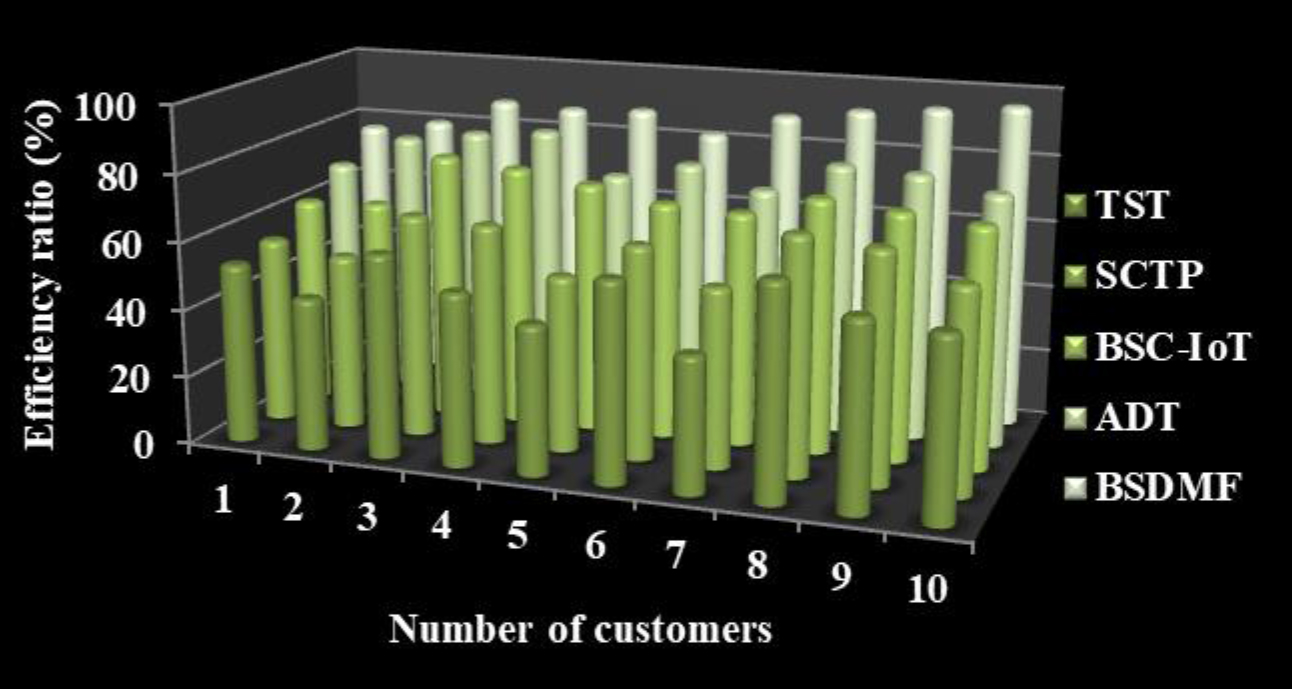
Figure 6 shows the efficiency ratio. Blockchain applications help create “multi-centre, weakly intermediated” frameworks that improve financial sector efficiency. Given its unauthorized and independent existence, regulating a decentralized structure and the eventual execution remain concerns that need to be addressed. Therefore, users are entitled to immediate regulations and for industry standards to be established. Backend Transaction Efficiency of Blockchain Technologies is relatively high for leading financial institutions, and their ability to reduce operating expenditures is highly stressed. The component that stays on the Ethereum platform as well as interacts with the interface to perform its important feature is called the backside or data system. Supply chain financing requires a wide variety of manual and document checks. There are many intermediaries in the chain and a high probability of illegal dealings, high costs, and poor productivity. Blockchain technology can significantly reduce manual interventions and use smart contracts to digitize procedures that rely heavily on study work. This will dramatically increase supply chain finance performance and reduce manual operating costs. The supply chain can be improved most effectively by lengthening the entire replenishing period and relaying accurate sales data to all stages. Storage & warehouse must be completely managed as part of a bigger distribution network approach in order to save total costs. Businesses can concentrate on their processes to cut expenses, such as optimising space, minimizing risk, and repackaging, among other things.
Data management ratio.
Figure 7 shows the data management ratio. Data management has earned less consideration than Blockchain’s transaction functionality because Blockchain Data Processing is not connected to cryptocurrencies. The potential of blockchain technologies to allow safe and open payments without the use of middlemen has drawn considerable interest in recent times. Although this is a crucial application for blockchain, a related but less-discussed part of the system is information security. Since they were among the software’s original and most prominent use applications, cryptocurrencies like Bitcoin & Ethereum are frequently linked to blockchain technologies. Blockchain Data Protection has far-reaching effects on computers, businesses, and culture. When something is described as far-reaching, it means that it has a significant impact on a variety of subjects. It helps us ensure that a digital document will never be altered, backdated, or written. Blockchain Data Processing is a central tool to overcome the data confidence issues of financial institutions. The most frequent reason for bank collapse is whenever the property price falls underneath the market price of the company’s commitments, that are its debts to customers or lenders. This could occur as a result of excessive capital losses by the institution. It will create confidence among financial authorities, financial institutions, clients, and regulators by presenting data accuracy and evidence. For all financial institutions, the need to ensure consistency with legislation and customer confidence enhancement should be top priorities. For these businesses, Blockchain Data Storage can be a central technology. Data authentication has earned less consideration than Blockchain’s transaction functionality because Blockchain Data Processing is not connected to cryptocurrencies. The transfer is then verified by mining, who compare it to established authenticity standards set by the bitcoin’s developers. The verified events are gathered in a block then secured with a lock known as Hash.
Error ratio.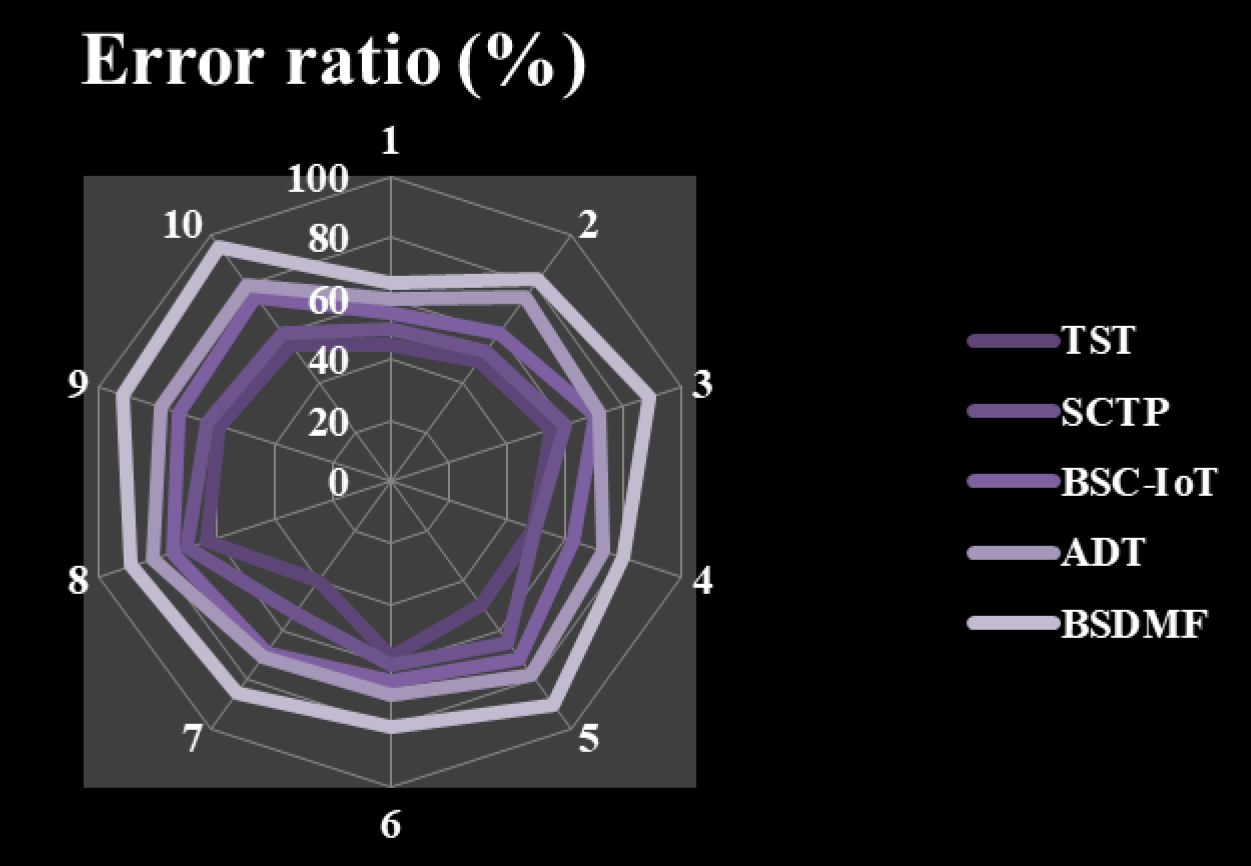
Figure 8 shows the error ratio. Blockchain-based trade financing will streamline trading by eliminating bulky official procedures and study work. On the blockchain, each operation is permanently documented with a date as well as a digital fingerprint. For total honesty, that aids in boosting confidence and preventing fraud, everybody with the individual’s consent can view the appropriate or identical data. Blockchain is safe, accessible, or almost hard to change due to its structure and characteristics. This fundamental innovation in the finance sector enables the money to be transferred while maintaining trust in the issuer’s security and dependability. For example, parties must keep their database for all transaction-related records within a conventional trading finance scheme. Traditional commercial finance systems may retain transaction-related details of parties in its databases for a variety of times, which is eventually based on a mixture of existing rules and administrative regulations. Any of these databases must regularly be combined, and a single mistake should be duplicated into copies of the record in a single document. The blockchain prevents multiple expenditure by timestamping groupings of events and disseminating these to everyone sites in the bitcoin system. Because actions are date stamped on the network or even statistically linked to prior ones, these are irrevocable and difficult to alter. Blockchain does away with this need for multiple versions of the same document and will merge all the relevant information into a single digital document modified in real-time and available to all clients. Automating trade finance transfers would help financial services companies gain massive savings after implementing blockchain technologies. Smart contracts’ use to simplify workflows for approvals and clearing calculations would minimize transaction times and enable banks to reduce the number of workers necessary for the task massively.
Data authentication ratio.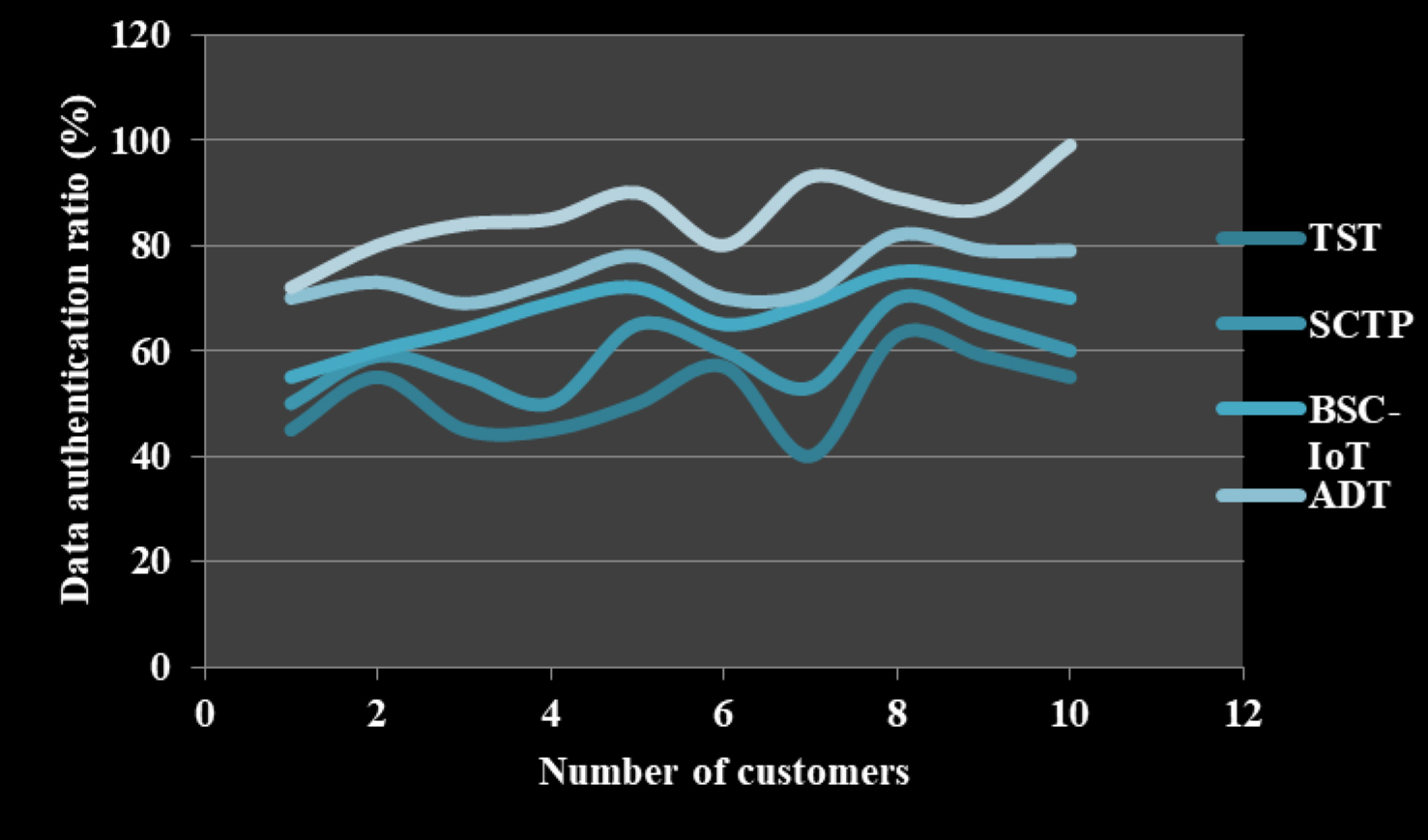
Figure 9 shows the data authentication ratio. Protection and privacy in every information system are basic concepts. The combination of honesty, availability, and secrecy is what customers describe as protection. Protection is usually available using a combination of authentication, consent, and identity. Authentication, consent, and audit: the aim is to recognize the individual performer in a scheme, check what privileges it has, and save user usage records. The electronic transfer auditing is a computerized database that records the location, time, and signer information for each signing on a transaction. It allows the company to confirm every signing and track it directly towards the signatory. The procedure of digital signature enables the recipient to confirm the statement’s authenticity and reliability. To confirm that a file originated with the intended source and wasn’t altered by a networking invader is to put it simply. Authentication, authorization, and auditing of Blockchain’s layout guarantee all three features, as all transactions can be made public and audited only by digital signature users. Authentication, consent, and audit aim to recognize the individual performer in a scheme, check privileges it has, and save usage records for that user. Authentication, authorization, and auditing of the layout of Blockchain guarantees all three features, as all transactions can be made public and audited only by digital signature users.
The proposed BSDMF models enhance computation time, efficiency ratio, error ratio, data authentication, and data management ratio when compared to other existing transparency and Sustainability Technology (TST), Supply Chain Tactical Planning (SCTP), Operations and Supply Chain Management (OSCM), Advanced Deep Learning (ADL), and Blockchain-based Smart Contracts for IoT (BSC-IoT).
This article developed a blockchain-based financial services supply chain network to address conventional supply chain funding problems. Users have chosen two scenarios based on blockchain, warehouse transaction financing and receivables finance funds, as indicators of how the business model and process following blockchain use can be updated in-depth. It advises companies who plan to use the blockchain to construct and employ blockchain in the supply chain. Users then focused on privacy protection and introduced a blockchain-supplier finance platform for an experimental method. A peer-to-peer confidence system is set up on a forum that encourages businesses within the market to engage in business more legally. The customer has chosen two scenarios based on blockchain, namely, Warehouse receipt financing and receivables finance funds, as indicators of how the business model and process following blockchain use can be updated in-depth. This process creates a confidence and reputation atmosphere, enabling each business to achieve a successful supply situation. In the future, encryption authentication and the Blockchain structure will be studied. The simulation outcome has been implemented, and the recommended method achieves a computation time of fewer than 2 hours, an efficiency ratio of 97.4%, an error ratio of 94.1%, data authentication of 92.1%, and a data management ratio of 98.7%.
Funding
Authors did not receive any funding.
Availability of data and material
Available on request.
Code availability
Not applicable.
Authors’ contributions
Mohammed Hasan Ali, Mustafa Musa Jaber, Sura Khalil Abd, Ali S. Abosinnee, is responsible for designing the framework, analyzing the performance, validating the results, and writing the article. Z.H. Kareem, Amelia Natasya Abdul Wahab, Rosilah Hassan, Mustafa Mohammed Jassim, is responsible for collecting the information required for the framework, provision of software, critical review, and administering the process.
Footnotes
Conflict of interest
Authors do not have any conflicts.