




Abstract
A recommender system is an information filtering system used to predict a user’s rating or preference for an item. Dietary preferences are often influenced by various etiquettes and culture, such as appetite, the selection of ingredients, menu development, cooking methods, choice of tableware, seating arrangement of diners, order of eating, etc. Food delivery service is a courier service in that delivers food to customers by restaurants, stores, or independent delivery companies. With the continuous advances in information systems and data science, recommender systems are gradually developing towards to intentional and behavioral recommendations. Behavioral recommendation is an extension of peer-to-peer recommendation, where merchants find the people who want to buy the product and deliver it. Intentional recommendation is a mindset that seeks to understand the life of consumers; by continuously collecting information about their actions on the internet and displaying events and information that match the life and purchase preferences of consumers. This study considers that data targeting is a method by which food delivery service platforms can understand consumers’ dietary preferences and individual lifestyles so that the food delivery service platform can effectively recommend food to the consumer. Thus, this study implements two stages data mining analytics, including clustering analysis and association rules, to investigate Taiwanese food consumers (n = 2,138) to investigate dietary and food delivery services behaviors and preferences to find knowledge profiles/patterns/rules for food intentional and behavioral recommendations. Finally, discussion and implications are presented.
Keywords
Introduction
Food provides nutrients needed for survival, such as carbohydrates, fats, proteins, and water, while also providing enjoyment [1]. In addition to the usual three daily meals, food is a vital accompaniment to some celebrations and activities, giving meaning and pleasure to life [2]. Currently, most of the consumer food provided by the is through of-site ordering and on-site consumption. As food becomes easier to obtain, the choice of what to eat at each meal brings up issues, such as taste, nutrition, place and timing of meals, menus, and health concerns. In addition to cooking at home, eating out has become a primary source of daily diet [3].
On the other hand, dietary preferences are often influenced by various etiquettes and culture, such as the selection of ingredients, menu development, cooking methods, choice of tableware, seating arrangement of diners, order of eating, etc. [4]. In addition, different cultures also stipulate foods to be eaten on weekdays and holidays, as well as the frequency and time of eating, which help determine personal dietary preferences [5]. With globalization, dietary preferences have tended to converge. For example, European and American fast-food companies, convenience foods and snacks are popular around the world [6]. Furthermore, due to the high degree of commercialization, restrictions on mealtimes have also affected dietary preferences, including cooking alone and eating out [7]. Personal dietary preferences are also affected by social and festive activities, where trying food with different flavors and tastes will change individual dietary preferences [8]. In addition, an individual’s information sources, health status, age, and method of obtaining food will also change dietary preferences [9]. Furthermore, following the COVID-19 pandemic, due to the development of the zero-contact economic model and food delivery services, changes in dietary preferences were particularly marked [10].
Food delivery service is a courier service in that delivers food to customers by restaurants, stores, or independent delivery companies [11]. Orders are usually placed through a restaurant or store’s website or mobile app, or through a food ordering platform [12]. The delivered items may include entrees, side dishes, beverages, desserts, or groceries, and are usually delivered in boxes or bags [13]. The first food delivery service was for naengmyeon (cold noodles) in Korea, recorded in 1768. Haejang-guk (hangover soup) was also delivered for the yangban in the 1800s. Advertisement for food delivery and catering had appeared in newspapers by1906. In recent years, food delivery service through third-party companies has become a growing industry that sparked a revolution for both food and delivery [14]. Other aspects of food delivery include catering and wholesale food service deliveries to health care facilities, cafeterias, restaurants, and catering by foodservice providers [15]. Customers can choose to pay online or in person, using cash, bank cards or mobile devices, depending on the delivery firm. Contactless food delivery service has also been an option for consumer since 2020, from the beginning of COVID-19 to present) [16]. Prior to the COVID-19 pandemic, the demand for online food delivery services had already increased dramatically, with revenues for the online food delivery segment increasing to $76.195 billion from $31 billion in 2017, with an estimate of $136.431 billion by 2022 [17]. The number of food delivery app users is expected to reach 965.8 million by 2024 [18].
A recommender system is an information filtering system used to predict a user’s rating or preference for an item. Recommender systems typically generate recommendation lists either through collaborative filtering and through content-based recommendations, or through personalized recommendations [19]. Collaborative filtering methods model a user’s historical behavior in combination with similar decisions made by other users. Such models can be used to predict which items a user is likely to be interested in purchasing [20]. Content-based recommendation uses a series of discrete features of related items to recommend similar items with similar properties. The two methods are often used in conjunction with each other [21]. Recommender systems are an effective alternative to search algorithms because they help users find items, they would be unlikely to find on their own [22]. These systems are often implemented using search engines to index non-traditional data, for example Search Engine Optimization (SEO) [23]. In 2023 Google discontinued the use of third-party cookie technology in its browser and will not use alternative methods to track users’ web browsing data. But with the growing volume of data on the internet, data targeting can provide vendors and analysts with more sources of customized recommendations. Following the trend of cookieless searches, when businesses collect data, they will categorize user groups by “interests and hobbies” to be able to identify potential consumers without compromising their privacy [24].
With the continuous advances in information systems and data science, recommender systems are gradually developing towards to intentional and behavioral recommendations. Behavioral recommendation arises because a user does something on the internet; for example, A clicks on the catalog of a restaurant. The online platform notes that “this person is looking for pasta” and the next two weeks, whichever website A clicks on, an advertisement pops up for pasta; the algorithm recommends other similar things, such as Italian bread, based on the initial item that the consumer clicked on. The item on which A clicked is considered a data targeting. Thus, behavioral recommendation is an extension of peer-to-peer recommendation, where merchants find the people who want to buy the product and deliver it [25,26,27]. In contrast, intentional recommendations are based on the consumer touching the items, to deduce what the consumer’s life is like? Based on an algorithm that analyzes the specific profile of the person, it then presents him with information he may need. This information is not only food commodities, but may also include linkages such as weather, celebrity recommendations, social network word-of-mouth, blog articles etc. For example, if A was searching for pasta online, the data targeting for intentional recommendation determined that A recently had a craving for pasta, with specific reasons for restaurant selection, enjoys interacting on social media, has his own food delivery service platform preference, has ordered from the platform in the past, orders additional Italian bread and Americano, uses mobile payment, and has accumulated bonus points. Therefore, intentional recommendation is a mindset that seeks to “understand the life of consumers”; by continuously collecting information about their actions on the internet and displaying events and information that match the life and purchase preferences of consumers. This leads businesses to gradually explore what consumers need and make product recommendations through the specific consumer profiles [28,29]. This study considers that data targeting is a method by which food delivery service platforms can understand consumers’ dietary preferences and individual lifestyles so that the food delivery service platform can effectively recommend food to the consumer.
Accordingly, since understanding consumers’ dietary preferences and lifestyles, food delivery service platforms can proactively use data targeting on a database to co-operate with food and beverage operators for food international and behavioral recommendations. This background leads to the following research questions:
Research question one (RQ1): Using data mining analytics, what are the main profiles of Taiwanese consumers’ preferences for diet and food delivery services in on a database? Research question two (RQ2): What is the data targeting of dietary and food delivery services for understanding consumers’ preferences and behaviors? Research question three (RQ3): What knowledge patterns/rules from data targeting on consumers should dietary and food delivery service operators consider making their online and offline operating models more competitive? Research question four (RQ4): For recommendations, how can dietary preferences and food delivery services be integrated to develop food cuisine and behavioral recommendations?

The conceptual model.
Research related to recommendations has developed in recent years, and the investigation of consumer targeting may support further development of recommendations. Dietary preferences are now extending beyond daily food and beverage, to new levels of individual life experience interacting with food delivery service for socializing, leisure, and healthcare. Thus, this study implements data mining analytics, including clustering analysis and association rules, to investigate Taiwanese food consumers (n = 2,138) to investigate dietary and food delivery services consumers’ behaviors and preferences to find meaningful profiles/patterns/rules for food cuisine intentional and behavioral recommendations. Figure 1 shows the conceptual model for data modeling and analytics.
Dietary preferences intentional recommendations
Based on non-binary relevance assessment, Liu et al. [30] proposed a Next-basket Recommendation (NBR) evaluation metric that was validated by two user studies on next-basket food recommendation using several NBR methods in both online and offline evaluation environments. The results reveal that offline recommendation evaluation based on the proposed non-binary metrics was more representative of online evaluation performance than the previous recommendation metrics. Zhang et al. [31] analyzed how the combination of two sources of food information affects purchase intentions. Based on congruence theory, the authors suggested that when there is congruence between the two sources, influencer recommendations reinforce the effect of front-of-package nutrition labels (FOP labels). However, when the sources of information are inconsistent, consumers are more likely to follow the influencer’s recommendation than the FOP label. The authors used a between-subject experimental design in which the degree of consistency between two sources of information was manipulated. The influence of the influencer on purchase intention was moderated by credibility of the FOP label. Ekici et al. [32] focused on the issue of neglected food recommendations, which can explain the attitudes and behaviors of farming communities towards agriculture as food prices rise.
Food delivery service intentional recommendations
Talwar et al. [33] addressed food delivery service recommendations by utilizing Innovation Resistance Theory (IRT) and an aggregated mixed-methods research design to examine the barriers faced by users of existing food delivery service apps (FDAs) and how these barriers affect their trust and the efficacy of their recommendation behavior (positive and negative terms). The study both extended the classic IRT barriers to the FDA context by identifying three key barriers (economic, efficiency, and experiential), and provided empirical evidence supporting the negative correlation of barriers with trust and ambivalent recommendation behaviors. Liébana-Cabanillas et al. [34] used the Stimulus-Organism-Response Model to study the drivers of online food delivery (OFD) use intention and recommendation, as well as analyzing the perceived risk of COVID-19 and its relationship with the perceived risk of online OFD purchase. The authors analyzed the relationship between COVID-19 and its perceived risk with the perceived risk of online purchase of OFD and analyzed the cultural influences between Spain and India. The results confirmed that attitude was the main prerequisite for the use of intentions and recommendations, while subjective normative relationships were only recognized through recommendations. These findings suggests that individuals’ attitudes toward intentions and recommendations are more favorable than third-party influences on decision making. Weck et al. [35] examined the key factors that determine the loyalty of online food delivery (OFD) services in Indonesia, Taiwan, and New Zealand, as these countries faced different levels of epidemic severity. Data analysis using Partial Least Square Structural Equation Modeling (PLS-SEM) found that food and e-service quality, satisfaction, perceived value, and trust were significant predictors of loyalty in all countries. In Indonesia and Taiwan, food quality drives consumer loyalty, satisfaction, and perceived value, but e-service quality is the main determinant in New Zealand. These differences can be attributed to the current state of the OFD service market in the three countries prior to the outbreak of the COVID-19 pandemic, cultural factors, the severity of the outbreak, and consumer access to alternative distribution channels for food delivery service recommendations.
Food intentional and behavioral recommendations
Kervenoael et al. [2] investigated the drivers of perceived value of food Recommender Systems (RecSys) consumption using a PLS-SEM approach (n = 253) to establish a positive correlation between the perceived value of Yuka’s RecSys and its perceived value. The model suggested that the perceived value of Yuka’s RecSys relies on the disciplinary drivers of compatibility, self-confidence, and consumer innovativeness, as well as the problematic drivers from memory and learning from using the application. The perceived value of food RecSys was found to be correlated with the perceived value of RecSys beyond the functional accuracy of the recommended algorithm. Nutritional requirement values (NRVs) and recommended daily intakes (RDIs) have long been established and organized in tables by various regulatory agencies. But food, not nutrients, is the basic unit of nutrition. Fernandes and Bell [36] emphasized the fact that existing food guides, with their inherent strengths and limitations, fail by not considering basic geographic, ethnic, and cultural differences, as well as life stages, infant nutrition, and dietary habits. The influence of microbiota on the requirements of several micronutrients is also critical. Furthermore, they pointed out the current inaccuracy of some NVRs, for example of Vitamin D. Therefore, defining dietary reference intakes is an ongoing process for individual populations.
Data mining for dietary preferences, food delivery service and food intentional and behavioral recommendations
Kleboth et al. [37] explored data mining methods and used algorithms to automate integrity checking. In addition, they also provided preliminary validation of suitable algorithms. Among three potentially suitable algorithms, the complex-biased random walk (CBRW) algorithm was chosen as the basic algorithm for finding anomalies in the audited data. The CBRW algorithm was adapted and extended to show the influencing factors of potential anomalies, enabling managers to find the causes of potential anomalies more quickly. This can reduce inappropriate recommendations for third-party food safety audits and maintain food safety at certified food companies. Bai et al. [38] used data mining techniques to develop a database of words used in menu descriptions from a wide range of casual American restaurants These words were categorized and sorted by frequency to identify the most frequently used words and categories. The results showed that, by category, cooking words were used most frequently in the menus, while sensory and adjectives were used least frequently. In terms of ingredient categories, vegetables occurred most frequently, and fruits were the least frequent. The main menu word categories identified in that study can help restaurant owners update their current menu word categories and food recommendations. On the other hand, Yoo et al. [39] investigated two veg*n subreddits: r/Vegan and r/Vegetarian to categorize users’ interests and preferences using various data mining methods. Based on K-means and term frequency-inverse document frequency, six clusters were identified: food, perception, health, altruism, emotion, and context. The proportion of each cluster and the keywords representing the cluster were obtained. The findings suggested that the development of detailed guidelines may be helpful in adapting to the wide range of dietary components within the vegan diet and that manufacturers need to provide clear information related to veg*n foods.
Combining the characteristics of different recommendation methods and applications from the literature review, this study suggests that recommendations should both include complete evidence from data targeting generated by consumers, and provide feasible recommendations based on the individual’s preferences and behaviors. They should also be able to predict what people, events, and things a consumer may be interested in and prefer based on his/her dietary and food delivery service profiles/patterns/rules to recommend a complete set of business intelligence and food product/service recommendations to the consumer.
Method
Subject background and data collection
Data was collected by questionnaire surveys through social network, online consumer groups on food delivery service, and delivery staff group etc. Sharing the questionnaire link and scanning the QR Code was completed on the SurveyCake questionnaire website. The IP addresses of different respondents was recorded in the online responses to confirm the repeatability and completeness of the data. The formal questionnaires for this study were randomly distributed online. From June 6, 2023, to July 11, 2023, a total of 2,404 copies were distributed. Duplicate IPs in the collected questionnaire content were excluded, along with questionnaires that took too long to complete. The final number valid questionnaires were 2,138 for a return rate of 89%.
The questionnaire design
The questionnaire design of this study is mainly to investigate the behaviors and preferences of consumers on dietary preferences, food ordering, and food delivery service in addition to establish a systematic database. It is divided into five parts including 29 items. The first part is the basic information of the subjects (6 items). The second part is the survey on food delivery platform usage behavior (6 items). The third part is the survey on ordering food delivery behavior (6 items). The fourth part is the survey on usage behavior of food delivery logistics (5 items). The fifth part is the survey on food delivery cash flow usage behavior (6 items). All items are designed as nominal and ordinal scales (not Likert scale). For example:
Which of the following food delivery service platforms do you use most often? (Multiple choice)
① Food panda ②Ubereat ③Foodmo ④lalamove ⑤inline ⑥Gogobar ⑦Quick delivery ⑧Other (Please list)
(Please list the top three rankings of your preferences
Database design – snowflake schema
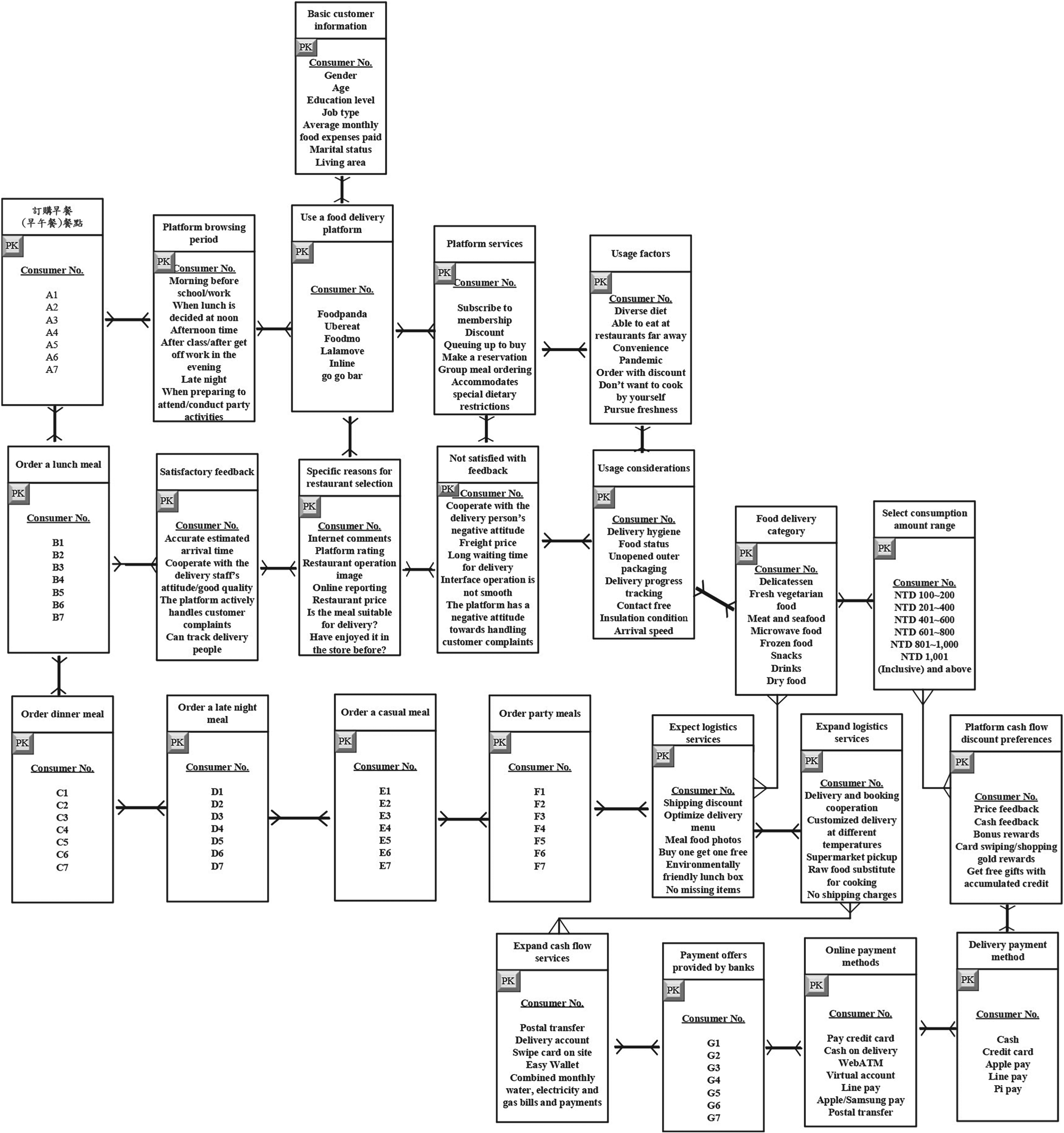
The database design – snowflake schema.
The concept of data warehousing was proposed by Berson and Smith [40]. A data warehouse is constructed by fact schema and dimension schema, with the dimension schema divided into snowflake schema, star schema, and fact constellation schema. This can organize and store large amounts of data in the data warehouse for analysis, querying and decision-making. The snowflake schema is a multidimensional data model that can be subdivided into its star schema and fact constellation schema. It is used to reduce data duplication and integrate the data into various dimensions, where the summarized dimensions are all independent. The snowflake schema is composed of a normalized fact dimension table (Dimension Table) and a fact table (Fact Table). the fact pattern outline is a fact dimension table (Dimension Table) extended by multiple fact tables (Fact Table) [41]. This study includes 22 fact tables; 9-dimension tables; 32 associations, and 196 attributes, as shown in Fig. 2.
Clustering analysis
Clustering analysis is the management analytics of simplified multivariate data in data mining methods, which divides samples into different clusters according to the similarity, dissimilarity, and distance between individua data group. The similarity between individuals in the same group will be relatively high, while the similarity between individuals in different groups will be lower than that of the same group and the dissimilarity will be greater; use the cluster results found by analysis to infer meaningful data, which is a group. Clustering analysis was the most used data mining method when subjects were grouped. This study uses K-means cluster analysis, which is also one of the most used clustering analyses by users [42].
K-means algorithm is a non-hierarchical cluster analysis method. Its purpose is to minimize the sum of squares of the sample errors of each cluster. Repeat the same steps to iterate until the data is converged. and will not be reassigned to other clusters, and the step of clustering is complete. The advantage of this algorithm is that it is simple and easy to use, it can handle huge amounts of data, and it is easy and fast in operation [43]. This study uses the K-means algorithm and divides consumers into groups according to their consumption behavior and preferences. The steps are as follows:
Assume there are N data sets The receiver uses the Euclidean distance to calculate the distance between each data and the average value of each initial cluster, and then assigns each data to the cluster with the closest distance. The calculation method is:
Divide the observed value ( When each cluster center has already been classified observations, and then recalculate the new cluster centers, the algorithm is as follows:
Then continue to repeat the above steps until the change of the cluster center becomes smaller and smaller, and the observation value does not change, then the final structure is generated.


In the field of data mining, association rule is a more commonly used data mining method. Agrawal et al. [44] first proposed that the main purpose is to find out the relationship between the data in the database, and to explore the meaning of the relationship. Association rules are often used to analyze the association of different commodity combinations in the database, and it can also be called the basket purchases analysis in the field of retail industry [45]. This study assumes that consumers will purchase B (Consequent) because of the consumption behavior of A (Antecedent), and the association rules are expressed by two parameters: Support and Confidence value. In the algorithm for finding association rules, the thresholds of Minimum support and Minimum confidence set by users must be met before the rules can be determined to be meaningful [46]. The formulas for calculating support and confidence are as follows [47]:
Support Among all the transactions in the database, the ratio of the number of simultaneous occurrences of items A and B to the total number of transactions, its expression is Sup(A Confidence Confidence is the level of confidence in the rules. Among all the transactions in the database, the ratio of the number of transactions in which item A occurs to the total number of transactions in which item A and itemB also appear at the same time, its expression is Conf (


To reduce the numerical bias caused by support and confidence, the analysis index of association is used to improve the exploration of support and confidence, that is, the Lift value.

In addition, the Apriori algorithm is one of the most popular implementation algorithms in association rules analytics. It was proposed by Agrawal and Srikant [47]. Apriori algorithm selects a meaningful set of items from a large amount of scattered and complex data in the database and finds out the relationship between items in the database in a step-by-step manner. When the most items in the data appear together, and the frequency of occurrence is the community with the highest frequency, the combination of this community is the main rule in the data. The calculation process of the Apriori algorithm is as follows [41] and implements on this study:
Set the threshold value of Minimum support and Minimum Confidence. The Apriori algorithm uses the concept of Candidate itemsets. If the support of the candidate item set is greater than or equal to the minimum support, the candidate item set is the Large itemsets. First, input all the data into the database, obtain the support of the first Candidate 1-itemset after sorting out, and then analyze the Large 1-itemset, and then combine the single items of the high-frequency itemset to produce the Candidate 2-itemset.
After the above actions are completed, continue to search for the database content, and then obtain the support of the second candidate item set, then find out the second high-frequency item set, and use the single items through the second high-frequency item set to combine and to generate the Candidate 3-itemset.
Clustering analysis
For
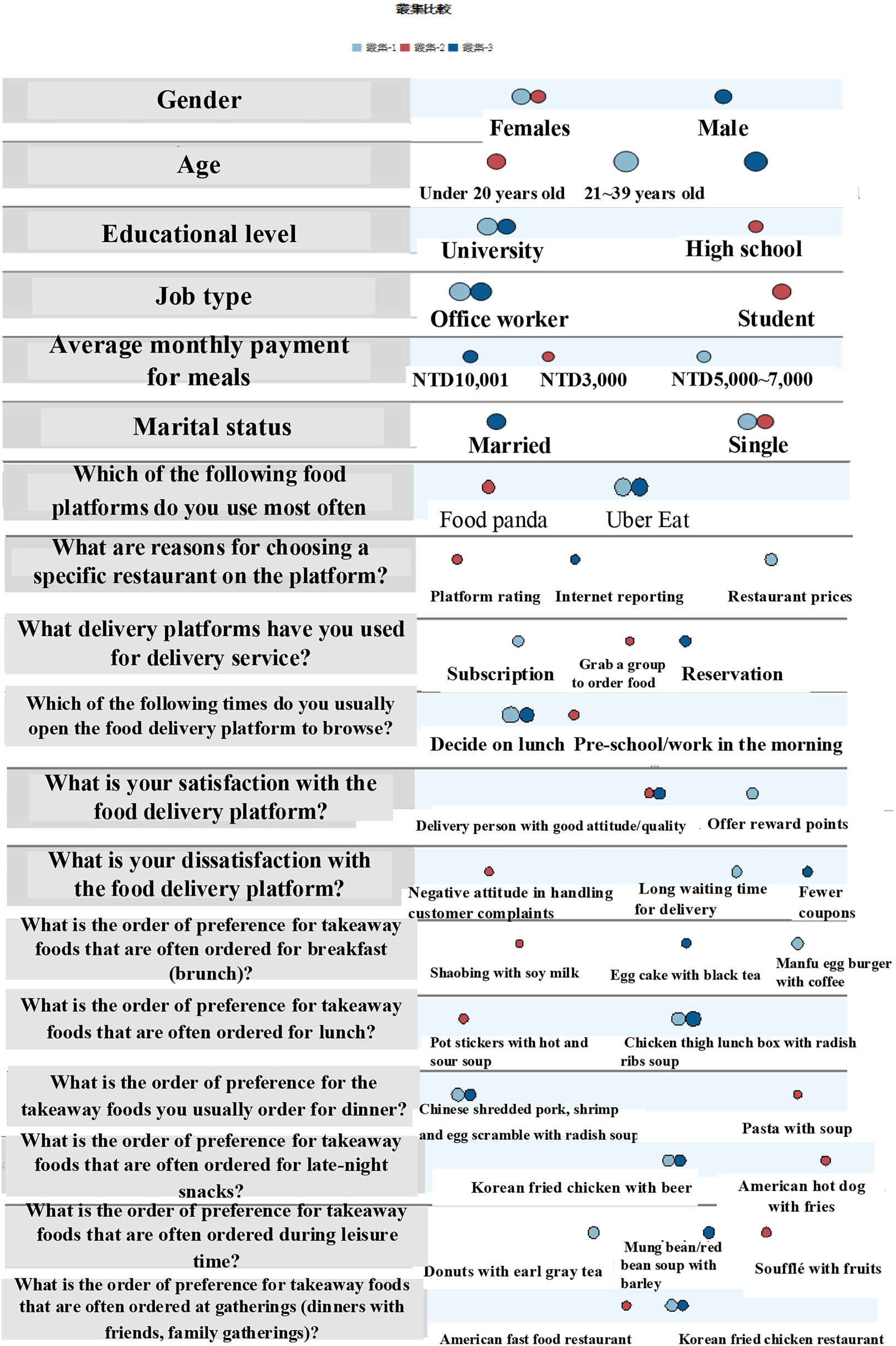
Clustering analysis.
Clustering analysis results.
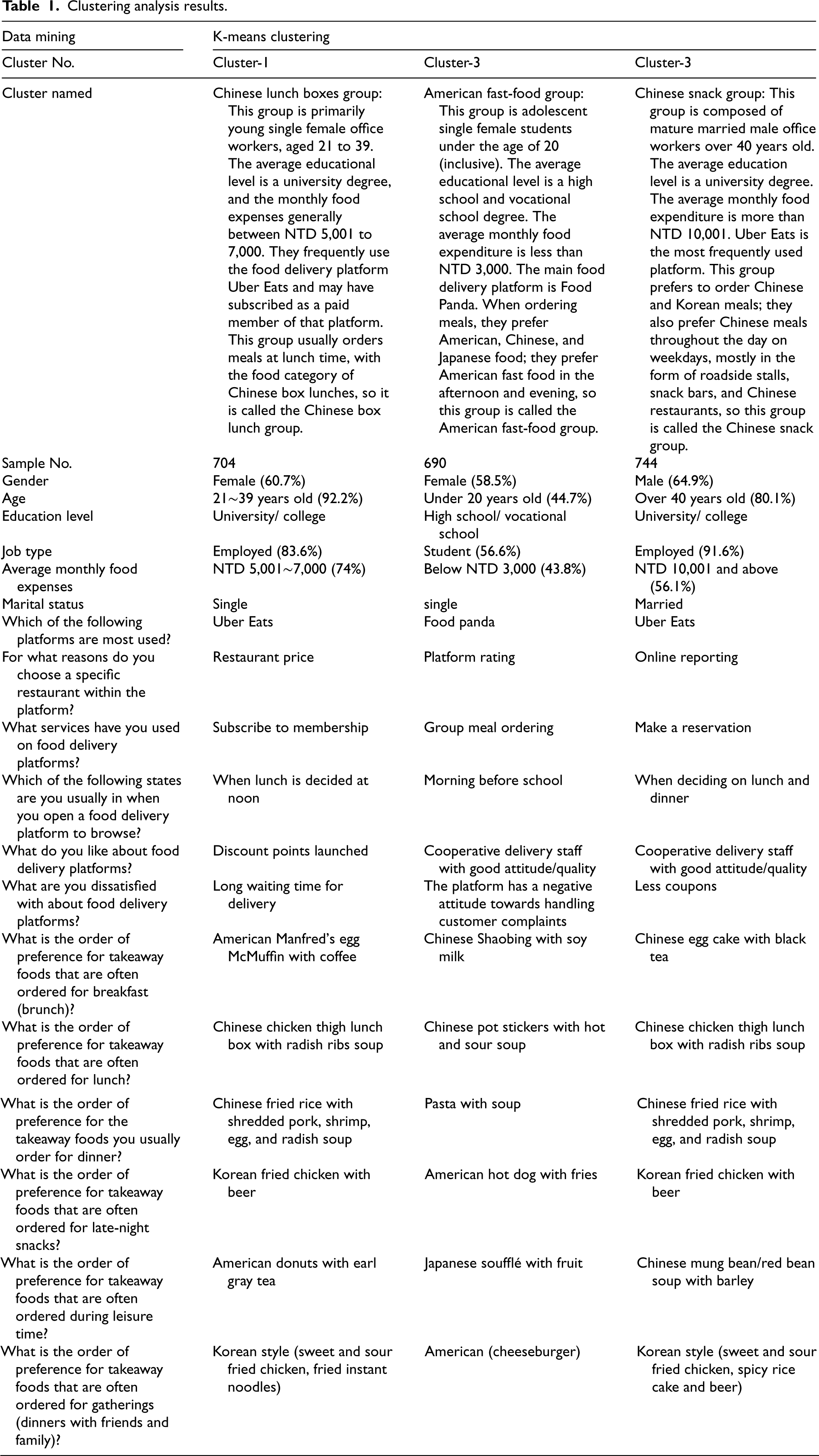
This group is primarily young single female office workers, aged 21 to 39. The average educational level is a university degree, and the monthly food expenses generally between NTD 5,001 to 7,000. They frequently use the food delivery platform Uber Eats and may have subscribed as a paid member of that platform. The meal options that are usually ordered are diverse, including American, Chinese, and Korean food. For the three main meals, dishes that can be obtained quickly or have more balanced nutrition are chosen. At other times, meals for the purpose of enjoying life are preferred. By measuring restaurant prices, subscribing to memberships, obtaining applicable discounts and delivery waiting time, platform usage behavior pays more attention to price and delivery time. This group usually orders meals at lunch time, with the food category of Chinese box lunches, so it is called the Chinese box lunch group.
Cluster-2 American fast-food group
This group is adolescent single female students under the age of 20 (inclusive). The average educational level is a high school and vocational school degree. The average monthly food expenditure is less than NTD 3,000. The main food delivery platform is Food Panda. When deciding on the criteria for a specific restaurant, the platform’s rating information will be collected, and other people’s feedback on the restaurant will be read to ensure that the rating mechanism can protect the group’s choice. Respondents use the platform to order meals in groups, with multiple people sharing the takeout platform service. When ordering meals, they prefer American, Chinese, and Japanese food; they prefer Chinese-style meals in the morning, and American fast food in the afternoon and evening, so this group is called the American fast-food group.
Cluster-2 Chinese snack group
This group is composed of mature married male office workers over 40 years old. The average education level is a university degree. The average monthly food expenditure is more than NTD 10,001. Uber Eats is the most frequently used platform. This group will choose a restaurant based on online article reports, pay attention to the source of restaurant information, and be able to obtain restaurant reputation information in advance before placing an order. They will also use the reported content to determine the restaurant’s meal presentation, meal taste description and other quality evaluations. The takeaway service is reservation-based ordering, so that this group can more fully arrange their meal enjoyment. This group prefers to order Chinese and Korean meals; they also prefer Chinese meals throughout the day on weekdays, mostly in the form of roadside stalls, snack bars, and Chinese restaurants, so this group is called the Chinese snack group.
Association rules analysis
Pattern 1 – Associations of dietary preferences and data targeting
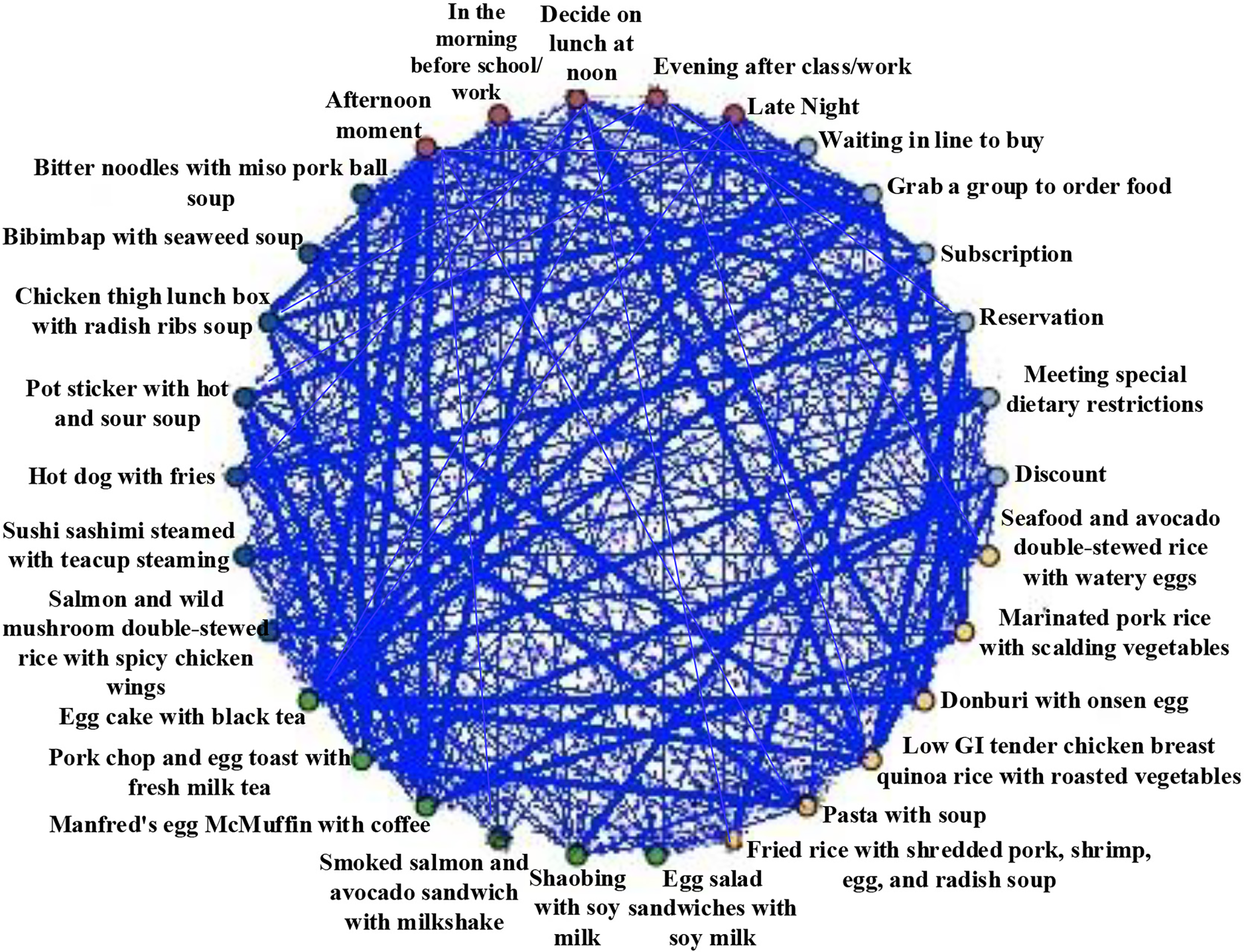
Association diagram of dietary preferences and data targeting (Cluster-1).
Association rules of dietary preferences and data targeting (Cluster-1).
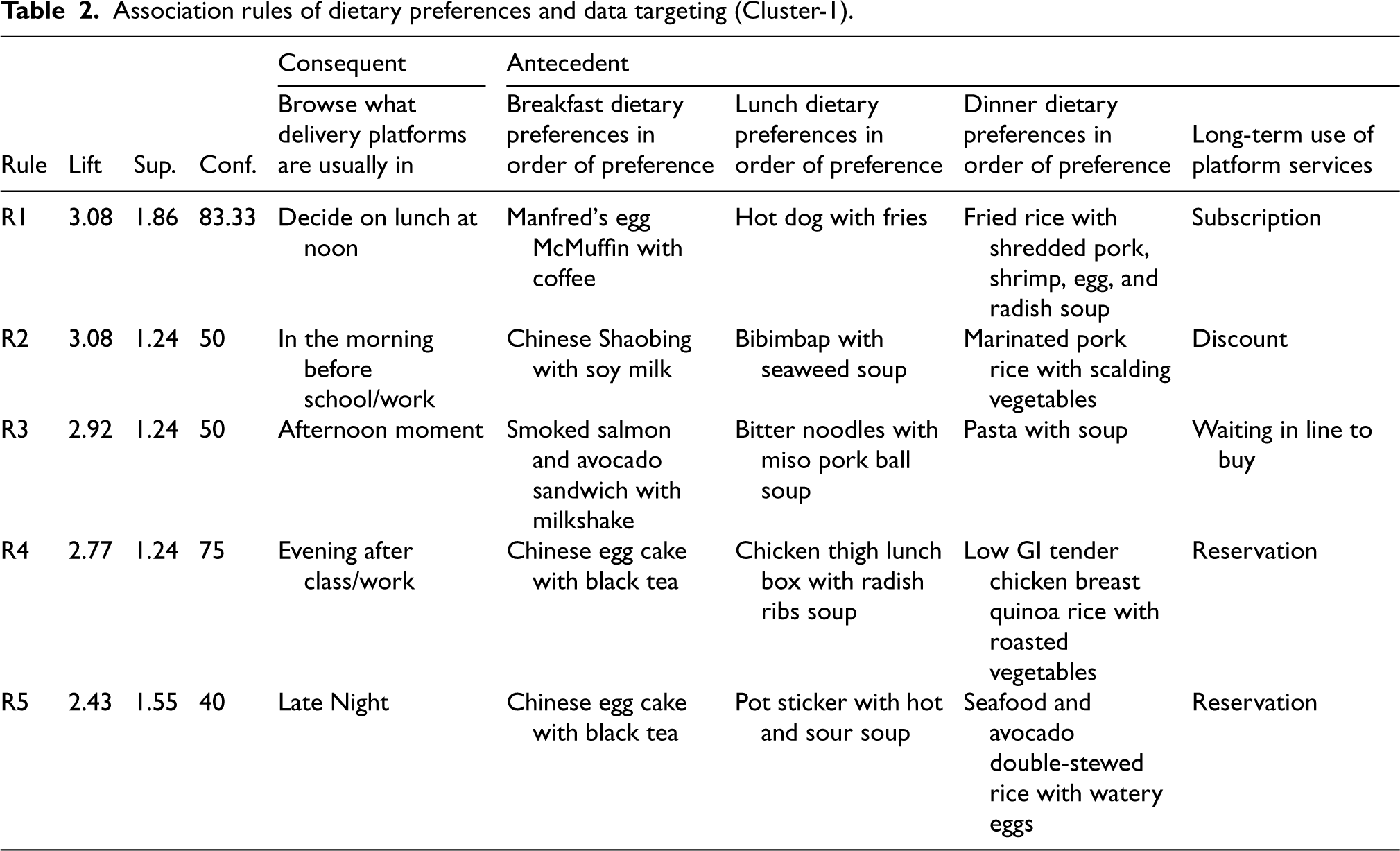
For
Regarding Cluster – 2, for Rule 2, when consequent is in the morning before school/work that antecedents include Chinese egg cake with black tea; Chicken thigh lunch box with radish ribs soup; Marinated pork rice with scalding vegetables; and Subscription. For rule 5, when consequent is in the when attending/conducting party activities that antecedents include Egg salad sandwich with soy milk; Chicken thigh lunch box with radish ribs soup; Chicken thigh lunch box with radish ribs soup; and Discount. On the other hand, regarding Cluster – 3, for Rule 2, when consequent is in the evening after class/work that antecedents include Manfred’s egg McMuffin with coffee; Burger with fries; Fried rice with shredded pork, shrimp, egg, and radish soup; and waiting in line to buy. For Rule 5, when consequent is in the late Night that antecedents include Chinese egg cake with black tea; Donburi with onsen eggs; Salmon and wild mushroom stew with spicy chicken wings; and Discount.
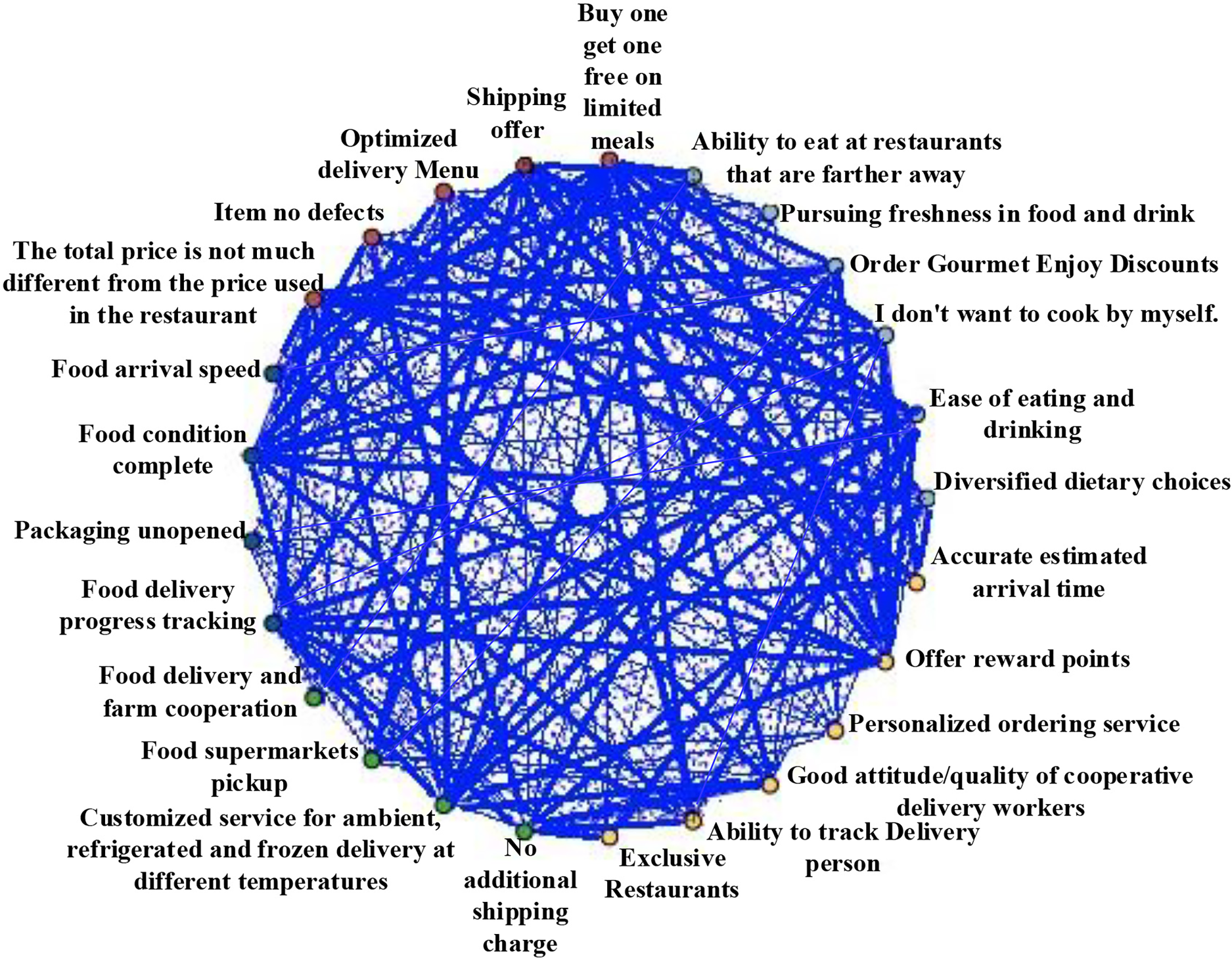
Association diagram of food delivery service and data targeting (Cluster-2).
In this study, the Minimum antecedent support value is greater than 2% and the Minimum rule confidence value is greater than 50% to generate the five meaningful association rules in the following table, and all of them have a lift value greater than 2 (Fig. 5). Regarding food delivery service and data targeting, this study proposes questions include Factors in deciding to start using a delivery service platform; Delivery service considerations; How to raise expectations for use; Satisfied with the platform service; and Hope that the delivery services provided by the platform. In terms of Cluster – 1, For Rule 2, when consequent is in the Diversified Dietary Choices that antecedents include Provide no-touch service; Optimize delivery menus; Good attitude/quality of cooperative delivery workers; and Food delivery and farm cooperation. For Rule 3, when consequent is in the late Impact of the pandemic that antecedents include Distribution hygiene; Buy one get one free on limited meals; Offer reward offer Points; and Customized service for ambient, refrigerated, and frozen delivery at different temperature.
Association rules of food delivery service and data targeting (Cluster-2).
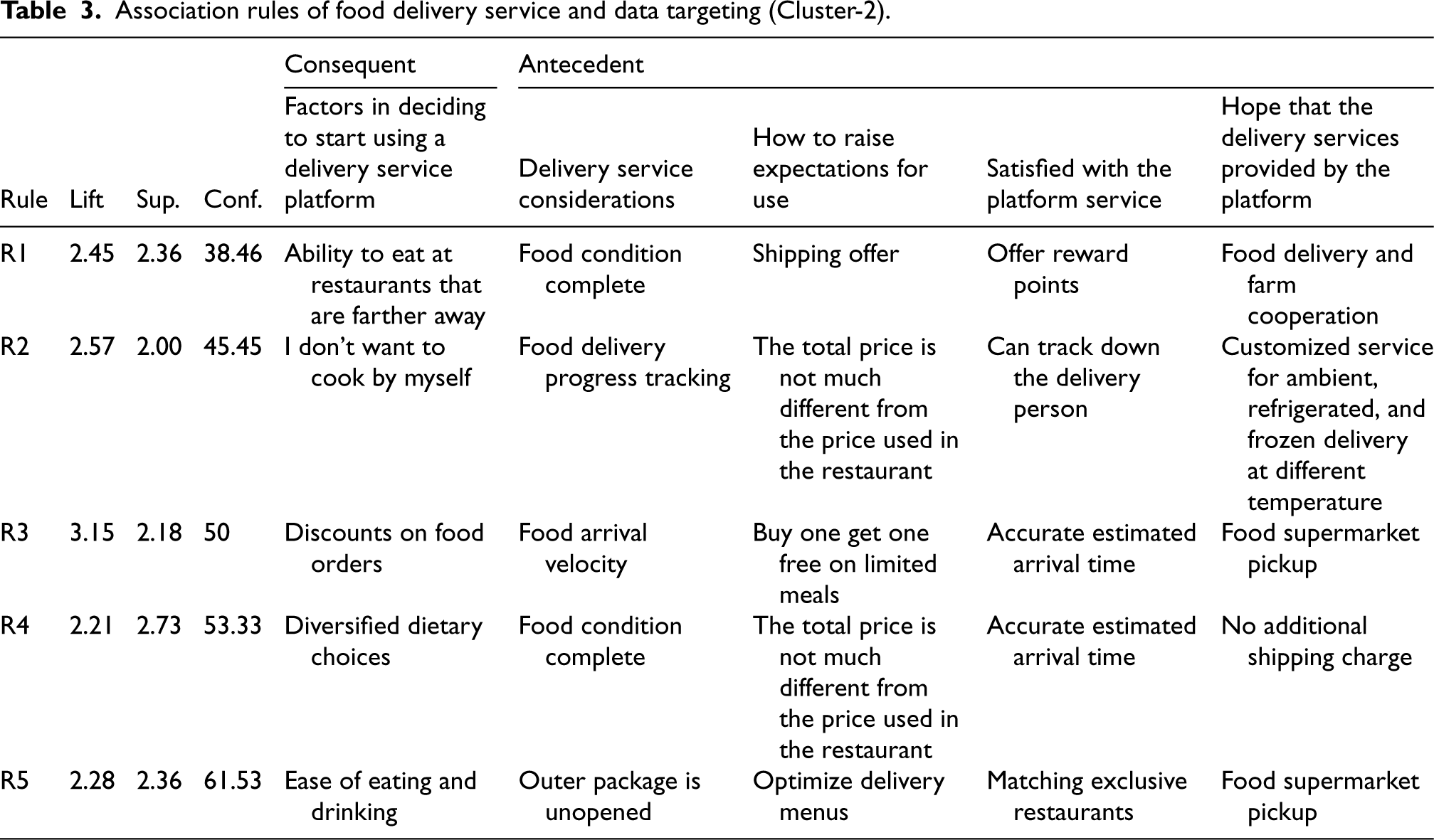
Regarding Cluster – 2, For Rule 2, when consequent is in the I don’t want to cook by myself that antecedents include Food delivery progress tracking; The total price is not much different from the price used in the restaurant; Can track down the delivery person; and frozen delivery at different temperature. For Rule 4, when consequent is in the Diversified dietary choices that antecedents include Food condition complete; The total price is not much different from the price used in the restaurant.; Accurate estimated arrival time; and no additional shipping charge (Table 3). Regarding Cluster – 3, for Rule 1, when consequent is in the Impact of the pandemic that antecedents include Provide no-touch service; Food photos on the platform; Good attitude/quality of cooperative delivery workers; and no additional shipping charge. For Rule 5, when consequent is in the Discounts on food orders that antecedents include Food delivery progress tracking; Optimize delivery menus; Positive attitude in handling customer complaints on the platform; and Raw food cooking delivery service.
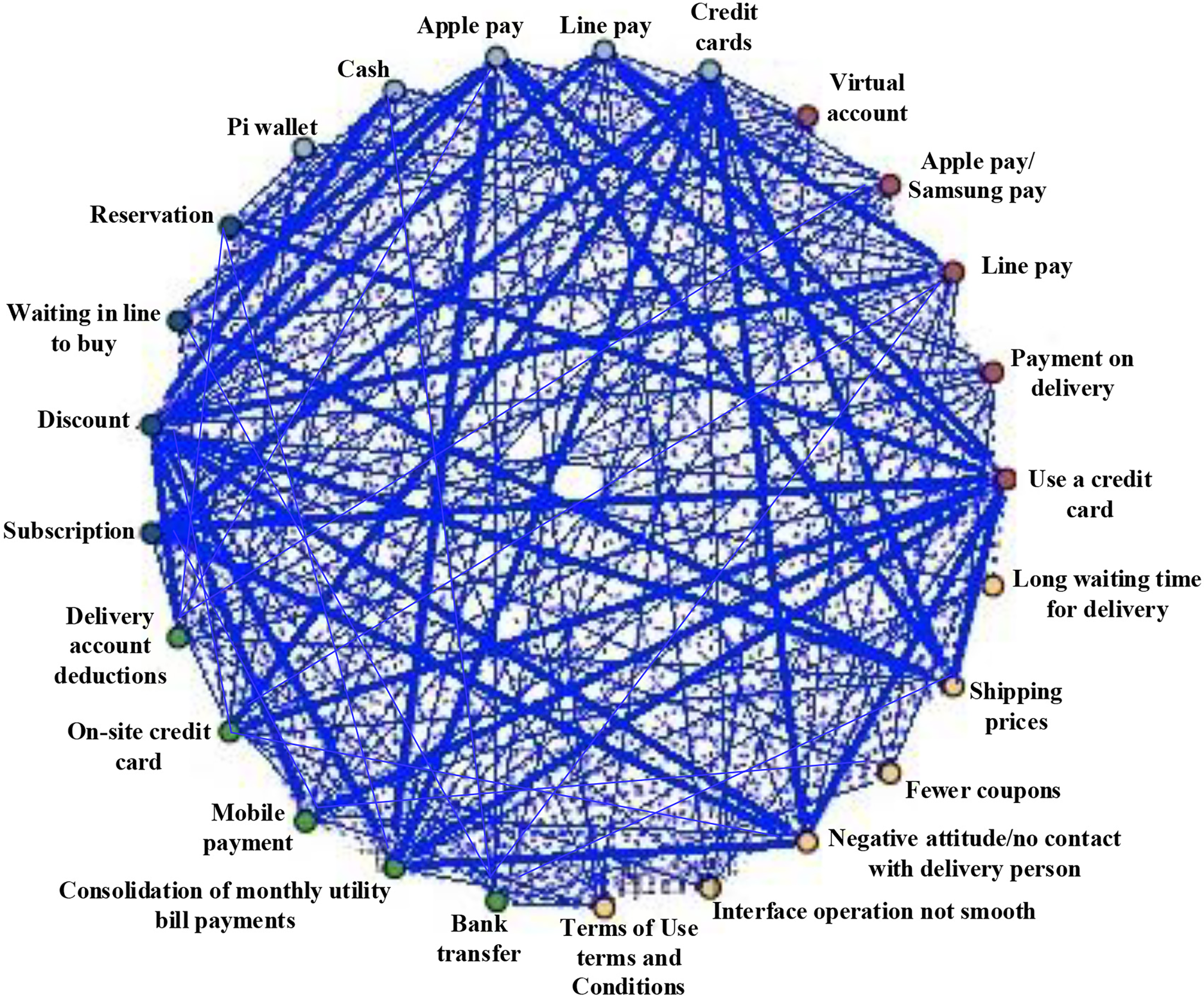
Association diagram of online food purchasing and data targeting (Cluster-3).
Association rules of online purchasing and data targeting (Cluster-3).
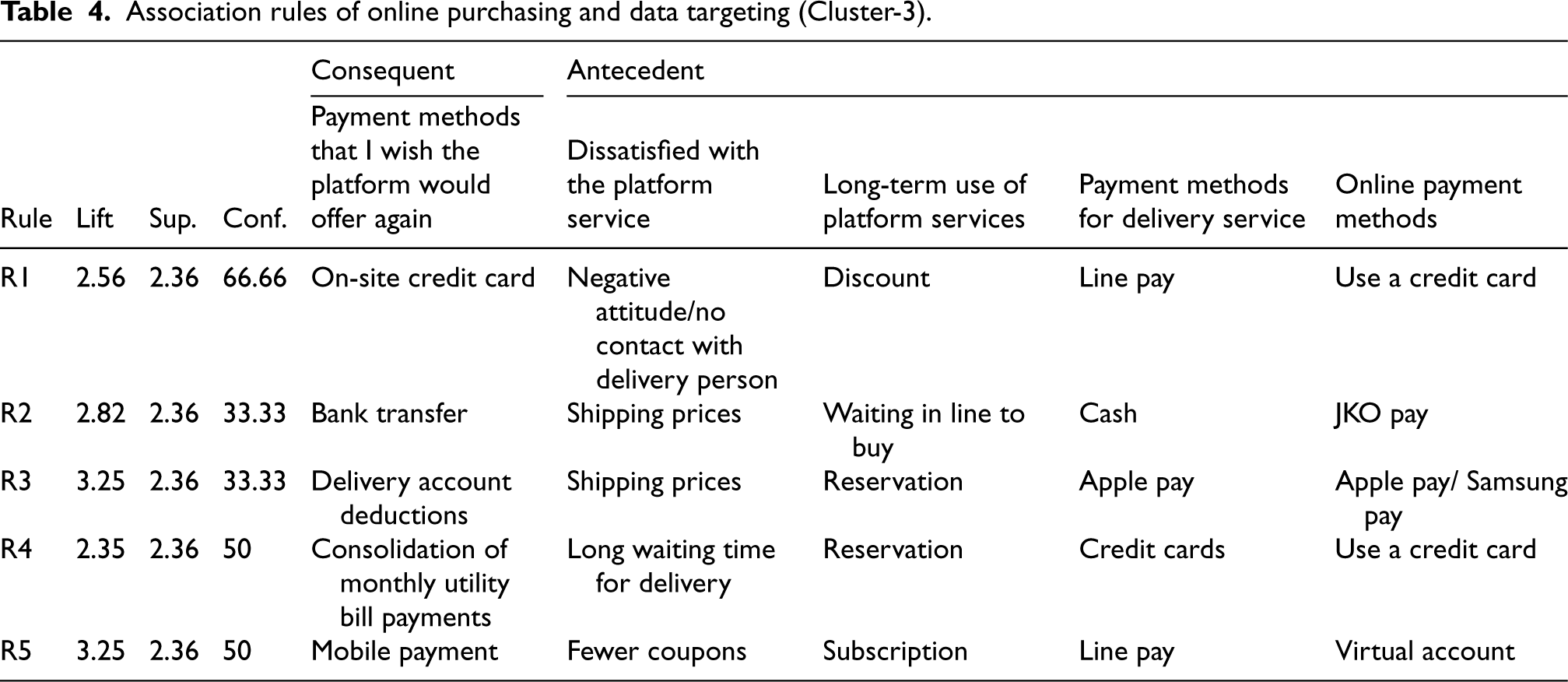
In this study, with Minimum antecedent support greater than 2% and Minimum rule confidence greater than 30%, the following five meaningful association rules are generated, and all of them have a lift value greater than 2% (Fig. 6 and Table 4). Regarding online purchasing and data targeting, this study proposes questions include Payment methods that I wish the platform would offer again; Dissatisfied with the platform service; Long-term use of platform services; Payment methods for delivery service; and Online payment methods. Regarding Cluster – 1, for Rule 3, when consequent is in the Delivery account deductions that antecedents include Fewer coupons; Meet special dietary restrictions; Credit cards; and Apple pay/Samsung pay. For Rule 5, when consequent is in the Consolidation of monthly utility bill payments that antecedents include Shipping prices; Reservation; Cash; and Payment on delivery.
In terms of Cluster – 2, for Rule 2, when consequent is in the Delivery account deductions that antecedents include Negative attitude of the platform in handling customer complaints; Subscription; Credit cards; and use a credit card. For Rule 3, when consequent is in the On-site credit card that antecedents include long waiting time for delivery; Grab a group to order food; Credit cards; and Payment on Delivery. On the other hand, regarding Cluster – 2, for Rule 2, when consequent is in the Bank transfer that antecedents include Shipping prices; Waiting in line to buy; Cash; and JKO pay. For Rule 5, when consequent is in the Mobile payment that antecedents include Fewer coupons; Subscription; Line pay; and Virtual account.
Theoretical implication
Regarding theoretical contribution of this study, literature review shows that the topic of dietary preference, food delivery services and online food purchasing, is a very valuable issue in data analytics. However, there is no study or case in which investigates the integration of these issues using data mining analytics considering a recommendation mechanism on a specific information system platform or a case study. This study proposed a two-stage data mining approach includes clustering analysis and association rules to explore meaningful profiles/patterns/rules of consumer behaviors and preferences. Regarding algorithmic evaluation and comparison with other similar methods, this study also first present that the two-stage data mining approach could investigate intentional and behavioral recommendations problem using different data mining approach on a database and to find useful practical implications by interpreting finding profiles/patterns/rules on intentional and behavioral data targeting on users’ preferences and behaviors. This might be contributing a theoretical and methodological contribution for recommendations study.
Dietary preferences intentional recommendations
For
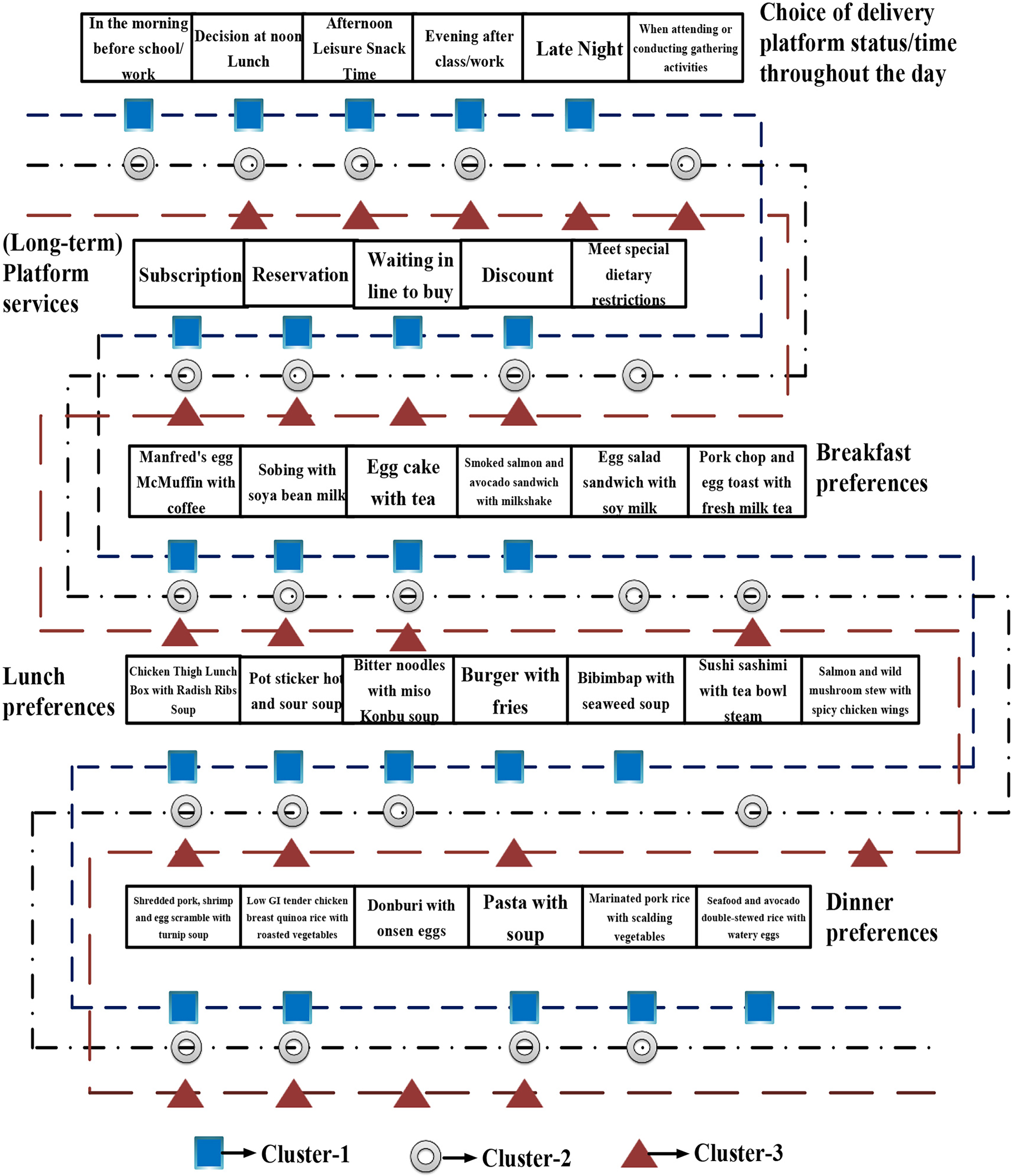
Knowledge map of dietary preferences intentional recommendations.
Regarding dietary preferences intentional recommendations, this study proposes several suggestions for intentional data targeting of dietary preferences: (a) Who to recommend, that is, who are the target consumers of dietary preferences? What are the ages, preferences, and genders of these people? Which media do consumers usually use to receive dietary information? Thus, food operators need to collect market research data to clarify the consumers’ profile. (b) What is needed to make recommendations, where accurate and fast delivery of information is the key to smooth operation. Whether it is describing the goals of an event to food consumers, or delivering what the food operators wants to communicate to the consumers, it must be done well in the preparation stage. (c) How to recommend: For both the food consumers and operators, it is important to maintain consistency in food taste, quality, and safety. However, food consumers support them because they love or change their eating and drinking style from time to time, so it is recommended that food and drink operators minimize the amount of time spent on keeping the food quality and innovation image. (d) Where to recommend: For food and drink providers, both online and physical venues are recommended channels. Means such as food cooking streaming, live chats, social media, and consumer meeting are all ways that consumers are willing to continue following about new food product. Therefore, food and drink operators should integrate online and offline channels for an all-round recommendation.
Regarding 4.2.2 Pattern 2, this study found that Cluster 1 chose to use the food delivery service because they were affected by the pandemic isolation and had low willingness to cook, while Cluster 2 considered that using the platform would save the trouble of cooking by themselves, and Cluster 3 used the service because they were affected by the pandemic. The three clusters’ views on the delivery service were unanimous in agreeing that discounts on ordering, diversified choices, and the ability to enjoy hot meals soon after you place an order are the most important factors for using the platform logistics service. On the other hand, when considering the contents of delivery services, Cluster 1 pays attention to delivery hygiene, the degree of contact with delivery personnel, and the speed of meal delivery. Cluster 2 emphasizes the speed of delivery, the integrity of meal contents, whether the meal is placed in accordance with the regulations or whether the condition of the meal is maintained during delivery, and the real-time tracking of delivery progress by the delivery personnel. Cluster 3 includes the hygienic condition, the degree of contact with the delivery personnel, the condition of the meal and the real-time tracking of delivery personnel as factors for consideration of logistics use. The three clusters all consider the presence or absence of sealing marks on the outer packaging of meals as a very important factor in logistics.
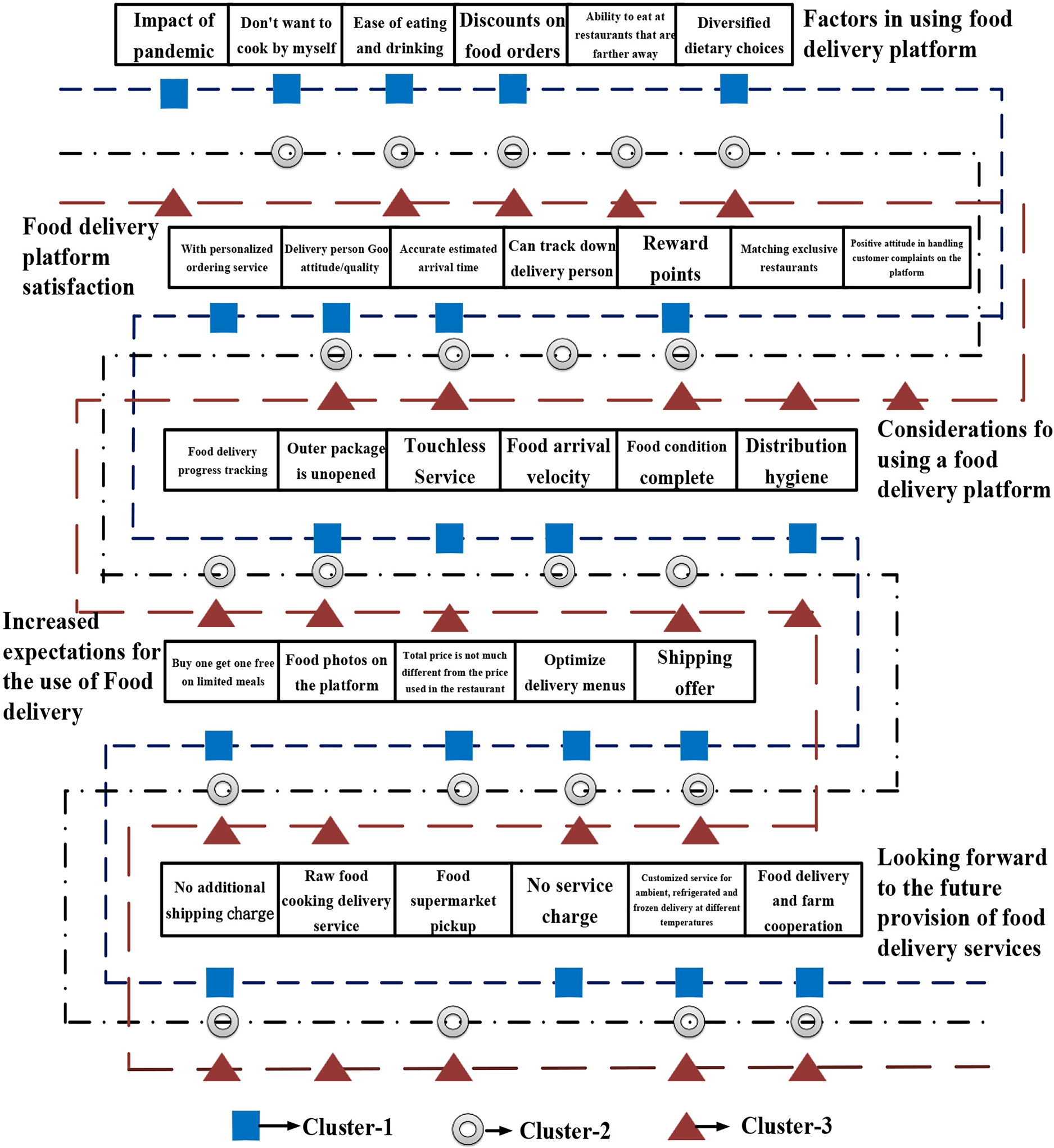
Knowledge map of food delivery service intentional recommendations.
Regarding food delivery service intentional recommendations, this study proposes several suggestions on intentional data targeting of dietary preferences: (a) Who to recommend, that is, who frequently eats a meal out? Who must use the food delivery service and what is the profile? For food delivery platforms, with each order consumers receive, they learn more about the consumer’s background. Thus, data mining can explore the consumer profile of food delivery and the niche market of food delivery service through data targeting with a large amount of data. (b) What to make recommendations: For delivery operators, gaining better understanding of consumers’ delivery preferences and behaviors is key to building a successful food business. By leveraging technology and data analytics tools, food operators can gain a better understanding of their customers and tailor their marketing and promotional efforts to better meet their expectations. (c) How to recommend: Collaborative filtering is, for example, when many people who order pasta, also order soup. Therefore, when a consumer looks for information about ordering pasta, the system will also recommend soup to the buyer. However, collaborative filtering may be limited due to sparse and incomplete data, which affects the accuracy of recommendations. Thus, by analyzing consumers’ food delivery behaviors and items (data targeting), this study suggests intentional data targeting recommendation methods to determine the food delivery usage intentions of active consumers based on integrated food delivery similarity and then provide customized delivery service recommendations to match/predict the consumer’s interests.
Regarding 4.2.3 Pattern 3, this study finds that the three cluster groups concur that future development of payment tools should extend the existing cash flow transaction tools (e.g., bank transfers, on-site credit cards, and e-tickets), and that there should be integration of bill payments and the availability of internal accounts for saving value, bill payments, and other multi-media of cash flow. There should also be increased use of delivery platforms and the transaction behaviors of clusters 2 and 3 indicate a preference for mobile devices, such as Apple pay, or Samsung pay. In terms of payment, the three groups use credit cards, cash, and Line pay for online purchases. However, Cluster 1 and Cluster 2 prefer cash-on-delivery (COD) for online purchasing, which means that the items are first delivered to a convenience store and customers can confirm that the goods are correctly delivered before paying for them. Cluster 3 prefers to pay with a virtual account, and the three groups all use credit cards consistently for online purchases, along with Line pay, Apple pay, JKO Pay, etc. They also use physical chip cards, mobile payment, and electronic payment tools to pay bills. On the other hand, in terms of platform usage, Cluster 1 uses group ordering to satisfy special dietary needs and queuing services, Cluster 2 considers coupon discounts and special dietary needs, and Cluster 3 considers coupon discounts and queuing services, while the three cluster groups all use membership subscriptions and meal reservation services. Cluster 1 considers that the terms and conditions for using the platform should be clearly stated to improve customer performance and contact with delivery person can have poor attitude/quality. Cluster 2 thought that the feedback from the online customer service of the platform in handling customer complaints was not good, while Cluster 3 had experienced delivery persons with poor attitude/quality, which lowered the overall willingness to use the delivery platform.
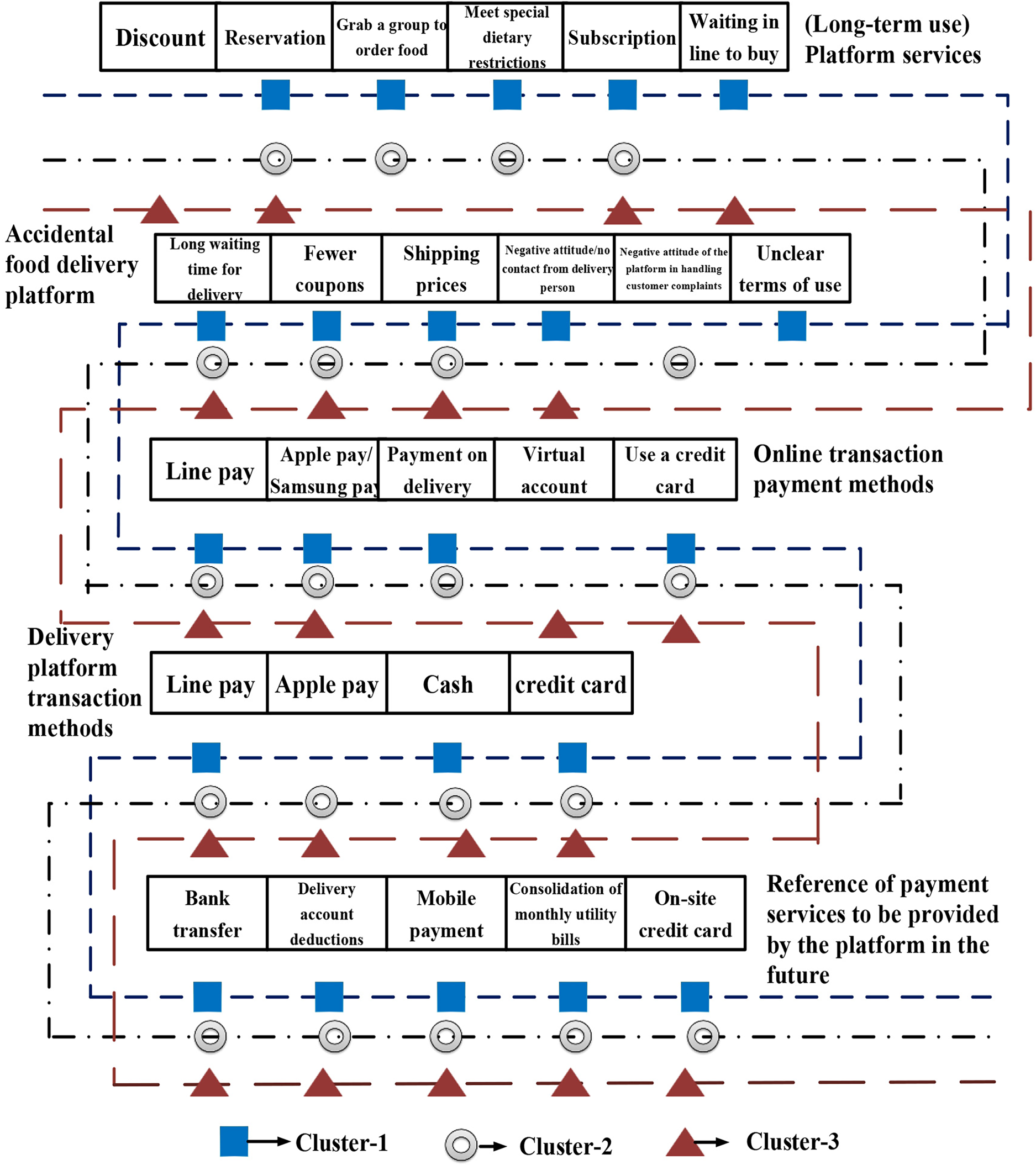
Knowledge map of online food purchasing behavioral recommendations.
For online purchasing behavioral recommendations, this study makes several suggestions for intentional data targeting of online purchasing: (a) Who to recommend: One critical principle is that the food information (advertising, products, promotions, etc.) presented to consumers through data targeting must be based on their needs. Because consumers have these needs, wants, and demand for food choice, this information should exist. To this end, a food operator must have a comprehensive understanding of consumers to understand their preferences. At the same time, regarding online purchasing, food operators must also clearly demonstrate what the recommendation system can provide to what type of consumers. (b) What to recommend: Before building a consumer profile, target targeting should start with rich information content and construct situations individually. This should extend the food products/brands into content that is clear, organized, and rich enough to satisfy consumers. As they continue browsing, food consumers will follow their own intentions and take different routes to obtain the information they want, which should lead to final online purchasing. (c) How to recommend: The consumer profile for data targeting is no longer rigidly defined as simply gender, age, and location; rather, it is based on various factors of people’s lives and collects richer and more diverse elements. For example, regarding coffee preference, does a consumer prefer to brew it by hand, buy takeaway, or call for a delivery service? Through this element, merchants can promote the appropriate coffee advertisement to lead the consumer to purchase. Thus, data targeting provides a clearer picture of consumer on purchase processes for behavioral recommendations.
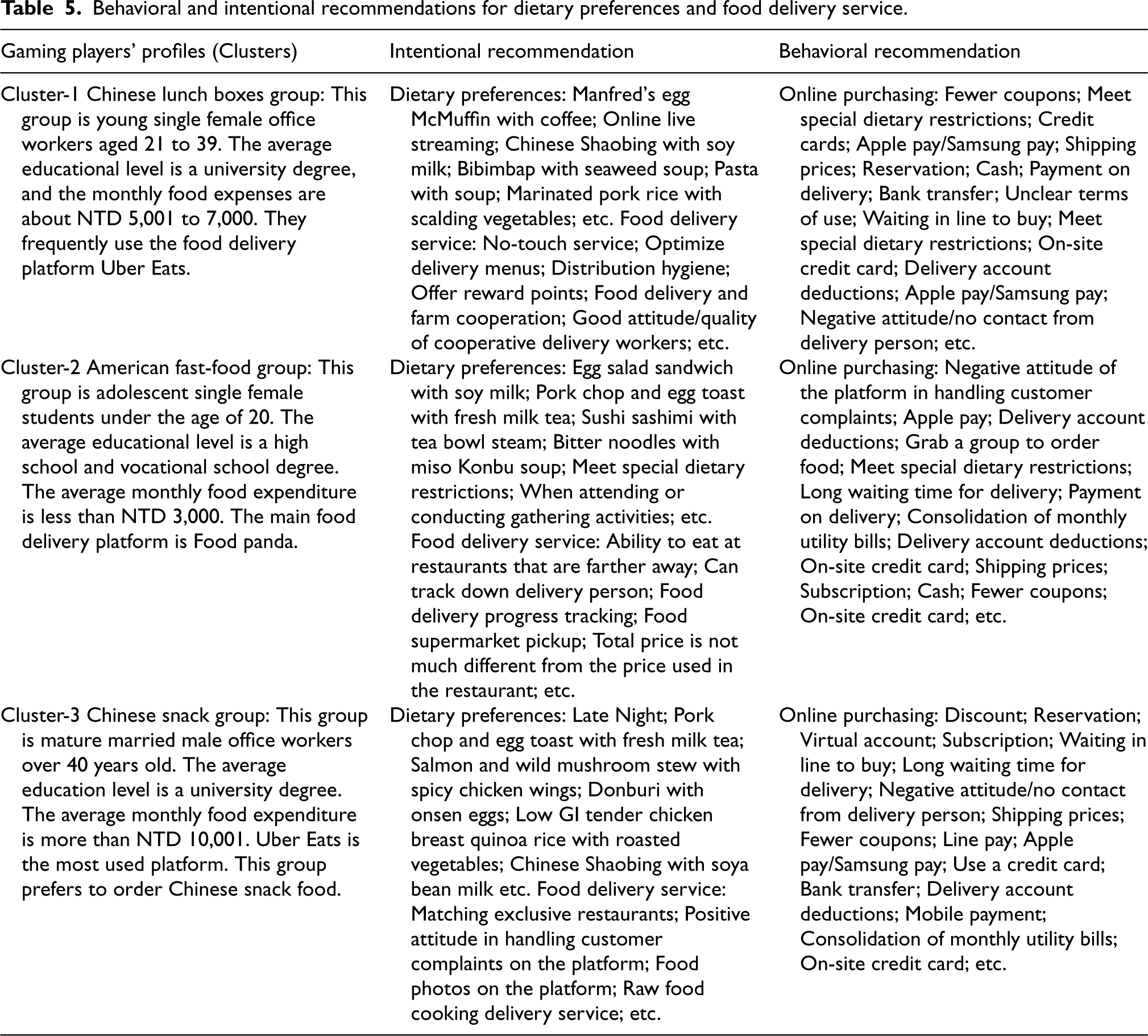
Behavioral and intentional recommendations for dietary preferences and food delivery service.
Behavioral and intentional recommendations for dietary preferences and food delivery service.
For
Dietary preferences and food delivery operators seek consumers for online purchasing by relying on data targeting, while food business operators can find the environment that gives them the best chance to provide prompt consumer response. For intentional and behavioral recommendations, Table 5 shows that with three clusters, intentions describe how consumers’ preferences are depicted through the intentions that interact with behaviors corresponding to data targeting and association information for understanding consumers’ dietary preferences and food delivery service behaviors.
Food is the first necessity of the people. Bread is the staff of life. In other words, eating is the most important thing in our lives. Dietary preference is not only a matter of sustain life, but also a combination of culture, lifestyle, social value, wealth, and individual needs, wants, and demand on food and drink. From the perspective of food recommendations, when dietary and food delivery operators discover attractive and valuable things (data targeting) on the online environment through the interactive data of consumers’ dietary preferences and food delivery service, and then summarize the intentional and behavioral data targeting to make online recommendations more accurately, this shall increase and enhance online food purchasing behavior. This study uses data mining analytics, including clustering analysis and association rules, to investigate dietary preferences and food delivery service of Taiwanese consumers and presents research findings and practical implications. The results show knowledge clusters/patterns/rules for investigating consumers’ preferences and possible data targeting that may lead to intentional and behavioral recommendations. However, with data science developments, such as artificial intelligence, data computation and machine learning, the theoretical and practical applications of intentional and behavioral recommendations can be more completely developed. In addition, more dietary preferences and food delivery mechanisms of individuals/groups should be considered for the further recommendations. These are the main limitations of this study, which can provide a guide to future research.
Footnotes
Acknowledgments
This research was funded by the National Science and Technology Council, Taiwan, Republic of China (MOST 113-2410-H-032-051-MY2).
Conflict of interest
The authors declare no conflict of interest.
Data availability statement
Research data are not shared.