



Abstract
Deep learning (DL) is the basis of many applications of artificial intelligence (AI), and cloud service is the main way of modern computer capabilities. DL functions provided by cloud services have attracted great attention. At present, the application of AI in various fields of life is gradually playing an important role, and the demand and enthusiasm of governments at all levels for building AI computing capacity are also growing. The AI logic evaluation process is often based on complex algorithms that use or generate large amounts of data. Due to the higher requirements for the data processing and storage capacity of the device itself, which are often not fully realized by humans because the current data processing technology and information storage technology are relatively backward, this has become an obstacle to the further development of AI cloud services. Therefore, this paper has studied the requirements and objectives of the cloud service system under AI by analyzing the operation characteristics, service mode and current situation of DL, constructed design principles according to its requirements, and finally designed and implemented a cloud service system, thereby improving the algorithm scheduling quality of the cloud service system. The data processing capacity, resource allocation capacity and security management capacity of the AI cloud service system were superior to the original cloud service system. Among them, the data processing capacity of AI cloud service system was 7.3% higher than the original cloud service system; the resource allocation capacity of AI cloud service system was 6.7% higher than the original cloud service system; the security management capacity of AI cloud service system was 8.9% higher than the original cloud service system. In conclusion, DL plays an important role in the construction of AI cloud service system.
Introduction
In recent years, with the rapid development of computer technology, AI technology, as an important branch of computer technology, has undergone rapid changes, and intelligent devices have become the trend of the times for that intelligent devices can improve the storage of information and the construction of cloud service system. The essence of AI is to use computer technology to simulate human thinking and many intelligent behaviors, simulate logical reasoning in artificial thinking, and introduce intelligent devices with complex computing algorithms. Cloud service is a new service form based on computer network technology. It has strong cloud data processing and cloud storage capabilities and is an important way to overcome AI data bottlenecks. Therefore, introducing DL into the development and construction of AI cloud service system is becoming the current main trend.
Many scholars have studied the cloud service model. Li Zong-Yu introduced the development of data protection security and dynamic encryption in cloud computing, and the application of dynamic encryption technology in cloud computing privacy protection. The purpose was to analyze the advantages and disadvantages of various dynamic encryption schemes and propose future research directions [1]. Liu Yongkui conducted a comprehensive, systematic and in-depth discussion and analysis of the above issues in cloud manufacturing, proposed an alternative definition of cloud manufacturing based on the analysis of existing definitions, and discussed the future prospects of cloud manufacturing [2]. Yang Mengke built an intelligent logistics cloud platform architecture including software layer, platform layer and infrastructure according to the core technology of relatively high concurrency processing technology, heterogeneous terminal data access, encapsulation and data mining mainly to solve the architectural functions in the cloud service system [3]. Sarddar Debabrata argued that the concept of service-oriented cloud computing provides users with a great opportunity to arrange various services to complete the required tasks. However, due to limited battery power, the use of mobile devices and access to the service cloud may be affected [4]. Chen Jian planned subtasks and workflows for crowdsourcing members by creating a collaborative workflow simulation model, and optimized the plan to solve each subtask [5]. On the basis of activity theory and service supply chain, Li Xing discussed the innovation of hospitals in medical, health care and nursing services using cloud computing, and also discussed the model and evolution of hospital internal activities and external supply chain [6]. Wei Jinyu established an evaluation index system for manufacturing cloud services from the perspective of improving the environmental benefits of the supply chain. He was oriented by the environmental benefits of the supply chain and considered the environmental indicators of candidate suppliers [7]. The above studies have all described the role of cloud service model, but there are still some deficiencies in system construction.
Applications of DL in cloud services can rapidly improve the quality of service. Smahi Mohammed Ismail proposed a cloud service prediction method based on DL. The main idea included combining the matrix decomposition model based on depth automatic encoder with the clustering technology based on geographical features to improve the effectiveness of prediction [8]. Liang Yang proposed a power consumption model based on feature selection and DL to effectively address the problem of low energy efficiency, and introduced a deep neural network architecture aiming to fully utilize massive data to fully train the model [9]. Duc Thang Le discussed the reliable distribution of resources in the edge cloud joint environment, and discussed the technologies, mechanisms and methods that can be used to improve the reliability of distributed applications in a diverse heterogeneous network environment [10]. Wu Huaming proposed a distributed DL driven task unloading algorithm to generate nearly optimal unloading decisions on mobile devices, edge ECS and central ECS [11]. The above studies have all described the role of DL in cloud services, but there are still obvious deficiencies in the research of AI cloud service system.
DL cloud services are beginning to appear on various cloud computing platforms. The cloud service model can solve the problems of high DL technology threshold, large resource consumption and large demand fluctuation to build a more secure cloud service system. This also reflects the similarity and urgency of DL business requirements, because cloud services allow users to access and obtain the required cloud services through the Internet, effectively solving the problem of computing resource allocation and the defects of AI technology. Therefore, it is of great practical significance to build a new DL cloud service model by transforming the AI cloud service model.
Features of DL business and cloud services
Operational characteristics of DL
DL activities are divided into research activities and application activities. Research activities include infrastructure services such as hardware, software and algorithms providing computing power. Application activities provide comprehensive application services for end users (such as mass consumers or technicians in specific industries). The whole research and development (R&D) life cycle includes algorithm development, model learning, learning process visualization, model validation and service release, as well as data inference and other services. The entire life cycle of the application layer service program is based on data reasoning, supplemented by additional links (such as incremental model training) and peripheral services (such as interfaces and model markets). DL mode is divided into microservice mode and batch mode, as shown in Fig. 1. Algorithm development, learning process visualization, online model verification and data demonstration are mostly microservice models with stateless attributes, or the state is stored permanently on external storage devices. Its service life depends on subjective demand and is theoretically unlimited. The IoT (Internet of Things) data is usually transmitted to the cloud or other centralized systems for storage and processing, but this can cause delays and increase network traffic [12, 13]. Microservice planning and configuration software based on virtual machine, container or serverless technology can help manage real scenarios, which can be used to manage fault tolerance and other issues and be familiar with model learning. Automatic model validation and data output are part of the batch model, which is basically a normal or original process mainly used to quickly identify users’ personal information. Generally, the current level of execution information is stored in the repository or video, depending on the algorithm, computing power, dataset size, etc. Shared processes can run independently, and batch planning software is widely used in management, execution efficiency, resource utilization, etc.
Classification of DL patterns.
With the increase of the number of applications and users or the provision of external services, the organization’s infrastructure needs software maintenance at any time. The two operation modes of DL business can use different service models. Microservices are designed for services. Traditionally, the software used to plan and configure microservices is specially designed for applications or middleware. These DL applications or middleware are applicable to service-oriented microservices. The problem of batch job service is relatively complex, mainly because the runtime management is completely entrusted to senior developers, rather than providing runtime management for services. Therefore, the service of batch processing should fill the gap of in-service verification. The design or selection of the in-service management framework can not only affect the overall architecture of DL cloud services, but also affect R&D activities. Three application modes of cloud manufacturing are proposed from the perspective of service providers [14, 15]. According to the three modes, DL’s service mode can be divided into three framework structures, as shown in Fig. 2. The first is the big data planning system. Seamless interaction with big data components helps to build a data centric workflow, which can achieve scalable fault tolerance in existing big data clusters. The second is a high-performance planning system, which seamlessly interacts with communication and storage components, meeting the training requirements of data warehouse for large-scale matrix computing and distributed communication. At the same time, its reliability and scalability in large supercomputing environments has been proven, and it is an ideal choice for use in existing supercomputing infrastructures. The third is the container planning system, which is designed to meet the needs and characteristics of cloud services, with a good interaction with cloud service infrastructure, providing great convenience for enterprise cloud. Its main advantages are the flexibility and fault tolerance of resources, and is very suitable for the existing cloud environment.
Analysis of DL’s service model framework.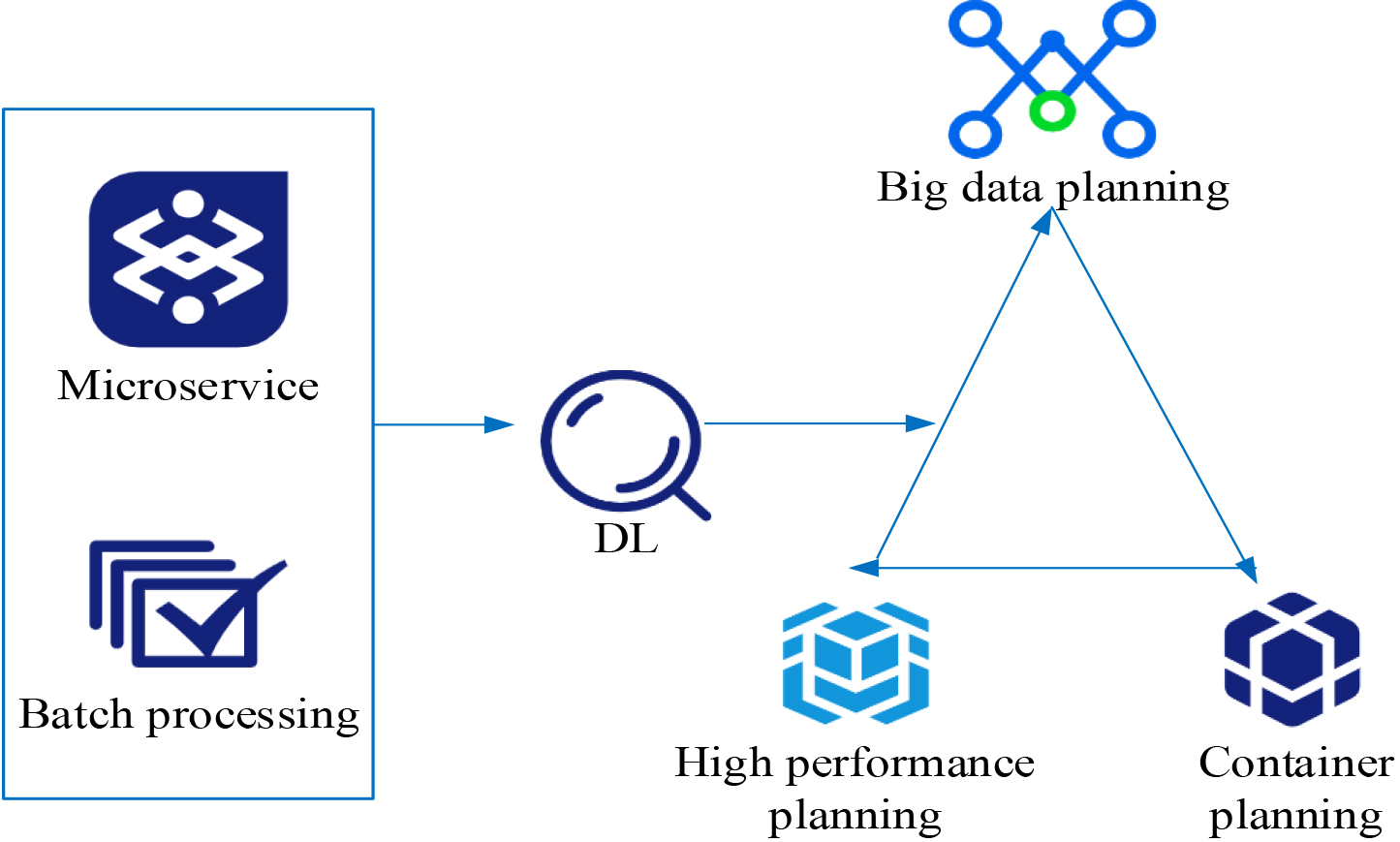
DL cloud service types.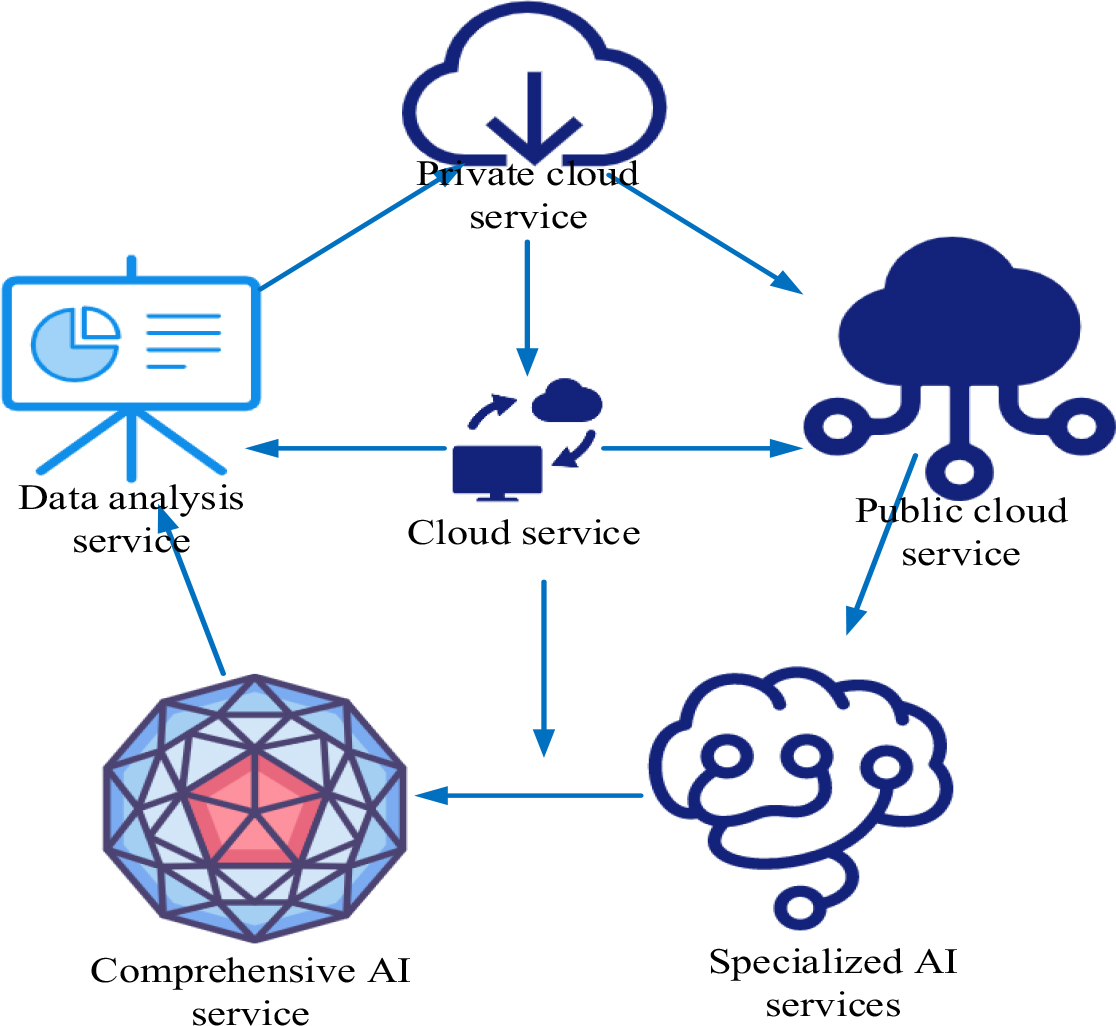
The development of AI provides R&D enterprises with a large number of DL platform software, and some software supports cloud service mode. The current DL cloud services mainly include the following, as shown in Fig. 3. The first is public cloud services that serve the public through the Internet. DL public cloud service is a multi-user security isolation of public cloud. In addition to common problems such as flexible scalability and cost control, some specific problems need to be solved, such as accessing and reusing special equipment. The second is private cloud services providing DL private cloud services to organizations and specific groups. Although the security of private cloud services requires that network management policies are generally more general than public clouds, limiting private cloud resources means that users need to access external resources and create hybrid clouds, which usually involves adjusting the company’s specific organizational structure and business processes. In case of conflict or plan change during cloud service execution, if the initial scheme is not rescheduled in time, delivery delay and a series of nonlinear losses may result [16, 17]. The third is professional AI services. These services usually interact with users through work forms, and usually provide users with more freedom to learn and use algorithms. The fourth is comprehensive AI services that are more business oriented. Although different needs of AI applications are met, the forms of user interaction must be relatively diversified to adapt to the characteristics of different AI business areas. The fifth is data analysis service. It is usually developed based on the data analysis platform, and the general data analysis platform usually supports statistical analysis or machine learning with the purpose of integrating statistical analysis and machine learning to improve the data processing capability of the platform [18]. DL technology provides independent functions and improves analysis capability, which is usually the foundation of data analysis platform. The algorithm model is usually based on platform presets, with relatively little support for user programs.
Requirements and objectives of AI cloud service system
The requirements of AI cloud service system mainly come from the following aspects. First, the service interface is friendly. It provides a relatively complete intelligent service that can be called by users and develops a simple and understandable interface, which reduce the workload of users and greatly improve the development efficiency. The second is to support integrated DL algorithm model, which can easily expand the functions of the algorithm. The vision of the system is to look forward to the future. Its purpose is to realize intelligent life, and then add additional DL algorithms as needed. Whether the developed system can easily expand the functions of the algorithms is vital, because if the system can expand the algorithm, it can update the system’s services in a timely manner. The requests and services of the public cloud have been modeled as a single server batch service model using queuing theory [19, 20]. The third is that system services support distributed deployment and horizontal expansion. In the age of big data with the continuous expansion of users and data, no service can escape the demand pressure. To better maintain high parallelism, in addition to the optimization algorithm, additional physical machines can be added to distribute the pressure. The fourth is to solve the problem of sudden flow, limit the sudden flow. After treatment, the circulating pressure is a dynamic indicator in the operation process, and in some extreme cases, the flow peak may occur. Although the system expansion is convenient, it takes time. If the sudden flow problem is not solved, the pressure may exceed the maximum throughput of the system, causing system failure. Therefore, in order to ensure the normal operation of the system, the maximum frequency limit function for system request processing must be provided. The service portal is a window that supports service integration and activation. The integration portal provides customers with a complete data resource service catalog, computing resources and algorithm models, integrated resource management functions and authorization roles, provides different template market opportunities for different users, and supports unified release of mature templates. All enterprises have carried out research and standardization, but the composition of existing cloud services that fully meet customer needs is still a complex and difficult task [21]. Different users can flexibly request the necessary components of the model service according to their own needs, while the model market can update the algorithm model in time, and users can train and update the model within the resolution range, so as to achieve the goal of unified model and management algorithm.
Design principles of cloud service platform under AI.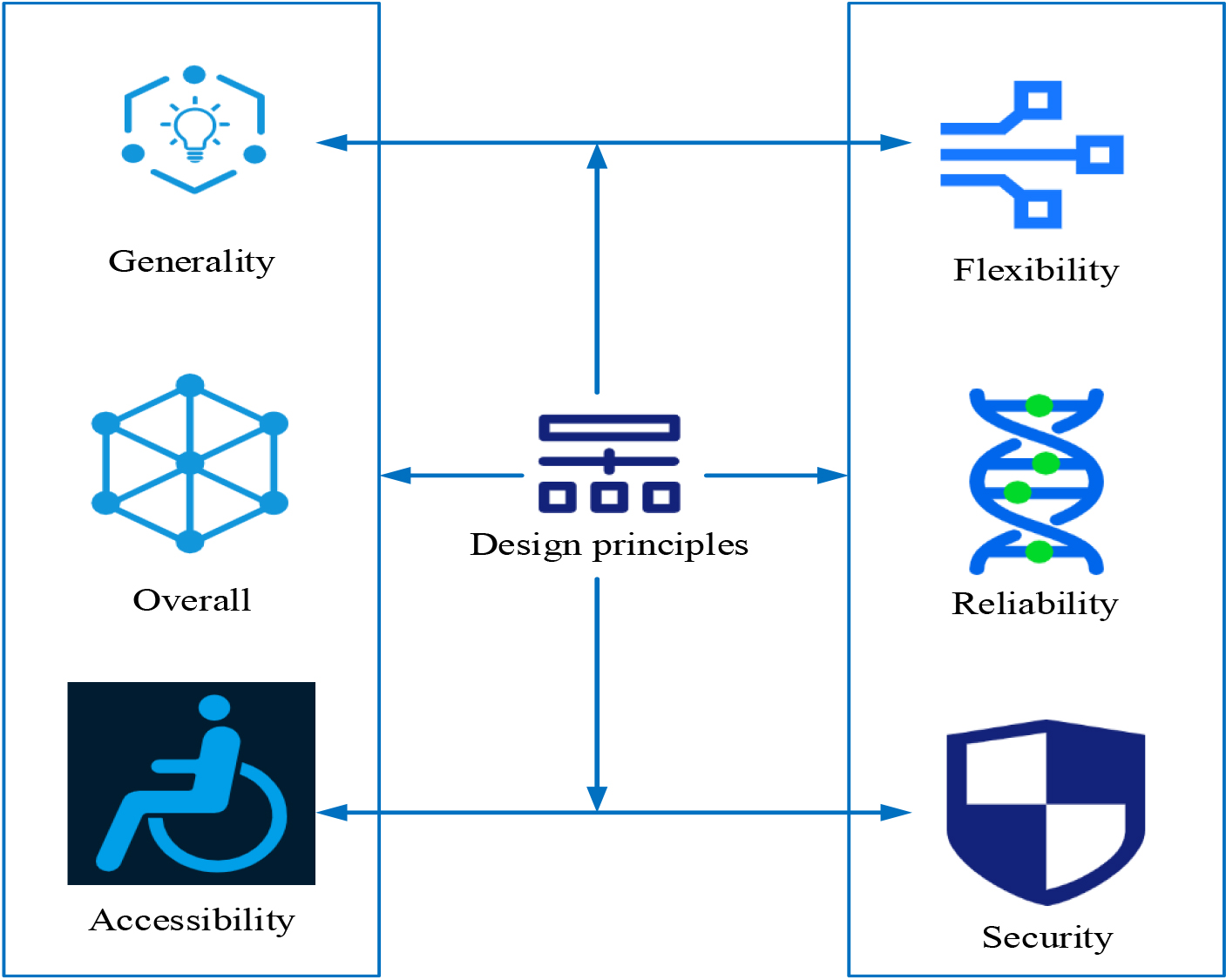
Design principles of cloud service platform
The design of cloud service platform under AI should follow the following principles, as shown in Fig. 4. The first is the principle of general design. The general design concept is to let all users at the end of the application program, at the same time, meet their personal needs, realize the unified management of the background, and realize the standardization of design and application. All systems of the platform provide operation coordination, and all subsystems are designed perfectly, elaborately and seamlessly. Single business application and distributed database can integrate static website management and use it as a single application support platform. The second is the principle of comprehensiveness. The cloud service platform design conforms to the industry information management platform standards and cloud computing platform design standards, and realizes the standards of most application users. At the same time, the development process and business services are the quality system of the software maturity model, ensuring the integrity and standardization of the system in all aspects. The third is the principle of accessibility. The cloud service platform takes full account of the capabilities of users. The design emphasizes the usability and operability of the user interface. The most important part of the interface is to start with operations and commands. It is beautiful and practical, and each learning module and learning process is clearly identified. Control is carried out in the background, and there are parameters and configurations for building and maintenance. Online help is everywhere. The fourth is the principle of flexibility. The platform emphasizes flexibility, diversified user industries, complex organizational structure, and different business processes. Therefore, the flexibility in determining roles can be configured separately. By dynamically adding or removing the combination of application function modules, learning platforms can be easily and quickly created for various business processes. The platform can easily become a part of personal development, and provides development interfaces for customers to communicate and dock. The mechanism also uses files in international formats to facilitate the connection and exchange of data. The fifth is the principle of reliability. The platform shall be able to provide highly reliable and uninterrupted services for enterprise systems, and its internal platform systems shall be able to share data to prevent information from being damaged and illegally stolen, strictly comply with national information security requirements, and protect the security of information obtained by users. The sixth is the principle of security and confidentiality. In terms of security and privacy, the design of cloud platform architecture not only considers the sharing of information systems, but also considers the independence and security of data and the independence of different users to ensure the data security of all users in the system.
Module design of AI cloud service system
AI cloud service system is mainly composed of three parts, including AI service, big data resource platform and unified learning platform. AI service is mainly responsible for human-computer interaction and providing intelligent services for users. The big data resource platform provides reliable data storage and data source for cloud analysis. The unified learning platform is an algorithm group in cloud services. AI is supported by data processing, algorithm development, modeling, machine learning and other processes. According to the specific functions of other parts of the AI cloud service system model, it can be divided into infrastructure, infrastructure services, data resources, education platform, model management and portal management. Infrastructure is a network platform resource that realizes data storage, resource allocation, security management and other system cloud service attributes, which is the physical foundation of the entire model. Infrastructure services mainly include cloud management, which is used for core and high-quality infrastructure services, such as microservices and application processing, including advanced algorithm design, model creation, and modular function calls to call data. Data resources are mainly used to create models, and user profiles are implemented through cloud analysis. Data is publicly distributed and stored, and general specific rules support the construction of algorithm model. The education platform is the core part of AI. Developers analyze the deployed applications, define the design of the platform model and develop algorithms to facilitate developers to extract data. Model management is the functional and modular management of various cloud service algorithm platforms. Modular management helps to invoke appropriate cloud functions in the interaction between people and computers. As an external service and activation window in the service model, portal management can be flexibly applied to relevant service components to meet the requirements of user management model and algorithm.
Implementation of AI cloud service system
Building a cloud platform is a necessary means to promote economic development. Creating a cloud service model that is suitable for economic development is an important guarantee for rapid economic transformation. It requires great efforts to ensure the stable operation and long-term development of the cloud platform. From a macro perspective, the construction of cloud platforms cannot be completed by enterprises, so the government must play a leading role in cloud construction and development. Economic development is closely connected with cloud platform construction, realizing the overall design and planning of cloud platform, further integrating the industrial chain and cloud platform, realizing seamless connection and providing more flexible and intelligent platform development services. In addition to formulating the overall plan and the role of the main responsible party, the government must also actively establish media to guide enterprises to use and improve cloud platforms. From the micro level, small enterprises are the main users of the cloud platform, responsible for creating and improving. Information technology must be actively introduced into business operations, and understanding of application and computing capabilities should be improved. In addition, users of cloud platforms should gradually improve their use and promote the development of cloud platforms. Finally, enterprises must consider the long-term construction and development of cloud platforms. Cloud platforms not only provide information technology support for enterprises, but also provide optimization schemes to improve cost-effectiveness and provide sustainable energy for enterprise development.
Application of K-means algorithm in DL cloud service system
To study the specific application effect of AI cloud service system construction, this paper analyzes the link performance, live broadcast performance and web page performance in the cloud service system through K-means algorithm, and finally obtains the service quality of DL cloud service system. First, the service quality of the normalized cloud service system is investigated as follows:
In Eq. (1),
In Eq. (2), mn is a separate link in the cloud service system, and
In Eq. (3),
In Eq. (4),
In Eqs (5) and (6),
According to its live broadcast model, the on-demand model of the cloud service system can be obtained as follows:
Finally, combining the live broadcast model and the on-demand model, the web page service quality model of the DL cloud service system can be got as follows:
In Eq. (9),
To study the specific application effect of AI cloud service system under DL, this paper studied the web service quality, packaging error rate and service performance of the cloud service system by analyzing the flexibility, reliability and practicability of the cloud service system, and finally compared its data processing capacity, resource allocation capacity and security management capacity with the original cloud service system to further optimize the cloud service system under DL. First of all, this paper investigated the satisfaction of three companies with the AI cloud service system, of which each company surveyed 50 people, as shown in Table 1.
Satisfaction of the three companies with the AI cloud service system
Satisfaction of the three companies with the AI cloud service system
According to the data described in Table 1, the three companies had relatively high overall satisfaction with the AI cloud service system. There were 39 satisfied employees in company 1, accounting for 78% of the total survey population of the company; there were 6 employees who thought the system was common, accounting for 12% of the total survey population of the company; there were 5 employees who were dissatisfied with the system, accounting for 10% of the total survey population of the company. There were 36 satisfied employees in the company 2, accounting for 72% of the total survey population of the company; there were 8 employees who thought the system was common, accounting for 16% of the total survey population of the company; there were 6 employees who were dissatisfied with the system, accounting for 12% of the total survey population of the company. There were 40 satisfied employees in the company 3, accounting for 80% of the total survey population of the company; there were 7 employees who thought the system was common, accounting for 14% of the total survey population of the company; 3 employees were dissatisfied, accounting for 6% of the total number of employees surveyed by the company. On the whole, the satisfied employees of the three companies accounted for 76.7% of the total survey population; the employees feeling the system common accounted for 14% of the total survey population; the dissatisfied employees accounted for 9.3% of the total survey population. Satisfied employees believed that the AI cloud service system could process users’ data quickly and accurately, and also can protect users’ data information privacy. At the same time, the cloud service system could also improve the download speed of resources required by users and the efficiency of resource allocation and management. The dissatisfied employees thought that the packaging of AI cloud service system was slow and might make mistakes. Errors may reduce the user’s demand experience, and may also increase the user’s workload. Then three enterprises that used the cloud service system under DL were investigated, and the flexibility, reliability and practicability of the AI cloud service system was analyzed according to their daily use effect. The specific analysis is shown in Fig. 5.
Performance analysis of AI cloud service system.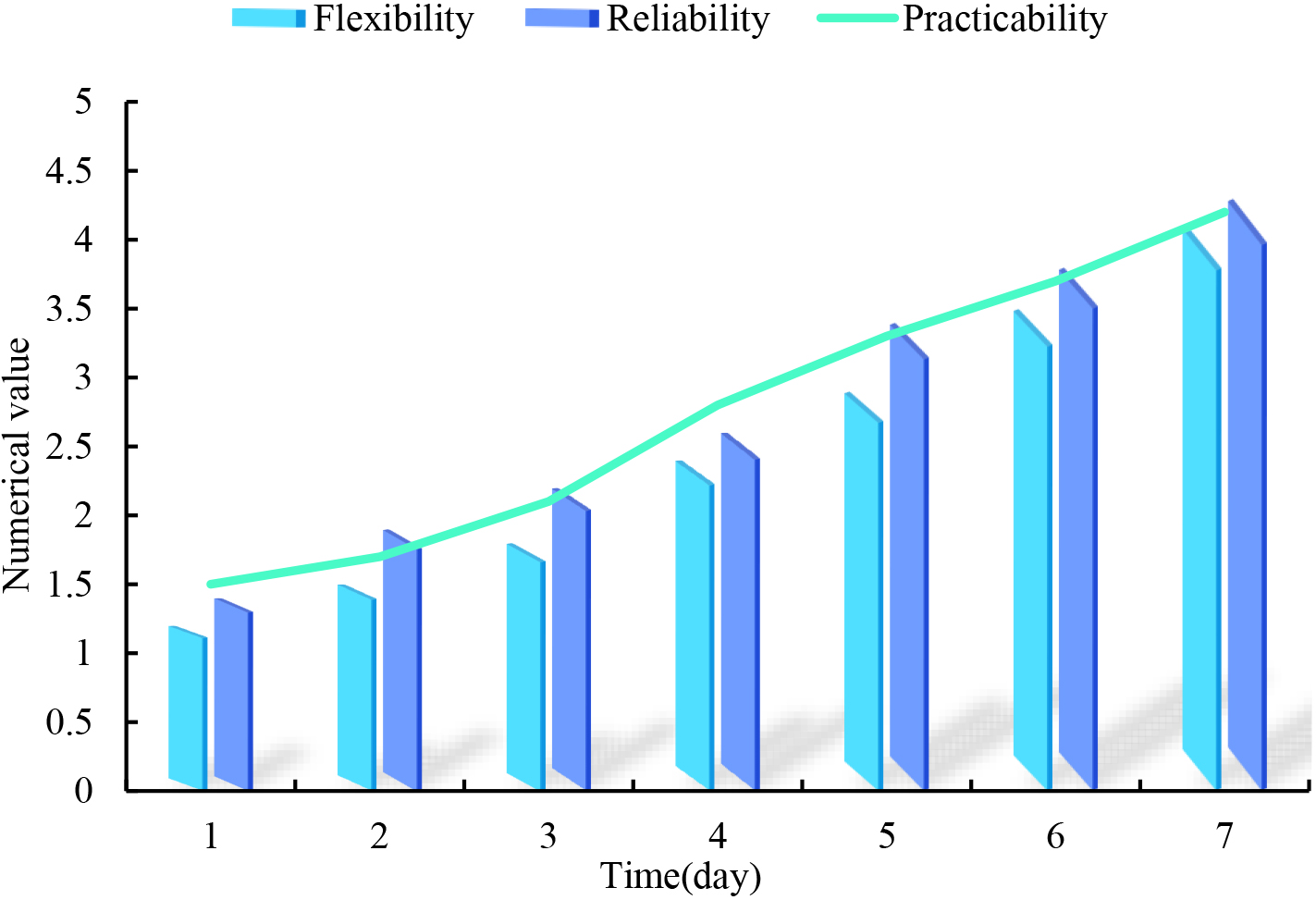
According to the data depicted in Fig. 5, the flexibility, reliability and practicability of the AI cloud service system were growing gradually over time. The average value of system flexibility was about 2.49; the average value of system reliability was about 2.8; the average value of system practicability was about 2.76. On the whole, the initial flexibility value of the system was 1.2, which increased to 4.1 on the seventh day, and increased by 2.9 in the whole process; the initial value of system reliability was 1.4, which increased to 4.3 on the seventh day, and increased by 2.9 in the whole process; the initial value of system practicability was 1.5, which increased to 4.2 on the seventh day, and increased by 2.7 in the whole process. The reliability and practicability of the AI cloud service system were getting higher and higher with the continuous increase of functions and the integration of DL technology. At the same time, the performance indicators of the cloud service system were also increasing with the integration of technology. Not only was the service quality and resource utilization of the service system improved, but also the data storage security performance of cloud services was improved. Then K-means algorithm was used to analyze the web page service quality, packaging error rate and service performance of AI cloud service system, and study the changes of three indicators within a week, as shown in Fig. 6.
Web page service quality, packaging error rate and service performance change of AI cloud service system.
Data processing capability, resource allocation capability and security management capability of cloud service system.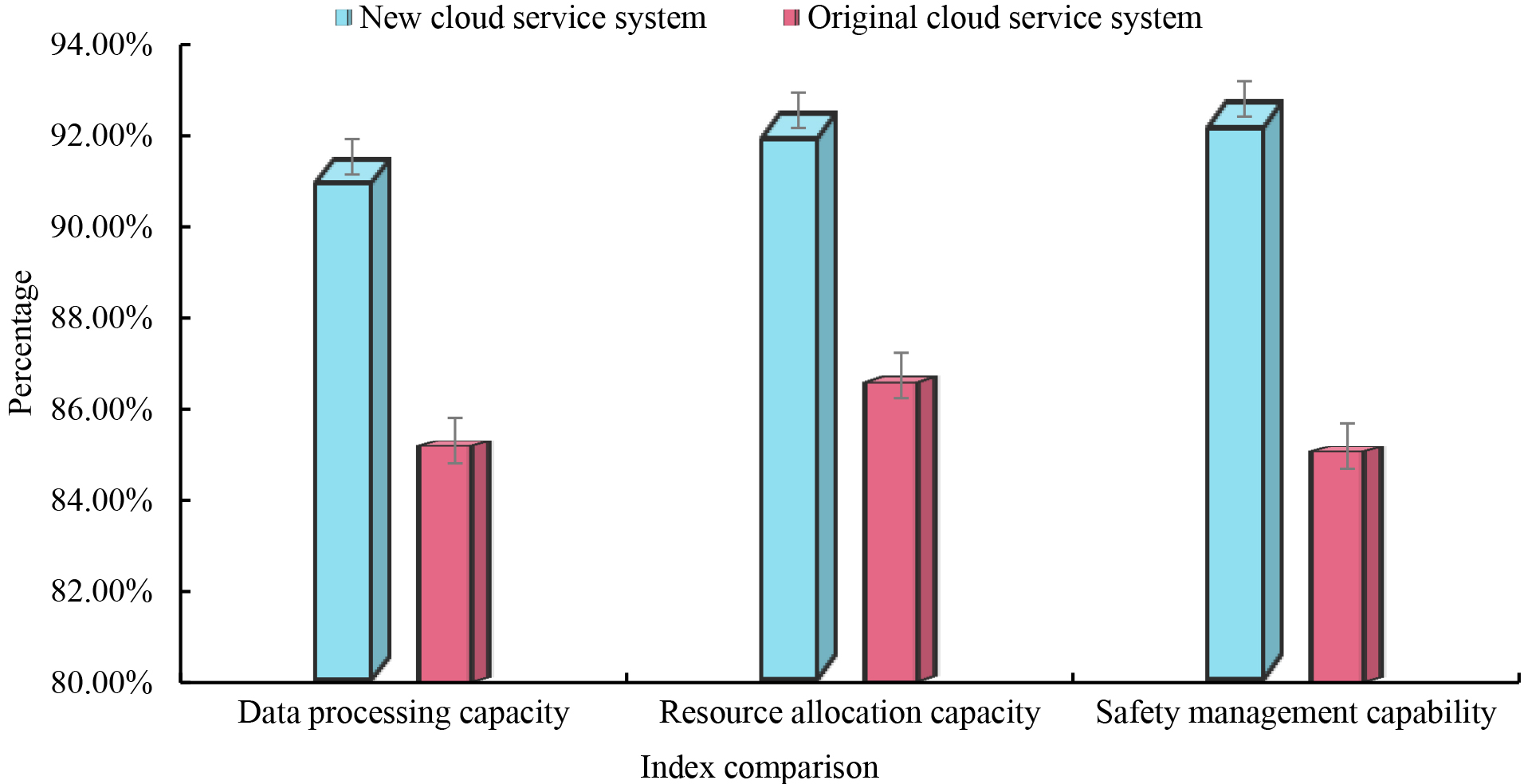
According to the data depicted in Fig. 6, the web page service quality and service performance of the AI cloud service system were gradually increasing over time, while the packaging error rate of the cloud service system was decreasing over time. The average web page service quality was about 0.58; the average packaging error rate was about 0.36; the average service performance was about 0.56. On the whole, the initial value of web page service quality was 0.27, which increased to 0.88 on the seventh day, with an increase of 0.61 in the whole process; the initial packaging error rate was 0.52, which decreased to 0.1 on the seventh day, with a decrease of 0.42 in the whole process; the initial value of service performance was 0.34, and it increased to 0.85 on the seventh day, with an increase of 0.51 in the whole process. In the AI cloud service system, the quality of service of web pages was more in line with the needs of users and enterprises, and the error rate of the resources that users needed to package was getting smaller and smaller, which was the advantage of DL. Not only did it reduce the error rate of packaged downloads, but also improved the quality of service of the entire cloud service system. Finally, the data processing capability, resource allocation capability and security management capability of the cloud service system were analyzed and compared with the original cloud service system, as shown in Fig. 7.
According to the comparison diagram depicted in Fig. 7, the data processing capacity, resource allocation capacity and security management capacity of the AI cloud service system were superior to the original cloud service system. Among them, the data processing capacity of AI cloud service system was 7.3% higher than the original cloud service system; the resource allocation capacity of AI cloud service system was 6.7% higher than the original cloud service system; the security management capacity of AI cloud service system was 8.9% higher than the original cloud service system. The AI cloud service system under DL could integrate a large amount of user privacy data and the resources required by users and enterprises. It not only met the requirements of users, but also shared data. It strictly complied with the national information security requirements to prevent information from being damaged and stolen illegally, ensure the security of information acquisition, and improve the user experience to a certain extent.
DL technology is the basis of AI applications, and using DL functions as cloud services is the main trend of the industry. DL service has two typical implementation modes: microservice and batch processing. High-performance or container planning frameworks can be used to build DL cloud services suitable for different scenarios. By creating cloud based AI services, the complex cost of algorithm development and the high-performance requirements of AI equipment can be solved, thereby reducing product development costs, improving new development efficiency and providing more convenient services for economic development and transformation. In the process of building and upgrading the cloud platform, more applications and services can be integrated, and more users may use the platform to achieve a common intelligent era.