



Abstract
In response to the problems of low efficiency, high cost, and serious environmental pollution faced by traditional logistics scheduling methods, this article introduced the Metaheuristic algorithm into intelligent logistics scheduling and environmentally sustainable development. This article took the Metaheuristic algorithm as the research object. It was based on an in-depth analysis of its core ideas and unique advantages, combined intelligent logistics scheduling with relevant theories and methods such as green environmental protection, and innovatively constructed an intelligent logistics scheduling model based on the Metaheuristic algorithm. This article experimentally compared the effects of different Metaheuristic algorithms on total driving distance, transportation time, fuel consumption, and carbon emissions. The experimental findings indicated that the ant colony optimization (ACO) algorithm in this article performed the best among them, and the performance of traditional algorithms and Metaheuristic algorithms was also tested in terms of performance. The findings indicated that the computational accuracy of the Metaheuristic algorithm reached 97%, which was better than the traditional 80%. Experimental results have shown that the Metaheuristic algorithm is an efficient and feasible method that can improve the efficiency of logistics scheduling and environmental sustainability.
Keywords
Introduction
Against the backdrop of accelerated global economic integration and rapid development of e-commerce, the logistics industry has faced unprecedented challenges. Intelligent logistics is a type of logistics that is based on modern information technology and optimizes the production and operation activities of enterprises, thereby achieving effective control over their production and operation activities. The sustainable development of the environment is also a major issue facing the world today. Metaheuristic is a globally optimal algorithm with global optimization capabilities, which has broad application prospects in intelligent logistics distribution, environmental sustainability, and other areas. The potential innovations and applications of the Metaheuristic algorithm in intelligent logistics and ecological sustainability include optimizing distribution routes to reduce energy consumption, minimizing carbon emissions, and improving logistics efficiency.
Based on the analysis of the core ideas and unique advantages of the Metaheuristic algorithm, this article innovatively established an intelligent logistics scheduling model based on Metaheuristics, taking into account knowledge of intelligent logistics scheduling and environmentally sustainable development. By optimizing the logistics path through the Metaheuristic algorithm, combined with smart monitoring and green technology innovation, the purpose was to maximize economic benefits while reducing energy consumption and carbon emissions, achieving a win-win situation between environmental protection and financial sustainability. On this basis, this article also conducted practical verification of the algorithm model. The research of this project indicates that the Metaheuristic algorithm is an efficient and practical intelligent logistics scheduling method, which can greatly improve the operational efficiency of logistics systems and provide new ideas for the environmental and sustainable development of logistics activities.
Finally, the main contributions of our work are as follows:
The innovative construction of an intelligent logistics scheduling model: Combining the core idea of a meta-heuristic algorithm, we propose an innovative intelligent logistics scheduling model, which integrates the relevant theories and methods of green environmental protection. Double improvement of environmental sustainability and logistics efficiency: Through experimental verification, our model not only improves logistics scheduling efficiency but also significantly reduces energy consumption and carbon emissions, achieving environmental sustainability goals. Comprehensive evaluation and optimization of algorithm performance: We conducted in-depth performance comparisons and tests of different meta-heuristic algorithms to demonstrate the superior performance of ant colony optimization algorithms in reducing total travel distance, transit time, fuel consumption, and carbon emissions.
Related work
Intelligent logistics scheduling is the core of logistics, to optimize the logistics process, improve logistics efficiency, and reduce logistics costs. Some scholars have also done so. Jia Z proposed an intelligent logistics scheduling algorithm based on ant colony optimization, effectively improving scheduling efficiency and quality [1]. By using stochastic dynamic programming and approximate dynamic programming methods, Wang Z optimized robot scheduling in the intelligent picking system, significantly improving the efficiency of order fulfillment [2]. Li M proposed a spatiotemporal out-of-order execution method to optimize the production scheduling in the information physical system through spatiotemporal out-of-order execution, effectively reducing the complexity and improving the efficiency of intelligent manufacturing [3]. Sheu JB optimizes intelligent logistics scheduling coordinated by robots and humans through a real-time data-driven model and fatigue accumulation function, significantly reducing the fatigue of pickers [4]. Grumbach F optimizes robust and stable scheduling of dynamic flow workshops through deep reinforcement learning, significantly improving scheduling efficiency and real-time adaptability [5]. By analyzing the manufacturer-retailer supply chain model, Barman A optimized the production inventory system, realized profit maximization, and provided strategic guidance for intelligent logistics scheduling [6]. The research of the above scholars lacks sufficient data support, and it is difficult to conduct a comprehensive test of the optimal results.
In the logistics scheduling problem, using the Metaheuristic algorithm and combining it with specific environmental conditions to obtain the optimal solution can achieve optimal allocation and improve efficiency. Fontes BMM proposed a hybrid particle swarm optimization and simulated annealing algorithm that effectively solved the job-shop scheduling problem and improved the efficiency and robustness of logistics scheduling [7]. Yao Y proposed a hybrid sparrow search algorithm and verified its high efficiency and low cost in large-scale urban logistics optimization through experiments, which provides an effective tool for the scientific scheduling of distribution vehicles in logistics enterprises [8]. Ghasemi P proposed a scenario-based stochastic multi-objective model combined with a meta-heuristic algorithm to optimize the rescue logistics scheduling under earthquake disasters, effectively reducing costs and unmet needs [9]. Tsolakis N applied the ACO algorithm to the intelligent scheduling problem of logistics systems and established a new intelligent logistics scheduling model. This model simulated the foraging behavior of ants, optimized vehicle paths and distribution strategies, and achieved the goal of improving logistics efficiency and reducing costs [10]. Ghasemkhani A studied the integrated production-inventory-path problem by using a mixed integer linear programming model and two evolutionary algorithms, taking into account time Windows and multi-perishable products to optimize the total profit of the distribution network [11]. The research of such scholars often focuses on static or quasi-static logistics scheduling problems, while actual logistics systems have a high degree of dynamism and uncertainty. Energy efficiency, carbon emissions, and intelligent Internet of Things applications are included in logistics scheduling optimization goals to promote multimodal transportation and circular economy principles, which can achieve sustainable development of logistics systems.
Intelligent logistics scheduling and environmental sustainability design and implementation
Application of Metaheuristic algorithm in intelligent logistics scheduling
The Metaheuristic algorithm is a special type of algorithm that includes many specific algorithms, such as PSO, ACO algorithm, GA, etc. [12, 13]. The differences and similarities between different Metaheuristic algorithms in logistics path planning lie in their search strategies. PSO emphasizes individual collaboration; the ASO algorithm simulates ants to find the optimal path; the genetic algorithm searches the solution space through evolutionary operations. They can all be applied to improve logistics efficiency and reduce costs. They optimize distribution paths through global search and path design, reducing energy consumption and transportation costs. This method achieves a random search for the optimal solution by simulating the evolution process or population behavior in nature, thus making it have good global optimization ability and broad application prospects.
In the field of logistics, route planning is an essential factor that affects logistics efficiency and cost [14]. The Metaheuristic algorithm simulates the optimal route in nature, and this article chooses to use the ACO algorithm to achieve this. The application of ant colony optimization algorithms in the logistics field may face challenges including dynamic path changes in complex environments, efficiency in solving large-scale problems, and handling real-time requirements. Methods such as ant pheromone propagation can find the best or close to the best route and improve the efficiency of logistics distribution [15, 16]. The path planning process simulated by the ant colony algorithm in this paper is as follows:
(1) Parameter initialization: 50 ants were selected as the main body of the algorithm, the initial pheromone concentration was set to 1, the volatilization coefficient was set to 0.05, and the total number of iterations was 500.
(2) Construct the solution space: Use a 100
(3) Initial location setting: Place all ants in the starting city, ready to begin path search.
(4) Iterative execution process: Follow these steps to iterate: a. pheromone volatilization -b. ant movement -c. Pheromone update -d. Repeat steps a-c.
a. Pheromone volatilization: In each iteration of the cycle, pheromones are released regularly and their concentration gradually decreases [17, 18]. In the iteration of this article, the pheromones of all paths are multiplied by 0.5 after each cycle. Pheromone volatilization simulates the evaporation of pheromones in nature by reducing the concentration of pheromones on the path, affecting the movement and path selection of ants. This gradually weakens the pheromones on past paths, prompting ants to prefer unexplored or low-concentration paths, increasing the exploratory nature of the algorithm, and helping to avoid falling into local optima.
b. Ant movement: Each ant searches for its next destination based on its pheromone concentration. The higher the pheromone concentration of the ant colony on this particular route, the greater the likelihood of choosing this particular route, and they are directly proportional to each other. Assuming that two ants are starting from the starting points (0, 0) and (1, 0) respectively, and selecting paths based on their positions, the probability of ants choosing paths can be expressed as:
Among them,
c. Pheromone update: After each iteration, the fitness value of each ant colony updates its pheromone. Individuals with strong adaptability tend to retain more pheromones, while those with poor adaptability tend to retain fewer pheromones. Each ant needs to calculate its distance traveled and use its entire distance to update its pheromones. When all the paths traveled by ants are shorter, the pheromone content on this path becomes higher; when an ant walks a longer route, the concentration of pheromones on that route decreases accordingly.
d. Steps a-c are repeated until the predetermined 500 iterations or the end condition is met.
(5) Outputting the best route or solution to enhance the efficiency of intelligent logistics scheduling. Finally, when designing the adaptation function, practical factors such as cargo volume, delivery time window, and transportation cost are considered, and they are integrated into the pheromone update stage to make the pheromone update more in line with actual needs, to optimize logistics routes and improve scheduling efficiency.
To ensure the effectiveness and reliability of the ant colony optimization algorithm in logistics scheduling optimization, this paper adopts a hybrid optimization strategy adjusts parameters, and verifies results for specific problems. By using the ACO algorithm in the Metaheuristic algorithm, all possible routes from the starting point to the destination can be effectively obtained, and then some criteria and heuristic functions can be used to evaluate the quality of each route [19, 20]. Figure 1 shows the optimal path solution found through 500 iterations of the intelligent logistics scheduling model designed through the above ACO algorithm steps in this article. In Fig. 1, the horizontal and vertical axes represent the city coordinates. Data is the connectivity between cities, and paths are the distribution paths chosen by ants based on pheromones and heuristic functions. Finally, the delivery route is determined through the ACO algorithm. Meanwhile, the change in pheromone content reflects the pheromones released by ants along the way, as well as the volatilization and renewal of pheromones. The increase in pheromone content reflects the role of pathways, while the volatilization of pheromones reflects changes over time. This is a new ACO algorithm adopted in this article, which achieves optimal path selection for ant colonies in different environments by changing the path.
ACO algorithm path iterative planning process.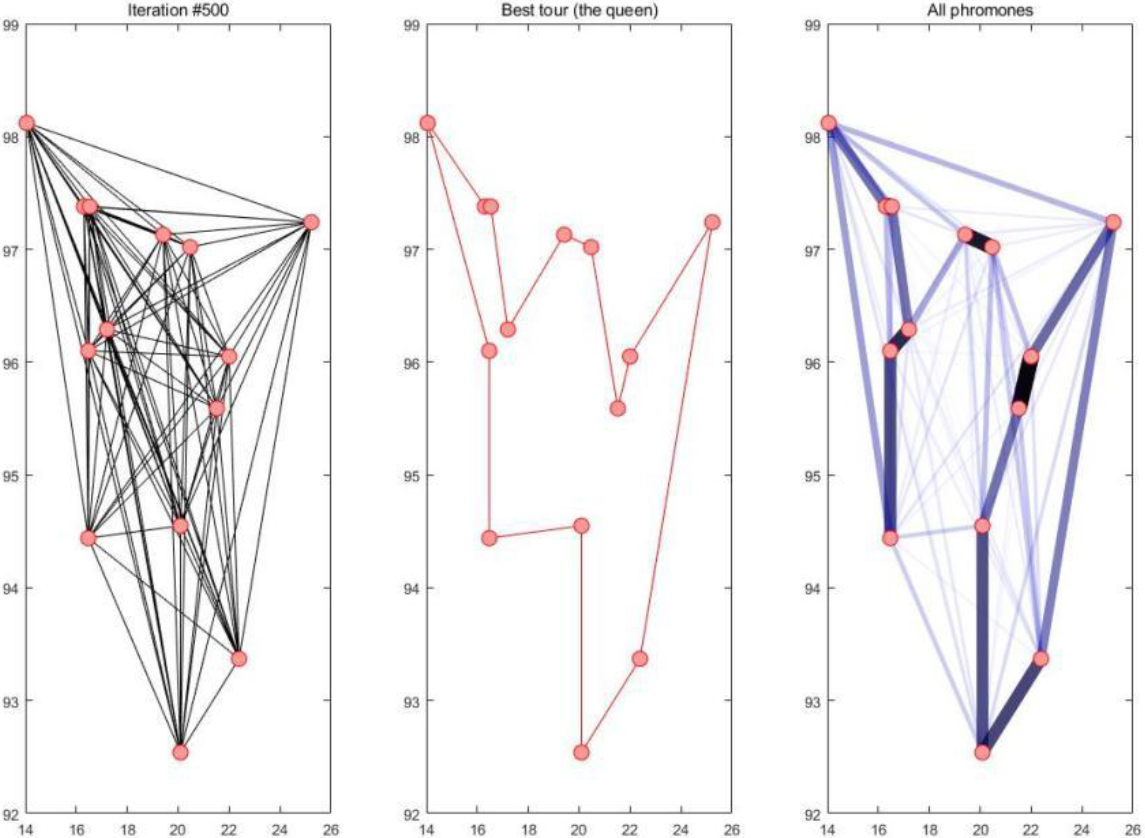
This study plans to further explore the applicability of meta-heuristic algorithms in logistics networks of different scales. Through the design of small to large-scale network simulation experiments, the performance of the algorithm under different network complexity will be investigated. During the experiment, it is predicted that the algorithm can quickly converge to the optimal solution in small-scale networks. In large-scale network experiments, the algorithm is expected to maintain a high-quality solution even though the computation time may increase. The experiment will also include the adjustment of algorithm parameters, especially in large-scale networks, where appropriate parameter Settings are expected to significantly improve search efficiency and solution quality. These experimental processes are designed to provide an empirical basis for understanding the application of meta-heuristic algorithms in logistics networks, especially in the face of growing logistics demands and network size.
To further illustrate the effectiveness of meta-heuristic algorithms in practical logistics scheduling, several specific case studies are discussed below. Pourghader Chobar A studies the response, improvement, and reconstruction phases of reverse logistics planning under earthquake conditions, with a focus on dealing with the injured and waste resulting from accidents [21]. Since the problem has multi-objective characteristics and uncertainty, he uses the NSGA-II meta-heuristic algorithm to solve the two-objective model. The results show that the NSGA-II algorithm can effectively control the solution time while ensuring the quality of the answer. Studies have shown that as capacity increases, fewer distribution centers are built, although this can increase transportation costs. Overall, the NSGA-II algorithm has demonstrated significant advantages in dealing with multi-objective optimization and uncertainty, and its application in a case study of the city of Tehran has demonstrated its effectiveness. Bank M examines the integration of production and distribution in a two-stage supply chain that includes multiple manufacturers and one distributor, where products are seasonal and perishable and must be delivered within a specified time frame [22]. To solve this problem, he proposed a hybrid integer programming model and introduced a hybrid simulated annealing and hybrid repair and punishment strategy genetic algorithm to solve it. The results show that the HSA algorithm is effective in specific logistics scenarios, and its calculation results are better than the GA algorithm in the literature. This shows that the HSA algorithm has practical application value.
In the field of logistics scheduling, in the face of real-time challenges such as demand fluctuation, vehicle failure, and traffic congestion, this paper designs an adaptive system based on a meta-heuristic algorithm, which can quickly adapt to and respond to environmental changes. The algorithm integrates a real-time data monitoring module to capture and analyze real-time information during transportation. Based on this information, the algorithm can dynamically adjust path planning, reallocate resources, and optimize scheduling decisions.
Introducing the Metaheuristic algorithm into intelligent logistics operation planning provides a new approach to achieving sustainable development [23, 24]. The multi-objective optimization method in this project can effectively reduce vehicle carbon emissions, save energy consumption, and indirectly reduce noise pollution by optimizing vehicle paths, improving transportation efficiency, and integrating resource utilization. By balancing the importance of each goal, introducing appropriate weight coefficients, and using Pareto frontiers and other methods, a balance can be achieved between different goals to promote overall sustainable development. Furthermore, utilizing the Metaheuristic method can promote the innovation and development of green logistics to a certain extent. It can not only help enterprises improve their economic benefits, but also actively assume the responsibility of protecting the environment, promote the transformation of the entire supply chain towards a clean and low-carbon direction, and support and promote sustainable environmental development [25]. The main uses of this method in environmental aspects are as follows:
a. Reducing carbon emissions: Evaluating the actual effectiveness of the Metaheuristic algorithm in reducing carbon emissions and improving environmental sustainability can be comprehensively measured from dimensions such as carbon emission reduction, environmental quality improvement, and resource utilization efficiency. Metaheuristic algorithms such as simulated annealing are used to optimize vehicle routes, which can effectively reduce vehicle mileage and no-load driving, achieving the goal of energy conservation and emission reduction. By reasonable planning of delivery time windows, vehicle loading capacity, and routes, the overall efficiency of logistics network operation has been achieved, reducing adverse impacts on the environment [26]. The corresponding mathematical formula involved in this section is as follows:
Among them,
The formula for calculating energy consumption is as follows [27]:
In Eq. (3),
Among them, Eff represents carbon emission efficiency;
Among them,
b. Reducing noise pollution: To incorporate the reduction of noise pollution into the optimization of intelligent logistics scheduling, it is necessary to optimize the transportation path and operation time while meeting the requirements of noise control, to achieve the dual goals of economy and environment. In the urban logistics environment, effective control of vehicle starting, accelerating, braking and other processes can effectively reduce vehicle noise pollution. This method can optimize the design of logistics systems with economic and environmental objectives while meeting the requirements of noise control. The formula for calculating the environmental quality index involved is as follows [31]:
Among them, EQI is the environmental quality index;
c. Promoting the growth of green logistics: Introducing the Metaheuristic algorithm into intelligent logistics systems is also of great significance for promoting the growth of green logistics. Green logistics emphasizes environmental protection, energy saving, and resource recovery, which can promote collaboration throughout the supply chain [32].
ACO algorithm path planning performance test
This experiment aims to use the ASO algorithm to optimize logistics routes, improve transportation efficiency, and reduce costs, to solve optimization problems in logistics distribution. On this basis, the ACO algorithm was used to optimize the logistics distribution route, explore its shortest path optimization efficiency under different iteration times, and compare the average length of each generation of routes. Through the research in this article, not only can the role of the ACO algorithm in the actual production process be better understood, but it can also provide a reference for future logistics and distribution plans. At the same time, this project also applied the Metaheuristic algorithm to practical problem solving, which had certain reference significance for the optimization of the logistics industry. The specific results are shown in Figs 2 and 3.
The optimal intelligent logistics scheduling path simulated in this article.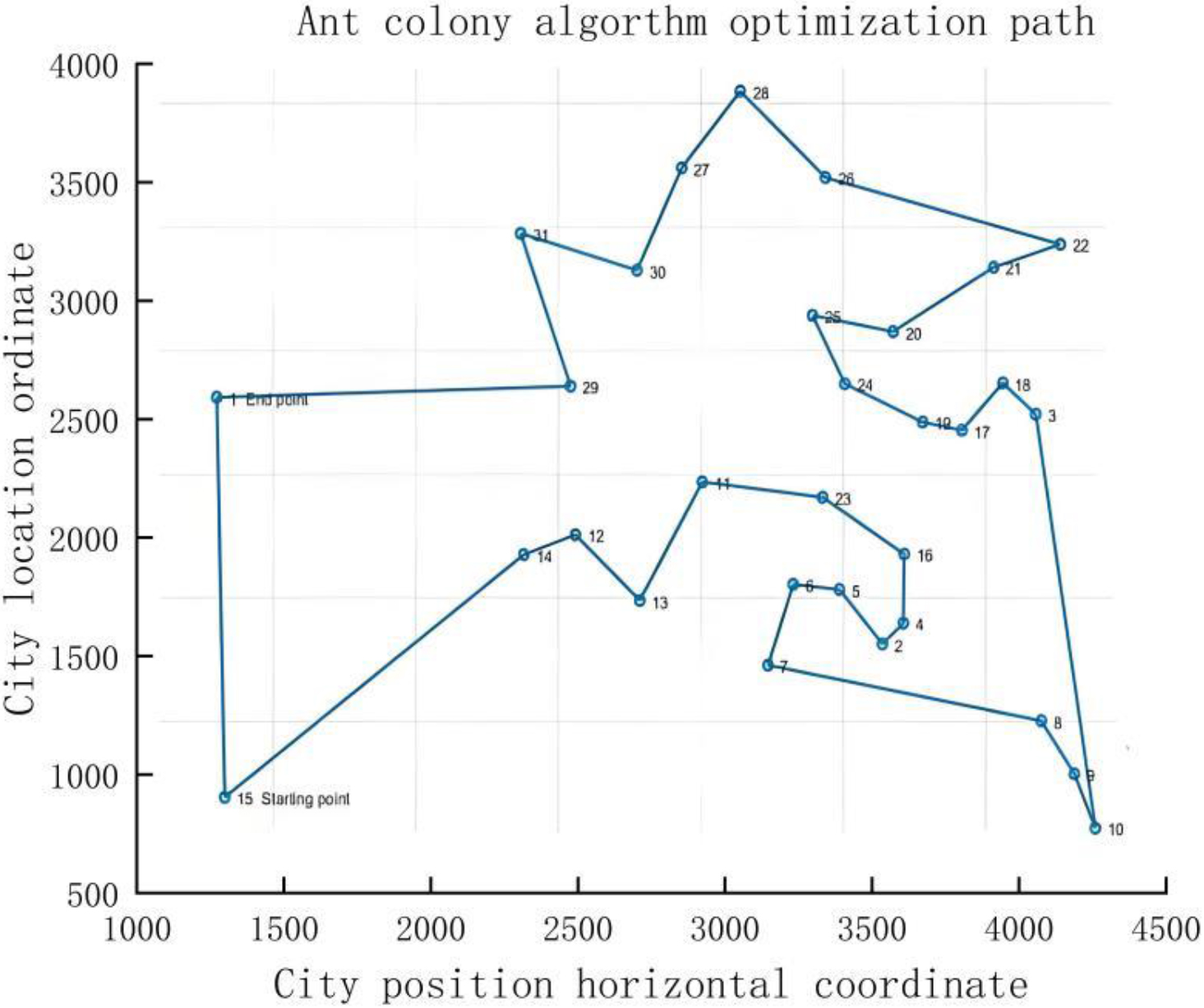
Best path and average path.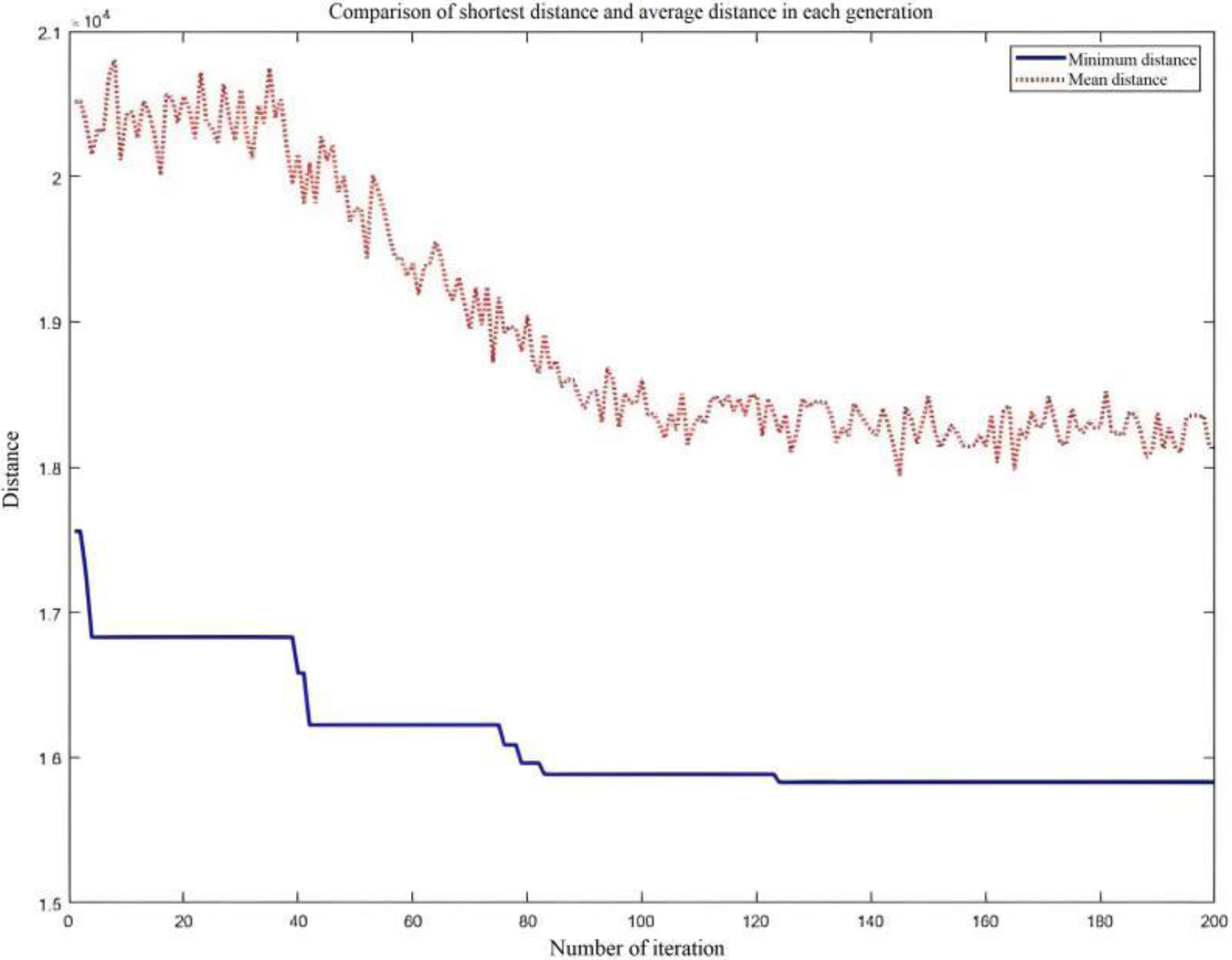
This article first used the spatial coordinates between cities to establish a city road network diagram. Figure 2 shows the shortest path selected by the ACO algorithm during the iteration process. Figure 3 compared the shortest and average path lengths for each generation, clearly showing that in the process of finding the optimal solution, the shortest path length gradually decreased and approached the optimal solution, and the trend of the average path length was also the optimization process of the entire path. This curve chart intuitively shows the results of using the ACO algorithm to optimize logistics distribution paths, and it clearly shows the role of the Metaheuristic algorithm in intelligent logistics scheduling.
This study also deeply analyzes the effect of the ant algorithm on the efficiency of parameter selection in logistics scheduling. The results showed that increasing the number of ants improved the quality and stability of understanding, but increased the computational cost. High initial pheromone concentration promotes early path exploration but may lead to premature convergence. A higher volatilization rate enhances global search capability but increases the number of iterations. Experiments show that the adaptability and efficiency of the algorithm in different scenarios can be significantly improved by optimizing parameters, which provides guiding principles for future research and practice.
This article used GA, simulated annealing algorithm, PSO algorithm, and ACO algorithm in the application of intelligent logistics to obtain the variation patterns of total travel distance, transportation time, fuel consumption, and carbon emissions of different algorithms with iteration time, and compared the performance of the four Metaheuristic algorithms. Through the research of this experiment, researchers can gain an overall understanding of the application prospects of various algorithms in intelligent logistics systems, and further understand their application prospects in intelligent logistics systems, providing a theoretical basis for efficient energy conservation and emission reduction in logistics systems.
Figure 4 shows the performance of GA, simulated annealing, PSO algorithm, and ACO algorithm after each iteration, with a total of 50 iterations simulated in the experiment. In these four graphs, the horizontal axis of each graph represents the number of iterations. The vertical axes of the first, second, third, and fourth graphs respectively display the total distance traveled, transportation time, fuel consumption, and carbon emissions, reflecting the performance evolution of the algorithm during the iteration process. The total driving distance curve reflects the degree of path optimization; the transportation time curve reveals the performance of the algorithm in terms of time efficiency; the fuel consumption curve displays the energy utilization of each algorithm; the carbon emission curve focuses on environmental sustainability. These charts provide decision-makers with in-depth performance comparisons, helping to select intelligent logistics algorithms that are suitable for specific needs and constraints.
Cost/benefit analysis of different Metaheuristic algorithms.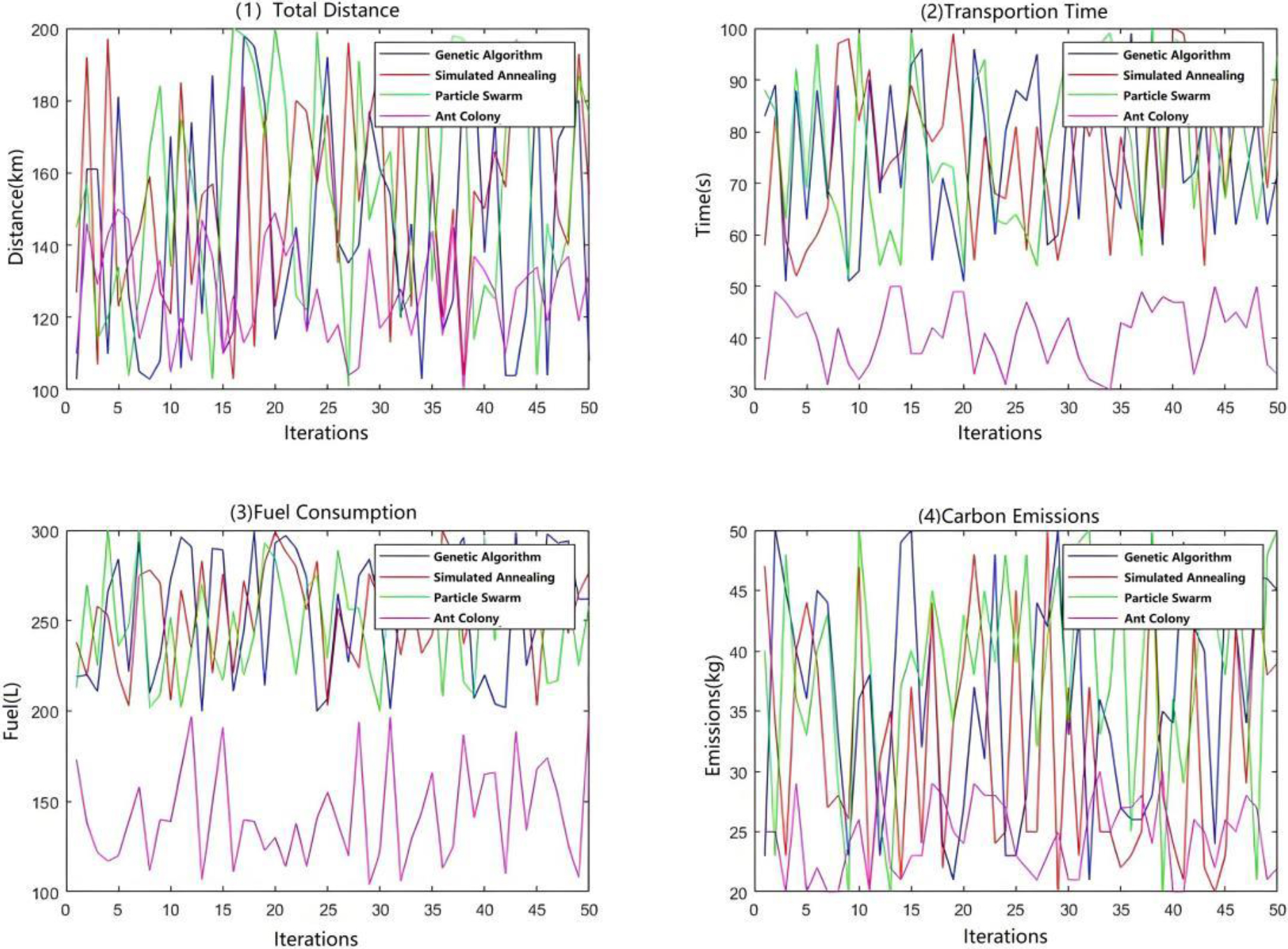
In Fig. 4, the variation of the entire curve can be observed, indicating that the ACO algorithm is more stable than other methods. ACO algorithm performed the best in reducing the total distance traveled and was the preferred choice among these algorithms. In terms of transportation time, the performance of each algorithm had a certain downward trend, but the ACO algorithm remained at a low level and its performance was relatively stable. On the energy consumption curve, there were significant fluctuations in the PSO algorithm, simulated annealing algorithm, and GA. During the entire iteration process, the performance of the ACO algorithm was relatively stable. In the end, the ACO algorithm showed good stability on the carbon emission curve and demonstrated good emission reduction effects. Through this study, decision-makers can have a clearer understanding of the costs/benefits of different Metaheuristic algorithms, thereby better meeting different needs and limitations.
In the research of intelligent logistics, selecting appropriate algorithms reasonably is the key to achieving efficient, environmentally friendly, and sustainable development. This article explored the applicability of optimization algorithms in practice by comparing and analyzing traditional algorithms and Metaheuristic algorithms. Figure 5 shows the performance of these two methods on 7 sample sets, and these two box plots show the distribution of performance between traditional algorithms and systems based on the Metaheuristic algorithm on multiple datasets. Among them, the horizontal axis represents the sample set number, and the vertical axis represents the performance value. By comparing and analyzing the performance of the two methods, the superiority of the Metaheuristic algorithm in improving delivery efficiency and enhancing environmental sustainability was clarified. This comparison can provide a better understanding of how to use different algorithms to improve the functionality of intelligent logistics systems.
In Fig. 5, subgraph (a) shows the performance of traditional algorithms on different datasets. From the position of the box line and the notch at the top, it can be seen that traditional algorithms exhibited different performances for different datasets, with some datasets having significant differences in median values. Traditional algorithms have a median performance range of 65 to 80 on different data sets, with outliers indicating poor performance in a given situation. In contrast, the meta-heuristic algorithm showed better stability and consistency on various data sets, with the median performance concentrated between 87 and 97, especially with group 4 and group 7 reaching 91 and 93, respectively, showing its superior performance on different samples.
The experiment also compares the performance of the traditional algorithm and meta-heuristic algorithm in other aspects, and the experimental results are shown in Table 1.
Comparison of algorithm performance with other indicators
Comparison of algorithm performance with other indicators
Comparison of algorithm performance.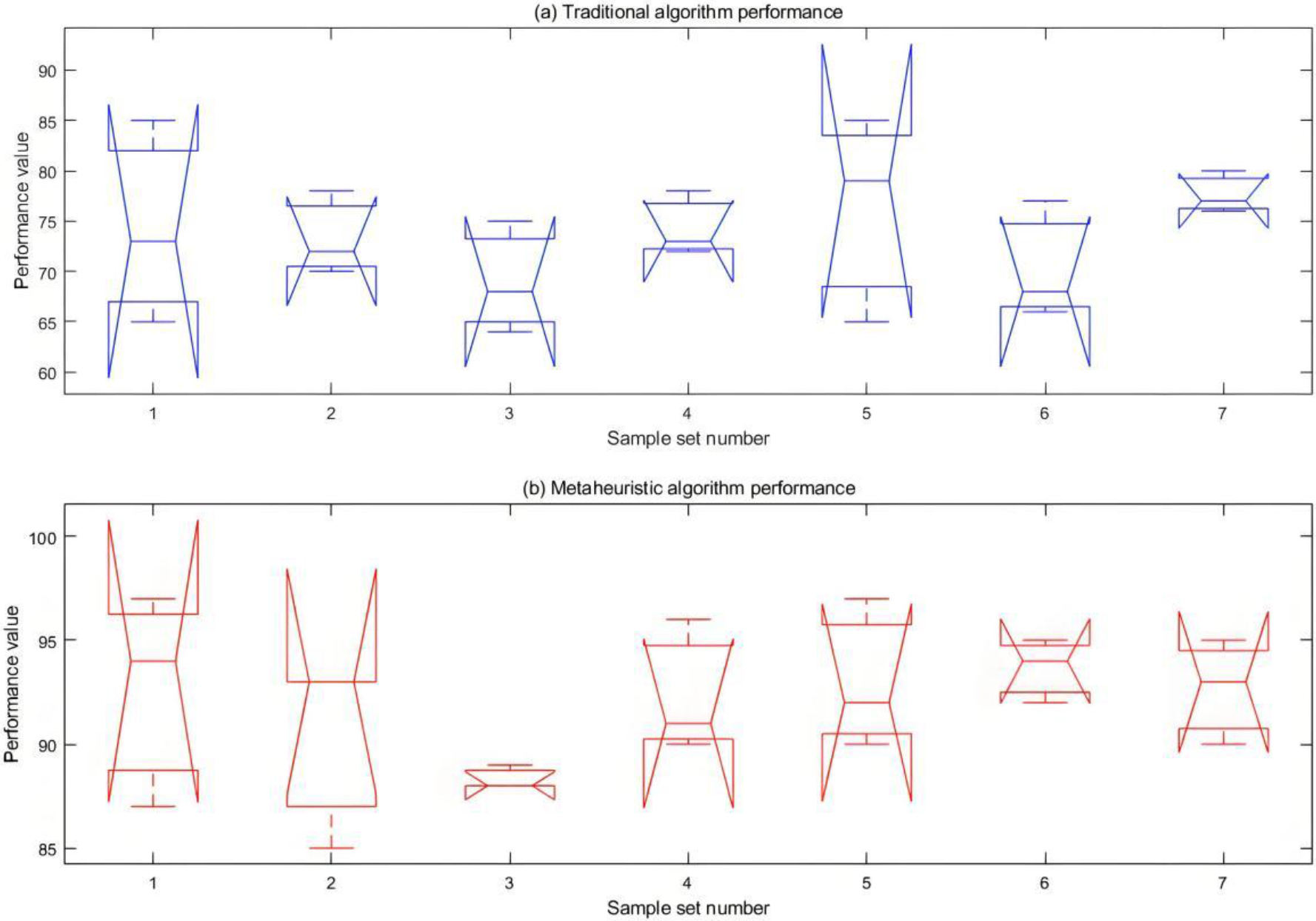
As can be seen from Table 1, the traditional algorithm takes 10 minutes, has an accuracy of more than 80%, is sensitive to noise and outliers, and has poor adaptability and insufficient scalability. On the contrary, the meta-heuristic method only takes 2 minutes, the accuracy is more than 97%, and it has good robustness, adaptive ability, and scalability, and the stability and reliability are significantly better than the traditional algorithm.
To evaluate the performance of the meta-heuristic algorithm under simulated diverse environmental conditions, the experimental simulation is conducted in different environments to explore the performance of the meta-heuristic algorithm with Dijkstra’s algorithm, A star algorithm, and Bellman-Ford algorithm in urban, rural, and mountain environments. Each algorithm is run 10 times under each environmental condition, and the average performance data of the algorithm in different environments are collected. The statistical results are shown in Table 2.
Performance comparison of algorithms in different environments
Performance comparison of algorithms in different environments
Table 2 shows the performance comparison of the meta-heuristic algorithm, Dijkstra algorithm, A star algorithm, and Bellman-Ford algorithm in three environments: urban, rural, and mountain. The meta-heuristic algorithm showed shorter total travel distance and transportation time in all environments, and significantly lower fuel consumption and carbon emissions, indicating advantages in optimizing transportation paths and reducing environmental impact. The experimental results show that the meta-heuristic algorithm can effectively optimize the transportation route and reduce fuel consumption and carbon emissions.
By introducing the meta-heuristic algorithm into intelligent logistics scheduling, this paper effectively improves the operating efficiency of the logistics system, significantly enhances the level of environmental protection, and promotes the sustainable development of urban logistics. The results show that compared with traditional algorithms, the meta-heuristic algorithm has significant advantages in computing accuracy, robustness, adaptability, and scalability, especially in reducing logistics costs, energy consumption, and carbon emissions. In addition, this paper also verifies the applicability and reliability of the algorithm model through practical cases, which provides a new perspective and method for the optimization of the logistics industry. Future studies still need to explore the applicability and performance of meta-heuristic algorithms in logistics networks of different sizes and complexity. As logistics demand continues to grow and network scale expands, further research on how to adjust algorithm parameters to improve search efficiency and solution quality, and how to better integrate real-time data monitoring and analysis to address real-time challenges such as demand fluctuations, vehicle breakdowns and traffic congestion will be the focus of subsequent work.
Declaration of conflicting interests
The author declared no potential conflicts of interest concerning the research, authorship, and/or publication of this article.
Data availability statement
The data that support the findings of this study are available from the corresponding author upon reasonable request.
Ethical approval
This article does not contain any studies with animals performed by any of the authors. This article does not contain any studies with human participants or animals performed by any of the authors.