



Abstract
Accompanied by a series of developments in information technology, such as the Internet of Things, big data, and digital twin technology, these innovations came into existence and began to gain significance. Targeting the issues of hierarchical confusion and inadequate visualization in traditional logistics and warehousing systems, this study begins by analyzing the framework structure of the warehousing system. It uses genetic algorithm calculation to obtain the solution set for optimizing cargo pull objectives. Finally, it proposes a novel intelligent IoT logistics and warehousing system by integrating digital twin technology. The experiment results indicated the genetic algorithm could optimize up to 60% of the cargo pull optimization objective function in this model with at least 300 iterations. The simulation and actual times of outgoing and incoming storage under this model varied between 0 to 1. The error throughout the range was a minimum of 0.1 seconds. The study found that the storage density achieved a maximum value of nearly 98%, while the minimum storage cost was approximately $3 per order and the maximum was $9 per order. Overall, the proposed model can aid enterprises in optimizing their operations by improving efficiency and reducing logistics and warehousing costs, ultimately promoting the digital and intelligent development of the logistics industry.
Keywords
Introduction
Nowadays, the development of Logistics and Warehousing Systems (LWS) has become an important part of the modern logistics industry. However, the rise in demand for logistics and the expectations of customers have led to numerous challenges for modern LWSs. For instance, the complexity of supply chains, higher costs, and other issues have emerged as significant obstacles [1, 2]. Numerous scholars from both domestic and international contexts have presented successive solutions to address the aforementioned issues. One approach involves utilizing big data analysis to optimize warehouse layout and transportation routes. Another solution involves simulating and optimizing LWS’s actual running state through technologies such as virtual and augmented reality to achieve real-time monitoring and operation [3]. These methods have received some positive feedback from users, but there remain issues with system integration, including equipment integration and algorithm optimization. As an important digital simulation tool, Digital Twin (DT) model has many advantages such as real-time simulation and monitoring, prediction and optimization, and decision support. This technology enables organizations to respond efficiently to the challenges faced by LWS by establishing a real-time digital mapping of physical systems. As a classical problem optimization method, the Genetic Algorithm (GA) is capable of effectively searching the complex solution space by simulating the biological evolution process. This enables the GA to solve many optimization problems that are difficult to be solved by traditional algorithms [4]. In light of the aforementioned considerations, the study initially examines the path optimization problem in the intelligent Internet of Things (IoT) LWS, i.e. IoT-LWS. It then employs a GA to address the Cargo Pull Optimization (CPO) multi-objective problem, with a particular focus on integrating the DT technology with this optimization path. Finally, it addresses the real-time path optimization and system-level prediction problems that existing logistics and warehousing solutions are unable to effectively address.
The significance of this research lies in its ability to facilitate a rapid response to market changes, the optimization of resource allocation, and the reduction of operational costs. This is achieved through the integration of real-time data and the implementation of optimized path planning capabilities. The ability to maintain competitiveness in a rapidly changing market environment is thus enhanced. In addition, by accurately simulating and predicting logistics operations, the model also helps to reduce decision-making risks and improve the responsiveness and service quality of the entire logistics system.
Related works
With the rapid growth of the global trade and logistics industry, traditional warehousing and logistics management methods can no longer keep up with market demands. The intelligent IoT-LWS is developed to offer a more efficient logistics and warehousing solution for enterprises. By integrating innovative technologies like IoT, big data analysis, cloud computing, and artificial intelligence, intelligent IoT-LWS provides a cutting-edge solution to meet market demand. Liu H et al. proposed a fuzzy logic logistics algorithm utilizing a rough visual image tag tracking method to improve the effectiveness of the existing LWS after the introduction of blockchain technology. The experimental results showed that the algorithm can realize effective visual tracking after being used in container logistics transportation and warehousing, which can improve the tracking accuracy of container logistics [5]. To reduce the operation cost of the existing LWS and improve the logistics efficiency, Chen T proposed a new logistics scheduling strategy after combining the rough set fuzzy logic algorithm. Simulation test results indicated that this strategy was more feasible than the same type of scheduling scheme in the reverse logistics model, and the actual scheduling efficiency was higher [6]. Ma H et al. found that there were many unreasonable links between the existing logistics warehousing and distribution, and greatly reduced the logistics efficiency. Therefore, the research team proposed a new logistics demand prediction model after combining the improved neural network algorithm. The experimental results showed that the model could accurately predict the changes in the flow of goods and adjust the relationship between warehousing and distribution in a timely manner, which saved logistics costs [7]. Yang LG et al. found that when an emergency occurs, the collection and distribution of materials in the port emergency logistics system will be greatly affected. Therefore, the research team proposed a new port logistics warehousing and distribution system by combining gray analysis and fuzzy logic algorithm. Experimental results showed that the system in the face of many types of emergencies, its logistics warehousing and distribution remained in a relatively stable state. It not only reduced the negative impact of the event, but also reduced the economic loss at the same time [8].
DT is a technology that employs mathematical modeling and computer technology to replicate and simulate real-world objects, systems or processes in a digital environment. The technology offers robust assistance for comprehending, optimizing, and regulating actual processes, which makes it promising for broad application. To optimize the production and supply environment for smart warehousing while minimizing the manufacturing and supply chain lead time, Abideen AZ et al. proposed a warehousing decision-making method after combining data mining and DT techniques. The experimental results showed that the method was excellent and could provide a reliable optimization strategy for manufacturing and delivery of smart warehousing [9]. Jiang Y et al. found that modular integrated construction was susceptible to external conditions and geographic dispersion, which resulted in lower productivity quality. Therefore, the research team proposed a DT information management system. The experimental results showed that the system was able to efficiently digitize and convert on-site resources, thus improving the efficiency of modular integrated construction and accelerating the construction progress [10]. Drissi Elbouzidi A et al. found that the existing warehousing system suffered from poorly coordinated handling of materials and unstable supply chain articulation. Therefore, they proposed a new digital warehousing model after combining artificial intelligence and DT technology. The experimental results showed that this model could significantly optimize the fluency between modules and provide a mature technology for the warehousing system [11]. To enhance the flexibility and agility of the existing warehousing system, Leng J et al. developed a new physical warehouse product service system after combining DT technology. Experimental results showed that applying this new system to tobacco warehousing could maximize the utilization and efficiency of a large automated high-level warehouse product service system [12].
In conclusion, numerous scholars have conducted research on intelligent IoT storage systems and have proposed a range of optimization methods, including blockchain technology, deep learning algorithms, and others. At the same time, the rise and widespread use of DT technology has made more research problems simulatable and predictable. Additionally, related research has employed DT technology in the construction of LWS, which can only be constructed. These studies have yielded noteworthy research outcomes and performance effects. However, these studies focus on the multi-objective optimization of the construction process, and pay less attention to the transportation and path planning of logistics, as well as storage prediction. Consequently, the study employs a novel approach by integrating DT technology into intelligent IoT warehousing systems. This integration aims to provide insights and guidance for the digital transformation, path planning, and storage prediction of smart IoT-LWS.
DT model construction for intelligent IoT-LWA
Accompanied by people’s increasing requirements for logistics and warehousing efficiency, logistics cost and logistics service, intelligent IoT-LWA comes into being. The study firstly analyzes the path of intelligent IoT-LWA, proposes the multi-objective function of CPO and models the solution by GA. Secondly, the optimized path is combined with the DT model, and the DT model for intelligent IoT-LWS is proposed.
Optimized path design for cargo pulling in intelligent logistics warehouse system
Intelligent Logistics and Warehousing System (ILWS) refers to the intelligent management and operation of logistics and warehousing process through information technology and automation equipment [13, 14]. Its structure is roughly divided into automatic warehouse system, automatic sorting system, automatic transportation system and automatic receiving and caching system. However, in the actual work process, different types and sizes of goods sorting and transportation is still a big challenge. To improve the efficiency of the warehousing system and reduce unnecessary collision and damage of goods, this study introduces the concept of CPO to achieve efficient cargo passage design. Assuming that the row, column and height coordinates of a particular bay are
In Eq. (1),
In Eq. (2),
In Eq. (3),
In Eq. (4),
Schematic diagram of improving delivery rate in cargo optimization.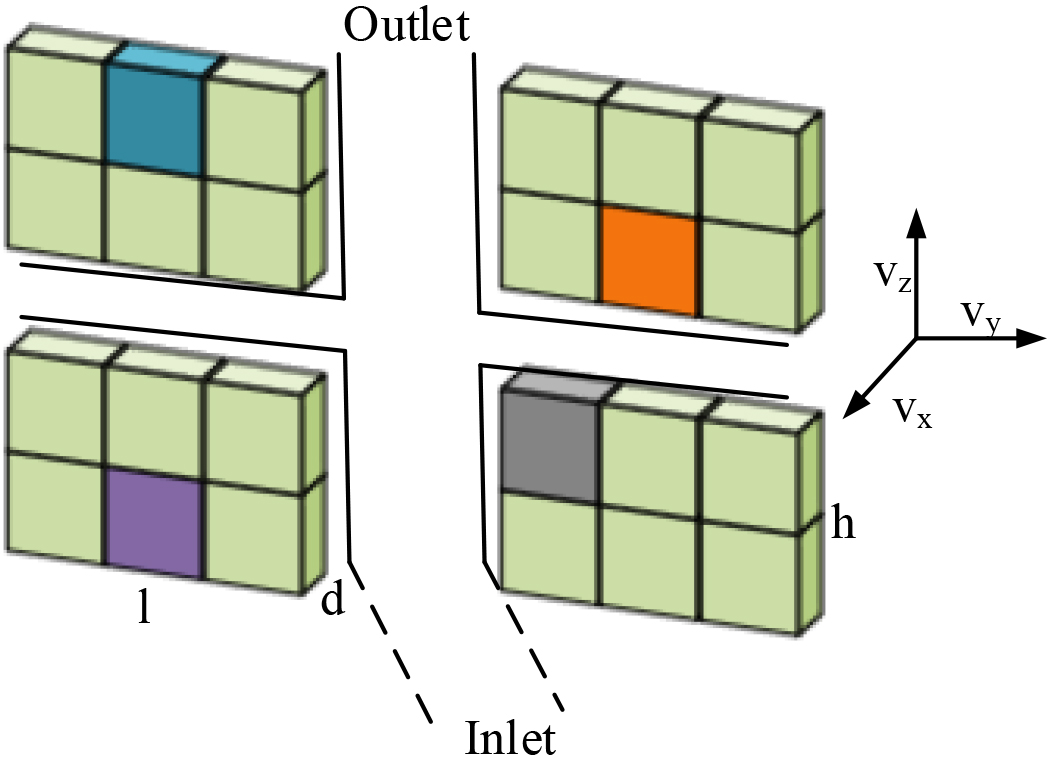
In Fig. 1, this method can significantly plan and optimize the transportation path of goods, improving the efficiency of goods entering and exiting ILWS. In addition, since the traveling speed of the picking equipment is uniform, it is equally important to shorten the traveling distance of the picking equipment. The equation for calculating the distance of the picking equipment from the inbound port to the corresponding goods position and the goods position to the outbound port is shown in Eq. (5).
In Eq. (5),
In Eq. (6), all algebraic meanings are consistent with the previous explanation. The objective function for reducing the traveling distance of the picking equipment at this time is shown in Eq. (7).
All algebraic meanings in Eq. (7) are consistent with the previous explanation. The schematic of the picking device traveling at this point is shown in Fig. 2.
Schematic diagram of shortened picking equipment travel.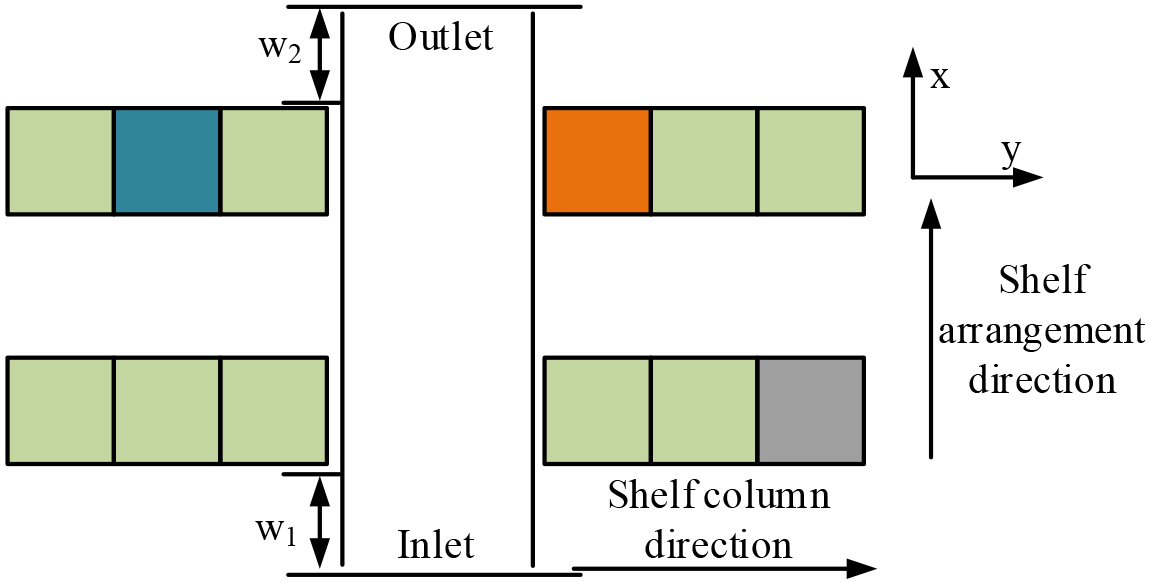
In Fig. 2, the distance between the cargo space and the access distance can be shortened by means of coordinate calculation. In addition, the general storage space is limited, so it is necessary to improve the efficiency of goods storage in the storage space. The goods are divided into
In Eq. (8),
In Eq. (9), all the algebraic meanings are consistent with the previous explanation. The optimization objective function for storage of all goods at this time is shown in Eq. (10).
All the algebraic meanings in Eq. (10) are consistent with the previous explanation. For the above existed CPO multi-objective problem of intelligent IoT-LWS, the study firstly performs a normalization process to satisfy all objective functions and constraints. Each objective function after the normalization of the unity dimension is shown in Eq. (11).
In Eq. (11), the objective function values of the aggregate function are concentrated between the original range of function values, which are equally constant. The study uses a linear weighting method to unify the normalized multi-objective function into a single-objective function, and the process is shown in Eq. (12).
In Eq. (12),
In Eq. (13), fitness denotes the fitness function. Since all three objective functions take positive values, the subsequent selection method can be operated by a roulette wheel approach, and the equation for this process is shown in Eq. (14).
In Eq. (14),
Simulation flowchart after optimization of cargo pulling.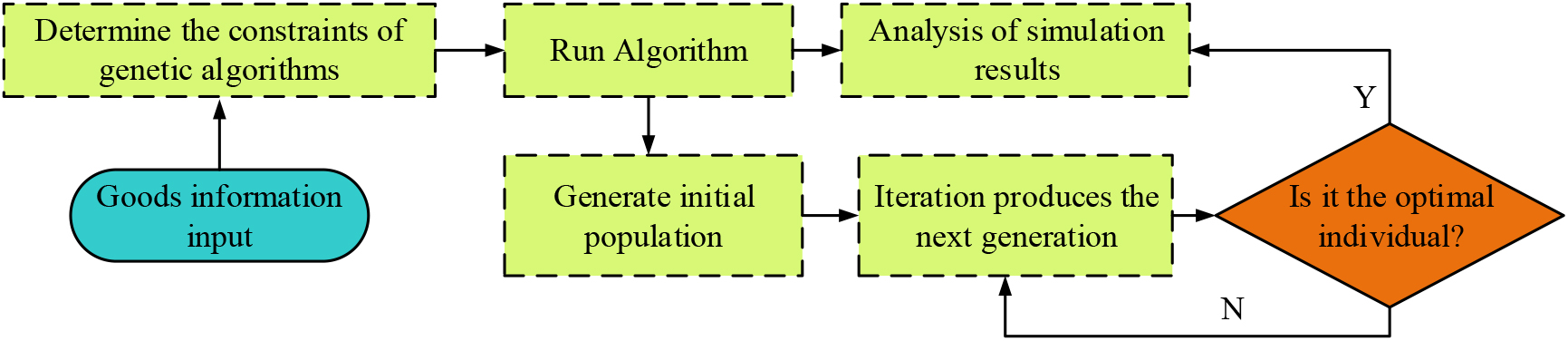
In Fig. 3, combining the mathematical model after CPO and Matlab software, the CPO simulation process of intelligent IoT-LWS at this time can be simplified to the above five steps. The input of logistics goods, the establishment of constraints, the selection of a high-quality population through GA, and finally the output of the optimal cargo-pulling location and quantity information comprise the process.
The establishment of a DT model for intelligent IoT-LWS necessitates the integration of DT technology with the design, construction, application, and maintenance of the logistics system, following an analysis of the structural characteristics of the logistics system. This integration enables the comprehensive perception of system data and the accurate simulation and prediction of the virtual space to the physical space [15, 16]. Ultimately, it provides a more excellent operation environment and technical support for decision makers, managers and the whole LWS. The characteristics of ILWS are shown in Fig. 4.
The characteristics of intelligent IoT-LWS.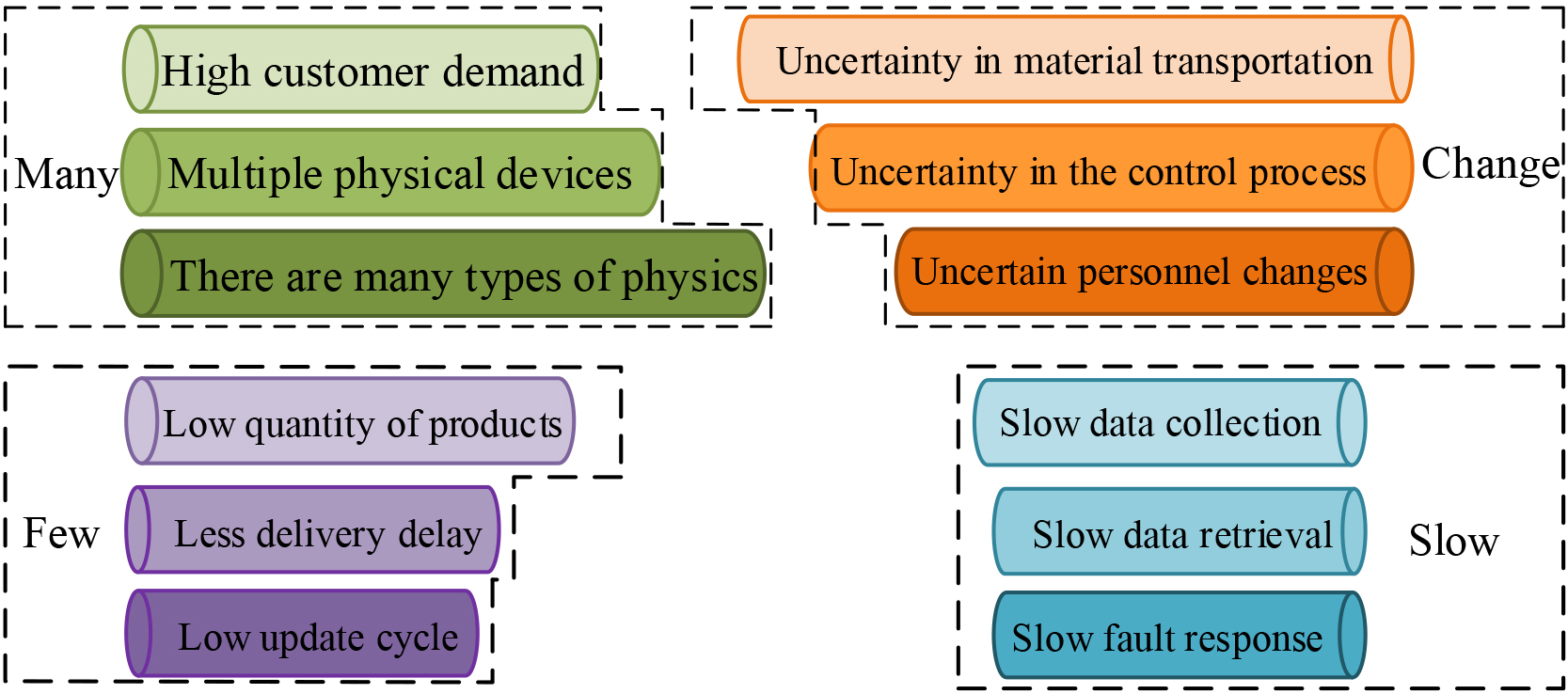
In Fig. 4, the characteristics of the whole storage system are mainly divided into four main categories, i.e., many, changing, slow and few. Many refers to the customer demand, material types, logistics links and logistics equipment. Changing refers to the uncertainty in material transportation, uncertainty in the control process and uncertainty in personnel changes. Slow refers to slow data collection, slow data retrieval and slow failure response. Few refers to fewer products, fewer delivery delays and fewer update cycles. For instance, the Real Time Location System (RTLS) in DT technology enables the search and mining of massive data. Similarly, artificial intelligence technology is employed to analyze and process information, thereby providing data support for intelligent decision-making in warehousing systems. Furthermore, the mapping function of DT technology enables the physical entity of logistics to be converted virtually, thus improving the system’s real-time and transparency. This, in turn, facilitates the accurate control of logistics problems [17, 18]. In view of this, the study summarizes the requirements for the construction of DT model for intelligent IoT-LWS and proposes a targeted theoretical framework, as shown in Fig. 5.
DT framework of intelligent IoT-LWS.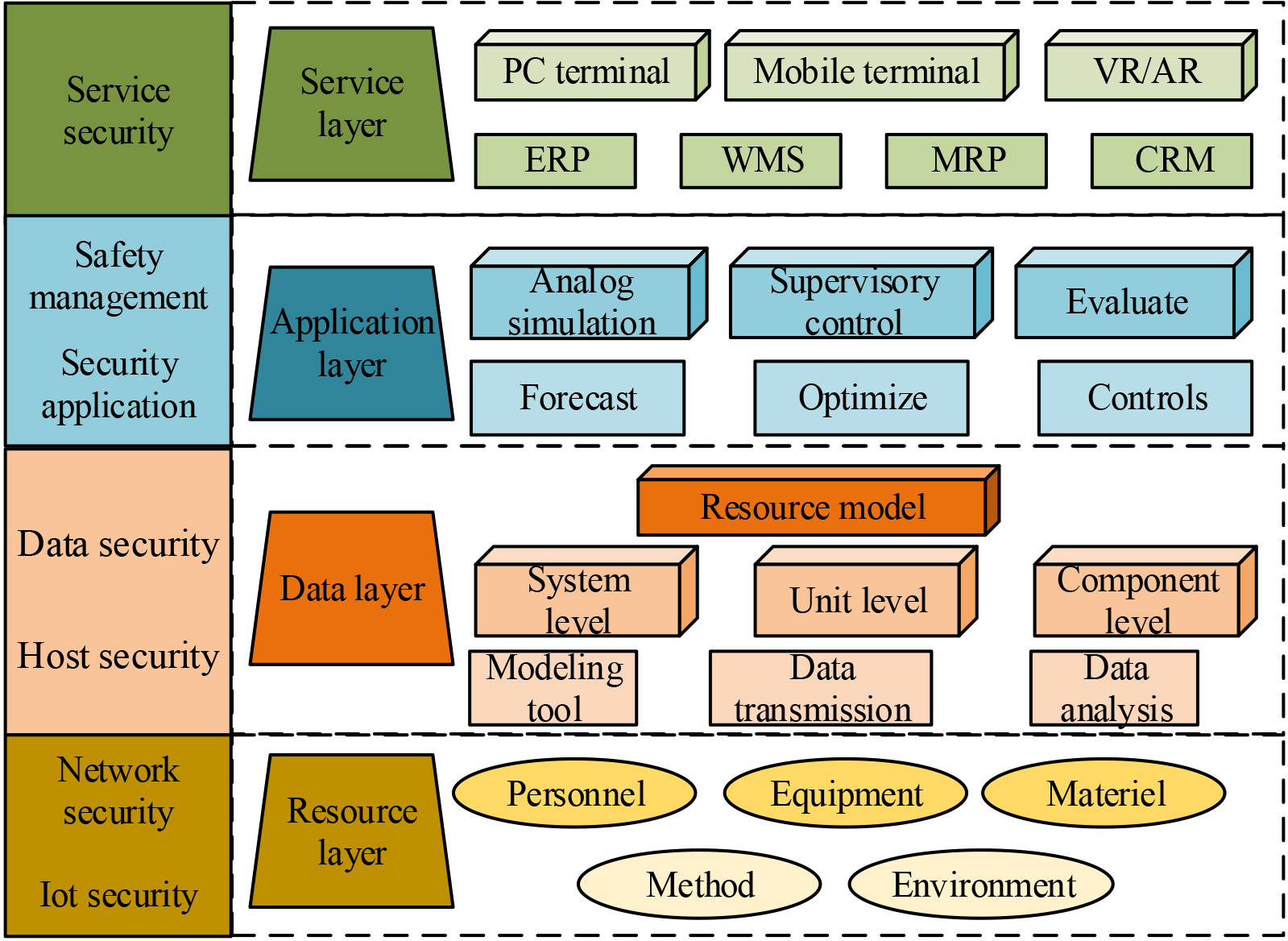
In Fig. 5, the theoretical framework proposed by the research includes four main layers, i.e., resource layer, data layer, application layer and service layer. The dominant factor in the four dimensions is the resource management layer, and the personnel are mainly maintenance personnel, operators and managers in the warehousing system. Equipment mainly includes transportation, sorting, packaging and storage equipment related to logistics operations. Materials include the objects of logistics operations, i.e. raw materials, semi-finished products, etc. Methods include the operating instructions of logistics operations, inspection standards and transportation, storage safety instructions. Environment includes the temperature, humidity, noise, air quality, etc. of the whole logistics storage plant. Under the premise of accurate construction of various types of components, the study combines and matches physical entity information with DT data to generate the DT model of intelligent IoT-LWS, as shown in Fig. 6.
The DT model of intelligent IoT logistics and warehousing system.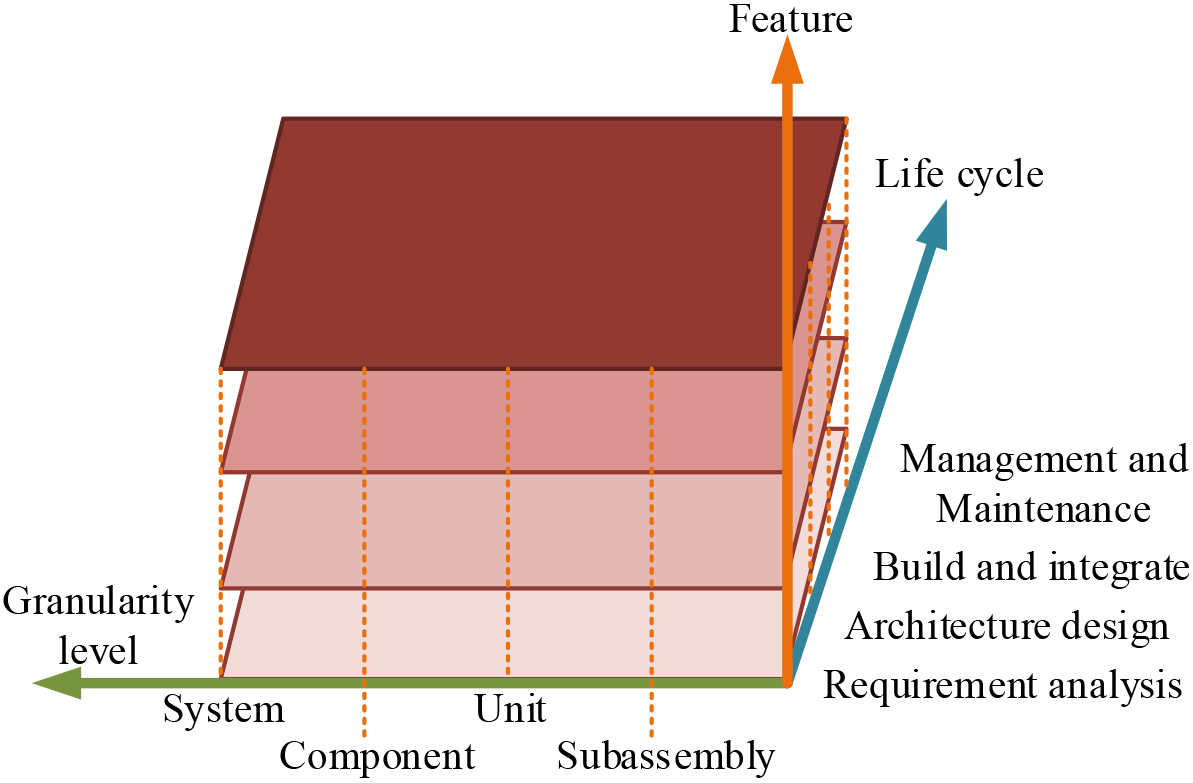
In Fig. 6, the intelligent IoT-LWS on the twin model is roughly divided into three directions, i.e., granularity, lifecycle and function. Among them, granularity is defined as the use of a granularity structure to divide the entire system into distinct levels, according to the spatial dimensions from large to small, following a ranking process. This process involves the virtual replacement of the storage system, which characterizes the size factor of subordinate items within the DT framework. The whole life cycle includes customer’s demand analysis, architecture design, construction integration and management maintenance, which characterizes the operation process of the whole system. Functionality mainly includes five directions: optimization, prediction, simulation, control and monitoring, which can be interpreted as the design of digital transformation for CPO, and the transformation from physical to virtual is carried out in different forms of expression.
Taking a large e-commerce platform as an example, combined with the intelligent IoT-LWS proposed in this study, real-time positioning technology and data analysis are used to optimize order processing, inventory management, and delivery processes. The DT model’s accurate simulation and prediction functions enables the accurate prediction of order volume, goods flow path, and inventory demand. This results in on-time delivery and reduced operating costs.
To verify the performance effect of the DT model of ILWS, the study built a suitable experimental environment. Firstly, the path CPO and its GA in the model were tested. Secondly, the practical application effect of the DT model was verified through simulation tests.
Analysis of intelligent logistics warehouse path testing based on CPO
To verify the performance effect of GA in intelligent logistics storage path CPO, the study was carried out with Matlab software for data processing, setting the speed of the cargo space in the X direction as 2 m/s, the speed in the Y direction as 2 m/s, and the speed in the Z direction as 2 m/s. The vertically oriented horizontal distance between the first row of goods and the inbound port was 5 m, and the vertically oriented horizontal distance between the last row and the outbound port was 5 m. The number of shelves rows was 5, the number of floors was 3, the number of columns was 2. The length, width and height of the shelves were 2 m. In addition, the total number of input codes for the goods was 30, and the total number of types was 16. Taking the specific function values as an example, the changes of the three objective functions in CPO before and after GA optimization were tested, and the test results are shown in Table 1.
Optimization results of objective function values
Optimization results of objective function values
In Table 1, the change rate of
Ablation test results
In Table 2, the objective function value and cargo turnover test results of each module were superior, in which the objective function of GA was as low as 0.27, and the highest cargo turnover was 87.44%. The objective function of DT was as low as 0.25, and the highest cargo turnover was 86.22%. The objective function of GA-DT was as low as 0.11, and the highest cargo turnover was 91.21%. Each module had a positive effect in the overall system, optimizing the performance effect of the smart storage model. To further investigate the impact of GA on the CPO problem, the study employed a range of algorithms that have gained prominence in the current domain of multi-objective problem solving. For example, Simulated Annealing (SA), Particle Swarm Optimization (PSO) and Cuckoo Search (CS) were selected to make a comparison. Taking the objective function value and cargo turnover rate as the reference index, the test results are shown in Fig. 7.
Performance comparison of different target search algorithms.
Figure 7a shows the comparison results of the iteration performance of four different algorithms, and Fig. 7b shows the comparison results of the cargo turnover rate of four different algorithms. In Fig. 7, the CS algorithm had the slowest rate for solving the objective function value, followed by SA and PSO. The GA had the fastest rate of computing the objective function, with the minimum number of iterations of 300, and at this time, the maximum value of the objective function was 0.15. In addition, with the increase in the number of iterations, cargo turnover rate under the algorithms was gradually increased. The worst performers were the CS and SA, the best was the GA, with the highest cargo turnover of 89%. This indicated that the CPO was maximally accelerated under the operation of the GA, resulting in the improvement of the efficiency of the whole intelligent IoT-LWS and thus the highest turnover rate. To show the operation effect of CPO in intelligent IoT-LWS more graphically, the study used Matlab software to draw the distribution of goods before and after optimization, and the specific simulation results are shown in Fig. 8.
Distribution of goods before and after cargo optimization.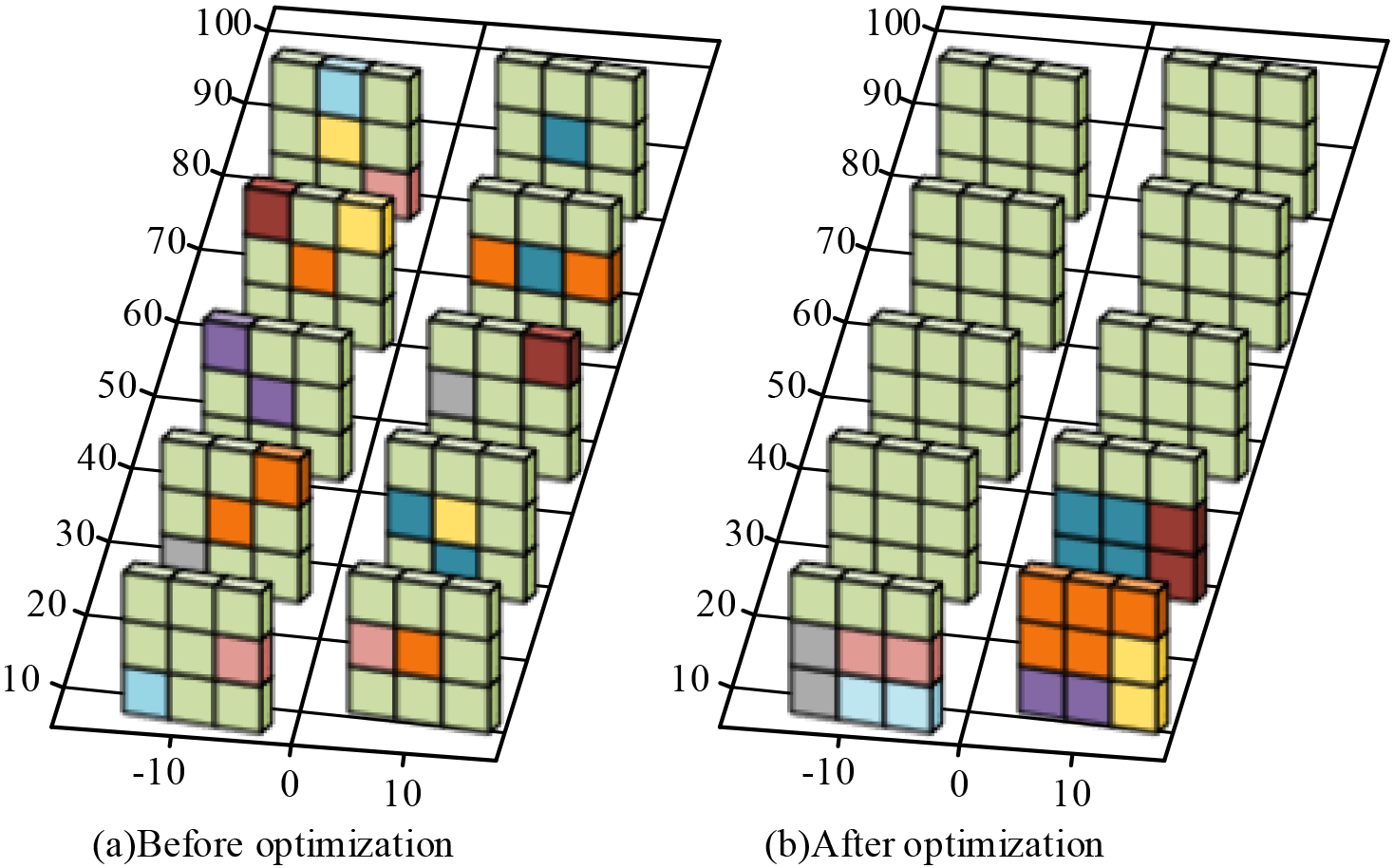
Figure 8a shows the cargo allocation in intelligent IoT-LWS before optimization and Fig. 8b shows the cargo allocation in intelligent IoT-LWS after optimization. From Fig. 8, in the complex and regular storage environment, the established cargo distribution before optimization was more scattered, which was not conducive to the management and scheduling of the system. Following the optimization of the intelligent IoT-LWS, the cargo placement process became more concentrated, with similar items placed in the same area. This enhanced the storage system for cargo management, facilitating the retrieval of incoming and outgoing goods.
Comparison of inbound and outbound running times
Storage rate test results of logistics warehousing systems under different models.
Changes in warehousing costs under different models.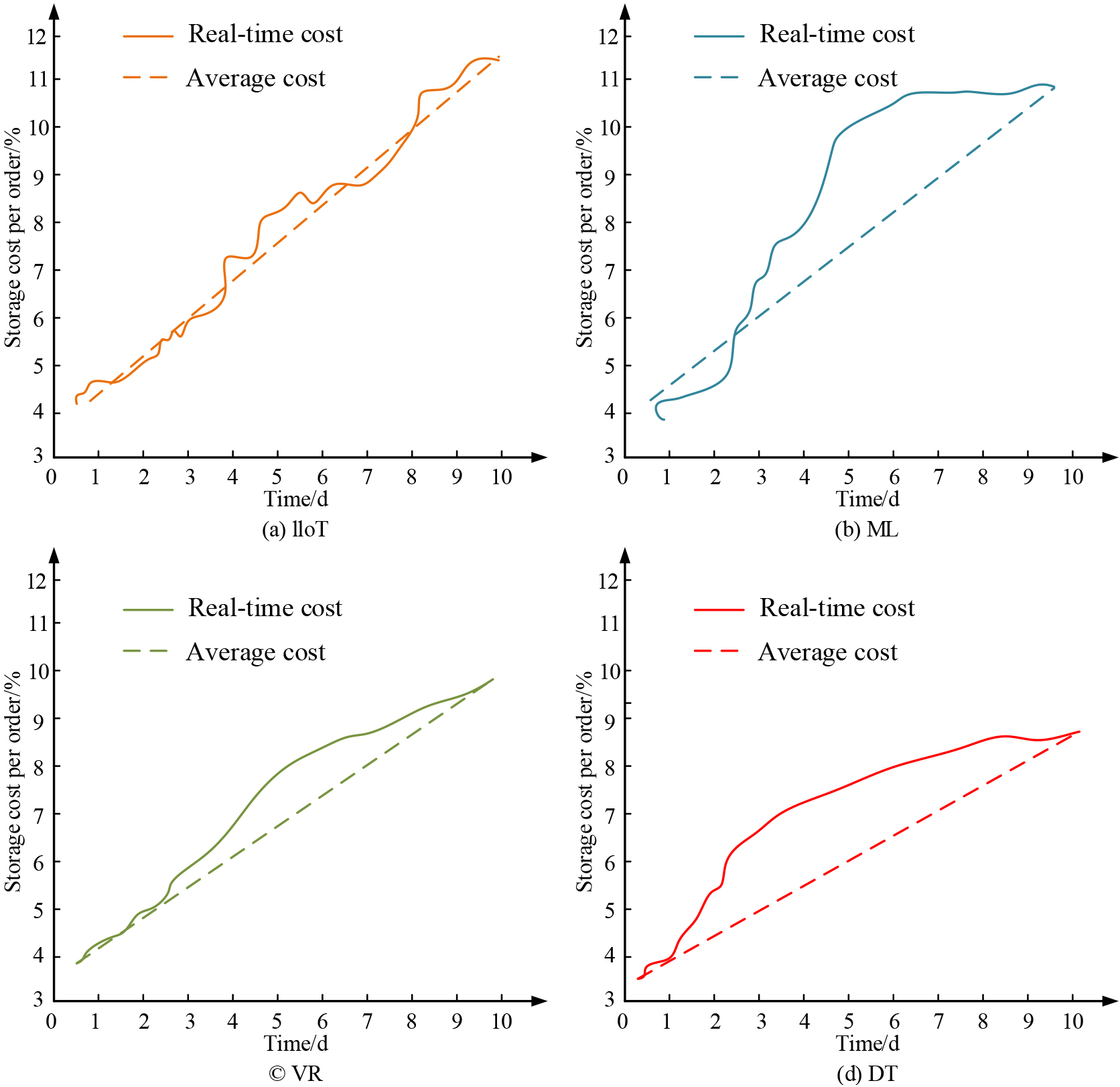
The study was conducted through AutoMod software for modeling and debugging of the system, and Mirror Boat mirrorship database data was used for testing. The database contained a total of nearly 200 million items of warehousing and logistics data from October 2019 to October 2022 in the Caijiao network logistics park. After 50 random physical warehousing data were screened by GA, 8 pieces of information with optimal data performance were selected to be input into the model. The simulation time and actual time of outbound and inbound warehousing were compared respectively to test the actual use effect of the DT model of the new LWS. The test results are shown in Table 3.
From Table 3, with the support of the DT model of LWS, the difference between the simulation time and the actual time of outbound and inbound warehousing were kept in the range of 0 to 1. It indicated that the optimized intelligent warehousing system had more accurate and stable prediction results, and also proved that the new DT model of the proposed LWS had better performance and less error in predicting the goods scheduling of warehousing system. In addition, the difference gradually decreased with the increase of inbound time and outbound time of the goods, and the minimum difference was 0.1. Therefore, the DT model was able to adapt to larger logistics and warehousing environments, and the performance of the model was more optimal with the increase of logistics data. To further validate the feasibility of the DT model for ILWS, the study used the storage density as a reference index, and conducted comparative tests on the LWS technology under Industrial IoT (IIoT), Machine Learning (ML), and Virtual Reality (VR), respectively. The results of the tests are shown in Fig. 9.
Figure 9a shows the results of LWS storage density under IIoT. Figure 9b shows the results of LWS storage density under ML. Figure 9c shows the results of LWS storage density under VR technology. Figure 9d shows the results of LWS storage density under DT model. In Fig. 9, there was a tendency for the storage density under the IIoT technology to first increase and then decrease as the number of goods increased. The storage density under the DT model exhibited a stable level above 90% throughout the observation period, with a maximum value approaching 98%. In summary, the storage use efficiency under the DT model was the highest, indicating that the technology could optimize the layout of the warehouse and the efficiency of cargo operation. The study took the small cargo orders of Caijiao Logistics from September 1, 2022 to September 10, 2022 as the data background, and continued to compare the above methods with the warehousing time and warehousing cost of each order as the reference index. Figure 10 shows the results.
Figure 10a shows the variation of warehousing cost under IIoT. Figure 10b shows the variation of warehousing cost under ML. Figure 10c shows the variation of warehousing cost under VR. Figure 10d shows the variation of warehousing cost under DT. In Fig. 10, with the increase of time, the site cost, labor cost, and logistics cost of warehousing goods gradually increased. In terms of average cost, the cost of IIoT increased the fastest with the largest slope. While the DT model proposed in the study had the smallest slope and the slowest growth rate. Meanwhile, the maximum warehousing cost under this model was $9 a piece, which saved nearly 33% compared to the IIoT technology. It showed that the DT technology was able to reduce the warehousing cost and bring better revenue results for warehouse managers.
Conclusion
With the extensive development of information technology and industrialization, the traditional LWS has undergone intelligent improvements. Nonetheless, the existing ILWS still confronts issues like sluggish data flow and limited visualization. Therefore, this study examined the CPO problem and its various objective functions in logistics transmission paths using GA, and suggested a new intelligent IoT-LWS by integrating DT technology. The experimental results demonstrated that the three objective functions in the CPO exhibited a change rate of nearly 60% following the optimization of the GA. Furthermore, the number of iterations of the optimal objective operation under this algorithm was a minimum of 300 times, when the maximum objective function value was 0.15. In addition, analysis of the intelligent IoT-LWS DT model showed that the discrepancy between the simulated time for outgoing and incoming storage and the actual time was balanced within the range of 0 to 1, with a minimum error of 0.1 seconds. The model demonstrated a storage density of over 90%, reaching a maximum of 98%, despite an increase in the volume of goods. Over time, using the DT model yielded the slowest growth rate for warehousing costs, with expenses ranging from $3 to $9 per unit. This represented a cost savings of nearly 33% compared to the use of IIoT technology. The study proposes the innovative intelligent IoT-LWS DT model that can optimize the layout of warehouses and transportation paths, thereby enhancing storage efficiency and reducing costs. However, there are some limitations to the research. First, the practical application of the model needs to be validated in a wider range of logistics environments, and current tests are mainly limited to theoretical and limited experimental scenarios. Furthermore, GA is effective in path optimization, yet it may necessitate greater computational resources and time when confronted with exceedingly large-scale data. Future research should extend the application scope of the model to validate and improve its versatility and practicality through more practical interactions with a variety of real-world LWS. Secondly, combinations with other optimization algorithms can be explored to further improve the efficiency of the GA and reduce its operating costs.
Footnotes
Funding
This research is supported by the 2022 “Qinglan Project” Excellent Teaching Team Project in Jiangsu Universities (JS Teacher Letter No. 29, 2022).