



Abstract
A distributed cloud environment is characterized by the dispersion of computing resources, services, and applications across multiple locations or data centres. This distribution enhances scalability, redundancy, and resource utilization efficiency. To optimize performance and prevent any single node from becoming a bottleneck, it is imperative to implement effective load-balancing strategies, particularly as user demands vary and certain nodes experience increased processing requirements. This research introduces an Adaptive Load Balancing (ALB) approach aimed at maximizing the efficiency and reliability of distributed cloud environments. The approach employs a three-step process: Chunk Creation, Task Allocation, and Load Balancing. In the Chunk Creation step, a novel Improved Fuzzy C-means clustering (IFCMC) clustering method categorizes similar tasks into clusters for assignment to Physical Machines (PMs). Subsequently, a hybrid optimization algorithm called the Kookaburra-Osprey Updated Optimization Algorithm (KOU), incorporating the Kookaburra Optimization Algorithm (KOA) and Osprey Optimization Algorithm (OOA), allocates tasks assigned to PMs to Virtual Machines (VMs) in the Task Allocation step, considering various constraints. The Load Balancing step ensures even distribution of tasks among VMs, considering migration cost and efficiency. This systematic approach, by efficiently distributing tasks across VMs within the distributed cloud environment, contributes to enhanced efficiency and scalability. Further, the contribution of the ALB approach in enhancing the efficiency and scalability of distributed cloud environments is evaluated through analyses. The KBA is 1189.279, BES is 629.240, ACO is 1017.889, Osprey is 1147.300, SMO is 1215.148, APDPSO is 1191.014, and DGWO is 1095.405, respectively. The resource utilization attained by the KOU method is 1224.433 at task 1000.
Introduction
In the field of network technology, the substantial growth of cloud computing technology is credited to advancements in communication technology, the extensive utilization of the Internet, and effective solutions for addressing large-scale challenges [1]. Cloud computing enables the delivery of both hardware and applications as accessible resources via the internet for users [2]. It serves as a gateway to utility computing, exerting a significant influence on various sectors within the software industry [3]. The cloud comprises three service models: IaaS, SaaS and PaaS. Additionally, it includes four deployment models, specifically public, private, hybrid, and community [4].
Cloud providers store resources virtually with the intention of leasing them to users [5]. However, these providers face difficulties in efficiently delivering services to users using the current virtual resources [6]. As a result, there is an increasing need for the implementation of load balancing in the cloud [7]. Load balancing is pivotal for improving the overall performance of the system and maintaining equilibrium between customer satisfaction and the financial returns for the company [8, 9]. Generally, load balancing in the cloud can occur among physical servers or the VMs hosted within a physical server [10].
The load-balancing approach aims to achieve an equitable distribution of tasks among VMs or physical servers [11]. Load balancing can be categorized into two types: static and dynamic load balancing [12]. Static balancing is effective in homogeneous environments, while dynamic load balancing applies to both homogeneous and heterogeneous environments [13]. The literature encompasses a wide range of static and dynamic load-balancing strategies, each with its own set of advantages and drawbacks.
In cloud computing, load refers to the allocation of diverse tasks to VMs [14]. Numerous challenges in load balancing exist, such as (i) assigning a task to a PM, which may subsequently be transferred to a different VM by PM, and (ii) task migration or VM migration [15]. VMs are moved from one PM to another to optimize resource utilization in cases where the current physical machine experiences a shortage of resources [16]. Additionally, tasks may need to be relocated from one VM to another due to the unavailability of resources, highlighting the importance of task or VM migration [17].
It is obvious that Meta-Heuristic algorithms are effective in achieving load balance in the cloud environment. Prominent examples comprise ACO [13], CS [15], HBO [18], GWO [19], BOA [20], CSA [7], and FFA [15]. However, upon detailed examination, these algorithms are noted to have constraints regarding the convergence rate for exploration or exploitation. Consequently, this research introduces a new adaptive load-balancing approach for distributed cloud environments, delineating its objectives below.
Utilizing an IFCMC method at the chunk creation step. The initiation of the IFCMC method addresses a sensitivity issue identified in the conventional FCM. This refinement seeks to offer a more resilient and dependable distribution of tasks, thereby enhancing the overall efficacy of the ALB approach in the distributed cloud environment. Proposing a new optimization algorithm namely, the KOU algorithm for allocating tasks among VMs. The proposed optimization algorithm involves enhancing KOA through the integration of OOA. Considering specified constraints including makespan, execution time, resource utilization, MIPS and task queuing frequency, the KOU algorithm is employed for task allocation in a distributed cloud environment.
The research on an ALB approach in a distributed cloud environment is organized into six sections, each dedicated to specific facets of the research. In the initial section (Section 2), a comprehensive analysis of existing load-balancing approaches is conducted. Following that, Section 3 delineates the problem formulation of the proposed approach. Section 4 elucidates the ALB approach in a distributed cloud environment employing the KOU algorithm. The experimental results are thoroughly explored in Section 5, and a concise conclusion summarizing the comprehensiveness of the research work is presented in Section 6.
In 2023, Xin Tan et al. [21] introduced an approach to tackle the challenges of workload fluctuations and dynamic resource requirements in IoT applications through a unique task-offloading method. This method included a decision-maker based on learning automata to efficiently offload requests to the edge layer. Additionally, an auto-scaling strategy was integrated, leveraging an LSTM model for estimating the predictable number of future requests. Numerical results indicated that the introduced approach outperformed existing approaches in terms of scalability and performance, especially in reducing delay and energy consumption.
In 2023, Kaviarasan R et al. [22] developed a method known as ILOA to tackle load balancing challenges in the Cloud. This optimization approach demonstrated enhanced rates of exploration and exploitation in comparison to other nature-inspired algorithms. Importantly, it circumvented being trapped in local optima while in the search of low usable nodes. The developed method was simulated in CloudSim, and its effectiveness was evaluated through performance assessments against benchmarks identified from existing literature.
In 2023, Nageswara Rao Moparthi et al. [23] developed a load balancer known as IECLB, specifically crafted for IoT. The developed framework was designed to seamlessly integrate into existing IoT frameworks. Results of the developed framework demonstrated low levels of execution time, infrastructure cost, node shutdown time and energy consumption in comparison to existing frameworks. Based on these results, it was determined that the developed framework offered an enhanced solution to address load-balancing challenges in IoT-based cloud environments.
In 2023, Archana Patil and Rekha Patil [24] developed a proactive & DLBM to effectively manage sudden spikes in load, ensuring optimal solutions. This method included a spike detection approach to prevent hosts from becoming overloaded and avoid SLA violations. Experiments demonstrated that the developed DLBM efficiently managed recurrent migrations and successfully determined workload spikes. This showcased its effectiveness in handling fluctuating workloads.
In 2022, Ali Belgacem et al. [25] proposed an innovative resource allocation model, referred to as IMARM. This model integrated the characteristics of multi-agent systems with the Q-learning process to boost the efficiency of cloud resource allocation. Concurrently, RL policy guided VMs to optimal states based on the prevailing environment. Experimental findings illustrated that the proposed model surpassed other models in terms of fault tolerance and energy consumption.
In 2021, Bilal H. Abed-alguni and Noor Aldeen Alawad [19] proposed a DGWO for scheduling interdependent tasks onto VMs. In DGWO, the scheduling process was framed as a minimization problem with dual objectives: data transmission and computation costs. Experimental tests were conducted on DGWO and compared with existing optimization algorithm-based scheduling algorithms. The findings revealed that DGWO efficiently allocated tasks to VMs compared to the existing scheduling algorithms. These findings indicated that this approach surpassed existing algorithms in terms of makespan.
In 2022, Andriy Mazayev et al. [26] developed a DRL model to generate efficient load-balancing solutions in diverse scenarios based on attention mechanisms. Its architecture allowed scalability to both the number of tasks to process events and the number of edge devices, eliminating the need for hyperparameter adjustments or retraining. Experimental findings demonstrated that the developed model outperformed traditional approaches across a range of key performance indicators.
In 2021, Zhang Miao et al. [27] developed a novel static load balancing approach, notated as APDPSO. The algorithm utilized well-performing solutions stored in an external archive during the update of best positions. The findings indicated that the developed approach significantly enhanced the diversity and convergence of the swarm while efficiently reducing the degree of load imbalance. It surpassed the performance of current methods in this field.
Moreover, the aforementioned research works are concisely summarized in Table 1, offering a condensed overview of their features and limitations to enhance comprehension.
Features and limitations of existing load balancing-based research works
Features and limitations of existing load balancing-based research works
In terms of load-balancing approaches in distributed cloud environments, various challenges and limitations have been identified. The LAFA3C method led to increased energy consumption, adversely impacting the overall efficiency of the IoT environment [21]. The algorithm employed in one approach demonstrated a notable convergence rate but at the cost of prolonged duration for identifying optimal solutions [22]. However, this approach fell short of proving advantageous when compared to alternative techniques due to its extended execution time [23]. The DLBM approach, which exclusively selected hosts from a high zone, posed potential issues for effective zone management [24]. The reliability of the system experienced a decline with an increase in incoming tasks [25]. Additionally, the scheduling problem for workflow applications was addressed, but the implemented algorithm lacked efficiency compared to alternative optimization methods [18]. When applied to generate load-balancing solutions in a scenario, the model exhibited a limitation by showing a higher rejection rate with a reduced number of nodes [26]. This study exclusively delved into static load balancing concerns, neglecting the training for dynamic load balancing problems and thus limiting its usability for specific purposes [27]. These challenges collectively underscore the need for further exploration and refinement of load-balancing approaches in distributed cloud environments.
Problem formulation
Before introducing an ALB approach utilizing the KOU algorithm for distributed cloud environments, it is essential to establish a clear definition of the problem at hand. This section provides a concise overview of the fundamental concepts essential to this approach, followed by a mathematical description.
Fundamental definitions
Mapping KOU to task allocation
Integrating the KOU algorithm into the task allocation process involves a strategic mapping that enhances the efficiency and effectiveness of resource utilization within the distributed cloud environment. The KOU algorithm, a hybrid optimization algorithm which is proposed by updating KOA using OOA, is applied to allocate tasks to diverse heterogeneous VMs, ensuring an evenly balanced distribution of computational tasks. In the implementation of KOU for task allocation, the population of kookaburras is represented by an
Tabular representation of task allocation among 5 VMs
Tabular representation of task allocation among 5 VMs
Let
Let
where,
The position of each kookaburra in the solution space acts as a potential solution for the corresponding problem. In this approach, all kookaburras undergo a certain number of iterations to identify the one returning the expected optimal solution through multiple comparisons. However, running all kookaburras for numerous iterations entails a lengthy execution time and does not guarantee an optimal solution due to the challenge of determining the kookaburra that can provide the solution and the number of iterations required.
Therefore, the optimization problem is split up into two sub-problems:
Optimal Allocation and Even Distribution Determine an optimal and even distribution of heterogeneous tasks to various heterogeneous VMs in a distributed cloud environment using the KOU algorithm with cost considerations. Time Complexity Reduction Reduce the time complexity of the KOU algorithm to make it practical in realistic scenarios.
This formulation addresses the need to efficiently allocate tasks among diverse heterogeneous VMs while addressing the time complexity challenges associated with the KOU algorithm.
In a precisely designed distributed cloud environment (Fig. 1) with an ALB approach, the key objective is to optimize resource utilization, reduce migration costs, and improve overall system efficiency. Within this framework, the strategic role of load balancing is to efficiently distribute tasks among servers and instances spread across diverse locations. Physical Machines (PMs) are foundational in a distributed cloud environment, providing essential infrastructure where virtualization technologies are commonly deployed. A Physical Machine is a tangible, hardware-based computing device operating as an independent server with dedicated resources such as CPU, memory, storage, and networking components. On the other hand, a virtual machine (VM) is a software-driven emulation of a physical computer that operates within a hypervisor, abstracting and managing the underlying physical hardware. VMs enable the concurrent execution of multiple operating systems and applications on a single PM, each in its isolated and virtualized environment.
Pictorial representation of distributed cloud environment scenario.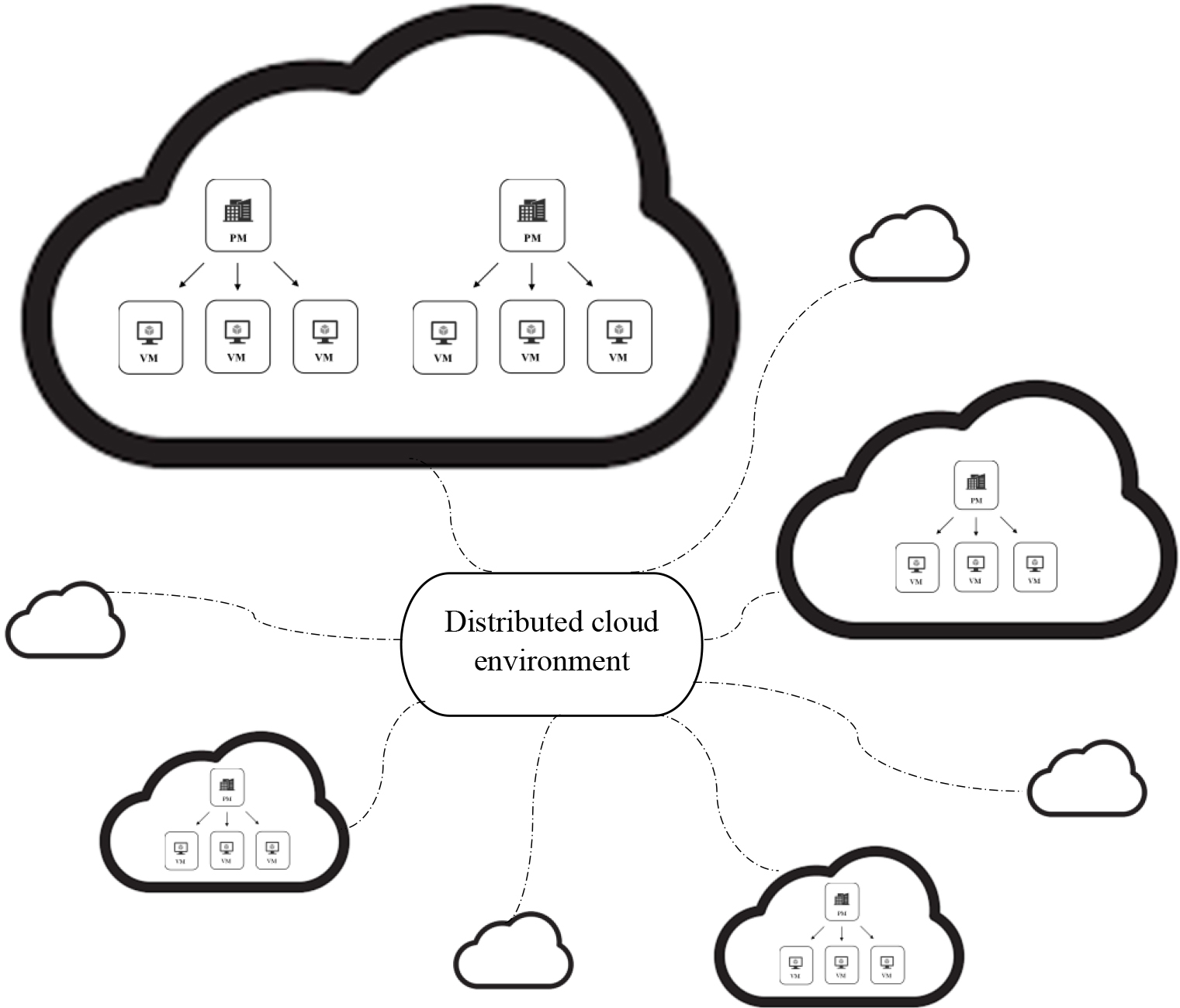
The distributed nature of the cloud infrastructure is complemented by an ALB approach, dynamically allocating and redirecting tasks to available resources, preventing any individual node from becoming a bottleneck.
The ALB approach employed follows a three-step process: Chunk Creation, Task Allocation, and Load Balancing. The flow diagram of the ALB approach in the distributed cloud environment is depicted in Fig. 2. In the Chunk Creation step, an IFCMC method is employed to categorize similar tasks into clusters, facilitating its assignment to PMs. Subsequently, tasks assigned to PMs are allocated to VMs using a novel hybrid optimization algorithm called KOU in the Task Allocation step. This algorithm considers constraints such as makespan, execution time resource utilization, MIPS and task queuing frequency, updating KOA using OOA.
In the Load Balancing step, the task is migrated and balanced evenly among VMs, considering migration cost and migration efficiency to achieve low migration cost and high migration efficiency. This systematic approach efficiently distributes tasks across various VMs within the distributed cloud environment. Not only does it reduce migration costs while enhancing efficiency, but it also ensures the seamless adaptability of resources in response to fluctuating demands. Overall, the ALB approach in this distributed cloud environment is a pivotal component, providing efficiency and scalability. It showcases the adaptability and efficiency required to meet the demands of contemporary, distributed applications and services across a global infrastructure.
Flow diagram of ALB approach in the distributed cloud environment.
The initial step, termed ‘Chunk Creation,’ involves grouping similar tasks into distinct sets for assignment to PMs within a distributed cloud environment. Let the number of tasks to be chunked be represented as
To emphasize the relevance of the IFCMC method in Chunk Creation, the IFCMC method is compared with the conventional FCM is described.
Improved FCM clustering method
The IFCMC method determines the number of clusters in the given diverse set of tasks for assigning it to PMs in the distributed cloud environment. Given this number of clusters (
The stated objective function, Eq. (2), is derived through an iterative procedure, and the sequential steps in this procedure are outlined below:
Initialization: Set At each z-step: Compute the vector
Update
If the condition,
As previously mentioned, the iterative process employed to formulate the objective function in the conventional FCM is adapted to derive the objective function for the IFCMC method, incorporating modified mathematical expressions. The step-by-step procedure for formulating the objective function of the IFCMC method is outlined as follows.
Initialization: Set At each z-step: Compute the vector
where, the weight value,
in which Update
where, If the condition,
Thereby, the objective function of the IFCMC method is derived from the above steps which is expressed in Eq. (3).
In Eq. (3),
Thus, the chunks created by the IFCMC method from similar tasks for assignment to PMs within a distributed cloud environment.
After the creation of chunks using the IFCMC method, the process of task allocation to various heterogeneous VMs through the proposed KOU algorithm takes place. The key objective of the KOU algorithm is to distribute tasks evenly among diverse heterogeneous VMs within a distributed cloud environment. Through the incorporation of the OOA, a metaheuristic optimization algorithm, the conventional KOA algorithm is updated to introduce the KOU algorithm for task allocation. The OOA is employed in the implementation of the KOU algorithm to enhance exploration capability within the conventional KOA algorithm, resulting in the development of the KOU algorithm.
This newly proposed algorithm aims to efficiently allocate tasks among diverse heterogeneous VMs while considering specific constraints. These constraints encompass crucial factors such as makespan, execution time, resource utilization, MIPS, and task queuing frequency, each elaborated in Section 3 under fundamental definitions. The iterative nature of the KOU algorithm ensures continuous enhancement in task allocation, contributing to enhanced resource utilization and overall system performance. The KOU algorithm’s consideration of these constraints underscores its role in promoting the efficacy of the ALB approach in distributed cloud environments.
Objective function & solution encoding of KOU algorithm for task allocation
The effectiveness of the Kookaburra-Osprey Updated Optimization Algorithm for the task allocation step in the ALB approach for distributed cloud environments hinges significantly on its objective function and solution encoding. These elements play pivotal roles in determining the algorithm’s overall performance.
Objective function
The objective function of KOU for task allocation is designed to enhance the distribution of heterogeneous tasks among diverse heterogeneous VMs in a distributed cloud environment. The primary objective is to minimize a cost function, considering variables like makespan and execution time. Concurrently, the aim is to maximize resource utilization, MIPS, and task queuing frequency. Mathematically, the objective function is expressed as:
Here,
Solution encoding
The solution encoding involves representing the task allocation in a format that the algorithm can manipulate. In the case of KOU, a solution (or potential allocation of task) is encoded as a matrix, where rows correspond to tasks and columns represent VMs. The matrix elements indicate the allocation of each task to a specific VM. The binary encoding is commonly used, where a ‘1’ in the matrix denotes task allocation to a VM, and ‘0’ indicates non-allocation. This matrix evolves iteratively through the optimization process until an optimal or near-optimal allocation is achieved.
Similar to other optimization algorithms, the KOU algorithm undergoes three key phases: (i) Initialization of the population, (ii) Execution of the hunting process, and (iii) Verification of solution elimination. These phases are iteratively executed to enhance potential solutions by emulating the natural behaviors of kookaburras in the wild. For precise understanding, the flow chart of the KOU algorithm for task allocation is illustrated in Fig. 3.
Flow chart of proposed KOU algorithm for task allocation.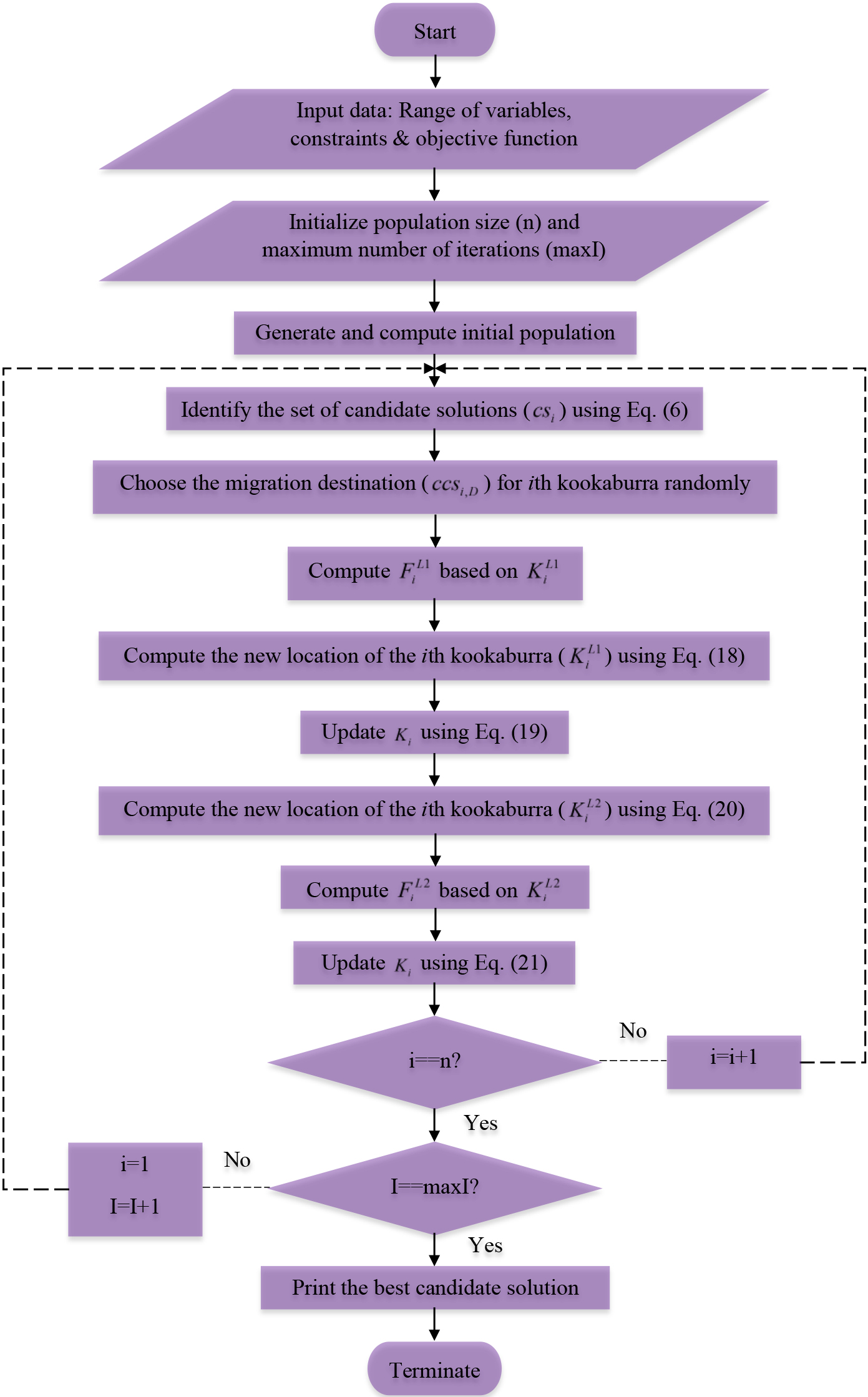
Initialization of the population
The KOU algorithm is proposed as a new variant of conventional KOA [29] by updating it using OOA [30]. Both KOA and OOA are optimization algorithms relying on populations, employing iterative procedures and random exploration in the solution space to generate effective solutions for optimization challenges. Consequently, the KOU algorithm is successfully applied to address task allocation issues within a distributed cloud environment. The KOU population is represented by kookaburras, analogous to tasks, positioned within the solution space. Assume that the kookaburra is the task to be allocated to the VM within the distributed cloud environment. Each kookaburra allocates values to decision variables in accordance with its spatial location, making each kookaburra a potential solution in the form of a vector. Collectively, these kookaburras form the KOU population matrix, which is expressed in Eq. (1). The initial locations of the kookaburras in the KOU implementation are randomly set using Eq. (5) where,
It’s essential to highlight that each kookaburra’s location in the solution space serves as a potential solution for the specific problem. After evaluating the problem’s objective function, as expressed in Eq. (4), the resulting values act as a measure of solution ability. These values become a reliable metric for evaluating individuals within the population. The kookaburra with the most favorable objective function value is regarded as the best, while the one with the least favorable value is considered the poorest. With the updating of kookaburras’ positions in each iteration, the objective function undergoes reevaluation, continuously enhancing the population’s best kookaburra based on newly obtained values.
Execution of the hunting process
The kookaburra, being a carnivorous bird with a diet consisting of small birds, reptiles, insects, mice, and frogs, relies on its robust neck strength for effective hunting despite having comparatively weak legs. The process employed by kookaburras in selecting and attacking prey results in significant displacement, illustrating a global search approach with an emphasis on exploration. This exploration involves a thorough scanning of the solution space to avoid being confined to local optima and to uncover the major optimal area.
To simulate the kookaburras’ hunting process in the KOU algorithm design, the locations of other kookaburras with the best objective function values are treated as solution locations for each individual kookaburra. Consequently, the determination of the available solution set for each kookaburra is established through the evaluation of objective function values, as outlined in Eq. (6).
where,
where,
Now, Eq. (13) is substituted in Eq. (7) to update the conventional KOA to the Kookaburra-Osprey Updated Optimization Algorithm. So, the value of the term ‘
If the objective function value is enhanced at this new location (Eq. (18)), the new location replaces the previous location of the corresponding kookaburra in accordance with Eq. (19).
Verification of solution elimination
During this phase, following the prey attack, the kookaburra seizes the prey and ensures its demise by repeatedly striking it against a tree. Subsequently, the kookaburra tightly grasps the prey between its claws, crushes it, and consumes it. This behavior, occurring in proximity to the hunting ground, results in minor adjustments to the kookaburra’s location. This process, embodying local search principles with an emphasis on exploitation, pertains to the algorithm’s capacity to attain improved solutions in the vicinity of existing solutions and promising areas.
In the design of the KOU algorithm, to simulate the movement of kookaburras in proximity to the hunting area, an arbitrary location is calculated using Eq. (4.2.2). The assumption is that this displacement takes place arbitrarily within a neighborhood surrounding each kookaburra’s center, with a radius equivalent to the maximum value. Initially, this neighborhood’s radius is set to its maximum, and as successive iterations unfold, the radius gradually decreases. This gradual reduction aims to facilitate a more precise local search, guiding the algorithm towards converging to improved solutions. If the new location calculated for each kookaburra enhances the objective function value, it supersedes the previous location in accordance with Eq. (21).
Which,
Therefore, the KOU algorithm proposed for task allocation within the ALB approach for distributed cloud environments efficiently works. This is done by the emulation of hunting behaviors of kookaburras by integrating a global search for exploring diverse solution spaces and a local search for updating locations in promising areas. The algorithm operates through iterative phases where kookaburras select prey (representing better solutions) and adjust their locations accordingly. This iterative process ensures a dynamic equilibrium between exploration and exploitation. This leads the KOU algorithm to optimize resource utilization and enhance overall system performance by efficiently allocating tasks among diverse heterogeneous VMs.
ALB approach culminates in the execution of load balancing, primarily achieved through initiating load migration to improve the overall performance of the system. Load balancing [31], as a fundamental goal, strives to equitably distribute tasks among available resources, mitigating bottlenecks, optimizing system performance, and enhancing overall resource utilization.
Load migration, a key element in this research, facilitates the dynamic redistribution of computational workloads across resources, guided by considerations such as resource availability, system conditions, and demand fluctuations. In this research, load migration is regarded as a crucial factor for enhancing the performance of distributed cloud environments.In this step, the task is migrated and balanced evenly among VMs by taking into account constraints such as migration cost and migration efficiency. Thereby, this process efficiently distributes tasks to less burdened VMs, preventing bottlenecks and ensuring the efficient operation of each VM.
Migration cost and migration efficiency play a crucial role in load migration, especially in distributed cloud environments. Migration cost includes expenses related to the transfer of computational workloads, encompassing factors such as time, network bandwidth, and potential downtime. Conversely, migration efficiency evaluates the efficiency of the process, considering speed, accuracy, and overall efficiency in redistributing tasks. The mathematical formulations of migration cost and migration efficiency are expressed in Eqs (22) and (23).
In the ALB approach for distributed cloud environments, the priority is to minimize migration costs and achieve high migration efficiency. Minimizing migration cost optimizes resource utilization, while high migration efficiency ensures a seamless relocation process, reducing disruptions and maintaining system performance. Balancing these factors is vital for overall system efficiency, facilitating efficient load migration to prevent bottlenecks and ensure optimal resource utilization.
Thus, the ALB approach strikes the balance between migration cost and migration efficiency further it enhances the system performance through load migration while minimizing associated costs, such as time, network resources, and potential disruptions. Thus, this ensures the enhancement of the overall performance of the distributed cloud environment using the effectiveness of the ALB approach.
Simulation procedure
The proposed adaptive load-balancing approach in the distributed cloud environment was implemented through simulation using Python. Specifically, the Python version utilized was “PYTHON 3.7.” Additionally, the simulation was executed on a processor with specifications – “11th Gen Intel(R) Core(TM) i3-1115G4 @ 3.00 GHz 3.00 GHz,” and the system had an installed RAM size of “8.00 GB.”
Performance analysis
A thorough comparative analysis was undertaken to assess the effectiveness of the KOU methodology as contrasted to conventional approaches for ALB in the distributed cloud environment. In this extensive assessment, essential metrics were considered, encompassing Execution Time, Frequency, Makespan, Migration Efficiency, Resource Utilization, MIPS, and Migration Cost. Additionally, the performance of the KOU scheme was juxtaposed with state-of-the-art methods like APDPSO [27] and DGWO [19], and it was further compared against KBA, BES, ACO, Osprey, and SMO.
Analysis of execution time and frequency
The execution time is defined as the time duration required by VM to complete each task. Figure 4a illustrates the analysis of execution time for the KOU approach in comparison to conventional strategies like KBA, BES, ACO, Osprey, SMO, APDPSO [27], and DGWO [19] in Adaptive Load-balancing within a distributed cloud environment. It is crucial to reduce execution time for effective load balancing in this environment, and the analysis covers varying task numbers (1000, 1500, 2000, and 2500). Initially, the execution time decreases for all algorithms, but as tasks increase, execution times rise. Nevertheless, the KOU method consistently achieves minimal execution times across all tasks. The KOU approach demonstrated an exceptionally low execution time of 1068.150 s for the 1000th task, significantly outperforming conventional strategies such as KBA (1382.367 s), BES (1390.097 s), ACO (1294.530 s), Osprey (1362.312 s), SMO (1347.658 s), APDPSO [27] (1351.182 s), and DGWO [19] (1220.38 s).
Frequency is defined by the rate at which tasks are queued, awaiting execution. Figure 4b reveals the comparative analysis of the KOU and conventional strategies for Adaptive Load-balancing in a distributed cloud environment. In this context, the goal is to maximize frequency ratings to enhance load balancing. At the 2000th task, the KOU scheme registers a frequency of 1.407, while KBA, BES, ACO, Osprey, APDPSO [27], and DGWO [19] record least frequency ratings of 1.401, 1.396, 1.395, 1.092, 1.405, and 1.377. Consistently, throughout all tasks, the KOU approach yielded superior frequency ratings compared to conventional strategies. Therefore, the KOU model has efficiently decreased execution time and elevated frequency ratings. The collaboration of KOA and OOA in the hybrid architecture, termed the KOU framework, results in an optimal enhancement of the ALB approach within a distributed cloud environment.
Validation on KOU and conventional strategies a) Execution time b) Frequency.
In Fig. 5a, the makespan analysis is presented, comparing the performance of various methods, namely KBA, BES, ACO, Osprey, SMO, APDPSO [27], and DGWO [19], employed for Adaptive Load-balancing within a distributed cloud environment. The primary objective is to minimize the makespan, signifying the duration required to complete a set of tasks, and thereby enhance the system’s operational efficiency. Furthermore, the KOU method demonstrated the smallest makespan at the 1500th task, surpassing KBA, BES, ACO, Osprey, SMO, APDPSO [27], and DGWO [19] in sequence. This accomplishment underscores its superiority over the other conventional adaptive load-balancing approaches in the distributed cloud environment.
MIPS serves as a metric to gauge the processing speed of a computer, indicating the number of machine instructions it can execute within each second. In Fig. 5b, the KOU scheme is contrasted with conventional methodologies in terms of MIPS, highlighting the need to maximize MIPS for effective load balancing. For the task
Validation on KOU and conventional strategies a) Makespan b) MIPS.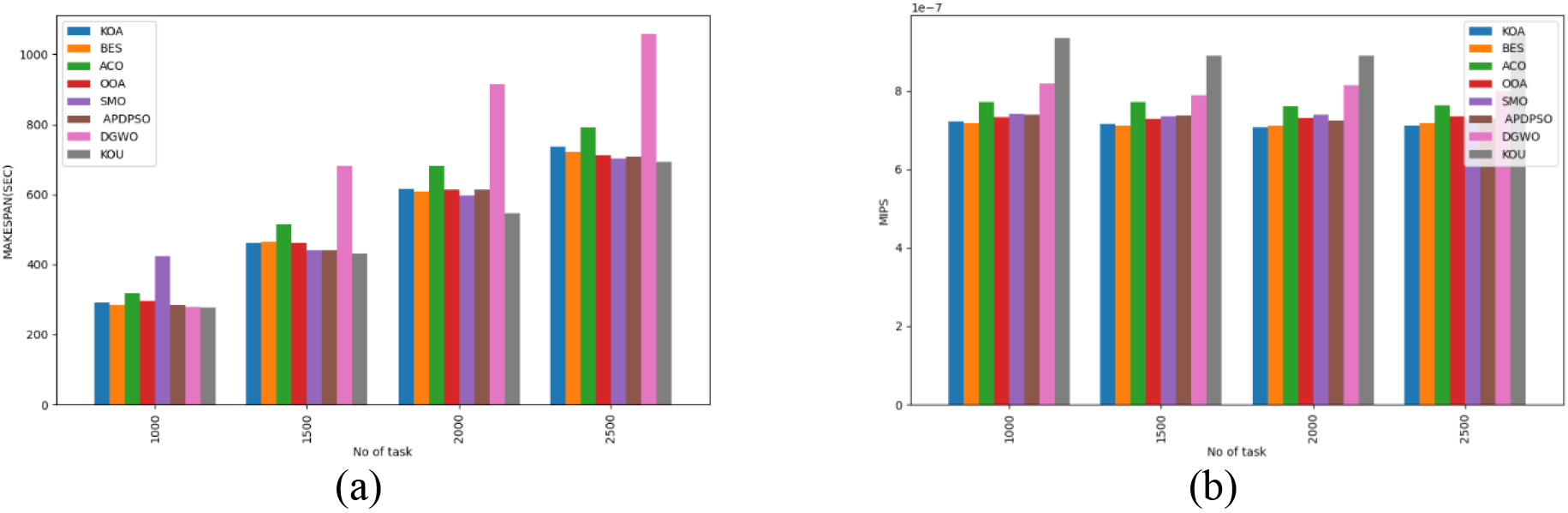
Figure 6a and b illustrate the migration efficiency and migration cost analysis on KOU and traditional methods (KBA, BES, ACO, Osprey, SMO, APDPSO [27] and DGWO [19]) for Adaptive Load-balancing within a distributed cloud environment. The migration cost is defined as the cost incurred when transferring a task from one VM to another. Also, the Migration efficiency is calculated based on the migration process. To confirm the efficacious performance of the model, it is essential to lessen the migration cost and improve migration efficiency. Moreover, at task 2500, the migration efficiency of the KOU scheme is 0.001, demonstrating superiority over KBA, BES, ACO, Osprey, SMO, APDPSO [27], and DGWO [19]. Examining Fig. 6b, the KOU scheme achieved a migration cost of 757.846 at task 1000. In contrast, KBA, BES, ACO, Osprey, SMO, APDPSO [27], and DGWO [19] recorded minimal migration costs of 1064.296, 2821.525, 1243.590, 785.831, 891.933, 803.756, and 169.792, respectively. The favorable performance in terms of Migration Cost and Efficiency serves to highlight the robustness and efficacy of the KOU model compared to traditional algorithms. This strengthens its potential as a reliable load-balancing solution in the context of a distributed cloud environment.
Validation on KOU and conventional strategies a) Migration efficiency b) Migration cost.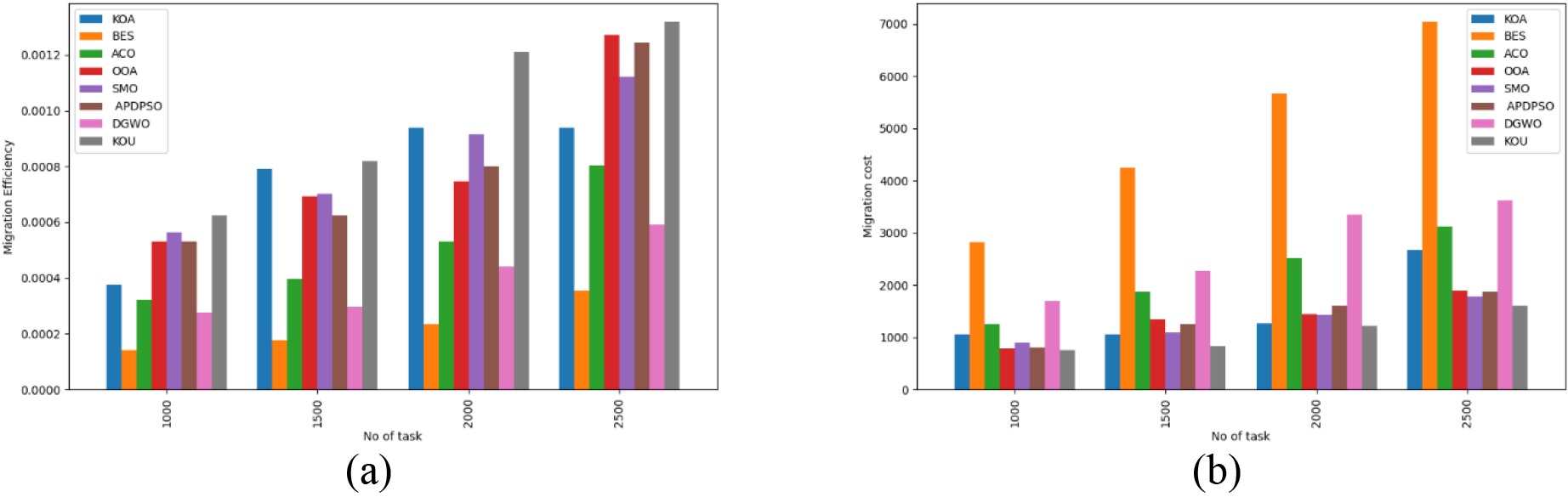
The analysis of resource utilization in Fig. 7 compares KOU and traditional methods for load balancing in a distributed cloud environment. The KOU scheme is evaluated against existing methods, including KBA, BES, ACO, Osprey, SMO, APDPSO [27], and DGWO [19]. Achieving higher resource utilization is crucial for effective load balancing. the primary objective is to enhance resource utilization for efficient operation within distributed cloud environments. In particular, the resource utilization obtained by the KOU scheme is 1224.433 at task 1000, meanwhile, the KBA is 1189.279, BES is 629.240, ACO is 1017.889, Osprey is 1147.300, SMO is 1215.148, APDPSO [27] is 1191.014 and DGWO [19] is 1095.405, respectively.
Resource utilization analysis on KOU and conventional methods.
Figure 8 illustrates the assessment of convergence in the KOU strategy, revealing contradictions with KBA, BES, ACO, Osprey, SMO, APDPSO [27], and DGWO [19] in the context of load balancing within a distributed cloud environment. To ensure efficient load balancing, the model must achieve reduced cost ratings along with quicker convergence. In the initial iteration, all approaches exhibited higher cost ratings, but with the progression of iterations, the cost values diminished for each algorithm. Remarkably, our KOU scheme consistently outperformed others by maintaining the lowest cost values across all iterations. Primarily, during the 25th iteration, our KOU model produced a minimal cost value of 1066.090. In contrast, traditional approaches exhibited higher cost ratings, with values for KBA at 1084.666, BES at 1078.633, ACO at 1074.790, Osprey at 1076.613, SMO at 1070.566, APDPSO [27] at 1069.632, and DGWO [19] at 1072.657, respectively. Hence, the outstanding performance witnessed in the convergence evaluation underscores the capability of the KOU method to achieve adaptive load balancing. This proficiency can be directly attributed to the hybrid optimization architecture that incorporates KOA and OOA.
Statistical analysis
To ensure accurate results, each model undergoes a comprehensive statistical evaluation, including an exhaustive examination of important statistical parameters such as “Maximum, Minimum, Mean, Standard Deviation, and Median.” A comparative statistical analysis of the KOU approach is undertaken against KBA, BES, ACO, Osprey, SMO, APDPSO [27], and DGWO [19] for adaptive load balancing in a distributed cloud environment. Furthermore, the analysis is performed concerning Execution Time, Frequency, Makespan, MIPS, and Resource Utilization. The results are presented in Tables 3–7. Upon reviewing Table 3 and focusing on the standard deviation metric, the KOU method registered a minimal execution time of 593.581 s. In contrast, KBA, BES, ACO, Osprey, SMO, APDPSO [27], and DGWO [19] exhibited higher execution times. Likewise, in the context of the median statistical metric, the KOU approach achieved the highest frequency with a score of 1.407, whereas the conventional methodologies recorded the lowest frequency ratings.
Statistical analysis of execution time
Statistical analysis of execution time
Statistical analysis of frequency
Convergence analysis on KOU and conventional strategies.
Statistical analysis of makespan
Additionally, the resource utilization gained by the KOU approach is 1187.760 for the mean statistical metric, though the KBA is 1031.797, BES is 1031.528, ACO is 989.533, Osprey is 1141.966, SMO is 897.774, APDPSO [27] is 1169.749 and DGWO [19] is 1113.172, respectively. Likewise, across the various statistical metrics, the KOU approach achieved superior values compared to the conventional methods.
Statistical analysis of MIPS
Statistical analysis of resource utilization
This research introduced an ALB approach that aimed to maximize the efficiency and reliability of distributed cloud environments. The approach employed a three-step process: Chunk Creation, Task Allocation, and Load Balancing. In the Chunk Creation step, a novel IFCMC method categorized similar tasks into clusters for assignment to PMs. Subsequently, a hybrid optimization algorithm called KOU, incorporating KOA and OOA, allocated tasks assigned to PMs to VMs in the Task Allocation step, considering certain constraints such as makespan, execution time, resource utilization, MIPS, and task queuing frequency. The Load Balancing step ensured the migration and even distribution of tasks among VMs, considering migration cost and migration efficiency. This systematic approach, by efficiently distributing tasks across VMs within the distributed cloud environment, contributed to enhanced efficiency and scalability. Further, the contribution of the ALB approach in enhancing the efficiency and scalability of the distributed cloud environment was evaluated through analyses. The KOU method achieved a migration cost of 757.846 at task 1000. In contrast, KBA, BES, ACO, Osprey, SMO, APDPSO [27], and DGWO [19] recorded minimal migration costs of 1064.296, 2821.525, 1243.590, 785.831, 891.933, 803.756, and 169.792, respectively.