



Abstract
BACKGROUND:
Foam roller with vibration is a recent development and its implementation has not yet been provided with a sufficient scientific justification. Information on whether an implementation of vibration foam rolling for self-massage before the powerful muscular activities is a good strategy is scarce.
OBJECTIVE:
Therefore, the aim of this study was to determine the acute effects of a single 15-s and 60-s vibrating foam rolling treatment on muscle contractile properties during maximal voluntary isometric contraction (MVIC).
METHODS:
Twenty healthy and recreationally active subjects participated in this study. During first visit, baseline characteristics were collected, while on the second and third visit they performed a 15-s and a 60-s vibration foam rolling treatment, respectively. Their maximal force (F
RESULTS:
The RFD
CONCLUSIONS:
When implementing vibration foam rolling, either as a pre-workout activity or as a pre-competition treatment, caution should be taken. Short duration treatment should be avoided for activities were RFD
Introduction
Foam rolling treatment has become widespread in the last decade among professional athletes. Foam roller is a tool for self-massage (self-myofascial release) where an athlete applies a direct mechanical pressure to a muscle tissue using his or her own body weight to roll a specific muscle over a foam roller. The applied mechanical pressure results in myofascial release, which helps relieve muscle tightness, soreness, and inflammation, all of which could improve performance [1]. As a connective tissue fascia moves in a thixotropic fashion where the more it is moved the softer and malleable it becomes [2]. Muscular fascia has been found to address mobility of the muscle, cellular circulation and elasticity of the muscle so it is vital that the fascia is loose and malleable [3]. Foam rolling has allowed athletes and individuals to achieve a way of increasing the mobility of the fascia to gain the possible benefits it may have on performance [4]. However, it has also been shown that the voluntary activation can be affected when applying mechanical pressure on a muscle tissue [5]. Therefore, the athletic performance and recovery protocols could be altered with muscle properties changes caused by the foam rolling. The potential impact of self-myofascial release on athletic performance if power output is a critical element durations greater of 1-min per muscle group should be discouraged [6].
Previously published data showed that the foam rolling may play an important role in variety of exercise-induced processes such as improvement of athletic performance, reduction in muscle pain, reduction in muscle, tendon, and fascia inflammation, improving cellular circulation, influencing muscle mobility by changing range of motion, etc. [1]. For instance, maximal voluntary contraction of knee extensors after 2-min of foam rolling on three consecutive days was found to be higher compared to the group of participants who rested [7]. Another study using foam rolling treatment with different duration, ranging from 30 to 300-s suggested that foam rolling for more than 90-s or more was effective in order to increase the range of motion immediately without changing muscle stiffness and muscle strength [8]. In contrast, foam rolling for three sets of 30-s had no effect on maximal voluntary isometric contraction (MVIC), while force developed in the first 200-ms showed 9.5% and 19.1% decrease at post-rolling treatment and after an additional 5-min rest [5]. Furthermore, a 5-min foam rolling treatment with a roller stick had no effect on the recovery of MVIC of elbow flexors [9].
Over the last two decades, the use of WBV as a physical exercise and therapy has become a promising approach for improving the strength and muscle power of lower extremities [10]. Increasing muscle strength is not surprising and is highly supported by other WBV (whole body vibration) studies [11]. Foam roller with vibration (VFR – vibration foam rolling) presents a new way of targeting muscle performance. Inside a foam roller is an electrical motor which is battery powered, thus creating vibrations. However, combining two treatments (i.e., rolling and vibration) at the same time in form of vibrating foam roller is creating a gap between the practice and science since clear evidence in favor of this treatment have not yet been established. It is established that during maximal voluntary contraction frequency of motor unit excitation is 30 Hz [12]. Optimal frequent range for most effective muscle activation is from 30 Hz to 50 Hz, especially vibration training could induce greater improvements in muscle strength and power at elite athletes then in lower level athletes [13].
Up to date there are very few studies that examined the effects of vibrating foam rolling treatment. García-Gutiérrez et al. [7] found an increase in dorsiflexion range of motion after the treatment with foam roller and vibrating roller. Authors further reported a cross-over transfer effect in the contralateral limb whereby the addition of the vibration stimulus with foam rolling did not further increase the range of motion compared to the foam rolling alone [14]. Nakamura et al. suggested that foam rolling for more than 90-s or more of foam rolling was effective in order to increase the range of motion immediately without changing muscle stiffness and muscle strength [8]. The same author compared the effects of a vibration roller at 48 Hz in duration of three sets of 1-min with and without rolling at the muscle-tendon junction or the muscle belly and found that vibration with rolling or static vibration on muscle belly could be effective to improve range of motion and muscle stiffness without adverse effects of muscle strength and athletic performance [15]. Acute effects of vibration at 26 Hz on voluntary activation of plantar flexors in duration of five sets of 1-min improved muscle strength [16]. A study that investigated the acute and sustained effects of three 60-s sets of VFR with different frequencies (35 Hz and 67 Hz) on knee flexion range of motion (ROM) and muscle strength of the knee extensors found results that suggested VFR can increase knee flexion ROM but induce a decrease in muscle strength up to 20 min after both high- and low-frequency VFR however, there were no significant changes in rate of force development [17]. A wider research in the future of the vibration foam rolling method is proposed by systematic review with meta-analysis [18], since it found a great potential to improve jump performance, agility, strength and recovery for this method.
Where to place the combined rolling-vibration treatment in a single training session or during the competition (e.g., pre-warmup, warm-up or pre-competition) is an important question as misplacing this treatment could have a significant impact on the muscle performance needed in the main part of training or during the high intensity or competitive activity. Researchers have used foam rolling treatment durations ranging from 5-s to 3-min and others have used sets of treatment while the effect of treatment duration is not well studied [6]. Mostly observed in exercise practice and in published data is foam rolling treatment duration up to 1-min per muscle group therefore, the aim of this study was set in terms with ecological validity to determine the acute effects of two very distinguishably different treatments in terms of duration, a 15-s and 60-s self-administered massage using vibrating foam roller on muscle contraction outputs of MVIC such as maximal force (F
Flow chart of the study design.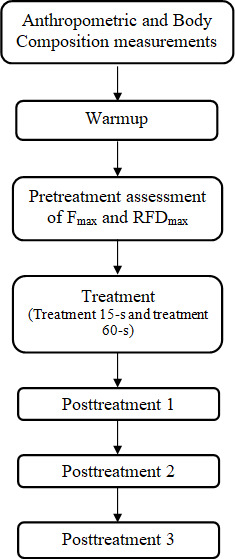
Subjects
Twenty healthy male adult subjects (23 enrolled, 3 dropped out) who were recreationally physically active volunteered for this study. The main characteristics of the sample were: age
Experimental design
Randomized cross-sectional study design was used to investigate the acute effects of vibrating foam rolling on maximal force and explosive strength properties in MVIC. Each subject attended the research laboratory for three experimental sessions. The flowchart of the study is outlined in Fig. 1. During the first session, anthropometrics and body composition measurements were collected using an anthropometer and InBody 720 body composition analyzer (Biospace, Korea) according to previously described procedures [19]. The subjects then performed standardized warm up and four attempts of maximal isometric heel rises. The first attempt was used as a baseline, while other three attempts were performed after 1, 5, and 10-min of rest. The first testing session was used as a control session. At the second testing session, participants performed the same warm up protocol and maximal heel rise attempts just after the baseline assessment, they performed a 15-s vibrating foam rolling treatment (Treatment15s), and the second maximal heel attempt followed immediately. At the third testing session, subjects followed the same protocol but performed a 60-s vibrating rolling (Treatment60s) treatment instead of 15-s. Experimental sessions were done in a random order. Considering this, the first attempt was labeled Pre-treatment, while attempts after the rolling treatment were labeled Post-treatment 1 (i.e., second attempt in the control session or attempt immediately after the treatment in the second and third session), Post-treatment 2 (i.e., third attempt in the control session or 5-min after the treatment in the second and third session), and Post-treatment 3 (i.e., fourth attempt in the control session or 10-min after the treatment in the second and third session). Experimental sessions were separated by one week and were applied at the same time of the day.
Procedures
A warm up protocol included a stationary bicycle lasting 5-min at 70 watts with individually adjusted sitting height to achieve full leg extension during cycling. Next, subjects performed two sets of 10 standing heel raises with focus on fast concentric phase. This was followed with one set of 10 countermovement and one set of 10–15 quick ankle jumps. Upon completion of warm-up subjects rested for 2 to 3-min. Then, they were positioned in testing position and performed three submaximal attempts, to become familiar with the setting and instructions.
The assessment of F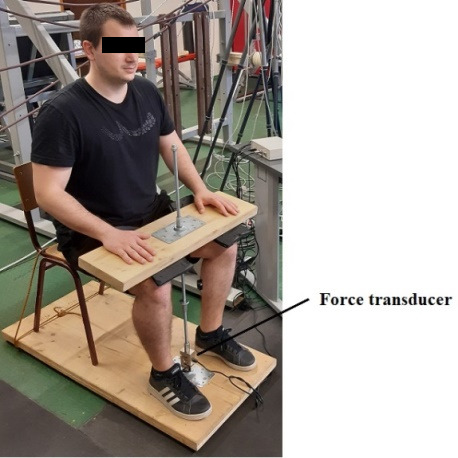
A standardized test procedure and equipment were used to asses F
A subject was placed in a seated position with hips and knees at 90
Vibration foam rolling treatments
After the pretreatment MVICs, subjects rested for 15-min prior the rolling treatment. A 30
Variables
Distribution of differences after both treatments and corresponding Cohen effect sizes (d).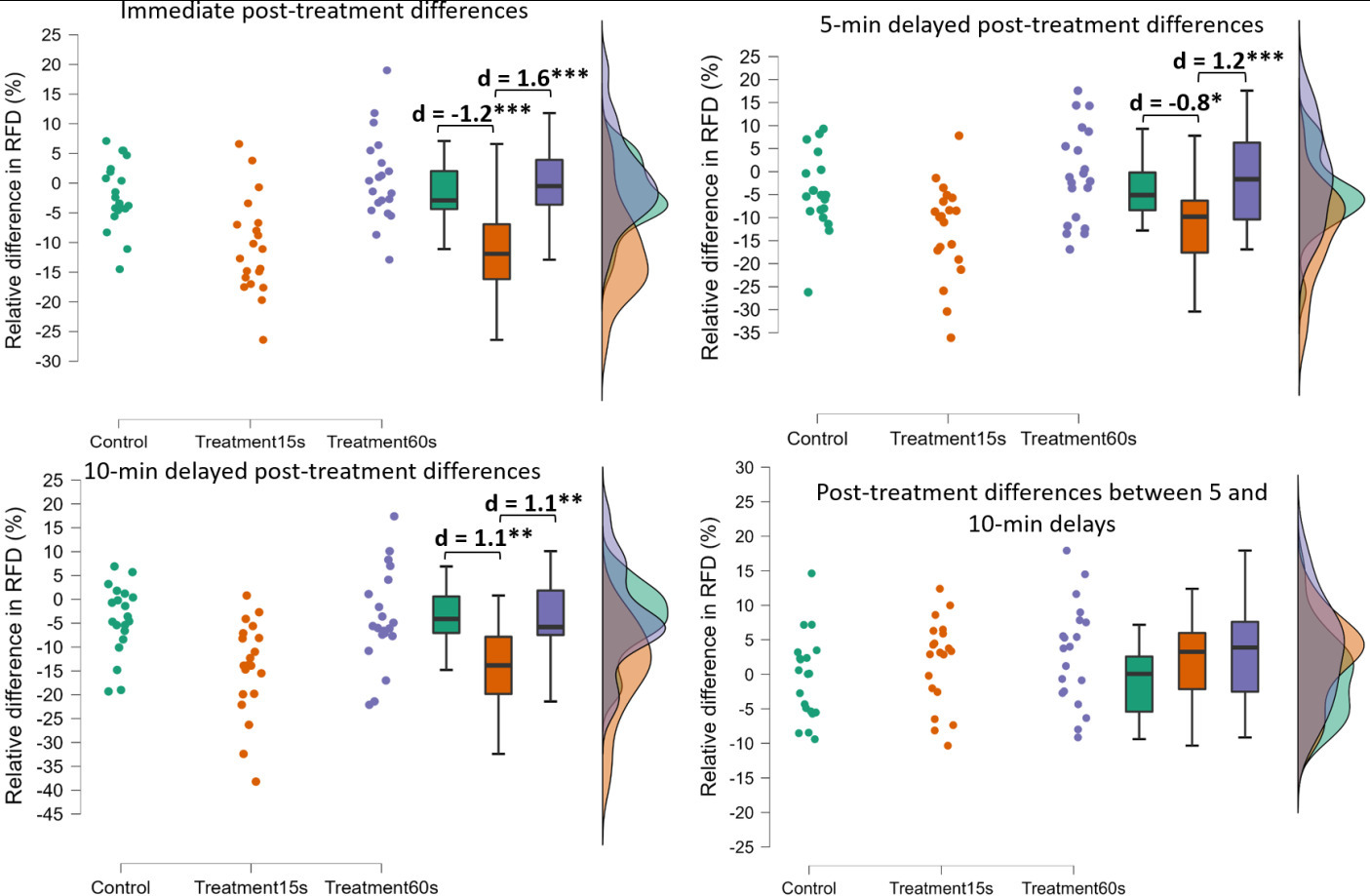
The Wave Roller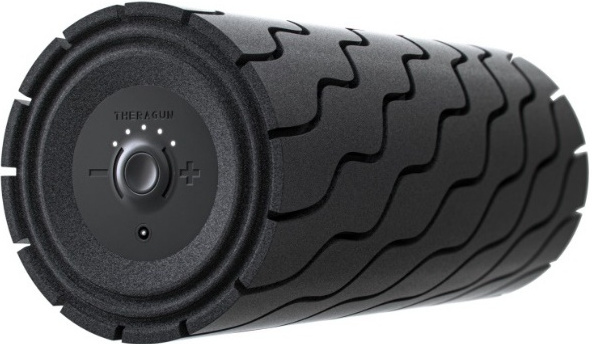
During MVIC testing two variables were examined, F
F F F F RFD RFDPost – RFD RFD RFD
Using these variables, 3 additional were calculated to represent the effects produces by foam rolling treatment:
The foam roller in use.
Descriptive indicators for F
The basic descriptive statistics for mean, standard deviation (SD), coefficient of variation (cV%), minimum (Min) and maximum (Max) values were calculated for all the examined variables. Prior to statistical analyses of treatment effects, the Shapiro-Wilk test was employed to assess the normality of data distribution. Variables showed normal data distribution (
The descriptive statistics for F
The repeated measures ANOVA did not indicate significant effects of treatment on F
Discussion
Descriptive indicators for RFD
of experimental and control session
Descriptive indicators for RFD
The effects of vibrating rolling treatment on differences in RFD
This study investigated acute effects of a 15-s and 60-s self-administered massage using vibrating foam roller on F
Considering F
Unilateral hamstring foam rolling treatment with a duration of 10 sets of 30-s decreased the non-intervened contralateral limb ability to generate force, especially during the early phase (e.g., 50-ms) of the maximal explosive isometric contraction [29]. A recent study using low 35 Hz and high 67 Hz frequency vibration foam rolling in duration of three sets of 60-s [17] found that maximum voluntary isometric contraction torque and maximum voluntary concentric contraction torque decreased significantly immediately after the vibration foam rolling intervention and remained significantly lowered up to 20-min, regardless of the vibration frequency however, there were no significant changes in RFD. This is in variance with the findings of our study. One possible explanation is presented through the findings that RFD is influenced by different physiological factors in the early (less than 100-ms) and late (more than 100-ms) phases of isometric contraction [30].
To the best of our knowledge this is the first study comparing different duration vibration foam rolling treatment on maximal rate of force development (RFD
Vibration results in mechanical oscillatory motion, which enhances reflex activity by stimulating the muscle spindle Ia to initiate a tonic vibratory reflex [26]. When a mechanical vibration is applied to the muscle belly or tendon that could elicit a tonic vibration reflex contraction of the target muscle [32]. When applying vibration and triggering muscle spindles this mechanism is activated by a sequence of rapid muscle stretching, thereby causing an involuntary production of strength [32, 33]. The vibration stimulation is supposed to produce a more in-depth stimulation of the muscle and myofascial tissue due to a greater contribution of the mechanoreceptors, specifically the interstitial type I and II receptors, which respond to sustained pressure and modulate the sympathetic and parasympathetic activity [34]. However we did not observe these changes in our study. The results of the present study are in partial agreement in terms of force production with a relatively old research by Johnston and colleagues [35] and with another study suggesting that the application of vibration stimulation at 50 Hz during the contraction does not contribute to muscle activation, or enhance force production for maximal isometric contractions [36]. The authors suggested that the muscle response was linked to muscle architecture [35] with the muscles attached via long thin tendons displaying a better response to stimulation. Better results could be expected in our study, in concurrence with the previous claim but that was not the case. Humphries et al. [36] proposed one possible explanation for the lack of significant results reported in their study which may be accounted for by the contraction velocity since contraction velocity of an isometric contraction is limited via the testing protocol [36].
Another study that aimed to explore functional capabilities of the central nervous system of young boxers after vibroacoustic stimulation indicated that to increase the functional capabilities of the central nervous system of young boxers, calf muscles should be stimulated by using the Vitofon portable device for 10 to 15-min [37]. Furthermore, a study in which participants were elite male taekwondo athletes who performed general warm-up, followed by three sets of vibration foam rolling for 30-s at 48 Hz for exercising bilaterally the quadriceps and hamstrings demonstrated superior effects of general warm-up
Isometric plantar flexor performance decreased immediately following five 60-s bouts of whole body vibration at 45 Hz and as a result authors suggested that Ia pathways was compromised [39]. Elevated parasympathetic responses and lower activation of the vastus medialis during maximal voluntary contraction after myofascial release treatment was reported relative to sham ultrasound and massage may induce a transient loss of muscle strength or a change in the muscle fiber tension-length relationship [40]. Decreases in vertical jump performance were observed in a study using foam rolling treatment. The authors speculated that this could be the result of decreased motor unit recruitment [6]. This may be the first study to present such findings which may be explained by some type of neural modulation. However, to elucidate the exact mechanisms further research is needed.
The results of this study suggest that muscle contractile characteristics cannot probably be improved through the use of short duration vibrating foam rolling treatment. On the contrary, the acute effects of this treatment was detrimental in terms of the maximal explosive muscle strength ability and particularly so with the shorter duration treatment. Interestingly, the 60-s treatment had a lesser negative impact. On the other and, maximal muscle strength ability remained unaffected by either duration. Future studies should address this issue on a larger subject sample size with amateur and professional athletes involved in explosive sports. At the moment, the potential impact of this novel self-administered combined vibration-rolling treatment on athletic performance should be carefully assessed and addressed by athletes and coaches especially as a part of pre-event warmup routine.
Author contributions
CONCEPTION: AB, MD and MĆ.
PERFORMANCE OF WORK: AB, GJ and MĆ.
INTERPRETATION OR ANALYSIS OF DATA: AB, FK and MD.
PREPARATION OF THE MANUSCRIPT: AB and FK.
REVISION FOR IMPORTANT INTELLECTUAL CONTENT: MD.
SUPERVISION: MD.
Ethical considerations
Informed consent was obtained from all subjects. Testing and treatment procedures were approved by the ethics board of the Faculty of Sport and Physical Education, University of Belgrade (number III47015).
Funding
The paper is a part of the project “Effects of the Applied Physical Activity on Locomotor, Metabolic, Psychosocial and Educational Status of the Population of the Republic of Serbia”, number III47015, funded by the Ministry of Education, Science and Technological Development of the Republic of Serbia – Scientific Projects 2011–2021 Cycle.
Footnotes
Acknowledgments
The authors acknowledge the support and participation from members as subjects in the research provided by sport-recreational club “Athletic Body Response” from Belgrade, Serbia. The authors also acknowledge the support from “DD wellness solutions”, Belgrade, in providing the vibrating foam roller.
Conflict of interest
All authors read and approved the final manuscript and all data in the study were available to all authors. All authors declare no conflict of interest, or financial, or other interest in any product or product distributor. All authors take responsibility for the accuracy and integrity of the data and data analysis.