



Abstract
The debate on local governance and urban innovation has recently gained impetus due to the diffusion of the smart city approach. A city can be defined ‘smart’ if it adopts an innovative collaborative governance style to design urban policies aimed at improving citizens’ quality of life and at promoting environmental, economic, and social sustainability.
Notwithstanding the fact that civic participation and inclusion should be distinctive characteristics of smart cities, gender inequalities are often disregarded both by academic literature and in the implementation of smart strategies. The paper is aimed at filling this gap by addressing three issues. Starting from a systematic analysis of literature the paper investigates whether, where, how and why gender discriminations could emerge in a smart city. Second, it proposes a set of tools to mainstream gender in smart city governance and possible areas of intervention to reduce gender inequalities in smart cities. Third it tries to identify main theoretical, methodological, and empirical challenges for local administrators that hamper the implementation of gender equality strategies in smart cities.
Introduction
Smart cities are open innovation ecosystems where political actors, enterprises, research centres, universities, associations, and citizens collaborate to create policy and services that would improve sustainability and the quality of life through the use of information and communication technologies (Nesti, 2018a). The concept of smart city has known great popularity in the last ten years and many cities adopted this new paradigm of urban development to cope with local problems.
One of the goal smart cities are supposed to achieve is inclusion (Angelidou, 2014; Caragliu et al., 2011; Huston et al., 2015; Lee et al., 2014; Nam & Pardo, 2011; Neirotti et al., 2014; Rodriguez Bolivar & Meijer, 2016). Through the use of ICTs, in fact, smart cities could offer new opportunities to involve citizens in governance processes and public life (Gil-Garcia et al., 2015; Komninos et al., 2011; Paskaleva, 2009). But even if several cities prioritized inclusion in their smart strategies (Nesti, 2018a; Nesti, 2018b), nevertheless, the extent to which this concept is translated into real policy practices and with what impacts in terms of reduction of inequalities is still a matter of debate (Glasmeier & Nebiolo, 2016; Granier & Kudo, 2016; Wiig, 2016). Moreover, some scholars call into question the very capacity of smart cities to remove discriminations, since technological divide, geographically selective investments, systematic exposition of poor communities to environmental risks, and prioritization of business interests over the social ones can affect civic participation and exacerbate inequalities (Chourabi et al., 2012; Grossi & Pianezzi, 2017; Hollands, 2008; Hollands, 2015; Jarvis et al., 2009; Kitchin, 2015; Vanolo, 2016; Viitanen & Kingston, 2014).
A particularly neglected issue in this debate is gender equality.1
‘Gender refers to the roles, behaviors, activities, and attributes that a given society at a given time considers appropriate for men and women. [
See
Moving from these considerations, what can be said about the presence of gender inequalities in smart cities? Gender issues are often sensitive and difficult to be tackled. Nevertheless, a focus on gender issues is extremely useful to assess the contribution of smart city governance to the promotion of inclusion, legitimacy, and the generation of public value. Namely, the adoption of a governance approach attentive to gender questions can make smart cities more legitimate, democratic, and responsive to public needs. Moreover, a ‘governance style’ capable to mainstream gender issues in the definition of smart policies and services allows local decision-makers to allocate public resources in a more efficient way and to improve local economy and wellbeing.
The paper is therefore aimed at answering to the following research questions: Are problems related to gender inequalities discussed in the academic debate about smart cities? If so, in which terms? How are gender inequalities explained? What solutions are provided by literature to prevent and to inhibit the negative impacts generated by gender inequalities? Are there studies explaining how a gender perspective can be integrated in the governance of smart cities and in the design of related policies?
To assess whether the problem of gender inequality is discussed in the academic debate about smart cities, to identify which types of inequalities are described, their causes, what solutions are proposed to mitigate them, and how a gender-sensitive approach can be integrated in smart city governance, I carried out a systematic review of the literature. This strategy was aimed to pinpoint how these topics have been framed by scholars and to identify possible areas for further development (Delbufalo, 2012; De Vries et al., 2016; Wolfswinkel et al., 2013). Section 2 describes the methodology adopted for the review and presents the results of the analysis. As it will be illustrated below, gender equality is a topic not fully developed in the academic literature on smart cities. For this reason, Section 3 integrates the analysis developed so far with reflections elaborated by critical approaches to the smart city in order to further outline potential discriminations based on gender that can emerge in the access to smart policies and services. In Section 4 a set of tools to mainstream gender in the governance of smart cities are proposed as a strategy to promote equality in the design and implementation of smart policies. Moreover, the section describes possible areas of intervention where policy tools can be applied to advance gender equality.
Finally, conclusions identify main theoretical, methodological, and empirical challenges that could hamper the implementation of gender-equality strategies in smart cities and suggests future lines of research.
Methodology and criteria for corpus analysis
The literature review has been carried out using the Preferred Reporting Items for Systematic Reviews and Meta-Analyses or PRISMA approach (Moher et al., 2009). In order to cover the broadest range of scientific articles, in the first stage of the review the databases Scopus, ISI Web of Science, ScienceDirect, EBSCO Host (Business Source Complete, Sociological Index, e-book Collection) and OVID were searched. The query was made by entering the terms ‘smart city OR smart cities AND gender’ and ‘smart city OR smart cities AND women’ in the option ‘full text’ of each database. Only book chapters, conference papers, and articles published in English in academic journals between 1990 and 2018 were selected. This query generated a corpus of 338 records. To be sure not to miss articles specifically focused on smart governance aspects, in the second stage of the review, the terms ‘smart AND gender’ and ‘smart AND women’ were searched in the following seven eight top public administration journals according to Scimago, Google, and Clarivate: Governance, Journal of Public Administration Research and Theory, Policy Sciences, Public Administration, Public Administration Review, Administrative Science Quarterly, Journal of Policy Analysis and Management, Journal of European Public Policy. In the search were then included other two journals, International Review of Administrative Science and Public Management Review, due to their interest in smart cities and smart governance. This supplementary search generated only one article. In the third stage of the review, three reports were identified through Google, Google books and Google Scholar: Smart cities. Ranking of European medium-sized cities (Giffinger et al., 2007); Gender and Social Innovation in Cities. SeiSMiC Gender Action Plan and Toolkit published by the research team of the 7FP SeiSMIC Project (Sangiuliano, 2015); Principles and enablers for citizen engagement: the experience from the European Innovation Partnership on Smart Cities and Communities delivered in 2015 by the EIP Market Place of the European Innovation Partnership on Smart Cities and Communities, an online platform made of local policy-makers, private actors and experts, created in the context of the Europe 2020 flagship initiative ‘Innovation Union’. In all the steps of the search the selection of key-words was made in order to generate the broadest array of scientific records.
After the three queries, a corpus of 342 articles was generated. Among them, 42 were removed as duplicates and the remaining 300 were screened on the basis of their titles and abstracts. In particular, I looked for the presence of the words ‘gender’, ‘female’, ‘women’ in relation to ‘smart city’, ‘smart cities’ and/or in relation to the main policies of a smart city ‘Economy’, ‘Governance’, ‘Living’, ‘People’, ‘Environment’, and ‘Mobility’ (Giffinger et al., 2007). After the selection, 155 records were excluded as not relevant – mainly because they did not deal with gender issues – and 145 records remained. These papers were fully read in order to assess whether they could answer to one or more of the research questions or, namely, if they: a) discussed problems related to gender inequalities with reference to smart cities; and/or b) provided a description of such problems; and/or c) analyzed motivations causing gender inequalities in the smart city; and/or d) proposed solutions to eliminate them; and/or e) explained how to mainstream a gender perspective in the design and governance of a smart city.
After this screening 120 papers were excluded because they do not fulfill the criteria – mainly because they only marginally dealt with questions related to gender and/or to smart cities – and 25 were included in the review (see Fig. 1).
PRISMA flowchart for database searches. Source: adapted from Moher et al. (2009).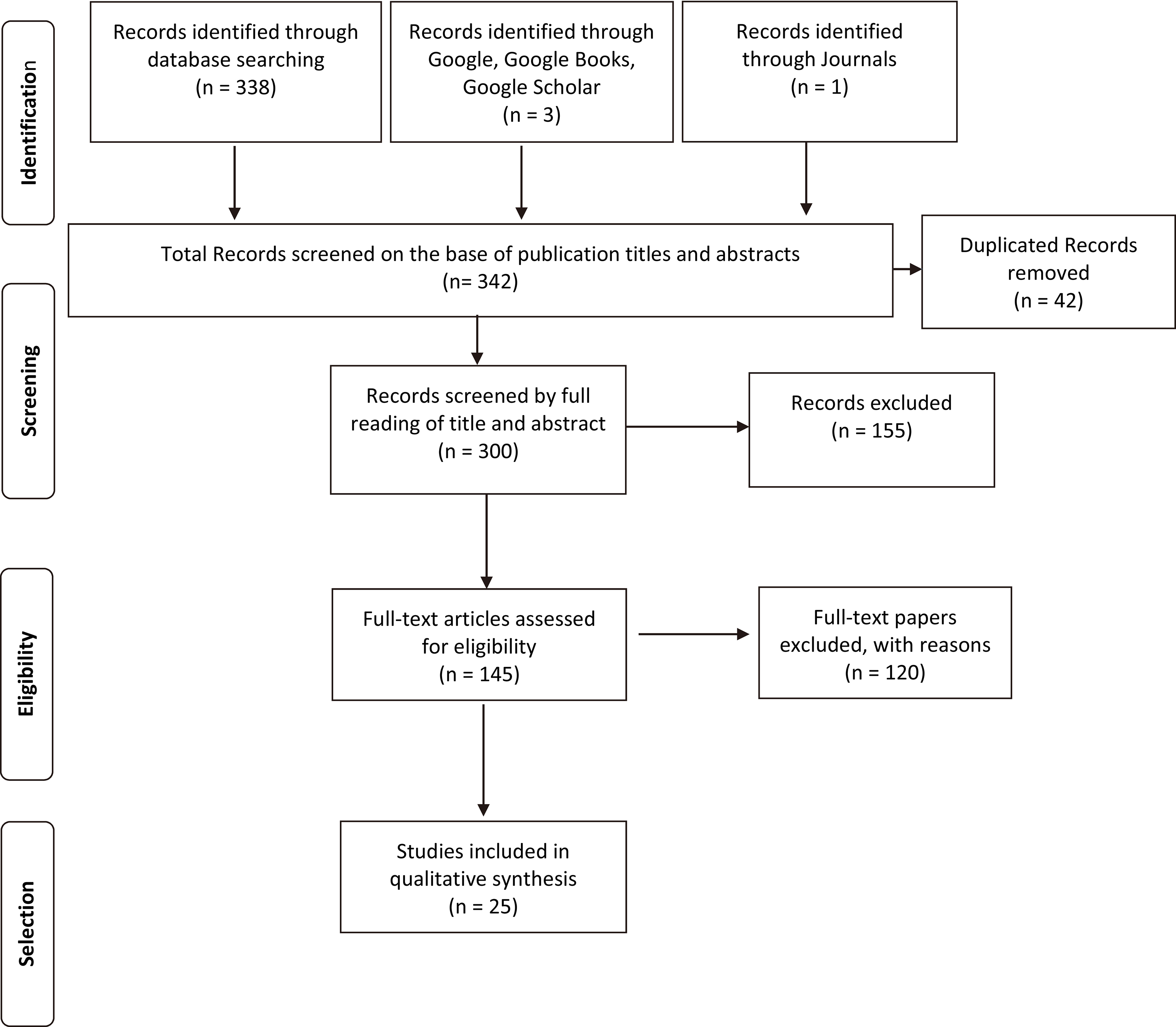
A preliminary observation that can be made about the corpus is that the number of records identified through PRISMA analysis is very low and that the majority of paper were published recently. The oldest article was published in 2009, one was published in 2011, another one in 2014 and 19 articles were published between 2015 and 2018. One report was published in 2007 while the other two were published in 2015 (see Fig. 2). This aspect testified an increased attention given by scholar to gender issues in relation to smart cities but, undoubtedly, these issues do not represent a ‘trend topic’ in the field.
Moreover, the subject is not present on major scientific journals related to public administration, but it is mainly addressed by geographers, engineers, and planners, albeit in a very fragmented way, as it will be seen later.
Only a small portion of records included in the corpus (3 out of 25) is strictly focused on problems related to gender inequalities that can emerge in the context of smart cities (see Table 1).
Presence of gender topics in literature
Presence of gender topics in literature
The policy report Principles and enablers for citizen engagement: the experience from the European Innovation Partnership on Smart Cities and Communities (EIP, 2015) stresses the importance of paying attention to all types of diversities, including those caused by gender in order to promote a model of inclusive participation in the smart city. The policy report Gender and Social Innovation in Cities. SEiSMiC Gender Action Plan & Toolkit (Sangiuliano, 2015) offers some guidelines to include gender issues in social innovation and presents some good practices of cities that have promoted innovative projects in planning, transports, urban safety, work and social inclusion. Unfortunately, these papers do not present a comprehensive description of the characteristics of gender inequalities nor they provide a clear understanding of mechanisms producing them in the specific context of smart cities and, finally, they do not present solutions to prevent and inhibit the negative impacts that they generate. Both papers also recommend to integrating a gender perspective in the governance of smart cities, but they do not offer a rigorous and systematic approach to implement it.
In the third article, Maclean (2017) addresses the question of power, leadership, and gender through the analysis of the role of the mayor of Medellin in the creation of Medellin Smart City. Interestingly, the author points out that in smart cities the use of technologies and the adoption of a technocratic policy-style tend to reproduce power asymmetries between men and women due to a governance model still based on a vertical masculine notion of power. This article is the only one that tries to investigate the origins of inequalities and that critically addresses the relation between power and technocracy in smart cities.
The other papers (20 out of 25) do not focus specifically on the issue of gender inequalities in smart cities but, rather, some of them examine gender questions by looking at different aspects more or less connected to smart cities while others consider gender as a variable in their analysis of smart policies.
If we look more in detail at how gender problems are framed by the articles and reports included in the corpus, it is possible to identify at least three main topics around which papers are clustered (see Table 2).
Relevance of gender issues for the governance of smart cities in literature
Research on gender and smart cities.
The first topic refers to the need to involve women and/or their associations in the governance of smart cities, especially through participation in local institutions, a question addressed by the 20% of papers (5 out of 25) – among the others by EIP (2015) and Sangiuliano (2015). The second topic refers to the opportunity to exploit smart technologies like IoT to design products and services for women. Remarkably, the highest number of articles of this group (24%, 6 out of 25) proposes smart solutions enhancing women’s safety based on smartphones and Internet of Things (IoT) – see the papers by Gophinat and Reshmy (2016), Losilla et al. (2016), Marathe et al. (2018), Mareeswari and Patil (2018), Mitra and Bardan (2017), and Rathod and Khot (2016).
The third topic refers to the importance to consider gender as a variable influencing habits and the fruition of services (48%, 12 out of 25). For instance, Bamberger (2014) highlighted the presence of disparities between boys and girls in accessing education in STEM and analyzed why education and careers in STEM are not attractive for girls. Buliung et al. (2009), Dissanayake (2017), and Jalili et al. (2018) studied differences between male and female in their mobility patterns. Santiago Fink (2011) and Watson (2017) investigated different gender attitudes towards sustainable behaviors, while Karahoca et al. (2018) found that individuals’ intention to adopt IoT products in healthcare is influenced by gender.
All in all, the review highlights that an increased interest in gender issues is emerging in technological fields traditionally less sensitive to this topic, as evidenced by the number of articles included in the review that have been published between 2016 and 2018. These articles stress the importance of participation and representation of women in local institutions as a means to promote equality, they recommend that a gender perspective is included in the analysis of policy habits, and they explore how smart technologies are opening up new opportunities especially to improve women’s safety. However, the debate about gender in smart cities remain definitely underdeveloped. The majority of papers, in fact, does not specifically address the problem of whether and how smart policies would increase gender differences, nor they discuss how a gender perspective can be applied to smart governance processes in order to improve gender equality at the urban level.
The following sections, therefore, further investigate how and why gender inequalities can be reproduced in smart cities and analyze how a gender perspective can be integrated in the governance of smart cites to prevent disparities and to promote equal access to smart policies and smart services.
In the Introduction smart cities have been described as open innovation ecosystem that define and implement policies and services aimed at improving the quality of life of citizens through the use of ICT. The well-known definition by Caragliu et al. (2011) includes also economic growth, sustainability, participatory governance, and attraction of human capital among the characteristics of smartness. All these elements – technologies, economic renewal, sustainability, political participation, quality of life, development of human capital, and sustainability – can negatively affect gender disparities. Gender digital divide could be, for instance, a very critical issues for developing countries that would implement smart city programs. According to the European Parliament and UN Habitat’ s report, in fact, in these countries women tend to use ICT and related infrastructures and services less than men, due to lack of funds to buy these types of services or to gaps in skills and information literacy (Davaki, 2018; UN Habitat, 2000; UN Habitat, 2010). Women could not benefit from economic growth because they are usually under-represented in the labor market, they occupy less qualified positions, or their incomes are lower than men’s. Moreover, the presence of a gender gap in tertiary education – especially in STEM – inhibits potential positive impacts generated by investments in human capital that would definitively advantage men. Women are also usually less represented in political decision-making and in political party leadership due to biased behaviors that tend to exclude women from positions of power. Women’s quality of life is negatively affected by gender violence (sexual harassment, stalking, rapes, intimate partners’ violence) but also by unbalanced work-life conditions, or by limited access to housing market due to their economic situation. Finally, gender can influence also attitudes and habits related to sustainability and mobility. As already reported by literature, sustainable behaviors, energy consumption, and mobility are strongly influenced by gender and particularly by the division of home duties between men and women. Hence, all the main components of a smart city and the related smart policies Economy, People, Living, Environment, Mobility, and Governance (Giffinger et al., 2007) can be affected by gender dynamics. Cultural habits, bias and socially-constructed stereotypes but also an unbalanced division of work and family care run the risk to (re)produce gender disparities, thus preventing women from fully benefit from the value generated by smart cities (Nesti, 2018b).
To solve these shortcomings two solutions are proposed here. First, the adoption of management tools that could help decision-makers in designing and implementing policies molded on women’s needs and specifically aimed at integrating a gender perspective in the governance and policy-making processes of a smart city. Second, the implementation of specific policy strategies committed to reduce gender inequalities in smart cities based on the adoption of smart technologies.
Mainstreaming gender in the governance of smart cities
A valuable approach to manage gender inequalities in a systematic and rigorous way and to create policies more tailored on women’s needs is Gender Mainstreaming (GM), an approach launched by 1995 Beijing Declaration and Platform for Action during the Fourth World Conference on Women. The adoption of a GM approach requires policy-makers ‘to integrate a gender perspective in the preparation, design, implementation, monitoring and evaluation of policies, regulatory measures and spending programs, with a view to promoting equality between women and men and combating discrimination’.3
See
The EIGE toolkits is fully available at
The choice to combine a model for smart governance with GM tools is not without pitfalls. Modelling smart governance processes runs in fact the risk to neglect political conflicts that can arise both in the stage of designing and implementing a smart city strategy – a problem that can affect the implementation of a GM approach too, as it will be discussed below. The crucial challenge for public actors is, therefore, to adopt a smart city project that pays attention to possible inequalities deriving from technical choices and that is effective enough to anticipate and to solve them. The approach here presented, with all its limits, would try to advance the debate on gender inequalities in smart cities by offering a theoretical and practical methodology to address them.
Gender mainstreaming in smart governance – a framework.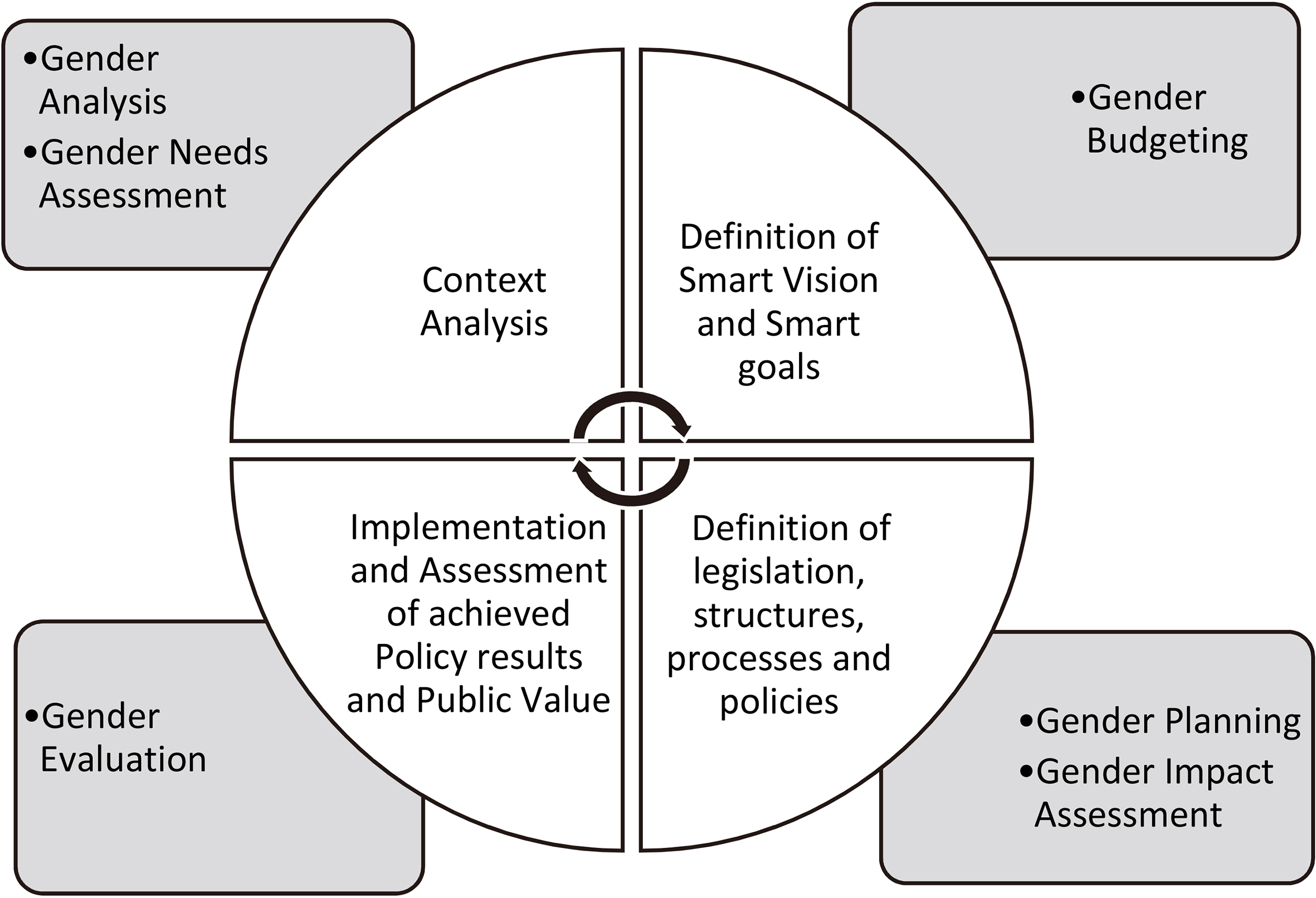
Fighting gender inequalities in smart cities requires policy-makers to integrate GM since the beginning of the governance process. At this stage, an analysis of the economic, social, and political contexts in order to plan a smart strategy tailored on local needs should be provided and the adoption of Gender Analysis and Gender Needs Assessment could help policy-makers to understand how inequalities are distributed. Gender Analysis is defined by the European Commission as ‘the study of differences in the conditions, needs, participation rates, access to resources and development, control of assets, decision-making powers, etc., between women and men in their assigned gender roles’ (2001, p. 17). Its purpose is to provide information about gender inequalities in a given context through the collection of evidence-based data, the identification of gender differences, possible elements of discrimination, and underlying causes.
Gender Needs Assessment would help policy-makers to gather information about men and women’s needs in relation to existing policies and to recalibrate them. Input about critical aspects and trends should be collected from target groups – such as participants in programs, community groups, service providers, women’s networks or associations active on gender issues, etc. – through the use of participatory tools and gender-disaggregated data.
In the second stage of the smart governance process the vision of the smart city and related policy goals should be framed. If a smart vision should take into consideration all the components of a smart city then also gender equality must be integrated in it through an explicit commitment. This general objective has to be split into policy goals and for each goal targets, resources, responsibilities, and indicators should be identified. A useful tool for this stage is Gender Budgeting. The European Parliament defined Gender Budgeting as ‘the application of gender mainstreaming in the budgetary process and, as such, places emphasis on the analysis of the impact of public policies on women and men, incorporates the gender perspective at all levels of the process of building public budgets and aims at restructuring revenues and expenditures in order to promote gender equality’ (2003, p. 3). This tool allows policy-makers to link each budget head to a gender-specific goal and to the related services. An important part of Gender Budgeting is the definition of qualitative and quantitative indicators to assess if goals have been achieved. Also in this case, gender-disaggregated data are essential to measure results.
The third stage of the model refers to the definition of the legislative framework and of the organizational structures and processes to support smart governance. GM could be applied to formalize institutions’ commitment to reduce gender inequalities and to assess the impact of draft legislation on women and men (Stadt Wien, 2011). Moreover, participation to structures that manage smart cities and to smart governance processes should be gender-balanced. Given the collaborative nature of smart governance, in fact, equal participation of women and/or organizations promoting gender-related issues should be guaranteed in leadership, co-design and co-production of policies and services (Sangiuliano, 2015). In this phase also policies and programs to be implemented in the smart city should be defined. Gender planning and Gender impact assessment can be adopted to support a gender-oriented policy formulation. Gender planning is the process of designing the appropriate organizational, authoritative, financial, information-based tool to be applied during the implementation of policies, programs, or projects in a gender perspective. Gender impact assessment is an ex ante analysis aimed at identifying whether a policy would reduce, maintain or increase gender inequalities through the estimation of its positive, negative or neutral direct and indirect impacts on target groups.
In the last stage of the smart governance model, results achieved in each smart policy area and in terms of public value should be assessed. A gender-sensitive evaluation can be adopted here to ex post evaluate results obtained by the administration of a smart city to reduce gender inequalities. Beside the evaluation carried through Gender Budgeting, in fact, policy-makers can adopt specific gender-sensitive indicators to analyze effects produced by smart policies on women and men. Unfortunately, rankings that classify smart cities like the AT Kerney Global Cities Index, the Arcadis Sustainable Cities and the Global Power City Index, do not include any indicator related to gender. Three exceptions are the ranking by Giffinger et al. (2007) that includes the indicator ‘Share of female city representatives’ to measure smart governance, the IESE Cities in Motion Index 2018 that includes the indicator ‘Ratio of women workers in the public administration’, and the ranking of Italian smart cities ICIty Rate that includes the indicator ‘Absolute difference between the male employment rate and female employment rate in the 15–64 age group (percentage)’.
Thus, on the base of literature and of existing measures for smart cities cited by the abovementioned rankings and translatable in gender-sensitive terms, a list of indicators that could be applied in smart cities to monitor policies from a gender-based perspective is proposed in Appendix 1. Indicators are aggregated around the six smart axes Economy, Governance, Mobility, People, Living, and Environment and are designed to assess the achievement of gender-specific goals in each smart policy domain and/or to compare them with indicators for males. Indicators can also be applied at different times, to compare results on a monthly or annual basis. They consist of objective measures, such as percentages and rates, and data can be collected through National Statistical Systems, the Eurostat Urban Audit or other sources of data made available by international organizations such as the OECD or the World Bank.
Policy evaluation is necessary to understand whether and how smart policies have contributed to reduce discriminations between women and men in accessing local services and to improve gender equality and inclusion in the smart city. Furthermore, the adoption of a GM approach would help to increase public value by making policies more efficient and equitable, services more tailored on women’s needs, and policy-makers more accountable and responsive (Nesti, 2016).
The framework proposed to mainstream gender issues in smart governance relies on two important elements that are peculiar of smart cities: big data and civic engagement (Townsend, 2014; Webster & Leleux, 2018). In smart communities, in fact, governments should use ICTs and all available data and information to solve urban problems in cooperation with citizens (Mellouli et al., 2014). Every tool of the framework draws on data that should be disaggregated by gender in order to assess whether gender discrimination is present and whether GM is contributing to reduce it.
Thus, management tools like Gender Analysis, Needs Assessment, Budgeting, Planning, Impact Assessment, and Evaluation are specifically designed to support policy-makers in collecting information about gender inequalities that should be used to design more accessible and equal policies and services.
Possible areas of intervention for decision-makers in smart cities could be media and information literacy, for instance through the organization of courses at school or in living labs, or hackatons for girls5
See the ‘Smart Girls; Smart City’ Hackaton organized by the Municipality of Milan in collaboration with Talen Garden and Lenovo:
The purpose of the current study was to investigate whether and how gender inequality is present in the academic debate about smart cities, how inequalities can be explained and possibly solved, and how a gender perspective can be included in smart governance processes to promote women’s inclusion. The systematic literature review has shown that academic interest in gender issues has increased in the last years but also that research presented thus far has not addressed in a systematic way the question of possible gender inequalities created by smart policies, nor it has proposed strategies to integrate this issue in the governance of smart cities. For this reason, I have tried to advance the debate proposing policy tools and examples of concrete actions through which politicians and policy managers can contribute to promote gender equality and inclusion in the smart city.
Unfortunately, the adoption of a gender-sensitive approach is still far from being accepted (Meier & Celis, 2011; Moser & Moser, 2005). It could be suggested that the exclusion of gender issues from smart city governance and policies can stem from theoretical and methodological problems that would influence public officials’ capacity to address them.
As already emerged in previous studies on smart citizens (Grossi & Pianezzi, 2017; Viitanen & Kingston, 2014), in fact, literature depicts women as mere ‘users’ of technological applications and not as citizens whose rights can be restricted by power imbalance originated in the smart city. Gender-blindness is part of that self-congratulatory vision of smart cities that disregards possible negative effects and impacts of smart strategies in favor of profitable economic and technological solutions (Vanolo, 2014). Is therefore necessary that both academics and policy-makers consider in a more critical way social and political implications of smart city strategies still too narrowly focused on economic and/or technological goals.
Other explanations for the lack of diffusion of GM tools in smart governance refer to cultural barriers and lack of expertise in public administrations on gender issues. On the one side, even though international organisations like the UN, the OECD and the European Union are strongly engaged in diffusing equal opportunities among States, gender issues are still not perceived everywhere as relevant due to cultural resistance and/or the presence of gender stereotypes. On the other side, public officials often do not have enough resources and competences to manage gender issues appropriately. Thus, it is necessary to foster a gender sensitive mindset among politicians and public officials to acknowledge that gender inequalities are detrimental to the development of a smart city, not only because they hamper women’s access to resources, technologies, services, policies and decision-making processes but also because they have a strong negative impact on economic growth, unemployment rate, diffusion of digital services, and sustainability.
The development of a new mindset and the diffusion of new management practices can be fostered through gender equality trainings and the circulation of existing good practices. For instance, Smart City Sweden, the national export and investment platform for smart and sustainable city solutions, integrated the Gender Equality UN Global Goal for Sustainable Development within its strategy, in coordination with the Swedish government’s policy for gender inclusion. The Municipality of Vienna implemented GM in 2005 and now there is a gender expert in each department of the Municipality. Gender budgeting was introduced in 2005 and in 2009 it was included also in the Austrian Federal Constitution. Moreover, Smart City Wien created in 2017 a monitoring system that adopts also indicators related to gender inclusion.
The last challenge for policy-makers is the use of big data to support GM throughout the smart governance process. A critical point in this respect is the possible lack of records and the unavailability of gender-disaggregated statistics. Another problem is that women engagement with open data to participate in policy formulation is still hampered by a persistent gender gap in access and use of digital technologies and in digital skills (Davaki, 2018). Thus, local policy-makers must commit themselves to create a local gender-sensitive statistical system with open and free data but also to overcome barrier to women’s participation and empowerment through the adoption of measures aimed at boosting data literacy and participation.
Two final remarks concerning the more general issue of the implementation of GM should be made. First, a focus on methods should not overlook the relevance of goals: As clearly argued by Sainsbury and Bergqvist ‘there is a risk that gender mainstreaming will be reduced to a means of producing specific output through the use of these instruments, instead of forming an integral part of a global policy strategy aimed at realizing gender equality’ (2009, p. 473). The implementation of GM tools should be closely linked to specific goals targeted to reduce gender inequalities (Rees, 2005) as in the case, for instance, of Gender Impact assessment and Gender Budgeting (Quinn, 2016; Verloo, 2002).
Second, several authors highlighted the risks that the adoption of GM could be reduced to a mere technical duty occasionally carried out, without taking into consideration the contested nature of gender equality and without ensuring the voicing of all women organizations (Meier & Celis, 2011; Quinn, 2016; Verloo, 2005; Verloo & Lombardo, 2005). Thus, all these scholars agree in stating that in order to effectively pursue gender equality governance processes should be truly transparent and open and not biased by the power of dominant groups.
Smart cities open up new opportunities to design and to implement services more ‘customised’ on the needs of different group of citizens, and gender equality is the appropriate policy domain where this innovative approach could be tested. Further work is required to assess whether inclusion and gender equality are becoming part of smart city strategies adopted by municipalities. This paper has tried to advance the debate on these topics and to demonstrate that theoretical aspects, methodological tools, and policy practices are already developed to allow policy-makers to implement them. An important step towards more effective policies would be for political and administrative actors to commit themselves to define clear strategies to promote gender equality, to adopt a democratic perspective in this process, and to implement tools in a substantive – not merely procedural – way.
Footnotes
Appendix
List of indicators for a gender-oriented evaluation of smart policies
Economy
Share of women aged 15–64
Percentage of unemployed women with a bachelor’s degree or more
Women’s employment rate in the private sector
Women’s employment rate in the public sector
Women’s employment rate in the ICT sector
Women’s entrepreneurship rate
Percentage of women with part-time employment
Percentage of startups owned by women
Women’s average salary
Percentage of women in managerial positions (private and public sector)
Percentage of women injured on the job
Governance
Women’s participation rate in local, national, European elections
Percentage of women using e-government tools
Percentage of women in local Elective Councils
Percentage of women in local Executive Councils
Presence of a female mayor
Women’s satisfaction rate for local administration
Presence of a gender-balanced representation in smart governance structures
Adoption of a gender-neutral language
Adoption of gender-balanced public procurement
Mobility
Percentage of women using public transport
Percentage of women using e-bikes
Percentage of women owing cars
Percentage of women using private cars
Percentage of women using car-sharing services
Percentage of women using bike-sharing services
Percentage of women using parking apps
Percentage of women using e-tickets
Percentage of women using e-payments
Percentage of women dead in road accidents
Percentage of women seriously injured in road accidents
Women’s perception of safety on public transport
Women’s satisfaction rate with access to public transport
Women’s satisfaction rate with quality of public transport
Women’s satisfaction rate for viability
Table 3, continued
People
Ratios of girls to boys in primary, secondary and tertiary education
Percentage of women with secondary or higher education
Percentage of women with a degree in STEM
Percentage of women participation in life-long learning
Percentage of women who do not study or do not work (NEET)
Percentage of women using internet and related services
Percentage of women participating in voluntary activities
Percentage of immigrant women
Living
Share of women aged 75+
Women’s life expectancy
Women’s obesity rate
Female dependency ratio
Impact of risk factors on women (alcohol, smoke, weight, sedentary lifestyle)
Women’s poverty rate
Percentage of women participating in cultural events
Percentage of women who use health/e-health/care services
Women’s perception of safety in public spaces
Proportion of women and girls subjected to domestic physical, sexual or psychological violence
Number of women victims of physical or sexual harassment in green or public spaces
Smartphone penetration among women
Percentage of women with access to WI-FI at home
Percentage of women with access to broadband at home
Percentage of women owing a home
Percentage of women renting a home
Percentage of homeless women
Maternal mortality rate
Women’s suicide rate
Environment
Women’s satisfaction rate for environmental quality
Women’s propension to adopt eco-compatible behavior
Women’s consumption of gas, energy, water
Percentage of women with access to drinking water
Percentage of women with access to sanitation
Solid waste collected from women residential owners