



Abstract
Social media has gained significant influence in shaping communication strategies for the public sector in the modern era. Governments across the globe are embracing these platforms to actively interact with the public, promoting transparency and trust. This article focuses on the adoption of social media in the public sector of Bangladesh. Most government agencies in Bangladesh are found to utilize social media to varying extents, with Facebook being the dominant platform. However, these social media accounts primarily function as traditional one-way communication channels with limited civic engagement. Additionally, numerous government websites contain non-functional or incorrect social media links, thus hindering effective social media communication through these sites.
Introduction
Social media are gradually engulfing the modern information society. The government has been a matter of great concern for researchers about the rise of social media in the last couple of years (Charalabidis & Loukis, 2012). The advent of social media has opened up new opportunities to transform government and change public perception of how government should function (Jaeger & Munson, 2010; Magro, 2012). Many agencies worldwide have been employing social media platforms to facilitate government-citizen interaction, improve government services, and involve people in government efforts. Citizens actively leverage social media to interact with friends, colleagues, employers, social groups, and the government. Government agencies can have completely new and unprecedented ways to inform and be informed by citizens due to the ability to promote relational and collaborative interaction (Kavanaugh et al., 2012). These technologies have many uses and approaches, but they all focus on allowing users to collaborate, connect, edit, and exchange information in a social setting. In contrast to traditional media, social media emphasizes user-generated content or content created by general citizens rather than experts. Traditional media like network television, radio, and books are one-to-many broadcast sites, whereas social media is a many-to-many dialogue platform. This unique feature of social media enables users from different geographical locations to create opportunities for insightful information, address complex challenges by leveraging unique and scarce expertise, and gain diverse perspectives through discussion (Bertot et al., 2012).
In recent years, social media adoption in the public sector has provided ample opportunities for developed countries to improve public service delivery and citizen engagement. Government agencies in the United States have effectively used social media to engage with citizens and provide them with up-to-date information on policies, campaigns, and crisis communication (Mergel & Bretschneider, 2013). Many countries in Europe have also adopted social media in their public sectors. In United Kingdom, France, and Germany, government institutions utilize social media platforms like Twitter and Facebook to communicate with citizens and provide them with information on various policies and initiatives (Ceron et al., 2014; Criado et al., 2013; Sivarajah et al., 2014). Social media achieves these goals through real-time updates, citizen engagement, and feedback mechanisms. This shows that social media has become a crucial tool for the public sector worldwide, allowing governments to communicate more effectively with their citizens and promote transparency and accountability.
In Bangladesh, supported by UNDP and USAID, the ICT (Information and Communications Technology) infrastructure has been underpinned through the initiative of the A2i (Access to Information) program in 2007. Under the provision of the A2i program, the government has been trying to achieve the goal of constructing a digital Bangladesh by delivering services at the citizen’s doorsteps (Rahman, 2016). The implementation of e-government services in various strata of the Bangladeshi government has been catalysed by the A2i program, which aims to yield the potentials provided by a digital society. These services have been widely adopted by government agencies to provide citizen services, with their effectiveness having been demonstrated. In recent years, the use of social media platforms by government agencies has become increasingly popular, with most e-government websites including a separate section for social media under the innovation corner. Despite the significant promise that social media holds for enhancing government services and transforming the sector, there is a lack of comprehensive studies that capture the overall progress and initiatives in Bangladesh. This is particularly challenging for a developing country like Bangladesh, which requires strong leadership, policy and legal frameworks, hazard control, account management, and technical expertise to implement innovative technologies in governance. With this in mind, the purpose of this study is to contribute to the underexplored field by investigating the adoption trends and efficiency of social media in the public sector of Bangladesh.
Social media in Bangladesh
In many aspects social media technologies have emerged as a powerful tool in promoting government transparency, citizen engagement, and improving public services. However, public managers are confronted with a considerable degree of uncertainty as social media platforms are hosted and developed by third-party entities, leaving the government with minimal or no control over changes in technological features and especially over the emergence of citizen behaviour, which can rapidly evolve (Al-masaeed, 2019; Mergel, 2013). Moreover, public managers face significant uncertainty and must address several concerns when preparing to deal with social media, such as moderating discussions, setting rules for public participation, and keeping records of public comments (Al-masaeed, 2019). Despite these challenges, social media remains a promising avenue for governments to improve citizen engagement and promote transparency in the public sector. This underscores the need for more study into the possibility of social media to facilitate more citizen engagement and participation in the public sector.
Bangladesh is a South Asian developing country with a high of social media penetration. As of January 2021, there were 45 million social media site consumers in Bangladesh (Kemp, 2021). Although Bangladeshis use various social media sites, Facebook has been designated as the most popular, with over 41 million users (Kemp, 2021). In Bangladesh, citizens mostly use Facebook for regular communication services to disseminate information and be informed. Citizens are sharing their ideas on Facebook, which allows them to express themselves and receive feedback from their followers or friends through reactions, comments, and sharing. In that way, relations between people getting deeper than before. As a result, society is becoming smaller, and people are becoming more interconnected via social media. However, the pervasive nature of social media often turns out to be a devastative weapon for spreading rumours and protests in Bangladesh. While social media helps marginalized people get their voices heard, it has also caused significant social and communal tensions in the country in recent years. Several people have been killed in Bangladesh due to violent clashes caused by rumours and misleading information on social media (Rafe, 2019).
According to Al-Zaman et al. (2020), social media has emerged as a major platform in Bangladesh for disseminating rumours and misinformation on the internet. They found that social media rumours can be classified into seven common themes, namely: political, medical and education, violence and human rights, religious, political, cultural activities, and others. Moreover, traditional media and online media are the two primary sources of rumours on social media, and they can have three possible outcomes: positive, negative, or unknown. The majority of social media rumours are negative, originate from online media, and social media itself is the primary online source for such rumours. Health-related rumours are mostly negative and tend to surge during times of crisis, such as the COVID-19 pandemic. While political rumours still dominate social media, their proportion is decreasing, and religion-related rumours are increasing.
In a study based on 138 respondents from universities and colleges, Rahman and Jahan (2020) discovered that while most respondents believed social media to be a potent tool for spreading rumours, the majority of them were reluctant to take action against the rumour, which easily caused them to succumb to social anarchy and stay in appalling conditions. Additionally, the study showed that 58.7% of all respondents were unaware of the ICT Act. These findings are consistent with a study conducted by Islam et al. (2021) which found that the majority of respondents in their study believed that social media played a significant role in spreading rumours, but only a small percentage of them reported taking any action to combat the spread of false information on social media.
Nonetheless, Bangladesh is one of the few Asian countries establishing social media networks in the public domain. Living in an information age, the Bangladesh government is encountering a tremendous challenge to keep a balance in adopting innovative technology with another developing world. The use of social media in government is on the rise. Government enacting official guidelines (i.e., Digital Security Act 2018) towards civil servants and citizens for social media consumption. Many agencies found a presence on social media accounts and engaged with citizens (Rahman, 2018). The widespread application of ICT with expanding use of social media progressively enfolding the term digital divide and filling the void between the government and Bangladesh’s marginalized people (Islam, 2022). Successful adoption of social media may back the government in reaching goals at a lower cost. However, the implications of social media adoption and government use continue to be underexplored. While these applications undoubtedly provide avenues for direct citizen engagement, their use in Bangladesh remains largely unknown. To date, no studies have been conducted to explore the trend of social media adoption in the public sector or its potential as a critical communication tool. Therefore, the present study aims to shed light on this unexplored field and contribute to the emerging literature on this topic.
Methodology
This study aims to examine the adoption of social media in public organizations and analyse their usage pattern in Bangladesh. To accomplish the purpose of this study, we examined the websites of several Bangladesh government agencies listed on the Bangladesh National Portal (www.bangladesh.gov.bd). Bangladesh National Portal is a general gateway of the People’s Republic of Bangladesh administered by the Prime Minister’s Office of Bangladesh as part of the Access to Information programme (A2i). It is a single access point to all information and services for citizens and other interested parties, linked to the websites of all other government agencies and relevant businesses. Between September 28 and October 30, 2022, an exhaustive study was conducted on a total of 495 government websites linked to Bangladesh’s national portal. These websites belonged to 358 directorates and others, 65 ministries and divisions (administrative unit), 64 districts and 8 divisions (administrative region). During this period, these websites were investigated multiple times to guarantee the authenticity of the data collected; however, 32 of them were unable to interact, leading to a total of 463 websites being used for the study
The first phase was to explore government websites to identify integrated social networking sites, communicate with each social media network to gather data, and assess government agencies’ social media presence. Most agencies adopted social networking sites in a separate section titled “social media” on their websites. To capture the overall social media presence and identify major social media sites, we visited each mentioned social media site in its entirety. During this process, we looked for any broken, invalid, or non-clickable site integrations.
In the second phase, a comprehensive analysis was carried out to investigate the usage patterns of social media networks. Bangladesh has a high amount of internet penetration and large audience of social media platforms. According to Kemp (2021), Facebook, YouTube, and Twitter are considered to be the most popular social networking sites. The data extraction process involved collecting and analysing information based on common parameters available across these platforms .(Abdelsalam et al., 2013; Bertot et al., 2012; Bonsón et al., 2012). The parameters included the number of followers, account type, account transparency, level of activity, level of interaction, citizen engagement, mode of communication, year of establishment, and types of content posted. The main objectives of this stage were to identify usage patterns, government-user interaction, engagement, and participation in social media networks.
Results
Presence of social media services
According to the findings, 292 government agencies (63%), including 46 ministries and divisions, 209 directorates and others, 33 districts, and four divisions, use social media to any extent. In contrast, 36.6% of agencies do not use any social media platform. Many websites are found integrated with broken social media linkage. Table 1 shows that among all other social networking sites, Facebook was the most popular platform exercised by 289 government agencies in Bangladesh. Moreover, YouTube and Twitter were also exploited by many agencies at some level – 112 of them using YouTube (38.35%) and 48 using Twitter (16.43%). Furthermore, the study noted some agency presence in other social media networks like Instagram, LinkedIn, and Google+.
Distribution of overall social media consumption
Distribution of overall social media consumption
Facebook usage
Facebook usage pattern was diversified, with a wide range of follower activity and involvement. Most agencies (67%) classified their Facebook pages as government organizations, while some mentioned non-profit, education, local business, etc. Table 2 presents the statistics of the mean number of followers across various administrative levels of the government in Bangladesh. The findings reveal that ministries and divisions have the highest mean number of followers, while directorates and others administrative entities follow closely with a mean of 136226.6 and 72550.69 followers, respectively. In contrast, Facebook followers at the local level, such as districts and divisions, were relatively low than those at the central level, such as ministries and directorates. These results suggest that Facebook usage is more prevalent in the central level of the government in Bangladesh than at the local level. The number of followers varied from a minimum of 6 to a maximum of 2 million and about 5% of Facebook pages contain fewer than 1000 followers. The long-standing Facebook page was created in 2009, and around 68% of Facebook pages were found to be established within the year between 2013–2016. Among all Facebook pages, only around 9% of them were verified.
Statistics of Facebook follower distribution of the agencies
Statistics of Facebook follower distribution of the agencies
*Multiple modes exist. The smallest value is shown.
In terms of usage patterns, most agencies are found to be up to date and actively disseminating information, news, and regular activities through various contents. Government-user interaction on these pages was shallow. Many queries seem to be asked by a citizen, but page administrators offered no response. In contrast, user-to-government interaction was relatively high (39%). Users seem to be engaging with different posts’ comments by asking queries and solutions, congratulating initiatives and success, providing opinions, criticism, suggestions, etc. Page transparency was up to the mark - very few agencies were identified not to share contact information details on their Facebook pages and allowing users to communicate through message.
Furthermore, the study finds a few government entities in the Facebook group instead of the page category. Some of them were public groups, and others were the private group. The public group was allowed for all users, and the private group was restricted to only allowing relevant government employees of that particular agency. Most of the posts of these public groups are made by users, and the usage pattern was primarily to disseminate information. Many posts were found irrelevant to adjacent government entities.
With 112 accounts, YouTube was the second most popular social networking site using any government agency in Bangladesh. A significant proportion of these platforms (75.89%) are utilized by directorates and other related entities. However, Fig. 1 reveals that they do not actively employ more than half of these accounts. The study finds that, out of 112 YouTube channels, only 49 were up-to-date and constantly exploited by agencies. Although producing content on YouTube can be time-consuming and resource-intensive, it was observed that the majority of channels had not produced any new content in over a year.
Up-to-date YouTube Account.
Up-to-date Twitter Account.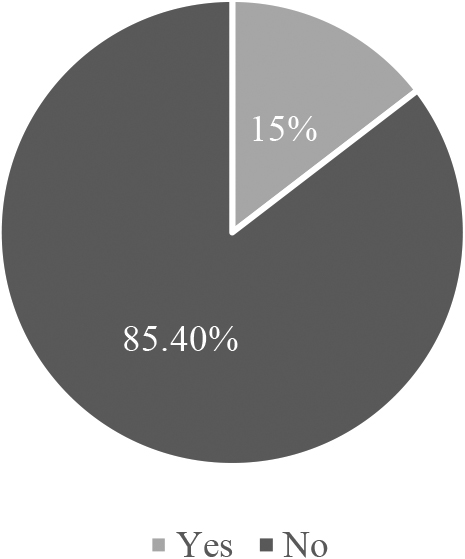
The number of video content on these channels ranged from zero to 338. Also, the number of subscribers ranged from 0 to 15200, with six channels identified as having no content and zero subscribers. The usage pattern was mainly to disseminate information, activities, initiatives, and programs broadcasted on TVs, etc.
Furthermore, the findings suggest that most organizations enable users to leave comments in the video feedback segment. As per the statistics in the about section, about 44% of YouTube accounts were generated between 2013 and 2016, with the highest number of cumulative views counted among all agencies being 3,046,143 and the lowest of zero. In addition, only 32 entities (28%) were found to have accounts with specific details, such as account types, ownership, contact address, vision and purpose, and so on.
The study found that out of the 292 government agencies analyzed, only 48 of them (13.3%) had a presence on Twitter. This indicates that Twitter adoption by government agencies in Bangladesh is still relatively low. Furthermore, more than 85% of these Twitter accounts were inactive, as shown in Fig. 2. In terms of followers, the highest number recorded was 20400 and around 67% of Twitter accounts analyzed had less than 100 followers. Most of these Twitter accounts were created before 2016. The usage pattern observed in the study shows that Twitter accounts were primarily used for disseminating information, news, and announcements. However, the number of tweets posted by these accounts was relatively low and poor quality. This suggests a lack of interest and engagement with the government’s Twitter accounts by citizens.
Along with Facebook, YouTube, and Twitter, the research identified some other social media sites like Google+, Instagram, LinkedIn, etc., operating by government institutions. Most of these accounts were also not up-to-date, and Google+ was inaccessible due to the suspension of the Google+ consumer account in April 2019 (Moreno, 2019).
Adoption trends and technical insights
Table 3 presents the pattern of social media adoption trend of government agencies in terms of communication mode, types of activity, and interaction. The table shows that the majority of government agencies (92.87%) use social media platforms for representative communication. On the other hand, engagement and networking modes were used by a relatively low percentage of agencies (7.12% and 0%, respectively). There were no significant differences among the four administrative agencies. This suggests that social media is primarily used as a one-way communication channel, with government agencies disseminating information to the public rather than engaging in a two-way dialogue.
Pattern of social media adoption trend of government agencies
Pattern of social media adoption trend of government agencies
The study investigated the types of activities and interaction levels of various government agencies in Bangladesh through their websites and social media accounts. The most common types of activities were found to be information sharing (30.73%), discussion (27.61%), and announcement (16.03%). The contents produced by directorates and other agencies were more diverse than those of ministries and divisions. Additionally, the majority of agencies (43.42%) had low interaction (government to citizen) levels, followed by 13.36% of medium and 6.90% of high interaction levels. The study also identified technical shortcomings regarding website maintenance and social media linkage integration with websites (see Table 4). Even though social media linkage was included on various agencies’ web pages, in some cases, they redirected to a similar website, broken or home page of the agencies’ web page. Similarly, many other websites (23.1%) were integrated with weak and non-clickable social media links. Additionally, around 13.14% of social media profiles were associated with inappropriate naming of their profiles.
Technical irregularities in website and social media management
The findings of the study indicate that the majority of government agencies in Bangladesh have recognized the importance of social media in connecting with citizens and disseminating information. Facebook the most populated social media site adopted in the public sector of Bangladesh. Most of the agencies present some extinct any of this platform and provide a website with a link to their social media profile. The popularity of Facebook among government agencies in Bangladesh is not surprising, given its wide reach and popularity among the general public. The use of YouTube and Twitter also indicates that government agencies are exploring different platforms to engage with citizens. However, the usage level of YouTube and Twitter was poor which suggests that there is room for improvement in terms of diversifying social media usage. By utilizing a variety of social media platforms, government agencies can build a more robust and resilient communication strategy that can adapt to different situations and connect with a diverse range of citizens. This, in turn, can help to increase transparency, trust, and accountability, which are essential for effective governance in the public sector (Bonsón et al., 2012; Song & Lee, 2016).
This study focused on the usage patterns of government agencies on Facebook, YouTube, Twitter, and the extent to which these platforms were being used for public engagement. The finding shows that government agencies mainly used these platforms for disseminating information about events, activities, initiatives, and other news as a representation (one way communication) form. In contrast, interaction with users through replying to comments on posts was minimal. Even in cases where interactions did occur, they were limited to one or two users’ comments, with most agencies preferring to refer inquiries to the inbox or providing brief answers to questions and thanking users for their comments. Mergel (2013) observes that representation tactics allow public officials to push policy statements or major press releases in a one-way manner, which is characteristic of very conservative organizations. In contrast, engagement and networking communication strategy through social media platforms can create opportunities for citizens to engage with government agencies, provide feedback on policies and services, and participate in decision-making processes.
The study also found that the interaction of government-citizen was minimal, with only limited subscribers and viewers. This is consistent with the study that has shown that government agencies in developing countries are less likely to engage with citizen on social media platforms than their counterparts in developed countries (Abdelsalam et al., 2013; Al-masaeed, 2019; Shah & Lim, 2011). There are several reasons for this, including complex bureaucratic structure, low levels of participation, resistance to change, and lack of digitalisation. The study’s findings suggest that most government agencies discourage using these platforms for disseminating information rather than interacting with the citizen. However, it is important to note that social media can be a powerful tool for public engagement if used effectively. Research has shown that social media can facilitate citizen participation, increase transparency and accountability, and improve the quality of public services (Bertot et al., 2012; Eom et al., 2018). To realize these benefits, government agencies need to adopt a more strategic and interactive approach to social media use. This involve developing clear goals and objectives for social media use, identifying target audiences, and actively engaging with users through dialogue and feedback mechanisms.
Moreover, the study indicates that several technical shortcomings are linked to the maintenance of social media and websites. Therefore, there is a pressing need to enhance the technical infrastructure of government websites and integrate social media more effectively. These are analogous to those of Al-masaeed (2019), who discovered that the adoption of social media sites in public organizations contains a number of issues with regard to social media adoption in the public sector, such as broken, incorrect, or invalid linkage integration. Consequently, such technical deficiency represents some unprofessional touch towards website maintenance and poor integration of social media linkage with websites that require regular interactions, updating current information, and social media expertise to channel communication. According to Karakiza (2015), it is essential for government to provide the highest quality in the social media sites with a lively public participation if they want to fully harness the potential of social media sites in the public sector domain. Actually, social media is where digital citizens socialize, so if governments want to engage with them, they must go there. To effectively leverage their possibilities, government organizations should therefore create their web-based programs in a service quality context.
Conclusion and recommendations
This paper provides a gauging insight into the social media adoption and usage pattern in the public sector of Bangladesh. The results uncover that Facebook is the most popular social media network. Most agencies use social media platforms as a one-way communication system. Produced content through social media, in most cases, is disseminated through top-down ideology without having any further discussion with citizens. Social media sites, such as Twitter and YouTube, were generally outdated. Many accounts found do not initiate any post/content in a year or two. The usage pattern was limited. Constant communication between government-citizen is absent, and two-way interaction hardly takes place. These technologies are mainly used to disseminate information through news and announcements rather than increase citizen participation, engagement, and trust in governance. In short, there is no deny that these tools significantly facilitate two-way interaction, citizen engagement, participation, transparency, and trust in government. Social media adoption in Bangladesh is still in the informational stage, which is identical to that of developing countries. To harness the full potential of social media platforms following recommendations can be made about social media usage in the public sector of Bangladesh.
Establish proper guidelines and strategies regarding social media usage in the public sector. Prioritize adoption of the most populated social media platform in the country to ensure high citizen involvement and information sharing and dissemination. Ensure proper channelization of communication between public websites and social media sites by eliminating invalid or broken social media linkages from the website. Provide accurate information about a particular social media account, purpose, helpdesk, and contact details to enhance transparency and trust in governance. Allocate adequate time and resources for social media account governance and constant content upgrade. Survey government officials and citizens to pursue knowledge about the best social media site practices. Active information sharing through social media channels and investigation and incorporate citizen expectations regularly. Answer/Reply to messages and questions to engage with the followers and enhance government-citizen interaction.
Finally, the findings of this study are anticipated to guide the government in implementing effective social media practices in the public sector, serving as an instrument for future decision-making in social media use and contributing to the development of better strategies in the government.