




Abstract
Introduction:
In connection with the design of a seaworthy yacht for persons with disabilities, authors conduct a risk analysis and consider the safety aspects arising from these risks. In the context of tourism and recreation for people with disabilities, this represents a new issue in the literature.
Aim:
The aim of the analysis was a multi-aspect evaluation of the hazards that occur when sailors with disabilities carry out typical activities on a yacht. The recommendations arising from the conducted research were used when designing the structure of a staysail schooner intended to be sailed by people with disabilities.
Methods:
Two methods of risk analysis were adopted. A preliminary hazard analysis (PHA) was carried out with the purpose of identifying and evaluating the possibility of people with various types of disabilities carrying out activities on a yacht. A process hazard analysis (PRHA) was based on a four-degree structure of functions with 31 component operations, relating to both sailing and living on a yacht. This methodology was used by the authors in sailing for the first time when the yacht’s equipment was designed for persons with disabilities.
Results:
The evaluation covered the adaptation of the yacht for sailing by people with disabilities and considered the various functions that would need to be carried out by these people. A PRHA matrix was created, consisting of 1,116 fields. Authors found that safe execution of many of the relevant functions by people with various types of disabilities was indicated.
Conclusions:
Based on the results of the PRHA, a set of new guidelines was created for permanent and temporary adaptations of a yacht in the context of the degrees and causes of disabilities.
Introduction
In this paper, we consider the possibility of adapting the operational, environmental and technical conditions on a seaworthy yacht, with the aim of ensuring safe sailing by people with disabilities.
An STS (sail training ship) staysail schooner with a steel hull is currently being designed for people with disabilities. This special yacht has the following dimensions: deck length 17.99 m, width 6.05 m, maximum draught 2.50 m, and mast height 22.50 m. The sails consist of two electrically or manually rolled foresails per mast. The yacht is equipped with two diesel engines of 75 HP each. The assumption is also made that there will be a considerable proportion of people with various disabilities on board (more than 80% of the crew members), and this is a novel aspect of our design approach. The yacht will feature a large superstructure, which will reduce the impact of the surroundings on people with disabilities. The yacht is shown in Fig. 1.
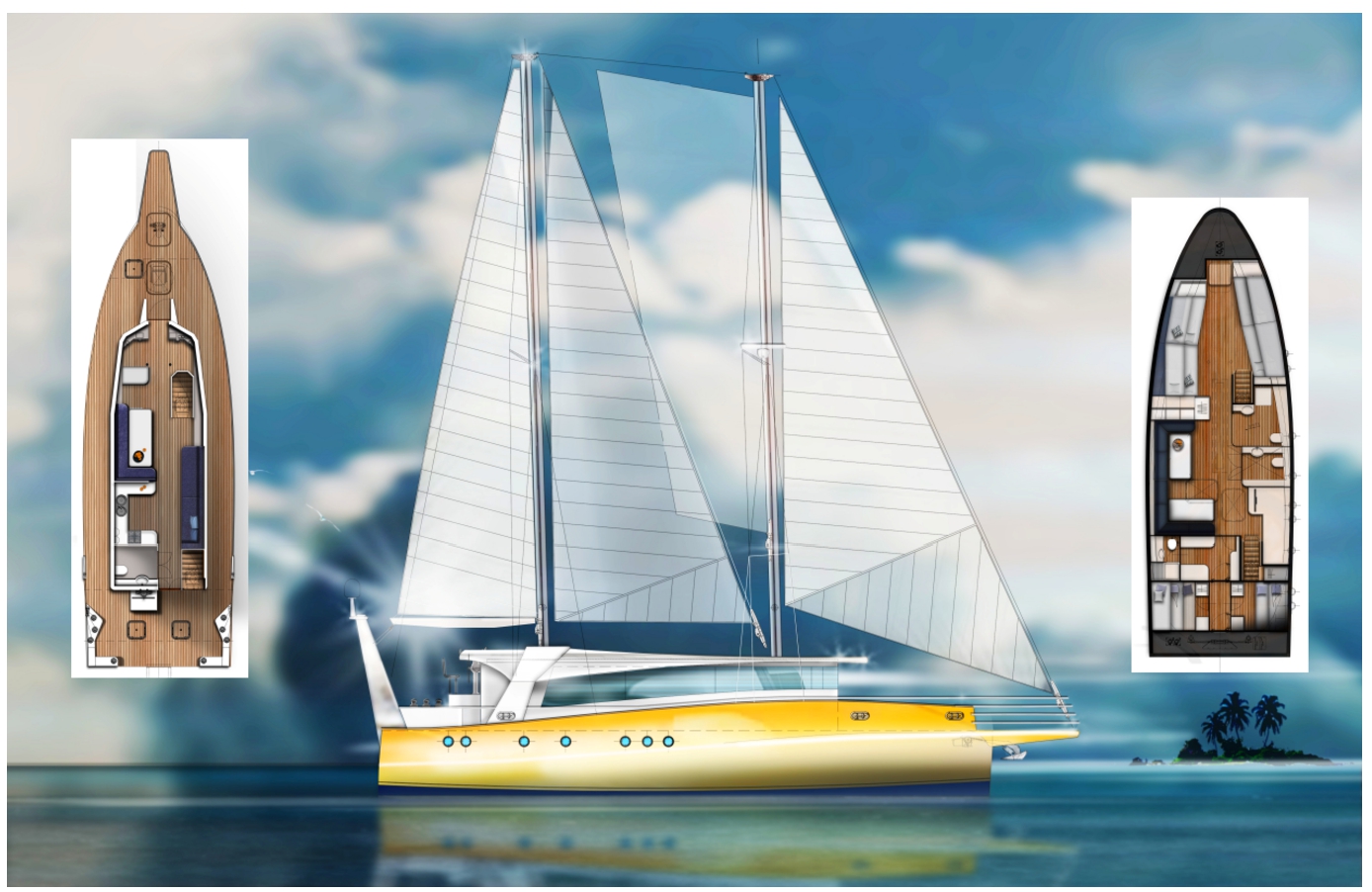
Design of the yacht.
The aim of this study is to carry out a hazard analysis of the system consisting of sailors with disabilities, the yacht and its environment. The hazards of this system may potentially cause loss of life and/or serious injuries to crew members, and serious damage to the yacht and/or its devices and equipment. This process of identification and evaluation of hazards is used to draw up recommendations for alleviation or elimination of these risks.
For the purpose of the risk analysis, we examine the system composed of humans with disabilities, the yacht and the maritime environment (Fig. 2). Our evaluation covers the risk to humans, the risk to the yacht and the risk to the human/yacht system under various environmental conditions.
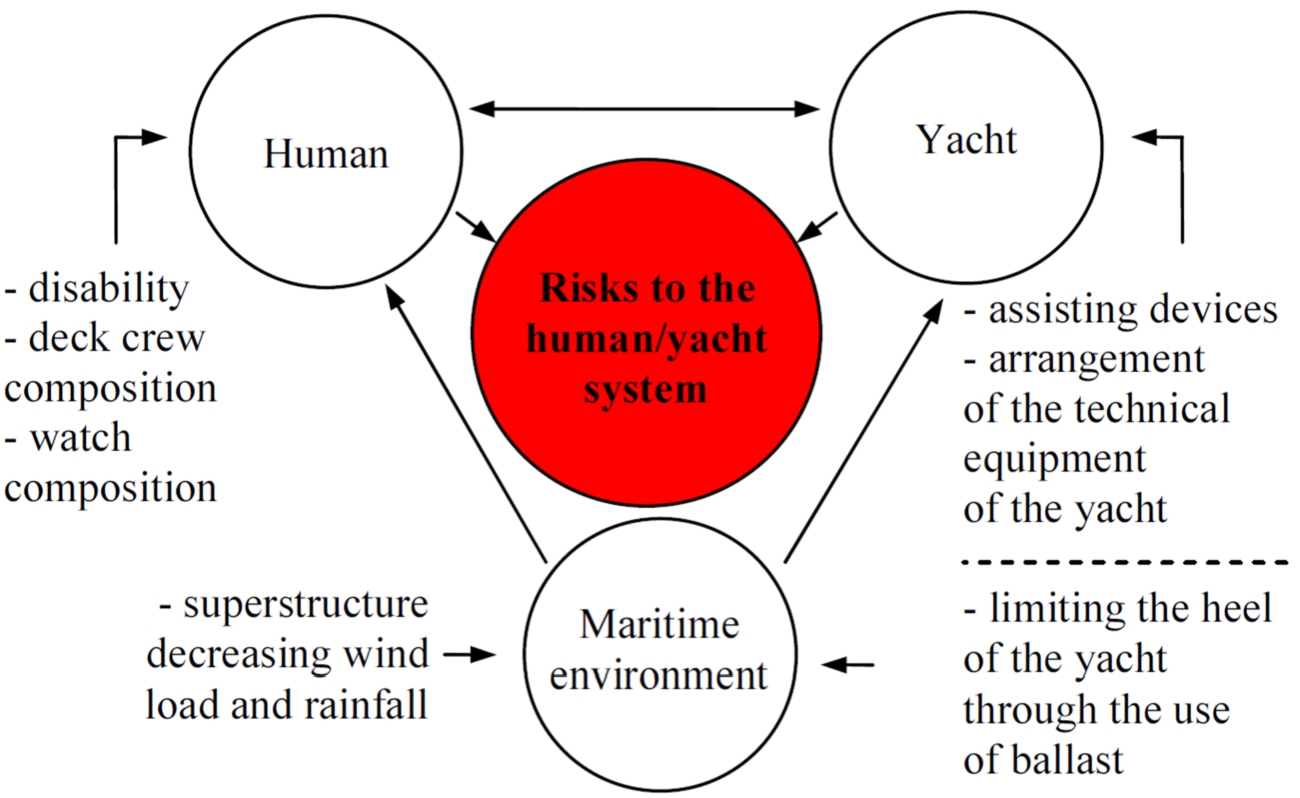
The human/yacht/maritime environment system evaluated in this paper.
An analysis of the hazards and appropriate remedial actions makes it possible to define an acceptable level of system risk at which these hazards can be eliminated, alleviated, controlled or accepted. This simultaneously ensures the reliable fulfilment of functions by the object under design and an adequate level of safety for human beings and their surroundings.
In the literature on this subject [35], safety during the design process can be ensured through the use of the following three techniques:
Direct safety, in which a solution does not cause a hazard and falls into one of the following categories: safe-life, fail-safe or a system with redundancy;
Indirect safety, in which the safety techniques and protective devices used can prevent the occurrence of a hazardous situation or maintain the operation of devices;
Warning safety, in which signals give information on hazards only in certain zones.
Designing for minimum risk relates to the use of the yacht’s equipment in new or modified equipment or devices, with which, as a rule, the project may be safe. Safety devices must be switched on if the identified hazards cannot be eliminated or the risk associated with them cannot be reduced appropriately. This can be achieved by changing the design of the yacht or using fixed, automated or other safety devices (e.g. safety valves). Care must be taken when it comes to periodic inspections and monitoring the operation of safety devices. Warning devices must be used if safety devices prove to be ineffective. Warning signals and their use should be adapted to the conditions under which hazards may occur, and signals or false alarms should also be designed to minimise the probability of hazards occurring for the crew. Alarms should be standardised within similar types of systems.
In this paper, two hazard analyses are performed. The first is a preliminary hazard analysis (PHA), and relates to hazards on the yacht arising from human factors. This includes the need to assist persons with disabilities, using special techniques or measures or with the aid of another person. Authors also consider a wide range of possibilities for executing a function by a human being, starting with unaided activities and ending with a lack of ability to perform a given action. This analysis is carried out to ensure that people with various disabilities will be able to sail actively and safely.
The second hazard analysis covers a more detailed breakdown of the disabilities of the crew and the functions that will be executed. A process hazard analysis (PRHA) is used to assess the execution of functions by people with various disabilities. This risk evaluation makes it possible to rank scenarios in which accidents occur involving people and technical objects.
The concept of constructing a yacht that will be crewed by people with disabilities is a novel one, and no yacht has previously been designed, in which:
The disabilities of the crew members vary between trips and the majority of crew members are disabled, since most yachts are currently designed for people with only a single type of disability;
The adaptation of the yacht takes into account all types of disabilities and stems from the specific actions undertaken as part of deck work.
In the paper, we attempt an a priori evaluation of the possible hazards in terms of the safety and accessibility of the yacht.
Introduction
The number of studies that have directly focused on issues related to the safety of sailing on a yacht by disabled persons is limited. These issues can be divided into four groups: (i) safety and risk evaluation methods; (ii) analyses of accidents at sea; (iii) problems associated with people with disabilities sailing on seafaring yachts; and (iv) adapting the design of a yacht for people with disabilities.
Safety analyses and research methods related to yacht risk
One important element of the area of safety analysis and research methods related to yacht risk is identification of the advantages and disadvantages of existing methods. The systemic flaws of the PHA method are connected with difficulties in finding solutions for many errors and recognising consequences rather than risk scenarios [3,27]. It should be taken into account that risk may be present in all elements of a transport system [15]. When selecting a method of risk evaluation, all of the vital factors of the method should be taken into consideration, for example [15]: the type of information available, measures to prevent damage, and the means and time required to perform the analysis. The priority and significance (in a PHA) of the role of human factors in identifying errors and their generation and propagation should be emphasised. Using the deductive method, critical combinations of human factors affecting hazards can also be analysed [16]. The authors differentiate between the three-stage method (direct, indirect and warning safety techniques) and the safety techniques employed in design theory for the safety of a human and their surroundings [35]. These methods should be used when designing a yacht for persons with disabilities. The significance of a need at the design stage is generally well known, but the choice of equipment provided on a yacht must be based on an analysis of market needs, which vary depending on the purpose and use of the yacht [26]. When a relatively small amount of data have been collected from observations, grey systems can be employed to conduct decisive risk research [33].
Typical medical hazards, which must be considered in a PHA and arise from the influence of technical measures on seaworthy yachts, have rarely been described in the literature [17,20,25,30,31,40]. The methods used in this paper for the preliminary PHA and PRHA were discussed in detail. Using the analogy to the works [34,38], they were based on new contexts related to the structure of the yacht use process and specific disabilities of sailors.
Analysis of accidents at sea
An analysis of accidents at sea and the acceptability criteria for risk at sea usually relate to a particular area of the sea and a particular vessel [29]. These criteria typically refer to operations conducted under normal conditions, and correspond to the first layer of risk level. Additional options for risk control involve updated criteria due to technologies, regulations, analyses, methodology and operational methods [1]. The sources of official news on accidents and incidents at sea are analyses by state commissions. For example, in its 2017 report, the State Marine Accident Investigation Commission presented data on 51 seaworthy yachts, out of 114 cases. They analysed information on the most serious accidents caused by sinking of the yacht, fire, tipping over by a wave, crew members falling overboard, etc. The most frequent locations of accidents were ports (45 accidents) and bays (32 accidents). For instance, in 2017, the majority of accidents recorded in Poland involved recreational sailing yachts (36%) and motor yachts (9%) [39]. The most common causes of those accidents were running aground, errors in manoeuvring, unsealing of the hull, and loss of the rudder [39]. Although safety regulations for large commercial yachts have been standardised by the International Maritime Organisation (IMO), there is still a lack of regulations for smaller vessels [42].
The importance of changes in the health of the crew in terms of the safety of sailing is also emphasised in the literature. During Atlantic trips, these problems may involve smaller hazards that arise from sunburn, depletion of freshwater supplies and gastrointestinal disorders, and more serious hazards that require medical attention are relatively rare [31]. To ensure system safety, it is important to develop safe workstations, since these are components of the overall system; ergonomic aspects should be considered when designing the physical and psychological burdens on the crew, since these have a strong impact on the safety of work [25]. For example, the literature on this subject reports that in the America’s Cup race [30], the part of the body that most often suffered contusions was the upper limbs (40%), followed by the spine and neck (30%). The most common problems were sprains of joints/ligaments (27%) and tendinopathies (20%). The activities or mechanisms that most often caused contusions were improper usage (24%), striking against the equipment on the boat (15%) and strength training (13%). Most of the diseases in this context were infections of the upper respiratory tract (40%) [30]. Other research has reported similar contusions (upper limb and head injuries) in 2001/2002 [40]. Materials concerning medical care on board cruise ships have also been published [17,20]. An analysis of the contusions suffered on board yachts has highlighted the more frequent occurrence of upper limb contusions, for example, compared to lower limbs [17]. This information should also be taken into account when designing yachts for people with disabilities.
Problems associated with disabled people sailing on seafaring yachts
The issues faced by people with disabilities on seaworthy yachts are rarely the subject of scientific study. Over the last few decades, however, interest in research on physical disabilities has increased. To understand the importance of human factors on a yacht, the International Classification of Functioning, Disability and Health (ICIDH) can be helpful, as recommended by the WHO [14]. This classification emphasises the importance of both medical and social barriers when approaching the problem of disability. It also draws attention to the previously undervalued aspect of rehabilitation [14,19]. The experiences of people both with and without disabilities evidence considerable transformation importance (for environmental integration) of learning during joint sailing on yachts [23,43].
Trips for people with disabilities are new products that are now being offered on the tourist market. The positive impact of such trips on the health of this group has been emphasised [22]. However, a suitable technical adaptation of yachts is required [22]; for example, there are no devices nor innovations that can make it possible for people with disabilities to assume the correct body position. One rarely used solution is the design of a new ergonomic seat for Paralympic sailboats [10]. Devices used ashore by people with disabilities can also be used on yachts (such as rehabilitation equipment, wheelchairs and kitchen equipment) [36]. The specifications of a seaworthy yacht create a demand for new types of equipment compared to an inland yacht [21]. There are problems with respect to a man’s dependability evaluation in emergency conditions at sea, for example in the case of an emergency evacuation. The methodology used to design vessels to mitigate particular evacuation hazards has recently been studied using modelling and computer simulation [11]. Two evacuation scenarios were considered for various configuration variants of yacht structure elements with criteria defined by the time and number of evacuation operations.
The legal aspects of the sailing process (such as the qualifications and training of yacht crew members, inspections and safety instructions, and navigation safety) have been defined by the Polish Maritime Code and the Order of the Minister of Maritime Economy [9,28,41,44]. These documents highlight the importance of maritime safety, but do not consider the differences in the disabilities of crew members [28,41,44,46].
Adapting the yacht to people with disabilities
The need for the adaptation of a yacht for people with disabilities stems from new legal regulations in both the European Union and the US. Companies that manufacture recreational vessels must now take into consideration the specific needs of people with disabilities [2]. For example, the authors of [8,12,18] developed an approach to the design of sailing yachts for people with disabilities and seniors. The design presented in [8] focuses on the issue of the safety of a yacht with respect to limiting its heel. The present authors have previously published detailed research results on the ergonomics and biomechanics of the manipulation zones of a wheelchair user [5]. Research on kitchen equipment and devices adapted to the manipulation zones of wheelchair users and seniors was presented in [4,24], and a study of the selection of materials for rehabilitation equipment was reported in [6]. The results contained in these papers may also be partially used when designing the interior of a seaworthy yacht, despite their land-based origins. The majority of ergonomically grounded devices feature no sources in maritime environment conditions, thus the concept of shaping them in a land environment is often utilised [7,13,32,37,45]. In yacht design, one may employ the rule saying that the speed of reaction, already at the design stage, can considerably reduce the resulting damage [15]. The general recommendations of design theory [35,36,38,45] are of limited use when developing rules, methods and criteria for creating safe seafaring objects. In design theory, the system is usually a “machine” system, not a “man-machine” system. There are also no references to human limitations resulting from various disabilities.
Research method
Risk analysis methods
In the paper, we apply two methods of hazard analysis:
Preliminary hazard analysis (PHA) for the preliminary and early identification and evaluation of hazards, which facilitates the introduction of design changes with low cost.
Process hazard analysis (PRHA) (also known as PHA), which relates to hazards arising from the operational processes of a yacht with a developed structure.
These methods were described in previous papers [3,25,34,38] with the aim of identifying, evaluating and formulating recommendations for the elimination, alleviation and control of hazards that may cause loss of life and/or serious injury to crew personnel, or serious damage to the evaluated objects and/or equipment, resulting in high losses and negative public opinion. Both of these methods require decisions to be taken on the risk management of a potentially hazardous event occurring in the system. PHA and PRHA are organised, systematic evaluations of potential hazards arising from the process of using a yacht and a crew consisting of people with disabilities.
They involve the following analytical stages:
Definition of the physical and functional features of a yacht, and its operation and procedures, which should be executed and observed.
Identification of the hazards that may occur during the lifecycle of the yacht, including its design, integration and testing, commissioning and operation. The cause of each hazard should be defined.
Evaluation of hazards by defining their weights and probabilities, and recommendations for solutions in terms of elimination, alleviation and control measures.
Introduction of remedial measures to eliminate, alleviate or control hazards, or acceptance of these hazards.
Further analysis to define the efficiency of preventive measures, new or unexpected hazards, and if necessary to provide additional recommendations.
The PHA and PRHA have several weak points, which arise from:
Subjective judgement. Good judgement requires imagination and creativity when identifying hazard scenarios, and when a subjective approach is used, it is difficult to evaluate initiating events. Even for the crew evaluation, it is difficult to evaluate the likelihood of a particular event, since probability estimations are influenced by perception; people do not appreciate the significance of an event they have never experienced, and tend to overestimate the probability of an event they have experienced;
Complete identification of hazard scenarios. When brainstorming to identify hazards, it must be noted that the activity consisting in the search for hazards and building scenario risk ranking is over;
Qualitative evaluations of the severity and probability of a scenario, based on common knowledge and the experience of the crew, which are usually incoherent. The estimation of a severity of a given scenario is easier than estimating its probability, especially when it arises rarely;
Credit of trust to protections. The probability of a scenario in which protection fails is usually estimated on the basis of engineering knowledge, rather than actual data. This estimation therefore does not relate to the worst possible case and is usually too optimistic, as people tend to assume that they will not make mistakes;
In the PHA, only deviations from design assumptions are considered, rather than the adequacy of the assumptions themselves.
The quantitative assessments of threats were the result of the work of an interdisciplinary team (designers, rehabilitation specialists, sailors, disabled people and seniors). The subjectivity of the assessments was limited by the knowledge and experience of the authors of the study, especially of two yacht captains. The values of the ratings resulted both from many sea voyages (on poorly adapted yachts) with disabled people and from experience from training in active rehabilitation of disabled people. Risk scenarios were developed based on the decomposition of individual disabilities and the structure of activities performed on the yacht.
Preparing data for the application of the PHA and PRHA methods to yacht sailing by disabled people
In this paper, we conduct a risk estimation for adapting a yacht for sailing by people with disabilities, due to the functions fulfilled. In construction theory [35], functions are defined as specific relationships between the inputs and outputs of the “disabled people/yacht/sea environment” system, and more precisely between input and output values of the circulation of materials, energy and signals within the system. The complexity of this system makes it difficult to describe. For example, the general function of a system Z can be formulated as “Sail a yacht with a disabled crew”. The general function Z, which is also complex, can be broken down into its component functions

Component function structure designations: Z – general function;
The initial PHA was carried out at the level of the component functions
The component function structure that emerged from this general function decomposition is summarised in Table 1. However, this division of functions does not provide the details required to carry out the complex physical processes taking place on a yacht. For example, the component functions of
Component function structure of the sailing process
Example sub-structure for function
The final stage in the division of the partial functions
An classification of yacht’s sailors’ disability was also conducted for the purposes of risk assessment. The
Decomposition of individual disabilities (
Examples of classification of the degree of injury or damage
Note: the lines list examples of injuries to people with disabilities or damage to the yacht without prioritization.
The initial analysis was carried out by experts in the field of designing technical measures for persons with disabilities and seniors. In this expert analysis, the degree of injury to a person with disabilities and possible damage to the yacht were considered in regard to the ‘person with disabilities/yacht’ system (Table 4), based on case studies of seaworthy yachts, and interviews and conversations with professional sailors.
It was also assumed that individual watches would be arranged using a co-operative model of selected task units and single persons. Such watches improve the effectiveness of actions. The necessity of teamwork on a yacht is a factor that can improve the accessibility of yachts for persons with various disabilities. A task unit on a yacht is a team designed for persons with disabilities. One type of task unit is an informal team headed by the captain (coordinator). A team on a yacht is an informal team that emerges out of the desire to complement the possibilities exemplified by crew members with respect to the realisation of certain goals. However, co-operation within a team may also have negative aspects, such as uneven workloads, changes in roles or fracturing of consolidation when a lack of group safety arises. The process of shaping a team’s effectiveness may be burdened with errors, such as (i) a polarisation effect, i.e. surrendering to pressure from the opinion of an influential individual; (ii) restrictions on rationality, i.e. uncertainty over the solution to a problem; (iii) groupthink, i.e. prioritising willingness to agree over common sense; (iv) inhibitions, i.e. changes in roles with dominant importance of experts’ opinion in crisis situations; (v) social inhibition, i.e. a negative impact from other people on the efforts of a given individual.
The preliminary results of our analysis (Table 5) highlight the fact that hazards may generate risks with unacceptable values (with a value of one, marked in red in Table 5) due to the impossibility of safe execution of an activity by a person with disabilities or a senior. Full accessibility of the yacht and safe sailing require the attempted combination of crew members’ work and the division of tasks based on a knowledge of their psychological or physical limitations. The proper selection of factors for watch members may radically improve the situation, as shown in Table 5.
Evaluation of the adaptation of a yacht for people with disabilities in terms of functions
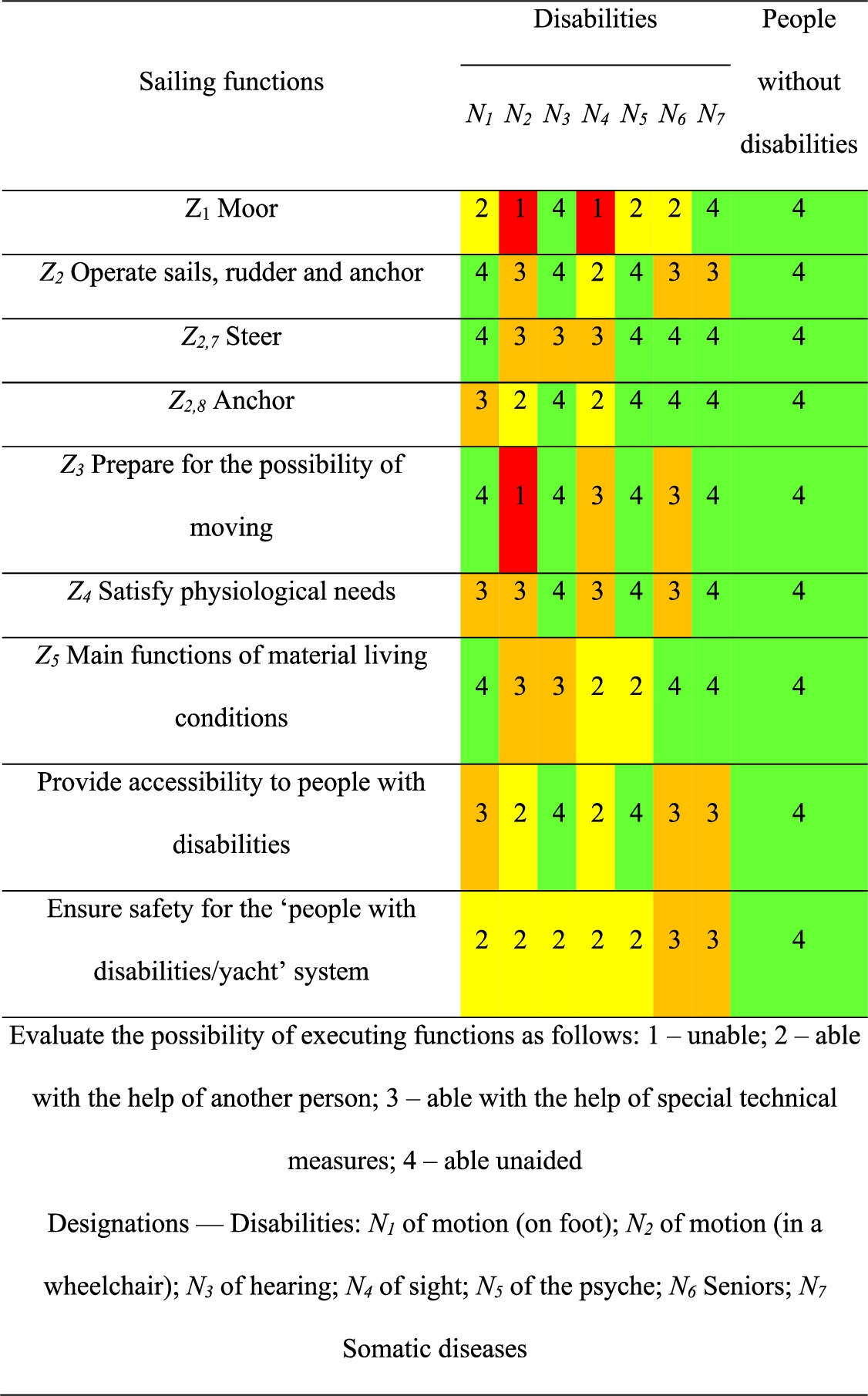
Evaluation of the adaptation of a yacht for people with disabilities in terms of functions
The yellow area (executing actions with the aid of another person), i.e. working in teams with a guardian/assistant without disabilities (or another person with disabilities that do not limit the execution of an activity in a given situation), radically improves accessibility to the various zones of the yacht, especially when carrying out activities connected with mooring, handling the sails, rudder and anchor, and activities connected with motion in the case of wheelchair users. Assistive technology (AT) systems allow people with sensory disabilities (sight, hearing) to carry out many different activities on yachts that were previously inaccessible to them (orange area in Table 5). Unaided execution of actions by people with disabilities and seniors can also be made possible by careful selection of the people performing them: ‘limitations connected with disabilities — handled technical measures’ (as shown in the green area in Table 5). A suitable design for a yacht and appropriate assistive measures makes it possible to broaden this green area. It should be emphasised that as an outcome of various interactions, the effect may be contrary (e.g. an erroneously given or incorrectly understood order, the use of more complex AT measures, inadequate perceptive abilities of a person with disabilities).
The analysis carried out by the experts (Table 5) included typical, standard solutions (e.g. those employed in apartments, public utility spaces and the surrounding environment), for improving accessibility to their surroundings for people with disabilities and seniors. The possibility of using these measures on board yachts was also considered.
Other factors taken into consideration were new concepts for technical solutions that would make it possible to adapt a yacht to the needs of many persons with disabilities (e.g. innovative concepts and structures for helm wheels, intra-deck elevator solutions and yacht deck wheelchairs).
The evaluation of risk (R) in the PRHA method makes it possible to establish a ranking of accident scenarios, which can then be characterised qualitatively. This aim is achieved by creating a risk matrix that describes individual levels of risk. A product of the values of two relative measures,
Risk matrix
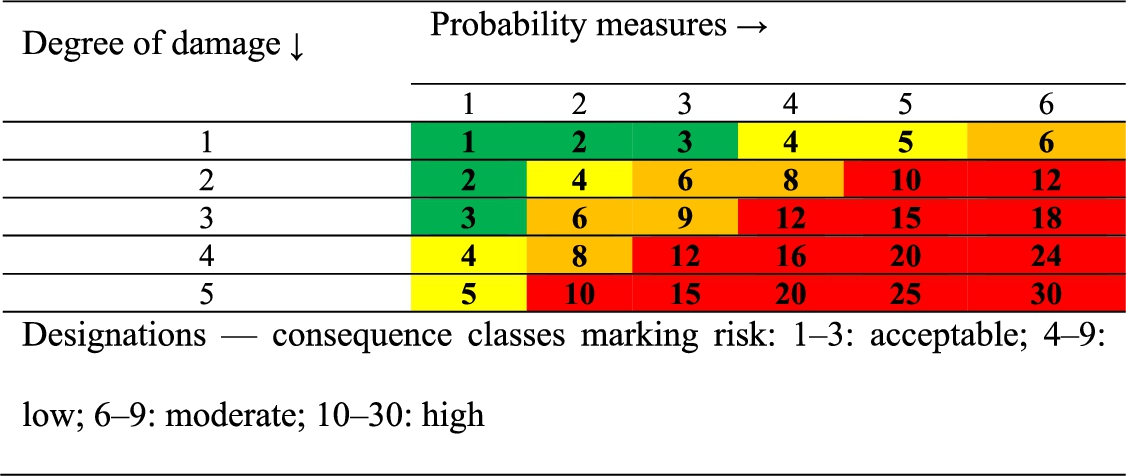
Risk matrix
Levels used to assess the damage
Table 7 shows the levels used to evaluate the damage
When completing the PRHA table, the expert assumed the following boundary conditions (as shown in Fig. 4): (i) a wind at sea of 4 Bf, and a wind in port of 3Bf; (ii) sea states of 3 and 2 at sea and in port, respectively, meaning wave heights of 0.5–1.25 m and 0.1–0.5 m, respectively; (iii) sailing and manoeuvring take place only during the day; (iv) the swell of the yacht amounts to no more than 20° at sea, and 10° in port; (v) the participants in the sailing trip are people who have no previous experience with yachts (and hence are unable to properly carry out sailing activities); (vi) at least 50% of the crew is made up of people with disabilities, including wheelchair users (with a maximum of six wheelchair users); (vii) on the yacht, the crew do not need to drop sails, as all of the sails are of the rolled type; if sails are to be set and dropped, the hypothetical hazard is shown in Fig. 4; (viii) on the yacht, the crew do not handle halyards, as these activities are carried out only during overhauls; (ix) the table considers for crew with disabilities, excluding the captain; and (x) the yacht is constructed based on the general rules of universal design, rehabilitation engineering and ergonomics.
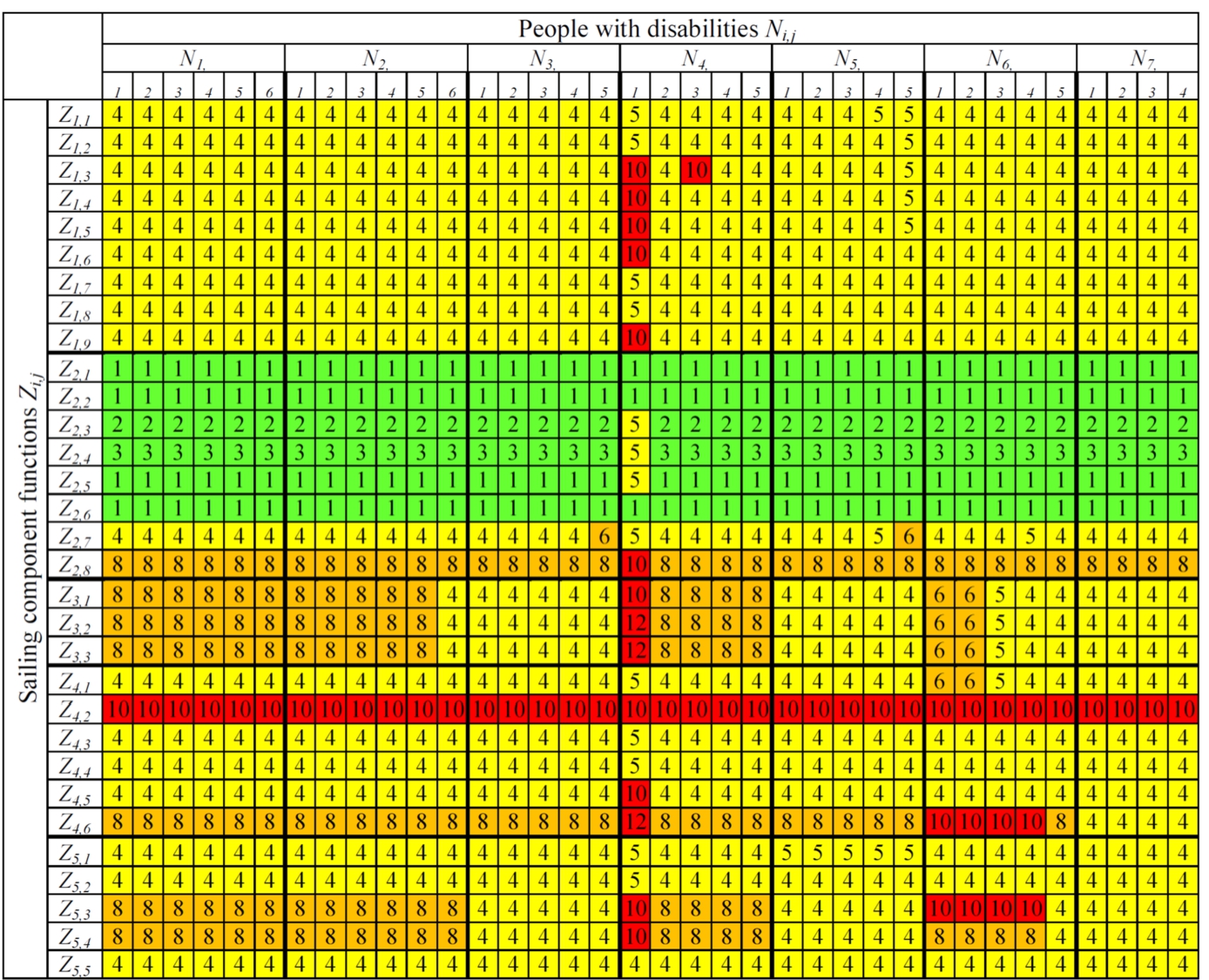
PRHA for an individual with disabilities.
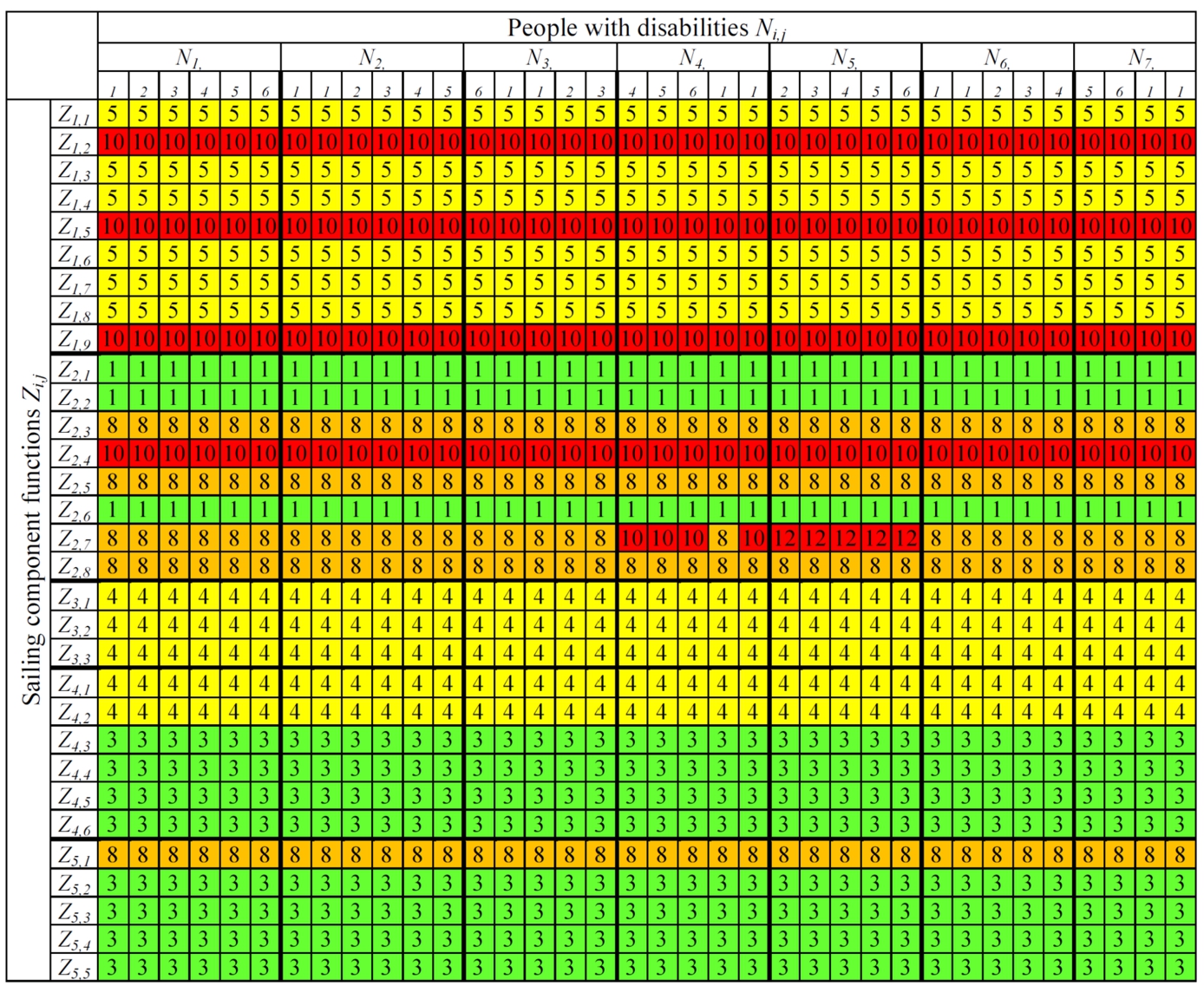
PRHA for the yacht.
The PRHA for the newly designed yacht was labour-intensive, and required an expert analysis of 1,116 PRHA risk research matrix fields for people with disabilities on a yacht (Fig. 4) and 1,116 PRHA risk research matrix fields for the yacht (Fig. 5). Each of the analysed risk fields (R) is the product of the degree of damage
Table 5 shows the results of the preliminary risk analysis. It can be seen that the initial and discovered assumptions made in the design of the yacht are sufficient to ensure safe sailing by people with disabilities.
The large number of green fields in Table 6 indicate the possibility of safe execution of numerous functions, especially by people with motion disabilities who are able to move without a wheelchair (
Conclusions
General conclusions
The conclusions of this work are drawn directly from both the analysis presented here and practical considerations for the design of a yacht that is accessible to disabled people, resulting from a combination of a knowledge of the relevant hazards arising from individualised sailing activities by people with disabilities and the authors’ general structural knowledge.
The following conclusions can be drawn from the PRHA conducted here (Figs 4–6). Some of the activities on a yacht are hazardous to humans, regardless of the circumstances, who performs them and the type of disability, (e.g. burning/scalding in a kitchen, cleaning confined spaces on a yacht). The outcomes of accidents may be more severe for people with disabilities.
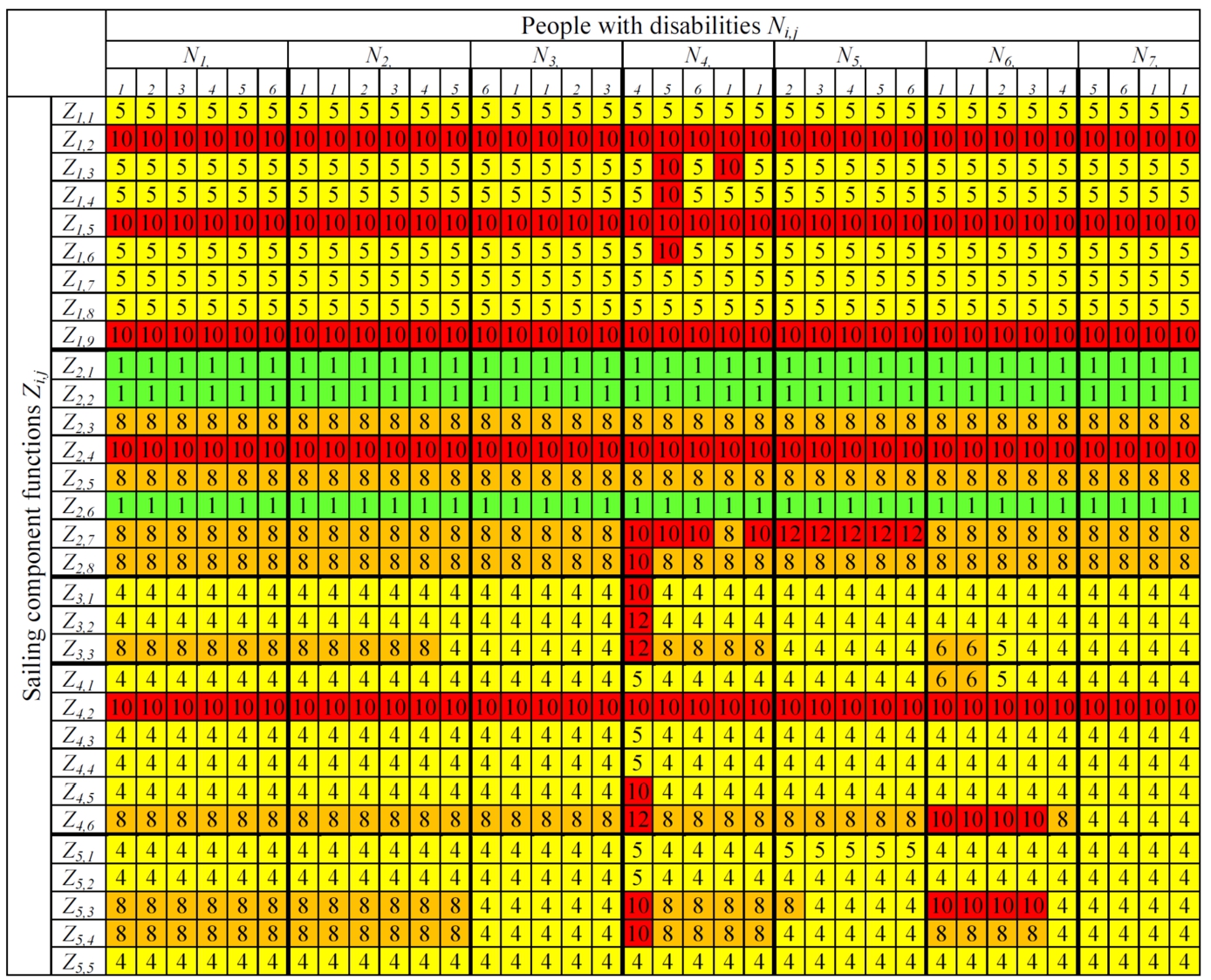
PRHA for the human/yacht system.
Some of the actions on a yacht also constitute a hazard to the yacht, regardless of who performs them and the type of disability (e.g. putting out lines, or fending off the yacht).
For the system analysed here and the assumptions made in terms of preliminary restrictions, there were no risk values higher than R = 12 on a scale of 1 to 30. Despite reaching the red zone, the low value of the risk indicates hazard restriction within the set, the most frequent weather conditions. Any changes in the preliminary assumptions, for example the force of the wind, may cause a situation to occur in which the risk value of R = 12 is exceeded. Nevertheless, risk management for yacht safety by the captain can ensure that we obtain values that do not exceed R = 12.
In the group of
In the same group of functions, there are four further activities that can generate a high risk of damage, and which pose a problem to the group of people with sight disabilities. All of these risks relate to working with mooring lines and arise from an inability to visually check the tension and location of a line. An attempt to check the location and tension of a line manually may result in serious injuries to the upper limbs, while incorrect positioning and tensioning of a line may result in serious damage to the vessel.
In group
The next activity in the
In the
The
The
In the
In the final group,
The same group of functions poses an even more serious hazard when blind people use storages, due to the possibility of bodily injury in confined spaces.
Adaptations that are useful for people with disabilities
The PHA and PRHA conducted here highlight the need to introduce special technical adaptations to a yacht for people with disabilities. The following list of permanent and temporary adaptations relates to various types of disabilities.
In the case of physical disabilities related to motion on foot (
For wheelchair users (
People with hearing disabilities (
Adaptations that are useful for people with sight-related disabilities (
The following aspects must be taken into account when designing a yacht for people with psychological disabilities (
Secondary geriatric disabilities (
Secondary somatic disabilities (
The conclusions of this research offer practical guidance when constructing and equipping a yacht for people with disabilities.