



Abstract
Background:
Behavioral crises in dementia are represented by a wide variety of symptoms, regularly require external intervention from professionals, and are reported as a risk factor for hospital admission. Little is known about the factors that are associated with them.
Objective:
To determine the factors associated with dementia-related behavioral crises.
Methods:
We searched MEDLINE, CINAHL, PsycINFO, EMBASE, and AMED databases. An additional lateral search including reference lists was conducted. Two researchers screened all records for potential eligibility. Narrative synthesis was used to bring together the findings.
Results:
Out of the 5,544 records identified, 24 articles (18 distinct studies) met the eligibility criteria. Aggression and agitation were the most common behaviors present at crises. Delusions, wandering/absconding, and hallucinations were also key behaviors contributing to crises. Behavioral crises predominantly happened in the severe stages of dementia (according to MMSE scores), in people with dementia residing in their own homes and in long-term care, and were the catalyst for admissions to psychiatric inpatient settings, specialist-care units, long-term care settings, or for referrals to psychiatric community services. Lack of consistency in assessment of behavior, and management of agitation/aggression in dementia crises were evident.
Conclusion:
Interventions to reduce the likelihood of people with dementia-related behaviors reaching crisis point need to focus on both family and care home settings and incorporate aggression and agitation management. Future research should focus on determining the factors that could be addressed to prevent behavioral crises and the interventions and models of care that may help to prevent crises.
INTRODUCTION
Behavioral and psychological symptoms of dementia (BPSD) can diminish quality of life [1], be unsettling and distressing to people with dementia (PwD) and their caregivers [2, 3], and increase caregiver burden [4–7]. They are associated with more time spent caregiving and higher care costs [8].
Over 90% of PwD will experience BPSD such as aggression, agitation, hallucinations, wandering, apathy, delusions, and anxiety at some point in their illness, with symptoms co-occurring or increasing over time [9, 10]. BPSD can impact on the person with dementia and/or their caregivers to such an extent that they reach a crisis point.
A crisis, for the purpose of this review, is defined as “a process where there is a stressor(s) that causes an imbalance requiring an immediate decision which leads to a desired outcome and therefore crisis resolution. If the crisis is not resolved, the cycle continues” [11], p2.
In high-income countries across the world, a third to a half of PwD live in care homes, and in low- and middle-income countries this figure is around 6% [12]. In the UK, one third of PwD live in care homes and two thirds in the community [13]. While most families would prefer to maintain a PwD at home, a behavioral crisis may lead to a hospital admission and/or a permanent care home placement, as BPSD have been identified as risk factors for the placement of PwD in institutions [14–17].
In comparison to cognitive symptoms, which are directly related to brain changes, BPSD can also occur due to environmental influences, individual interactions, unmet needs or caregiver factors (such as management strategies [18], or caregiver-patient relationship quality [19]) which are potentially modifiable [20]. Once behaviors occur, factors leading to crises could be due to the PwD’s behavior/s intensifying and negatively affecting their quality of life. Or to caregivers not coping with BPSD, which could be related to other pressures such as lack of support, burden, guilt, embarrassment, length of time in caregiver role, or additional caregiving duties managing the PwD’s cognitive symptoms and difficulties with activities of daily living [21, 22]. Therefore, a proportion of behavioral crises in dementia could possibly be avoided if factors leading to a crisis are better understood. In this systematic review, we summarize and describe the factors associated with dementia-related behavioral crises.
Review questions
What are the factors associated with behavioral crises in dementia? What are the behaviors when behavioral crises occur in dementia? How are behavioral crises in dementia managed and/or resolved?
METHODS
The PRISMA Guidelines were drawn on to conduct and write this review [23].
Protocol and registration
The protocol for this review is registered on PROSPERO (2016:CRD42016051002) [24].
Eligibility criteria and Information sources
We searched MEDLINE, CINAHL, PsycINFO, EMBASE, and AMED databases for articles published up to 20 June 2016. The search strategy covered three areas: behaviors, dementia, and crises (including institutionalization, referrals, and hospitalization) (full electronic search strategy used for MEDLINE in Supplementary Table 1). The search was piloted and then refined to increase the likelihood of obtaining relevant results. To maximize the findings, there were no limitations on the searches in relation to years considered, publication status, or study design. English and Spanish languages were considered. Searches were limited to humans. We also conducted a supplementary lateral search of key websites such as the Alzheimer’s Society, National Institute for Health and Care Excellence (NICE) Evidence Search, and Social Care Institute for Excellence (SCIE) Social Care Online websites, reference lists of included articles, and other databases including ALOIS, LILACS, and the Cochrane Library. Where necessary we contacted study authors to locate full texts.
Study selection process
The study selection occurred in two phases. First, two authors (TB and JC) individually screened all titles for potential eligibility. Titles were excluded if they were clearly not related to dementia or behaviors or if the article focused on children. All articles marked ineligible by both authors were excluded. Second, the abstracts were screened, and relevant full texts were obtained where articles were clearly relevant or to determine eligibility. Articles were read and assessed in regard to three questions. Does the research include PwD? Does the article include information on dementia-related behaviors? Is there a clear behavioral crisis (using the MacNeil Vroomen et al. definition [11])? Judgements were made about how the studies met the inclusion criteria, disagreements were discussed and resolved with a third person where necessary (TB, JC, EM).
Data collection processes and data items
A bespoke data extraction form was created, piloted using three articles to see if the data extracted was useful and covered all relevant and emergent aspects of crises. After review, the form was amended to add extra extraction categories such as ‘stages of dementia’ and ‘length of stay’ before completing extraction for all included articles. The extraction form included information on the authors; year; place of study; aims of study; methods used; participant group, number, and demographics; dementia diagnosis; crisis information including lead up to and resolution; behaviors and other factors assessed at the time of crisis; living situation pre- and post- crisis; and referral information. Data was extracted by TB in consultation with both JC and EM.
Risk of bias in individual studies
The Quality Assessment Tool for Quantitative Studies (EPHPP) [25] was used to assess risk of bias at study level. Two authors (TB and JC) reviewed articles independently. We controlled for assessment items that were not applicable to some study designs by calculating a percentage index of the ratings against the amount of applicable items for each study. Disagreements were resolved by discussion and then consensus to create an overall rating for each study. However, this information was only used to judge the quality of the studies included in the review and not to exclude studies since we wanted to maximize potential learning.
Synthesis of results
The ‘Guidance on the Conduct of Narrative Synthesis in Systematic Reviews’ [26] was used to frame a narrative descriptive synthesis of the data. Data extracted from the studies were transformed into a common rubric, vote counted where necessary, and tabulated by topic before being analyzed across the studies, also taking into account information not tabulated.
Classification and synthesis of behaviors leading to a dementia crises
Synthesizing the findings showing the behaviors causing the crises was challenging, due to many factors. We found that behaviors were not measured in the same way across studies. When the same measure had been used across studies, different versions, numbers of items, and scales were used [27–29] or results were not always reported [30, 31]. Studies also used different groupings and terminology for behaviors. Additionally, some patients had multiple behaviors at the time of crisis, which made it impossible to determine if one main behavior was the cause of the crisis or whether it was the combination of the behaviors. Therefore, we vote counted and charted all of the behaviors found at the time of crises from each article. The category agitation/aggression was combined due to multiple articles joining the two behaviors together. For example, both the Neuropsychiatric Inventory (NPI) and the Cohen Mansfield Agitation Inventory (CMAI) blend these categories. Therefore, the category agitation/aggression includes behaviors termed multiple ways such as assualtiveness, anger, violence, verbal aggression, restless agitation, and physical aggression. After discussion and consensus between the three authors, studies citing psychosis or psychotic symptoms were coded as both hallucination and delusion. Additionally, where two behaviors were joined as a category such as in the Behavioral Pathology in Alzheimer’s Disease rating scale (BEHAVE-AD) (apathy or depression), these were coded in both categories. One article [32] stated “behavioral problems” only and did not provide specific behaviors; however this article was linked to two other articles from the same study which did specify behaviors [31, 33].
Risk of bias across studies
Risk of bias across studies (publication bias, selective reporting) was assessed via a discussion of the included studies between TB and JC.
RESULTS
Study selection
The database search identified 5,544 records and a lateral search recognized two further records. After duplicates were removed, 3,737 were left and these were assessed for eligibility. 234 were retrieved for a full-text assessment. Ineligible articles were removed and 24 articles were included in the review (see Fig. 1). These articles described 18 distinct studies. Of the studies with more than one article relating to it, two articles per study were available for two studies and three articles per study available for two studies. The separate articles relating to one study reported: different or similar analyses for the same research methods and sites with overlapping time-points [31–33; 34–36; and 37, 38], and findings from the same patients [39, 40] therefore tabulated results are presented for both articles and studies.

Flow diagram of search results, screening, and eligibility.
Study characteristics
Table 1 presents the characteristics of the 18 studies. Studies covered a wide time-span (1990–2016) and multiple countries from Europe, North America, South East Asia, and Australia. Studies aimed to explore the reasons for institutionalization, or admittance to a dementia or psychiatric unit, or to assess an intervention. There was a mix of study designs including qualitative interviews, observational studies, chart reviews, and naturalistic and randomized trials. Studies took place in the community, long-term care facilities, and specialist dementia or psychiatric units. Participants were predominantly patients with dementia, but two studies consulted informal care informants [41, 42].
Study characteristics
*the 24 articles included in the review describe 18 distinct studies. Where separate articles are pooled, they had different or similar analyses for the same research methods and sites with overlapping time-points [31–33; 34–36; and 37, 38], or findings from the same patients [39, 40]. AD, Alzheimer’s disease; BPSD, Behavioral and Psychological Symptoms of Dementia.
Risk of bias within studies
Differences in reviewer quality ratings were present for 7/24 articles. Two of the inconsistencies were due to oversight and five to differences in the interpretation of the study. Differences were discussed between TB and JC and consensus was reached without the need for a third person. Table 1 shows the quality ratings; 5 studies were rated as strong, 11 as moderate, and 2 as weak.
Synthesis of results
Which behaviors were present at crises?
As shown in Fig. 2, agitation/aggression was the most cited cause of crisis with all 18 (100%) studies describing these behaviors, all of which were among the three most prevalent behaviors found to be the cause of crises in each study. Delusions were cited by 13/18 (72%) of studies, wandering/absconding 12/18 (67%), and hallucinations 11/18 (61%). Although this review focusses on behavioral crises, some studies also included or mentioned patients with dementia reaching crisis points for other reasons, such as cognitive symptoms [29, 42–44] or caregiver factors [28, 38]. Differences in behaviors leading to crisis in different countries were highlighted in one study [42], with agitation/aggression being most common in France, wandering in England, and sleep behaviors in Sweden, Germany, and Holland. Marengoni, Calabrese, and Cossi [45] found somatic diseases, such as urinary tract infections, adverse drug effects, and pneumonia, underlying the behaviors in 93% of their patients.
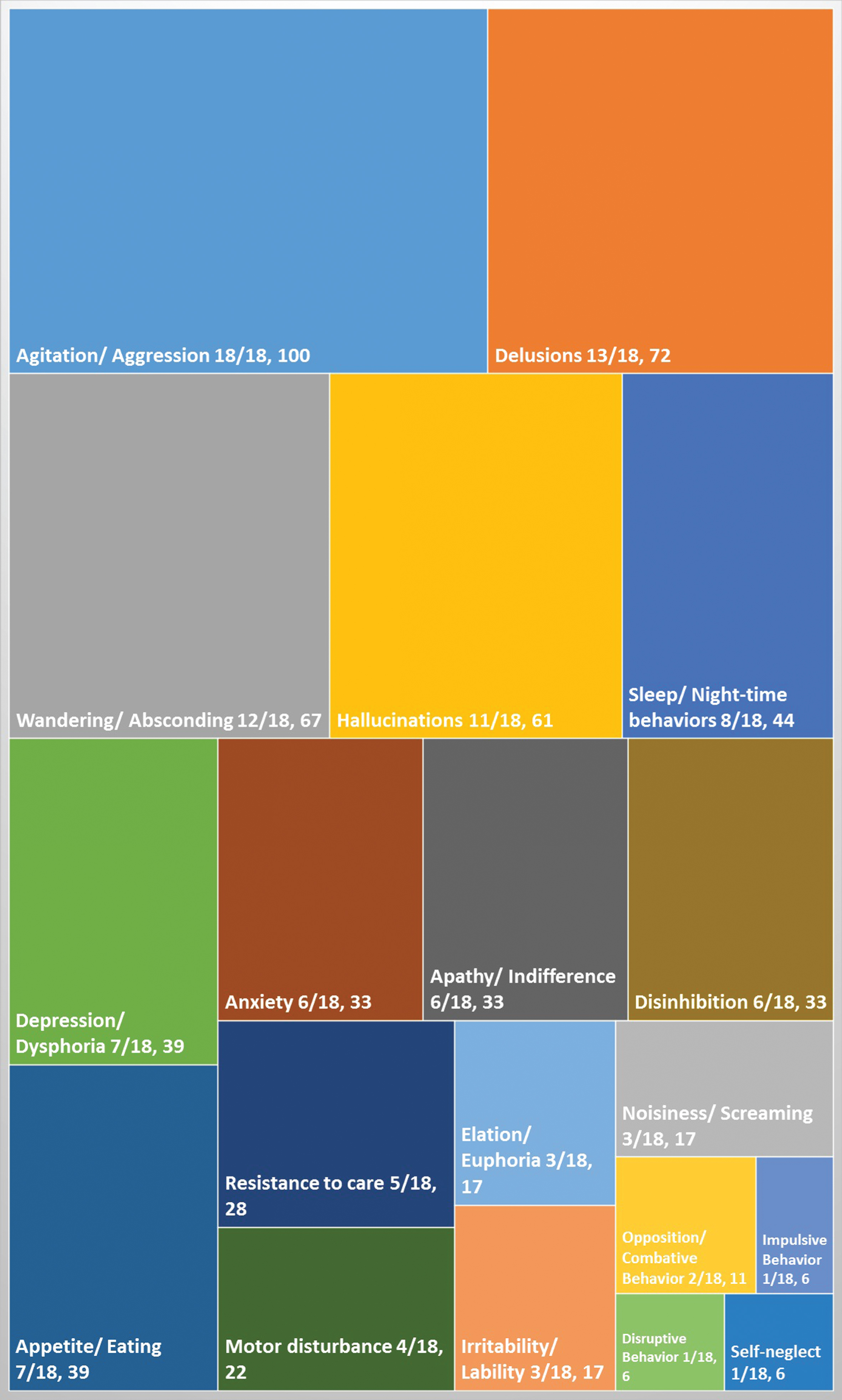
Reported behaviors at the time of crisis by number and percentage of studies (n/18, percentage).
Where were PwD residing at the point of the crisis?
Table 2 shows details of the behavioral crises across all included articles and studies. People experiencing dementia-related behavioral crises predominantly resided at home (reported in 13/18 studies; 72%); however, a substantial proportion also resided in long-term care 12/18 (67%), and some in hospitals 5/18 (28%). The category “home” included people living alone, with family or with spouse, although many studies did not specify beyond “home”.
Behavioral crisis details
24 articles included in the review describing 18 distinct studies. Grouped articles [31–33; 34–36; 37, 40] may report different outcomes from the same study and therefore be cited in different sub-categories. Categories are not mutually exclusive: numbers and percentages describe the amount of articles or studies reporting each sub-category.
Characteristics of PwD
Participants’ mean ages ranged from 61–84, mean 78 years. Thirteen out of the 18 studies (72%) reported a majority of female participants ranging from 56–78% in each study. Four studies reported more males than females [37–40, 47], with two of these having all or 98% male participants [37–40]. All studies reporting predominantly male participants were all set in units providing psychiatric care. Five studies (28%) reported participants’ ethnicities [30, 48]. All 5 reported that the majority of PwD had been Caucasian (between 55–82% of participants in each study), 3 of these reported between 15–39% of participants as being African American [37, 48], and 1 reported 5% of their sample as being Hispanic [37, 38]. Afram et al. did not specify demographic details for patients, but focused on those of the informal caregivers [42].
Where were PwD treated during the crises?
Those experiencing behavioral crises were predominantly admitted to psychiatric units (9/18 studies; 50%) some of these specialized in geriatrics [30, 46] and some did not. People were also admitted to specialist dementia units (3/18; 17%) or community services (3/18; 17%). Other institutions included long-term care facilities, a behavioral unit and a geriatric unit. Of note, long-term care is used here to cover multiple types of institution people lived in to receive care. These included nursing homes, care facilities, hostels (aged care housing), rest homes, assisted living facilities, and residential homes. Hospitals included state hospitals, medical hospitals, local hospitals, general hospitals, public health hospitals, and the emergency room. Three studies (17%) reported patients being admitted under the legal processes of civil commitment or the Mental Health Act (involuntary hospitalization) [39, 46]. In one of the studies, all patients were brought to the hospital under civil commitment, 37% of these gave voluntary consent on admission, but 63% remained under civil commitment [46]. In the other two studies, 8% [43] and 48% [39] of participants were legally detained. Seven out of the 18 studies (39%) reported patients in the sample being re-admitted to the institutions within the study timeline or who had had previous admissions [28, 43, 47].
Length of stay was not always applicable (1/18 studies) or specified (6/18). 22% of studies (4/18) reported an average length of stay of 61 days or over, 11% (2/18) 31–60 days, 17% (3/18) between 8–30 days, and 1 study (6%) reported up to 7 days. Two studies reported permanent institutionalization in long-term care due to behavioral crises [41, 42].
Is dementia stage associated with greater risk of behavioral crisis?
Stages of dementia were reported in 13/18 (72%) studies. The most commonly used assessment to determine stage of dementia was the Mini-Mental State Examination (MMSE) (11/13 studies) with means reported between 6 and 15. Most people included in the studies were in the moderate (reported in 3/13 studies; 23%) or severe (9/13; 69%) stages of dementia.
How were behavioral crises evaluated?
Once PwD were admitted or receiving community services, behaviors were assessed in a variety of ways. The most common measure used was the NPI (5/18 studies; 28%), with the CMAI (2/18; 11%), the BEHAVE-AD (1/18; 6%), the Brief Psychiatric Rating Scale (BPRS) (1/18; 6%) and the Dementia Behavior Disturbance Scale (DBDS) (1/18; 6%) also used. Of relevance, 10/18 studies (56%) did not use measures or scales to assess behavior. Instead, these studies gathered information on the behaviors present through unstructured informant accounts of the reasons for institutionalization [41, 42] or hospitalization [43], assessing patient notes/records retrospectively [43–45, 49], or medical staff prospectively documenting reasons for admission [32, 39, 40, 46].
How were behavioral crises dealt with?
Crisis intervention or resolution strategies varied across the studies. Nine out of 18 studies (50%) reported using both pharmacological and non-pharmacological interventions and 5/18 (28%) used pharmacological interventions only. Where non-pharmacological approaches were specified, they included reduction of stimuli [27, 48], modifying the environment [27, 36], activities [36], reduction of physical and pharmaceutical restraints [27], individualized interventions [39, 48], changing staff perceptions of behavior [50], counseling programs for relatives [28, 41] and patients [38], group therapies [40], educating caregivers [28, 36], and occupational health input [35, 36]. Clinical or medical interventions included reducing pain, promoting nutritional intake and function [27, 36], physical assessments [28], and multidisciplinary input [28, 38]. Pharmacological interventions included psychotropic drugs [27, 50], medication reviews or adjustments [28, 40], or the use of cholinesterase inhibitors [36], and yi-gan-san [36].
Where were PwD discharged to after the crises?
Seven studies (39%) did not state the living situations of the participants post-crisis. Often studies reported more than one post-crisis destination, depending on each participant’s individual situation. Overall, 14/18 studies (78%) reported some participants returning to live in long-term care, 12/18 (67%) to their own homes, and 9/18 (50%) in hospitals. 22% of studies (4/18) reported patients dying during the research. There was a slight increase in studies reporting long-term care as a post-crisis destination (14/18, 78%) compared to those reporting it as a pre-crisis residence (12/18, 67%).
DISCUSSION
Summary of evidence
In this systematic review, we identified 18 studies (24 articles) that described behavioral crises in dementia. Agitation and aggression were reported as key behaviors at crisis point in all studies. Delusions, wandering/absconding, and hallucinations were also major behaviors contributing to crises. Behavioral crises predominantly happened in the severe stages of dementia (according to MMSE scores) and often led to admissions to psychiatric care or specialist dementia units, or to use of community services. People experiencing crises lived both in the community and in care homes. There was some evidence that crises are not being resolved long-term, since seven studies reported the same patients being re-admitted within the study timescale.
A recent online survey asked stakeholders in the United Kingdom to rank multiple risk factor categories for crises in dementia. Wandering, physical aggression, and sleep disturbances were perceived as the three main behavioral risk factors causing crises in dementia [51], while focus groups with carers found that wandering and physical aggression could be a cause of concern [52]. Our findings support these, but also highlight the role of delusions and hallucinations as contributors to behavioral crises in dementia, for which we cannot rule out the possibility of delirium.
This review has revealed there is little good quality evidence showing how best to manage behavioral crises in dementia. Interventions employed to resolve crises were often not clearly specified. Where they were specified, they were individualized to each patient making the actual intervention delivered difficult for authors to report and for this review to determine. Similarly, behaviors in the studies included here were not assessed or represented in a uniform way, e.g., behavior descriptions were assessed formally by clinicians, taken from patients’ notes, or reported by informal carers or care-home staff. Therefore, differences in the perception and categorization of behaviors is likely to have been present. This was reflected in the varied terminology used when reporting behaviors, which made the synthesis of them problematic. Additionally, from the information reported we could not determine whether behavioral crises occurred due to facility and/or caregiver variables or PwD variables. We recommend that studies use a validated behavior tool to assess and describe behaviors and that caregiver factors are also considered, with both reported clearly.
Related to the above, this review also uncovered the lack of consistency in management of agitation/aggression in dementia-related behavioral crises. Even though all studies identified aggression/agitation as a key BPSD leading to the crisis, a wide range of pharmacological and non-pharmacological approaches were used to manage behaviors, with half of the studies using a combination of the two. Perhaps clear and consistent international guidelines incorporating a multicomponent approach would not only help in the management of such challenging crises, but also inform future systematic investigations of the efficacy of such clinical approaches.
It is of note that MacNeil Vroomen et al. [11], when reviewing the definition of crisis in dementia care found that general practitioner (GP) management, increased information to GPs and informal caregivers about dementia, case management, and careful management of drug therapy were recommendations when BPSD were predictors or stressors of crises. While our findings included interventions similar to the latter two, they did not include the two former methods. This may have been due to our review only including actual incidents of crises which may have been too late for GP management or information to have an effect, whereas the MacNeil Vroomen et al. review included any emergency themes related to dementia care.
In 2007 in England, only one in six National Health Service Trusts provided crisis support to older people and only a tenth of areas provided crisis resolution team support to PwD [53]. Since then, dementia crisis teams have developed in some areas to support PwD and their carers with the aim to improve care and reduce admissions. Their effectiveness is currently being evaluated by the Achieving Quality and Effectiveness in Dementia care Using Crisis Teams (AQUEDUCT) study [54]. Findings from this ongoing study may complement this review by providing evidence relating to the role of dementia crisis teams in preventing and managing crises.
International differences were present amongst the studies included in the review. Differences were found in the measures used to assess behaviors across countries (i.e., CMAI and BPRS used in the USA, BEHAVE-AD in Japan, and the NPI in Italy, France, Canada, and the USA). The clear differences in practice between countries were not reflected in crisis interventions. Here the lack of consistency pervaded across all countries and regions with no patterns detected. One exception was Specialist Dementia and Geriatric Units, which were only found in Europe. An international approach to using the same standardized measures to assess diagnoses and behaviors would assist future comparisons and synthesis of results. Additionally, research clearly detailing the crisis interventions and care approaches used in particular institutions would enable shared learning to develop practices worldwide.
It is clear that more research is needed to determine interventions and models of care that may lead to fewer crises. These models of care would not have the scope to prevent all behavioral crises, but would likely address a great proportion of them by working early and continuously with the family and/or care setting accordingly. Continuity of care is also likely to be more cost effective [55, 56], not only from a financial perspective but also in regards to the wellbeing of the PwD and their carers.
As the prevalence of dementia increases across the globe and more people experience behavioral crises, services will need to adapt to help prevent and manage BPSD more effectively. It is important that these behaviors are managed as successfully as possible to reduce distress for the person with dementia and pressures on those caring for them. The findings from this review have relevance for multiple disciplines including neurology, dementia, gerontology, psychiatry and for community and acute psychiatric services.
Strengths and limitations
The strength of this review is the strict inclusion criteria used to gain information reporting factors on actual behavioral crises. Additionally, we used standardized procedures for extracting data from included studies. However, we did include studies using many different methodologies, covering different settings and using various assessments and measures which made the data difficult to synthesize and compare. It is also possible that not all relevant records were retrieved from our search due to the term “crisis” not being explicitly used in all research. Although we systematically judged the quality of articles, we did not exclude on the basis of low quality due to the exploratory nature of this review and our aim to maximize the information we could gather. Therefore, although we highlighted the quality of the individual articles, some evidence presented was rated as weak. Our review did not aim to investigate means of preventing crises, and this is largely still not well understood, and would be useful to inform models of care and services to prevent and manage crises in future.
Risk of bias across studies
The majority of the studies included in this review published data on admissions to psychiatric care generated through chart review so may not represent the general dementia population. Some behavioral crises may occur in the community, but have not been identified in our study due to the lack of community-based studies examining and reporting this issue. Additionally, smaller actions taken to resolve crises may not appear in our results.
Conclusions
Dementia-related behavioral crises are often precipitated by aggression and/or agitation. They predominantly occur in the severe stages of dementia and in both community and care home settings. Interventions and services to prevent and manage dementia-related behavioral crises should consider targeting people in the moderate to severe stages of dementia and their caregivers, focusing on people living in family homes and in care homes, and concentrate on reasons behind aggressive and agitated behaviors. More good quality research is needed to determine: clear factors that could be addressed to prevent behavioral crises; whether crises are related to the individual, their caregivers or both parties not managing; the role of dementia subtypes in behavioral crises; models of care that may lead to fewer crises; which interventions are best placed to prevent or manage behavioral crises in dementia.
Footnotes
ACKNOWLEDGMENTS
This review was conducted at the University of East Anglia following the receipt of Research Capability Funding from the Norfolk and Waveney CCGs. The views expressed are those of the authors and do not necessarily reflect those of the Norfolk and Suffolk Primary and Community Care Research Office, the Norfolk and Waveney CCGs or the University of East Anglia.
