




Abstract
In order to better describe the spatial distributions of characteristic parameters for plasma generated by hypervelocity impact, a large number of experiments have been performed by using two-stage light gas gun loading system and measurement system of plasma characteristic parameters. Based on experimental results determining the splash process, the expanding process of the plasma cloud ejected is obtained near the impact point. For physical process of oblique collision, the expansion of plasma cloud is approximately ellipsoidal distribution. Based on expanding characteristics of plasma cloud determine the space layout of triple Langmuir probe, characteristic parameters of plasma generated by hypervelocity impact are acquired at the incidence angles of 45
Keywords
Introduction
When a meteoroid or a meteorite collides with the interstellar surface, the debris clouds ejected contain plasma in the early collision process, which results in a large, short-lived magnetic field. Most of the hypervelocity impact ejected from the interstellar surface contain plasmas. We believes that the debris cloud expands outward at an average speed of 8 km/s at the later stage of the collision, and the magnetic field will increase. The formation and evolution of the transient magnetic field inside the plasma is caused by hypervelocity impact, which covers three stages of penetration, cavity formation and later expansion of the vapor cloud. The theory that hypervelocity collisions produce plasmas and transient magnetic fields may explain the residual magnetic field of the moon’s surface [1, 2, 3, 4]. Pert [5] derived the model of collision plasma generated in his work, then Hood and Vickery pointed out that the decisive significance of the internal electron density and temperature gradient in plasma cloud generated on the laboratory scale [4, 5, 6, 7, 8]. However, the establishment of the characteristic parameter’s distribution for plasma generated by hypervelocity impact is still blank at home and abroad at the different spatial positions in some space region [9, 10, 11, 12, 13, 14, 15, 16, 17, 18]. In order to avoid the influence of too much sensors placed to the experimental results at the same experiment. Spatial distribution models of the maximum electron temperature and the density are established through installing sensors at the different spatial positions based on the large number of similar parameter’s hypervelocity impact experiments, the characteristic parameters of plasma are obtained through experimental data acquisition and MATALB software programming treatment.
Experiment
The experiments have been performed on the two-stage light gas gun at the Intense Dynamic Load Research Center of Shenyang Ligong University. The two-stage light gas gun can accelerate the spherical aluminum projectile of 4.8 mm diameter to 7 km/s, and the vacuum capacity of the target chamber can reach 10 Pa. The projectile is a 2A12 aluminum ball with a diameter of 4.8 mm, and the target is 2A12 aluminum plate with length
Structural scheme of the two-stage light gas gun loading system.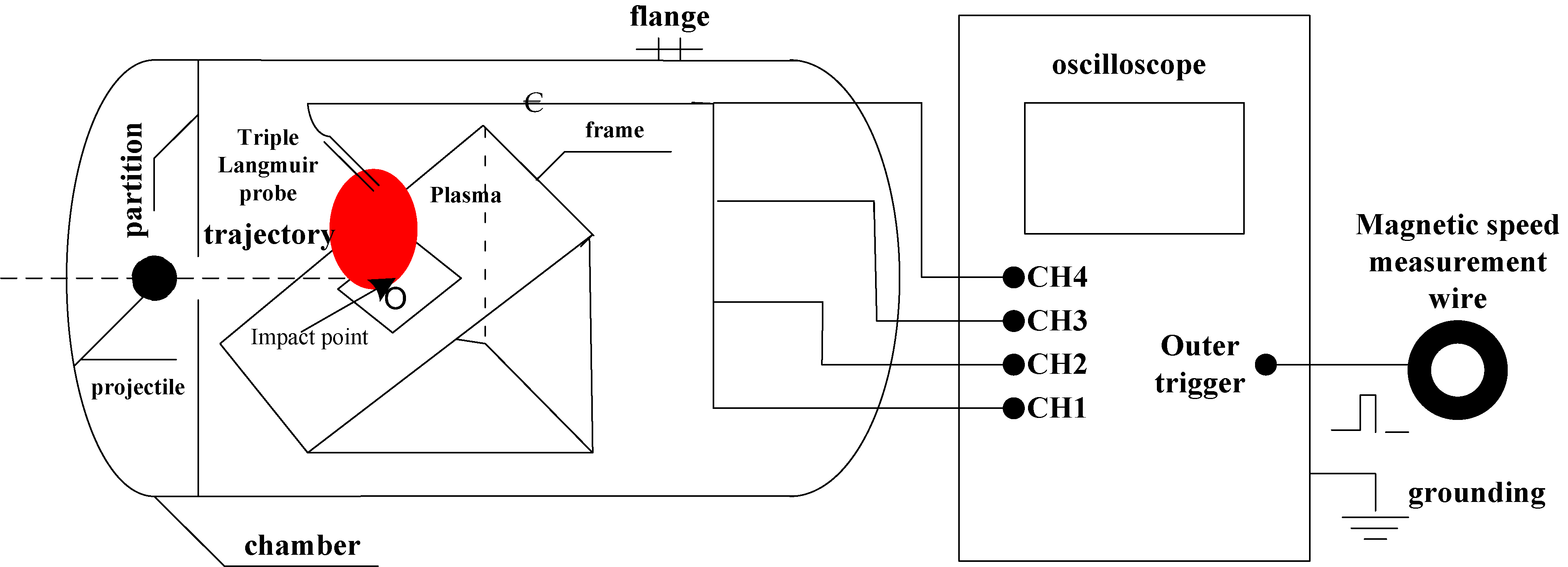
Diagnostic system of plasma characteristic parameters
The diagnostic system of plasma characteristic parameters mainly includes Triple Langmuir Probe (TLP) [19], diagnostic circuit, oscillograph and DC power supply. The TLP is used to diagnose the electron temperature and density of the plasma. The TLP is fixed above the target, and the TLP is aligned with the impact point. The TLP is made up of 3 single core coaxial cables, which type is SYV50-3. The cable was stripped off the outer skin, shielding net and outer plastic shell. The TLP is made of copper wire with a length of 6 mm and a diameter of 0.28 mm. In the experiments, the DC power supplied by the 18 V and 3 V dry batteries provides DC bias for the TLP. When the detection point does not appear the plasma, the whole system is open, and potential does not change in the four channels of the oscilloscope; when the detection point produces plasma by hypervelocity impact and the plasma density is large enough, the whole system will be in a closed state, the voltage changes of each branch are recorded and stored in a closed circuit by oscilloscope. Figure 1 is a schematic diagram of the diagnostic system circuit for Triple Langmuir Probe.
Schematic diagram of diagnostic circuit for Triple Langmuir Probe.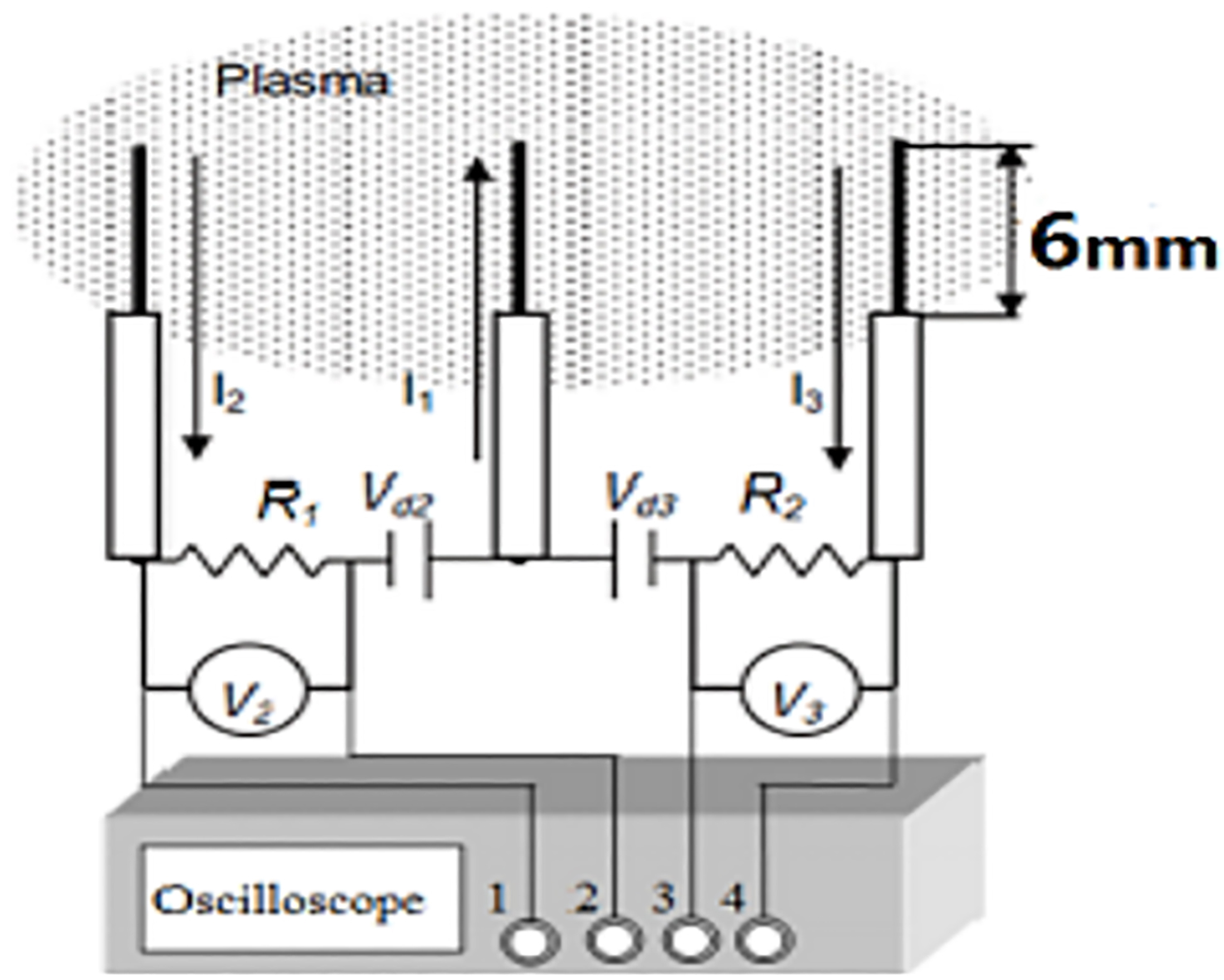
According to the principle of Triple Langmuir Probes proposed by Chen and Sekiguchi, the electron temperature Te and electron density
Wherein,
Wherein,
The impact point as the origin of coordinates of O (0, 0, 0), pointing to the trajectory direction as the positive direction of space coordinate of the Y axis perpendicular to the target plane and direction upward as the positive direction of the Z axis, X axis direction meet the right hand rule. In the experiments, the exposed portion of the TLP is always pointing perpendicularly to the target. The spatial coordinates of the experimental system are shown in Fig. 3.
Space coordinate system of the experimental system.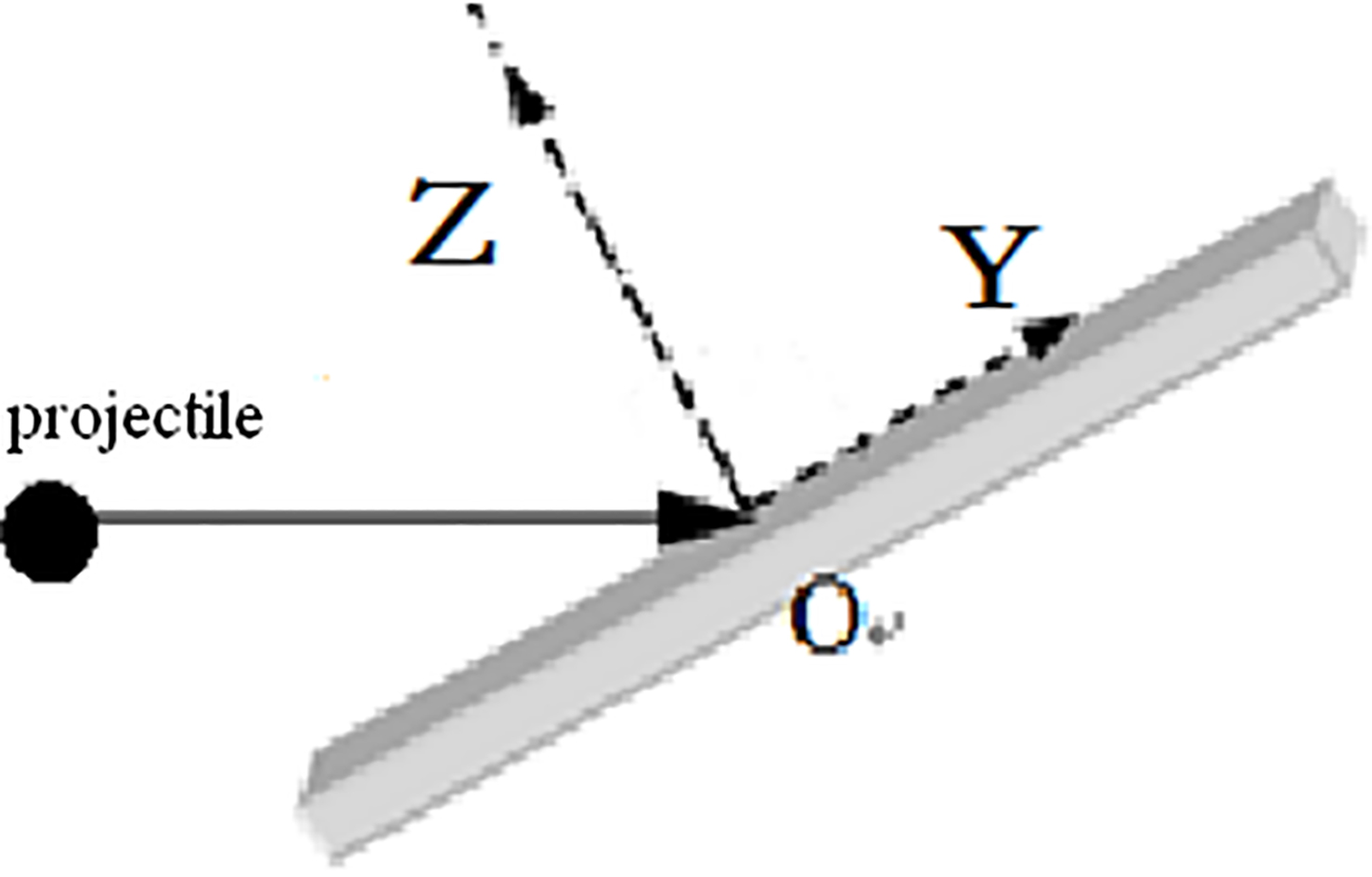
Electron temperature and density under the typical experimental parameters
Based on the diagnostic principle of TLP and Matlab software programmed, the variable curves of the electron temperature and the density for plasma with time are obtained from 2 group typical experiments. The electron temperature and density of the plasma are shown in Figs 4 and 5.
Variation of electron temperature and density with time.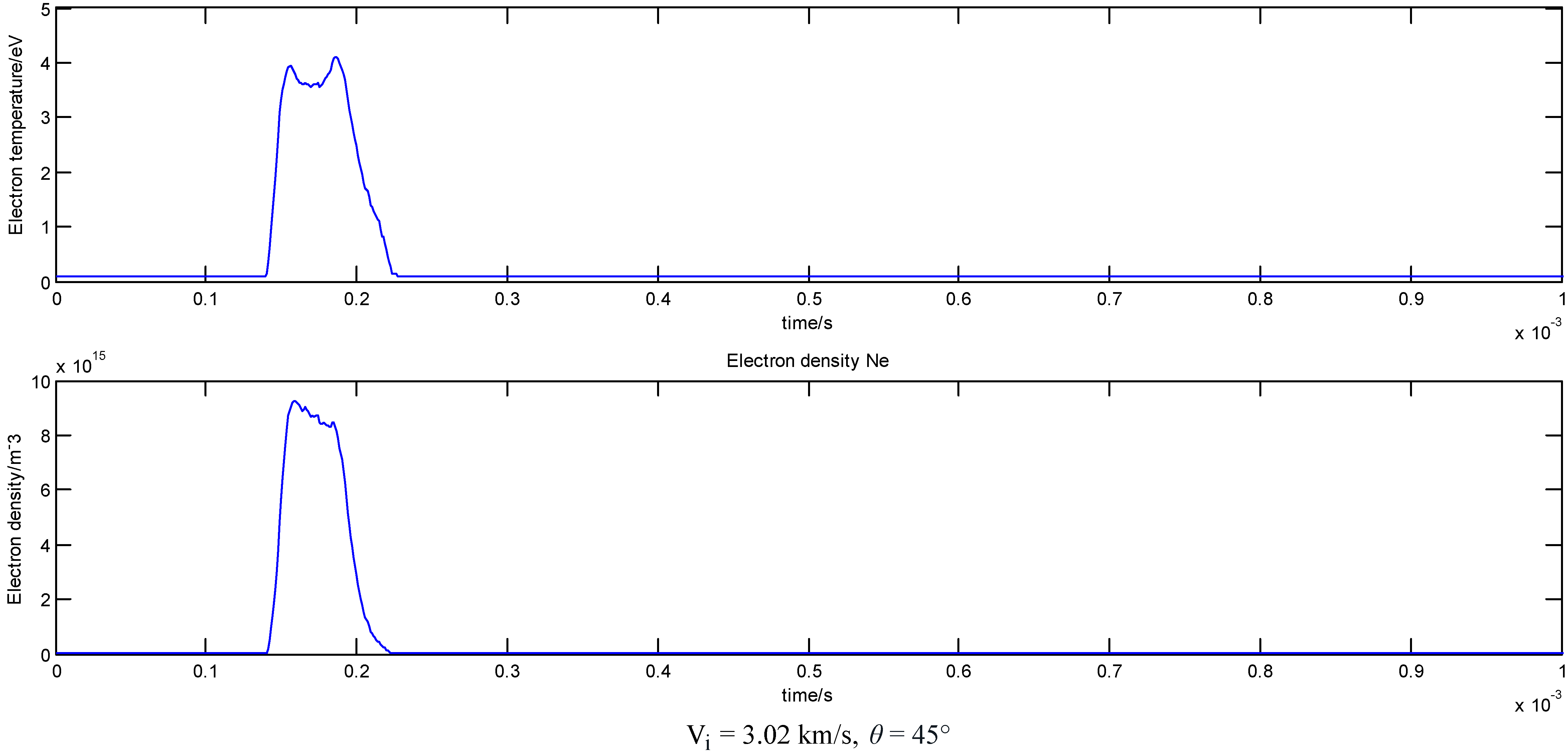
Variation of electron temperature and density with time.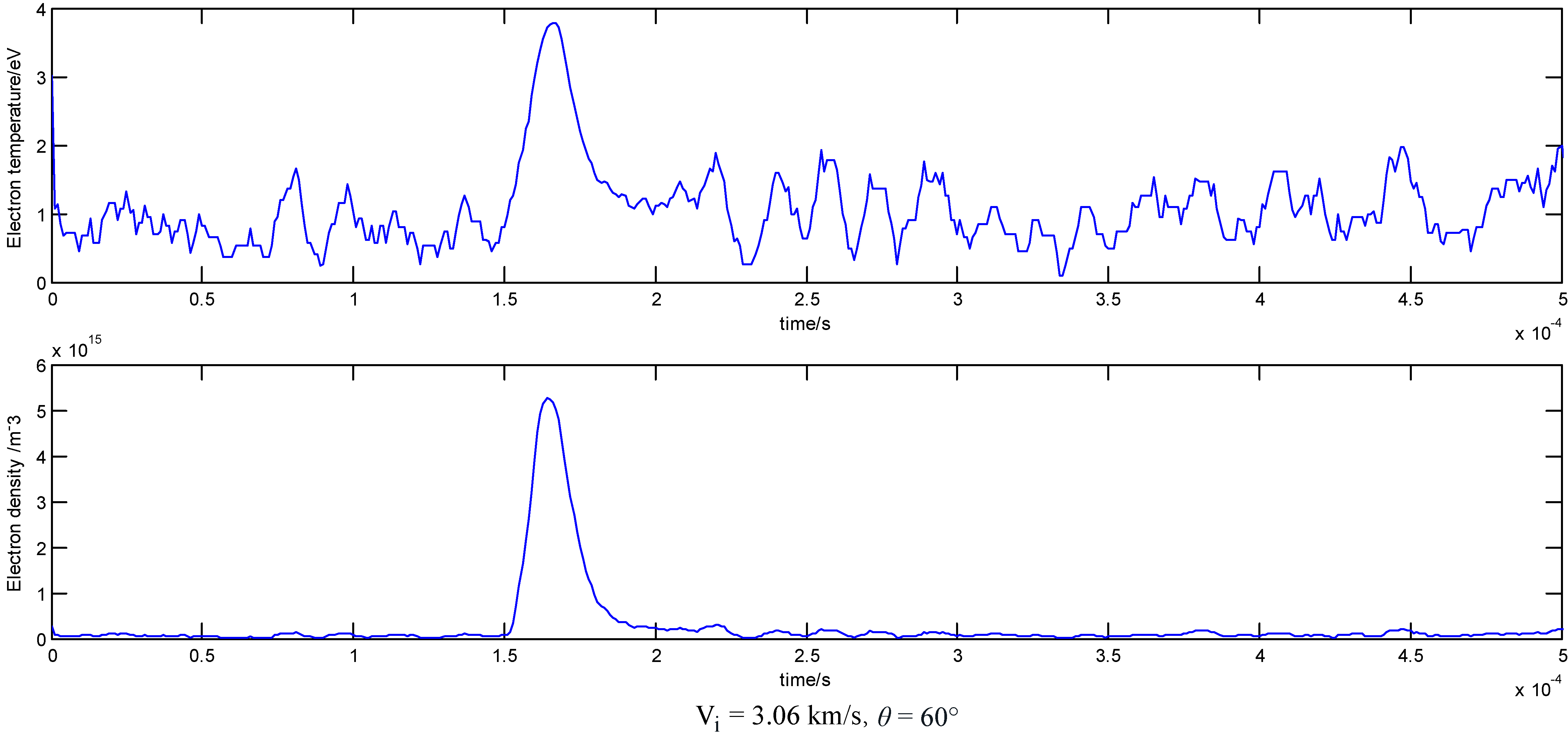
As can be seen from Figs 4 and 5, the electron density and temperature of the plasma produced by hypervelocity impact are experienced from the appearing and rising gradually to the peak and then disappearing slowly. At the impact moment, the energy changes rapidly and resulting in partial high temperature. Ionization of some substances in the ejecta results in a plasma cloud, which increases the electron density and temperature of the plasma. We can see from Fig. 5 that the the data was more noiser for the incidence angle of 60
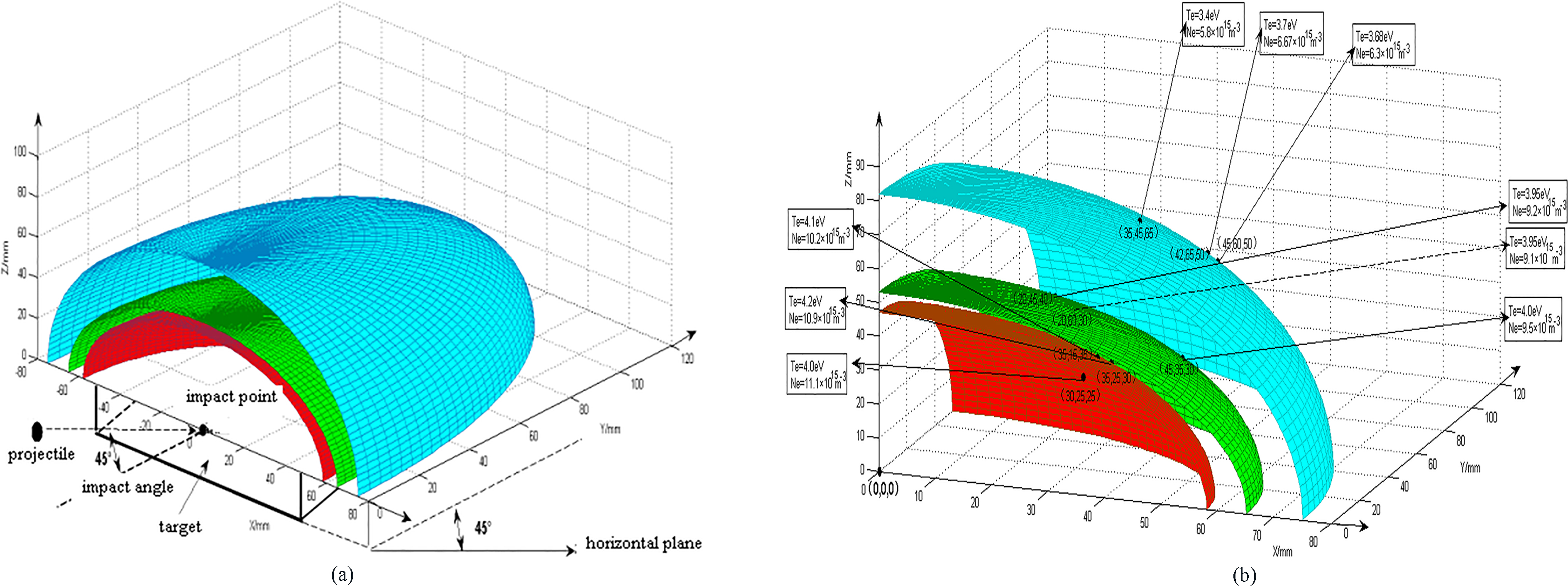
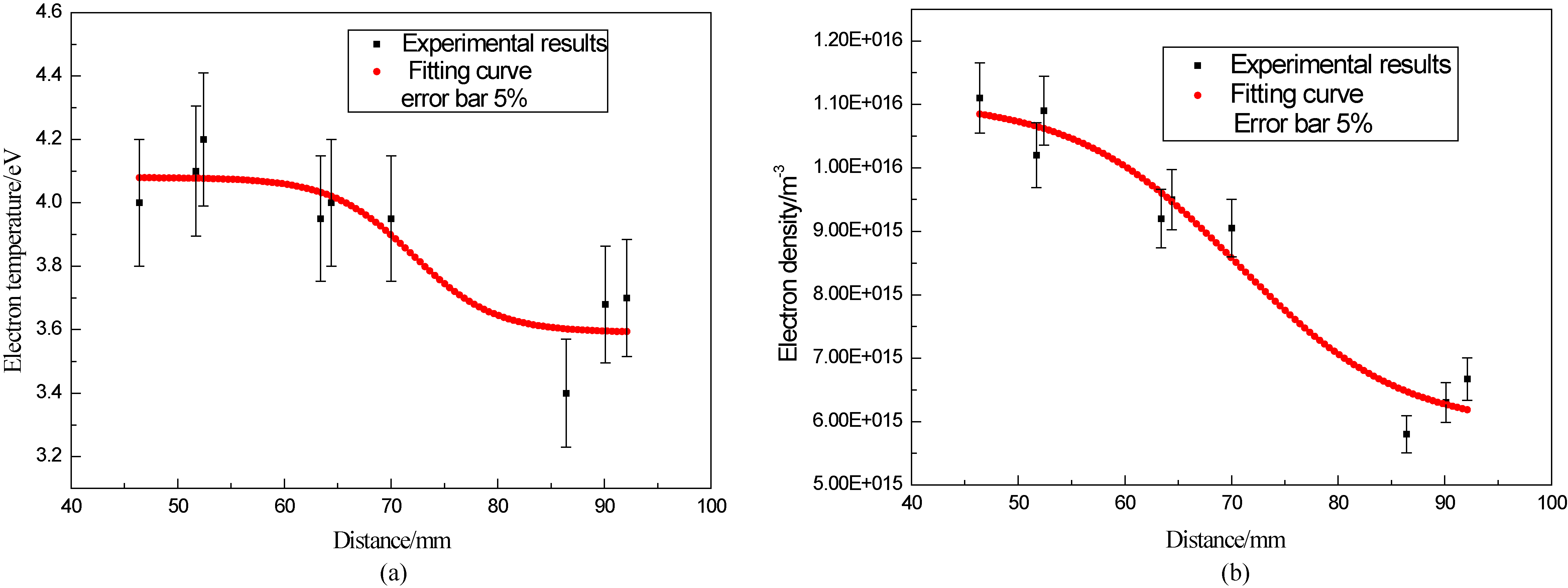
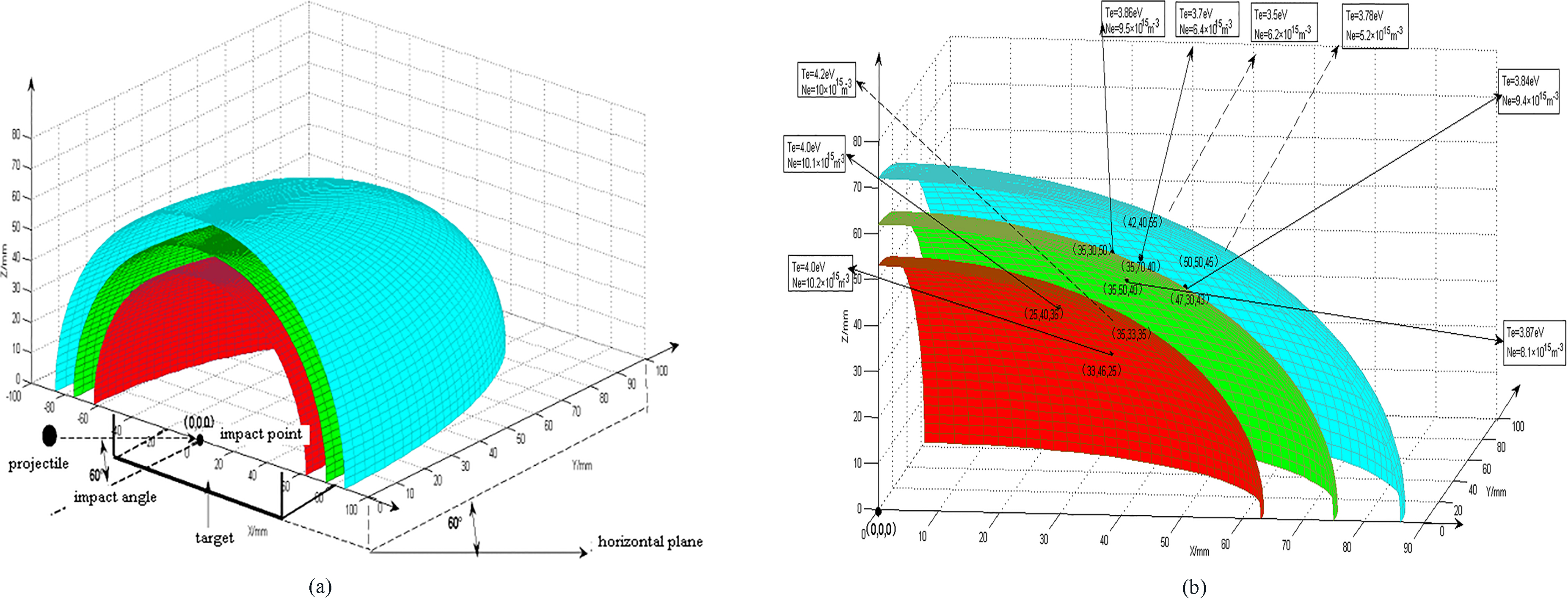
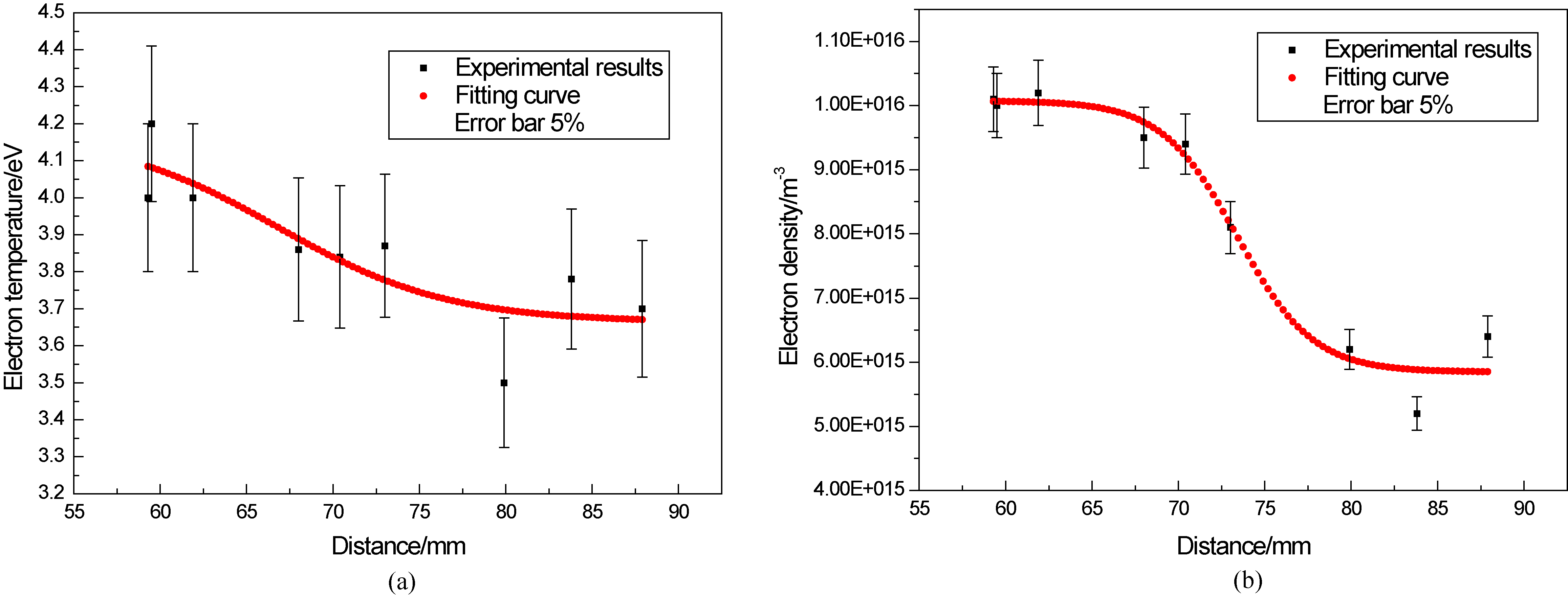
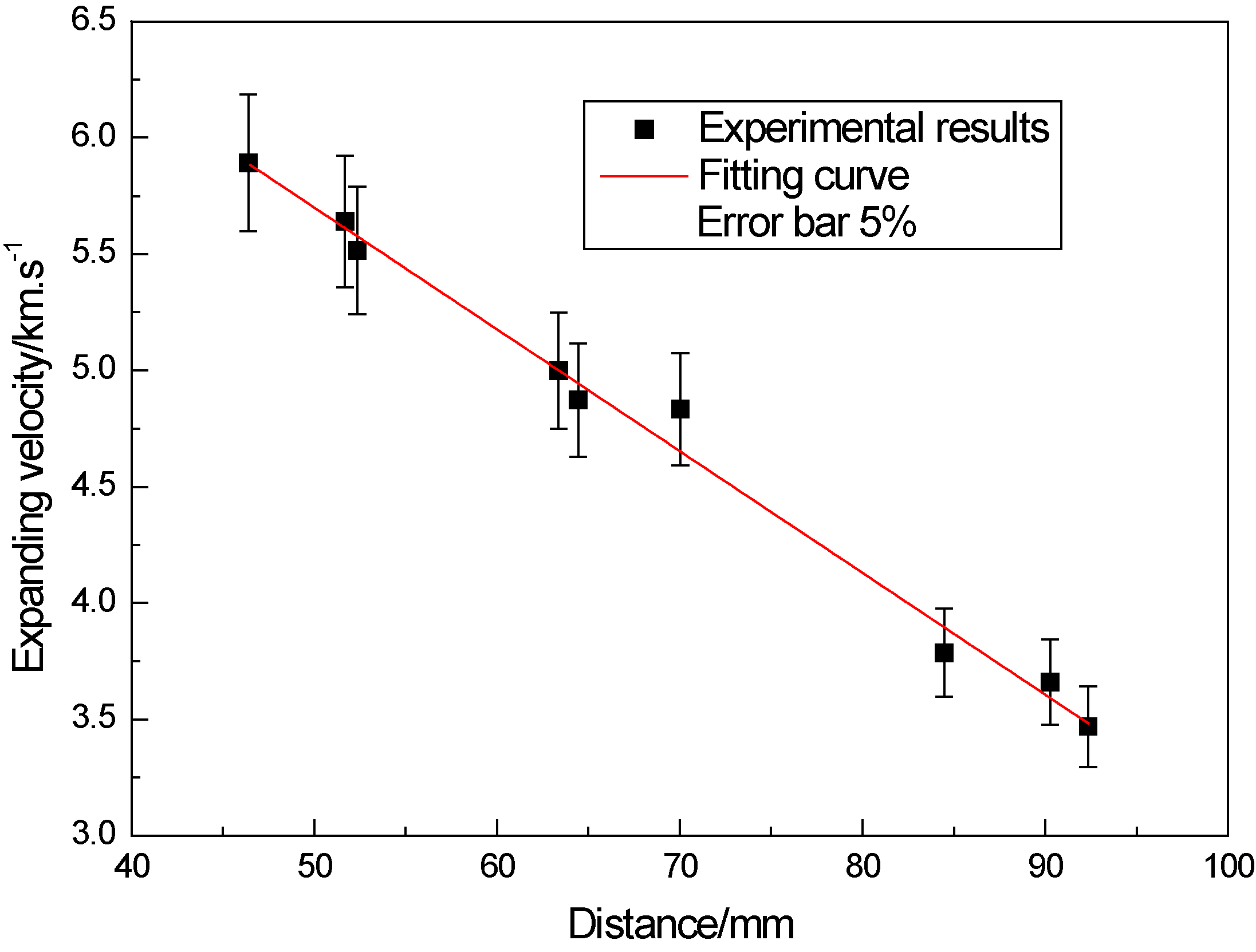
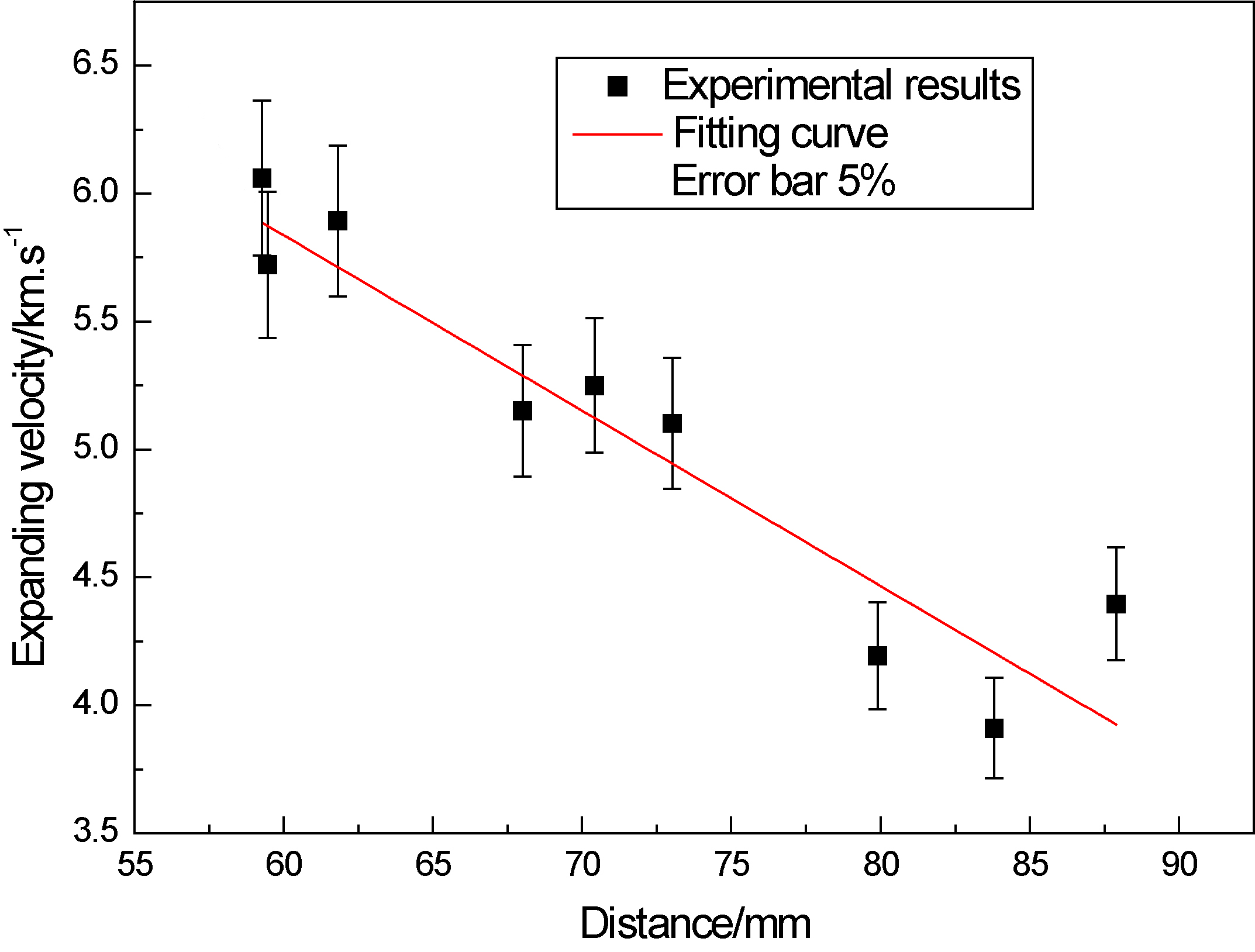
In order to establish the spatial distribution model of the characteristic parameters for the plasma generated by hypervelocity impact, Experiments are carried out by hypervelocity impact on 2A12 aluminum plate at the near impact velocities and incidence angles (trajectory and target plane) of 45
Experimental parameters and corresponding characteristic parameters of plasma
Experimental parameters and corresponding characteristic parameters of plasma
Footnotes
Acknowledgments
Supported by National Natural Science Foundation of China (Grant Nos. 11472178, 10972145, 11272218); supported by Program for Liaoning Excellent Talents in University (No. LR2013008); supported by Open foundation of the State Key Laboratory of Explosion Science and Technology, Beijing Institute of Technology (Grant No.KFJJ18-04M).