



Abstract
This paper discusses engineering-oriented magnetic material property modeling, fully taking into account the requirements posed by industrial applications, involving the magnetic properties measured under both standard and extreme conditions, the combination of material modeling and numerical analysis, and the validation of modeling and simulation. It presents some application notes on typical magnetic measurement and modeling, concerning the Epstein combination and data weighted processing method, the additional iron loss caused by 3-D excitation, the examination of magnetic flux inside laminated stacks, and the effect of both B-H curves and solvers on loss analysis, based on the authors’ recent research. In addition, future research projects on the determination and application of the magnetic material properties, under practical working conditions, are proposed.
Keywords
Introduction
With the increase in the voltage and the capacity per unit of electrical equipment, to the highest level in the history of mankind [1], there have been a more stringent requirement for efficient computer-aided analysis and design techniques, in particular with regards to the accurate modeling of magnetic material properties. When simulating low voltage/capacity equipment, certain errors in the approximations used in the numerical computations, are not critical, but these must nevertheless be considered for the case of ultra high voltage(UHV) and very large capacity equipment. The great progress in power transformers is depicted in Fig. 1 [1, 2].
Power transformers: (a) The first core-type transformer (1884, Ganz), (b) 1000 MVA/1000 kV transformer (UHV, 2008, Baobian Electric, Baoding), (c) 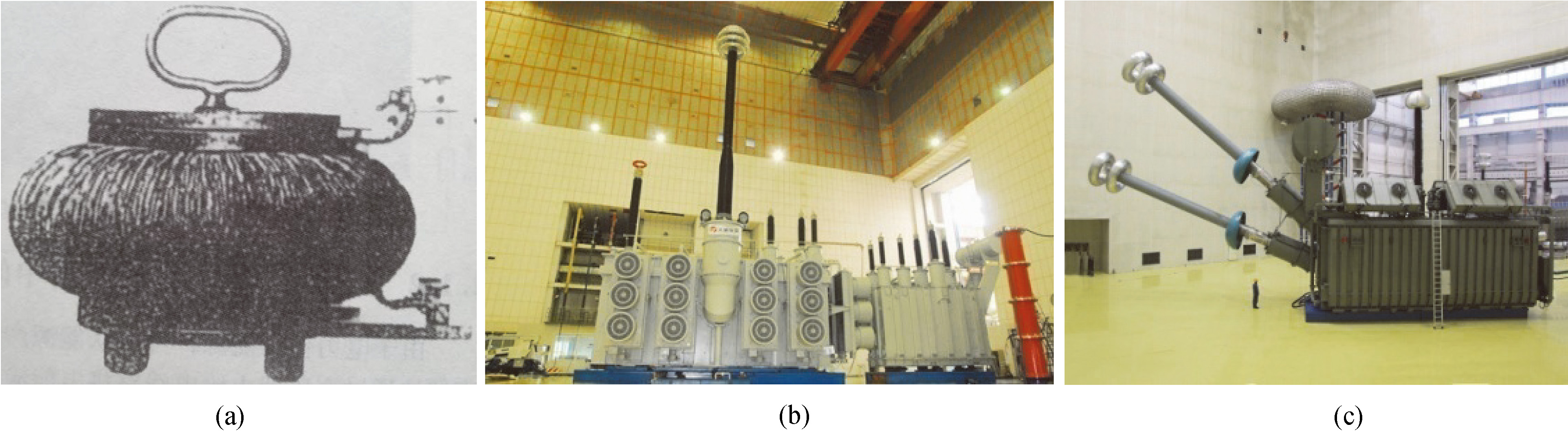
It is well known that the magnetic properties of materials used in industrial applications are usually measured under specified standard conditions [3, 4, 5, 6], which may be considerably different from the real working conditions of the material when used in the components of a device running under some very extreme magnetization excitations [7], which may include multiple harmonics and/or a DC-bias. For an accurate simulation, such working material property data are needed and should be supported in the simulation code.
Meanwhile it should be noted that the research and development related to advanced material modeling techniques [8, 9, 10, 11, 12, 13, 14, 15, 16, 17, 18], at the present, is not fully integrated in the everyday computer modeling and simulations. However, the application of advanced material property modeling techniques, in combination with an efficient numerical analysis system, is very important, relevant not only to the material modeling and measurement methods themselves, but also relevant to material manufacturers, power transmission and transformation equipment manufacturers, requiring consensus and cooperation between the industrial and scientific communities.
Furthermore, due to today’s more stringent requirements, the validation of modeling and simulation under extreme conditions has become more and more important and challenging. It requires an advanced physical and numerical model design, sufficient material property data, efficient computational methods, and well-established experimental techniques, taking the extreme conditions into account.
This paper presents application notes on engineering-oriented magnetic measurement and modeling, including the comprehensive reexamination and practical improvements in classical magnetic measurement techniques [19, 20], the detailed electromagnetic behaviour inside GO steel laminations [21, 22, 23], the additional iron loss induced by 3-D leakage flux [21], and the evaluation on the use of magnetization data [22], etc., based on the authors’ recent research works.
In this section, some typical engineering-oriented researches and application practices in magnetic property modeling conducted by the authors, which are intended to be helpful for industrial magnetic measurements, evaluation of the measured magnetic properties, and industrial applications, are briefly overviewed.
Epstein combination and data weighted processing method
The Epstein frame method for measuring magnetic material properties has been used for many years, however some problems are still worthy of further investigation, e.g., its mean magnetic path length and the non-uniformity of the electromagnetic field and magnetic loss inside the frame.
The extended modeling of the magnetic properties of GO electrical steels was investigated based on a set of standard (25 cm) and scaled-down (17.5/20 cm) Epstein frames [19, 20], as shown in Fig. 2a. Here two assumptions were made:
The non-uniform magnetic field/loss distribution over the corner regions of both the standard Epstein frame and the scaled-down Epstein frame are identical, despite the difference in their limb sizes; The magnetic field/loss is uniform over the middle section of each limb. See Fig. 2b.
The mean magnetic path length,
where
Extended Epstein application: (a) Epstein combination (E-25/20/17.5) [20], (b) Non-uniform field in frame.
The mean magnetic path length,
In order to obtain a closer approximation to the mean magnetic path length of the standard Epstein frame,
A proposed weighted processing of the Epstein data covers the following themes:
It shows the benefit of establishing an Epstein set, combining one standard frame (25 cm) and two scaled-down frames (17.5 cm and 20 cm), referred simply to as E-25, E-20 and E-17.5, into two Epstein groups, 2E(25-17.5) and 2E(25-20), respectively; It demonstrates the use of a weighted processing method, proposed by the authors, which is based on the loss data and can be applied to reasonably determine the mean magnetic path length of the Epstein frame under various conditions; It examines the effect of the grade and texture of GO electrical steel, flux density, magnetizing frequency, ambient temperature, and the angle at which the Epstein strips are cut to the rolling direction (RD), on the specific magnetization loss and exciting power (or specific apparent power).
The weighted mean magnetic path lengths of the standard Epstein frame (E-25) were determined for the 30P120 grade steel, using Epstein group 2E(25-17.5) at 50 Hz, as shown in Fig. 3. The typical trends in the variation of the path length with magnetic flux density and strip angles can be summarized as follows:
While The mean magnetic path length of the standard Epstein frame (E-25) is not always 0.94 m, as specified in the IEC standard [3], e.g., shown in Fig. 3b and c. It is approximately 0.93 m for the strip angle 55
Variation of mean magnetic path length of the Epstein frame (25 cm) with flux density measured using 2E(25-17.5), at 50 Hz, 30P120: (a) Strip angle 0
In standard magnetic measurements, the excitation is either one-dimensianal (1-D) or two-dimensional (2-D). However, the magnetic components of electromagnetic devices are usually subjected to a three-dimensional (3-D) excitation.
A typical example is when the 3-D magnetic leakage flux enters the laminated core of large power transformers, as shown in Fig. 4. In this scenario, the normal component of the 3-D leakage flux induces considerable local eddy currents in the core’s laminations, which must be taken into account at the design stage. Consequently, the tie-plates and the adjacent laminations of large transformer cores have to take a ‘split-structure’ to reduce the eddy currents and avoid possible local overheating. See Fig. 4a.
Additional core loss modeling: (a) Transformer core, (b) Induced eddy currents in laminations.
Note that the calculated total loss,
In order to determine the eddy currents induced only by such normal magnetic flux, the conductivity in the direction normal to the laminated sheets is enforced to be zero. In this way, there are only 2-D induced eddy currents,
Table 1 shows the results of both additional loss
The standard loss and additional loss (Model P21
It should be noted that not considering the additional iron loss will lead to a deviation of the building factor (B.F.), which is given as
The calculated total loss in Eq. (4) does not includethe additional iron loss induced by the normal leakage flux. It results in an increase of the building factor, but it is not caused by a manufacturing process.
In order to investigate the distribution of flux density inside laminated sheets in detail, a TEAM benchmark model, P21
Measurement of flux density inside laminated sheets: (a) P21
The measured and calculated waveforms of the flux density inside different laminar layers (form nos 1 to 4), at an exciting current of 25 A (rms, 50 Hz), agree well, as shown in Fig. 6.
Note that the waveforms of the flux density inside the laminated sheets have different distortion-levels in different sheet-layers, which show the non-uniformity of the flux densities inside the laminations.
In other words, this demonstrates the difference in the magnetic properties between a single sheet and a magnetic component consisting of laminated sheets.
Measured and calculated waveforms of flux densities inside the lamination-layers (exciting currents: 25 A, rms, 50 Hz): (a) No. 1, (b) No. 2, (c) No. 3, (d) No. 4.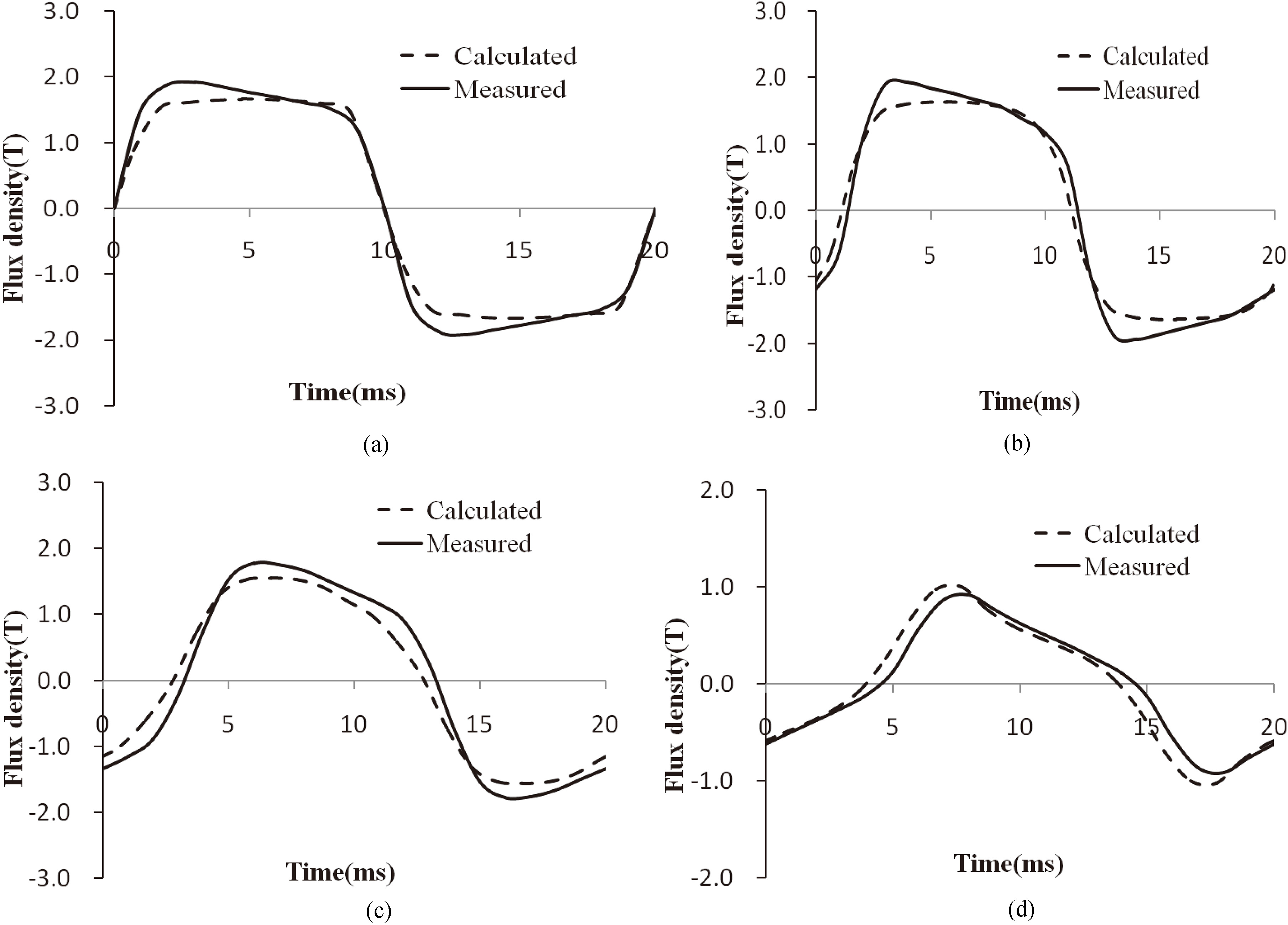
Different forms of B-H curves are widely used in engineering electromagnetic field analysis, e.g., B
Fundamental and definition of B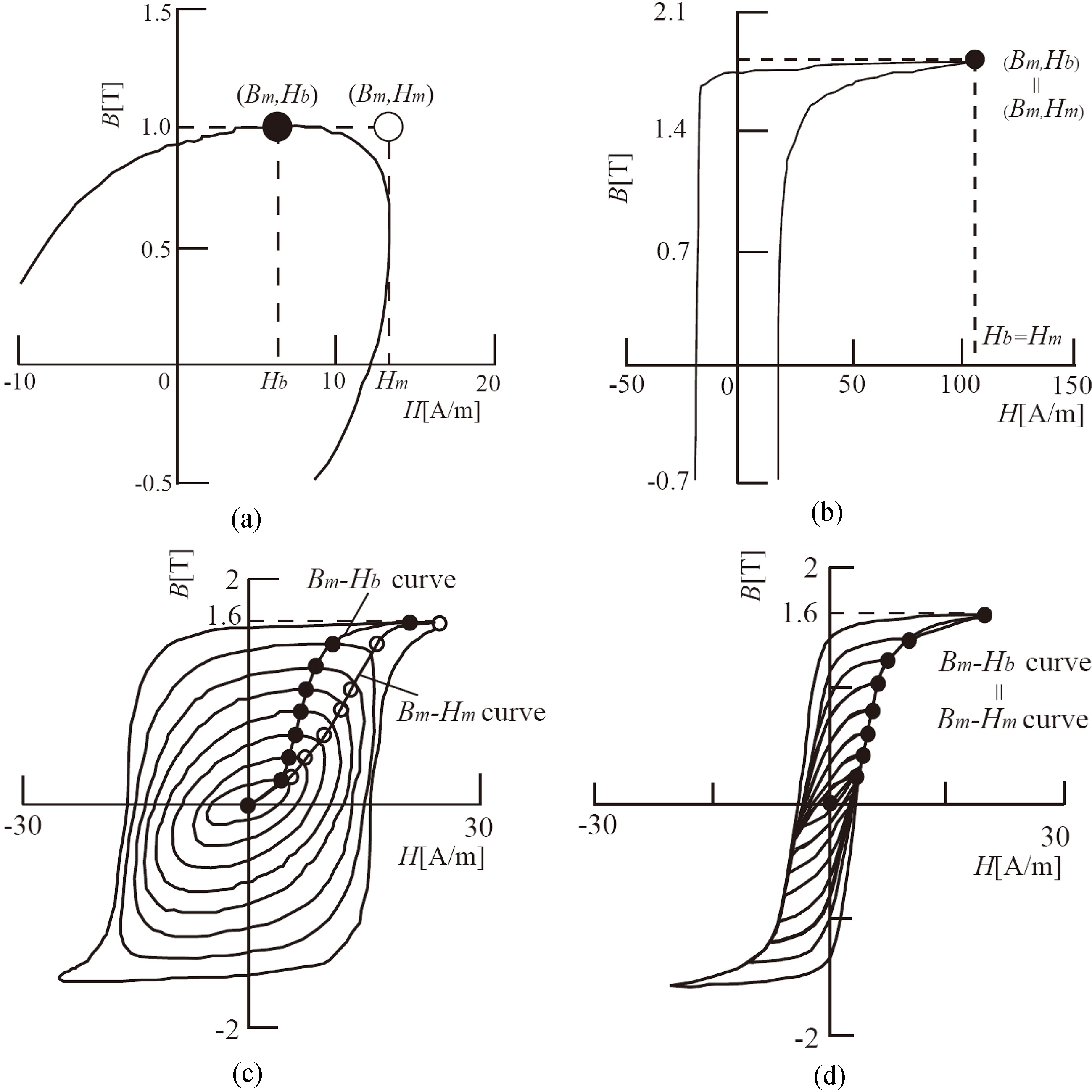
The effects of the two different B-H curves obtained from the standard Epstein frame and the two different types of analyses (transient solver (TS) and time harmonic solver (TH), MagNet, Infolytica, Canada) on the iron loss and the magnetic flux in GO silicon steel laminations, under different exciting frequencies, are systematically examined [22], based on a simplified benchmark model, P21
Simplified TEAM benchmark model: (a) Model P21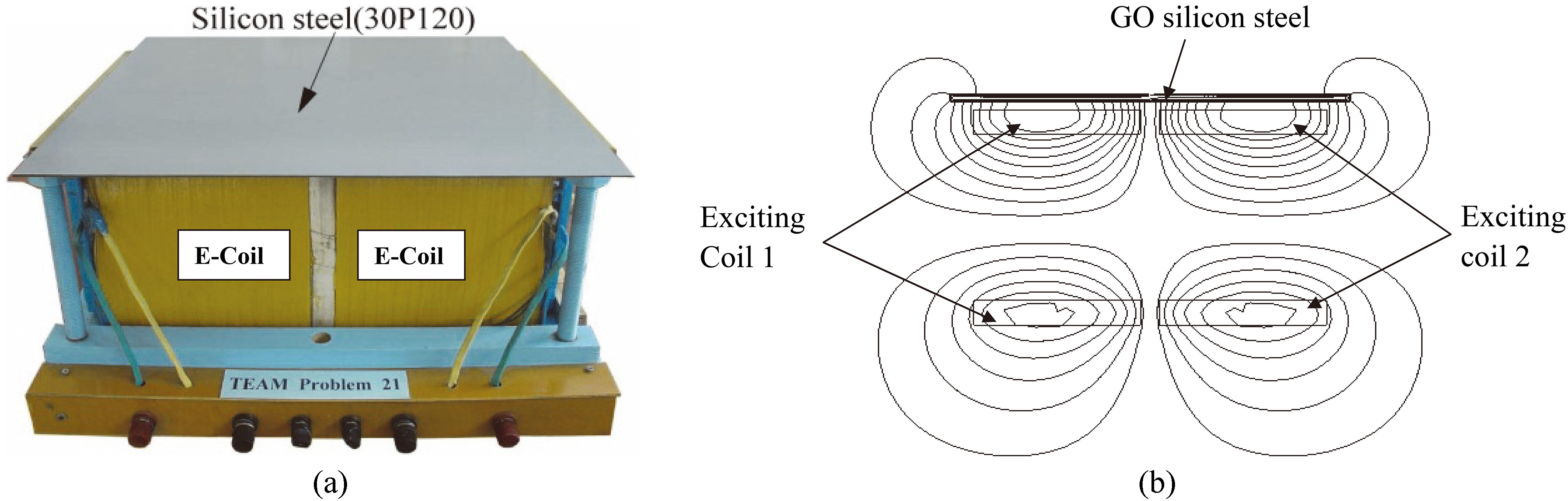
The benchmark model-based testing results, as shown in Table 2, demonstrates that the B
The conclusion is that the different B-H curves and different numerical solvers can be alternately selected for solving different electromagnetic field problems. The combination of advanced material modeling and efficient solvers is benefitial in efficiently solving large-scale and/or multi-scale engineering electromagnetic field problems.
Loss results using different B-H curves and solvers
Smoothing reactor model.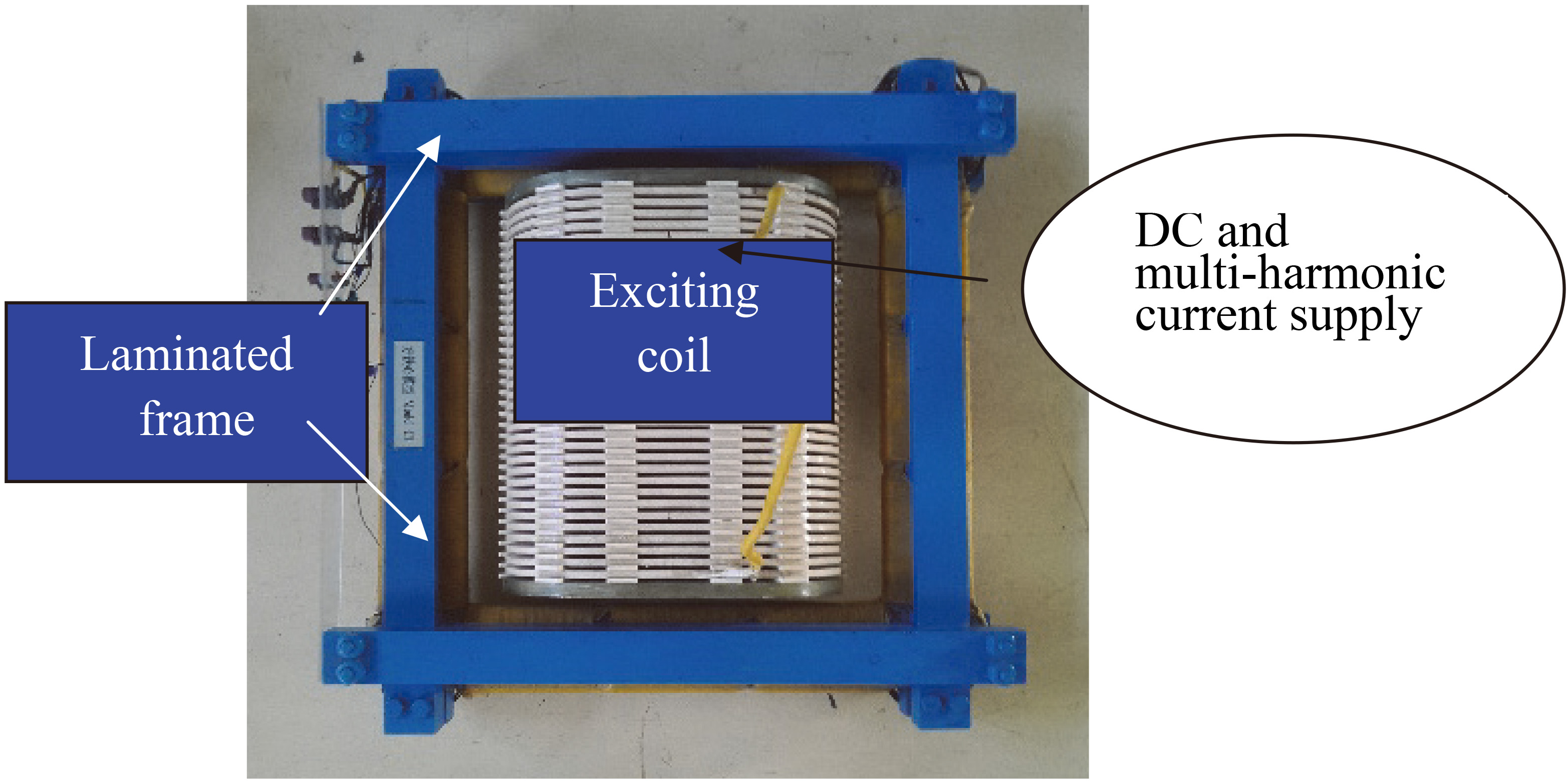
Experimental setup used for loss measurement in laminated frame.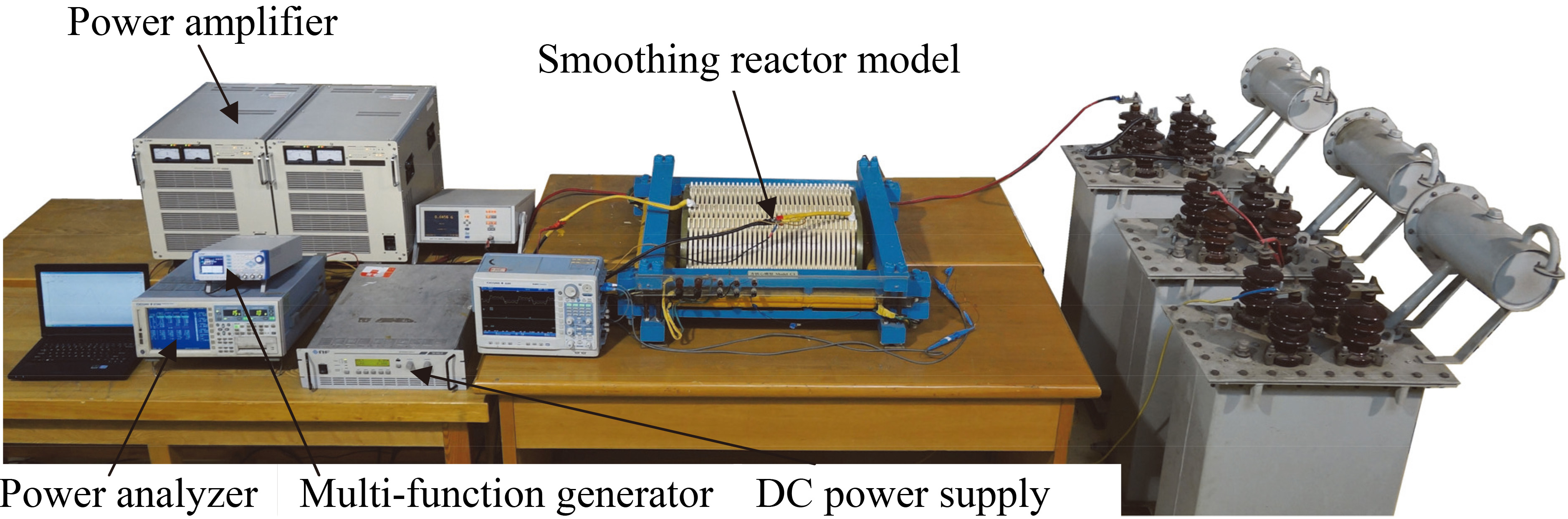
Major industry requirements
In electrical equipment, magnetic components potentially work under 3-D AC-DC hybrid excitations with multiple harmonics, even subjected to stress, temperature changes, and other conditions.
As a typical example of AC-DC hybrid excitation, Fig. 9 shows a simplified smoothing reactor model, consisting of an air-core exciting coil and the square laminated frame, and the exciting currents contain DC and multiple harmonics.
The experimental setup for loss measurement, based on the smoothing reactor model, established by our group, is shown in Fig. 10. The test model’s structure looks very simple, but the magnetic loss modeling in the laminated frame is quite challenging.
Note that the combination of advanced working magnetic property modeling and efficient numerical analysis must be highly emphasized [26, 27, 28, 29], and the validations of both the loss analysis and the working magnetic property modeling are essential, and should be incorporated into the industrial processes in large electrical equipment.
Further research projects
The engineering-oriented magnetic material property measurements and the extended benchmarking, possibly incorporating product-level testing, enables us to model the electromagnetic behaviours observed in practice, and to confidently validate the modeling and simulation under extreme conditions.
Further co-research on working magnetic property measurement and numerical modeling has already been undertaken, targeting the following main projects:
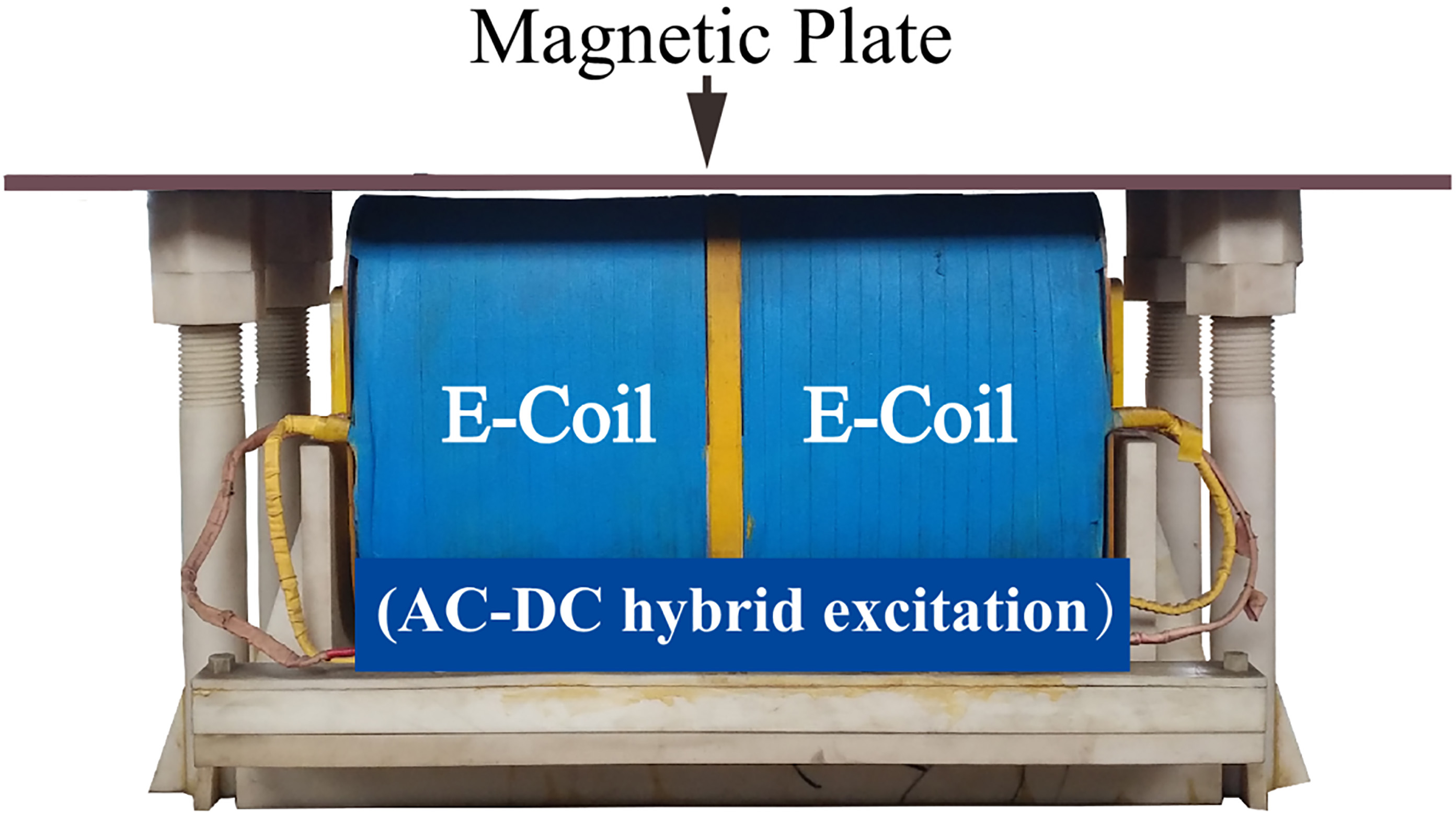
Project I: Magnetic measurements and numerical modeling in GO silicon steel laminations, under 3-D AC-DC hybrid Excitation, including multi-harmonics, or relevant to multi-physics and multi-scale conditions, based on an upgraded benchmark model, P21 Engineering-oriented model (P21 Engineering-oriented model (P21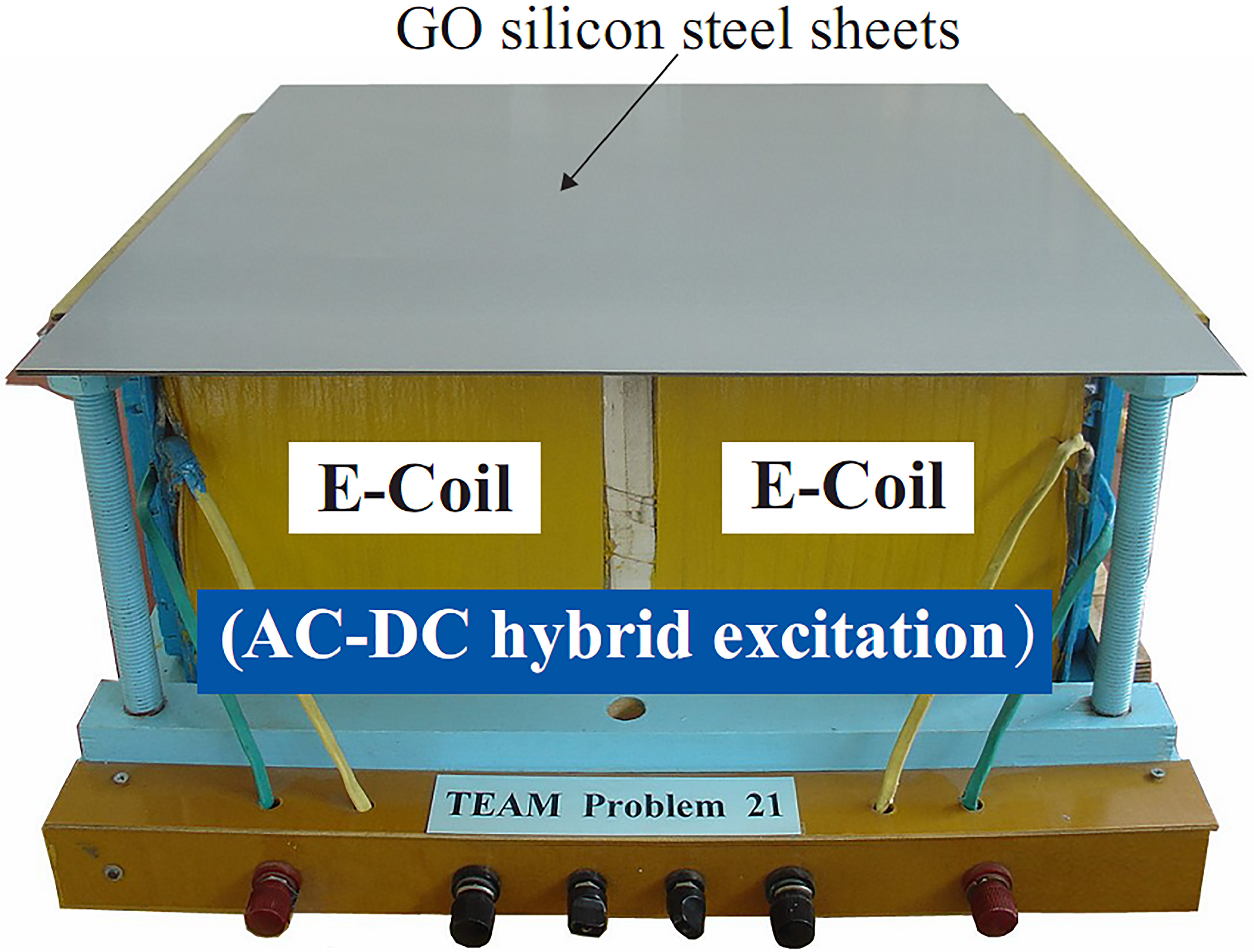
The engineering-oriented investigation into the magnetic property modeling, of both the magnetic material and the magnetic component, and their applications, are briefly summarized as follows:
The Epstein combination and data weighted processing schemes can be used to adequately determine the mean path length of the standard Epstein frame, the specific total loss, and the exciting power; The effects of 3-D magnetic flux on the inner magnetic field distribution and the additional iron loss inside laminated sheets are examined in more detail, and the predicted loss results are experimentally verified; The alternative uses of the different magnetization data (involving different B-H curves, e.g., B Further co-research projects on the determination and use of the working magnetic properties based on engineering-oriented benchmark models, under possible practical operating conditions, are proposed, which are challenging but very important for industrial applications.
Footnotes
Acknowledgments
The authors wish to thank all colleagues for their cooperation, support and contribution to the long-term co-research. This work was supported by State Grid Corporation of China under research project no. SGRIDGKJ [2014]73.