




Abstract
Strawberry is one of the most favored consumed fresh fruits worldwide. However, the major constraint limiting future sustainable production and sales of strawberries is post-harvest decay. Thus, taking a deep look into the effective preservation measures including pre- and post-harvest techniques to retain freshness and inhibit the pathological spoilage of strawberries in the supply chain is of great significance and necessity. At present, relying solely on post-harvest technology is not enough to fix the aim of strawberry fruit preservation and longer shelf life. On the contrary, pre-harvest treatments could be extend shelf life of strawberry fruit and adapt to the diverse post-harvest environments. This review give the latest pre-harvest treatments, their effects on post-harvest quality and storability of strawberries, and develop the expectation of strawberries pre-harvest methods applicated in the future.
Abbreviations
ascorbate peroxidase
Botrytis cinerea endornavirus
benzothiadiazole
catalase
chitinase
chitosan
essential oil
effector triggered immunity
Food and Drug Administration
β-1,3-glucanase
lipid peroxidation
peroxyacetic acid / peracetic acid
phenylalanine ammonia-lyase
peroxidase
polyphenoloxidase
pathogenesis-related protein
pattern triggered immunity
generally recognized as safe
reactive oxygen species
salicylic acid
systemic acquired resistance
superoxide dismutase
tea tree oil
Highlights
Analyzing the necessity and significance of pre-harvest treatments. Explicating the potentials of mycoviruses as novel bio-preservatives. Comprehensively reviewing the impacts of several pre-harvest manipulations on the strawberry fruit preservation and its mechanisms. Based on the current research advancement, prospects for the future application of pre-harvest treatment in maintaining quality and reducing losses.
Introduction
Strawberry (Fragaria×ananassa Duch.), a representative fresh product, is cultivated worldwide due to the attractive color, fragrant flavor, succulence, distinctive sweetness, high nutritional value (e.g., rich in minerals, vitamins, anthocyanins, carotenoids, and polyphenols, etc.) and health benefits [1–6], with global production of about 10 million tons per annum [7]. Shelf life is the storability of a fresh fruit or vegetable until it is unsuited to human eating or is declined by consumers [8]. Post-harvest decay is a very serious problem for fresh fruit of strawberry. Although numerous post-harvest technological advances during the past years, it would be the most challenge and affect demand, quality, nutritional value and shelf life [9, 10]. The soft flesh along with thin peel of strawberries are highly susceptible to dehydration, mechanical injuries and pathogenic infection after harvest, resulting in undesirable sensory characteristics (e.g., softening, off-flavor, fruit rotting, etc.), developing inedible and then the exceedingly limited shelf life, eventually causing growers considerable economic loss [11–13]. Besides the substantial proportion of waste, microbiological contamination caused by post-harvest fungi pathogens can threaten human life because of mycotoxins (e.g., aflatoxin, patulin, ochratoxin, etc.) that are carcinogenic, immunosuppressive, genotoxic, nephrotoxic and teratogenic [14]. The main culprit for the deterioration of the quality of fresh fruits post-harvesting is usually caused by the infection of pathogenic fungi during storage [15, 16]. The main pathogens that lead to post-harvest rot of strawberries are shown in Table 1.
Main post-harvest infectious diseases of strawberries and corresponding pathogens
Main post-harvest infectious diseases of strawberries and corresponding pathogens
The shelf life of strawberries is influenced by variety characteristics [29], climatic conditions of the growing regions [30], pre-harvest treatments [31, 32], harvested stage [33], post-harvest manipulations [34, 35], transport techniques [36], storage conditions [37], etc. Generally, berry fruit has a relatively short marketing window, ranging from 1 to 2 days at ambient temperature and 5 to 7 days under controlled refrigerated conditions [38]. Food scientists have been tirelessly and diligently developing an effective set of preservation techniques in order to improve the status quo. Various post-harvest handling techniques such as supercritical CO2 drying [39], precooling [40], ozonized water washing [41], cold storage [42], low voltage electrostatic field treatment [43], ultraviolet rays irradiation [44], gamma radiation [45], intermittent high voltage electrostatic field combined with static magnetic field technique [46], modified atmosphere packaging [47], edible coatings [48], nanoparticles [49], microcapsules [50], intense pulsed light treatment [51], synthetic agents application [52, 53], etc. were used to preventing and controlling post-harvest diseases. Nevertheless, presently, the development of post-harvest preservation techniques are unable to fully follow the demands of the strawberry industry worldwide, because as shown in Fig. 1, some pathogens (e.g., Alternaria alternata, Botrytis cinerea, etc.) infect unripe strawberries through natural openings (e.g., stomata, small wounds, etc.) during the blossoming and early fruit developmental stages, and remain quiescent (i.e., stay dormant) until ripe [16, 54–56]. At a particular phase during fruit ripening and senescence, the post-harvest pathogens initiate necrotrophic lifestyle and reproduce rapidly, if mechanical damages occur at some stages (e.g., harvesting, packing, storage, transportation, final sale, etc.), these phytopathogenic fungi further infect fruits through the wounds immediately (i.e., occur secondary infection) and then decay symptoms of fruits develop quickly [23, 55–57], hence necessitating pre-harvest treatments for strawberries to reduce the latent infection that is not detectable at harvest.
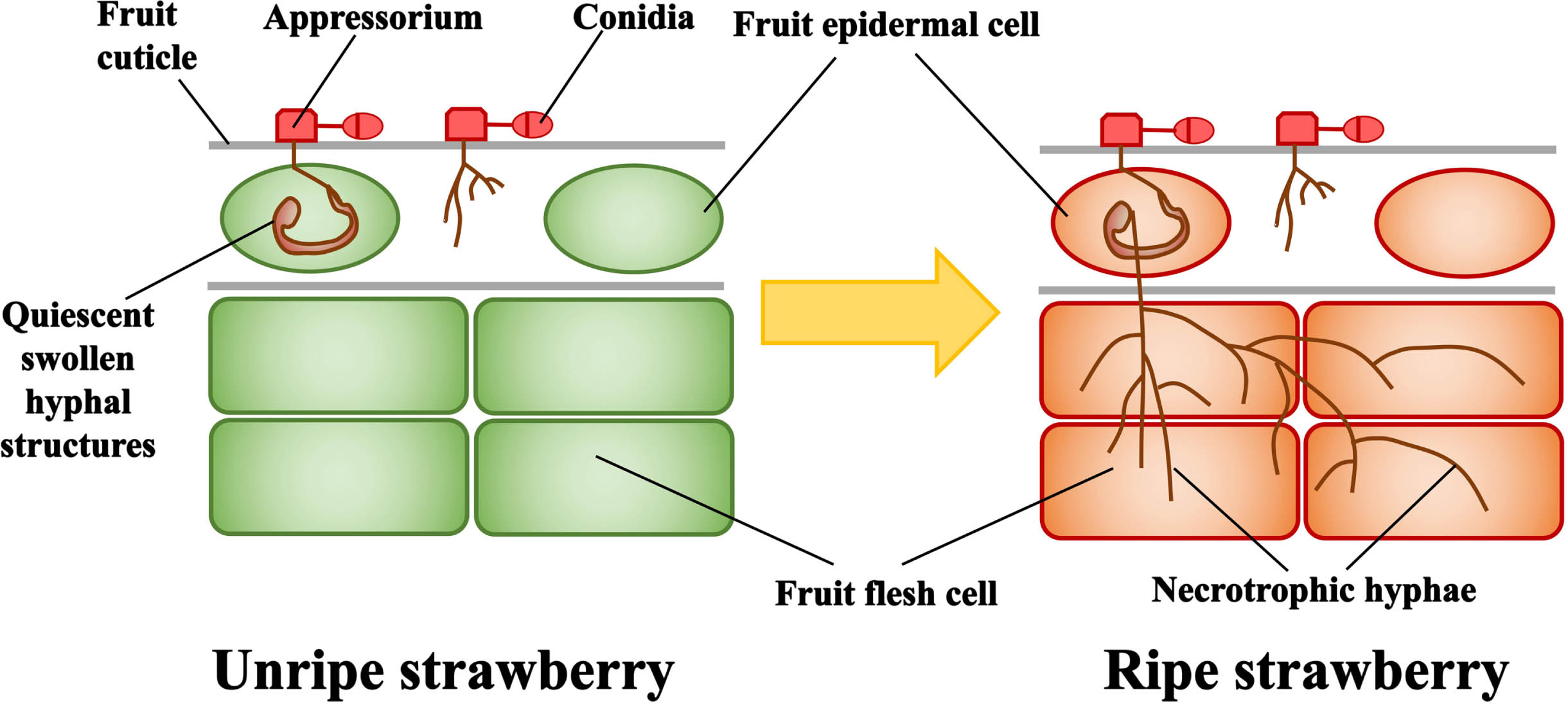
Quiescent and necrotrophic lifestyle of post-harvest pathogens.
The previous studies largely focused on post-harvest treatments for strawberries preservation, while only few study used for pre-harvest treatments. Thus, this review primarily concentrates on gathering and discussing up-to-date reports in the scientific literature on pre-harvest treatments for improving strawberries post-harvest quality and storability, and proposes prospects in view of the current research actuality for providing reference for the future research and application of pre-harvest treatments preservation methods of strawberries.
Chemical synthetic preservatives
Utilization of chemical synthetic preservatives is a potent method of fruits preservation, offering benefits such as low cost and valid effects, making it dominate the commercially available post-harvest treatments [58]. Therefore, prevention and suppression of the post-harvest diseases of strawberry fruits is achieved by field applications more often.
Conventional fungicides
Some commercial fungicides with their main ingredients and effects are shown in Table 2. It is revealed that applications of Captevate, Switch, Captevate plus Pristine were used before harvest markedly decreased post-harvest decay caused by B. cinerea, but utilizations made during the bloom stage were more effectual than those made prior to harvest [59]. Moreover, utilizations of Captevate, Thiram, Scala plus Captan, or Switch alternated with Captan during the blossoming showed excellent suppression of post-harvest fruit decay caused by B. cinerea. Although not as valid as blossoming, fungicides used promptly prior to harvest showed some advantages of suppressing post-harvest decay caused by B. cinerea [59].
Commercial fungicides, main constituents and their effects
Commercial fungicides, main constituents and their effects
Peroxyacetic acid (i.e., peracetic acid, PAA) is a strong oxidant with broad-spectrum antimicrobial activities. In view of the unspecific action modes of PAA, such as the disruption of sulfhydryl (-SH) groups, pathogens have few opportunity for the resistance to PAA [67]. Consequently, PAA has been widely used for preservation of vegetables, fruits, and grains [68–70]. A study revealed that compared to untreated fruits, spraying with 100μL/L sanitizer PAA on florescences and strawberry fruit developing period 3 days prior to harvest, can markedly suppress the post-harvest decay ratio under ambient storage (18°C) condition [71]. Another study has shown that spraying strawberry whole plants with 800 ppm of PAA one hour before harvest could significantly reduce the natural decay of strawberry fruits after harvest. Compared to the control, storage at room temperature (20±2°C) reduces fruit decay rate by approximately 33% within 5 days [72].
Sodium bicarbonate
Sodium bicarbonate (NaHCO3) makes the water alkaline when dissolves in water. Both of spraying NaHCO3 solution onto the skin and dipping fruits directly increase the pH value of the skin, thereby obviously inhibiting the mycelial growth, spore production, spore germination and appressoria production of pathogens preferring a slightly acidic condition [73–77]. Additionally, NaHCO3 is generally recognized as safe (GRAS) by the US Food and Drug Administration (FDA) [78], combined with a wide antimicrobial spectrum activity without serious risk of damage to fruits, it has become a prevalent preservative and plays a critical role in preservation of various fruits [78–80]. The investigation shows that 1% (w/v) NaHCO3 is effective in controlling the natural incidence rate of post-harvest diseases of strawberry one hour before harvest [81].
Bio-preservatives
Generally, people often use chemical preservatives to control the occurrence of post-harvest pathogenic microorganisms, in order to extend the shelf life of strawberry fruits. But if chemical preservatives are excessively used for a long time, it can cause environmental pollution, pathogen resistance problems, and lead to high levels of toxic residues in strawberry fruits, ultimately posing serious safety issues and potential threats to human health [82–85]. In consideration of the aforementioned concerns and the progressively restrictive legislation on application of chemical synthetic preservatives, non-toxic and environmentally friendly replaceable control approaches are urgently required [86, 87]. So far, a majority researchers consider that bio-preservation techniques stand out as green options for keeping post-harvest fruits freshness. Bio-preservatives (i.e., biological control agents) mainly consist of microbial antagonists (e.g., probiotic bacteria, antagonistic yeasts, etc.) and their secondary metabolites with biocontrol effects. Suppression of post-harvest diseases by microbial antagonists occur through several mechanisms, including competition (i.e., occupation surfaces or epidermal stomata to compete the living space and nutrients against pathogen populations) [88], antibiosis (i.e., bio-formation and secretion of lytic enzymes and metabolites with antimicrobial functions) [89, 90], and induction of host defense (i.e., antagonistic microorganisms act as elicitors to induce resistance) [91]. Pre-harvest application of antagonistic microorganisms could effectively improve the biocontrol system, allowing the antagonist to have long-term interaction with the pathogens and to colonize the tissues of fresh products (e.g., fruit epidermis) prior to the arrival of the post-harvest pathogens [92].
Burkholderia contaminans
Previous research revealed that Burkholderia contaminans B1, an antagonistic bacterial strain with a high antifungal activity against post-harvest pathogens, could lead to a significant increase in the activity of resistance-related enzymes of strawberry fruits [93]. Spraying with a suspension (1×10¹⁰ CFU/mL) of B. contaminans B1 before harvest resulted in a reduction in natural fruit rot incidence and extended shelf life, maintained soluble total solid content, titratable acid, and ascorbic acid during storage at 16°C for 7 days in ‘Benihoppe’ cultivar [94]. Noticeably, spraying B. contaminans B1 three times showed better performance of strawberries preservation than that of single application [94].
Cryptococcus laurentii
As an antagonistic yeast, Cryptococcus laurentii has been reported to reduce fruit diseases caused by various pathogens, such as Penicillium italicum and Penicillium expansum, thus it has been exploited as a promising alternative to synthetic fungicides [95, 96]. Pre-harvest spraying with a suspension (1×10⁸ CFU/mL) of C. laurentii in ‘Toyonoka’ strawberry cultivar resulted in a reduction in fruit rot of strawberries stored at 4 or 20°C, for 12 or 4 days, respectively [32]. The best suppression of B. cinerea was achieved when fruits sprayed C. laurentii three times at 6, 3 and 0 days pre-harvest, respectively [32]. In addition, C. laurentii spraying before harvest retarded decrease in weight loss as well as content of ascorbic acid, and delayed the fruit softening [32].
Hanseniaspora uvarum
During aerobic cell metabolism, reactive oxygen species (ROS) including superoxide anion radicals (O2-·), hydrogen peroxide (H2O2), superoxide hydrogen radicals (HO2·), hydroxyl radicals (·OH), singlet oxygen species (1O2) are produced [97]. Lipid peroxidation (LPO) induced by ROS and resulted in polyunsaturated fatty acid in the plasma membrane to be decompose into malondialdehyde (MDA), accordingly leading to changes in the structure and function of plasma membrane, increasing electrolyte leakage, and ultimately resulting in cell death and the harm of plant tissue [98]. Previous research reports revealed that superoxide dismutase (SOD), peroxidase (POD), catalase (CAT) and ascorbate peroxidase (APX) could directly affect fruit storage performance due to their function on effectively removing ROS [99]. Phenolic compounds (e.g., carvacrol, eugenol and thymol) are a series of secondary metabolites and widely existed in plants with biocontrol functions [100], and polyphenoloxidase (PPO) is a key enzyme in the biosynthesis of phenolic substances [101]. Plants often initiate defense responses through the phenylpropanoid metabolism pathway when subjected to stress, phenylalanine ammonia-lyase (PAL) is the key enzyme in this pathway, participated in the synthesis of defensive substances including lignin and phenolic compounds [101]. It is reproted that β-1,3-glucan is the main component of pathogenic fungi in cell wall. β-1,3-glucanase (GLU), a defense-related enzyme, has the function of degrading β-1,3-glucan, thus high activity of GLU in plant cells contributes to degrade pathogenic fungal hyphae and achieve anti-fungal effects [102]. For ‘Benihoppe’ cultivar, pre-harvest applications of Hanseniaspora uvarum significantly reduce post-harvest decay caused by molds, effectively maintained fruit color, firmness as well as total soluble solids content, and induced the improvement of activities of some defense-related enzymes such as POD, SOD, CAT, PPO, PAL, GLU as well as APX, and reduced MDA content in a 15-day cold storage (2±1°C) period [103].
Metschnikowia fructicola
As a yeast biocontrol agent, Metschnikowia fructicola showed promising effects on enhancing the shelf life and reducing post-harvest losses of various fruits, such as apple [104], grape [105], peach [106], etc. Pre-harvest applications of a suspension (1×10⁵ CFU/mL) of Metschnikowia fructicola suppressed post-harvest incidence of strawberry fruit rot and significantly better than conventional fungicide fenhexamid [107].
Other promising bio-preservatives
Hypovirulence (i.e., mycovirus-mediated virulence attenuation) is defined as the phenomenon in phytopathogenic fungi and exploited to suppress fungal diseases in agriculture [108]. Mycoviruses (i.e., fungal viruses), ubiquitous in main taxonomic fungal groups including several phytopathogens, can specifically infect phytopathogenic fungi [109], and some of them are associated with hypovirulence and can be used to reduce host virulence. Therefore, mycoviruses have a great potential to be the biocontrol tools [110]. Previous studies have revealed that B. cinerea is one of the major causal agents on strawberry infection after harvest and causes gray mold [111, 112], and mycoviruses are regularly associated with B. cinerea isolates [113]. Botrytis cinerea endornavirus 4 (BcEV4) is mycoviral that can be tested as a candidated biologic antagonist against B. cinerea. The discovery of BcEV4 provides a novel insight for the prevention and control of post-harvest diseases.
Indeed, worldwide efforts in developing biocontrol technology have sought out multiple bio-preservatives for strawberries, but at present, they are mainly used after harvest rather than before harvest (Tables 3 and 4). Based on the favorable effects of these bio-preservatives, researchers can attempt to use them for pre-harvest treatments in the future to explore their impacts and mechanisms on the preservation of strawberries.
Main antagonistic microorganisms for post-harvest pathogens of strawberries
Main antagonistic microorganisms for post-harvest pathogens of strawberries
Some antimicrobial secondary metabolites derived from microorganisms for post-harvest pathogens of strawberries
Calcium ion (Ca2+) could combine with pectin to form calcium pectinate, thereby enhancing the mechanical strength of the cell wall, maintaining its homeostasis and fruit firmness [144]. In addtion, the calcium content of the fruit decreases during senescence, leading to the degradation of the physical barrier function of the cell wall, making pathogens easy to invade into cells and subsequently causing pathological decay [145]. It was reported foliar application of calcium chloride 3 to 9 days prior to harvest can delay ripening and control gray mold, thereby increasing the shelf life, moreover, the delay increased with increasing Ca2+ concentration [146]. The specific mechanism is as follows: pre-harvest foliar application of calcium chloride resulted increase of calcium content in strawberry fruit, therefore effectively maintaining the homeostasis of calcium level of fruit.
Phytohormones and their analogues
Benzothiadiazole
Benzothiadiazole (BTH) is similar with salicylic acid (SA) in function and structure, and could enhance the content of free SA by inducing the synthesis of methyl salicylate esterase [147, 148]. It was reported that SA is closely related to the activation of pattern triggered immunity (PTI) and effector triggered immunity (ETI) in plants, and local PTI and ETI activation can then induce the establishment of systemic acquired resistance (SAR) in plant pathogen interreactions, thereby effectively resisting plant pathogens [148–150]. The impacts of BTH increasing with the content of free SA, inducing ROS metabolism, activating the phenylpropanoid pathway, promoting production and accumulation of resistant substances as well as pathogenesis-related proteins (PR proteins) [147, 151]. At present, BTH has been broadly utilized to prolong shelf life in various fresh horticultural commodities via eliciting defense responses after harvest [147, 152]. It was reported that spraying with 2 mL/L BTH agent (50% of the active ingredient) once every 5 days on the canopy in strawberry ‘Alba’ and ‘Romina’ cultivars from blooming to ripening, could result in 30% decline in fruit rot in contrast to the control, thus BTH is consider as a effective supplement to conventional synthetic preservatives in suppression of fruit rot of strawberry, especial when disease pressure slightly [153].
Methyl jasmonate
As an endogenous signaling hormone, methyl jasmonate (MeJA) plays a vital role in regulating the quality deterioration of post-harvest fresh products [154]. When encountering invasion of phytopathogens, MeJA can mediate plant defense responses by synthesizing defence-related secondary metabolites [155], enhance the activity of defense-related enzymes [155, 156], upregulate a series of defense genes (e.g., PR protein genes) [157], activate the response of arginine metabolism pathways to enhance plant disease resistance [158]. Pre-harvest foliar application of MeJA at 0.25 mM to strawberry cv. Festival conserved fruit from ascorbic acid, total phenolic compounds and anthocyanin reduction in contrast to the control at the end of the 12-day refrigerated storage (4°C) period [159]. For ‘Camarosa’ cultivar, spraying with 250μmol/L MeJA three times (at blossoming, after 24 days at the large green stage, and after 7 days at 100% red receptacle fruit stages, respectively) showed better performance of the improvement of anthocyanin, proanthocyanidin, ascorbic acid content, and CAT activity in a 3-day room-temperature storage (25°C) period [160].
Salicylic acid
Salicylic Acid (SA) has been confirmed as natural plant hormone GRAS on horticultural crops with a great potential to extend the shelf life including orange [161], grape [162], and banana [163], even when stored at low temperatures [164, 165]. Previously study reported that SA could delay fruit softening by inhibiting the activities of cell wall enzymes (e.g., polygalacturonase, pectin methylesterase and cellulase) to retain the integrity of the cell wall [166, 167]. It was reported that foliar application of SA at 4 mM to strawberry cv. Festival three times, 10 days apart, at fruit development and ripening stages, effectively conserved fruit from ascorbic acid, total phenolic compounds and anthocyanin reduction in contrast to the control at the end of the 12-day refrigerated storage (4°C) period [159].
Nature products
Aloe extracts
Aloe is rich in acetylmannan with antibacterial properties and a strong inhibitory effect on post-harvest fungal pathogenicity [168]. A study showed that aloe application one day pre-harvest significantly reduced weight loss of post-harvest strawberries, the incidence of decay, and fruit as well as calyx defects during storage for 9 days under storage (1°C) condition in ‘Camarosa’ cultivar [169].
Chitosan
Chitosan (CTS), a biodegradable biopolymer derived from deacetylated chitin, has a broad-spectrum antifungal activity [170–173]. Spraying with 5 and 10 g/L CTS agent (99.9% of the active ingredient) at a frequency of once 5 days on the canopy in strawberry ‘Alba’ and ‘Romina’ cultivars, from flowering to ripening, could lead to 30% decline in post-harvest rot of strawberries in contrast to the water-treated groups, thus CTS is consider as a feasible complement to conventional synthetic preservatives in the suppression of fruit rot, in especial when disease is not severe [153]. Additionally, spraying with CTS three days before harvest to canopy maintained fruit quality and was impactful in the control of post-harvest rot in a 5-day chilled storage (4°C) period [174].
Essential oils
Essential oils (EOs) are extracted from aromatic plant materials and are sophisticated mixtures whose composition varies [86]. Additionally, as antimicrobial agents with relative safety, biodegradable and eco-friendly properties, EOs have attached growing attention and consequently consider as a quite promising preservative, besides, the health risk of chemical pollution upon the irrational use of synthetic agents to post-harvest strawberries because of the occurrence of tolerant strains of pathogens during EOs applied in practice [175–177].
Tea tree oil (TTO), the essential oil with a mentally refreshing odor and antimicrobial attributes obtained mainly from the steam distillation of the leaves or branches of Australian native plant Melaleuca alternifolia. Pre-harvest spraying with 1.4 mL/L TTO to fruits and leaves significantly increased phenolics accumulation, enhanced the activity of GLU by the first day post-harvest, and effectively reduced the incidence of natural decay and delayed the reduction of firmness during storage at 20°C for 5 days in strawberry ‘Benihoppe’ cultivar [179]. Strawberry ‘Paros’ cultivar is susceptible to fruit rot caused by Colletotrichum acutatum complex, foliar application of two EOs (Allium sativum and Rosmarinus officinalis) on 5-week-old strawberry seedlings could remarkably inhibit the mycelial growth and conidial germination of C. nymphaeae in post-harvest, and markedly preserved sensorial indicators as well as fruit quality such as firmness, total soluble solids, ascorbic acid, antioxidant activity and anthocyanin during 8-day cold storage (1°C) period [31].
Although substantial quantities of studies have been made to minimize the microbial decay of strawberries by using EOs to conventional chemical fungicides (Table 5), currently, they are mainly used post-harvest rather than before harvest. On account of the desirable impacts of these EOs, scientists would try to employ them for pre-harvest treatments to delve their effects and mechanisms on the preservation strawberry. In addition, some of EOs principal components, including eugenol [180], limonene [181], carvacrol [182], methyl cinnamate [182], etc. have been proved critical antimicrobial and antioxidant for the preservation of strawberry.
Some essential oils for post-harvest preservation of strawberries
Some essential oils for post-harvest preservation of strawberries
Ethanol (C2H5OH) is one of natural volatile products with the attributes of relatively low toxicity and environmental friendliness [193]. Previous studies have demonstrated that ethanol (C2H5OH) is a FDA-certified GRAS compound with active antimicrobial function, thus it has been widely used as an effective food additive after harvest for delaying quality deterioration and thereby extending shelf life of several horticultural commodities [194–197]. A study showed that application of 50% (v/v) Ethanol to strawberries one hour before harvest significantly reduced the post-harvest decay incidence caused by B. cinerea.
Hexanal
Studies have shown that phospholipase D could cause cell membrane deterioration and loss of fruit integrity during ripening and senescence [198, 199]. Hexanal, a volatile C-6 aldehyde and an inhibitor of phospholipase D, which naturally produced by the lipoxygenase pathway in plants, is considered as a GRAS additive for food industry. Hexanal treatment showed promising impacts on extending the shelf life and reducing post-harvest losses of various fresh products including apple [200], fig [201], table grape [202], persimmon [203], etc. Pre-harvest use of hexanal enhanced the shelf life of strawberry by inducing a significant decline in the transcript level of two phospholipase D genes and other key enzymes related to cell wall degradation [204].
Ultraviolet irradiation treatments for preservation
UV radiation consists of short-wave UV-C (100-280 nm), medium-wave UV-B (280–320 nm), and long-wave UV-A (320–400 nm).
UV-B
Exposure to low-dose UV-B radiation has been shown to preservation, such as sensory qualities and antioxidant capacity of tomato during storage [205], as well as delaying yellowing and improving chlorophyll retentionof broccoli [206]. For pre-harvest UV-B radiation, in ‘Albion’ strawberries, a study reported that daily 1 or 2-hours exposure to UV-B radiation after flowering markedly decreased fruit rot and retarded decrease in total soluble solids, total phenolics content and total anthocyanin content [207].
UV-C
Former studies reported that UV-C extends the shelf life of fruits by reducing the invasion of pathogens (e.g., altering the wax structure of fruit epidermis and decreasing the number of appressoria) [208], inducing the formation of PR proteins, such as chitinase (CHI) and GLU [209]and defence-related secondary metabolites (e.g., phenolic compounds) [210], and changing plant hormone level (e.g., reducing ethylene production) [211], etc. Significantly, low-dose (not exceeding 10 kJ/m2) UV-C mainly exhibits a hormone-like function rather than the direct irradiation disinfecting effect. UV-C irradiation with a dose of 0.6 kJ/m2 used once every 2 days to strawberry plants for 5 weeks attenuated strawberries post-harvest senescence and decay at ambient temperature in ‘Albion’ cultivar, and the mechanism possibly associated with ABA signaling factors [212]. In addition, pre-harvest irradiation with UV-C at 0.6 kJ/m2 primes the strawberry fruits in an anti-oxidative activated state via ROS-mediated feedback control with post-transcriptional involvement of two microRNA (i.e., miR159 and miR398), resulting in the maintaining of sugar and organic acid, and decreased overall LPO during storage for 72 hours at room temperature in strawberry ‘Albion’ cultivar [213].
Hydrogen nanobubble water irrigation for preservation
Quantities evidence has shown that hydrogen gas (H2) could prolong the post-harvest life and retain the quality of fresh fruits, vegetables, and cut flowers [214]. Hydrogen nanobubble water is a novel hydrogen-rich water, and the content and residence time of H2 in liquid is longer than conventional hydrogen-rich water [215]. A study revealed that hydrogen nanobubble water irrigation is helpful in maintaining fruit quality (e.g., firmness) of strawberries in a 15-day cold storage (4°C) period by improving the synthesis of cell wall components (lignin, cellulose, and hemicellulose) in fruits during the first two months after planting [216]. Additionally, hydrogen agriculture is a kind of low-carbon agriculture, concurrently, H2 is an antioxidant without nontoxicity and has been listed as a food additive in Japan, the European Union and China now [217], accordingly, H2 has a promising potential to be a novel preservative in strawberry industry.
Conclusion and prospects
At present, studies still limited on how to improve the preservation of strawberry by pre-harvest treatments worldwide. Moreover, some of pre-harvest techniques mentioned above are not applied due to low acceptance of growers or high treatment cost (e.g., EOs treatments). In strawberry preservation, current industrial means relies highly on post-harvest managements for a longer post-harvest life. However, researchers are investigating to explore novel effective and feasible pre-harvest techniques for senescence reduction and quality maintenance of post-harvest strawberry fruits. In terms of future techniques development, emphasis should be placed on screening out eco-friendly and efficient natural antimicrobial substances or biocontrol agents, meanwhile, cost and their effect on fruit aroma should be attentively taken into consideration prior to researching and developing a commercial preservative. It is better to integrate multiple sets of pre-harvest and post-harvest preservation techniques to achieve the optimal preservation effects.
Conflict of interest
None.
Author contributions
ORCID
Funding
Major Science and Technology Project of Zhejiang Province for New Agricultural (Fruit) Varieties Breeding (2021C02066-7-2).
Footnotes
Acknowledgments
This work was financially supported by the Major Science and Technology Project of Zhejiang Province for New Agricultural (Fruit) Varieties Breeding (2021C02066-7-2).