



Abstract
The use of indigenous or remote popular knowledge to identify new drugs against diseases or infections is a well-known approach in medicine. The inhabitants of coastal regions in Namibia and other African countries are known to prepare algae extracts for the treatment of disorders and ailments such as wounds, fever and stomach aches, as well as for the prevention of arrhythmia, cancer, and many other diseases. Algae survive in a competitive environment and, therefore, developed defense strategies that have resulted in a significant level of chemical structural diversity in various metabolic pathways. The exploration of these organisms for pharmaceutical, nutritional and medical purposes has provided important chemical candidates for the discovery of new agents against neglected tropical diseases and stimulated the use of sophisticated physical techniques. This current review provides a broad picture on the taxonomy, various medical and nutritional uses of algae, which thus should be of relevance for the African continent and underdeveloped countries in the Global South.
Keywords
Introduction
Namibia’s diversity of ecosystem has two classes of aquatic biomes: (a) The coastal marine characterized by the cold Benguela current which produces a nutrient-rich upwelling system stretching for about 1572 km extending from the Kunene River in the north (17°16’S) to the Orange River in the south (28°33’S) [1]; (b) The inland wetlands with supporting freshwater systems which include a multiple habitats including perennial rivers, ephemeral rivers, floodplains, pans, lakes, streams, estuaries, swamps, marshes, springs and dams. These aquatic biomes are a home to a diverse species of algae. Algae are described as a loose (polyphyletic) group of organisms that have all or most of the following characteristics: aquatic, photosynthetic, simple vegetative structures that are without true stems, roots and leaves, and reproductive bodies that lack a sterile layer of protecting cells [2]. Certain algae are familiar to most people; for instance, seaweeds such as kelp, pond scum or the algal blooms in lakes. Macroscopic, multi-cellular and benthic algae are all marine plants encompassed under the name seaweed. About 205 species of seaweeds have been collected from Namibian waters of which most of these species are found along the southern part of the coast rather than the north. These species are divided into three main categories, green, red and brown seaweed. The three divisions are usually distinguishable by the colour that their name suggests, except for red algae that can be either red, brown, yellow, or dark in colour [1]. Fresh water bodies such as rivers, lakes, ponds and dams also serve as habitats to various types of algae. The most common of the fresh water microalgae is the blue-green algae also known as cyanobacteria. The number of cyanobacteria is estimated to be between 2000 to 8000 species in 150 genera, worldwide with a wide range of shapes and sizes [3]. When in moderation, these microalgae are a source of oxygen and food to other species in the water bodies where they are found. However, when they grow in excess, they can form “algae blooms” which can cause damage to the water ecosystems. Algae blooms are characterized by visible layer on top of the water which can be of various colours including green, blue, brown or red. This can also decrease the quality of water and cause bad water odour as the microalgae starts to die off. A variety of cyanobacteria species belonging to different genera can release toxins, called cyanotoxins, which can be harmful to humans, animals and the environment. The artificial enrichment of the freshwater bodies, called eutrophication, is a big contributor to the increased population of blue-green algae [4, 5]. This is confirmed by a recent study showing the harmful cyanobacteria Microcystis as the most abundant microalga genus in two of three investigated Namibian freshwater eutrophic systems [6]. Little has been done to study the many of the algae species in Namibia. There is little information on the richness of freshwater algae, while a few reports are available on marine algae in Namibia [7]. The aim of this review was to record information about the marine and freshwater flora of Namibia as well as to highlight their distribution, potential economic importance and medicinal uses. This review will contribute to filling the gap in the general knowledge of the Namibian algae and their uses also to make available all the information available up to this point on these species.
Taxonomy and distribution
The group of algae does not represent a defined taxonomic entity. Algae are represented by a phylogenetically diverse group of photosynthetic eukaryotic organisms including unicellular microalgae genera such as Chlorella up to multicellular macroalgae genera such as the giant Macrocystis. By contrast, blue-green “algae”, which also are referred to as microalgae, belong to the phylogenetically distant cyanobacteria, i.e. prokaryotic organisms. Therefore, most algae experts do not define cyanobacteria as “algae” whereas the term “microalgae” is often used also in the context of cyanobacteria. The two groups of algae based on their sizes are: (1) Macroalgae commonly known as “seaweed” which encompass macroscopic, multi-cellular and benthic algae. Seaweed are also referred to as marine plants [8]. (2) Microalgae that refers to microscopic single cell organisms. Based on photosynthetic pigments, macroalgae are classified into three main groups being at different taxonomic levels: Chlorophyta, i.e. division of green algae with about 7.000 species encompassing the class of Chlorophyceae; Phaeophyceae, i.e. class of brown algae with at least 1.500 species worldwide; Rhodophyta (syn. Rhodophyceae), i.e. division of red algae with about 7.000 species worldwide [9]. The class of Florideophyceae belongs to this division. Green algae is thus one of the largest groups of algae. Species are found mostly in freshwater and some species is marine (e.g Ulva lactuca). This division of algae comprises unicellular organisms such as Chlorella, colony-forming organisms such as Volvox and multicellular higher plant-like organisms such as Ulva. Brown algae are mostly marine with very few freshwater species. Red algae are mostly marine with approximately 5% of species occurring in freshwater environments with greater concentrations found in warmer areas (e.g. Batrachospermum) [2]. These three groups of algae make up all macroalgae [10]. Most microalgae species belong to the following four main classes: Bacillariophyceae (diatoms), Chlorophyceae (green algae) which also comprise multicellular organisms, Chrysophyceae (golden algae) and Cyanophyceae (cyanobacteria or blue-green algae) belonging to the domain of bacteria. Further microalgae can be found in the following taxonomic groups: Xanthophyceae (class of yellow-green microalgae); Rhodophyta (division of red algae) which also contain many multicellular species; Dinophyceae (class of dinoflagellates); Prasinophyceae (class of green algae belonging to the division of Chlorophyta); Eustigmatophyceae [11]. Microalgae are found in various habitats such as oceans, freshwater bodies, rocks, soil and tree. For convenience and not as defined taxonomic entity, eukaryotic microalgae are grouped as so-called “protists” together with unicellular (animal) protozoa.
In Namibia, these microalgae are popularly found in manmade freshwater dams that are used as sources of portable water appearing as blooms. Many times these dams show obvious signs of eutrophication with green water and visible algae particles. The commonly identified species that dominate the algae blooms in three of the main sources of portable water dams in Namibia (Von Bach, Swakopport and Omatako) are: Anabaena, Cylindrospermopsis and Microcystis. Their presence interferes with the treatment process of water for potable use and they contribute to bad water taste and odour as well as produced toxins [5]. Algae bloom dominated by Microcystis were found to cause turbidity in the water at Swakoppoort dam [6, 12]. In Namibia, information about freshwater algae remain poorly documented as less research is being conducted on these species while a number of studies have been done on marine algae.
There were 242 taxa of Namibian marine algae reported by Lluch [13]: 180 species of Rhodophyceae, 28 of Phaeophyceae, 16 of Ulvophyceae, 9 of Cladophorophyceae and 9 of Bryopsidophyceae. However, only 196 taxa are recorded in his report (13) to be present, which are distributed as follows: 147 Rhodophyceae (75%), 20 Phaeophyceae (10.2%), 15 Ulvophyceae (7.6%), 6 Cladophorophyceae (3.1%) and 8 Bryopsidophyceae (4.1%). Thus, 46 taxa still need to be confirmed as present in Namibia. The study revealed that Swakopmund, located at the central region of the Namibian coast and a well-known tourist attraction area, has the highest marine flora with 108 taxa out of the 196 (55.1%). Lüderitz, Möwe Bay and Rocky Point also has considerable number of marine algae taxa (86, 69 and 66 taxa of flora respectively). With 196 species of seaweed, Namibia is considered to be a rich flora. Most of the seaweeds in Namibia (examples see Table 1) are found along the southern part of the coast than the north, and most species found in Namibia also occur on the west coast of South Africa, which has twice as many species [14]. Table 2 lists some of the identified benthic marine algae found along the Namibian coast line and their distribution. In addition to the two Namibian Plocamium species mentioned by Lluch [13] (P. glomeratum, P. rigidum), there are four others reported namely P. cartilagineum, P. corallorhiza, P. cornutum, and P. suhrii [15]. Laminaria pallida, commonly known as kelp or the brown seaweed, is one of the most common natural resources found along the Namibian coastline.
Namibia seaweed species with economical uses and potential
Namibia seaweed species with economical uses and potential
Adopted from: [2] FAO species identification guide for fishery purposes. Field guide to the living marine resources of Namibia.
Other Namibian marine benthic algae and their distribution
Adapted from [13]. Marine benthic algae of Namibia. Scientia Marina, 66 (Suppl 3).
Due to their chemical composition and varied genetic diversity, algae have a great potential of economic value in the food industry, as animal feed, for biofuel production, colloid production, bio-fertilizers and even for the cosmetic and pharmaceutical industry. They also have potential as sources of preservatives, photosynthetic pigment and beta-carotene which have applications as orange dye and as a vitamin A supplement. Many of the species found elsewhere in the world are also found in Namibia and these could be exploited and harvested for economic benefit (Table 1). While the overseas world has advanced in the utilization of algae, Namibia has been slow in developing aquatic plant production. Namibia is one of the five African countries that has contributed to the global seaweed aquaculture production contributing less than 1% to the world production [16]. There is thus basis to encourage research on the Namibian algae. Not only does the algae production have economic value, but also has potential to create job opportunities in Namibia –and other developing countries.
Algae for human food
The use of seaweeds to produce substances that are used as food thickeners, stabilisers, emulsifiers and gelling agents is reported widely. About145 species of seaweed are used in food production. Seaweed belonging to brown algae are harvested for human consumption in Namibia [14]. However, the use of seaweed as food is not common in Namibia. Glacilaria spp., a red algae genus, harvested from coastal region at Luderitz has been reported to be used as a source of food. Seaweed species such as Palmaria palmata, Porphyra yezoensis and P. tenera are commonly eaten in Japan and China and are rich sources of nutrients [15]. The two most common microalgae species with a potential to be used as a food is Arthrospira platensis (commonly known as Spirulina) and Chlorella vulgaris. Both these species are found in Namibia. They are widely commercialized and used globally, mainly sold in health food stores and as a fish food [17]. Spirulina in particular belongs to the class of cyanobacteria, a blue-green alga which has been studied and confirmed to be a rich source of protein, carbohydrates, fibre, vitamins and minerals [17, 18]. Especially because of its high protein content making up more than 60% of dry mass comprising all essential amino acids, Spirulina is of high value for human nutrition and has been used since centuries by the Kenumbu people of Chad [18]. It has a great economic potential as it has an advantage that it can easily be cultivated in pilot plants or industrial installations. With more than 40,000 tons per year, China is global leader of Spirulina production.
Algae for animal feed
Seaweed are also harvested as an animal feed supplement and as food for abalone farms. A macroalgae species harvested from the Namibian coastline and exported to neighbouring South Africa for feeding farmed abalone is Laminarias spp. An abalone farm has been built in Lüderitz as well to curter for the high demand in the abalone industry. As a results of this, the amount of Laminaria is becoming insufficient to supply the demand for both Namibian and South African farms. To overcome this problem, the abalone industry is venturing into using pelleted diet which are based on harvesting fresh fronts of Laminarias spp. in combination with Ecklonia maxima or cultured Glacilaria spp. [19]. Halophytic and microalgae species such as Isochrysis sp., Pavlova lutheri, Chaetoceros calcitrans and Tetraselmis sp. are being cultivated, maintained and harvested at Sam Nujoma Marine and Coastal Resources Research Centre (SANUMARC) at Henties Bay for use as feedstock for rotifers, euphausiids and bivalves (abalones and oysters).
A special use is reported for Spirulina as human and animal food in Namibia, Spirulina could be produced in low-cost open pond systems with desalinated seawater near the coast and be used to feed farm animals such as chickens with the protein-rich biomass. This could not only make an important contribution to food security; it can also generate a variety of qualified jobs in the biotech sector.
Algae for colloids
There are 101 algae species used globally in phycocolloid production [16]. Some of the Namibian seaweeds are already being used commercially while others have economic potential. Despite the presence of several commercially useful algae species in Namibia, they are not efficiently utilized. The only seaweed species that are being exploited on an economical level is Gracilaria, Laminaria and Ecklonia species. Gracilaria verrucosa commonly known as Warty or red algae is harvested from beaches and cultured in open water in the lagoon area of Lüderitz, dried and exported to produce agar, which is used in medical and microbial work. Not only does this species produce very high yields of agar, but the gel formed is also of best quality [14, 20]. Other chemical agents produced from Namibian seaweed are carrageenans and alginate (algenic acid) which are also valuable gelling agents.
Algae for cosmetics
Microalgae extracts from species such as Arthrospira sp. and Chlorella vulgaris are being used in skin care products like anti-aging cream, thickening agents, water-binding agents, and antioxidants [17]. There are other types of seaweed extracts used topically in baths, facial treatments, body wraps, with claims of improvements in circulation of blood in the body, acne treatment, skin moisturizing, detoxification, purification, rejuvenating effects or exfoliation, treat cellulite and clear limb swelling [21]. The use of marine algae in this manner creates one aspect of therapy, a discipline grounded on the certainty that “The Sea washes away all of the ills of mankind”.
Algae for biofuel
Macro- and microalgae have also been identified as one of the most promising feedstock for biodiesel production due to several advantages they have over terrestrial plants. These include: (1) They have a faster growth rate, (2) they are easy to cultivate, (3) they do not require a large amount of energy intensive chemical fertilizer that contributes to environmental pollution, (4) they require little to no land and nutrients for cultivation since they can be cultivated in seawater and waste water and can use otherwise non-productive, non-arable land, (5) they require lower water consumption when compared to crops, (6) they utilize wide variety of water sources (fresh, brackish, seawater and wastewater) and (7) microalgae are capable of all year round production - at least in many countries of global south [22]. A study by Harvey et al. [23], in which halophytic microalgae such as Dunaliella spp. and Astermonas spp were harvested from saline water in Namibia, showed a great potential of glycerol production using microalgae. The study revealed that glycerol sourced from halophytic microalgae have remarkable environmental sustainable benefits and is capable of meeting society’s energy requirements. There is potential of discovering more strains of these glycerol producing microalgae in Namibian saline water as demonstrated by Harvey et al. [23]. Cultivation of these microalgae in high saline and marine water can result in glycerol production worldwide. However, the cost involved in obtaining the final product have been considered too high which require the involvement of government or public-private partnership through subsidies. The suggested most feasible scenario is the one with effective environmental and economical uses such as integrating glycerol production with β-carotene production, a product which has high value as nutraceuticals and feed.
Algae for fertilizer
Seaweeds has been used to build up poor soils as they are rich in potassium, nitrogen, phosphorus, and other minerals typical of good fertilizer. When used as a fertilizer, seaweed has proved to enhance germination, increase the uptake of nutrients in plants, and to import a degree of resistance to frost, pathogens, and insects. In addition to seaweeds, biofertilizer can also be produced by certain nitrogen-fixing microalgae far from the coastal regions.
General medicinal uses of algae
In many parts of the world red and brown algae seaweeds have been shown to be made effectiveness of seaweeds on human health globally. Seaweeds seem to have curative powers for tuberculosis, arthritis, cough, hypertension, diarrhea, influenza, worn infestations and may even improve one’s attractiveness. Digenea (Ceramiales; Rhodophyta) produces an effective vermifugal agent (kainic acid). Due to their high iodine content, they can help lower the risk of goiter. Presently, studies are going on to find out if they could be used in the treatment of cancer.
Medicinal uses of red algae: Red algae containing carrageenan have been used for millennia as treatments for respiratory ailments, especially intractable sinus infections and lingering pneumonias. Asthma was not separated out as such in the old literature. Red marine algae are useful in weight-loss programs and for lowering cholesterol and fat in the blood. One carrageenan derivative showed strong anti-HIV activity when delivered as a contraceptive vaginal foam [24].
Red marine algae have exhibited promising results in controlling and reducing both Candida and Herpes Simplex Virus populations. Red algae may serve as a gateway to resist or even cure infections with many bacteria, fungi, or and viral pathogens [24]. Table 3 gives examples of putative pharmaceutically active compounds from algae.
Sterols of Red Algae (Rhodphyta) [25]
Sterols of Red Algae (Rhodphyta) [25]
Brown macroalgae: Species from those algae are also used in traditional medicines; for example, species of kelp (kunbu) and Sargassum are commonly found in traditional Chinese medicine, used to treat such afflictions as scrofula (tuberculous lymphadenitis), goiter, tumor, edema, and testicular pain, and swelling [25, 26]. For antitumor activity, studies investigating sulfated polysaccharide fractions from several species of brown algae from the genera Sargassum, Laminaria, Fucus, Undaria, and others have demonstrated remarkable antitumor bioactivities (Table 4). These studies include use of murine sarcoma cell line 180 and murine L-1210 leukemia cells which were implanted into mice for in vivo therapy studies as well as in vitro studies on the growth of lung- and skin cancer cells [24].
Some examples of algae together with their functional ingredients and possible effect on human health [24]
Several factors determine the nutritional value of any algae, these include cell size, digestibility, production of toxic compounds, and biochemical composition. Thus, the nutritional composition varies within classes and species. Some macro- and microalgae species were shown to be excellent sources of protein, amino acid, and minerals [27]. Some common algae species with reported nutritional value include: Porphyra spp, Pyropia spp, Ulva spp, Chlorella spp, Gracilaria spp, Laminaria saccharina, Palmaria palmata and Arthrospira platensis. Among all the commercially available microalgae, Spirulina (Arthrospira platensis) and Chlorella dominate the market. The composition is discussed below:
Porphyra is a red alga genus which grows in shallow sea water; it is very rich in protein (30–35%) and carbohydrates (40-45%) and it is also a good source of vitamins B and C. Food obtained by Laminaria saccharina is known as kombu, it is highly rich in carbohydrates (57%) [28].
Antioxidant property of marine algae
Gordon and Magos [33] suggested that sterols (gramisterol, sitosterol, campesterol and triterpene alcohol esters) were inhibiting oxidation by acting as hydrogen donors. The absence of structural damage in the algae leads to study that these organisms are able to generate the essential compounds to protect themselves against oxidation. In algae there are antioxidant substances of very different nature, among which vitamin E (or α-tocopherol) and carotenoids are highlighted within the fat-soluble fraction, whereas the most powerful water-soluble antioxidants found in algae are polyphenols and phyco-biliproteins. Anggadiredja and colleagues [34] studied the antioxidant activity of different extracts from fresh and dry specimens of Sargassum polycystum and Laminaria obtuse. Novoa and colleagues [35] reported that the ethanolic extracts of Ulva fasciata and Garcilaria salicornia exhibited appreciable antioxidant activity [35]. They studied the antioxidant activity demonstrated by the aqueous extract of the red seaweed Bryothamnion triquetrum related to the specific compound that is responsible for such biological activity. The antioxidant activity of the lipid extracts of eight marine algae belonging to the Cystoseira genus were evaluated in a micellar model system by Ruberto et al. [36]. They found that the activity was ascribed to the presence of tetraprenyltoluquinols [36, 37] which are tocopherol-like compounds characteristic of these algae. Another group [38] found that extracts from Laminariales exhibited not only stable free radical scavenging activity, but also ferric ion reducing activity, although, the reducing activity was lower than that of the red alga Porphyra umbilicalis. This latter evidence was related to the low levels of free phloroglucinol in kelps. Altogether, marine algae are considered to be a rich source of antioxidants [39]. Some active antioxidant compounds from brown algae were identified as hylopheophytin in Eisenia bicyclis (arame), and fucoxantine in Hijikia fusiformis (hijiki) [39]. Tables 5 & 6 summarize putative bioactive compounds found in macro- and microalgae.
Consolidated group of bioactive compounds applicable to the pharmaceutical sector: bioactive compounds and (micro) algal producers
Consolidated group of bioactive compounds applicable to the pharmaceutical sector: bioactive compounds and (micro) algal producers
Major bioactive metabolites extracted from microalgae
Selected secondary metabolites isolated from Porphyra species and their use [25]
Antimicrobial activity of selected compounds from macroalgae [25]
Porphyra Genus: Several studies were undertaken on the structure and function of the polysaccharides isolated from different Porphyra species. Masande [25] studied the structure of polysaccharide of Porphyra capensis and he concluded that it has a typical porphyran structure. Literature reveals that in Japan the first compound to be isolated from one of the red algae Chondria armata was domoic acid (Fig. 1, compound 1) and it was named after the Japanese word for seaweed, “domoi” [25]. It is produced by a large number of marine algae, including Pseudo-nitzchiaaustralis and Chondria armata. It has a structure similar to kainic acid (Fig. 1, compound 2) which is a potent vermifuge that has been produced by red algae such as Digenea simplex [47]. Domoic acid has also been isolated from another red algae, Alsidium corallinum [25]. In addition to domoic acid, other alkaloids have been isolated from Porphyra species. Usijurene (Fig. 1, compound 3) a kind of mycosporine-glycine like amino acid was isolated from Palmaria palmate (a red seaweed) reported by Masande [25]. It was later reported from a Porphyra yezoensis [48], and that it has high antioxidant activity. In 1961, Kanazawa found out that Porphyra tenera was rich in nicotinic acid (Fig. 1, compound 4) which was later isolated from Porphyra yezoensis [49]. Figure 3 shows molecules like beta-carotene, basic skeleton of sterols, phloroglucinol, zeaxanthin, cycloeudesmol, capisterones, neophytadiene and 3, 3, 5, 5-tetrabromo-2, 2, 4, 4-tetrahydroxy diphenyl methane which are found in all types of marine algae [25]. Polyphenols and related compounds were isolated from Phorphyra species (Fig. 2).
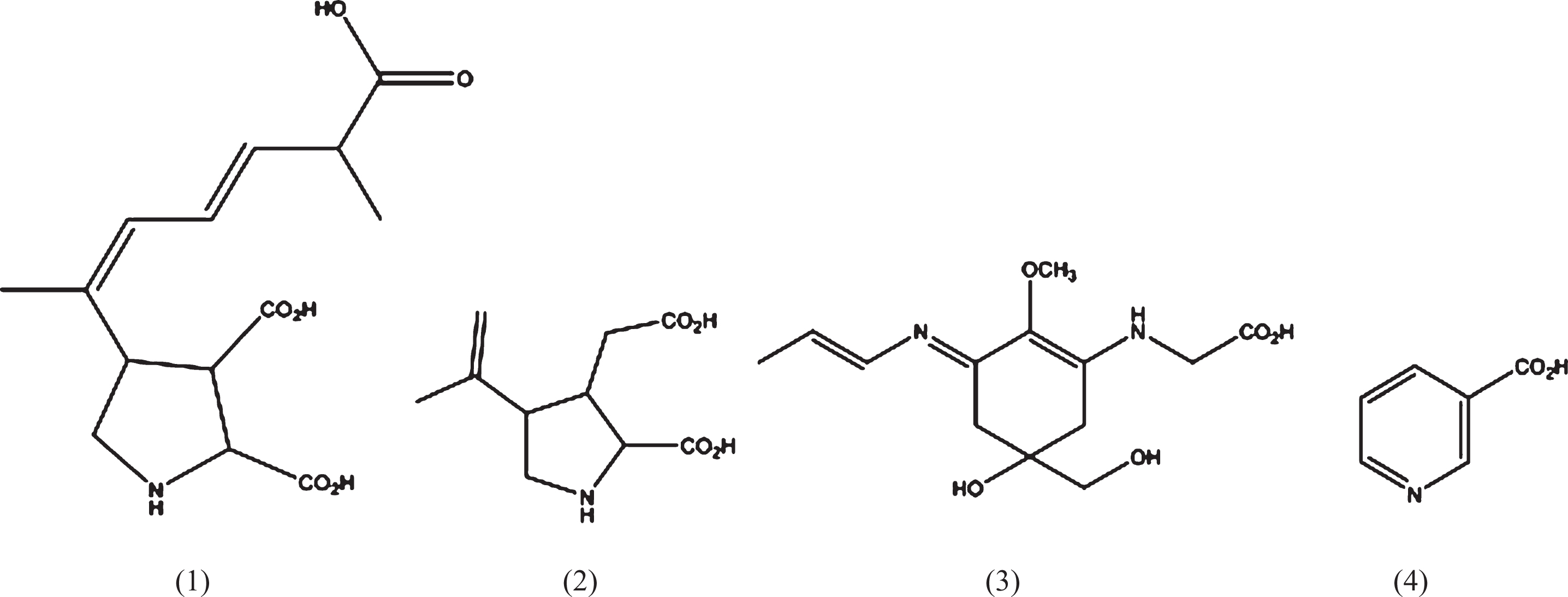
Alkaloids extracted from Porphyra genus [25]. 1) Domoic acid 2) Kainic acid 3) Usijurene 4) Nicotinic acid
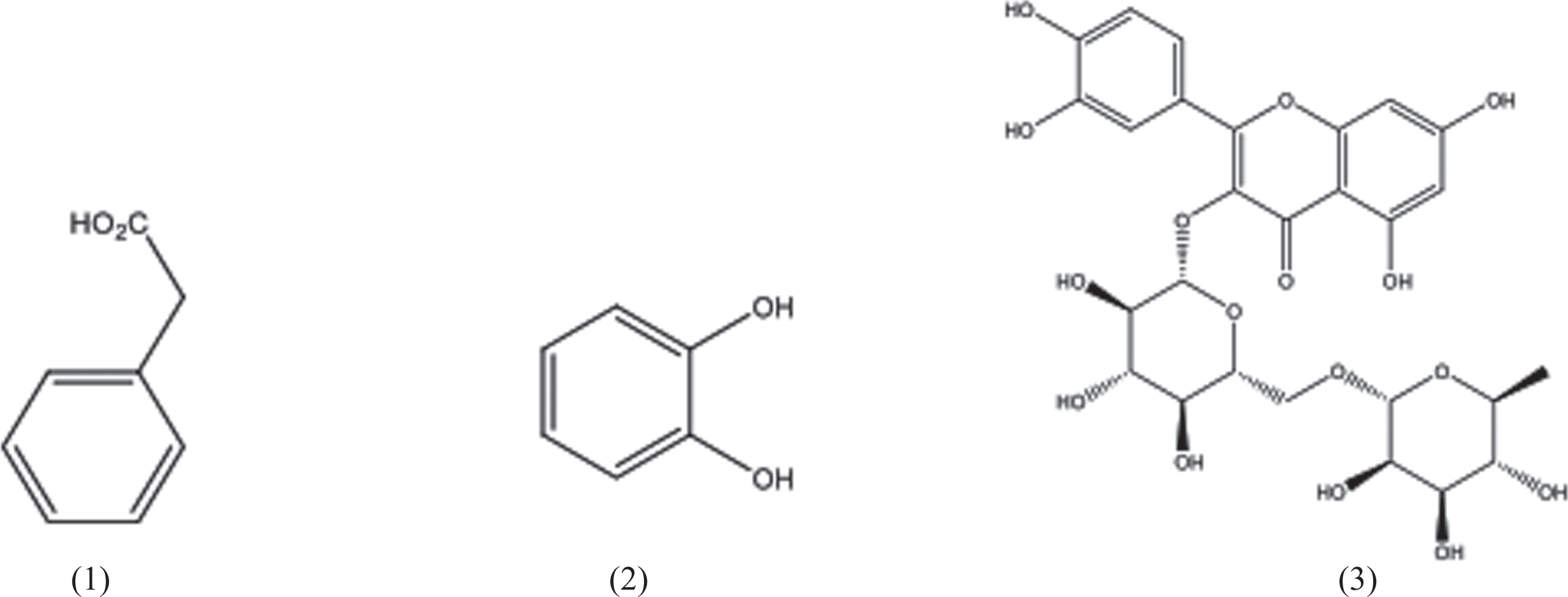
Polyphenols and related compounds isolated from Porphyra species [25].
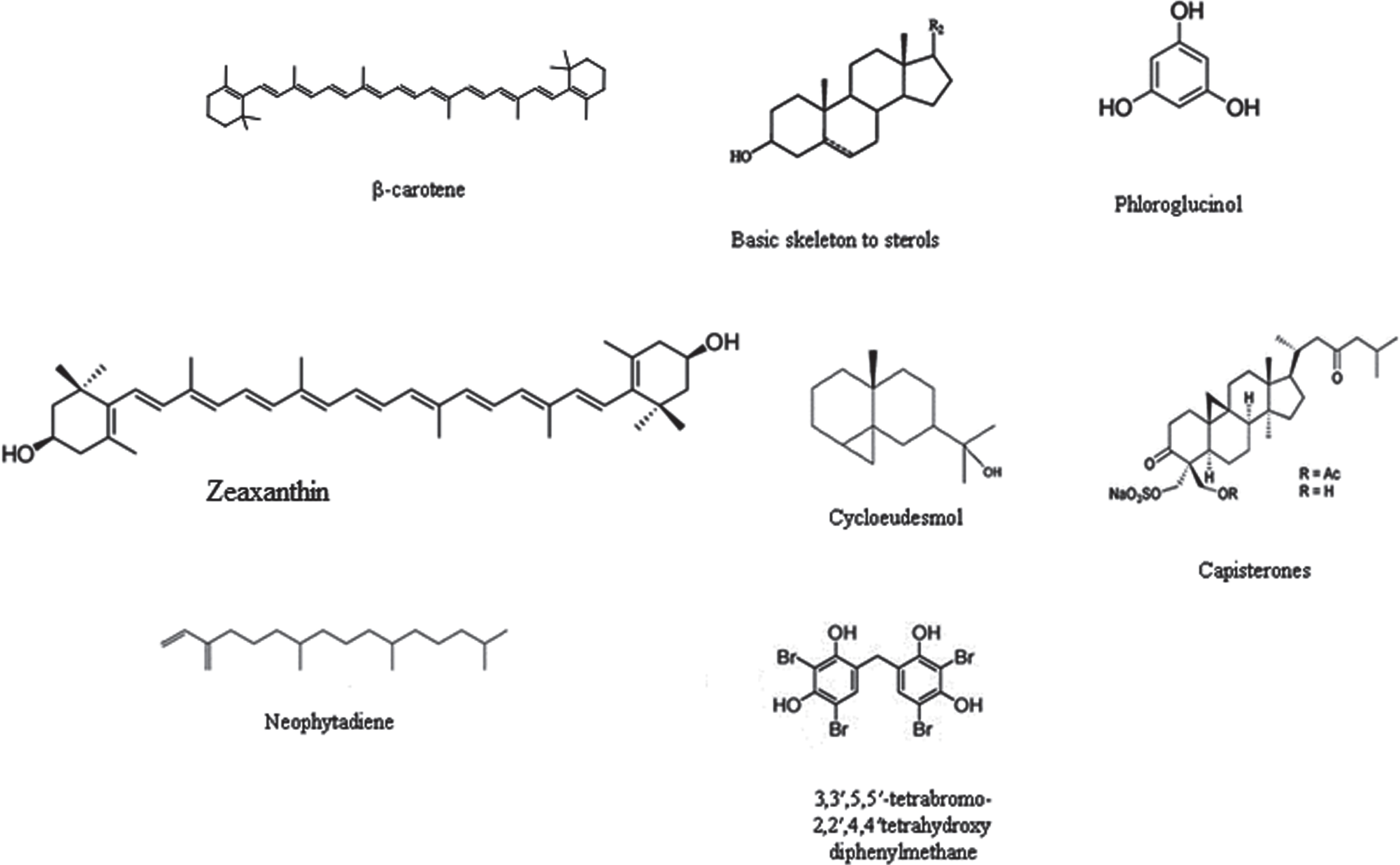
Chemical structures of beta-carotene, basic skeleton of sterols, phloroglucinol, zeaxanthin, cycloeudesmol, capisterones, neophytadiene and brominated compound [25].
The discovery and application of natural and natural-based compounds has been tried to control harmful algae in aquatic systems as an alternative to synthetic algicides. The reported studies involve lysine and its analogs, ferulic acid [50], trans-cinnamic acid, anthraquinone, 1,3-dichloronaphthoquinone, bacillamide [51], fischerellin B [52], 12-epi-hapalindole [53], oxygenated fatty acids and potassium ricinoleate [54, 56]. Hence decomposing barley straw has also been used to control blue-green algae. It was found that extracts of the genus Polygonatum inhibited the growth of several freshwater algae such as Chlorella vulgaris, Scenedesmus sp. and M. aeruginosa as well as duckweed [57] Kim et al., 2006). These results demonstrated that L-2-azetidinecarboxylic acid (AZC) selectively inhibited algal growth at low concentrations. Allelopathic effects of the green macroalgae Ulva lactuca on the growth of three species of red tide microalgae, Heterosigma akashiwo, Alexandrium tamarense and Skeletonemacostatum were studied by [58]. They showed that U. lactuca exhibits negative allelopathic effects on harmful bloom-forming microalgae. Knott and Ishola [15] studied the organic crude extracts from Plocamium species, red marine algae from the coastline of Namibia. They described potential inhibitory activities against common pathogens. Another study also reports antioxidant activity of a compound extracted from Namibian Plocamium sp. [8]. Twelve pathogens selected for this study are important in our everyday life as they are common causes of a variety of human diseases. It was originally proposed that natural algaecides could effectively be applied in control of toxic algal blooms [59]. However, Pratt [60] was the first to report that growth of Chlorella vulgaris was depressed by a compound (chlorellin) that was produced and excreted into the medium and several other extracellular metabolites able to inhibit their own growth and the growth of other species have meanwhile been reported.
Antimicrobial activity was reported of solvent extracts from Gracilaria vermiculophylla, Porphyra dioica and Chondrus crispus, both from wild and from integrated multi-trophic aquaculture [61]. The higher potency in extracts from aquaculture species, when compared with the wild ones may be due to the environmental conditions, such as the presence of larger concentration of compounds from the breeding tanks, the constant water motion and aeration, and to the exposure to higher light intensities during longer periods of time. Aquaculture extracts of Gracelaria vermiculophylla and Porphyra dioica presented a higher content of fatty acids. The ethyl acetate extracts predominated saturated fatty acids, especially palmitic acid, followed by polyunsaturated and monounsaturated fatty acids [61].
Laminarans: Laminaran was shown to be the primary storage polysaccharide of brown seaweed (e.g., Laminaria or Saccharina spp.) and their content can represent up to 32% –35% of dry weight [62]. Laminarans are small glucans and are a linear polysaccharide composed of -(1Ñ3)-linked glucose, containing randomly -(1Ñ6) intra-chain branching, with a ratio around 3:1 [63].
Ulvans: Ulvan defines a water-soluble sulphated polysaccharide extracted from the intercellular space and in the fibrillar wall of green seaweed (mainly Ulva sp.) and accounts from 18% to 29% of the algal dry weight [64]. These polysaccharides are generally composed of glucuronic acid and iduronic acid units together with rhamnose and xylose sulfates, connected by and -1Ñ4 bonds, with an average molecular weight of ulvans ranging from 189 to 8200 kDa. Hence, the main repeating disaccharide units reported are ulvanobiouronic acid 3-sulphate types containing either glucuronic or iduronic acid. Although, minor repeating units have been reported that contain sulfated xylose replacing the uronic acid or glucuronic acid as a branch on O-2 of the rhamnose-3-sulphate [65]. Phospholipids are usually located in extra-chloroplast membranes and account for 10% –20% of total lipids in algae. While the most dominant phospholipid in algae is phosphatidyl glycerol in green algae, phosphatidylcholine in red algae, and phosphatidylcholine and phosphatidylethanolamine in brown algae. Hence, the glycolipids are located in photosynthetic membranes and constitute more than half of the lipids in the main algal groups. They are characterized by high n-3 polyunsaturated fatty acids. Three major types of glycolipids are monogalactosyl diacylglycerides, digalactosyl diacylglycerides, and sulfoquinovosyl diacylglycerides [66]. Green algae are rich in C18 PUFAs, mainly linolenic (C18:3 n-3), stearidonic (C18:4 n-3) and linoleic (C18:2 n-6) acids; red algae is rich in C20 PUFAs, mainly arachidonic (C20:4 n-6) and eicosapentaenoic (C20:5 n-3) acids, and brown algae exhibit both. Whereas the sterols are structural components of cell membrane and regulate membrane fluidity and permeability. They are composed of four rings (A–D) with a hydroxyl group in carbon-3, two methylgroups at C18 and C19 carbons and a side chain at C17. The main sterols in macroalgae are cholesterol, fucosterol, isofucosterol and clionasterol [67].
Anticancer activity of marine algae
In fact, cancer is the second-leading cause of death after cardiovasvular disease in economically developed countries and the second-leading cause of death in developing countries. Cancer is a persistently increasing warning for the global population. Cancer risk raises with aging and adaptation to cancer-causing behaviors. Based on global cancer incidence, mortality and prevalence (GLOBOCAN) 2018 estimates, about 18.1 million cancer cases have been reported and 9.6 million of deaths by cancer are estimated to have occurred in 2018. Therefore, awareness of the cancer-causing factors and early diagnosis with implementing the treatments are beneficial for prevention. Marine macro-algae belong to the most interesting algae group because of their wide range spectrum of biological activities such as antimicrobial, antiviral, antifungal, anti-allergic, anticoagulant, anticancer, antifouling and antioxidant activities [25]. They produce a variety of chemically active metabolites in their surroundings as a weapon to protect themselves against other settling organisms. There are lots of reports on macroalgae derived chemical compounds that possess ranges of biological activities, out of which some could be used in pharmaceutical industries. Many marine algae produce antibiotic substances capable of inhibiting bacteria, viruses, fungi, and other epibionts. The antibiotic characteristic is dependent on factors like that particular alga, the microorganisms, the season, and the growth conditions [67]. Preliminary studies have indicated that some antioxidants, particularly β-carotene, may be of benefit in the treatment of precancerous conditions such as oral leukoplakia, possibly a precursor of oral-cancer [67]. Recently, C. vulgaris derived peptide has been shown to inhibit solar ultraviolet B (UVB) induced matrix metalloproteinase-1(MMP-1) level in skin fibroblast cells [62].
African trypanosomiasis
Another neglected Tropical diseases with great impact in Africa is human African trypanosomiasis (HAT) or sleeping sickness. HAT is caused by the protozoan Trypanosoma brucei and is transmitted by insects of the genus Glossina, known as tsetse flies. Their parasites infect nearly 30,000 people annually, according to official data based on reported cases [68]. Another 60 million people are living in at-risk areas [69]. The clinical presentation of HAT consists of two recognized stages: the early hemo-lymphatic stage (stage I) and the late encephalitic stage involving the central nervous system (stage II). In stage I, the patient experiences episodes of fever lasting 1-7 days that occur with generalized lymphadenopathy along with other non-specific symptoms including malaise, headache, arthralgia, generalized weakness and weight loss. In stage II, the parasites penetrate the blood-brain barrier and proliferate in the central nervous system, causing an encephalitic reaction that leads to death if the infection is untreated or inadequately treated. For the treatment of stage I HAT, pentamidine is used against T. b. gambiense, whereas suramin is preferred against T. b. rhodesiense. Side effects have been reported for both treatments. Pentamidine causes significant toxicity in at least half of the patients, with life-threatening hypoglycemia being the most serious. A range of side effects including nausea, vomiting, fatigue and shock followed by renal toxicity and neurological complications such as headache and peripheral neuropathy have been reported for suramin [70]. For stage II HAT, melarsoprol is active against both T. b. rhodesiense and T. b. gambiense, whereas eflornithine and nifurtimox are effective only against T. b. gambiense. Eflornithine has replaced melarsoprol for T. b. gambiense in many endemic countries, and its use is recommended in combination with nifurtimox [71]. Melarsoprol is highly toxic and may cause death. The side effects for eflornithine alone include seizures, fever, infections, neutropenia, hypertension and diarrhea; all leading to death. Diarrhea, infections, fever, skin rash or hypertension have been reported for nifurtimox-eflornithine combination. Most recently, new approaches for searching HAT therapeutics in marine natural resources have been reported [72].
Conclusions
This review article highlights the algae species abundance in Namibia and their potential as sources of nutritional components and bioactive compounds. From literature data findings, algae research in Namibia is limited. On the estimated hundred thousand to one million existing macro- and microalgae species, only about 30,000 have been described and very few from Namibia. Moreover, only a dozen species are cultivated at a large scale for biotechnological applications. As is the practice around the world, the algae species in Namibia could also be used as food supplements for humans, in animal feed as well as in aquaculture. This could contribute the improving human health and nutrition. Various algae species were found to possess biological activities such as antimalarial, anticancer, anti-inflammatory antimicrobials, antioxidant, anticoagulant, antiprotozoal, antivirals or against other pathogenic conditions. The high algae diversity in Namibia are thus a promising source of high-value products such as nutrients and novel anti-pathogenic drugs with no microbial resistance. Since algae grows in various harsh conditions, they produce a variety of chemically active metabolites in their surroundings as a weapon to protect themselves against other settling organisms, compounds which can be beneficial in the food, pharmaceutical, aquaculture and many other industries. In Namibia, there is high need for sustainable aquaculture to produce economically beneficial algae. The efficiency of various microalgal compounds against human or aquatic pathogens is very encouraging and there is no doubt that their exploitation and application will expand. Hence, research in isolation and characterizing bioactive metabolites from Namibian algae is encouraged which may help to control some disease that impacts people annually. This may require extensive research and cultivation of algae in an effort to evaluate new compounds from species of algae found in this region.
Conflict of interest
The authors have no conflict of interest to report.
Author contributions
M.M. Nyambe conceived the original idea of writing a review on Namibian algae. A. Rahman and J-H Küpper supported the idea, then A. Rahman took the lead in writing the manuscript. All authors contributed in shaping the outline of the manuscript. A. Rahman and M.M. Nyambe did literature review for different sections and J-H Küpper added relevant information to all section as he reviewed the manuscript. All authors discussed the outcome and contributed to the final manuscript.
Footnotes
Acknowledgments
The author’s acknowledge Namibia Ministry of Education.