



Abstract
BACKGROUND:
Oral cavity ecosystem represents a dynamic pattern. Scaling and root planing (SRP) is the gold standard approach for treatment of chronic periodontitis but used alone it may not be effective in removing periodontal pathogens from sites where access is poor. Although chlorhexidine is the most effective mouthwash against oral microorganisms, the side effects of long- term use suggest the need for an alternative. Hence, this study has been undertaken to know effectiveness of silver nanoparticle mouthwash with chlorhexidine mouthwash which is effective on common microorganisms of oral cavity.
OBJECTIVE:
To evaluate and compare the clinical and biochemical outcome of chlorhexidine (CHX) and silver nanoparticle as an adjunct to scaling and root planing (SRP) in patients with chronic periodontitis.
METHODS:
Ninety- two patients with generalized moderate to severe chronic periodontitis from the Dept. of Periodontology who fulfilled the inclusion and exclusion criteria were recruited for the study. In the experimental clinical trial, the clinical parameters likewise; Plaque index (PI), Gingival index (GI), probing depth (PD), clinical attachment loss (CAL) were assessed. The volumetric analysis of gingival crevicular fluid (GCF) levels were assessed at baseline and follow up visits. The IBM SPSS Statistics for Windows software, v. 20.0 (IBM Corp., Armonk, USA), was used. The data was numerically coded and entered into the program. Both the descriptive statistics and the inferential statistics were analyzed to compare the responses between the groups.
RESULTS:
The statistical analysis was carried out by descriptive as well as inferential statistics and both groups demonstrated significant intragroup reduction in PI, GI, PPD, CAL, GCF from baseline to 3 months follow-up. There were statistically significant intragroup differences between both the groups for all of the parameters.
CONCLUSION:
Silver nanoparticle mouthwash can be an alternative adjunct for non-surgical periodontal therapy in patients with chronic periodontitis. Results of this study indicated that both the mouth rinse demonstrated an equal range of effectiveness. These conclusions were supported by the clinical parameters and biochemical outcomes.
Introduction
Periodontal infection is initiated by specific invasive oral pathogens that colonize dental plaque biofilms on tooth surface, and host immune response to inflammation plays a central role in disease pathogenesis [1]. SRP is the most widely used technique in periodontal therapy. Studies related to root planing have shown that complete removal of calculus is usually difficult and incomplete removal of subgingival plaque has been stated to be equal to no plaque control at all [2–4]. It has been observed that complete removal of plaque and calculus is more difficult in deeper than in shallow pockets [4, 5]. Chlorhexidine is one of the most widely used oral antimicrobial agents and is available in different formulations. The substance is known to have good substantivity and at high concentrations (0.12% or more) it has proven to be bactericidal, causing a lethal damage to the bacterial membrane, being active on both gram-negative and gram-positive bacteria [6]. The common side- effects associated with the use of CHX are increase in staining of teeth and other oral surfaces, an increase in calculus formation, and an alteration in taste perception. Currently, only limited data is available from controlled clinical trials comparing the efficacy of silver nanoparticle to the gold standard CHX.
However, CHX is known to have various side effects ranging from minor effects such as alteration in patient taste sensation and staining of teeth to certain fewer common effects such as mucosal erosion or parotid swelling. Considering the adverse effects of CHX, its use for long-term therapy has been limited or not actively recommended [7–9].
The holistic science of Ayurvedic medicine use metals in treating several health anomalies. Bhasma is a distinct ayurvedic metallic preparation that is treated with herbal juice or concoction and used extensively for healing a variety of chronic ailments. One Such potent ayurvedic medicine is Rajat Bhasma, which is a calcified formulation used largely in treating eye disorders, debility, cough with sputum, jaundice, anaemia, liver disorders, reproductive problems, and other neurological diseases. It is also known as Chandi Bhasma, Raupya Bhasma and Calcined Silver Ash. Rajat bhasma is a reduced silver nanoparticle used in Ayurvedic medicine for a multitude of purposes. It is made using the method of extensive oxidation under very high temperatures [10–12].
Therefore, the present study was to evaluate and compare the effectiveness of silver nanoparticle mouthwash (100% AgN particle, 20 mcg) and 0.2% CHX as an adjunct to SRP in patients with chronic periodontitis.
Mechanism of action
Rajata Bhasma (Liquid) is a dark yellow to brownish yellow to brown liquid dispersion comprising of silver nanoparticles. The core and the hydrodynamic size of the silver nanoparticles are 30±10 nm and ≤250 nm, respectively in Rajata Bhasma (Liquid) which is freely soluble in all alcohol-based solvents and water-based solvents. Rajata Bhasma (Liquid) possesses active silver nanoparticles surface allowing for efficient reactions with nucleophilic amino acid residues with surface proteins, which are inherent with all the pathogens (gram positive and gram- negative bacteria). In addition, silver has the highest affinity to bond and react with soft sulphur functionalities of sulphydryl groups of proteins present on the bacterial surface thus leading to instant death of deadly bacteria. Additionally, the highly reactive silver atoms of our silver nanoparticles interact with the plethora of amino, imidazole, phosphate and carboxyl groups present on and within the bacterial domains causing multi-pronged choking effects thus leaving no chance for the bacterial survival. These multipronged interactions of silver nanoparticulate surface with bacterial cell surface functionalities, singularly or collectively, cause bacterial cell wall damage and disruption of cytoplasmic membrane leading to leaching of metabolites, direct interference with DNA synthesis, concomitantly causing denaturing of bacterial proteins and enzymes (dehydrogenases). The series of silver nanoparticle interactions with bacterial domains cause binding to ribosomes thus inhibiting protein synthesis, and also thereby interfering with electron transport in cytochrome system which is involved in the production of ROS (reactive oxygen species). Therefore, silver nanotechnology has opened up new opportunities toward the creation of a new generation of antibiotics, which are capable of destroying plethora drug resistant bacteria. Silver nanoparticle mouthwash (Nanolife mouthwash) is one of the ayurvedic propreitary product which is approved and licensed. The contents are mentioned in
Aim and objectives
The primary objectives of the study was to evaluate and compare the effects of chlorhexidine (CHX) mouthwash and silver nanoparticle mouthwash (SNP) on clinical indices likewise Periodontal Index (PI), Gingival Index (GI). The secondary objective was to compare the Probing pocket depth (PPD) and CAL (Clinical attachment loss) and volumetric analysis of gingival crevicular fluid (GCF).
Study setting
The prospective study was carried out in Department of Periodontology of Rural Dental College, Pravara Institute of Medical Sciences, Loni, Maharashtra after getting the ethical approval by the institutional review committee in accordance with the Helsinki Declaration as revised in 2013 with CTRI registration no. CTRI/2023/05/053193.
Study population
The patients following exclusion and inclusion criteria were enrolled for the study after getting informed consent in English, Hindi or local language Marathi. A total of 92 patients within the age group of 30–60 years belonging to both the genders were allocated. The inclusion criteria elicited that participants suffering from generalized mild to moderate chronic periodontitis were selected. While, patients with history of any systemic diseases, smokers, chronic alcoholics, pregnant and lactating women, patients who had received any periodontal therapy in last 6 months, patients with the history of use of any oral rinse or antibiotic therapy in last 6 months were excluded from the study.
Study groups
The sample population was allocated into two study groups; the comparator group was Chlorhexidine group (CHX) and silver nanoparticle group (SNP). Both the groups had undergone periodontal nonsurgical therapy which included scaling and root planing followed by mouthwash which was prescribed twice daily for 14 days. The interventional group had Rajata Bhasma Liquid (Silver equivalent)-20 mcg, with added flavors of Clove bud extract and peppermint extract. The comparator group had 0.12% chlorhexidine mouthwash.
Study design and conduct
The randomized double-blind, parallel clinical study was designed. Randomization was carried out using computer generated random numbers. The following clinical parameters were recorded in all patients at baseline likewise; Periodontal Index (PI) according to Silness and Loe (1964); Gingival Index (GI) according by Loe and Silness (1963); Periodontal pocket depth (PPD) —It was measured from base of the pocket to the gingival margin at mesiobuccal, midbuccal, distobuccal and lingual surfaces using UNC-15 probe; Clinical attachment levels (CAL)—It was measured from base of the pocket to the cementoenamel junction at mesiobuccal, midbuccal, distobuccal and lingual surfaces using UNC-15 probe.
Clinical measurements were recorded and gingival crevicular fluid (GCF) collection was carried out in all patients by another examiner. For the determination of GCF volume, GCF samples were collected with sterile Periopaper strips on baseline and 3-month of each experimental period (Fig. 1). Samples were taken from the deepest periodontal pocket in the oral cavity from each quad rant. The sites were isolated with cotton rolls and dried with a gentle stream of air. Any visible deposits of supragingival plaque were removed before sampling with Periopaper strips which was placed carefully into the gingival crevice until mild resistance is felt (1–2 mm into the pocket) and hold in place for 30 seconds (Fig. 2). Strips contaminated by blood or exudate were excluded. Periotron 8000 was used for the assessment of the GCF volume (Fig. 3) Periopaper strips were transferred quickly to the Periotron 8000 device to minimize evaporation errors. The volume of GCF was immediately recorded, expressed in the measuring device units and followed by calculation of the volume using a standard curve.
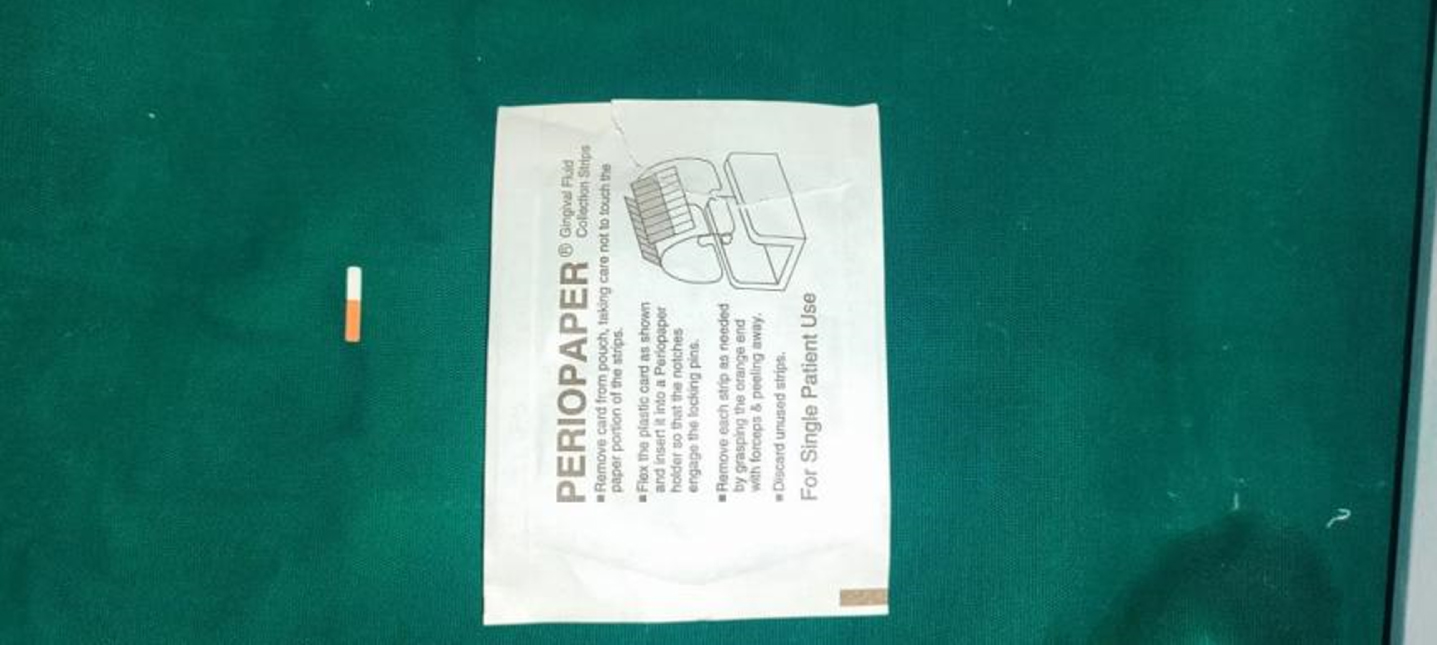
Periopaper strip for volumetric analysis of GCF.
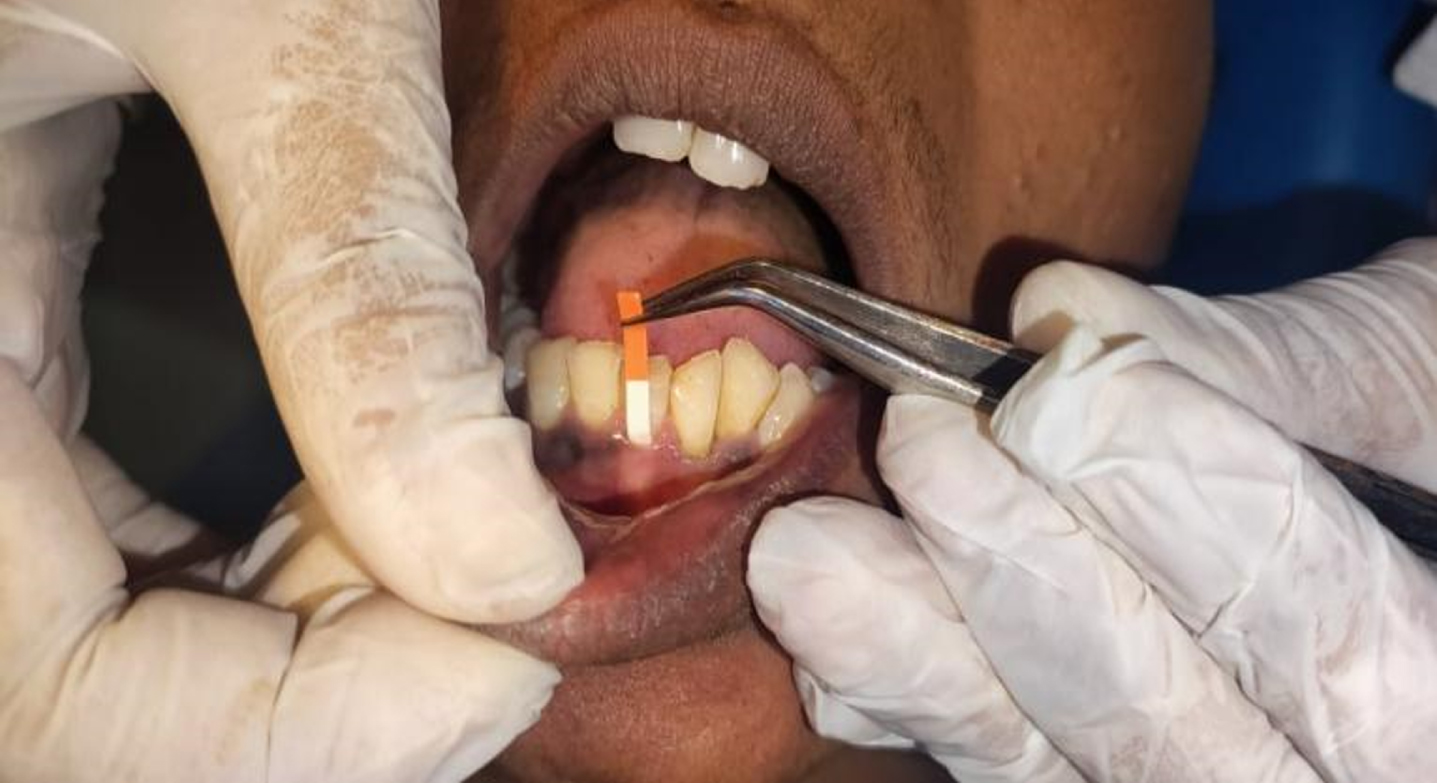
Periopaper strip inserted in gingival crevicular fluid.

Periopaper strip transferred quickly to analyse the GCF values by Periotron 8000.
Treatment procedure constituted of non-surgical periodontal therapy (NSPT) which was carried out in all patients using ultrasonic and hand instruments at first visit after recording the clinical parameters at baseline. In the first appointment, each patient received full mouth supragingival scaling with a piezoelectric handpiece (EMS). Patients were advocated the use of mouthwash in both the groups. The 10 ml of mouthwash was prescribed twice daily after 1:1 dilution in both the groups for 14 days. After 1 week, on the second appointment, full mouth subgingival SRP was done using both Gracey curettes (Hu-Friedy) and piezoelectric handpiece under local anaesthesia of 2% lidocaine with 1:100,000 epinephrine.
The patients were followed up at 3 months and clinical parameters were charted and GCF samples were collected again. There were 5 drops outs in CHX group and 7 dropouts in SNP group at the follow up visit.
Power calculation and statistical analysis Using G* Power 3.1.9.4 software the sample size was estimated to be 75. A sample size of 100 was recruited to compensate for the possible dropouts during the study. The sample size estimation before the start of the study considered beta error to be 20%. Post-hoc power analysis done after completion using G* Power 3.1.9.4 software suggested that the power achieved in the present study is 100%. Statistical analysis was performed using the statistical software SPSS version 20.
Recordings and measurements were tabulated and charted for statistical analysis. Intragroup differences in clinical and biochemical parameters were analyzed by repeated measures ANOVA whereas the intergroup differences were analyzed using ANOVA tests. Statistical significance was set at 95% probability level (P < 0.05).
Results
Descriptive statistics
Descriptive analysis was used for explaining the outcome and explanatory parameters by using the frequency and proportions for categorical variables and mean and SD for continuous variables.
Contents of nanolife mouthwash
Contents of nanolife mouthwash
Other ingredients: Extracts of Neem, Tulsi, Turmeric, Karuvelam, Cardamom, Mint.
Mann Witney U test was used to compare the mean values of Periodontal Index (PI) and Gingival Index (GI) index between the two groups at different time intervals. Friedman’s test was followed by Wilcoxan signed rank test which has been used to compare the clinical parameters of both the groups in PI and GI between different time intervals. P value was set at 0.05 (p < 0.05). Both male and female patients were recruited. The GRAPH 1 represents the gender distribution amongst the two treatment groups. The mean age group was 44.29 years for CHX group and for SNP group it was 45.87 years. The Table 2 depicts the demographic data of the subjects recruited for the study.
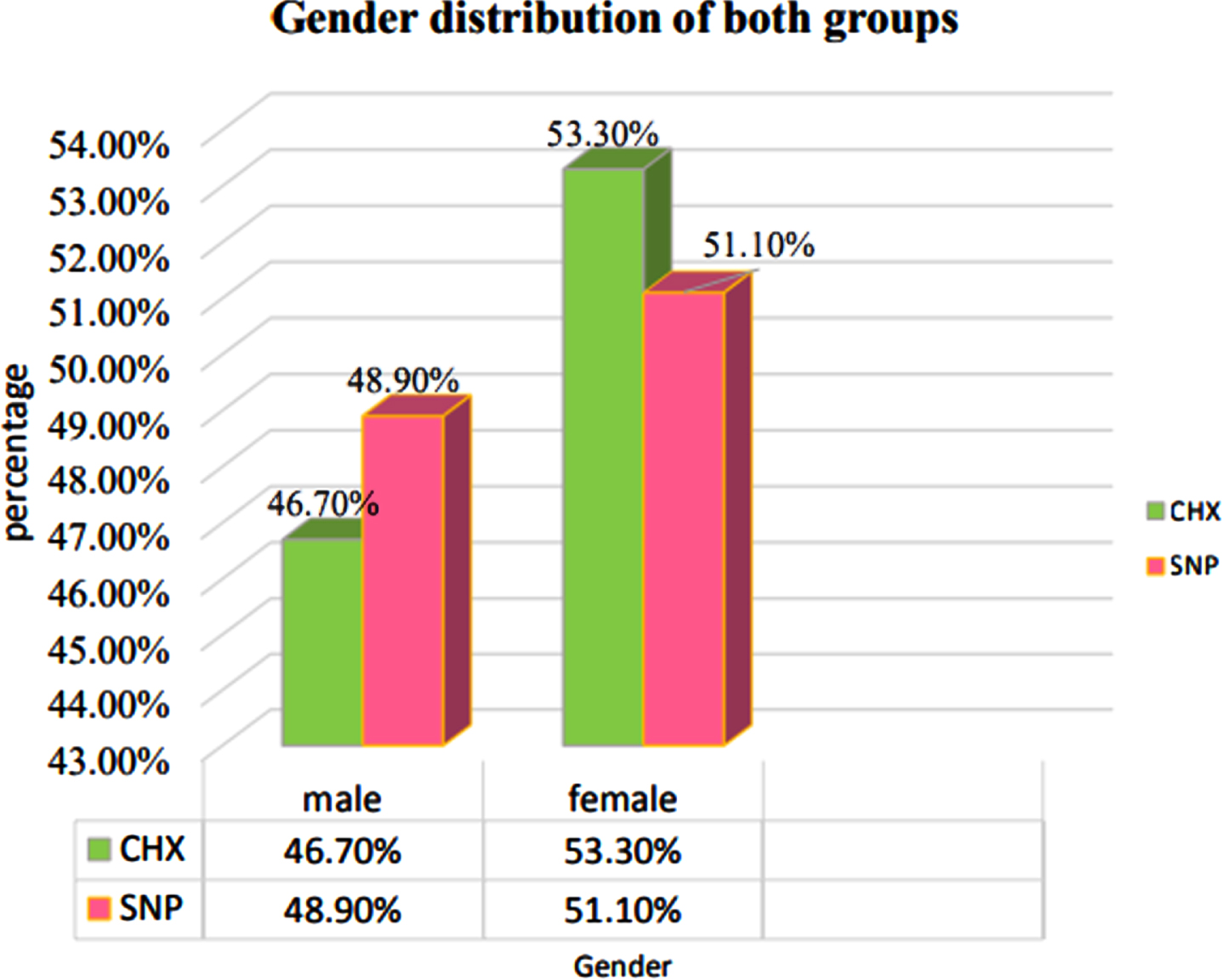
Gender distribution of both CHX and SNP groups.
Clinical and demographic data of the subjects (Mean Value±SD)
Table 3 shows the comparison of mean scores between both groups at different time intervals using Mann Witney U Test. Mann –Witney U test showed statistical significant difference in both PI and GI scores of both the groups, but there was a high statistical significant difference at 3 months in GI between both groups. (p = 0.001).
Comparison of mean scores between both groups at different time intervals using Mann Witney U test
Table 4 shows comparison of PI and GI scores of both the groups at different time intervals (Intragroup comparison), all the follow up time periods showed a highly statistically significant difference in both the groups, Wilcoxan signed rank test evaluated the differences at each pair of time of the Clinical parameters (PI and GI) in both the groups which showed highly significant statistically significant difference with improvement with time. The scores showed improvement with the time (3 months versus baseline) in both PI and GI.
Comparison of mean values of periodontal index (PI) and gingival index (GI)
Table 5 compares the parameters of PPD, CAL, and Volume of GCF using ANOVA and repeated measures ANOVA for intragroup comparison for follow up periods. It was interpreted that the intragroup comparison for PPD between both the groups at baseline was significant and scores improved at the end of the study period (3 months; p = 0.00) in both the groups. Intragroup comparison of scores in both the groups also showed a highly statistically significant difference. (p = 0.001).
Mean values and standard deviations of study parameters of probing pocket depth, clinical attachment loss and volume of GCF at baseline and 3rd month follow-up
Unlike CAL, at baseline there was no statistically significant difference (p = 0.20), but showed an improvement with statistically significant difference in both the groups (p = 0.00 and p = 0.03). When ANOVA was applied for Volume of GCF at baseline, there was a statistically significant difference between both the groups (p = 0.04) but a highly statistically significant difference was shown at 3 months follow up (p = 0.00).
During the past few years, silver nanoparticles (AgNPs) became one of the most investigated and explored nanotechnology-derived nano- structures, given the fact that nanosilver- based materials proved to have interesting, challenging, and promising characteristics suitable for various biomedical applications. Among modern biomedical potential of AgNPs, tremendous interest is oriented toward the therapeutically enhanced personalized healthcare practice. AgNPs proved to have genuine features and impressive potential for the development of novel antimicrobial agents, drug-delivery formulations, detection and diagnosis platforms, biomaterial and medical device coatings, tissue restoration and regenerative materials, complex healthcare condition strategies, and performance enhanced therapeutic alternatives among that was also a mouthwash with active ingredient as silver nanoparticle.
The powerful antimicrobial action of silver nanoparticle, with its ability to modulate the immune response makes it a potential therapeutic agent in the treatment of multifactorial periodontal disease.
The present study was aimed to evaluate and compare the efficiency of a 0.2% CHX and the SNP mouthwash during 14 days. Results of this study indicated that both the mouth rinse demonstrated an equal range of effectiveness. These conclusions were supported by the clinical parameters and biochemical outcomes.
Gingival Index (GI) and Periodontal Index (PI)
In the present study, the PI and GI scores for both the groups at different time intervals (Intragroup comparison), and the follow up time periods showed a highly statistically significant difference. Wilcoxan signed rank test evaluated the differences at each pair of time of the Clinical parameters (PI and GI) in both the groups which showed highly statistically significant difference with improvement over time. The study which accords with present study was by Yahia et al. [13] which concluded that AgNPs and CHX mouthwash were found to have significantly reduced salivary microbial counts and reduced O’Leary PI scores due to their antimicrobial and antiplaque effects in both the groups [13]. The studies in contrast to the current study were of Esfahanian et al. showed that CHX mouthwash had a significant statistical superiority in comparison with the SNP mouthwash in antimicrobial activity, while the present study showed that both the groups had equality in results. These differences from the present study might be attributed to sample population selection [14].
Probing Pocket Depth (PPD), Clinical Attachment Levels (CAL), and Volume of Gingival crevicular Fluid (GCF)
The parameters of PPD, CAL, and Volume of GCF scores improved at the end of the study period (3 months; p = 0.00) in both the groups. Intragroup comparison of scores in both the groups also showed a highly statistically significant difference. Unlike CAL, at baseline there was no statistically significant difference, but showed an improvement clinically in both the groups. The Volume of GCF at baseline, showed statistically significant difference between both the groups but a highly statistically significant difference at 3 months follow up.
CHX effectively reduces the count of oral microorganisms by releasing positively charged ions that interact with the negative charges on the bacterial cell wall, thereby increasing its permeability and altering the osmotic equilibrium of the cell. This results in cytoplasmic components leaking out and, eventually, cell death [15, 16].
The antimicrobial potential of AgNPs results from the binding of the silver ions (Ag+) as a positive charge on NPs surface to the proteoglycans layer of the bacterial cell wall as a negative charge. Ag+ penetrates, perforates, denatures, and disrupts the bacterial cell wall and the cytoplasmic membrane, eventually releasing the cell organelles. Additionally, Ag+ denatures the ribosomes and inhibits protein synthesis. It also interferes with DNA replication and prevents cell multiplication [17, 18].
Chlorhexidine, till date, is considered to be the most effective anti-plaque agent, but with certain limitations [1, 2]. A pronounced diminution in the cellular ATP content was observed. Conversely, CHX stimulated glycolysis and enhanced leakage of cellular enzymes (lactate dehydrogenase and fumarase). In isolated mitochondria, this antiseptic inhibited pyruvate carboxylation, oxidases, and oxygen uptake at very low concentrations (2μM) and promoted uncoupling. The results described herein raise great concerns about the safety of CHX, as the observed effects can induce hypoglycemia, lactic acidosis, ammonemia as well as cell membrane disruption [19].
Brzóska et al. [20] observed the importance of epigenetic changes as a measurable endpoint in nanotoxicological studies is getting more and more appreciated. In the present work, it was analyzed that epigenetic effects induced by citrate- and PEG-coated 20 nm silver nanoparticles (AgNPs) in a model consisting of 4T1 breast cancer tumors in mice. Animals were administered with AgNPs intragastrically or intravenously. It was observed a significant decrease in 5-methylcytosine (5-mC) level in tumors from mice treated with citrate-coated AgNPs regardless of the route of administration. For PEG-coated AgNPs, a significant decrease in DNA methylation was observed only after intravenous administration. Moreover, treatment of 4T1 tumor-bearing mice with AgNPs decreased histone H3 methylation in tumor tissue. Nevertheless, the present work points to the epigenetic effects as an important level of interaction between nanomaterials and biological systems, which should always be taken into consideration during analysis of the biological activity of nanomaterials and development of nanopharmaceuticals [20, 21].
Hence, search for an effective and safe alternative to CHX mouthwash has led to introduction of various herbal products in dentistry which are without any major side effects, besides being cheap and locally available. Natural herbs when used in mouthwashes, have shown significant advantages over the chemical ones.
Limitations of study
Limitation of our study included selection bias as study was confined to specific rural area only. The sample size for our study was small and long term follow-up was required. For evaluation of volume of GCF the samples were collected only once but, for appropriate results could be collected in intervals. Some confounding bias could also be present as it is a cross-sectional study. In the present study UNC-15, and Williams probe were used, which could be replaced by advanced diagnostic aids to avoid observational errors.
Conclusion
With the limitations of the study it can be concluded that adjunctive use of silver nanoparticle mouthwash in the treatment of chronic periodontitis significantly improves clinical and biochemical tests results and is equally effective as chlorhexidine, and at the same time is free from adverse effects.
Conflict of interest
The authors have no conflict of interest to report.
Footnotes
Acknowledgments
Sincere acknowledgements to Mr. Deepak Abhaya, CEO Dhanvantari Nano- Ayushadi (DNA) company Chennai (Tamil Nadu), for providing the material sponsorship of NanoLife mouthwash (100% silver nanoparticle).