



Abstract
A computational fluid dynamics approach is employed in this paper for the modeling of the coalescence phenomenon between many drops. Therefore, drops of water immersed in a hydrocarbon phase (n-heptane) were defined inside the flow solver. This numerical approach is based on the finite volume method and some value for the initial velocity of coalescence was chosen. Due to this value of the velocity of collision some scenarios arise where can be seen the formation of vortexes at many zones of the system. The streamlines were computed inside the drops and the dynamics of the coalescence can be understood in terms of this. In the model reported here the surface tension and the gravity forces are included.
Introduction
Acevedo-Malavé [1] propose a hydrodynamic formalism to simulate the formation and condensation of spherical drops. In that study the author uses the Smoothed Particle Hydrodynamics method to resolve the Navier-Stokes equations with the aim of simulating the condensation of drops in 3D. Acevedo-Malavé [2, 3, 4] reports a study about the physics of droplets using the Finite Volume method. In these studies the author shows the dynamics of the coalescence process of two drops of water immersed in a continuous phase composed by n-heptane for head-on and off-center collisions. Experimental studies of the binary collision of alkane droplets were carried out by Ashgriz and Givi [12, 13]. These authors found that when the Weber number is increased, the collision takes the form of a high-energy one and different types of results arises. In these references the results show that the collision of the droplets can be bouncing, grazing and generating satellite drops.
Gokhale et al. [14] study the coalescence of two condensing drops and shape evolution of the coalesced drops. Also the image analyzing interferometry has been used to study the coalescence of two drops of 2-propanol and the shape evolution after the coalescence is found to be driven by the capillary forces inside the drop. Menchaca-Rocha et al. [5] conducted a study on the coalescence and fragmentation of mercury drops of equal and unequal sizes. In this study these authors find out the limits for the coalescence measured in terms of the relative velocity and impact parameter. The collisional dynamics of equal-sized liquid drops was also studied by Jiang et al. [18]. In this work are reported the experimental results of the collision of water and normal-alkane droplets in the radius range of 150
Aarts et al. [6] propose a study of droplet coalescence in a molecular system with a variable viscosity and a colloid-polymer mixture with an ultralow surface tension. When either the viscosity is large or the surface tension is small enough, it is observed that the opening of the liquid bridge initially proceeds at a constant speed set by the capillary velocity. In the first case studied one finds that the inertial effects become dominant at a Reynolds number of about 1.5 and the neck then grows as the square root of time. In the second case one finds that decreasing the surface tension by a factor of 10
Mohamed-Kassim and Longmire [19] conducted Particle Image Velocimetry (PIV) experiments to study the coalescence of single drops through planar liquid/liquid interfaces. Sequences of velocity vector fields were obtained with a high speed video camera and the subsequent PIV analysis. Two ambient liquids with different viscosity but similar density were examined. After rupture, the free edge of the thin film receded rapidly allowing the drop fluid to sink into the bulk liquid below. Vorticity generated in the collapsing fluid developed into a vortex ring straddling the upper drop surface. The inertia of the collapse deflected the interface downward before it rebounded upward. During this time, the vortex core split in such a way that part of its initial vortices moved inside the drop fluid while the other part remained in the ambient fluid above it. The velocity of the receding free edge was smaller for higher ambient viscosity and the pinching of the upper drop surface caused by the shrinking capillary ring wave was stronger when the ambient viscosity was lower. This resulted in a higher maximum collapse speed and higher vorticity values in the dominant vortex ring.
Cristini et al. [16] propose an algorithm for the adaptive restructuring of meshes on the evolving surfaces. The resulting discretization depends on the instantaneous configuration of the surface. As an application of the adaptive discretization algorithm some simulations of the drop breakup and coalescence were presented. The results show that the algorithm can accurately resolve detailed features of the deformed fluid interfaces and the slender filaments of the drop breakup as well as dimpled regions with drop coalescence.
Qian and Law [10] propose an experimental investigation of binary collision of drops with emphasis on the transition between different regimes, which may be obtained as an outcome of the collision between droplets. In this study the authors analyze the results using photographic images, which show the evolution of the dynamics exhibited for different values of the Weber number. As a result of the experiment reported by Qian and Law [10] it is proposed five different regimes governing the collision between droplets: (i) coalescence after a small deformation, (ii) bouncing, (iii) coalescence after substantial deformation, (iv) coalescence followed by separation for head-on collisions, and (v) coalescence followed by separation for off-center collisions. Thoroddsen et al. [15] conducted an experimental study of surface profiles and propagation of Marangoni waves along the drop surface. One finds that the capillary-Marangoni waves along the water drop show self-similar character when measured in terms of the arc length of the original surface.
Rekvig and Frenkel [11] report a molecular simulation study of the mechanism by which droplets covered with a surfactant monolayer coalesce. These authors propose a model such that the rate-limiting step in coalescence is the rupture of the surfactant film. For this numerical study one made use of the dissipative particle dynamics method using a coarse-grained description of the oil, water, and surfactant molecules. It is found that the rupture rate is highest when the surfactant has a negative natural curvature, lowest when it has zero natural curvature, and lying in between when it has a positive natural curvature. Azizi and Al Taweel [7] propose a new methodology for solving the discretized population balance equation (PBE) by minimizing the finite domain errors that often arise when discretizing the drop size domain to study drop breakup and coalescence. Use is made of the size distribution sampling approach combined with a moving grid technique. In addition, an enhanced solution stability algorithm was proposed which relies on monitoring the onset of errors in the various birth and death terms encountered in PBE. This allows for corrective action to be undertaken before the errors propagate in an uncontrollable way. This approach was found to improve the stability and robustness of the solution method even under very high shear rate conditions.
Mashayek et al. [8] study the coalescence collision of two liquid drops using a Galerkin finite element method in conjunction with the spine-flux method for the free surface tracking. The effects of some parameters like Reynolds number, impact velocity, drop size ratio, and internal circulation on the coalescence process are investigated. The long time oscillations of the coalesced drops and the collision of unequal-size liquid drops are studied to illustrate the liquid mixing during the collision. The coalescence for different liquids is also studied, finding that the coalescence velocity of a water drop with a more viscous liquid is nearly independent of the viscosity difference strength.
Podgorska [17] reports experimental studies on the coalescence of toluene as well as silicone oil drops of different viscosity and the results of model predictions. The coalescence model was based on the assumption of partially mobile drop interfaces and has been applied for toluene as well as for silicone oil. Three different models for immobilized drop interfaces were proposed for silicone oil of high viscosity. Drop size distributions were predicted by solving the population balance equation with the assumption of partial mobility. This approach yields good results for toluene and quite good for silicone oil of low viscosity. For Silicone oil of high viscosity drop size distribution cannot be precisely predicted by simple models because drops of different size behave in completely different ways. However, the proposed models allow discussing the experimental observations.
Brenn and Kolobaric [9] made a study on satellite droplet formation in unstable drop collisions. Based on data from experiments on formation and breakup of ligaments the process of satellite droplets formation is modeled by Brenn and Kolobaric [9] and the experiments are carried out using streams of various liquids. On the other hand, it is observed that for a high-energy collision Weber number, the permanent coalescence occurs and the bigger drop is deformed producing some satellite drops.
Governing equations
The governing equations can be given by the continuity Eq. (1). And the momentum Eq. (2):
where
CFX
In this paper some calculations in physics of droplets were carried out. The study of the coalescence phenomenon is made by means of the Finite Volume method. For the first calculation a collision of many water drops in alkane media (n-heptane) is modeled. It was chosen a collision velocity of 0.2 m/s without separation between the drops.
Some snapshots for the collision between the water drops (blue color) immersed in a hydrocarbon continuous phase (white color) (Fig. 1). It can be observed that with a velocity of collision of 0.2 m/s the coalescence of drops are carried out, without the formation of the circular interfacial film that is reported in the literature. This behavior occurs because the liquid that drains out between the droplets has the time enough to drain and no fluid is trapped at the interface of the drops.
Sequence of times showing the evolution of the collision between the drops with 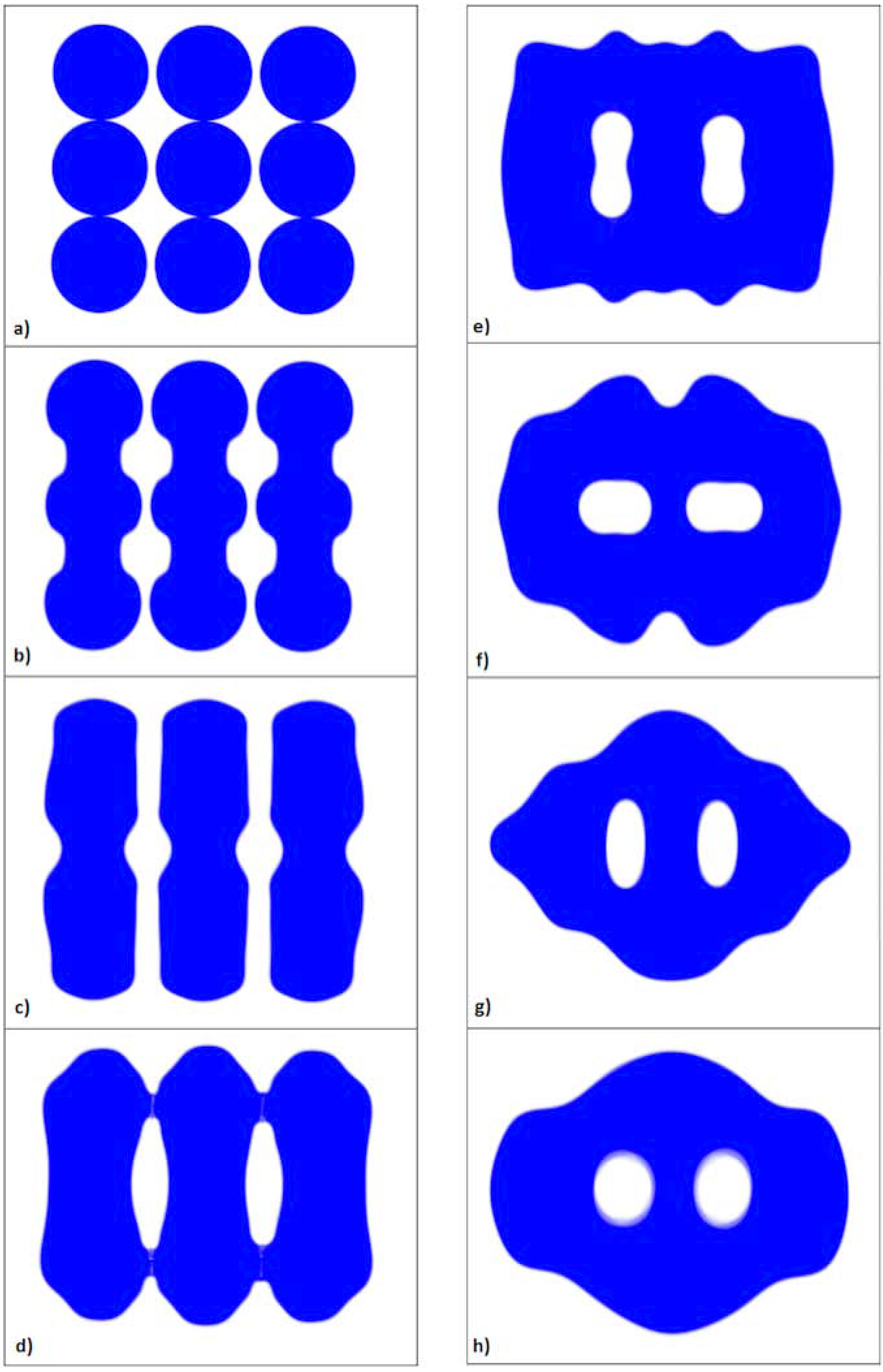
In fact, for this case, the surface tension forces prevailing over inertial forces and the dynamics of the system water-heptane show multiple oscillations at the surface of the bigger mass of water that result from the coalescence process. A point of contact between the drops that form a bridge structure with the dispersed phase is shown in Fig. 1(b). After this period of time the evolution of the system show the increment of the radius of this bridge and a mass of the continuous phase is occluded inside the biggest drop of n-heptane. After this, with the evolution of the dynamics the mass of water recovers its circular form. In Fig. 1(d) can be seen four points of contacts between the mass of water and a portion of n-heptane is occluded. With the evolution of the dynamics the mass of the hydrocarbon recovers its circular form due to the surface tension forces. The mass of water with enough bigger times recover its circular form and a set of traveling waves are moving on the surface of the biggest drop.
Velocity contour plot for the system water-heptane with 
Pressure contour plot for the system water-heptane with 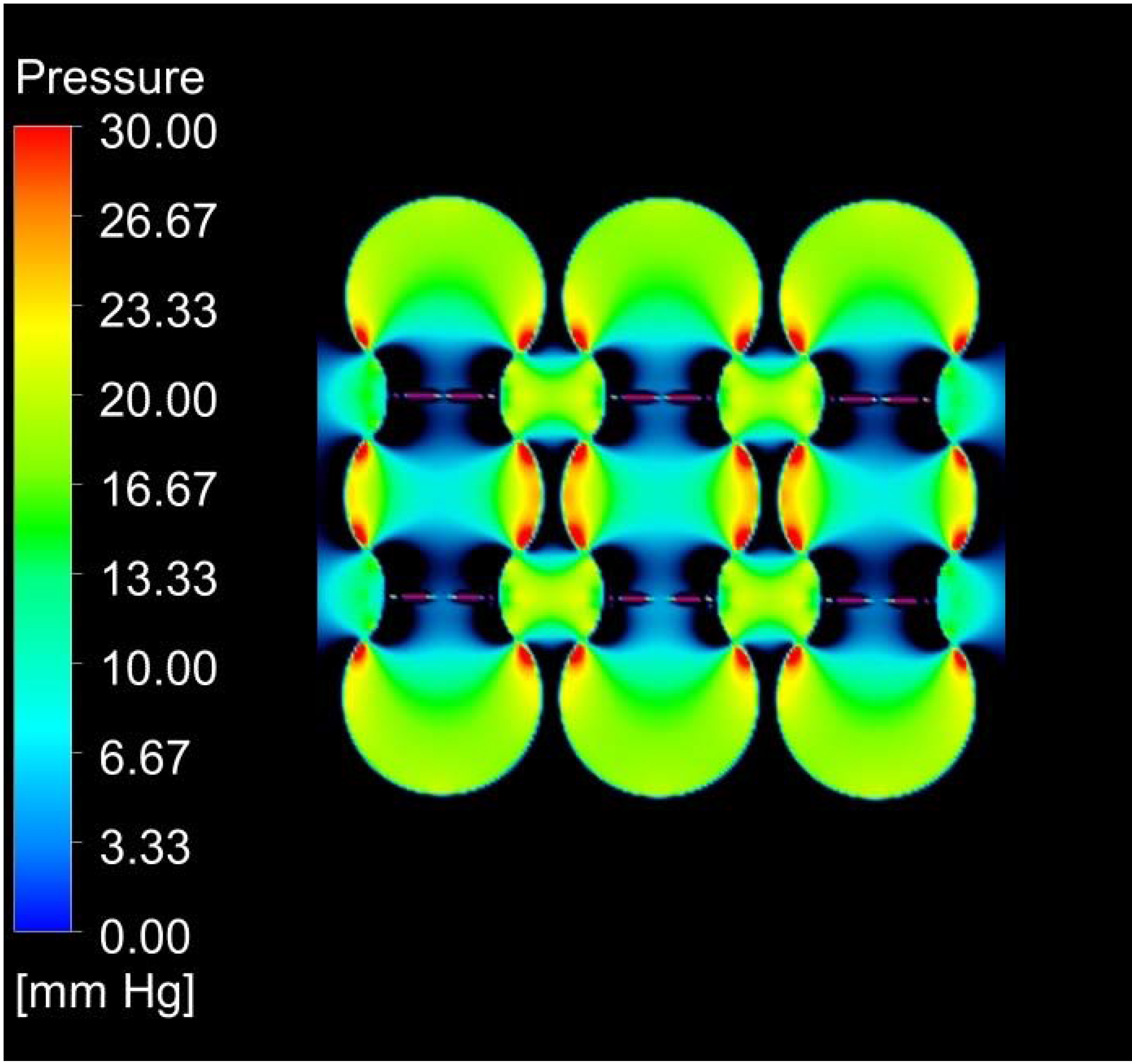
The velocity contour plot at
Velocity contour plot for the system water-heptane with 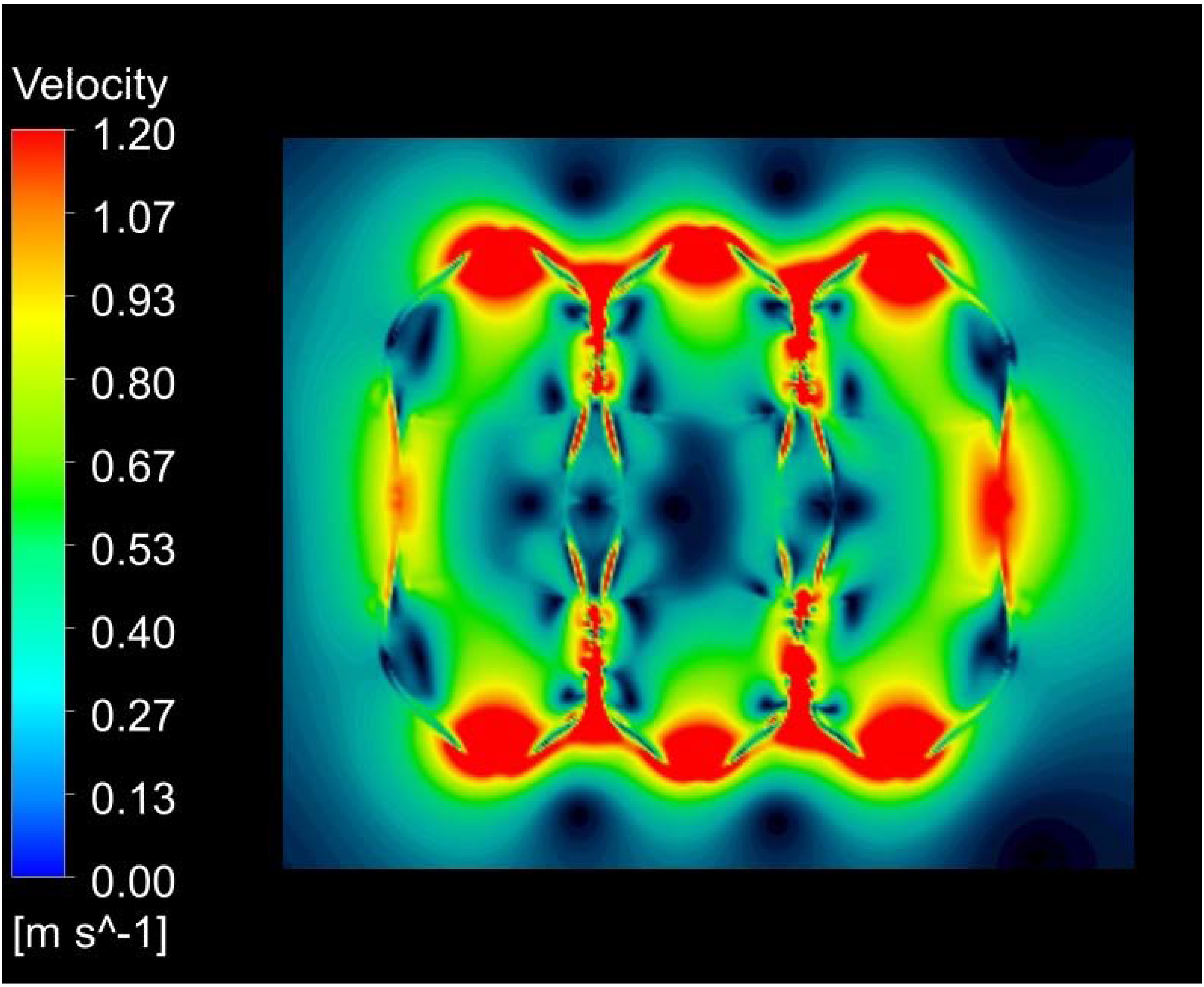
Pressure contour plot for the system water-heptane with 
In Fig. 4 is shown the velocity contour plot at
Velocity contour plot for the system water-heptane with 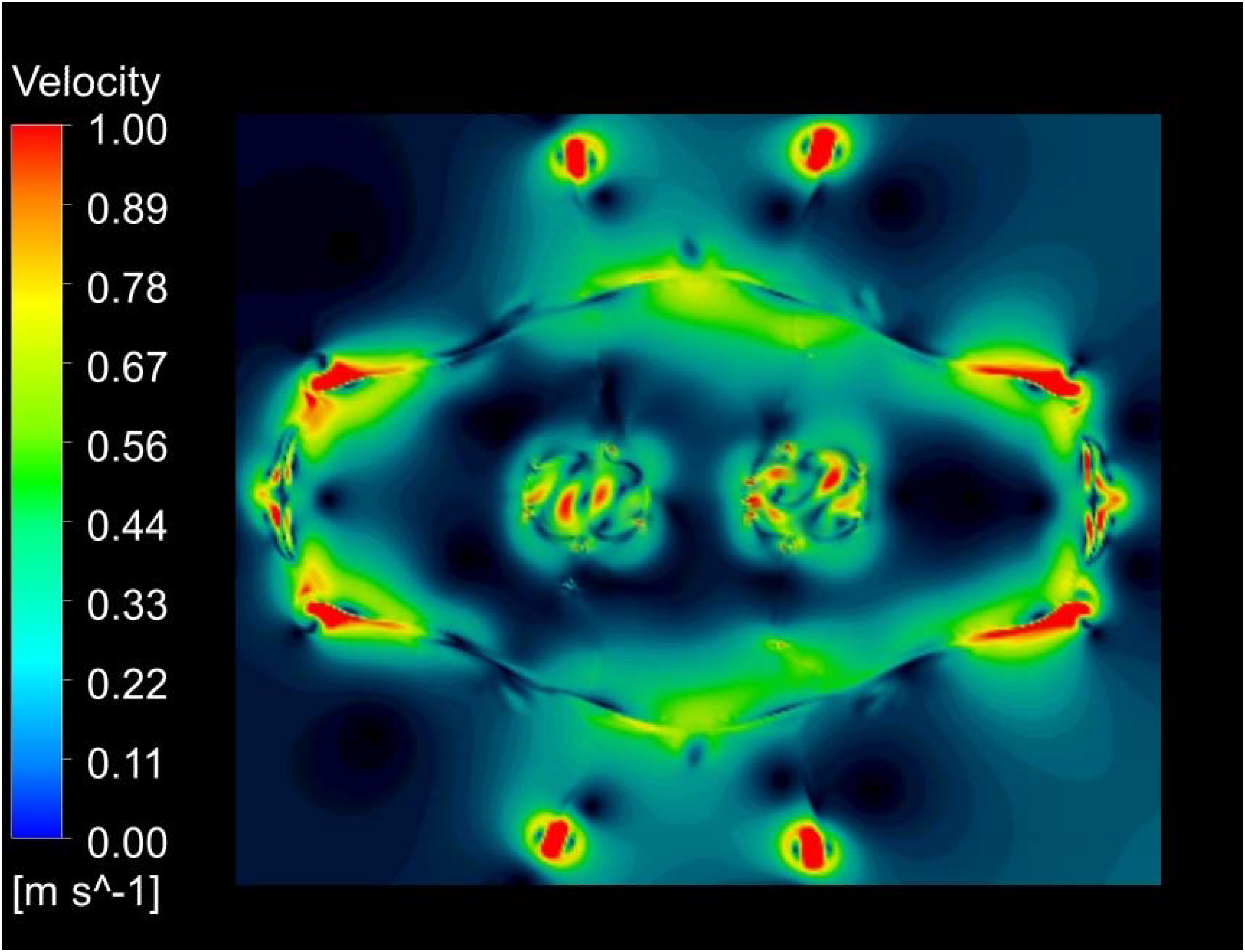
Pressure contour plot for the system water-heptane with 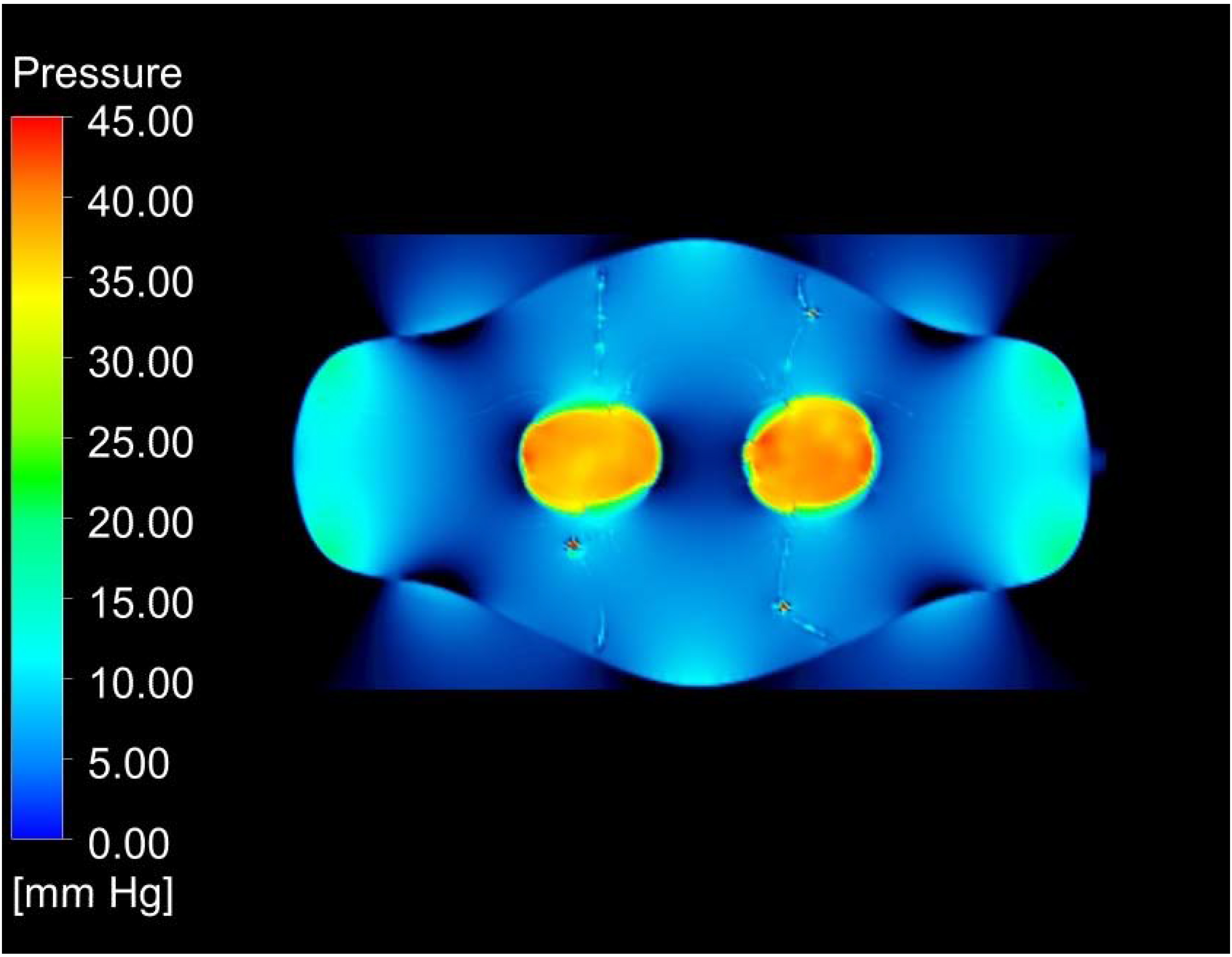
The velocity contour plot at
Velocity contour plot for the system water-heptane with 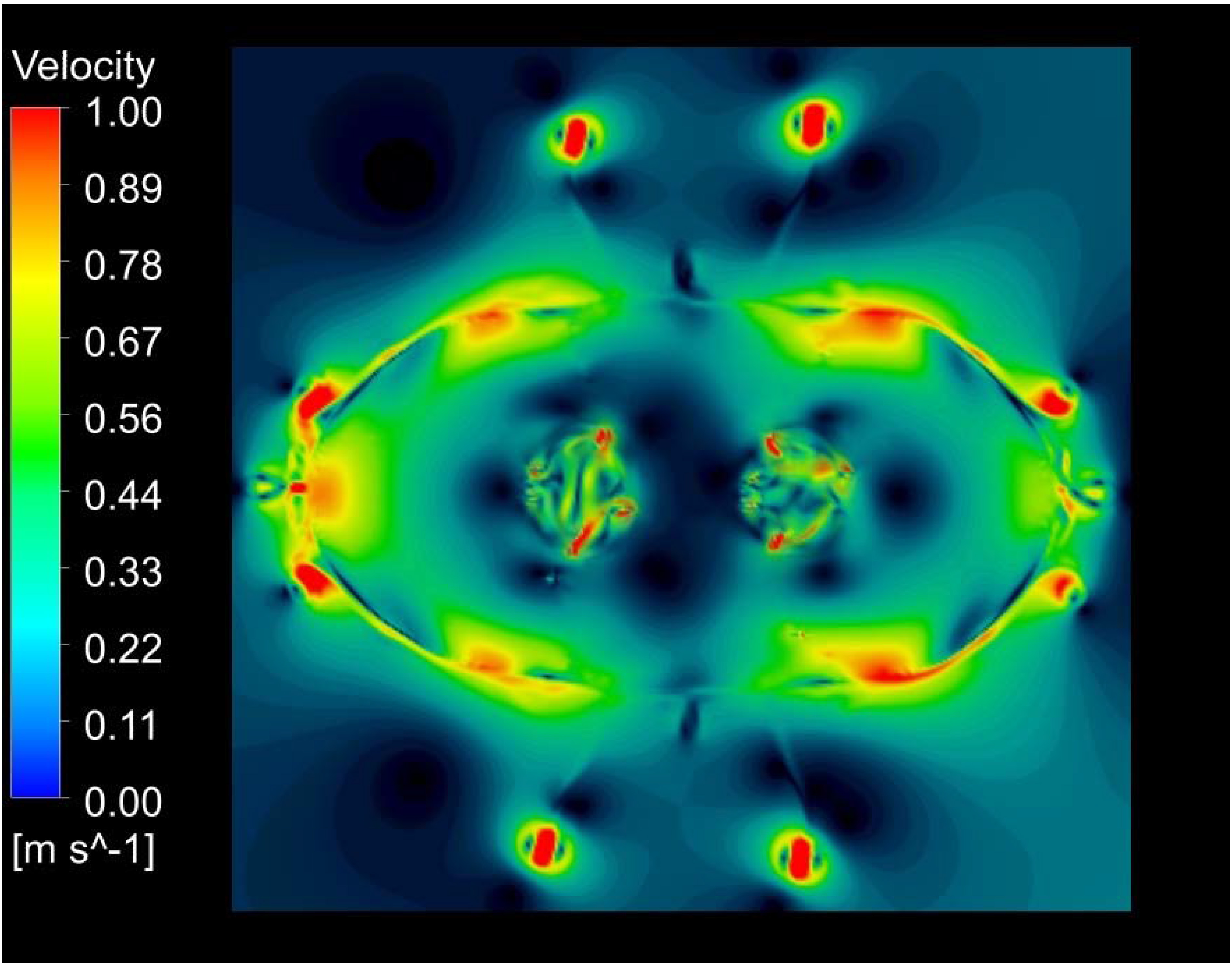
Pressure contour plot for the system water-heptane with 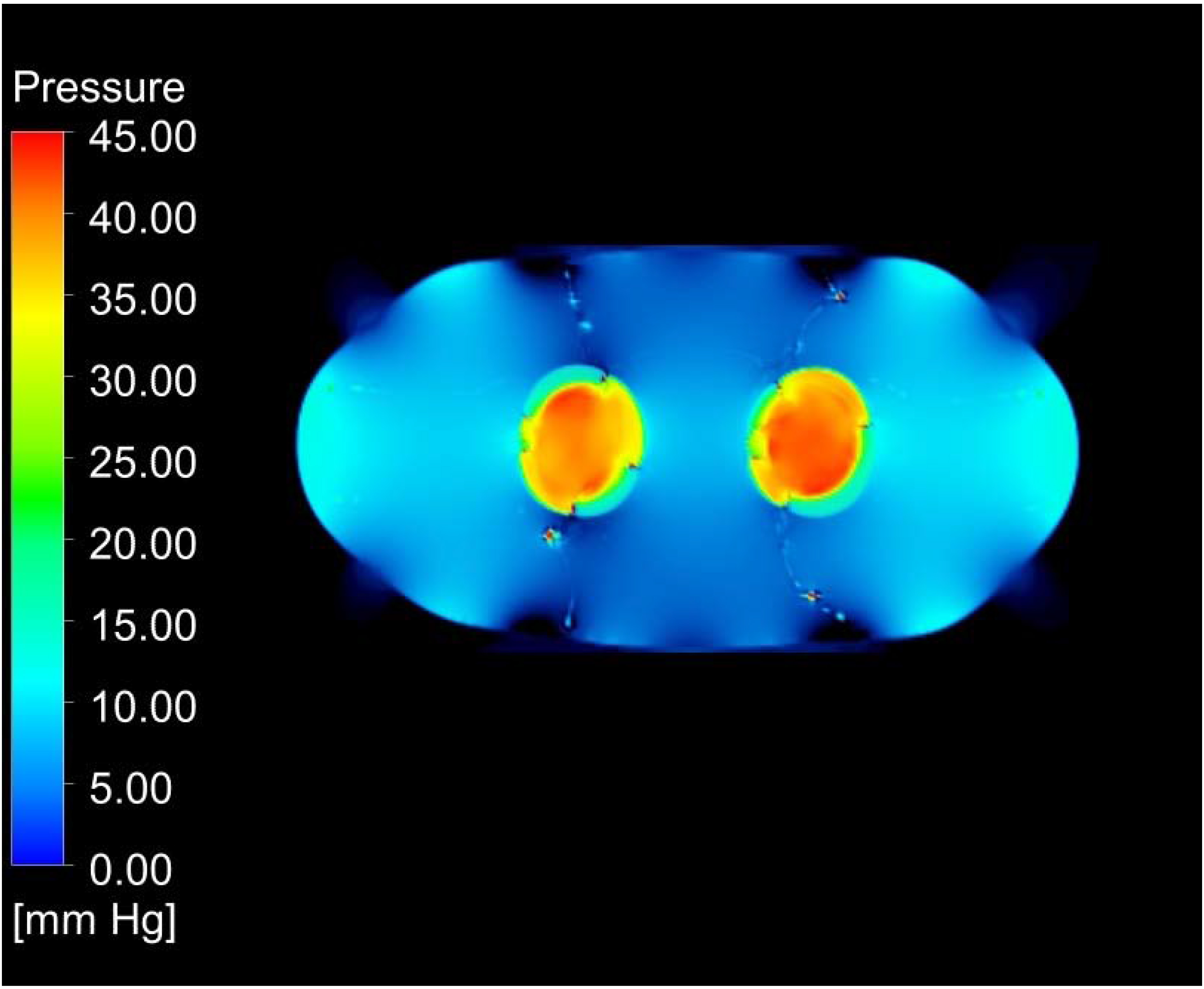
In Fig. 8 the velocity contour plot at
Streamlines for the system water-heptane with V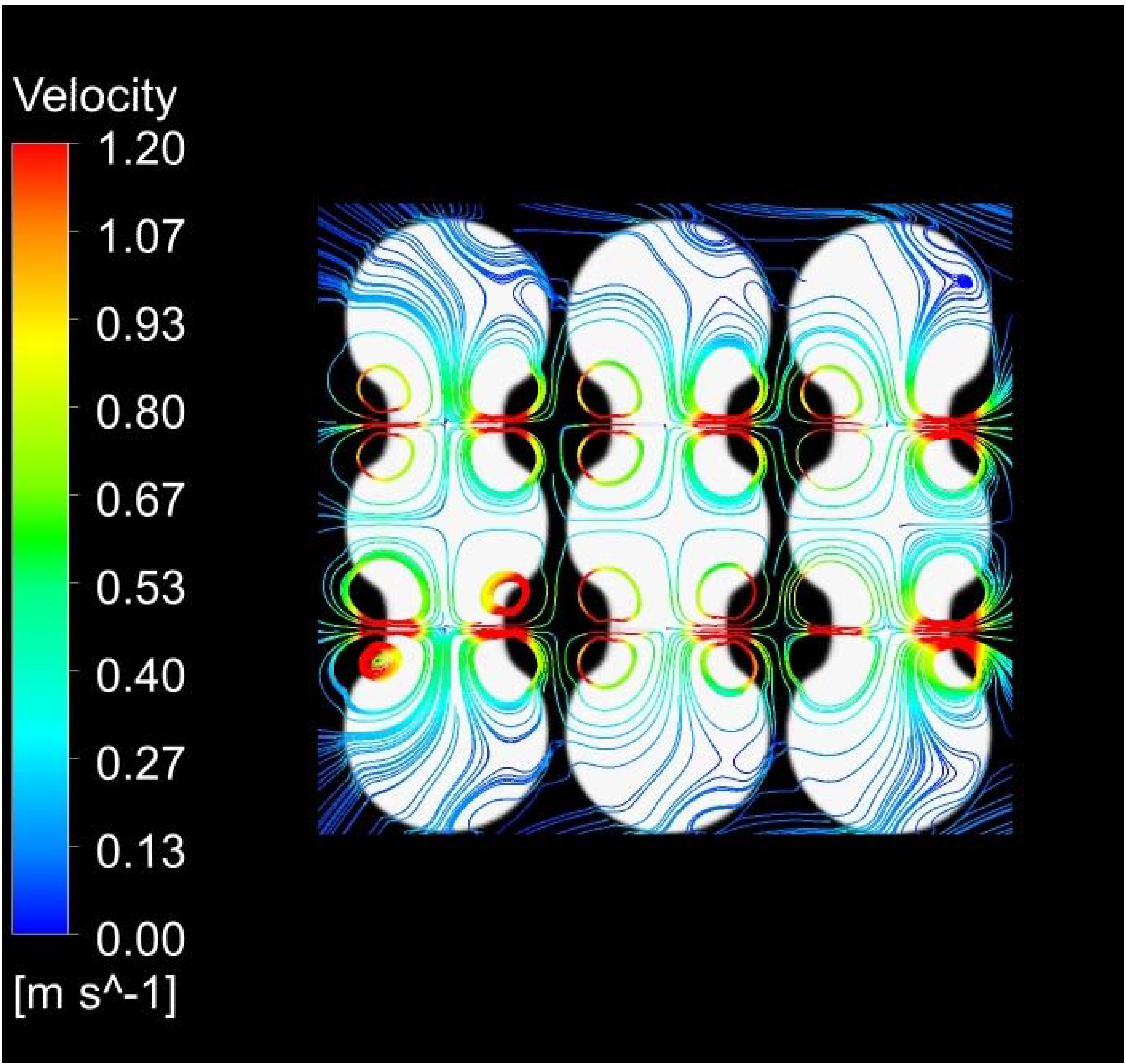
Streamlines for the system water-heptane with 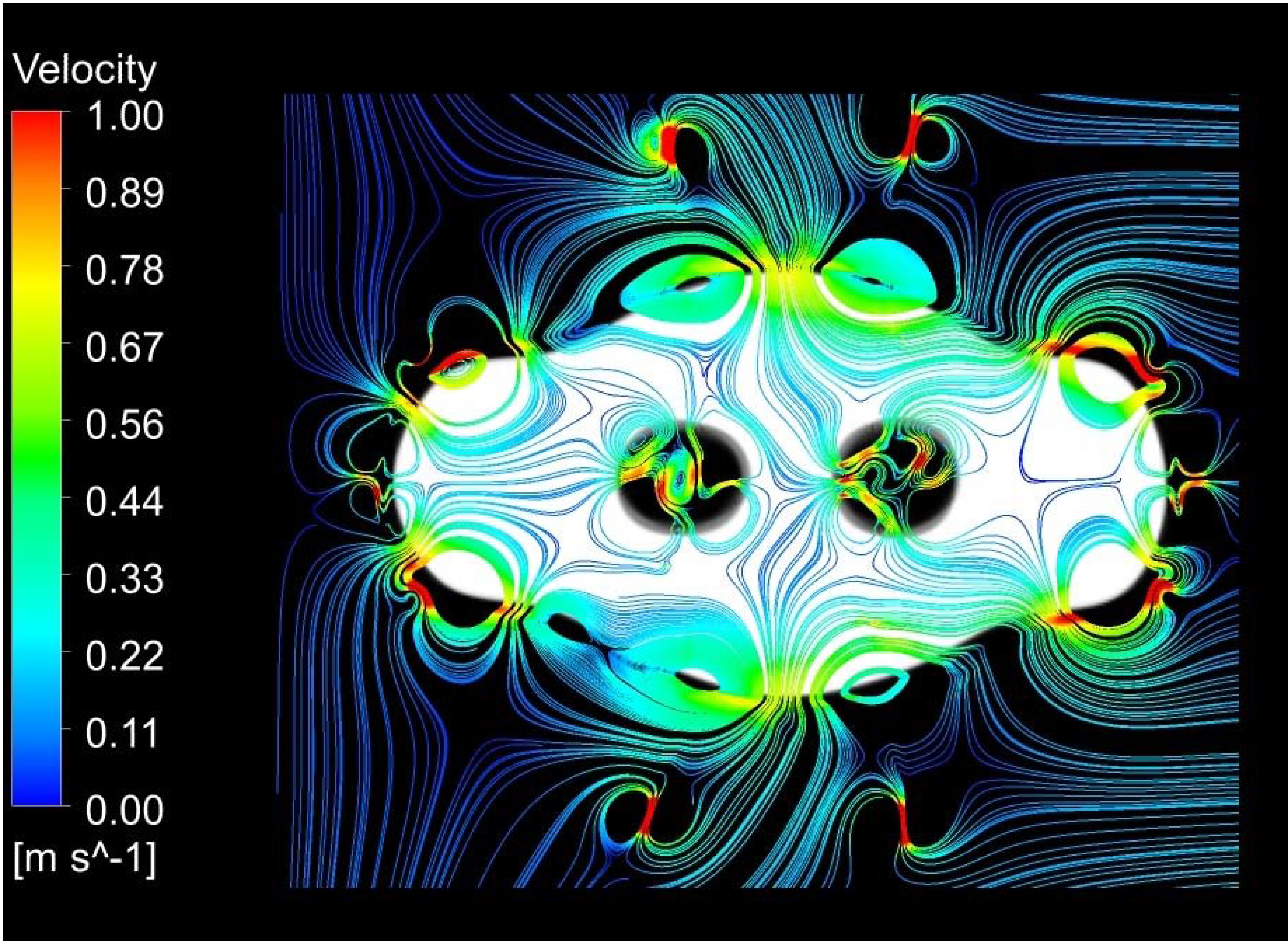
In Fig. 10 is reported the streamlines for the internal flux inside the droplets. Here can be seen that at the bridge structure of the flux, there are several zones where the flow of water are in vortex form. These vortexes increase the radius of the bridge zone between the systems of colliding drops with the evolution of the dynamics. In Fig. 11 is shown the streamlines of the system water-heptane. It can be seen that at the zones where the effect of the surface tension forces are stronger there are many vortex located next to the interfacial liquid film and four vortex located outside the mass of water. Inside the little drops can be observed some little vortexes that maintain this internal flux with constant recirculating patterns.
Sequence of times showing the evolution of the collision between the drops with 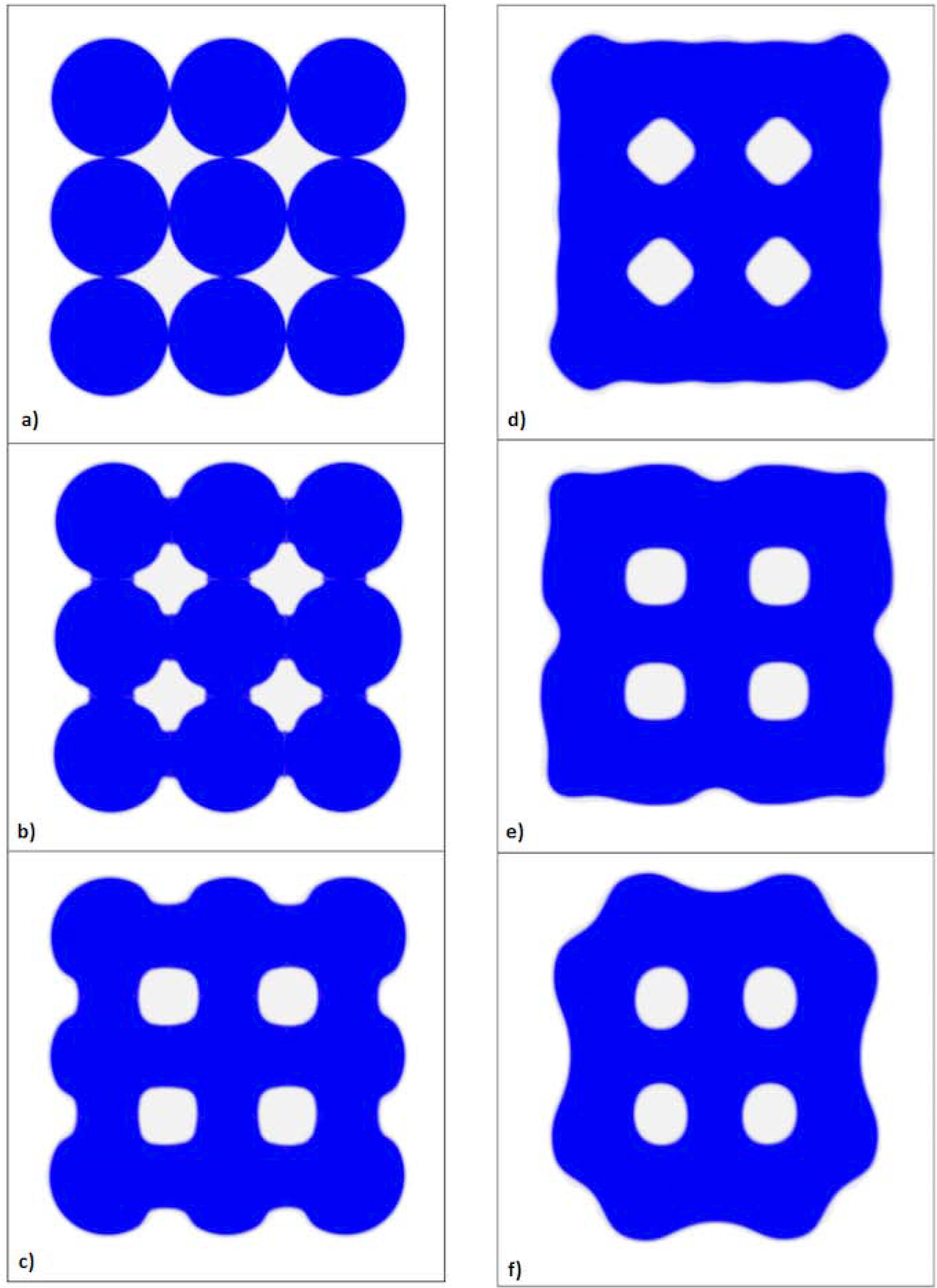
Velocity contour plot for the system water-heptane with 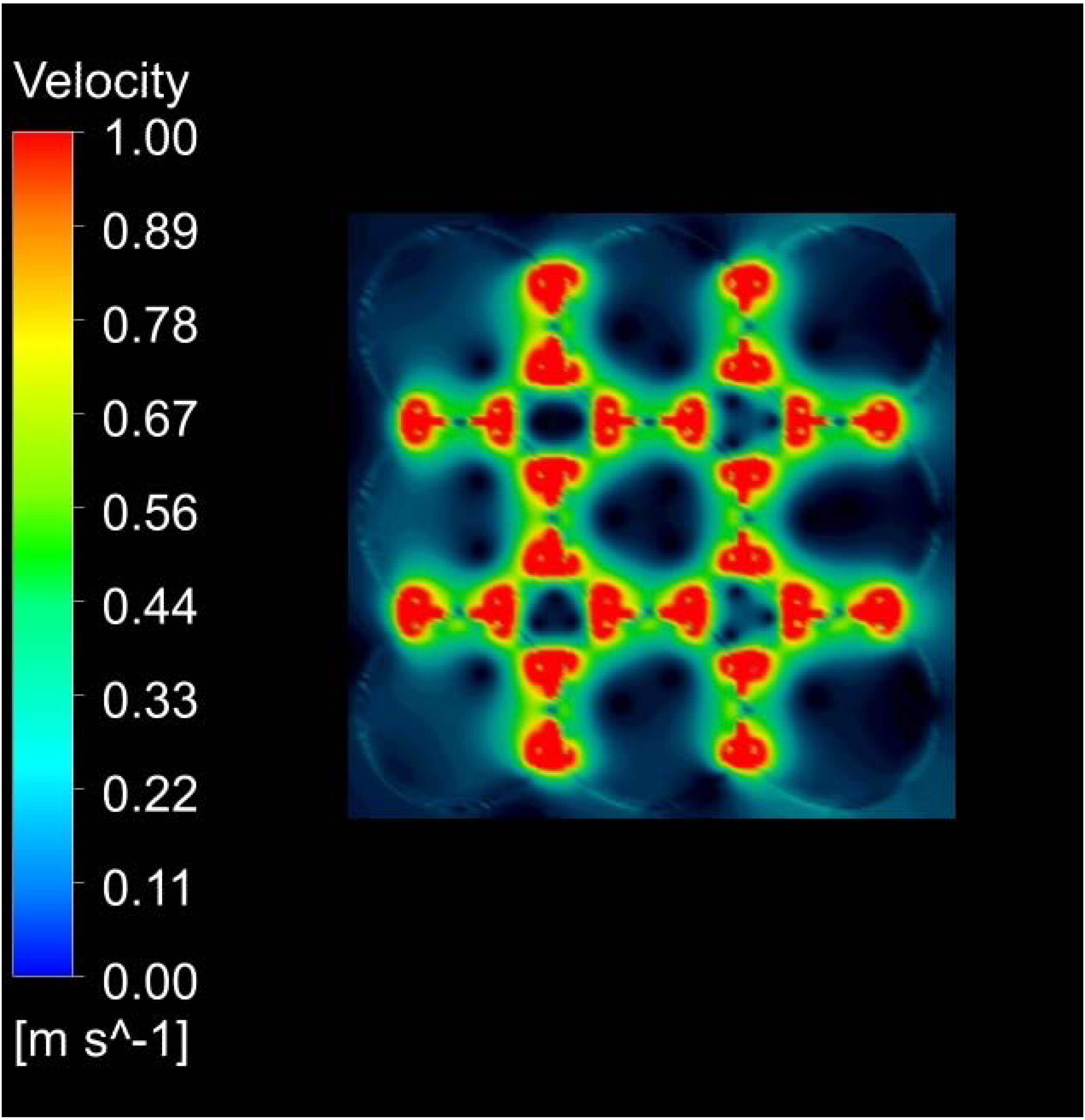
In Fig. 12 is reported the coalescence collisions between water drops without initial separation between the droplets for a collision velocity of 0.2 m/s. In Fig. 12(b) can be observed a bridge structure between the water drops that form four drops of n-heptane inside the mass of water. These little drops maintain its oscillations during the dynamics. After the time reported for the Fig. 12(f) the system recover its circular form, but the droplets of n-heptane did not coalesce between them.
Pressure contour plot for the system water-heptane with 
Velocity contour plot for the system water-heptane with 
In Fig. 13 can be seen the velocity contour plot at
Pressure contour plot for the system water-heptane with 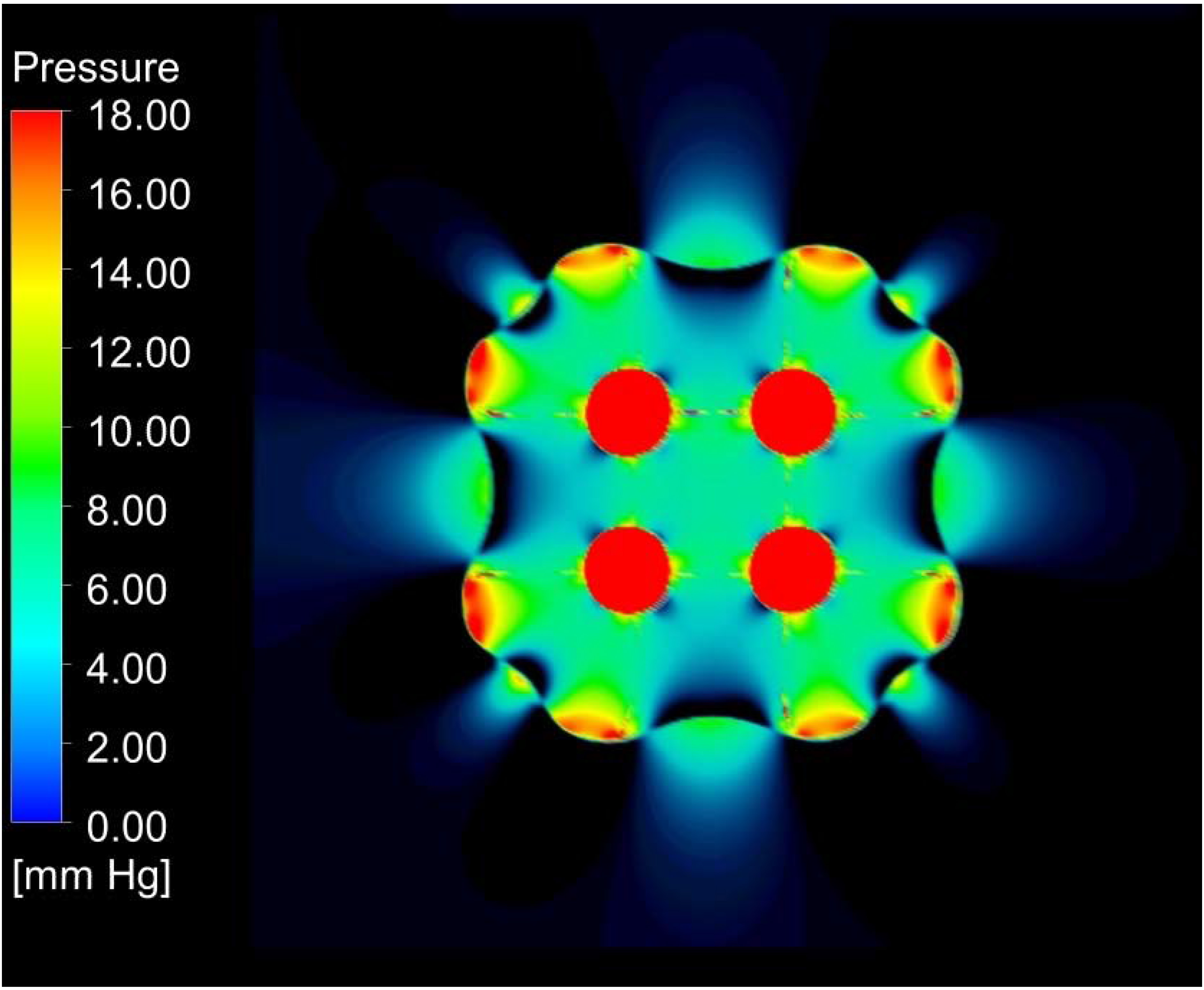
Streamlines for the system water-heptane with 
Streamlines for the system water-heptane with 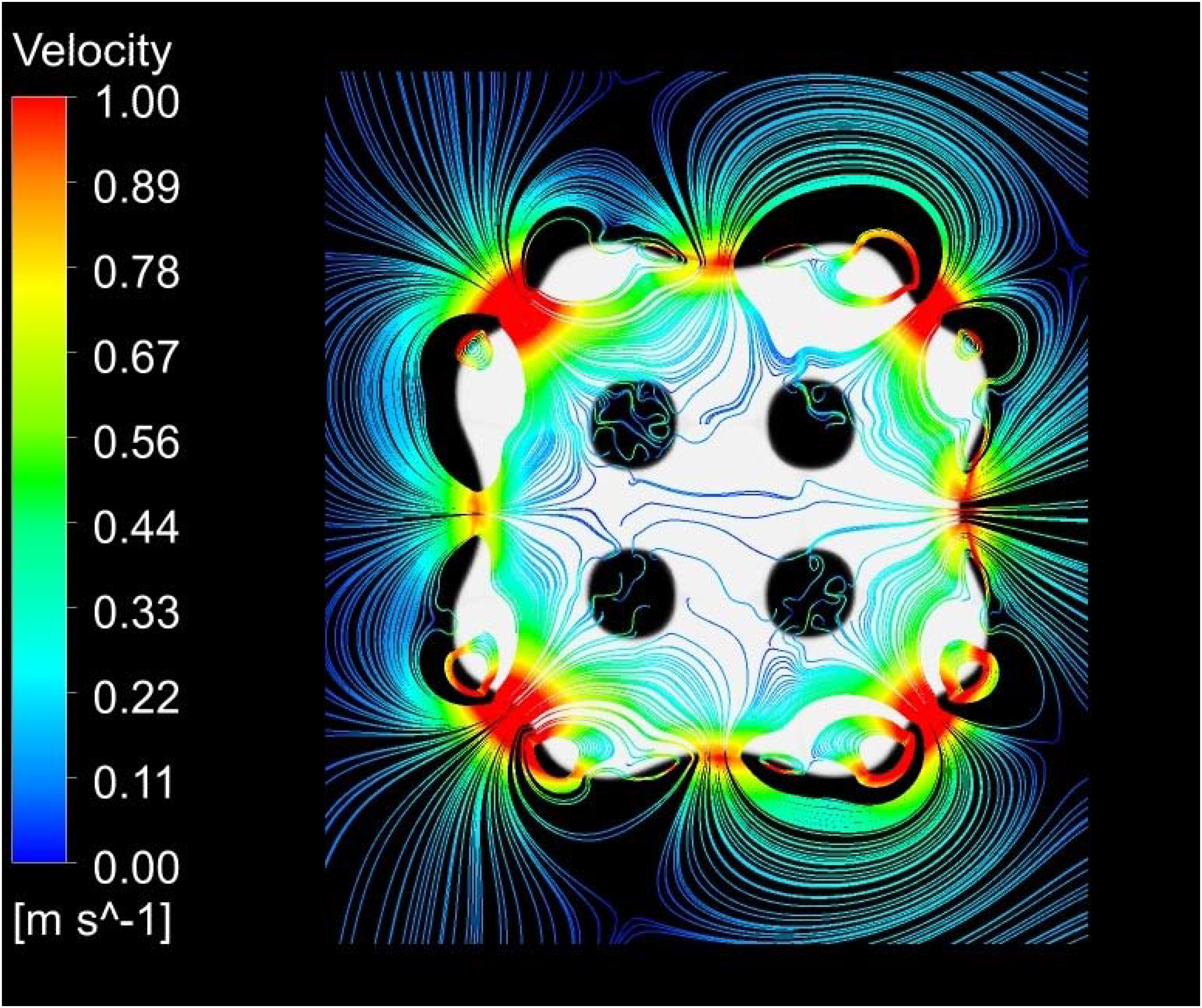
In Fig. 15 is reported the velocity contour plot at
In Fig. 17 can be observed the streamlines of the system water-heptane at
In this paper, it is described an important scheme for the study of hydrodynamical interactions between clusters of drops. The finite volume method was used to resolve the Navier-Stokes equations. Some droplets of water were used as dispersed phase and the continuous phase was composed of a hydrocarbon (n-heptane). The velocity contour plots reveal that the zones of the system where the surface tension forces prevailing, some vortexes appear and the velocity takes its maximum value. On the other hand, in the pressure fields can be observed that the highest values are located in the regions where the stretching of the surface is important. In all these outcomes can be seen that the pressure field is maximum at the little drops of hydrocarbon located inside the bigger mass of water, which is according to the Laplace equation. The streamlines explain the form of the flux that follows the dynamics of the droplets reported in the Figs 1 and 12. When droplets have an initial separation between them only two drops of n-heptane are occluded in the bigger mass of water, but without this initial separation four drops of the hydrocarbon are formed in the mass of water.