The new oxidovanadium (IV) complexes of composition [VO(HL] (I and II) (where HL 3-NOCHCONHO] and HL 3,5-(NOCHCONHO); [VO(3-NOBzH)] (I), [VO(3,5-(NOBzH)] (II) have been synthesized by the reactions of VOSO.5HO with biologically important potassium salts of two nitro-substituted benzohydroxamate ligands (KHL) and thoroughly characterized by various spectral techniques. The gas phase optimized geometry computed by DFT/SIESTA code using standard conjugate-gradient (CG) technique has depicted distorted square-pyramidal geometry for complexes substantiated by index/angular structural parameter (), the mathematical assignment demonstrating plausible geometry and extent of distortion. The molecular properties viz. ionization potential (IP), electron affinity (EA), chemical potential (), hardness (), softness (S), electronegativity () and electrophilicity index () have been calculated from the energies of frontier molecular orbitals (HOMO-LUMO energy values) to have an insight into energy distortion and energetic behaviour. The chemical bonding and molecular orbital contributions have been computed from the density of states (DOS), partial density of states (PDOS) and overall population density of states (OPDOS)/COOP (Crystal orbital overlap population) methods. The vanadium (3d) and O,O (2p) orbitals of carbonyl and hydroxamic oxygen atoms have been found to involve significant bonding interactions substantiated by computed charge energy differences in complexes.
An accelerating research interest of chemists, biochemists and biotechnologists in the coordination and biochemistry of vanadium over the years has aroused not only owing to a range of oxidation states (1 to 5), coordination numbers (four to eight) and geometries (tetrahedral, square planar, square pyramidal, trigonal bipyramidal, octahedral etc.) exhibited by vanadium complexes but also because of their significant role in several biochemical processes. The insulin-mimetic effects have been perceived to be due to inhibition of protein tyrosine phosphatases (PTPases) thereby also regulating the level of PT phosphorylation [1, 2, 3]. The vanadium complexes have been found as promising new class of non-platinum metal based drugs [4, 5, 6, 7, 8, 9, 10, 11, 12, 13, 14, 15, 16, 17]. The remarkable biological and pharmacological applications of vanadium (IV) and (V) cationic VO/VO moieties due to their hard acidic nature and affinity towards O, N donor ligands have generated phenomenal research interest in their reactivity and stereochemistry [18, 19, 20] and also find use in oxidation and oxotransfer catalysis [21, 22].
Of numerous ligands, hydroxamic acids with functionality RC(O)N(ROH (Rcalkyl/aryl; RH or alkyl/aryl) as weak organic acids and one of the most well-studied compounds as bioligands have drawn huge attention since long [23, 24, 25]. The importance of hydroxamic acids is well-documented due to the keto-enol tautomerism exhibiting in hydroxamic and hydroximic forms [26], diverse chelating ability [27, 28, 29], broad spectrum of pharmacological, toxicological and pathological properties and inhibitors of a variety of enzymes viz. urease, peroxidases and matrix metalloproteinases [30, 31, 32, 33]. Compared to well-documented transition metal hydroxamates, a few scattered reports describe vanadium-hydroxamate complexes [34, 35, 36].
It is quite interesting to note that for the most prevalent five coordination number for numerous vanadium complexes square-pyramidal/trigonal-bipyramidal or between these two geometries have been demonstrated. The vanadyl porphyrin [37] and triethanolamine bound complexes [38] have been reported to exhibit square-pyramidal and trigonal bipyramidal geometries respectively. The steric and electronic restrictions imposed by ligands may also modify geometry as the idealized angles for square-pyramidal and trigonal bipyramidal geometries of magnitude 90 and 180; 90, 120 and 180 respectively may vary. The structural features of coordination compounds can be studied by DFT calculations as an impressive widely employed predictive tool. The density functional theory study of oxoperoxovanadium (IV) complexes of glycolic acid [39], two novel oxovanadium complexes with hydrotris (pyrazolyl) borate ligands [40] and vanadium oxo-aroylhydrazone complexes [41] have been reported.
In view of above and in continuation of our previous work on vanadium (IV) hydroxamates [42, 43, 44, 45, 46] we report herein the DFT calculations implemented in SIESTA code on two new oxidovanadium (IV) complexes derived from nitro-substituted benzohydroxamate ligands owing to the fact that the biological potential of metal hydroxamates is affected by the nature of the substituents at the aromatic ring viz. the electron withdrawing substituents (-NO, F, Cl) exhibit higher biological activity than those with electron donating groups (-NH, OH) paving a way for the design of prospective medicinally metallopharmaceuticals. The molecular properties viz. ionization potential (IP), electron affinity (EA) and global descriptive parameters like chemical potential (), hardness(), softness (S), electronegativity () and electrophilicity index () have been evaluated from HOMO- LUMO energy values [47]. The molecular orbital contributions have been studied from TDOS, PDOS and OPDOS [48]. The crystal orbital overlap population (COOP) has been performed to identify the bonding characteristics [49].
Experimental
Syntheis of VO(HL)
To a solution of [VOSO.5HO] (1 g, 3.95 mmol) in aqueous methanol (15 ml) were added two equivalents of potassium 3-nitrobenzohydroxamate (KHL) (1.73 g, 7.90 mmol) and 3,5-dinitrobenzohydroxamate (KHL) (2.03 g, 7.90 mmol) in methanol (15 ml) in separate experiments. The reaction mixture was stirred for 3 h at room temperature to ensure the completion of reaction whereupon a change in color was observed. It was filtered and filtrate was concentrated under vacuum to 2/3 of its original volume. The concentrate was treated with petroleum ether and dried under vacuum. The bluish-black solids thus obtained were recrystallized from methanol.
First principle calculations were performed within the framework of density functional theory (DFT) as implemented in SIESTA code, a self-consistent density functional method using standard norm-conserving pseudopotentials and a flexible numerical linear combination of atomic orbitals basis set which includes multiple-zeta and polarization orbitals and is known to exhibit an excellent performance for medium and large systems including biomolecules [50, 51]. The exchange and correlation are treated with the local spin density or generalized gradient approximations. The basic functions and the electron density are projected on a real-space grid in order to calculate the Hartree and exchange-correlation potentials and matrix elements with a number of operations scaling linearly with the size of the system.
To account for electron-ion interactions, well tested Troullier Martin [52, 53], norm conserving, relativistic pseudo-potential in fully separable Kleinman and Bylander [54, 55] form was used. The exchange and correlation energies were treated within the generalized gradient approximation (GGA) according to the PBE parameterization. The geometry optimization confinement energy of numerical pseudo atomic orbitals was taken as 30 meV. The relatively larger radii of the basis orbitals (using smaller value of energy shift parameter) have been used for better accuracy. The convergence for energy was chosen as 10 eV between two consecutive self consistent field (SCF) steps. The total energy minimization calculations were carried out by taking a large cell (abc40 Å) using standard conjugate-gradients (CG) technique. All atomic positions were relaxed during the geometry optimization until the forces on each atom were below 0.03 eV/Å. The optimized (relaxed) coordinates and calculated lattice parameters were used for calculations of electronic and molecular properties. The electronic properties such as HOMO and LUMO energies were determined by DFT approach. The TDOS, PDOS and OPDOS in terms of Mulliken population analysis were calculated and created by convoluting the molecular orbital information with XMgrace. In order to have an insight into the interaction between vanadium metal and hydroxamate ligands, the charge density plots were plotted in VESTA.
Results and discussion
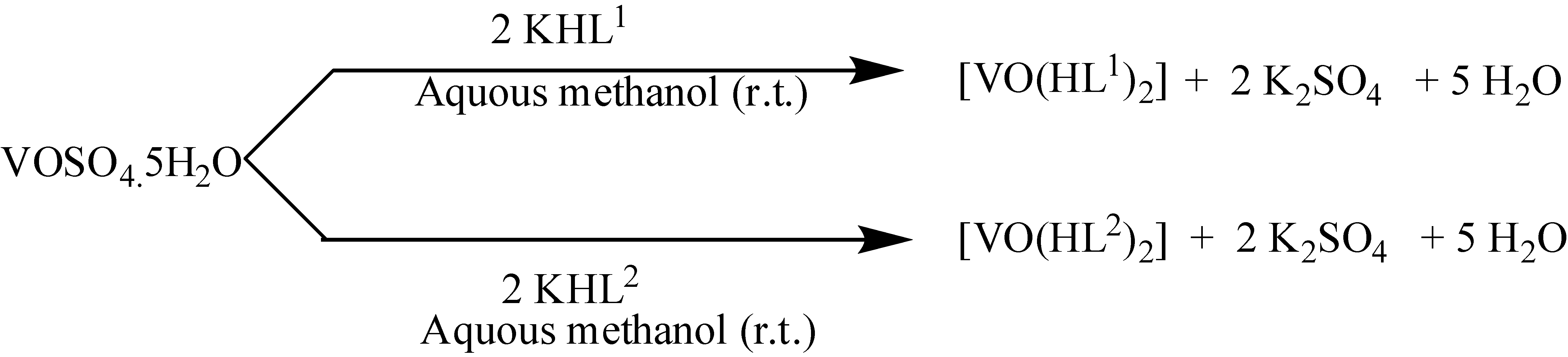
The reactions of VOSO.5HO with two equivalents of KHL and KHL in aqueous methanol afforded bluish-black complexes of composition [VO(3-NOBzH)] and [VO(3,5-(NOBzH)] in confirmity with elemental analyses according to Scheme 1 as:
Synthesis of oxidovanadium (IV) nitrobenzohydroxamates.
The complexes have been characterized by molar conductivity, magnetic and IR, UV-Vis, mass and ESR spectral studies. The antibacterial, in vivo cytotoxicity and DNA binding studies of complexes have demonstrated their potential as vanadodrug compounds [56].
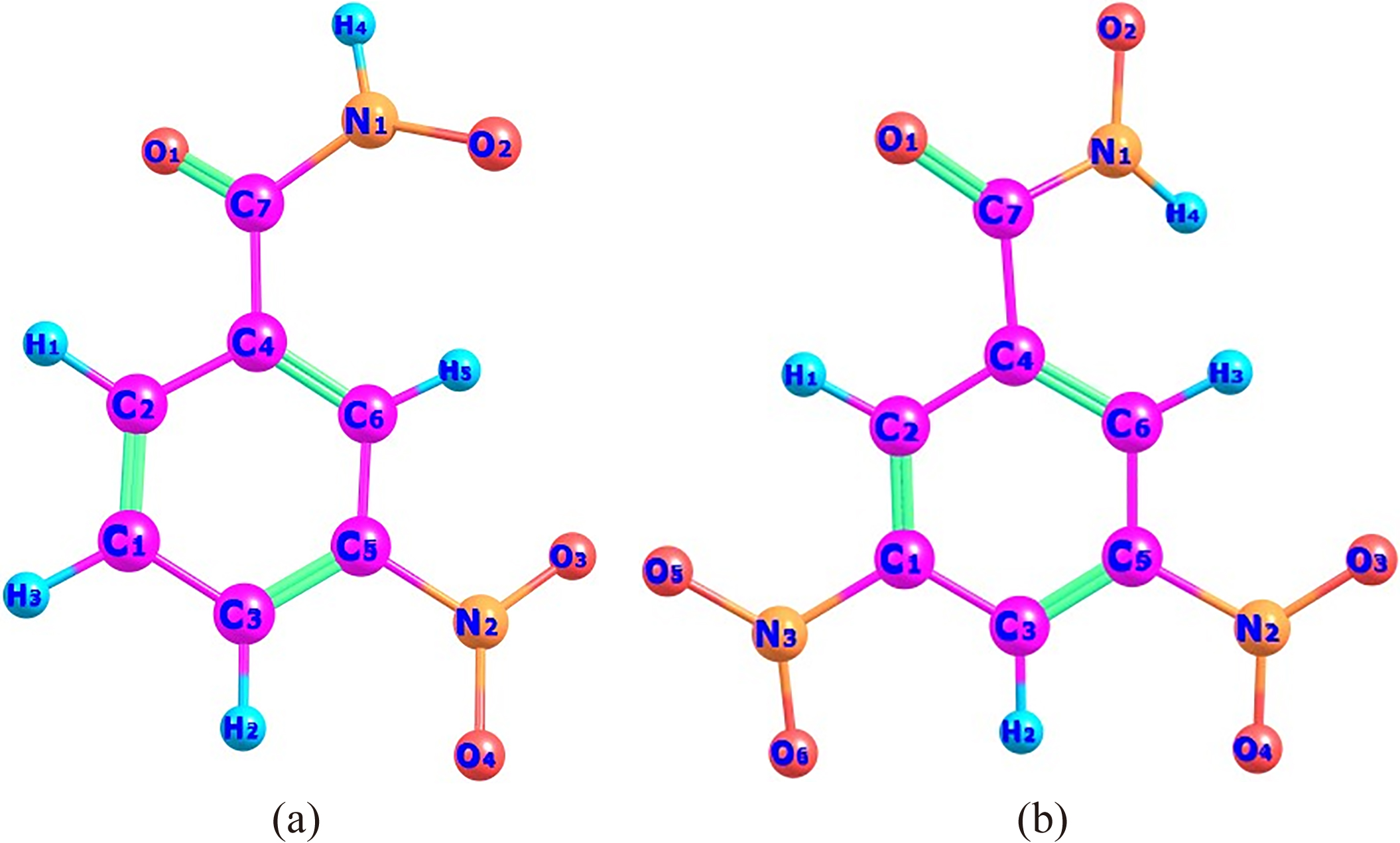
Optimized molecular structures of ligands KHL (a) and KHL; (b) obtained by standard conjugate-gradient (CG) technique.
Energy and geometry optimization
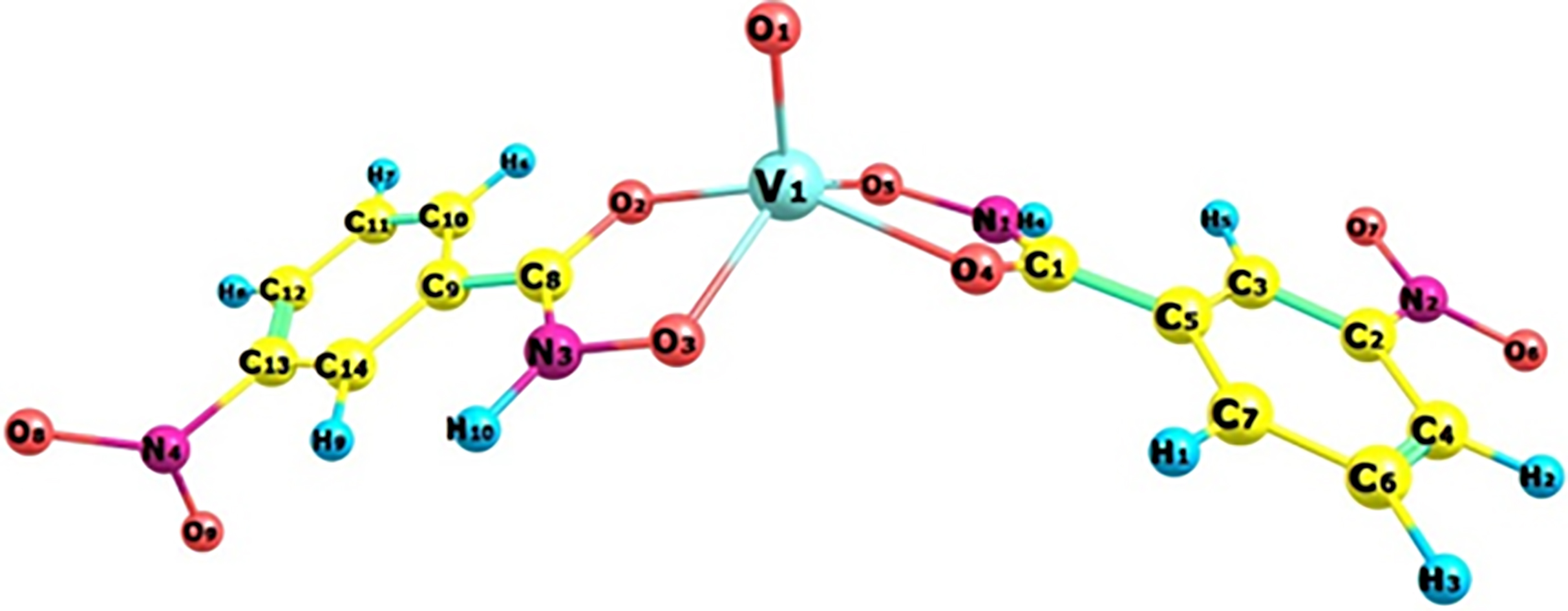
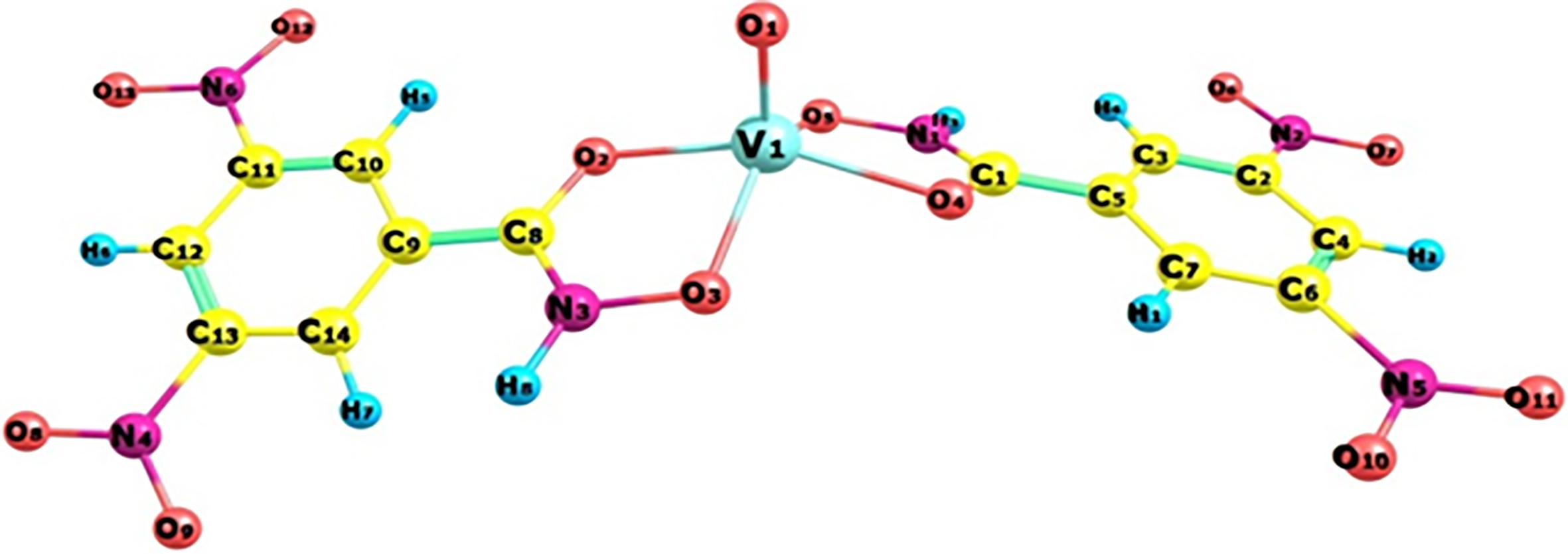
The molecular structures of KHL and [VO(HL] (I and II) optimized by DFT/SIESTA using standard conjugate gradient (CG) technique are given in Figs 1–3 respectively. The five-coordinate distorted square-pyramidal geometry around vanadium has been assigned for complexes with vanadyl oxygen occupying the axial site and four oxygen atoms of 3-nitro and 3,5-dinitrobenzohydroxamate ions forming the equatorial plane. The bond lengths and bond angles of complexes have been compared with those of free ligands. The important (CO), (C-N),(N-O) and (N-H) bond distances of free hydroxamate ligand KHL which may undergo change in complexation have been observed to be 1.193, 1.397, 1.278 and 1.047 Å respectively (Table 1). The N-O bond distances of –NO substituent are 1.047 and 1.252 Å. In [VO(3-NOBzH)] (Table 1) the CO and N-O bond distances have been observed to be increased by 0.056 and 0.092 Å respectively while (C-N) bond length is shortened by 0.10 Å upon complexation. The four (V-O) equatorial bond lengths with two 3-nitrobenzohydroxamate ligands are in 1.983–2.043 Å range in agreement with the predicted bond lengths of 1.99 Å (sum of ionic radii of vanadium and oxygen) or 1.93 Å for vanadates [57, 58]. The observed (VO) bond distance (1.592 Å) which is shorter than those of equatorial single (V-O) bonds is in line with (1.52–1.69 Å) range reported for vanadyl group.
Selected interatomic distances d (Å) and bond angles (deg) in free Ligand (KHL) and [VO(3-NOBzH)]
KHL
[VO(HL]
C(1)-C(2)
1.317
V(1)-O(1)
1.592
C(2)-C(4)
1.330
V(1)-O(2)
2.038
C(4)-C(7)
1.419
V(1)-O(3)
1.992
C(7)-O(1)
1.193
V(1)-O(4)
2.043
C(7)-(N1)
1.397
V(1)-O(5)
1.983
N(1)-H(4)
1.047
C(8)-O(2)
1.249
N(1)-O(2)
1.278
C(1)-O(4)
1.248
C(5)-N(2)
1.452
N(3)-O(3)
1.370
N(2)-O(4)
1.253
N(1)-O(5)
1.369
N(2)-O(3)
1.252
C(1)-N(1)
1.297
C(2)-C(4)-C(7)
117.24
C(8)-N(3)
1.297
C(4)-C(7)-O(1)
124.39
N(2)-O(6)
1.252
C(4)-C(7)-N(1)
119.58
N(2)-O(7)
1.255
C(7)-N(1)-H(4)
111.41
N(4)-O(9)
1.250
C(7)-N(1)-O(2)
128.90
N(4)-O(8)
1.249
O(2)-N(1)-H(4)
119.46
N(1)-H(3)
1.025
C(5)-N(2)-O(4)
117.62
N(3)-H(10)
1.024
C(5)-N(2)-O(3)
117.57
V(1)-O(5)-N(1)
110.720
V(1)-O(4)-C(1)
113.981
V(1)-O(3)-N(3)
110.412
V(1)-O(2)-C(8)
114.580
O(1)-V(1)-O(5)
106.360
O(1)-V(1)-O(4)
106.355
O(1)-V(1)-O(3)
113.9992
O(1)-V(1)-O(2)
105.430
O(2)-V(1)-O(5)
88.697
O(2)-V(1)-O(3)
77.789
O(2)-V(1)-O(4)
148.207
O(3)-V(1)-O(5)
132.597
O(3)-V(1)-O(4)
89.489
O(4)-V(1)-O(5)
78.279
Optimized molecular structure of [VO(3-NOBzH)] obtained by standard conjugate-gradient (CG) technique.
Selected interatomic distances d (Å) and bond angles (deg) in free Ligand (KHL) and [VO(3,5-(NOBzH)]
KHL
[VO(HL]
C(4)-C(7)
1.431
V(1)-O(1)
1.590
C(7)-O(1)
1.180
V(1)-O(2)
2.040
C(7)-N(1)
1.408
V(1)-O(3)
1.981
N(1)-H(4)
1.044
V(1)-O(4)
2.041
N(1)-O(2)
1.271
V(1)-O(5)
1.983
N(2)-O(3)
1.253
C(8)-O(2)
1.240
N(2)-O(4)
1.249
C(1)-O(4)
1.298
N(3)-O(6)
1.250
N(3)-O(3)
1.367
N(3)-O(5)
1.249
N(1)-O(5)
1.369
C(2)-C(4)-C(7)
117.23
C(1)-N(1)
1.297
C(4)-C(7)-O(1)
124.36
C(8)-N(3)
1.296
C(4)-C(7)-N(1)
115.14
N(2)-O(7)
1.250
C(7)-N(1)-O(2)
123.02
N(2)-O(6)
1.253
C(7)-N(1)-H(4)
118.71
N(5)-O(11)
1.250
C(5)-N(2)-O(3)
117.21
N(5)-O(10)
1.250
C(5)-N(2)-O(4)
117.51
N(4)-O(9)
1.253
C(1)-N(3)-O(5)
117.67
N(4)-O(8)
1.250
N(6)-O(12)
1.250
N(6)-O(13)
1.250
N(3)-H(8)
1.373
N(1)-H(3)
2.368
V(1)-O(4)-C(1)
114.145
V(1)-O(5)-N(1)
110.932
V(1)-O(2)-C(8)
114.204
V(1)-O(3)-N(3)
111.069
O(1)-V(1)-O(5)
113.518
O(1)-V(1)-O(4)
104.699
O(1)-V(1)-O(3)
114.205
O(1)-V(1)-O(2)
82.620
O(2)-V(1)-O(4)
151.208
O(2)-V(1)-O(5)
91.964
O(2)-V(1)-O(3)
77.908
O(3)-V(1)-O(4)
88.934
O(3)-V(1)-O(5)
132.259
O(4)-V(1)-O(5)
78.009
Optimized molecular structure of [VO(3,5-(NOBzH)] obtained by standard conjugate-gradient (CG) technique.
The diagnostic bond distances (CO), (C-N), (N-O) and (N-H) of hydroxamic group of KHL and N-O of nitro-substituents have been found to be 1.180, 1.408, 1.271 and 1.044 Å and 1.249–1.253 Å respectively (Table 2). In case of [VO(HL (Table 2) the respective bond distances have magnitude 1.240–1.298, 1.297, 1.369 and 1.373–2.368 and 1.253 Å respectively. An increase in bond distances of CO by 0.060–0.118 Å and that of N-O by 0.098 Å has been observed while the C-N bond distances are shortened by 0.111 Å upon complexation. The single V-O and VO bond distances have been observed to lie in 1.981–2.041 Å range and at 1.590 Å respectively. It is also quite noteworthy that in a number of vanadium (IV) complexes, the shortest V-O bond distances for monomeric VOO coordination environments have been reported to lie in 1.558–1.597 Å (VO); the second long V-O in 1.945–1.981 Å and longest V-O in 1.960–1.998 Å range respectively [59, 60, 61, 62, 63, 64, 65]. The quantum mechanical calculations have shown that the longest V-O bond distances in complexes under study are slightly higher by 0.042 Å than the reported values. The notable differences in important bond distances of CO, C-N and N-O between free ligands and complexes are suggestive of bonding of hydroxamate ligands with the vanadium metal.
The bond angles of hydroxamic group in KHL have been observed to lie in 111.40–128.90 range while important bond angles around vanadium in [VO(HL] (I) are in 77.78–148.20 range (Table 1). The bond angles in KHL have occurred in 115.14–124.36 range while in [VO(HL] (II) in 77.90–151.20 range. The calculated geometric parameters herein represent a good agreement with the reported values of crystal structures of closely related vanadium (IV) hydroxamates [66].
The exact geometry of the complex is reported to be adjudged by calculating angular structural parameter tau () as described by Addison et al. [67]. The value ( (/60) for perfect square-pyramidal and trigonal-bipyramidal geometry has been described to be zero and unity respectively as the two largest bond angles and are both 180 for square-pyramidal and 120 and 180 for the ideal trigonal bipyramidal geometry. In case of [VO(3-NOBzH)], value of 0.260, where and are the trans angles i.e. O(2)–V(1)–O(4) 148.207 and O(3)–V(1)–O(5) 132.597 suggests that the coordination geometry around vanadium (IV) is distorted square-pyramidal. Similarly for [VO(3,5-(NOBenzH)] value of 0.315 ( ()/60), where and the trans angles are O(2)–V(1)–O(4) 151.208 and O(3)–V(1)–O(5) 132.259 support the coordination geometry closer to distorted square-pyramidal. The small difference in of I and II of 0.055 is indicative of I to be more closer to square-pyramidal geometry than II demonstrating slightly higher deviation from distorted square-pyramidal geometry which may be ascribed to the steric effects of the two –NO substituents. It is pertinent to mention here that numerous mononuclear VOO complexes exhibit more often square-pyramidal geometry having in 0.000–0.213 range [62, 64]. Nevertheless, complexes with values 0 or close to zero are also clusters [68] or extended solids [69].
HOMO-LUMO analysis
Molecular properties of (KHL, KHL ligands and [VO(3-NOBzH)], [VO(3,5-(NOBzH)] complexes calculated using standard conjugate-gradient (CG) technique
Molecular properties
Gas (KHL
Gas [VO(3-NOBzH)]
Gas(KHL
Gas [VO(3,5-(NOBzH)]
Ground state energy (eV)
3459.45
7544.79
4591.339
9809.241
E
5.449
5.746
5.791
6.286
E
3.756
4.002
4.543
4.5811
Frontier orbital gap (eV)
1.693
1.744
1.248
1.705
The HOMO-LUMO energies for the ligands and complexes have been computed in order to find out the energy distribution and energetic behaviour. The HOMO and LUMO energies represent the ability to donate and gain an electron respectively. The computed HOMO and LUMO energy values for KHL and [VO(HL] have been found to be –5.449 eV and 3.756 eV; 5.746 eV and 4.002 eV respectively (Table 3). The HOMO and LUMO for KHL and [VO(HL] have been found to be 5.791 and 4.581 eV; 6.286 and 4.581 eV respectively (Table 3). The energy gap between HOMO and LUMO is a critical parameter in determining molecular electrical transport properties viz. electronic conductivity, chemical reactivity, optical polarizability, kinetic stability and chemical softness-hardness of a molecule. The chemical hardness is a good indicator of the chemical stability. The molecule having a small energy gap is known as soft and with a large gap as hard molecule. The magnitude of HOMO-LUMO energy gap of 1.693 eV and 1.248 eV for KHL and KHL; 1.74 eV and 1.70 eV for [VO(3-NOBzH)] and [VO(3,5-(NOBezH)] respectively have suggested the hard nature of molecules.
Global reactivity descriptors
The energies of the frontier molecular orbitals HOMO and LUMO useful in quantum chemical calculations are related to ionization potential (IP) and electron affinity (EA) as: IP E and EA E. The other chemical descriptors such as chemical potential () which is the escaping tendency of electrons from a stable system; hardness ()- the resistance to alteration in electron distribution correlated with the stability and reactivity of a chemical system; softness (S)- the inverse of hardness; electronegativity ()- the negative of a partial derivative of energy E of an atomic or molecular system with respect to the number of electrons N with a constant external potential (r) and global electrophilicity index () [70] which assesses the lowering of energy due to maximal electron flow between donor and acceptor can be calculated from HOMO-LUMO energy values. For closed-shell molecules, using Koopman’s theorem [71] these descriptors are given by the following equations:
The chemical potential ():
The hardness ():
The softness (S):
The electronegativity ():
Global electrophilicity index (): .
Global reactivity descriptors data for KHL, KHL ligands and [VO(3-NOBzH)], [VO(3,5-(NOBzH)] calculated using standard conjugate-gradient (CG) technique
Gas KHL
Gas [VO(3-NOBzH)]
Gas KHL
Gas [VO(3,5-(NOBzH)]
Ionisation potential
IP(eV)
5.449
5.746
5.791
6.286
Electron affinity
EA (eV)
3.756
4.002
4.543
4.5811
Chemical potential
(eV)
4.602
4.874
5.167
5.433
Chemical hardness
(eV)
0.846
0.870
0.624
0.852
Chemical softness
S (eV)
0.590
0.574
0.801
0.586
Electronegativity
(eV)
4.602
4.874
5.167
5.433
Global electrophilicity index
(eV)
12.49
13.635
21.380
17.230
The calculated values of reactivity descriptors for the ligands and complexes are given in Table 4. The negative chemical potential of 4.602 eV and 4.874 eV for KHL and [VO(3-NOBzH)]; 5.167 eV and 5.433 eV for KHL and [VO(3,5-(NOBzH)] respectively are indicative of slightly higher stability of II than I. The magnitude of chemical hardness of 0.846 eV and 0.870 eV for KHL and [VO(3-NOBzH)]; 0.624 eV and 0.852 eV for KHL and [VO(3,5-(NOBzH)] respectively indicate the resistance towards the distortion of electron cloud of chemical systems under small perturbations and less polarizability [72]. The electrophilicity index values of 12.490 eV and 13.635 eV for KHL and [VO(3-NOBzH)]; 21.38 eV and 17.23 eV for KHL and [VO(3,5-(NOBenzH)] are indicative of good nucleophile-electrophile combination in complexes.
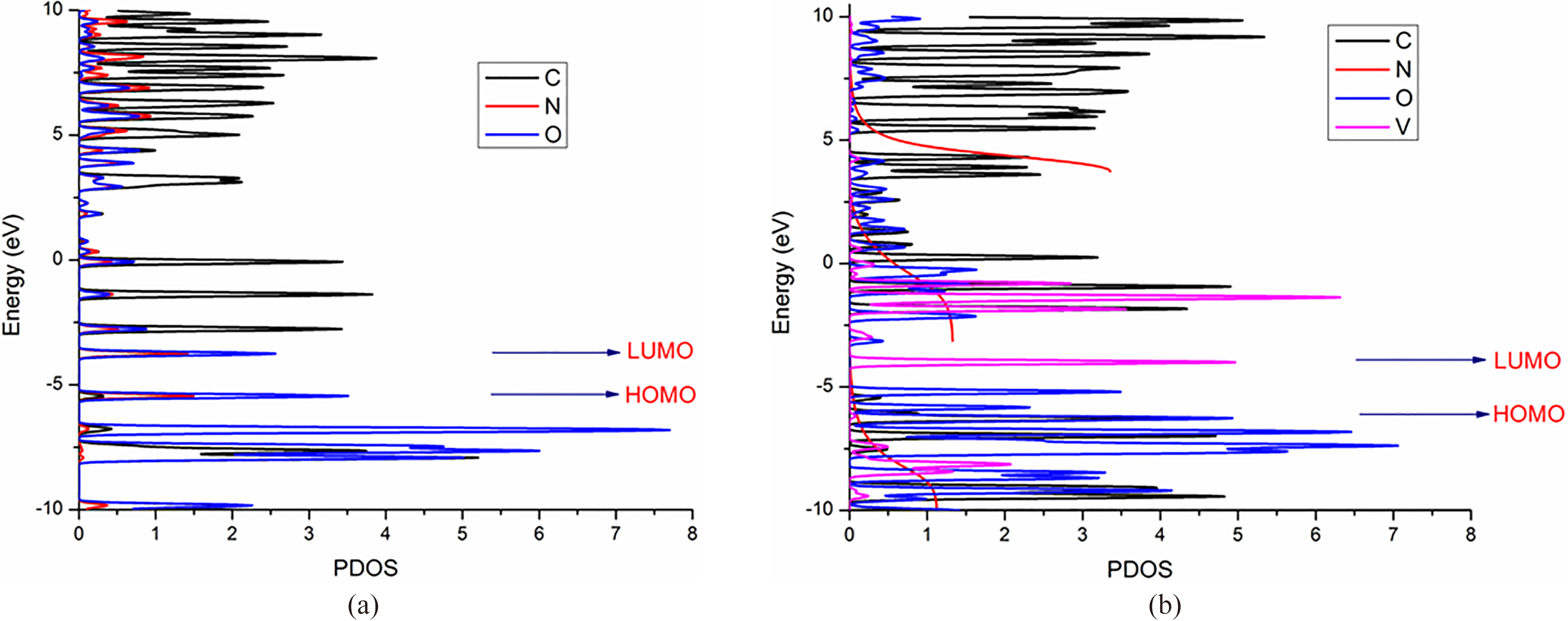
TDOS diagrams of (a) KHL and (b) [VO(3-NOBzH)].
PDOS diagrams of (a) KHL and (b) [VO(3-NOBzH)].
Density of states and chemical bonding
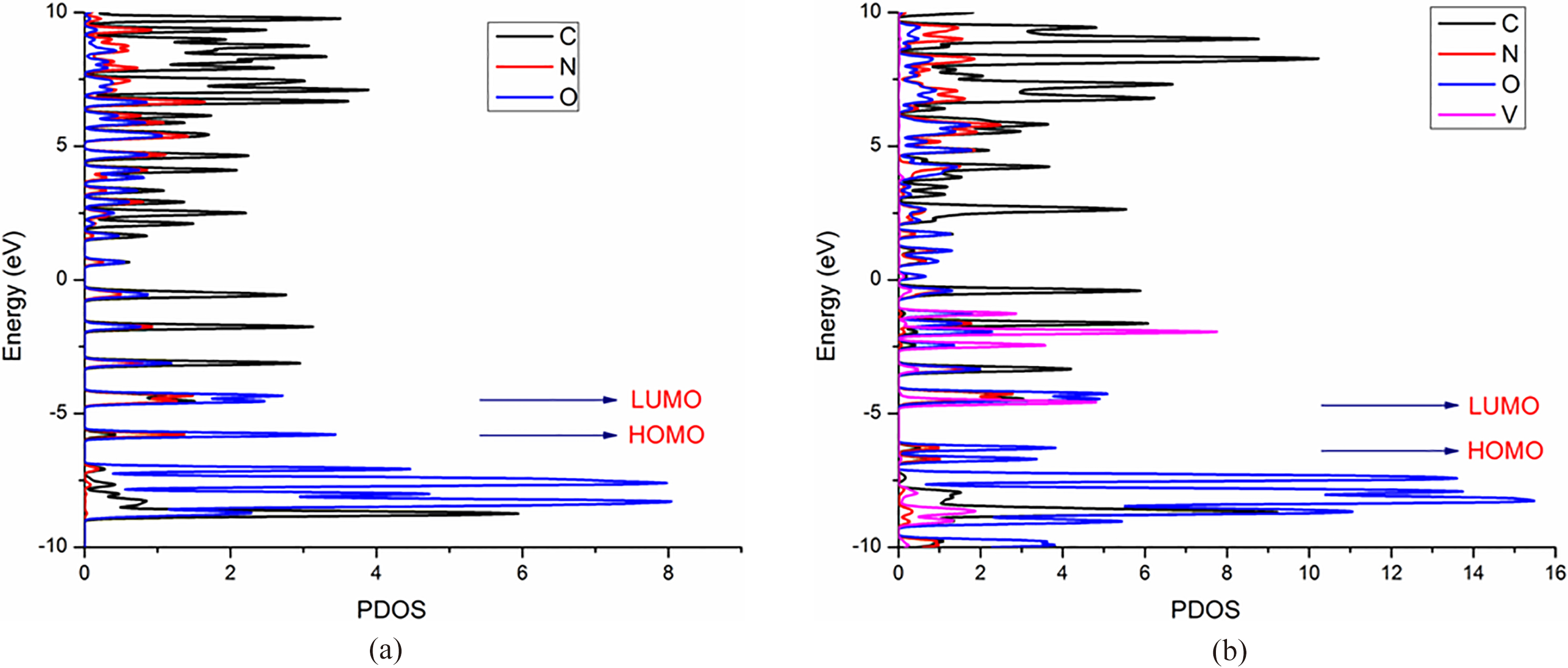
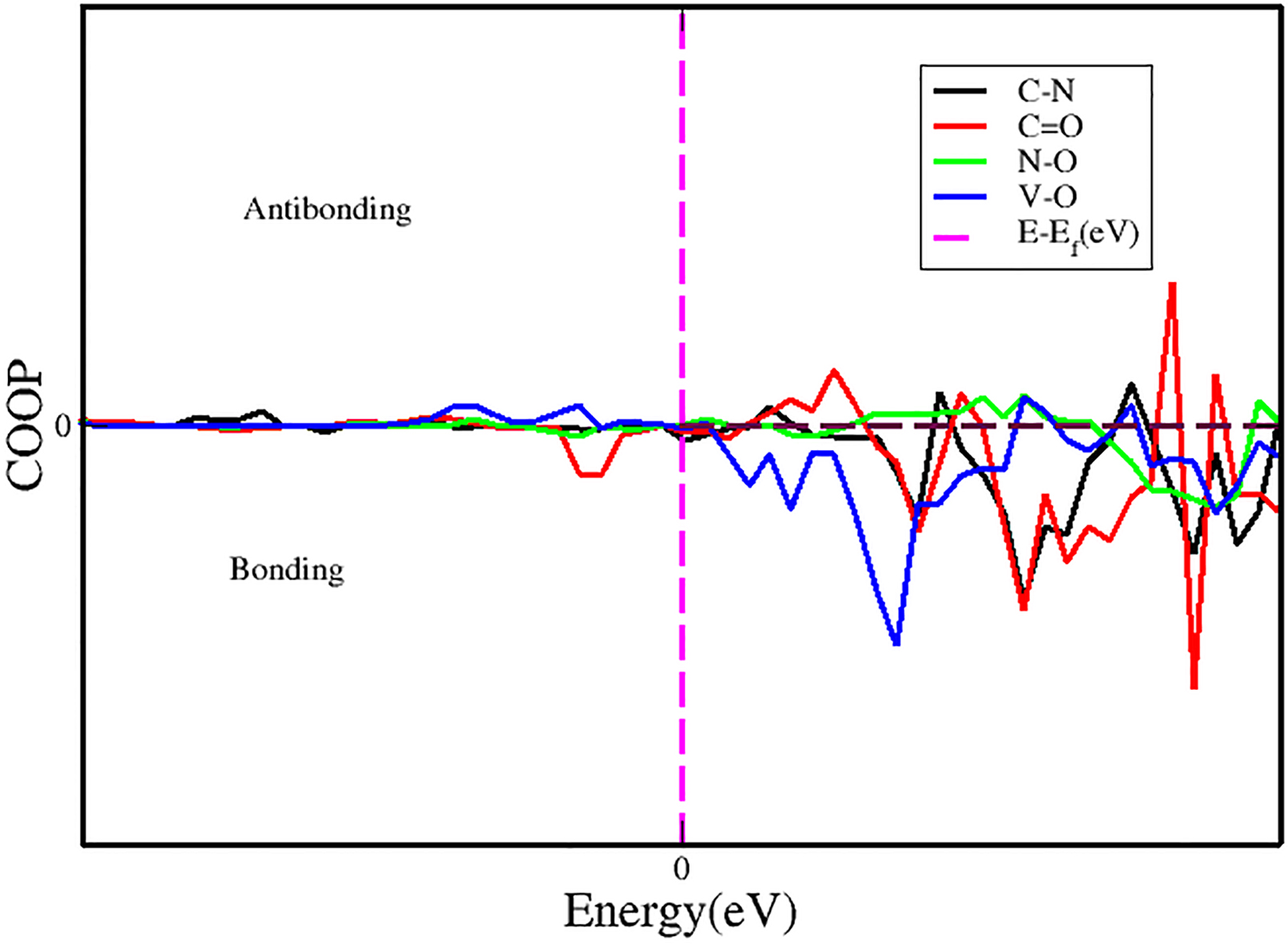
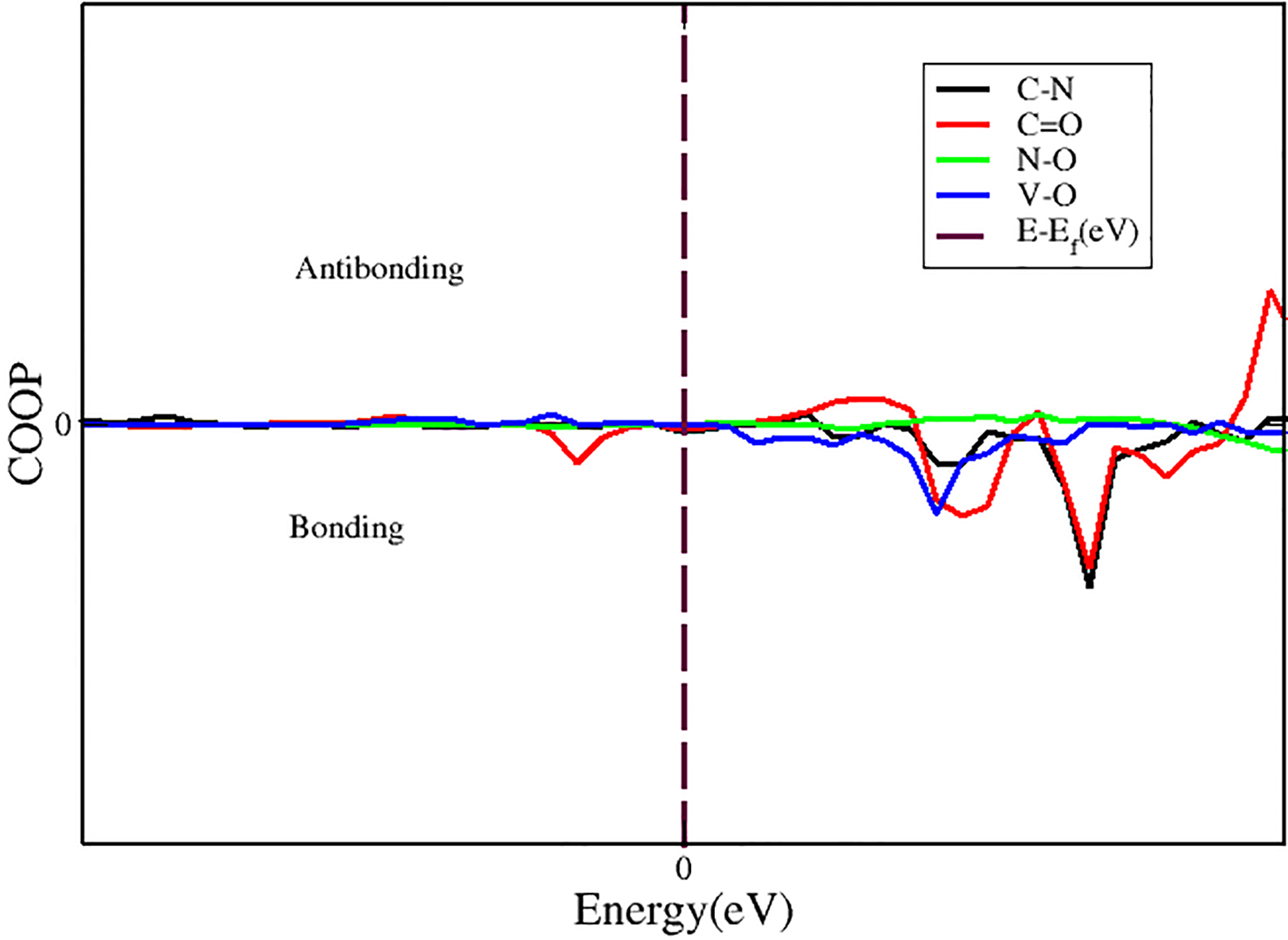
The molecular orbital contributions have further been studied by calculating TDOS (total density of states) and PDOS (partial density of states) and overall population density of states (OPDOS) of the ligands and complexes. The DOS plots demonstrate population analysis per orbital and PDOS plots present % contribution of a group to each molecular orbital. The bonding and antibonding character of the interaction between the two groups can be visualized using a COOP (crystal orbital overlap population) or OPDOS diagram. DOS is a function of energy and COOP results from multiplying the DOS by the overlap population. The positive, negative and zero values of COOP indicate a bonding (positive overlap population) and antibonding (negative overlap population) respectively. The reverse is the case in COHP i.e. a positive value of COHP indicates an antibonding interaction while negative value bonding interaction [73]. The DOS, PDOS and OPDOS plots for ligands and complexes are given in Figs 4–7. The PDOS has shown the contribution of 2p orbitals of oxygen in bonding.
TDOS diagrams of (a) KHL and (b) [VO(3,5-(NOBzH)].
PDOS diagrams of (a) KHL and (b) [VO(3,5-(NOBzH)].
Charge density analysis
The charge density difference has been calculated from the difference between the total charge density of the combined system (complex) and two isolated systems VO, (the vanadyl group) and ligand in order to study the interaction of ligand with vanadium.
The red and green regions show charge accumulation and charge depletion respectively [74].The red colour on vanadium and green colour on oxygens have shown that maximum charge is accumulated on vanadium and depleted from oxygen atoms (Figs 8 and 9).These observations are indicative of strong bonding interactions between vanadium and ligands.
COOP diagram of [VO(3-NOBzH)].
COOP diagram of [VO(3,5-(NOBzH)].
Conclusions
The new five-coordinate oxidovanadium (IV) complexes of composition [VO(3-NOBzH)] (I) and [VO(3,5-(NOBzH)] (II) derived from nitro-substituted hydroxamate ligands successfully synthesized and thoroughly characterized by various physicochemical and spectral techniques have been studied by DFT calculations in SIESTA code to give an insight into their coordination environments. The complexes have demonstrated distorted square-pyramidal geometry supported by index parameter tau () being 0.260 and 0.315 for I and II respectively-indicating distortion from ideal square-pyramidal geometry and that two largest basal angles and are not 180 in complexes. The relatively more distortion in case of II may be ascribed to steric effects of two NO substituents. The computed global reactivity descriptors have shown hard nature and good nucleophile-electrophile combination in complexes. The DOS, PDOS and OPDOS/COOP have shown significant bonding interactions between vanadium with carbonyl and hydroxamic oxygen atoms of ligands substantiated by the fact that square-pyramidal geometry is more prevalent than the trigonal bipyramidal geometry for small molecule complexes.
Footnotes
Acknowledgments
The authors thank Department of Physics, Himachal Pradesh University, Shimla for carrying out computational studies.
References
1.
WinterP.W.QatatiA.A.RingwallA.L.W.SchoeberlS.ChatterjeeP.B.BarisasB.G.RoessD.A. and CransD.C., The anti-diabetic bis(maltolato)oxovanadium (IV) decreases lipid order while increasing insulin receptor localization in membrane microdomains, Dalton Trans.41 (2012), 6419, doi.10.1039/C2DT30521F.
2.
PetersK.G.DavisM.G.HowardB.W.PokrossM.RastogiV.DivenC.GreisK.D.Eby-WilkensE.MaierM.EvdokimovA.SoperS. and GenbauffeF., Mechanism of insulin sensitization by BMOV (bis maltolato oxo vanadium); unliganded vanadium (VO4) as the active component, J. Inorg. Biochem.96 (2003), 321–330.
3.
ThompsonK.H.LichterJ.LebelC.ScaifeM.C.NcneillJ.H. and OrvigC., Vanadium treatment of the 2 diabetes: A view to the future, J. Inorg. Biochem.103 (2009), 554–558.
4.
CransD.C., Antidiabetic, chemical and physical properties of organic vanadates as presumed transition-state inhibitors for phosphatases, J. Org. Chem.80 (2015), 11899.
5.
JakuschT. and KissT., In vitro study of the antidiabetic behavior of vanadium compounds, Coord. Chem. Rev. (2017), doi.org/10.1016/j.ccr.2017.04.007.
6.
SannaD.MiceraG. and GarribbaE., A quantitative study of the biotransformation of insulin-enhancing VO2+ compounds, J. Biol. Inorg. Chem.15 (2010), 825–839.
7.
SasmalP.K.SounikS.MajumdarR.DigheR.R. and ChakravartyA.R., Photocytotoxic oxovanadium (IV) complexes showing light-induced DNA and protein cleavage activity, Inorg. Chem.49 (2010), 849.
8.
ButenkoN.TomazA.I.NouriO.EscribanoE.MoneroV.GamaS.RibeiroV.TeloJ.P.PesssoaJ.C. and CavacoI., DNA cleavage activity of VIV(acac)2 and derivatives, J. Inorg. Biochem.103 (2009), 622–632.
9.
EvangelouM.A., Vanadium in cancer treatment, Crit. Rev. Oncol/Hematol.42 (2002), 249–265.
10.
MedinaJ.J.M.NasoL.G.PerezA.L.RizziA.FerrerE.G. and WilliamsP.A.M., Antioxidant and anticancer effects and bioavailability studies of flavonoids baicalin and its oxidovanadium (IV) complex, J. Inorg. Biochem.166 (2017), 150–161.
11.
NasoL.G.LezamaL.ValcarcelM.SaladoC.VillaceP.KortazarD.FerrerE.G. and WilliamsP.A.M., Bovine serum albumin binding, antioxidant and anticancer properties of oxidovanadium(IV) complex with luteonin, J. Inorg. Biochem.157 (2016), 80–93.
12.
FernandezM.BeccoL.CorreiaI.BenítezJ.PiroO.E.EcheverriaG.A.MedeirosA.CominiM.LavaggiM.L.GonzálesM.CerecettoH.MorenoV.PessoaJ.C.GaratB. and GambinoD., Oxidovanadium (IV) and dioxidovanadium (V) complexes of tridentate salicylaldehyde semicarbazones: Searching for prospective antitrypanosomal agents, J. Inorg. Biochem.127 (2013), 150–160.
13.
FernandezM.VarellaJ.CorreiaI.BirrielE.CastiglioniJ.MorenoV.PessoaJ.C.CerecettoH.GonzálesM. and GambinoD., A new series of heteroleptic oxidovanadium (IV) compounds with phenanthroline-derived co-ligands: Selective Trypanosoma cruzi growth inhibitors, Dalton Trans.42 (2013), 11900–11911.
14.
ScaleseG.BenitezJ.RostanS.CorrieaI.BradfordL.VieitesM.MinniL.MerlinoA.CoitinoE.L.BirrielE.VarelaJ.CerecettoH.GonzalezM.PessoaJ.C. and GambinoD., Expanding the family of heteroleptic oxidovanadium (IV) compounds with salicylaldehyde semicarbazones and polypyridyl ligands showing anti-Trypanosoma cruzi activity, J. Inorg. Biochem.147 (2015), 116–125.
15.
de Almeida MachadoP.MotaV.Z.de Lima CavalliA.C.de CarvalhoG.S.G.da SilvaA.D.GameiroJ.CuinA. and CoimbraE.S., High selective antileishmanial activity of vanadium complex with stilbene derivative, Acta. Trop.148 (2015), 120–127.
16.
MauryaM.R.HaldarC.KhanA.A.AzamA.SalahuddinA.KumarA. and PessoaJ.C., Synthesis, Characterization, Catalytic and Antiamoebic Activity of Vanadium Complexes of Binucleating Bis(dibasic tridentate ONS donor) Ligand Systems, Eur. J. Inorg. Chem. (2012), 2560–2577.
17.
CorreiaI.AdãoP.RoyS.WahbaM.MatosC.MauryaM.R.MarquesF.PavanF.R.LeiteC.Q.F.AvecillaF. and PessoaJ.C., Hydroxyquinoline derived vanadium (IV and V) and copper (II) complexes as potential anti-tuberculosis and anti-tumor agents, J. Inorg. Biochem.141 (2014), 83–93.
18.
KrakowiakJ.LundbergD. and PerssonI., A coordination chemistry study of hydrated and solvated cationic vanadium ions in oxidation states +III, +IV, and +V in solution and solid state, Inorg. Chem.51 (2012), 9598–9609.
19.
MauryaM.R.AgarwalS.BaderC.EbelM. and RehderD., Synthesis, characterization and catalytic potential of hydrazonatovanadium (V) model complexes with [VO]3+ and [VO]2+ cores, Dalton Trans. (2005), 537–544.
20.
MakinenM.W. and SalehitazangiM., The structural basis of action of vanadyl (VO2+) chelates in cells, Coord. Chem. Rev.279 (2014), 1–22.
21.
RehderD., Vanadate-dependent peroxidases in macroalgae: Function, applications and environmental impact, Oceanography2 (2014), 1000121.
22.
KraehmerV. and RehderD., Modelling the site of bromide binding in vanadate-dependent bromoperoxidases, Dalton Trans.41 (2012), 5225–5234.
23.
MuriE.M.F.NietoM.J.SindelarR.D. and WilliamsonJ.S., Hydroxamic acids as pharmacological agents, Curr. Med. Chem.9 (2002), 1631–1653.
24.
SengerJ.MelesinaJ.MarekM.RomierC.OehmeI.WittO.SipplW. and JungM., Synthesis and biological investigation of oxazole hydroxamates as highly selective histone deacetylase 6 (HDAC6) inhibitors, J. Med. Chem.59 (2016), 1545–1555.
25.
UgwuD.I.EzemaB.E.EzeF.U.AyoguJ.I.EzemaC.G. and UgwujaD.I., Synthesis and biological applications of hydroxamates, Amer. J. Org. Chem.4 (2014), 26–51.
26.
BauerL. and ExnerO., The chemistry of hydroxamic acids and N-hydroxyimides,Angew. Chem. Int. Ed. Engl.13 (1974), 376–383.
27.
EdwardsD.C. and MyneniS.C.B., Hard and soft X-ray absorption spectroscopic investigation of aqueous Fe(III)-hydroxamate siderophore complexes.J. Phys. Chem.109 (2005), 10249–10256.
28.
Parac-VogtT.N.PaccoA.NockemmanP.YuanY.F.Gorller-WalrandC. and BinnemansK., Mandelohydroxamic acid as ligand for Cu(II), 15-metallacrown-5 lanthanide (III) and Cu (II), 15-metallacrown-5 uranyl complexes, Eur. J. Inorg. Chem.7 (2006), 1466–1474.
29.
AgarwalY.K. and SharmaC.R., A novel rotaxane hydroxamic acid for the liquid-liquid extraction and determination of vanadium (V), Ind. J. Chem.46 (2007), 1772–1777.
30.
OdakeS.NakahashiK.MorikowaT.TekebeS. and KobashiK., Inhibition of urease activity by dipeptidyl hydroxamic acids, Chem. Pharm. Bull.40 (1992), 2764–2768.
31.
O’BrienE.C.FarkasE.GilM.J.FitzgeraldD.CastinerasA. and NolanK.B., Metal complexes of salicylhydroxamic acid (H2Sha), anthranilic hydroxamic acid and benzohydroxamic acid. Crystal and molecular structure of [Cu(phen)2(Cl)]Cl x H2Sha, A model for a peroxidase-inhibitor complex, J. Inorg. Biochem.79 (2000), 47–51.
32.
SaniM.BelottiD.GiavazziR.PanzeriW.VolonterioA. and ZandaM., Synthesis and evaluation of stereopure α-trifluoromethyl-malic hydroxamates as inhibitors of matrix metalloproteinase, Tetrahedron. Lett.45 (2004), 1611–1615.
33.
BotosI.ScapozzaL.ZhangD.LiottaL.A. and MeyerE.F., Batimastat, a potent matrix metalloproteinase inhibitor, Proc. Nat. Acad. Sci. U.S.A.93 (1996), 2749–2754.
34.
BellJ.H. and PrattR.F., Formation and structure of 1:1 complexes between aryl hydroxamic acids and vanadate at neutral pH, Inorg. Chem.41 (2002), 2747–2753.
35.
BuglyoP. and PotariN., Study of the interactions between oxidovanadium (IV) and hydroxamic acids, Polyhedron24 (2005), 837–845.
36.
SharmaN.KumariM.KumarV.ChaudhryS.C. and KanwarS., Synthesis, characterization and antibacterial activity of vanadium(IV) complexes of hydroxamic acids, J. Coord. Chem.63 (2010), 176–184.
37.
MolinaroF.S. and IbersJ.A., Crystal and molecular structure of 2, 3, 7, 8, 12, 13, 17, 18-octaethylporphinatooxovana dium (IV), Inorg. Chem.15 (1976), 2278–2283.
38.
CransD.C.ChenH.AndersonO.P. and MillerM.M., Vanadium (V)-protein model studies: Solid-state and solution structure, J. Am. Chem. Soc.115 (1993), 6769–6776.
39.
JustinoL.L.G.RamosM.L.KauppM.BurrowsH.D.FiolhaiscC. and GilaV.M.S, Density functional theory study of oxoperoxo vanadium (V) complexes of glycolic acid. Structural correlations with NMR chemical shifts, Dalton Trans.44 (2009), 9735–9745.
40.
YonghengX.ZhengS.HouqunY.MaofaG.ShuyunN. and FengyingB., Synthesis, spectra, structure and quantum chemistry study on two novel oxovanadium complexes with hydrotris (pyrazolyl) borate ligands, Chin. Sci. Bull.51 (2006), 661–667.
41.
PatraD.BiswasN.KumariB.DasP.SepayN.ChatterjeeS.DrewM.G.B. and GhoshT., A family of mixed-ligand oxidovanadium (V) complexes with aroylhydrazone ligands: A combined experimental and computational study on the electronic properties, DNA binding and nuclease activities, RSC adv.5 (2015), 92456–92472.
42.
SharmaN.KumarV.SharmaR.KumariM. and KanwarS.S., Coordination compounds of hydroxamato oxovanadium (IV) complexes with nitrogenous bases and their antimicrobial activities, Bull. Chem. Soc. Jpn.84 (2011), 855–861.
43.
SharmaN.KanwarS.S.GuptaR.KumariL. and SharmaR., Reactions of bis(8-hydroxyquinolato)oxovanadium (IV) with hydroxamate ligands: A route providing mixed ligand and quinolinato free vanadium (IV) complexes, Bull. Chem. Soc. Jpn.85 (2012), 1310–1317.
44.
SharmaR. and SharmaN., Thermal studies of some biologically active oxovanadium (IV) complexes containing 8-hydroxyquinolinate and hydroxamate ligands, J. Therm. Anal. Calorim.110 (2012), 539–543.
45.
SharmaN.KumariM. and SharmaR., Thermoanalytical studies of oxovanadium (IV) hydroxamate complexes, J. Therm. Anal. Calorim.10 (2012), 225–229.
46.
SharmaR. and SharmaN., A thermal behaviour and structural study of bis(hydroxamato)oxovanadium (IV) complexes, J. Therm. Anal. Calorim.112 (2013), 25–30.
47.
RochaM.SantoA.D.AriasJ.M.GilD.M. and AltabefA.B., Ab-initio and DFT calculations on molecular structure, NBO, HOMO–LUMO study and a new vibrational analysis of 4-(dimethylamino) benzaldehyde, Spectrochim Acta part A: Mol and Biomol Spectroscopy136 (2015), 635–643.
48.
SasE.B.KurtM.KarabacakM.PoiyamozhiA. and SundaraganesanN., FT-IR and FT-Raman dispersive Raman, NMR spectroscopic studies and NBO analysis of 2-bromo-1H-benzimidazol by density functional method, J. Mol. Struc.1081 (2015), 506–518.
49.
MatarS.F.Al-alamA.QuiniN. and PöttgenR., Ab initio investigations of the electronic structures and chemical bonding in LiCo6P4 and Li2Co12P7, J. Solid State Chem.202 (2013), 227–233.
50.
AdityaP.MuthukumarS.V.SharmaJ.D. and SundaresanC.N., Ab initio computational study of 2-thioureidobenzoxazole molecule, AIP Conf. Proc.1536 (2013), 415–416.
51.
MartiM.A.CrespoA.CapeceL.BoechiL.BikielD.E.ScherlisD.A. and EstrinD.A., Dioxygen affinity in heme proteins investigated by computer simulation, J. Inorg. Biochem.100 (2006), 761–770.
52.
TroullierN. and MartinsJ.L, Efficient pseudopotentials for plane wave calculations, Phy. Rev.B.43 (1991), 1993–2006.
53.
TroullierN. and MartinsJ.L., Efficient pseudopotentials for plane-wave calculations: II, Operators for fast iterative diagonalization, Phy. Rev. B43 (1991), 8861–8869.
54.
KleimanL. and BylanderD.M., Efficacious form for model pseudopotentials, Phys. Rev. Lett.48 (1982), 1425–1428.
KumarA.PriyaB.ThakurA. and SharmaN., In vitro cytotoxicity and DNA binding studies of newly synthesized oxidovanadium (IV) complexes of nitro-substituted benzohydroxamate ligands as prospective vanadodrug compounds, Adv. Sci. Eng. Med.9 (2017), doi:10.1166/asem.2017.2095.
57.
FedorovaE.V.RybakovV.B.SenyavinV.M.AnisimovA.V. and AslanovL.A., Synthesis and structure of oxovanadium(IV) complexes [VO(acac)2] and [VO(sal: L-alanine) (H2O)], Crystallographic Reports50 (2003), 224–229.
58.
MonfaredH.H.AlaviS.BikasR.VahedpourM. and MayerP., Vanadium oxo-aroylhydrazone complexes: Synthesis, structure and DFT calculations, Polyhedron29 (2010), 3355–3362.
59.
MotevalliM.ShahD.ShahS.A.A. and SullivanA.C., Synthesis, structure and homogeneous catalytic activity of the novel (cyclosiloxy) oxovanadium (IV) complex VO{O(SiPh2O)2}-μ-(Li(THF))22, Organometallics13 (1994), 4109–4112.
60.
VenkataramanS.VargheseB.SadashivaB.K. and SubramanianS., Crystal structure and EPR studies of bis [1,3-di(p-n-octylphenyl) propane-13-dionato], oxovanadium (IV), Mol. Cryst. Liq. Cryst.Sci. Technol Sect. A357 (2001), 199–219.
61.
CransD.C.KhanA.R.Mahroof-TahirM.MondalS.MillerS.M.La CourA.AndersonO.P.JakuschT. and KissT., Bis(acetylamido) oxovanadium (IV) complexes: Solid state and solution studies, J. Chem. Soc. Dalton Trans. (2001), 3337–3345.
62.
DodgeR.P.TempletonD.H. and ZalkinA., Crystal structure of vanadyl bis acetylacetonate. Geometry of vanadium in fivefold coordination, J. Chem. Phys.35 (1961), 55–67.
63.
CaravanP.GelminiL.GloverN.HerringF.G.LiH.McNeillJ.H.RettigS.J.setyawatiI.A.ShuterE.SunY.TraceyA.S.YuenV.G. and OrvigC., Reaction chemistry of BMOV bis(maltolato) oxovanadium (IV) – A potent insulin mimetic agent, J. Am. Chem. Soc.117 (1995), 12759–12770.
64.
ChiZ.ZhuL.LuX.YuH. and LiuB., Comparative study of three mononuclear vanadium-aromatic 1,2-diol complexes: Structure, characterization and anti-proliferating effects against cancer cells, Z. Anorg. Allg. Chem.638 (2012), 1523–1530.
65.
HonP.K.BelfordR.L. and PflugerVanadylC.E., bond-length variations, J. Chem. Phys.43 (1965), 3111–3115.
66.
FischerD.C.Barclay-PreetS.J.BalfeC.A. and RaymondK.N., Synthesis and characterization of vanadium(V) and -(IV) hydroxamate complexes: X-ray crystal structures of oxochloro bis(benzohydroxamato) vanadium(V) and oxoisopropoxo (NN’-dihydroxy-N,N’-diisopropylheptanediamido) vanadium(V),Inorg. Chem.28 (1989), 4399–4406.
67.
AddisonA.W.NagaswaraR.T.ReesijkJ.VanJ.R. and VerschoorG.C., Synthesis, structure and spectroscopic properties of copper (II) compounds containing nitrogen-sulphur donor ligands; The crystal and molecular structure of aqua [1,7-bis(N-methylbenzimidazol-20-yl)-2,6-dithiaheptane]copper, (II) perchlorate, J.Chem.Soc. Dalton Trans.7 (1984), 1349.
68.
ZhangX.M.ThongM.L.LeeH.K. and ChenX.M., The first noncluster vanadium (IV) coordination polymers: Solvothermal syntheses, crystal structure, and ion exchange, J. Solid State Chem.160 (2001), 118–122.
69.
SoghomonianV.ChenQ.HaushalterR.C. and ZubietaJ., Investigations into the targeted design of solids: Hydrothermal synthesis and structures of one-, two-,and three- dimensional phases of the oxovanadium-organodiphosphonate system, Angew. Chem.34, (1995), 223–226.
70.
ParrR.G. and PearsonR.G., Absolute hardness: companion parameter to absolute electronegativity, J. Am. Chem. Soc.105 (1983), 7512–7516.
71.
KoopmansT.A. and DieZ.Ü., Wellenfunktionen von und Eigenwerten zu den Einzelnen Elektronen Eines Atoms, Physica1 (1934), 104–113.
72.
PearsonR.G., Chemical hardness and density functional theory, Chem. Sci.117 (2005), 369–377.
73.
DronskowskiR. and BlöchlP.E., Crystal orbital Hamilton populations (COHP) energy-resolved visualization of chemical bonding in solids based on density-functional calculations, J. Phys. Chem.97 (1993), 8617–8624.
74.
WenS.GaunW.KanY.YangG.MaN.YanL.SuZ. and ChenG.H., Theoretical insights into [PMo12O40]3- grafted on single-walled carbon nanotubes, Phys. Chem. Chem. Phys.15 (2013), 9177–9185.