



Abstract
The continuous use of fossil fuels are destined to run out and by definition are the nonrenewable resource. Economies forces change with the depletion of fossil fuels. Renewable energies are increasingly competitive energy, sources of clean, and inexhaustible. Differing from fossil fuels principally in the abundance, diversity, and potential for use on the planet, but produces neither greenhouse gases that cause climate change and polluting emissions. The objective of our research is to create a hybrid solar and wind renewable energy. Used as a source of electrical power to supply a charging station will be implemented in High Education institution. This will solve the problem of students using school electricity and adding convenience outlets that will use renewable energy and for the method, using a Mono-crystalline Solar panel and Vertical-Axis Wind Turbine to generate a total of 250 W being hybrid. The results of the research that we have conducted give us the maximum output of our hybrid solar and wind which is 250 W and the discharge time of the battery maximum of 5 hrs having a load of 250 W and the charge rate is 24 Ampere-hour. This Hybrid device will run and charge 24 hours due to an optimum combination, the impact of the variable nature of solar and wind resources is partially resolved, and the overall system becomes more reliable and economical to run. The role of this renewable energy-based hybrid power systems play in meeting the increased demand for clean electricity.
Introduction
The fossil fuels are destined to run out and by definition are the nonrenewable resources. Economies forces change with the depletion of fossil fuels. The emissions from the burning of fossil and nuclear fuels create atmospheric, water, and land pollution and toxic waste.
Renewable energies are increasingly competitive energy, sources of clean, and inexhaustible. Differing from fossil fuels principally in the abundance, diversity, and potential for use on the planet, but produces neither greenhouse gases that cause climate change and polluting emissions. The costs are also falling at a sustainable rate, as the general cost trend for fossil fuels is in the opposite direction in spite of their present volatility. Growth in clean energies is unstoppable, as reflected in statistics produced in 2015 by the International Energy Agency (IEA). According to the IEA, world electricity demand will have increased by 70% by 2040 – its share of final energy use rising from 18 to 24% during the same period – driven mainly by the emerging economies of India, China, Africa, the Middle East and South-East Asia [1].
As of April 11, 2018, The Philippines is now committed to reducing energy emissions by 70% by 2030. This has brought a renewed thrust to develop the nation’s renewable energy (RE) sector. As part of the Paris Agreement on Climate Change. Based on figures from the DOE, coal, oil, and natural gas contribute over half of the Philippine energy mix, while RE sources like biomass, geothermal, solar, hydro, and wind add up to around 36.1%, with geothermal being the biggest contributor at 17.9%. New DOE Circular mandates 30% RE in energy mix together with an immediate shift to an auction system upon full subscription of wind and solar installation targets of 400 MW and 500 MW [2]. The Department of Energy launched a program to double the country’s total RE installation of 5,521 megawatts by encouraging schools to use solar PV systems.
The researchers aim to gain a 250 W output from wind and solar energy source that is going to be installed in a Higher Education Institution. Solar PV systems are encouraged to be used by DOE and by creating a Hybrid connection with wind system can create an integrated energy source.
Statement of the problem
The larger population of students that access the Higher Education Institution, the greater number of gadgets being used, electronic devices using school electricity and lacking of convenience outlet for charging in the Higher Education Institution. Implementation and integration of Hybrid Solar-wind applied in charging station for Higher Education Institutions. The researchers aims to produce 250 W from hybrid connection generation, provide USB charger and to Provide outlets for laptop. The project will be implemented on Higher Education Institutions that has USB chargers and convenience outlet used for laptops. The input source for the charging station from solar and wind, a total of 250 W being a hybrid. The charging station will be develop a system that uses renewable energy, which means it has a good impact and does not harm both the environment and human health. Through this system, the research would be able to provide additional electricity sources for the charging station in the college library that allows the students to charge smartphones and laptops at the same time. The integration of the system would be a great contribution to the school researchers for it will serve as future references and this development would be a contribution to the electrical engineering field due to the innovation of the project.
Review of related literature
In this section, discussed the studies and designs of researchers and engineering on calculating of the elements in the environment that are integrated to form renewable energy and as well as to achieve the maximum efficiency of the device. Then followed by simulation of hard wares that used in the charging station that make it different from other prototypes.
Foreign studies
Wind turbine blade efficiency and power calculation
Relationship of wind velocity to power was defined by the power curve. Wind Turbines standard produced 4 meters per seconds, to achieve the target power is 13 meter per seconds and stop production of energy at 25 meters per second [3].
Solar battery charging station with automated switching system
The study focuses on computing each electrical power output in batteries through its component and prolong its efficiency based on amperes per hours by connecting component series circuit. Electrical storage (Battery) used for Solar PV system batteries generally have to discharge a smaller current for an extended period, such as at night or during a power outage, while being charged during the day. The total power output for each battery is calculated as follows:
with this formula shown the hybrid solar-wind makes the power unit an efficient that is reliable. There are more to know about the batteries that needed to use for the charging station [4]. Using the Method on how to compute the proper total of its unit that we need and also the charging time and discharging time when it’s full sun or no sun. The prototype can now use this data to pick the designated design and specification for our renewable energy storage.
The study is explaining about electrical generation system on a higher scale, due to an awareness that solar and wind power can save the situation which the depletion into production of fossil fuel. The Generation system targeted is applied to a private house, farmhouse, a small company, education or apartment house. The method used in the previous prototype can make the researcher’s prototype more optimize, that will be adaptable on the HEI system and other areas whereby there is a good source of solar wind energy.
Solar PV-Wind Hybrid, power generation system, gave the discovered a concept on how to create a system that deals with the hybrid system, shown by the figures of the line diagrams. The difference with the study is the load which is a total of 23 W being hybrid, and the application is for a private house [5].
Local studies
Solar powered cell phone charging station
Standalone electricity source is not but a University in Malolos, Bulacan, and a coin slotted cellphone charging station powered by solar power, which means the solar cell is attached to the charging station that must be used as backup power storage. And also serves as an emergency source of electricity for charging. The targeted site that study wanted to implement has the same energy source, but through its capacity, the data by this device can be developed in marketing and domestic use. The idea developed by applying solar PV to supply a charging station and the back-up storage battery created the main direction for the hybrid solar PV-Wind power system that aided the study. The difference between the two studies are in the load was being supplied and the location that the project that the Solar Powered Cell Phone Charging Station was aimed for commercial use [6].
Solar irradiance by solar edge
Solar irradiance in cavite collected by the Software Called Solar Edge [8]
Solar irradiance in cavite collected by the Software Called Solar Edge [8]
The table shows the kilowatt per square meter of solar irradiance in Cavite in the whole year which has a peak value of 6.5 kilowatts per square meter in the month April and the average worth of 4.81 kilowatts per square meter.
Solar edge software result output [8].
Figure 1 shows the solar irradiance in Bacoor, Cavite Last 2018, the data are shown in the table is the whole year average data. Amount of solar irradiance Kilowatt per square meter, based on the software of solar.
Wind graph in bacoor, cavite last 2018.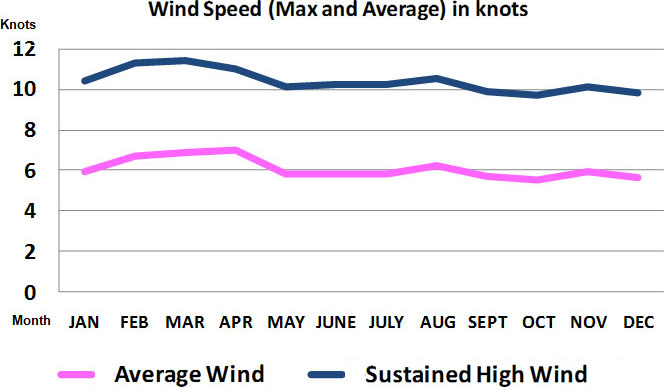
Figure 2 The City of Bacoor in Cavite had a calm air and the windiest month is April which have an average wind speed of 7 knots or 8 MPH followed by March have 6.9 knots or 7.935 MPH and February have 6.7 knots or 7.705 MPH which known as a gentle breeze. The maximum sustained winds at their highest in late January and early February where average wind speeds reach 11.7 knots or 13.455 MPH [9].
System of conceptualization
Flow chart on constructing hybrid charging station.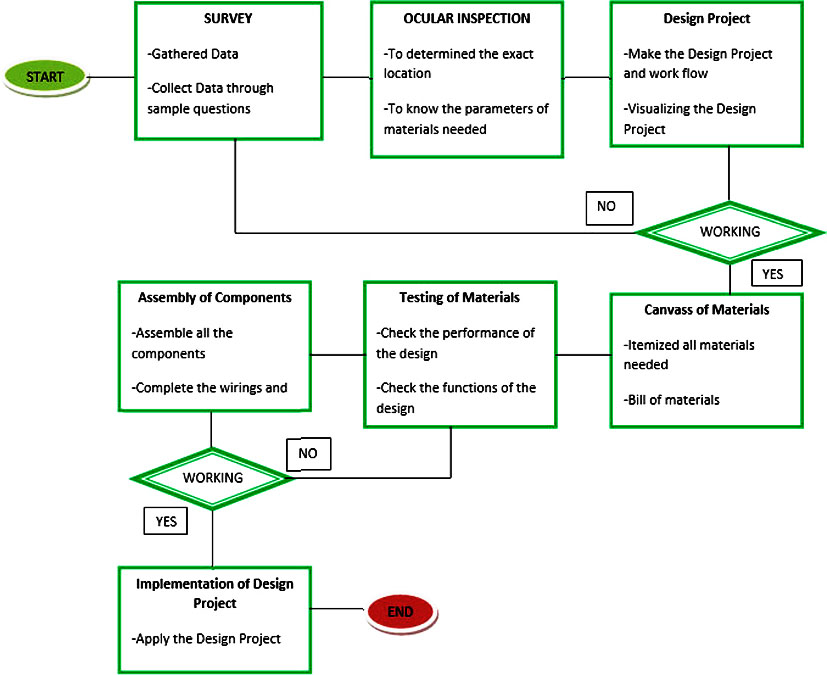
Figure 3 conveys how the whole project was planned and designed base on the studies and gathering of accurate data that there is a need of this prototype. The researchers conduct a survey in library of University of Perpetual Help the number of students that are going-in-out in the library averages 270 students per day based on the month of August 2018.
Calculation of loads
Conceptual framework.
Figure 4 shows how the electrical power system will work by their component in which the charging station will act as primary load. In Generation components, there are solar panel and wind turbine that will be simulate as a power generator. In Distribution components, there are inverter and charging controller. Inverter is an electronic device or circuitry that changes direct current (DC) to alternating current (AC) in which the conversion of voltage output of generation supplied by the hybrid.
Table 2 show the predicted load which are smart phones and laptop, research cope with Schedule of loads is essential and a basic calculation for electrical engineering installation. The charging station will have 10 predicted electrical circuit that will have a demand factor of 46%. The generated power of hybrid is based on the demand load.
Design computation of loads.
Figure 5 shows the Demand factor of load 83.3% and total VA (power) of 263.1 that have a total power of 219.25 VA which satisfy the target power for the system.
Design measurements analogy.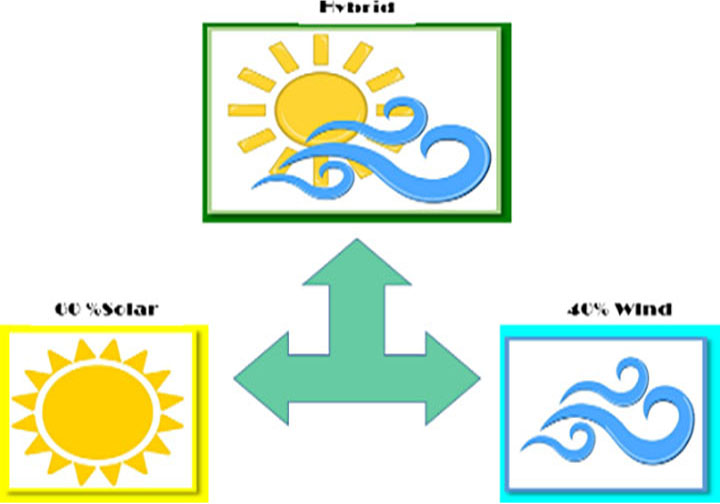
This section discuss about Wind Turbine calculations, Wind energy is alike of solar energy. Wind energy describes the process by which wind is used to produce electricity. The wind turbines convert the kinetic energy thru rotation on motor rotor cutting of flux that present in the wind to mechanical power.
The wind energy formula is given by:
Given the following data:
Power Air Density “ Wind Speed “ Radius Area “ Substituting the load of 100 W in the equation to get the length of the Turbine blade:
Length
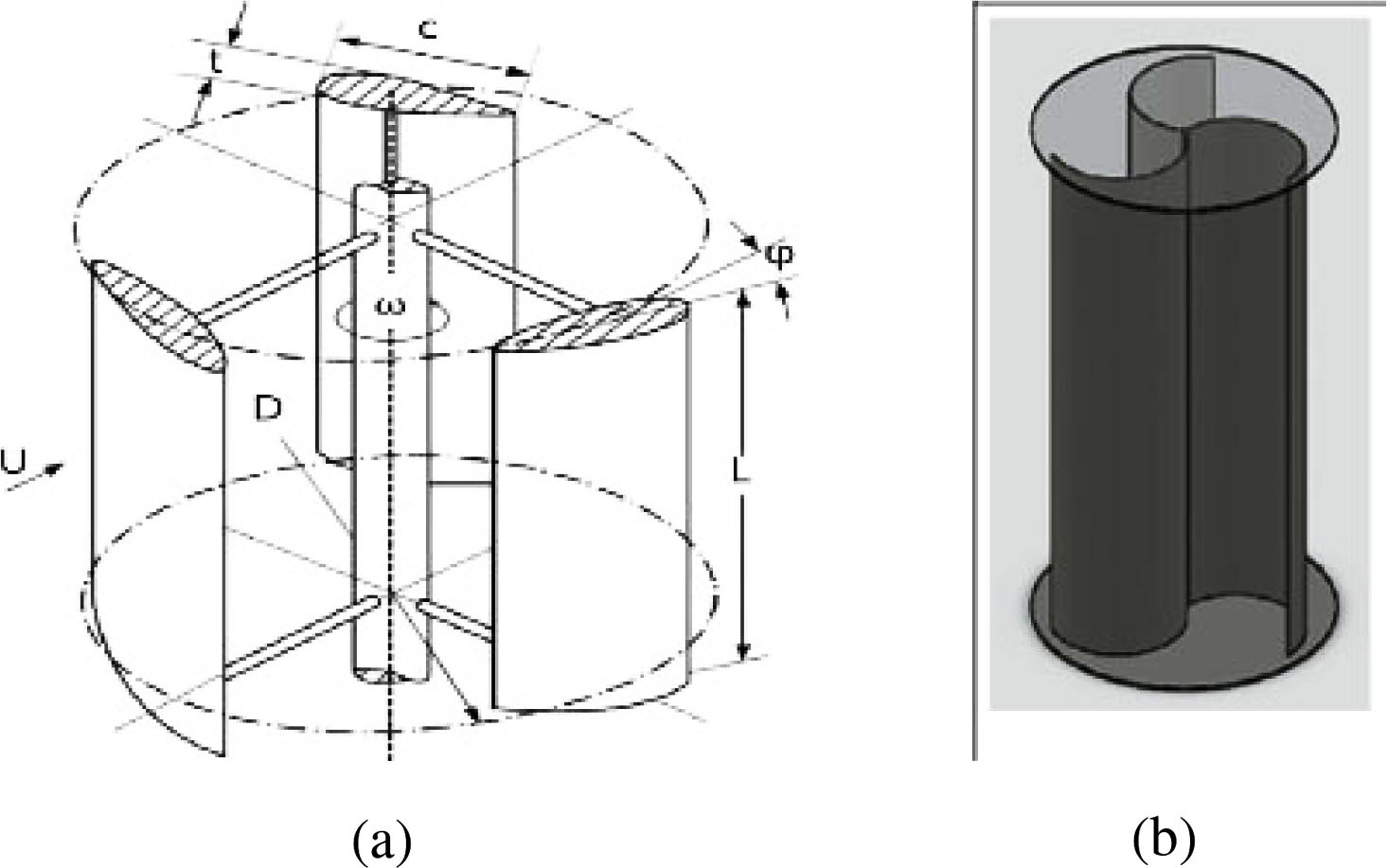
Figure 7 Based on the figure shown above, the wind prototype will be combined is constructed using a 500 mm diameter PVC pipe, three blade with self-aligned spherical bearings, a 15 mm steel axis, brass fittings, and 1 m of square 25 mm steel bars for the frame.
Frames and pole of wind turbine.
Figure 8. The frame has a 100 cm vertical post for wind base adjustable up to 40 cm integrated with the motor support which have dimension of Length of 30 cm, base of 28 and height of 10 cm. One support has a 100 cm vertical post for wind base adjustable up to 40 cm integrated with the motor support legs are bolted to the frame to keep it vertically.
For the solar PV will face on south part of Cavite at 60 degrees perpendicular toward sunlight, this gives the Solar PV to limit the shade that that will lessen its voltage output efficiency during the working hours.
Calculation based on Solar panel output
Inverter
Rating of the inverter should be greater than 25% of the total load.
But inverter don’t have a model of 313 w output so the researchers will be using 300 w.
Battery
Required No of battery
For One battery
Suppose to be the model going to use 100 Ah, 12 V Battery
Backup Hours of Battery
Charging Current for Battery, (Charging current should be 1/10 of battery Ah)
Equation (3.2.1) [16].
Charging Time required for Battery
Charging Time of battery
Model casing for hybrid supply storage.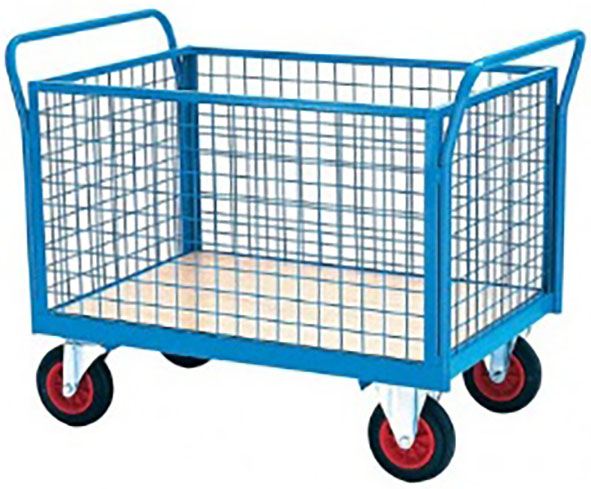
Figure 9 The researcher’s objective is to make the prototype adaptable to different system and environment that thru time it will be capable of exchanging places. Charge controller, Inverter and battery will be integrated in this type of chassis for which it safe to provide electricity.
Adaptable box of charging station.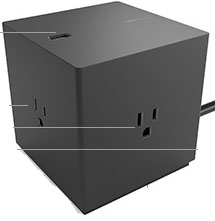
Figure 10 For the charging station adaptability, the outlets and USB adaptor slot is integrated with the box dimension is 25
Electrical supply in the Hybrid Solar – Wind is an electrical generating station for it can perceive power outage in working hours. For the load probability outage function for the electricity demand to be economically high in degree of quality and reliability. Table shown below will calculate the electrical supply probability outage:
The reliability of supply probability outage for 250 W hybrid system.
Solar PV tabulated testing measured in kilowatts per meter square on February 6 and 10 2019.
Solar PV tabulated testing measured in kilowatts per meter square on February 6 and 10 2019.
The table shows the average value of 12 volts from 7 am to 4 pm the highest peak for solar voltage output and from 5 pm to 11 pm the lowest average voltage output for solar 4.43 volts. The average temperature for 7 am to 11 pm is 26 Degree Celsius, for the highest peak for humidity from 7 am to 11 pm is 81%, The average irradiance in Cavite is 4.7 kilowatt per squared meter.
Trial 1 for wind turbine using 1 meter length of blade measured voltage output by multimeter on February 6, 2019
The table shows the theoretical wind speed data in Bacoor Cavite from 12 am to 11 pm. February 17, from 12 am to 11 pm, the highest peak for wind speed is 23 kilometer per hour. February 18, the highest peak for wind speed is 25 kilometer per hour. February 19, the highest peak for wind speed is 26 kilometer per hour. February 20 the highest peak for wind speed is 27 kilometer per hour. February 21 the highest peak for wind speed is 25 kilometer per hour. And February 22 the highest peak for wind speed 25 kilometers per hour. Wind velocity in Bacoor Cavite measured in (kilometer per hour) last February 17–22, 2019, the wind of Bacoor, Cavite is high but through humidity is 60%–80% the wind velocity is not continuous all the time.
Hybrid charging station discharge testing supplying on 245 load calculation the voltage generated
The table shows the actual data for the hybrid solar-wind operation, temperature, humidity, charge and discharge, and the voltage output from 7 am to 5 pm. Hybrid solar-wind testing for charge and discharge applied in battery with a constant output voltage of 12 volts and 10 amperes.
Data obtain using Clamp meter on the hybrid system supplying 250 watts on 245 watts load last February 25, 2019
Table shows the final output for the Hybrid Charging Station tested last February 25, 2019, from 8 am to 6 pm. Testing of 245 watts load that compose of TV (110 w), speaker (35 w), laptop (25 w) and computer (75 w) from 8 am to 6 pm. Using a clamp meter the peak amperes for the Hybrid Solar-Wind Charging Station from 8 am to 6 pm is 1.136 amperes. The Hybrid Charging station has to output voltage the AC (220 volts) for laptops and DC (5 V) for smartphones. Charging and Discharging of the battery from Hybrid Solar-Wind Charging Station based from the charge controller. And with the camera to record if 1 bar in the battery can reach in 1 hour from charging and discharging. The peak power produced from the Hybrid solar-wind charging station is 249.04 watts.
Comparison of amperes output.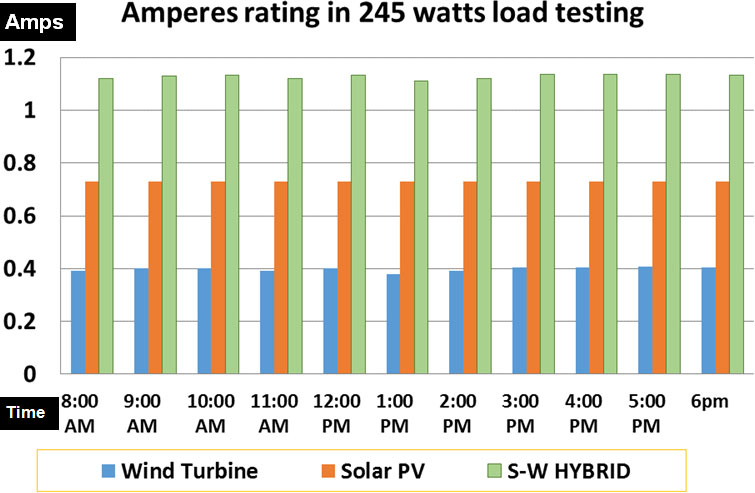
Figure 11 shows the amperes of Wind, Solar, and Hybrid on 245 watts load supplied by 250 watts system, load consists of 110 w television, 25 w laptop, 65 w speaker, and 75 w computer in a total of 245 w load merely a full load of the supply. This tests the probability of outage in a system. The hybrid system amperes is connected in parallel circuit for the power to optimize and with that satisfy the electrical load. Wind turbine became a supporting supply for 12 volts needed by the battery on converting 220 volts step up.
Availability and unavailabity of the hybrid system.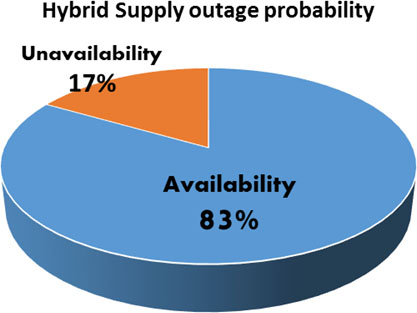
Figure 12 shows the availability and unavailability of the system. The 250 watts supply as for the battery which is the main component of the system has a working hours of 10 hours with 12 hours capacity giving the battery availability of 83%, to produce without outage of supply for the 7 am–7 pm working time, and for Forced Outage Probability ratio to the resting time which is 2 hours on the working capacity of 12 giving us the value 17% of possibility that the supply will run out, but this outcome will be acquired if the actual load more than the satisfying supply. For the Loss of Load probability, we only get 0.01 and for Loss of Load Expectation in year which is 365 days multiplied by the 17% of the Forced Outage Probability which give 61 days per year, thus forever end of 2 months it will be monitored due to the possible outage, but due to the 12 hours resting hours of the whole day process, the battery which is 17% will be negligible outage rate.
Summary of findings
The development of Hybrid solar-wind 250 watts AC/DC power supply for centralized charging station in HEI is essential to the current situation of the area. The researchers main objective is to provide a new source of electricity for which it does not relying on the grid.
This prototype presents an adoptable electrical supply for any circumstance. The system is designed to working in an environment friendly in a good factor at an efficient cost. The system is also adoptable. The researchers calculated power supply per hour has low probability cost of outage. Probability of supply outage occurred in battery is 17%, due to its resting time 12 hours this ratio will be endurable for at working time.
Conclusion
The device can increase the efficiency and reduces the compliance on one single source. This hybrid solar-wind power generating system is suitable for industries and also domestic areas. Thru large load together with the capacity of this hybrid system can be applied to a wider range of supply system, impact to the electrical power consumption will occurs thru time. By integrating the two renewable resources into a maximum combination, the impact of the variable nature of solar panel and wind turbine resources can be halfway resolved and the overall system becomes more effective and practical to run. Power generation using renewable energy sources should be increased in order to decrease the unit cost of generation. The study reflects that there is a strong need to combine more renewable energy sources into the grid of the future. These kind of energy sources, when coupled with optimum distribution of generation, can greatly benefit the grid by offering a variety of electrical services and daily peak load reductions. The future of having an abundant amount of renewable energy will help lessen the great usage of fossil fuels that are limited resources.
Footnotes
Acknowledgments
This research design would not be made possible without the guidance and help from the Almighty God who is the source of grace, strength and everlasting love.
The researchers would like to express their deepest gratitude for the unconditional love and support of their dear parents, who became the primary inspiration and motivators of the researchers in fulfilling this study.
Same expression of thanks is also given to the thesis review panel of this study: Dean Mariciel M. Teogangco, Engr. Brian Joseph Medidas and Engr. Marck P. Vicmudo for imparting their knowledge, suggestions and recommendations which added more improvements in the quality of the study.
Recommendation
As for the recommendation, Adding more motor to have generate voltage and reach the maximum power on the DC motor and for the solar, adding a solar tracker can be done. For monitoring the quality and quantity of power, the researchers recommend to make innovative scaling and digitalize microcontroller can be added for monitoring. The excess voltage at night time while the system is charging the batteries can be used to power up a load of flood lights. The whole electrical power supply for high efficient reading in generation of power. Thru scaling the electricity consumption should be calculated based on the load for consumers and Good site location for efficient wind velocity.