



Abstract
The blocking of tunnel drainage pipe caused by crystals from groundwater calcification is prone to bring about lining cracking and water leakage. In this paper, in order to prevent tunnel drainage pipes from the crystallization, this study proposed a method to prevent the binding of Yin and Yang ions based on the alternating electric field. For the purpose of concluding the crystallization rules of drainage pipes and verifying the feasibility of this method, an indoor orthogonal test was adopted to study the crystallization rules and anti-crystallization efficiency of three drainage pipes under three alternating electric fields at three voltages (6 V, 9 V, 12 V) and at three flows (34.7 ml/s, 76.9 ml/s and 192.0 ml/s). The results showed that: During the test, all the three voltages can reduce the crystallization of drainage pipes, and the anti-crystallization efficiency of all the three tested pipes was optimal at 6 V under each of three alternating electric fields, reaching 22%, 25%, 7%, respectively. Case 2 had the best anti-crystallization effect at 6 V. The reason is that, at 6 V, the crystals had the loosest and minimum grains and the largest interplanar spacing, so they were inclined to be discharged through the pipe under the water flow. At 34.7 ml/s, Case 2 had the best anti-crystallization effect at 12 V; At 76.9 ml/s and 192.0 ml/s, Case 2 had the best anti-crystallization effect at 6 V. The alternating electric field can prevent the tunnel drainage pipe from crystallization and blocking, and different drainage pipes in the alternating electric fields should be selected based on according to the groundwater in tunnel.
Introduction
With the accelerated modernization of transportation infrastructure, expressway, railway and subway have been developed rapidly. The tunnel, as a part of transportation infrastructure plays an important role. The geological conditions for the tunnel construction are complex. In karst areas, the tunnel drainage system is often blocked by calcium carbonate crystals from the calcification of groundwater, because the groundwater is rich and has high hardness. The blocked tunnel drainage system leads to lining cracking and water leakage, seriously threatening the daily operation of the tunnel.
Scholars at home and abroad now have studied calcium carbonate crystals in karst areas, and found that calcium carbonate precipitation is restrained by its influencing factors and vice versa [1]; The content of calcium carbonate in karst water is higher at fast flow than at slow flow, and calcium beach, waterfall and calcium pool dam outside are the places with the most active CaCO
There are already some researches on the influence of alternating electric field on calcium carbonate crystals. This paper focuses on how to apply the alternating electric field to the tunnel drainage system so as prevent the tunnel drainage pipe from being blocked by crystals. Therefore, we selected three alternating electric fields, designed four test devices, and analyzed the crystallization rules of calcium carbonate in groundwater of drainage pipes under three alternating electric fields at three voltages and at three flows, hoping that we can provide the basic data support for technology of preventing the tunnel drainage pipe blocking by crystals.
Material and methods
To study the crystallization rules of drainage pipes under different alternating electric fields, the researchers designed an indoor test device in Fig. 1. This device was composed of two drainage pipes (ordinary PVC pipe and steel-plastic composite pipe) and three voltages (6 V, 9 V, 12 V). Case 1 was “ordinary PVC pipe
Schematic diagrams of indoor test device.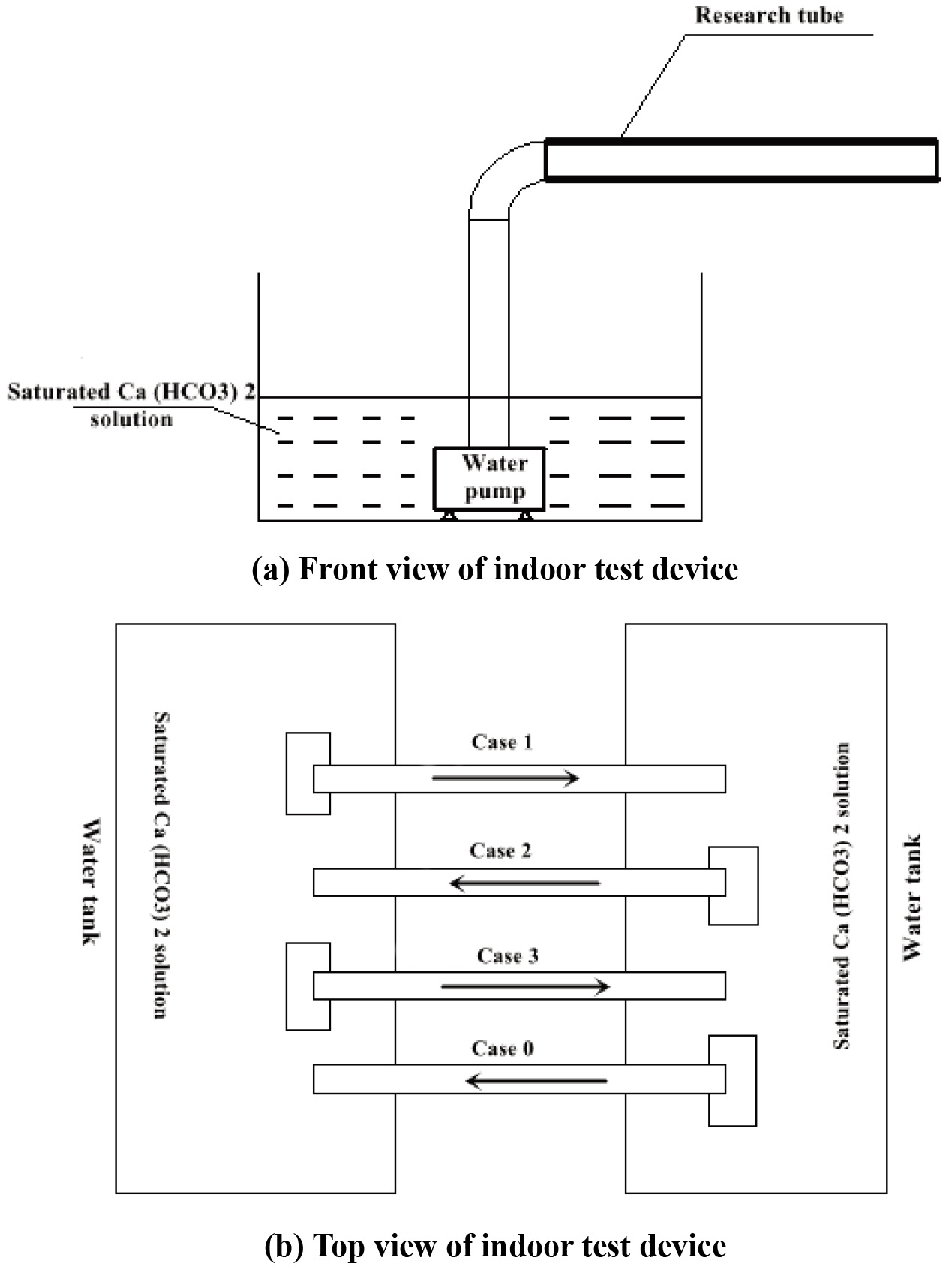
Test pipes under three alternating electric fields.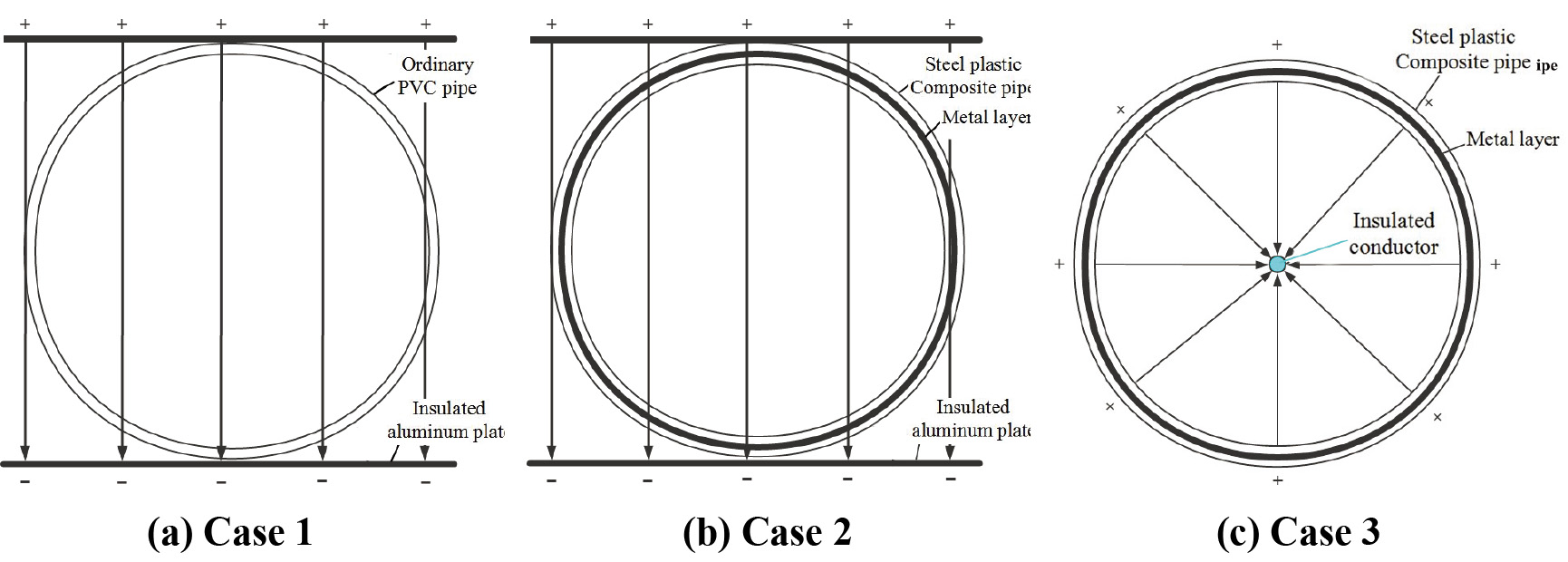
In terms of Case 1 in Fig. 3 and Case 2 in Fig. 4, when the top was positive electrode, calcium ion and other cations in the solution moved downward, while the anions such as bicarbonate moved upward. With the constant changes of positive and negative electrodes on the top and bottom, positive and negative ions in the solution constantly moved upward and downward. The bicarbonate and calcium ions in the pipe collided with each other and produced calcium carbonate. Then, calcium carbonate was immediately discharged from the pipe under the water flow and could be prevented from attaching to the pipe wall. For Case 3 in Fig. 5, when the internal insulated wire was positive electrode and the external insulated wire was negative electrode, the cations such as calcium ion in the solution moved outward, and the anions such as bicarbonate moved inward. The current changed constantly. The bicarbonate and calcium ions in the pipe collided with each other and the produced calcium carbonate was immediately discharged from the pipe under the water flow.
Distribution law of ions in Case 1.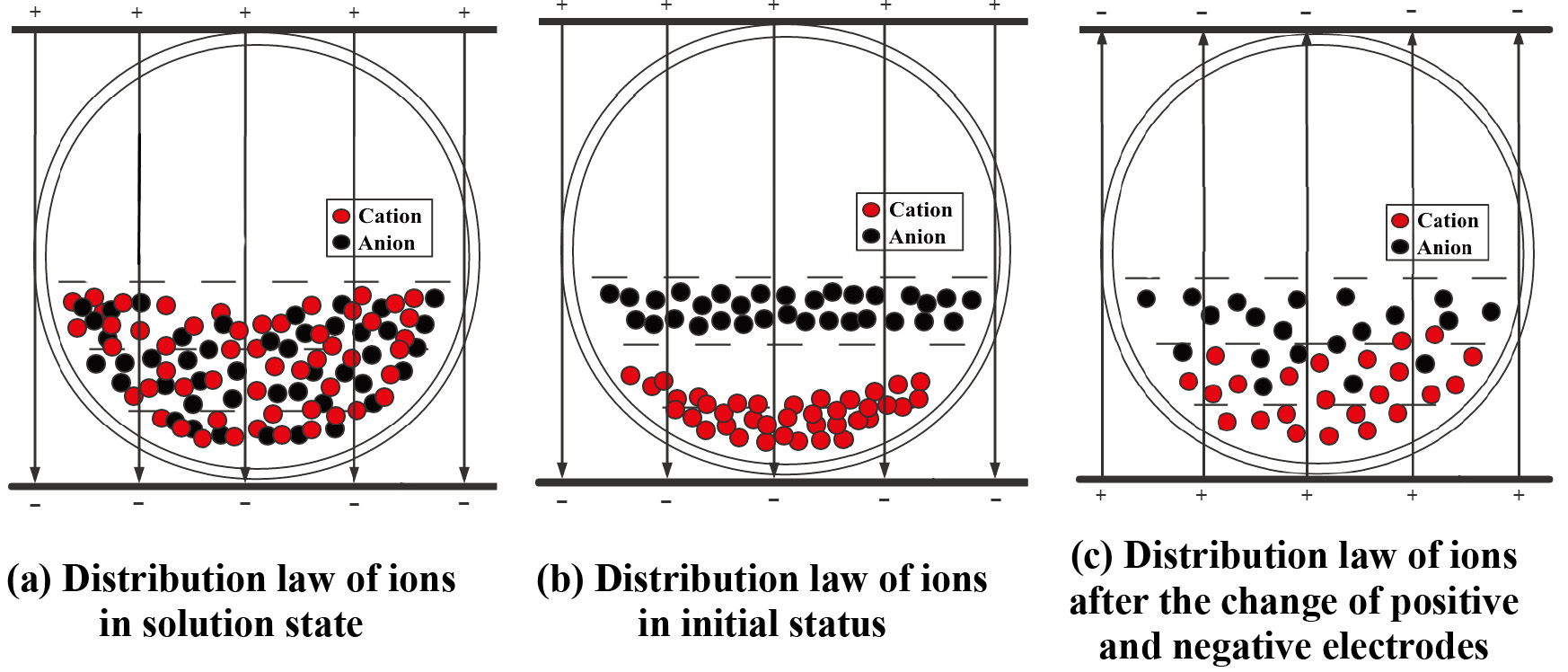
Distribution law of ions in Case 2.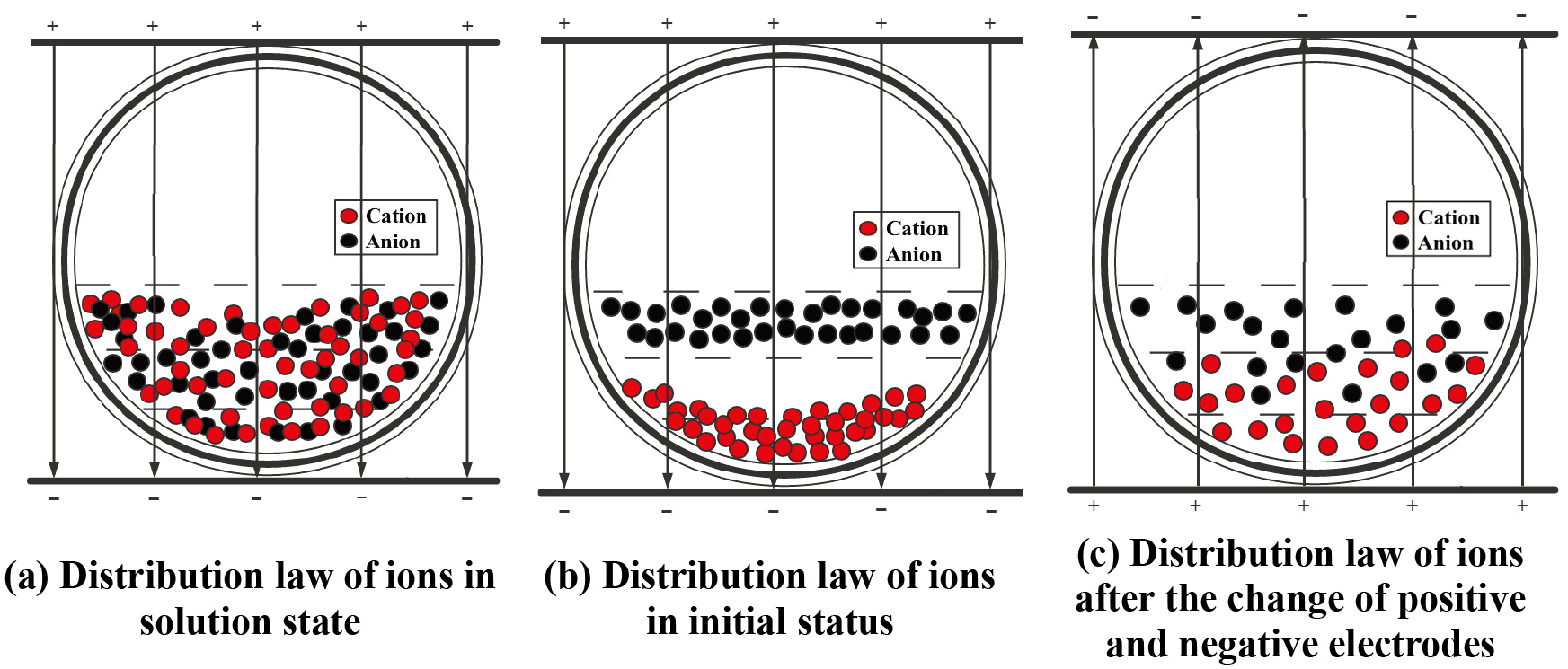
Distribution law of ions in Case 3.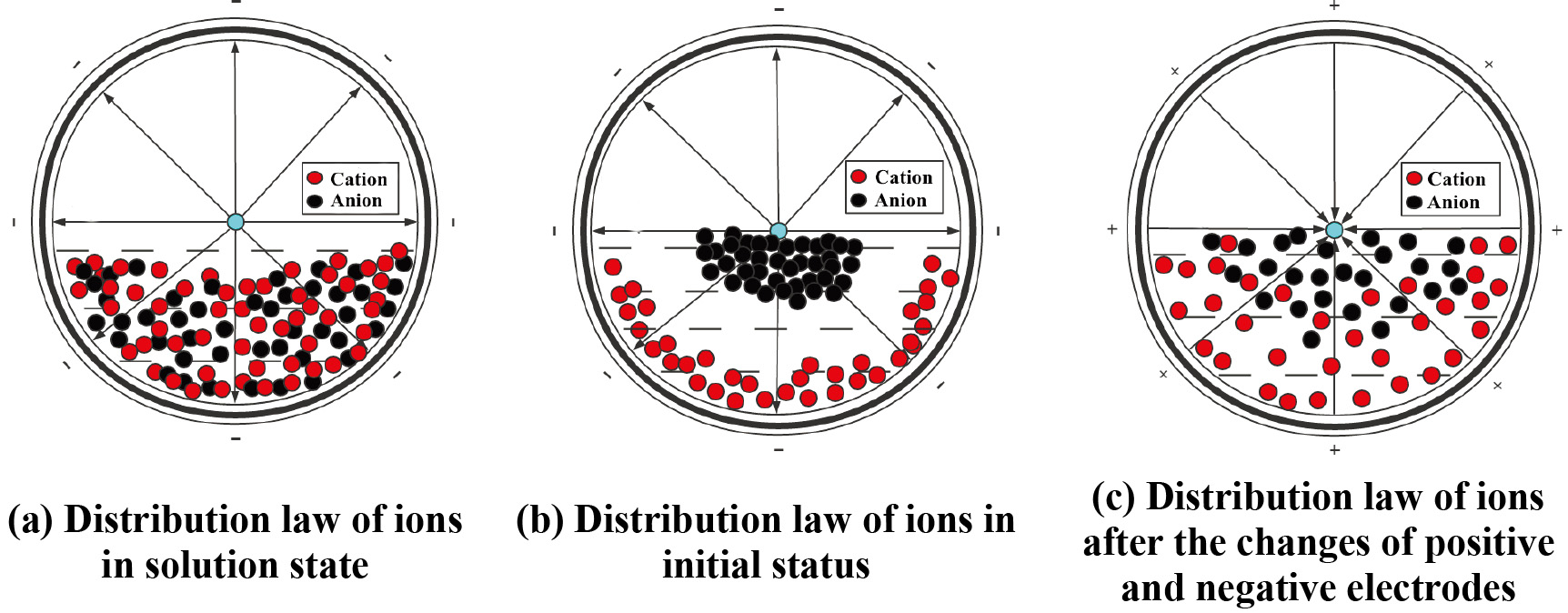
The anti-crystallization efficiency (
Where:
Where:
As shown in Figs 6 and 7, the crystal mass in the three test groups reached the highest on day 7, which was 16.68 g, 11.41 g and 12.48 g, respectively. The maximum difference between the three test groups and the control group was 8.24 g. The crystallization rate of the three test groups was less than 0, which indicated that the early alternating electric field promoted the crystallization. Because the reason was that the positive and negative ions in the water were forced to move in the opposite direction by the alternating electric field, and were more likely to collide and produce calcium carbonate crystals, which then attached to the pipe wall. On days 7–21, the crystal mass of the three test groups was decreasing, with the crystallization rate of less than 0, while that of the control group was rising steadily. With thee continuous action of alternating electric field, the hydrogen bonding between the water molecules was destroyed and the increased diffusion coefficient of water molecules hindered the binding reaction of Ca
Crystal mass at 6 V.
Crystallization rate at 6 V.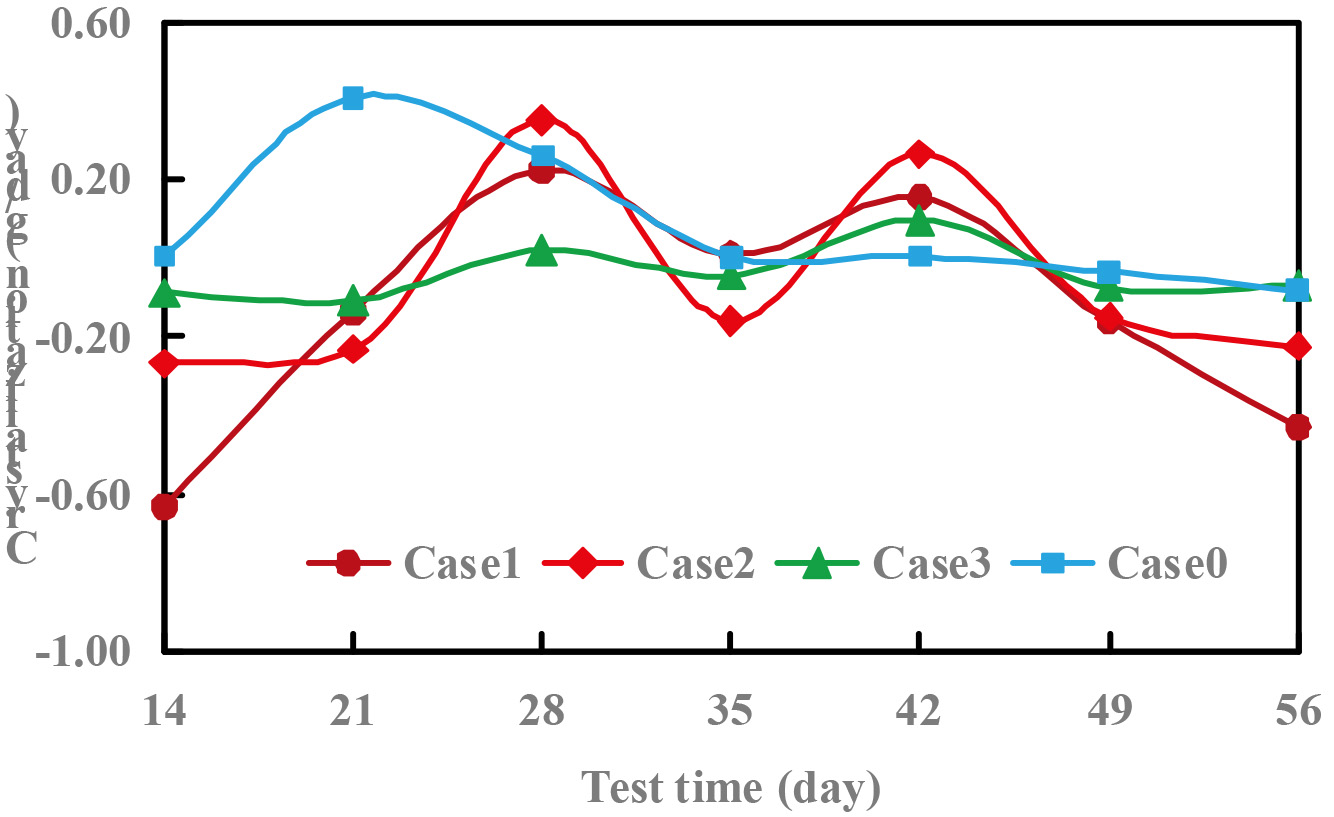
According to Figs 8 and 9, the crystal mass of the three test groups was 23.64 g, 12.51 g and 21.79 g respectively on day 7. The crystal mass of each test group was greater than that of the control group. Also, the crystal mass of Case 2 was much smaller than that of Case 1 and Case 3. During the test, except that the crystal mass (11.53 g) of Case 2 was slightly less than that of the control group (12.17 g) on day 35, the crystal mass of the three test groups was greater than that of the control group on the other days. The crystal mass was greater at 9 V than at 6 V in Fig. 6. The change trajectory in the crystal mass of the three test groups at 9 V and 6 V was roughly identical and anti-crystallization capacity could be enhanced to some extent.
Crystal mass at 9 V.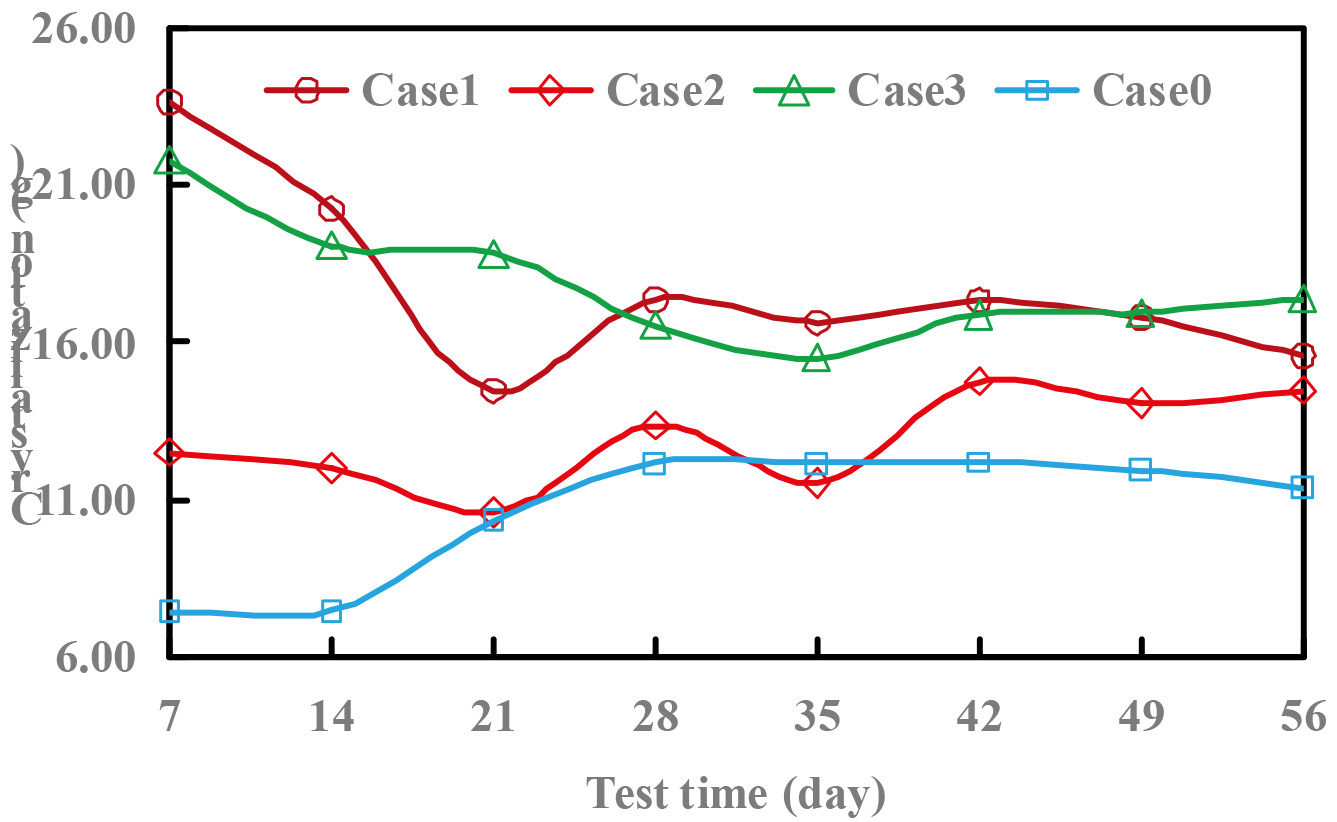
Crystallization rate at 9 V.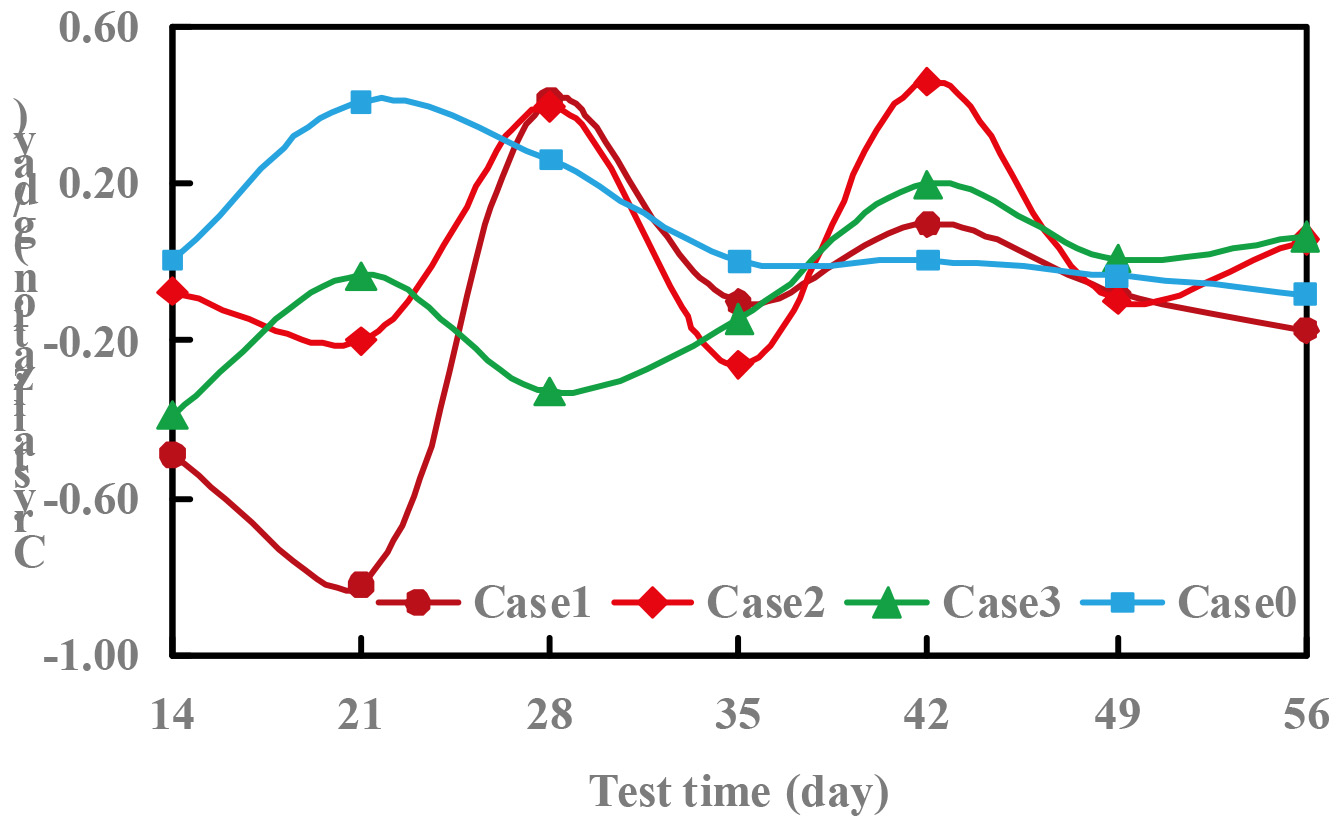
As shown in Figs 10–12, the crystal mass of the three test groups was 10.61 g, 18.89 g and 26.05 g respectively on day 7, and 9.34 g, 10.68 g and 23.64 g respectively on day 56. The crystal mass varied slightly between Case 1 and Case 3 at the beginning and end of the test and the mass difference was about 15 g. It indicated that the crystal was denser at 12 V and was not likely to be discharged from the pipe under the water flow, and the crystal mass was greatly related to the device. The crystal mass of Case 3 was nearly 200% larger than that of the control group on day 56. As the circumferential electric field has poor effect, the device should not be used for anti-crystallization.
Crystal mass at 12 V.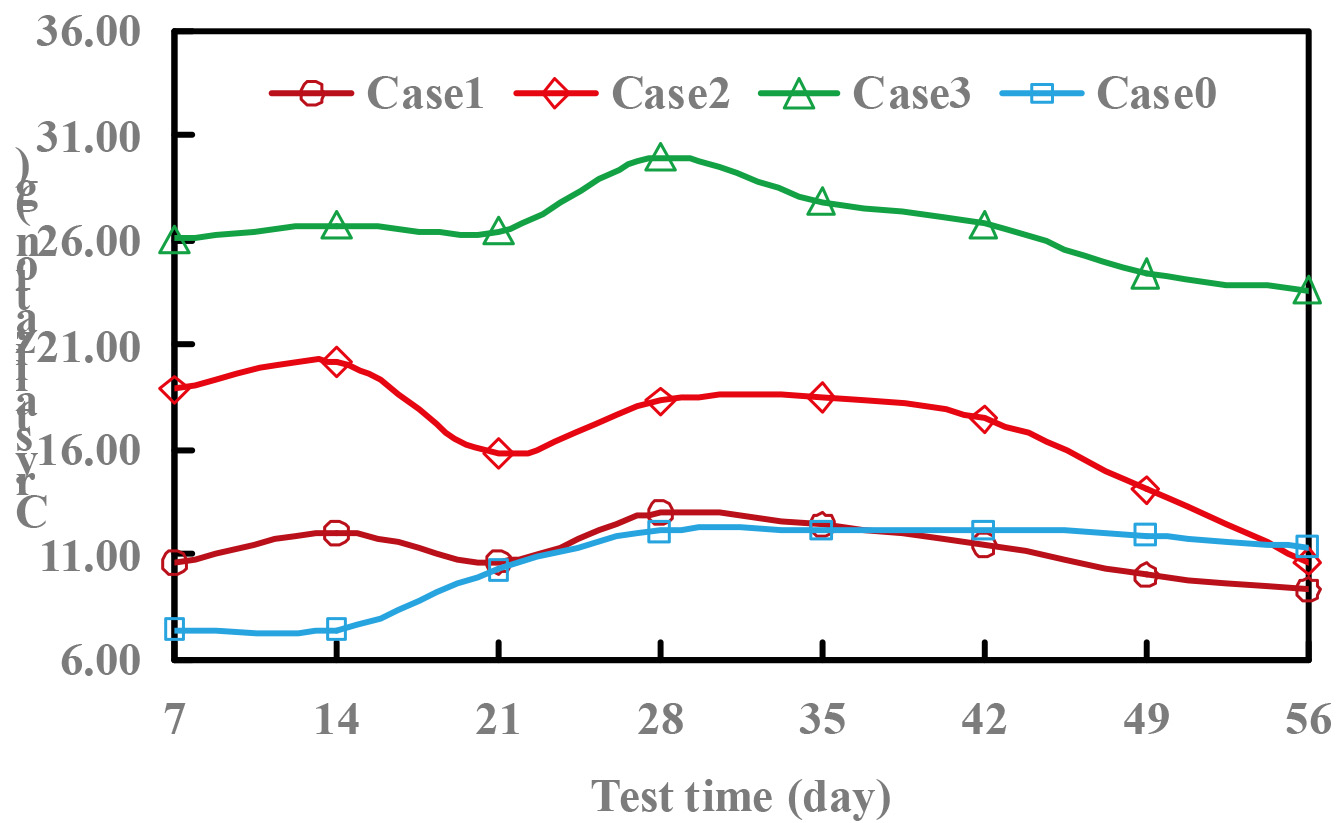
Crystallization rate at 12 V.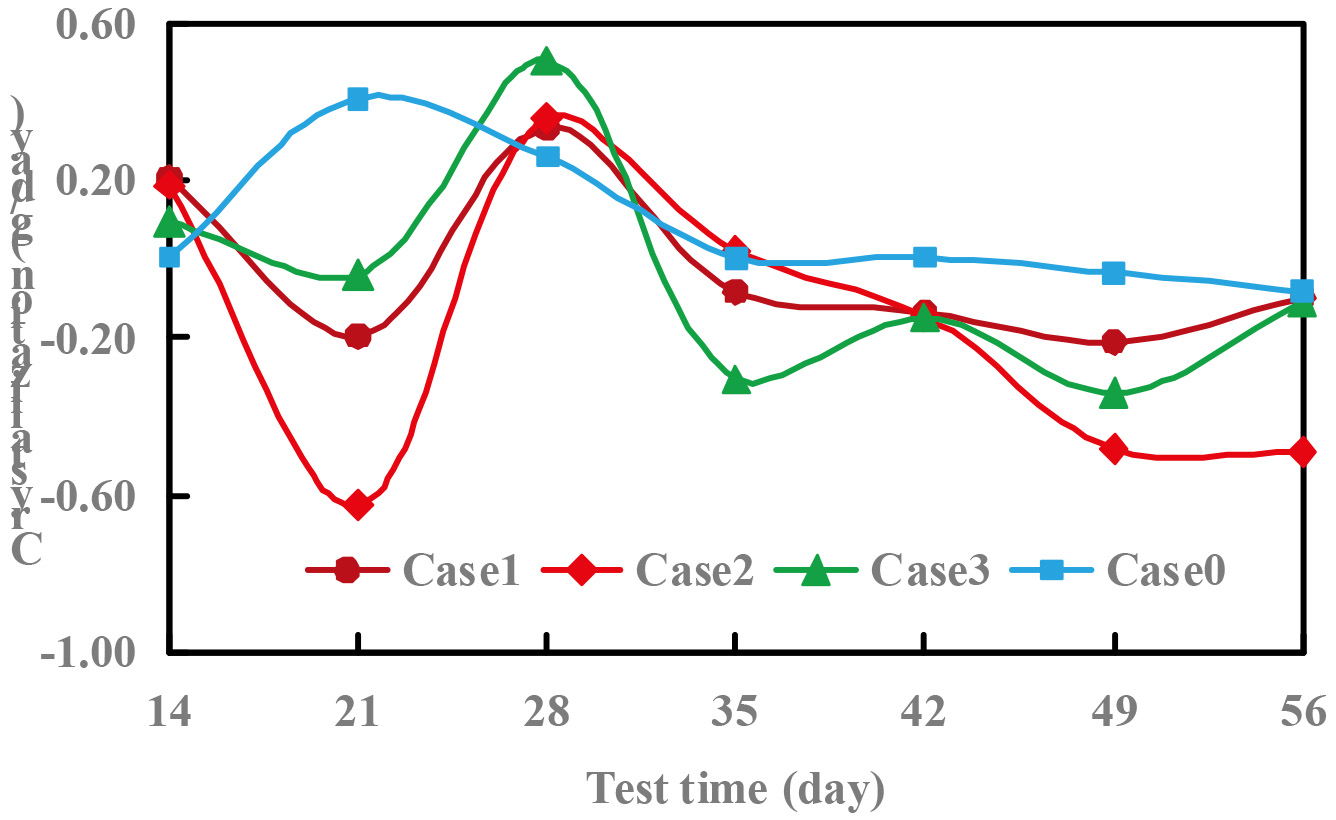
Anti-crystallization efficiency of three drainage pipes under three alternating electric fields.
As is shown in Fig. 13, the anti-crystallization efficiency of Case 2 reached the highest at 6 V, and the scale inhibition rate was 25%. Although the scale inhibition efficiency of three test groups at 9 V was negative, it did not mean that the alternating electric field at 9 V could not help prevent crystallization from happening because it could reduce the crystal mass. It can only be inferred that the total crystal mass in the pipe would increase and the anti-crystallization effect was not good under the alternating electric field.
Scans of crystals under a 5 000 x SEM.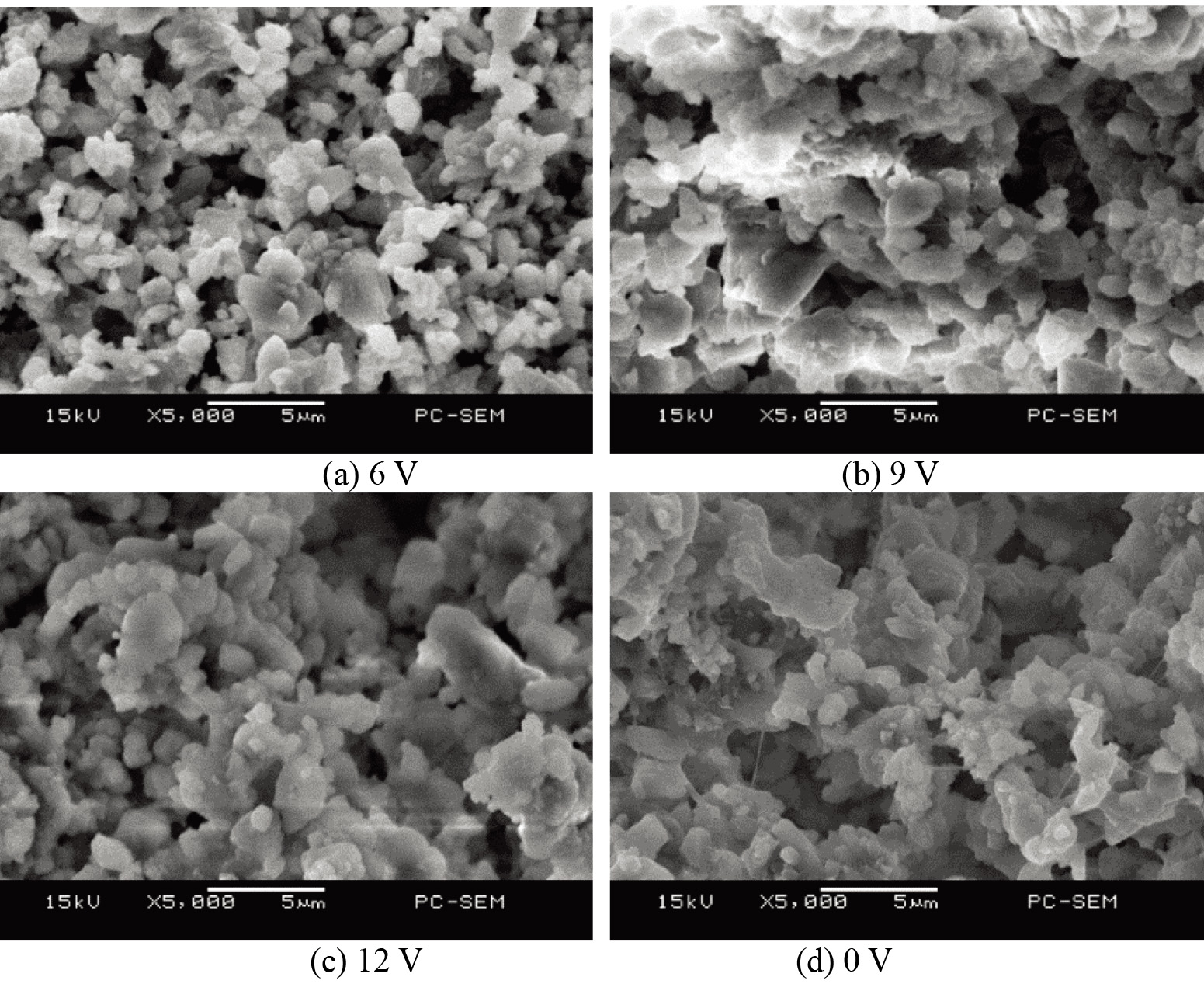
Based on the comparative analysis of test data, Case 2 with the best anti-crystallization effect was compared with the control group. Figure 13 shows the scans of crystals in Case 2 and control group under a 5000 x SEM. Based on the grain size and interplanar spacing of crystals, the crystals had the loosest and minimum grains and the largest interplanar spacing at 6 V. This showed that the crystals attached to the pipe wall were more likely to break and peel off during the test. The crystal grains, which had not been affected by the alternating electric field, were large, tightly bonded, with few gaps between the crystals. The crystal grains at 9 V and 12 V were affected by the alternating electric field, and the treatment effect of crystals at 9 V and 12 V was slightly worse than at 6 V. According to SEM microscopic analysis, the smaller the crystal grain, the smaller the surface energy of crystal surface, the smaller the adsorption energy between the crystal grains, the greater the spacing between the grains, and the larger the gaps. During the aggregation of crystal grains, the crystal grains with high surface energy could be integrated into a whole to reduce the inner energy and surface energy so as to be stable. The electric field can change the cohesive force between the crystal grains and achieve the anti-crystallization effect.
Crystal mass at 6 V.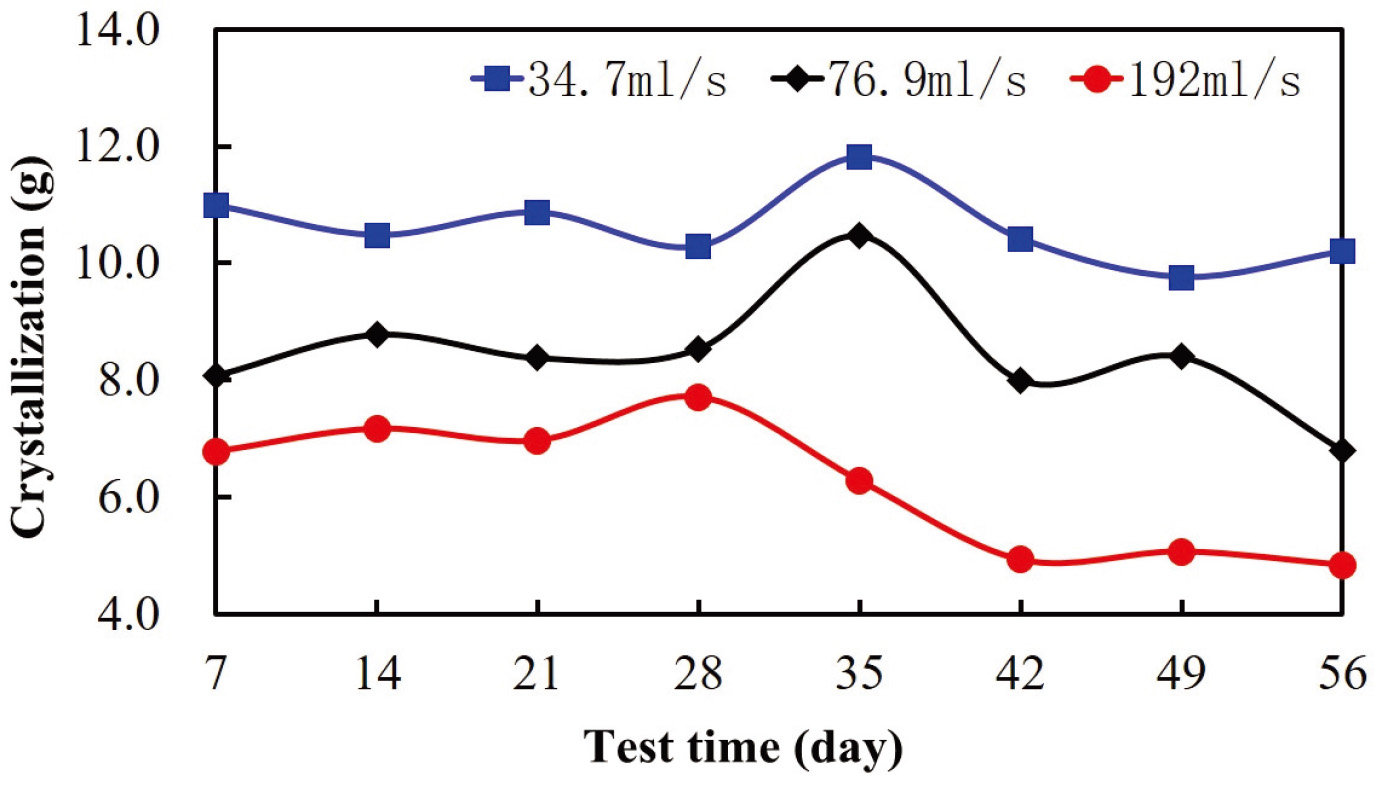
Crystal mass at 9 V.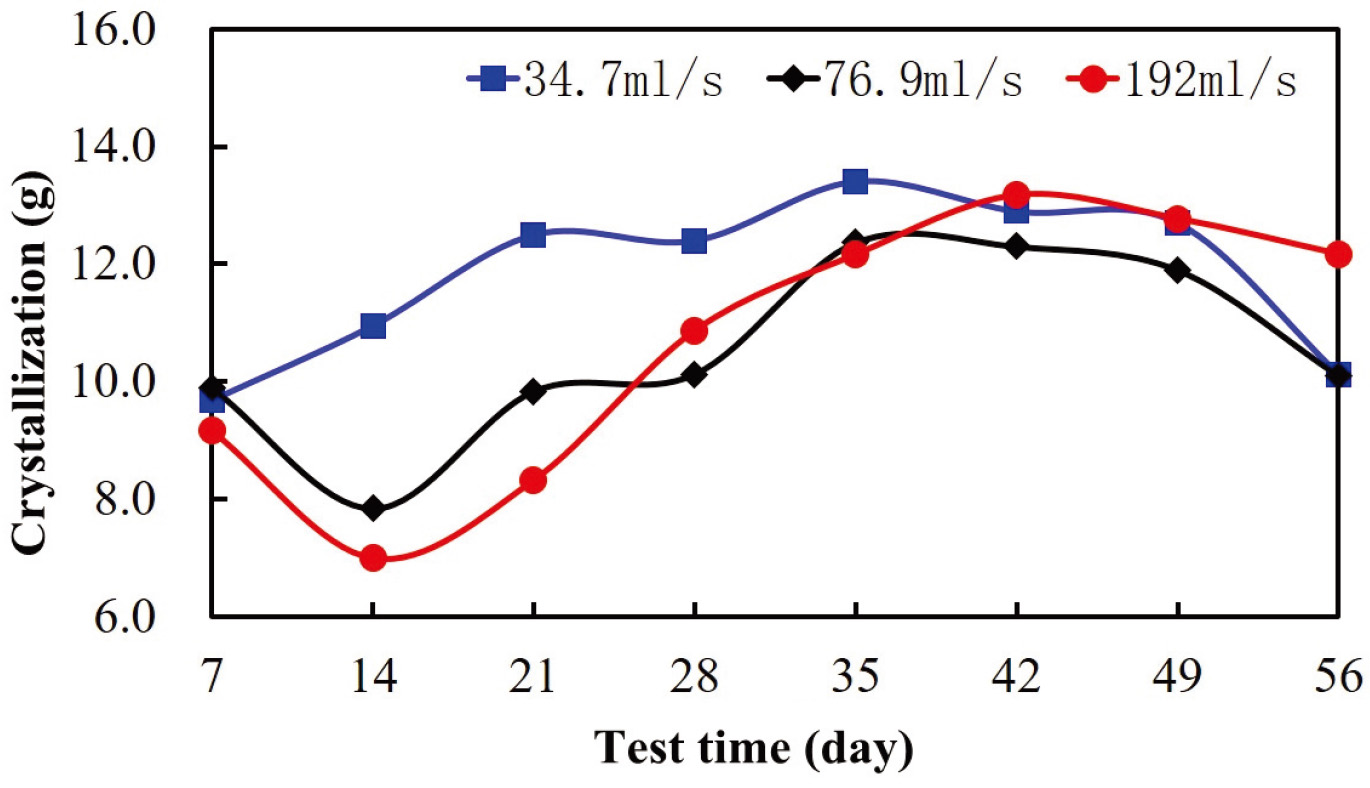
Crystal mass at 12 V.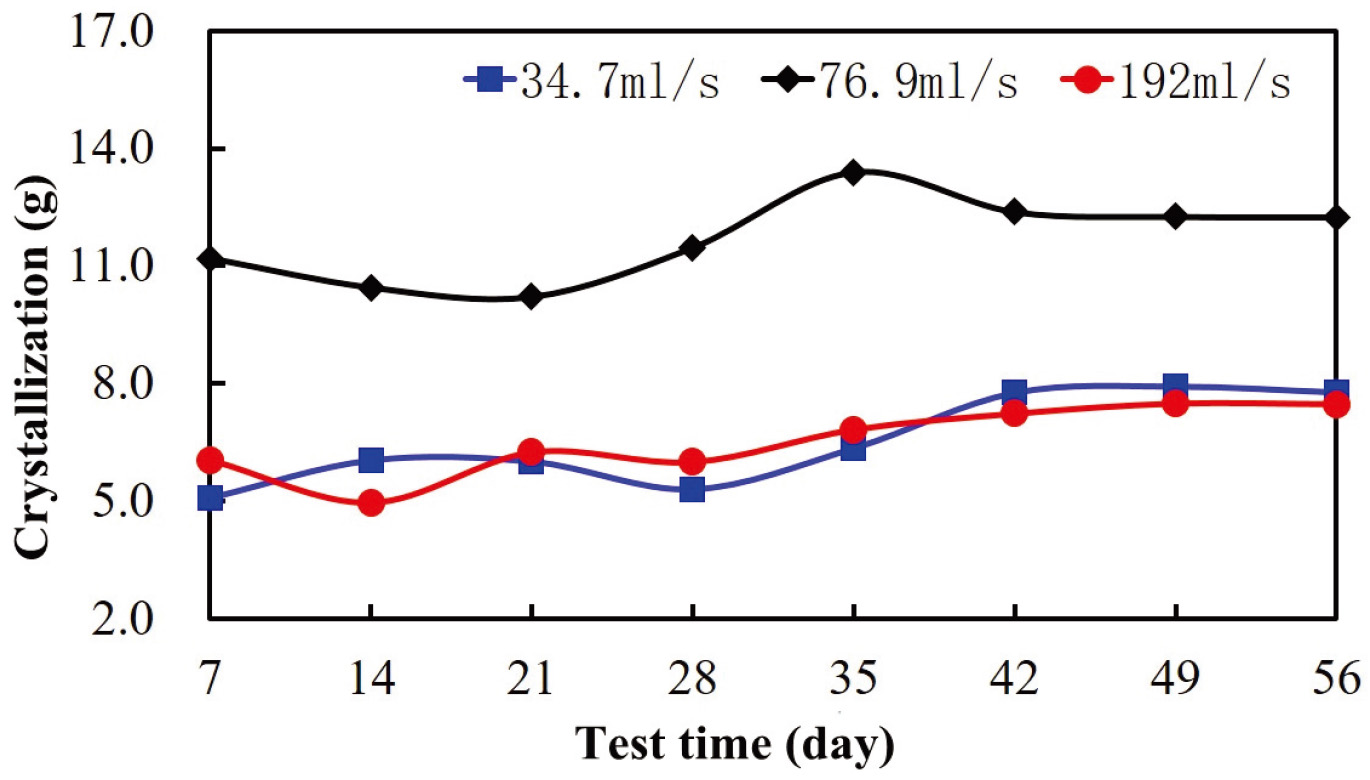
An indoor orthogonal test of Case 2 was performed at 34.7 ml/s, 76.9 ml/s and 192.0 ml/s and 6 V, 9 V, 12 V, respectively to analyze the crystallization rules of drainage pipes under 9 working conditions. Figure 14 shows the crystal mass at 6 V and at three flows. The crystal mass at three flows on day 7 was 10.99 g, 8.08 g and 6.78 g, respectively. The crystal mass during the test had similar change trend and was negatively associated with the flow, suggesting that the crystal mass was greatly affected by the flow at 6 V. The anti-crystallization effect was optimal at 192.0 ml/s and went stable at 5 g after 42 days. Figure 15 illustrates the crystal mass at 9 V at all the three flows. The crystal mass at three flows on day 7 was similar, but gradually was increased at 34.7 ml/s, then to maximum 12.37 g on day 35, and then started to decrease. The crystal mass at 76.9 ml/s and 192.0 ml/s increased first and then decreased, demonstrating an increase trend in fluctuation. On day 56, the maximum crystal mass at 192.0 ml/s reached 12.17 g, an increase of 7.69 g than at 6 V. This showed that high flow promoted the generation of crystals under a high electric field, and large amounts of positive and negative ions in the water flow collided and produced more calcium carbonate crystals attached to the pipe wall. Figure 16 is the crystal mass at 12 V and at three flows. The crystal mass at three flows on day 7 reached 5.08 g, 11.20 g and 6.05 g, respectively. During the test, the crystal masses at 34.7 ml/s and 192.0 ml/s did not vary greatly and had similar change rules, far less than that at 76 ml/s. The crystal mass at three flows on day 56 was greater than that on day 7, which proved that the anti-crystallization effect at 34.7 ml/s and 192.0 ml/s performed much better than that at 76 ml/s. Thus, under the electric field, the flow in the tunnel drainage pipes could greatly affect the crystal mass. Different flows needed different voltages. For example, at 34.7 ml/s, the anti-crystallization effect was optimal at 12 V; At 76.9 ml/s and 192.0 ml/s, the anti-crystallization effect reached the best at 6 V.
In this paper, the crystallization rules and anti-crystallization efficiency of three drainage pipes under three alternating electric fields were studied based on an indoor orthogonal test, and the drainage pipe with the highest anti-crystallization efficiency was selected for studying the crystallization rules at three flows and at three alternating electric field intensities. The following conclusions were drawn:
The anti-crystallization efficiency of all the three test drainage pipes was optimal at 6 V under three alternating electric fields, and Case 2 had the highest anti-crystallization efficiency at 6 V, namely, 25%. Both the grain size and adhesion form of crystals treated by the alternating electric field changed. At 6 V, the crystals had the loosest and minimum grains and the largest interplanar spacing, so they were inclined to be discharged from the pipe by the water flow. At 34.7 ml/s, Case 2 had the best anti-crystallization effect at 12 V; At 76.9 ml/s and 192.0 ml/s, Case 2 had the highest anti-crystallization effect at 6 V.