



Abstract
In order to solve the problem of low efficiency in the form design of medical device products and the inability to meet the needs of users, the research took the gastrointestinal machine of medical device as the research object, extracted the form design genes and semantic genes of medical device products, and constructed the form optimization design model of medical device products based on IGA algorithm. The research took the researcher and user data of the medical device design department as the main data, through crossover, mutation. The satisfactory solution is obtained by genetic process such as selection. Satisfactory solutions were obtained through genetic processes such as crossover, mutation and selection. The 12th generation project with the code of 000011 010001 100000 met the optimal solution, and the consensus satisfaction was 0.829. The research and design model can efficiently and automatically provide solutions for the design optimization of medical devices. It is recommended that the design department send out the best solution of the model, and optimize the solution in more detail again to improve the efficiency and accuracy of function realization.
Introduction
With the deepening of reform and opening up as well as the acceleration of globalization, China’s medical device industry has achieved rapid development. The upgrading of medical devices is a process in which the product design of medical devices constantly meets the market demand. The growth of medical devices shows the great development changes of China’s medical devices market. Medical device products are gradually developing towards intelligent, scientific and technical direction. The continuous improvement of market demand requires that medical device products should have the characteristics of strong function, high work efficiency, and meet the aesthetic needs of consumers. These requirements not only require the development of new technical means to support the innovation of medical device products, but also pose challenges to the shape design of products [1]. In recent years, many researches have applied machine learning methods such as genetic algorithm and BP neural network to product design. Genetic algorithm is an algorithm that can search for the optimal solution by simulating natural evolution process. Interactive Genetic Algorithm (IGA) is a kind of human-computer interactive evolutionary optimization algorithm, which makes human and computer interactive to achieve the intervention and guidance of the evolutionary process according to the needs. Compared with the traditional genetic algorithm, IGA algorithm can solve the problem of stealth performance index optimization. Human participation in the algorithm makes the genetic algorithm not rely on fitness function, and greatly expands the application field of the genetic algorithm [2, 3]. In this study, the morphological genes of medical device products are extracted. The corresponding relationship between morphological design genes and semantic genes is analyzed. And the medical device product morphological optimization design model based on IGA algorithm is constructed. The medical device morphological design scheme is taken as the initial population of IGA algorithm. And the morphological design meeting the requirements is obtained through the genetic process of crossover, variation and selection.
Related works
In recent years, researches in the field of medical device product design have gradually enriched. von Behr et al. [4] conducted analysis based on the manufacturing process of the medical device design and manufacturing complex. The research combined qualitative and quantitative analysis methods. The qualitative analysis method mainly adopted the form of designer interviews, and the quantitative analysis method mainly adopted the method of data triangulation analysis form. The research results showed that decision-making by employees with professional knowledge of medical device design could improve the enthusiasm of the design team, thereby improving the effect of medical device design. At the same time, cross-departmental joint design in the design process was more conducive to the improvement of product design effect. Bader et al. [5] analyzed the phenomenon of pressure ulcers in patients caused by poor medical device design. The analysis results showed that the rigid polymer design used in medical devices was likely to impact the soft tissue of patients, thereby causing pressure ulcers. To cope with this phenomenon, a design strategy that was more in line with the laws of human bioengineering should be selected in medical device product design. And preventive functions such as device skin measurement should be added to the device design to reduce the possibility of pressure ulcers in patients. Li et al. [6] designed a human-computer interactive intelligent medical device based on the eye movement of medical staff. The research results showed that the use of this device was more convenient for doctors to control their behavior in medical treatment. Spitzenberger et al. [7] discussed the regulatory requirements in the process of medical device design and development testing. At present, there were gaps in the safety regulatory requirements between different medical testing laboratories, and the lack of such regulatory differences might lead to medical devices. Safety issues arose in the process of design and testing, which in turn affected the health of patients. According to the conventional design and development process of medical devices, a more complete regulatory system had been designed. The research results showed that this system was effective for innovative and individualized medical treatment. The device design laboratory had significant regulatory influence, which could improve the design quality of medical devices and ensure the health of patients. Ashyap et al. [8] proposed a compact wearable symmetric antenna that could be adapted to a medical network environment and could be printed on highly flexible fabrics. This method achieved compact structures with high bandwidth through the structural design of electromagnetic band gaps and symmetric antennas. The research results showed that this wearable medical device could achieve a measurement impedance bandwidth of 32.08%, which was practical.
At the same time, as a variant of genetic algorithm, IGA algorithm had been deeply applied in different fields. Dou et al. [9] applied the IGA algorithm to industrial design, and proposed an industrial product customization method that combined the Kano model and the IGA algorithm. According to the customer’s personal preference and design participation, this method could form a product design scheme with customer needs and sort the different programs for customer satisfaction. The research results showed that this method could significantly improve the design efficiency of industrial products and relieve the fatigue of customers in finding suitable design solutions. Some researchers applied the IGA algorithm to the Landscape Photo Extraction Simulation Technology Center. 30 photos with typical characteristics were selected as analysis samples. The IGA algorithm was used for initialization and genetic operations. And the operation was ended according to the maximum evolutionary algebra or customer requirements. The research results showed that this method could significantly improve the efficiency and quality of landscape extraction. In order to solve the lack of practicability of traditional landscape models in simulating complex scenes, some researchers designed a landscape model based on the IGA algorithm. The model adopted a fitness commonality strategy to prevent premature population convergence, ensure population diversity. At the same time, the proportional selection, the corresponding crossover and mutation operations were selected to design interactive genetic operators. And the characteristics of the mid-point displacement medium-sized landscape model was made full use of to improve the model performance. The research results showed that the method could simulate the real scene in complex environment with high accuracy and had high practicability. Mohammadi et al. [10]designed a control model for driving simulation based on interactive genetic algorithm, which could reduce the burden of user weight bar and improve the satisfaction of decision makers. Cong et al. [11] proposed a multimodal IGA algorithm for information retrieval weight query. This method used two strategies of quantity control and quality optimization to optimize the query weight in the information retrieval process. At the same time, this method could form a user-friendly retrieval method. Sequence, instead of the user for fitness evaluation. The research results showed that this method could effectively improve the accuracy and efficiency of information retrieval.
At present, scholars at home and abroad had made many researches on the shape design methods of medical products, but few of them involved the computer-aided design method of the extracted and transformed shape element genes. In recent years, many researches had applied machine learning methods such as genetic algorithm and BP neural network to product design. Genetic algorithm could search the optimal solution quickly by simulating the natural evolution process. IGA algorithm enabled human and computer interaction to realize the intervention and guidance of the evolution process. And human participation made genetic algorithm not dependent on fitness function, and greatly broadened the application field of genetic algorithm, making it easier to obtain the design scheme with high consensus, good evolution results and in line with the user’s preference. The main purpose of this study is to provide efficient automatic computer design model for medical device products. Through the applied optimization design of IGA algorithm, and its application in the field of medical device product design, the shape optimization design of medical device products is carried out according to the demand factors and psychological reactions of the author and patients. So it can meet the needs of users more appropriately. Literature comparison is shown in Table 1.
Literature comparison
Literature comparison
Morphological analysis and gene extraction of medical device products
Based on interactive genetic algorithm, the shape design model of medical device products can provide more efficient solutions for relevant design departments. And this model can more easily meet the functional needs of users. In the actual design, determining the real needs of users is actually a time-consuming process. Once it deviates from user needs, the designed products will lack their own meaning. Therefore, the research and design model can provide the design department with an efficient and accurate primary design scheme that meets the needs of customers at this step. And the design department can improve the scheme on this basis. This design method is more efficient than other methods. At the same time, the demand hit is more accurate, which can improve the overall efficiency and quality of device design. The research divides the optimization design process into two main processes when carrying out the optimal design of medical device product form. One is to carry out targeted product form analysis and gene acquisition according to the type of medical device product. The other is to construct an IGA algorithm model, and the shape optimization design is carried out. In the morphological analysis part, the research mainly focuses on the semantic genes and morphological genes of medical devices. Product gene refers to a single element that is combined to form a product form, and is related or arranged in a certain form. To analyze the genes of medical device products, it is necessary to start from the shape of the medical device products. The morphological elements of medical device products can be divided into four main types: linear elements, material elements, color elements, and functional elements. Linear elements are mainly manifested in the contour lines of medical device products. Product lines often appear in two forms: streamlined lines and rounded lines. Material elements are mainly expressed in the texture and texture of materials. The visual effects of the product are included in the category of the elements. The color elements are mainly expressed by the main external color of the product, including the hue, brightness, purity and color matching of the product. The functional elements mainly refer to the user experience when using the product element, which includes both the doctor’s operational senses and the patient’s sense of use in the course of treatment. Based on these four main morphological elements, the morphological features of medical device products can be expressed in the form of morphological semantics. The morphological and semantic classification is shown in Fig. 1.
Morphological semantic classification.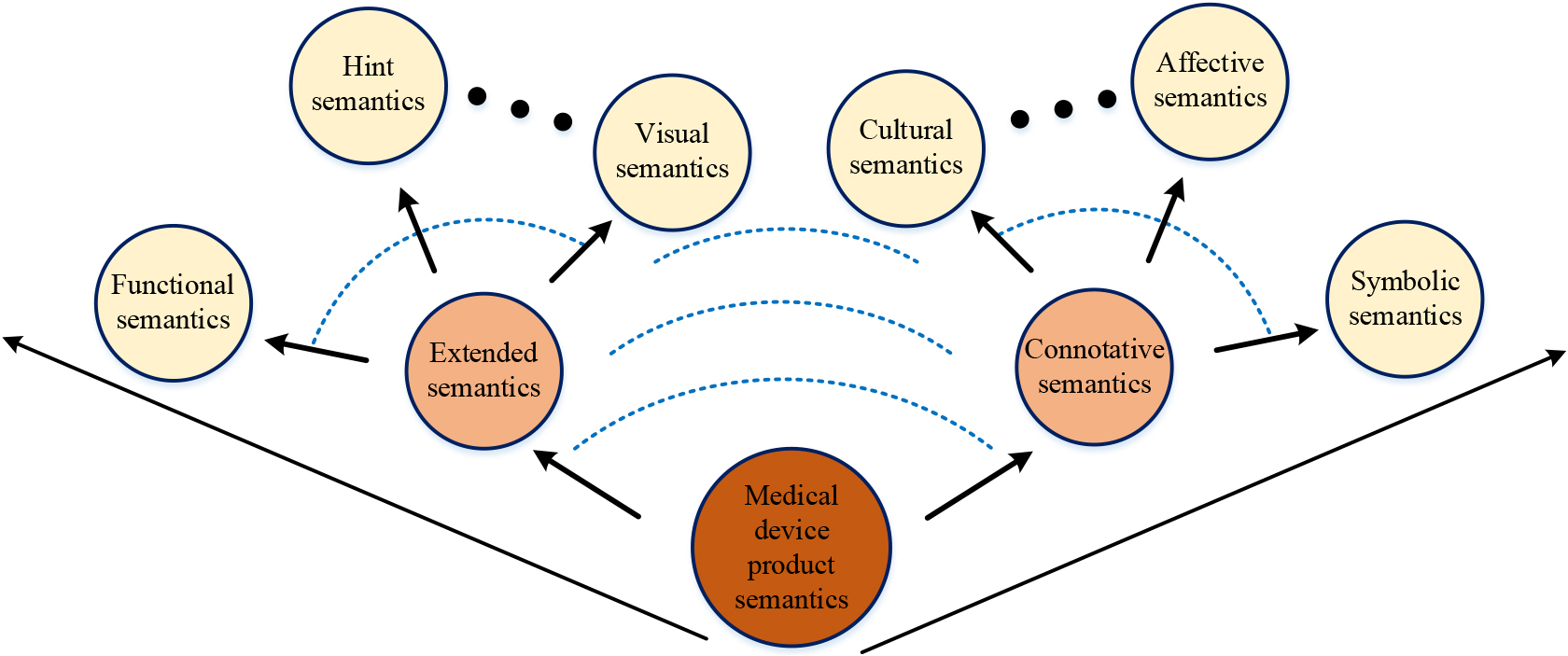
It can be seen that morphological semantics can be mainly classified into two main categories: extended semantics and connotative semantics. The extended semantics mainly include functional semantics, prompt semantics, visual semantics, etc. Functional semantics are used to describe the medical effects formed by product functions. Prompt semantics are used to help users familiarize themselves with product usage and usage in a short period of time when displaying products. Visual semantics are used to express the direct response that users have when they see the shape of the product, visual experience. Connotative semantics mainly include cultural semantics, emotional semantics, and symbolic semantics. These three semantics mainly express the cultural feelings, emotional experiences and psychological symbolic intentions experienced by users in the process of using the product. For different types of semantics, the research mainly uses the semantic difference method to distinguish the morphological and semantic genes of medical devices. The semantic difference method statistically evaluates the psychological impressions of the subjects induced by semantic expressions, and marks and distinguishes them in the form of two-dimensional adjectives. The research uses this method to distinguish the morphological genes of medical devices. And on this basis, the samples with similarities are clustered by cluster analysis. And the representative samples are screened out from the clustering results. So the final product plan sample can be obtained. The flow of the clustering algorithm is shown in Fig. 2.
The study selects gastrointestinal machine as the main object of the study, and collects the main equipment forms of gastrointestinal machine through interviews and web pages in the sample selection stage. So it can make the initial sample library cover most of the gastrointestinal machine forms on the market. After removing the samples with unclear images and similar shapes, the study sorts out 30 original sample libraries with different gastrointestinal machine shapes. Then, a stylistic adjective database is established according to the semantics of medical devices. Different device samples are linked with the adjective database. 20 subjects including patients, doctors, and gastrointestinal machine designers are selected for investigation, and they are selected from the adjective database. Five adjectives that best represent the gastrointestinal machine samples were selected, and the adjectives with high frequency among them are used as the main style adjectives. The final adjective database obtained is shown in Table 2.
Medical device adjective library
Clustering algorithm flow.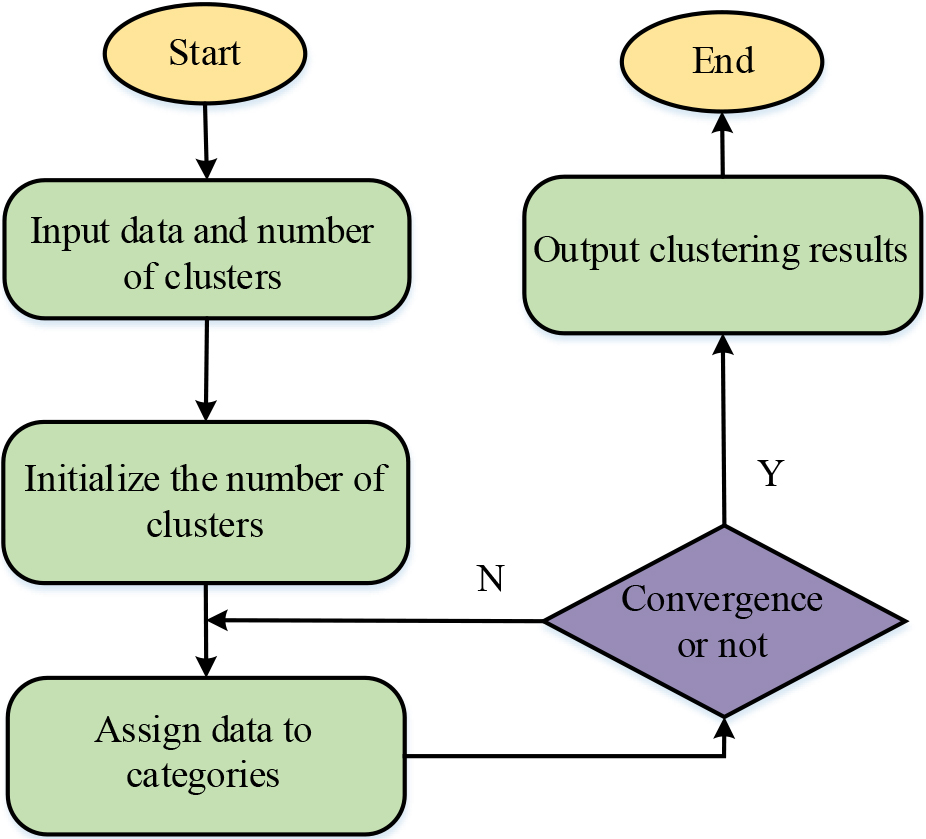
When extracting samples, the study uses the form of similarity score to make subjects compare and score the gastrointestinal machine samples in pairs. The score is based on the five-point system. The higher the score, the stronger the similarity. The similarity matrix of
Morphological gene element is represented by
Matrix form classification X 1, X 2.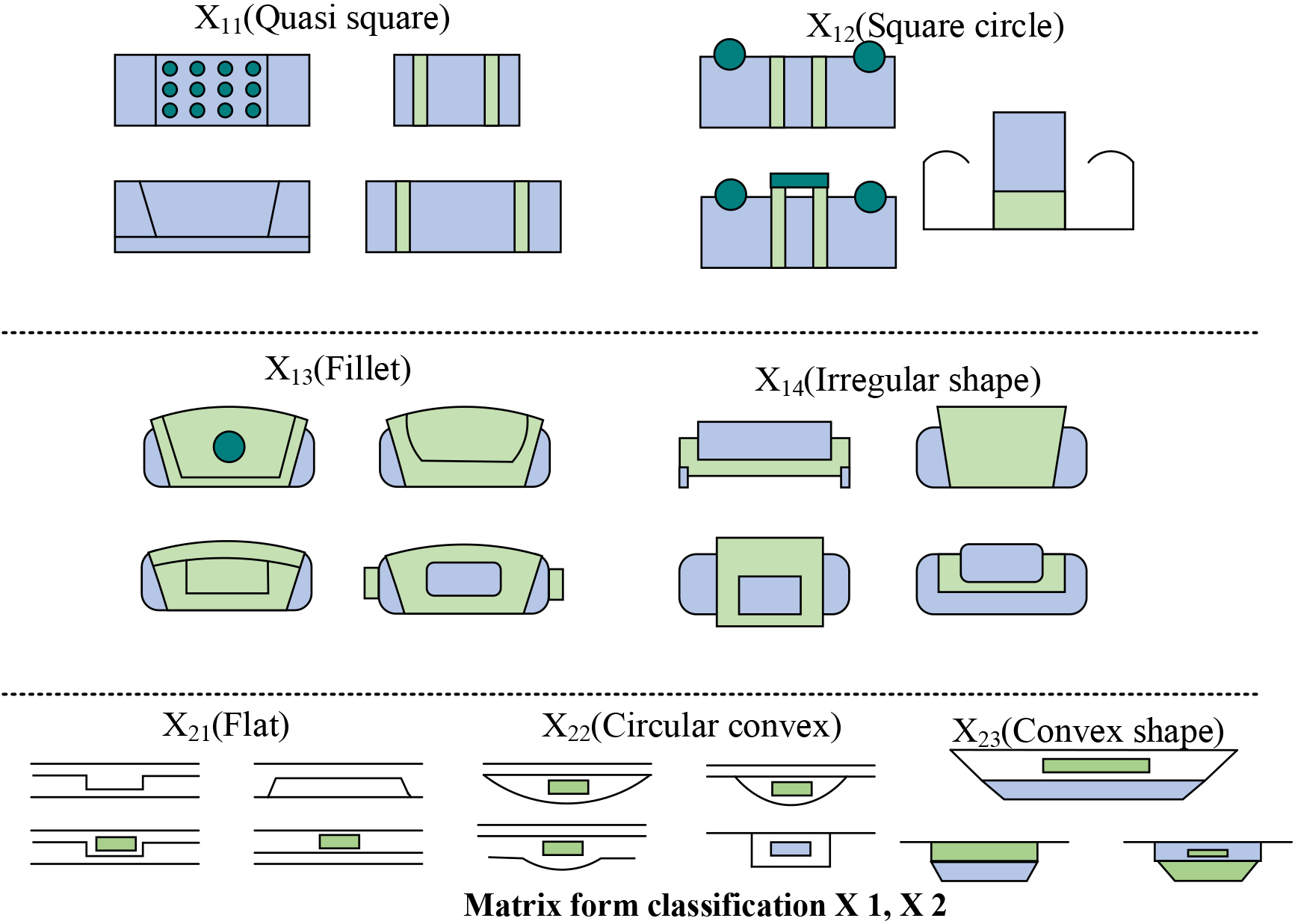
Figure 3 shows the morphological design gene classification of the tube and the machine part of the gastrointestinal machine. It can be seen that the shape of the tube includes four types: quasi-square, square-circle, rounded and irregular. The shape of the machine tool includes three types: flat, round and convex. The matrix shape classification of the fuselage is shown in Fig. 4.
Matrix form classification X 3.
Figure 4 shows the classification of the shape design genes of the fuselage part. It can be seen that the shape of the fuselage includes four types: rounded, semicircular, irregular and polygonal.
It is assumed that the morphological design gene is a qualitative variable
In Eq. (2), when the qualitative data of the
Mathematical model is established according to the relationship between the semantic genes
In Eq. (4),
The partial derivative of
In Eq. (6),
Equation (8) can be obtained from the least squares estimate
According to the corresponding relationship between semantic genes and morphological design genes, the model is further assumed as Eq. (9).
In Eq. (9),
In Eq. (10),
In Eq. (11),
The accuracy of the model is reflected by the coefficient of determination
The partial correlation coefficient between the semantic gene evaluation value
That is, the contribution of the
Chromosome coding construction of gastrointestinal machinery.
The degree and direction of the evolution of the population mostly depends on the fitness function. Usually, the method of statistical scoring is used to quantify the fuzzy concepts such as “satisfaction” and “consensus” in the evaluation results. The value of the statistical scoring result is higher, the genetic results can better meet the design requirements. According to the scoring rules, the optimization scheme is quantitatively evaluated by using the score as the criterion for judging the scheme. The research adopts the scoring method as the evaluation standard of the fitness function model. The total satisfaction score is obtained by adding the evaluation standard scores of all the evaluators to the scheme. If there are
The influence of the morphological design genes of the gastrointestinal machine in medical devices mainly comes from the tube, bed and body. And the influence of the morphological and semantic genes of the gastrointestinal machine mainly comes from warm – cold, precise – error, interactive – Unidirectional, streamlined – geometric, rounded – tough. If the manufacturer wants to produce an accurate and streamlined gastrointestinal machine, it needs base on the analysis of the morphological design gene and semantic gene of the gastrointestinal machine. It can be seen that the rounded tube (
Design scheme of 4 types of gastrointestinal machinery.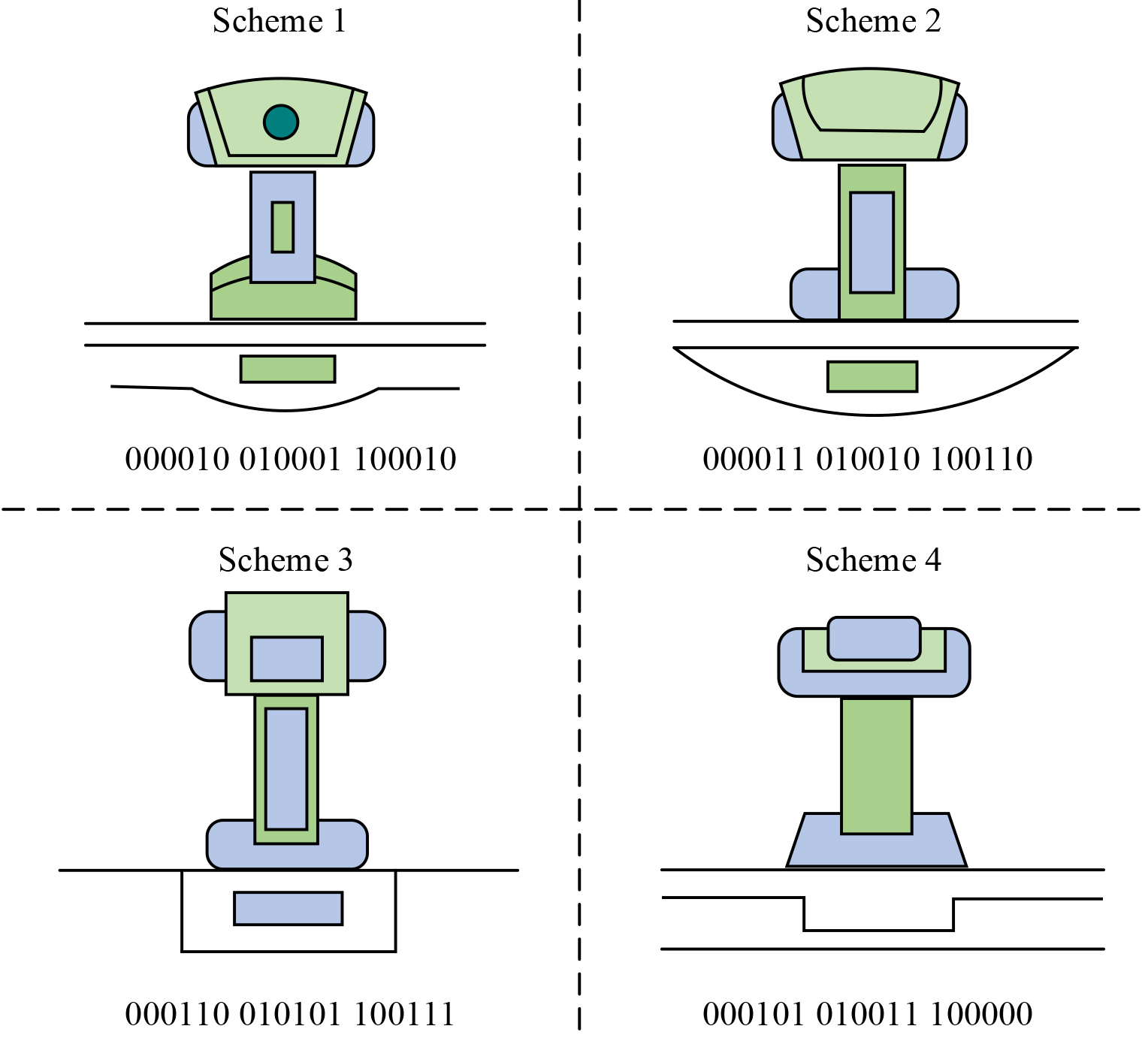
The codes of the form design scheme in Fig. 6 are composed of three groups of six-digit codes, with the first two digits representing the part number and the last four digits representing the feature number. Three sets of six-digit codes represent the shape design of the tube, bed and body of the gastrointestinal machine. The study invites a total of 10 researchers and users from a mechanical design department as raters. So it can rate the gastrointestinal machine morphological design, collect and count the user’s scoring results, and calculate the consensus and satisfaction according to the statistical scores to determine the fitness. function evaluation value. Discrete recombination is selected as the crossover method of the genetic initial population. The size of the genetic initial population is set to 4. The crossover probability of the discrete recombination is set to 0.6. The mutation probability of the genetic initial population is set to 0.15. The adaptation in each generation of genetic operations is retained in the genetic process. The individual with the largest value is used as the parent of the next generation genetic operation. To prevent evaluation score errors due to fatigue, the algorithm will terminate the genetic operation when the evolutionary generation reaches 15. If there is still no satisfactory solution after the evolutionary algebra reaches 15 in the genetic operation, the scorer is replaced with a large gap between the scores of most other scorers, and the appropriate scorer is re-selected for scoring. And the scoring result is calculated to obtain a consensus satisfaction. until the optimal solution is obtained. The evaluator scores the selected 4 initial samples, and calculates the consensus degree, user satisfaction, and consensus satisfaction of each gastrointestinal machine morphological design scheme. The
Consensus degree, user satisfaction degree and consensus satisfaction degree of gastrointestinal machine shape design scheme.
It can be seen from Fig. 7 that the consensus, satisfaction, and fitness values of the scheme coded as 000011 010010 100110 are all high. So the gastrointestinal machine morphological design scheme is reserved as the parent for the next genetic operation. The initial 4 samples are used as the initial population at the beginning of the operation. The scores of all raters are input. The program is used to calculate the fitness value. And the individual with the higher fitness value code as 000011 010010 100110 is selected as the father of the next genetic operation. The next genetic operation is performed to obtain the first generation population. The codes of the first generation population are 000010 010001 100010, 000101 010001 100000, 000011 010001 100000 and 000101 010011 100000. And the four individuals of the first generation population are used as scheme 1 and scheme 2 respectively, scheme 3 and scheme 4. The first-generation population is rated by the raters and their consensus satisfaction is calculated. The results are shown in Fig. 8.
Consensus, user satisfaction and consensus satisfaction of the first generation population.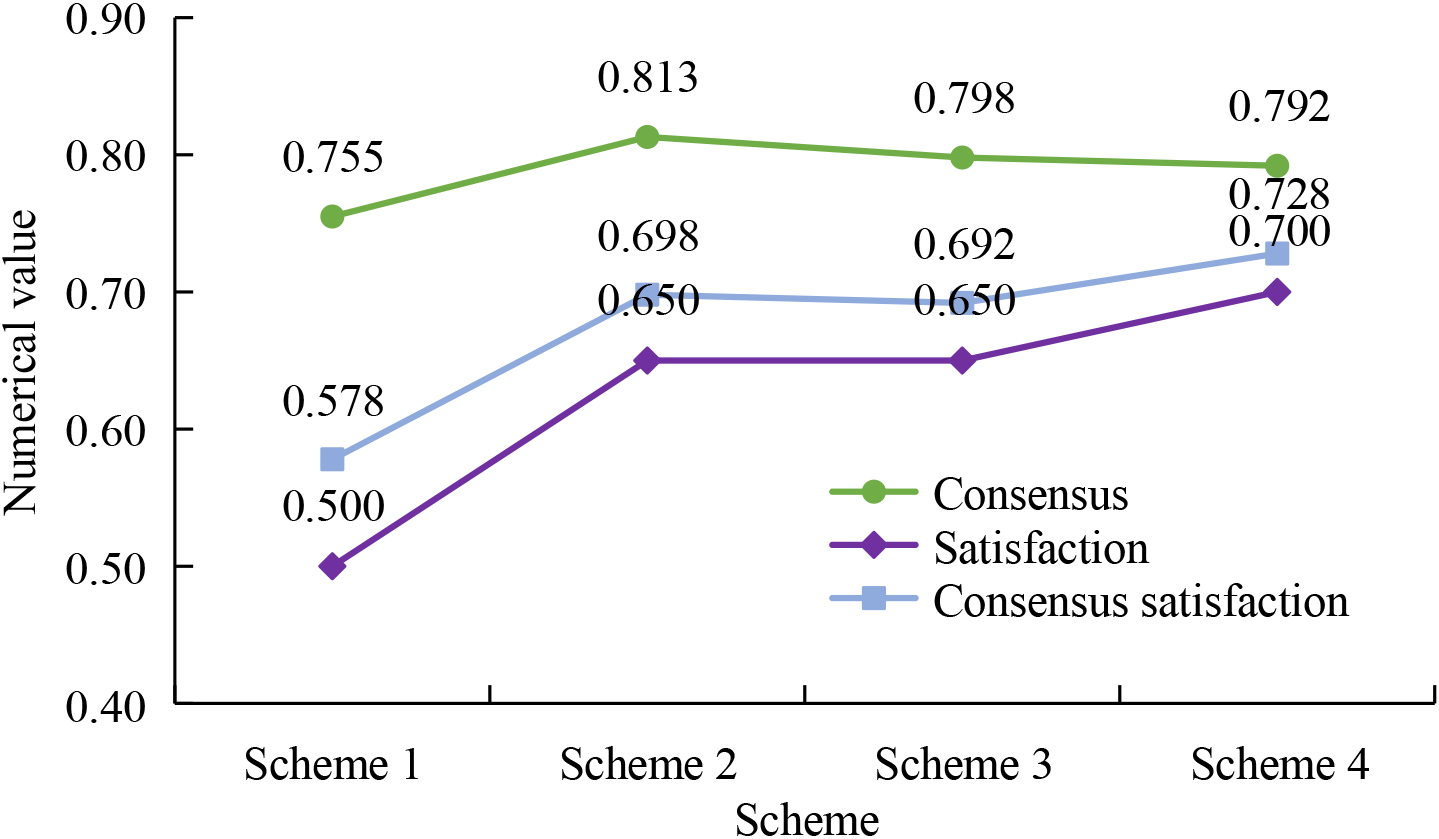
It can be seen from Fig. 8, the three-item values of the scheme coded as 00110 01011 10010 are all higher, so this scheme is retained as the parent of the next generation genetic manipulation. The evolutionary generation is 15, and the evolution of the population will be terminated after 15 generations of evolution. In the evolution results of each generation, the scheme with the highest consensus satisfaction is selected. The codes of the schemes with the highest consensus satisfaction in the evolution results of the second generation to the 15th generation are 000111 010001 100001, 000011 010001 100000, 000011 010101 100011, 000111 010011 100011, 000001 010011 100111, 000010 010100 100111, 000011 010100 100001, 000111 010001 100001, 000110 010110 100110, 000000 010101 100110, 000011 010001 100000, 000010 010000 100010, 000100 010011 100111, 000111 010110 100001. The numerical change of the highest consensus satisfaction in each generation during the evolution process is shown in Fig. 9.
The numerical change of the highest consensus satisfaction of each generation in the evolutionary process.
From Fig. 9, the individual with the highest fitness value in the 12th generation of the genetic population is the optimal solution. For the evaluation of morphological design, there are often many evaluation indicators such as shape and color that are difficult to evaluate by traditional quantitative analysis. Therefore, the study introduces language variables into fuzzy evaluation to quantify such fuzzy information that cannot be quantitatively analyzed. Fuzzy evaluation mainly includes concepts such as fuzzy sets and membership degrees. Different from ordinary sets that display clear quantitative values, fuzzy sets describe the intermediate states of fuzzy phenomena. The degree of membership in fuzzy evaluation describes the degree to which a thing belongs to another thing, and is represented by a real number between 0 and 1. The closer it is to 1, the degree of membership is higher. A total of 50 researchers from a mechanical research department, students of industrial design related majors and users are selected. The model with the highest fitness value is scored
Membership function diagram of trapezoidal distribution.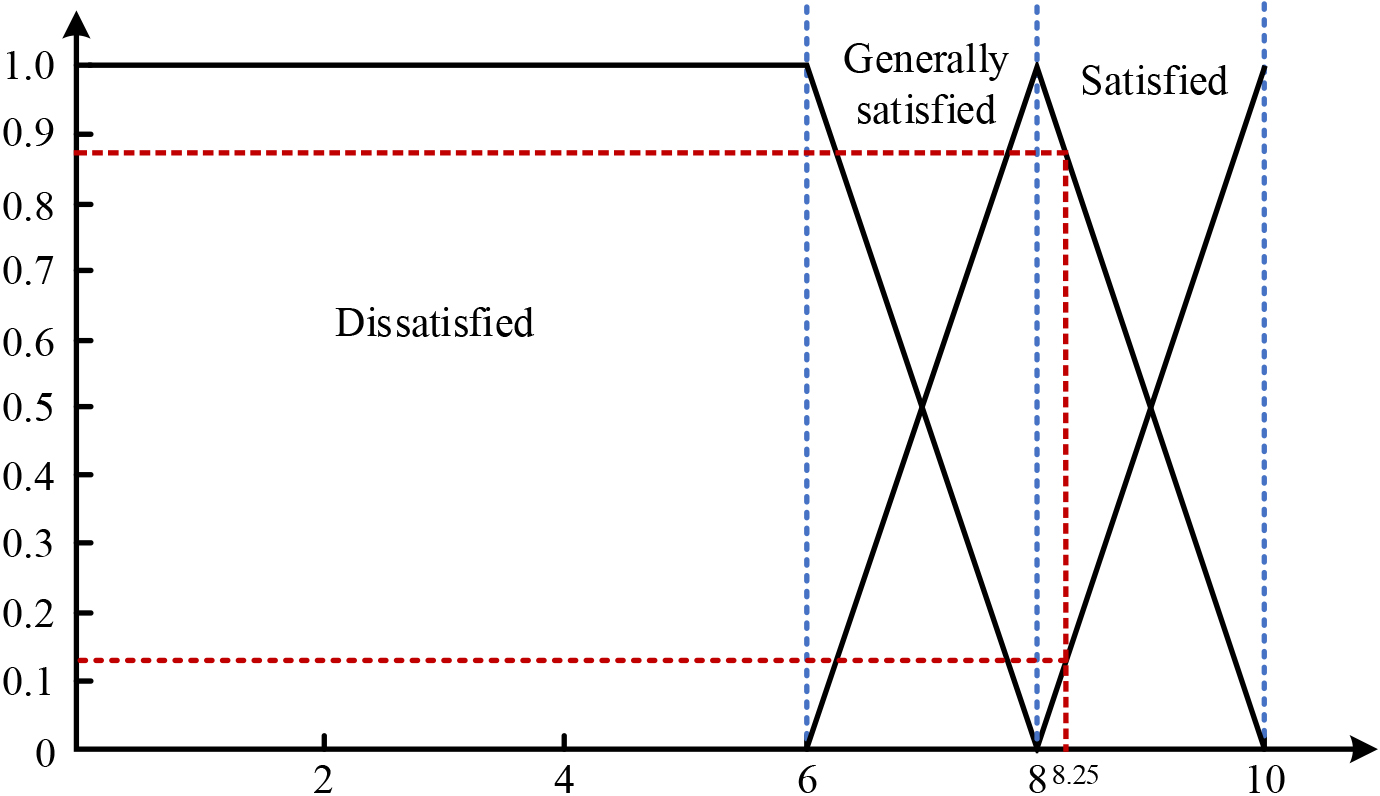
Figure 10 shows the result of score membership function. The abscissa is the average score of satisfaction, and the ordinate is the degree of membership. When the average score of satisfaction score has been determined, the membership score represents the presentation status of different satisfaction stages. It can be seen that when the average score is 8.25, the degree of special satisfaction of the shape design scheme is 0.116, the degree of basic satisfaction of the scheme is 0.884, and the degree of dissatisfaction is 0. That is, there are no dissatisfied users. So the shape design scheme of the gastrointestinal machine product can meet the design requirements.
With the vigorous development of China’s medical industry and the upgrading of medical equipment, the market demand for medical equipment has increased significantly in recent years, which has promoted the rapid development of the medical equipment industry. The research took medical device gastrointestinal machine as the research object, and carried out product morphology analysis and gene extraction on medical device products. Then a medical device product morphology optimization design model was constructed based on IGA algorithm. The individual with the highest fitness value in the 12th generation in the genetic results after 15 generations of population evolution was the optimal solution. Its individual code was 000011 010001 100000, and the consensus satisfaction was 0.829. The obtained scheme was scored by the fuzzy evaluation method. When the average score was 8.25, the satisfaction degree of this morphological design scheme was 0.116, the basic satisfaction degree of this scheme was 0.884, and the unsatisfactory degree was 0. It indicated that the product shape design scheme of this machine could meet the design requirements. The research and establishment of the medical device product form design model based on the IGA algorithm could more accurately and effectively meet the market demand. However, human factors are involved in the establishment and simplification of adjectives in databases, the extraction of morphological design gene feature lines, formula satisfaction scores, and fuzzy evaluation scoring processes, and these results are to some extent affected by human factors. The algorithm uses user ratings instead of traditional fitness functions, but the fatigue of raters can also lead to errors. This problem limits the number of iterations of genetic algorithms, and genetic algorithms themselves have the disadvantage of being prone to falling into local minima. In future work, it is necessary to explore more objective evaluation methods, even consider using computer scoring instead of manual scoring, and further improve the inherent defects of genetic algorithms.
Footnotes
Funding
The research is supported by: The 2022 annual topic of the “Fourteenth Five Year Plan” of Fujian Educational Science “Teaching research on Service Design oriented by Social Dimension in the View of New Liberal Arts” (FJJKBK22-072); Research achievements of the research project “Teaching reform and practice of art design courses – based on the cultivation of innovation and entrepreneurship ability” of Fujian undergraduate college education and teaching reform in 2020 (FBJG20200083).