



Abstract
With the widespread application of digital images, image processing technology plays an important role in fields such as computer vision and image analysis. Based on the orthogonal matching pursuit algorithm, an image processing method is proposed. In the process, sparse representation and reconstruction algorithm are used for image compressed sensing to complete image sampling operation. Afterwards, the theory of overcomplete sparse representation is introduced to optimize sparse representation, and an overcomplete dictionary is used to remove Gaussian noise, achieving the goal of image processing. The experimental results indicate that the research method do not show significant deficiencies in signal reconstruction when testing reconstructed signals under sparsity of 8; When testing the calculation time, the calculation time of the research method is about 0.212 s when the sparsity is 5 in the Lenna; In the error test, the mean square difference of the research method in the Lenna is stable at about 14.6; When conducting application analysis, the variance eigenvalues of the research method remained below 9.4. This indicates that the research method has good performance and can effectively process images, providing new technical support for image processing.
Keywords
Introduction
With the popularization of digital images and the rapid growth of image data, how to efficiently process and decompress images has become an important issue. The increasing scale of image data places higher demands on the computing and storage resources of image processing algorithms. The high-dimensional nature of image data increases the pressure of storage and transmission, requiring the search for more efficient compression and reconstruction algorithms [1]. The existing commonly used methods have low efficiency and high computational complexity when processing large-scale images, which cannot meet the requirements of real-time and practicality [2]. Image processing algorithms also need to balance processing speed and processing quality. The current commonly used methods may sacrifice image quality and accuracy of details in pursuit of high efficiency, affecting the final processing effect [3]. Orthogonal Matching Pursuit (OMP) algorithm can efficiently select important image features, reduce computational complexity, and realize image reconstruction and optimization [4]. Compressed sensing (CS) method can use sparse representation theory to achieve high-quality image restoration and reconstruction with less sampling and transmission. Discrete wavelet transform technology can extract the frequency domain features of images and achieve image analysis and transformation. An overcomplete sparse model can better utilize the sparsity of images, improve the compression and reconstruction effects, and improve the accuracy and effectiveness of image processing [5]. Combining these methods can achieve efficient image processing and reconstruction, reduce the need for computing and storage resources, and improve processing efficiency and practicality. It can also achieve image compression and optimization while maintaining image quality and detail accuracy, providing better image processing effects and visual experience. These methods have a wide range of applications and can be applied to multiple fields such as image compression, restoration, enhancement and analysis. In this context, research has proposed an image processing technology (IPT) based on OMP reconstruction optimization algorithm to provide feasible reference solutions for image processing.
The research mainly consists of four parts. The first part discusses and summarizes the current research achievements in image processing and OMP algorithm. The second part mainly designs image processing methods based on OMP reconstruction optimization algorithm, and elaborates on the technical solutions used in the methods. The third part analyzes the effectiveness of the research method, tests its performance, and conducts application analysis. The final part is a discussion and summary of the entire text.
Literature review
Image is an important information carrier in the information age. With the development of information technology, more scholars are realizing the importance of IPT. Some scholars have conducted relevant research on IPT. Lu et al. [6] chose to use the BRISK feature point detection algorithm combined with SVM for remote sensing image processing. The experimental results showed that this algorithm significantly improved the success rate of ground object recognition, surveying speed, and surveying accuracy, and the method was easy to operate, with strong usability and stability. Xu et al. [7] applied machine learning (ML) to extract longitudinal phase information. Traditional methods had problems such as slow extraction speed and being prone to falling into local optima. The experimental results showed that compared to classical methods, ML methods could still maintain better output quality images when data noise was high. Tov et al. [8] proposed a StyleGAN based image editing and processing method. A dual rule encoder will be used during the process to provide controllable inversion and training. The results show that this method has good image editing quality. Naranjo-Torres [9] chose to use convolutional neural networks to recognize images and monitor fruit classification and quality control when studying fruit classification and quality control issues. The experimental results showed that the convolutional neural network had excellent performance whether in the context of using the new model or using the pre trained network transfer learning. Li et al. [10] have chosen a method based on an improved BP neural network combined with the Bresenham integer algorithm to improve ticket information recognition technology. The experimental results showed that compared to other data collection and recognition methods, this method had better classification and recognition performance.
Some scholars have conducted relevant research on the OMP algorithm. Roy et al. [11] proposed a method based on OMP algorithm for the construction of RF signal acquisition systems. During the process, reduce the number of columns in the search list and build an architecture on a field programmable gate array to prevent pseudo inverse matrices from occupying additional performance. The experimental results show that the proposed method has better power consumption and computational speed. Zhang et al. [12] adopted the OMP algorithm to solve the problem that the traditional algorithm cannot fully deal with the sparse characteristics of measurement data. The experimental results showed that this algorithm produced higher image quality compared to other traditional image reconstruction methods. Azarnia et al. [13] proposed the use of OMP reconstruction algorithm to reduce high envelope fluctuations in peak to average power ratio. Numerical results showed that compared with traditional OFDM systems, this algorithm significantly reduced high envelope fluctuations of low peak to average power ratio without performance loss. Gui et al. [14] proposed a method that combined the OMP method with the Consistent Alternating Direction Multiplier (CADMM) to obtain globally focused images of multiple vehicles. The experimental results indicated that this method required less computation and fewer computational operations compared to classical methods.
In summary, although the OMP algorithm has been applied in various fields, research in image processing is still relatively scarce. In view of this, research proposes an image processing method based on the OMP algorithm to provide more feasible technical references for the field of image processing.
Design of IPT based on OMP reconstruction optimization algorithm
IPT can improve the image quality during transmission. This section will focus on the components and technical means used in the research and design of IPT based on OMP reconstruction optimization algorithm. Firstly, the basic flow of image sampling processing is constructed, then the constraint conditions of compressed sensing are set, and OMP algorithm is introduced to reconstruct sparse signal. The discrete wavelet transform is integrated into OMP algorithm for optimization, and then the over-complete sparse representation theory is introduced to achieve a better image denoising effect. Finally, various methods are coordinated to build a complete image processing method.
Design of image sampling algorithm based on OMP reconstruction algorithm
Images have important existential significance in the internet, as they can convey a large amount of information through intuitive means. IPT provides more means of dissemination and value for images. Before image processing, image sampling is required. CS is an anti traditional image sampling method, which is not bound by the traditional image sampling theorem [15, 16]. When CS samples an image, it first needs to linearly project the non adaptive signal to obtain the measured value of the signal, and then reconstruct the original signal through the reconstruction algorithm. The image sampling is shown in Fig. 1.
Image sampling process.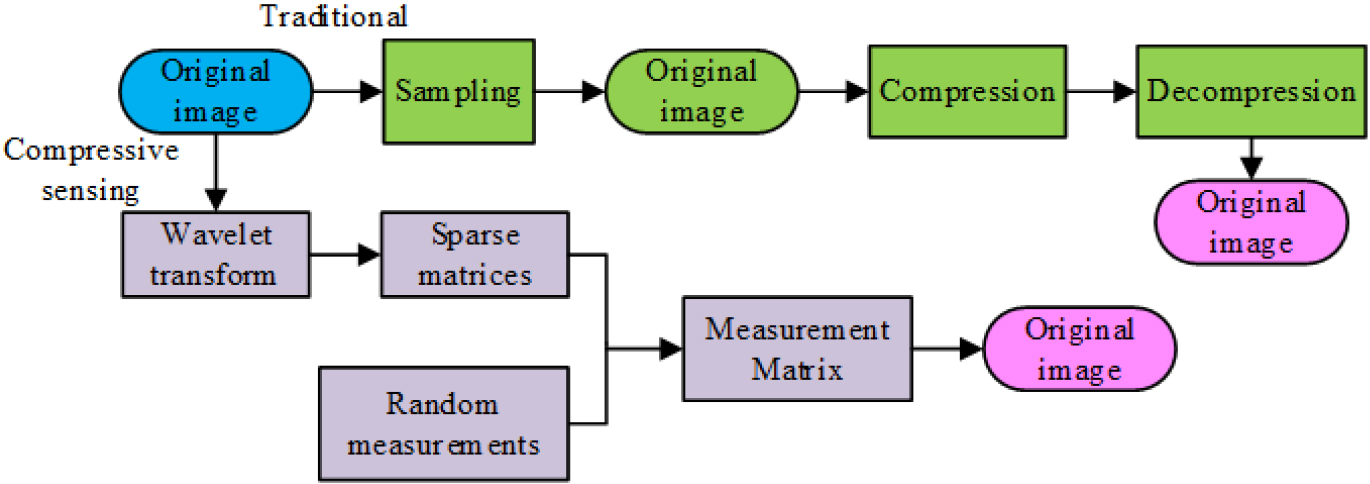
As shown in Fig. 1, there are compression and decompression steps in traditional image sampling processing. If the sampling frequency is greater than twice the maximum frequency in the signal, the obtained signal can contain complete original signal information. To ensure the integrity of information, huge storage space is required during energy-saving sampling processing. CS collects the non adaptive linear projection of the signal and establishes the observation matrix of the signal. The amount of data measured by the signal is small and does not affect the sampling problem when the signal frequency is high [17]. However, obtaining appropriate signal measurement values requires limiting signal sparsity and non correlation, so CS has constraints, as shown in Fig. 2.
CS constraints.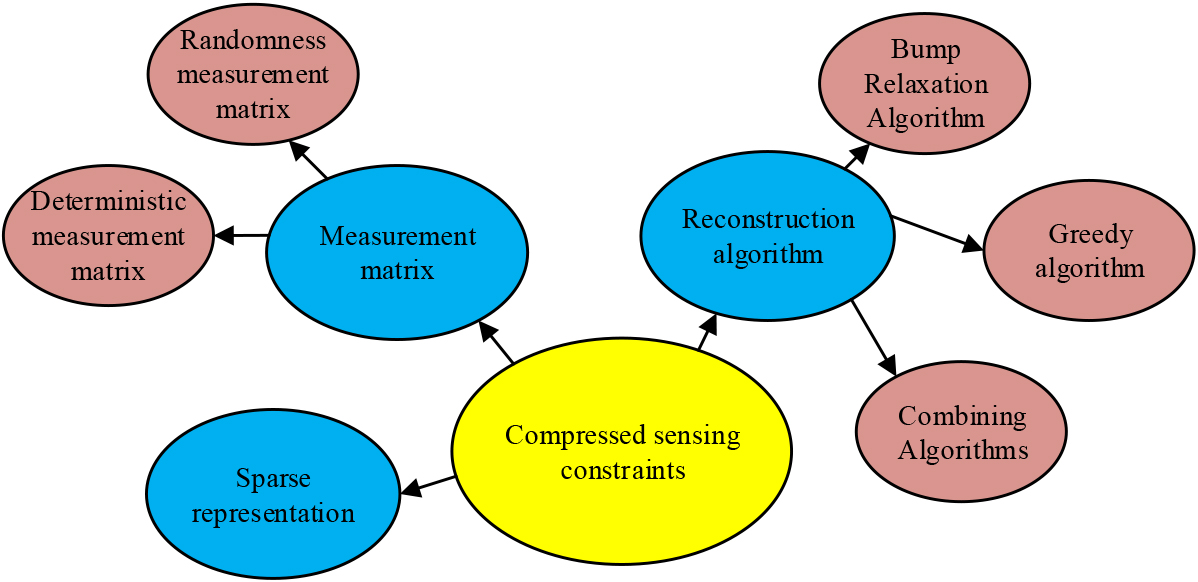
From Fig. 2, CS has three constraints. The first is to ensure the compressibility and sparse representation of the signal. The matrix representation of the collected signal or image after compression should be as coefficient as possible to ensure the randomness of sampling. The second constraint is the measured value of the collected signal, which is output by the measurement matrix, so the constraint can also be regarded as the measurement matrix, and the measurement matrix construction needs to conform to the non correlation with the sparse matrix. There are currently two types of measurement matrices, namely random measurement matrices and deterministic measurement matrices, but random matrices have high computational complexity and are less commonly used [18, 19]. The third constraint is the reconstruction algorithm, which is the key to obtain the result and can reconstruct the original information from the sample. At present, there are three kinds of reconstruction algorithms: convex relaxation algorithm, greedy algorithm and combinatorial algorithm, OMP algorithm belongs to combinatorial algorithm. The OMP algorithm has less computational overhead and usually fewer iterations, so it is faster when processing large-scale data. The design of image sampling algorithm based on OMP algorithm is studied. OMP can effectively reconstruct sparse signals, in which the original signal is represented as shown in Eq. (1).
In Eq. (1),
In Eq. (2),
In Eq. (3),
In Eq. (4),
OMP sparse coefficient calculation.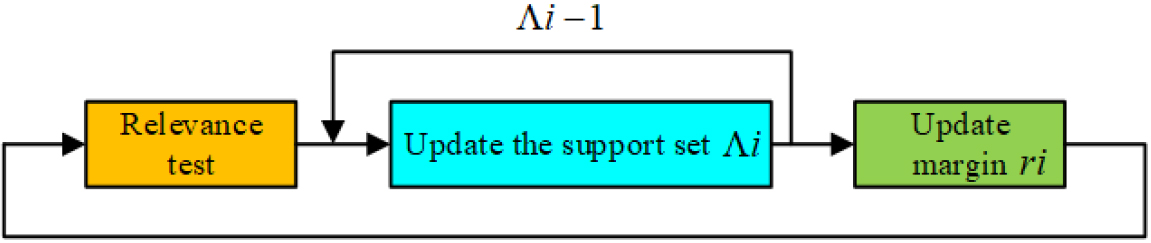
sAs shown in Fig. 3, correlation testing is the first step in the process, followed by margin initialization and support set setting. The support set represents the index set of iterations, and the support set is updated by increasing the number of iterations each time. Afterwards, the margin is obtained and updated by increasing the number of iterations each time. If the error or iteration does not meet the requirements, the correlation test is returned for process repetition. After the sparse representation of the image is completed, the wavelet is orthogonalization to obtain the image sampling results.
When performing image processing, the clarity of the image obtained solely from image sampling is insufficient, and the image contains a large amount of Gaussian noise, which cannot meet the usage needs of some scenes. Therefore, technical means need to be used for denoising [20, 21]. To denoise images, the study introduces the theory of overcomplete sparse representation to optimize the sparse representation process. The overcomplete sparse representation is shown in Fig. 4.
Image overcomplete sparse representation.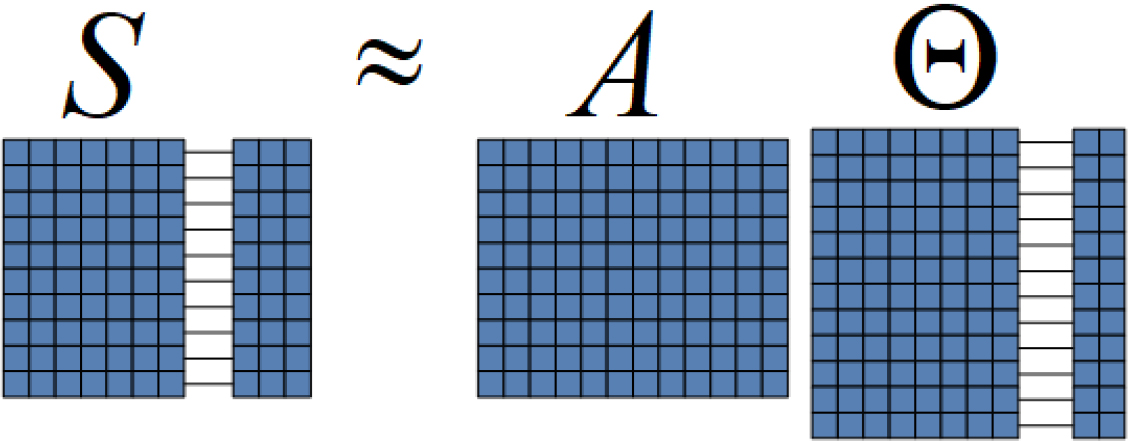
As shown in Fig. 4, the signal
In Eq. (5),
OMP reconstruction optimization algorithm process.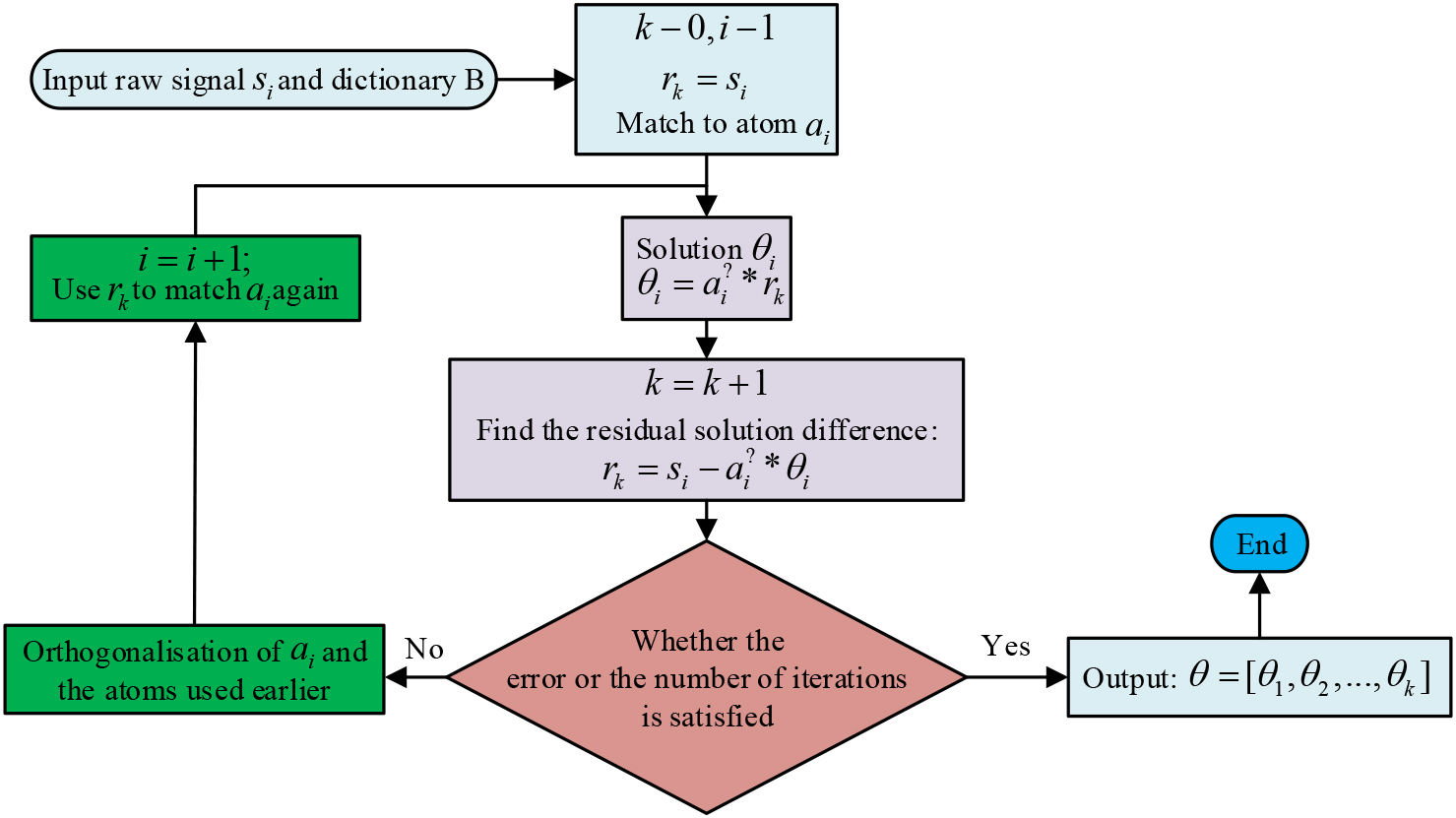
In Eq. (6),
In Eq. (7),
In Eq. (8),
From Fig. 5, before performing calculations, the dictionary needs to be initialized first, and then the projection values of the signal on each element of the dictionary need to be calculated to obtain the maximum inner product of the dictionary and the signal. The initial iteration number should be set to 0. Then it uses the current best matching element to calculate the residual. If more than one element has been matched, Schmidt orthogonalization processing will be performed on the matched elements. It judges whether the residual or iteration number meets the requirements. If it does not meet the requirements, it should go back to the starting stage. If it does, it stops iterative matching and outputs the obtained sparse coefficient. Using sparse representation for denoising is to place the image signal on an overly complete dictionary for sparse decomposition. The image structural features have a certain degree of similarity with dictionary elements, while Gaussian noise has no similarity with dictionary elements. Therefore, the most matching element group can be selected in the dictionary to represent the image signal and complete the denoising operation. The mathematical model for image denoising is shown in Eq. (9).
In Eq. (9),
In Eq. (10),
In Eq. (11),
In Eq. (12),
In Eq. (13),
In Eq. (14),
In Eq. (15),
Image processing.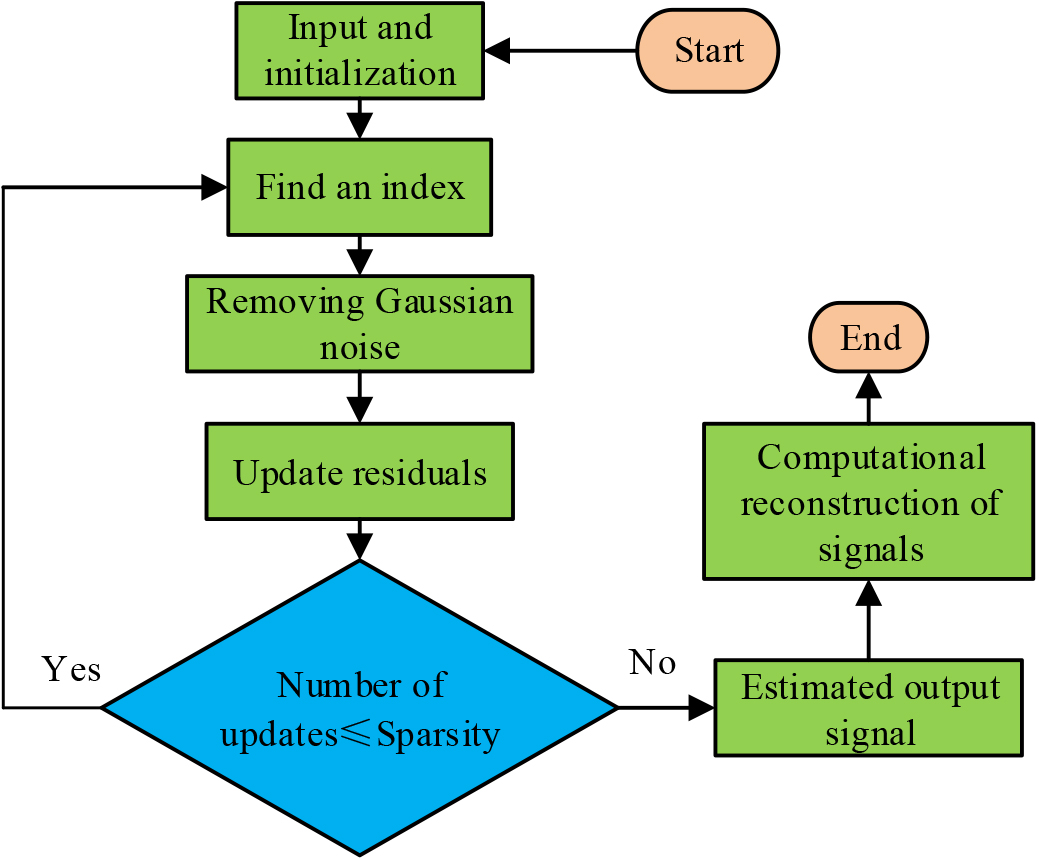
From Fig. 6, the image processing method designed in the study sets the denoising operation at the earlier stage of the process. When performing image processing, the sensing matrix and signal sparsity are first inputted and initialized. After finding the index value, the denoising operation is performed. After completing denoising, it updates the residual. If the number of updates or sparsity does not meet the requirements, it needs to search for the index value again and cycle the operation until the requirements are met. Then, it outputs signal estimation and reconstructs the original signal, completing image processing.
In information transmission, image information can be compressed and distorted in many scenarios due to its large size, requiring restoration processing. This section will test the performance of the research method in image processing and analyze the application effect using real images to determine the effectiveness of the research method.
Performance testing of IPT based on OMP reconstruction optimization algorithm
To test the effectiveness of the image processing method based on OMP reconstruction optimization algorithm designed for research, performance testing and application analysis were conducted on the research method. The experiment was carried out in the Windows10 operating system using MATLAB software. The test image used Lenna and cameraman, which were commonly used in the image processing field. The comparison methods included Stagewise Orthogonal Matching Pursuit (STOMP), Subspace Pursuit (SP), and regularization Orthogonal Matching Pursuit (ROMP). First, it tested the reconstructed signal effect of the research method on the Lenna, set the sparsity to 8. The test is shown in Fig. 7.
Reconstruction signal effect.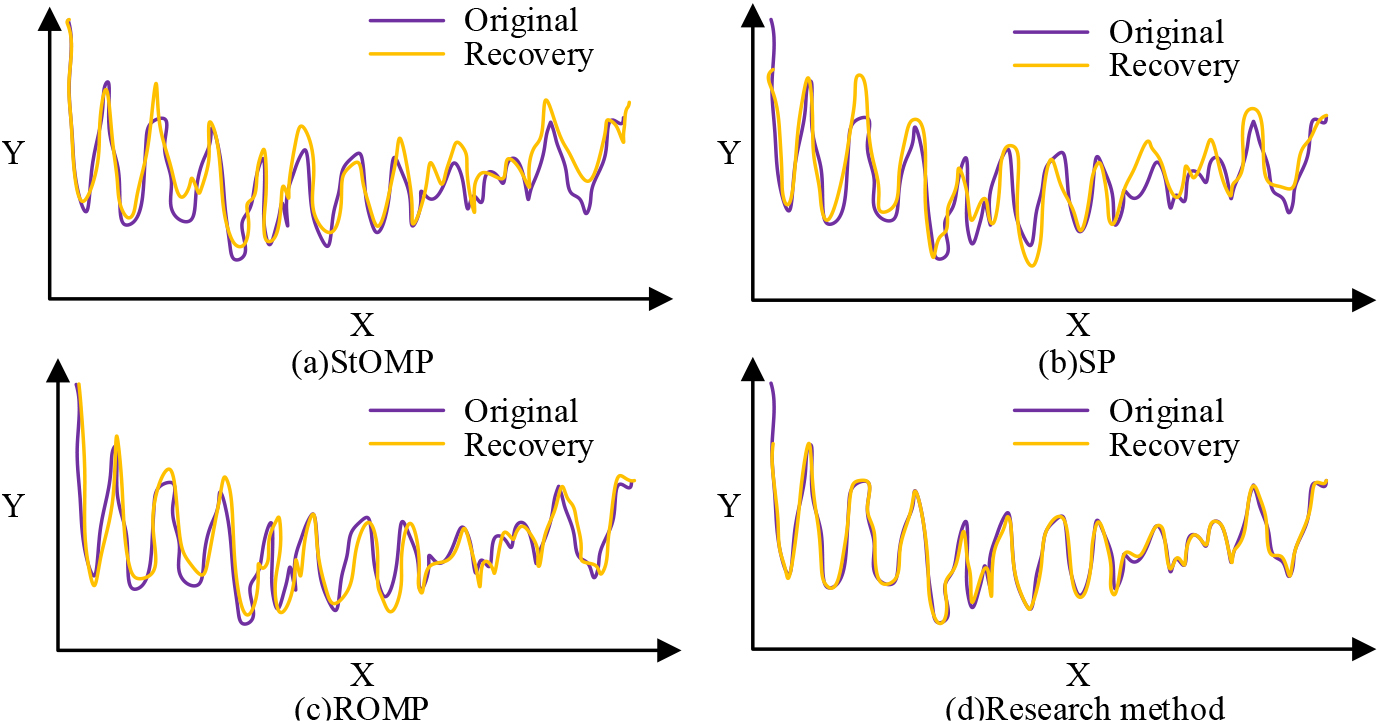
As shown in Fig. 7, all four methods could reconstruct signals at a sparsity of 8. StOMP reconstructed the transverse axis position of the signal well, but there were more than 5 large deviations in the signal height in the test section. SP reconstructed the transverse axis position of the signal well, but in the test section, there were more than 5 large deviations in the wave reconstruction of the signal, and there were some errors in the reconstruction of the signal height. The reconstruction of signal height is good in ROMP, but the deviation of signal transverse axis is in the form of global delay. The research method is good for signal reconstruction, and there is no obvious deficiency in the reconstruction part. It shows that the research method has better performance of signal reconstruction. It tested the computational time of the research method, as shown in Fig. 8.
Calculation time consumption.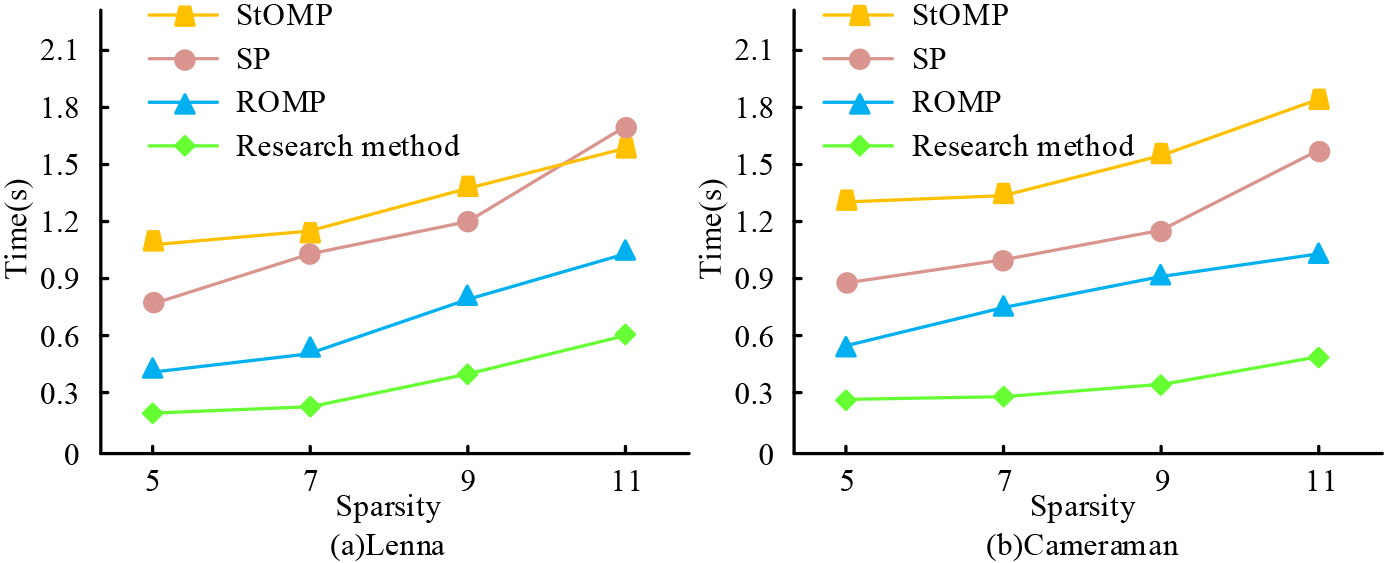
In Fig. 8, in both test images, the computational time of different methods increased with increasing sparsity. In the Lenna, the calculation time of StOMP was about 1.065 s when the sparsity was 5, and about 1.587 s when the sparsity reached 11; When the sparsity was 5, the calculation time for SP was about 0.768 seconds, and when the sparsity reached 11, the calculation time was about 1.713 seconds; The calculation time for ROMP was about 0.467 seconds when the sparsity was 5, and about 1.035 seconds when the sparsity was 11; The calculation time of the research method was about 0.212 seconds when the sparsity was 5, and about 0.602 seconds when the sparsity reached 11. In Cameraman, the calculation time of StOMP was about 1.352 seconds when the sparsity was 5, and about 1.853 seconds when the sparsity was 11; The calculation time for SP was about 0.867 seconds when the sparsity was 5, and about 1.576 seconds when the sparsity reached 11; The calculation time for ROMP was about 0.546 seconds when the sparsity was 5, and about 1.021 seconds when the sparsity was 11; The calculation time of the research method was about 0.273 seconds when the sparsity was 5, and about 0.597 seconds when the sparsity reached 11. The shorter computational time of the research method indicated that it had better computational efficiency. It tested the error of the research method at different sparsities, as shown in Fig. 9.
Reconstructed signal mean square error.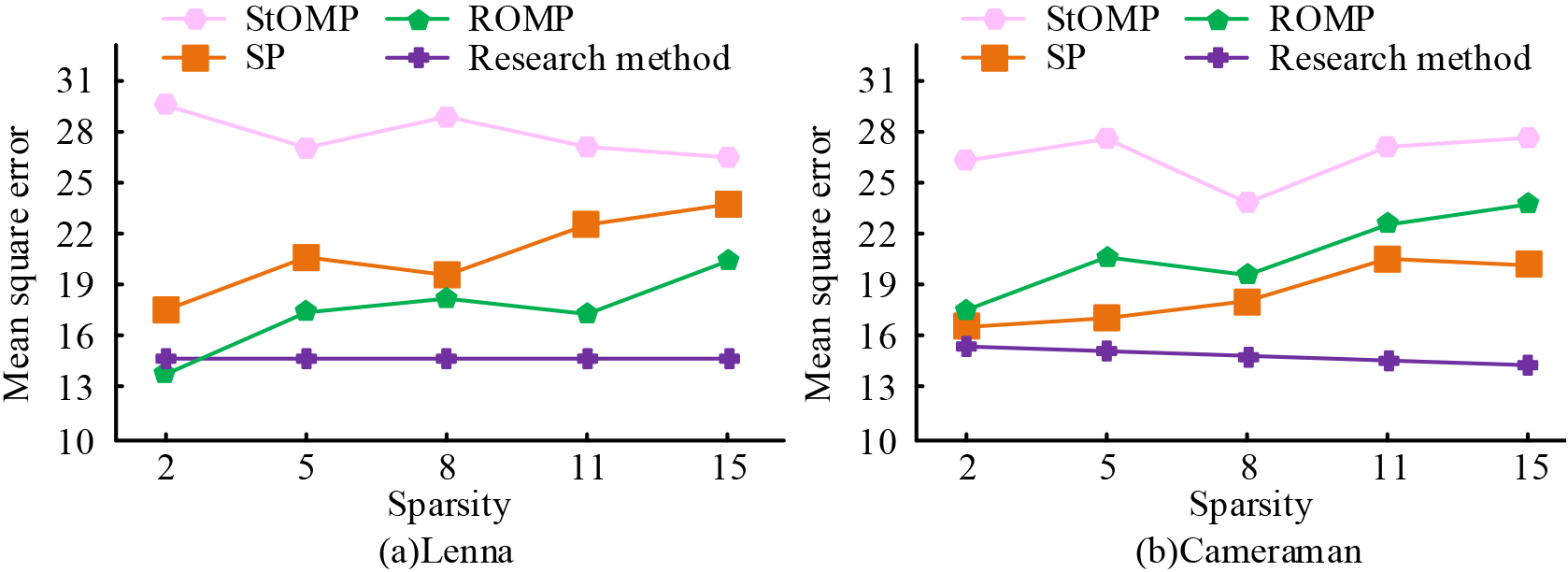
As shown in Fig. 9, different methods had different mean square errors (MSEs) under different sparsities. In the Lenna, the max MSE of StOMP was about 29.5, and the mini MSE was about 26.4; The max MSE of SP was about 24.6, and the mini MSE was about 17.3; The max MSE of ROMP was about 20.4, and the mini MSE was about 13.8; The MSE of the research method remained unchanged at approximately 14.6. In Cameraman, the max MSE of StOMP was about 27.8, and the mini MSE was about 23.4; The max MSE of SP was about 23.6, and the mini MSE was about 17.4; The max MSE of ROMP was about 20.5, and the mini MSE was about 16.7; The maxMSE of the research method was about 15.4. The mini MSE was about 14.1. The small MSE and small fluctuation of the research method indicated that the research method had better image restoration performance.
PSNR value
PSNR value
Variance eigenvalue.
Image processing results.
The image processing method was applied and analyzed based on OMP reconstruction optimization algorithm proposed in the study, using two images from the network as the pending images. It tested the variance feature values of image processing, as shown in Fig. 10.
From Fig. 10(a), in image A, the variance eigenvalues of ROMP, StOMP, and the research method were basically consistent with the original image, but the variance eigenvalues of ROMP were higher, while the variance eigenvalues of StOMP were lower. The variance eigenvalues of the research method were the most consistent with the original image, with a maximum difference of only about 9.4. From Fig. 10(b), in image B, the variance eigenvalues of ROMP, StOMP, and the research method were basically consistent with the original image, but the variance eigenvalues of ROMP and StOMP were higher. The variance eigenvalues of the research method were basically consistent with the original image, with a maximum difference of only about 4.3. It suggested that the image processed by the research method was more consistent with the original image information. It tested the Power Signal-to-Noise Ratio (PSNR) values of the research method in image A, as shown in Table 1.
From Table 1, the PSNR value of SP reached a max of 36.0212 dB and a mini of
As shown in Fig. 11, all four methods have successfully generated image processing results, but there were still significant noise points on the images generated by ROMP and SP; The image generated by StOMP had fewer noise points, but the image resolution was poor; The image generated by the research method ensured a resolution of 300 dpi while maintaining no significant noise on the image. This indicated that the research method could effectively process images and had good performance.
To improve the quality of image transmission, an image processing method based on OMP reconstruction optimization algorithm has been proposed. In the process, CS was used to sample the image, and the original signal was reconstructed through the reconstruction algorithm. Then the wavelet was orthogonalization, and an over complete dictionary was constructed for the over complete sparse representation of the image. The OMP algorithm was reconstructed to build the image denoising model, and the image processing method was designed in combination with the image sampling algorithm. Finally, the effectiveness of the research method was tested. In the experimental results, the reconstructed signal of the research method was highly fitted to the original signal. The research method on Cameraman took about 0.273 seconds to calculate when the sparsity was 5, and about 0.597 seconds when the sparsity was 11, which was much lower than other methods. In error testing, the MSE of the research method on Cameraman remained below 15.4. When conducting variance eigenvalue testing in practical applications, the max errors between the research method and the original image on two images were 9.4 and 4.3, respectively. When conducting PSNR value testing, the research method remained stable at 37.5864, higher than other methods; The image results obtained after processing ensured that there was no significant noise at 300 dpi. The above results indicated that the research method had good image processing speed and performance. However, the design algorithm of the research institute mainly focuses on the processing of real-world images, and the image samples used in the experiment are mainly real images. As a result, the results obtained can only prove that the research method can effectively process real images, but the performance of the research method in virtual and other types of images such as painting is still unclear. In the future, other types of image samples will be added for testing to enrich the experimental results, and the experimental method will be optimized to expand the application scope of the method. In order to realize the practical application of the research method, it is also necessary to construct the running system of the research method in practical application