



Abstract
With the rapid development of Internet of Things technology, its application value in various fields has been widely concerned, especially in enterprise supply chain management. By connecting the physical world with the digital world, IoT technology helps companies monitor and manage all aspects of the supply chain in real time, thereby increasing efficiency, reducing costs, improving risk management, and increasing customer satisfaction. This paper studies the application and value of the Internet of Things in enterprise supply chain management in detail, first introduces the basic concept of the Internet of Things and its role in supply chain management, then builds an enterprise supply chain management model based on the Internet of Things, and analyzes the specific application of the Internet of Things in each link of the supply chain. Then, using relevant data and formulas to simulate and analyze the specific value of IoT technology in improving supply chain efficiency, reducing cost and improving risk management, the research results are summarized, and suggestions are put forward on how to better apply IoT technology. The results show that the Internet of Things technology provides important support for the optimization of enterprise supply chain management and helps enterprises to improve their competitiveness.
Introduction
With the rapid development of information technology, the Internet of Things (IoT) technology has gradually penetrated into various industries, from living consumption to industrial production, are undergoing profound changes. Iot technology uses sensors, networks and data analytics to achieve intelligent interconnection between things, opening up unlimited possibilities and providing new opportunities to reform traditional industry operating models.
As an important part of enterprise management, supply chain management has been faced with many challenges such as low efficiency, high cost, lack of transparency and difficulty in risk management. With the introduction of the Internet of Things technology, enterprises began to seek to use this technology to improve the management level of the supply chain. With iot, businesses can track and monitor all aspects of the supply chain in real time, enabling more accurate demand forecasting, more efficient inventory management, faster response times and greater risk resilience, significantly improving the overall efficiency and effectiveness of the supply chain.
Although iot has great potential in supply chain management, how to utilize this technology effectively remains a challenge. At present, there is relatively little research on the specific application and value creation of iot in supply chain management. Therefore, the purpose of this paper is to study and discuss the application mode of the Internet of Things in enterprise supply chain management, and through a large number of data and case analysis, in-depth study of the specific value of the Internet of Things in improving supply chain efficiency, reducing costs, improving risk management, etc., and further explore the future development trend and possible challenges of the Internet of Things in supply chain management. This has important theoretical and practical significance for helping enterprises to understand and effectively use iot technology and optimize supply chain management. At the same time, the research has generated a strong interest in the diversity and wide application of iot technology, especially how it can revolutionize traditional industries and create value for enterprises. At the same time, it is observed that many enterprises are facing difficulties in supply chain management, so it is hoped that through this study, the application of Internet of Things technology in this field can be deeply explored, and practical suggestions can be provided for enterprises to solve practical problems.
The purpose of this study is to explore and understand the specific role of the Internet of Things (IoT) in supply chain management and how it affects and changes the mode of operation of the supply chain. Specific application patterns of IoT in supply chain management will be studied and analyzed, which will be achieved through case studies of how different enterprises utilize IoT technology for supply chain management. At the same time, this study will also explore the specific value of the Internet of Things in improving supply chain efficiency, reducing costs, and improving risk management through a large number of data and formula analysis. Ultimately, this research is expected to provide a comprehensive perspective on the application of IoT in supply chain management, as well as future trends and possible challenges.
As an important information technology, the Internet of Things has a broad application prospect in supply chain management. It is of great significance for enterprises and academia to understand its specific application mode and value creation ability in supply chain management.
For enterprises, through in-depth research and understanding of the application of the Internet of Things in supply chain management, enterprises can better use the Internet of Things technology to optimize supply chain operations, improve efficiency, reduce costs, and enhance competitive advantages. Especially in the context of the global supply chain, the introduction and use of Internet of Things technology can help enterprises realize real-time visualization of the supply chain, improve the transparency and controllability of the supply chain, and thus better cope with various supply chain risks.
For the academic community, this study can further enrich and develop the relevant theories of the Internet of Things and supply chain management, and provide a new research perspective and thinking direction for the academic community. The application of the Internet of Things in supply chain management is a new and interdisciplinary research field, and in-depth research on this will help to promote the cross-integration of information technology and supply chain management research, and promote the progress of related theories.
By studying the value of IoT in supply chain management, this study can also provide a reference for policy makers. Policy makers can understand the actual effect and potential of IoT in supply chain management, so as to better formulate and adjust relevant industrial policies and technology policies to promote the application and development of IoT technology in supply chain management.
In recent years, in the study of supply chain management, how to realize the sustainability and effectiveness of supply chain has become the focus of academic and industry attention. In this context, supply chain management and technology integration have begun to show their importance in supply chain optimization. Kot studied sustainable supply chain management in smes and believes that smes face many challenges when implementing sustainable supply chain management strategies, but its potential long-term benefits cannot be ignored [1]. At the same time, Jo and Kwon also pointed out that in order to achieve sustainability, smes need to "green" their supply chain management [2].
With the development of technology, the application of the Internet of Things and blockchain technology in the supply chain is getting more and more attention. Fu and Zhu discussed the supply chain endogenous risk management of large production enterprises based on blockchain [3]. They noted that blockchain technology could bring greater transparency and security to the supply chain. In addition, Xiang and Hou also studied the innovation management of enterprise supply chain digital platforms based on blockchain technology, believing that blockchain technology provides new opportunities for supply chain innovation [4].
Related to this, the application of ERP (Enterprise Resource Planning) system in supply chain information management has also been widely studied. de Oliveira et al. pointed out that ERP and CRM (Customer Relationship Management) play a key role in supply chain management and can help enterprises manage their resources and customer relationships more effectively [5]. This view is further supported in the study of Li and Wu, who found that ERP system is crucial to logistics information management system [6]. Qureshi further evaluated the impact of ERP implementation on sustainable supply chain management and emphasized the role of ERP in supply chain sustainability [7].
The advancement of technology brings not only new opportunities, but also new challenges. Chen and Su discussed the innovation and application of enterprise supply chain management model in the context of Industry 4.0 [8]. They believe that as technology advances, companies need to constantly innovate their supply chain management models to adapt to the changing market environment.
In general, modern supply chain management is in a period of technology-driven change. By combining different technologies, companies can better manage their supply chains and achieve supply chain sustainability and effectiveness.
In this study, we adopt a comprehensive theoretical framework to explore in depth the multifaceted role and value of iot technology in supply chain management. This framework integrates the basic theory of iot technology, practical application model, concrete case study and quantitative benefit analysis, which not only reflects the universality of research, but also highlights the importance of empirical research. In the second chapter, we elaborate the basic concept of the Internet of Things and its functions and roles in supply chain management, which lays a foundation for further analysis. Chapter 3 and Chapter 4 show the practical application and potential value of iot technology in supply chain management from two aspects of pattern analysis and value research, using a large number of charts, data analysis and specific cases. Through this framework, the research tries to reveal the internal connection between iot technology and supply chain management, as well as the specific benefits that the use of iot technology can bring to the enterprise, so as to achieve the research purpose, prove the research hypothesis, and put forward targeted practical recommendations.
By exploring the application and value of iot in enterprise supply chain management in detail, this study demonstrates its unique novelty and contribution. While many studies have focused on the fundamental applications of iot technology, this paper explores how the technology can be deeply integrated into enterprise supply chains, enabling real-time monitoring and management to improve chain efficiency, reduce operating costs, and optimize risk management. The enterprise supply chain management model based on the Internet of Things constructed in this paper and the simulation analysis of the value of the Internet of Things technology through data and formulas not only deepen our understanding of the application of the Internet of Things technology in supply chain management, but also provide a valuable reference for the practice in this field. By summarizing the research results and making constructive suggestions, this study is expected to promote the wider application of iot technology in enterprise supply chain management, thereby helping enterprises improve their competitiveness, which undoubtedly brings an important contribution to the field.
IoT technology and its role in supply chain management
Basic concepts of Internet of Things
Internet of Things (IoT) is a global technology and concept, which can realize the connection and interaction between any object and object, object and person, and person through the network [6, 7]. In short, the Internet of Things is a kind of connecting various objects through the Internet to realize the interoperability and sharing of information. It collects and transmits information through sensors and other devices embedded in objects to realize intelligent interconnection and interaction between things, things and people, and between people.
The main feature of the Internet of Things is its versatility, which can not only connect traditional Internet devices such as computers and mobile phones, but also connect various items, such as home appliances, automobiles, industrial equipment, clothing, food, etc., to realize the Internet of everything. For example, in our daily life, through the Internet of Things technology, smart home systems can allow us to remotely control the appliances in the home and realize the intelligence of the home [8, 9]. In addition, the Internet of Things can realize not only the transmission of information, but also the processing and decision-making of information. Through the collection and analysis of item status information, the Internet of Things realizes the intelligent control and optimization of items. In addition, the Internet of Things can collect a large amount of data, and through cloud computing and data analysis technology, these data can be deeply mined and utilized to achieve precise control and optimization.
In supply chain management, the application of the Internet of Things realizes the transparency, intelligence and optimization of the supply chain through the real-time collection and processing of the data of each link of the supply chain. Supply chain management is a management strategy that aims to integrate suppliers, manufacturers, warehousing and retailers so that goods flow from the original supplier to the final consumer in the most efficient and cost-effective manner [10]. For example, iot can improve the efficiency and responsiveness of supply chains by tracking and monitoring the real-time location and status of products, reducing inventory and operational costs, and increasing customer satisfaction. Similarly, the Internet of Things can also improve the risk management capacity of the supply chain through real-time monitoring and early warning of supply chain risks. Finally, through in-depth analysis and prediction of supply chain big data, the Internet of Things can improve the accuracy and effect of supply chain decision-making [11, 12].
Functions and roles of the Internet of Things in supply chain management
Improve supply chain transparency
The Internet of Things has greatly increased the transparency of supply chain management through wireless sensor networks and advanced data analytics. In all aspects of the supply chain, IoT devices can collect, transmit and analyze all kinds of data in real time, including inventory information, logistics status, product quality, equipment operating status and so on [13]. This allows companies to not only track the whole process of products from raw materials to end users, but also monitor and adjust the operating status of the supply chain in real time. For example, by deploying IoT devices in the warehouse, enterprises can obtain a variety of inventory information in real time, such as inventory, cargo location, cargo status, etc., to avoid stock shortages or over-stock situations, while improving the operational efficiency of the warehouse. By installing GPS and other sensors on delivery vehicles, companies can track the real-time location of goods, predict their arrival time, and deal with problems in transit in a timely manner [14, 15]. By deploying IoT devices on the production line, enterprises can monitor the operating status of equipment, predict equipment maintenance needs, and improve production efficiency and product quality.
This real-time information acquisition and processing capability of the Internet of Things allows enterprises to better understand and manage the operation of the supply chain and improve the transparency of the supply chain. This can not only improve the efficiency of the supply chain, reduce operating costs, but also improve customer satisfaction and enhance the competitiveness of enterprises.
Improving supply chain efficiency
IoT technology can significantly improve supply chain efficiency through its unique real-time data collection and processing capabilities. By tracking and monitoring the location and status of products in real time, IoT can greatly improve the operational efficiency of supply chains [16, 17]. For example, enterprises can use IoT devices to collect inventory information in real time, achieve refined inventory management, avoid inventory overhang or out of stock problems, and shorten the turnaround time of goods.
The Internet of Things can improve production efficiency through automation and intelligence. Sensors can monitor the operating status of equipment and the quality of products, and machine learning and artificial intelligence technologies can adjust production processes based on real-time data to prevent failures and reduce downtime [18].
The Internet of Things can optimize logistics and distribution processes. Through GPS and other sensor technologies, IoT can track the location and status of goods in real time, predict delivery times, optimize route selection, and save transportation costs.
The Internet of Things can improve the efficiency of supply chain decision-making. By collecting and analyzing large amounts of data from the supply chain, companies can respond to market changes more quickly and accurately, for example, by predicting future demand and adjusting production and distribution plans based on sales data.
Optimizing supply chain decision-making
The application of IoT can greatly help optimize supply chain decisions. Through wireless sensors and cloud technology, IoT can collect and analyze large amounts of real-time data across the supply chain to support decision-making.
The Internet of Things can help businesses make more accurate demand forecasts. By analyzing real-time sales data from the point of sale, companies can more accurately predict market demand and avoid overproduction or situations where demand exceeds supply. In addition, this kind of data analysis can also help enterprises to spot market trends, timely adjustments to product lines and sales strategies.
In terms of inventory management, the Internet of Things can monitor the status of inventory in the warehouse in real time, and accurately understand the amount of inventory and the location of goods. Combined with the forecast demand data, enterprises can carry out inventory management more effectively, reduce inventory costs, and improve the efficiency of warehouse operations.
In terms of production scheduling, by monitoring the equipment status and product quality on the production line, the Internet of Things can help enterprises adjust production plans in real time, improve production efficiency and reduce production costs.
In terms of logistics optimization, through GPS and other sensor technologies, the Internet of Things can track the location and transportation status of goods in real time, and intelligently optimize logistics routes according to real-time traffic information and weather forecasts, saving transportation time and costs.
In terms of risk management, the Internet of Things can help enterprises to monitor the operating status of the supply chain in real time, warning potential risks, such as supply disruption, product quality problems, etc., so as to take timely measures to avoid or mitigate losses.
The application of the Internet of Things enables enterprises to make decisions based on real-time and accurate data, which greatly improves the accuracy and effectiveness of supply chain decisions.
Improve supply chain risk management
IoT plays an important role in supply chain risk management. First, IoT is able to provide real-time, detailed data, which is essential for risk identification and prevention. For example, IoT devices can continuously monitor equipment status and product quality on the production line, and if anomalies are detected, they can immediately warn, preventing small problems from becoming major problems and avoiding risks such as downtime and product recalls.
The Internet of Things can enhance the transparency of the supply chain and help enterprises better understand the operational status and possible risks of the supply chain. For example, by tracking the location and status of goods, companies can predict the risk of logistics delays and loss of goods; by monitoring the production status of suppliers, companies can predict the risk of supply disruptions.
The data analytics capabilities of the Internet of Things can help businesses predict and assess risks. For example, by analyzing historical data, companies can predict fluctuations in market demand and assess the risk of demand uncertainty. By analyzing meteorological data and traffic information, enterprises can predict the impact of weather and traffic accidents on logistics and assess logistics risks.
The Internet of Things can help businesses respond quickly to risks. For example, once supply disruptions or logistics delays are detected, companies can immediately adjust production and distribution plans to mitigate the impact of risk.
Improve customer satisfaction
The application of the Internet of Things can effectively improve customer satisfaction. The Internet of Things can provide better product tracking and traceability, enable personalized service, and improve customer responsiveness, thus increasing customer satisfaction.
In terms of product tracking and traceability, through the Internet of Things, customers can query the production, transportation and delivery status of products in real time, which not only enhances customer confidence in purchasing, but also provides a better shopping experience. At the same time, product traceability also helps to improve product quality and safety, when the product has a problem, you can quickly find the source of the problem, timely treatment, reduce customer distress.
In terms of personalized services, the Internet of Things can collect and analyze customer purchase and use data, understand customer needs and preferences, and provide customers with personalized products and services. This not only improves customer satisfaction, but also helps to strengthen customer loyalty.
In terms of customer response speed, IoT can provide real-time customer feedback, enabling businesses to respond more quickly to customer needs and questions. For example, when customers need technical support or after-sales service, enterprises can immediately know, and quickly send people to deal with it, which greatly improves the quality of service and customer satisfaction.
Analysis of enterprise supply chain management mode based on Internet of Things
Introduction to supply chain management model based on Internet of Things
The supply chain management model based on the Internet of Things is built on four core levels, forming a new type of supply chain management. This approach integrates the Internet of Things technology into the supply chain management, realizing the intelligence, automation and real-time of all links of the supply chain, thereby improving the efficiency of the supply chain, reducing costs, reducing risks and improving customer satisfaction.
Here is a description of the four levels:
IoT supply chain management models typically include several key components:
Perception layer: This is the foundation of the IoT supply chain management model, including various sensors and devices such as RFID, bar codes, GPS, etc. They are responsible for collecting various types of data, such as product information, equipment status, transportation status, etc.
Network layer: This layer is responsible for transmitting the data collected by the perception layer to the processing center. It includes various communication technologies, such as wireless networks, cloud technology and so on.
Platform layer: This layer is the core of the IoT supply chain management model, including data processing and analysis, decision support system, application system, etc. It is responsible for receiving and processing the data from the network layer, providing decision support, and realizing the automation and intelligent management of the supply chain.
Application layer: This layer is the final execution part of the IoT supply chain management model, including production, inventory, logistics, sales and other supply chain links. According to the decision support of the platform layer, it performs specific operations to realize the optimization of the supply chain.
The IoT supply chain model is shown in Fig. 1.
The close collaboration of the above four levels has formed a system that can collect, transmit and process a large amount of supply chain data in real time, and realize real-time monitoring, intelligent decision-making and automatic execution of the supply chain, thus greatly improving the management efficiency and effect of the supply chain.
Specific applications of the Internet of Things in each link of the supply chain
IoT plays a key role in all aspects of the supply chain by connecting various devices and systems, collecting and analyzing data, optimizing operations, and improving efficiency. The specific application of the Internet of Things in each link of the supply chain is shown in the Table 1.
IoT applications
IoT applications
The Internet of Things has played an important role in all aspects of the supply chain, helping enterprises realize the intelligence, automation and real-time of the supply chain, and improving the efficiency and effect of the supply chain.
Data collection: First, real-time data is collected through various IoT devices (such as RFID, bar codes, GPS, etc.) across the supply chain. This data includes but is not limited to the types, Specific data collection information is shown in Table 2.
Data collection table
Data collection table
IoT supply chain model.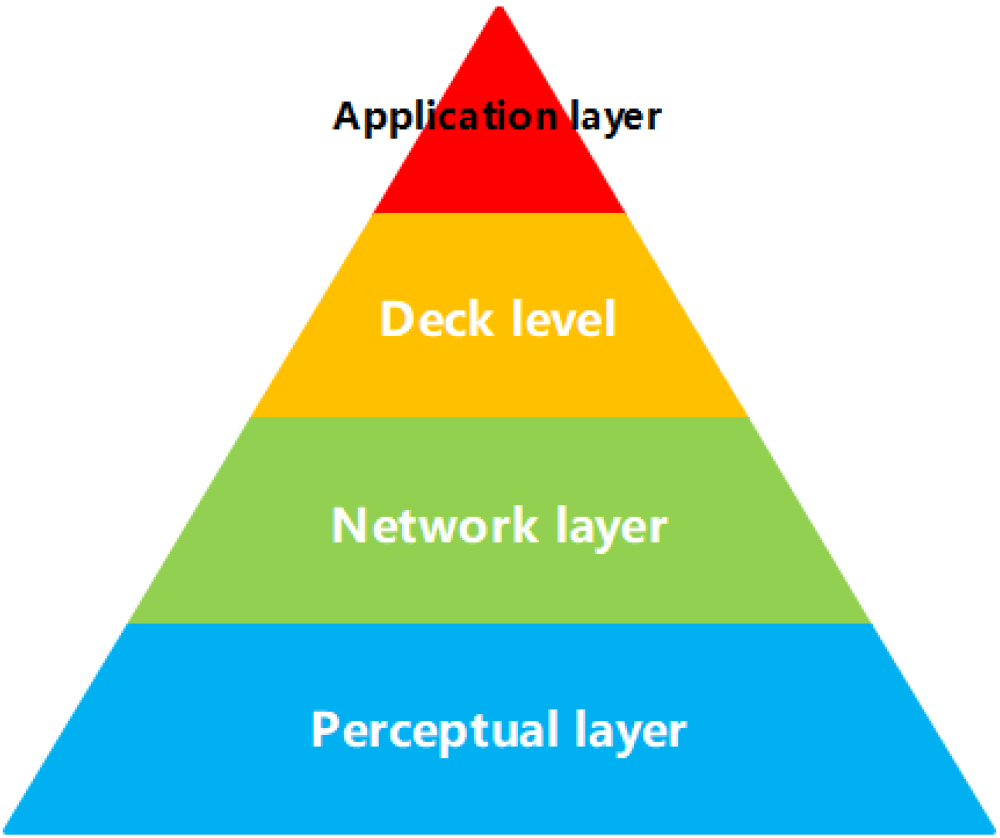
Data processing and analysis: After data is collected, it needs to be processed and analyzed by data processing and analysis tools, such as machine learning algorithms. For example, these tools can calculate product sales speed (SV), equipment failure rate (FR), shipping delay rate (TDR) and other metrics:
Decision support: Build a supply chain decision support system based on the results of data processing and analysis. This system can provide production planning, inventory management, logistics management and other decision-making suggestions based on real-time data, helping enterprises to make more accurate and efficient decisions in supply chain management.
Executive decision: Based on the recommendation of the decision support system, the enterprise can perform specific operations in each link of the supply chain. For example, adjusting production plans according to sales speed and transportation status, adjusting equipment maintenance or replacement plans according to equipment status, etc., to achieve supply chain optimization.
Through this series of steps, the supply chain management model based on the Internet of Things collects and processes a large amount of supply chain data in real time, provides a basis for decision-making, and realizes the automation and real-time management of the supply chain, thereby improving the efficiency of the supply chain, reducing management costs, and better coping with various supply chain risks.
Research methods and data sources
The main research methods are the combination of quantitative research and qualitative research. The quantitative part mainly uses descriptive statistics, correlation analysis and regression analysis, and the qualitative part mainly uses case studies.
Secondary data: including company reports, industry reports, market research reports, etc. These data come from authoritative institutions and organizations, such as government departments, research institutions, large consulting companies, etc., and their reliability and validity have been widely recognized. This data provides a great deal of information about the application of iot in supply chain management and can be used for quantitative research.
Primary data: Mainly collected through questionnaires. The questionnaire has a rigorous design and a wide sampling range, including companies of different industries and sizes, to ensure the representativeness and accuracy of the data. These data can be used for both quantitative and qualitative studies.
Quantitative research: Descriptive statistics are used to summarize the application status of IoT in supply chain management, such as the frequency and type of application. Correlation analysis is used to explore the relationship between IoT applications and supply chain efficiency, cost, risk management and other factors. Regression analysis is used to predict and explain the impact of IoT applications on various factors of supply chain management.
Data sources mainly include the following two aspects:
Secondary data: Including company reports, industry reports, market research reports, etc., these data provide a lot of information about the application of IoT in supply chain management and can be used for quantitative research.
Primary data: Mainly collected through questionnaires and in-depth interviews, including the basic information of the company, the application of the Internet of things, supply chain management, etc., these data can be used for both quantitative and qualitative research. Specific data sources are shown in Table 3.
Data sources
Data sources
IoT technology can significantly improve supply chain efficiency through real-time tracking and monitoring, automated data collection and processing, and more. Here’s a data-based analysis of efficiency gains:
Introduce a data set that records the supply chain processing time (in hours) in a month, before and after the use of IoT technology. The specific collected data are shown in Fig. 2.
Data collection diagram.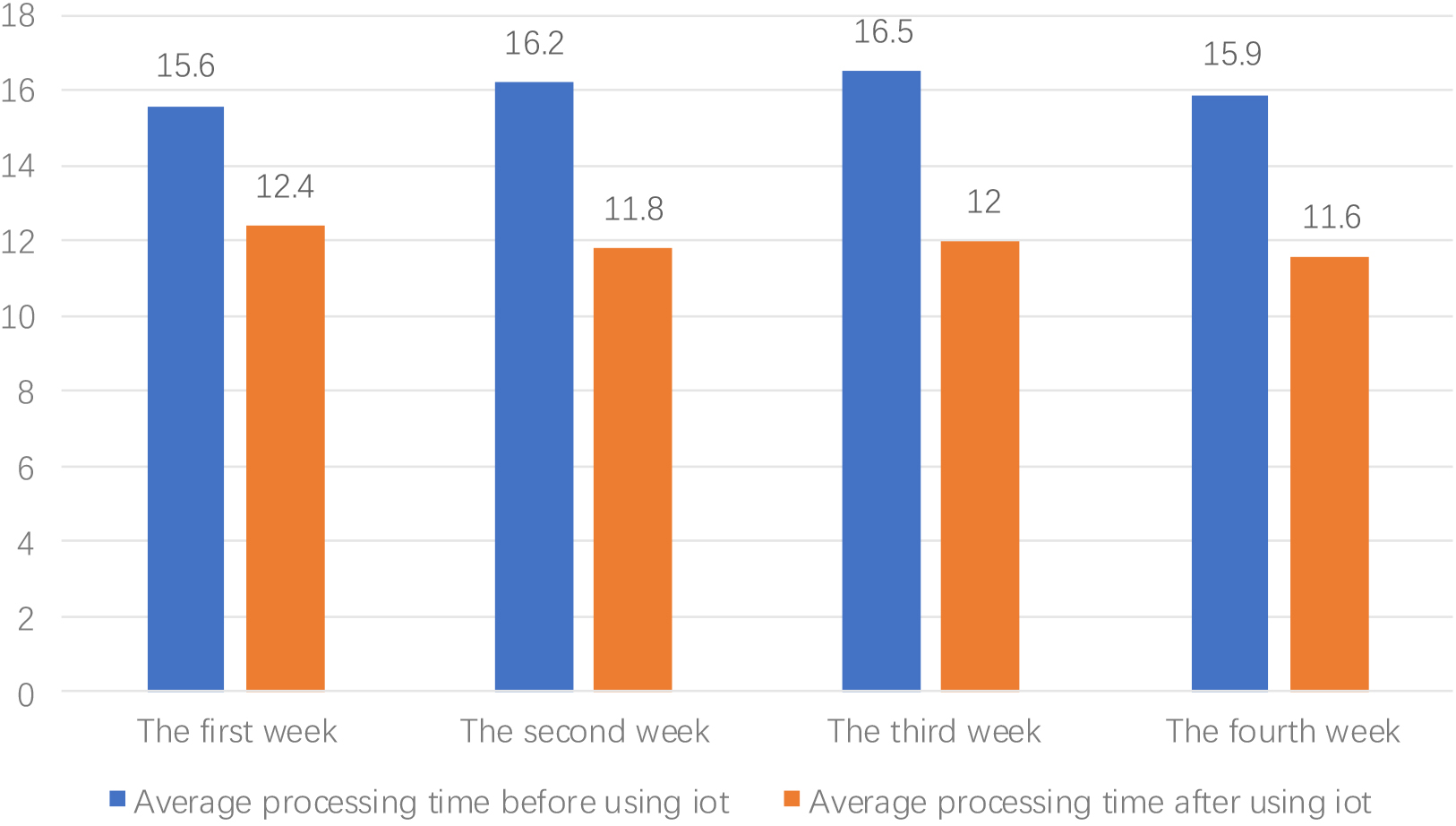
Calculate the average processing time before and after using IoT, and calculate the amount and percentage of the reduction in processing time.
Let
The percentage reduction is shown in Eq. (2).
The calculation results are shown in Fig. 3.
Calculation results.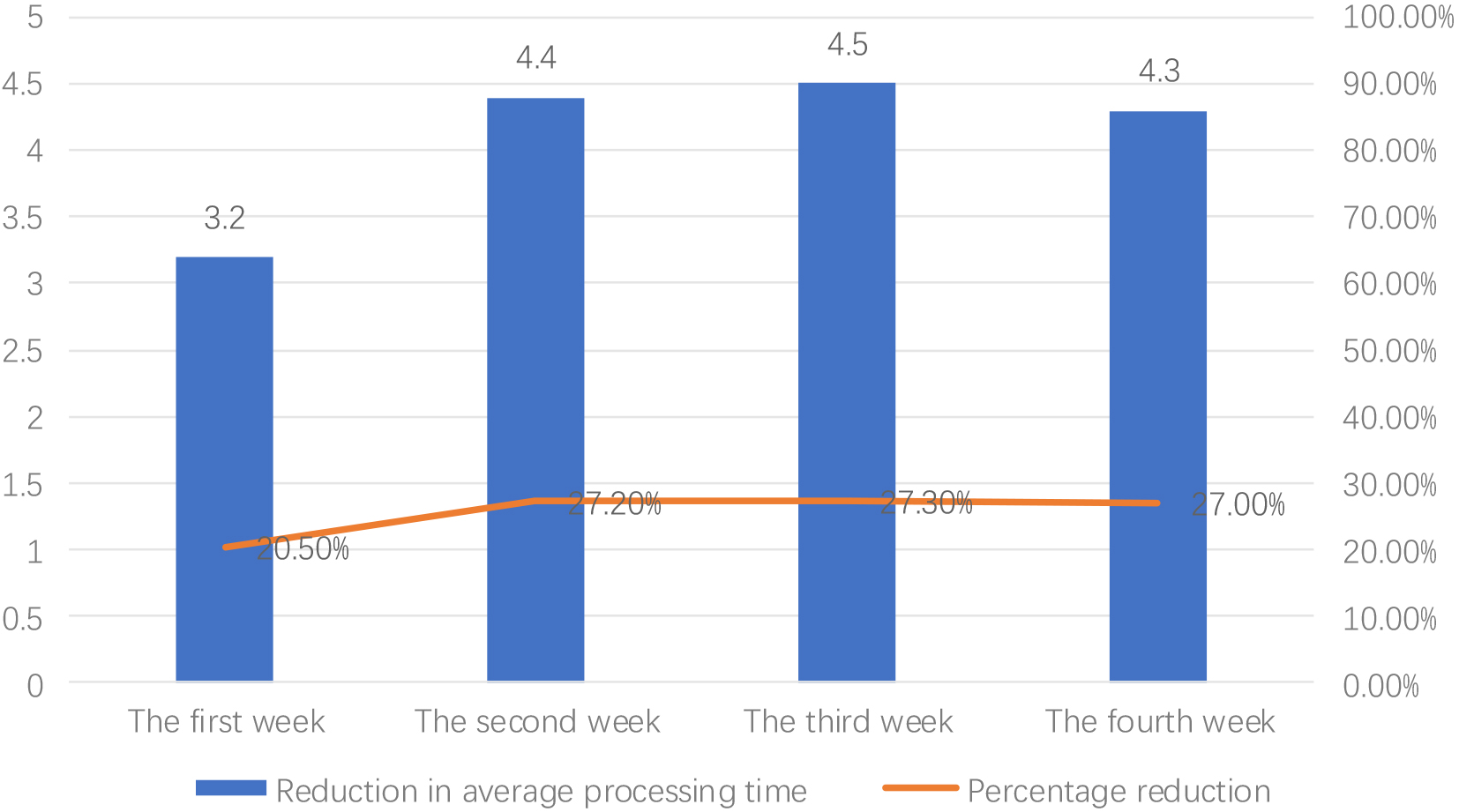
From the above data, it can be seen that the application of IoT technology can significantly improve the efficiency of the supply chain, and the average processing time is reduced by 3.2 to 4.5 hours, and the percentage reduction is between 20.5% and 27.3%. This increase in efficiency can help company’s process orders faster and respond to market demand faster, thus improving market competitiveness.
The application of the Internet of Things in supply chain management can help enterprises achieve cost reduction by improving the efficiency of warehouse management, optimizing logistics and transportation, and reducing human input.
In order to demonstrate more specifically how iot can reduce supply chain costs, its applications in warehouse management, logistics transportation, and human resource management will be explored in detail.
In warehouse management, the Internet of Things technology monitors the storage status and inventory of goods in real time through intelligent sensors and real-time data analysis, thereby reducing the risk of excessive inventory and stock shortages, improving the efficiency of warehouse space use, and reducing storage costs.
In terms of logistics and transportation, the Internet of Things reduces transportation time and transportation costs by tracking and optimizing routes in real time, and at the same time, reduces the risk of goods loss by monitoring environmental conditions during transportation.
In terms of human resource management, the Internet of Things reduces the need for manual operation and improves work efficiency through automated equipment and intelligent systems, thus reducing labor costs.
A data set was introduced to record storage costs, transportation costs, and labor costs (in 10,000 yuan) before and after the use of IoT technology in four quarters of a fiscal year. The specific recorded data is shown in Fig. 4.
Calculate the difference between each cost before and after the IoT application, and its percentage. Let
The percentage formula for cost reduction is shown in Eq. (4).
The calculated results are shown in Table 4.
Cost change table
Data recording diagram.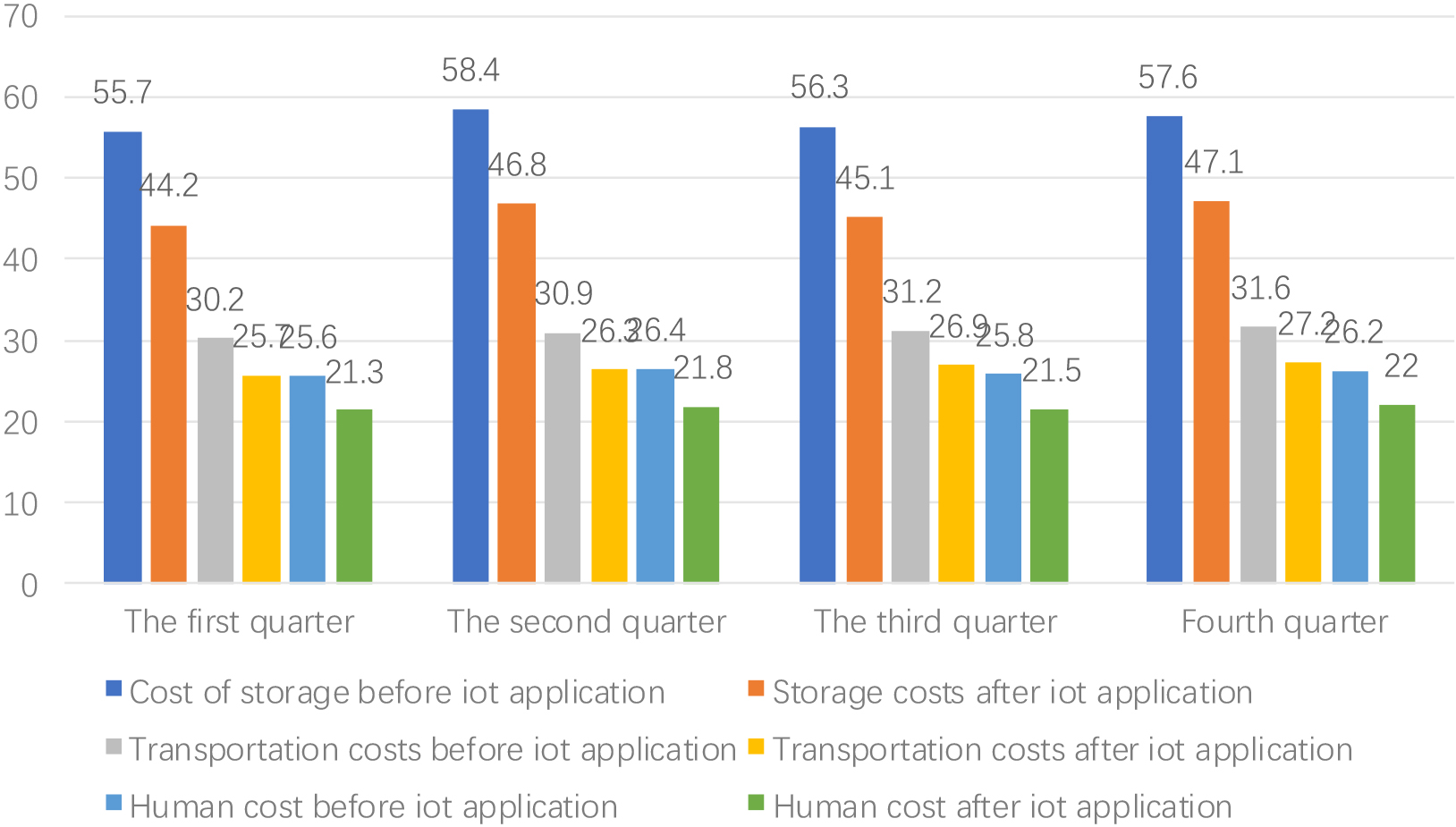
Through the analysis of the above data, it can be seen that the application of IoT technology in supply chain management can significantly reduce the storage, transportation and labor costs of enterprises. In terms of storage costs, the introduction of IoT technology has reduced costs by 105,000 to 116,000 yuan, with a percentage reduction between 18.2% and 20.6%. In terms of transportation costs, the cost reduction is between 43,000 yuan and 46,000 yuan, and the percentage reduction is 13.8% to 14.9%. In terms of labor costs, the amount of cost reduction is between 42,000 yuan and 46,000 yuan, and the percentage reduction is between 16.0% and 17.4%. This significant cost reduction can enable enterprises to save a lot of costs while being efficient, and further improve the competitiveness and profitability of enterprises.
In recent years, many studies have confirmed the application value of iot technology in supply chain risk management. For example, through real-time data collection and analysis, the Internet of Things technology can discover risk factors in the supply chain in a timely manner, so as to help enterprises take corresponding measures to avoid or reduce the occurrence of risks. In addition, through iot technology, enterprises can more flexibly adjust their supply chain strategies to respond to market changes, thereby reducing the risk of supply chain disruptions.
The application of IoT technology in supply chain management can help enterprises improve supply chain risk management through real-time monitoring and predictive analysis. The following is a detailed analysis of risk management improvement:
A data set was introduced to record the number of supply chain delays, missing inventory, and supply chain disruptions that occurred before and after the use of IoT technology in four quarters of a fiscal year. The specific data is shown in Fig. 5.
Calculate the difference between the number of times each risk occurred before and after the Internet of Things application, and its percentage. Set
The percentage of risk reduction is shown in Eq. (6).
The calculated results are shown in Table 5.
Table of risk changes
Chart of quarterly data changes.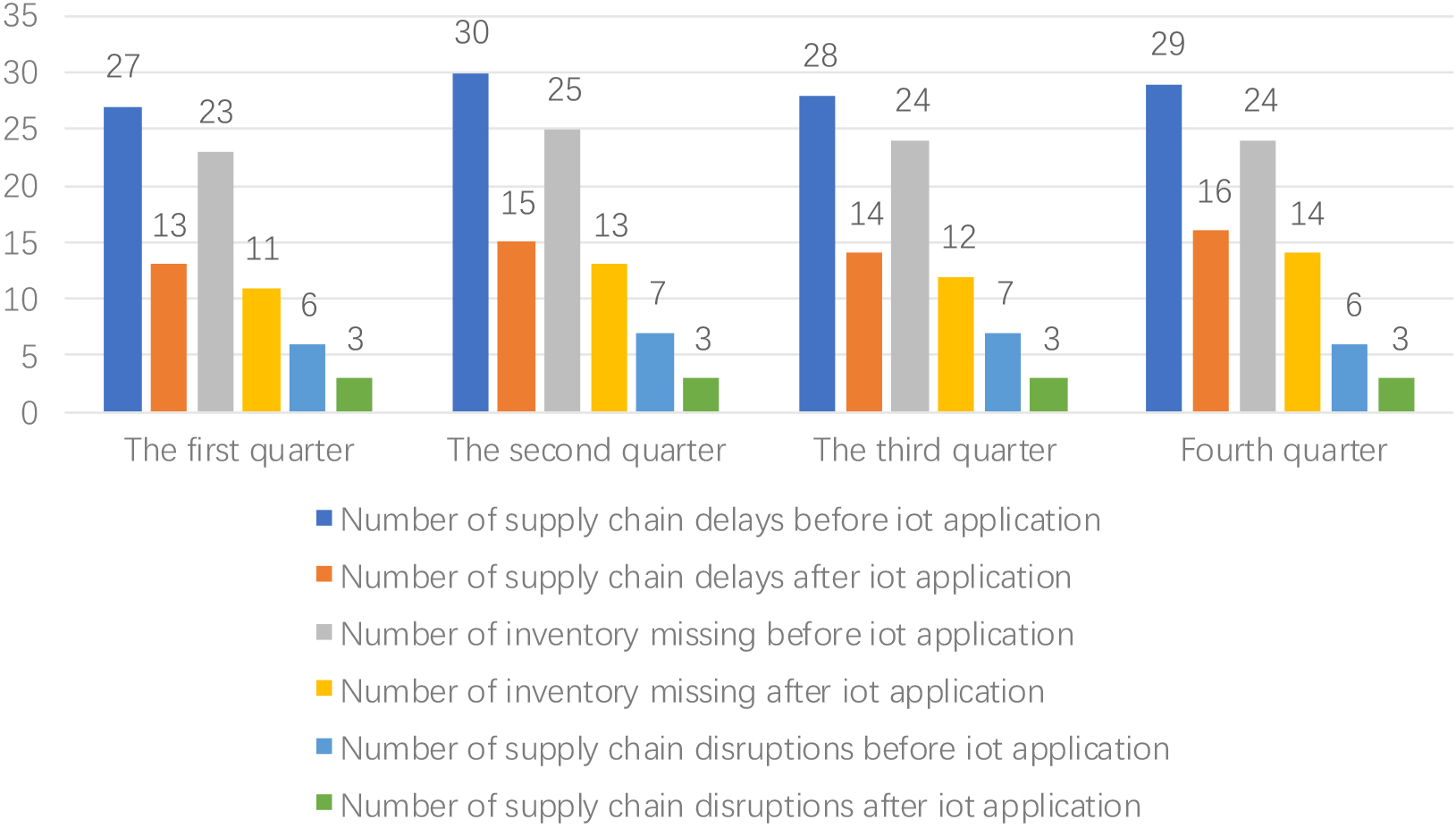
Through the analysis of the above data, it can be seen that the application of Internet of Things technology in supply chain management can significantly reduce the occurrence of supply chain risks, and the occurrence times of supply chain delays, inventory loss and supply chain interruptions have significantly decreased by more than 40%, reflecting the great value of Internet of Things technology in the improvement of supply chain risk management.
Article summary
This paper comprehensively and deeply discusses the application and value of the Internet of Things in enterprise supply chain management. Combining theoretical analysis and empirical verification, it reveals the importance of the Internet of Things technology in improving supply chain transparency, efficiency, optimizing decision making, strengthening risk management and improving customer satisfaction. Through practical data and applied mathematical models, we demonstrate the practical application value of iot technology in reducing costs and improving risk management, providing empirical support for relevant enterprises, helping them to better utilize iot technology to optimize supply chain management and improve enterprise competitiveness.
Suggestions
Continue to pay attention to and study the development of Internet of Things technology: enterprises need to continue to learn the latest development trends of the Internet of Things and acquire new knowledge through multiple channels, so as to cope with future challenges in advance. Especially for small businesses, you can consider starting with small scale projects to gradually practice and promote iot technology. Experience in actual operation of iot: Businesses of all sizes, especially small businesses, should start with small projects to gradually understand and practice the practical effects of iot technology in increasing efficiency, reducing costs, and improving risk management. Establish a supply chain management model and data analysis system based on the Internet of Things: Enterprises should establish a comprehensive supply chain management model and data analysis system based on actual needs and the characteristics of the Internet of Things to process big data and ensure equipment security. Explore the social and environmental impact of the Internet of Things: The widespread application of the Internet of Things not only changes the business model, but also has a profound impact on society and the environment. For example, through real-time monitoring and data analysis, companies can more accurately predict and meet market demand, reduce overproduction and waste, and thus reduce the burden on the environment. Therefore, while promoting the Internet of Things technology, enterprises should also pay attention to its impact on society and the environment to achieve sustainable development.
Through the in-depth research and empirical analysis of the Internet of Things in supply chain management, it not only reveals the great potential and practical value of the technology, but also provides a series of concrete and operable implementation suggestions for enterprises, hoping to help enterprises better play the advantages of the Internet of Things in actual operation and realize the optimal management of the supply chain.