



Abstract
In public management, intelligent face recognition detection technology plays a very crucial role, which can greatly improve the efficiency of public management and reduce the workload of staff. To address the shortcomings of traditional face detection algorithms such as low detection efficiency and easy overfitting, a face detection model based on convolutional neural network (CNN) was proposed in this study, and the structure of CNN was optimized to enhance the accuracy and efficiency of the proposed face detection model. To solve the face detection errors caused by illumination differences, a light compensation strategy was proposed to pre-process the data; meanwhile, a Gaussian curvature filtering algorithm was used to enhance the face image and improve the subsequent detection accuracy. On this basis, a face detection model based on improved CNN was designed in this study. Experiments showed that the accuracy of the model reached 99.86% with high accuracy and efficiency, indicating that such method can improve the efficiency of public management and has good application prospects in access control and check-in systems.
Introduction
Public management is a new management concept and management mode, which is produced to address the defects of government management [1]. The main purpose of public management is to protect the public interests and public resources, such as road traffic, public measures, and protect the public services, such as education and social security [2]. Public management consists of government management, administrative management, development management and public policy management [3]. Intelligent face detection technology can greatly improve the efficiency of public management and provide technical support for public management [4]. However, the traditional face detection technology has problems such as low detection, over-fitting, etc., which limits the efficiency of public management. Therefore, it is proposed to apply convolutional neural network to face detection. However, the application effect of traditional CNN in face detection is unsatisfactory. To this end, a face detection model is constructed based on the improved convolutional neural network to provide technical support for public management, so as to improve the efficiency of public management. The research provides a reference for the reform of public management and expands the application direction of face recognition technology.
Related works
Public management is a new management concept and management mode to protect the public interest, public order, public security, etc. Therefore, public management is of great significance to the harmonious and stable operation of society. Hermus et al. [5] reviewed recent relevant literatures and believed that art design can play a more positive role in public management. Bertelli et al. [6] discussed the research agenda of national public administration and public management and provided information of developing and developed countries. Ongaro et al. [7] discussed the differences in public management between China and the EU, and proposed a background oriented public management innovation strategy. Vasilenko and Zotov [8] discussed the risks in the process of digitalization of public management, as well as the causes of risks and solutions by taking Russia as an example. Manoharan et al. [9] analyzed the problems in India’s public management and proposed some solutions to help India’s public management develop better. Wirtz et al. [10] discussed the application prospect of artificial intelligence (AI) technology in public management, and proposed a set of AI public management frameworks, in the hope of improving the effectiveness of public management. Overman and Schillemans [11] discussed the impact of the public and staff’s sense of responsibility on public management, and believed that the concept of sense of responsibility is of great significance in public management theory. Andrews [12] believes thatalgorithms have a great impact on public management in the context of big data, and studied public management, public leadership and public value in the context of big data.
After years of development, today’s face recognition technology has become mature, with high recognition efficiency and accuracy, and plays an irreplaceable role in various fields. Face recognition technology is one of the research hotspots in the current academic community. Wu et al. [13] built a model by combining the coupling similarity measurement method and non negative constraint reference coding, and applied the model to improve the accuracy of face recognition. Pu et al. [14] applied the face recognition model based on neural network to the UAV, in the hope of achieving remote target tracking and absolute distance estimation. Liang et al. [15] combined wavelet transform and principal component analysis to eliminate the error of face recognition under different lighting conditions, so as to improve the accuracy of face recognition. Kumcu et al. [16] proposed a masked face recognition method in view of the widespread use of masks during the COVID-19, and assessed the social cognitive impairment of multiple sclerosis patients. Sun et al. [17] proposed a new loss function – origin loss to optimize the depth convolution neural network (DCNN), and applied the optimized DCNN to face recognition. Aiming at the low accuracy of current face recognition technology under the influence of lighting, posture, expression, environment and other factors, Guilherme et al. [18] proposed a differential evolution-based FR framework to eliminate the influence of external factors. Chen and Zhou [19] carried out the fuzzy discriminant analysis based on cooperative representation to extract the discriminant features of the image, and minimized the impact of the external environment on the model performance. Rossion and Lochy [20] discussed the problem of right hemisphere lateralization in face recognition, and put forward a variety of assumptions.
Although current face recognition and public related researches have made substantial achievements, there are few reports on the application of face recognition technology to public management to improve the efficiency of public management. For this reason, a face detection model based on the improved convolutional neural network was proposed in this work to improve the accuracy and efficiency of face detection, thus providing some help for public management. There are two main innovations in this study. The first is applying face recognition technology to public management, which improves the efficiency of public management. The second is improving the structure of traditional CNN as well as the performance of CNN model. The face recognition method proposed in the study can greatly improve the efficiency of public management, reduce the mistakes in public management, and facilitate public management and even the harmonious operation of society. This study provides reference for the improvement and application of face recognition technology.
Improved CNN-based face detection technique
Image data pre-processing
To improve the detection accuracy, it is often necessary to pre-process the face image information acquired by camera equipment [21]. The study used the Viola-Jones algorithm to extract local features of the image and then detect the face information in the image to achieve face localization. However, the Viola-Jones algorithm suffers from face detection bias in face localization. To this end, this study introduced a face alignment algorithm that can treat the key feature points as a random forest to obtain the face offset by training the feature points, and finally used global linear regression combined with sparse coding to obtain the final alignment structure. The face image offset can be calculated using Eq. (1).
Where,
Principle of Gaussian curvature filtering algorithm.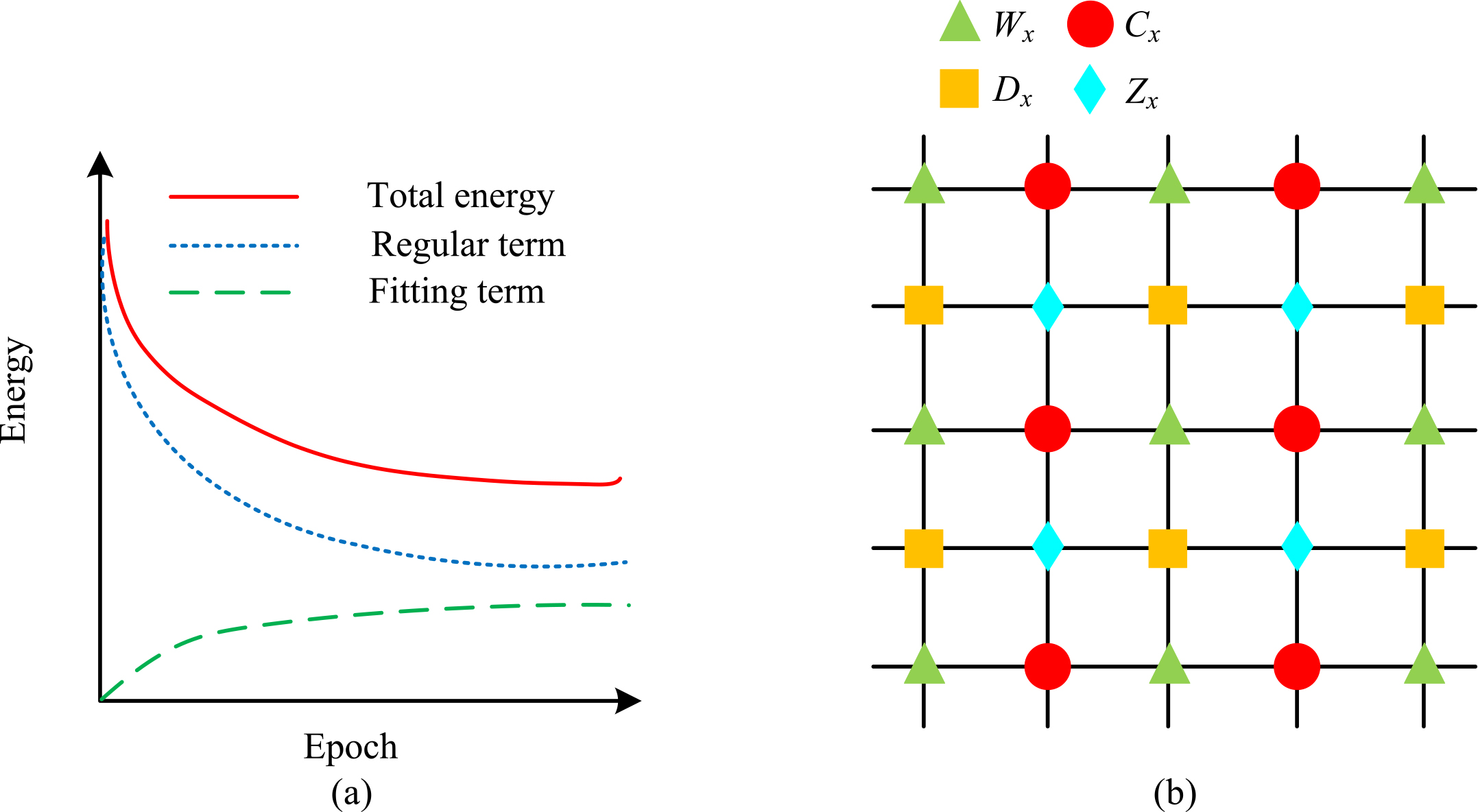
Solving for the partial derivatives of an image allows for the optimization of the regular term. By regarding the image as a segmented extensible surface, the problem of optimizing the regular factor of a geometric surface can be transformed into an optimization problem of Gaussian curvature. In the Gaussian curvature filtering algorithm, the sampling space of an image is decomposed to obtain four different sets, where all the elements in the same set are independent of each other, as shown in Fig. 1b. The optimization of a regular term for an element in one of the four sets can be performed by traversing the scalable, minimal and constant value surfaces at any location and selecting the surface closest to the original data as the new estimate, with the optimal estimate shown in Eq. (2).
Where,
Where
When the illumination level varies, the images acquired by the camera device will have an uneven distribution of light, making local details and texture information in the face image blurred, reducing the accuracy of face detection. Therefore, a lighting compensation strategy is usually introduced to eliminate the negative impact of lighting conditions on the face detection algorithm. The study uses homomorphic filtering enhancement techniques to perform illumination compensation. The basic idea of homomorphic filtering is to represent a certain image
Where,
Face detection technology is widely used in the fields of transportation, education, finance, and particularly public administration. Traditional face detection techniques involve manual extraction of face texture features, which is less efficient and less accurate. CNN is an important part of deep learning technology, which can automatically learn and extract face features, and achieve face detection with higher efficiency and better performance. Therefore, the face detection technique based on CNN is proposed, as shown in Fig. 2.
Basic structure of CNN.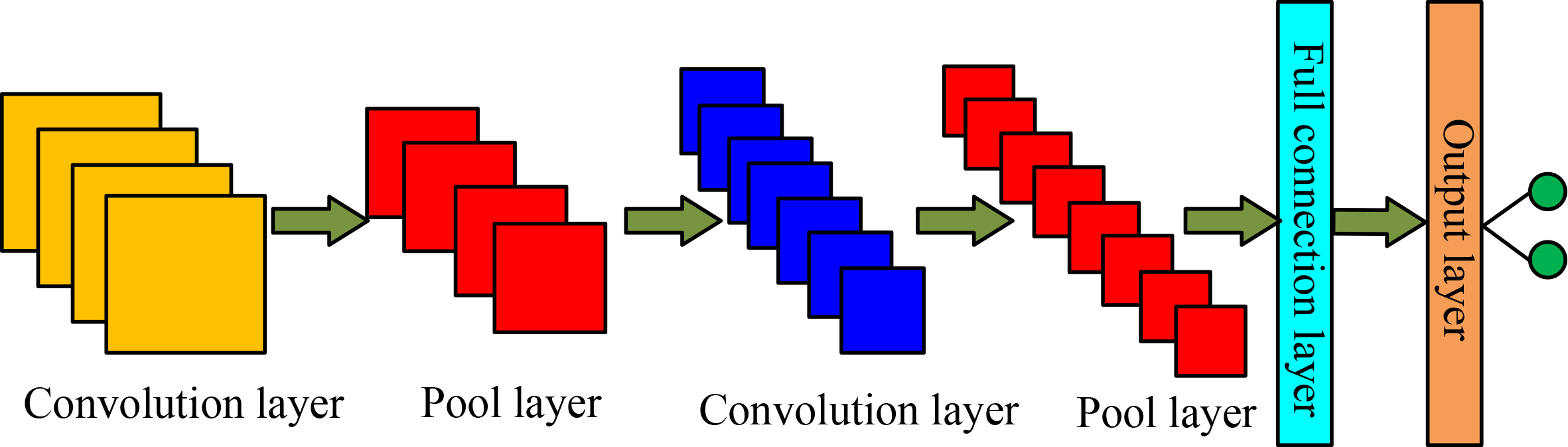
To improve the expressive power of CNN models, a non-linear mapping of the values obtained from the convolutional operation is introduced to change the linear transformation brought about by the convolutional layer operation using a non-linear function. The non-linear function, also known as the activation function, is used to introduce non-linear factors. Commonly used activation functions include the sigmoid function, tanh function and relu function. The graphs of these functions are shown in Fig. 3.
Common activation functions.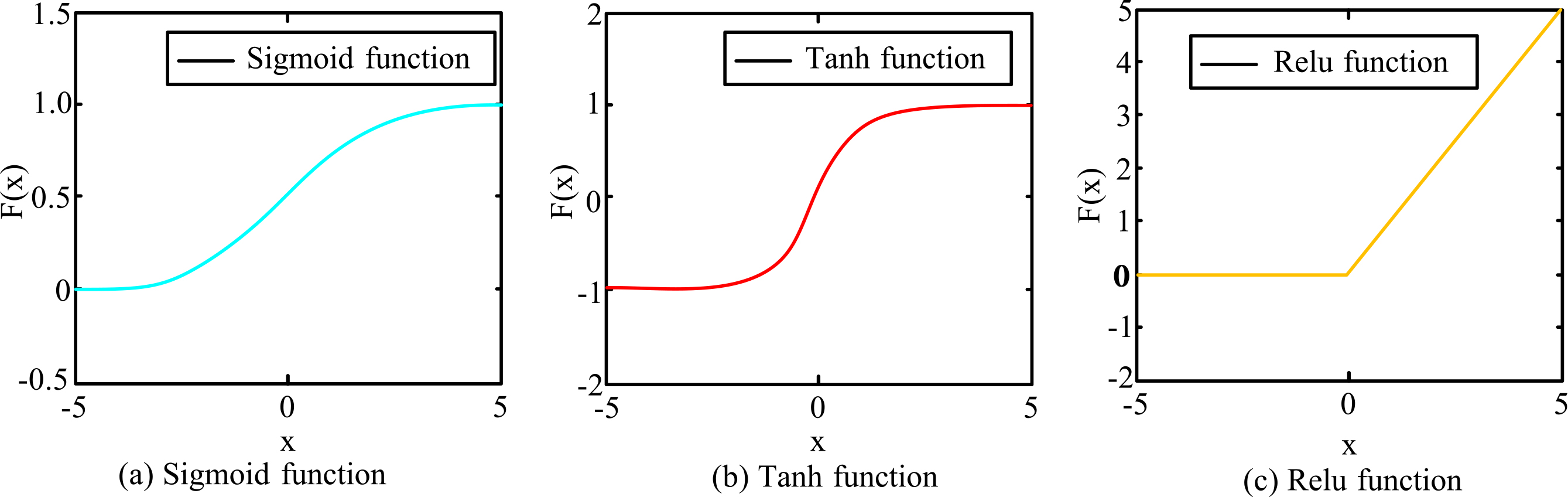
In the traditional CNN-based face detection model, the direct input of face images leads to a large amount of redundant information and operations, resulting in non-satisfactory efficiency and accuracy of face detection. To this end, the Gabor transform method is adopted to extract the local key features of the face image after pre-processing the face image, so that the dimensionality of the feature vector input to the CNN model is greatly reduced, thus reducing the complexity of operation and improving face detection accuracy. Firstly, the images are chunked and all the images are set to a size of 128*128, the images are processed using the Gabor transform, and the images are segmented into sub-maps of 16*16. Feature extraction is performed on these sub-maps and dimensionality reduction is applied to obtain the feature vectors of the initial image at each scale and direction. The parameter settings of the 2D Gabor filter will directly affect the capacity of representing the feature signal. The bandwidth of the 2D Gabor filter is calculated according to Eq. (6).
Wherer,
Where,
Where,
Where,
CNN is one of the most widely used and representative models in deep learning, which has excellent performance in the field of computer vision, and has unparalleled advantages in face recognition and detection. Therefore, the study uses CNN models to recognize and detect face images. The learning process of CNN is to input the sample data into the CNN model, and to change the parameters of the CNN network until the output of the CNN model approach to the desired output value, with desired accuracy achieved. The basic structure of the CNN-based face detection model is shown in Fig. 4.
Basic structure of face detection model based on CNN.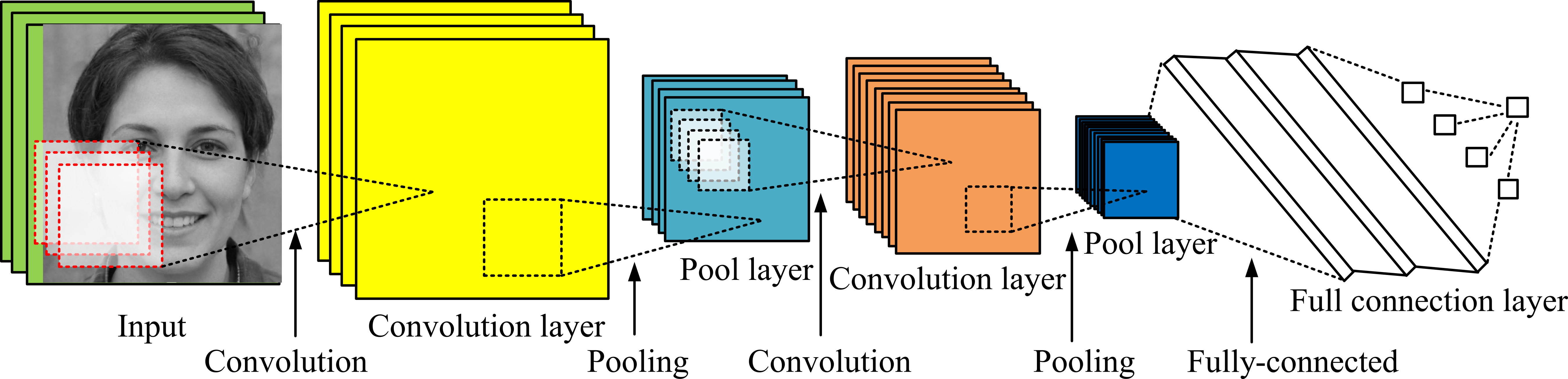
For CNN-based face detection, after acquiring two-dimensional Gabor features, the input face image data samples are clustered and processed, and the network parameters are adjusted according to the clustering results to achieve the purpose of training the network. Firstly, the initial clustering centre is set and the data samples are clustered until the change in the category centre is below a set value; after that, the clustering results are input to the CNN model, and the Gabor local texture features of the face image can be expressed by Eq. (10).
Where,
Where,
Where,
Based on the above, classification network training can be implemented. The training algorithm is optimized subsequently. This study draws on the back propagation algorithm (BP) idea and uses the stochastic gradient descent algorithm (SGD) to train CNN. When the CNN model is iterated to
Where,
Where,
Basic flow of face detection model based on Gabor local features and CNN.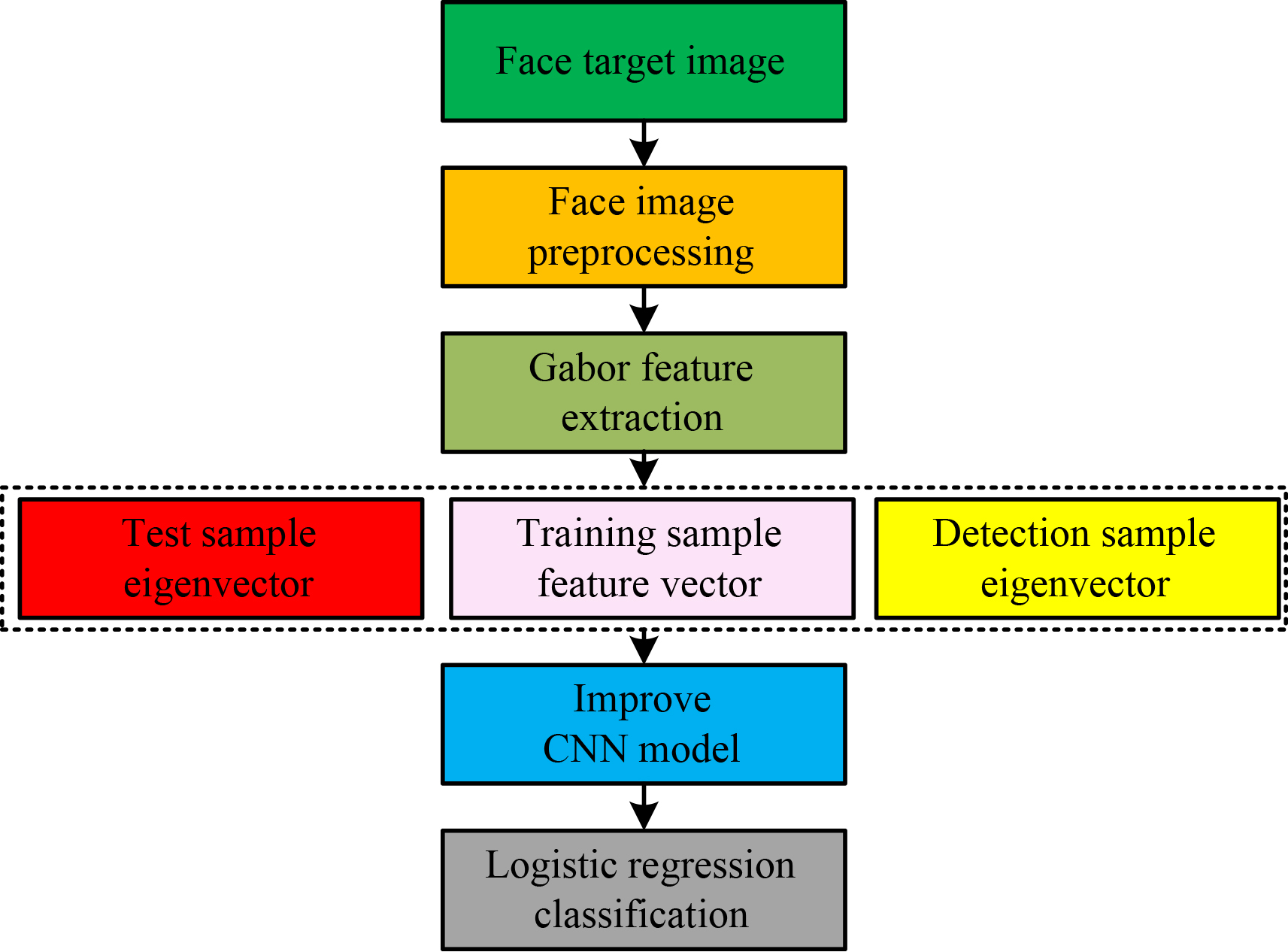
In Fig. 5, the collected face images are first preprocessed, and then Gabor local features are extracted based on the above contents. After training, the Gabor local feature vectors of these images are input into the CNN model to complete face image recognition, detection and classification.
The performance of the improved CNN-based face detection model was verified based on the face data collected from the ORL database. In the experiments, an Intel i3-3110M processor with a main frequency of 2.40GHz and 8GB of RAM was used; the graphics card was an NVIDIA GTX750. the software running environment was Windows 7, and the algorithm run on Matlab software, using the Caffe architecture as the training tool for the CNN. A total of 3000 face images were acquired for the ORL database, of which 2500 image data were used as training samples, and the rest were used as test samples. All images were pre-processed and set to a size of 128*128 to facilitate the extraction of Gabor local features. To validate the research results based on improved CNN, the traditional CNN-based method and the improved CNN based method were trained using the same training samples, and the training results are shown in Fig. 6.
Effect analysis of improving CNN.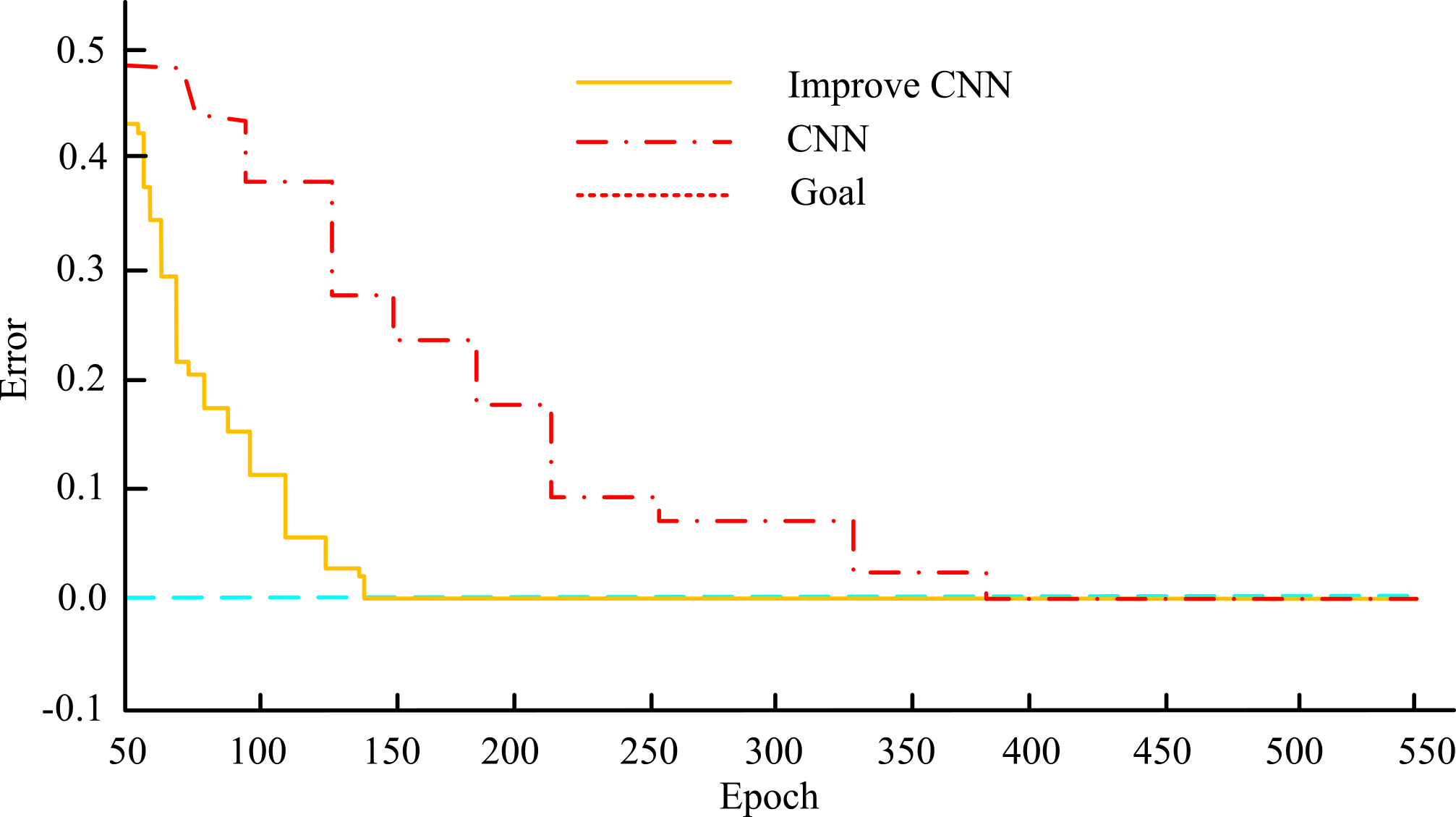
In Fig. 6, the convergence of the improved CNN model was clearly stronger than that of the traditional CNN model. At 138 iterations, the improved CNN model has approached the target accuracy, while the traditional CNN model reached target accuracy at 378 iterations. Face detection models based on improved CNN and Gabor features (model 1), improved CNN-based face detection model (model 2), and CNN-based face detection model (model 3) were constructed, trained and comparatively analyzed using the same sample data. The loss values of the three models during the training process are shown in Fig. 7.
Loss value changes of three models during training.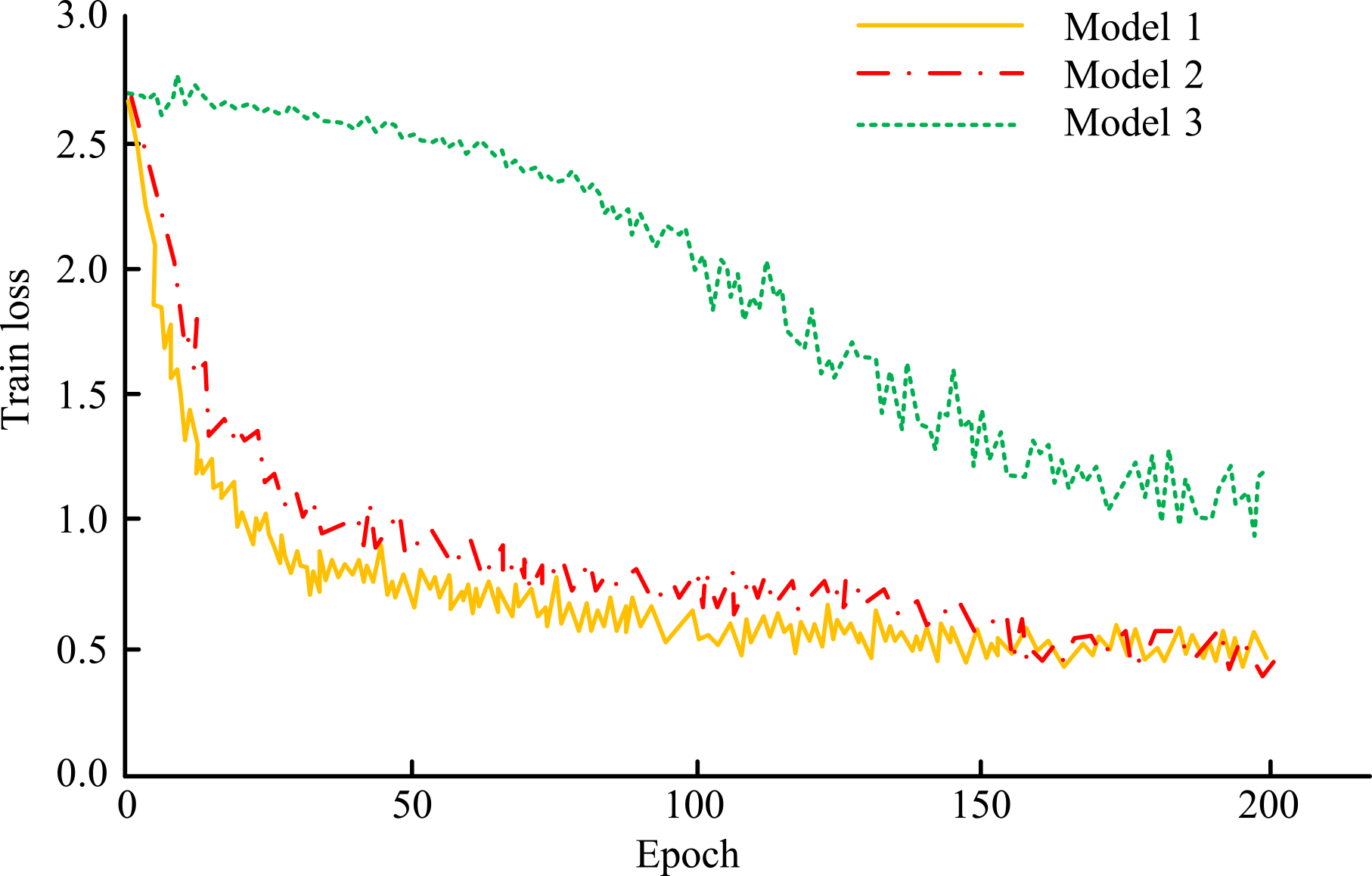
In Fig. 7, the change in loss values of model 1 and model 2 were basically the same, which is because both model 1 and model 2 adopt the improved CNN training method to improve the training efficiency. The loss value of model 3 was higher than that of model 1 and model 2, and the convergence was lower than that of model 1 and model 2. The loss value of model 1 was 0.48 when the number of iterations reached 200; the model 2 was 0.49, which was 0.01 higher that of model 1; the model 3 was 1.25, which is 0.77 higher that of model 1. The detection accuracy curves of the three models with the number of iterations are shown in Fig. 8.
Changes in accuracy of the model during iteration.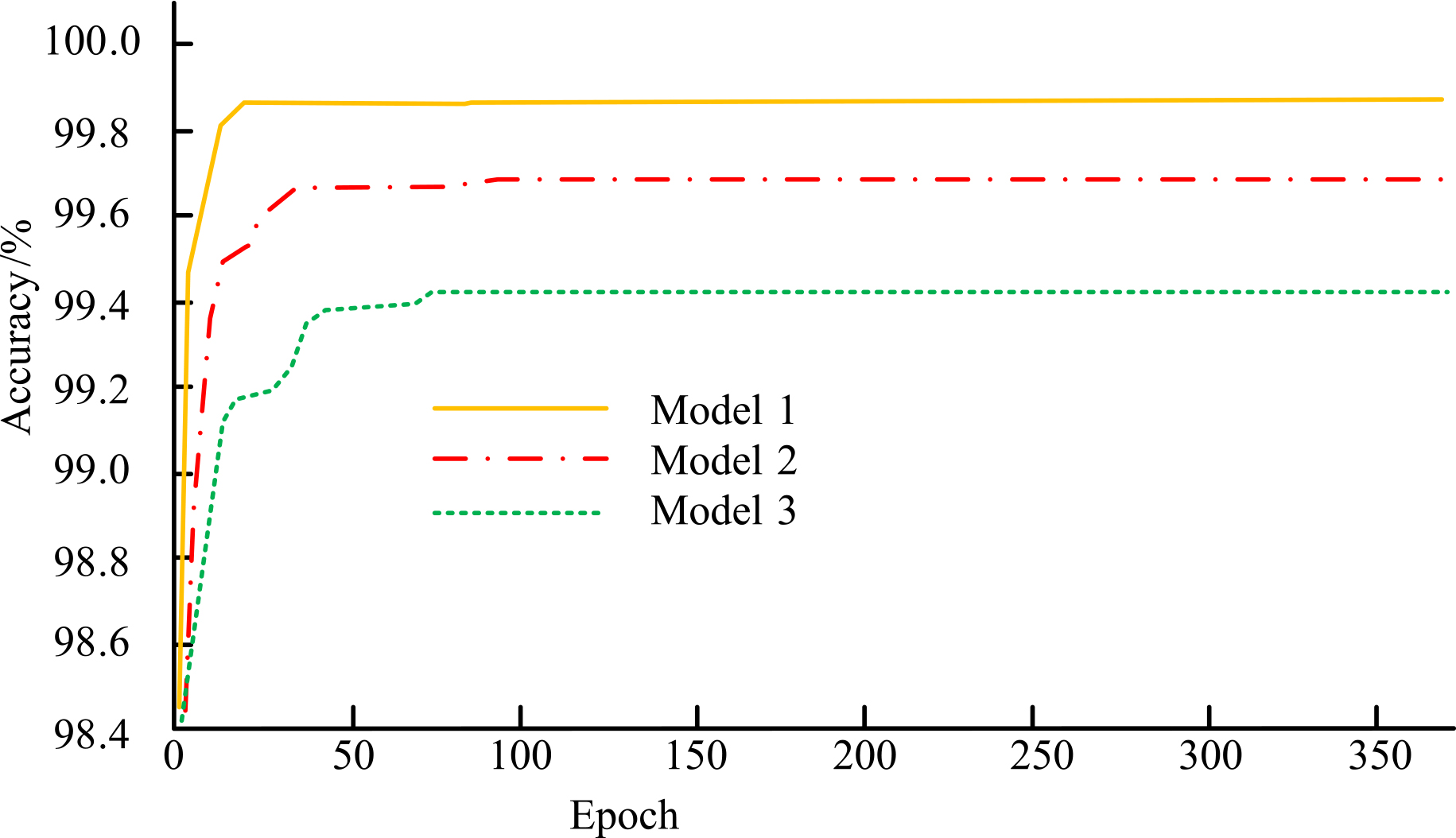
As shown in Fig. 8, the accuracy of model 1 was higher than that of model 2 and model 3. The accuracy of all three models generally increased in the early iterations; after a certain number of iterations, the accuracy of the models no longer changed significantly; after the accuracy curve stabilized, the accuracy of model 1 was 99.86%; the accuracy of model 2 was 99.63%, 0.23% lower than that of model 1; the accuracy of model 3 was 99.40%, 0.46% lower than that of model 1. The variation in accuracy of the three models with different sample sizes is shown in Fig. 9.
The variation in accuracy of the three models changes with the number of samples.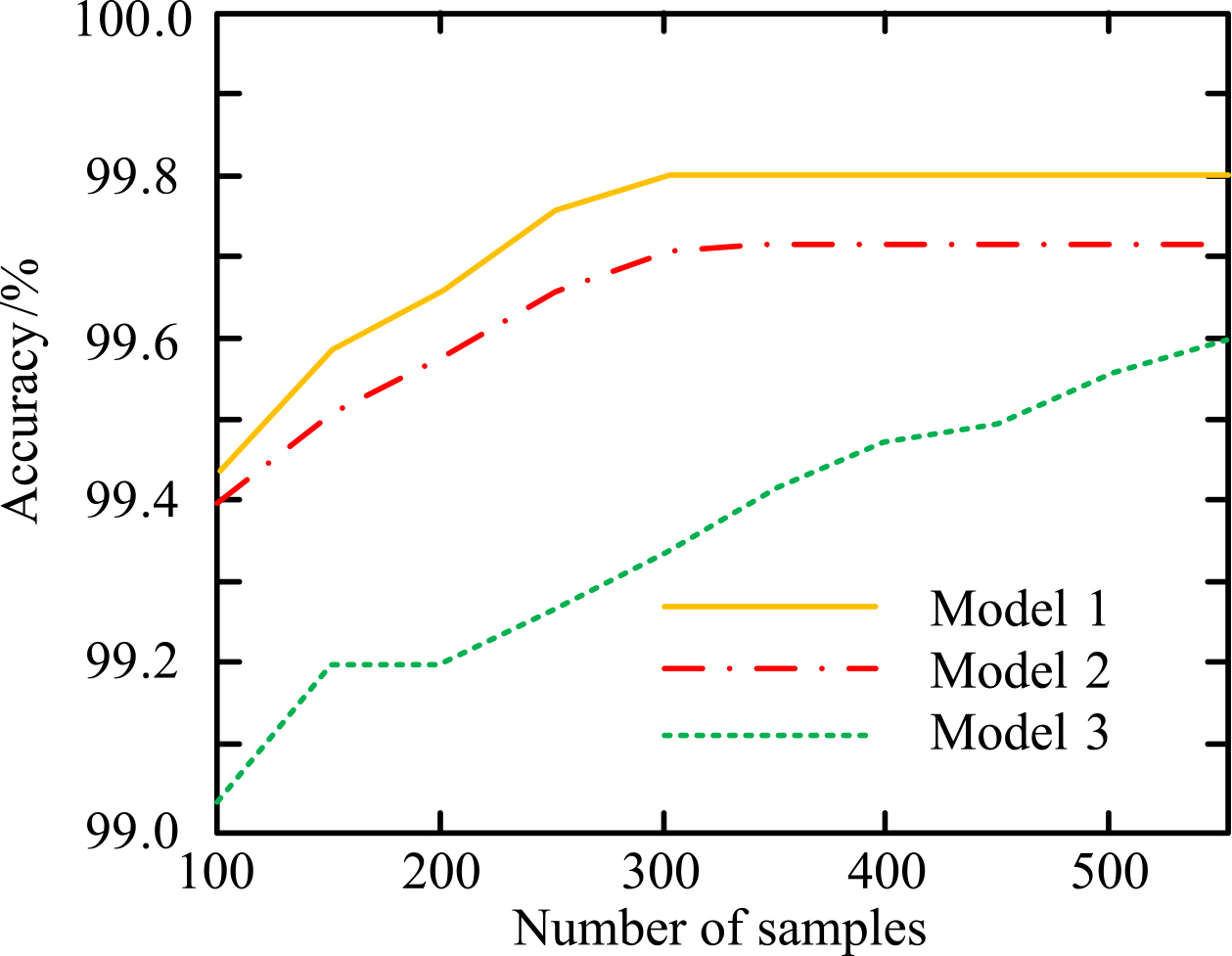
As shown in Fig. 9, the accuracy of all three models increased as the number of samples increased. At a sample size of 550, the accuracy of model 1 reached 99.80%, which was the highest among the three models; the accuracy of model 2 was 99.63%, which was 0.17% lower than that of model 1; and the accuracy of model 3 was 99.50%, which was 0.30% lower than that of model 1. The face image detection performance of the three models was analyzed using ROC curves. the area under the ROC curve is the AUC and, in general, the larger the value of the AUC, the better the performance of the model. The three prediction models were tested under the test data set, and the ROC curves of the three models are shown in Fig. 10.
ROC curves of three models.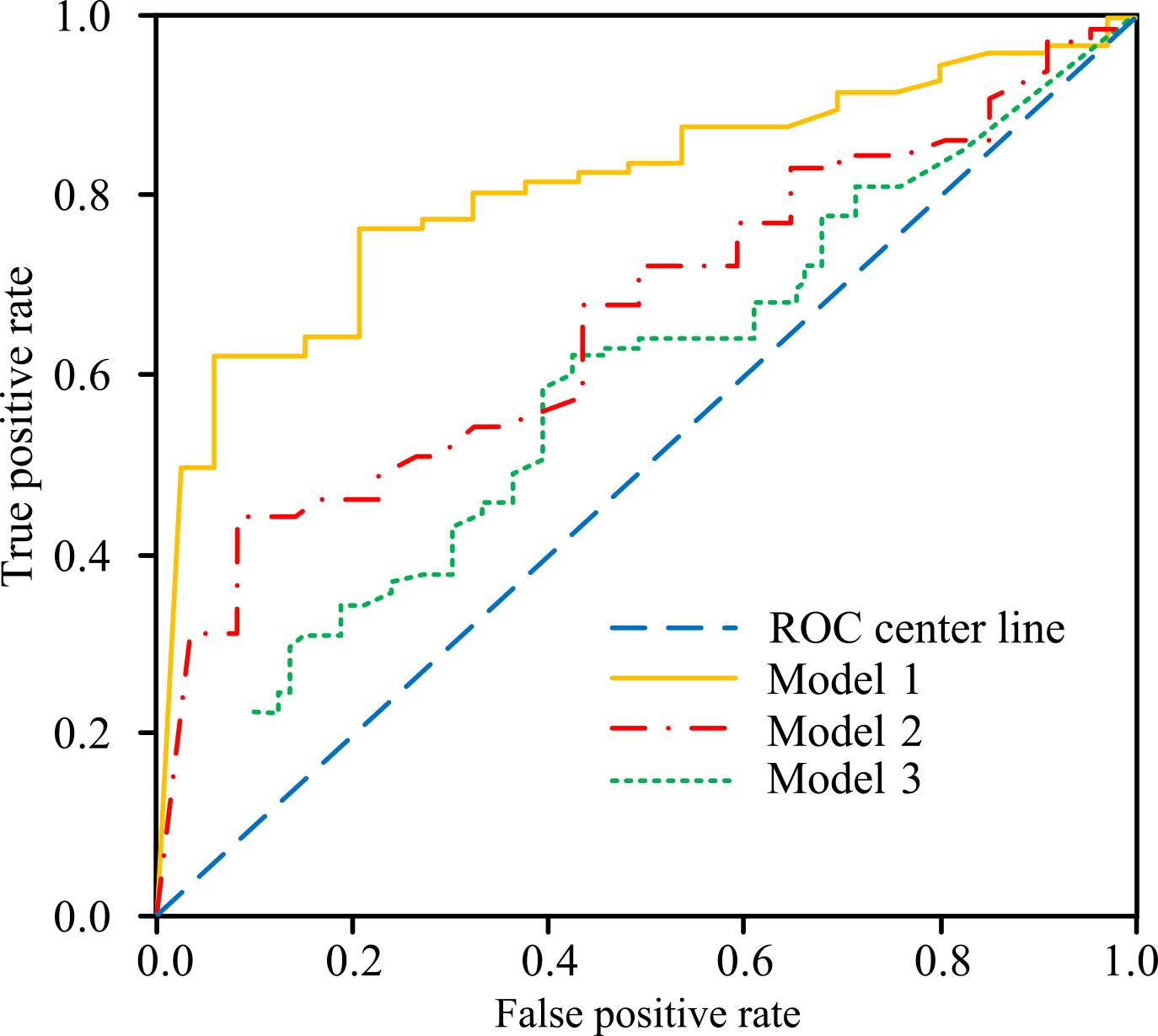
As shown in Fig. 10, the AUC value of model 1 was better than that of model 2 and model 3. The AUC value of model 1, model 2 and model 3 was 0.961, 0.947, 0.923, respectively, indicating model 1 had the largest AUC value. Taking airports, stations and other scenes as examples, the face recognition technology combined with ID card scanning can improve the efficiency of ticket checking, reduce ticket checking errors, and improve the efficiency of public management. The experiment was carried out in a station. In two ticket gates, one used model 1 for face detection, and the other used traditional methods (Adaboost algorithm) for face detection. The number of people detected at the two ticket gates in three days and corresponding detection accuracy are shown in Table 1.
The number of people detected at the two ticket gates and corresponding detection accuracy
When there were lots of people, some detection errors occurred in the traditional methods, while the proposed method was more stable, with higher detection accuracy. The above results can indicate that the proposed method can improve the performance of the CNN model, and the Gabor local features can improve the accuracy of the face detection model. In summary, the comprehensive performance of the face detection model based on the improved CNN and Gabor local features is better than that of the traditional face detection model, and its accuracy and efficiency can meet the requirements.
Face detection technology has important applications in public management. For example, ticket checking is carried out in subway, station, identity confirmation is carried out in bank, and order and security are maintained in residential areas and other scenarios. The development and application of face detection technology can greatly improve the efficiency of public management, reduce the workload of staff, and reduce the work errors of staff to a large extent. The face recognition technology based on CNN has been is widely used owe to high accuracy and recognition efficiency. The application effect of the proposed face detection method in public management was verified based on the data collected from the ORL database. The results are as follows:
The performance of improved CNN model and the traditional CNN model was comparatively analyzed, and results showed that the improved CNN model achieved the target accuracy by less than 240 iterations compared with the traditional CNN model. This shows that after improving the structure of the traditional CNN model, the learning rate of the model can be improved, and the number of iterations and training time can be reduced. In face detection, a large number of face images are required to train the model, which will consume a lot of time. The improved CNN model proposed in this study can effectively avoid this defect, so it has good application prospects in face detection and recognition. A face detection model based on improved CNN and Gabor features (Model 1), a face detection model based on improved CNN (Model 2), and a face detection model based on CNN (Model 3) were constructed. The changes of loss curve of model 1 and model 2 were basically consistent, and the downward trend was significantly higher than that of model 3. The results show that the improved strategy proposed in the study has a good optimization effect on the CNN model and can significantly improve the training effect. However, Gabor local feature extraction has little effect on the training of face detection model. When the number of iterations was the same, the accuracy of model 1 was significantly higher than that of model 2 and model 3, and the AUC value of model 1 was significantly higher than that of model 2 and model 3. In the process of testing, the accuracy of the three models increased with the number of iterations. When the accuracy reached a certain value, the accuracy curve of the model tended to be stable. This shows that Gabor feature extraction can help the model more accurately recognize the local features of the face image, thus improving the accuracy of the face detection model. Practical research was carried out in a station. The practice results showed that when the number of people was large, the accuracy of the proposed face detection model was more stable, while the detection accuracy of the model based on Adaboost algorithm fluctuated. This shows that the face detection model proposed in the study also has excellent performance in practical applications.
In conclusion, the proposed face detection model plays a better supporting role in public management. In addition to identity detection and recognition, the proposed model can make outstanding contributions in the fields of traffic violations detection, security and financial security payment.
In public management, the application of face detection technology can greatly improve management efficiency and management accuracy. Aiming at the defects of traditional face detection technology, the research combines improved CNN and Gabor features to build a face detection model. The performance of the proposed model was tested based on the face data collected from ORL database. The loss value of model 1 was 0.48, which is lower than model 2 and model 3, indicating that the convergence of model 1 iss better than the other two models. After the accuracy curve was stable, the accuracy of model 1 was 99.86%, which was significantly higher than the other two models. When the number of samples was 550, the accuracy of model 1 was 99.80%, which was the highest among the three models. The ROC curve was used to analyze the face image detection performance of the model. The AUC value of model 1 reached 0.961, which was the highest among the three models. It shows that the proposed method can significantly improve the efficiency of public management and reduce the workload of public management practitioner. The proposed face recognition method can greatly improve the accuracy and efficiency of face detection. In addition to playing an important role in public management, it plays a key role in identity recognition, attendance and other scenes. In this research, only the the data from the ORL database were used, leading to deviation in the experimental results, which should be improved in subsequent research.