



Abstract
Traditional crafts such as tategu (door and window fittings), kimono (clothes), and shikki (lacquerware) are regarded as important items for daily life in Japan; however, in recent years, the industry that manufactures and sells these products has experienced various problems and has continued to decline. Conversely, overseas demand for traditional crafts has been gradually increasing with the increase in foreign visitors to Japan in recent years. For these reasons, there is a need in the traditional crafts industry to provide information and promote traditional crafts to overseas customers. Accordingly, in this study, we implement a high presence traditional crafts experience system using virtual reality technology. Our proposed system provides users with a highly realistic virtual space experience using a head-mounted display and a data glove. In addition, multiple users can share the space via the network. Further, we consider the promotion of traditional crafts to overseas customers by combining multicultural architectural styles and Japanese culture.
Introduction
In Japan, there are many traditional crafts that are integral to daily life and are produced using traditional techniques and craftsmanship. The traditional craft industry symbolizes Japanese manufacturing culture as an industry, manufactures traditional crafts with Japanese historical and cultural value, and has long contributed to the lives of people as a unique Japanese industry. However, in recent years, the traditional craft industry has been declining due to various reasons. The decline of the traditional craft industry has been attributed to the following problems:
Weaknesses in information dissemination and the branding of traditional crafts;
A lack of know-how with respect to business expansion;
Difficulties by individuals in cultivating sales channels;
Difficulties in securing raw materials; and
A lack of successors due to a decline in the number of traditional craftsmen.
In response to the decline of the traditional craft industry, the Ministry of Economy, Trade, and Industry has enacted the following measures [13,14]:
Support for the effective promotion of traditional crafts to consumers by proposing living spaces and lifestyles incorporating traditional crafts;
The targeting of consumers who appreciate the merits of traditional crafts;
Expansion into overseas markets against the backdrop of the “Japanese boom;”
Stimulation of the traditional craft industry using information and communication technologies (ICT);
Symbioses with local communities via collaborations with local governments;
The active recruitment of individuals who want to become traditional craftsmen; and
The development of human resources in the fields of sales and the distribution of traditional crafts.
In recent years, Japan has been actively promoting inbound strategies such as the expansion of the tax exemption system and a drastic relaxation in visa applications. Therefore, the number of foreign tourists visiting Japan has been increasing every year. According to data from the Japan National Tourism Organization, the number of foreign tourists visiting Japan has increased by approximately seven times from 4,057,000 in 2011 to 27,766,000 in 2018. In addition, Japanese manufacturing products such as traditional crafts, trendy culture such as anime and fashion, and lifestyle such as Japanese food have gained popularity among foreigners as “Cool Japan” and are highly regarded overseas [8,15].
Under these circumstances, the importance of developing new customers and markets via information dissemination and promoting traditional crafts to foreign customers is increasing. However, the current state of the traditional crafts industry lacks information dissemination know-how. At present, information dissemination is limited to the creation of brochures for traditional crafts and the transmission of information via websites using ICT; consequently, the effective transmission of information concerning the characteristics of traditional crafts is not sufficient [24,27].
Therefore, we implemented a high presence traditional crafts experience system using virtual reality technology. In addition, to test the effectiveness of the high presence traditional crafts experience system, we surveyed 39 subjects, including 13 non-Japanese subjects. We received positive responses from many subjects, and we were able to confirm the high effectiveness of the proposed system.
The rest of the article is organized as follows. The related works are presented in Section 2. The objective of our study is described in Section 3. System configuration and architecture of our proposed high presence traditional crafts experience system are explained in Sections 4 and 5, respectively. The prototype system is described in Section 6 and evaluated in Section 7. Finally, we conclude our findings in Section 8.
Related works
Miyata et al. [16] implemented a system that can easily visualize product images when developing traditional craft products. Their system uses 3D computer graphics technology to reproduce the high-quality texture of traditional craft materials on a computer and paste it onto a prototype shape model. In addition, because traditional craft materials can be changed, the shape model of the prototype can be simulated with multiple materials. However, even though this system aims to share product images between “makers,” “sellers,” and “buyers,” a 3D computer graphics sharing function with customers in remote locations, such as overseas, has not yet been realized. Izuhara et al. [6] implemented a Kaga–Yuzen dyeing digital system using media technology to promote the appeal of Kaga–Yuzen, a representative traditional craft in Kanazawa City, Ishikawa Prefecture. This system reproduces the color dyeing experience of Kaga–Yuzen by calibrating the user’s finger movement on a cloth screen. This system also reproduced the masking placement technique of Kaga–Yuzen dyeing by projecting a sketch drawn by a traditional craftsman onto a screen. However, this system is specialized to the experience of Kaga–Yuzen dyeing and it is difficult to extend it to the promotion of other traditional crafts. Sato et al. [25,26] planned a student-centered project called the “Hakata Digicon Project” using digital signage to promote traditional crafts. Digital signage is a general term for systems that use electronic display devices such as displays installed in stores. Because it can present video and interactive content, it is expected to have a higher appeal than conventional posters and signs. Sato et al. created and exhibited content such as “Hakata doll hand-drawn animation video work,” “Hakata cloth introduction video work by motion infographics,” and “Hakata cloth 3D video work by projection mapping.” A large amount of positive feedback was obtained from the visitors to the exhibition, demonstrating that highly appealing video content is useful for regional development. However, many people passed by the display. In order to use digital signage more effectively as a means of disseminating information with respect to traditional crafts, it is necessary to study visual designs based on the originality of the displayed content, human cognitive characteristics, and interactive presentation methods. In addition, because digital signage presents a large amount of content, consumers need to be able to distinguish and efficiently extract the information that they need. This introduces a problem with respect to the increasing attention cost of consumers [2].
In order to strengthen product promotion and sales promotion for furniture and interior products, many studies on presentation systems using ICT such as virtual reality (VR) and augmented reality (AR) have been conducted. Khairnar et al. [10] implemented a furniture layout application that more effectively presents furniture images to users when purchasing furniture at an online shop and supports smooth product selection and purchase. This application uses a marker-based AR technology to present a virtual object on a marker that is placed in advance. As a result, a virtual piece of furniture is superimposed on the real space. Using this application, users do not need to go to the actual store but can experience virtual images of the furniture from within their own homes. Motwani et al. [18] implemented a furniture layout simulation system using marker-less AR technology. This system uses the Vuforia SDK to display a 3D virtual furniture model superimposed on the camera view of a mobile device. Compared to the conventional marker-type AR technology, this system does not require a marker to be placed in advance and is easy to use. Because the virtual object does not depend on a marker, the user can change the position and size of the object. However, because these systems use mobile devices to present the AR scenes, it is difficult for users to intuitively understand the scale and reality of objects such as furniture. Further, when a virtual object is placed behind a real object, there is a contradiction in the shielding relationship with the real environment, which may impair the sense of reality.
Xu et al. [30] implemented an interior design roaming application using the advantages of VR technology in the field of interior design. Using tools such as AutoCAD, 3dsMax, and VR-Platform, this system reconstructs an interior design plan designed by the designer as a 3D space and allows the user to browse freely. However, because this system uses a conventional monitor display to present the 3D space to the user, it is difficult to provide the user with a sense of immersion in the 3D space.
Mosunova et al. [17] implemented a platform that can effectively present designed houses and interiors using 3D models and VR technology. Their platform consists of three main parts: consumer, designer, and software (Tyris Software). The designer creates a design plan for a house using CAD based on the consumer’s order. The software then creates a 3D model and presents the virtual house model to the consumer. Using an evaluation experiment, Mosunova et al. found that this system is very effective for confirming interior products in a virtual space. In addition, Mosunova et al. commented that consumers are willing to use such services at a higher price than traditional services. However, the designers have pointed out that the presented 3D models may have large image differences compared to the actual interior product.
Ozacar et al. [23] implemented an indoor VR application in a low-cost and lightweight environment using Sweet Home 3D, a free house layout design software, and the Unity game engine. Ozacar et al. constructed a virtual environment using Sweet Home 3D to create an indoor layout as a 2D plan and then converted the created indoor layout into a 3D model. Then, they implemented interactions such as movement in the indoor and wallpaper texture exchange using Unity and made it correspond to HTC Vive. Janusz et al. [7] implemented an interior design system in a mixed reality (MR) environment by fusing the VR HTC Vive device and the AR Google Tango technology. This system creates an MR environment by adding a virtual furniture model on a point cloud in a real space created by Google Tango. Further, the MR environment is presented to the user from the first person viewpoint using HTC Vive. Using this system, the user can intuitively check the furniture to be purchased and wallpaper materials when designing the interior of a room. However, because these systems are operated using a gamepad or controller when providing the virtual space experience, there is room for improvement in providing intuitive operability to users.
Lu et al. [11] implemented a virtual shopping system based on the scale of a room using a depth sensor and a head-mounted display (HMD). This system realized the experience and operation of the virtual space via hand gestures using the depth sensor. Gesture operations are divided into three levels: hand shape, hand movement, and the fusion of hand shape and hand movement, allowing a total of 14 gesture operations. These gestures correspond to all functions such as the user interface operations, object operations, and movement in the virtual space. Using gesture operations, the user can intuitively experience virtual shopping. However, users must learn the 14 gesture patterns in advance to use the system functions.
Ogiela [21] constructed the UBIAS (Understanding Based Image Analysis Systems) systems to facilitate the structural and semantic interpretation and analysis of the meaning of selected medical patterns. In addition, Ogiela [22] classified the cognitive data analysis systems and discussed UBIAS and UBMSS (Understanding Based Management Support Systems) to present the key problems of cognitive information systems.
Research objective
In this study, we implement a high presence traditional crafts experience system that combines the advantages of VR technology and traditional craft features and further strengthens the potential promotion of traditional crafts to overseas customers. In particular, we achieve the following three points in response to the traditional craft measures promoted by the Ministry of Economy, Trade, and Industry.
We realize a virtual experience of traditional crafts based on multicultural architectural styles using VR technology. Currently, the promotion of traditional crafts in Japan is based on traditional Japanese houses. However, promotions to overseas customers need to consider the cultures and environments of other countries. Therefore, this study supports the promotion of traditional crafts to foreign tourists visiting Japan or overseas customers by providing a virtual presentation experience that combines multicultural architectural styles with Japanese culture. Wölfel et al. [29] studied the effects of presentation methods, conditions, and environment on the willingness of consumers to purchase products using VR technology. They found that consumers are more motivated to purchase a product when provided with a virtual exhibition environment that matches that product. We achieve an intuitive virtual experience with interactive operations using a data glove. In order to realize an effective presentation in a virtual environment, not only the visual experience but also the sensory elements are important. In this study, the presentation of traditional crafts is strengthened by providing spatial operations with the same movements as in a real environment, such as the opening/closing operation of traditional crafts via hand movements and menu selections via finger pressing. We implement a multi-user space sharing function that allows multiple users to collaborate in the same shared space. In order for customers to fully understand the products being promoted, the customer’s own experience is important, as well as the explanation and support of the seller. Therefore, in this study, communication between customers and sellers is strengthened by providing a multi-user space sharing function in the virtual space.
System configuration
The system consists of three parts: VR devices, the Unity application, and the network. The configuration of the system is shown in Fig. 1.
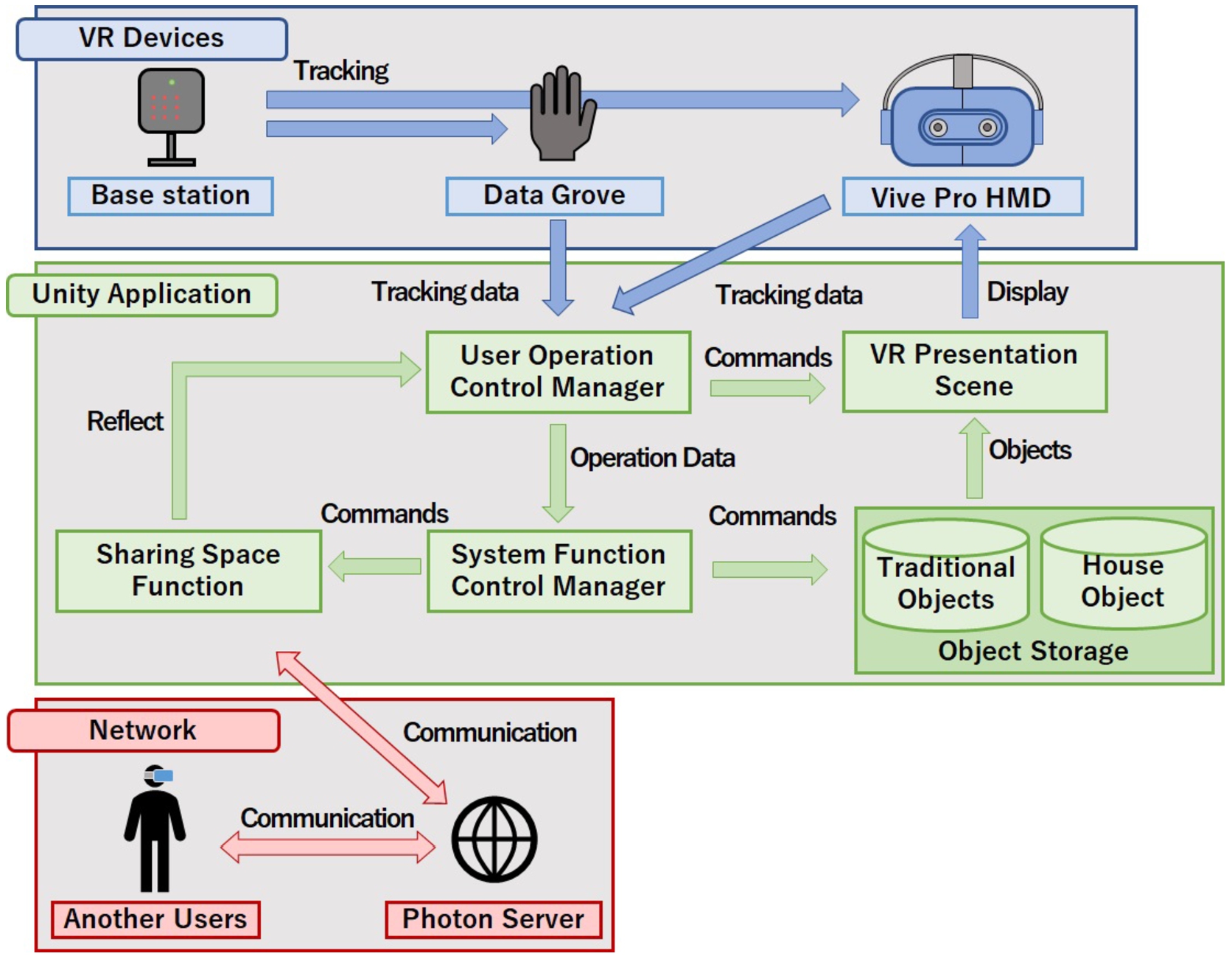
Configuration of the high presence traditional crafts experience system.
Three types of VR devices were used: a base station, a data glove, and an HMD. The base station tracks the positions of the data glove and the HMD and transmits the position information and the rotation information in the virtual space to the Unity application. The data glove is used to reproduce the position and movement of both hands of the user in the virtual space. An accelerometer is embedded in each fingertip of the data glove, and the movement of the user’s hand is reflected in the virtual space by capturing the fingertip motion information. The HMD is used to reproduce the position of the user’s head in the virtual space and present the visual information of the virtual space to the user. The virtual space created by the Unity application is presented to the user via two monitors in the HMD.
Unity application
The Unity application generates the virtual space, reflects the user operations, and executes each function corresponding to the operations. This application consists of the user operation control manager, the system function control manager, the sharing space function, the object storage, and the VR presentation scene. The user operation control manager reflects the user’s operation in the virtual space and captures the user operation commands. The system function control manager executes object placement and room space switching according to the user operation commands. The sharing space function controls connections and disconnections with remote users and the synchronization between users via the network. The object storage stores the traditional craft objects and the room space objects provided by the system. The objects are extracted from the object storage via the user operation commands, and the VR presentation scene is then constructed and presented to the user.
Network
The network provides a function that allows multiple users to collaborate in the same virtual space. The system registers the connections of multiple users using a Windows server. Users can experience sharing the same space, the synchronization of actions in that space, and verbal conversations between users while participating in the virtual space.
System architecture
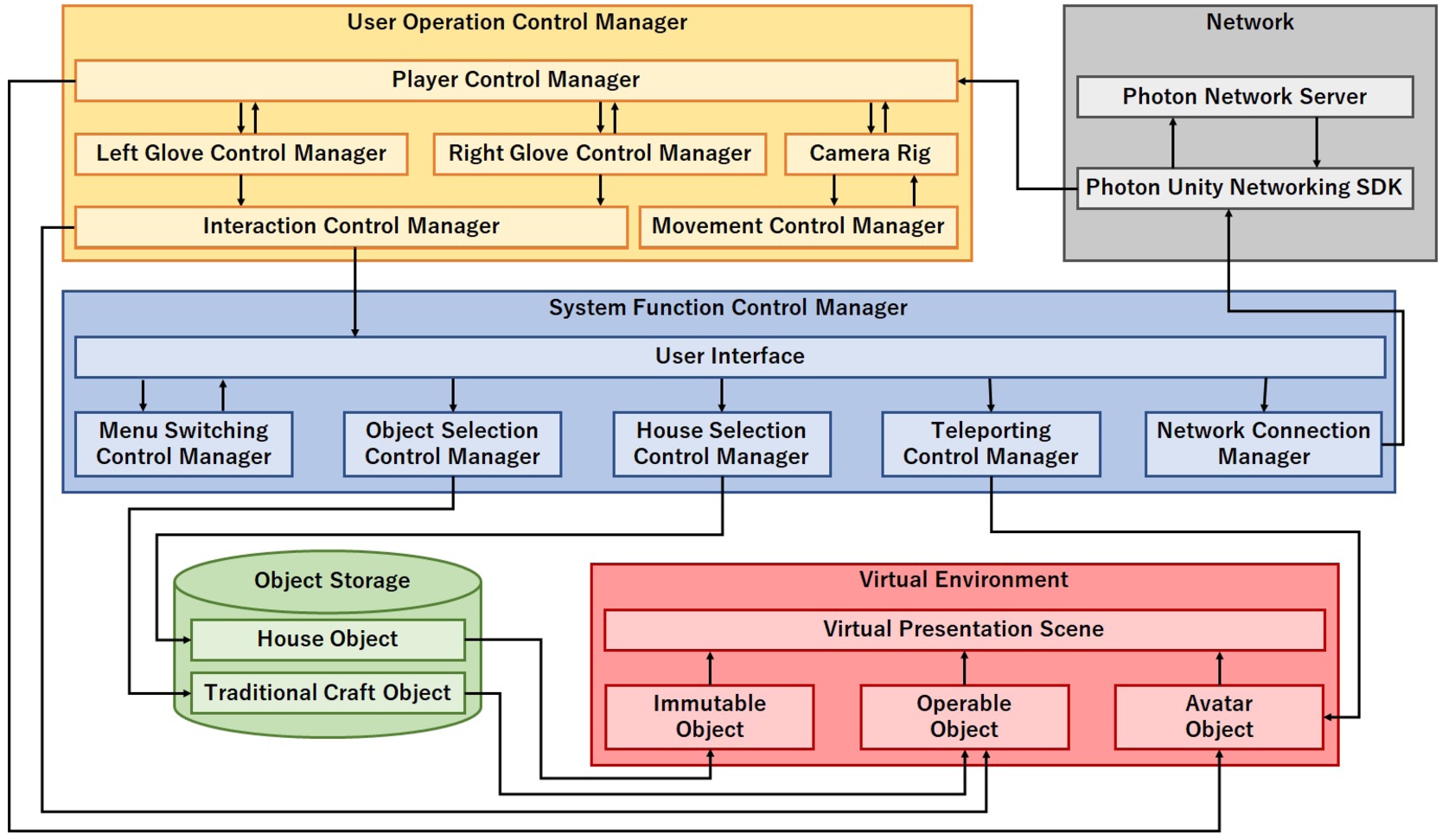
As shown in Fig. 2, the architecture of the system consists of five parts: the user operation control manager, system function control manager, object storage, virtual environment, and network.
Architecture of the high presence traditional crafts experience system.
The user operation control manager captures the user actions from devices such as the HMD and data glove and reflects them in the system. This manager primarily handles position synchronization, motion synchronization with avatars, and judgments of user operations in the virtual space.
System function control manager
The system function control manager processes each function according to the operation instructions from the user. This manager primarily controls menu panel switching, virtual room space selection, traditional craft object selection, movement via teleportation in the virtual space, and network connections.
Object storage
The object storage stores the room objects and traditional craft objects for constructing the virtual space. The objects are extracted according to the system functions and placed in the virtual space.
Virtual environment
The virtual environment is the virtual space that is presented to the user and primarily consists of the room objects, traditional craft objects, and avatar objects. Depending on the user operations, the object changes and operations are reflected in the virtual space in real time.
Network
The network provides a multi-person space sharing function. It consists of the Photon Unity Networking SDK, which handles the synchronization of the operations and the connection with the server, and the Photon Network Server, which provides the connections from each user.
Prototype of the high presence traditional crafts experience system
In this system, HTC Vive Pro is used to present the high-definition virtual space to the user. HTC Vive Pro is a VR HMD developed and sold by HTC, with a 110-degree field of view, 90-Hz refresh rate, and a total resolution of 2880 × 1600 [3]. Further, the Hi5 VR Glove and HTC Vive Tracker are used to provide users with intuitive operations. The Hi5 VR Glove is a data glove for VR developed by Noitom; it has seven 9DOF acceleration sensors in one hand and can track a user’s finger movement in real time [20]. The HTC Vive Tracker is a tracking accessory for the Vive system developed by HTC; it can provide position and direction information in the tracking space [4]. The proposed system tracks the user’s hand movements and positions by combining the Hi5 VR Glove and HTC Vive Tracker and synchronizes this information with the user avatar in the virtual space. In addition, the system uses Light House Base Station 1.0, which can provide a 3.5 m × 3.5 m tracking area to track the location information of Vive Pro HMD and Vive Tracker [5].
Configuration of the virtual space
The proposed system provides users with a high-definition virtual space. The virtual space consists of the 3D objects, i.e., the traditional craft objects, room objects, and user avatar objects.
Traditional craft objects
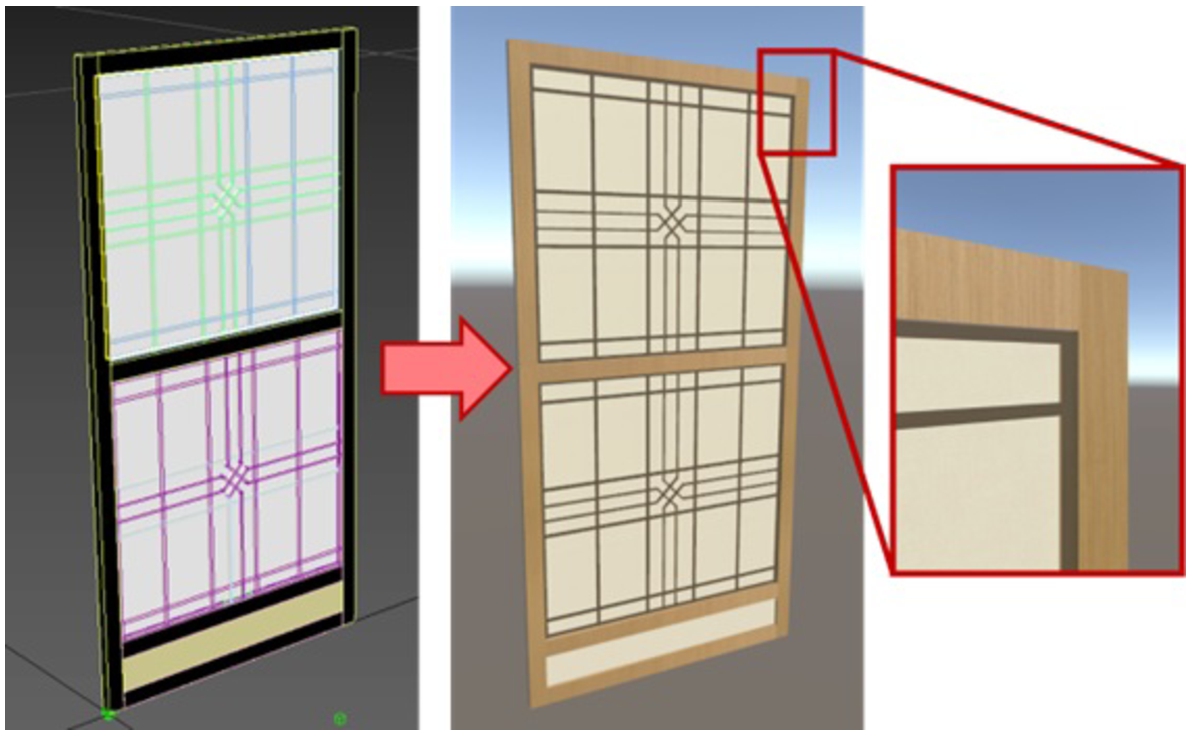
There are many types of Japanese traditional crafts, and tategu (door and window fittings), kimono (clothes), sotomono (dyed goods), orimono (textiles), and shikki (lacquerware) are often used in daily life in Japan. Of these crafts, we introduced tategu from Nanao City, Ishikawa Prefecture, to the system. CAD data designed by traditional craftsmen were used as the traditional craft objects presented to the user. Because these CAD data were not compatible with Unity, we converted them to the .fbx format using Autodesk 3ds Max and then introduced them into Unity [1]. To provide users with highly realistic traditional objects, the texture of the CAD data was changed to a high-definition wood-grain texture (Fig. 3). In this study, a total of 16 types of traditional craft objects were introduced into the system, including nine types of shoji (paper sliding door) objects, six types of fusuma (sliding door) objects, and one type of ranma (transom) object.
Change to a high-definition wood-grain texture.
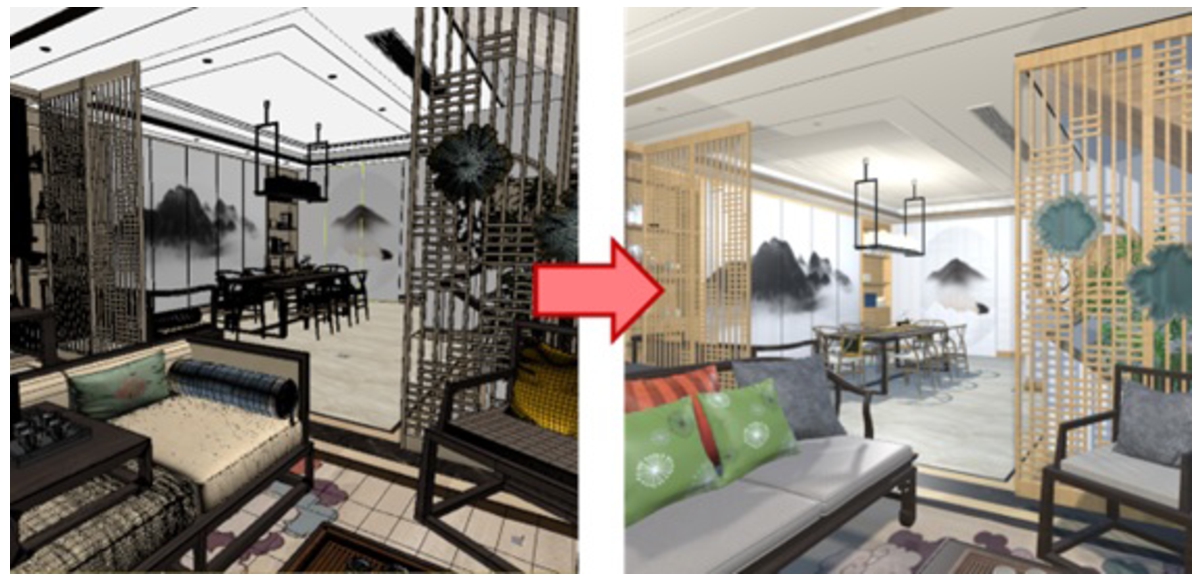
In this study, the room space for arranging the traditional craft objects is presented to the user as a background environment. In addition to a Japanese style room, we prepared three additional room styles, Chinese, American, and European, to support the promotion of traditional crafts to foreign customers. The Chinese, American, and European style room objects used a 3D space provided by the interior design site Justeasy [9]. The 3D space provided by Justeasy is a .max format 3D model created by Autodesk 3ds Max, and Unity does not support this format. Therefore, the model was introduced into Unity after converting the data to the .fbx format using 3ds Max. We needed to modify the model due to problems such as the relative displacement of the model and losses of the texture reference during the conversion process (Fig. 4).
Modifying the room objects.
In this system, we implemented a user avatar object for each user to reproduce the movement of the user’s hand and to recognize the position and movement of the remote user in the shared space (Fig. 5). The user avatar objects are divided into two parts: the body and the hand. The body part is synchronized with the position of the Vive Pro HMD using the SteamVR Plugin SDK and represents the position and orientation of the user in the virtual space [28]. The hand part is also synchronized with the position of the Vive Tracker using the SteamVR Plugin SDK. In addition, the hand part is synchronized with the acceleration sensor of the Hi5 VR Glove using NoitomHi5 SDK. The position of the user’s hand and the movements of their fingers are reproduced in virtual space in real time [19].
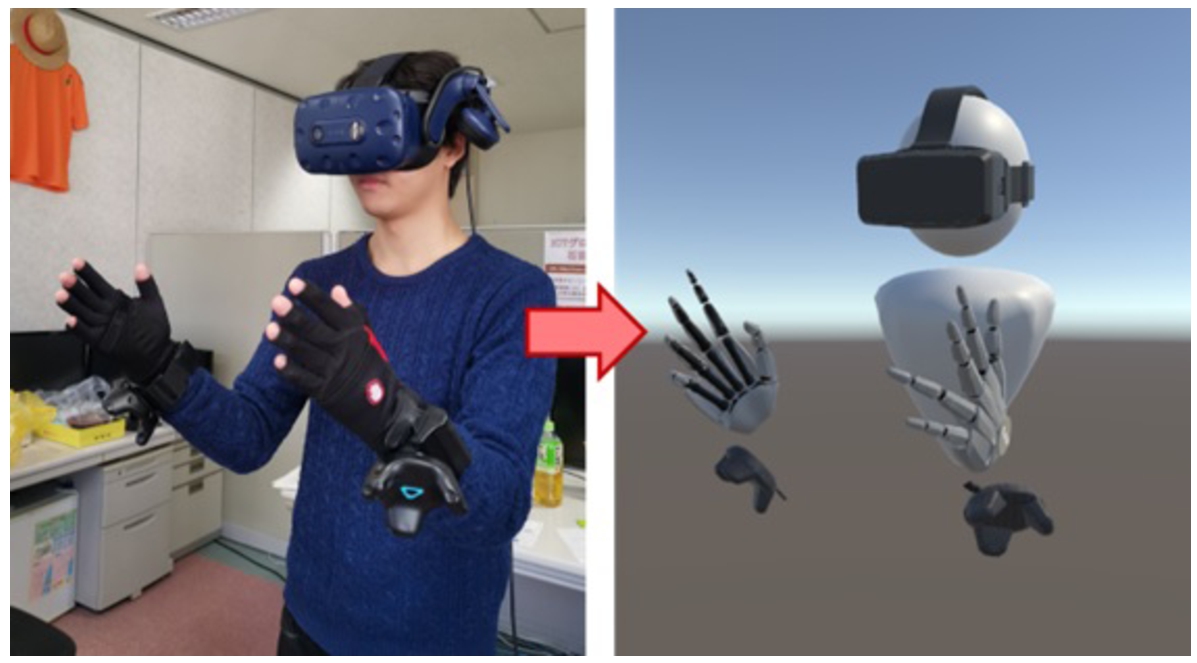
The user avatar object.
System user interface
We constructed a menu panel with buttons to operate each function (Fig. 6). The menu panel is displayed on the back of the hand of the user’s avatar. The user can select multiple rooms and traditional crafts and the space sharing function via the menu panel displayed on the back of their left hand. In addition, on the back of their right hand, a teleport movement button for moving in the virtual space is displayed. To provide users with intuitive operability, we designed a user interface that selects each function and switches the menu panel via touch operations.
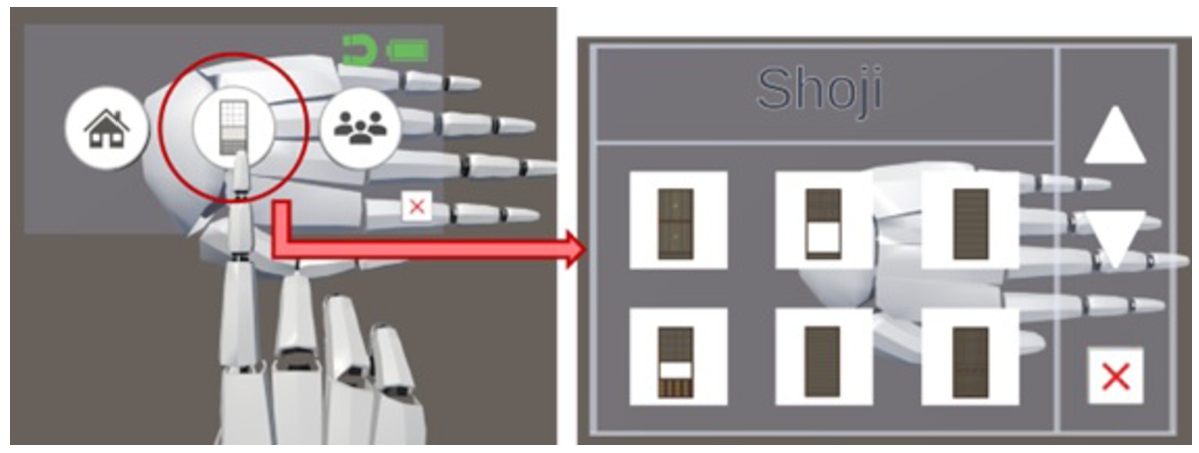
The system user interface.
The system provides the user with a highly immersive and realistic presentation experience via Vive Pro HMD by presenting the user with four types of high-definition room objects in Japanese, Chinese, American, and European styles. The user can select each room style from the room space selection panel (Fig. 7). When the user selects a room style, the corresponding room object is extracted from the object storage and a clone of the object is generated in the virtual space at the same scale as in reality. In the generated virtual room space, the user can experience the entire space from the avatar’s viewpoint while freely moving and rotating within the space.
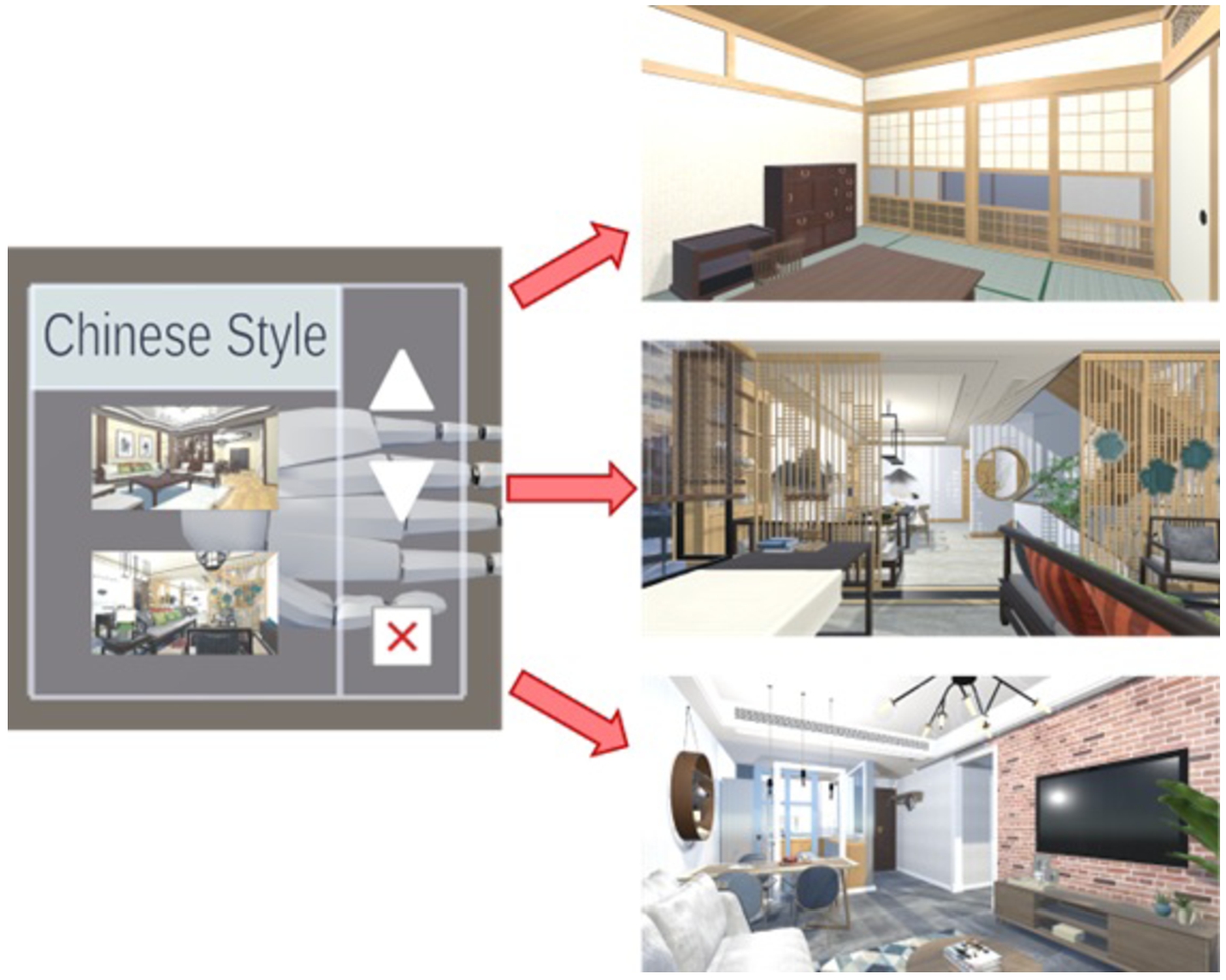
Selecting the room style using the room space selection panel.
After selecting a room space, the user can select traditional crafts from the traditional craft selection panel and place the traditional craft in the room space (Fig. 8). When the user selects a traditional craft, the corresponding traditional craft object is extracted from the object storage and a clone of the object is generated in the virtual space. Because the traditional crafts handled by this system are shoji (paper sliding doors), fusuma (sliding doors), and ranma (transom), users can place traditional craft objects only at preset positions. In addition, the space size of each room style is different. Therefore, the traditional craft object corresponding to the scale of each room is arranged by adjusting the size of the traditional craft object for each room.
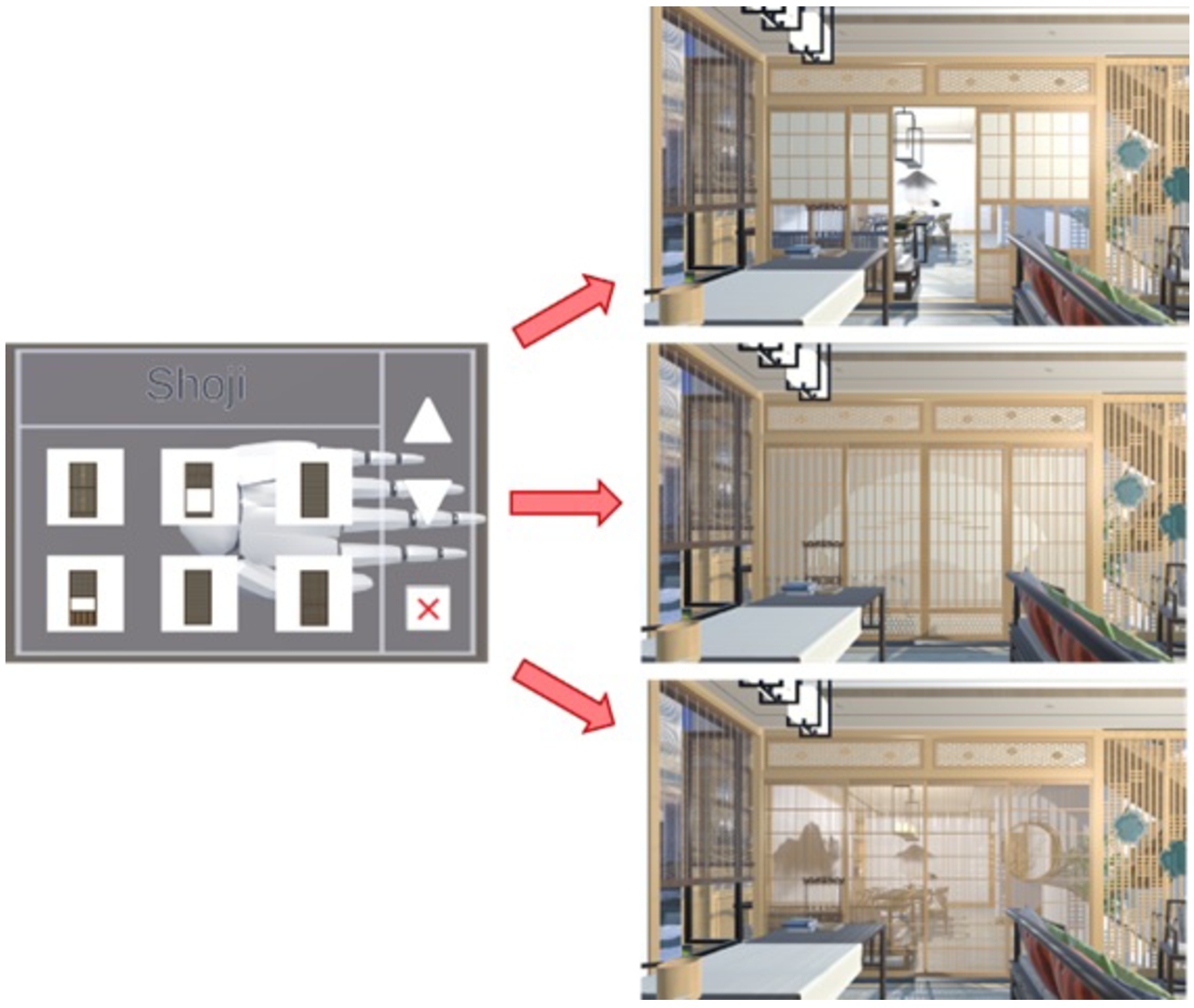
Selecting a traditional craft using the traditional craft selection panel.
Because the relative position of the user’s avatar is detected by the Vive Pro HMD tracking, the user can walk around the virtual space via his/her own movement. However, the room space provided by the system is wider than the trackable range. Therefore, we implemented a teleport movement function in the virtual space. When the user presses the teleport button displayed on the back of their avatar’s right hand, a laser indicating the destination is displayed. Next, the user moves their right hand while holding down the button to change the indication point of the laser and, by releasing their finger from the button, the user can then teleport to the indicated position. In this system, the virtual space is divided into a movable area and a non-movable area to prevent the user from teleporting outside the room space. When the user directs the laser to a movable area, the laser color is presented in green, and when the user directs the laser to a non-movable area, the laser color is presented in red.
Opening/closing operation of traditional craft objects
We implemented an intuitive and interactive operation method to improve the sense of reality of the traditional craft experience. This system uses the Hi5 VR Glove and Vive Tracker to synchronize the movement of the user and the avatar and can therefore enable the opening/closing operation of traditional craft objects placed in the virtual space with the same movements as appropriate in real life. This system sets up a collision object that reacts to both the hands of the avatar object and the frame of the traditional craft object. The user can open and close the shoji (paper sliding door) and fusuma (sliding door) objects in the virtual space in the same way as they would open and close such a door in a real environment (Fig. 9). In the opening/closing operation, we locked the Y-axis (vertical) movement and Z-axis (front–back) movement of the traditional craft object and allowed only the X-axis (left–right) movement of the traditional craft object.
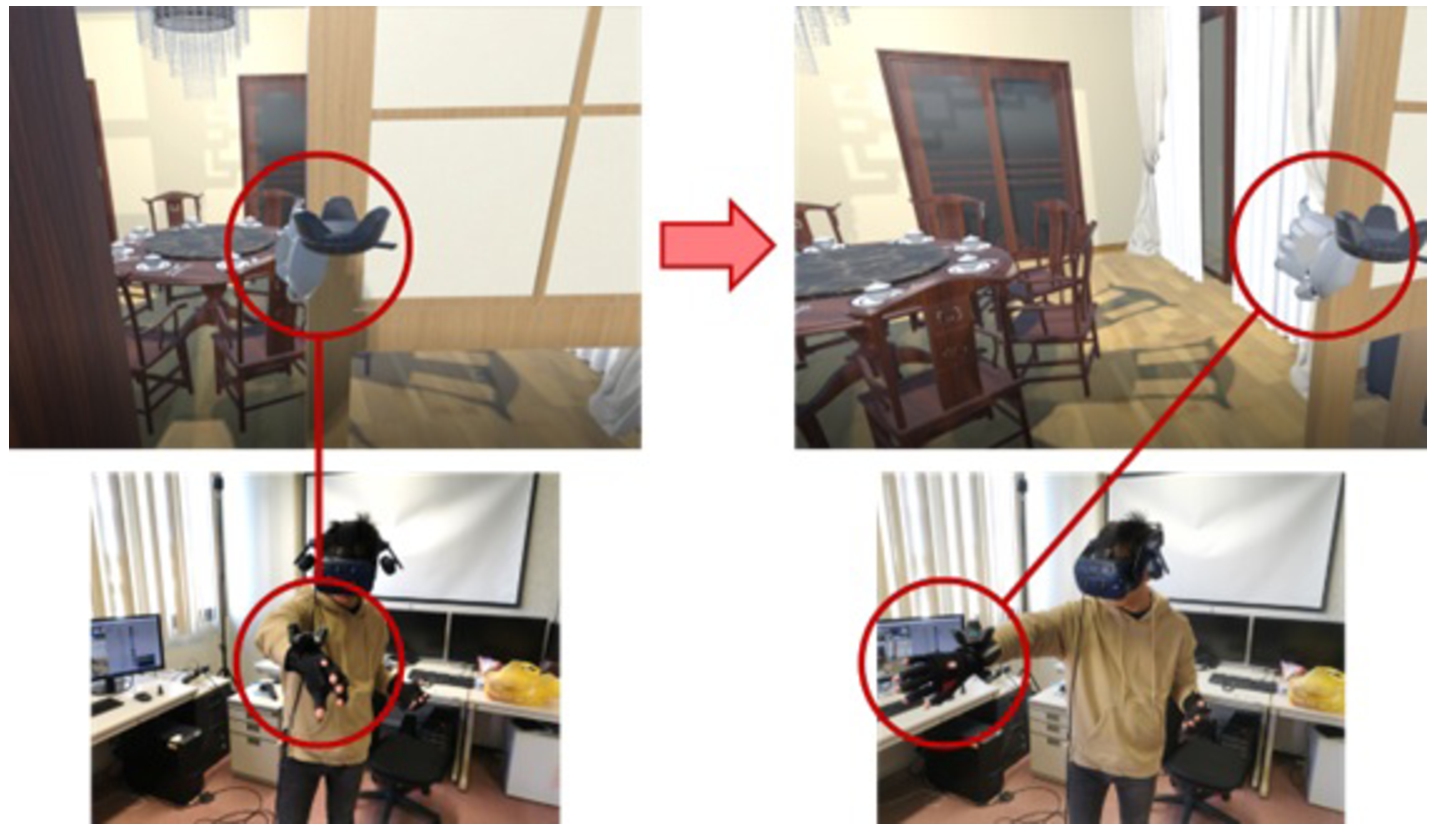
Opening/closing operation of a traditional craft object in virtual space.
In this study, we implemented a multi-user space sharing function based on communication between sellers of traditional crafts and customers. In the implementation of this function, we used the Photon Unity Networking SDK and the Photon Network Server. Using the Photon Unity Networking SDK, it is possible to connect to the server, declare a user avatar object, declare a network object, and synchronize an object state. In addition, we launched a Windows server that can be accessed simultaneously by many users using a free license for the Photon Network Server and used it as a server for the space sharing function. Using the menu panel, the user can select connection to the shared space or disconnection from the shared space. When the user selects the space sharing function, the first user is placed in the virtual space as the host user. The second user participates in the host user’s shared space as a client user. All objects in the virtual space are synchronized between the users. For example, the position and movement of avatar objects, the exchange operation of room styles or traditional craft objects, and the opening/closing operation of traditional craft objects are shared between users.
System evaluation
In this study, we evaluated the effectiveness of the promotion of traditional crafts for the proposed high presence traditional crafts experience system. In the evaluation, a questionnaire survey was conducted after the subjects experienced the system. There were a total of 39 subjects, including 13 non-Japanese subjects.
Effectiveness for the promotion of traditional crafts
We evaluated the effectiveness of the system for the promotion of traditional crafts. The subjects answered each question on a five-point scale. There were five questions.
Q1: I think that I obtained a new appreciation of Japanese traditional crafts after I used this system.
Q2: If I planned to purchase Japanese traditional crafts for my house, this system would be useful for choosing items.
Q3: I think this system is necessary to disseminate information or expand the market for Japanese traditional crafts.
Q4: I think this system can be used in other industries (selling interior products or for car exhibitions).
Q5: I felt that I was immersed in the virtual world when I used this system.
As shown in Fig. 10, the results of each question were converted into a score of 100 points. According to the evaluation results, we obtained over 80 points on Questions 2–5. Therefore, we were able to confirm the high effectiveness, necessity, and applicability of the proposed system. However, the evaluation score for Question 1 was low. The traditional craft information provided to the user by this system only concerned the 3D objects. In other words, historical information and technical information relevant to the traditional crafts handled by this system were not included. This is thought to have resulted in the lower evaluation score for Question 1.
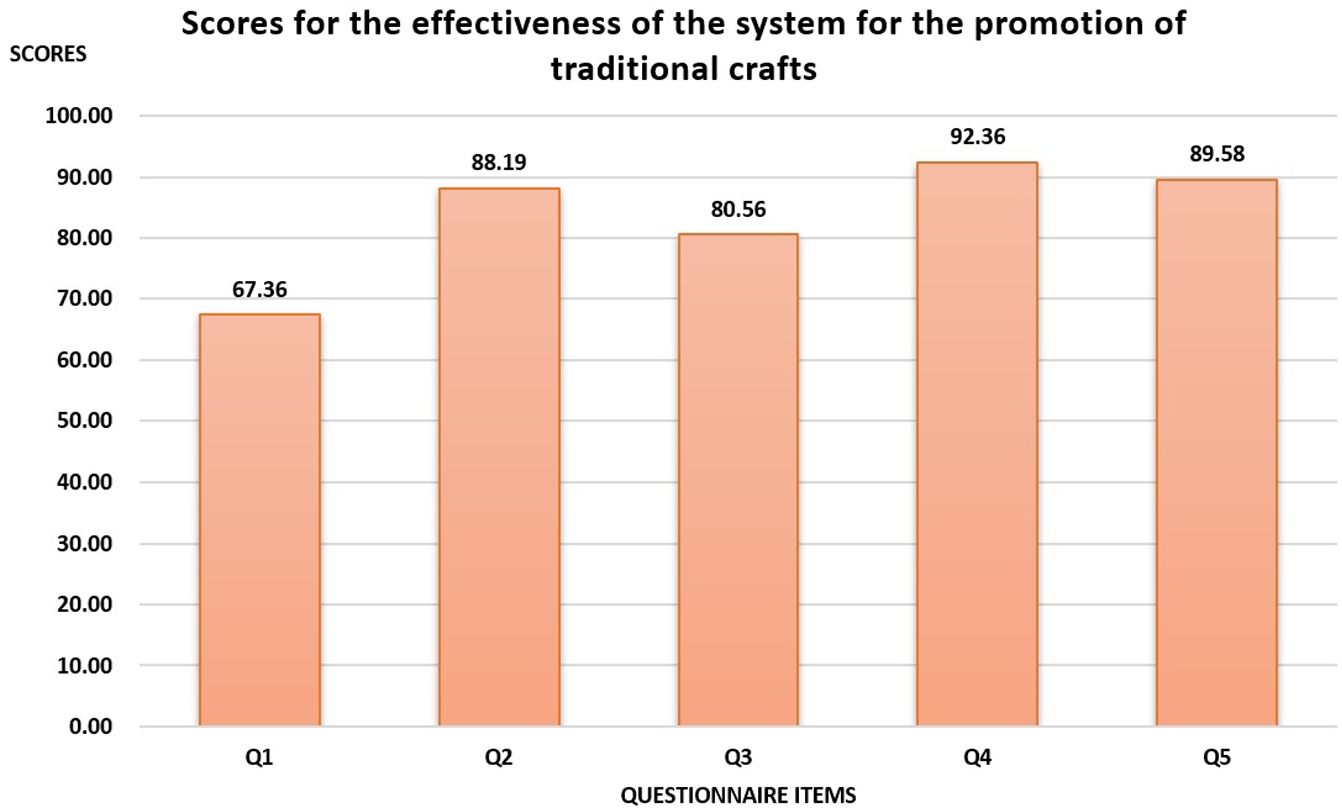
Scores for the effectiveness of the system for the promotion of traditional crafts.
In terms of its effectiveness for the promotion of traditional crafts, we obtained positive answers from many subjects. We received comments such as “using this system makes it easy for customers who purchase traditional crafts from a distance,” “this system is effective for disseminating information about traditional crafts,” and “this system can be applied to other fields.” From the evaluation results, it can be seen that the system is effective for the promotion of traditional crafts and the transmission of information. However, we also received comments concerning the quality of the drawing, such as “I want more realism in the color tone” and “I want a quality close to that of photographs.” Therefore, further refinement of traditional craft objects and room space objects handled by this system is necessary.
Conclusions and future work
In this study, we implemented and evaluated a high presence traditional crafts experience system that combines multicultural architectural styles and Japanese culture to disseminate information and promote traditional crafts. This system realized a highly realistic traditional craft presentation system by providing users with high-definition virtual traditional craft objects and interactive operational experiences. Further, this system is expected to contribute to the reconstruction of the traditional craft industry and the dissemination of Japanese traditional culture by strengthening product promotions to overseas customers. We conducted an evaluation experiment of this system. We received positive responses from many subjects, and we were able to confirm the high effectiveness and applicability of the proposed system. In the future, we will install our prototype system at a traditional craft store and verify the practicality of our proposed system via customer experiences. In this study, we used tategu (door and window fittings) such as shoji (paper sliding doors) and fusuma (sliding doors) produced in Nanao City, Ishikawa Prefecture, for the prototype system; however, it is also possible to incorporate various other traditional crafts. Therefore, we plan to add various types of traditional craft objects according to the demands of traditional craft stores. In addition, we plan to examine the semantic extraction process of traditional crafts in the future, as well as the Kansei retrieval process.
Footnotes
Acknowledgements
This article is a revised and expanded version of a paper entitled “Proposal of a High-Presence Japanese Traditional Crafts Presentation System integrated with Different Cultures” presented at the 14th International Workshop on Network-based Virtual Reality and Tele-existence (INVITE-2019), Oita, Japan, 5–7 September 2019 [ ].
].
Conflict of interest
None to report.)