



Abstract
The study on structure optimization design of modified wood furniture tenon structure based on the finite element analysis of ANSYS has a very important significance. On the one hand, it can enhance the functionality of the furniture. On the other hand, it can effectively reduce the destruction of natural resources. Chinese traditional furniture tenon connection technology with widely application and mature process is one of the commonly used connection technologies in China’s construction and furniture manufacturing. After a certain modification of processing, wood used in the production of furniture can meet the demand of density and bearing, which is conducive to the modernization design of modern furniture. For optimization design of furniture tenon structure through the finite element analysis software NASYS, parametric modeling was firstly made by using a T-shaped tenon structure of modified poplar as the research object, and setting the size of tenon structure. On this basis, the optimization design was carried out step by step, and finally the results of the feasibility design sequence were obtained. From the optimization results, it can be seen that in the final feasible design sequence, the optimal tenon length ratio and tenon thickness ratio were 74.0% and 61.6%. In order to verify the performance of the optimized design results, five groups of tenon structure were processing product and made with the load test. Through the experiment, we can see that the rigidity index of tenon structure showed a decreasing trend and the maximum loading capacity was increased, which indicates that the effect of optimum design is to meet the initial purpose of optimization design.
Introduction
With the rapid development of China’s economy, the furniture industry has also been developed by leaps and bounds. As of 2014, the income of furniture manufacturing enterprises had accounted for 1.13% of the national GDP with the total revenue reaching 718.7 billion. Since 2000, China’s furniture manufacturing enterprises revenue has increased year by year with the compound growth rate reaching 24.7%, and in the future for a long time, it can be predicted that the furniture industry will continue to develop rapidly [1]. The development of China’s furniture industry mainly depends on the increasing demand of domestic furniture market, and the expansion of overseas markets also makes the size of China’s furniture exports become large. Wooden furniture accounts for a great proportion in the furniture. However, the excessive use of forest resources in China results in much local ecological destruction, which runs counter to the sustainable development of the road. Therefore, using wood resources in the artificial forest to modify, in order to meet the related requirements of strength and density of furniture, not only can enrich the design of furniture structure, but also can avoid the destruction of natural resources to a certain extent [2].
In furniture design, tenon structure is one of the important structures of Chinese traditional furniture design, which is the clever use of the wood itself of stiffness and strength properties, according to tenon structure of the joint force characteristics to ensure the overall stability of the structure [3]. With the improvement of people’s requirements for furniture, tenon’s original design has been difficult to meet, so it is necessary to optimize the structure design on the basis of the existing wood. Through the finite element analysis method, the continuous furniture structure can be distributed to each unit connected by nodes, and the overall performance of the structure can finally be obtained by the analysis of the nodes and the calculation of related data [4]. In the finite element analysis method, one of the commonly used software is ANSYS analysis software. Using ANSYS analysis software for optimization design of tenon furniture structure by modified wood, promotes the function and performance of the furniture on the basis of sustainable development, which has a very important significance for the development of furniture industry.
Related theoretical research
The traditional furniture tenon connection technology
Tenon connection technology is one of the commonly used technologies of the traditional Chinese furniture production, which has a unique national style. For the furniture product using tenon connection technology, not only the material is very particular about, but also the overall structure of the furniture is stable and precise, and each component can be closely combined to form a relatively strong overall [5]. The significant difference with western furniture is that tenon structure’s life is almost the same with the life of furniture. Methods of combining tenon are numerous and more than ten kinds of common tenon connection methods include chuck tenon, raglan tenon, hold-shoulder tenon and lattice shoulder tenon, which is the indispensable part to the development of Chinese traditional furniture [6]. And all kinds of tenon connection technology is not purely for furniture production, has a very common application in the construction and production of the pavilions, small bridges and others, which is the embodiment of the wisdom of the Chinese nation [7]. In recent years, although the modern furniture production technology has been very advanced and a large number of western technologies on the connection structure have been absorbed, traditional furniture tenon structure is still the favorite. With the constant change of modern furniture decoration and the use of function, tenon connection technology also has a huge change in the development of modern science and technology, which is gradually developing into a new type of modern technology [8]. In the process of actual use, furniture by the force includes weight and loading, and be in particular determined by furniture making materials and structural characteristics. Because the weight of wood furniture is often small, so the force mainly comes from loading. The weight of the furniture and bearing load interact in furniture, culminating in the tensile stress, shear stress, compressive stress and bending stress [9]. More concentrated load part is the connection part, and it often bears a variety of stress caused by weight and bearing load at the same time, traditional tenon structure furniture can make full use of the connecting part to meet a variety of stress load (Fig. 1).

Furniture tenon structure.
With China’s economic development, both at home and abroad, the export of logs has been very limited. In order to prevent further damage to the natural ecology and realize the sustainable development of the economy, China has increased the protection of natural forests. But no matter what kind of industry engaged in the production activities all need for the basic raw materials of wood, furniture production must be based on wood. In order to meet the demand for timber resources and the protection of forest, by processing of plantation wood, the active or passive ways are used to change its performance to meet demands of density and load-bearing [10]. Commonly modification methods of wood are listed in Table 1.
Wood modification method
Wood modification method
In the wood modification, thermal modification is the one of the most common modified methods, which can increase the stability of timber with less damp and easy to save by high temperature carbonization treatment, even if the production of outdoor furniture can also be used [11]. Acetylated modification by acetylating agent can effectively change the wood decay resistance, making the wood more stable, but because of the relatively high cost of the method and the method is thus mainly used to high value-added products. The hardness of impregnated wood will be significantly increased as well as dimensional stability and increasing flexural strength. However, some problems, such as the formaldehyde pollution caused by the materials that are used in the process of partial impregnation, have been concerned by people. Compression modified is the wood thermal processing and compression, so as to obtain the wood with higher density and strength, and this kind of wood is widely used because of the mature technology, relatively low cost, safety and environmental protection [12]. The modification of wood, not only changes the density, but also to be more important to affect the flexural strength and flexural modulus of elasticity, and essentially changes the properties of the wood and brings certain change to the existing furniture design.
ANSYS software has three main functions, namely, the establishment of the model, analysis of the static situation of nonlinear structure and the optimization design of the structure, which is widely used in acoustics, electromagnetics, fluid, structure and all kinds of industry and scientific research, and the most important function is to carry out static analysis and optimization design [13]. But less research of finite element method is used for furniture tenon structure, and currently it has not been systematic used in optimization design of furniture structure. While the existing finite element analysis of the furniture has not been further optimized designed [14]. The powerful function of ANSYS software is based on the application of many modules, with the code even more than ten thousand lines, and its modular structure diagram is shown in Fig. 2.
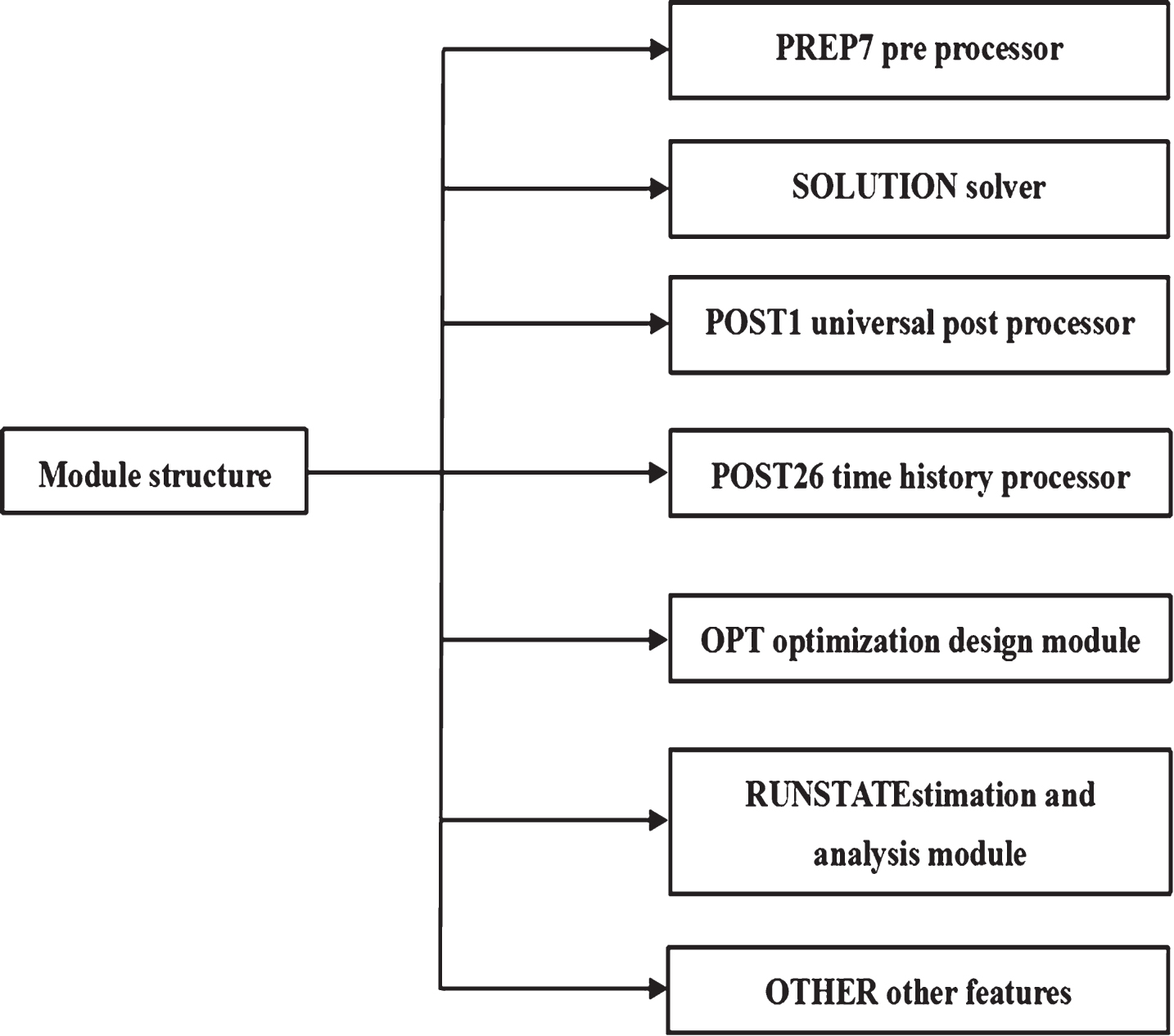
Modular structure of ANSYS program.
Finite element method is to disperse the continuous geometric structure into finite elements, then set the node between units, and the continuous structure is as the connection assembly of nodes between each unit, eventually change it to be the problem of limited freedom in the discrete domain [15]. The more discrete units are, the more accurate the final values are obtained, and the final accurate solution can be obtained by increasing the number of units. However, the more the number of units, the greater the amount of calculation, the more time it is needed, so just need to work out the data according to the requirement of the project [16]. Using finite element analysis method for calculation is generally with the following three steps. First of all, the continuum is dispersed, and then every discrete unit and node are analyzed, and all unit carries on the overall analysis, so as to solve the numerical [17]. The finite element method can be used effectively to analyze the stress, displacement and deformation of the structure by using the ANSYS software, and the static analysis is carried out by the nonlinear or linear method (Fig. 3).
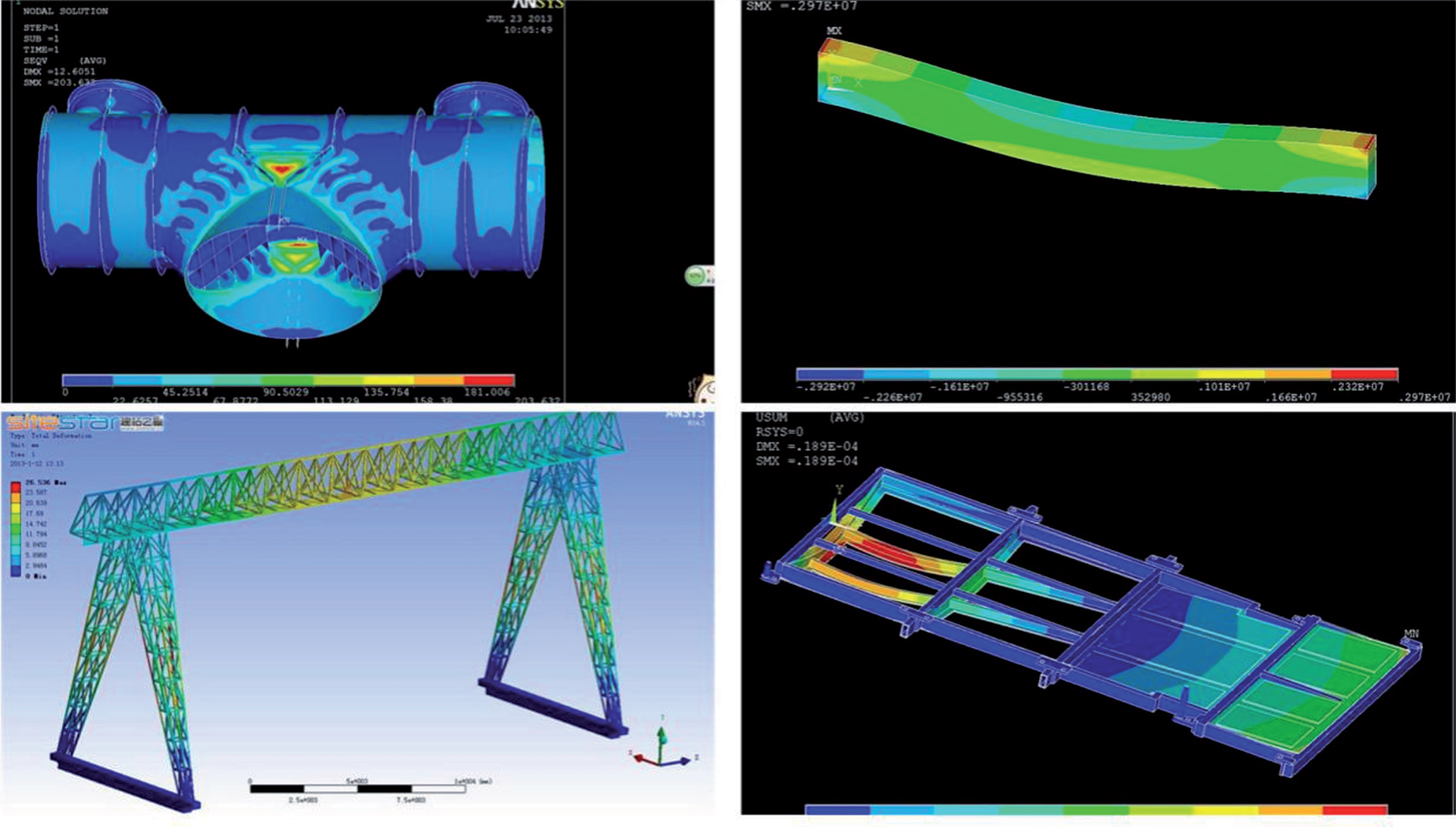
Finite element analysis method.
Parametric modeling
Using the modified poplar wood as the material for the research unit and spar T-shaped tenon structure stress characteristics as typical research object for optimization design of furniture tenon structure, the T-shaped tenon combined structure is simulated as a 3D nonlinear contact problem by ANSYS software. In the simulation, we must first ensure the freedom of movement of each unit node in three-dimensional space, and the contact element is also three-dimensional, which can track the contact state of the contact area.
The size of spar T-shaped tenon combined structure for the modeling is: the tenon length of 15 mm, thickness of 10 mm and width of 25 mm, as shown in Fig. 4. The element types were Cnotact 3D TARGE170, Structural Solid 3D SOLID92 and Contact 3D CONTA174, that are 3D object surface unit, 3D solid elements and 3D contact surface element [18]. By using the free mesh method of finite element analysis method to carry on the grid division, and the grid will not follow any fixed pattern, and the method can be applied to the division of the surface with complex shape and volume meshes [19]. The displacement constraint imposed by the model on the cylinder model shows that a load bending moment parallel to the Z axis is applied to the outer end face of cylinder with the diameter 25 mm, and the size is 2 N·m (Fig. 4).
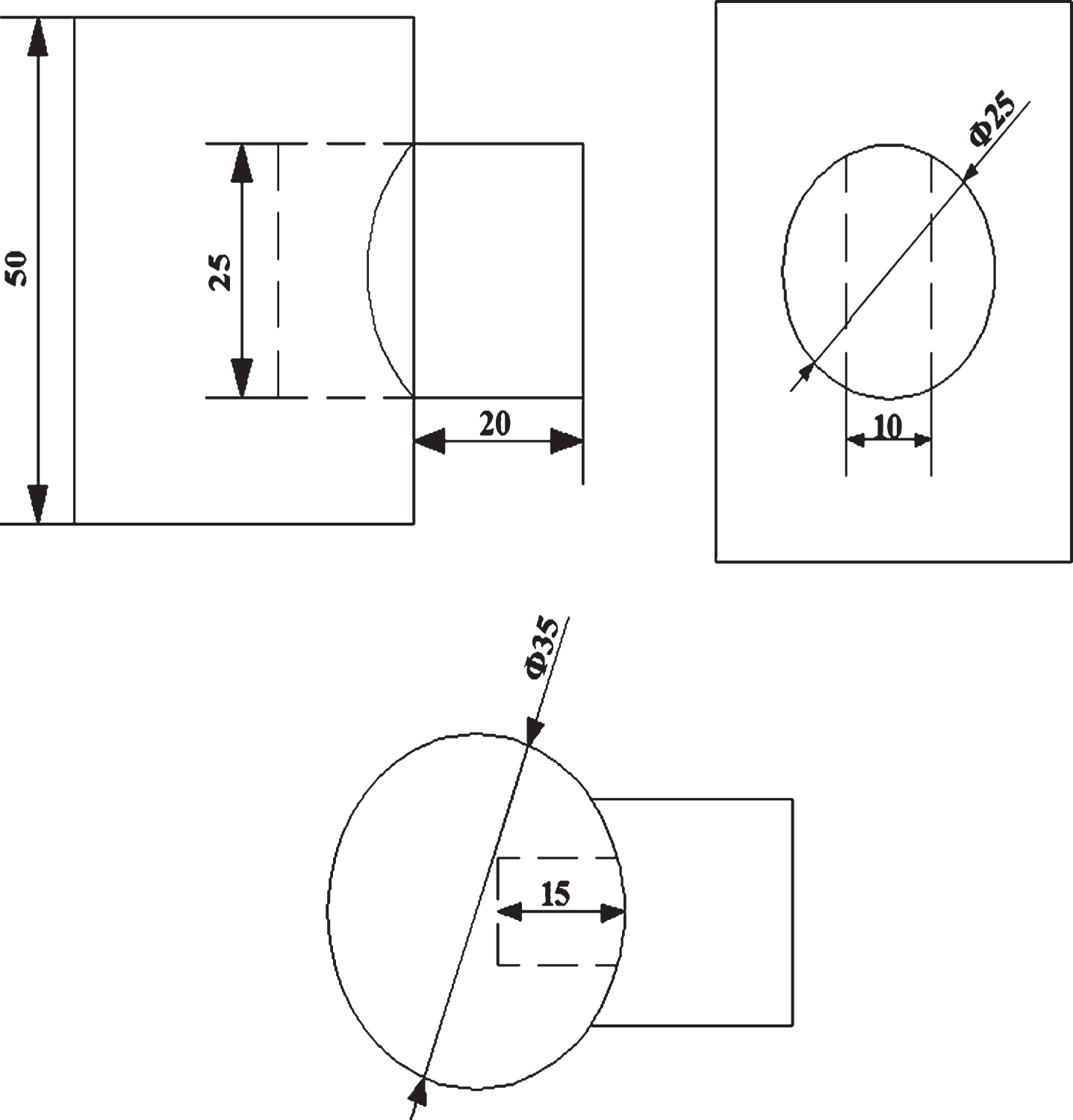
A model combined with T-shaped tenon size.
Structural optimization design is the combination of computer technology and mathematics optimization design, and it is applied to the structural design, so it needs the best economic index design scheme to meet the given conditions. The specific steps of using ANSYS for structural optimization design are as follows. Firstly, using the modeling function provided by ANSYS to initialize the data needed to be optimized, and then build a parametric analysis model, and finally establish the file of the analysis; Second is to build the optimization of control file, by specifying the optimization analysis files, life optimization related variables, and finally to optimize the evaluation of the parameters, and change the iteration cycle.
Thirdly, if the design variables of the optimized cycle don’t meet the established objectives, then correct them to recycle, and finally get the design sequence results [20]. The specific steps are as follows (Fig. 5).
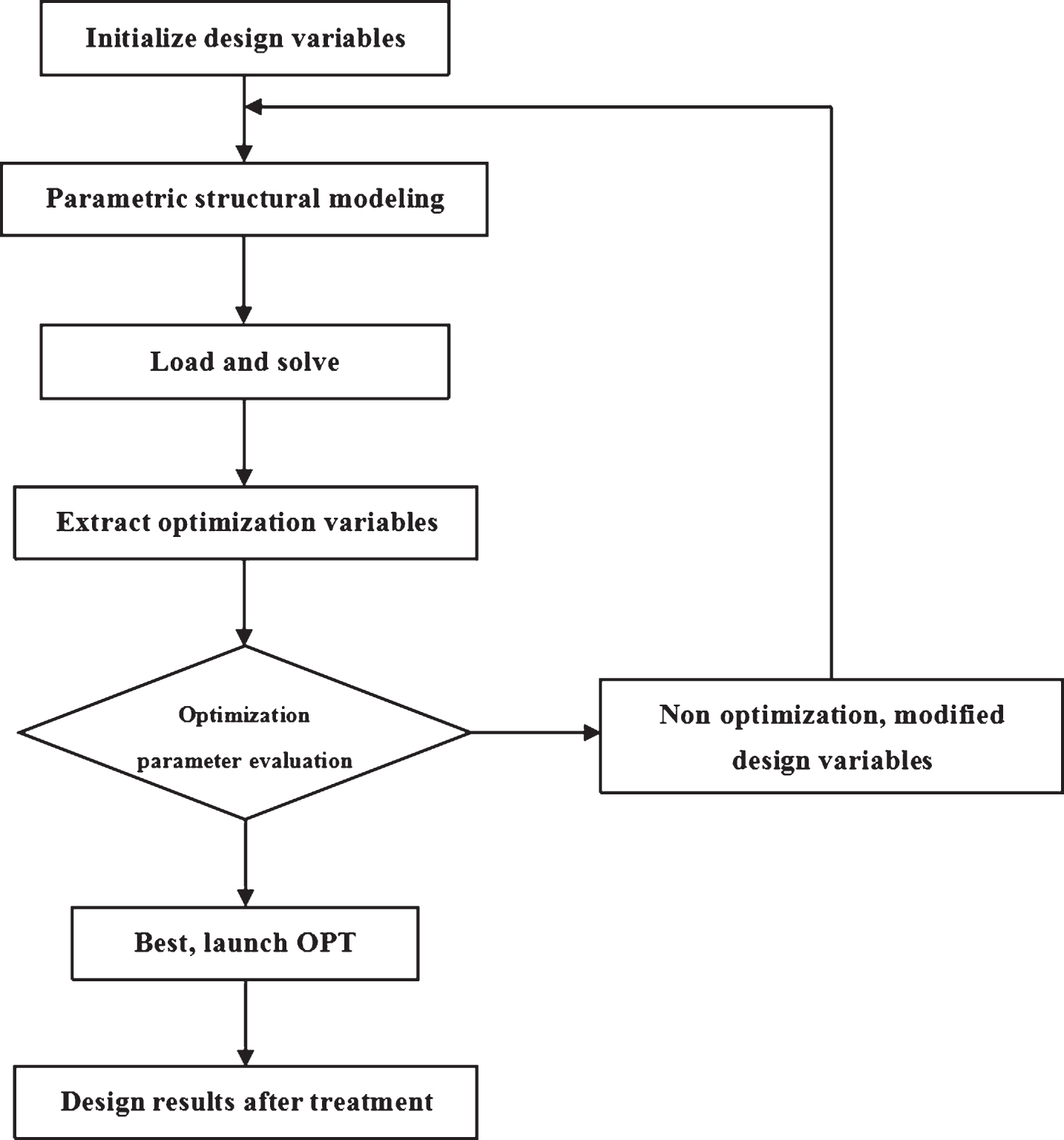
A model combined with T-shaped tenon size.
Firstly, to determine two design variables, the length and the thickness of the tenon, and displacement wy of structure model occurs under the action of bending moment. T-shaped tenon connecting structure under bending, the maximum internal stress should be less than the compressive limit strength of the wood. According to the model size, the tenon length is less than 35 mm, with a thickness of less than 25 mm. After the initial design variables are determined, the initial solution of tenon structure displacement and internal force can be further obtained. The internal forces of each construce are sorted by the post processor POST1, and the maximum internal force value is obtained. APDL parametric language is used to program the compression ultimate stress, and finally to create the state variables in the optimized processor OPT after the construction of the stress value is obtained.
The results of optimization design by ANSYS software are generally divided into two kinds, namely, the feasible sequence and the infeasible sequence. If the final optimization results satisfy the constraint conditions specified in the state variable, that is, the optimal feasible sequence, and these results often contain an optimal design sequence. After ANSYS software is used for 10 times of iterative analysis, the optimal design sequence can be obtained. According to the setting modules to obtain the optimal design sequence of spar T-shaped wood tenon structure.
From Table 2 it can be seen that the strength and stiffness of the tenon structure model are mainly affected by the size of tenon and mortise and the combination, and through the continuous optimization of the two, the maximum stress of the tenon combination can continue to reduce, so as to improve the strength and stability. With decrease of the maximum stress, the deformation of the tenon structure will be smaller. In the final feasible design sequence optimized by ANSYS software, the optimal tenon length ratio and thickness ratio are 74.0% and 61.6%, which indicates that the spar T-shaped tenon structure of modified poplar is optimal under the size, and the specific circumstances are shown in Table 3.
Feasible design optimization variable table
Feasible design optimization variable table
Feasible design sequence length, thickness ratio of mortise tenon
According to the Table 3, it can be seen that after the finite element optimization design by ANSYS software, the maximum stress and displacement of the setting tenon structure are reduced to about 60% in the same load case, which shows that the optimization design of the structure is realized (Figs. 6, 7).
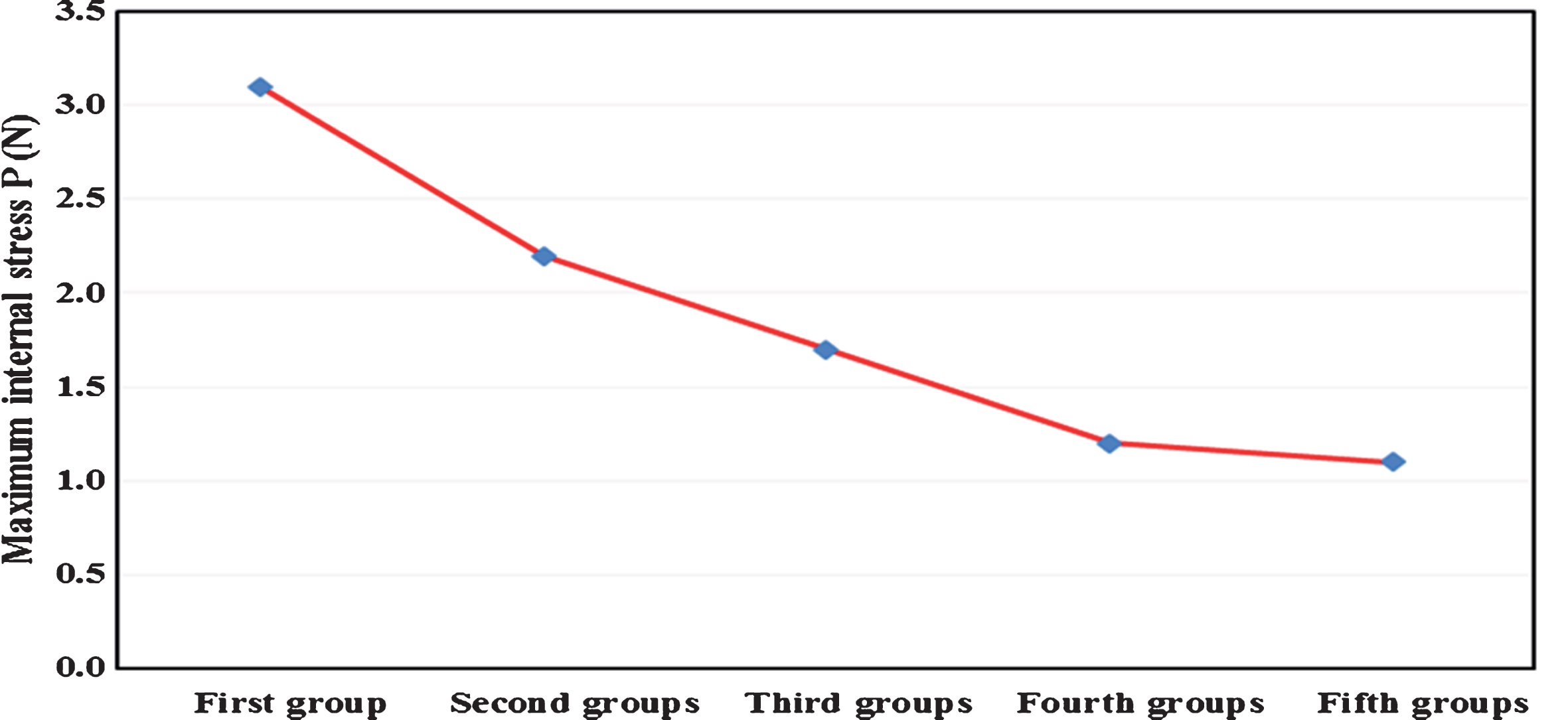
Optimal design trend of maximum stress.

Maximum displacement optimization design trend diagram.
The tenon structures are processed according to the five groups of the feasible sequence obtained by the optimum structural design, with roundwood processing size of 25 mm and 35 mm, and the length of the cylinder of 15 mm and 20 mm. There is no glue on the binding site of the tenon, and use the hammer to tap the tenon into the mortise, placing seven days before the test. Test equipment is electronic universal testing machine, and the maximum load range is 1KN, minimum displacement resolution up to 0.001 mm, and the mechanical properties such as shear, compression, bending, stripping and relaxation can be realized. Use the clamp to fix the tenon structure to make it not rotate and the tenon keeps level, such as the following (Fig. 8).
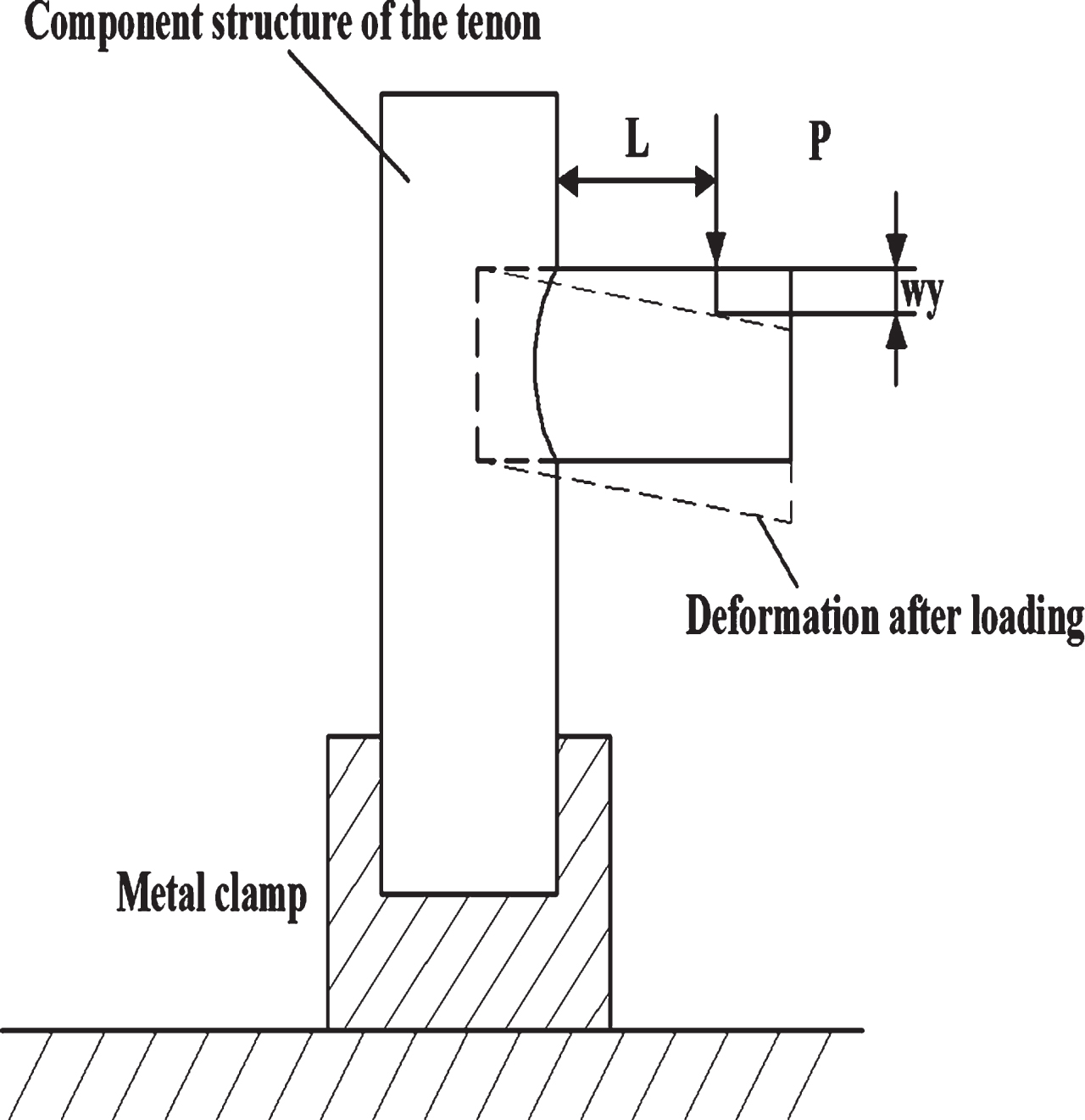
Schematic diagram of tenon structure mechanical properties test.
The first step of the test is that the tenon structure specimen is fixed on the equipment by the clamp, and set the status of the test equipment to be compressed. The loading speed is 10 mm/min, and the 0.1% of full range is recorded as the initial load value. Each time the 0.05 mm is compressed, the load and the corresponding displacement are sampled and recorded, and the load-displacement curves are plotted.
The bending strength of the tenon structure is M, the load force is P, and the distance is L, there are:
Let φ be the change of tenon structure angle, rigidity index is Z, (1) can be combined:
And according to
So it can be known that the rigid index Z is smaller, indicating the stiffness of tenon construction is bigger and its stability is better.
The test data are recorded and calculated according to formula (1), (2) and (3), it can be drawn:
From Table 4, it can be seen that the test results and the optimal design results of the ANSYS software are almost identical. Although the maximum load of the tenon structure can withstand initially decreases slightly, but is subsequently increasing, which suggest that the steals is continuously improved. The maximum load of the final optimal group is three times of the initial combination, which fully proves that the strength of spar T-shaped tenon structure improved is significantly by optimization design (Figs. 9, 10).
Test result data
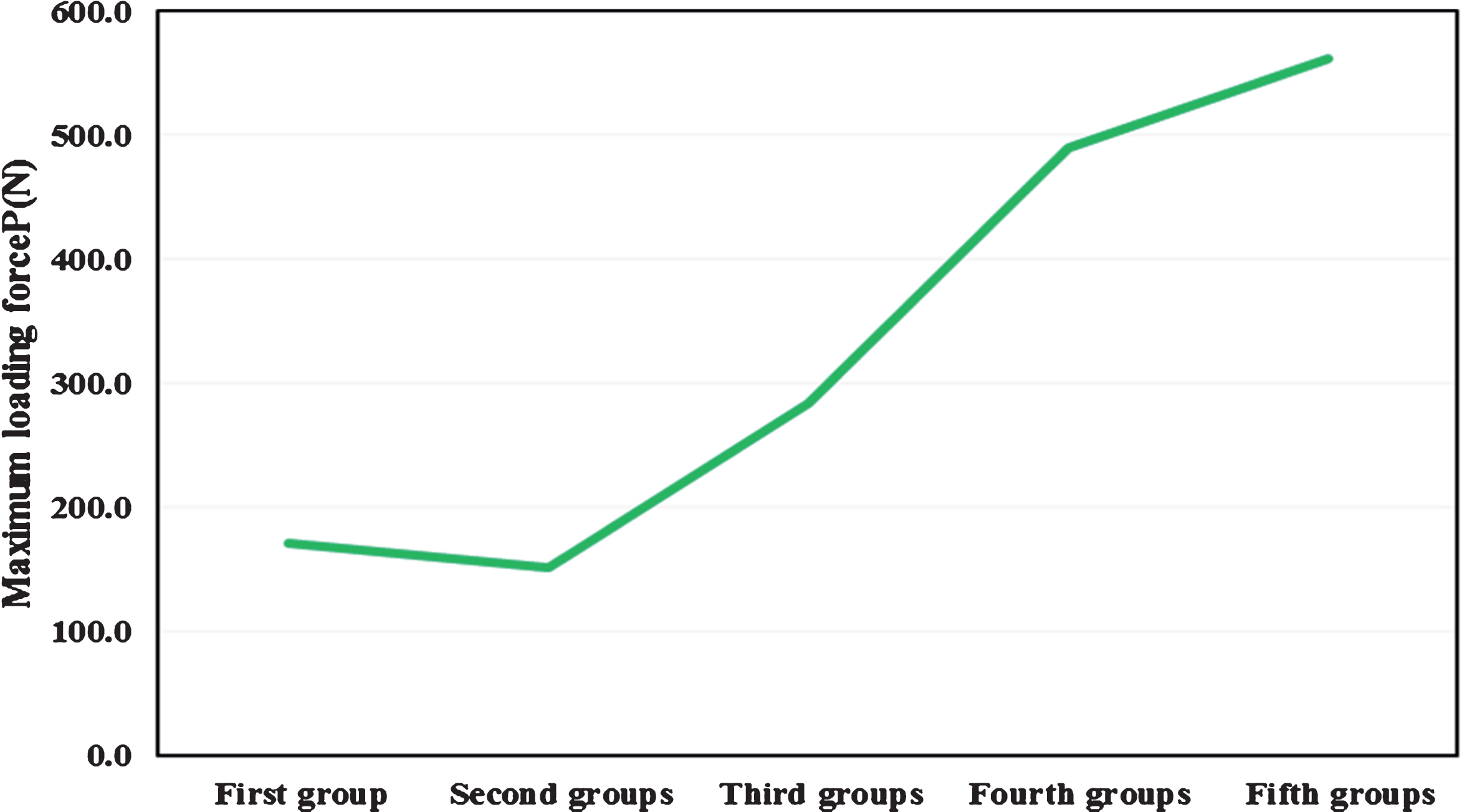
Maximum load change trend chart.

Rigid index change trend chart.
The rigid index Z of tenon structure shows a significant decreasing trend, indicating its greater stiffness, better stability. Compared with the initial combination, the rigid index of the optimal combination is only about 30%, which fully indicates that the stiffness of tenon structure after the optimization design is increased significantly. It can be seen that after optimization design, the strength and stiffness of the tenon structure have been significantly improved, to achieve the original purpose of optimization design.
It can be seen from the comprehensive test results, the size of mortise and tenon collocation has direct impact on the strength and stiffness of the tenon structure. And through the optimization design, the stiffness and strength of tenon structure have increased significantly, and the stability is better, which has achieved the initial purpose of optimization design, and the effect is obvious.
In previous studies, rarely ANSYS finite element analysis method is applied in the optimization design of furniture structure, and modern wood modification technology base on ANSYS finite element analysis method is used for tenon structure optimization design, which is conducive to China’s long-term healthy development of furniture industry. The modified poplar wood is as the material of the research unit and the spar T-shaped tenon structure is as the subjects of the optimization design. Through the ANSYS software modeling, optimization and control of the document and the cycle of iterative calculation, the final results of the design sequence is obtained. The optimal design sequence is selected from the design results of feasible sequences. Through the optimization design results, it can be seen that the strength and stiffness of the T-shaped tenon structure are mainly affected by the size of the tenon and mortise and their binding mode. The optimization can reduce the maximum internal stress and improve the strength and stability of the structure. In the final feasibility design sequence, it can be seen that the maximum stress and displacement of the setting tenon structure are reduced by about 60% in the same load case, which shows that the optimization design of the structure is realized. For further performance verification of the optimal structure design, according to set parameters for processing tenon structure, five groups are divided to make the load test. And the testing process is recorded, including the maximum loading force and the corresponding displacement, as well as the calculation of the rigidity index. From the final test data it can be drawn that the stiffness and strength of tenon structure after the optimized design are improved significantly, with the increasing maximum load and gradually decreasing rigidity index, which has achieved the purpose of optimization design of the original. The study uses the spar T-shaped tenon structure as a typical research object and other tenon structure can use it for reference to make structure optimization design.
Footnotes
Acknowledgments
Research on the key technology of furniture manufacturing made of plantation wood, State Forestry Bureau (No. 201404502-1).