



Abstract
The Computer Science department at Tecnológico Nacional de México-CENIDET, Mexico, with the collaboration of the Psychological department of the University of Castilla-La Mancha (UCLM), Spain, is on a developing process for the creation of an immersive virtual environment through virtual reality (VR) for the e-learning educational area. Such environment, works through electroencephalographic lectures (EEG) from the students, acquired by a Brain-Computer Interface (BCI), to adapt the virtual content to the profile and needs of the student on real-time basis. This system can detect the accuracy of attention and concentration levels on mental states, for the optimum development of the activities requested on an e-learning platform; if the student is not on a suitable concentration level, the system is able to induce the student to the requested mental state.
The present document shows the proposal of different recommended activities that induce the mentioned mental states and the EEG response of each one. As well, the definition of the ideal learning emotional state that will be included as a part of the future works. It is important to mention that such activities are based on psychological researches that are dedicated to measure the levels of attention, concentration and other executive functions.
Keywords
Introduction
At the present, there have been changes in education, including a revolution in the methodology and the used resources [1]. This includes a new type of virtual educational curses also known as e-learning education. These type of curses are based on the presentation of specific information for the effective training, in which it is not necessary to be physically present inside of a classroom, this making possible to have access to this curses literally anywhere just through an internet connection.
Nowadays, the e-learning method is having a constant expansion process that seems to continue in the upcoming years. Despite of the boom in this type of training, [1] mentions that we should not fall into the incorrect idea that this type of education is the unique and best solution, since it does not guarantee a better quality or faster- efficient leaning by itself; because it will depend in the cognitive state of the students plus the quality perception inside of the platform [2].
That is why knowing the use of the Communi-cation-Information Technologies is present on the daily activities, diverse possibilities of HCI technologies and researches can help the actual education system, including the e-learning.
To reduce the lack of attention or concentration during the e-learning process, we propose the use of BCI gadgets and the constant EEG lecture, in order to obtain real-time physiological information from student's mental state during the interaction with the activities proposed by the e-learning platform.
The information generated is taken into account looking for a positive improvement in the levels of attention and a reduction of distractions during the learning process. The above as a result of the knowledge of the non-adequate mental states for the learning process (No attention/No concentration) and the VR system that will realize an activity-change proposal based on the specific learning style that will be previously identified, restoring the attention and interest on the e-learning platform.
This work presents an information analysis linked to the Research Project “Cognitive states exploitation on E-learning environments from Non-invasive BCI”.
Adequate mental state for learning
Definition of attention
It has been detected that attention (voluntary or involuntary) consist on a selective process of the necessary information, the consolidation of the eligible action programs and the permanent maintenance control over the course [3], as well as the functions that it has over the human performance.
It is said that [4] the attention process happens when the receptor starts to actively capture what it is looking and listening at, and for instance it starts concentrating partially or totally on it. It usually happens because the individual can divide its attention, reaching the point of doing more than one activity at the same time.
To achieve the mentioned point, the human is capable to acquire and develop, during the course of life, diverse skills and abilities to realize activities in an automatic way, without giving a total attention.
This is call Capacity theory [5] and is referred to the amount of attention given to a specific moment and to the change of the same, depending on the motivation or stimulation that the subject has on a specific moment.
Attention networks
Attention networks have been defined based on the brain structure. Nowadays, it is known that the attention process at a cerebral level is not unique, but there are different attention networks where there is an intervention of different neuronal circuits and specific brain regions. As per the Posner model, there are three neuronal networks or brain region systems that are interconnected (see Fig. 1) [6].

The anatomy of 3 attentions network; Alert, orientation and execution [6].
The function of the attention networks can be summarized as [7]: Alert: a network that allows reaching and keeping an alert state level. For example, when a student gets surprised about the results obtained during an experiment. Orientation: this network allows orientate the attention and selecting the origin of the sensorial stimulus. For example, when the student is searching for something specific during a class, it can be information related to the homework to do an activity. Executive attention: the executive link is directly related with all the control process inside of the voluntary behavior, also allows the regulation of thoughts, emotions or actions. For example, when the student is trying to solve the assigned activities as a part of the laboratory class. In the other hand, it is well known that there is other unconsents mechanisms to keep attention and also it is believed that there are important for the creative resolution of problems. In learning terms it is said that humans are capable to remember easily what happens at the beginning of a class [7], it means, the first minutes has to be used to propose new topics of knowledge instead of do overviews of previous topics.
In [8] there are mentioned different studies that demonstrated that the student capacity to stay focused has an average duration of 10 to 20 minutes. For that reason [7] recommends a split of the class time into 15 minute blocks, facilitating the process and information consolidation through the continuous practice, then facilitate time for analysis through teamwork, and finally, use the end to make an overview of the primordial topics.
The attention process is not a unique mental process. There are 3 different types of attention that helps the human to focus on their activities and actions to achieve a determined goal. These 3 types of attention are: Selective, Divided and Sustained.
Selective attention
This type of attention consists on centralize one aspect of the environment of one determined stimuli. When this action occurs, usually other aspects of the environment are generally neglected. This kind of attention is considered as a synonym of concentration and effort [9].
Divided attention
This type of attention is referred to the amount of stimulus that the human is capable to attend at the same time, or how many tasks can be realized with the same efficacy level as when only one task is done [9].
Sustained attention
Is defined like the amount of time that a person can take to realize one monotony task and the capability to attend one determined stimuli source without losing the quality of the information process [9].
Definition of concentration
The term concentration can be defined as the capacity to focus on one specific idea, object or activity in a selective way, without the introduction of external elements. In some cases can be defined as an instant and natural mental power, where the individual do not propose to focus but it happens directly [10]. At [11] it is defined like the capacity of focusing in one or two important stimulus, while is deliberately suppressed the conscious of other distractive stimulus.
Conditions for the induction of the cognitive states of concentration and attention
From the physiological point of view, inside of the affective mental states identified as the optimum ones for the generation of attention and/or concentration, there has been detected that the happiness + stress emotional state is the most optimum for the realization of activities and as a memory learning motivator.
It is also important to mention that such emotional states cannot go to extreme points, it is necessary to keep the levels in a neutral point to not increase the individual arousal (excitation/activation) levels, because it can generate an opposite effect of attention/concentration if not.
Next, a brief definition of happiness and stress emotional states:
Happiness
Inside of [12] it is shown the description of happiness and how different authors have been defined the characteristics and behavior or such state (See Table 1).
Definition of happiness [12]
Definition of happiness [12]
At [13] stress is defined as per the analysis and input of Robert Hook on 3 basic concepts: load, stress and tension. In which the load is referred to the external weight forces; stress is the structure used to apply the weight and tension on the deformation of the structure, produced by the conjunction of load and stress. He said that in the past, the stress was seeing as a one-dimensional concept, it means, like a continuous process with an up and down movement, a superficial analogues concept [14].
In the other hand, the physiologist Hens Seyle [15] suggests 2 types of stress: distress (pain, anguish) and eustress. Where distress is destructive, identified by anger and aggression, making it prejudicial for health, and eustress is a cognitive type, characterized for emotions associated to emphatic concern to the others and with positive efforts that can be beneficial to the community, also identified by the health protection of the individual [13].
In [16] we defined three types of psychological stress: Damage/lost: Is related to the prejudice or loss that has already occurred. Threat: Is related to the damage or loss that is about to happen, that is possible or probable in a short-term period. Challenge: Consists in the sensitivity that apart of the difficulties found in the process of reaching the goal can be overcome with enthusiasm, persistency and self-confidence.
Base of activities to generate the concentration and attention mental states
TEA editions, is an entity with purpose of the certification, edition and creation of tests of psychological evaluation exams. Having more than 400 edited psychological tests in their catalogs, among which are some of the most international recognized ones [17].
Some of the certified and commonly used tools for the evaluation of the executive functions, attention and concentration, among others are described below. For the purposes of this research there have been analyzed as proposals for induction of cognitive states for attention and concentration. It is important to mention that for the experiments application there were some adaptations on the techniques used.
Five digit test
This is a multilingual test that measures the speed and efficiency of the person evaluated, with the main purpose of exploring brain dysfunction [18].
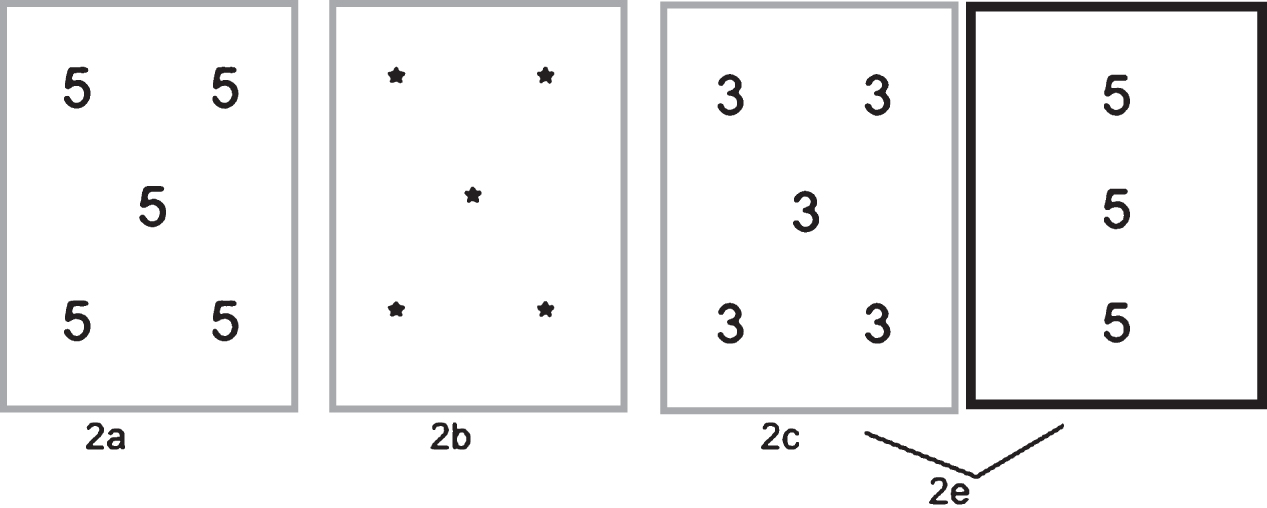
This test consists of 4 tasks with a different level of cognitive difficulty in which the first part presents a number lecture and asterisks count in order to measure simple and automatic processes through the count and reading. While in the election and alternation part there is the measurement of processes that requires an active mental control. Reading: In this section, boxes are shown (Fig. 2a) and the user is requested to say the number that it is reading. Counting: Inside of this activity the user is requested to mention the number of asterisk that are observed inside of the box (Fig. 2b). Election: For this activity it is necessary to count the numbers placed inside of each box. It is necessary to remind the user to mention the amount of numbers show inside of the box instead of mention the numbers observed (Fig. 2c). Alternation: This activity is the most complex one, because it requests full attention from the users in order to follow the instructions and react to the stimuli as expected. In this section is requested to count the amount of numbers as it has been done before, and when a box with a heavy line is detected it is necessary to say the number presented inside of that box (Fig. 2e).
The D2 is a type of test that pretends to know the concentration capacity used for a specific activity, and the level of selective attention. It measures the processing speed, instruction tracking and follow up, and the performance in tasks of discrimination of similar visual stimuli [19].
D2 has resulted especially useful for basic research, also in clinical, neuropsychological, educational, human resources and sport psychology fields, making it one of the most important and relevant tests for attention in Europe [17].
In order to realize this task, is it necessary an attentive inspection from the users side, from left to right the content included on each line, and then mark any “D” that appears with 2 small lines (two on the bottom, two under or one on each side) with a limit time of 20 seconds per line.
It is important to mention that the previous (the correct stimulus) are known as relevant elements. The other combinations (the “P” with or without lines, and the “D” without any line) are considered as irrelevant, because there is no need to be marked [19]. Example showed on Fig. 3.

The anatomy of 3 attentions network; Alert, orientation and execution [6].
This test has been created to score perception aptitude related to differences and similarities of stimulating patterns that are partially organized [20]. See example on Fig. 4.

FACES example [20].
VPT is a test utilized to measure the visual memory capability [21, 22]. Describes the short-term visual memory (STVM) as the capacity to retain visual information (letters, figures, colors, etc.) during a short period of time.
This test does not have a specific time for application; the only instruction is to show to the subject the pattern cards only for 3 seconds, and then, the subject need to reproduce the picture on the application sheets. An example is showed on Figs. 5 and 6.
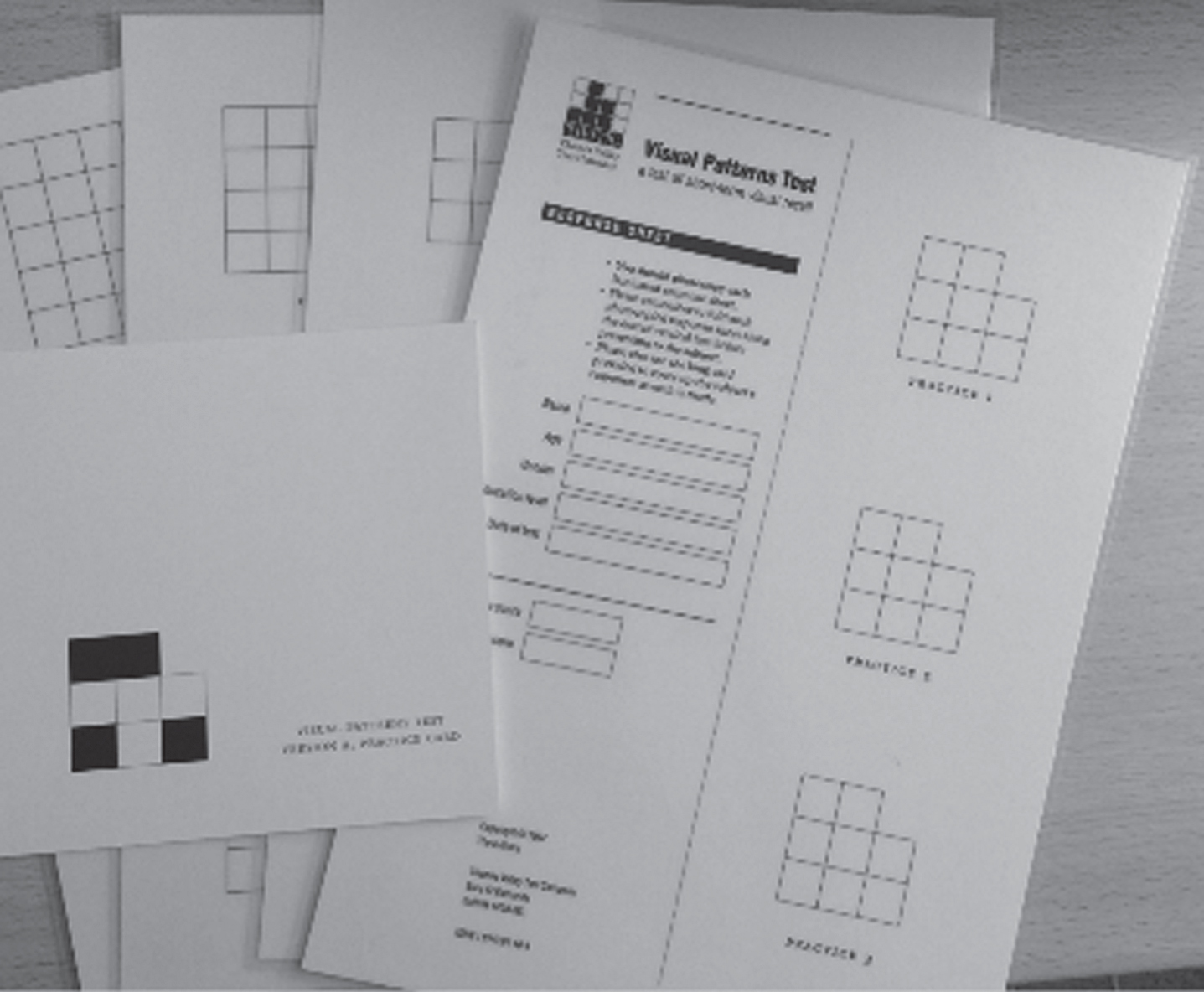
Visual Patterns Test [21].
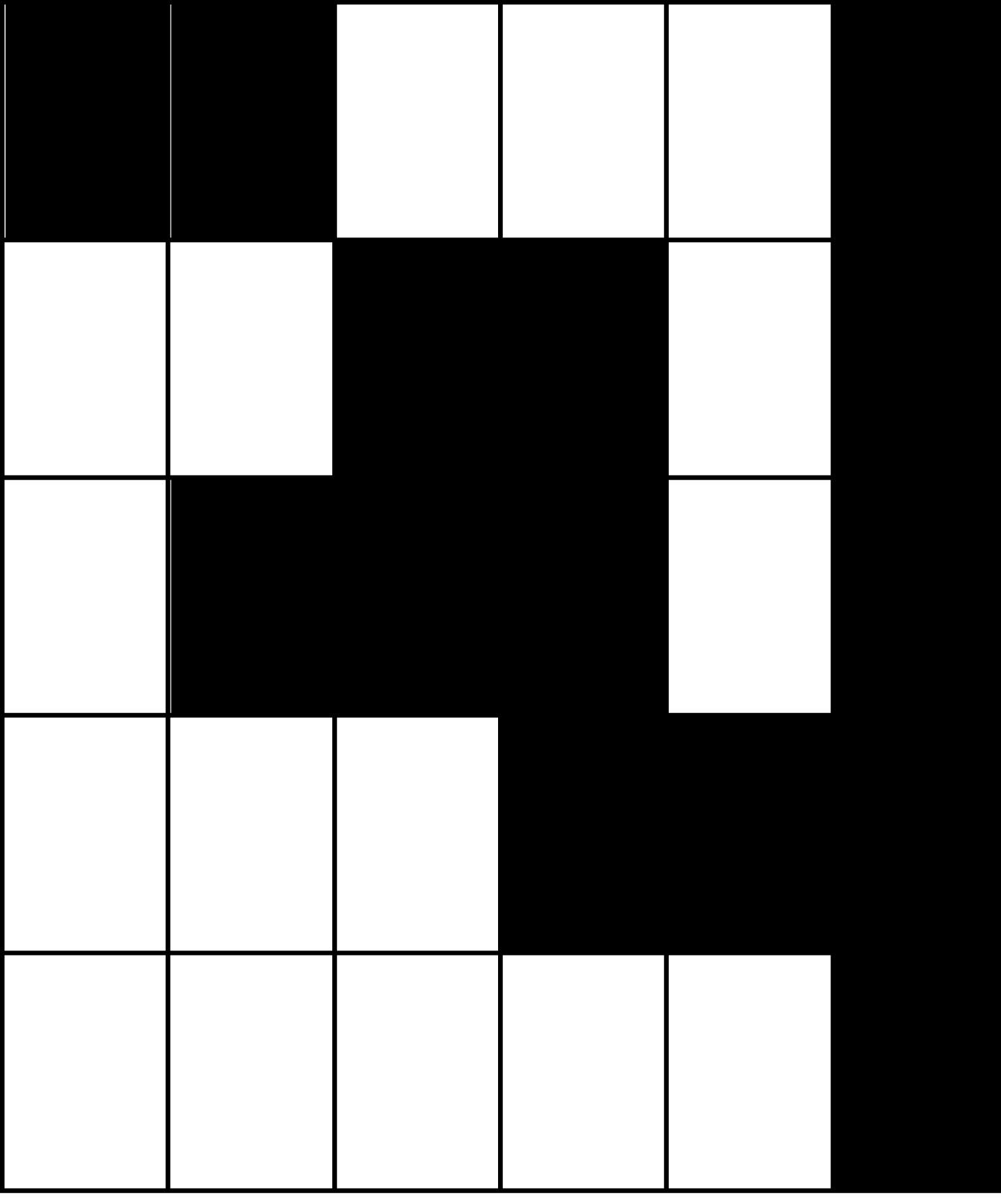
Patterns showed to the subject [21].
This is a test generated by [23] that is based in the STROOP effect discovered by John R. STROOP that refers to the interference that is produced to the subject when it is required to indicate the ink color that one specific word has been typed that is not similar to the word itself [24], this test allows to measure the execution of a controlled process of a new task, while there is an impediment of intrusion of an automatic task. It means, prevent the semantic interference produced as a consequence of the human automation for Reading activities, that happens when the meaning of the word interferes with the task of mention, for example, the ink color used to write the word [25]. See an example on Fig. 7.
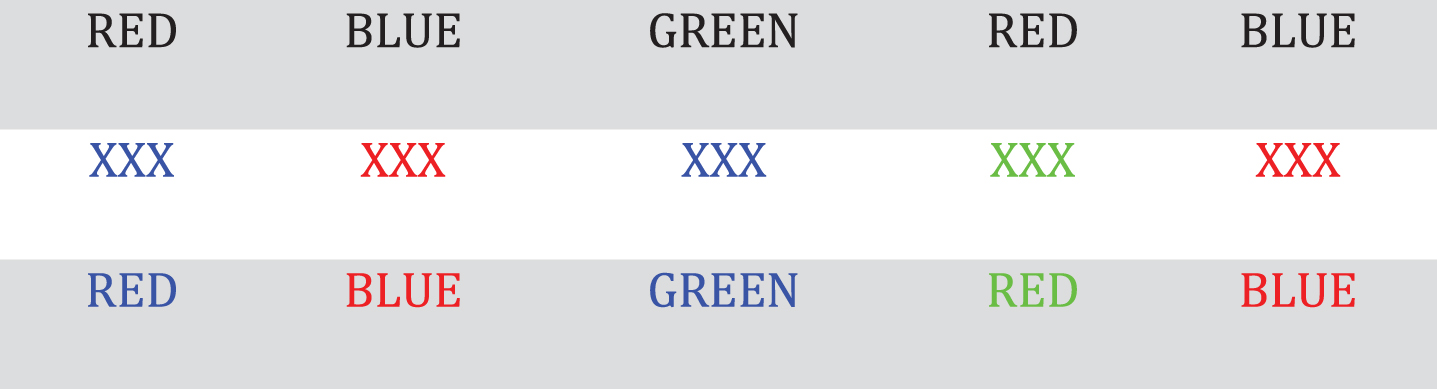
Example of the different sections of the STROOP test [23].
This test has a duration between 8–10 minutes, and it is conformed by 4 exercises that allows to evaluate the components included in the executive functions like the capacity to plan, work memory, mental flexibility, alternation, sustained memory, perspective memory, perception process speed and the fluency of the motor reaction [26]. Trail 1: The subject needs to join the circles in an ascendant way, with numbers from 1 to 25. Trail 2: The subject needs to join the circles in a descendent way; the numbers are from 25 to 1. Trail 3: The subject evaluated needs to join the circles with numbers in an ascendant way, but now also needs to alternate the colors blue-yellow-blue-yellow...the numbers are from 1 to 20. Trail 4: The subject has to join the numbers in a descendant way (1 to 20), alternating the figures circle-square-circle-square\dots
There is an example of each one of the paths in Fig. 8.

Trails examples [26].
The experimentation time took place with a population between 20 and 35 years old, with a 15.38% of females and 84.61% of males. The participants were 15.38% of Romanians citizen and 84.61% of Mexican citizen.
Affective state
To start with the experimentation process, the PANAS test was applied with the main purpose of knowing the positive affect level, that is the one that represents the pleasant emotionality part, distinguished by the motivation, energy, desire, feelings of dominance, success; but at the same time the level of negative affection, that represents the unpleasant and discomfort dimension, represented by feelings like lack of interest, boredom, sorrow, guilty, anguish, shame, and envy [27].
The PANAS test consists of 20 words describing different emotions (Motivated, Annoyed, Excited, Aggressive, among others) and where the evaluated should indicate, using a Likert scale of five positions (1 “Little or nothing” to 5 “extremely”), how it feels about of the emotions mentioned.
Applying the Cronbach’s alpha (1), the degree of reliability for positive affect questions was determined as (PA) α= 1.06 considered excellent and for negative affection (NA) α= 0.79 as acceptable. The obtained following results, were based on the analysis performed in [28], see Table 2.
PANAS results
To obtain the EEG lectures, it was necessary to place the Emotiv device to the participants. Then, its brain activity was acquired through the 14 electrodes placed on the Emotiv Epoc device [29]. The Emotiv SDK was used to filter and interpret the obtained lectures (Fig. 9).

EMOTIV EPOC Device.
In the other hand, the BCI lectures, the solving activity and the face of the participant were video recording for later analysis (Fig. 10).
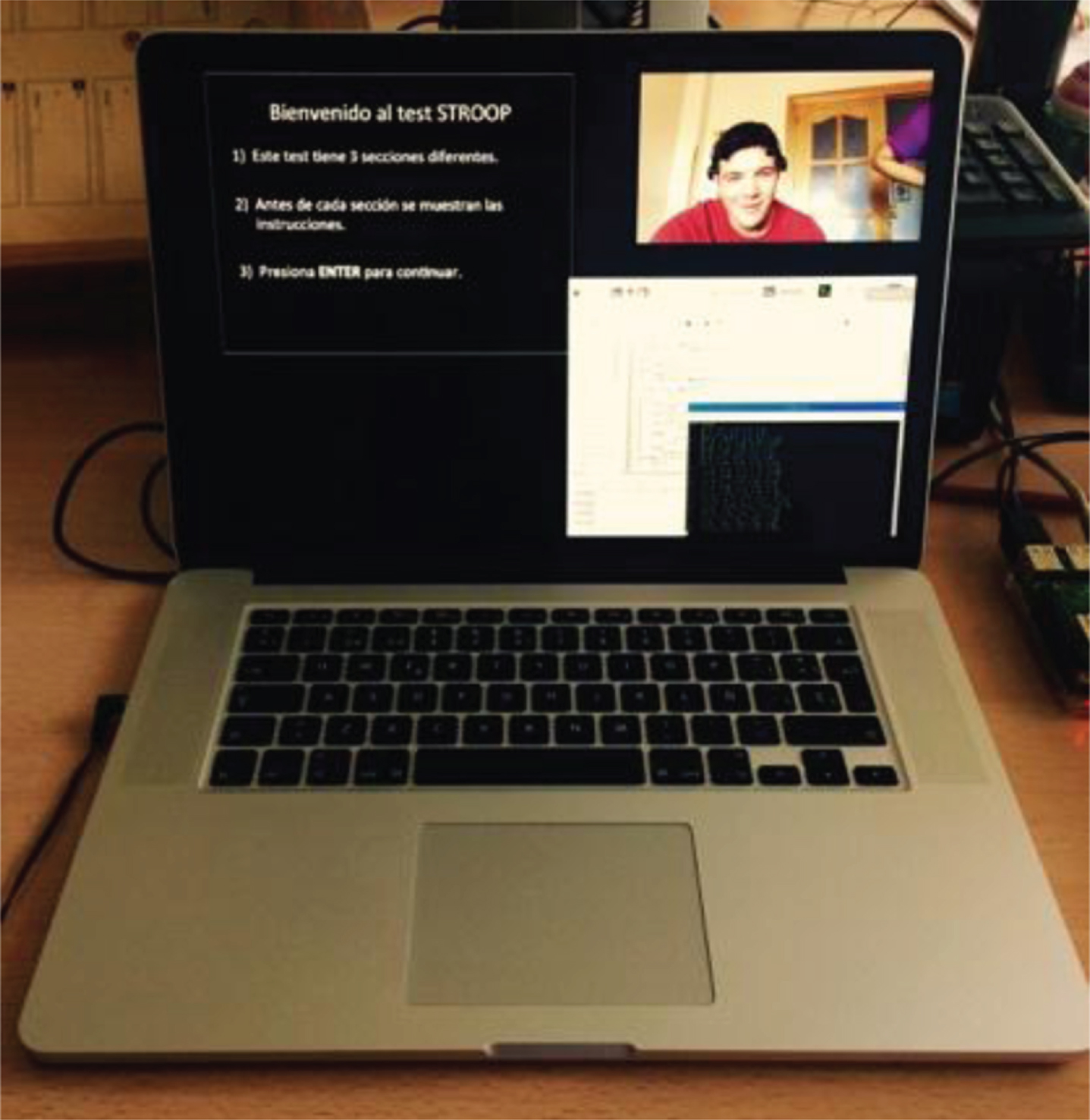
Video Recording.
The EEG lecture obtained during the experiment, corresponds to 23,071 seconds divided between each of the 6 proposed activities where (see Table 3):
Total instances
Total instances
Through the analysis of each of the repository data generated by participant solving each activity, in contrast to what was recorded at the videos and the solution of the activities, it was possible to detect the existence of a pattern of EGG behavior in almost all taken lectures. To do this analysis, only the Beta and Alpha waves were taken, because they are related to the state of attention/concentration and problem solving.
In order to determine the threshold of the EEG data related to the searched cognitive state, it was used the WEKA software with the unsupervised classification and clustering algorithm of K-means, which was configured to use the of Euclidean distances (2) to generate 4 clusters certain from the centroids and the closer neighbors. The analysis was divided into 3 experiments.
The first experiment consisted of taking the EEG data repository generated by all the participants divided into each activity, with this it was possible to create random training sets of 80/20 where the training was performed with 80% of the total data and validated with the remaining 20% (see Tables 4–9). With this we were able to determine which activity is the one that most generated the cognitive state sought.
Faces data result
Faces data result
STROOP data result
Five digit data result
D2 data result
Trails data result
Visual pattern test data result
According to the study, the activities with the best response for attention/concentration induction were Trails and Faces (Table 10).
Response for attention/concentration induction
It can be observed that STROOP activity has the lowest positive induction response in attention/concentration, but with an acceptable level in the generation of this cognitive state (See Graph 1).
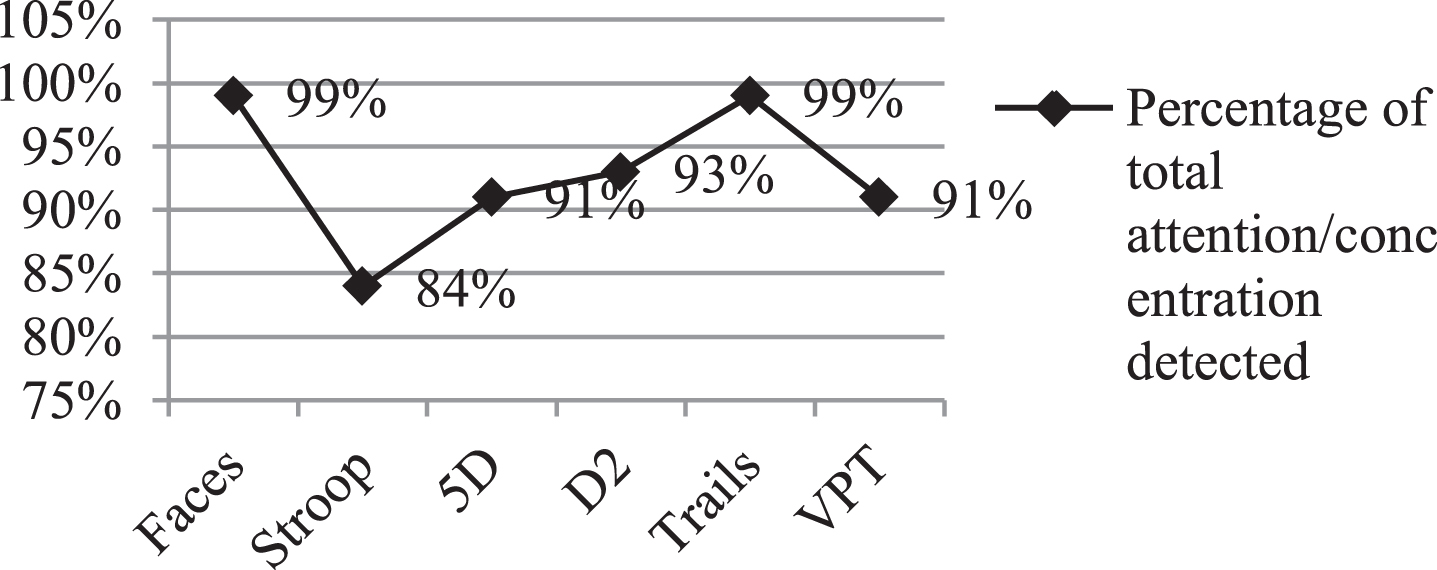
Percentege of total attention/concentration detected.
For the second experiment a new generation of clusters and validation was realized, but this time the using of the total of the data obtained in the application of all the tests was required.
To do this it was necessary to create a new set of random training of 80/20, where the training was realized with the 80% of the total data and validated with the remaining 20% (see Table 11). With this we were able to know the threshold and behavior of information with the use of all instances, regardless of the type of activity applied.
Total data result
Total data result
For the third experiment a new generation of clusters and validation was realized but this time using the total of the repositories data obtained by activity less one, that is, the repository of training data was generated with the total EEG data obtained from 5 of the 6 tests and was validated with the data generated by the test subtracted (see Tables 12–17).
Validation of visual patterns test
Validation of visual patterns test
Validation of trails test
Validation of D2 test
Validation of 5D test
Validation of STROOP test
Validation of faces test
The data that have been generated with the experiments performed, have been used to identify the EEG behavior lectures by attention/concentration stimuli.
The K-means classification and clustering technique has given good results in the intention to identify the threshold that must be taken into account for the later classification of EEG lectures in real time.
The activities selected for each of the tests have shown a higher degree of induction of the apt cognitive state for learning, attention/concentration, and through them it has been possible to identify this cognitive state, despite the ethnological differences presented by the subjects, although some do not dominate the Spanish language and be from different nationalities to the Mexican one, we have been able to detect that the EEG behavior is very similar in all the cases.
It has also been possible to detect that another emotional state that occurs in some people is anxiety, which can interfere in the same way with the mode that the activities are executed. As mentioned in this document, the fit emotional state is happiness + stress, but in neutral limits and anxiety on the other hand, falls into a state of high degree of stress or excitement. That is the reason why a series of new experiments has been started, in which the objective is to detect if the student is in an emotional state of anxiety, to apply a series of new activities (mindfulness), in order to obtain a neutral and apt state to continue with the activities.
On the other hand, it was possible to observe through the videos and the oral expressions of the participants, that the applied activities generated a sensation of challenge to the individuals, for these reason, another experimentation to be applied is the use of the gammification during the application of activities, to identify how efficient is the use of this technique by attempting to generate cognitive attention/concentration status.