



Abstract
From the mathematical point of view, the goal of ontology learning is to obtain the dimensionality function
Introduction
In computer science and information technology, ontology is a model for knowledge storage, representation, computation and analysis. It has been widely applied in query expansion, image retrieval, collaboration, information systems, and intelligent integration. Ontology, as a useful concept semantic model and an effective analysis tool, has been permeated in multidisciplinary, such as pharmacology science, medical science, education system, biology science, neuroscience, geographic information system (GIS) and nanotechnology (see Villalonga et al. [1], Gailly et al. [2], Benvenuti et al. [3], Podolskii [4] and Salas-Zarate et al. [5]).
Specifically, the structure of ontology can be expressed as a graph. Let O be an ontology and G be a graph corresponding to O. Each vertex in ontology graph represents to a concept in ontology and each edge in G denotes a directly relationship between two concepts. In the ontology engineering applications, it aimed to get the similarity between ontology vertices (concepts) and ontology mapping between multi-ontologies (which is aimed to bridge a similarity based connection between the vertices from different ontologies). In this way, the problem of ontology mapping can also be considered as the special kind of ontology similarity measuring.
Recent years, a variety of ontology approaches are applied in kinds of engineering applications. Bobillo and Straccia [6] raised a formal framework for type-2 fuzzy ontologies taking into account the needs of existing applications. Rani et al. [7] introduced two topic modeling algorithms called LSI & SVD and Mr.LDA for learning topic ontology. Pauwels et al. [8] focused on the optimization of geometric data in the semantic representation. They outlined and discussed the diverse available options in optimizing the data representations used, and also quantified the impact of these measures on the ifcOWL ontology. Tarus et al. [9] studied a hybrid knowledge-based recommender system based on ontology and sequential pattern mining for recommendation of e-learning resources to learners. Negri et al. [10] aimed at providing a representation of logistics aspects, which is to be used as an extension to the already-existing production systems ontologies that more focused on manufacturing processes.
In the background of big data applications, it faces the rigorous challenge of calculating massive amounts of data. Hence, the learning tricks are introduced in ontology algorithm. The popular ontology idea is to get an ontology function
Several effective ontology learning approaches for getting ontology score function and their theoretical analysis have been proposed. Gao et al. [11] studied the strong and weak stability of k-partite ranking based ontology algorithm. Gao and Xu [12] gave the stability analysis of learning algorithms for ontology similarity computation. Gao et al. [13] introduced an ontology sparse vector learning algorithm for ontology similarity measuring and ontology mapping by means of ADAL approach. Gao and Farahani [14] determined the generalization bounds and uniform bounds for multi-dividing ontology algorithms with convex ontology loss function. Gao et al. [15] proposed an ontology algorithm based on singular value decomposition. Gao and Wang [16] gave the analysis of k-partite ranking based ontology algorithm in area under the receiver operating characteristic curve criterion. More ontology learning algorithms and related theoretical results can refer to Simón et al. [17] and Pérez-Benito et al. [18].
In this paper, we focus on the ontology learning algorithm where the ontology function is obtained via ontology sparse vector. The new ontology sparse vector learning algorithm will be presented and the experiments will be depicted to show its effectiveness.
Mathematical setting of ontology algorithm
Assume that V is an ontology vertex space (instance space) and we use a p dimension vector to express all the information related to the ontology vertex v (which corresponding to a concept). Specifically, let v = {v1, v2, ⋯, v
p
}
T
be a vector corresponding to ontology vertex v. An optimal ontology function
Using ontology sparse vector, the ontology function can be formulated as
Let {v1, v2, ⋯, v
n
} be the ontology sample set, where
Under the above assumption, the ontology optimization problem (2) is equal to the following dual version:
In this section, we present the detailed learning trick for our main ontology sparse vector optimization problem.
Primal dual ontology algorithm and its efficient implementation trick
Now, we give the ontology algorithm to solve (4) using standard learning approaches in the special setting that Ω is separable, i.e., Ω (β) term in (2) can be formulated as
Algorithm A: Primal dual ontology algorithm A1: Input
Set
Note that the precondition of Algorithm B is that the ontology information matrix
Primal dual ontology algorithm in normal setting
In this part, we manifest the ontology sparse vector learning algorithm using standard trick for the ontology optimization problem presented in the last section, but the setting discussed in this part doesn’t need the separable of Ω. Algorithm C: Primal dual ontology sparse vector learning algorithm in normal setting: C1: Input positive parameters (θ, τ, σ), iteration number T, β(0),
Next, we show the Algorithm C in the nonuniform ontology sample setting.
Algorithm D: Primal dual ontology sparse vector learning algorithm in with nonuniform ontology sample:
D1: Input positive parameter (θ, τ, σ), iteration number T, β(0),
D2: For t = 0, 1, ⋯, T - 1: randomly select k ∈ {1, ⋯, n} with possibility
Greedy procedure and corresponding algorithm with active set
In the subsection, we present our finally ontology sparse vector learning algorithm in view of greedy techniques. Also, we assume the balance function Ω is separable.
Algorithm E: Primal dual ontology sparse vector learning algorithm in with greedy trick:
E1: Input ontology training data v1, ⋯, v
n
with ontology information matrix
E2: For t = 1, ⋯, T:
E3: Return β(T) and
If we define ontology active sets Vβ and V
Algorithm F: Primal dual ontology sparse vector learning algorithm in with greedy trick and active sets:
F1: Input ontology training data v1, ⋯, v
n
with ontology information matrix
F3: Return β(T) and
Finally, after getting the ontology sparse vector β, the ontology function is obtained by f = v T β.
Experiments
To implement ontology learning algorithm with mathematical setting, for each vertex in each ontology, we use fix dimensional vector to represent all the information of vertex, which contains it’s name, structure, instance, and attribute, etc. In this section, two experiments are manifested to test the effectiveness of our ontology sparse vector learning algorithm.
Ontology similarity measuring test on plant data
In plant science, “PO” ontology O1 (see http: //www.plantontology.org, and its basic structure is depicted in Fig. 1) is used to present plant anatomy and morphology, and development stages of plants. We use P @ N (Precision Ratio) to measure the equality of the experiment data. The detailed procedures can be described as follows:
The Structure of “PO” Ontology O1. first step: the top similarity N vertices for every vertex are listed in light of field experts; second step: in terms of our ontology learning algorithm, other top similarity N vertices for every vertex are determined; third step: the P @ N precision ratios for all ontology vertices are obtained; last step: the average precision ratio for the whole ontology graph is computed.
To compare the results, ontology learning approaches introduced in Gao and Zhu [19], Gao et al. [20] and [21] are acted on the “PO” ontology data, and their corresponding precision ratios are yielded respectively. Parts of the compared results can be referred to Table 1.
The experiment results of ontology similarity measure on “PO” data
The compared data depicted in Table 1 reveals that the precision ratio using our ontology sparse vector learning algorithm is obviously higher than the precision ratio determined by algorithms in Gao and Zhu [19], Gao et al. [20, 21] when N=3, 5, 10 or 20. Therefore, we conclude that our proposed ontology algorithm is superior to the learning approaches that Gao and Zhu [19], Gao et al. [20, 21] introduced.
Mathematical ontologies O2 and O3 (the basic structures of O2 and O3 are extracted and presented in Figs. 2 and 3, respectively) are used in our second experiment to show the effectiveness of our ontology sparse vector learning algorithm in ontology mapping construction. The aim is to building the similarity based ontology mapping between O2 and O3, and P @ N criterion is also applied as criterion to test the quality of experiment results. Moreover, ontology learning approaches introduced in Gao and Zhu [19], Wu et al. [22] and Gao et al. [23] are implemented in mathematical ontologies as well. Parts of compared experiment results are listed inTable 2.

“Mathematical” ontology O2.
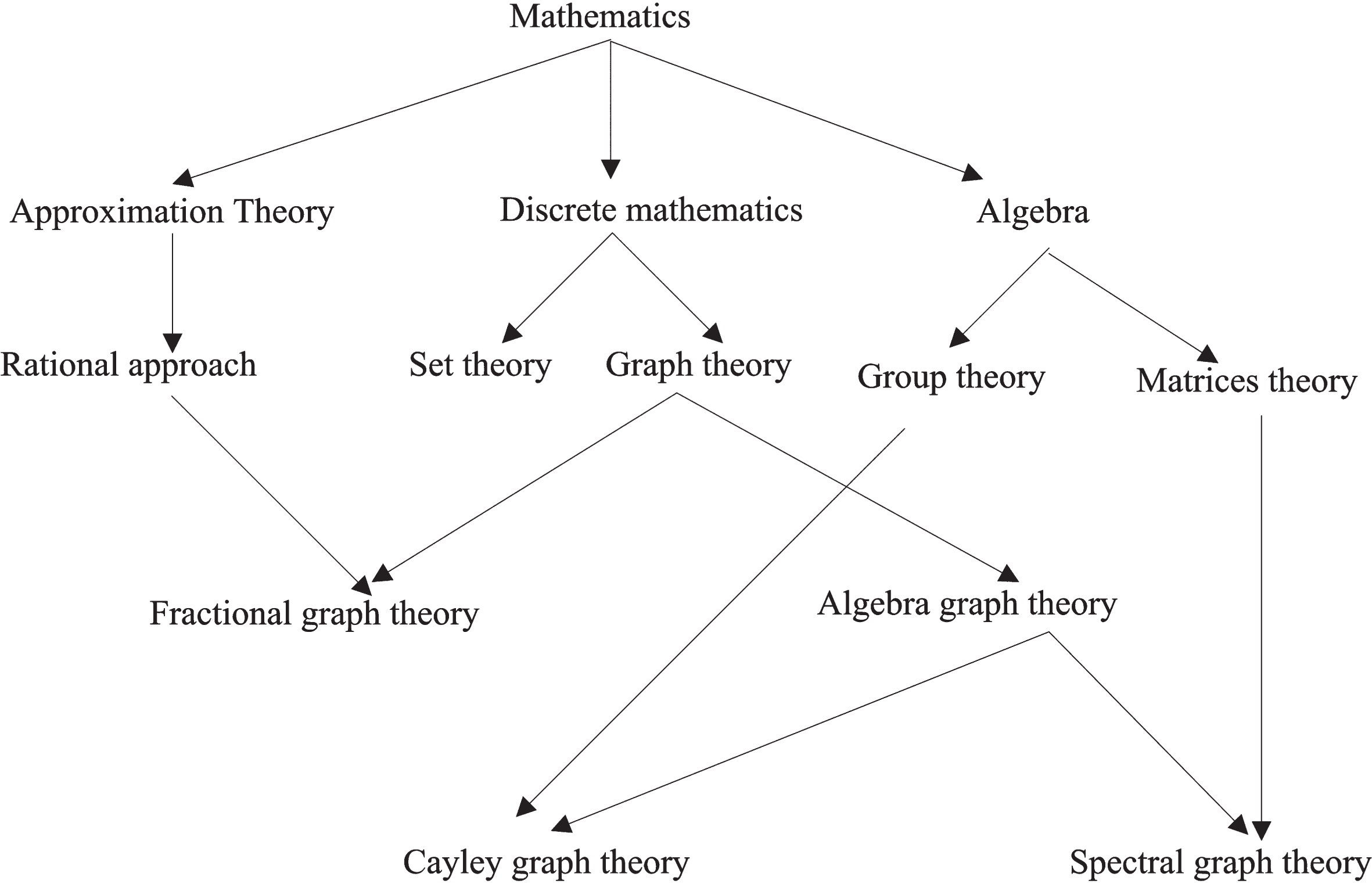
“Mathematical” ontology O3.
The experiment results of ontology mapping
As presented in Table 2, the experiment compared data implies that our ontology sparse vector leanring algorithm performances much more efficient than ontology learning algorithms raised in Gao and Zhu [19], Wu et al. [22] and Gao et al. [23]. With the increase in the value of N, this advantage is more obvious.
Ontology, as a widely applied semantic model, has raised much attention from the scientists and engineers. One popular ontology learning method in recent years is mapping each concept (ontology vertex) to a real number by means of ontology function, and the similarities between ontology vertices v and v′ can be calculated in view of |f (v) - f (v′) |.
In our article, we focus on the ontology function learning algorithm via ontology sparse vector computation. We manifest a new learning trick for ontology similarity measuring and ontology mapping by virtue of coordinate descent and dual optimization. Furthermore, the greedy method and active sets are used in the iterative programme. Finally, our proposed ontology learning algorithm is applied in two classes of engineering applications for similarity computation and ontology mapping construction, respectively. The compared data proved the effectiveness of our ontology sparse vector learningalgorithm.
Conflict of Interests
The authors hereby declare that there is no conflict of interests regarding the publication of this paper.
Acknowledgments
The authors thank the reviewers for their constructive comments in improving the quality of this paper. This work is partly supported by the 2016 scientific research project of the Guangdong university of science and technology – A Study on the design of the campus intelligent space situational awareness system based on Ontology [GKY-2016KYYB-10].