



Abstract
In this paper, a new chaotic teaching learning based optimization (CTLBO) is proposed. TLBO is a rather newly proposed population-based algorithm. This algorithm has no control parameters for the tuning and has a simple structure. We improve its performance by chaotic maps. First, the presented CTLBO is tested on nine unimodal/multimodal benchmark functions. Then, chaotic sequences are applied as vectors with different initial values for design of a frequency reconfigurable antenna (FRA) as a practical example. Comparisons of the performance of this algorithm with those of the basic TLBO, genetic algorithm and particle swarm optimization show the ability of this algorithm in design of FRAs in terms of faster convergence and better performance. A prototype of the optimized antenna with CTLBO algorithm is fabricated and the simulation and measurement results agree suitably.
Introduction
In 2011, a new optimization algorithm named teaching learning based optimization (TLBO) was introduced by Rao. This algorithm is free from control parameters [1, 2]. It is generally challenging to determine the optimum controlling parameters in different algorithms. Experimental results show that TLBO outperforms many other meta-heuristic algorithms [3]. The TLBO has been proven effective in several engineering subjects, namely civil engineering [4], mechanical engineering [5, 6] and electrical engineering [7, 8]. TLBO is a population-based optimization method that simulates the teaching-learning processes of a real classroom. The components of the algorithm are a teacher and students (learners). There are two phases in this algorithm: students learn from the teacher in the teacher phase, and then learn from other students in the learner phase. Grades of students is considered as outputs of the algorithm, which is dependent on the quality of the teacher [3]. It shall be noted that the idea of applying chaotic theories instead of random processes has been recently noticed in optimization theory [9]. Chaos theory includes the study of wide-ranging phenomena having sensitive dependence on initial conditions. Chaos often complies mathematical rules and equations, but usually seems “random” and unpredictable. A chaotic behavior is generally irregular and disorderly; examples for such a behavior include weather patterns, the stock market, some neurological and cardiac activities and certain electrical networks of computers [10]. The sensitive dependence on initial conditions, the semi-stochastic property and the ergodicity are of important dynamic properties of a chaotic issue. In [11], a chaotic phase was added to the basic TLBO in order to improve the algorithm performance. This phase is the chaotic mutation that gets the existing solutions to perturbate; consequently, the searching behavior of the algorithm is improved in the multi-machine power system stabilizers design problem [11]. In [12], a chaotic particle swarm optimization (PSO) with a mutation-based classifier PSO is presented to classify patterns of different classes in the feature space. Also, [13] proposed a chaotic butterfly optimization algorithm that improves its performance in terms of local optima avoidance and convergence speed.
On the other hand, frequency reconfigurable antennas (FRAs) have been lately coming into the spotlight of new wireless communication systems [14]. Some important advantages of FRAs include: removal of application of several antennas in a single system, the potential of tuning of an antenna for different applications, resolving of the narrowbandedness of microstrip antennas, suppression of unwanted signals and noises from non-operating bands and sufficiency for cognitive radio applications. Use of optimization algorithms in design of such antennas is of great help as a result of the intrinsic design complication compared to typical types. For example, multi-objective optimization has been used for designing a pixel antenna [15] and a parasitic layer-based antenna [16].
In this paper, the goal is to improve the performance of the TLBO algorithm by a chaotic system and to introduce it to the electromagnetic and antenna community. The first nine benchmark functions, i.e. unimodal and multimodal functions, are tested using the presented algorithm. Then, for investigation of the algorithm performance on a practical example, FRA design is considered. The optimization is applied to determine the slot shape and the diode location in the ground plane of the antenna in order to set frequency. Chaotic sequences are applied as vectors with different initial values in the design of the FRA. Also, a performance comparison of the CTLBO is made with those of the basic TLBO, PSO and genetic algorithm (GA). Simulation results show that the presented CTLBO outperforms in terms of better solution and faster convergence. Finally, an antenna is designed by the proposed CTLBO and results are presented. To reduce the run time of the design and comparisons, an internal multi-port method (IMPM) [15] was implemented needing a full electromagnetic simulation.
Optimization Framework
Basic TLBO
TLBO is a human-related concept inspired algorithm that mimics the teaching–learning processes between the teacher and the students in a real classroom. This algorithm consists of two phases called the teacher phase and the learner phase. Students learn from the teacher in the first phase and learn by interaction among themselves in the second.
Teacher Phase
A teacher increases the students’ knowledge from the initial stage to his/her own level. The truth is that the teacher can roughly be merely effective on the classroom mean to an extent which depends on his/her ability. This is simulated as by the following equation that is an updated version of the existing solution (
In this phase, the knowledge level of the students is extended with the help of knowledge interaction between themselves. Enhancement of each student’s knowledge happens each time as a result of his random interaction with another student. This student will be able to learn something new in case his interaction party is more knowledgeable than he is. The equations representing the learner phase are as follows:
In the current work, the logistic map is applied as the needed chaotic map, that its equation is as (3) [9]
Let us rewrite the updating equations (1) and (2) as (4) and (5):
“Range,” and “fmin” are the space of the variables and the theoretical global minimum, respectively. 10-D, (D is the problem dimension) and 30-D functions are simulated with two algorithms, with the maximal number function evaluations (NFEs) of 40,000 and 60,000, respectively. The initial values are selected as Cr1 (1) =0.4 and Cr2 (1) =0.4. Results of the test are presented in Table 2. The best solutions are shown in bold. Table 2 displays that proposed CTLBO outperforms in terms of the best/worst and the mean best solutions and SD for all functions in 10-D and 30-D except for F4 and F9. For example, results of tests on F2 are exactly investigated. Comparison between two last columns (30-D functions) show that the average of the results (average of the best costs of 30 independent runs) from CTLBO and TLBO are 7.1655e-255 and 9.9234e-145, respectively; Also the (best, worst) best cost values after 30 independent runs recorded (9.2774e-236, 2.1478e-223) and (7.3915e-147, 1.1957e-143), respectively for CTLBO and TLBO. Furthermore,F1, F3, F5 and F6 achieve to global minimum in CTLBO in spite of TLBO. These results show implicitly superior performance of the proposed CTLBO (optimization problem is minimization).
Nine tested functions [3]
Comparison of TLBO and CTLBO algorithms results on test functions listed in Table 1 over 30 independent runs
Initial Configuration of Antenna
In this section, the basic first antenna configuration that is a microstrip coaxial feed antenna is introduced. Fig. 1 shows this configuration. The antenna consists of a FR-4 epoxy dielectric substrate with a thickness of 1.6 mm, permittivity of 4.4, and loss tangent of 0.02 which resonates in 5.2 GHz. The dimensions of antenna are as follows: W s = 50 mm, L s = 50 mm, W = 12.5 mm, L = 12.5 mm.
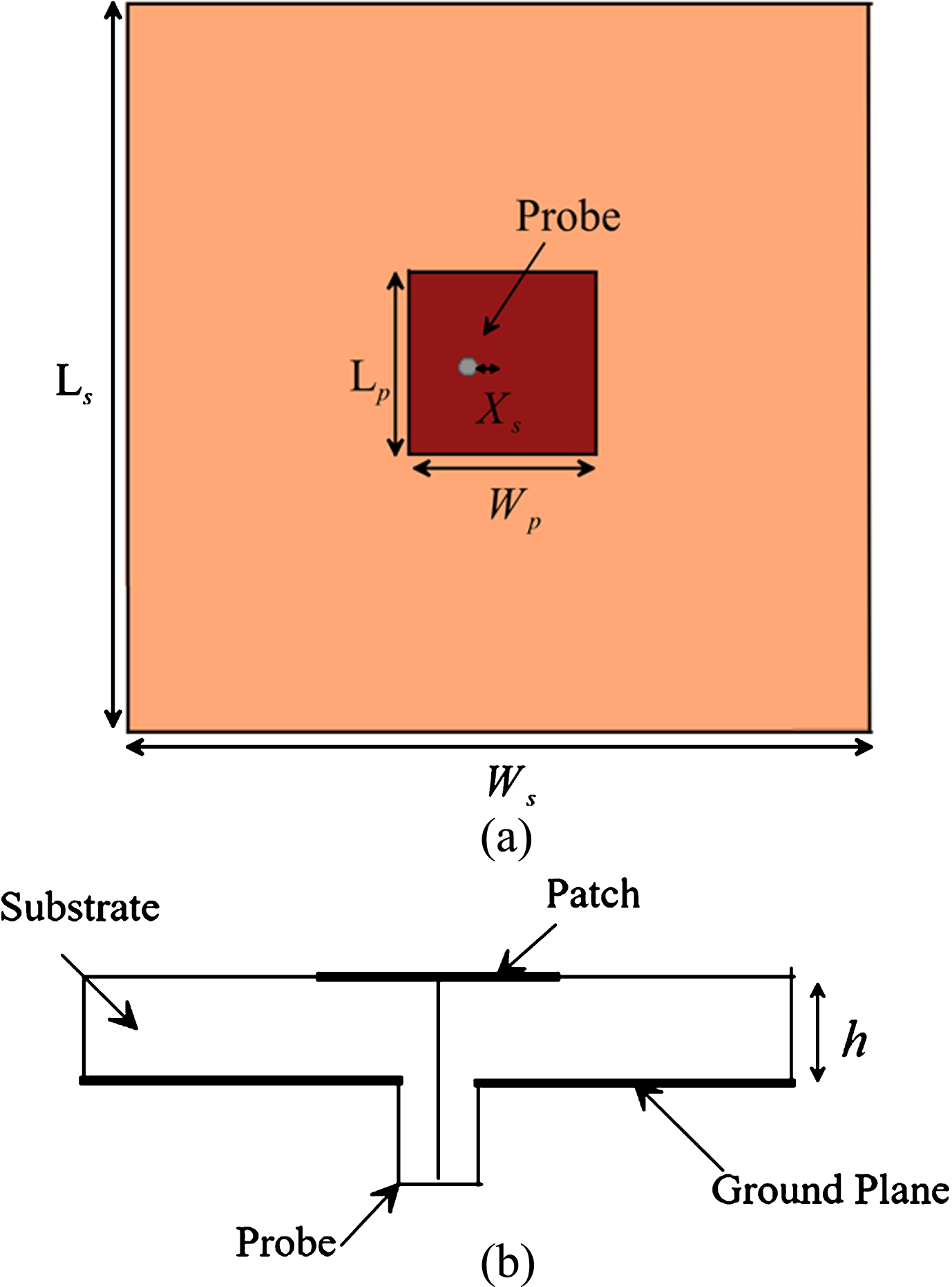
Geometry of the rectangular microstrip patch antenna (a) front view (b) side view.
Using IMPM, multiple ports must be created in the antenna structure defined as internal ports. These ports are replaced by short circuit elements with zero impedance or open circuit elements with infinite impedance that respectively show the presence and absence of the metal. In addition, the diode port is equivalent to impedances of circuit models of ON/OFF states. For the switching element, the PIN diode BAR50-02V is made use of. There are circuit equivalents of this type of diode in the datasheet which can be found in [18]. The input impedance z in from the feed port (defined as port 0) is obtained as in reference of [15].
A 59-port network is created in the ground plane of the antenna. The ground plane is displayed in Fig. 2 (a) with its integrated ports and the section of ports is magnified in Fig. 2 (b). The size of all ports is 2 mm × 2 mm. Subsequently, the used algorithms (GA, PSO, TLBO and CTLBO) are integrated IMPM with the aim of design and comparison. The cost function is defined as (8).
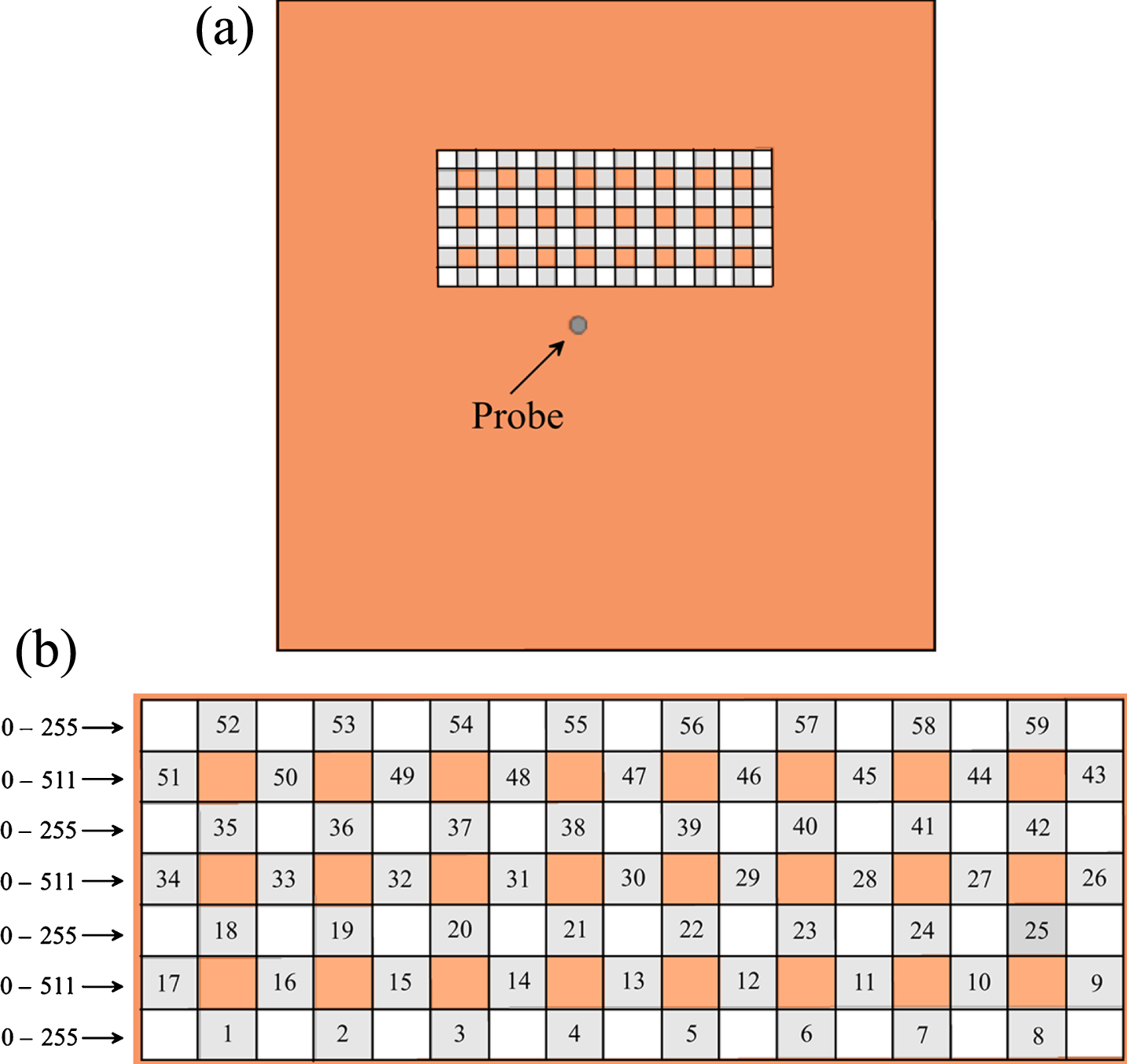
(a) Overall view of ground plane integrated 59 ports (b) Magnification of ports section in ground plane.
Herein, the performance of the proposed algorithm and also the basic TLBO is investigated. Each algorithm is run 20 times. A single-objective optimization problem is enough to be handled by making the bandwidth of -10 dB known as by introducing constraints. Crossover and mutation probabilities are selected 1 and 0.1 for GA, and social and cognitive parameters are respectively 1.8458 and 1.6865 for PSO based on [19]. The convergence graphs of mean best costs versus NFE are given in Fig. 3 (a). For better recognition of differences of results of the algorithms, Fig. 3 (b) represents the graph of Fig. 3 (a), with a smaller range of f(x). This figure shows that both TLBO and CTLBO have better and faster performances than those of GA and PSO. The average of the results (average of the best costs of 20 independent runs) from GA and PSO are nearly -29.3880 dB and -34.5868 dB, respectively; whereas the values of -37.8376 dB and -38.9900 dB are respectively recorded for TLBO and CTLBO. The graph also shows that CTLBO has faster convergence than the basic TLBO, which means that the proposed algorithm is more efficient than the basic TLBO in design of FRAs. By considering the mean value of f(x) equals -30, NFEs are about 150, 325, 325 and 1000 for CTLBO, TLBO, PSO and GA, respectively. In antenna design problems especially cases that are needed to link MATLAB-Electromagnetic software, reducing of NFEs are very important. In the other words, calculating of cost function needs to run used electromagnetic software that is time-consuming.
Moreover, statistical performances of these algorithms are estimated and indicated in Table 3 that also shows the ability of CTLBO. The worst cost value after 20 independent runs in the GA algorithm is a positive value, because the constraints are added to the cost function as penalty functions with coefficients equal to 100. Thus, one can express that GA cannot always meet the considered constraints. In addition, this table shows that the best and worst cost values of these runs are those of CTLBO, respectively equaling -45.3966 and -30.6953, both of which are the best values of all. Optimized slot geometry and diode location in the ground plane by IMPM-integrated CTLBO is depicted in Fig. 4.
Performance Measures of GA, PSO, TLBO and proposed CTLBO algorithms for FRA design
Performance Measures of GA, PSO, TLBO and proposed CTLBO algorithms for FRA design
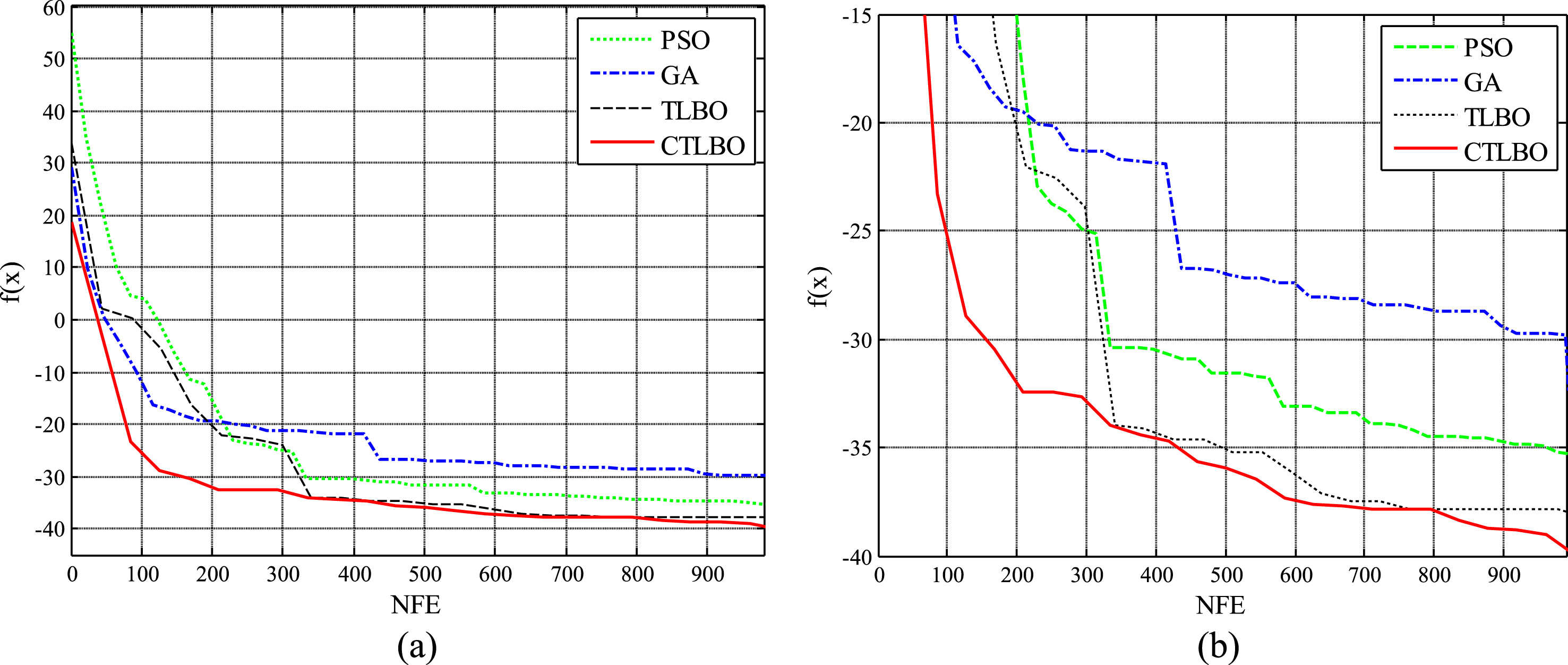
Convergence speed of the applied algorithms in FRAs design (a) Overall view (b) A magnification view of a section of part (a)
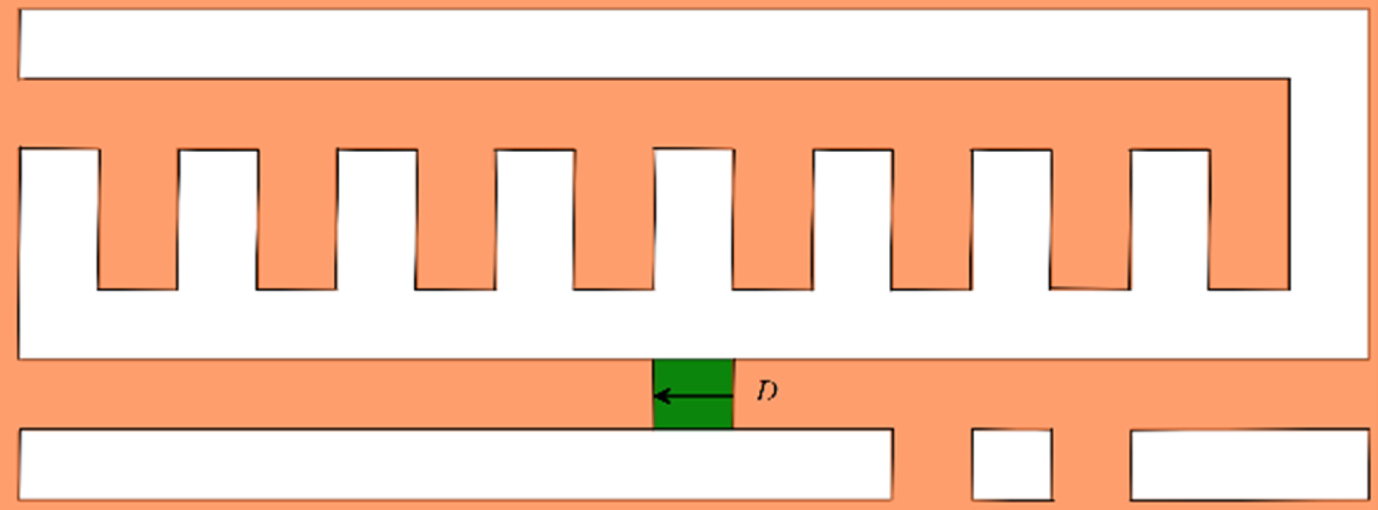
Obtained slot geometry and diode location.
The antenna with the optimized ground plane is fabricated. For the biasing circuit, two narrow slits with a width of 0.2 mm are placed in the ground plane [20]. Because of the effect of the separation of these slits, eight 100 pF surface-mount RF capacitors are applied to create an RF connection throughout the ground plane that is shown in Fig. 5. Proposed design is fabricated (Fig. 6) and measured. Fig. 7 illustrates the reflection coefficients for both ON/OFF states of the PIN diode. Antenna resonances in (simulated, measured) center frequencies of (5.27, 5.22) GHz and (5.73, 5.86) GHz in ON/OFF states, respectively. Fig. 8 displays the normalized radiation patterns of the antenna. It is shown that the antenna has a pattern approximately stable in both ON and OFF states. The peak gains of the antenna are 5 dBi in both of the ON/OFF states.
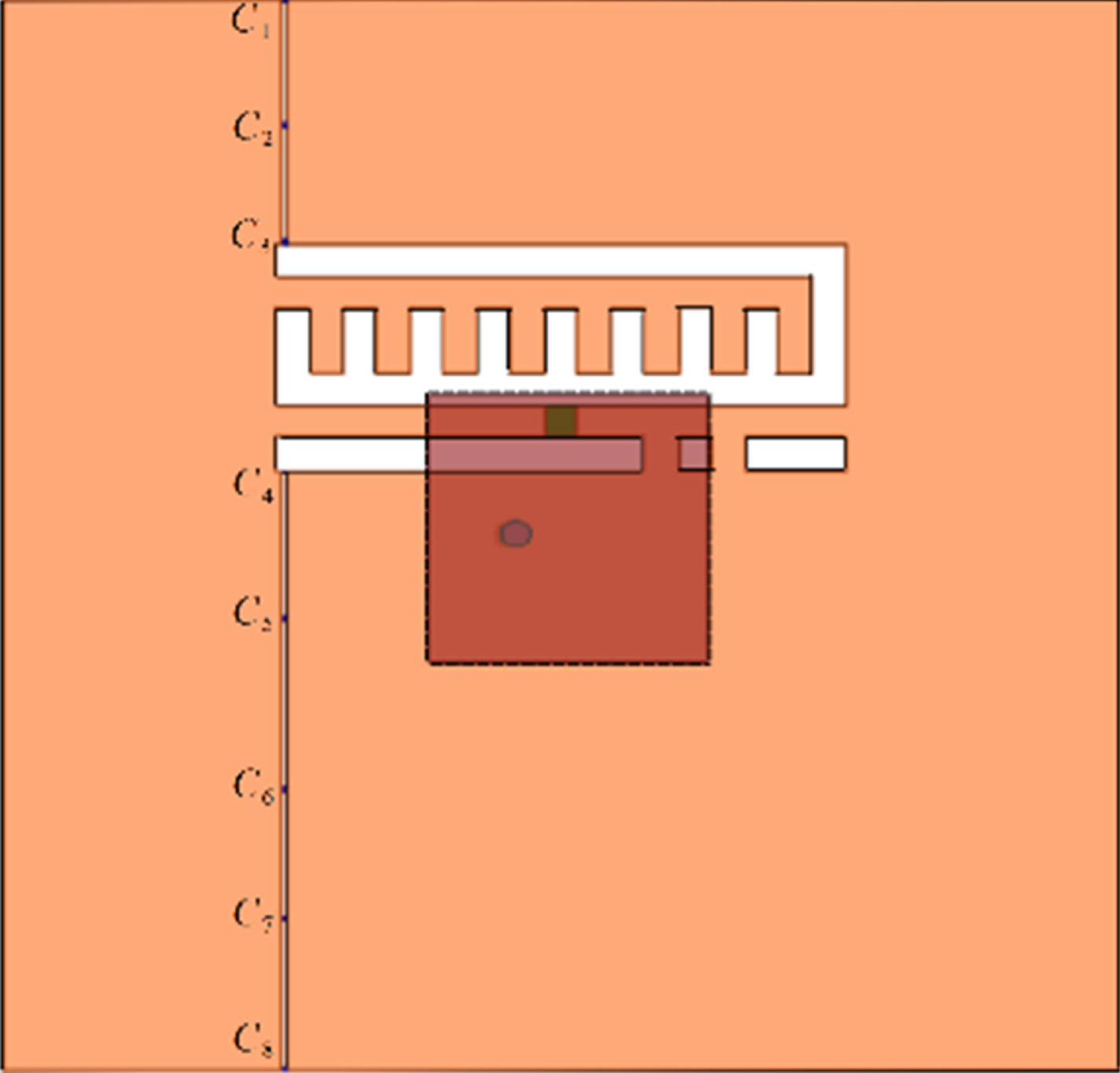
Overall view of the proposed antenna with biasing circuit (C1 - C8 are capacitors).
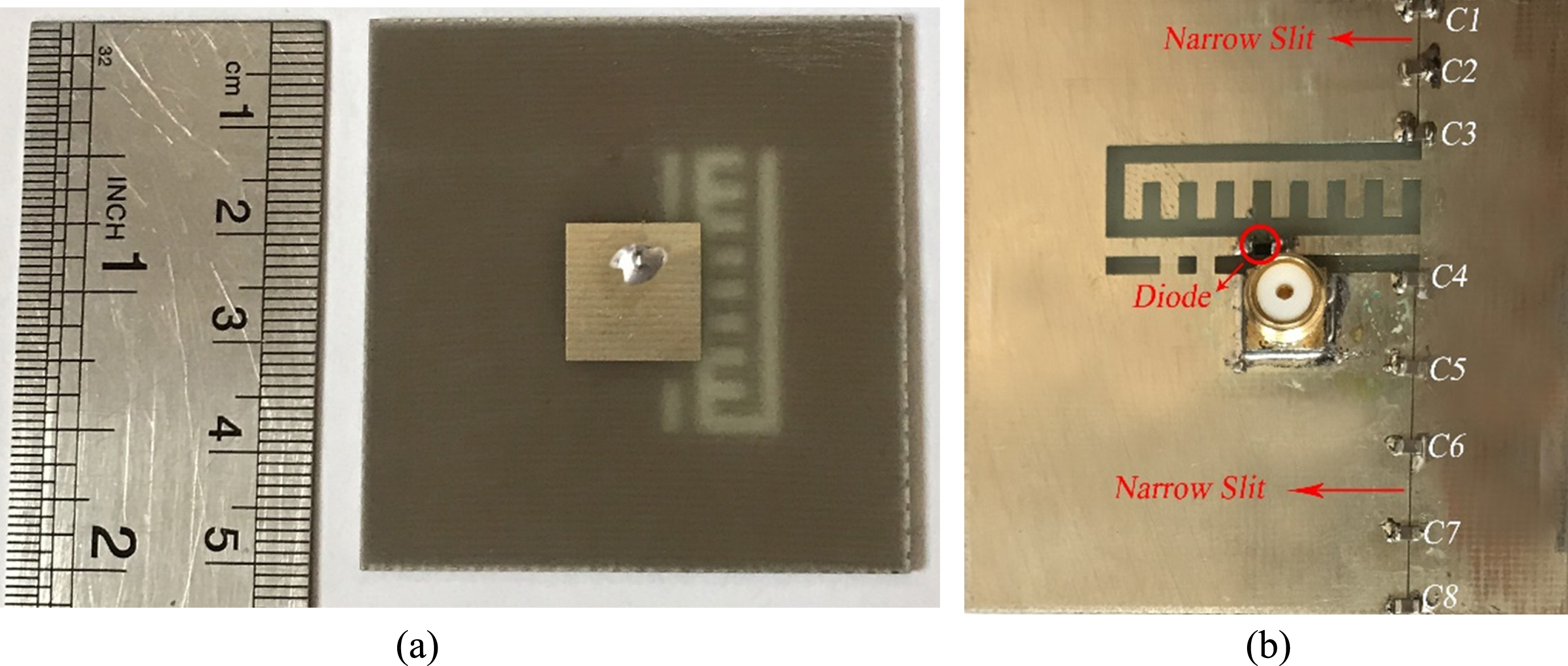
Fabricated proposed antenna (a) Top view (b) Bottom view, ground plane of antenna, slot shape and diode location with biasing circuit (c1 - c8 are capacitors).
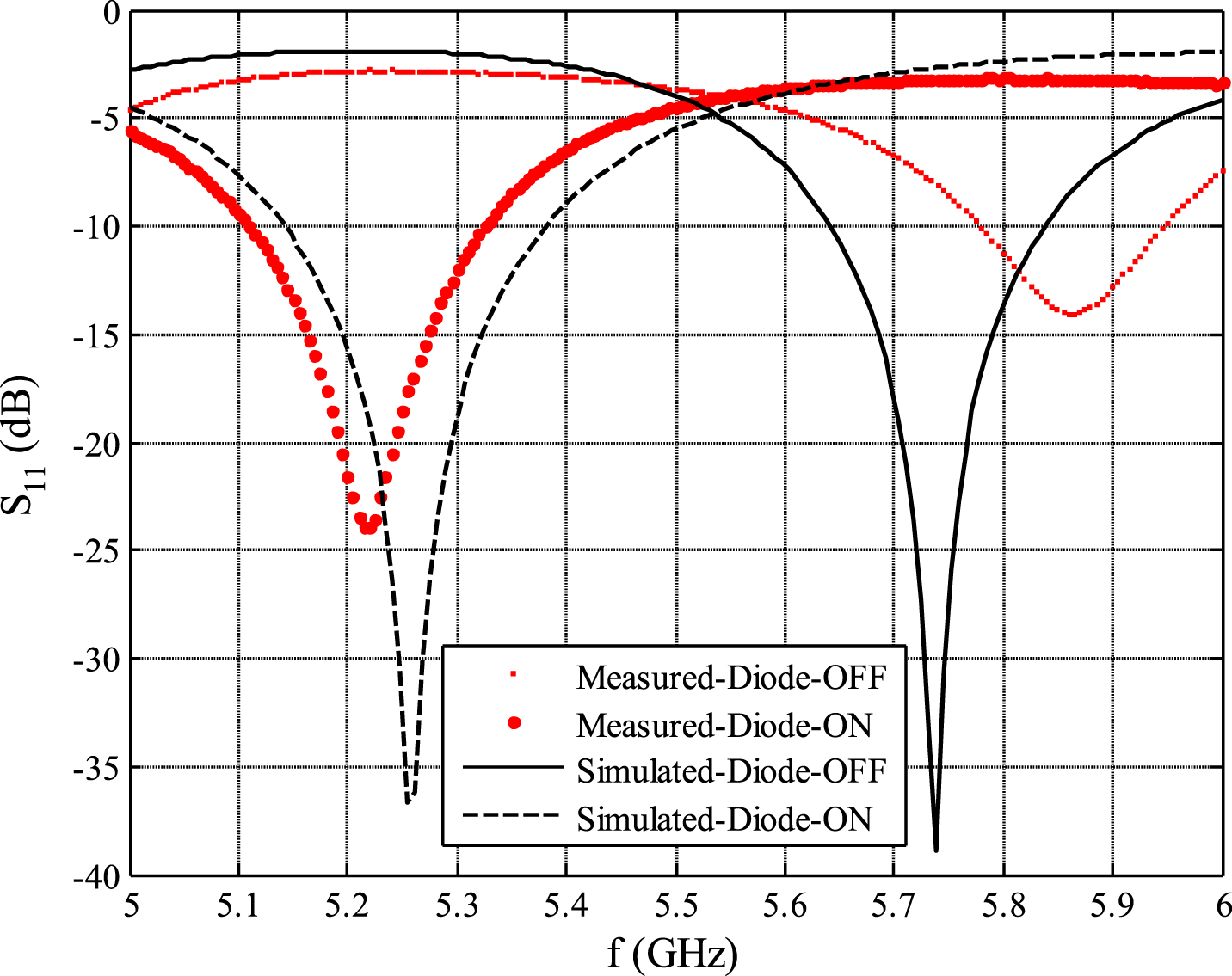
Measured and simulated reflection coefficients (S11) for ON and OFF states of diode.
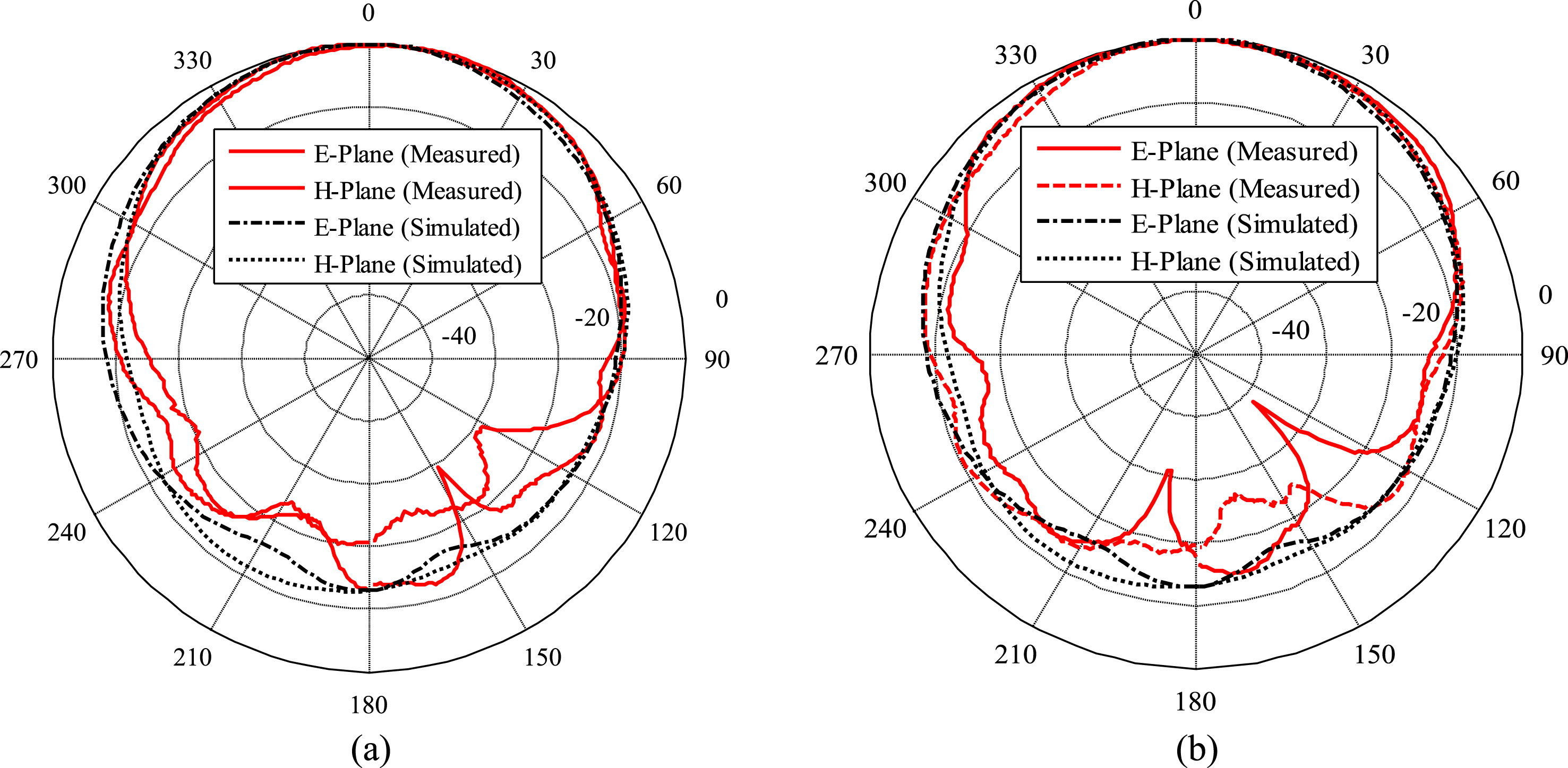
Measured and simulated radiation patterns of antenna (a) ON state diode (b) OFF state diode.
The goal of this paper was to improve the performance of TLBO algorithm by a chaos system and introduce it to design of FRAs. At first, CTLBO was proposed and nine benchmark functions, unimodal and multimodal, were tested using the presented algorithm. Chaotic sequences can be applied as vectors with different initial values in design of FRAs. Additionally, a performance comparison of CTLBO is made with that of the basic TLBO, PSO and GA. The obtained results suggest that the presented CTLBO algorithm can perform better than the studied algorithms in terms of better solution and faster convergence. Eventually, an antenna is designed through the CTLBO algorithm. A prototype antenna was fabricated and measured confirming the accuracy of the theoretical results. The results from measurements and simulations agreed well too.