



Abstract
Smart education is one of the main applications of Smart cities which requires artificial intelligence-based models during the education process. Optimizing the educational contents to match the student’s capabilities and backgrounds is one of the core tasks in the smart educations. To improve the optimization of an education system, a data mining algorithm is used to classify and summarize the education data and improve the accuracy of teaching content. An optimization and updating scheme is put forward from the algorithm flow and evaluation model, and an adequate evaluation model is established by effectively evaluating the developing state of wisdom education. In the test of intelligent education model, the efficiency of AI education and the data accuracy of the data mining algorithm are tested. The test results show that the integration of AI can improve the efficiency of learning and teaching, and make the teaching content more accurate, which is worth to further promoting.
Introduction
The core competitiveness of a country lies in whether its educational system is perfect or not, whether it can keep up with the pace of the times, only a high level of the educational system can create a high level of the country. To a certain extent, the level of culture and education determines the overall development direction of the country, and the implementation of the level of education depends on the joint efforts of teachers [1]. The evaluation criteria of teachers’ strength include vocational education culture, teaching level and guidelines. This is also true in the course of culture teaching [2]. The education system of university teachers determines the development direction of the overall quality of students in the country. It is inseparable from the high-level education system to cultivate excellent students with the all-round development of morality, intelligence, physique, and beauty [3]. The selection and standardization of teachers in different teaching systems are much more advanced and stringent than that in China, which is also one of the reasons why the overall quality and professional level of international students are relatively high in China [4].
Only by improving the teachers’ vocational education quality and teaching ability can the students’ enthusiasm and acceptance be promoted. Taking the teaching of culture as an example, only when teachers comprehensively upgrade their teaching standards, keep up with the pace of the times, and make use of the support of high tech and knowledge, can they play a real role in teaching. Therefore, the establishment and application of the platform model for intelligent education mode are put forward. Using artificial intelligence technology, education is represented by multimedia such as images, videos and so on. In the era of artificial intelligence education, the general teaching mode of virtual reality can be realized. Human-computer interaction [21] is considered to be an essential part of the field of artificial intelligence. Future education can not only interact with teachers but also interact with knowledge. Every knowledge point can be displayed through three-dimensional intelligence education.
A kind of genetic algorithm based on computer simulation technology is proposed in this paper. This paper mainly studies from three aspects. The first part is to analyze the characteristics of the evaluation coefficient of artificial intelligence education and to discuss the feasibility of artificial intelligence application supported by computer technology. The second part is to analyze the central principle and realization flow of artificial intelligence. The third part is to put forward the optimization improvement strategy to improve the accuracy and reliability of the development of intelligence education. The rest of the paper is organized as follows: Section II demonstrates the performance problem of graph Biological simulation algorithm and discusses the motivations of this research. Then the algorithm design is presented in Section III. In Section IV, we will show the optimization strategies for the proposed algorithm. We conclude the paper and describe the future research opportunities in Section V.
Related work
The term artificial intelligence was first proposed at the Dartmouth Symposium in the summer of 1956 when it was defined as “a machine with the ability to simulate learning or intelligent features that can be accurately described [5].” In March 2016, Google’s artificial intelligence Go program, Alpha Go, won the game against world’s top chess player Li Shishi, although the program was still classified as a weak artificial intelligence program that performed certain tasks under certain rules [6]. In 2017, Google controlled Deep mind published Alpha Dogs in Nature magazine. In the process of the new industrial revolution, artificial intelligence technology is attracting more and more attention [7]. Artificial Intelligence (AI) technology has gone beyond the field of original technology research and development and is becoming a common hot topic in different industries. The same is true in the field of education, and the field of “artificial intelligence education” which combines with artificial intelligence technology has gradually attracted attention. Since the 21st century, scholars have analyzed the 40 years’ research on “artificial intelligence education” with the help of Cite Space software, to visually and vividly show the hot issues, research frontiers, and development trends in the application of “artificial intelligence education” [8]. Since 2016, the field of “artificial intelligence education” has received unprecedented attention [22–24], but the field of “artificial intelligence education” pedagogical research and education technology related research is still relatively lacking. Relevant “Artificial Intelligence Education” technology research and development process are more from the perspective of technology, less from the standpoint of education to research and development. The development tools of practical intelligent education model are studied as the focus, and the development tools of intelligent education model are analyzed to provide help for the development of functional intelligent education model [9–13].
Intelligent education and data mining
Construction of smart education mode platform
This grouped artificial intelligence uses a unique structure in the last text, which is generally called fully distributed architecture. In this fully distributed network architecture, the research on the use of network nodes is paid more attention. Therefore, every node in artificial intelligence is equipped with equipment and software. And in the actual use of artificial intelligence, each node works independently, and each node has the same calculation weight, which means that each node has equal importance. Moreover, each computing node is an independent individual, and its usage function does not interact with each other. This grouped artificial intelligence structure has many advantages, one of the most important is the strong anti-noise ability in general, the structure of artificial intelligence is very stable, not only that, but artificial intelligence also has a strong network ability. It is precise because of these advantages of group AI that we choose them. At the beginning of constructing the platform of intelligent education model, a series of upgradable spaces faced by the field of educational culture evaluation of university teachers are integrated and precisely positioned, which will be conducive to the next step of teaching program design [14–18]. A series of inspirations, humanization and other problems existing in the current evaluation system of University Teachers’ educational culture are input into the computer system, and the system is filtered and compressed to form data packets into the Internet+model technology for screening and upgrading operations. In the integrated retrieval link, the curriculum design of the University Teachers’ education culture evaluation scheme is carried out, and the computer algorithm calculates the Internet+model. According to the instruction standard of data obtained from each algorithm, the information data is input into the teaching plan design system. After receiving the data, the model digests and processes it, and finally completes the construction of the whole acquisition model. In this process, the auxiliary function of the computer system is used [19, 20]. Firstly, through the operation of the platform technology of the intelligent education mode, the design scheme of the teaching scheme is obtained, and the data of the design scheme of the teaching scheme is classified by the computer specific coding, to provide the precondition for the further work. Then, based on the coding of the teaching scheme, the optimization strategies for the evaluation of College teachers’ educational culture are sorted out. Ki Is regarded as the branch of the Inter-net+model design scheme coefficient, ∂ is the number of intelligent education mode platform number, ρ represents the possible rate of the smart education platform, and he M is regarded as the optimization coefficient. The final result is divided into two interval values (0.1–0.5) and (0.6–1.0) by the checking calculation of the following formula, which represent two levels, qualified and unqualified.
In this formula, taking into account the reliability of the classification integration coefficient, the error retrieval of all aspects of the Internet+model technology will continue to ensure the accuracy of the curriculum design model. In this process, the set algorithm is used to sort out, the independent numbers are input into the algorithm, and the computer system is used to integrate automatically, and the output results are saved to the system in (0.1–0.5) and (0.6–1.0) values. In the process of operation, K represents the number of checked algorithms in the instructional design system. As these algorithms are entered into the overall framework, the computer system will automatically number each calculation process. Besides, J and B respectively represent the evaluation and establishment of the educational system of their university teachers, C represents the optimal node coefficient, β represents the deviation coefficient. The purpose of inserting the above models is to ensure the efficiency of the Internet+model technology and also guarantee the operation flow of the formula. The inspection process is shown in the following formula:
After ensuring the accuracy, the final solution is determined by using the optimal selection algorithm, in which the following equation D f represents the optimal node coefficient. M Represents the deviation coefficient, l, W describes the range of link variables in the design of the teaching plan and f represents the upper limit of the educational culture of University teachers. Through the control of the optimal value coefficient, a collection mechanism of optimal information is constructed. Considering that the maximum stress amplitude in amplitude fatigue can be regarded as the best form of expression, this form is adopted to optimize the point control. After that, the design system of the teaching scheme of educational courses is further improved. Therefore, the evaluation formula of the educational system of the platform of intelligent education mode is as follows:
The optimization of the screening algorithm represents the reliability of the platform technology of smart education. The reason is that the algorithm flow constructed belongs to a layer by layer checking mode, that is, it can’t be further operated until the accuracy of the previous algorithm can’t be determined. Therefore, after the conclusion is drawn by optimizing the screening algorithm, the conclusion must be reliable and feasible. After the optimization coefficients are obtained, the role of the Smart Education Model Platform technology is brought into play. The next step is to output it to the user viewing page. As shown in Fig. 1: Internet plus age college teachers’ educational culture system.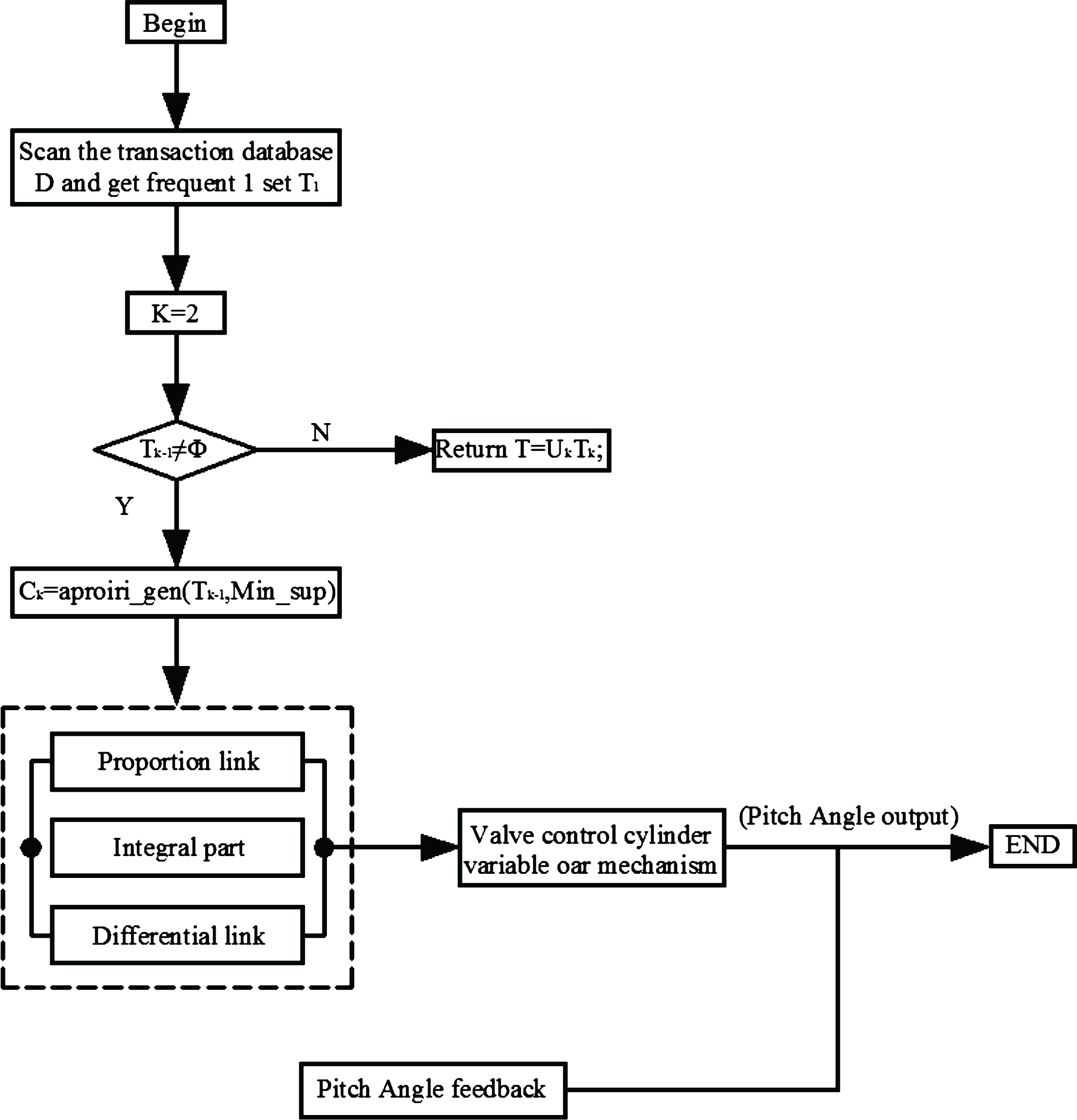
Two different educational education forms
After the data analysis and research in the table above, the education of m-Learning’s learning form of education has been selected, so the development of practical, intelligent education model development tools are also in this direction. The design of the low-level network protocol has a significant influence on the overall performance and data supportability of the network. Therefore, a series of complete network low-level protocol design ideas have been proposed to achieve adequate support for data traffic transmission. The agreement is as follows: The network layer supports datagram service and divides the network layer into two sublayers to ensure error-free transmission and routing. Besides, an artificial intelligence data processing mode is set up, as shown in Fig. 2 below: Wireless network data processing model diagram established in this paper.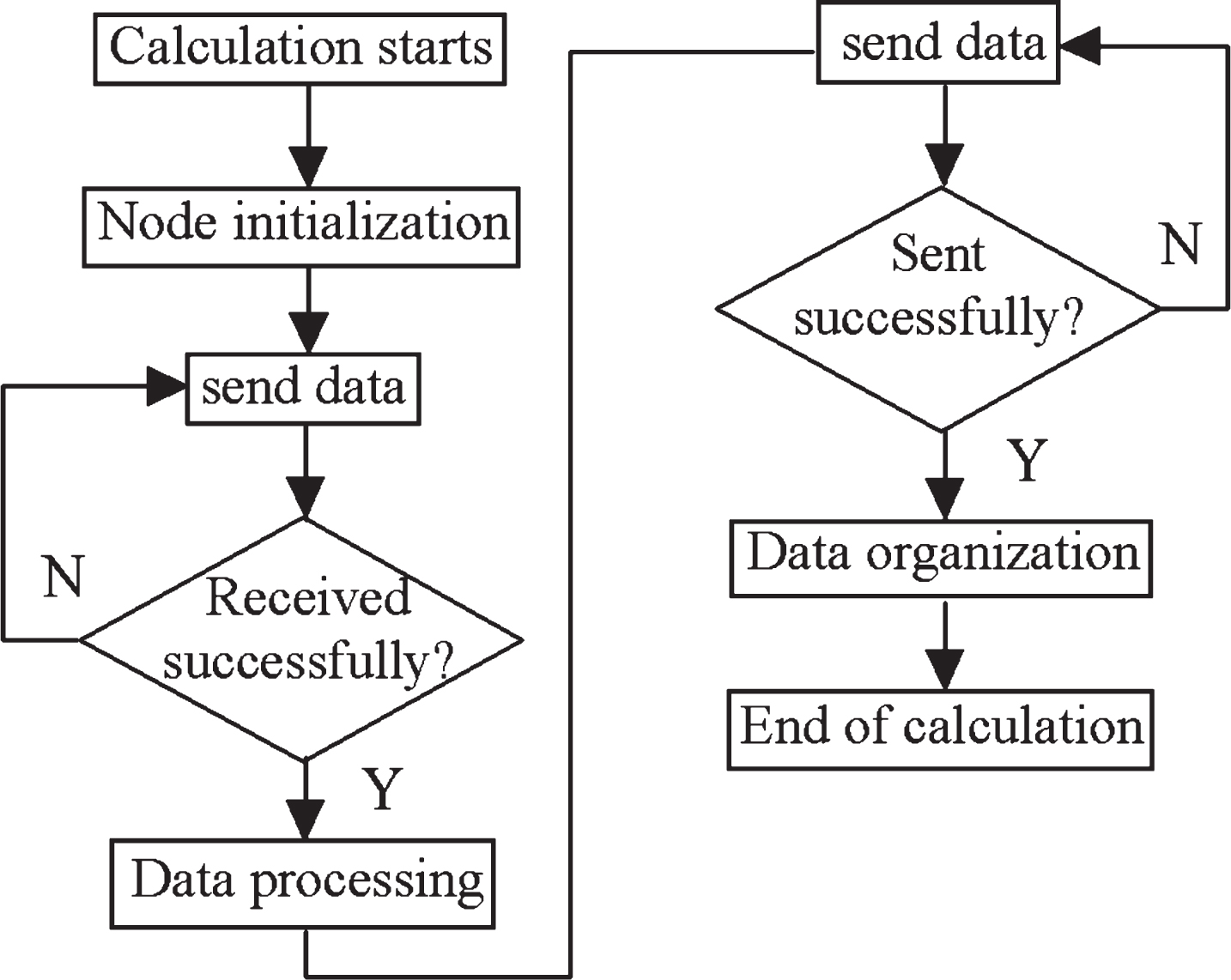
In the overlapping stage of the educational platform of teaching plan, Z is used to represent the entire data algorithm of the model, s, c is used to describe the evaluation standard and coefficient of the educational system of University teachers. The algorithm adds a set of models to ensure objectivity in the information integration phase. To ensure the accuracy of the result, algorithm errors need to be reduced. The design of this part firstly constructs a corresponding probability calculation by Z. After inputting the similar training algorithm, an optimal result Y is obtained. The formula used is as follows:
By using this formula, the optimal scheme of Internet+model in the evaluation reform of University Teachers’ education culture can be obtained, and further calculation is carried out with the appropriate value. Among them, η represents the optimal coefficient, σ represents the standard coefficient and χ repre-sents the analysis level of University teachers’ educational culture. The calculated values are the most accurate coefficients in the evaluation model of University teachers’ educational culture, which can be used as the final calculation basis.
The calculation provided by the above results is the foreshadowing of obtaining the output instructions for the last step. Through the centralized operation of all functions, an output value is finally achieved. Using the Internet+model technology to carry out activities, S represents the set of prediction numbers, d describes the range of output functions, and ρ represents the design base. These data are used to establish corresponding functional relations to get a similar difference sequence. If the same classification problem is encountered, the set function can be used, assuming that the values are between the regions (–1,1), the output function follows the formula:
After the optimal value is determined, according to the results of all the algorithm output between our hypothetical algorithm S and the instructional design plan A, it is integrated into the Internet+model according to the series of optimal values, and calculate the corresponding joint probability to obtain the optimal scheme determination coefficient. The specific operation process is as follows. For this reason, the computational model of the platform of intelligent education is established as shown in Fig. 3 below. Education decision tree algorithm calculation model.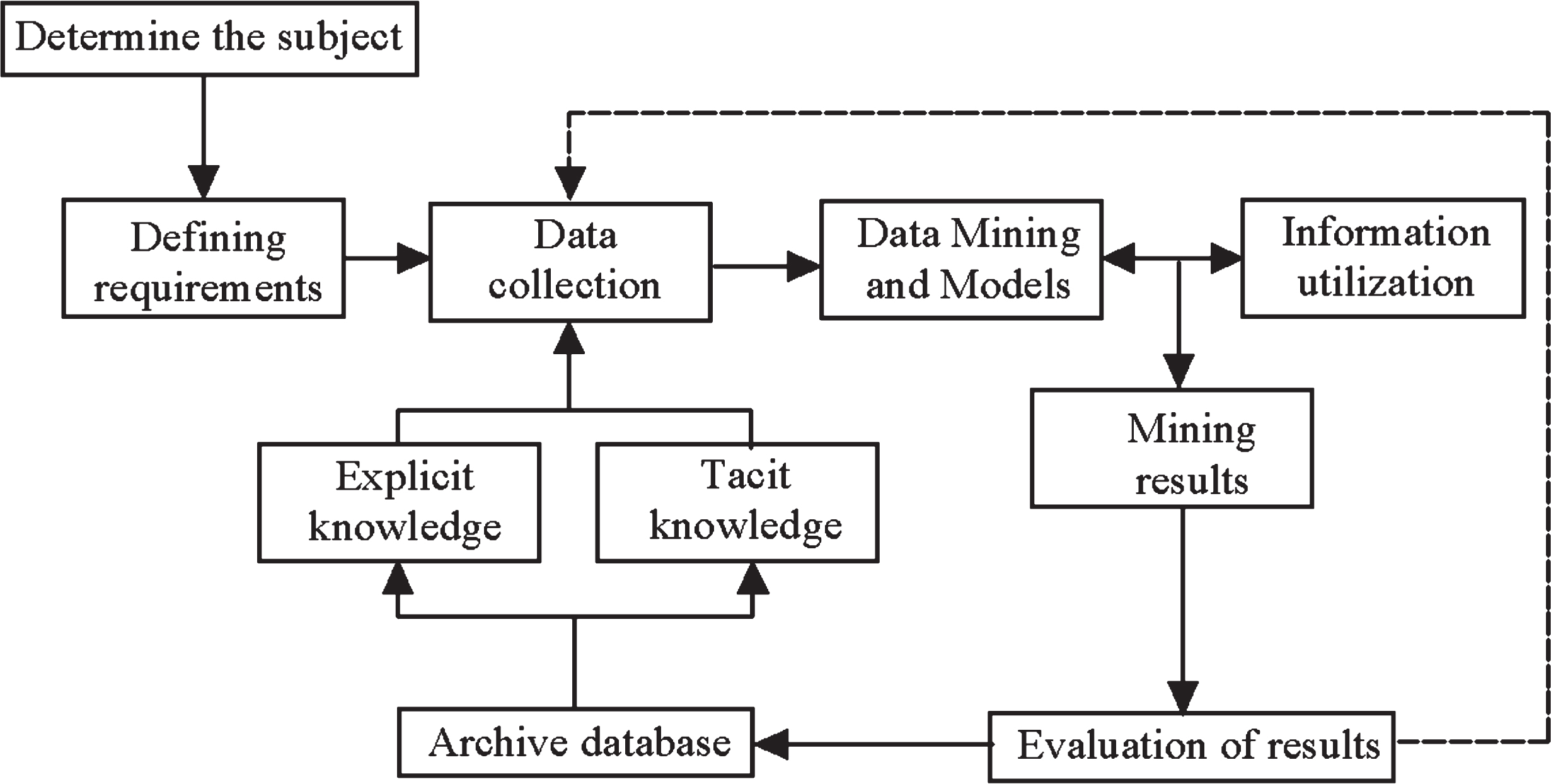
Intelligent educational model experimental environment
The test data is set up in five different datasets in the database. To ensure the universality of the test results, the traditional intelligent education model platform and the optimized smart education model are tested five times, and the experimental data are recorded separately. The computational time and effect of the optimized intelligent education model platform are analyzed and studied to prove its reliability.
Intelligent education model performance test detects Chinese
The analysis first selects the Iris dataset, which has a total of 300 computational samples, and the data attributes of which have four distinct consecutive splitting attributes. For this data set, the computational efficiency of the two intelligent education model platforms is tested, and the test results of the model are shown in Fig. 4 below. Through the study of the data in Fig. 4, it is found that the computational efficiency of the optimized platform is more than three times higher, which proves that the streamlined platform has a better computational ability. Also, our requirements for computational efficiency can be achieved. Comparison of the computational efficiency of the two education decision tree algorithms. Calculated data sets for the educational platform decision tree algorithm Calculation results of the educational education platform decision tree algorithm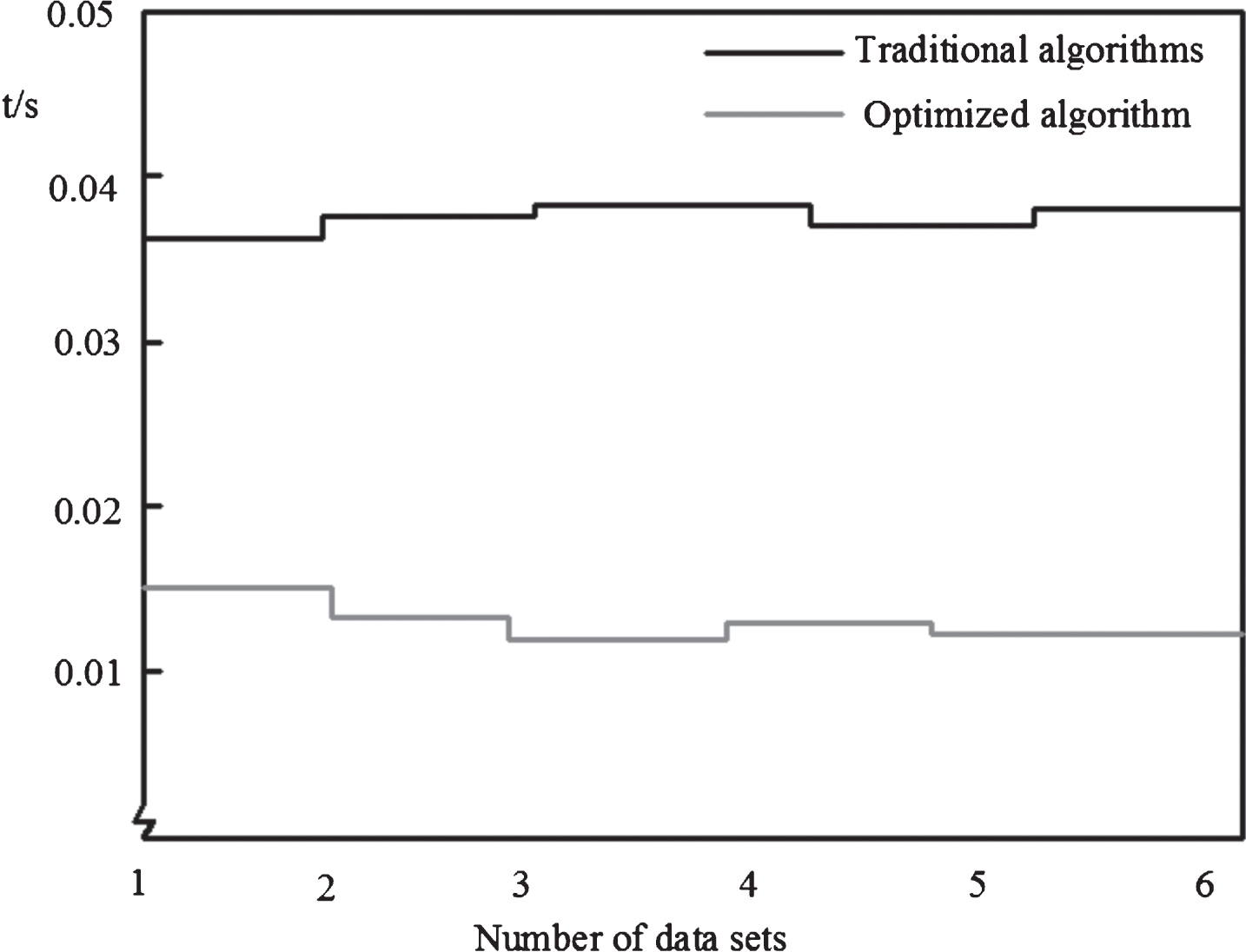
Through the analysis of the above data, it can be known that this test is aimed at five data sets, which are A, B, C, D, E. Each group of data has its support and has its own unique cycle rule. The computation of the Intelligent Education Model Platform first selects the data set, which is determined by the frequency of its occurrence, so the first choice is the frequent itemsets we need. Two frequent itemsets, C and D, are selected from the first calculation, which show that the intelligent education model platform is compelling for data integration. The fact that C and D datasets are frequent itemsets in the five selected data sets is known when setting up the data sets, and the calculated results are in line with our previous settings. And through the recalculation of C and D two data sets, the final calculation result C2 can be obtained. A collection of more precise calculation of the effect is also carried out. Different temporal thresholds are used as computational variables, and the number of frequent itemsets generated by the two education models is recorded. The test results are shown in Fig. 5 below.
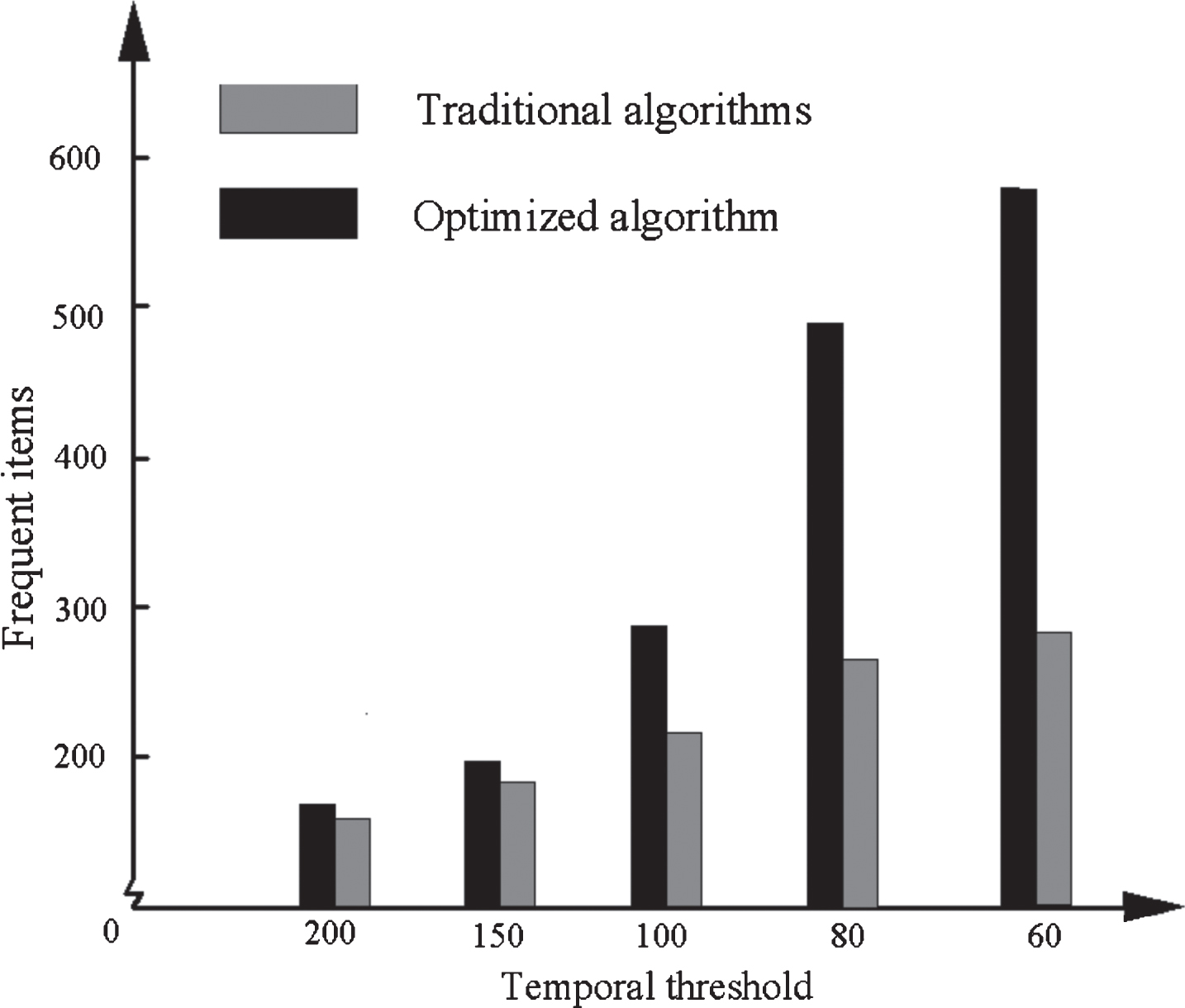
Comparison of the number of frequent itemsets at different time thresholds.
The analysis of the above data shows that when the temporal limit is above 150, the number of frequent itemsets in the education model has little difference, only about 20 variations. But as the temporal threshold decreases, the number of frequent itemsets in the optimized platform increases rapidly. When the temporal threshold is reduced to 60, the number of frequent itemsets has reached about 550, but the number of frequent itemsets in the traditional algorithm is only about 150. Thus, it can be seen that after optimization, the computing effect of the intelligent education model is generally better than that of the traditional education model platform. specific results are shown in Fig. 6.
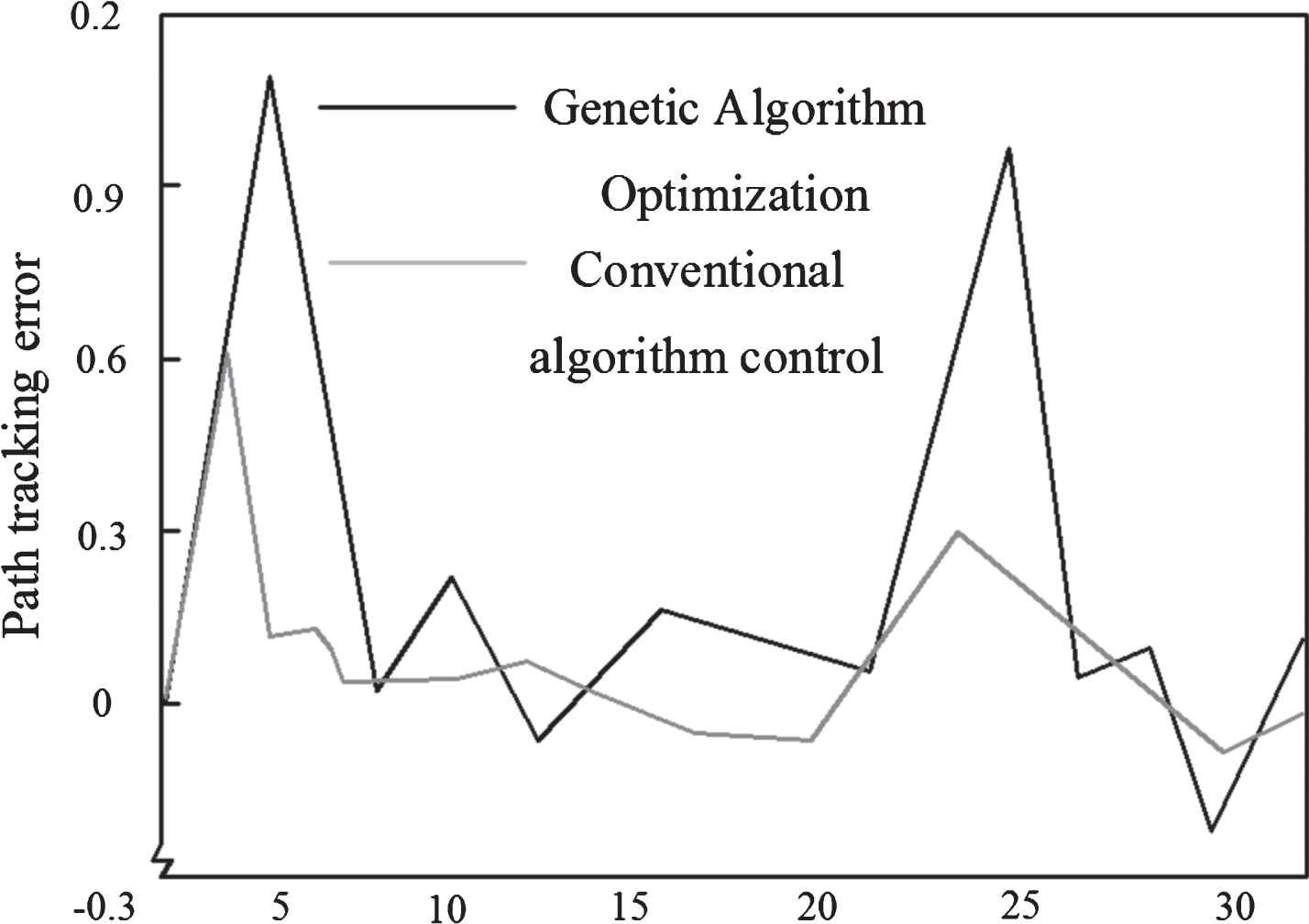
Comparative experimental study on optimization of broken line diagram.
The reform of education has an impact on China’s economic and comprehensive national strength. With the popularization of computer technology and the development of artificial intelligence technology, education is increasingly dependent on computers. All kinds of intelligent education models are gradually coming into our lives. The research is to establish a practical model of intelligent education based on artificial intelligence technology for the current developing national form, and combine data processing with the intelligent education model in the data mining algorithm. Through our test and research on the optimized smart education model platform, the optimized intelligent education model platform has tripled the computational efficiency of the traditional algorithm. The computational efficiency is far beyond our expectations. The algorithm has a good calculation accuracy; the calculation effect has been dramatically improved, especially when the temporal threshold is 60, the number of frequent items of the optimized intelligent education model platform has reached 550, which is higher than the traditional algorithm 400. This form of testing fully proves the computational feasibility of the optimized intelligent education model platform and provides data support for the development and implementation of practical, intelligent education model of artificial intelligence technology. Finally, in the application effect test for the smart education platform, demonstrating that the model is for the unstructured system such as vocational education, artificial intelligence is needed to mine the internal relationship, and content matching is performed for different students. Informal knowledge hides different dimensions and requires systematic data mining and machine learning to get a realistic knowledge base. Teachers can also choose different teaching objectives and contents according to the test results of the model, and implement different teaching methods to further improve the pertinence, effectiveness, and scientificity of teaching and learning. However, in the research of this paper, the storage of the smart education platform has not been studied, requiring paying attention to it in future research.